Are you ready to stand out in your next interview? Understanding and preparing for Marine Diesel Engine Maintenance interview questions is a game-changer. In this blog, we’ve compiled key questions and expert advice to help you showcase your skills with confidence and precision. Let’s get started on your journey to acing the interview.
Questions Asked in Marine Diesel Engine Maintenance Interview
Q 1. Explain the four-stroke diesel engine cycle.
The four-stroke diesel engine cycle is the fundamental process by which these engines convert fuel into mechanical energy. Think of it as a four-step dance the piston performs within the cylinder. Each step involves a specific action, ultimately resulting in power output.
- Intake Stroke: The piston moves downward, drawing in a fresh air-fuel mixture into the cylinder. Imagine inhaling deeply.
- Compression Stroke: The piston moves upward, compressing the air-fuel mixture. This significantly increases the temperature and pressure, creating ideal conditions for combustion. This is like squeezing a balloon – the air inside becomes hotter and more dense.
- Power Stroke: The compressed air-fuel mixture ignites, creating a powerful explosion that forces the piston downwards. This downward motion is what generates the engine’s power – the main event of our dance!
- Exhaust Stroke: The piston moves upward again, pushing the spent exhaust gases out of the cylinder through the exhaust valve. This is like exhaling, clearing the way for the next cycle.
This cycle repeats continuously, providing the rotational power of the crankshaft and ultimately propelling the vessel.
Q 2. Describe the function of a turbocharger in a marine diesel engine.
A turbocharger is a crucial component in many marine diesel engines. Its primary function is to force more air into the combustion chamber, leading to more complete combustion and increased power output. It acts like a forced-air system for your engine.
It does this by using the energy from the engine’s exhaust gases to drive a turbine. This turbine, in turn, spins a compressor that pushes more air into the engine’s intake manifold. The increased air density translates directly into a greater amount of fuel that can be burned efficiently, resulting in increased horsepower and improved fuel economy. Think of it as giving your engine an extra breath of fresh air, allowing it to work harder and more efficiently.
In marine applications, where reliable power is critical, turbochargers are essential for optimizing performance and efficiency, especially under demanding conditions.
Q 3. What are the common causes of excessive exhaust smoke in a marine diesel engine?
Excessive exhaust smoke in a marine diesel engine is often a sign of problems that need immediate attention. It can range from a light haze to a thick, black cloud, each indicating a different issue.
- Poor Fuel Injection: Incorrect fuel injection timing or faulty injectors can lead to incomplete combustion, resulting in black or grey smoke. This is like trying to light a fire with damp wood; it won’t burn cleanly.
- Incorrect Air-Fuel Ratio: Too much fuel relative to air (rich mixture) leads to black smoke, while too little fuel (lean mixture) can result in white smoke. Balancing these is vital for efficient combustion.
- Worn Piston Rings: Worn piston rings allow oil to enter the combustion chamber, producing blue or white smoke. Imagine a leaky seal in your engine; oil is getting where it shouldn’t be.
- Faulty Turbocharger: A malfunctioning turbocharger can impact the air-fuel ratio, leading to various types of smoke. It is important to address any turbocharger issues promptly.
- Engine Overloading: Excessive load on the engine can also produce smoke as it struggles to efficiently burn the fuel. This is like making your engine work harder than its designed for.
Diagnosing the cause requires careful inspection and testing of various engine systems, potentially involving compression tests, fuel system analysis, and exhaust gas analysis.
Q 4. How do you troubleshoot a loss of engine power?
Troubleshooting a loss of engine power requires a systematic approach. It’s like detective work; you need to find the culprit among multiple suspects.
- Check Fuel Supply: Start with the basics: Ensure there’s sufficient fuel in the tank and the fuel lines are clear and not clogged. A blocked fuel filter is a common culprit.
- Inspect Air Intake: A restricted air intake can significantly reduce power. Check for blockages or damage to the air filter or intake system.
- Examine Exhaust System: Blockages or restrictions in the exhaust system can impede the engine’s ability to expel gases, impacting power output.
- Verify Turbocharger Function: If equipped with a turbocharger, check for boost pressure. Low or no boost signifies a problem.
- Assess Engine Lubrication: Low oil level or excessively high oil pressure can indicate problems that affect engine performance. Low oil pressure is a serious issue.
- Check for Engine Alarms/Gauges: Monitor engine oil pressure, coolant temperature, and other vital parameters. Abnormal readings often point towards the problem.
- Perform Compression Test: If the previous checks don’t reveal the issue, a compression test can identify problems with cylinders, piston rings, or valves.
Remember to consult your engine’s maintenance manual for detailed troubleshooting procedures and safety precautions.
Q 5. Explain the importance of regular lubrication in marine diesel engine maintenance.
Regular lubrication is paramount in marine diesel engine maintenance. Think of engine oil as the lifeblood of your engine. It keeps moving parts protected and operating smoothly.
Engine oil acts as a lubricant, reducing friction between moving parts and preventing wear. It also cleans the engine’s internal components, carrying away contaminants and preventing the buildup of sludge. This minimizes damage and extends the engine’s lifespan. In a marine environment, where corrosion is a significant concern, regular oil changes are especially critical.
Proper lubrication is crucial not only for reducing wear and tear but also for preventing catastrophic engine failures, which can have severe consequences in a marine setting.
Q 6. Describe the procedure for changing a fuel filter.
Changing a fuel filter is a routine but crucial maintenance task. Failing to change it regularly can lead to engine problems.
- Gather Supplies: Have a new fuel filter, rags, a wrench (if needed), gloves, and a container to collect the old fuel.
- Release Fuel Pressure: Consult your engine’s manual on how to safely release fuel pressure before removing the filter. This is crucial for safety.
- Locate and Access the Filter: Usually, the fuel filter is easily accessible; but always consult your engine’s manual.
- Remove the Old Filter: Carefully unscrew the old fuel filter, ensuring a container is positioned underneath to catch any spillage.
- Install the New Filter: Before installing the new filter, lubricate the rubber seals (if any) and ensure it’s installed correctly and securely.
- Tighten Securely: Do not over-tighten the filter.
- Check for Leaks: After installation, check for leaks around the filter connections.
- Prime the System: Some engines require priming the fuel system after a filter change. Consult the engine’s manual for instructions.
- Start the Engine: Start the engine and check for any unusual sounds or smoke.
Always follow the manufacturer’s recommendations for the specific type of filter and replacement frequency.
Q 7. How do you check the engine oil level and condition?
Checking the engine oil level and condition is a fundamental aspect of marine diesel engine maintenance.
Checking the Oil Level:
- Allow the Engine to Cool: Ensure the engine has cooled down to avoid burns.
- Locate the Dipstick: Find the engine oil dipstick, usually marked with a distinctive handle or label.
- Remove and Wipe the Dipstick: Remove the dipstick, wipe it clean with a rag, and reinsert it fully.
- Check the Level: Remove the dipstick again and check the oil level against the markings on the dipstick. The level should be within the recommended range.
Checking the Oil Condition:
- Inspect the Oil: Check the oil’s color and consistency. Fresh oil is usually amber; dark or black oil indicates contamination or the need for a change.
- Check for Debris: Inspect the oil for any metallic particles or debris, which might suggest engine wear.
- Use an Oil Analysis Kit: For a more thorough check, use an oil analysis kit to determine the presence of contaminants, water, or other issues.
Regularly checking the oil level and condition ensures early detection of potential issues and aids in preventing costly repairs.
Q 8. What are the safety precautions when working on a marine diesel engine?
Safety is paramount when working on a marine diesel engine. These powerful machines contain high-pressure systems, hot surfaces, and potentially hazardous fluids. Before even starting, ensure the engine is completely shut down and allowed to cool sufficiently. This prevents burns from hot parts. Always disconnect the battery’s negative terminal to prevent accidental electrical shocks. Proper personal protective equipment (PPE) is crucial: safety glasses to protect your eyes from flying debris, gloves to guard against cuts and chemical exposure, and sturdy work boots to prevent injuries. Never work alone; always have a colleague nearby for assistance in case of an emergency. In addition, ensure adequate ventilation to avoid inhaling exhaust fumes, which are toxic. For confined spaces, you need to use proper respiratory equipment. Finally, follow all manufacturer’s safety guidelines meticulously, consulting your engine’s specific maintenance manual.
Think of it like this: a marine diesel engine is like a powerful beast. You need to treat it with respect and take all necessary precautions to avoid getting hurt.
Q 9. Explain the function of the cooling system in a marine diesel engine.
The cooling system in a marine diesel engine is vital for preventing overheating, which can lead to catastrophic engine failure. The system typically involves a combination of freshwater and saltwater cooling. The engine’s hot components, such as the cylinder head and cylinder liners, are cooled by freshwater circulating through internal passages. This freshwater is then cooled further by passing through a heat exchanger, where it transfers heat to the surrounding seawater. This seawater, being relatively cooler, absorbs the heat and is then discharged overboard. The entire process relies on pumps to circulate both the freshwater and the seawater. Components like the thermostat, pressure sensors, and temperature gauges are crucial for monitoring and maintaining optimal operating temperatures. A malfunctioning cooling system can quickly lead to overheating, causing damage to engine components like cylinder heads, pistons, and bearings.
Imagine it as a car’s radiator, but on a much larger and more complex scale. The engine creates tremendous heat, and the cooling system is the crucial mechanism that prevents it from melting itself down!
Q 10. How do you diagnose and repair a cracked cylinder head?
Diagnosing a cracked cylinder head requires a thorough inspection. Visually inspect the head for cracks using a magnifying glass, paying close attention to the areas around bolt holes and cooling passages. Pressure testing can detect even hairline cracks. This involves pressurizing the cooling passages with air or water and observing for leaks. Dye penetrant inspection is another useful technique, where a dye is applied to the surface, highlighting any cracks by capillary action. If a crack is confirmed, repair options depend on the severity and location. Small cracks can sometimes be repaired by welding, but this requires expertise and precise execution to avoid further damage. For more extensive cracks, replacement of the cylinder head is usually necessary. Before reinstalling the repaired or replaced head, ensure that the engine block surface is perfectly clean and flat. Improper installation can lead to further problems.
Finding a cracked cylinder head is like detective work. You need to use several tools and methods to pin down the exact location and severity of the crack before you can decide on the appropriate repair.
Q 11. Describe different types of marine diesel engine fuel systems.
Marine diesel engines use various fuel systems, depending on the engine’s size and application. Simple systems use a gravity-fed tank and a lift pump to supply fuel to the injectors. More sophisticated systems employ fuel transfer pumps and filters to ensure clean fuel is delivered at the correct pressure. Common rail systems, increasingly popular in modern engines, inject fuel under high pressure into a common rail, allowing precise control over fuel delivery to each cylinder. Electronic control units (ECUs) manage the timing and quantity of fuel injection, optimizing performance and emissions. There are also systems utilizing multiple fuel pumps and filters for better reliability. Proper maintenance, including regular fuel filter changes and testing, is critical for ensuring optimal performance and minimizing wear on the injectors and other fuel system components.
Each fuel system, from simple to complex, ensures that the right amount of fuel reaches the engine’s heart at the precise moment needed for efficient combustion.
Q 12. What is the purpose of a fuel injector?
The fuel injector’s primary function is to atomize and inject fuel into the engine’s combustion chamber at the precisely timed moment determined by the engine’s control system. This finely atomized fuel mist ensures efficient combustion by maximizing the surface area of the fuel for rapid mixing with air. The injector’s precise control of fuel delivery is essential for optimal engine performance, fuel economy, and emissions control. Fuel injectors are crucial components and their proper function is critical for the efficient and reliable operation of the entire engine.
Consider it the engine’s culinary expert – finely preparing the fuel mixture for perfect combustion. A poorly functioning injector results in an inefficient and potentially smoky engine.
Q 13. How do you perform a compression test on a marine diesel engine?
A compression test measures the pressure generated in each cylinder when the piston compresses the air. This indicates the overall condition of the cylinder, piston rings, valves, and head gasket. To perform this test, you will need a compression tester. First, warm up the engine, ensuring the engine is at its normal operating temperature. Then, remove the glow plugs (in a diesel engine). Next, carefully attach the compression tester to each cylinder, one at a time. The engine should be cranked over several times by a starter motor to build pressure. Note the pressure reading shown by the compression tester for each cylinder. Compare these readings to the manufacturer’s specifications; significant differences between cylinders indicate problems that need further investigation. Low compression in one or more cylinders could indicate worn piston rings, leaking valves, or a blown head gasket. A consistent low compression across all cylinders might indicate a problem with the engine’s overall condition. Addressing these issues quickly is important to prevent catastrophic engine failure.
Imagine it as a health check for each cylinder. It provides important insights into each cylinder’s condition and helps identify potential issues.
Q 14. Explain the function of the exhaust gas recirculation (EGR) system.
The Exhaust Gas Recirculation (EGR) system reduces nitrogen oxide (NOx) emissions by recirculating a portion of the exhaust gas back into the intake manifold. This reduces the combustion temperature, thereby lowering NOx formation. The EGR valve controls the amount of exhaust gas recirculated; an electronic control unit (ECU) typically regulates this valve based on engine load and speed. The system uses sensors to monitor exhaust gas composition, allowing the ECU to optimize the amount of recirculated exhaust for efficient emission control. Proper functioning of the EGR system is important for environmental compliance and engine longevity. A malfunctioning EGR system can lead to increased NOx emissions and potentially reduced engine performance.
Think of it as a clever recycling system for exhaust gases, reducing pollution and helping the engine run more efficiently.
Q 15. What are the common causes of engine overheating?
Engine overheating in marine diesel engines is a serious issue that can lead to significant damage if not addressed promptly. It’s essentially a mismatch between the heat generated by the engine and the engine’s ability to dissipate that heat. This imbalance can stem from several sources.
- Insufficient Coolant Flow: This is often caused by clogged coolant passages (due to scale buildup or corrosion), a faulty water pump, or airlocks in the cooling system. Imagine trying to cool a hot engine with a trickle of water – it won’t work! A clogged system is much the same.
- Faulty Cooling System Components: Problems with the heat exchanger, thermostat, or radiator can prevent efficient heat transfer. A malfunctioning thermostat, for instance, might prevent the coolant from circulating properly, leading to localized overheating.
- Low Coolant Levels: This is a basic yet critical cause. Low coolant means less capacity to absorb and transfer heat, leading directly to overheating. Regularly checking coolant levels is crucial preventative maintenance.
- External Factors: Ambient temperature plays a significant role. Operating in hot climates or stagnant waters reduces the cooling system’s effectiveness. Also, a fouled sea chest (intake for seawater cooling) can restrict water flow.
- Internal Engine Issues: Problems like a leaking cylinder head gasket or a cracked cylinder block can allow coolant to leak out, reducing the cooling capacity and causing overheating. This often manifests as a milky appearance in the engine oil.
Troubleshooting requires a systematic approach, starting with a visual inspection of the cooling system, checking coolant levels, and then progressing to more in-depth diagnostics, possibly using pressure testing equipment to identify leaks.
Career Expert Tips:
- Ace those interviews! Prepare effectively by reviewing the Top 50 Most Common Interview Questions on ResumeGemini.
- Navigate your job search with confidence! Explore a wide range of Career Tips on ResumeGemini. Learn about common challenges and recommendations to overcome them.
- Craft the perfect resume! Master the Art of Resume Writing with ResumeGemini’s guide. Showcase your unique qualifications and achievements effectively.
- Don’t miss out on holiday savings! Build your dream resume with ResumeGemini’s ATS optimized templates.
Q 16. How do you troubleshoot a faulty starting system?
A faulty starting system in a marine diesel engine can be incredibly frustrating, especially when you’re out on the water. Troubleshooting involves a methodical process of elimination, starting with the most obvious and progressing to more complex components.
- Battery Check: Begin by checking the battery voltage and its overall condition. A weak or dead battery is the most common cause. Use a multimeter to measure the voltage; a fully charged battery should read around 12.6V.
- Battery Connections: Inspect the battery terminals and cables for corrosion, loose connections, or damage. Corrosion can significantly impede current flow. Clean terminals with a wire brush and tighten connections.
- Starter Motor: If the battery is fine, the next suspect is the starter motor. You can check for continuity using a multimeter, but often this requires more specialized tools and knowledge. A clicking sound upon cranking often points to a weak starter motor or low battery voltage.
- Solenoid Switch: This is an electromagnet that engages the starter motor. A faulty solenoid can prevent the starter from receiving power. Again, a multimeter can help determine if the solenoid is receiving and passing power.
- Wiring and Connections: Trace the wiring from the battery to the starter motor and solenoid, checking for broken wires, loose connections, or corrosion. A simple visual inspection can reveal obvious issues.
- Glow Plugs (for diesel engines): In cold weather, glow plugs are essential for combustion. Faulty glow plugs can cause difficult starting. Test each plug individually using an ohmmeter.
Remember safety first! Disconnect the battery before performing any electrical checks. If you’re uncomfortable with any of these steps, it’s best to call a qualified marine mechanic.
Q 17. Describe the procedure for performing a routine engine inspection.
A routine engine inspection is vital for preventing major problems and ensuring safe operation. Think of it as a health check-up for your engine. It should be performed regularly, according to the manufacturer’s recommendations, but at least every few weeks for frequent users.
- Visual Inspection: Begin with a thorough visual inspection of the entire engine, looking for any obvious signs of leaks (oil, coolant, fuel), damage, or corrosion. Pay attention to hoses, belts, and wiring.
- Fluid Levels: Check the levels of all fluids: engine oil, coolant, fuel, and hydraulic fluids (if applicable). Low levels can indicate a leak or other problem. Note the condition of the fluids as well – milky oil can indicate a head gasket leak, for example.
- Belt Tension: Check the tension of all belts using the thumb-pressure test. Belts that are too loose or too tight can cause premature wear and failure.
- Leaks and Seepage: Carefully inspect the engine for leaks around gaskets, seals, and connections. Even small leaks should be addressed promptly.
- Exhaust System: Examine the exhaust system for any blockages or damage. Excessive soot buildup can also be a sign of poor combustion.
- Sea Chest (if applicable): Ensure the sea chest is clear of debris that could restrict water flow to the engine’s cooling system.
- Logbook Review: Review the engine’s logbook to track performance and note any recent issues or maintenance performed.
Documenting your findings is crucial. Keep a logbook to record maintenance activities, observations, and any necessary repairs. This helps track the engine’s health and aids in troubleshooting future problems.
Q 18. Explain the importance of maintaining proper engine alignment.
Proper engine alignment is paramount for the smooth and efficient operation of a marine diesel engine, and its long-term health. Misalignment can lead to premature wear and tear on various components, potentially causing costly repairs down the line. Think of it like driving a car with misaligned wheels – it’ll wear tires out faster and cause vibrations.
- Reduced Vibration: A properly aligned engine minimizes vibration, creating a smoother, quieter, and more comfortable operation. Excessive vibration can cause damage to other components within the boat.
- Extended Component Lifespan: When the engine is aligned correctly, all the moving parts operate efficiently and experience less stress, leading to a longer lifespan for bearings, seals, and shafts.
- Improved Fuel Efficiency: Proper alignment ensures efficient power transmission, which directly translates to better fuel economy. Misalignment can cause increased fuel consumption.
- Reduced Wear and Tear: The components of the drivetrain are subjected to less stress, resulting in less wear and tear. This extends the life of the entire system. For example, misalignment can lead to excessive wear on the transmission and propeller shaft bearings.
- Prevention of Damage: Misalignment can lead to more serious damage, such as damage to the engine mounts, the transmission, or even the hull of the boat.
Regular alignment checks are essential, especially after major maintenance or if excessive vibration is noticed. Professional alignment tools and expertise are often required to ensure accurate adjustments.
Q 19. What are the different types of marine diesel engine governors?
Marine diesel engine governors control the engine’s speed, ensuring it operates within its safe and efficient range. There are several types, each with its own mechanism.
- Mechanical Governors: These are older, simpler systems using centrifugal weights or flyballs to regulate fuel delivery based on engine speed. They are relatively inexpensive but lack the precision of electronic governors.
- Electronic Governors: These use electronic sensors and control units to precisely regulate engine speed. They often offer features like speed limiting, load control, and integration with other engine systems. They are more complex but offer better precision and adaptability.
- Hydraulic Governors: These use hydraulic pressure to control fuel delivery. They combine the robustness of mechanical systems with the precision of electronic systems, though they can be more costly to maintain.
- Proportional Governors: These are a more sophisticated type of governor that can make small adjustments to fuel delivery, leading to very smooth speed control, particularly important for generating consistent power in applications like marine generators.
The choice of governor depends on factors like engine size, application, budget, and desired level of control. Electronic governors are becoming increasingly common due to their advanced features and precision.
Q 20. How do you interpret engine performance data?
Interpreting engine performance data is crucial for proactive maintenance and troubleshooting. This data, often collected through onboard monitoring systems or by regularly checking specific parameters, can reveal underlying issues.
- Engine Speed (RPM): Consistent deviation from the expected RPM at a given load might indicate issues with the fuel system, governor, or engine wear.
- Exhaust Temperature: High exhaust temperature can indicate insufficient cooling, combustion problems (e.g., poor fuel quality, timing issues), or turbocharger malfunction.
- Oil Pressure: Low oil pressure is a serious issue indicating potential engine damage. High pressure may also indicate a problem with the oil pump or relief valve.
- Coolant Temperature: High coolant temperature points to cooling system issues as discussed earlier. Consistently low temperatures could suggest a thermostat problem.
- Fuel Consumption: Unexpectedly high fuel consumption can be indicative of a number of problems, including misalignment, inefficient combustion, or a faulty injection pump.
- Vibration Levels: Excessive vibration points to potential misalignment issues, mechanical problems, or propeller issues.
Analyzing this data over time, alongside visual inspections and maintenance records, builds a comprehensive picture of the engine’s health. Trends are particularly important – a gradual increase in fuel consumption or a slow decline in oil pressure, for instance, might indicate a developing problem requiring attention before it becomes critical.
Q 21. What are the common types of marine diesel engine failures?
Marine diesel engines, while robust, are subject to various failures. These can range from minor inconveniences to catastrophic events requiring major repairs.
- Lubrication System Failures: Low oil pressure, bearing failures, and piston seizures are often caused by inadequate lubrication. This highlights the critical importance of regular oil changes and monitoring oil levels and pressure.
- Fuel System Failures: Problems with the injection pump, injectors, or fuel lines can lead to poor combustion, reduced power, and even engine shutdown. Regular fuel filter maintenance is crucial.
- Cooling System Failures: As discussed earlier, overheating is a major risk leading to cracked cylinder heads, warped blocks, or blown head gaskets.
- Turbocharger Failures: Turbochargers are prone to wear and tear due to the high speeds and temperatures involved. Failures can lead to reduced power and increased exhaust smoke.
- Crankshaft Failures: These are usually caused by excessive wear or fatigue and can result in catastrophic engine damage. Regular inspection for cracks or excessive wear is vital.
- Cylinder Liner Wear: Excessive wear on the cylinder liners can lead to reduced compression and power loss. This is often a result of poor lubrication or improper maintenance.
Preventative maintenance, regular inspections, and prompt attention to any unusual signs or symptoms are crucial to minimizing the risk of these failures. The cost of preventative maintenance is significantly less than the cost of major repairs or engine replacement.
Q 22. Describe the process of replacing an engine crankshaft seal.
Replacing a crankshaft seal is a crucial maintenance task requiring precision and safety. It involves several steps, and improper execution can lead to serious engine damage. The process generally starts with disassembling parts to access the seal. This might involve removing the flywheel, oil pan, or even the timing cover, depending on the engine design. Each step requires meticulous attention to detail, including proper labeling and safe storage of removed components.
- Preparation: Secure the vessel and engine, ensure proper ventilation, and wear appropriate safety gear (gloves, eye protection).
- Disassembly: Carefully remove components to expose the crankshaft seal, documenting the process with photos or diagrams.
- Seal Removal: Use specialized tools to carefully remove the old seal, avoiding damage to the crankshaft housing or the crankshaft itself. A seal puller is typically used.
- Seal Installation: The new seal should be installed carefully, ensuring it is seated correctly and evenly. Often a special tool or lubricant is needed. Incorrect installation is a common cause of premature seal failure.
- Reassembly: Components are reassembled in the reverse order of disassembly, ensuring proper torque specifications are met for all bolts and fasteners. Using a torque wrench is essential.
- Testing: After reassembly, a thorough check for leaks and proper operation is crucial. This may involve running the engine at low speed and carefully inspecting for leaks.
For example, on a larger marine diesel, accessing the rear crankshaft seal might require removing the gearbox and propeller shaft assembly, a complex undertaking demanding specialized tools and lifting equipment.
Q 23. Explain the function of a propeller shaft and its components.
The propeller shaft transmits the engine’s rotational power to the propeller, enabling the vessel to move through the water. It’s a critical component, and its failure can lead to complete loss of propulsion. A typical propeller shaft assembly comprises several key elements:
- Shaft: The main cylindrical component made from high-strength steel, designed to withstand significant torsional stress.
- Cutless Bearing: A rubber bearing that supports the shaft within the stern tube, minimizing friction and preventing wear. This is a critical component requiring regular inspection.
- Stern Tube: A tube embedded in the hull, housing the propeller shaft and cutless bearing.
- Propeller: The rotating blades at the end of the shaft that generate thrust to propel the vessel.
- Coupling: Connects the shaft to the gearbox output shaft, transmitting the torque.
- Shaft Seal (Stuffing Box or Lip Seal): Prevents water from entering the stern tube and engine room.
Think of it like a bicycle chain and sprocket system; the engine is like the pedals, the propeller shaft is like the chain, and the propeller is like the rear sprocket, converting rotational energy into forward motion. Regular inspection and maintenance of each component are vital to prevent failures at sea.
Q 24. How do you handle emergency situations, such as engine failure at sea?
Engine failure at sea is a serious emergency. Immediate action is crucial to ensure the safety of the crew and vessel. My approach involves a systematic response:
- Assess the Situation: Determine the extent of the failure, identifying any immediate dangers like fire, smoke, or fuel leaks.
- Secure the Engine: Shut down the engine completely, isolating fuel and power sources.
- Safety First: Prioritize the safety of all crew members. Emergency procedures should be activated, and all crew briefed.
- Damage Control: Attempt to contain any damage or leaks, preventing further issues.
- Emergency Communication: Immediately contact emergency services (Coast Guard, etc.) and inform them of the situation, location, and number of people on board.
- Alternative Propulsion: If equipped, utilize auxiliary propulsion methods, such as sails, emergency generators, or a life raft motor.
- Assess Repair Options: If possible, attempt minor repairs to get the vessel to a safe port, but safety remains paramount. Major repairs are usually best performed in a shipyard.
- Documentation: Thoroughly document the event, including all actions taken, damage sustained, and any safety breaches identified.
For instance, during a previous experience, a main bearing failure caused the engine to seize. Following the emergency procedures, we quickly secured the engine, contacted the Coast Guard, and used our auxiliary generator to maintain essential onboard services until a tow arrived.
Q 25. What are the regulations and safety standards relevant to marine diesel engine maintenance?
Marine diesel engine maintenance is heavily regulated for safety and environmental reasons. Regulations vary depending on the vessel’s flag state and the engine’s size and type. However, common standards and guidelines include:
- International Maritime Organization (IMO): Sets international standards for maritime safety and environmental protection, impacting maintenance practices.
- Flag State Regulations: Each country’s maritime administration sets specific requirements, often mirroring IMO guidelines.
- Class Society Rules: Classification societies (e.g., ABS, DNV, Lloyd’s Register) set detailed rules for vessel construction and maintenance, influencing engine maintenance procedures.
- Port State Control: Authorities in ports worldwide may inspect vessels, checking compliance with regulations and maintenance records.
- Engine Manufacturer’s Recommendations: These manuals provide essential guidelines for maintenance schedules, procedures, and safety precautions. Following these is crucial for warranty purposes.
- Safety Standards (e.g., ISO standards): Relevant standards cover various aspects, from safe working practices to risk assessments and maintenance documentation.
Ignoring these regulations can lead to significant penalties, vessel detention, and potential safety hazards.
Q 26. Explain the differences between different types of marine diesel fuels.
Marine diesel fuels vary significantly in their properties, affecting engine performance and maintenance. Key differences include:
- Distillate Fuels (Diesel): These are refined petroleum products with varying sulfur content. The most common are:
- Marine Gas Oil (MGO): A low-sulfur fuel, often used in emission-controlled engines.
- Heavy Fuel Oil (HFO): A high-sulfur fuel, previously common but now being phased out due to environmental concerns.
- Biofuels: These are derived from renewable sources (vegetable oils, algae) and are used as blends with conventional fuels or as standalone fuels in some engines, generally showing better environmental profile.
Choosing the right fuel is crucial for optimal engine performance, emission compliance, and preventing issues like fuel injector fouling, fuel pump failure, and increased maintenance costs. Using the wrong fuel can lead to significant engine damage and even fire.
Q 27. Describe your experience with troubleshooting and repairing common engine problems.
My experience encompasses a wide range of troubleshooting and repairs on various marine diesel engines. I’ve handled issues ranging from minor adjustments to major overhauls. Examples include:
- Troubleshooting starting problems: This often involves diagnosing issues with the starting system (batteries, starter motor, glow plugs), fuel system (fuel supply, injection timing), or engine compression. Systematic checks and measurements are essential.
- Repairing fuel system leaks: Identifying the source of the leak, whether in the fuel lines, injectors, or tank, is critical. Repairs can range from replacing fuel lines to overhauling injectors.
- Diagnosing engine overheating: This can stem from various causes, including cooling system leaks, faulty thermostats, or scale buildup in the heat exchangers. Regular inspections of coolant levels and temperatures are vital for preventative maintenance.
- Dealing with excessive smoke and poor combustion: This could indicate problems with fuel injection, air intake, turbocharger, or engine wear. Proper diagnostics are crucial to determine the root cause.
One memorable incident involved diagnosing a persistent engine misfire. After meticulous testing, we discovered a faulty injector, which was promptly replaced, restoring smooth engine operation. Thorough record-keeping helps in future troubleshooting by providing a history of repairs and maintenance procedures.
Q 28. How do you maintain accurate records and documentation of engine maintenance procedures?
Accurate record-keeping is essential for effective engine maintenance and regulatory compliance. My approach involves:
- Logbooks: Detailed logbooks meticulously document all maintenance tasks, including dates, work performed, parts used, and any observations or problems encountered. This is often a legal requirement.
- Maintenance Schedules: Regular schedules are followed, based on manufacturer recommendations and operating conditions. This helps prevent unexpected failures.
- Digital Databases: Software systems are used to maintain a digital record of maintenance procedures, simplifying data analysis and reporting.
- Spare Parts Inventory: A well-maintained inventory ensures parts are available for timely repairs, minimizing downtime.
- Photographs and Videos: Visual documentation can help with troubleshooting and repair procedures, especially for complex issues.
Maintaining such comprehensive records ensures traceability of all work performed, demonstrating compliance with regulations and providing valuable insights for preventative maintenance planning. This also helps establish a clear history, aiding future maintenance and troubleshooting tasks.
Key Topics to Learn for Marine Diesel Engine Maintenance Interview
- Engine Fundamentals: Understanding two-stroke and four-stroke diesel engine cycles, operating principles, and various engine types (e.g., medium-speed, high-speed).
- Lubrication Systems: Practical knowledge of lubrication system components, oil analysis techniques, troubleshooting lubrication issues, and the importance of proper oil selection.
- Fuel Systems: Understanding fuel injection systems (common rail, unit injectors), fuel purification processes, troubleshooting fuel-related problems, and fuel efficiency optimization.
- Cooling Systems: Knowledge of different cooling systems (freshwater, seawater, closed-loop), troubleshooting overheating issues, and maintaining optimal cooling system performance.
- Exhaust Systems: Understanding exhaust gas treatment, turbocharging and supercharging principles, and troubleshooting exhaust-related problems.
- Preventive Maintenance: Implementing scheduled maintenance procedures, interpreting maintenance manuals, and using diagnostic tools for proactive maintenance.
- Troubleshooting and Diagnostics: Utilizing diagnostic equipment (e.g., engine monitors, fault codes), systematically identifying and resolving engine malfunctions, and documenting repair procedures.
- Safety Procedures: Understanding and adhering to safety regulations, using appropriate PPE, and handling hazardous materials safely.
- Engine Overhauls: Familiarity with the process of engine disassembly, inspection, repair, and reassembly, including component replacement and alignment.
- Emission Control Systems: Understanding the function and maintenance of SCR, EGR, and DPF systems and compliance with environmental regulations.
Next Steps
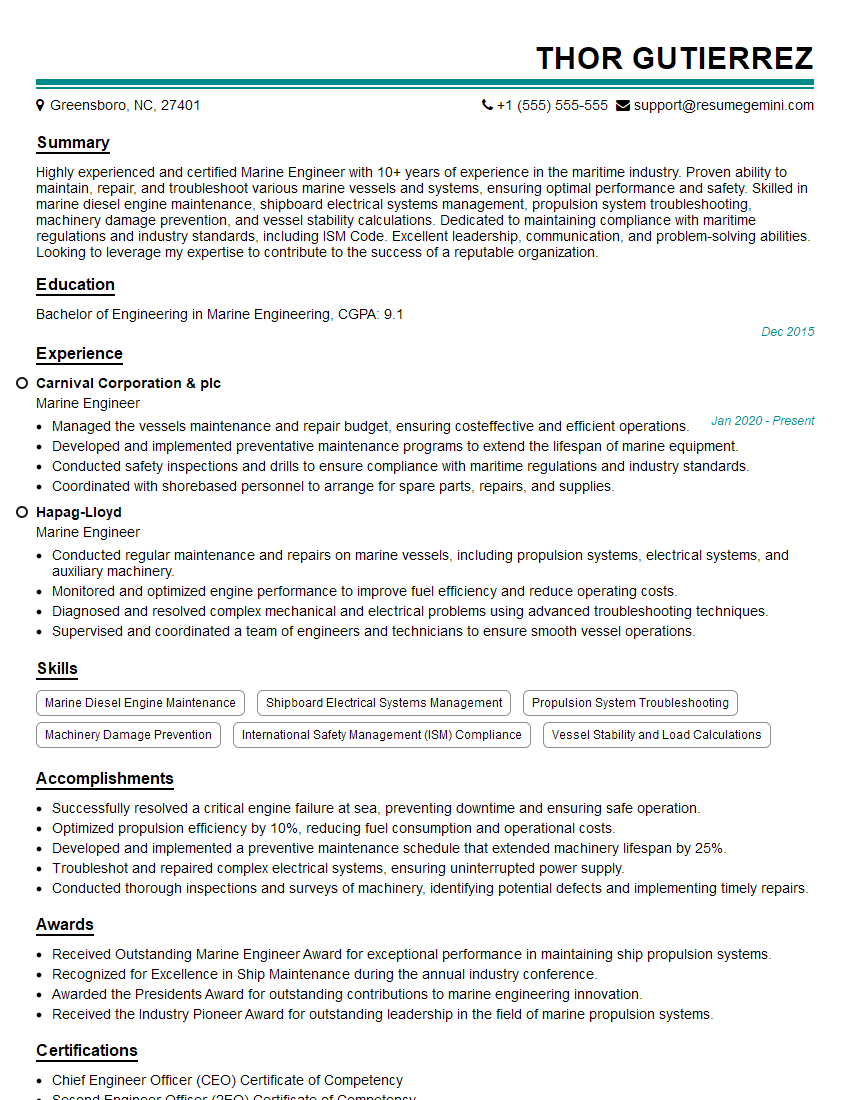
Mastering Marine Diesel Engine Maintenance opens doors to rewarding careers with excellent growth potential. A strong understanding of these key areas demonstrates your expertise and commitment to excellence, making you a highly desirable candidate. To further enhance your job prospects, create an ATS-friendly resume that highlights your skills and experience effectively. ResumeGemini is a trusted resource that can help you build a professional resume that stands out from the competition. Examples of resumes tailored to Marine Diesel Engine Maintenance are available to guide you. Invest time in crafting a compelling resume – it’s your first impression on potential employers.
Explore more articles
Users Rating of Our Blogs
Share Your Experience
We value your feedback! Please rate our content and share your thoughts (optional).
What Readers Say About Our Blog
Really detailed insights and content, thank you for writing this detailed article.
IT gave me an insight and words to use and be able to think of examples