The right preparation can turn an interview into an opportunity to showcase your expertise. This guide to Legal Issues in Social Work interview questions is your ultimate resource, providing key insights and tips to help you ace your responses and stand out as a top candidate.
Questions Asked in Legal Issues in Social Work Interview
Q 1. Explain the difference between mandated reporting and informed consent.
Mandated reporting and informed consent are two fundamental, yet often contrasting, principles in social work. Mandated reporting refers to the legal obligation of certain professionals, including social workers, to report suspected child abuse or neglect to the appropriate authorities. This obligation overrides client confidentiality. Think of it as a ‘duty to protect’ vulnerable populations. Informed consent, on the other hand, is the ethical and legal requirement to obtain a client’s voluntary agreement to participate in services, after fully understanding the nature of those services, including potential risks and benefits. It emphasizes client autonomy and self-determination.
The key difference lies in the power dynamic: mandated reporting prioritizes the safety of the child, sometimes at the expense of the client’s confidentiality, while informed consent prioritizes the client’s right to make their own choices regarding their care, provided it doesn’t harm others.
Example: A social worker learns from a client that they are physically abusing their child. Mandated reporting requires the worker to report this to child protective services, even if the client explicitly asks them not to. However, before starting therapy with that same client, the worker must obtain informed consent, clearly explaining the treatment plan, its potential benefits and risks, and the client’s right to withdraw at any time.
Q 2. Describe the legal ramifications of breaching client confidentiality.
Breaching client confidentiality can have serious legal ramifications, including civil lawsuits for damages and disciplinary actions by licensing boards, potentially leading to the loss of a social work license. The severity of the consequences depends on factors such as the nature of the breach, the harm caused to the client, and the applicable laws and regulations.
For instance, if a social worker reveals sensitive client information without consent, resulting in financial loss or reputational damage for the client, they could face a civil lawsuit. Similarly, disclosing confidential information without a legal basis, such as mandated reporting, could result in disciplinary action from their regulatory body.
Example: A social worker gossips about a client’s situation to a colleague at lunch, inadvertently disclosing the client’s identity and personal struggles. This could be considered a breach of confidentiality, exposing the worker to potential legal and professional repercussions.
Q 3. What are the key elements of a valid informed consent process in social work?
A valid informed consent process in social work hinges on several key elements:
- Capacity: The client must possess the cognitive ability to understand the information presented.
- Comprehension: The information provided must be clear, concise, and in language the client understands. This may involve using plain language and avoiding jargon.
- Voluntariness: The client must be free from coercion or undue influence when making their decision. There should be no pressure to consent.
- Disclosure: The social worker must disclose all relevant information to the client, including the nature of the services, potential risks and benefits, alternatives to those services, and the client’s right to refuse or withdraw consent at any time.
- Documentation: The informed consent process should be thoroughly documented, typically through a signed consent form.
The process must ensure the client truly understands what they are agreeing to, not just signing a form.
Q 4. How would you handle a situation where a client’s wishes conflict with legal requirements?
When a client’s wishes conflict with legal requirements, social workers face complex ethical and legal dilemmas. Prioritizing client autonomy while adhering to legal obligations requires careful consideration and consultation. A step-by-step approach is often crucial:
- Assess the situation: Clearly define the conflict, identifying the client’s wishes and the relevant legal requirements.
- Consult with supervisors and legal counsel: Seek guidance from experienced professionals to understand the legal ramifications of various actions.
- Explore options: Identify possible solutions that balance the client’s wishes and legal requirements as much as possible. Can a compromise be reached?
- Document everything: Meticulously record the situation, all actions taken, and consultations with supervisors and legal counsel. This documentation protects the social worker and serves as a record of ethical decision-making.
- Prioritize safety: In cases involving potential harm to self or others, the legal requirements related to safety usually supersede the client’s wishes.
Example: A client refuses to participate in mandated therapy following a domestic violence incident, even though the court orders it. The social worker needs to navigate this conflict by carefully documenting the situation, consulting with supervisors and legal counsel, and exploring options, while prioritizing the client’s safety and adhering to court mandates.
Q 5. Explain the concept of ‘least restrictive environment’ in child welfare cases.
The ‘least restrictive environment’ principle in child welfare cases mandates that children should receive services in the setting that is least disruptive to their normal life and development, while ensuring their safety and well-being. This means avoiding more restrictive placements (such as foster care or institutionalization) unless absolutely necessary. The goal is to keep children within their families and communities whenever possible, utilizing in-home services or less restrictive community-based options first.
Example: Instead of immediately placing a child in foster care due to neglect, the child welfare agency might first try providing in-home support services, such as parental training and home-based counseling, to address the issues and allow the child to remain at home safely.
Q 6. What are the legal rights of a child in the child welfare system?
Children in the child welfare system have several legal rights, including:
- Right to safety: Protection from abuse, neglect, and exploitation.
- Right to permanency: A stable and permanent home environment, whether with their family of origin or through adoption or guardianship.
- Right to a fair hearing: Due process and the opportunity to be heard in court proceedings that affect their lives.
- Right to appropriate care and treatment: Access to necessary medical, educational, and therapeutic services.
- Right to counsel: Legal representation in court proceedings.
- Right to contact with family members (unless it’s deemed unsafe): Regular visits or communication with their parents and siblings.
These rights are enshrined in various laws and regulations, and children’s advocates work to ensure they are upheld.
Q 7. Describe the process of obtaining a court order for involuntary commitment.
Obtaining a court order for involuntary commitment is a complex legal process that requires a compelling demonstration of imminent danger. It involves several steps:
- Petition: A petition must be filed with the court, typically by a physician or other qualified professional, stating the reasons for believing the individual is a danger to themselves or others.
- Evaluation: A thorough psychiatric evaluation is typically required to assess the individual’s mental state and determine whether they meet the criteria for involuntary commitment.
- Hearing: A court hearing is held where the individual has the right to legal representation and to present evidence. The court will determine whether there is sufficient evidence to justify involuntary commitment.
- Order: If the court finds that the individual meets the criteria for involuntary commitment, it will issue an order authorizing their temporary hospitalization. This order outlines the conditions of confinement and specifies the duration of commitment (often initially temporary, requiring subsequent court review).
The specific legal requirements vary by jurisdiction, but generally, the burden of proof rests on the petitioner to demonstrate that the individual poses an imminent risk of harm to themselves or others. The standard often involves showing a clear and present danger.
Q 8. What are the ethical and legal considerations surrounding the use of restraints with clients?
The use of restraints with clients in social work is a complex issue fraught with ethical and legal considerations. Ethical considerations center around the client’s right to self-determination and bodily autonomy. Restraints should only be used as a last resort, when there is an immediate risk of harm to the client or others, and even then, only for the shortest duration necessary. Legally, the use of restraints must comply with state and federal laws, which often require documentation, authorization, and a clear indication of imminent danger. Improper use can lead to charges of assault, battery, false imprisonment, and negligence.
For example, imagine a situation where a client experiencing a severe psychotic episode becomes violent and threatens self-harm. While using restraints might be necessary to prevent immediate harm, it’s crucial to document the situation meticulously, including the client’s behavior, the interventions attempted before restraints, the type of restraint used, the duration, and the client’s response. Regular assessments of the client’s condition while restrained are also mandatory. Failing to adhere to these protocols can expose the social worker and the agency to significant legal liability.
Q 9. How would you respond to a subpoena for client information?
Responding to a subpoena for client information requires a careful and legally sound approach. The first step is to consult with legal counsel. Social workers have a legal and ethical duty to protect client confidentiality, which is often protected by laws like the Health Insurance Portability and Accountability Act (HIPAA) and state confidentiality statutes. However, there are exceptions. A subpoena is a court order; ignoring it can result in penalties. Therefore, we must review the subpoena to determine its validity and scope. If deemed valid, we’ll consult with our agency’s legal counsel to determine if any claims of privilege can be made. We would then assess whether the requested information is relevant to the legal proceedings, is protected by privilege, and whether any exceptions to confidentiality apply. Only information specifically and legally required would be released.
For instance, if a subpoena requests records related to a child abuse investigation, mandated reporting laws might override client confidentiality. We would only disclose information directly relevant to the investigation, after ensuring we’ve fully evaluated legal requirements and ethical implications. It’s crucial to balance protecting client confidentiality with legal obligations and always work within the legal framework defined by the jurisdiction and the specifics of the subpoena.
Q 10. What legal protections exist for social workers who make good-faith reports of suspected abuse?
Many jurisdictions offer legal protections to social workers who make good-faith reports of suspected abuse. These protections typically shield reporters from civil or criminal liability, provided the report was made with a reasonable belief that abuse was occurring. The key here is ‘good faith.’ This implies that the report was made without malice and based on a reasonable suspicion supported by observable facts and information. The social worker should document all pertinent information, actions taken, and details leading to the report. This detailed documentation serves as a critical component in demonstrating the good-faith nature of the report in the event of a legal challenge.
Imagine a social worker who suspects a child is being neglected. If the worker reports this suspicion to the appropriate child protective services agency based on observable signs of neglect, such as the child’s malnourished appearance or lack of appropriate care, they are generally protected from liability, even if the report turns out to be incorrect. However, making a report based on mere speculation or unfounded rumors wouldn’t be protected under this provision. The critical element is a reasonable belief based on objective evidence.
Q 11. Explain the concept of due process in the context of social work practice.
Due process, in the context of social work, ensures fair treatment and safeguards the rights of individuals involved in any social work intervention. It guarantees that individuals are given notice of any actions that may affect their rights or wellbeing, an opportunity to be heard, and a chance to challenge decisions. This concept is especially relevant in cases involving child protection, involuntary commitment, and termination of parental rights. Social workers must adhere to due process principles, which usually entails providing clients with information about the process, allowing them to present their side of the story, and ensuring decisions are made based on evidence and fairness.
For example, if a social worker is considering removing a child from a home, due process requires providing the parents with adequate notice, explaining the reasons for the potential removal, and allowing them to present their perspective before any decision is made. The parents should also have the opportunity to challenge the decision through the courts if they believe their rights have been violated.
Q 12. Describe your understanding of FERPA and its implications for social work in schools.
The Family Educational Rights and Privacy Act (FERPA) is a federal law that protects the privacy of student education records. In the context of social work in schools, FERPA dictates how student information can be shared, accessed, and released. Social workers working in school settings must adhere strictly to FERPA’s guidelines. This means obtaining proper consent from parents or eligible students before releasing any information, safeguarding student records appropriately, and only accessing student information if it is directly relevant to their professional responsibilities. Violating FERPA can result in significant penalties for the school and involved personnel.
For example, a school social worker cannot disclose a student’s grades or disciplinary records to a teacher unless they have a legitimate educational need and parental consent. Likewise, information related to a student’s mental health status would only be shared with other professionals involved in the student’s care with explicit written consent or under legally mandated exceptions, such as suspected abuse or harm to self or others.
Q 13. How does HIPAA affect the sharing of client information between social workers and other healthcare providers?
The Health Insurance Portability and Accountability Act (HIPAA) establishes national standards for protecting sensitive patient health information. For social workers, HIPAA significantly impacts how they can share client information with other healthcare providers. Generally, sharing information requires the client’s authorization. However, there are exceptions, such as when necessary for treatment, payment, or healthcare operations. Social workers must ensure all interactions with other healthcare providers are HIPAA compliant and adhere to the minimum necessary standard, which means sharing only the information strictly necessary for the purpose of the communication.
Consider a scenario where a social worker is collaborating with a psychiatrist treating the same client. HIPAA would allow the social worker to share relevant information about the client’s social and emotional functioning with the psychiatrist, but only with the client’s informed consent or if exceptions, such as a serious threat to health or safety, apply. The social worker must also be sure that all communications are secured and protected to prevent unauthorized access.
Q 14. What are the legal and ethical implications of using technology in social work practice (e.g., telehealth, electronic records)?
The use of technology in social work, including telehealth and electronic records, presents both opportunities and challenges from legal and ethical perspectives. Legally, social workers must ensure compliance with relevant regulations, such as HIPAA, FERPA (if working with students), and state laws concerning data privacy and security. Ethical considerations include maintaining client confidentiality, ensuring data security, and being mindful of potential biases inherent in the technology itself. Social workers must also be aware of the digital divide and its potential impact on access to services for certain populations. They should consider providing culturally appropriate and accessible digital technologies to clients who may face such challenges.
For example, a social worker using telehealth must ensure that the platform used is secure and encrypted to protect client confidentiality. They should also inform clients about the risks and benefits of using telehealth, obtain informed consent, and have a plan for addressing any technical issues or emergencies that may arise. Proper training on the use of electronic record keeping systems is crucial, including secure storage, access control, and appropriate data disposal practices. Further, it’s essential to be mindful of the implications of using technology for vulnerable populations who may have limited access to technology, digital literacy or who may be exposed to potential biases within algorithms or platforms.
Q 15. What constitutes ‘negligence’ in a social work context?
Negligence in social work, like in other professions, occurs when a social worker fails to provide the standard of care that a reasonably prudent social worker would provide in a similar situation, resulting in harm to a client. This isn’t about perfection; it’s about meeting a reasonable level of competence and care.
For example, failing to properly assess a client’s risk of suicide, neglecting to report suspected child abuse as mandated by law, or failing to adequately supervise a high-risk client could all constitute negligence. The key element is that the failure to act (or act appropriately) directly caused harm or injury to the client.
Establishing negligence involves proving four key elements: duty (the social worker owed a duty of care to the client), breach (the social worker breached that duty), causation (the breach directly caused harm), and damages (the client suffered actual harm).
Career Expert Tips:
- Ace those interviews! Prepare effectively by reviewing the Top 50 Most Common Interview Questions on ResumeGemini.
- Navigate your job search with confidence! Explore a wide range of Career Tips on ResumeGemini. Learn about common challenges and recommendations to overcome them.
- Craft the perfect resume! Master the Art of Resume Writing with ResumeGemini’s guide. Showcase your unique qualifications and achievements effectively.
- Don’t miss out on holiday savings! Build your dream resume with ResumeGemini’s ATS optimized templates.
Q 16. Describe your understanding of the different types of child abuse and neglect, and the legal definitions associated with each.
Child abuse and neglect encompass a range of harmful actions or inactions towards a child. Legal definitions vary slightly by jurisdiction, but generally include:
- Physical Abuse: Non-accidental physical injury inflicted on a child, such as hitting, burning, or shaking. The severity can range from minor bruises to life-threatening injuries. Legal definitions often specify the level of injury required.
- Neglect: Failure to provide a child with basic needs such as food, clothing, shelter, medical care, education, or supervision. This can include medical neglect, educational neglect, and emotional neglect.
- Sexual Abuse: Any sexual act, exploitation, or contact between an adult and a child. This includes physical contact, exposure, and non-contact acts like exploitation through the internet.
- Emotional Abuse: Pattern of behavior that impairs a child’s emotional development or sense of self-worth. This can involve constant criticism, rejection, threats, intimidation, or exposure to domestic violence.
Many jurisdictions have specific statutes defining these categories and outlining mandatory reporting requirements for professionals like social workers. The precise legal definitions are crucial in child protection investigations and court proceedings.
Q 17. How would you approach a situation where you suspect elder abuse?
Suspected elder abuse requires a careful and systematic approach. First, I would conduct a thorough assessment of the elder’s situation, observing for any signs of physical injury, neglect, emotional distress, or financial exploitation. This might include speaking with the elder directly (privately if possible) and any caregivers or family members, while being sensitive to the power dynamics involved. It’s crucial to document everything meticulously, noting dates, times, and specific observations.
Next, I would assess the elder’s capacity to make decisions for themselves. If they lack capacity, I would explore who has legal authority to make decisions on their behalf. Based on my findings, I would then determine if there is immediate danger and, if so, take the appropriate steps, possibly involving adult protective services or law enforcement. This could include providing immediate support to the elder, notifying the appropriate authorities, and potentially filing a report.
Throughout this process, it’s vital to respect the elder’s autonomy and dignity, while ensuring their safety and well-being. Confidentiality is also paramount, while adhering to mandated reporting laws.
Q 18. Explain the legal considerations related to domestic violence interventions.
Legal considerations in domestic violence interventions are multifaceted and complex. Social workers must understand relevant laws like restraining orders, mandatory reporting, and confidentiality exceptions. The primary legal concern is ensuring the safety of the victim. This might involve assisting the victim in obtaining a protective order, helping them access shelters or other resources, and connecting them with legal aid.
Mandatory reporting laws require social workers to report suspected domestic violence to law enforcement in many jurisdictions. However, there are also strict confidentiality rules that need to be balanced. Social workers must be aware of the limits of confidentiality in these situations and act appropriately within the framework of the law. The intersection of these legal considerations is paramount in effective intervention.
Moreover, social workers must be mindful of the potential for legal repercussions if they act inappropriately, such as violating confidentiality laws or failing to meet professional standards of care. Thorough documentation is crucial in protecting both the victim and the social worker.
Q 19. What are the different types of child custody arrangements, and their legal implications?
Child custody arrangements determine the legal and physical responsibility for a child after parental separation. The court aims to determine what arrangement is in the best interests of the child. Types include:
- Sole Custody: One parent has legal and physical custody, with the other parent usually having visitation rights. The non-custodial parent typically pays child support.
- Joint Legal Custody: Both parents share legal decision-making responsibility for the child’s education, healthcare, and other major issues. Physical custody can be joint or sole.
- Joint Physical Custody: The child spends significant time with both parents, often with a defined schedule for alternating stays. Legal custody might be joint or sole.
Legal implications include the rights and responsibilities of each parent, child support obligations, and the ability of either parent to relocate with the child. Custody orders can be modified if circumstances change significantly. Judges consider various factors in determining the most appropriate custody arrangement, including the child’s wishes (depending on age and maturity), parental stability, and the child’s best interest.
Q 20. Describe the process for filing a protective order.
The process for filing a protective order (also known as a restraining order) varies by jurisdiction, but generally involves these steps:
- Filing an Application: The petitioner (the person seeking protection) files an application with the court, providing details about the abuse or threats, and identifying the respondent (the person against whom protection is sought).
- Serving the Respondent: The respondent must be formally notified of the application, usually through official service by law enforcement.
- Hearing: A court hearing is held where both parties present evidence and testimony. The judge will decide whether to issue the protective order based on the evidence presented.
- Order Issuance (if granted): If the judge grants the protective order, it will specify the terms of protection, such as prohibiting contact, setting boundaries regarding residence, workplace, or children, and outlining penalties for violation.
The specific requirements and procedures for filing and obtaining a protective order will depend on local laws, so it’s essential to consult legal resources or seek legal assistance.
Q 21. What are the legal ramifications of failing to document client interactions appropriately?
Failing to document client interactions appropriately carries significant legal ramifications. Accurate and thorough documentation is essential for demonstrating adherence to professional standards, providing evidence in legal proceedings, and protecting both the client and the social worker. Inadequate documentation can lead to:
- Malpractice Claims: Without proper records, it becomes difficult to defend against allegations of negligence or malpractice. The absence of documentation weakens a social worker’s ability to demonstrate that they provided appropriate care.
- Disciplinary Actions: Professional licensing boards can take disciplinary actions, including suspension or revocation of licenses, for failing to maintain adequate records. This reflects poorly on professional conduct and adherence to ethical standards.
- Legal Challenges in Court: In child custody cases, child protection investigations, or other legal proceedings, the absence of thorough records can undermine credibility and impact case outcomes. Detailed and accurate documentation is critical evidence.
- Ethical Violations: Insufficient documentation is an ethical lapse, violating standards that require social workers to maintain accurate and timely records.
Therefore, maintaining accurate and detailed records is not just a matter of good practice, it’s a legal and ethical necessity that protects both clients and social workers.
Q 22. How would you respond to an allegation of professional misconduct?
Responding to an allegation of professional misconduct requires a calm, methodical approach prioritizing ethical conduct and legal compliance. First, I would immediately consult with my supervisor and the agency’s legal counsel. This is crucial to ensure I understand the specifics of the allegation and the agency’s policies and procedures. I would then meticulously gather all relevant documentation, including case notes, emails, and any other evidence that supports my actions or provides context. It’s vital to maintain accurate and comprehensive records, as these become essential during investigations. My response to the allegation itself would be factual, avoiding emotional language or speculation. I would fully cooperate with any internal or external investigations, providing honest and complete information. Finally, if the allegation proceeds to formal disciplinary action, I would retain legal representation to protect my rights and ensure a fair process.
For example, if an allegation involves a missed deadline for a court report, I would highlight any mitigating circumstances, such as unexpected caseload pressures or system failures, while acknowledging the seriousness of the oversight. Maintaining professional composure and demonstrating a commitment to ethical practice throughout the process is paramount.
Q 23. Describe your understanding of the social worker’s role in the juvenile justice system.
Social workers in the juvenile justice system play a critical role in advocating for the best interests of children and families entangled with the law. Their responsibilities are multifaceted and can include conducting assessments to determine the child’s needs and risk factors, developing individualized case plans, providing counseling and therapy, advocating for appropriate placements (e.g., foster care, group homes, reunification with family), and monitoring the child’s progress. They often act as a bridge between the child, their family, and the court, ensuring the child’s voice is heard and their rights are protected. This involves navigating complex legal procedures, understanding the implications of various court orders, and collaborating with judges, attorneys, probation officers, and other professionals involved in the case.
Consider a scenario where a youth is arrested for vandalism. A social worker would assess the youth’s family dynamics, history of trauma, and any underlying behavioral issues. They would then work to develop a case plan that addresses these issues, possibly involving therapy, family counseling, and community-based programs. They would also monitor the youth’s compliance with court-ordered stipulations and advocate for any necessary modifications to the plan, ensuring the intervention is effective and promotes rehabilitation.
Q 24. What are the key elements of a successful guardianship case?
A successful guardianship case hinges on several key elements, primarily demonstrating the child’s best interest is served by appointing a guardian. The court must be persuaded that the current situation is detrimental to the child’s well-being and that the proposed guardian is suitable and capable of providing the necessary care and support. This involves presenting compelling evidence of the child’s current circumstances, including neglect, abuse, parental unsuitability, or other factors that necessitate guardianship. The prospective guardian must demonstrate their capacity to provide a stable, nurturing, and safe environment, including financial stability, suitable housing, and the emotional capacity to meet the child’s needs. Thorough background checks and home studies are common.
Evidence might include testimony from social workers, teachers, medical professionals, and family members attesting to the child’s well-being and the proposed guardian’s suitability. Detailed documentation of the child’s needs and the guardian’s ability to meet those needs is crucial. The court also assesses the guardian’s ability to work with relevant agencies and professionals involved in the child’s life. A strong case demonstrates a clear understanding of the child’s needs, a well-defined plan for care, and the guardian’s capacity to execute that plan effectively.
Q 25. Explain your understanding of the legal and ethical implications of working with immigrant families.
Working with immigrant families presents unique legal and ethical challenges. Legally, social workers must be acutely aware of immigration laws and policies, understanding issues like visa status, deportation proceedings, and access to public services. Ethical considerations revolve around cultural competency, confidentiality (especially given potential fear of deportation), and advocacy for clients’ rights within a complex legal framework. Social workers must navigate potential conflicts between their duty to report child abuse or neglect and the family’s fear of involvement with authorities that might jeopardize their immigration status.
For instance, a social worker might encounter a family who is hesitant to seek medical care for their child due to their undocumented status and fear of exposure to immigration enforcement. The ethical dilemma involves balancing the child’s right to healthcare with the family’s fear of legal repercussions. The social worker must navigate this carefully, potentially connecting the family with resources that ensure confidentiality and access to care without jeopardizing their legal standing. This requires a deep understanding of available resources and the ability to advocate effectively within the legal and social service systems.
Q 26. What are some common legal challenges faced by social workers in your area of expertise?
Common legal challenges faced by social workers often include issues surrounding mandated reporting, confidentiality, and informed consent. Mandated reporting laws require reporting suspected child abuse or neglect, creating dilemmas when clients resist or fear the consequences of reporting. Confidentiality is paramount but faces challenges when dealing with court orders or situations requiring disclosure to protect a client or others. Obtaining informed consent becomes complex with vulnerable populations, requiring careful consideration of language barriers, cognitive limitations, and cultural factors.
For example, a social worker might face a legal challenge if a client refuses a mandated report despite clear evidence of abuse. The social worker must follow the law while simultaneously considering the client’s rights and cultural sensitivities. Navigating these complexities requires a thorough understanding of the legal framework, ethical guidelines, and a commitment to both client advocacy and protection of vulnerable individuals.
Q 27. Describe a situation where your knowledge of legal issues in social work helped you successfully resolve a complex case.
In a case involving a child with severe behavioral issues and a family facing imminent eviction, my knowledge of housing laws and child welfare regulations proved crucial. The family was at risk of homelessness, exacerbating the child’s behavioral challenges. By understanding the local housing assistance programs and advocating for their eligibility, I secured temporary housing and connected them with support services. Furthermore, by understanding the legal parameters around mandatory reporting and child welfare intervention, I ensured the child received the necessary therapeutic interventions while protecting the family’s rights. This collaborative approach, informed by legal expertise, ultimately ensured the family’s stability and fostered the child’s well-being.
Q 28. How do you stay up-to-date on changes in legislation and legal precedents relevant to social work?
Staying current on changes in legislation and legal precedents requires a multi-pronged approach. I regularly review publications from professional organizations like the National Association of Social Workers (NASW), subscribe to legal journals and newsletters focused on social work and related fields, attend continuing education workshops and conferences focusing on legal updates, and actively participate in professional networks and listservs to share information and engage in discussions with colleagues. I also monitor relevant government websites to stay informed about legislative changes and court decisions. This continuous professional development is essential to ensure my practice remains ethically sound and legally compliant.
Key Topics to Learn for Legal Issues in Social Work Interview
Mastering these key areas will significantly boost your interview confidence and showcase your expertise in Legal Issues in Social Work.
- Confidentiality and Privilege: Understand the nuances of client confidentiality, mandated reporting laws, and exceptions to confidentiality. Explore practical scenarios involving ethical dilemmas and legal obligations.
- Informed Consent and Capacity: Delve into the legal requirements for obtaining informed consent, particularly with vulnerable populations. Practice analyzing situations where capacity to consent might be compromised.
- Child Welfare and Protection: Familiarize yourself with child abuse and neglect laws, reporting procedures, and the roles of social workers in child protection investigations and court proceedings. Consider case studies involving diverse family structures and cultural contexts.
- Disability Rights and Advocacy: Grasp the Americans with Disabilities Act (ADA) and other relevant legislation protecting the rights of individuals with disabilities. Practice applying these laws to real-world situations involving access, accommodations, and discrimination.
- Elder Abuse and Neglect: Study the legal frameworks surrounding elder abuse and neglect, including reporting requirements, protective services, and guardianship proceedings. Consider the ethical challenges involved in balancing autonomy and safety.
- Mental Health Law: Understand involuntary commitment procedures, patient rights, and the role of social workers in mental health settings. Analyze scenarios involving crisis intervention and legal interventions.
- Risk Assessment and Management: Develop skills in assessing and managing risk, particularly in situations involving violence, self-harm, or neglect. Consider the legal implications of different risk management strategies.
Next Steps
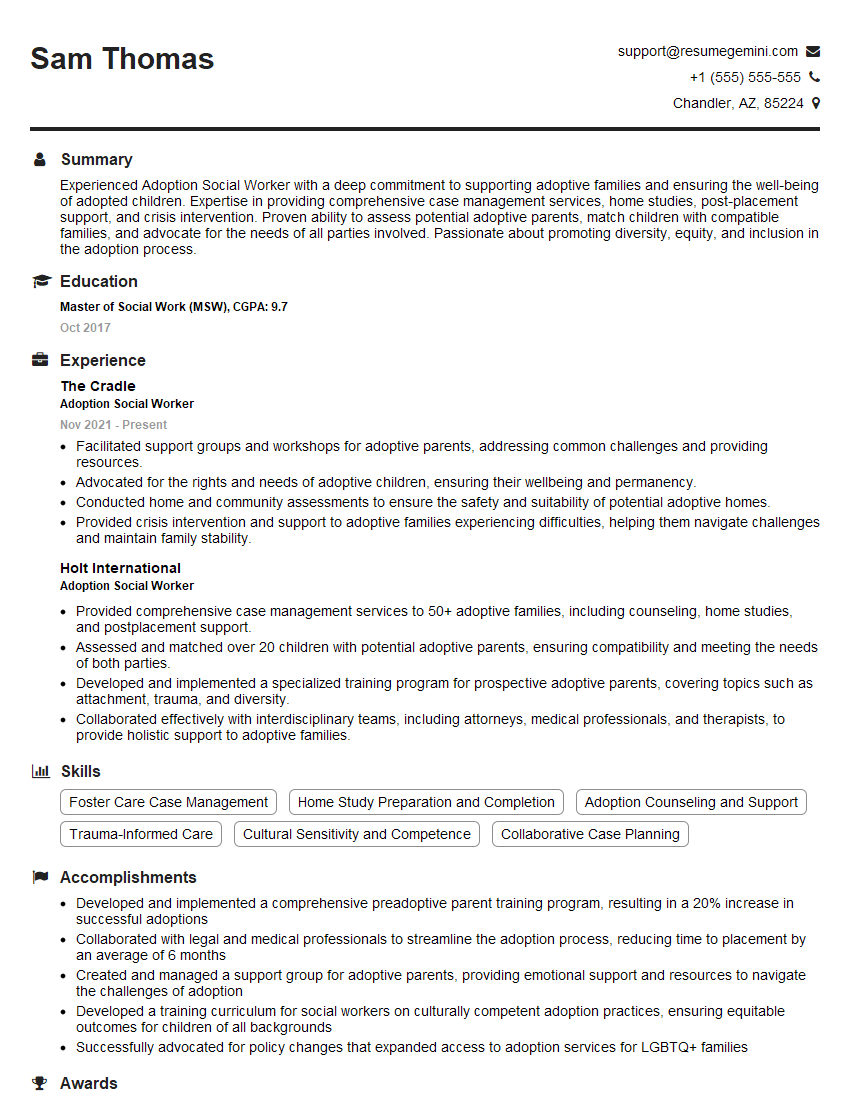
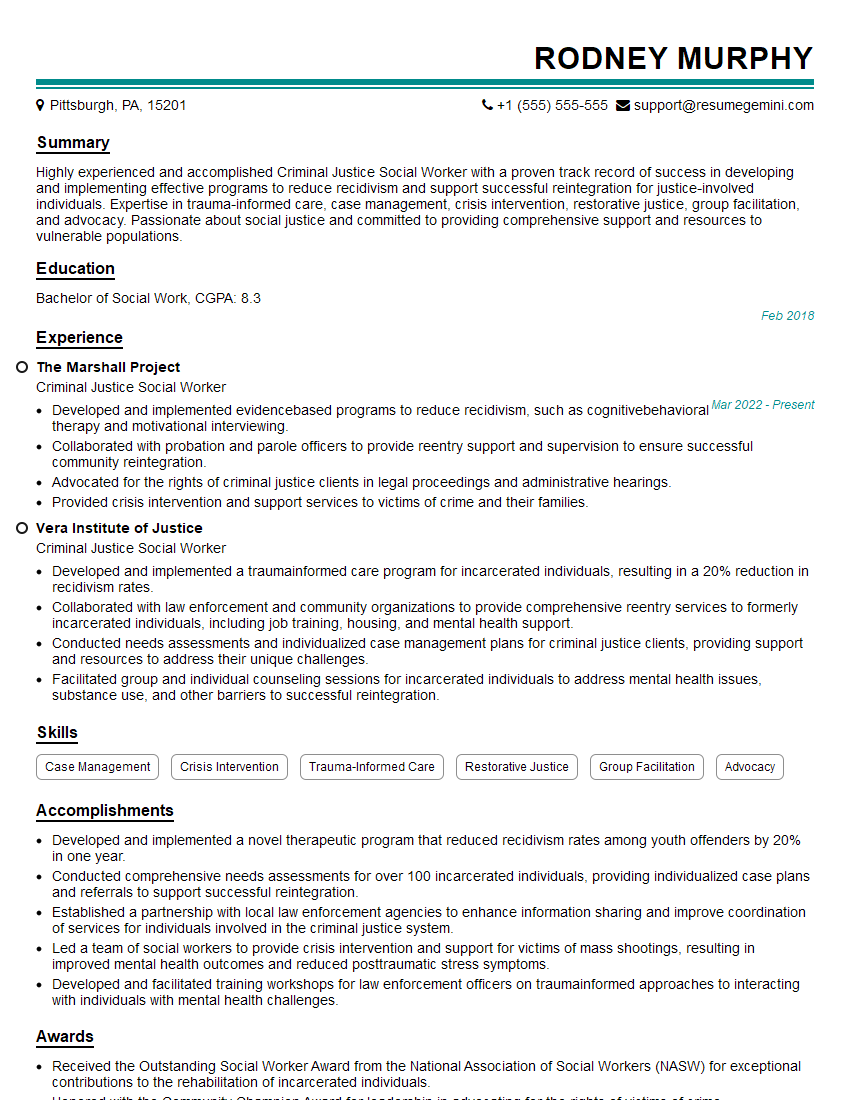
A strong understanding of Legal Issues in Social Work is crucial for a successful and fulfilling career. It demonstrates your commitment to ethical practice and your ability to navigate complex legal frameworks. To enhance your job prospects, creating a compelling and ATS-friendly resume is essential. ResumeGemini is a trusted resource that can help you build a professional and impactful resume tailored to highlight your skills and experience in Legal Issues in Social Work. Examples of resumes tailored to this field are available on ResumeGemini to guide your creation process.
Explore more articles
Users Rating of Our Blogs
Share Your Experience
We value your feedback! Please rate our content and share your thoughts (optional).
What Readers Say About Our Blog
I Redesigned Spongebob Squarepants and his main characters of my artwork.
https://www.deviantart.com/reimaginesponge/art/Redesigned-Spongebob-characters-1223583608
IT gave me an insight and words to use and be able to think of examples
Hi, I’m Jay, we have a few potential clients that are interested in your services, thought you might be a good fit. I’d love to talk about the details, when do you have time to talk?
Best,
Jay
Founder | CEO