Preparation is the key to success in any interview. In this post, we’ll explore crucial Client Relations and Management interview questions and equip you with strategies to craft impactful answers. Whether you’re a beginner or a pro, these tips will elevate your preparation.
Questions Asked in Client Relations and Management Interview
Q 1. Describe your experience managing a portfolio of diverse clients.
Managing a diverse client portfolio requires a highly adaptable and organized approach. My experience involves juggling clients from various industries, with differing communication styles, and unique project needs. I’ve successfully managed portfolios ranging from 10 to 30 clients simultaneously, maintaining high levels of satisfaction and achieving project goals within agreed-upon timelines and budgets.
For example, in my previous role at [Previous Company Name], I managed a portfolio including a tech startup, a non-profit organization, and a large multinational corporation. Each required a different communication strategy – the startup appreciated frequent updates and informal communication, the non-profit valued transparency and detailed reporting, and the multinational preferred formal presentations and concise summaries. I tailored my approach to each client’s specific needs and preferences, utilizing project management tools to track progress and ensure consistent communication.
- Organization: Employing CRM systems and project management software allows me to track deadlines, client preferences, and communication history efficiently.
- Prioritization: I utilize time-blocking techniques and prioritize tasks based on urgency and importance, ensuring critical client needs are always met.
- Communication: Establishing clear communication protocols and regular check-ins ensures smooth collaboration and addresses potential issues promptly.
Q 2. How do you prioritize competing client demands?
Prioritizing competing client demands is a crucial skill in client relationship management. My approach utilizes a multi-faceted strategy based on a clear understanding of client contracts, project deadlines, and the potential impact of delays. I employ a prioritization matrix that considers factors such as urgency, impact, and contractual obligations.
Imagine a scenario where Client A requires an urgent fix that impacts their ongoing operations, while Client B has a deadline approaching for a less critical project. I would prioritize Client A’s urgent request first, while proactively communicating with Client B to manage expectations and ensure timely completion of their project. This involves transparent communication regarding the scheduling adjustments and potential alternative solutions.
- Urgency/Importance Matrix: Categorizing tasks based on their urgency and importance helps in efficient prioritization. Urgent and important tasks are tackled first.
- Time Blocking: Allocating specific time slots for client-related activities ensures focused attention and efficient use of time.
- Communication: Proactive communication with clients regarding potential delays or adjustments keeps them informed and maintains trust.
Q 3. Explain your approach to building rapport with new clients.
Building rapport with new clients involves a proactive and personalized approach. It’s about more than just closing a deal; it’s about establishing a long-term, mutually beneficial relationship. My approach focuses on understanding their needs, demonstrating expertise, and building trust.
I begin by actively listening to their needs and concerns during the initial consultation. I ask clarifying questions, demonstrating genuine interest in their business and challenges. Then, I present tailored solutions that directly address their specific requirements, showcasing my expertise and understanding. Following up promptly and consistently helps cement the foundation of a strong working relationship.
- Active Listening: Paying close attention to the client’s needs and concerns is essential for understanding their expectations.
- Personalized Solutions: Tailoring solutions to the specific needs of each client demonstrates expertise and commitment.
- Consistent Communication: Regular check-ins and proactive communication reinforce trust and build rapport.
Q 4. How do you handle difficult client interactions or complaints?
Handling difficult client interactions or complaints requires empathy, professionalism, and a problem-solving mindset. My approach focuses on active listening, understanding their perspective, and finding mutually acceptable solutions.
If a client expresses dissatisfaction, I begin by actively listening to their concerns without interruption. I acknowledge their feelings, validate their perspective, and then work collaboratively to identify the root cause of the problem. I explain the steps taken to resolve the issue and keep them updated throughout the process. Finally, I follow up to ensure their satisfaction and prevent future similar issues.
- Active Listening: Let the client fully express their concerns before responding.
- Empathy and Validation: Acknowledge their feelings and understand their perspective.
- Problem-Solving: Collaboratively identify the root cause and implement solutions.
- Follow-up: Ensure the client is satisfied and address any lingering concerns.
Q 5. What strategies do you use to retain clients?
Client retention is paramount, and it hinges on exceeding expectations and fostering long-term partnerships. My strategies encompass proactive communication, value-added services, and a focus on continuous improvement.
I regularly check in with clients, not just to discuss ongoing projects, but to understand their evolving needs and identify potential opportunities to further assist them. This might involve suggesting new services, offering relevant industry insights, or simply providing a friendly update. I also actively solicit feedback, using it to improve our services and strengthen our relationship.
- Proactive Communication: Regular check-ins and updates keep clients informed and engaged.
- Value-Added Services: Offering additional services or insights demonstrates commitment and strengthens relationships.
- Feedback and Continuous Improvement: Actively soliciting feedback and using it to improve services demonstrates a commitment to client satisfaction.
- Loyalty Programs: Incentivizing continued business can foster long-term relationships.
Q 6. How do you measure the success of your client relationships?
Measuring the success of client relationships goes beyond simply looking at revenue. It requires a holistic approach considering various metrics that reflect client satisfaction and the strength of the relationship.
I track key performance indicators (KPIs) such as client retention rate, Net Promoter Score (NPS), customer satisfaction (CSAT) scores, and the frequency of positive feedback. I also analyze project completion rates, adherence to timelines and budgets, and the overall quality of services delivered. Regularly reviewing these metrics helps identify areas for improvement and allows for data-driven decision-making to enhance client relationships.
- Client Retention Rate: Measures the percentage of clients retained over a specific period.
- Net Promoter Score (NPS): Measures client willingness to recommend services.
- Customer Satisfaction (CSAT) Scores: Measures client satisfaction with specific services or interactions.
- Project Completion Rates: Tracks the successful completion of projects within agreed-upon timelines and budgets.
Q 7. Describe your experience using CRM software.
I have extensive experience using CRM (Customer Relationship Management) software, including [List specific CRM software used, e.g., Salesforce, HubSpot, Zoho CRM]. I am proficient in using CRM systems to manage client interactions, track project progress, and analyze client data. I understand the importance of accurate data entry and utilizing the system’s reporting capabilities to gain insights into client behavior and identify areas for improvement.
In my previous role, I leveraged [CRM Software Name] to streamline client communication, automate follow-up tasks, and generate customized reports. This enabled me to improve efficiency, enhance client communication, and make more informed decisions regarding client management strategies. For example, using the reporting features, I identified a trend in client churn and used that data to modify our onboarding process, resulting in a significant improvement in client retention.
- Contact Management: Efficiently managing client contact information, communication history, and interaction details.
- Project Management: Tracking project progress, deadlines, and milestones within the CRM system.
- Reporting and Analytics: Utilizing reporting features to gain valuable insights into client behavior and identify areas for improvement.
- Automation: Automating tasks such as follow-ups and reminders to improve efficiency.
Q 8. How do you identify and address client needs proactively?
Proactive identification of client needs involves anticipating their future requirements and addressing potential issues before they arise. It’s less about reacting to problems and more about preventing them. This requires a deep understanding of the client’s business, industry, and goals.
- Regular Communication: Frequent check-ins, not just when there’s a problem, but to discuss progress, upcoming milestones, and potential roadblocks. Think of it like a friendly, proactive health check for the client relationship.
- Data Analysis: Analyzing past interactions, project performance, and market trends to identify patterns and predict future needs. For example, if a client’s sales figures are consistently below target in a specific region, we might proactively offer strategies to address this.
- Active Listening: Paying close attention to what clients say – both explicitly and implicitly – during meetings and communications. This includes observing body language and unspoken concerns.
- Feedback Mechanisms: Implementing systems for gathering continuous feedback, like regular surveys or informal check-in calls, allows for early detection of emerging needs or dissatisfaction.
For example, if I notice a client’s website traffic is declining, I might proactively suggest a SEO audit or a content marketing strategy to boost their online presence before they even raise the issue themselves. This demonstrates foresight and a commitment to their success.
Q 9. Describe a time you exceeded a client’s expectations.
In a previous role, a client was launching a new product and their marketing materials were lagging. The deadline was tight, and they were understandably stressed. While our initial contract only covered design work, I recognized their urgency and volunteered to help coordinate with their printing vendor, ensuring a seamless and timely delivery. This went beyond my defined responsibilities. The client was incredibly grateful, praising not only the quality of our design work but also our proactive problem-solving and dedication. This resulted in a strong relationship, positive testimonials, and additional future projects.
Q 10. How do you manage client expectations effectively?
Managing client expectations involves clearly defining deliverables, timelines, and communication protocols upfront. Transparency and open communication are paramount throughout the project lifecycle.
- Clear Contracts: Detailed contracts outlining scopes of work, payment terms, and responsibilities minimize misunderstandings.
- Regular Updates: Providing consistent updates on project progress, highlighting any potential delays or challenges proactively. This keeps clients informed and involved.
- Realistic Expectations: Setting realistic expectations about timelines and outcomes, avoiding over-promising. It’s better to under-promise and over-deliver.
- Active Listening and Feedback: Regularly soliciting client feedback ensures their expectations align with our progress and address any concerns early on.
Think of it as setting a shared roadmap at the beginning of a journey, and constantly checking in to ensure everyone is on the same page and heading in the right direction. Addressing potential misunderstandings promptly prevents major conflicts later.
Q 11. What is your experience with contract negotiation?
I have extensive experience negotiating contracts, focusing on ensuring a mutually beneficial agreement that protects both the client and the company. My approach emphasizes collaborative negotiation rather than adversarial tactics.
- Understanding Client Needs: Thoroughly understanding the client’s requirements and priorities before entering negotiations.
- Clearly Defined Scope: Ensuring the scope of work is clearly defined and avoids ambiguity.
- Fair Pricing: Developing pricing structures that reflect the value delivered while remaining competitive.
- Risk Management: Identifying potential risks and incorporating clauses to address them fairly.
- Legal Review: Working closely with legal counsel to ensure the contract is legally sound and protects both parties.
For example, I once negotiated a contract where the client initially wanted a fixed-price model, but after discussions, we agreed on a time and materials model with clearly defined milestones and payment schedules. This approach worked better for both parties, allowing for flexibility while ensuring transparency.
Q 12. How do you handle client feedback, both positive and negative?
Handling client feedback, both positive and negative, is crucial for continuous improvement and building strong relationships.
- Positive Feedback: Acknowledge and appreciate positive feedback. This reinforces good work and strengthens the client relationship.
- Negative Feedback: Listen attentively to negative feedback without becoming defensive. Analyze the feedback to identify areas for improvement and take appropriate action. Communicate the steps taken to address the concerns.
- Documentation: Maintain detailed records of all client feedback, both positive and negative, for tracking and future reference.
I always follow up with clients after receiving feedback, whether positive or negative, to show that I value their input and am committed to improving our service. This demonstrates professionalism and a willingness to learn and adapt.
Q 13. Describe your experience in conflict resolution with clients.
Conflict resolution with clients requires empathy, active listening, and a focus on finding mutually acceptable solutions. My approach involves:
- Understanding the Root Cause: Identifying the underlying cause of the conflict through open and honest communication.
- Empathetic Listening: Actively listening to the client’s perspective without interruption or judgment.
- Collaborative Problem Solving: Working collaboratively with the client to identify and implement mutually acceptable solutions.
- Documentation: Documenting the conflict, the resolution process, and the agreed-upon solution.
- Follow-Up: Following up with the client to ensure the resolution is effective and the issue is fully resolved.
In one instance, a client was unhappy with a project delay. Instead of getting defensive, I acknowledged their frustration, explained the reasons for the delay transparently, and then collaborated on a revised timeline that met both their needs and our capabilities. This proactive approach preserved the relationship and maintained trust.
Q 14. How do you build trust and credibility with clients?
Building trust and credibility with clients involves demonstrating competence, integrity, and reliability consistently. It’s about being a dependable partner, not just a service provider.
- Expertise and Competence: Consistently delivering high-quality work that meets or exceeds expectations.
- Integrity and Honesty: Being transparent and honest in all communications, even when delivering difficult news.
- Reliability and Responsiveness: Being responsive to client inquiries and meeting deadlines consistently.
- Proactive Communication: Keeping clients informed of project progress and potential challenges proactively.
- Building Relationships: Taking the time to understand client needs and building genuine rapport.
I always strive to go the extra mile for my clients, demonstrating that I am invested in their success. This may involve providing additional support, offering suggestions beyond the scope of the project, or simply being a reliable and trustworthy resource. This consistent effort builds a foundation of trust and credibility.
Q 15. What is your experience with client onboarding processes?
Client onboarding is the process of integrating a new client into your system and ensuring they have a smooth and positive initial experience. It’s crucial for establishing a strong, long-term relationship.
My approach involves a structured, multi-step process. First, I conduct a thorough intake to understand their specific needs and goals. This includes reviewing contracts, clarifying expectations, and gathering essential information. Next, I provide tailored training and access to necessary resources. This might involve personalized tutorials, documentation, or dedicated onboarding calls. Throughout the process, I maintain open communication, regularly checking in with the client to address any questions or concerns. Finally, I set clear expectations for ongoing communication and support. For example, I recently onboarded a new SaaS client. I created a customized onboarding checklist which includes setting up their account, conducting a live demo of the software, and scheduling regular check-in calls over the first month. This ensured they were comfortable and confident using the product from day one.
- Thorough Intake: Understanding client needs and goals.
- Tailored Training: Providing relevant resources and support.
- Open Communication: Maintaining regular contact and addressing concerns.
- Clear Expectations: Establishing protocols for ongoing interaction.
Career Expert Tips:
- Ace those interviews! Prepare effectively by reviewing the Top 50 Most Common Interview Questions on ResumeGemini.
- Navigate your job search with confidence! Explore a wide range of Career Tips on ResumeGemini. Learn about common challenges and recommendations to overcome them.
- Craft the perfect resume! Master the Art of Resume Writing with ResumeGemini’s guide. Showcase your unique qualifications and achievements effectively.
- Don’t miss out on holiday savings! Build your dream resume with ResumeGemini’s ATS optimized templates.
Q 16. How do you stay updated on industry trends relevant to your clients?
Staying current with industry trends is essential for providing relevant and valuable services to my clients. I employ a multi-faceted approach.
- Industry Publications and Reports: I regularly read industry-specific journals, newsletters, and research reports to stay abreast of new technologies, best practices, and market shifts.
- Conferences and Webinars: Attending industry conferences and webinars allows for networking and direct exposure to the latest developments.
- Professional Networks: Participating in professional organizations and online forums facilitates knowledge sharing and collaborative learning.
- Client Interactions: Directly engaging with clients allows me to understand their challenges and evolving needs, identifying trends from the ground up.
For instance, recently, I noticed a trend towards AI-powered solutions in my clients’ sectors through a combination of attending a relevant conference and reading several industry reports. I then proactively presented these options to my clients, demonstrating my commitment to their success and positioning myself as a valuable resource.
Q 17. How do you communicate effectively with clients across different communication channels?
Effective communication is paramount in client relations. I adapt my communication style to the client and the situation, leveraging various channels strategically.
- Email: For formal communication, detailed information, or records.
- Phone Calls: For timely updates, complex discussions, or immediate issue resolution.
- Video Conferencing: For face-to-face interaction, collaborative sessions, and building rapport.
- Project Management Software: For centralized task management, progress tracking, and document sharing. (e.g., Asana, Trello)
- Instant Messaging: For quick queries and informal updates (e.g., Slack, Microsoft Teams)
I always prioritize clarity, conciseness, and responsiveness. I ensure all communication is professional, courteous, and aligned with the client’s preferred method. For example, I recently had a client who preferred email for all formal communication but preferred quick updates via instant messaging. I adapted my communication to reflect these preferences, ensuring I was meeting their expectations and fostering a strong professional relationship.
Q 18. Describe your approach to reporting on client performance and progress.
Reporting on client performance and progress is critical for transparency and accountability. My approach involves customized reporting tailored to each client’s needs and preferences.
I use a combination of quantitative and qualitative data. Quantitative data might include key performance indicators (KPIs) like conversion rates, sales figures, or website traffic. Qualitative data involves client feedback, observations from meetings, and insights from project milestones. I present this information in clear, concise reports, often using visual aids like charts and graphs to enhance understanding. I also schedule regular review meetings to discuss the reports in detail and answer any questions. The frequency of these reports varies according to client needs, ranging from weekly to monthly updates. For example, for a marketing client, I might report weekly on social media engagement and monthly on overall campaign performance. For a different client, I might provide a quarterly report focusing on long-term strategic goals.
Q 19. How do you handle situations where client requirements conflict with company policies?
Handling conflicts between client requirements and company policies requires a delicate balance of diplomacy and firmness. My approach involves:
- Understanding the Issue: Carefully listening to the client’s concerns and thoroughly understanding their perspective.
- Explaining the Policy: Clearly and respectfully explaining the company’s policies and the reasoning behind them.
- Exploring Alternatives: Collaboratively exploring alternative solutions that meet the client’s needs while adhering to company policies. This may involve compromise or finding creative solutions.
- Escalation (If Necessary): If no mutually agreeable solution is found, escalating the issue to relevant stakeholders within the company for further guidance and resolution.
- Documentation: Maintaining detailed records of all communications and agreed-upon solutions.
For example, a client might request a service that violates our data privacy policy. I would explain the policy, discuss the risks involved, and offer alternative solutions that meet their needs while upholding our commitment to data security.
Q 20. What strategies do you use to identify potential upselling or cross-selling opportunities?
Identifying upselling and cross-selling opportunities requires a deep understanding of the client’s needs and our product/service offerings. My approach is proactive and consultative.
- Regular Check-ins: During routine communication, I actively listen for hints of unmet needs or areas where we could provide additional value.
- Performance Analysis: Analyzing client performance data can highlight areas where additional services could enhance results.
- Client Feedback: Gathering feedback through surveys, meetings, or informal conversations reveals opportunities to improve or expand services.
- Market Research: Keeping abreast of industry trends identifies new products or services that could benefit existing clients.
For instance, if a client is successfully using our basic marketing package, I might identify opportunities to upgrade to a premium package with more advanced features based on their growth trajectory and performance data. I present these suggestions as value-added options rather than just sales pitches.
Q 21. How do you work with internal teams to deliver excellent client service?
Delivering excellent client service requires effective collaboration with internal teams. I foster strong relationships and clear communication channels.
- Regular Team Meetings: Participating in regular meetings to discuss client projects, challenges, and upcoming needs.
- Clear Communication: Maintaining consistent and transparent communication with all relevant teams (e.g., technical support, sales, marketing).
- Shared Goals: Ensuring everyone shares a common understanding of client goals and expectations.
- Feedback Mechanisms: Establishing processes for collecting and addressing feedback from different teams to continuously improve client service.
For example, if a client encounters a technical issue, I work closely with the technical support team to resolve the problem quickly and efficiently. I act as a liaison, ensuring the client receives timely updates and feels supported throughout the process. Collaboration is crucial to ensure seamless client experiences.
Q 22. Describe your experience with client segmentation and targeting.
Client segmentation and targeting is crucial for effective client relationship management. It involves dividing your client base into distinct groups based on shared characteristics, then tailoring your communication and service offerings to each segment’s specific needs and preferences. This allows for more personalized and impactful interactions, ultimately leading to higher customer satisfaction and retention.
For example, in my previous role at a SaaS company, we segmented our clients by company size (small, medium, enterprise), industry (healthcare, finance, tech), and engagement level (high, medium, low). The enterprise clients received dedicated account managers and tailored onboarding experiences, while smaller clients benefited from automated email sequences and online resources. This strategic approach ensured we delivered relevant services and communication, leading to a significant improvement in customer satisfaction scores and reduced churn rate.
We used data analytics to identify key characteristics within each segment. This involved analyzing factors such as purchase history, website activity, customer support interactions, and survey responses. This data-driven approach helped us continuously refine our segmentation and targeting strategies.
Q 23. How do you handle confidential client information?
Confidentiality is paramount in client relationship management. I adhere to strict protocols to protect sensitive client information. This includes following company data protection policies, utilizing secure data storage and transmission methods, and limiting access to confidential information on a need-to-know basis only.
For instance, I always use secure communication channels like encrypted email or company-approved messaging platforms for sharing sensitive data. I never discuss client information in public spaces or with unauthorized individuals. I also ensure that all physical documents containing client information are properly secured and disposed of securely following company guidelines. I regularly update my knowledge of relevant data privacy regulations, such as GDPR and CCPA, to ensure compliance.
Q 24. How do you adapt your communication style to different client personalities?
Adapting communication style is vital for effective client interaction. I believe in active listening and observing client behavior to understand their communication preferences. Some clients appreciate concise, data-driven communication, while others prefer a more personable and collaborative approach.
For example, with a highly analytical client, I would focus on presenting clear data, using visuals like charts and graphs. With a more relationship-oriented client, I would prioritize building rapport by engaging in casual conversation and focusing on the long-term partnership. I tailor my language, tone, and communication channels (email, phone, video call) based on the individual client’s preferences and the context of our interaction.
Q 25. How do you manage client relationships during periods of high stress or crisis?
Managing client relationships during stressful situations requires a calm, proactive, and transparent approach. My priority is to provide clear, consistent communication to keep clients informed and reassured, even amidst uncertainty. I use a structured approach, focusing on prompt issue identification, establishing clear communication channels, and working collaboratively towards a resolution.
For example, during a project delay, I would immediately inform the client, explain the reasons behind the delay, provide a revised timeline, and outline the steps being taken to mitigate further issues. Open communication helps build trust and manage expectations, even in challenging situations.
Q 26. What is your experience with client surveys and feedback mechanisms?
I have extensive experience using client surveys and feedback mechanisms to gather insights into client satisfaction and identify areas for improvement. I’ve used both quantitative surveys (using tools like SurveyMonkey) to collect numerical data on satisfaction ratings and qualitative methods (like focus groups or one-on-one interviews) to understand the underlying reasons behind client feedback.
For instance, I implemented a post-project survey to gather feedback on client experience with a particular service. The feedback helped us identify areas for improvement in our project management processes, leading to increased client satisfaction and higher retention rates. I analyze the data and present findings to stakeholders, using these insights to inform strategy development and improvements.
Q 27. How do you prioritize client needs against other project priorities?
Prioritizing client needs within a broader project context requires a delicate balance. I typically use a prioritization matrix that weighs the urgency and importance of client requests against other project goals. Critical client needs are prioritized over less urgent ones, even if it means adjusting internal deadlines.
For instance, if a critical client request arises that impacts their business operations, I would advocate for prioritizing it even if it necessitates reallocating resources from less impactful tasks. I believe open communication is key; I clearly communicate with internal teams about the prioritization of client needs to manage expectations and facilitate cooperation. This ensures client satisfaction while maintaining project timelines overall.
Q 28. Describe your experience with developing and implementing client retention strategies.
Developing and implementing client retention strategies is crucial for long-term business success. My approach involves understanding client needs, building strong relationships, providing exceptional service, and proactively addressing potential issues. This includes utilizing different tools like loyalty programs, personalized communications, and proactive support.
For example, I helped develop a client loyalty program that rewarded repeat business and offered exclusive benefits. This resulted in a measurable increase in client retention and repeat purchases. Further, I implemented a system for proactively reaching out to clients, checking in on their satisfaction and addressing potential concerns before they escalated into major problems. This proactive approach, combined with personalized service, fostered stronger client relationships, leading to increased customer lifetime value.
Key Topics to Learn for Client Relations and Management Interview
- Building Rapport and Trust: Understanding the nuances of communication styles and adapting your approach to build strong client relationships. Practical application: Describing how you’ve handled a challenging client interaction and built trust through effective communication.
- Active Listening and Needs Assessment: Mastering the art of truly understanding client needs and concerns beyond surface-level requests. Practical application: Providing examples of how you’ve identified unmet client needs and proactively addressed them.
- Conflict Resolution and Negotiation: Developing strategies to effectively manage and resolve conflicts while maintaining positive client relationships. Practical application: Describing a situation where you successfully negotiated a compromise that satisfied both parties.
- Client Retention Strategies: Understanding the importance of client retention and implementing proactive strategies to maintain long-term relationships. Practical application: Explaining a successful client retention initiative you’ve implemented or contributed to.
- Communication Channels and Tools: Proficiency in using various communication channels (email, phone, video conferencing) effectively and efficiently. Practical application: Discussing your experience using CRM systems and other client management tools.
- Stakeholder Management: Understanding how to manage expectations and communication with internal and external stakeholders to ensure client satisfaction. Practical application: Providing examples of how you’ve coordinated efforts between different teams to meet client needs.
- Performance Measurement and Reporting: Tracking key performance indicators (KPIs) related to client satisfaction and success. Practical application: Discussing your experience analyzing client data to identify trends and areas for improvement.
Next Steps
Mastering Client Relations and Management is crucial for career advancement in today’s competitive landscape. Strong client relationships directly impact a company’s success and your contributions will be highly valued. To enhance your job prospects, creating a compelling and ATS-friendly resume is essential. ResumeGemini is a trusted resource that can help you craft a professional resume that highlights your skills and experience effectively. Examples of resumes tailored to Client Relations and Management are available to help you build a standout application.
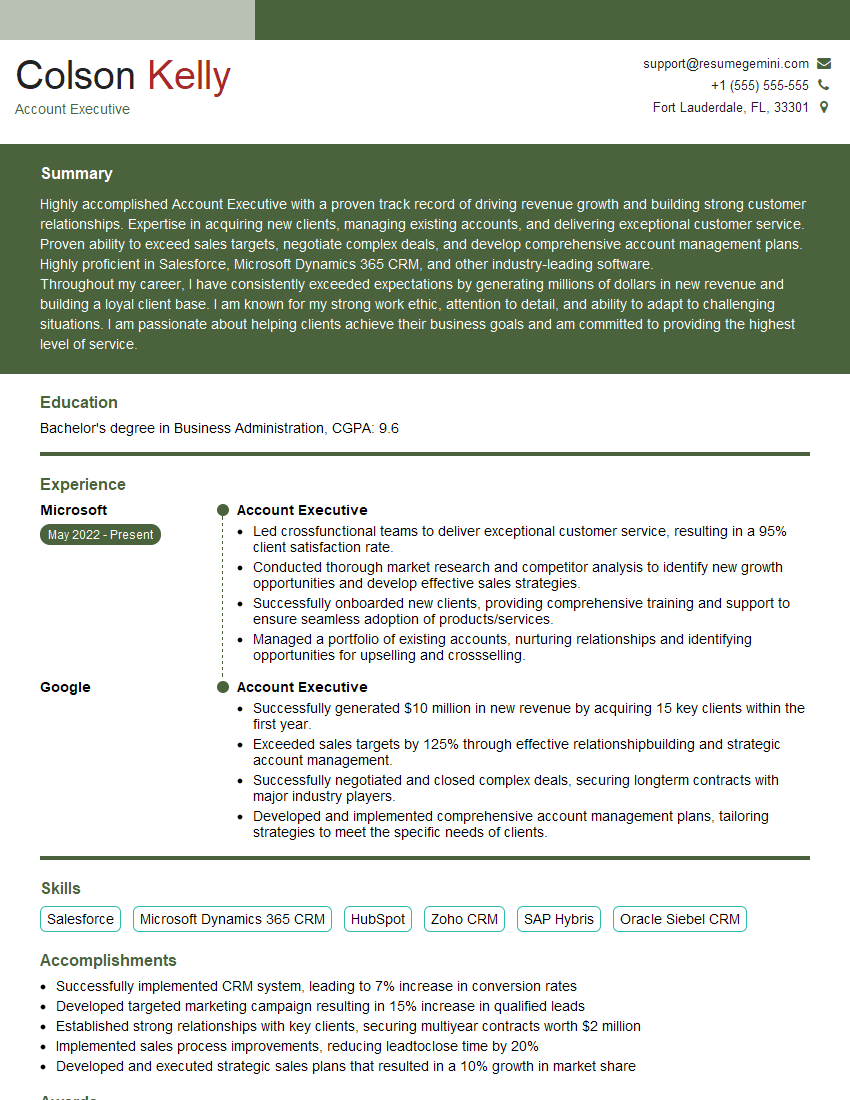
Account Executive Resume Sample
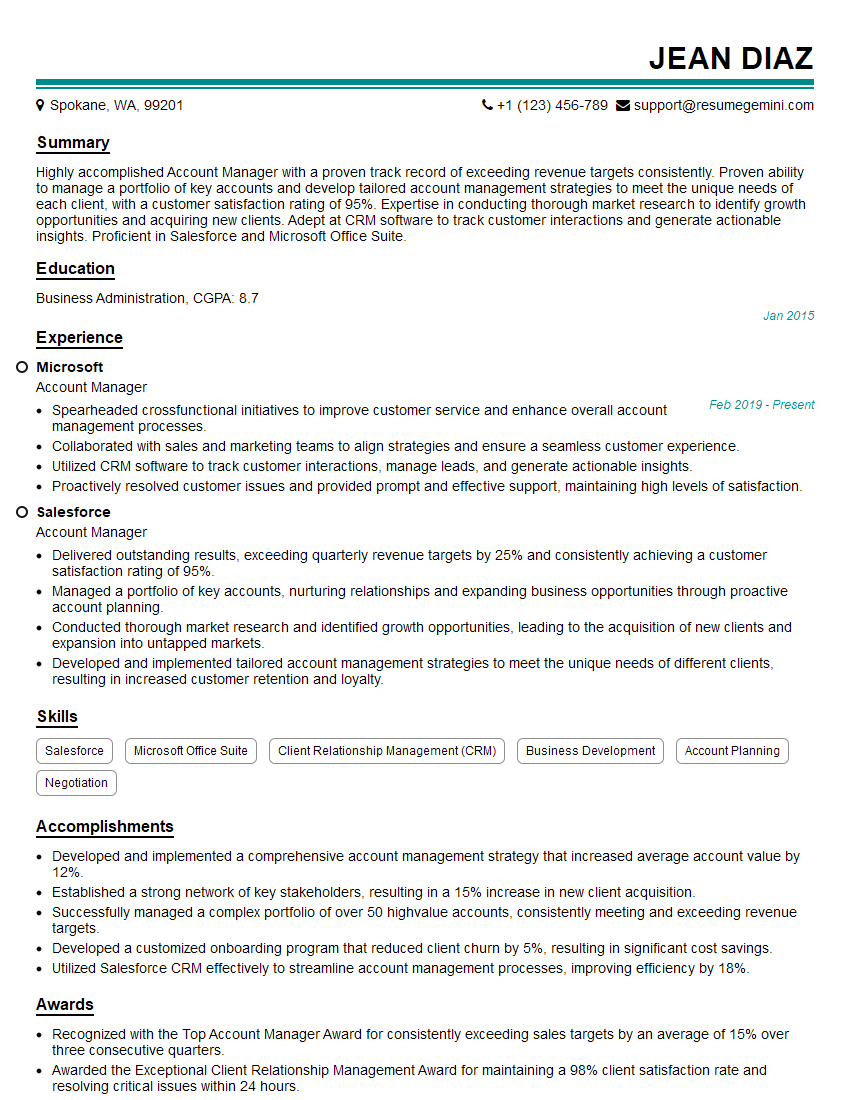
Account Manager Resume Sample
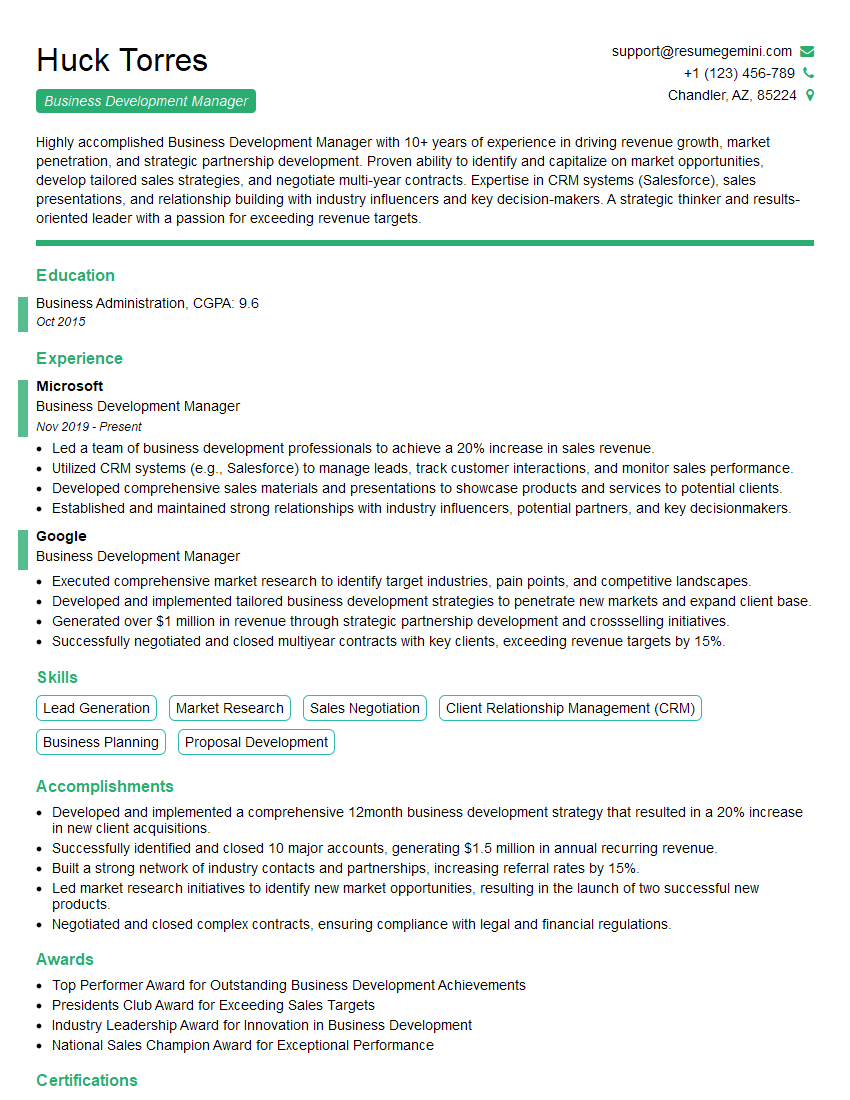
Business Development Manager Resume Sample
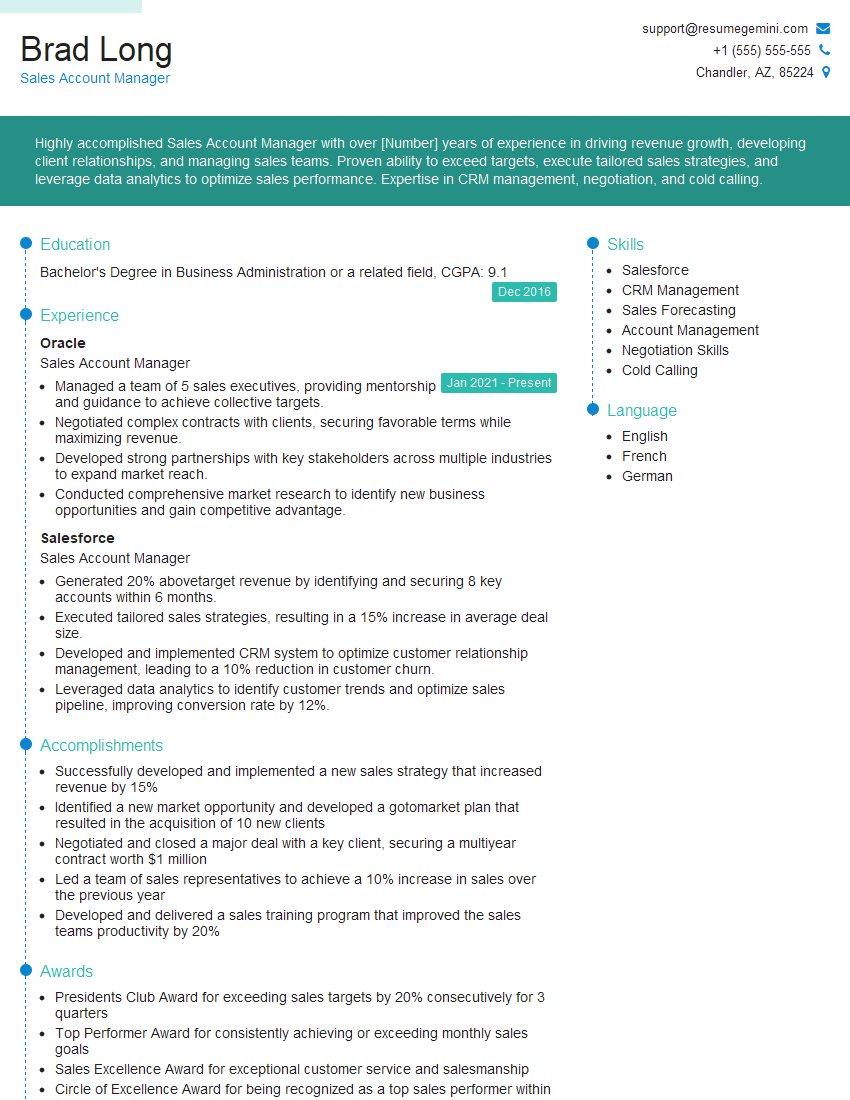
Sales Account Manager Resume Sample
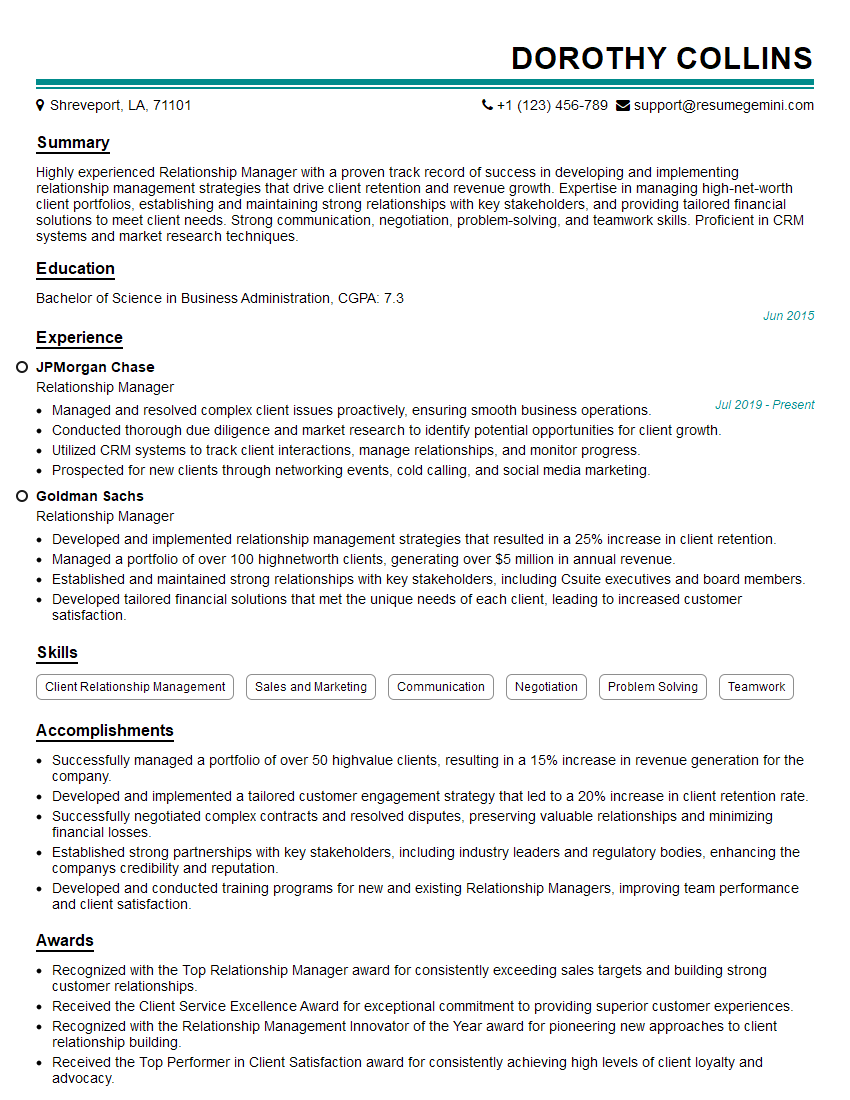
Relationship Manager Resume Sample
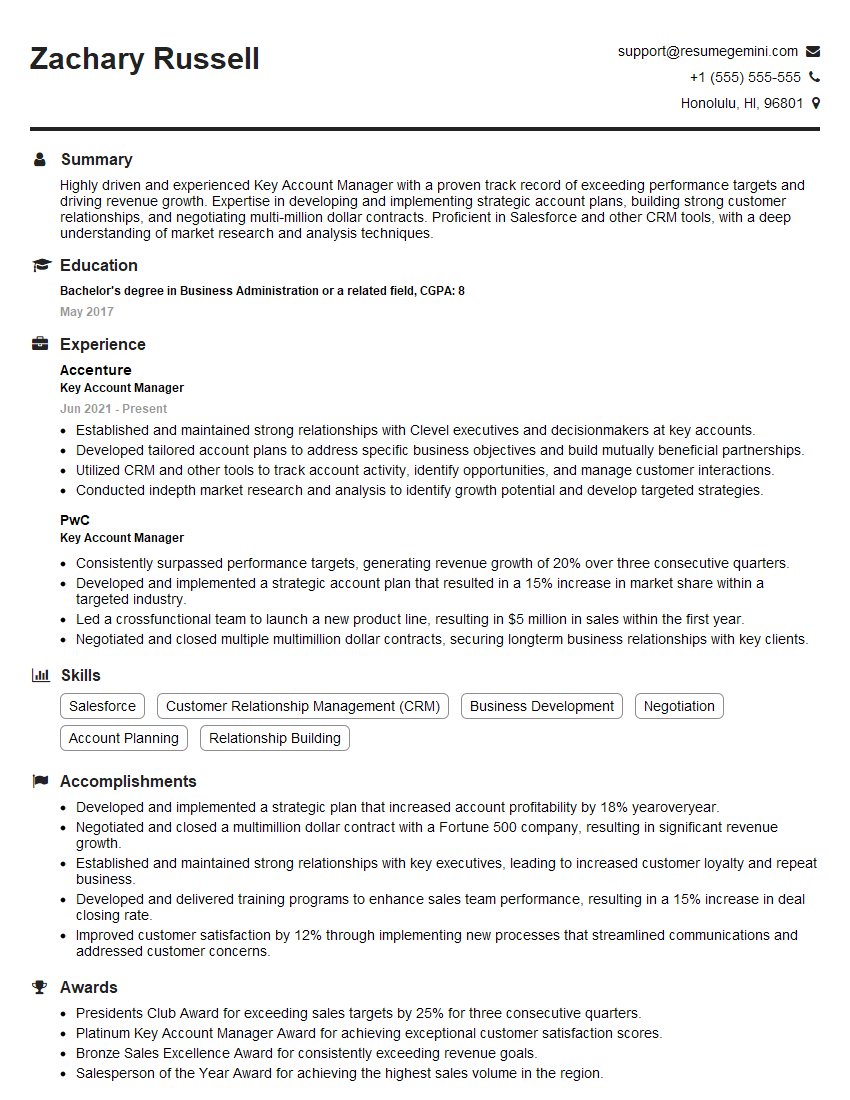
Key Account Manager Resume Sample
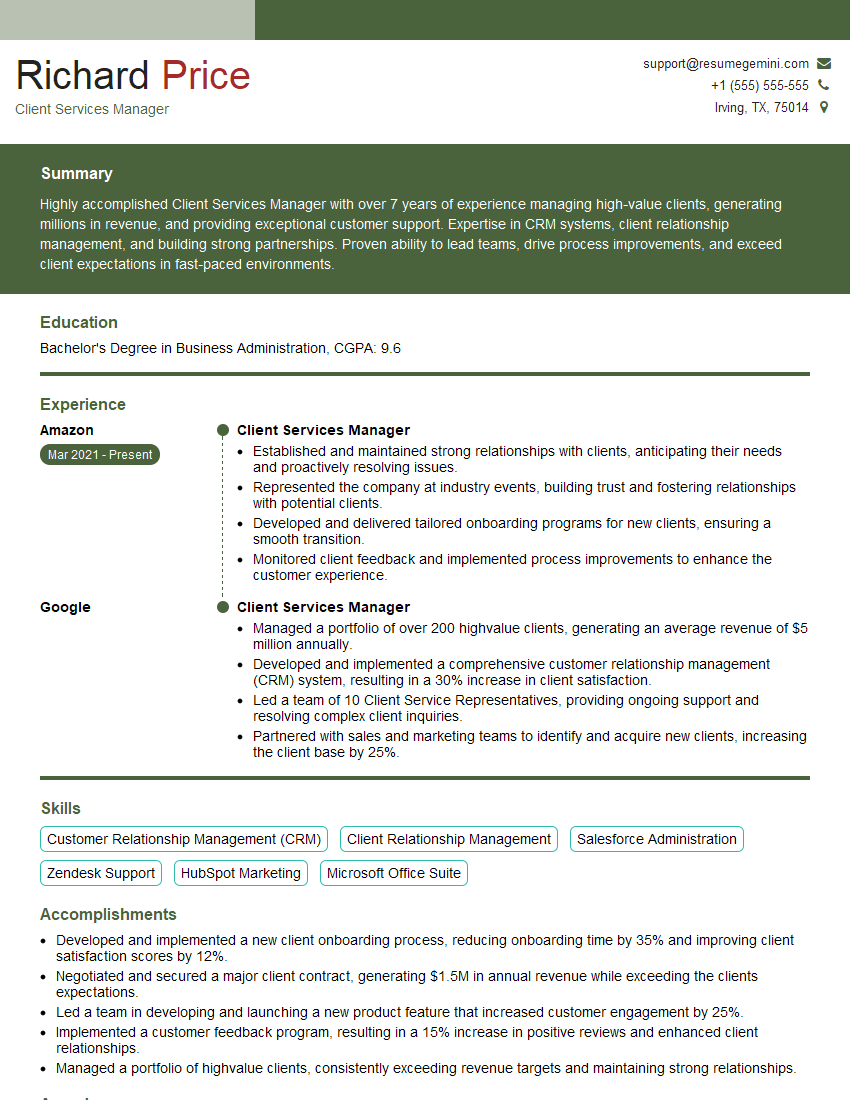
Client Services Manager Resume Sample
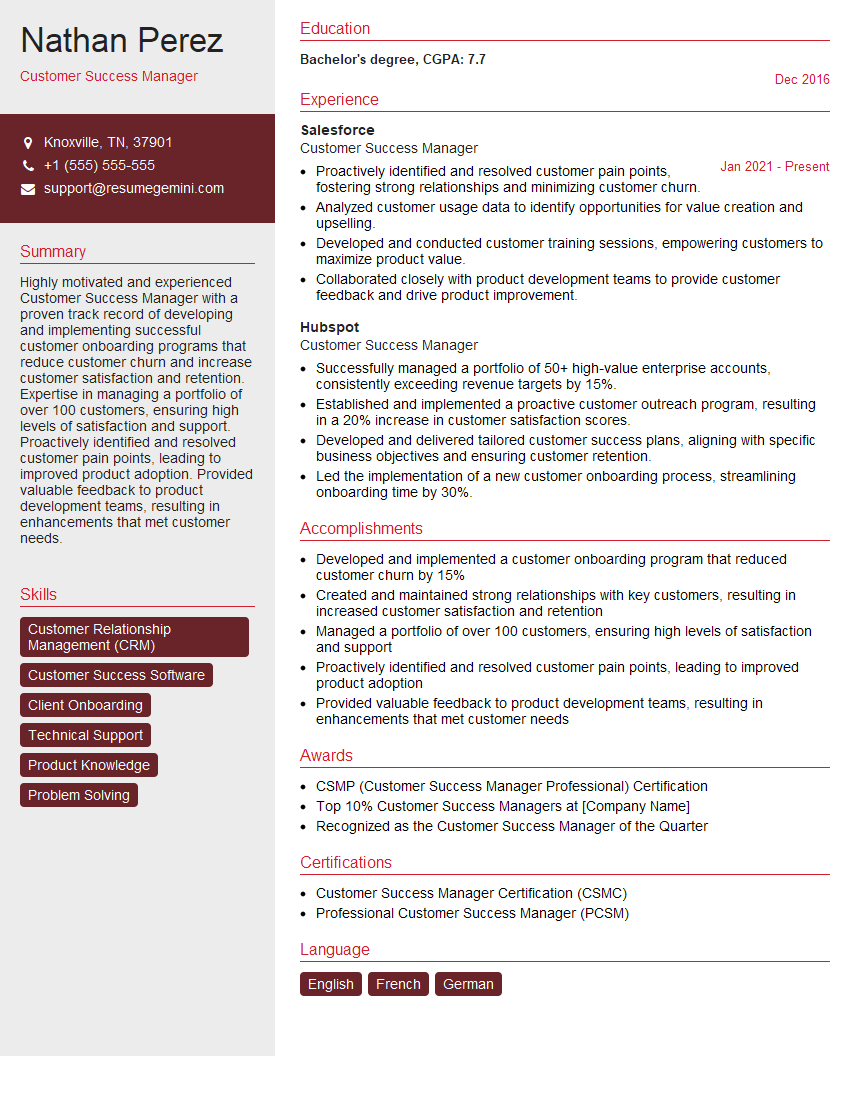
Customer Success Manager Resume Sample
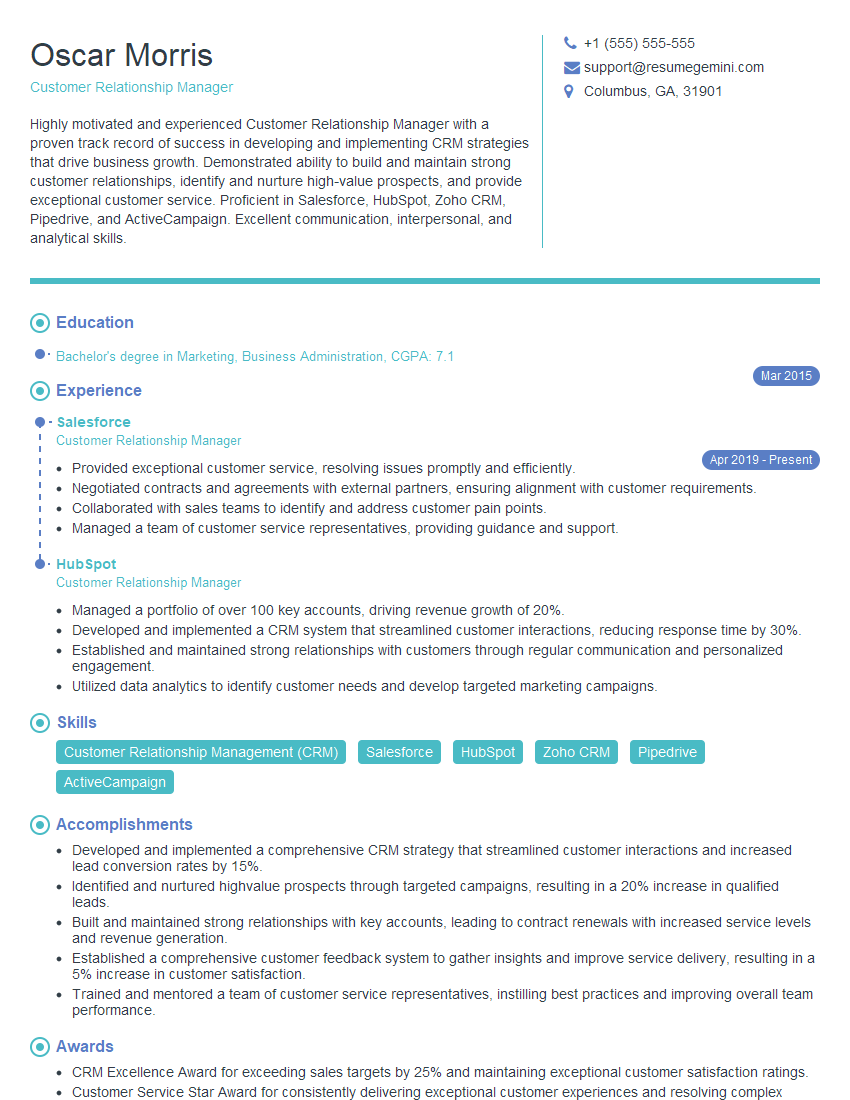
Customer Relationship Manager Resume Sample
Explore more articles
Users Rating of Our Blogs
Share Your Experience
We value your feedback! Please rate our content and share your thoughts (optional).
What Readers Say About Our Blog
Really detailed insights and content, thank you for writing this detailed article.
IT gave me an insight and words to use and be able to think of examples