Unlock your full potential by mastering the most common NEC (National Electrical Code) interview questions. This blog offers a deep dive into the critical topics, ensuring you’re not only prepared to answer but to excel. With these insights, you’ll approach your interview with clarity and confidence.
Questions Asked in NEC (National Electrical Code) Interview
Q 1. What is the purpose of Article 100 in the NEC?
Article 100 of the NEC is the definitions section. It’s essentially the dictionary for the entire code. Think of it as the foundation upon which all other articles are built. Every single term used throughout the NEC is defined here, ensuring everyone—electricians, inspectors, engineers—is on the same page regarding terminology. Without a standardized vocabulary, interpretations would vary widely, leading to inconsistencies and potential safety hazards. For example, it defines crucial terms like ‘conductor,’ ‘circuit,’ ‘grounding,’ and ‘bonding,’ all of which are essential for understanding the rest of the code’s requirements. Understanding Article 100 is paramount to accurately interpreting and applying the NEC.
Q 2. Explain the difference between grounding and bonding.
Grounding and bonding are often confused, but they serve distinct purposes in electrical safety. Grounding connects non-current-carrying metal parts of an electrical system to the earth. This provides a path for fault currents to flow to the ground, minimizing the risk of electric shock. Imagine a metal enclosure around your electrical panel; grounding ensures that if a fault occurs, the current will flow to earth rather than through you if you touch it. Bonding, on the other hand, connects non-current-carrying metal parts *within* an electrical system to each other. This equalizes the electrical potential between these parts, preventing voltage differences that could cause dangerous electrical currents to flow. Think of the metal conduit running throughout your house—bonding ensures all the metal parts are at the same electrical potential, preventing dangerous voltage differentials. In simple terms: grounding connects to the earth, bonding connects within the system.
Q 3. Describe the requirements for installing GFCI protection.
GFCI (Ground Fault Circuit Interrupter) protection is crucial for preventing electrical shocks. The NEC mandates GFCI protection in specific locations to mitigate the risk of electrocution. These locations generally include outdoors, bathrooms, garages, kitchens (within specific zones), and anywhere near water sources. The requirements specify the type of GFCI protection—either GFCI receptacles or GFCI circuit breakers—depending on the application. GFCI receptacles are easily identifiable by their ‘test’ and ‘reset’ buttons. GFCI breakers are installed at the panel and protect an entire circuit. The NEC also provides specific amperage requirements for the circuit breaker protecting the GFCI, ensuring the breaker trips at the correct current level. Failure to comply with GFCI requirements can result in serious injury or death, emphasizing the importance of strict adherence to code.
Q 4. What are the ampacity requirements for different types of conductors?
Ampacity, the current-carrying capacity of a conductor, is determined by several factors, including conductor size, material, insulation type, and installation method. The NEC’s Table 310.15(B)(16) provides ampacity ratings for various copper and aluminum conductors. For example, a 12 AWG copper conductor with THHN insulation in free air has a higher ampacity than the same conductor buried in the ground. Larger conductor sizes (smaller AWG number) can carry more current. The ambient temperature also affects ampacity; higher temperatures reduce a conductor’s ability to carry current. It’s critical to select conductors with sufficient ampacity to safely carry the expected current. Overloading a conductor can lead to overheating, insulation damage, and potential fire hazards. Always refer to the NEC tables for accurate ampacity ratings based on the specific installation conditions.
Q 5. How do you calculate voltage drop in a circuit?
Voltage drop is the reduction in voltage between the source and the load in an electrical circuit. It’s calculated using the formula: Voltage Drop = (2 x K x L x I) / A, where:
Kis the resistance constant of the conductor material (found in NEC Table 8).Lis the one-way length of the conductor in feet.Iis the current in amperes.Ais the cross-sectional area of the conductor in circular mils (found in NEC Table 8).
Excessive voltage drop can lead to inefficient operation of equipment and overheating of conductors. For example, a motor might run slowly or overheat if the voltage drop is too high. Calculating the voltage drop allows electricians to select appropriately sized conductors to minimize these issues and ensure proper operation of the electrical system. The NEC recommends that voltage drop be kept within certain limits to ensure adequate voltage at the load.
Q 6. Explain the requirements for branch circuit protection.
Branch circuit protection is critical for preventing overcurrent conditions that can lead to fires. The NEC mandates the use of overcurrent protective devices (OCPDs), such as fuses or circuit breakers, on each branch circuit. The ampacity rating of the OCPD must not exceed 80% of the ampacity of the conductor. For example, a 20-ampere circuit requires a 20-ampere breaker, and the conductors must have an ampacity rating at least equal to 20-amperes. The OCPD’s role is to interrupt the current flow if it exceeds the safe limit, thus protecting the circuit and preventing overheating and potential fires. Choosing the correct OCPD based on wire size and anticipated load is crucial for electrical safety and compliance with NEC standards. Incorrect sizing can lead to unsafe conditions and equipment damage.
Q 7. What are the rules for installing receptacles in bathrooms?
The NEC has stringent requirements for receptacles in bathrooms to enhance safety and reduce the risk of electric shock. Receptacles must be GFCI protected, as mentioned earlier. In addition, at least one receptacle must be installed within 3 feet of the outside edge of the bathtub or shower area, and all receptacles must be located at least 5 feet from the outside edge of the bathtub or shower. These requirements ensure that the receptacles are readily accessible for use while minimizing the risk of shock from water contact. The placement of the receptacle also needs to comply with other NEC guidelines regarding spacing, height and accessibility. Always consult the NEC for detailed information regarding receptacle installation in bathrooms.
Q 8. What are the requirements for grounding electrode conductors?
Grounding electrode conductors (GEC) are crucial for safety, connecting the grounding electrode system to the electrical system’s grounding point. The NEC outlines specific requirements to ensure a low-impedance path for fault currents, preventing dangerous voltage buildup. These requirements focus on material, size, and installation.
- Material: GECs must be made of copper, copper-clad steel, or other approved corrosion-resistant materials. Think of it like choosing the right plumbing pipe – you wouldn’t use flimsy material for your main water line. The GEC needs to withstand corrosion and carry high currents safely.
- Size: The minimum size is dictated by the grounding electrode system’s resistance and the anticipated fault current. Larger conductors are needed for larger systems and higher fault currents. Imagine it like a highway – a wider highway can handle more traffic (current) than a narrow road.
- Installation: GECs must be installed in a manner to avoid damage and ensure a secure connection. They should be protected from physical damage and corrosion, often buried or run in conduit. Think of it like burying a valuable cable – you need to protect it from damage.
- Connections: Connections must be made using approved methods, often with exothermic welds or compression connectors, ensuring a low-resistance connection. A loose connection is like a crack in your foundation – it compromises the entire system’s integrity.
For example, a large commercial building might require a much larger GEC than a small residential home due to the increased fault current potential.
Q 9. Explain the difference between a service entrance and a feeder.
Both service entrances and feeders are vital parts of an electrical system, but they serve different purposes. The service entrance is the point where electricity enters a building from the utility company’s supply. The feeder carries power from the service equipment to various distribution points within the building.
- Service Entrance: This includes the conductors from the utility’s meter to the main service disconnect. Think of it as the main pipeline bringing water into your house.
- Feeder: These are conductors that extend from the service equipment (like the main panel) to subpanels or other distribution points within a building. Imagine it as the branch lines distributing water throughout your house.
A key difference lies in their origin and destination. The service entrance originates from the utility and terminates at the main service panel. Feeders, on the other hand, originate from the main service equipment and supply power to other parts of the building. Incorrectly sizing or installing either can lead to overcurrent issues or system failures.
Q 10. What are the requirements for installing electrical equipment in hazardous locations?
Installing electrical equipment in hazardous locations, such as areas with flammable gases or dust, requires stringent adherence to NEC Article 500 and related articles. The goal is to prevent ignition sources from causing explosions or fires. This involves using specialized equipment and installation methods.
- Classifications: Hazardous locations are classified based on the type and presence of flammable materials (Class I, II, III) and the likelihood of ignition (Divisions 1 and 2). Choosing the right equipment depends on the specific classification.
- Equipment Types: Equipment intended for hazardous locations must be specifically designed and tested to meet the relevant standards (e.g., intrinsically safe, explosion-proof, dust-ignition-proof). It’s not a matter of just using any equipment; it must be rated for the hazardous environment.
- Installation Methods: Installation techniques must prevent the accumulation of flammable materials around the equipment, and proper sealing and grounding are critical. A small spark in the wrong place can have catastrophic consequences.
For example, installing standard light fixtures in a Class I, Division 1 location (like a gas refinery) is strictly prohibited. Explosion-proof fixtures designed for that specific classification are mandatory.
Q 11. What are the requirements for working with arc flash hazards?
Arc flash hazards are a significant safety concern in electrical systems. An arc flash is a sudden, high-energy release of electrical energy that can cause severe burns, hearing loss, and even death. The NEC doesn’t directly address arc flash mitigation but requires practices aligned with NFPA 70E (Standard for Electrical Safety in the Workplace).
- Arc Flash Hazard Analysis: A thorough analysis must be conducted to determine the potential arc flash hazards at each piece of equipment. This calculation determines the incident energy level and establishes the required personal protective equipment (PPE).
- Personal Protective Equipment (PPE): Workers must wear appropriate PPE, such as arc flash suits, face shields, and gloves, as determined by the arc flash hazard analysis. The level of PPE is directly linked to the calculated incident energy.
- Safety Procedures: Lockout/Tagout procedures are essential to de-energize equipment before working on it. Following established safety protocols is paramount, as a seemingly minor mistake can lead to a severe incident.
- Equipment Modifications: Modifying equipment to reduce the arc flash hazard, such as installing arc flash reduction devices, may be necessary.
Imagine a scenario where a worker is servicing a switchgear without proper PPE. An arc flash could result in severe, life-threatening injuries. Proper hazard analysis and adherence to safety protocols are vital.
Q 12. Explain the requirements for installing overcurrent protection devices.
Overcurrent protection devices (OCPDs), such as fuses and circuit breakers, are essential for preventing overheating and fires in electrical systems. The NEC dictates specific requirements for their selection, installation, and application.
- Ampacity Rating: OCPDs must have an ampacity rating not less than the load current but not exceeding the rating of the conductor. This prevents the circuit from carrying more current than it can safely handle.
- Type of Protection: The type of OCPD is crucial. Fuses offer one-time protection, while circuit breakers can be reset. The choice depends on the application and safety requirements.
- Location: OCPDs must be readily accessible for servicing and must be properly installed in approved enclosures. Accessibility ensures swift action in case of overcurrent situations.
- Coordination: In larger systems, OCPDs need to be coordinated to ensure that the correct device trips in case of a fault, protecting the upstream equipment. This is like having a series of dams controlling water flow – each dam protects the ones downstream.
For instance, installing a 15-amp circuit breaker on a 20-amp circuit is unsafe because it won’t prevent the conductors from overheating if the load exceeds 15 amps. Conversely, using a 30-amp breaker on a 15-amp circuit is also dangerous because it won’t trip in time to prevent a fire hazard.
Q 13. Describe the requirements for installing raceways.
Raceways, such as conduits and cable trays, protect and organize electrical conductors. The NEC dictates numerous requirements to ensure safety and proper function.
- Material: Raceways must be made of non-combustible materials or materials that meet specific fire-resistance requirements. This prevents the spread of fire in case of an electrical fault.
- Size and Fill: The size of the raceway must be adequate to accommodate the conductors without exceeding the maximum fill percentage. Overfilling increases heat buildup and reduces the effectiveness of the raceway.
- Bends: Bends must have a minimum radius to avoid damage to the conductors. Sharp bends can damage the insulation and create a fire hazard.
- Support: Raceways must be properly supported to prevent sagging and damage. Sagging can lead to physical damage and potential hazards.
- Grounding: Metallic raceways must be grounded to provide a path for fault currents. This is essential for safety and preventing electrical shocks.
Imagine a poorly installed conduit with too many wires crammed inside. Overheating is likely, potentially leading to a fire. Proper raceway installation is critical for preventing such incidents.
Q 14. What are the requirements for installing lighting fixtures?
Lighting fixture installation is subject to several NEC requirements focused on safety and proper function. These requirements cover various aspects of installation, from the type of fixture to its mounting and wiring.
- Fixture Type: The type of fixture must be appropriate for the location and environment. For example, damp location fixtures must be used in bathrooms and other damp areas. Using a standard fixture in a damp location can result in a shock hazard.
- Mounting: Fixtures must be securely mounted to the structure according to the manufacturer’s instructions. A loose fixture poses a falling hazard and can damage the wiring.
- Wiring: Wiring must be properly sized and protected, using appropriate connectors and junction boxes. Loose or damaged wiring can cause overheating or short circuits.
- Grounding: Fixtures must be properly grounded to prevent electric shock. This provides a safe path for fault currents.
- Accessibility: Fixtures must be accessible for maintenance and replacement, unless otherwise specified. This ensures easy access to replace bulbs or repair any issues.
For example, a fixture rated for dry locations only should not be used in a bathroom, as moisture could damage the fixture and cause a shock hazard. Proper fixture selection and installation is crucial for safety.
Q 15. What are the requirements for installing motors?
Installing motors safely and correctly requires adherence to several NEC articles. The most crucial aspects involve proper sizing of the motor’s branch circuit, overload protection, and disconnect means.
- Branch Circuit Sizing (Article 430): The NEC dictates the minimum ampacity of the conductors supplying the motor based on its full-load current (FLC), found on the motor’s nameplate. You’ll need to account for various factors like motor temperature rise and ambient conditions to select the correct wire size. For example, a 10 HP motor might require a 20-ampere circuit, but specific calculations are needed based on NEC Table 430.248.
- Overload Protection (Article 430): Overload protection is critical to prevent overheating and potential motor damage. This is typically achieved using motor circuit breakers or fuses rated at no more than 125% of the motor’s FLC. A properly sized thermal overload relay integrated into the motor starter is another common method.
- Disconnect Means (Article 430): A readily accessible disconnect switch must be provided to isolate the motor from the power supply for maintenance or emergencies. The disconnect must have a rating not less than the motor’s FLC.
- Grounding (Article 250): Proper grounding is paramount to ensure safety. The motor frame must be grounded to prevent electrical shocks.
- Motor Enclosure Type (Article 430): The choice of motor enclosure (e.g., open, drip-proof, totally enclosed) depends on the environment and potential hazards. A motor installed in a damp location needs a suitable enclosure to prevent damage.
Imagine a construction site: A contractor installing a large pump motor needs to correctly size the conductors, install a properly rated disconnect switch in a readily accessible location, and provide overload protection to prevent a fire hazard from an overloaded motor.
Career Expert Tips:
- Ace those interviews! Prepare effectively by reviewing the Top 50 Most Common Interview Questions on ResumeGemini.
- Navigate your job search with confidence! Explore a wide range of Career Tips on ResumeGemini. Learn about common challenges and recommendations to overcome them.
- Craft the perfect resume! Master the Art of Resume Writing with ResumeGemini’s guide. Showcase your unique qualifications and achievements effectively.
- Don’t miss out on holiday savings! Build your dream resume with ResumeGemini’s ATS optimized templates.
Q 16. What are the requirements for installing transformers?
Installing transformers according to the NEC involves several key considerations to ensure safety and efficiency. Key areas to focus on include:
- Location (Article 450): Transformers must be installed in locations that minimize fire hazards and allow for proper ventilation. This might involve specific clearances from combustible materials, adequate spacing for air circulation, and suitable fire-resistant construction in the vicinity.
- Overcurrent Protection (Article 450): Transformers require overcurrent protection on both the primary and secondary sides. This is typically achieved using fuses or circuit breakers appropriately sized to the transformer’s ratings.
- Grounding (Article 250): Proper grounding is essential for safety and to prevent electrical shock hazards. The transformer’s metal case and frame must be grounded in accordance with the NEC.
- Mounting (Article 450): Transformers must be mounted securely to prevent damage or accidental falls, particularly in areas prone to vibrations or seismic activity. The method of mounting will depend on the transformer’s size and weight.
- Secondary Wiring (Article 450): Secondary wiring should be sized appropriately based on the anticipated load. The use of appropriate conduit and fittings should also be considered for protection.
Consider a commercial building: Installing a large power transformer to distribute electricity throughout the structure needs meticulous planning to ensure proper ventilation, overcurrent protection, and secure mounting to prevent a potential fire or electrical hazard.
Q 17. Explain the concept of voltage surge protection.
Voltage surge protection safeguards electrical equipment from transient overvoltages that can damage sensitive components or even cause catastrophic failures. These surges can originate from lightning strikes, switching operations, or faults on the power system.
Surge protective devices (SPDs), also known as surge arresters or surge suppressors, are used to divert excessive voltage to ground, limiting the voltage that reaches sensitive equipment. They are typically installed at the service entrance, subpanels, or on individual pieces of equipment.
Different types of SPDs exist, each with a specific voltage rating and clamping voltage, indicating the maximum voltage that will be passed to the protected equipment. Selecting the appropriate SPD requires careful consideration of the system’s voltage level, potential surge energy, and the sensitivity of the equipment being protected.
Think of a surge protector as a lightning rod for your electrical system, diverting the destructive energy to ground and saving your valuable electronics from a sudden power spike.
Q 18. What is the purpose of a lockout/tagout procedure?
Lockout/Tagout (LOTO) procedures are crucial safety protocols designed to prevent accidental energization of electrical equipment during maintenance or repair work. The goal is to ensure that workers are safe from electrical shock or arc flash hazards while performing tasks on equipment that might be hazardous.
The LOTO process typically involves:
- Preparation: Planning the work and identifying all energy sources that need to be isolated.
- Lockout: Disconnecting the energy source and physically locking it out using a padlock or other approved device.
- Tagout: Attaching a warning tag to the energy isolation device, clearly indicating that work is being performed and the equipment must not be re-energized.
- Verification: Testing the equipment to ensure it is de-energized before work begins.
- Release: After the work is completed, all locks and tags are removed, ensuring that only the authorized personnel can restore power.
Properly implemented LOTO procedures are essential for preventing accidents and fatalities in electrical work. Every worker involved in any electrical maintenance or repair operation should be properly trained in LOTO procedures.
Q 19. What are the requirements for working at heights?
Working at heights presents significant safety risks, and the NEC indirectly addresses these risks through requirements related to the safety of electrical equipment located at heights and the protection of workers. While the NEC doesn’t explicitly lay out fall protection requirements, OSHA regulations are paramount in this context.
Key elements for safe work at heights when working with electrical equipment include:
- Fall Protection: Use of appropriate fall protection equipment like harnesses, lifelines, and anchor points is crucial. Workers should be trained in the proper use of this equipment.
- Access and Egress: Proper access to work areas at heights is necessary, which may involve scaffolding, ladders, or aerial lifts, each needing appropriate inspection and securing.
- Electrical Safety: The usual electrical safety precautions must be observed, including LOTO, proper insulation, and avoidance of energized components.
- Rescue Plan: A rescue plan should be in place in case of a fall or emergency.
Imagine working on overhead power lines: Without proper fall protection and a well-defined rescue plan, the risks are exceptionally high, and adherence to OSHA’s guidelines is non-negotiable.
Q 20. How do you interpret NEC tables and charts?
NEC tables and charts are essential for determining conductor sizes, overcurrent protection ratings, and other critical parameters in electrical installations. Understanding how to interpret these tables is vital for compliance.
Here’s a breakdown of how to read them:
- Understanding the Table’s Title and Heading: The title clearly indicates the purpose of the table (e.g., ampacity of conductors). Column and row headings provide specific parameters like wire size, insulation type, and installation conditions.
- Identifying the Relevant Parameters: To use a table, you must know your specific project’s relevant factors (e.g., conductor type, installation method, ambient temperature).
- Finding the Intersection: Locate the appropriate row and column based on your parameters. The value at the intersection represents the desired information (e.g., the ampacity of a specific conductor size under given conditions).
- Considering Notes and Footnotes: Always read any notes or footnotes associated with the table; these often contain crucial clarifications or limitations on the data provided.
For example, to find the ampacity of a particular size THHN copper conductor in a raceway, you’d locate the relevant table (usually Table 310.16), find the correct conductor size in the left-hand column, and then find the ampacity corresponding to your installation conditions (number of conductors in the raceway, ambient temperature, etc.).
Q 21. Explain the difference between a Class A, B, and C fire extinguisher.
Fire extinguishers are classified according to the types of fires they are effective against. The classes are designated by letters:
- Class A: These extinguishers are designed for use on ordinary combustible materials like wood, paper, cloth, and trash. They typically use water or a water-based agent to cool the fire and extinguish it.
- Class B: These extinguishers are used on flammable liquids such as gasoline, oil, grease, and paints. They typically use a dry chemical agent, CO2, or foam to smother the fire and prevent reignition.
- Class C: These extinguishers are intended for electrical fires involving energized electrical equipment. They typically use CO2 or dry chemical agents that don’t conduct electricity. It is crucial never to use a water-based extinguisher on an electrical fire.
Many extinguishers are multi-purpose and are labeled with multiple classes (e.g., a Class ABC extinguisher). Always choose the appropriate extinguisher for the type of fire you are facing. Never attempt to fight a fire unless you are trained and it is safe to do so; call emergency services immediately.
Q 22. What are the requirements for electrical work in wet locations?
Working with electricity in wet locations demands extra caution to prevent shocks and hazards. The NEC outlines specific requirements to ensure safety. Essentially, all electrical equipment and wiring must be specifically listed and labeled for wet locations. This means the manufacturer has tested and certified it to withstand the environmental conditions.
Enclosure Ratings: Equipment needs to be housed in enclosures with appropriate ingress protection ratings, often denoted as IP codes (e.g., IP65 for dust-tight and water-resistant). This prevents water from entering and causing damage or shorts.
Wiring Methods: Wiring methods must be suitable for wet locations. This typically involves using conduit (metal or PVC) to protect the cables. Direct burial cable with appropriate waterproofing is also acceptable in certain situations.
GFCI Protection: Ground Fault Circuit Interrupters (GFCIs) are crucial in wet locations. They quickly detect ground faults – where current leaks to ground – and shut off power, preventing electrocution. They’re mandatory in bathrooms, kitchens, outdoors, and other areas prone to moisture.
Splices and Connections: All connections and splices must be made in weatherproof junction boxes to prevent moisture intrusion. Proper sealing compounds and techniques are vital to maintain watertight integrity.
Example: Imagine installing outdoor lighting near a pool. The fixtures would require a waterproof rating (e.g., IP67), be connected using conduit, and the circuit would be protected by a GFCI breaker.
Q 23. Explain the requirements for installing solar panels.
Installing solar panels involves numerous NEC requirements, focusing on safety and performance. The goal is to ensure the system is properly grounded, protected from overcurrent, and integrated safely with the existing electrical system.
Mounting and Structural Integrity: Panels must be securely mounted to withstand wind loads and other environmental stresses. The structural integrity of the mounting system is crucial, often requiring engineering calculations depending on factors such as roof type and local wind speeds.
Wiring and Grounding: The system needs proper grounding to protect against electrical shocks and surges. Wiring must be sized correctly based on the current carrying capacity of the panels and inverters, and must be appropriately protected in conduit or raceway.
Overcurrent Protection: Circuit breakers or fuses are required to protect the system from overcurrents, and to prevent damage in case of faults. These devices must be properly sized according to the system’s amperage.
Inverter Installation: The inverter, which converts DC power from the panels to AC power for the home, needs proper ventilation and must be installed according to the manufacturer’s instructions. It usually requires its own dedicated circuit.
Disconnects: Easily accessible disconnects are needed to safely isolate the solar panel system from the grid.
Rapid Shutdown Systems: In most jurisdictions, rapid shutdown systems are mandated for improved firefighter safety during emergencies. These systems quickly de-energize sections of the array when needed.
Example: A typical solar installation would involve running conduit from the panels to the inverter, using appropriately sized wire, and protecting the system with properly rated circuit breakers at the service panel.
Q 24. What is the importance of proper documentation in electrical work?
Proper documentation is absolutely critical for several reasons. Think of it as the electrical system’s life story, essential for maintenance, repairs, and safety. It ensures everyone working on the system understands the design, installation, and any changes.
Safety: Documentation prevents dangerous errors during maintenance or repairs. Accurate drawings and labels clearly show wire routing, panel configurations, and equipment locations, greatly reducing the chance of accidental shock or damage.
Compliance: It helps demonstrate compliance with the NEC. Inspectors need detailed plans, as-built drawings, and other documents to verify that the work meets code. This reduces the risk of costly corrections or rejection.
Troubleshooting: Comprehensive documentation simplifies troubleshooting. When a problem arises, understanding the system’s configuration significantly speeds up the identification and resolution of the issue.
Insurance: It provides a record of the system’s history for insurance claims. If a fire or other incident occurs, accurate documentation can be essential in proving compliance with code and support insurance claims.
Future Modifications: Documentation helps when making future modifications. Understanding the existing system prevents conflicts and ensures safe and compliant alterations.
Example: Detailed as-built drawings, including panel schedules, wiring diagrams, and equipment lists, serve as the primary documentation. These should be kept up-to-date with any changes to the system.
Q 25. How do you identify and address potential code violations?
Identifying and addressing code violations requires a methodical approach, combining careful inspection with a strong understanding of the NEC. This is a vital skill for ensuring a safe and compliant electrical installation.
Thorough Inspection: A detailed inspection of the entire electrical system is the first step, checking every aspect—wiring methods, grounding, overcurrent protection, equipment installations, and labeling.
Code Comparison: Compare the installation practices with the relevant NEC articles. Identify any discrepancies between the installation and code requirements.
Documentation Review: Scrutinize the associated documentation—plans, calculations, and test results—to verify compliance with the design specifications.
Testing: Conduct appropriate testing to verify proper grounding, insulation resistance, and circuit functionality. Testing protocols are often mandated by code.
Corrective Actions: Develop a plan to correct the identified violations. This involves addressing the root cause of the issue, ensuring that the correction doesn’t introduce new problems. It might involve replacing components, rerouting wiring, or making other changes.
Documentation of Corrections: Document the corrective actions undertaken. This provides evidence that the violations have been properly addressed and the installation now conforms to the NEC.
Example: If an inspection reveals ungrounded metal conduit, the corrective action would involve grounding the conduit properly, documenting the fix, and perhaps even retesting the system to ensure safety.
Q 26. Explain the process of obtaining necessary permits for electrical work.
Obtaining permits for electrical work is crucial for legal compliance and public safety. The process generally involves submitting applications, undergoing inspections, and receiving approval before starting and after completing the work.
Application Submission: Begin by submitting an application to the appropriate authority (usually the local building department or electrical inspector’s office). The application requires detailed plans, specifications, and possibly calculations showing compliance with the NEC.
Plan Review: The authority reviews the submitted plans to verify that they meet code requirements. This can involve consultations with the applicant to clarify any uncertainties or address potential issues.
Permit Issuance: Once the plans are approved, a permit is issued. This permit authorizes the start of the electrical work.
Inspections: Inspections are conducted at various stages of the project (rough-in inspection, final inspection) to verify the work conforms to the approved plans and the NEC. Corrections may be needed before proceeding to the next phase.
Permit Closure: After the final inspection is approved and any necessary corrections are made, the permit is closed, signifying the completion of the work and compliance with the relevant codes.
Example: To wire a new addition to a home, an application with electrical plans is submitted. After a plan review and inspection, the permit allows the work to begin. Upon completion, a final inspection is conducted, and upon approval, the permit is closed.
Q 27. Describe your experience with NEC code updates and revisions.
The NEC is regularly updated to reflect technological advancements and enhance safety. My experience involves working with several revisions, which include understanding the rationale behind changes and adapting my practices accordingly.
NEC 2017 & 2020: I was heavily involved in projects using the 2017 and 2020 NEC cycles. These updates incorporated significant changes concerning arc-fault circuit interrupters (AFCIs), solar installations, and grounding practices.
Understanding Amendments: I focus on the rationale behind each change, not simply memorizing the code. For example, I understand why the requirements for GFCI protection were expanded in recent versions.
Adapting Practices: I actively adapt my work methods to align with the updated code. This involves updating my knowledge, training others, and implementing the revised requirements in every project.
Staying informed: I regularly attend seminars and workshops to stay abreast of the latest amendments and their practical implications. This ensures that my approach is up-to-date and consistent with the latest industry best practices.
Example: The 2020 NEC introduced stricter requirements for rapid shutdown systems in solar installations. This necessitated updating my design and installation procedures to meet these new standards.
Q 28. How do you stay up-to-date on the latest NEC changes?
Staying current with NEC changes is an ongoing process. It’s critical for maintaining competence and ensuring compliance.
NFPA Publications: I subscribe to NFPA publications that announce updates and changes in the NEC. This allows me to access the newest code books and interpret the amendments promptly.
Industry Publications: I regularly read industry publications, journals, and online resources that cover NEC updates and their practical implications. This allows me to broaden my understanding of the code in different applications.
Professional Organizations: Active membership in professional organizations (like IEEE) often provides access to continuing education courses, webinars, and networking opportunities that focus on the NEC and its revisions.
Seminars and Workshops: Attending seminars and workshops run by reputable organizations keeps my knowledge up-to-date, especially regarding specific areas of the code.
Networking: I frequently network with other professionals in the field. This provides valuable insight into practical challenges and how others are adapting to code changes.
Example: Attending a webinar on the latest NEC changes regarding EV charging stations ensured my designs met the most current safety and compliance requirements.
Key Topics to Learn for NEC (National Electrical Code) Interview
- NEC Article 100: Definitions: Understanding the precise terminology used throughout the NEC is fundamental. This ensures clear communication and accurate interpretation of code requirements.
- Branch Circuits and Overcurrent Protection (Articles 210, 215, 240): This is a core area. Be prepared to discuss sizing conductors, selecting appropriate overcurrent devices (fuses and circuit breakers), and understanding the implications of different types of branch circuits (e.g., 120/240V, multi-wire branch circuits).
- Wiring Methods and Materials (Article 300): Know the rules for various wiring methods (e.g., conduit, cable, raceways) and how to choose appropriate materials for different applications and environmental conditions. Be ready to discuss installation practices and code compliance.
- Grounding and Bonding (Article 250): A critical safety aspect. Understand the principles of grounding and bonding, equipment grounding conductors, and the purpose of grounding electrodes. Be able to explain the difference between grounding and bonding.
- Motors, Motor Circuits, and Controllers (Articles 430): This section covers the electrical requirements for motors, including overcurrent protection, starting methods, and control circuits. Practical application includes sizing conductors and selecting appropriate protective devices for various motor applications.
- Services (Article 230): Understand service entrance requirements, including the sizing of service conductors and equipment, grounding, and overcurrent protection for the main service panel. This is crucial for larger projects.
- Problem-solving scenarios: Practice applying the code to hypothetical situations. Think critically about how to solve common electrical problems while adhering to NEC regulations. This could involve troubleshooting diagrams and identifying code violations.
Next Steps
Mastering the NEC is paramount for career advancement in the electrical field, opening doors to higher-paying positions and more challenging projects. A strong understanding of the code demonstrates competence, professionalism, and commitment to safety. To maximize your job prospects, create an ATS-friendly resume that highlights your NEC knowledge and experience. ResumeGemini is a trusted resource to help you build a powerful, professional resume that catches the eye of recruiters. Examples of resumes tailored to NEC (National Electrical Code) expertise are available to help guide you.

Electrical Superintendent Resume Sample

Electrical Contractor Resume Sample

Electrical Estimator Resume Sample

Electrical Designer Resume Sample
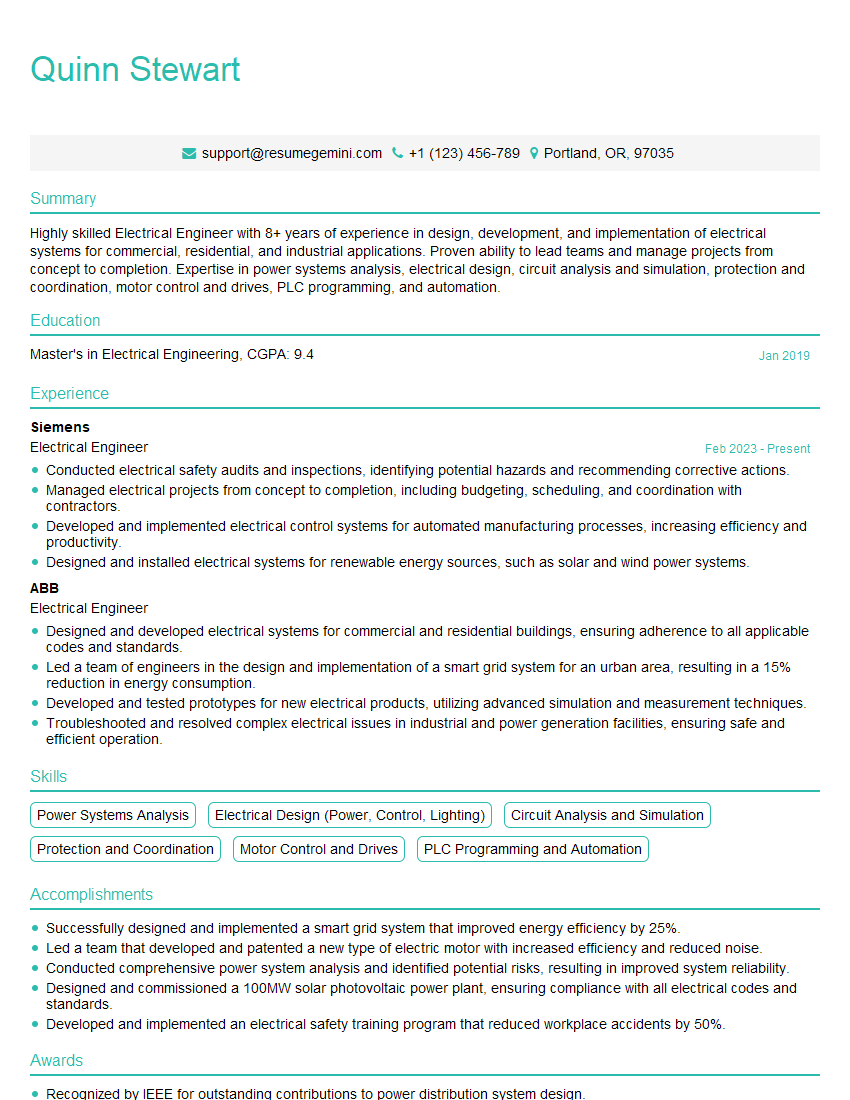
Electrical Engineer Resume Sample

Power Systems Engineer Resume Sample

Electrical Drafter Resume Sample

Electrical Technician Resume Sample

Lighting Designer Resume Sample

Chief Electrician Resume Sample

Electrical Foreman Resume Sample

Construction Electrician Resume Sample

Maintenance Electrician Resume Sample
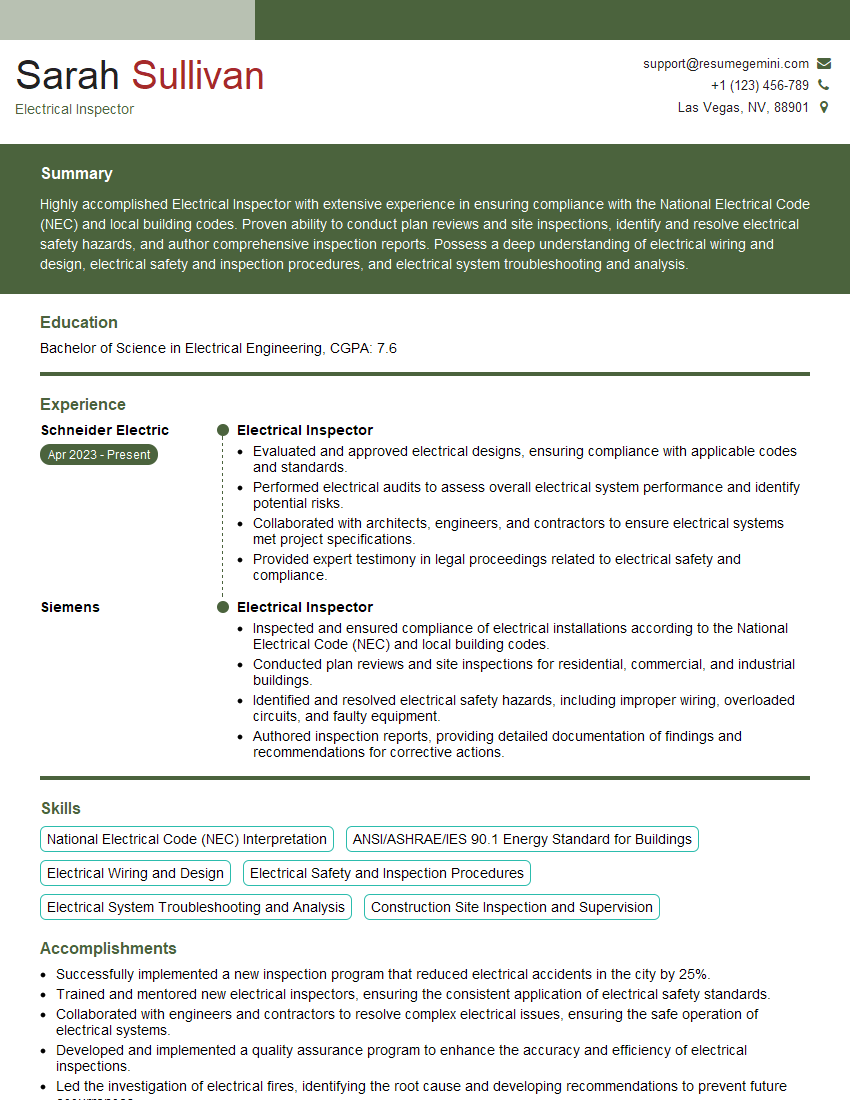
Electrical Inspector Resume Sample
Explore more articles
Users Rating of Our Blogs
Share Your Experience
We value your feedback! Please rate our content and share your thoughts (optional).
What Readers Say About Our Blog
Really detailed insights and content, thank you for writing this detailed article.
IT gave me an insight and words to use and be able to think of examples