Are you ready to stand out in your next interview? Understanding and preparing for Commercial Lines Rating Systems interview questions is a game-changer. In this blog, we’ve compiled key questions and expert advice to help you showcase your skills with confidence and precision. Let’s get started on your journey to acing the interview.
Questions Asked in Commercial Lines Rating Systems Interview
Q 1. Explain the difference between pure premium and loss costs.
The terms ‘pure premium’ and ‘loss costs’ are closely related but distinct in commercial lines rating. Think of it like this: pure premium represents the cost of losses *only*, while loss costs include losses *plus* a provision for expenses.
Pure Premium: This is the average cost of losses per unit of exposure (e.g., per $100,000 of payroll for workers’ compensation, per vehicle for commercial auto). It’s calculated by dividing the total incurred losses by the total number of exposure units. For example, if a company had $1 million in incurred losses and 100 exposure units, the pure premium would be $10,000 per unit.
Loss Costs: Loss costs are similar but broader. They represent the anticipated cost of losses and a portion of the expenses associated with handling those losses. The expense portion is usually expressed as a percentage of losses. Actuaries determine loss costs based on historical data and projections. Insurers then add their own expense loads (e.g., underwriting, claims handling, commissions) to create the final premium.
In short: Pure premium focuses solely on losses, while loss costs incorporate both losses and a portion of expenses. Insurers use loss costs as a base to build their premiums, adding their own unique expense components.
Q 2. Describe the components of a commercial lines rating system.
A commercial lines rating system is a complex framework that combines several elements to determine insurance premiums. Think of it as a recipe, with each ingredient contributing to the final product (the premium).
- Loss Costs: The foundation of the system, as described previously. These represent the expected cost of losses and a portion of expenses.
- Expense Load: This covers the insurer’s operational costs, including underwriting, claims adjustment, commissions, taxes, and general overhead. It’s usually expressed as a percentage of the loss costs or premium.
- Profit Margin: Insurers need to make a profit to stay in business. A profit margin is added to the loss costs and expense load to ensure profitability.
- Rating Variables: These are the characteristics of the insured’s business that influence risk. Examples include industry classification (e.g., manufacturing, retail), payroll (for workers’ compensation), vehicle type and usage (for commercial auto), and loss history (experience modification).
- Rating Algorithms: These are mathematical formulas that combine the loss costs, expense load, profit margin, and rating variables to calculate the final premium. They can be quite sophisticated, utilizing statistical models and machine learning techniques.
These components work together to ensure that premiums accurately reflect the risk associated with insuring a particular business. Different lines of business (e.g., commercial auto, general liability, workers’ compensation) will use different rating variables and algorithms tailored to the specific risks involved.
Q 3. How do you account for inflation in commercial lines rating?
Inflation significantly impacts commercial lines rating because it increases the cost of claims. Ignoring inflation would lead to inadequate premiums and potential insolvency for insurers. Several methods are employed to account for inflation:
- Trend Factors: These factors are applied to past loss data to project future loss costs. Actuaries analyze historical inflation rates for medical expenses, repair costs, and other relevant factors to determine appropriate trend factors. These factors are usually applied multiplicatively to historical loss costs.
- Lagged Inflation: Often, there’s a delay between an inflationary period and its full impact on claims costs. Actuaries use models that consider this lag, ensuring the rating system accurately reflects the delayed effects of inflation.
- Explicit Inflation Assumptions: Actuaries make explicit assumptions about future inflation rates, based on economic forecasts and industry-specific predictions. These assumptions are incorporated directly into the loss cost projections.
The specific approach to inflation adjustment depends on the line of business and the sophistication of the rating system. For example, workers’ compensation may use different inflation factors than commercial auto due to differing cost drivers.
Q 4. What are the key factors affecting commercial auto insurance rates?
Commercial auto insurance rates are influenced by numerous factors, broadly categorized into driver characteristics, vehicle characteristics, and usage patterns:
- Driver Experience and History: Years of driving experience, accident history, and driving record (tickets, violations) heavily influence rates. More experienced drivers with clean records generally receive lower rates.
- Vehicle Type and Age: The type of vehicle (e.g., van, truck, heavy-duty vehicle) and its age significantly impact risk. Larger, more expensive vehicles, and older vehicles with higher repair costs, result in higher premiums.
- Annual Mileage: Higher mileage equates to increased exposure to accidents, thus leading to higher premiums. Businesses with vehicles that travel extensively will likely face higher rates.
- Vehicle Usage: The purpose of vehicle use (e.g., commuting, delivery, hauling) influences rates. Vehicles used for high-risk activities (like hauling hazardous materials) will have higher premiums.
- Geographical Location: Rates vary depending on location, considering factors like traffic congestion, accident frequency, and crime rates. Areas with higher accident rates will have higher premiums.
- Safety Features: Vehicles equipped with advanced safety features (e.g., anti-lock brakes, airbags, collision avoidance systems) may qualify for lower rates.
Insurers use sophisticated rating algorithms to combine these factors to arrive at a fair premium that accurately reflects the risk involved. The weight given to each factor can vary across insurers.
Q 5. Explain the concept of experience modification factors (EMR).
An Experience Modification Rate (EMR), also known as an experience rating modifier, is a factor that adjusts a business’s workers’ compensation insurance premium based on its past loss experience. Think of it as a ‘scorecard’ for safety. It compares the business’s historical claims to the expected claims for similar businesses.
An EMR of 1.0 indicates that the business’s loss experience is average. An EMR below 1.0 means the business has had a better-than-average loss experience, resulting in a lower premium. Conversely, an EMR above 1.0 signifies a worse-than-average loss experience, leading to a higher premium.
How it’s calculated: The calculation involves a complex formula that considers the business’s payroll, number of employees, and past claims. A retrospective rating period is typically used (e.g., three years). Rating bureaus, such as NCCI (National Council on Compensation Insurance), compile and analyze this data to generate EMRs.
For example, an EMR of 0.8 indicates that a business’s losses are 20% less than the expected average, while an EMR of 1.2 indicates losses are 20% higher.
Q 6. How do you handle outlier claims in a rating system?
Outlier claims, or unusually large claims, can significantly skew the accuracy of a rating system. Several strategies are used to handle them:
- Data Validation and Investigation: The first step is to rigorously examine outlier claims to ensure accuracy and legitimacy. This might involve reviewing claim details, verifying medical expenses, and investigating potential fraud.
- Capping or Limiting: Sometimes, a claim is capped at a pre-defined limit. This approach helps mitigate the disproportionate impact of exceptionally large claims. The cap amount is usually determined through actuarial analysis.
- Statistical Techniques: Actuarial techniques such as Winsorizing or trimming can be used to adjust extreme values without completely removing them. These techniques reduce the influence of outliers while retaining valuable information.
- Separate Modeling: In some instances, outlier claims might be modeled separately from the rest of the data. This approach isolates the unique characteristics and risk associated with these claims and allows for more accurate modeling.
The choice of method depends on the nature of the claim, the magnitude of the outlier, and the sophistication of the rating system. It’s crucial to balance the need to mitigate the influence of outliers with the importance of maintaining an accurate reflection of underlying risk.
Q 7. What are the different types of commercial lines insurance rating methodologies?
Commercial lines insurance rating methodologies vary depending on the line of business and the insurer’s approach. Some common methodologies include:
- Class Rating: This is a simpler method where all insureds within a specific risk class (e.g., small restaurants) pay the same rate. While less precise, it’s easier to administer.
- Merit Rating: This method adjusts the premium based on the insured’s past loss experience. EMR in workers’ compensation is an example of a merit rating system.
- Schedule Rating: This approach uses a base rate and then adds or subtracts adjustments based on specific characteristics of the risk. This method is often used in commercial property insurance, where features like fire suppression systems can influence the rate.
- Experience Rating: Similar to merit rating, this system modifies the premium based on the insured’s past loss history. It’s highly utilized in workers’ compensation and commercial auto.
- Judgment Rating: In cases where data is limited or the risk is unique, underwriters may rely on their expertise and judgment to determine the appropriate premium. This method is less common for standardized lines of business.
- Actuarial Modeling: Sophisticated models using advanced statistical techniques and data analysis are increasingly common, allowing for a more refined risk assessment.
Many insurers use a combination of these methodologies to develop a comprehensive rating system that balances efficiency and accuracy.
Q 8. Explain the process of developing a new rating plan.
Developing a new commercial lines rating plan is a complex process that requires a blend of actuarial science, data analysis, and business understanding. It begins with a thorough understanding of the risks being insured. We start by defining the target market, identifying the key risk factors, and collecting historical loss data. This data needs to be granular enough to allow us to accurately measure the impact of these risk factors.
Next, we build a statistical model to quantify the relationship between these risk factors and the likelihood of a loss. Common techniques include generalized linear models (GLMs) or more advanced methods like gradient boosting machines. This model translates risk characteristics into a predicted loss cost. For example, a building with a fire suppression system might receive a lower rate than one without.
Once the model is developed, we test its accuracy rigorously (more on this in the next answer). This involves separating the data into training and validation sets to avoid overfitting. The final step involves implementing the new rating plan, which includes developing rating manuals, training underwriters, and updating rating systems. We must also consider regulatory compliance throughout the entire process.
Throughout, we maintain meticulous documentation to ensure transparency and traceability. The whole process is iterative; we continuously monitor and refine the rating plan based on emerging trends and updated loss data.
Q 9. How do you validate the accuracy of a rating system?
Validating the accuracy of a commercial lines rating system is crucial for ensuring fairness and profitability. We employ several techniques to achieve this. First, we conduct extensive data analysis, checking for outliers and biases in our historical loss data. Missing data is addressed through imputation techniques, always documenting the methods used.
Next, we split our data into training, validation, and testing sets. The model is built on the training set. The validation set helps tune the model’s parameters and prevent overfitting—a situation where the model performs well on the training data but poorly on unseen data. The final test set, untouched during development, offers an unbiased assessment of the model’s predictive power. We might use metrics such as Mean Absolute Error (MAE) or Root Mean Squared Error (RMSE) to quantify the model’s accuracy.
Furthermore, we conduct sensitivity analysis to understand how changes in input variables affect the output. This helps us identify areas where the model is particularly sensitive and where further refinement might be needed. We also conduct a post-implementation review, monitoring actual losses against predicted losses to assess the model’s performance in a real-world setting. This ongoing monitoring and adjustment is vital for maintaining an accurate rating system.
Q 10. What are some common challenges in commercial lines rating?
Commercial lines rating presents unique challenges. One significant hurdle is the inherent complexity of commercial risks. Unlike personal lines, businesses vary widely in size, operations, and risk profiles. This heterogeneity makes it difficult to develop a universally applicable rating plan. Another challenge is data availability and quality. Accurate and complete historical loss data is essential for developing reliable models, but such data can be scarce or inconsistent, especially for niche industries or emerging risks.
Catastrophic events, like hurricanes or earthquakes, pose another problem. These infrequent but significant events can distort loss experience, leading to inaccurate predictions and potentially inadequate reserves. Furthermore, regulatory changes and evolving legal interpretations can impact liability exposures, requiring adjustments to the rating system. Lastly, the constant need to adapt to changing market conditions and competitive pressures means ongoing monitoring, adjustments, and improvements to the rating algorithms are essential. It’s a dynamic process requiring ongoing vigilance and expertise.
Q 11. Describe your experience with various rating software and systems.
Throughout my career, I’ve gained extensive experience with various commercial lines rating software and systems. I’m proficient in using actuarial software packages such as [mention specific software, e.g., Actuarial Modeling System (AMS), or SAS], which are industry-standard tools for building and validating statistical models. I’m also familiar with various rating systems used by different insurance companies. These systems vary in their capabilities, from simple spreadsheet-based models to sophisticated, integrated platforms that handle policy administration, underwriting, and claims processing.
My experience includes working with both proprietary and third-party systems. This exposure has allowed me to understand the strengths and weaknesses of different systems and adapt my approach accordingly. I’m comfortable with data extraction, transformation, and loading (ETL) processes, ensuring that data is appropriately formatted and ready for analysis. My knowledge extends to SQL and other database management tools, enabling efficient data handling and manipulation.
Q 12. How do you handle data inconsistencies in the rating process?
Data inconsistencies are a common challenge in commercial lines rating. I use a multi-faceted approach to handle them. First, a robust data validation process is implemented at the data ingestion stage, checking for missing values, outliers, and inconsistencies in data formats. This often involves writing custom scripts or using built-in validation rules within the rating system.
Missing data is addressed through imputation techniques such as mean imputation, median imputation, or more sophisticated methods like multiple imputation, depending on the nature of the missing data. Outliers are investigated to determine their cause. Are they genuine data points reflecting extreme risks, or are they errors? If they are errors, they’re corrected or removed. If they are genuine outliers representing true risks, they’re retained, though their impact on the model is carefully assessed.
Data inconsistencies arising from different data sources are resolved by establishing clear data governance standards, ensuring data consistency and accuracy across all sources. This might involve creating a central data repository or using data standardization techniques. Throughout this process, clear documentation is essential, explaining the methods used to handle inconsistencies and their impact on the rating model.
Q 13. Explain the concept of loss reserving and its impact on rating.
Loss reserving is the process of estimating the ultimate cost of incurred but not reported (IBNR) and reported but not settled (RBNS) claims. It’s crucial for setting adequate reserves and ensuring the financial stability of an insurance company. In the context of commercial lines rating, loss reserving directly impacts the accuracy of the rating model.
Inaccurate loss reserves can lead to underestimation or overestimation of future losses. Underestimation can result in inadequate pricing, leading to losses for the insurer. Overestimation, conversely, can lead to overly conservative pricing, reducing the insurer’s competitiveness. Therefore, actuaries use various methods, such as chain ladder, Bornhuetter-Ferguson, or more sophisticated statistical models, to estimate IBNR and RBNS reserves.
The estimated ultimate loss costs, which incorporate the loss reserves, are then used as the basis for developing and calibrating commercial lines rating models. The reliability of the loss reserves thus directly influences the accuracy and fairness of the resulting insurance premiums. Regular review and refinement of these reserve estimates are critical for maintaining the financial health of the insurer and the accuracy of its rating system.
Q 14. How do you use statistical modeling in commercial lines rating?
Statistical modeling is fundamental to commercial lines rating. It allows us to quantify the relationship between risk factors and loss experience, enabling the development of actuarial models that accurately predict future losses. I commonly use Generalized Linear Models (GLMs) – a flexible family of models that can handle various types of response variables (like frequency and severity of claims). GLMs are particularly well-suited for analyzing count data (number of claims) and positive continuous data (claim amounts).
More advanced techniques, such as generalized additive models (GAMs) or tree-based models like gradient boosting machines (GBMs), offer greater flexibility and can capture non-linear relationships between risk factors and losses. These models can handle complex interactions between variables, offering more nuanced risk assessment. For example, a GBM might be used to account for the interaction between industry type and building age in determining fire risk.
The choice of modeling technique depends on the specific context, the available data, and the complexity of the risks being insured. Regardless of the chosen technique, model validation, diagnostics, and ongoing monitoring are crucial to maintain accuracy and ensure the model remains a reliable tool for predicting future loss costs and setting appropriate insurance premiums.
Q 15. What are the regulatory requirements for commercial lines rating?
Regulatory requirements for commercial lines rating are multifaceted and vary by jurisdiction, but generally aim to ensure fair and non-discriminatory pricing, solvency of insurers, and consumer protection. Key aspects often include:
- State Insurance Department Regulations: Each state has its own department overseeing insurance, setting rules on rate filings, rate review processes (e.g., prior approval, file-and-use), and prohibited rating factors. These regulations often require justification for rate changes and evidence of actuarial soundness.
- Federal Laws: While less direct in specific rating practices, federal laws like the McCarran-Ferguson Act influence the balance between state and federal regulation of insurance. Compliance with anti-discrimination laws (e.g., Fair Housing Act, Fair Credit Reporting Act) is crucial to prevent biased rating practices.
- Actuarial Standards of Practice (ASOPs): These guidelines from professional actuarial bodies provide best practices for ratemaking, emphasizing actuarial soundness, data quality, and appropriate modeling techniques. Compliance demonstrates professional competence and helps ensure credible rates.
- Data Privacy Regulations: Protecting the privacy of insured data is paramount. Regulations like GDPR (in Europe) and CCPA (in California) dictate how personal and sensitive information used in rating must be handled.
For example, in a prior approval state, an insurer needs to submit its proposed rate changes and supporting documentation to the state regulator before implementing them. The regulator reviews the filings to assess if they are justified and compliant with all relevant regulations.
Career Expert Tips:
- Ace those interviews! Prepare effectively by reviewing the Top 50 Most Common Interview Questions on ResumeGemini.
- Navigate your job search with confidence! Explore a wide range of Career Tips on ResumeGemini. Learn about common challenges and recommendations to overcome them.
- Craft the perfect resume! Master the Art of Resume Writing with ResumeGemini’s guide. Showcase your unique qualifications and achievements effectively.
- Don’t miss out on holiday savings! Build your dream resume with ResumeGemini’s ATS optimized templates.
Q 16. Explain the difference between manual and automated rating systems.
Manual and automated rating systems differ significantly in their approach to calculating premiums. Think of a manual system as a meticulously crafted spreadsheet, while an automated system is a sophisticated, constantly learning engine.
- Manual Rating Systems: These rely heavily on human intervention. Underwriters manually assess risk factors, consult rate manuals (books containing pre-determined rates and rules), and apply adjustments based on individual circumstances. This offers flexibility but is time-consuming, prone to inconsistencies, and struggles with scalability.
- Automated Rating Systems: These leverage software to automate the rating process. Data is fed into algorithms that apply pre-programmed rules, rating factors, and even predictive models to rapidly calculate premiums. This increases efficiency, consistency, and capacity, enabling insurers to handle a larger volume of business.
Imagine assessing the risk of a small business. A manual system might involve a lengthy questionnaire and underwriter judgment, whereas an automated system would instantly calculate the premium based on inputted data such as business type, location, revenue, and loss history, along with embedded risk factors and predictive analytics.
Q 17. How do you incorporate predictive modeling into the rating process?
Incorporating predictive modeling into the rating process enhances accuracy and fairness. Instead of relying solely on historical data, we leverage advanced statistical techniques to forecast future losses. This involves:
- Data Preparation: Gathering and cleaning vast amounts of data, including historical claims, policy information, and external data sources like weather patterns or socioeconomic indicators.
- Model Development: Selecting appropriate statistical models (e.g., generalized linear models, gradient boosting machines) to analyze the data and identify key predictors of loss.
- Model Validation: Rigorously testing the model’s accuracy and stability on unseen data to ensure its reliability.
- Model Implementation: Integrating the validated model into the rating system to generate more precise premium calculations.
For example, a predictive model might identify that businesses in certain high-crime areas have a significantly higher probability of burglary claims. This allows the rating system to adjust premiums accordingly, reflecting this risk more accurately than traditional methods.
Q 18. Discuss your experience with different types of risk modeling.
My experience encompasses various risk modeling techniques, each suited to different contexts. These include:
- Generalized Linear Models (GLMs): Widely used for their interpretability and ability to model various loss distributions. They’re excellent for understanding the relative importance of different risk factors.
- Generalized Additive Models (GAMs): Offer more flexibility than GLMs, accommodating non-linear relationships between risk factors and losses. This is particularly useful when dealing with complex interactions.
- Tree-Based Models (e.g., Gradient Boosting Machines): Powerful techniques adept at handling high-dimensional data and capturing complex interactions. They can achieve high predictive accuracy but might be less interpretable than GLMs.
- Survival Analysis Models: Essential for modeling the duration of insurance claims, allowing for better prediction of claim costs over time.
In one project, we used a Gradient Boosting Machine to model the risk of commercial auto accidents, incorporating factors like vehicle type, driver experience, and geographic location. This yielded a more accurate prediction of future losses than a traditional GLM, leading to more refined premiums.
Q 19. Describe your experience working with large datasets.
Working with large datasets is an integral part of my work. My experience involves:
- Data Extraction and Cleaning: Using SQL and other programming languages (like Python or R) to extract data from various sources, identify and handle missing values, and ensure data consistency and accuracy.
- Data Transformation: Applying various techniques (e.g., feature scaling, encoding categorical variables) to prepare data for modeling.
- Big Data Technologies: Experience working with distributed computing frameworks like Hadoop and Spark to process extremely large datasets that exceed the capacity of traditional database systems.
- Data Visualization: Using tools like Tableau or Power BI to explore and present data findings effectively.
In one project involving millions of policy records, I utilized Spark to process the data efficiently, identify outliers, and prepare it for a large-scale predictive model that improved the accuracy of our underwriting process significantly.
Q 20. How do you ensure compliance with actuarial standards in rating?
Ensuring compliance with actuarial standards is paramount. This involves:
- Adherence to ASOPs: Following the relevant ASOPs (Actuarial Standards of Practice) which provide guidelines for data quality, model selection, validation, and reporting.
- Documentation: Meticulously documenting the entire rating process, including data sources, model development, validation results, and assumptions made. This allows for transparent review and auditability.
- Peer Review: Subjecting the rating system and underlying models to peer review by other qualified actuaries to ensure the independence and validity of the work.
- Ongoing Monitoring: Continuously monitoring the performance of the rating system, tracking its accuracy and making adjustments as needed. This involves evaluating the model’s predictive power and bias.
For instance, if we discover a significant deviation between expected and actual losses, we would investigate the cause, adjust the model if necessary, and document the changes thoroughly to maintain compliance.
Q 21. How do you adapt a rating system to changes in the market?
Adapting a rating system to market changes requires a dynamic and proactive approach. This typically involves:
- Monitoring Market Trends: Closely monitoring changes in loss costs, competition, and regulatory environments. This might involve analyzing industry reports, competitor pricing, and emerging risks.
- Data Updates: Regularly updating the datasets used in the rating system to reflect current market conditions. This includes incorporating new claims data and other relevant information.
- Model Refinement: Periodically reviewing and refining the predictive models to incorporate new data and insights, ensuring the models remain accurate and relevant.
- Sensitivity Analysis: Conducting sensitivity analyses to assess how changes in key parameters affect the rating system’s output and identify areas of potential vulnerability.
- Regulatory Compliance: Ensuring the rating system continues to comply with all relevant regulations and guidelines.
For example, a significant increase in inflation might necessitate adjustments to loss cost projections, leading to updated rate levels. Similarly, the introduction of new technologies or changes in legal environments could require updates to the rating system’s risk factors and models.
Q 22. Explain the concept of territory rating.
Territory rating is a fundamental aspect of commercial lines pricing. It recognizes that the risk of loss varies geographically. Essentially, insurers divide their operating area into territories, each with its own rate reflecting the unique loss experience within that region. This could be due to factors like climate (higher rates for coastal properties prone to hurricanes), crime rates (higher rates for businesses in high-crime areas), or even the concentration of certain types of businesses (higher rates for auto repair shops clustered together).
For example, a business in a rural area with low crime and infrequent severe weather events would likely have a lower territory rate than a similar business located in a densely populated urban center with a high crime rate and history of natural disasters. The rate reflects the insurer’s expected cost of claims within that specific territory. Actuaries and underwriters analyze historical claims data, location-specific risk factors, and other relevant information to determine appropriate territorial rates.
The process involves detailed statistical analysis to ensure that rates are not only geographically accurate but also fair and compliant with regulatory requirements. Insurers constantly monitor and adjust territorial rates based on ongoing data analysis and changing conditions. Failure to do so can lead to inaccurate pricing, profitability issues, and regulatory penalties.
Q 23. Discuss your experience with catastrophe modeling.
My experience with catastrophe modeling involves utilizing sophisticated software and datasets to assess and quantify the financial impact of potential catastrophic events on an insurance portfolio. I’ve worked extensively with models like AIR Worldwide and RMS, employing these tools to analyze the likely impact of hurricanes, earthquakes, wildfires, and other natural catastrophes on commercial property and business interruption exposures.
A key part of my role includes incorporating catastrophe model outputs into our rating systems. For example, if a catastrophe model indicates a significantly higher probability of a major earthquake in a specific region, we would incorporate that into the rate calculation for commercial property insurance in that area. This might involve applying a catastrophe loading—an additional charge—to reflect the increased risk. It’s crucial to select appropriate models, calibrate them against historical data, and understand their limitations. The process demands a strong understanding of both the underlying modeling techniques and the specific characteristics of the insured risks.
Beyond just rating, catastrophe modeling assists in portfolio management, reinsurance purchasing strategies, and overall risk assessment. It allows us to proactively manage our exposure to catastrophic events, ensuring financial stability and the ability to meet policyholder obligations even in the face of major losses.
Q 24. How do you communicate complex rating information to non-technical audiences?
Communicating complex rating information to non-technical audiences requires a clear and concise approach. I avoid jargon and technical terms whenever possible, instead using relatable analogies and visuals. For example, instead of explaining loss ratios and expense ratios, I might explain profitability using the analogy of a business’s profit margin. I often utilize charts and graphs to present data visually, making complex concepts easier to grasp.
When discussing territory rating, I would explain it as a system that adjusts prices based on location and risk. I might use a simple example, comparing the cost of insuring a business in a high-crime area versus a low-crime area. This makes the concept clear and intuitively understandable. Storytelling is also effective; I might share a real-world example of how a specific geographic factor influenced the rating for a particular class of business.
Furthermore, interactive presentations and workshops can effectively communicate complex information. These tools help engage the audience, facilitate questions and discussions, and ensure that the information is not only understood but also retained.
Q 25. How do you identify and mitigate bias in a rating system?
Identifying and mitigating bias in a rating system is crucial for fairness and regulatory compliance. Bias can arise from various sources, including data limitations, historical trends, and flawed modeling techniques. The first step involves rigorous data analysis to detect potential biases. This includes examining the distribution of data across different subgroups (e.g., by geography, industry type, or size of business) to identify any systematic disparities.
For instance, if our data shows significantly higher loss ratios for businesses owned by a particular demographic group, we need to investigate the reasons. Is this difference truly reflective of higher risk, or is it a consequence of biased underwriting practices or data collection methods? Addressing bias might involve adjusting the rating methodology to account for relevant factors, improving data quality, employing more sophisticated statistical techniques (such as generalized linear models), or using external data sources to validate internal findings.
Regular audits and independent reviews of the rating system are vital to identify and correct any unforeseen biases. Transparency is also essential. We need to document our methods, clearly articulate our assumptions, and justify any adjustments made to address potential biases. Continuous monitoring and refinement are critical to ensuring ongoing fairness and equity.
Q 26. Explain your experience with different types of insurance rating bureaus.
My experience encompasses various types of insurance rating bureaus, including those focused on specific lines of business (e.g., workers’ compensation, commercial auto), and those that provide broader industry-wide data. I’ve worked with bureaus that offer advisory services to insurers, assisting with rate development and regulatory compliance. I’ve also used bureaus offering statistical data analysis on claims, helping us establish accurate and competitive rates.
Understanding the specific strengths and limitations of each bureau is critical. Some may provide more granular data on specific geographic areas, while others may excel in analyzing industry trends. Selecting the right bureau often involves considering factors such as data accuracy, coverage, methodology, and cost. It’s important to critically evaluate the data provided by these bureaus, ensuring its relevance and reliability for our rating purposes, and often supplementing it with our internal data.
Collaborating effectively with rating bureaus is crucial for maintaining competitive rates while ensuring regulatory compliance. This involves not only understanding their methodologies but also actively participating in discussions and industry-wide initiatives that promote data integrity and accuracy.
Q 27. Describe your experience with developing rate filings.
Developing rate filings involves a rigorous process of data collection, analysis, and documentation. It starts with gathering historical claims data, loss experience, and expense information. This data undergoes thorough analysis to determine appropriate loss costs for various risk factors and territories. Actuaries employ statistical modeling techniques to project future losses and account for inflation and other economic factors.
We then use these projections to calculate the rates needed to ensure profitability while remaining competitive. The entire process is carefully documented, including the underlying assumptions, statistical methodology, and supporting data. This documentation is crucial for regulatory review and transparency. The completed rate filing includes a detailed explanation of our methodology, justification for rate changes, and supporting exhibits that demonstrate the actuarial soundness of our proposed rates. It’s crucial to ensure the filing adheres to all applicable regulations and guidelines established by the relevant regulatory bodies. Sometimes, we must provide additional information and responses to questions from regulators, adjusting the filing until it meets the regulatory standards.
Furthermore, ongoing monitoring of the filed rates and subsequent loss experience is necessary to ensure accuracy and adjust rates as needed over time. A robust system of internal controls and audits is required to ensure the accuracy and integrity of the entire process.
Q 28. What are some ethical considerations in commercial lines rating?
Ethical considerations in commercial lines rating are paramount. It’s crucial to ensure fairness, accuracy, and transparency in the entire rating process. This starts with collecting and analyzing data in a way that avoids bias and ensures that all relevant risk factors are considered. We must avoid manipulating data or using flawed methodologies to artificially inflate or deflate rates.
Pricing should accurately reflect the risk, and insurers have a responsibility to ensure that rates are not unfairly discriminatory. This means avoiding practices that disproportionately impact specific groups of businesses or individuals. Transparency is crucial; we should be open about our rating methodologies and provide clear explanations to our customers. Maintaining confidentiality of sensitive customer data is also a key ethical responsibility. Following all regulatory guidelines and complying with relevant laws are fundamental to maintaining ethical standards.
Furthermore, conflicts of interest must be avoided. Decisions regarding rate setting should be based solely on sound actuarial principles and not influenced by personal gain or other external pressures. Maintaining a high level of professionalism, integrity, and adherence to best practices ensures ethical conduct in all aspects of commercial lines rating.
Key Topics to Learn for Commercial Lines Rating Systems Interview
- Fundamentals of Commercial Lines Insurance: Understanding the different types of commercial insurance (e.g., property, liability, workers’ compensation) and their associated risks.
- Rating Factors and Variables: Analyzing how factors like location, industry, size, and loss history influence premium calculations. Practical application: Interpreting and applying rating manuals and guidelines.
- Loss Control and Risk Assessment: Understanding how risk assessment methodologies influence rating and the impact of loss control measures on premiums. Practical application: Evaluating risk profiles and proposing mitigation strategies.
- Rating Systems and Algorithms: Familiarization with various rating methodologies (e.g., actuarial models, statistical analysis) used in pricing commercial insurance. Practical application: Interpreting and explaining rating outputs to stakeholders.
- Data Analysis and Interpretation: Proficiency in using data to identify trends, evaluate exposures, and refine rating models. Practical application: Utilizing data to support underwriting decisions and justify premium adjustments.
- Regulatory Compliance: Understanding relevant regulations and their impact on rating practices. Practical application: Ensuring adherence to legal and regulatory requirements in rating processes.
- Technology in Commercial Lines Rating: Familiarity with rating software and systems used in the industry. Practical application: Utilizing technology to improve efficiency and accuracy in rating processes.
- Underwriting Principles and Practices: A strong grasp of underwriting principles, allowing for a comprehensive understanding of how rating fits into the overall process. Practical application: Effectively communicating rating decisions to underwriters.
Next Steps
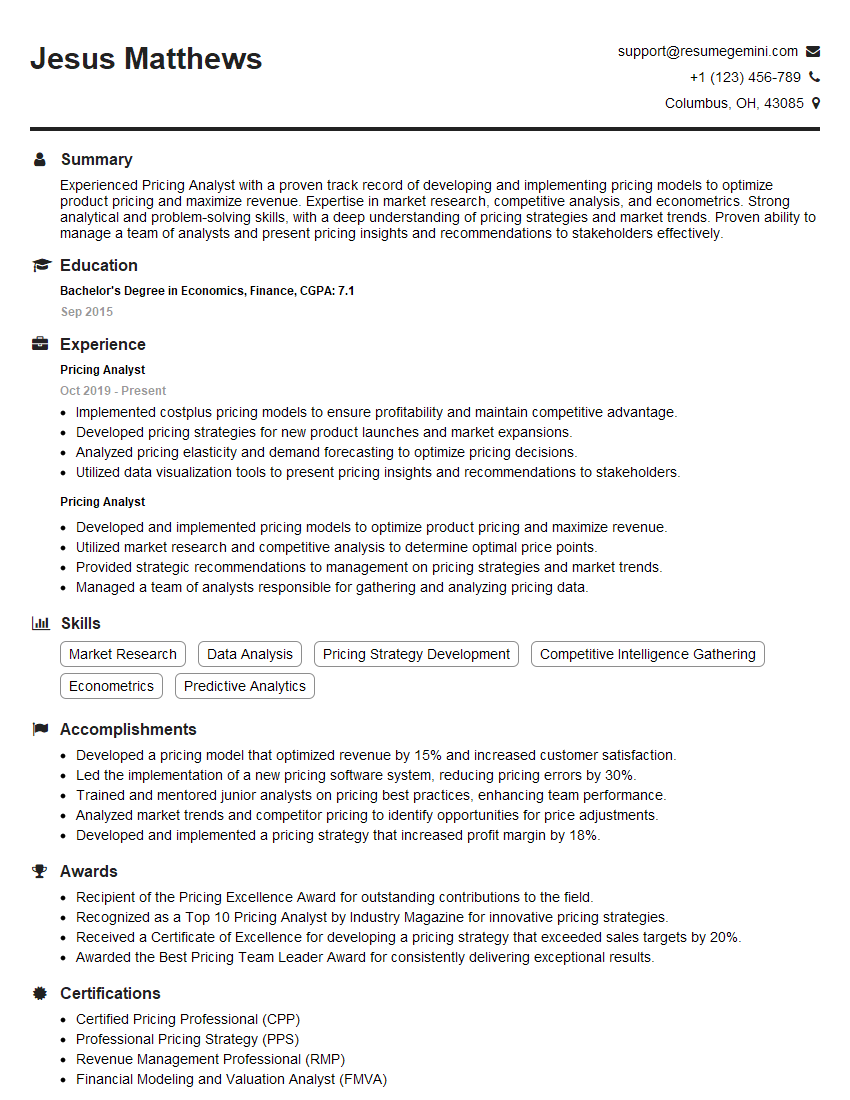
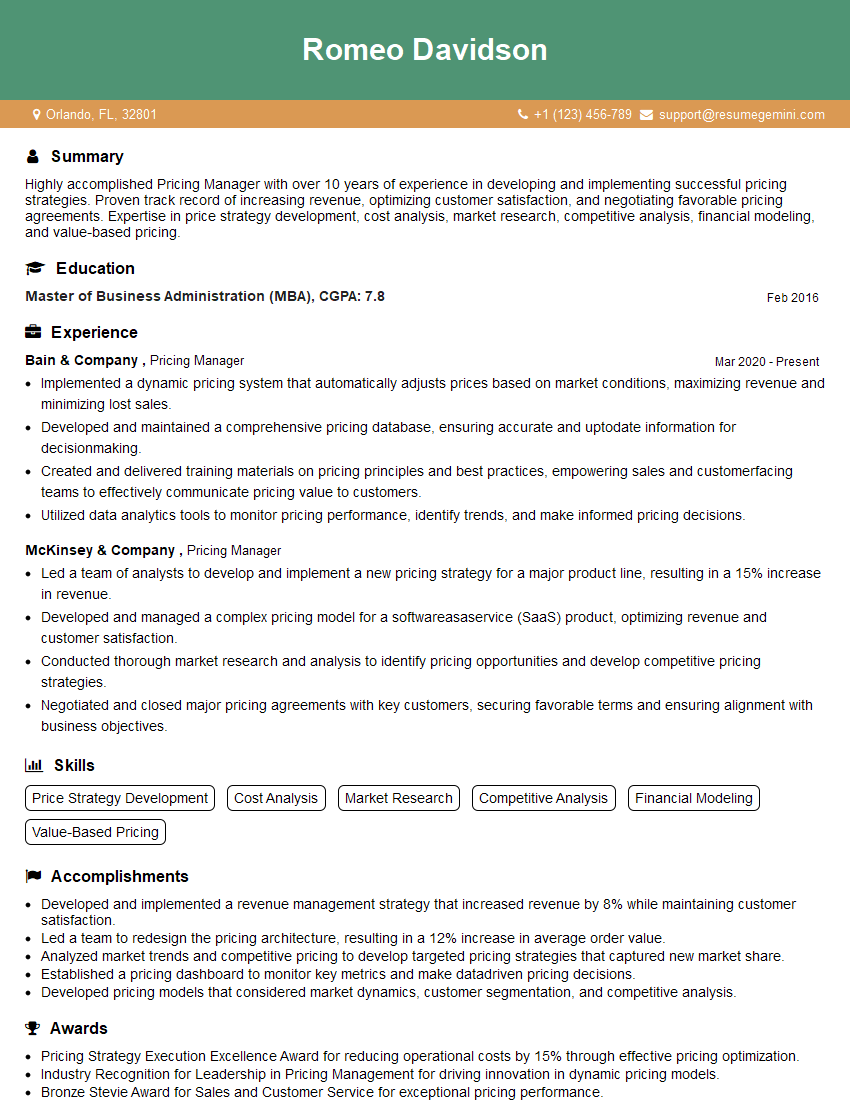
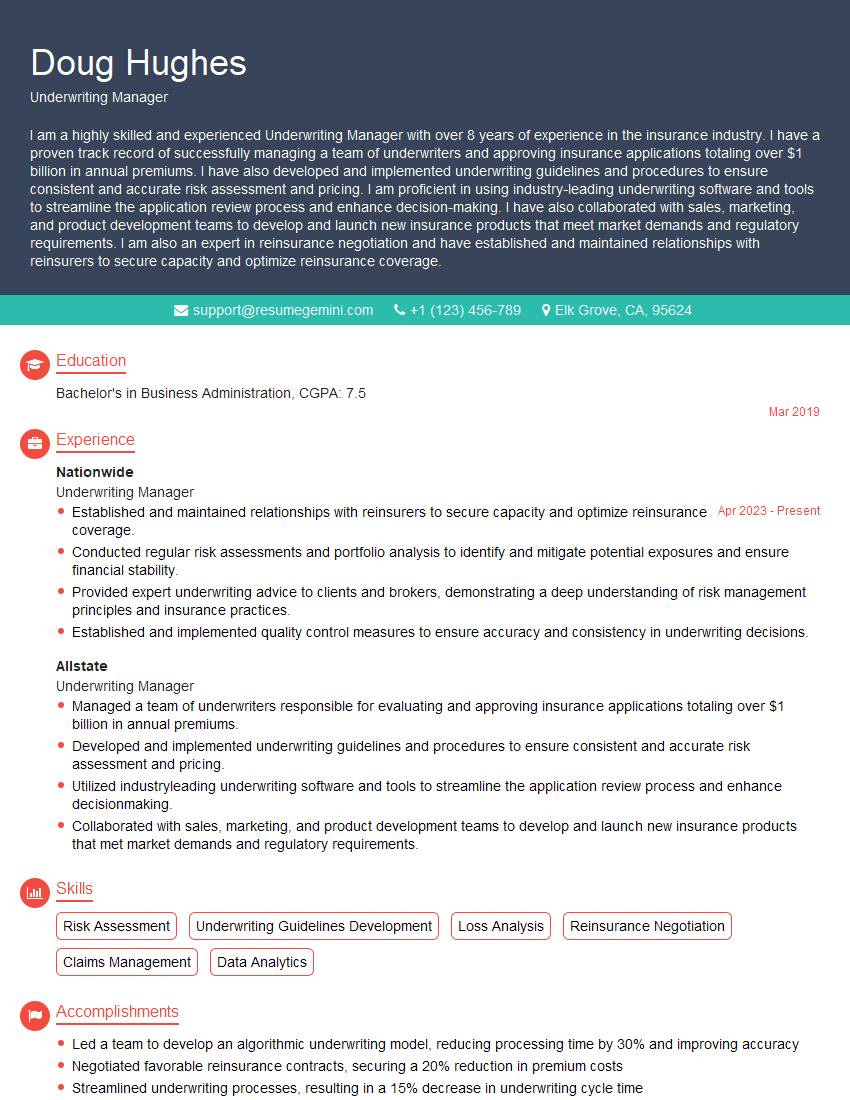
Mastering Commercial Lines Rating Systems is crucial for career advancement in the insurance industry, opening doors to specialized roles and increased earning potential. A strong understanding of these systems demonstrates valuable analytical and problem-solving skills highly sought after by employers. To enhance your job prospects, creating an ATS-friendly resume is paramount. ResumeGemini is a trusted resource that can help you build a professional and effective resume, significantly increasing your chances of landing your dream job. Examples of resumes tailored to Commercial Lines Rating Systems are available within ResumeGemini to help guide you.

Explore more articles
Users Rating of Our Blogs
Share Your Experience
We value your feedback! Please rate our content and share your thoughts (optional).
What Readers Say About Our Blog
Really detailed insights and content, thank you for writing this detailed article.
IT gave me an insight and words to use and be able to think of examples