Unlock your full potential by mastering the most common Green Sand Casting interview questions. This blog offers a deep dive into the critical topics, ensuring you’re not only prepared to answer but to excel. With these insights, you’ll approach your interview with clarity and confidence.
Questions Asked in Green Sand Casting Interview
Q 1. Explain the process of green sand molding.
Green sand casting is a time-tested method for creating metal parts. It’s a process where molten metal is poured into a mold made from a mixture of sand, clay, and water – the ‘green sand’. This sand mixture is easily moldable when wet and subsequently hardens enough to withstand the pouring of molten metal. Once cooled, the solidified metal part is removed, leaving the sand mold intact and reusable.
The process generally involves these steps:
- Pattern Making: A pattern, usually made of wood or metal, is created in the exact shape of the desired casting. This pattern is slightly larger than the final part to account for shrinkage during cooling.
- Mold Making: The pattern is placed in a flask (a frame), and the green sand is packed around it, completely enclosing the pattern. This often involves specialized ramming equipment to ensure uniform density.
- Pattern Removal: Once the sand is firm, the pattern is carefully removed, leaving a cavity in the sand that mirrors the pattern’s shape. This step requires skill to prevent damaging the mold.
- Core Making (if necessary): For castings with internal cavities, cores (sand forms) are created and positioned within the mold cavity.
- Mold Closure: The two halves of the mold (created in separate flasks) are carefully joined together.
- Melting & Pouring: Molten metal is poured into the mold cavity. The sand mold’s strength and permeability (allowing for gas escape) are crucial here.
- Cooling & Solidification: The molten metal cools and solidifies within the sand mold.
- Part Removal: After sufficient cooling, the sand mold is broken apart, and the cast metal part is retrieved.
- Cleaning & Finishing: The casting is cleaned of any residual sand and undergoes finishing operations such as grinding, machining, or heat treatment.
Think of it like making a sandcastle, but on a larger scale and with molten metal instead of water!
Q 2. What are the key properties of green sand?
Green sand’s properties are key to its success in casting. It needs a balance of characteristics to create a mold that’s strong enough to withstand molten metal pouring, yet permeable enough to allow for the escape of gases generated during the process. Key properties include:
- Refractoriness: The ability to withstand high temperatures without softening or melting. This prevents the sand from burning or fusing with the molten metal.
- Permeability: The sand’s capacity to allow gases (from the molten metal and the mold itself) to escape. Poor permeability can cause defects like blowholes in the casting.
- Collapsibility: The ease with which the solidified casting can be removed from the sand mold. This is crucial for preventing damage to the finished part.
- Flowability: The ease with which the sand can be packed and shaped into the mold cavity. Good flowability allows for consistent mold density and reduces the chance of voids.
- Strength (Green & Dry): The sand must retain its shape while the molten metal is poured in (green strength). Once dried, it must still possess sufficient strength to handle post-casting handling.
- Moisture Content: Correct moisture content is critical to achieve the desired mold strength, permeability, and flowability. Too much or too little moisture will negatively impact the mold’s properties.
Q 3. How is green sand prepared for casting?
Green sand preparation is a crucial step to ensure the quality of the final casting. It involves careful control of the sand’s composition and moisture content. The process typically involves:
- Sand Sourcing & Screening: The sand is sourced and screened to remove any large particles or contaminants that could affect the mold’s integrity.
- Mixing: The sand is mixed with a binder (usually clay) and water. The exact proportions of each component are carefully controlled to achieve the desired properties.
- Moisture Control: A crucial part of preparation. The moisture content is carefully monitored and adjusted to achieve optimal molding properties. Testing devices like a moisture meter are used to maintain consistency. Too much water makes the sand too soft, while too little results in insufficient strength.
- Conditioning: The mixed sand may be conditioned using specialized equipment like a muller to ensure uniform mixing and the break down of any clay lumps.
- Storage: The prepared sand should be stored in a controlled environment to prevent moisture loss or contamination.
Think of it like making cake batter – you need the right ratio of ingredients to achieve the perfect consistency. Similarly, getting the right mix of sand, clay, and water is essential for a high-quality mold.
Q 4. Describe different types of sand additives and their functions.
Various additives modify green sand’s properties to suit specific casting needs. Some common additives include:
- Clay (Binder): The primary binder, providing green strength and cohesiveness.
- Silica Flour (Fine Sand): Improves flowability, reduces permeability, and increases the sand’s refractoriness.
- Sea Coal (Organic Additive): Acts as a lubricant, improving collapsibility and preventing mold sticking.
- Cereosol (Synthetic Additive): Enhances green and dry strength, collapsibility, and hot strength.
- Dextrin (Organic Binder): Acts as a temporary binder, particularly useful for complex molds.
The type and amount of additive used depend on factors such as the casting material, mold complexity, and desired casting surface finish. For instance, high-strength castings might need more clay and less sea coal compared to intricate castings needing increased permeability.
Q 5. Explain the role of a binder in green sand.
The binder, typically clay, is crucial in green sand casting. It acts as the glue that holds the sand particles together. Without a binder, the sand would be loose and incapable of forming a stable mold capable of withstanding the molten metal’s weight and pressure. The binder’s role includes:
- Green Strength: Providing sufficient strength to the sand mold before pouring.
- Mold Stability: Maintaining the mold’s shape and preventing collapse during pouring and cooling.
- Refractoriness: Enhancing the sand’s ability to withstand high temperatures.
- Collapsibility: Affecting how easily the solidified casting can be removed from the mold.
Think of the binder as the mortar in a brick wall – it holds everything together, ensuring the structure remains strong and stable.
Q 6. What are the advantages and disadvantages of green sand casting?
Green sand casting offers several advantages but also has some limitations:
Advantages:
- Cost-Effective: Green sand is relatively inexpensive and readily available.
- Versatility: Suitable for a wide range of metals and casting sizes.
- Good Surface Finish: Can produce castings with a reasonably good surface finish.
- Simple Process: Relatively simple and less technically demanding compared to other casting methods.
- Reusable Sand: A significant portion of the sand can be reclaimed and reused after appropriate processing.
Disadvantages:
- Lower dimensional accuracy compared to other processes: Sand molds can have some inconsistencies leading to less precise dimensions.
- Lower production rates: Compared to some advanced casting methods, production rates are generally lower.
- Environmental Concerns: Sand handling can create dust and requires management to minimize environmental impact.
- Limited complexity: Very complex geometries might prove difficult to cast accurately with green sand.
- Potential for defects: Defects like blowholes or surface imperfections can occur if the process is not carefully controlled.
Q 7. How is the moisture content of green sand controlled?
Maintaining the correct moisture content is crucial for green sand’s performance. Too much moisture makes the sand too weak and prone to collapse; too little results in a brittle mold that may crack during pouring. Moisture content is controlled through several methods:
- Measurement: Regular moisture content measurement is performed using devices such as moisture meters or ovens.
- Adding Water: If the moisture content is low, water is added to the sand and thoroughly mixed using mullers or other equipment. This must be done carefully and evenly to avoid local variations in moisture content.
- Drying: If the moisture content is too high, the sand may need to be dried using specialized drying equipment. This is a more time-consuming process but is necessary to prevent mold defects.
- Storage Control: Storing the sand in a controlled environment helps in preserving the desired moisture content. This often involves covering the sand and storing it in a low-humidity area.
- Sand Reclamation: After use, the spent sand can often be reclaimed and recycled, requiring adjustments to its moisture content before reuse.
Regular monitoring and adjustments are crucial to ensure consistent casting quality and prevent defects.
Q 8. Describe different methods for testing green sand properties.
Testing green sand properties is crucial for ensuring the quality and integrity of the final casting. Several methods are employed, each focusing on a specific property.
Permeability Test: This measures the sand’s ability to allow air to pass through it. A higher permeability ensures easier venting of gases during pouring, reducing defects like gas porosity. This is often done using a standard permeability tester that measures the airflow rate under a specific pressure difference.
Compressive Strength Test: This test determines the sand’s resistance to compaction. Higher compressive strength implies better mold stability and prevents mold collapse during pouring. A standard procedure involves compressing a sand sample in a testing machine and measuring the force required for failure.
Green Compressive Strength Test: This is similar to the compressive strength test but performed on a sand sample that has been compacted under specific conditions reflecting those of the actual mold-making process. This gives a more accurate reflection of the mold strength before drying.
Grain Size Analysis: This involves determining the distribution of sand grain sizes using sieves. The grain size distribution significantly influences the sand’s permeability, strength, and surface finish of the casting. A well-graded sand typically provides better mold properties.
Moisture Content Test: This determines the percentage of moisture in the sand. Optimal moisture content is crucial for achieving the desired strength and permeability. Too much moisture can weaken the mold, while too little can lead to cracking and poor surface finish.
Clay Content Test: Clay acts as a binder in green sand. The clay content is analyzed to ensure it’s within the optimal range for desired strength and mold stability. Excessive clay can decrease permeability, while insufficient clay can lead to weak molds.
Regular testing of these properties ensures consistent sand quality and reduces defects in the casting process.
Q 9. Explain the concept of permeability in green sand.
Permeability in green sand refers to its ability to allow gases (like air and steam) to escape during the pouring of molten metal. Think of it like a sponge – a highly permeable sand allows gases to flow easily through it, while a low-permeability sand hinders their escape.
This is critical because trapped gases can cause defects like blowholes (gas porosity) in the casting. High permeability ensures the gases can vent properly, leading to sound castings. Several factors influence sand permeability, including grain size distribution, moisture content, and clay content. Finer sands and higher clay contents generally result in lower permeability.
Imagine pouring water into a sponge. A highly permeable sponge (high permeability sand) allows the water to pass through quickly, while a tightly packed sponge (low permeability sand) will trap the water. In green sand casting, the gases generated during pouring are analogous to the water. A good gating system is also needed to channel these gases away effectively.
Q 10. How do you identify and correct defects in green sand castings?
Identifying and correcting defects in green sand castings requires a systematic approach. It often starts with visual inspection, followed by more detailed analysis.
Visual Inspection: Observe the casting for surface imperfections like cracks, scabs, cold shuts, or wash-outs. Note the location and severity of the defect.
Sectioning and Metallographic Examination: If internal defects are suspected, sectioning the casting reveals internal porosity, shrinkage cavities, or inclusions. Metallographic examination helps to identify the causes of these defects.
Defect Analysis: Analyze the identified defects to determine the root cause. This may involve reviewing the molding process, sand properties, metal pouring parameters, and gating system design.
Corrective actions depend on the identified defect. For example:
Gas porosity: Could indicate low sand permeability. Solution: Adjust the sand mix (increasing permeability) or optimize the gating system.
Cold shuts: Usually caused by inadequate metal flow. Solution: Improve the gating system design, possibly increasing the metal flow rate.
Shrinkage cavities: Result from insufficient feeding of the molten metal. Solution: Redesign the risering system or adjust pouring parameters.
Mold shifts: Suggest insufficient mold strength. Solution: Improve the sand mix, adjust the compaction process, or increase the mold support.
Careful analysis and proactive corrective actions are crucial for producing high-quality green sand castings.
Q 11. What are common casting defects associated with green sand molding?
Green sand casting, while versatile, is susceptible to several common defects. Understanding these defects is essential for process optimization and quality control.
Gas porosity (Blowholes): Caused by trapped gases during pouring. Manifests as small holes or pores in the casting.
Shrinkage cavities: Form when the molten metal solidifies and shrinks, leaving voids in the casting, often in thicker sections.
Cold shuts: Occur when two streams of molten metal meet without properly fusing, resulting in a weak seam or separation.
Sand inclusions: Fragments of the mold material incorporated into the casting. Often caused by mold erosion or insufficient binder.
Surface defects (Scabs, washes): Surface imperfections resulting from mold erosion, improper venting, or metal splashing.
Mold shifts: Displacement of the mold during pouring, leading to misalignment or distorted castings.
Runouts: The molten metal escapes from the mold cavity. Often caused by inadequate mold strength or improperly designed gating system.
These defects can be minimized through careful control of the molding process, sand properties, and the design of the gating and risering systems.
Q 12. Explain the role of gating and risering systems in green sand casting.
Gating and risering systems are integral to green sand casting, playing a crucial role in delivering molten metal smoothly into the mold cavity and ensuring complete filling without defects.
The gating system directs the molten metal from the pouring basin to the mold cavity. It controls the flow rate, preventing turbulence and erosion of the mold. A well-designed gating system minimizes defects like cold shuts and ensures uniform filling.
The risering system provides molten metal to compensate for shrinkage during solidification. Risers are reservoirs of molten metal connected to the main casting. As the casting cools and shrinks, the molten metal from the riser flows into the shrinking area, preventing the formation of shrinkage cavities.
Think of the gating system as a highway guiding the metal into the mold cavity, and the risering system as a reservoir supplying extra metal as needed to avoid empty spaces during cooling.
Q 13. How do you determine the appropriate gating system for a given casting?
Determining the appropriate gating system for a given casting involves careful consideration of several factors:
Casting geometry: Complex shapes require more intricate gating systems to ensure uniform filling.
Casting size and weight: Larger castings require higher flow rates and more robust gating systems.
Metal properties: Different metals have different flow characteristics and solidification rates.
Mold material and properties: Sand permeability influences the design of the venting system, which is often part of the gating system.
Desired casting quality: The gating system’s design directly impacts the final quality of the casting.
Designing a gating system often involves using simulation software to predict metal flow patterns and optimize the system for defect-free castings. Experienced foundry engineers leverage their knowledge and experience to guide the design process, incorporating best practices and avoiding potential pitfalls. Incorrect gating design can lead to several casting defects such as cold shuts, misruns, and gas porosity.
Q 14. Describe the process of core making in green sand casting.
Core making in green sand casting involves creating shaped inserts (cores) within the mold cavity to form internal features of the casting that cannot be created by the mold itself. This is common for producing hollow parts or parts with complex internal geometries.
The process typically involves:
Core Box Preparation: A core box is a cavity of the desired core shape, usually made of wood or metal. It’s prepared and lubricated to facilitate core removal.
Sand Preparation: A specialized core sand mix, often finer than the mold sand, is prepared with the appropriate binder and moisture content for the desired core strength.
Core Sand Filling: The core box is filled with the prepared core sand. The sand is compacted using various methods like hand ramming, jolt-squeeze machines, or core blowing machines to ensure a uniform density.
Core Removal: Once compacted, the core is carefully removed from the core box. This requires proper venting and design to ensure no sand sticking or breaking.
Core Baking (Optional): Some cores might require baking in an oven to increase their strength and reduce moisture content, especially for complex cores or larger castings.
Core Placement in Mold: Finally, the core is carefully placed into the mold cavity before metal pouring. This requires accurate placement to ensure the correct internal features are formed.
Careful core making is crucial for the quality of castings with complex internal features. Incorrect core placement or poor core strength can lead to significant casting defects.
Q 15. What are the different types of cores used in green sand casting?
Green sand casting utilizes cores to create internal cavities or complex shapes within the casting. These cores are typically made from a sand mixture similar to the mold sand but often with different binders and additives for strength and stability at high temperatures. There are two main types:
- Dry Sand Cores: These cores are baked in an oven after being formed, hardening them and making them more resistant to erosion by the molten metal. They are generally used for larger, more complex cavities where higher strength is needed. Think of them like the sturdy framework of a building.
- Green Sand Cores: Similar in composition to the main mold, these cores are simply formed and don’t undergo a baking process. They are typically used for simpler shapes and smaller cavities, as they are less resistant to erosion. Imagine them as a supporting structure, adequate but not as strong.
The choice between dry sand and green sand cores depends on the complexity of the casting, the size of the core, and the available resources. Larger, more intricate castings often benefit from the strength of dry sand cores.
Career Expert Tips:
- Ace those interviews! Prepare effectively by reviewing the Top 50 Most Common Interview Questions on ResumeGemini.
- Navigate your job search with confidence! Explore a wide range of Career Tips on ResumeGemini. Learn about common challenges and recommendations to overcome them.
- Craft the perfect resume! Master the Art of Resume Writing with ResumeGemini’s guide. Showcase your unique qualifications and achievements effectively.
- Don’t miss out on holiday savings! Build your dream resume with ResumeGemini’s ATS optimized templates.
Q 16. How do you ensure dimensional accuracy in green sand castings?
Achieving dimensional accuracy in green sand castings is crucial for functionality and interchangeability. Several factors contribute to this:
- Precise Pattern Making: The pattern, which is a replica of the desired casting, must be meticulously crafted to the exact dimensions, accounting for shrinkage of the molten metal during cooling. Modern CNC machining offers high precision in pattern making.
- Proper Molding Techniques: Consistent compaction of the sand around the pattern ensures uniform density, minimizing variations in the casting’s dimensions. Experienced molders use techniques that consistently achieve optimal sand packing density.
- Controlled Casting Process: Maintaining a stable pouring temperature and controlled cooling rate prevents warping and dimensional inconsistencies in the final casting. Careful consideration of gating and risering systems is essential here.
- Material Properties: Using consistent sand and binder compositions is essential to maintain consistent mold properties and minimize dimensional variations. Sand properties like grain size and moisture content heavily influence the mold’s accuracy and stability.
- Regular Maintenance and Calibration: Regular inspection and calibration of molding equipment and measuring tools ensure consistent performance over time.
Think of it like baking a cake: precise measurements and careful control of temperature are crucial for the final product to have the desired size and shape.
Q 17. Describe the importance of proper sand reclamation in green sand casting.
Sand reclamation is critical for economic and environmental reasons. Green sand is a valuable resource and can be reused, significantly reducing costs and waste. The process typically involves:
- Screening: Removing large debris and un-usable sand particles from the spent sand.
- Air Classification: Separating fine sand particles from larger aggregates, recovering the usable sand for reuse.
- Mixing: Blending the reclaimed sand with new sand and binder to achieve the desired properties for reuse.
Improper sand reclamation leads to increased costs associated with purchasing new sand, as well as environmental issues due to increased waste disposal needs. Efficient sand reclamation minimizes material consumption and environmental impact, making it a crucial aspect of sustainable foundry operations.
Q 18. What are the environmental considerations associated with green sand casting?
Green sand casting, while a traditional process, has environmental considerations. The main concerns are:
- Air Quality: Dust generated during molding, core-making, and shakeout operations can lead to respiratory problems. Effective dust control measures, including local exhaust ventilation and appropriate personal protective equipment, are essential.
- Water Pollution: Spent sand contains residual binder and potentially other contaminants, and improper disposal can pollute water bodies. Responsible waste management practices, including recycling and safe disposal, are crucial.
- Waste Generation: The process generates significant amounts of waste if proper reclamation is not undertaken. Efficient sand reclamation significantly minimizes waste generation.
- Energy Consumption: The energy required for sand drying, melting, and casting operations contributes to greenhouse gas emissions. Optimizing the process and using energy-efficient equipment is important for sustainability.
Modern foundries often implement environmental management systems and follow regulatory guidelines to minimize their environmental footprint.
Q 19. How do you ensure the safety of workers in a green sand foundry?
Worker safety in a green sand foundry is paramount. Hazards include:
- Respiratory Hazards: Exposure to silica dust and other airborne particles can cause silicosis and other lung diseases. Respiratory protection (masks, respirators) and effective dust control systems are critical.
- Thermal Burns: Contact with molten metal can cause severe burns. Proper personal protective equipment (PPE), including heat-resistant clothing and gloves, and safe working procedures are essential.
- Noise Hazards: High noise levels from machinery can damage hearing. Hearing protection and noise reduction measures are necessary.
- Musculoskeletal Injuries: Repetitive movements and heavy lifting can cause injuries. Ergonomically designed workstations, proper lifting techniques, and training programs minimize this risk.
- Chemical Hazards: Exposure to binders and other chemicals can pose health risks. Proper handling, storage, and disposal of chemicals, as well as adequate ventilation, are vital.
Comprehensive safety training programs, regular inspections, and adherence to safety protocols are essential for a safe working environment.
Q 20. What are the different types of casting patterns used in green sand casting?
Various patterns are used in green sand casting, each suited to different production volumes and casting complexities:
- Wooden Patterns: Traditionally used, these are relatively inexpensive but prone to wear and tear, limiting their use to low-volume productions. They’re easily modified but less precise than other options.
- Metal Patterns: More durable and precise than wooden patterns, enabling higher-volume production. They are more expensive initially but last much longer, offering long-term cost savings.
- Plastic Patterns: Offer a balance between cost and durability. They are lighter than metal patterns, making handling easier, and are more resistant to wear than wooden patterns.
- Expanded Polystyrene (EPS) Patterns: These patterns are melted away during the pouring process, eliminating the need for pattern removal, streamlining the process. They are commonly used in investment casting.
The choice depends on factors like production volume, casting complexity, and budget considerations.
Q 21. Explain the process of pattern making for green sand casting.
Pattern making for green sand casting is a crucial step that ensures the final casting’s accuracy and quality. The process generally involves these steps:
- Design: The casting design is finalized, including details like gating and risering systems.
- Material Selection: The pattern material (wood, metal, plastic, EPS) is chosen based on factors like production volume, desired accuracy, and budget.
- Construction: The pattern is crafted according to the design specifications, ensuring precise dimensions and smooth surfaces.
- Finishing: The pattern is carefully finished to remove imperfections and ensure a smooth surface, minimizing defects in the final casting. This may include sanding, machining, or painting.
- Inspection: The pattern is thoroughly inspected to verify its accuracy and adherence to the design specifications before being used for molding.
Imagine sculpting a clay model – each step is crucial to create an accurate and detailed final product. The same precision and attention are needed in creating patterns for casting. Improperly made patterns lead to casting defects and significant production losses.
Q 22. How do you troubleshoot problems in a green sand molding process?
Troubleshooting in green sand molding involves a systematic approach, starting with identifying the defect and tracing it back to its root cause. This often requires a keen eye for detail and a deep understanding of the entire process.
- Visual Inspection: Begin by carefully examining the casting for defects like blowholes (gas pockets), cold shuts (incomplete fusion of metal), sand inclusions, or surface roughness. The location and type of defect often provide clues.
- Mold Analysis: Next, analyze the mold itself. Look for signs of improper venting, insufficient compaction, or sand erosion. Check for cracks or inconsistencies in the mold cavity.
- Sand Properties Analysis: Evaluate the green sand’s properties: moisture content, clay content, permeability, and strength. Variations from the optimal values can lead to various casting defects. This often involves lab testing.
- Melting and Pouring Analysis: Investigate the metal melting and pouring process. Excessive turbulence during pouring, improper gating systems, or low metal temperature can introduce defects. Monitor the metal temperature throughout the process.
- Pattern and Corebox Inspection: Ensure that the patterns and coreboxes are in good condition and properly assembled. Worn or damaged patterns can lead to dimensional inaccuracies and surface defects.
For example, if I see consistently rough surfaces on multiple castings, I’d first check the mold surface for imperfections. If that’s clean, I’d then assess the sand’s properties, looking for excessively high or low moisture content that could be affecting the surface finish. It’s a process of elimination.
Q 23. Describe your experience with different types of green sand casting equipment.
My experience encompasses a wide range of green sand casting equipment, from traditional jolt-squeeze molding machines to automated molding lines. I’m familiar with various sand mixing and handling systems, including sand mixers, sand reclamation systems, and sand handling conveyors.
- Jolt-Squeeze Machines: I’ve operated and maintained both manual and automated jolt-squeeze machines, understanding their mechanisms and troubleshooting common issues like air leaks and mechanical malfunctions.
- Automatic Molding Lines: I have experience working with fully automated lines, including those incorporating pattern recognition and robotic pouring. This involves understanding complex PLC (Programmable Logic Controller) systems.
- Sand Handling Systems: I am proficient in operating and maintaining sand handling systems, ensuring optimal sand flow and preventing blockages. This includes understanding the principles of pneumatic and mechanical conveying systems.
- Core-Making Machines: I’ve worked with various core-making machines, from simple hand-operated equipment to automated core shooters, understanding the importance of core dimensional accuracy and quality.
For instance, I once resolved a significant production bottleneck on an automated molding line by identifying a faulty sensor in the pattern recognition system. This resulted in a significant increase in production efficiency.
Q 24. How do you maintain and calibrate green sand casting equipment?
Maintaining and calibrating green sand casting equipment is crucial for consistent high-quality castings. This involves a combination of preventative maintenance, regular inspections, and precise calibration procedures.
- Preventative Maintenance: This includes regular lubrication of moving parts, cleaning of sand residue, and checking for wear and tear. A scheduled maintenance plan is essential.
- Regular Inspections: Visual inspections should be carried out regularly to detect any loose components, leaks, or damage. This is often part of a daily operational check.
- Calibration: Precise calibration is crucial for machines like jolt-squeeze machines where the compaction force is critical. This often involves using specialized tools and following manufacturer’s guidelines. For example, a pressure gauge will be checked against a calibrated standard.
- Sand Mixer Calibration: Regular calibration of sand mixers ensures consistent sand properties. This might involve adjusting the mixer’s settings based on the results of sand property tests (moisture content, etc.).
- Documentation: Detailed records of all maintenance activities and calibration procedures are essential for traceability and compliance.
I’ve found that a proactive maintenance approach prevents unexpected downtime and reduces the risk of producing defective castings. A well-maintained machine is a productive machine.
Q 25. What are your experiences with quality control in green sand casting?
Quality control in green sand casting is paramount, encompassing multiple stages from sand preparation to final inspection. My experience includes implementing and overseeing various quality control measures.
- Incoming Material Inspection: This involves checking the quality of incoming sand, binders, and other materials to ensure they meet specified requirements.
- Sand Property Testing: Regular testing of green sand properties (moisture content, permeability, strength, etc.) is crucial for maintaining consistency and preventing defects.
- Mold Inspection: Visual inspection of molds before pouring helps to identify any imperfections that might lead to defects in the casting.
- Casting Inspection: Final inspection of castings involves checking for dimensional accuracy, surface finish, and internal defects (using methods like X-ray or ultrasonic testing).
- Statistical Process Control (SPC): Using SPC charts to monitor key process parameters helps to identify trends and prevent deviations from the desired quality level.
In one instance, by implementing a robust SPC system, we were able to reduce the rejection rate of castings by 15%, leading to significant cost savings and improved customer satisfaction.
Q 26. Describe your problem-solving skills as they relate to green sand casting.
My problem-solving skills in green sand casting are built on a foundation of systematic analysis, coupled with practical experience and a deep understanding of the process. I approach problems using a structured methodology.
- Identify the Problem: Clearly define the problem and collect relevant data. This might involve gathering data on defect rates, material properties, or process parameters.
- Analyze the Root Cause: Systematically investigate the potential causes of the problem, using tools like fishbone diagrams or Pareto charts to identify the most likely root causes.
- Develop Solutions: Develop and evaluate potential solutions, considering their feasibility, cost, and effectiveness.
- Implement and Monitor: Implement the chosen solution and closely monitor its effectiveness, making adjustments as necessary.
- Document Findings: Thoroughly document the entire problem-solving process, including the problem definition, root cause analysis, solution implementation, and results.
For example, when facing recurring problems with mold collapse, I investigated several factors, ultimately determining the problem was insufficient sand compaction due to worn-out components in the molding machine. By addressing this, we eliminated the issue.
Q 27. How do you handle pressure and deadlines in a fast-paced foundry environment?
In a fast-paced foundry environment, handling pressure and deadlines requires efficient organization, effective prioritization, and strong teamwork. My approach involves:
- Prioritization: Focus on the most critical tasks first, ensuring that urgent issues receive immediate attention.
- Effective Communication: Maintain clear and open communication with team members and supervisors to ensure everyone is informed and working towards common goals.
- Time Management: Use time management techniques such as task lists and schedules to ensure timely completion of tasks.
- Problem-Solving Agility: Quickly identify and address potential problems before they escalate, minimizing delays.
- Adaptability: Be flexible and adaptable to changing circumstances and priorities, responding effectively to unforeseen challenges.
I thrive under pressure and find that a calm and organized approach is essential for navigating the demands of a busy foundry environment.
Q 28. What are your career aspirations related to green sand casting?
My career aspirations involve continuing to develop my expertise in green sand casting, potentially moving into a supervisory or management role. I’m keen to explore advanced techniques, such as incorporating digital technologies into the casting process to optimize efficiency and reduce defects.
Specifically, I am interested in researching and implementing new sand formulations that reduce environmental impact and improve casting quality. I also aim to leverage my expertise to mentor and train younger foundry professionals, fostering the next generation of skilled workers in this vital industry.
Key Topics to Learn for Green Sand Casting Interview
- Sand Properties and Preparation: Understanding sand characteristics (e.g., grain size, permeability, moisture content), binder systems, and the crucial role of proper sand preparation in casting quality.
- Mold Making Techniques: Familiarize yourself with different molding methods, including hand molding, machine molding, and the use of various patterns. Understand the impact of each technique on casting quality and efficiency.
- Gating and Risering Systems: Master the design principles of gating and risering systems, focusing on achieving proper metal flow, minimizing defects, and ensuring complete filling of the mold cavity. Practice analyzing existing designs for potential improvements.
- Melting and Pouring Procedures: Learn about different melting techniques for various metals and the critical aspects of controlled pouring to prevent defects like cold shuts and misruns. Understand safety protocols and best practices.
- Casting Defects and Troubleshooting: Develop a strong understanding of common casting defects (e.g., gas porosity, shrinkage cavities, inclusions) and the root causes. Practice diagnosing defects from visual inspection and implementing corrective actions.
- Quality Control and Inspection: Learn about various inspection techniques used to evaluate the quality of green sand castings, including visual inspection, dimensional checks, and non-destructive testing methods.
- Material Selection and Process Optimization: Understand how material selection (metal type, sand type, binder) affects the overall casting process and quality. Explore techniques for optimizing the process to improve efficiency and reduce costs.
Next Steps
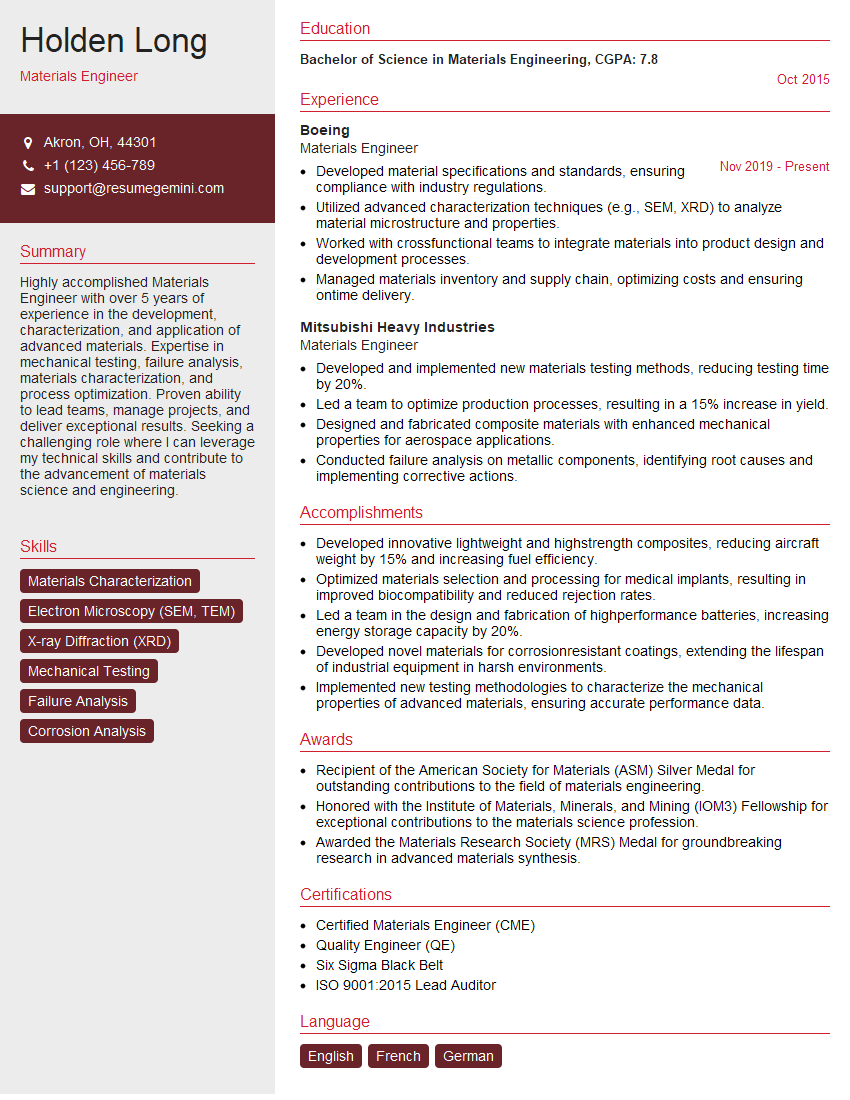
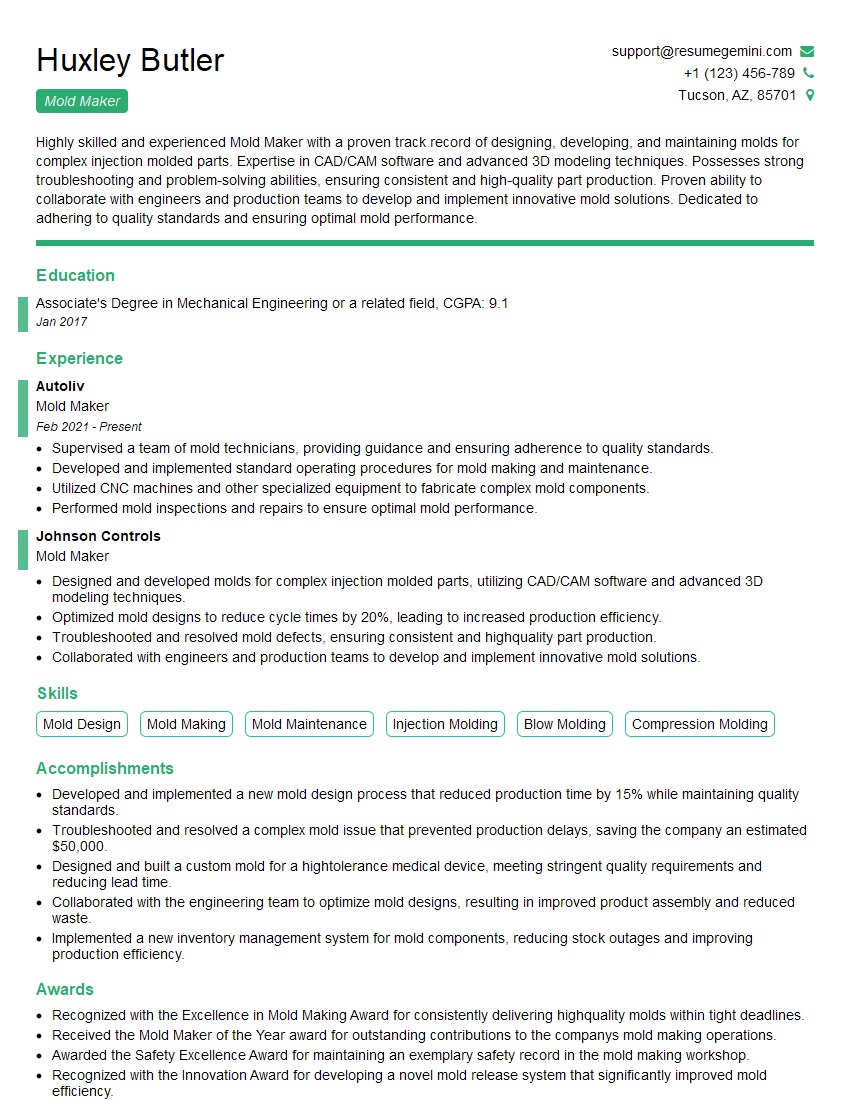
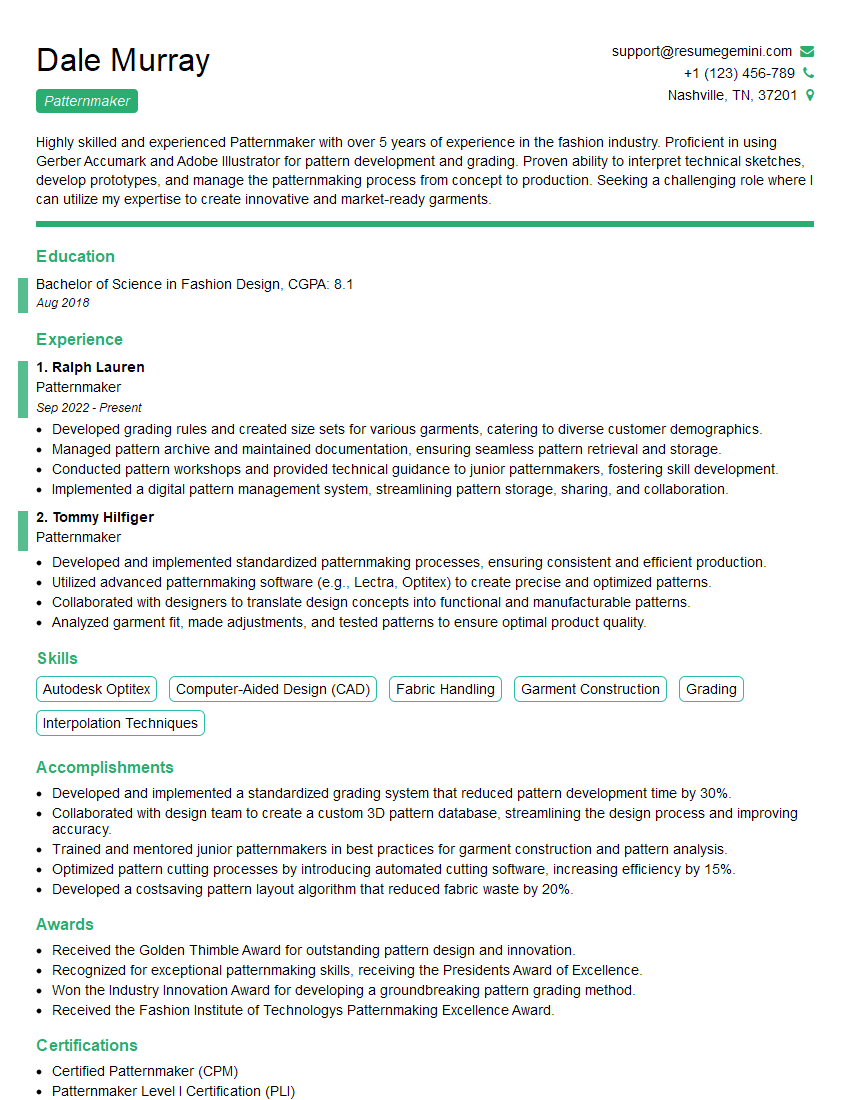
Mastering Green Sand Casting opens doors to rewarding careers in manufacturing and engineering, offering diverse opportunities for growth and specialization. A strong understanding of these principles is highly valued by employers. To significantly increase your chances of landing your dream role, it’s vital to create a resume that effectively highlights your skills and experience to Applicant Tracking Systems (ATS). We strongly encourage you to utilize ResumeGemini, a trusted resource for building professional, ATS-friendly resumes. ResumeGemini provides examples of resumes tailored to Green Sand Casting, helping you showcase your expertise effectively and present a compelling application.




Explore more articles
Users Rating of Our Blogs
Share Your Experience
We value your feedback! Please rate our content and share your thoughts (optional).
What Readers Say About Our Blog
Really detailed insights and content, thank you for writing this detailed article.
IT gave me an insight and words to use and be able to think of examples