The right preparation can turn an interview into an opportunity to showcase your expertise. This guide to Networking Monitoring interview questions is your ultimate resource, providing key insights and tips to help you ace your responses and stand out as a top candidate.
Questions Asked in Networking Monitoring Interview
Q 1. Explain the difference between SNMP and NetFlow.
SNMP (Simple Network Management Protocol) and NetFlow are both used for network monitoring, but they differ significantly in their approach and the data they collect. Think of SNMP as a system of regularly scheduled check-ins, while NetFlow is more like a detailed log of every conversation happening on the network.
SNMP is a polling protocol. A monitoring device (like a management station) periodically queries network devices (routers, switches, servers) for specific information, such as CPU utilization, memory usage, or interface statistics. It uses a structured data format (MIBs – Management Information Bases) to define what information is requested and how it’s presented. It’s simpler to implement but provides less granular detail, typically limited to predefined metrics. Imagine it as asking a few key questions in a regular meeting.
NetFlow (and its Cisco-centric counterpart, IPFIX) is a data export method. Network devices passively monitor network traffic and export flow records containing detailed information about each communication session: source and destination IP addresses, ports, protocols, packet counts, bytes transferred, and timestamps. This provides a rich dataset for analyzing network behavior, identifying bottlenecks, and tracking application performance. It’s like recording every phone call on the network, capturing all the details of each conversation.
In short: SNMP is polling-based, providing summary data on device health; NetFlow is export-based, giving granular details on network traffic. Often, they are used together for a comprehensive monitoring strategy.
Q 2. Describe your experience with network monitoring tools (e.g., Nagios, Zabbix, PRTG).
I have extensive experience with Nagios, Zabbix, and PRTG, each offering unique strengths. My experience spans from initial setup and configuration to complex monitoring strategies and alert management.
Nagios is known for its robust plugin architecture, allowing for great customization and integration with a wide range of network devices and applications. I’ve used it to build comprehensive monitoring systems for large networks, leveraging its ability to monitor everything from server uptime to disk space, and creating custom scripts to monitor specific application metrics. One project involved using Nagios to monitor the performance of a critical e-commerce website, ensuring high availability during peak shopping seasons.
Zabbix excels in its scalability and ability to handle a massive number of monitored devices. Its agentless monitoring capabilities are particularly useful for environments where installing agents on every device isn’t feasible. In one project, I used Zabbix to monitor a geographically distributed network with hundreds of servers and network devices. Its auto-discovery features simplified the initial setup and ongoing management.
PRTG is a more user-friendly tool, ideal for smaller networks or those needing a quicker deployment. Its intuitive interface and pre-built sensors make it easier for less experienced administrators to set up effective monitoring. I’ve employed PRTG in smaller projects where rapid deployment and user-friendliness were prioritized, like monitoring a small office network or a specific application server.
Q 3. How do you troubleshoot network performance issues using monitoring data?
Troubleshooting network performance issues using monitoring data is a systematic process. It involves a combination of data analysis, logical deduction, and often, the use of other diagnostic tools. Here’s a typical approach:
- Identify the problem: Begin by pinpointing the symptom – slow application response, high latency, packet loss, etc. Analyze the monitoring data around the time the issue occurred.
- Isolate the affected area: Look at network maps and monitoring data to determine which parts of the network are experiencing performance degradation. High CPU utilization on a router, saturated links, or slow disk I/O on a server can all point to the source.
- Analyze key metrics: Examine relevant metrics like latency, packet loss, bandwidth utilization, CPU and memory usage on affected devices. A significant deviation from the baseline (explained later) is a strong indicator.
- Correlate data sources: Combine data from different monitoring systems – network monitoring, server monitoring, application performance monitoring – to gain a holistic view. A performance issue in one area may be causing problems elsewhere.
- Utilize additional diagnostic tools: Use tools like traceroute, ping, and packet sniffers (Wireshark) to further investigate the issue. This provides more granular insights than monitoring alone can offer.
- Implement solutions and monitor results: Based on your analysis, implement solutions such as upgrading hardware, optimizing network configurations, or addressing application-level bottlenecks. Continuously monitor the network to ensure the implemented solutions have resolved the issue and to track ongoing performance.
Example: If application response times are slow, you’d check server CPU and memory usage, network latency between the client and server, and network bandwidth utilization. If a server is overloaded, that would point to a potential application or resource issue. If network latency is high, you’d investigate routing, link capacity, or potential congestion points.
Q 4. What are common network performance metrics you monitor?
The common network performance metrics I monitor fall into several categories:
- Bandwidth Utilization: Percentage of available bandwidth being used on links and interfaces. High utilization suggests potential bottlenecks.
- Latency: Delay experienced by data packets traveling across the network. High latency indicates slowdowns and potential issues.
- Packet Loss: Percentage of data packets lost during transmission. Significant packet loss points to network problems.
- Jitter: Variation in packet arrival times. High jitter affects real-time applications like VoIP and video conferencing.
- CPU Utilization: Processor usage on network devices (routers, switches). High CPU utilization can impact network performance.
- Memory Utilization: Memory usage on network devices. Insufficient memory can lead to instability and performance degradation.
- Disk I/O: Disk input/output performance on network devices and servers. Slow disk I/O can affect response times.
- Error Rates: Number of errors encountered during data transmission. High error rates indicate potential hardware or configuration problems.
I also monitor application-specific metrics like response times and transaction rates, which give a detailed view of application performance impacting the network.
Q 5. Explain the concept of baselining in network monitoring.
Baselining in network monitoring is the process of establishing a normal range of performance metrics over a period of time. Think of it as creating a ‘normal’ profile for your network’s behavior. This baseline serves as a benchmark against which future performance can be compared. Any significant deviation from the baseline is a strong indicator of a potential problem.
The process typically involves collecting network performance data over several weeks or months, ensuring data capture during both peak and off-peak periods. Statistical analysis is then used to identify normal operating ranges for key metrics like bandwidth utilization, latency, and packet loss. This results in establishing upper and lower thresholds for each metric. When real-time monitoring data exceeds these thresholds, an alert is triggered, enabling timely identification and resolution of performance issues.
For example, if your baseline shows average latency consistently around 10ms, then a sudden spike to 50ms would raise an alert, suggesting a potential bottleneck or network problem. Without a baseline, a 50ms latency might be considered normal if you didn’t have historical data to compare it to.
Q 6. How do you identify and resolve network bottlenecks?
Identifying and resolving network bottlenecks is a crucial aspect of network management. It requires a combination of monitoring data analysis, network diagnostic tools, and a good understanding of network architecture.
Identification:
- Analyze monitoring data: Look for consistent high utilization on specific links, devices, or applications. High latency, packet loss, and errors often point to bottlenecks.
- Utilize network diagnostic tools: Traceroute reveals the path data takes through the network, identifying potential slow points. Packet capture analysis (using tools like Wireshark) identifies specific traffic patterns and potential problems.
- Review network topology: A poorly designed or congested network segment can cause bottlenecks. Consider network architecture constraints and limitations.
Resolution:
- Upgrade hardware: If a link or device is consistently saturated, upgrading to higher capacity hardware (faster links, more powerful switches/routers) might be necessary.
- Optimize network configuration: This could involve adjusting Quality of Service (QoS) settings to prioritize critical traffic, improving routing efficiency, or configuring network segmentation to reduce congestion.
- Address application issues: Bottlenecks might stem from poorly performing applications. Optimization of application code or resource allocation can help.
- Implement load balancing: Distributing traffic across multiple paths can relieve congestion on any single point.
- Implement network upgrades or redesign: For long-term solutions, it may be necessary to upgrade the entire network or to redesign the network topology to better handle the traffic volume and demands.
The key is a systematic approach, starting with careful data analysis to locate the bottleneck and then implementing the appropriate solution, always keeping network performance monitoring in place to validate any change.
Q 7. Describe your experience with network capacity planning.
Network capacity planning is the process of forecasting future network requirements and ensuring the network infrastructure can handle anticipated growth and changing demands. It’s proactive, not reactive – aiming to prevent future performance problems.
My experience involves forecasting bandwidth needs based on historical data, projected growth, and application requirements. This often involves analyzing network traffic trends, predicting future traffic patterns, and considering factors like new applications, increased user base, or changing business needs. I utilize various tools and techniques, including:
- Traffic analysis: Studying current network traffic patterns to identify trends and growth rates.
- Forecasting models: Employing statistical models to predict future traffic demands.
- Application profiling: Understanding the bandwidth and resource requirements of individual applications.
- Simulation and modeling: Using network simulation tools to test different network configurations and capacity scenarios.
A crucial part of capacity planning is identifying potential bottlenecks before they occur and proactively implementing solutions like upgrading hardware, implementing new technologies, or optimizing network configurations. For instance, if forecasts predict a significant increase in bandwidth needs, this information would guide the procurement of higher-capacity routers, switches, and network links, preventing future performance issues. Effective capacity planning keeps the network ahead of its needs, ensuring smooth operation and high availability.
Q 8. How do you handle network alerts and escalations?
Handling network alerts and escalations involves a multi-step process focused on efficiency and minimizing downtime. It begins with a robust alerting system that filters out noise and prioritizes critical events. I utilize tools that allow for customizable thresholds and severity levels, ensuring only truly significant issues trigger alerts. For example, I’d configure alerts for high CPU utilization on a critical server, but not necessarily for minor fluctuations in network latency.
Once an alert is triggered, I follow a pre-defined escalation path. This path might involve initial automated checks (e.g., pinging a server) followed by notification to the appropriate team member via email, SMS, or even a dedicated collaboration platform like Slack. Severity dictates escalation speed; a critical outage would trigger immediate responses, while a less serious warning might wait until the next business day.
Crucially, the process includes detailed logging of each alert, the actions taken, and the resolution. This is essential for identifying patterns, improving response times, and refining our alerting system over time. Imagine an alert for repeated DNS failures; the log would show timestamps, the affected server, the actions taken (restarting DNS service, checking for configuration issues), and the final resolution (e.g., a faulty network cable was replaced). This detailed record is invaluable for future troubleshooting and preventative maintenance.
Q 9. What are some common network security threats you monitor for?
Network security threats are constantly evolving, but some common threats I monitor for include:
- Denial-of-Service (DoS) attacks: These aim to overwhelm network resources, making services unavailable. I monitor for unusual spikes in network traffic or requests targeting specific servers.
- Distributed Denial-of-Service (DDoS) attacks: Similar to DoS, but originate from multiple sources, making them harder to mitigate. Advanced detection techniques using machine learning are crucial here.
- Malware infections: I look for suspicious network activity, like unusual outbound connections or data exfiltration attempts. Intrusion detection systems (IDS) are critical in this area.
- Unauthorized access attempts: Monitoring for failed login attempts from unknown IP addresses or suspicious authentication requests. Firewall logs and security information and event management (SIEM) systems are key.
- Man-in-the-middle (MitM) attacks: These intercept communications between two parties. We use encryption protocols (HTTPS, VPNs) to mitigate these, and I monitor for any signs of compromise of these protocols.
- Data breaches: Monitoring for unusual data transfer patterns, especially large or encrypted data leaving the network. Data loss prevention (DLP) tools play a vital role.
The specific threats and monitoring strategies vary depending on the environment, but the goal remains consistent: early detection and rapid response to minimize damage.
Q 10. Explain your experience with log analysis for network troubleshooting.
Log analysis is crucial for network troubleshooting. I’m proficient in analyzing logs from various sources like firewalls, routers, switches, servers, and security devices. My process typically involves:
- Identifying the problem: Start by understanding the symptom – e.g., slow application response, network outage, security alert.
- Gathering relevant logs: This requires knowing which devices and services are likely involved. For example, if a web application is slow, I’d check the web server logs, database logs, and network device logs for clues.
- Filtering and correlating logs: Using log management tools, I filter out irrelevant information and correlate events across different log sources to identify the root cause. For example, I might see a spike in errors in the web server logs at the same time as network congestion logs on a router.
- Analyzing log patterns: Looking for recurring patterns or anomalies that indicate potential problems before they escalate. This helps in predictive maintenance.
- Using log analysis tools: I’m comfortable using tools like Splunk, ELK stack (Elasticsearch, Logstash, Kibana), and Graylog to streamline the analysis process. These tools provide capabilities for searching, visualizing, and alerting on log data.
For instance, I once used log analysis to identify a poorly configured firewall rule that was blocking legitimate traffic to a critical application. By correlating firewall logs with application server logs, I quickly pinpointed the cause and corrected the rule.
Q 11. What is your experience with creating network monitoring dashboards?
I have extensive experience creating network monitoring dashboards using various tools such as Grafana, Datadog, and even custom solutions based on scripting languages like Python. My approach focuses on clarity, relevance, and actionable insights. A well-designed dashboard provides a holistic view of the network’s health at a glance.
Key elements I include are:
- Key Performance Indicators (KPIs): Visualizations (charts, graphs, gauges) of critical metrics such as CPU utilization, memory usage, network bandwidth, latency, and packet loss.
- Alerts and notifications: Clear visual indicators (e.g., color-coded alerts) highlighting critical issues that require immediate attention.
- Topology maps: Visual representation of the network infrastructure, allowing for quick identification of problem areas.
- Log summaries: Concise summaries of important log events to facilitate rapid troubleshooting.
- Customizable views: The ability to create different dashboards tailored to specific needs (e.g., a dashboard for security monitoring, another for application performance).
For example, a dashboard for a cloud-based infrastructure might include CPU and memory usage for each virtual machine, network traffic for each subnet, and alerts triggered when resource utilization exceeds predefined thresholds. The design philosophy is always ‘less is more’ – focusing on presenting the most critical information in an easily digestible format.
Q 12. How do you ensure the accuracy and reliability of network monitoring data?
Ensuring the accuracy and reliability of network monitoring data is paramount. This involves a multi-pronged approach:
- Accurate sensor placement: Monitoring devices (SNMP agents, network probes) must be strategically placed throughout the network to provide comprehensive coverage. Poor placement can lead to blind spots and inaccurate data.
- Regular calibration and verification: Periodically check the accuracy of monitoring tools and sensors against known good sources. This involves comparing data against other monitoring tools or performing manual checks.
- Data validation and error handling: Implementing checks and balances to detect and handle erroneous data points. This might involve discarding outliers or using statistical methods to smooth out noisy data.
- Redundancy and failover mechanisms: Building redundancy into the monitoring system to ensure continued operation even if one component fails. This includes using multiple monitoring tools and having backup systems in place.
- Data aggregation and normalization: Aggregating data from multiple sources and normalizing it to a common format facilitates accurate comparison and analysis.
Regular audits of the monitoring system are essential to identify and address any potential issues affecting data quality. For example, if a specific sensor consistently reports inconsistent data, it needs investigation and potential replacement. The goal is to create a trustworthy and reliable system to base decisions on.
Q 13. Explain your understanding of network topology and its impact on monitoring.
Network topology refers to the physical or logical layout of a network. Understanding the topology is crucial for effective network monitoring, as it dictates how data flows and where potential bottlenecks or points of failure might exist. Different topologies present different monitoring challenges and opportunities.
For instance, in a simple star topology (all devices connected to a central hub or switch), monitoring the central switch provides a good overview of network health. However, in a more complex mesh topology, where multiple paths exist between devices, monitoring requires more sophisticated techniques to identify performance issues.
Knowing the topology helps in:
- Strategic placement of monitoring agents: Sensors should be placed to provide optimal coverage across all parts of the network.
- Identifying potential single points of failure: Understanding critical paths allows for proactive measures to mitigate risk.
- Effective troubleshooting: Knowing the network’s structure helps isolate the source of problems more quickly.
- Capacity planning: Topology information is essential for anticipating future network growth and resource needs.
Tools that map the network’s topology and integrate with monitoring systems significantly improve the efficiency and effectiveness of monitoring efforts. Without a clear understanding of the network topology, monitoring efforts can be inefficient, leading to delayed detection of problems and ineffective troubleshooting.
Q 14. Describe your experience with different types of network monitoring protocols.
My experience encompasses various network monitoring protocols, each with its strengths and weaknesses:
- SNMP (Simple Network Management Protocol): A widely used protocol for collecting information from network devices. It’s relatively simple to implement but can be resource-intensive on devices with limited processing power. I’ve extensively used SNMP to monitor CPU utilization, memory usage, interface statistics, and other key metrics.
- NetFlow/sFlow: These protocols provide detailed information about network traffic patterns, including source and destination IP addresses, port numbers, and bytes transferred. I use NetFlow/sFlow data for analyzing network usage, identifying bottlenecks, and detecting security threats.
- IPFIX (IP Flow Information Export): A more advanced protocol than NetFlow, offering improved scalability and flexibility. It’s particularly valuable in large, complex networks.
- Syslog: A standard protocol for transmitting system logs, including those related to network devices and applications. I routinely use Syslog data for troubleshooting and security monitoring.
- HTTP/HTTPS: Many modern monitoring tools utilize HTTP or HTTPS to collect data from network devices and applications. API calls provide a flexible way to obtain real-time data.
The choice of protocol often depends on the specific monitoring needs and the capabilities of the network devices. Many monitoring systems support multiple protocols, allowing for a comprehensive approach.
Q 15. How do you correlate data from multiple monitoring tools?
Correlating data from multiple monitoring tools is crucial for gaining a holistic view of network health. It’s like assembling a jigsaw puzzle – each tool provides a piece of the picture, but only when combined do you see the complete image. My approach involves a multi-step process:
Data Normalization: Different tools often use different formats and units. Before correlation, I standardize the data. This might involve converting timestamps to a common format, aligning metrics (e.g., bandwidth from Mbps to Gbps), and ensuring consistent naming conventions for devices and interfaces.
Data Integration: I utilize a centralized logging and monitoring platform (e.g., Splunk, ELK stack, Prometheus) to collect data from diverse sources. This often involves using APIs or dedicated integrations provided by the monitoring tools. This platform serves as a single pane of glass for viewing data from all sources.
Correlation Rules & Algorithms: I define rules to identify relationships between events across different data sources. For example, a spike in CPU utilization on a server (from a system monitoring tool) correlated with increased latency on a network segment (from a network monitoring tool) could indicate a bottleneck. Advanced techniques like machine learning can further enhance this by identifying complex correlations that might not be apparent using simple rules.
Visualization & Alerting: The correlated data is visualized using dashboards and reports. Automated alerts are configured to trigger based on predefined thresholds and correlation results, e.g., an alert might be raised if CPU utilization exceeds 80% *and* network latency exceeds 200ms simultaneously.
For example, I once used Splunk to correlate data from SolarWinds (for network performance), Nagios (for server monitoring), and Zabbix (for application performance). This allowed us to quickly identify the root cause of a service outage caused by a network congestion issue impacting a specific server.
Career Expert Tips:
- Ace those interviews! Prepare effectively by reviewing the Top 50 Most Common Interview Questions on ResumeGemini.
- Navigate your job search with confidence! Explore a wide range of Career Tips on ResumeGemini. Learn about common challenges and recommendations to overcome them.
- Craft the perfect resume! Master the Art of Resume Writing with ResumeGemini’s guide. Showcase your unique qualifications and achievements effectively.
- Don’t miss out on holiday savings! Build your dream resume with ResumeGemini’s ATS optimized templates.
Q 16. Explain your approach to automating network monitoring tasks.
Automating network monitoring is essential for scalability and efficiency. Think of it as having a tireless, ever-vigilant network technician working 24/7. My approach uses a combination of scripting, automation tools, and configuration management:
Scripting (Python, Ansible, Bash): I use scripting to automate repetitive tasks such as collecting metrics, generating reports, and even performing basic troubleshooting steps. For instance, a Python script could automatically check network connectivity to critical servers and send alerts if problems are detected.
Automation Tools (Ansible, Chef, Puppet): These tools are employed for configuration management and deployment of monitoring agents on network devices. This ensures consistency across the network and simplifies the process of scaling the monitoring system.
Monitoring Platform APIs: Many monitoring platforms offer robust APIs. I leverage these APIs to create custom integrations, automate tasks within the platform (e.g., creating dashboards, configuring alerts), and integrate with other IT systems like ticketing systems.
CI/CD Pipelines: Integrating network monitoring into CI/CD pipelines ensures that monitoring configurations are automatically updated along with changes to network infrastructure. This reduces the risk of configuration drift and ensures that monitoring remains accurate and up-to-date.
Example: Ansible playbook to deploy a monitoring agent: - name: Deploy monitoring agent hosts: all tasks: - name: Copy agent file copy: src: /path/to/agent dest: /opt/monitoring/agent
Q 17. How do you handle large volumes of network monitoring data?
Handling large volumes of network monitoring data requires a strategic approach focusing on data reduction, efficient storage, and optimized querying. Imagine trying to sift through a mountain of sand to find a single grain – impossible without the right tools. Here’s my strategy:
Data Aggregation & Summarization: Instead of storing every single data point, I aggregate data at different levels of granularity. For example, instead of storing individual packet captures, I focus on summary statistics like average latency, throughput, and packet loss.
Data Filtering & Sampling: Filtering irrelevant data (e.g., normal background traffic) and using appropriate sampling techniques reduce the volume of stored data without sacrificing critical insights. This ensures we only keep what’s truly necessary.
Database Selection: I choose databases (e.g., TimescaleDB, InfluxDB) specifically designed to handle time-series data efficiently. These databases offer features optimized for querying and analyzing large datasets of monitoring information.
Data Archiving: Older data that’s less frequently accessed is moved to cheaper, long-term storage (e.g., cloud storage). This keeps the frequently used data readily accessible while minimizing storage costs.
Data Compression: Employing data compression techniques reduces the storage footprint of the data without significant loss of information.
Q 18. What are your preferred methods for visualizing network performance data?
Visualizing network performance data effectively is crucial for quick identification of issues and informed decision-making. Imagine trying to understand a complex network solely by looking at raw data – it’s nearly impossible. Here are my preferred methods:
Dashboards: Interactive dashboards providing real-time views of key metrics like bandwidth utilization, latency, packet loss, and CPU/memory usage on critical network devices. Tools like Grafana and Kibana excel at creating customizable dashboards.
Charts & Graphs: Various chart types – line graphs for trends, bar charts for comparisons, heatmaps for identifying patterns across different devices or time periods – are used to effectively display network performance data.
Geographic Maps: When dealing with geographically dispersed networks, visualizing performance data on a map can quickly pinpoint areas with connectivity issues.
Network Topology Maps: Visual representations of the network infrastructure, color-coded based on performance metrics, provide an at-a-glance view of the network’s health.
Custom Reports: Generating custom reports provides a deeper dive into specific aspects of network performance, enabling detailed analysis and trend identification.
Q 19. Describe your experience with implementing network monitoring solutions.
I have extensive experience implementing network monitoring solutions in diverse environments, from small office networks to large enterprise data centers. My experience covers the entire lifecycle, from initial assessment and design to deployment, configuration, and ongoing maintenance. I’ve worked with various monitoring tools including:
Nagios/Icinga: For comprehensive network and system monitoring, leveraging its robust alerting capabilities.
Zabbix: For detailed monitoring of servers and network devices, appreciating its flexibility and extensibility.
SolarWinds: For its comprehensive network performance monitoring capabilities, particularly in larger environments.
PRTG: For its user-friendly interface and ease of deployment, especially suitable for smaller networks.
A recent project involved designing and deploying a comprehensive network monitoring system for a large financial institution. This involved integrating multiple monitoring tools, implementing automated alerting, and creating custom dashboards tailored to the specific needs of different teams (e.g., security, network operations, application support). We successfully reduced mean time to resolution (MTTR) for network incidents by 40%.
Q 20. How do you stay updated with the latest network monitoring technologies?
Staying updated in the rapidly evolving field of network monitoring is crucial. I employ several strategies:
Industry Publications & Blogs: I regularly read publications like Network World, Network Computing, and blogs from leading technology companies and experts.
Conferences & Webinars: Attending industry conferences and webinars provides invaluable insights into the latest technologies and best practices.
Online Courses & Certifications: I pursue online courses and certifications (e.g., CompTIA Network+, CCNA) to enhance my knowledge and keep my skills sharp.
Professional Networking: Engaging with other network professionals through online communities, forums, and professional organizations keeps me informed about current trends and challenges.
Hands-on Experience: Experimenting with new tools and technologies in controlled environments is crucial to gaining practical experience and understanding their capabilities.
Q 21. Explain your experience with integrating network monitoring with other IT systems.
Integrating network monitoring with other IT systems is essential for creating a unified view of IT operations. It’s like connecting the different pieces of a complex machine to create a seamless operation. My experience includes integrating network monitoring with:
Ticketing Systems (ServiceNow, Jira): Automatically creating tickets when critical network events occur, streamlining incident management.
Security Information and Event Management (SIEM) Systems: Integrating network monitoring data with SIEM systems provides a more comprehensive security posture and facilitates threat detection and response.
Configuration Management Tools (Ansible, Puppet, Chef): Ensuring that changes to network infrastructure are automatically reflected in the monitoring system, improving accuracy and consistency.
Application Performance Monitoring (APM) Tools: Correlating network performance data with application performance to quickly pinpoint bottlenecks and resolve application issues.
Cloud Monitoring Platforms (AWS CloudWatch, Azure Monitor, Google Cloud Monitoring): Integrating on-premises network monitoring with cloud monitoring tools provides a unified view of hybrid cloud environments.
In one project, I integrated network monitoring with our SIEM system, allowing us to automatically detect and respond to network-based security threats. This proactive approach significantly reduced the impact of security incidents.
Q 22. Describe a situation where network monitoring helped you prevent a major outage.
During my time at a large financial institution, we experienced a gradual increase in latency on our trading network. Our network monitoring system, which included performance metrics like packet loss, jitter, and round-trip time, alerted us to this issue before users reported any problems. Initially, the alerts were dismissed as minor fluctuations, but the persistent, slow degradation in performance triggered a deeper investigation. The monitoring data pinpointed a failing network interface card in a critical router. By replacing the faulty NIC proactively, we avoided a major outage that could have resulted in significant financial losses and reputational damage. The incident highlighted the importance of establishing robust baselines for key network metrics and setting appropriate thresholds for alerts.
Q 23. How do you prioritize network monitoring alerts based on severity and impact?
Prioritizing network monitoring alerts requires a multi-faceted approach that combines automated severity levels with an understanding of the business impact. We utilize a system that incorporates several factors:
- Severity Levels: Critical alerts (e.g., complete network segment outage, critical server down) automatically escalate to the on-call team immediately. Major alerts (e.g., high CPU utilization on a core switch, significant packet loss) trigger notifications and require faster responses. Minor alerts (e.g., temporary spikes in latency) are monitored but don’t immediately require intervention unless they escalate.
- Impact Analysis: This considers the affected systems and users. An alert affecting a production database server is given higher priority than a similar alert on a development server. We use custom scripts to correlate alerts with business services to accurately gauge the impact.
- Alert Correlation: Advanced monitoring tools can correlate multiple related alerts to reduce alert fatigue and provide a more comprehensive picture. For example, if multiple servers are reporting high latency simultaneously, the root cause is likely a network bottleneck rather than multiple individual server issues.
This combined approach reduces noise, ensures timely responses to critical issues, and allows for efficient resource allocation.
Q 24. Explain your understanding of network redundancy and high availability in the context of monitoring.
Network redundancy and high availability are crucial for ensuring continuous operation and minimizing downtime. In the context of monitoring, this means having redundant monitoring systems and processes. For example:
- Redundant Monitoring Servers: Having multiple monitoring servers ensures that if one fails, another takes over seamlessly. This can be achieved through clustering or load balancing.
- Multiple Monitoring Tools: Using different tools that monitor overlapping aspects of the network allows for cross-validation and reduces reliance on a single vendor or technology. This provides a robust backup in the case of a vendor-specific issue.
- Passive Monitoring: Implementing passive monitoring techniques alongside active monitoring allows you to detect problems even if the active monitoring tools are down. This involves analyzing network traffic logs, system logs, and other sources.
Monitoring these redundant systems allows you to quickly identify and address failures in the monitoring infrastructure itself, preventing a cascading failure. The goal is to ensure continuous visibility into network health regardless of single points of failure.
Q 25. What are some common challenges in network monitoring, and how have you addressed them?
Common challenges in network monitoring include:
- Alert Fatigue: Too many alerts can lead to important alerts being missed. This is often addressed through intelligent alert filtering, correlation, and clear prioritization.
- Data Silos: Different monitoring tools often create data silos, making it difficult to get a holistic view of the network. This is mitigated through centralized logging and dashboarding, often using SIEM (Security Information and Event Management) systems.
- Scalability: As the network grows, the monitoring system must scale accordingly. Cloud-based monitoring solutions can often address this challenge more easily than on-premises systems.
- Complex Networks: Modern networks are incredibly complex, making it difficult to monitor everything effectively. Automated discovery and mapping tools are essential for navigating this complexity.
I address these challenges by using a combination of advanced monitoring tools, scripting for automation, and a well-defined process for alert management and incident response. Prioritizing simplicity and building modular systems are key to long-term maintainability.
Q 26. Describe your experience with using scripting languages (e.g., Python, PowerShell) for network monitoring automation.
I have extensive experience using Python and PowerShell for network monitoring automation. For example, I’ve used Python with libraries like paramiko to automate SSH connections to network devices, collect configuration data, and execute commands. This allowed me to create custom scripts for automatically detecting changes in device configurations, generating reports, and proactively identifying potential problems.
# Example Python script snippet (Illustrative):
import paramiko

ssh = paramiko.SSHClient()
ssh.set_missing_host_key_policy(paramiko.AutoAddPolicy())
ssh.connect(hostname='router1', username='admin', password='password')
stdin, stdout, stderr = ssh.exec_command('show ip interface brief')
output = stdout.readlines()
# Process the output...
In PowerShell, I’ve utilized cmdlets to query network devices, monitor system performance counters, and generate alerts. This allowed the automation of routine tasks and the creation of customized reports tailored to specific needs.
These scripting skills have significantly improved the efficiency of our monitoring operations, reducing manual effort and enabling quicker responses to potential issues. Automating data collection and analysis freed up valuable time for more strategic tasks.
Q 27. How would you design a network monitoring system for a large enterprise?
Designing a network monitoring system for a large enterprise requires a layered approach:
- Network Discovery and Mapping: Start with automated discovery tools to create a comprehensive map of the network infrastructure, including devices, connections, and dependencies.
- Centralized Monitoring Platform: Choose a platform that can handle the scale and complexity of the network, allowing for centralized logging, alerting, and reporting.
- Layered Monitoring: Implement a multi-layered approach, combining network-level monitoring (e.g., SNMP, NetFlow), host-level monitoring (e.g., agent-based monitoring), and application-level monitoring to gain a holistic view.
- Alerting and Notification: Establish a robust alerting system with clear escalation paths and incident response procedures.
- Reporting and Analytics: Implement reporting and analytics capabilities to identify trends, patterns, and potential issues proactively. This requires the use of dashboards to provide at-a-glance insights.
- Security Considerations: Ensure the monitoring system itself is secure and protected against unauthorized access. Secure communication channels and proper authentication are essential.
The key is to design a modular, scalable, and maintainable system that can adapt to future growth and changes in the network infrastructure. The design should also incorporate robust redundancy and high availability.
Q 28. Explain your experience with cloud-based network monitoring solutions (e.g., AWS CloudWatch, Azure Monitor).
I have experience utilizing both AWS CloudWatch and Azure Monitor. CloudWatch offers excellent integration with other AWS services, making it ideal for monitoring cloud-based infrastructure. I’ve used it extensively to monitor EC2 instances, load balancers, and other AWS services, setting up custom metrics and alarms for critical thresholds. The scalability and automatic scaling features are significant advantages for managing cloud environments.
Azure Monitor, similarly, provides comprehensive monitoring capabilities for Azure resources. I’ve utilized its log analytics capabilities for analyzing large volumes of log data from virtual machines, network devices, and other Azure services, enabling proactive identification of potential problems. The integration with other Azure services simplifies the management of hybrid cloud environments.
Both platforms offer powerful visualizations and reporting tools, making it easy to monitor the health and performance of the cloud infrastructure and quickly identify and address issues. Choosing the right platform depends on the specific cloud provider used and the overall architecture.
Key Topics to Learn for Networking Monitoring Interview
- Network Topology and Architecture: Understanding different network designs (LAN, WAN, hybrid) and their impact on monitoring strategies. Practical application: Designing a monitoring solution for a specific network topology.
- Network Protocols and Services: Deep knowledge of TCP/IP, DNS, DHCP, SNMP, and other relevant protocols. Practical application: Troubleshooting network issues by analyzing protocol behavior using monitoring tools.
- Monitoring Tools and Technologies: Familiarity with various monitoring tools (e.g., Nagios, Zabbix, PRTG, SolarWinds) and their functionalities. Practical application: Selecting the appropriate monitoring tool based on specific network requirements and budget.
- Network Performance Metrics: Understanding key metrics like latency, bandwidth utilization, packet loss, and jitter. Practical application: Analyzing performance data to identify bottlenecks and optimize network performance.
- Security Monitoring: Identifying and mitigating security threats through network monitoring. Practical application: Implementing intrusion detection and prevention systems and analyzing security logs.
- Log Management and Analysis: Collecting, analyzing, and interpreting network logs to identify issues and trends. Practical application: Using log analysis tools to troubleshoot network problems and improve security.
- Alerting and Notification Systems: Designing and implementing effective alerting mechanisms to ensure timely responses to network incidents. Practical application: Configuring alerts based on predefined thresholds and integrating with incident management systems.
- Data Visualization and Reporting: Presenting network monitoring data in a clear and concise manner using dashboards and reports. Practical application: Creating reports to track network performance and identify areas for improvement.
- Cloud Monitoring: Understanding the unique challenges and best practices for monitoring cloud-based networks. Practical application: Implementing monitoring solutions for cloud environments like AWS, Azure, or GCP.
- Automation and Orchestration: Utilizing automation tools to streamline monitoring tasks and improve efficiency. Practical application: Automating the deployment and configuration of monitoring agents.
Next Steps
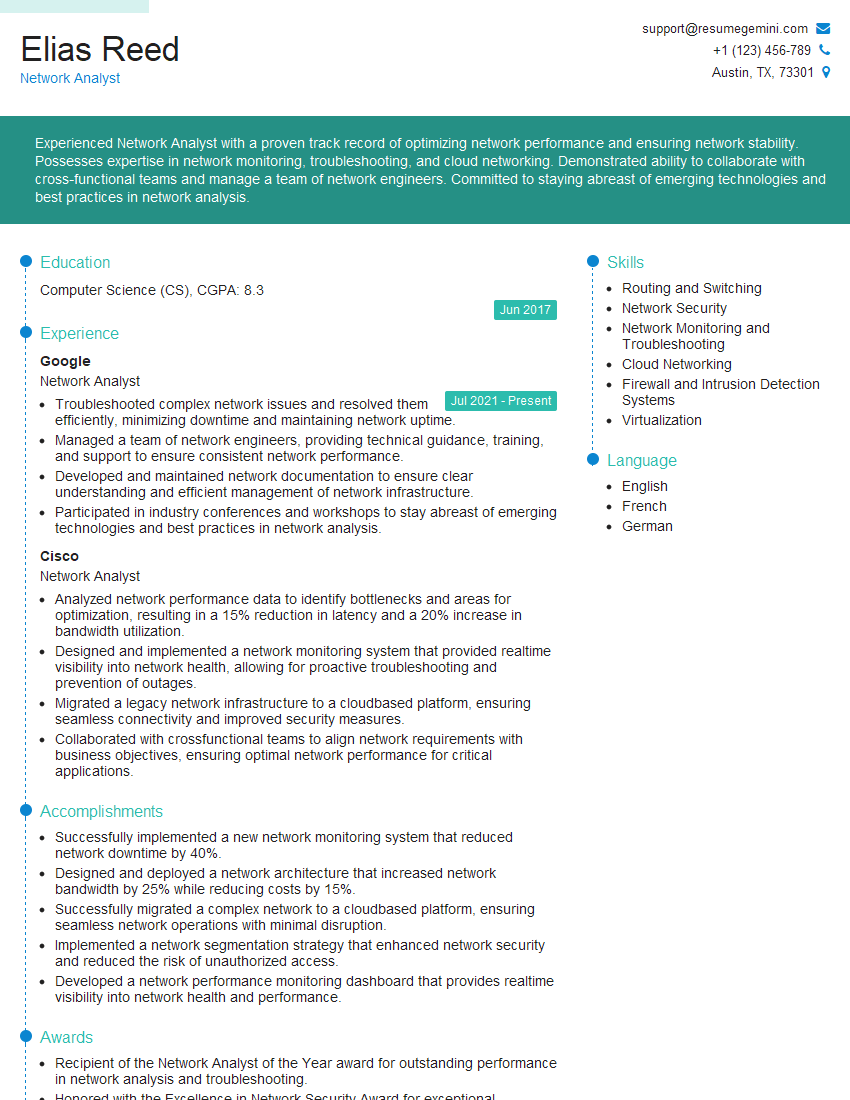
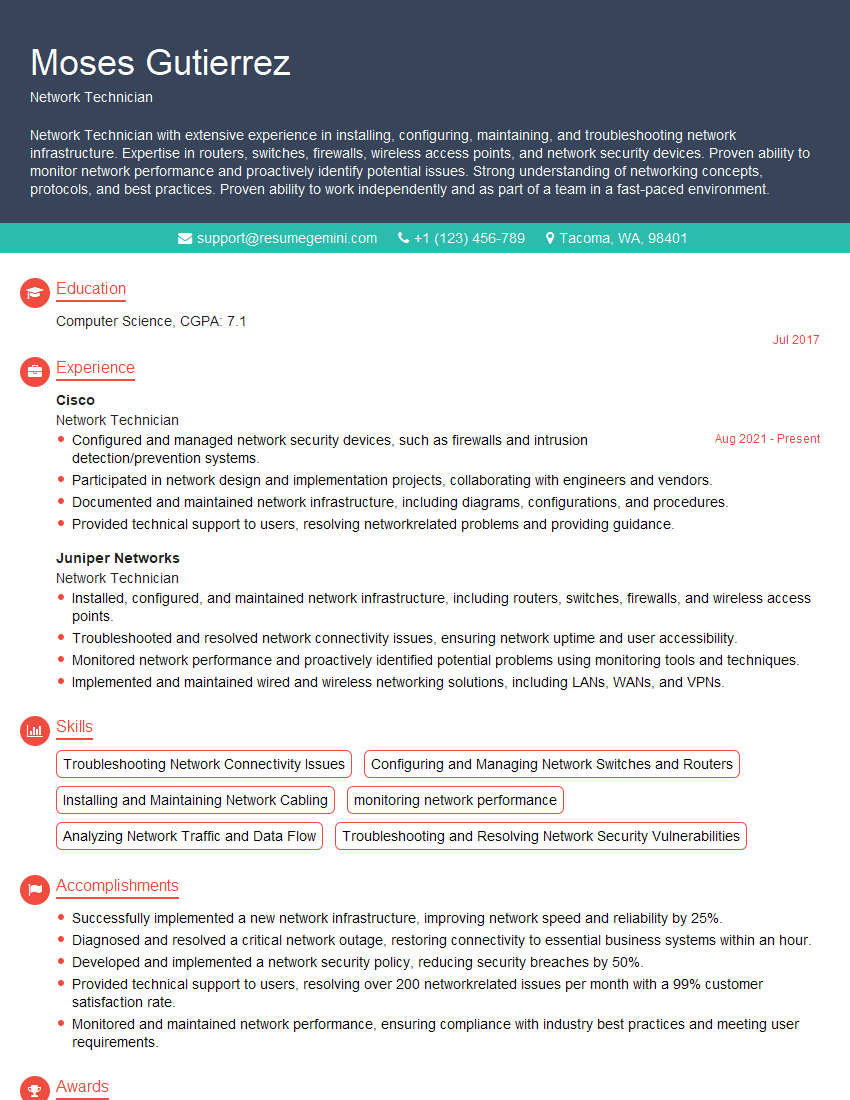
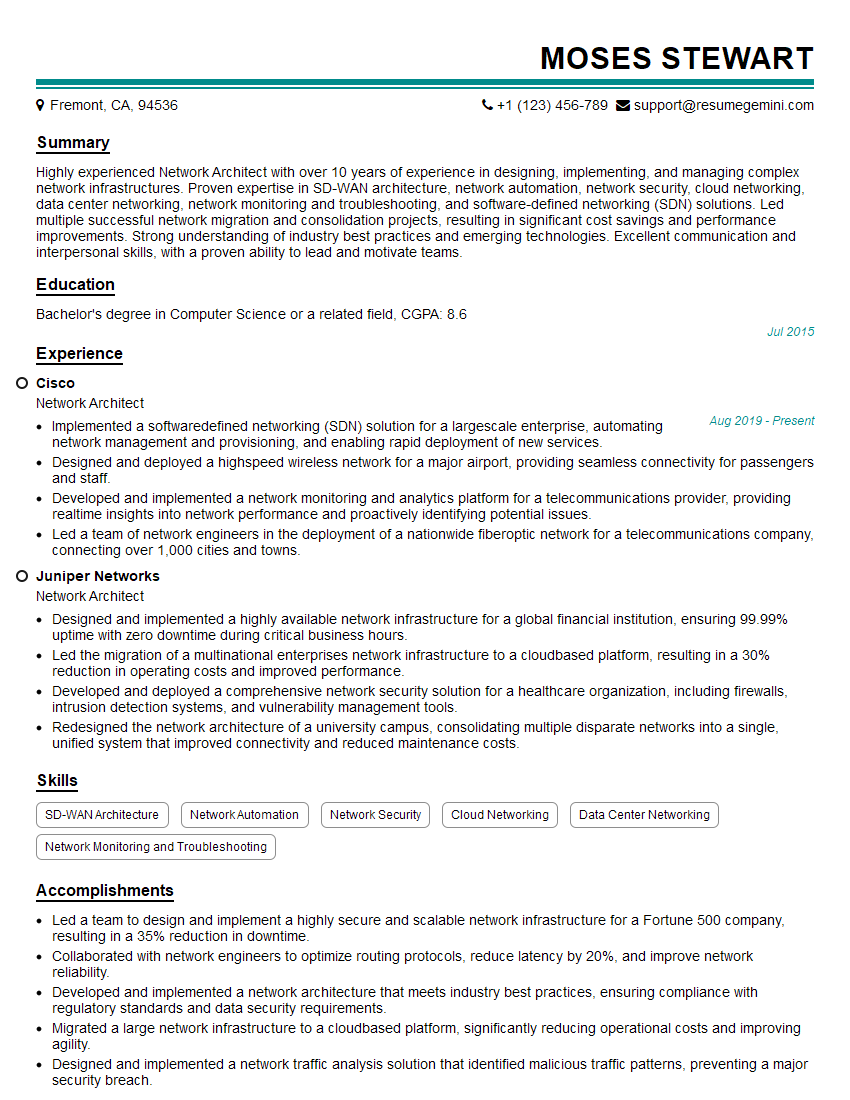
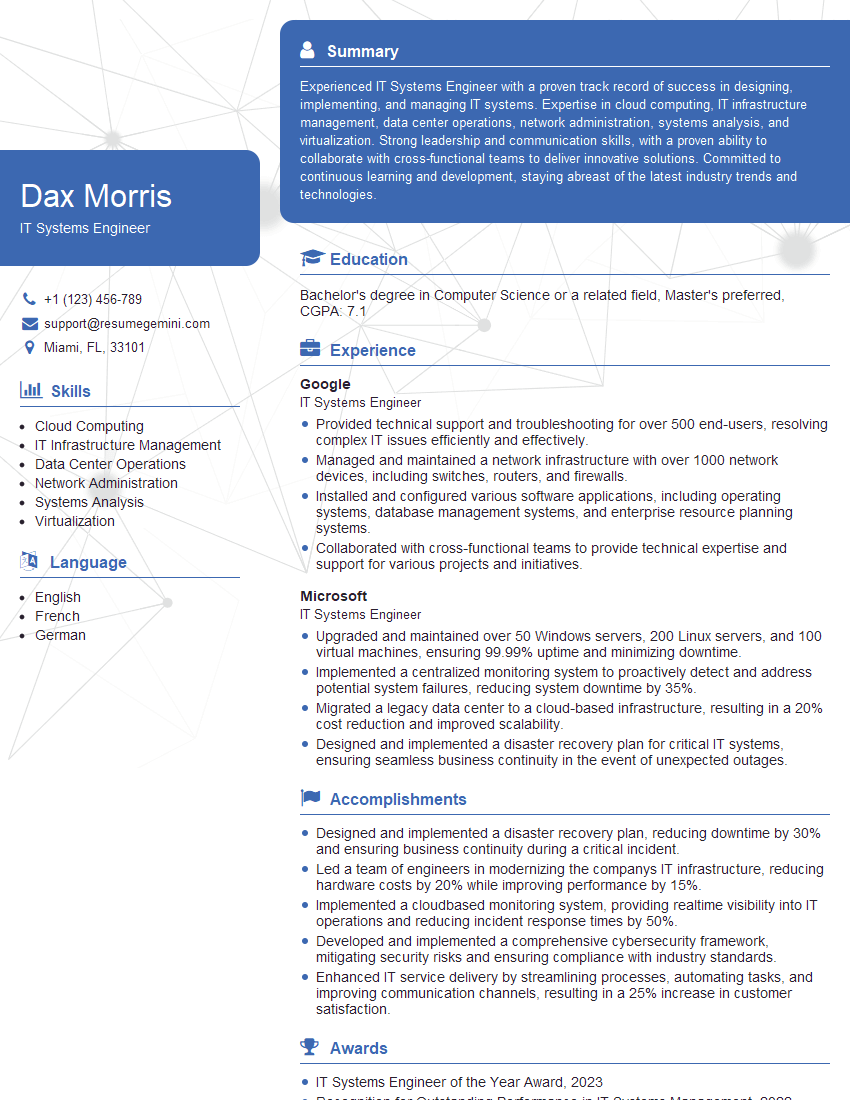
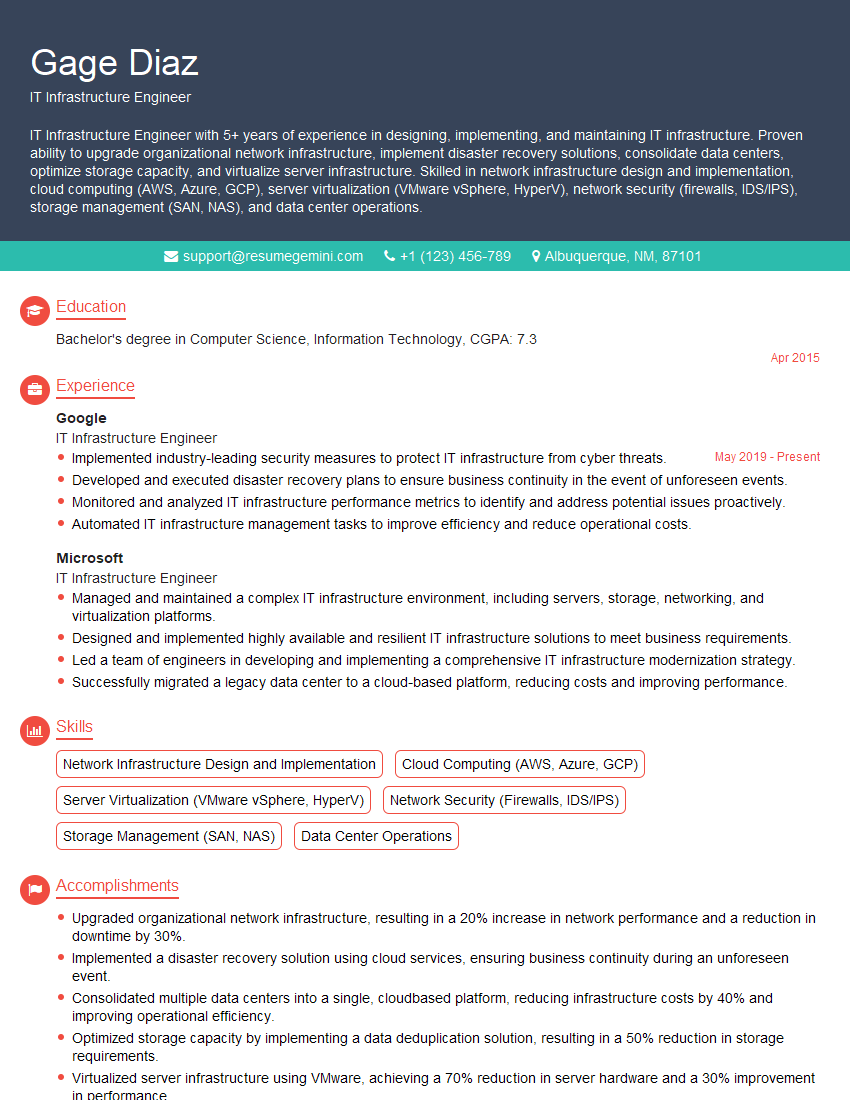
Mastering Networking Monitoring opens doors to exciting career opportunities with significant growth potential, leading to specialized roles and increased earning power. To maximize your job prospects, focus on building an ATS-friendly resume that highlights your skills and experience effectively. ResumeGemini is a trusted resource that can help you craft a professional and impactful resume. We provide examples of resumes tailored specifically to Networking Monitoring roles to guide you through the process.


Explore more articles
Users Rating of Our Blogs
Share Your Experience
We value your feedback! Please rate our content and share your thoughts (optional).
What Readers Say About Our Blog
Really detailed insights and content, thank you for writing this detailed article.
IT gave me an insight and words to use and be able to think of examples