The right preparation can turn an interview into an opportunity to showcase your expertise. This guide to Fundraising and Grantsmanship interview questions is your ultimate resource, providing key insights and tips to help you ace your responses and stand out as a top candidate.
Questions Asked in Fundraising and Grantsmanship Interview
Q 1. Describe your experience with cultivating major donors.
Cultivating major donors is a long-term strategy focused on building meaningful relationships based on mutual trust and shared values. It’s less about a quick ask and more about nurturing a connection. My approach involves a multi-stage process:
- Identification: Identifying prospective major donors through research, networking, and analyzing existing donor data. This includes looking at past giving history, their professional background, and their philanthropic interests.
- Initial Contact & Relationship Building: This isn’t about immediately asking for money. Instead, it’s about getting to know the individual – understanding their passions, their motivations, and their philanthropic goals. This might involve informational interviews, attending events they’re involved in, or sending them relevant articles.
- Strategic Communication: Tailoring communication to resonate with each donor’s individual interests. Generic emails won’t cut it. Personalized notes, invitations to exclusive events, and regular updates on the impact of donations are crucial.
- Cultivation & Stewardship: This ongoing process involves providing regular updates on the organization’s progress, showcasing the impact of their contributions, and consistently demonstrating transparency and accountability. Regular thank-you notes, personal phone calls, and in-person meetings are vital.
- The Ask: The final step, and only after a strong relationship has been established. The ask should be tailored to the donor’s capacity and aligned with their interests. It’s important to present a clear and compelling case for support.
For example, I once cultivated a relationship with a successful entrepreneur who was passionate about environmental conservation. Through regular communication and showcasing the impact of our organization’s work in reforestation, I eventually secured a significant multi-year donation.
Q 2. What grant writing strategies have you found most successful?
Successful grant writing hinges on understanding the funder’s priorities and aligning your proposal perfectly with their mission. My most successful strategies include:
- Thorough Research: Before even thinking about writing, I meticulously research the funding organization. I look at their past grants, their mission statement, their funding priorities, and the specific program guidelines. Understanding the funder’s language and expectations is critical.
- Compelling Narrative: Grant proposals aren’t just about numbers; they’re about storytelling. I craft a narrative that connects the organization’s mission with the funder’s values and demonstrates a clear need for funding. This involves highlighting the problem, presenting a solution, and demonstrating the impact.
- Strong Budget Justification: Every line item in the budget must be justified and directly linked to the proposed project. I use clear and concise language to explain how the funds will be used to achieve the project goals.
- Data-Driven Approach: Using data to support every claim is vital. This might involve presenting statistics, research findings, or anecdotal evidence to demonstrate the project’s potential impact.
- Effective Follow-up: After submitting the proposal, I follow up with a phone call or email to check on its status and address any questions the funder might have. Building rapport with the program officer can be beneficial.
For instance, in one successful grant application, I tailored the narrative to resonate with the funder’s focus on youth empowerment, using data on youth unemployment to highlight the need for our job training program. The proposal was highly successful because it clearly articulated the problem, presented a viable solution, and detailed the measurable impact of the funding.
Q 3. How do you prioritize grant opportunities based on organizational needs?
Prioritizing grant opportunities requires a strategic approach that aligns funding possibilities with organizational needs and capacity. I use a framework that considers several key factors:
- Organizational Strategic Plan: The organization’s strategic plan outlines its long-term goals and objectives. Grant opportunities must directly support these goals. If a grant doesn’t align with the strategic plan, it’s unlikely to be a good fit.
- Funding Alignment: I carefully analyze the funder’s priorities and ensure there’s a strong match with our organizational needs. The grant must address a significant challenge the organization faces and provide tangible benefits.
- Feasibility Assessment: This involves evaluating whether the organization has the internal capacity to successfully implement the project. Factors such as staff expertise, available resources, and project timeline are considered.
- Success Rate Analysis: I examine the funder’s past grant awards to assess their success rate and identify potential challenges. Understanding the funder’s preferences increases the likelihood of success.
- Resource Allocation: Grant writing takes considerable time and resources. I prioritize opportunities that have a high likelihood of success given the organization’s capacity and resources.
Essentially, it’s about finding the sweet spot where the funder’s priorities, the organization’s needs, and its capacity to execute align perfectly. I use a simple scoring system to rank potential grants, weighing each factor based on its importance.
Q 4. Explain your process for developing a compelling fundraising proposal.
Developing a compelling fundraising proposal is an iterative process that requires careful planning and attention to detail. My process typically includes:
- Needs Assessment: Clearly defining the problem and articulating the need for funding. This often involves gathering data and conducting research to support the need.
- Program Description: Detailing the proposed program or project, including specific goals, objectives, and activities. This section must be clear, concise, and easy to understand.
- Evaluation Plan: Describing how the success of the program will be measured. This might involve identifying key performance indicators (KPIs) and outlining data collection methods.
- Budget Development: Creating a detailed budget that clearly outlines all costs associated with the project. This should be easily understandable and linked directly to the project activities.
- Narrative Development: Crafting a compelling narrative that connects the problem, the solution, and the expected impact. This should be engaging and persuasive, highlighting the importance of the work.
- Review & Editing: Multiple rounds of review and editing are crucial to ensure clarity, accuracy, and professionalism. Getting feedback from colleagues is essential.
I often use a template to ensure consistency and completeness, but I always tailor the proposal to the specific funder and their priorities. Think of it like crafting a personalized story for each potential donor or grantor.
Q 5. How do you track and measure the success of your fundraising efforts?
Tracking and measuring fundraising success goes beyond simply counting dollars raised. It requires a comprehensive approach that encompasses several key metrics:
- Financial Metrics: Tracking total dollars raised, average gift size, donor retention rate, and acquisition cost. This provides a clear picture of the financial performance of fundraising efforts.
- Donor Engagement Metrics: Measuring donor participation rates, frequency of giving, and the number of new donors acquired. This helps assess the effectiveness of donor cultivation and stewardship strategies.
- Program Impact Metrics: Assessing the impact of funded programs on beneficiaries. This might involve collecting data on program outcomes, participant satisfaction, and community benefits. Demonstrating impact is crucial for securing future funding.
- Fundraising Cost Ratio: Calculating the ratio of fundraising expenses to total dollars raised. This helps evaluate the efficiency of fundraising operations.
- Data Analysis & Reporting: Regularly analyzing fundraising data and preparing reports to inform decision-making. This allows for the identification of trends and areas for improvement.
For example, using a CRM (Customer Relationship Management) system allows for robust tracking and reporting. By analyzing data on donor engagement, we can identify patterns and adjust our strategies to improve donor retention and increase giving. Similarly, measuring program impact allows us to demonstrate the value of our work and attract future funders.
Q 6. Describe your experience managing a fundraising campaign budget.
Managing a fundraising campaign budget requires careful planning, meticulous tracking, and regular review. My approach involves:
- Budget Development: Creating a detailed budget that outlines all anticipated revenues and expenses, including personnel costs, marketing materials, event expenses, and technology. This budget is developed in collaboration with the fundraising team and other stakeholders.
- Revenue Projections: Developing realistic revenue projections based on historical data, donor capacity analysis, and planned fundraising activities. This includes considering various scenarios and potential risks.
- Expense Tracking: Meticulously tracking all campaign expenses, ensuring that spending aligns with the approved budget. Regular reconciliation is crucial to identify any discrepancies.
- Performance Monitoring: Regularly monitoring campaign performance against the budget, including tracking fundraising goals, expense levels, and revenue streams. This allows for proactive adjustments to ensure the campaign stays on track.
- Reporting & Accountability: Preparing regular reports on campaign finances for the organization’s leadership team. This ensures transparency and accountability in managing campaign funds.
For instance, I once managed a capital campaign budget of several million dollars. Through careful planning, regular monitoring, and a strong emphasis on accountability, the campaign was successfully completed within budget and achieved its fundraising goals.
Q 7. How do you build and maintain relationships with prospective donors?
Building and maintaining relationships with prospective donors is a crucial aspect of successful fundraising. It’s about nurturing a genuine connection based on mutual respect and shared values. My approach involves:
- Personalized Communication: Avoiding generic emails and opting for personalized messages tailored to each donor’s interests. This involves understanding their philanthropic motivations and aligning my communication accordingly.
- Meaningful Engagement: Engaging prospective donors in ways that resonate with them. This might include invitations to exclusive events, personalized phone calls, or opportunities to volunteer.
- Consistent Communication: Maintaining regular communication, even if it’s just a short email or a holiday card. This helps keep the relationship alive and fosters a sense of connection.
- Transparency & Accountability: Demonstrating transparency in how the organization uses donations and providing regular updates on the impact of their contributions. This builds trust and enhances the donor’s sense of purpose.
- Relationship Stewardship: Regularly thanking donors and keeping them informed about the organization’s activities and progress. This reinforces the relationship and encourages ongoing support.
For example, I once built a strong relationship with a prospective donor by inviting them to a private tour of our organization’s facilities and introducing them to the beneficiaries of our programs. This personal connection led to a significant donation and a long-term partnership.
Q 8. What software or tools do you use for grant management and tracking?
Grant management involves juggling multiple grants, deadlines, and reporting requirements. Efficient software is crucial. I utilize a combination of tools depending on the complexity and scale of the projects. For smaller organizations, a spreadsheet program like Google Sheets, meticulously organized, can suffice. I’d use it to track grant deadlines, budgets, deliverables, and communication with funders. For larger organizations or a higher volume of grants, I prefer dedicated grant management software like Fluxx, GrantForward, or Foundant Technologies. These platforms offer features like automated reminders, progress tracking against milestones, and streamlined reporting capabilities, significantly reducing administrative overhead and enhancing accuracy.
For example, in my previous role, we used Foundant Technologies. Its reporting dashboards provided real-time insights into our grant portfolio’s performance, helping us identify potential issues proactively and optimize our strategy. It also facilitated collaboration among team members and ensured everyone had access to the latest information.
Q 9. How do you adapt your fundraising strategies to different donor types?
Fundraising strategies must be tailored to resonate with different donor types. Understanding donor motivations is paramount. For example, individual donors may be driven by emotional connections to your cause, while corporations might focus on aligning their social responsibility initiatives with your mission. Foundations often prioritize data-driven impact assessments.
- Individual Donors: These strategies focus on building relationships, storytelling, and emotional appeals. Personal communication, newsletters, and volunteer opportunities are effective engagement methods.
- Corporate Donors: Focus here should be on demonstrating alignment with their values, showcasing the potential for brand enhancement, and providing clear ROI metrics.
- Foundations: These strategies require meticulous research, well-crafted proposals demonstrating strong alignment with their funding priorities, and a clear articulation of the project’s impact and sustainability.
In one instance, I developed a tailored communication plan for a foundation focused on environmental conservation. Instead of a generic proposal, I highlighted specific research and aligned our project with their past grant awards, showing a strong understanding of their priorities. This resulted in a successful grant application.
Q 10. Describe a time you had to overcome a challenge in securing a grant.
Securing a significant grant for a community health initiative proved challenging. The initial proposal was rejected due to concerns about the project’s sustainability. The foundation expressed doubt about our long-term funding plan beyond the grant period. To overcome this, I didn’t simply re-submit the proposal. Instead, we invested time in developing a detailed financial sustainability plan, exploring alternative funding avenues, and securing letters of support from community partners willing to contribute financially or in-kind after the grant ended. This demonstrated our commitment beyond the grant’s timeframe. This revised plan significantly strengthened our application, leading to successful funding.
Q 11. How do you research and identify potential funding sources?
Identifying potential funding sources requires systematic research. I start with online databases like GrantWatch, Foundation Center (now Candid), and GuideStar. These databases allow me to filter grants based on my organization’s mission, geographic focus, and project type. I also utilize Google Scholar and other academic databases to discover research grants and funding opportunities related to specific research projects. Furthermore, networking with other nonprofits and attending grant writing workshops and conferences provides valuable insights and helps connect with potential funders.
For example, while seeking funding for a rural healthcare initiative, I researched state-specific healthcare foundations and government grants. This focused approach significantly increased my chances of securing relevant funding compared to a broad, less targeted search.
Q 12. What is your experience with grant reporting requirements?
Grant reporting is a critical aspect of grantsmanship. I’m experienced with all aspects, from understanding funder requirements to timely submission of comprehensive reports. I’m proficient in various reporting formats, including narrative reports, financial reports, and evaluation reports. I use data visualization techniques to present complex data concisely and effectively, ensuring that the reports clearly demonstrate progress towards achieving the project’s goals and objectives. I make sure to maintain detailed records throughout the project lifecycle, simplifying the reporting process. Missed deadlines or incomplete reports can damage an organization’s reputation and future funding prospects.
For instance, I successfully managed grant reporting for a multi-year project involving multiple deliverables and complex financial transactions. The accurate and timely submission of reports not only secured continued funding but also strengthened our relationship with the funder.
Q 13. How familiar are you with different types of grants (e.g., unrestricted, restricted)?
I’m well-versed in different grant types. Understanding these distinctions is critical for successful grant writing.
- Unrestricted Grants: These grants provide the most flexibility, allowing organizations to use the funds as needed to support their overall mission. They are highly sought after but often the most competitive.
- Restricted Grants: These funds are designated for specific purposes or programs, requiring adherence to strict guidelines outlined by the funder. This necessitates a clear articulation of how the funds will be used to fulfill these specific requirements.
- Matching Grants: These challenge grantees to raise a certain amount to unlock the grant funds. This demonstrates commitment and encourages broader fundraising efforts.
- Project Grants: These support specific projects with defined timelines and deliverables.
My experience spans across these grant types, allowing me to adapt my proposal writing and budget development strategies accordingly.
Q 14. Explain your understanding of donor stewardship.
Donor stewardship is the ongoing process of cultivating and nurturing relationships with donors. It’s not just about thanking them after a donation; it’s about building lasting partnerships. Effective stewardship builds trust, encourages repeat giving, and fosters a sense of community. It involves consistent communication, providing updates on how their contributions are making a difference, and demonstrating transparency and accountability.
Key elements include regular communication (newsletters, impact reports, personal thank-you notes), recognizing and celebrating donor contributions (public acknowledgments, events), and providing opportunities for engagement (volunteer work, participation in events).
In a previous role, we implemented a comprehensive donor stewardship program that included personalized thank-you letters, quarterly impact reports highlighting the use of donor funds, and exclusive donor events. This resulted in a significant increase in repeat donations and the cultivation of stronger donor relationships.
Q 15. How do you handle donor inquiries and concerns?
Donor inquiries and concerns are the lifeblood of successful fundraising. My approach prioritizes prompt, personalized responses that build trust and strengthen relationships. I always acknowledge receipt of the inquiry immediately, setting expectations for a timely response.
For simple questions, I provide clear, concise answers. More complex issues, or concerns requiring further investigation, might involve a collaborative approach with other team members – perhaps finance for financial queries or program staff to address questions about project impact. I document all interactions meticulously in our database to ensure consistent service. For example, if a donor asks about the specific impact of their past donation, I pull reports illustrating the program’s success and directly link their contribution to tangible outcomes. This transparency fosters a strong donor-organization relationship. If a donor expresses a concern, I listen empathetically, acknowledge their feelings, and propose a resolution or plan of action. This might include a follow-up call, a revised communication plan, or even a partial refund, depending on the nature of the concern. Finally, I always express sincere gratitude for their feedback and their support.
Career Expert Tips:
- Ace those interviews! Prepare effectively by reviewing the Top 50 Most Common Interview Questions on ResumeGemini.
- Navigate your job search with confidence! Explore a wide range of Career Tips on ResumeGemini. Learn about common challenges and recommendations to overcome them.
- Craft the perfect resume! Master the Art of Resume Writing with ResumeGemini’s guide. Showcase your unique qualifications and achievements effectively.
- Don’t miss out on holiday savings! Build your dream resume with ResumeGemini’s ATS optimized templates.
Q 16. What is your approach to creating a compelling narrative for fundraising materials?
Crafting a compelling narrative is crucial for successful fundraising. It’s about weaving together a story that resonates emotionally with donors, inspiring them to connect with the organization’s mission and invest in its success. I begin by identifying the core message – the organization’s unique value proposition and the problem it addresses. This forms the foundation of the narrative. Then, I develop a storyline that features compelling characters – the beneficiaries of the organization’s work, the dedicated staff, or the volunteers. I also incorporate data points and success stories to illustrate the organization’s impact, ensuring the narrative is both persuasive and credible.
For example, instead of simply stating ‘We help the homeless,’ I might share the story of Sarah, a formerly homeless individual who found stability and employment through the organization’s program. I use vivid language and compelling imagery to create an emotional connection with the audience. The narrative isn’t just about facts and figures; it’s about evoking empathy and inspiring action. Finally, I ensure that the narrative is consistently applied across all fundraising materials, from website content and grant proposals to brochures and social media posts, to maintain a cohesive brand message.
Q 17. Describe your experience with developing and implementing a fundraising plan.
Developing and implementing a comprehensive fundraising plan involves a structured, strategic approach. It starts with a thorough needs assessment, identifying the organization’s financial goals and resource requirements. Then, I define clear fundraising objectives, outlining specific targets for each fundraising channel, be it individual giving, corporate partnerships, grants, or major gifts. I then research and select appropriate fundraising strategies to meet those objectives. This might include direct mail campaigns, online fundraising platforms, event planning, or grant writing, tailored to the organization’s strengths and audience.
I develop a detailed timeline with measurable milestones and create a budget that outlines the costs and projected revenue for each fundraising activity. I implement the plan by assigning responsibilities, managing resources, and tracking progress regularly. Finally, I conduct thorough evaluations, analyzing performance against targets and identifying areas for improvement. For instance, in a recent campaign, we initially focused solely on online giving. After analyzing the data, we discovered a significant untapped potential in major donor cultivation. We adjusted our strategy, dedicating resources to building relationships with high-net-worth individuals, which resulted in a substantial increase in overall donations. This iterative approach is vital to maximizing fundraising effectiveness.
Q 18. How do you ensure compliance with all relevant regulations in fundraising activities?
Compliance is paramount in fundraising. I stay abreast of all relevant regulations at the local, state, and federal levels, including those related to tax-deductibility, donor privacy, and solicitations. We maintain meticulous records of all fundraising activities, ensuring transparent and accurate documentation of all donations, expenses, and donor communications. We establish robust internal controls to prevent fraud and misuse of funds. This includes regular audits and reviews of financial statements.
For example, we always obtain written consent before publicly acknowledging donations. We comply with all data privacy regulations, securely storing and managing donor information. We regularly train staff on compliance procedures. Furthermore, we partner with legal counsel to ensure our practices are legally sound and we are proactive in adapting our procedures to reflect any changes in regulations. Non-compliance can have serious repercussions, and preventing those is a crucial part of responsible fundraising.
Q 19. How do you assess the financial viability of a grant opportunity?
Assessing the financial viability of a grant opportunity involves a critical review of several factors. First, I carefully examine the grant guidelines and eligibility requirements to ensure our organization meets all the criteria. I then analyze the grant budget, identifying the available funding amount, the allowable expenses, and the reporting requirements. A detailed cost-benefit analysis is crucial. We compare the potential grant funding with the project’s estimated costs, taking into account indirect costs and potential overhead.
For example, we would assess whether the grant funding covers the entire project or only a portion. If partial funding is provided, we’d explore other potential funding sources to bridge the gap. We also consider the time commitment required for grant writing and reporting – is the potential return on investment worth the resources spent? We also examine the funder’s reputation and past grant-making history. Grant writing is a resource-intensive process and choosing strategically which grants to pursue is key to efficiency and success.
Q 20. What is your experience with creating and managing a fundraising database?
I have extensive experience in creating and managing fundraising databases, utilizing platforms such as Raiser’s Edge or DonorPerfect. A well-organized database is the cornerstone of effective fundraising, enabling us to track donor information, manage communications, and analyze giving patterns. My approach involves designing a database schema that captures key information, including donor demographics, giving history, communication preferences, and engagement levels. We utilize data segmentation to target specific donor groups with tailored messaging and fundraising appeals.
Data integrity is paramount. We implement procedures for data entry, ensuring accuracy and consistency. We regularly clean and update the database to remove duplicates and maintain data accuracy. The database enables us to generate reports to track key performance indicators (KPIs), such as donor retention rates, average gift size, and fundraising ROI. This data-driven approach helps us refine our strategies and maximize the impact of our fundraising efforts. For example, by analyzing donor giving patterns, we might identify lapsed donors and design targeted re-engagement campaigns, which could significantly boost fundraising revenue.
Q 21. How do you collaborate with other departments to support fundraising efforts?
Collaboration is essential for successful fundraising. I work closely with various departments, including program staff, marketing, finance, and communications, to ensure alignment of fundraising efforts with the organization’s overall goals. Program staff provide information on project impact and beneficiary stories, which are crucial elements of compelling fundraising narratives. Marketing and communications collaborate on the design and distribution of fundraising materials, ensuring consistent branding and messaging. The finance team provides critical financial information, and assists in budget development and financial reporting.
For example, before launching a major fundraising campaign, I meet with program staff to understand the current projects, their successes, and the needs of the beneficiaries. This information forms the basis of our compelling narrative. I then collaborate with the marketing team to craft impactful messaging and design visually appealing materials. This coordinated effort ensures that the fundraising campaign is well-aligned with the organization’s mission and resonates with potential donors. Strong interdepartmental collaboration is what truly maximizes fundraising success.
Q 22. How do you measure the return on investment (ROI) of your fundraising activities?
Measuring the Return on Investment (ROI) of fundraising isn’t simply about dollars raised; it’s about understanding the overall impact on the organization’s mission. We need to look beyond the immediate financial return and consider the long-term value.
My approach involves a multi-faceted calculation:
- Cost per dollar raised: This is a simple calculation of total fundraising expenses divided by total funds raised. A lower cost per dollar raised indicates higher efficiency.
- Donor acquisition cost: This metric measures the cost of acquiring a new donor, factoring in marketing, event costs, and staff time. A lower acquisition cost demonstrates effective outreach strategies.
- Donor retention rate: This shows the percentage of donors who continue to give. High retention indicates strong donor relationships and effective stewardship.
- Lifetime value of a donor: This predicts the total amount a donor will contribute over their relationship with the organization. This helps us understand the long-term value of each donor.
- Programmatic impact: We must tie fundraising efforts to the achievement of the organization’s mission. For example, if the funds raised allowed us to provide X number of meals to the homeless, that’s a powerful measure of ROI beyond financial metrics.
Example: If a fundraising gala cost $10,000 to organize and raised $50,000, the cost per dollar raised is 20%. If, additionally, this gala led to 100 new donors, with an average donation of $500 in the next year, we have a quantifiable impact beyond the initial gala revenue. We can compare this year’s ROI to previous years to identify trends and areas for improvement.
Q 23. Describe your experience with fundraising events and their planning/execution.
I have extensive experience planning and executing various fundraising events, from large-scale galas to smaller, intimate gatherings. My approach is highly collaborative and data-driven.
- Planning: This begins with defining clear objectives, target audience identification, budget development, and securing sponsorships and volunteers. I leverage marketing and communication strategies to maximize outreach and registration.
- Execution: This involves on-site management, volunteer coordination, logistics, and ensuring a positive donor experience. Post-event, we analyze data to measure success and identify areas for improvement in future events.
Example: I recently organized a gala that raised $250,000 for a local children’s hospital. We achieved this by securing a high-profile speaker, creating an engaging auction experience, and leveraging social media to build excitement before and during the event. Post-event surveys and data analysis allowed us to fine-tune strategies for our next event.
Q 24. How familiar are you with different fundraising models (e.g., direct mail, online)?
I am very familiar with a diverse range of fundraising models. Understanding the strengths and weaknesses of each approach is crucial for maximizing results.
- Direct mail: While declining in popularity, direct mail campaigns remain effective when targeted correctly to specific donor segments. They offer a tangible connection and can be highly personalized.
- Online fundraising: This encompasses crowdfunding platforms (GoFundMe, Kickstarter), online donation forms on organizational websites, and email marketing campaigns. Online platforms allow for easy donation processing and broader reach.
- Major gifts: Cultivating relationships with high-net-worth individuals requires a personalized and strategic approach. It includes building rapport, crafting compelling proposals, and regular communication.
- Grant writing: This involves researching and applying for grants from foundations, corporations, and government agencies. It requires meticulous research, compelling narratives, and adherence to strict guidelines.
- Peer-to-peer fundraising: This leverages the networks of individual supporters to broaden fundraising reach and engagement.
I adeptly select and combine these models depending on the organization’s needs and the target audience.
Q 25. What is your understanding of the ethical considerations in fundraising?
Ethical fundraising is paramount. Transparency, honesty, and accountability are foundational to building trust with donors and maintaining the organization’s integrity.
- Transparency: Clearly communicate how donations will be used. Avoid misleading or exaggerated claims. Provide regular updates on the impact of donations.
- Honesty: Be upfront about fundraising costs. Never pressure donors to give more than they are comfortable with. Respect donor privacy.
- Accountability: Maintain accurate records of all donations and expenses. Conduct regular audits to ensure financial integrity. Demonstrate responsible stewardship of donated funds.
- Compliance: Adhere to all relevant laws and regulations concerning charitable giving, including tax regulations and data protection laws.
Ethical breaches can severely damage an organization’s reputation and jeopardize future fundraising efforts. A strong ethical framework is crucial for long-term sustainability.
Q 26. How do you personalize communication with donors to increase engagement?
Personalization is key to increasing donor engagement. It’s about moving beyond generic appeals and creating meaningful connections with individuals.
- Data-driven segmentation: We use donor data (giving history, demographics, interests) to create targeted communications. This allows us to tailor messages to specific donor segments.
- Personalized storytelling: We showcase the impact of donations through compelling stories that resonate with individual donors’ values and interests. This builds emotional connections and strengthens the case for giving.
- Individualized communication: We avoid mass email blasts and instead use personalized emails, handwritten notes, or phone calls to acknowledge gifts, provide updates, and build relationships.
- Donor recognition programs: We implement programs to publicly acknowledge donors and their contributions, building a sense of community and appreciation. This fosters loyalty and encourages continued support.
Example: Instead of a generic thank-you email, a personalized message might mention a specific program the donor supports and highlight the impact of their donation on that program.
Q 27. How do you maintain a strong pipeline of potential grants and donors?
Maintaining a strong pipeline requires proactive and strategic efforts.
- Prospect research: We identify potential donors and grants through online databases, networking events, and industry reports. We analyze their giving history and interests to create targeted outreach strategies.
- Relationship building: We cultivate relationships with potential donors through regular communication, events, and site visits (when appropriate). We aim to build rapport and trust before making a direct ask.
- Grant tracking: We use databases to track grant deadlines, submission requirements, and reporting timelines. We develop a system for organizing grant applications and follow-up communications.
- Networking: We actively participate in industry events and conferences to expand our network and identify new funding opportunities.
- Data analysis: Regularly reviewing our fundraising data allows us to identify trends, assess the effectiveness of different strategies, and refine our approach.
A robust pipeline ensures a consistent flow of funding, reducing dependence on single sources and improving the organization’s financial stability.
Q 28. What are your salary expectations for this position?
My salary expectations for this position are commensurate with my experience and expertise in fundraising and grantsmanship, and the specific responsibilities of this role. I am open to discussing a competitive salary range based on a detailed review of the job description and organizational compensation structure.
Key Topics to Learn for Fundraising and Grantsmanship Interview
- Understanding Donor Motivations: Explore the psychological and sociological factors driving philanthropic giving. Learn to segment donor audiences and tailor communication strategies effectively.
- Grant Research and Proposal Writing: Master the art of identifying suitable grant opportunities, crafting compelling proposals that align with funder priorities, and effectively managing the grant lifecycle.
- Fundraising Strategies & Techniques: Develop a strong understanding of various fundraising methods (e.g., major gifts, planned giving, crowdfunding, events) and their practical applications within different organizational contexts.
- Budgeting and Financial Reporting: Demonstrate proficiency in managing fundraising budgets, tracking income and expenses, and presenting financial reports to stakeholders clearly and concisely.
- Building and Maintaining Donor Relationships: Learn the importance of cultivating meaningful relationships with donors through consistent communication, stewardship, and recognition of their contributions.
- Data Management and Reporting: Understand how to leverage data to track fundraising performance, analyze trends, and demonstrate the impact of fundraising efforts to secure future funding.
- Compliance and Ethics in Fundraising: Familiarize yourself with legal and ethical guidelines surrounding fundraising practices to ensure transparency and accountability.
- Prospect Research and Cultivation: Develop skills in identifying potential donors, researching their giving history and interests, and cultivating relationships to increase the likelihood of successful fundraising solicitations.
- Fundraising Technology & Tools: Become familiar with common CRM systems and other technological tools used in fundraising and grant management.
Next Steps
Mastering fundraising and grantsmanship is crucial for career advancement in the non-profit sector and beyond. These skills are highly sought after, demonstrating your ability to secure vital resources for organizational success. To significantly improve your job prospects, it’s essential to create an ATS-friendly resume that showcases your expertise. We recommend using ResumeGemini, a trusted resource for building professional resumes that stand out to recruiters. ResumeGemini provides examples of resumes tailored specifically to Fundraising and Grantsmanship, giving you a head start in crafting a compelling application that highlights your unique skills and experience. Take the next step towards your dream career today!
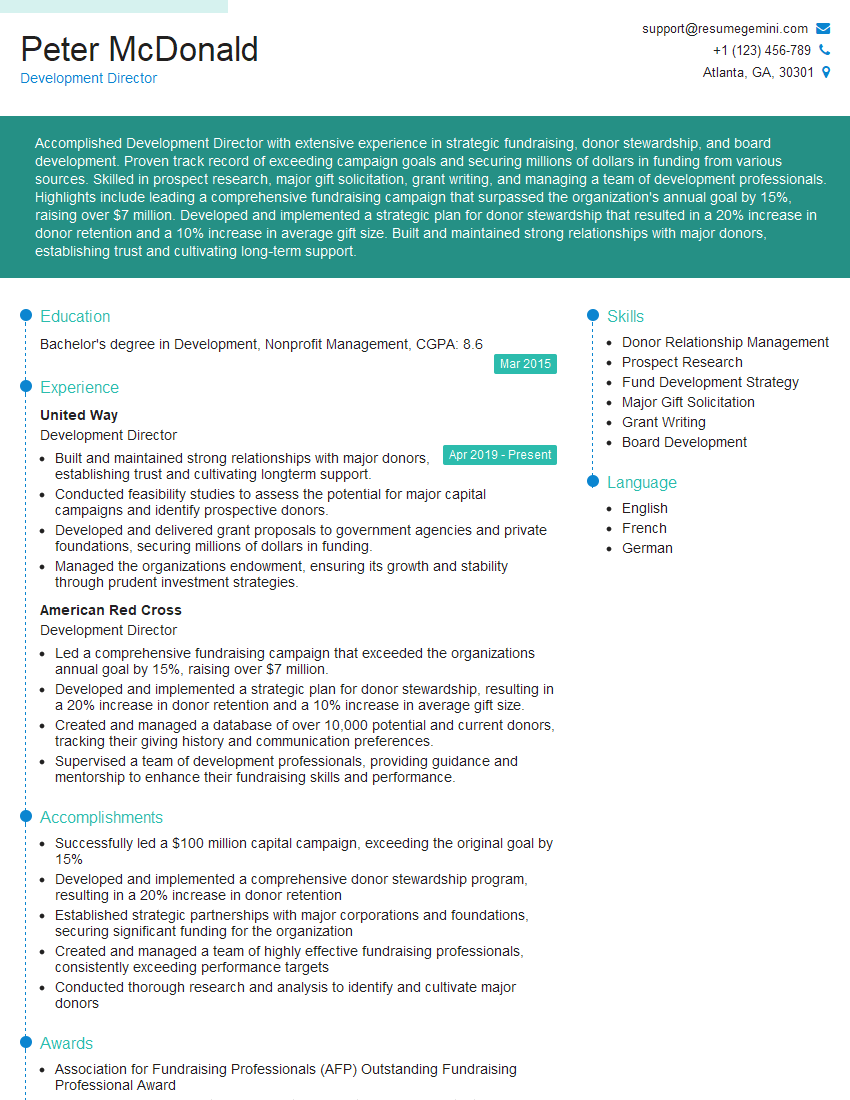
Development Director Resume Sample
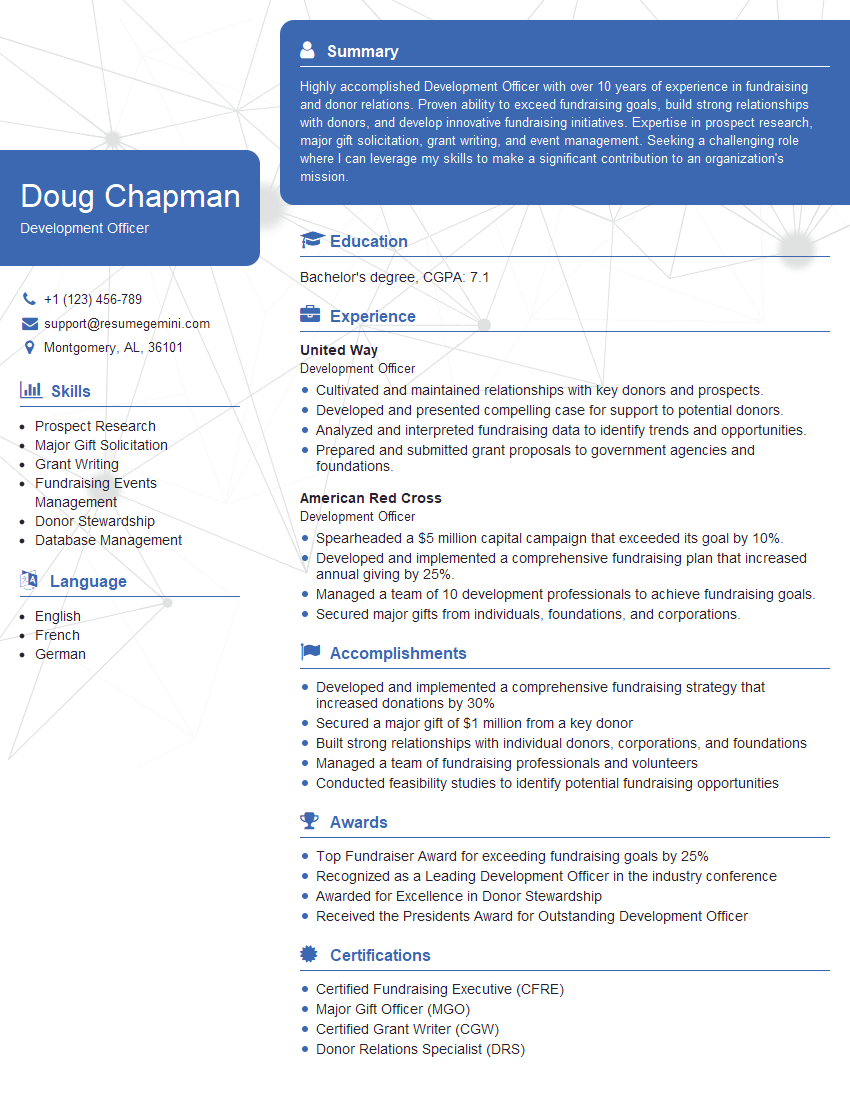
Development Officer Resume Sample
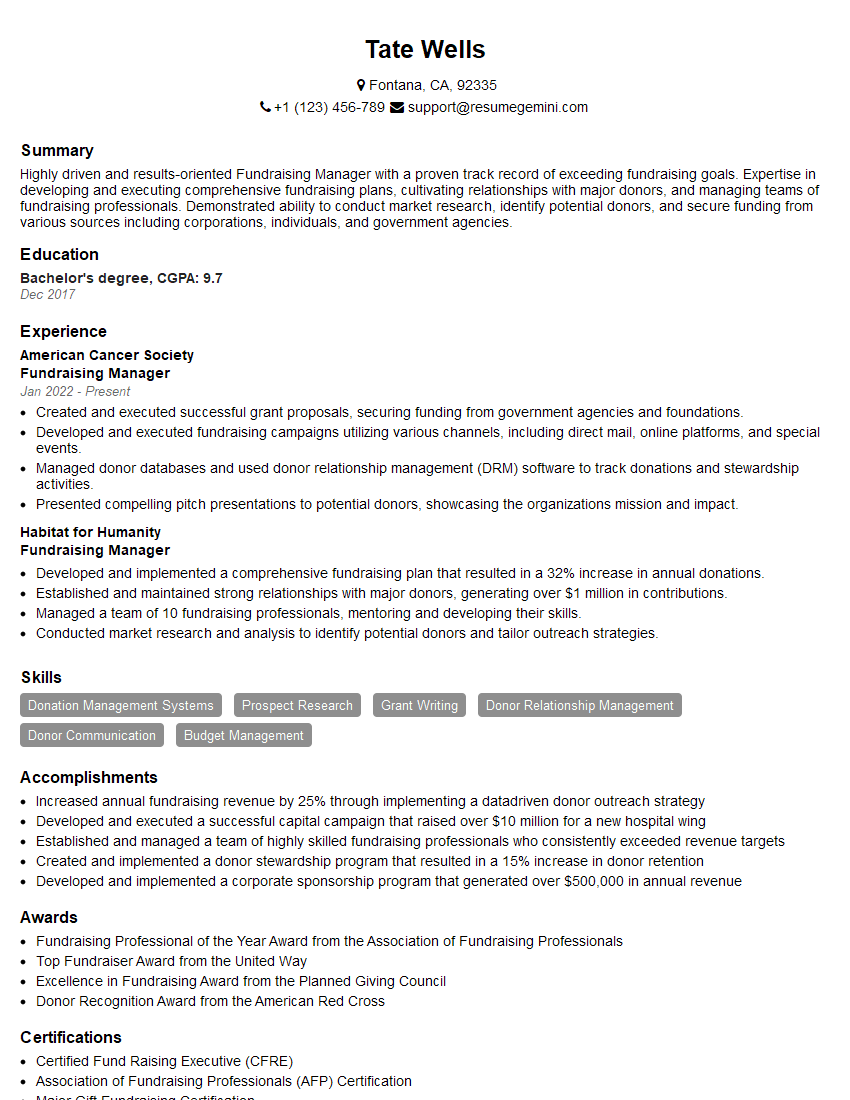
Fundraising Manager Resume Sample
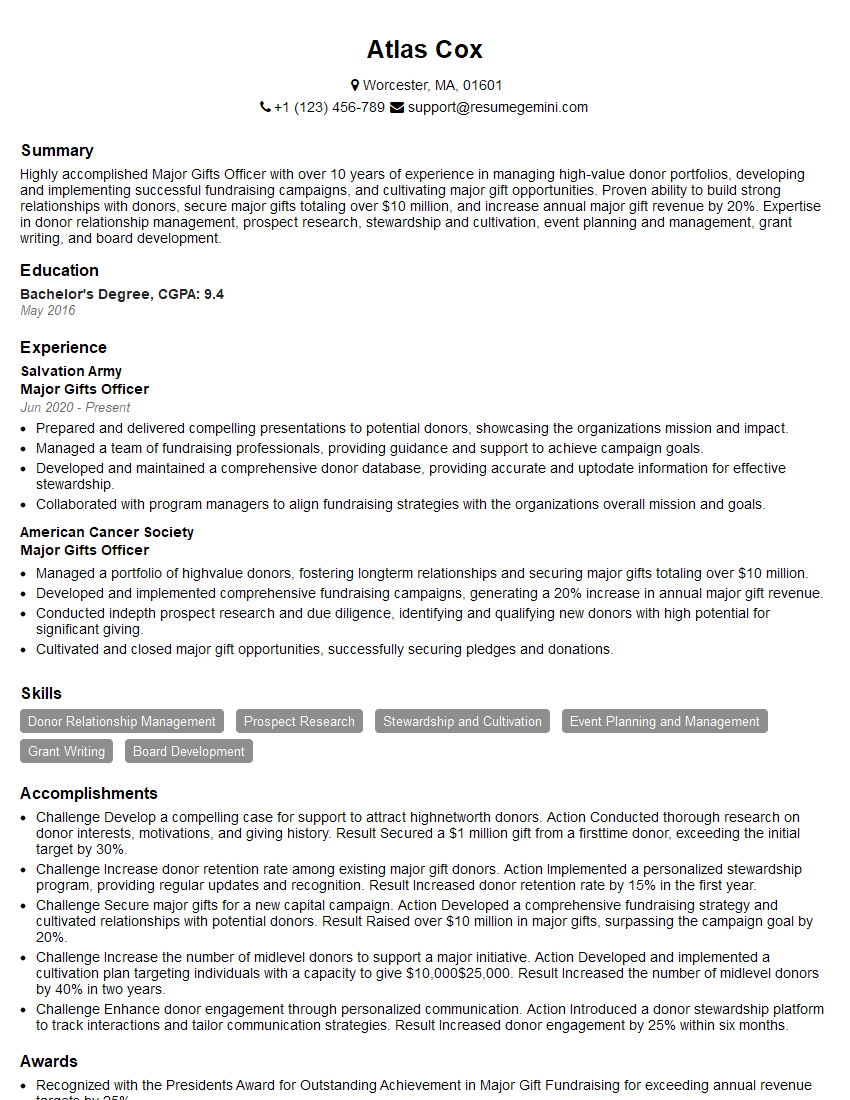
Major Gifts Officer Resume Sample
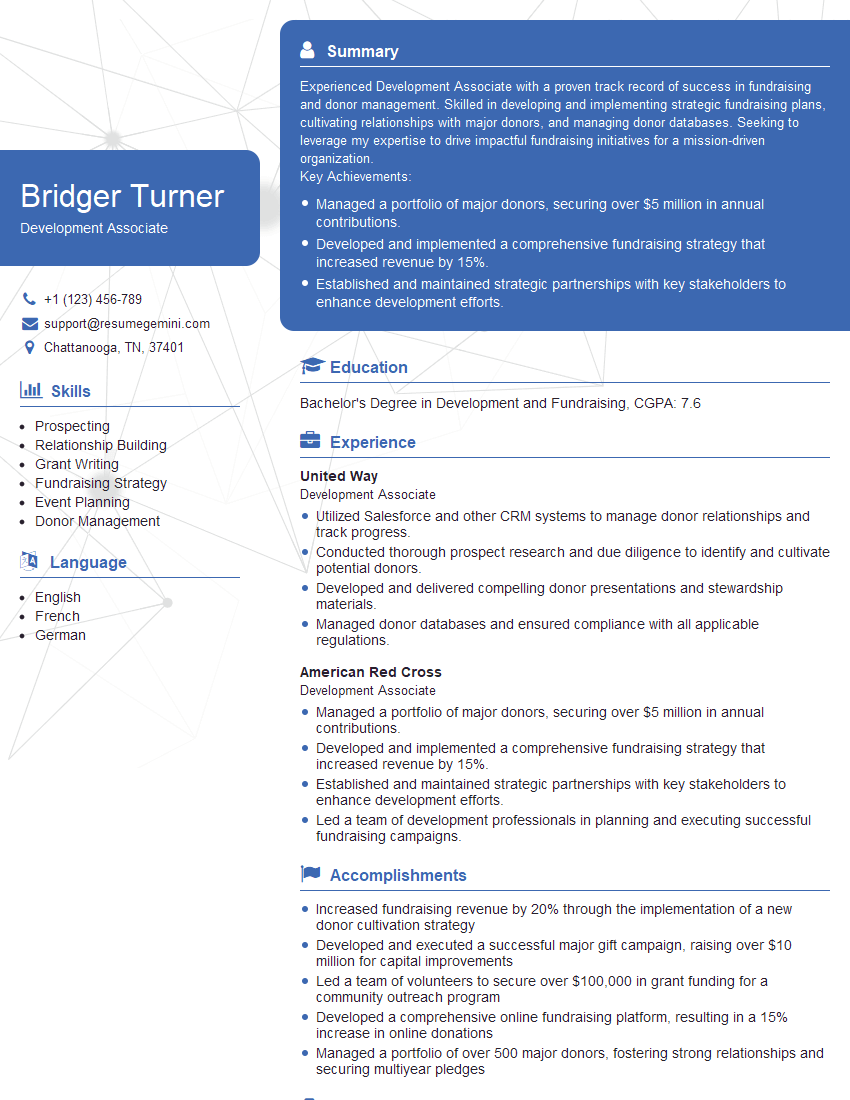
Development Associate Resume Sample
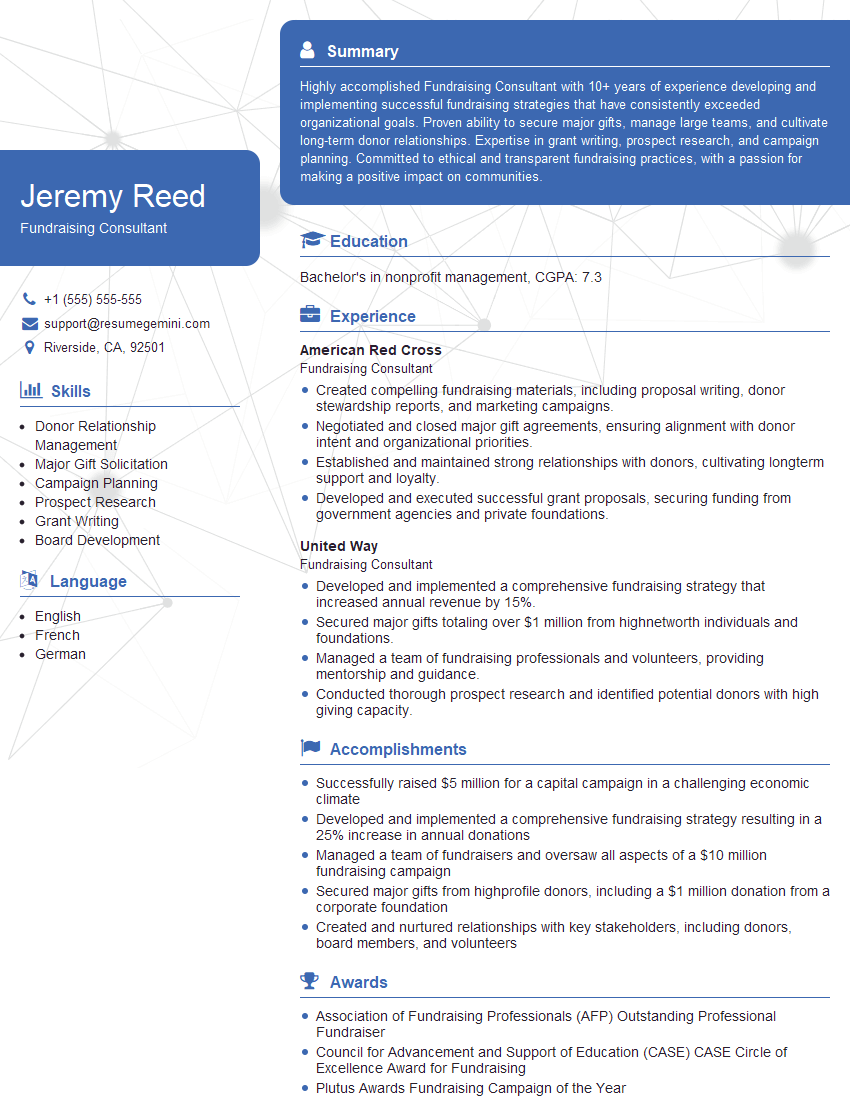
Fundraising Consultant Resume Sample
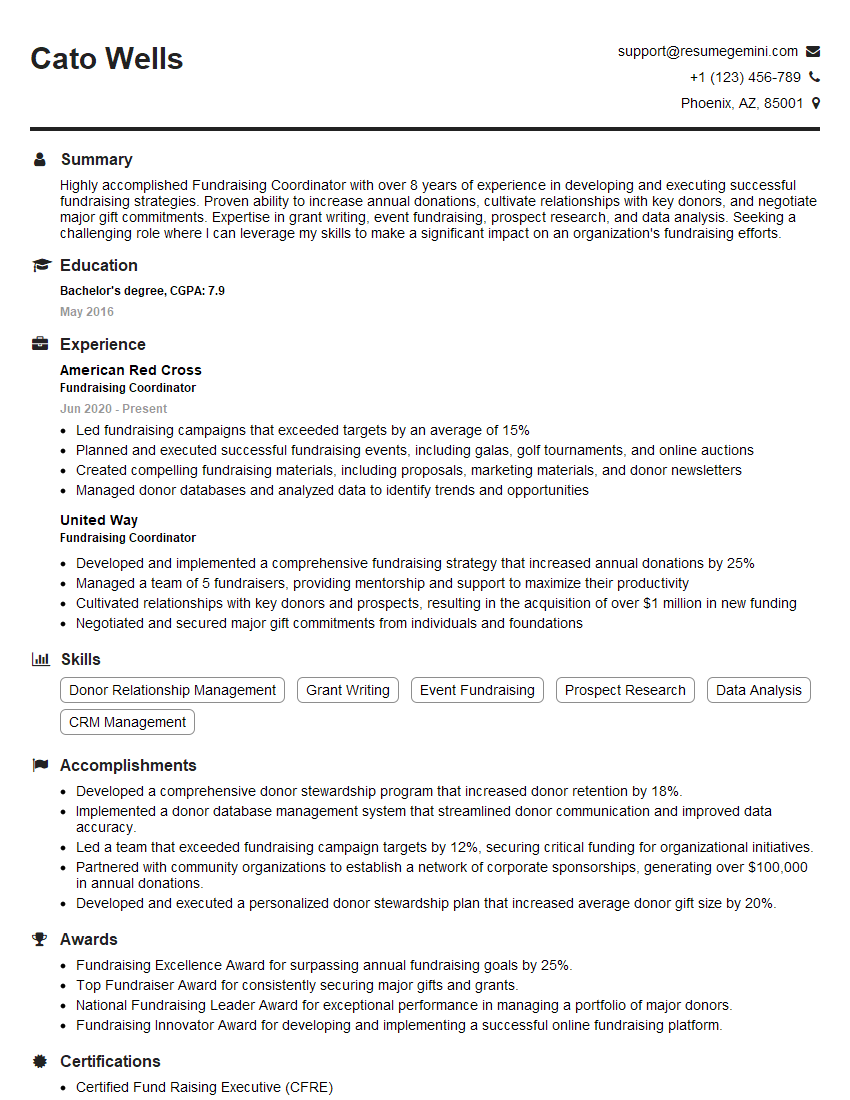
Fundraising Coordinator Resume Sample
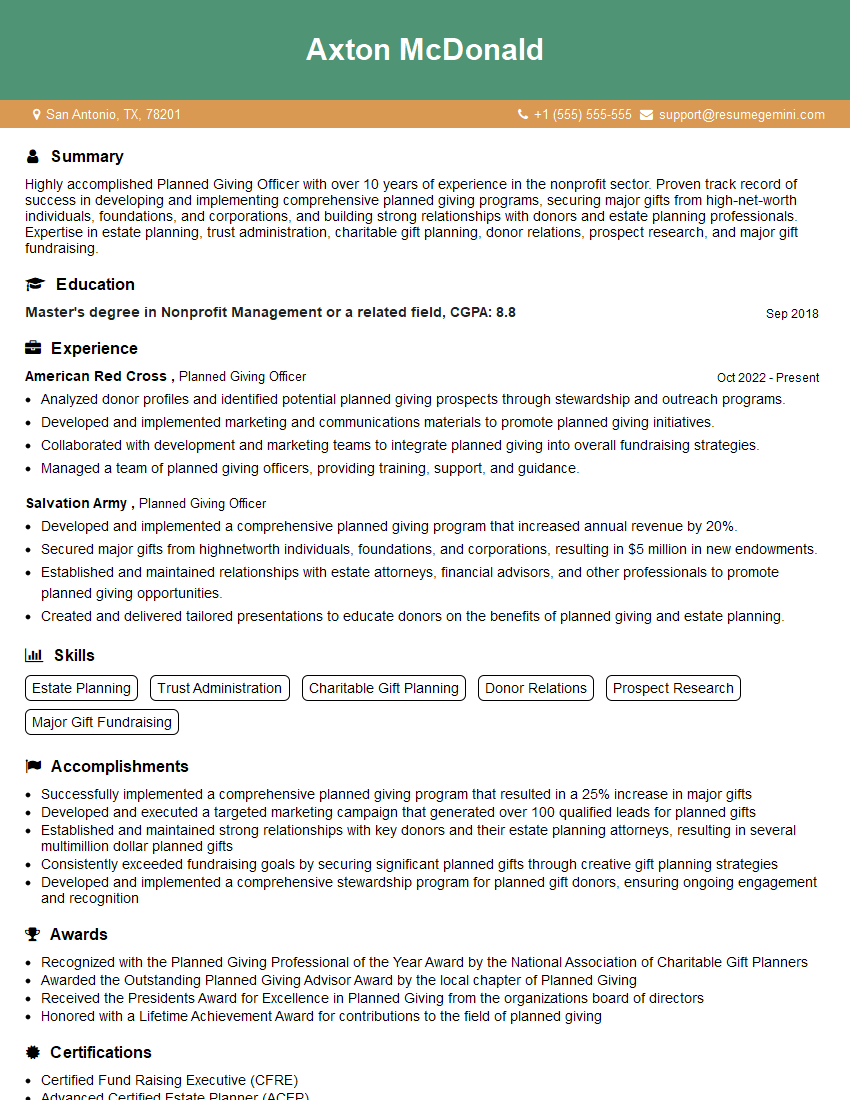
Planned Giving Officer Resume Sample
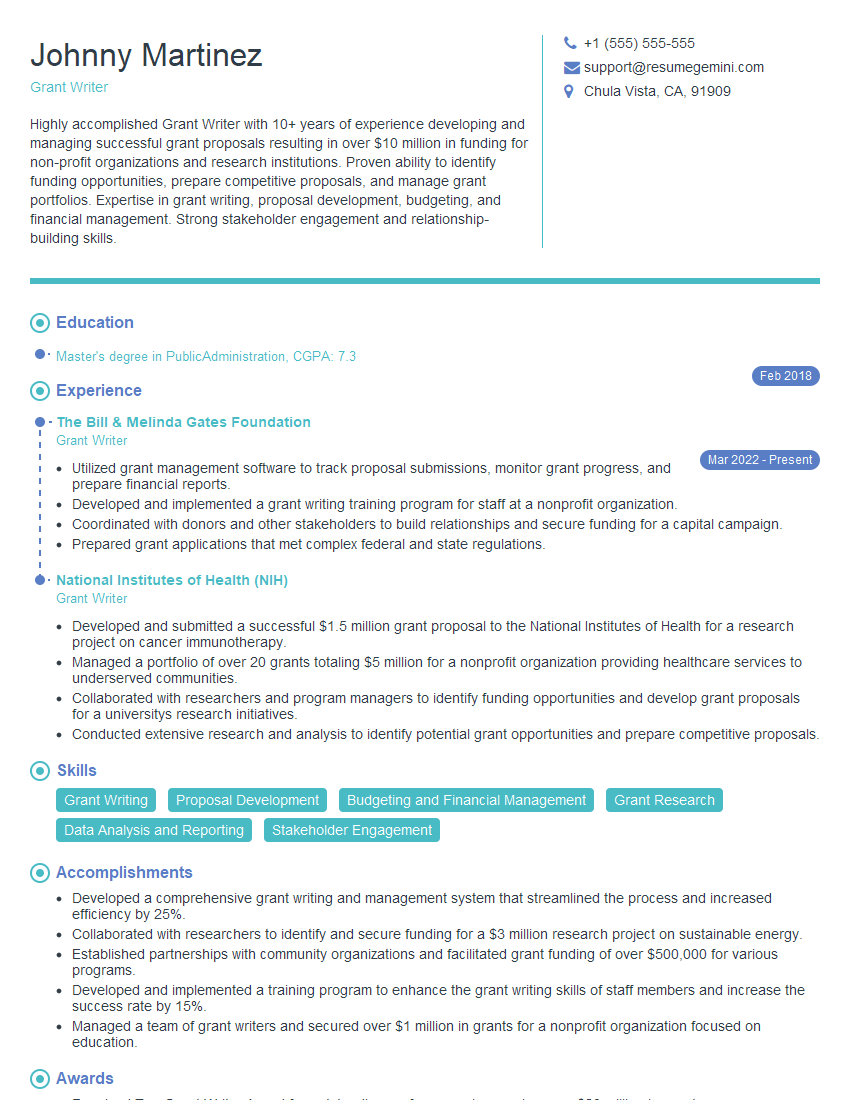
Grant Writer Resume Sample
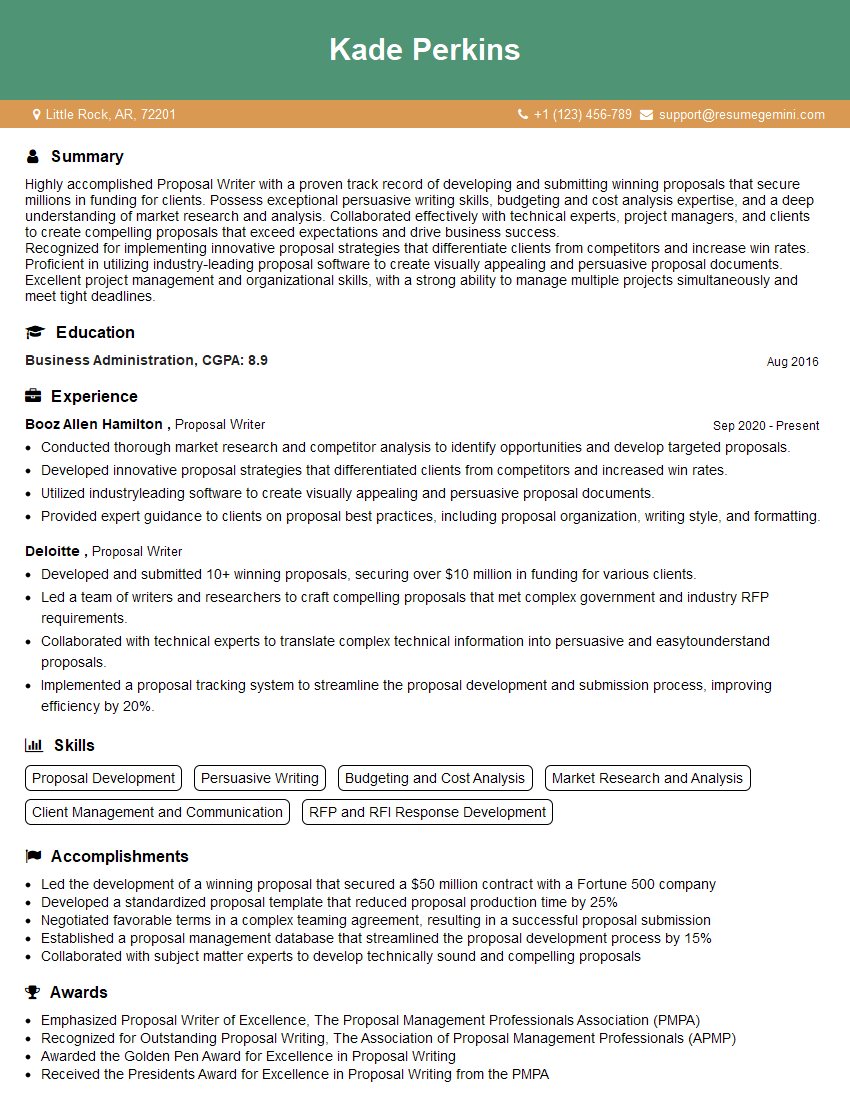
Proposal Writer Resume Sample
Explore more articles
Users Rating of Our Blogs
Share Your Experience
We value your feedback! Please rate our content and share your thoughts (optional).
What Readers Say About Our Blog
Really detailed insights and content, thank you for writing this detailed article.
IT gave me an insight and words to use and be able to think of examples