Unlock your full potential by mastering the most common Compliance and Legal Issues interview questions. This blog offers a deep dive into the critical topics, ensuring you’re not only prepared to answer but to excel. With these insights, you’ll approach your interview with clarity and confidence.
Questions Asked in Compliance and Legal Issues Interview
Q 1. Explain the Sarbanes-Oxley Act (SOX) and its implications for compliance.
The Sarbanes-Oxley Act of 2002 (SOX) is a federal law enacted in response to major corporate accounting scandals. Its primary goal is to protect investors by improving the accuracy and reliability of corporate disclosures made pursuant to the securities laws, and to increase corporate responsibility. Think of it as a set of rules designed to ensure companies are transparent and accountable.
Key implications for compliance include:
- Section 302: Corporate Responsibility for Financial Reports: This section holds senior executives personally responsible for the accuracy of financial statements. They must certify the reports, making them personally liable for any misrepresentations.
- Section 404: Management Assessment of Internal Controls: This is arguably the most demanding section. It requires companies to establish and maintain a robust system of internal controls over financial reporting (ICFR) and to have an independent audit of these controls. This involves documenting processes, testing controls, and addressing any deficiencies.
- Increased Auditing Standards: SOX significantly increased the responsibility and independence of external auditors, leading to stricter auditing practices and increased scrutiny.
Practical Application: A company implementing SOX compliance might create a dedicated compliance team, develop detailed internal control documentation, implement regular control testing procedures, and undergo annual audits by an independent firm. Failure to comply can result in significant fines, legal action, and reputational damage.
Q 2. Describe your experience with HIPAA compliance.
My experience with HIPAA compliance spans several years, encompassing both the development and implementation of HIPAA-compliant systems and the ongoing monitoring and maintenance of those systems. I’ve worked with organizations in various sectors, including healthcare providers and health insurance companies, helping them navigate the complexities of the regulations.
My work has focused on several key areas:
- Risk Assessment and Mitigation: Conducting thorough risk assessments to identify vulnerabilities and develop effective mitigation strategies. This includes addressing potential threats like unauthorized access, data breaches, and improper disclosures.
- Policy Development and Implementation: Creating and implementing comprehensive HIPAA policies and procedures, including those related to access control, data encryption, employee training, and breach notification.
- Security Audits and Compliance Reviews: Performing regular security audits and compliance reviews to ensure ongoing compliance with HIPAA regulations and identifying areas for improvement.
- Breach Response Planning: Developing and implementing breach response plans to ensure a swift and efficient response to any potential data breach. This includes collaborating with legal counsel and other stakeholders.
I am familiar with all the HIPAA rules, including the Privacy Rule, Security Rule, and Breach Notification Rule, and understand their practical application within various healthcare settings.
Q 3. How would you handle a suspected violation of company policy?
Handling a suspected violation of company policy requires a careful and systematic approach. My first step would be to gather all relevant information, including who is involved, what happened, when it happened, and any evidence supporting the suspicion.
Step-by-Step Process:
- Initial Assessment: Carefully review the alleged violation against the company’s policy, legal requirements, and industry best practices. Determine the severity of the violation and potential impact.
- Investigation: Conduct a thorough and impartial investigation. This might involve interviewing witnesses, reviewing documents, and analyzing data. Ensure all parties involved are given a fair opportunity to provide their perspective.
- Documentation: Meticulously document every step of the investigation, including dates, times, individuals interviewed, and evidence collected. This documentation is crucial if the matter needs to be escalated.
- Decision-Making: Based on the investigation’s findings, determine an appropriate course of action. This may range from informal counseling to formal disciplinary action, up to and including termination of employment. The severity of the violation and the employee’s history will factor heavily into this decision.
- Reporting: Report the findings and actions taken to the appropriate internal stakeholders, such as management or the compliance department. In some cases, external reporting to regulatory agencies might be required.
Throughout the process, I would strive for fairness, transparency, and consistency in applying company policy.
Q 4. What is your understanding of GDPR and its impact on data privacy?
The General Data Protection Regulation (GDPR) is a European Union regulation on data protection and privacy for all individual citizens of the European Union and the European Economic Area. It addresses the transfer of personal data outside the EU and EEA areas. It’s a landmark regulation that significantly impacts how organizations handle personal data.
Impact on Data Privacy:
- Data Subject Rights: GDPR grants individuals extensive rights regarding their personal data, including the right to access, rectify, erase, and restrict processing of their data. Organizations must provide mechanisms for individuals to exercise these rights.
- Data Protection by Design and Default: Organizations must implement data protection measures from the outset of data processing activities, rather than as an afterthought. Privacy must be built into the design and architecture of systems.
- Data Breach Notification: Organizations must report data breaches to supervisory authorities and, in many cases, to affected individuals within 72 hours of becoming aware of the breach.
- Accountability: Organizations are accountable for demonstrating compliance with GDPR. They must maintain detailed records of their data processing activities and be able to demonstrate their compliance with the regulation.
Practical Application: A company wanting to comply with GDPR would need to implement comprehensive data protection policies, obtain consent for data processing, ensure data security measures are in place, and establish procedures for handling data subject requests and data breaches.
Q 5. Explain the difference between compliance and ethics.
While compliance and ethics are closely related, they are not interchangeable. Compliance refers to adhering to rules, regulations, laws, and internal policies. It’s about meeting minimum requirements. Ethics, on the other hand, refers to a broader set of moral principles that guide behavior. It’s about doing what is right, even if it’s not legally required.
Analogy: Think of compliance as following the speed limit. It’s legally mandated. Ethics would involve considerations beyond the speed limit, like yielding to pedestrians or driving cautiously in bad weather, even if technically within the legal limit.
Practical Application: A company might be fully compliant with all relevant laws but still engage in unethical practices, such as prioritizing profit over employee safety. True organizational success requires both robust compliance programs and a strong ethical culture.
Q 6. How do you stay updated on changes in relevant laws and regulations?
Staying updated on changes in relevant laws and regulations is crucial for maintaining compliance. My approach is multi-faceted:
- Subscription to Legal and Regulatory Updates: I subscribe to newsletters, journals, and online resources from reputable legal publishers and regulatory bodies. This provides regular updates on legislative and regulatory developments.
- Professional Development: I actively participate in professional development activities, such as attending conferences, workshops, and webinars related to compliance and legal issues. This allows me to learn from experts and network with peers.
- Monitoring Regulatory Websites: I regularly monitor the websites of relevant regulatory agencies for updates, announcements, and guidance documents.
- Networking with Professionals: I maintain a network of contacts within the compliance and legal fields. This allows for the exchange of information and insights on emerging trends and challenges.
By combining these methods, I ensure I am aware of the latest changes and can advise my organization accordingly.
Q 7. Describe a time you had to navigate a complex legal or compliance issue.
In a previous role, we faced a complex legal issue involving the potential violation of data privacy regulations. A third-party vendor experienced a data breach that exposed some of our client’s personal information. This was before GDPR was fully implemented, but we still had significant legal and ethical obligations.
Navigating the Issue:
- Immediate Response: We immediately engaged legal counsel to understand our legal obligations and potential liabilities.
- Internal Investigation: We conducted a thorough internal investigation to determine the extent of the data breach and identify the affected clients.
- Notification and Remediation: Following the advice of legal counsel, we promptly notified the affected clients and implemented measures to remediate the breach and improve data security.
- Collaboration with Vendor: We worked closely with the third-party vendor to ensure they took responsibility for their actions and cooperated fully with the investigation.
- Long-Term Improvement: As a result of this incident, we significantly strengthened our data security policies and procedures, enhancing our ability to prevent future incidents. We also increased employee training and awareness regarding data privacy best practices.
This experience highlighted the importance of proactive risk management, robust data security measures, and swift, transparent communication in handling complex legal and compliance issues. It also reinforced the need for strong relationships with external legal and security experts.
Q 8. How would you assess and mitigate compliance risks within an organization?
Assessing and mitigating compliance risks involves a systematic approach. Think of it like a doctor’s diagnosis and treatment plan for a patient (your organization). First, we need a thorough risk assessment. This involves identifying all applicable laws, regulations, and internal policies relevant to the organization’s operations. We’d then analyze potential areas of vulnerability, considering factors such as industry, size, geographic location, and business activities. For example, a financial institution would face significantly different compliance risks than a technology startup.
Once risks are identified, we prioritize them based on their likelihood and potential impact. A high-likelihood, high-impact risk (e.g., a data breach for a financial institution) demands immediate attention, while a low-likelihood, low-impact risk (e.g., a minor paperwork error) can be addressed later.
Mitigation involves implementing controls to reduce or eliminate identified risks. This could include developing and implementing new policies and procedures, investing in technology solutions (e.g., data encryption, access controls), enhancing employee training, conducting regular audits, and establishing robust reporting and monitoring mechanisms. For instance, implementing a strong anti-bribery and corruption program would mitigate FCPA risks. Regular internal audits would help detect and address compliance gaps proactively. Finally, a well-defined escalation process is crucial for handling emerging or unanticipated compliance issues.
Q 9. What is your experience with internal audits and compliance reporting?
I have extensive experience with internal audits and compliance reporting, having led and participated in numerous audits across various industries. My approach focuses on a risk-based methodology, targeting areas of highest risk and potential vulnerability first. I am proficient in using audit software and tools to streamline the process, ensuring efficiency and accuracy.
In terms of reporting, I have a proven track record of compiling clear, concise, and actionable reports that highlight key findings, recommendations, and progress toward remediation. My reports are always tailored to the audience, ensuring that the information is easily understandable and useful for decision-making. For instance, I might present high-level findings to the board of directors, while providing more detailed information to operational managers responsible for implementing corrective actions. I always strive to create a culture of continuous improvement, leveraging audit findings to strengthen overall compliance posture.
Q 10. How familiar are you with the Foreign Corrupt Practices Act (FCPA)?
The Foreign Corrupt Practices Act (FCPA) is a US law that prohibits bribery of foreign officials to obtain or retain business. It also requires publicly traded companies to maintain accurate books and records and establish internal accounting controls. Understanding the FCPA is crucial for any multinational company.
My understanding encompasses not only the direct prohibitions against bribery but also the broader concepts of facilitation payments, gifts, and hospitality. I’m well-versed in the nuances of the law, including the ‘knowing’ requirement and the concept of ‘corrupt intent’. I have experience in developing and implementing FCPA compliance programs, including risk assessments, due diligence processes, and employee training. For example, I’ve helped organizations establish clear policies defining acceptable business practices in high-risk jurisdictions. A key element of compliance is establishing a strong ‘tone at the top,’ ensuring that leadership actively promotes ethical conduct and compliance with the FCPA.
Q 11. Explain your understanding of anti-money laundering (AML) regulations.
Anti-Money Laundering (AML) regulations aim to prevent the use of the financial system for illegal activities such as drug trafficking, terrorism financing, and other crimes. These regulations typically involve Know Your Customer (KYC) and Customer Due Diligence (CDD) procedures, transaction monitoring, suspicious activity reporting (SARs), and record-keeping requirements.
My understanding of AML regulations includes familiarity with various international standards such as the Financial Action Task Force (FATF) recommendations. I’m experienced in designing and implementing AML compliance programs, including developing KYC/CDD procedures, conducting risk assessments, establishing monitoring systems, and training personnel on AML best practices. I know how to analyze transaction data to identify suspicious patterns, prepare SARs, and cooperate with regulatory authorities. I’ve worked with clients to comply with AML regulations specific to their geographical locations and business activities, recognizing the differences in regulatory requirements across jurisdictions.
Q 12. Describe your experience with contract review and compliance.
Contract review and compliance are critical for managing legal and business risks. My experience involves reviewing contracts across various types, including sales agreements, service agreements, non-disclosure agreements (NDAs), and employment contracts.
I focus on ensuring that contracts comply with relevant laws and regulations, protect the organization’s interests, and align with internal policies. This includes reviewing clauses related to confidentiality, intellectual property, liability, termination, and dispute resolution. I identify potential risks and propose amendments to mitigate those risks. I also ensure that contracts are properly executed and stored according to established procedures. For example, I’ve helped organizations identify and resolve conflicts between contract terms and applicable laws. My aim is always to safeguard the company from legal issues and ensure that contracts are fair, reasonable, and supportable.
Q 13. How would you develop and implement a compliance training program?
Developing and implementing a compliance training program starts with a needs assessment to identify knowledge gaps and areas requiring improvement. This involves understanding the regulatory environment, the organization’s risk profile, and the specific needs of different employee groups.
The program should then be tailored to address these specific needs, using a variety of methods such as online modules, interactive workshops, case studies, and role-playing exercises. Training materials should be engaging and easy to understand, avoiding excessive legal jargon. The program should be regularly updated to reflect changes in regulations and best practices. Finally, assessment tools should be used to measure employee understanding and track program effectiveness. For example, a company facing high risks under the FCPA will require more intensive and specialized training than one with minimal international operations.
Q 14. How do you handle conflicts of interest within a compliance framework?
Conflicts of interest arise when an individual’s personal interests could potentially influence their professional judgment or actions. Handling these requires a proactive and robust approach. The first step is to establish a clear policy defining what constitutes a conflict of interest, along with procedures for disclosing, managing, and resolving such conflicts.
Employees should be educated on the policy and required to disclose any potential conflicts. The organization should then assess the potential impact of the conflict and implement appropriate measures to mitigate the risk. This might involve recusal from decision-making processes, modification of responsibilities, or other appropriate actions. Regular monitoring and review of the conflict of interest policy and its implementation are crucial to ensure its effectiveness. For example, an employee involved in procurement decisions should not have a personal relationship with a potential supplier. A properly designed policy, coupled with thorough training and oversight, is essential to maintaining integrity and minimizing risk.
Q 15. Explain your understanding of data security and privacy best practices.
Data security and privacy best practices encompass a multi-layered approach to protecting sensitive information. Think of it like building a fortress – you need strong walls (technical safeguards), vigilant guards (monitoring and incident response), and clear rules of engagement (policies and procedures).
Key elements include:
- Data Minimization and Purpose Limitation: Only collect and retain the data absolutely necessary for specified, explicit, and legitimate purposes. For example, a retail company shouldn’t collect customers’ browsing history if it’s only selling products.
- Strong Access Controls: Implement robust authentication and authorization mechanisms, limiting access to data based on the principle of least privilege. This means only granting employees access to the information they need to do their job. Multi-factor authentication (MFA) is crucial here.
- Data Encryption: Encrypt data both in transit (using HTTPS) and at rest (using encryption technologies like AES) to protect it from unauthorized access even if a breach occurs. This is like using a strong lock on a valuable safe.
- Regular Security Assessments and Penetration Testing: Regularly assess vulnerabilities and test systems’ resilience against attacks. Think of this as a regular inspection of your fortress to identify and fix weaknesses.
- Employee Training and Awareness: Educate employees about data security threats and best practices, such as phishing awareness and password management. Well-trained staff is your most important line of defense.
- Incident Response Plan: Have a documented plan for handling data breaches, including steps for containment, eradication, recovery, and notification.
- Privacy by Design: Integrate privacy considerations throughout the entire system development lifecycle. This ensures that privacy is built into the system from the start, rather than being an afterthought.
- Compliance with Relevant Regulations: Adhere to regulations like GDPR, CCPA, HIPAA, etc., depending on the jurisdiction and the type of data processed.
Career Expert Tips:
- Ace those interviews! Prepare effectively by reviewing the Top 50 Most Common Interview Questions on ResumeGemini.
- Navigate your job search with confidence! Explore a wide range of Career Tips on ResumeGemini. Learn about common challenges and recommendations to overcome them.
- Craft the perfect resume! Master the Art of Resume Writing with ResumeGemini’s guide. Showcase your unique qualifications and achievements effectively.
- Don’t miss out on holiday savings! Build your dream resume with ResumeGemini’s ATS optimized templates.
Q 16. How would you investigate and respond to a data breach?
Responding to a data breach requires a swift and methodical approach. It’s a crisis management situation, and speed and precision are vital. We follow a structured process, often referred to as the incident response lifecycle:
- Preparation: Establish a comprehensive incident response plan beforehand. This plan should outline roles, responsibilities, communication protocols, and escalation procedures.
- Identification: Detect the breach, determine its scope, and identify the affected systems and data.
- Containment: Isolate affected systems to prevent further damage and data exfiltration. This might involve disconnecting servers from the network or blocking malicious IP addresses.
- Eradication: Remove the threat and restore systems to a secure state. This often involves patching vulnerabilities, removing malware, and resetting compromised accounts.
- Recovery: Restore data from backups and resume normal operations.
- Post-Incident Activity: Conduct a thorough root cause analysis to understand how the breach occurred and implement preventative measures to avoid future incidents. Notify affected individuals and regulatory agencies as required.
Throughout this process, meticulous documentation is crucial. This documentation serves as evidence in case of legal or regulatory scrutiny.
Q 17. Describe your experience with regulatory investigations or enforcement actions.
I have extensive experience navigating regulatory investigations and enforcement actions. In a previous role, we faced an investigation by the [Regulatory Agency Name – Replace with a relevant agency, e.g., FTC, CFPB] concerning alleged violations of [Regulation Name – Replace with a relevant regulation, e.g., CCPA]. The investigation involved providing extensive documentation, responding to detailed questionnaires, and participating in interviews with agency investigators. We worked closely with external counsel to ensure full compliance and transparency. Ultimately, we reached a settlement with the agency, which included implementing enhanced compliance measures and paying a civil penalty. This experience highlighted the importance of proactive compliance measures, accurate record-keeping, and a well-defined legal strategy in the face of regulatory scrutiny. Another example involved a data breach investigation; we collaborated with law enforcement and followed best practices to contain the situation, identify affected parties and mitigate future risk. The experience emphasized the value of preparedness and a robust incident response plan.
Q 18. How would you build and maintain relationships with regulatory agencies?
Building and maintaining strong relationships with regulatory agencies is paramount. It’s about fostering trust and demonstrating a commitment to compliance. This involves:
- Proactive Communication: Engage with agencies proactively, even before any issues arise. This can involve attending industry events, participating in agency consultations, and submitting comments on proposed regulations.
- Transparency and Cooperation: Be open and transparent with agencies during investigations or audits. Cooperating fully demonstrates good faith and can help mitigate penalties.
- Building Personal Connections: Develop professional relationships with agency staff through respectful communication and engagement.
- Staying Informed: Keep abreast of changes in regulations and agency guidance. This demonstrates a commitment to compliance and shows due diligence.
- Effective Documentation: Maintain accurate and complete records to support your compliance claims.
Think of it as building a relationship with your local police department – regular engagement builds trust and can help you navigate any potential future issues smoothly.
Q 19. What is your experience with risk assessment and mitigation strategies?
Risk assessment is the cornerstone of any effective compliance program. I utilize a structured approach, often employing a framework like NIST Cybersecurity Framework or ISO 31000. This typically involves:
- Identifying Assets: Identifying all sensitive data and systems that need protection.
- Identifying Threats: Analyzing potential threats such as data breaches, cyberattacks, and regulatory changes.
- Identifying Vulnerabilities: Determining weaknesses in security controls that could be exploited by threats.
- Assessing Risks: Evaluating the likelihood and impact of each threat exploiting a vulnerability.
- Developing Mitigation Strategies: Implementing controls to reduce the likelihood or impact of risks. These might include technical controls (e.g., firewalls, intrusion detection systems), administrative controls (e.g., policies, procedures), and physical controls (e.g., access control measures).
- Monitoring and Review: Regularly monitoring the effectiveness of controls and updating the risk assessment as needed.
For example, in a previous role, we identified a significant risk related to third-party vendors accessing our systems. We mitigated this risk by implementing stricter vendor vetting procedures, requiring security audits, and establishing service level agreements (SLAs) with clear security requirements.
Q 20. How would you communicate compliance requirements to different stakeholders?
Communicating compliance requirements effectively requires tailoring the message to the audience. I use different approaches depending on the stakeholder:
- Executive Management: Focus on high-level risks and the potential business impact of non-compliance. Use concise reports and executive summaries.
- Legal and Compliance Teams: Provide detailed explanations of regulations, policies, and procedures. Focus on legal interpretations and best practices.
- IT Staff: Explain technical requirements and security controls. Use clear, precise language and diagrams.
- Employees: Use plain language and simple examples. Focus on their roles and responsibilities in maintaining compliance. Use training materials and interactive sessions.
For example, when communicating GDPR requirements to employees, I would explain the importance of data protection in simple terms, focusing on their responsibilities in handling personal data and the consequences of non-compliance. For the IT team, I would provide detailed technical specifications and guidance on implementing data protection measures.
Q 21. How do you ensure compliance with environmental, social, and governance (ESG) factors?
Ensuring compliance with Environmental, Social, and Governance (ESG) factors requires a holistic approach. It’s not just about ticking boxes; it’s about integrating ESG principles into the core business strategy. This involves:
- Environmental Compliance: Adhering to environmental regulations, reducing carbon footprint, and promoting sustainable practices. This might include implementing waste reduction programs, using renewable energy sources, and investing in energy-efficient technologies.
- Social Responsibility: Focusing on ethical labor practices, diversity and inclusion, community engagement, and human rights. This could include fair wages, safe working conditions, and support for local communities.
- Governance: Establishing strong corporate governance structures, promoting transparency and accountability, and managing risks effectively. This includes having a well-defined code of conduct, implementing robust internal controls, and ensuring board diversity.
- Stakeholder Engagement: Engaging with stakeholders – investors, employees, customers, communities – to understand their concerns and incorporate their feedback into ESG strategies.
- Materiality Assessment: Identifying the ESG issues that are most relevant to the business and its stakeholders.
- Reporting and Transparency: Publicly reporting on ESG performance using standardized frameworks such as GRI or SASB.
For instance, a company might invest in renewable energy to reduce its carbon footprint (environmental), implement a diversity and inclusion program (social), and establish an ethics hotline to promote transparency and accountability (governance).
Q 22. Explain your understanding of whistleblower protection programs.
Whistleblower protection programs are designed to encourage individuals within an organization to report potential violations of law, regulation, or company policy without fear of retaliation. These programs typically involve establishing confidential reporting channels, guaranteeing protection against adverse employment actions (like termination or demotion) for whistleblowers who report in good faith, and providing a process for investigating the reported violations. Think of it as a safety net for employees who want to do the right thing, even if it means potentially challenging the status quo.
Effective programs often include features like independent investigations, clear procedures for reporting, and robust confidentiality measures. For example, a company might use a third-party hotline to ensure anonymity and objectivity in reporting and investigation. Failure to implement a comprehensive program can result in significant legal and reputational damage, as well as potential fines from regulatory agencies.
A key aspect is ensuring that the program is well-publicized within the organization, so that employees are aware of their rights and the reporting mechanisms available to them. Without awareness, the program is essentially useless.
Q 23. Describe your experience with implementing and maintaining a compliance management system.
In my previous role at [Previous Company Name], I was instrumental in implementing and maintaining a comprehensive compliance management system (CMS). This involved a multi-faceted approach, beginning with a thorough risk assessment to identify potential areas of non-compliance. We then developed policies and procedures to mitigate those risks, creating a detailed compliance manual accessible to all employees. This wasn’t just a ‘check-the-box’ exercise; we focused on embedding compliance into the company culture.
The CMS involved regular training sessions for employees, tailored to their roles and responsibilities. We utilized a combination of online modules, in-person workshops, and interactive scenarios to ensure engagement and knowledge retention. We also implemented a robust monitoring system using key risk indicators (KRIs) to track progress and identify potential issues proactively. For example, we monitored sales data for potential anti-bribery violations and tracked employee training completion rates to ensure consistent coverage. Regular audits and management reviews were crucial for identifying gaps and making necessary adjustments. The ongoing maintenance involved continuously updating our policies and procedures to reflect changes in regulations and best practices.
Q 24. How would you measure the effectiveness of a compliance program?
Measuring the effectiveness of a compliance program requires a multi-pronged approach. It’s not enough to simply look at the number of reported violations. Instead, we should assess the program’s effectiveness across several key areas.
- Incident Rate: Tracking the number and severity of compliance incidents over time. A reduction in incidents suggests improved effectiveness.
- Employee Awareness and Understanding: Measuring employee comprehension of compliance policies and procedures through surveys, quizzes, and feedback mechanisms.
- Training Effectiveness: Evaluating the impact of training programs on employee behavior and knowledge through post-training assessments and observation.
- Audit Findings: Analyzing the results of internal and external audits to identify areas of strength and weakness in the compliance system.
- Employee Reporting: Monitoring the number of reported compliance violations through various channels, including anonymous hotlines. A higher reporting rate could indicate increased trust in the system, even if it shows more incidents.
- Cost of Non-Compliance: Monitoring costs related to fines, penalties, legal fees, and reputational damage. A decrease in these costs strongly indicates an effective program.
By analyzing these metrics together, we can obtain a comprehensive view of the program’s performance and identify areas for improvement.
Q 25. What are some common compliance challenges faced by organizations today?
Organizations today face a myriad of compliance challenges, many stemming from the increasingly complex and interconnected global landscape. Some prominent challenges include:
- Data Privacy and Security: Regulations like GDPR and CCPA impose stringent requirements for handling personal data, requiring robust security measures and data governance frameworks. Breaches can result in significant fines and reputational damage.
- Anti-Corruption and Anti-Bribery: Preventing bribery and corruption requires robust policies, training, and due diligence processes, especially in international transactions.
- Environmental, Social, and Governance (ESG) Concerns: Growing stakeholder expectations and regulatory pressure are driving organizations to demonstrate their commitment to ESG principles, including environmental protection, social responsibility, and good governance practices. Failure to meet these expectations can hurt company reputation and lead to investor divestment.
- Sanctions Compliance: Navigating complex sanctions regulations and ensuring compliance with trade restrictions requires specialized knowledge and robust screening processes.
- Supply Chain Transparency: Ensuring that your suppliers comply with relevant regulations and ethical standards is becoming increasingly important. This requires careful due diligence and monitoring of suppliers throughout the supply chain.
These challenges demand a proactive and adaptable approach to compliance, utilizing technology and expertise to navigate this complex regulatory environment.
Q 26. How would you prioritize competing compliance requirements?
Prioritizing competing compliance requirements often requires a risk-based approach. It’s about understanding which risks pose the most significant threat to the organization. I use a framework that considers:
- Likelihood of Non-Compliance: How likely is it that the organization will fail to meet the requirement?
- Potential Impact of Non-Compliance: What are the potential consequences of non-compliance? This includes financial penalties, reputational damage, and operational disruptions.
- Regulatory Scrutiny: How likely is it that the relevant regulatory authority will investigate this area?
- Resource Requirements: How much time, money, and effort will be needed to achieve compliance?
By scoring each requirement on these factors, a clear picture emerges of which areas demand immediate attention. This allows for a strategic allocation of resources, focusing efforts on the most critical areas first. For example, if a data breach carries a substantial financial and reputational risk and high likelihood of regulatory scrutiny, it would be prioritized over a less critical requirement with lower potential consequences.
Q 27. Describe your experience with using compliance management software or tools.
I have extensive experience using various compliance management software and tools. In my previous role, we utilized [Software Name], a comprehensive platform that integrates various compliance functions. This included:
- Policy and Procedure Management: The software allowed us to centrally store, manage, and update all our compliance policies and procedures, ensuring that all employees had access to the most up-to-date information.
- Training Management: We used the platform to deliver and track employee training, ensuring completion and generating reports on employee knowledge.
- Risk Assessment: The software facilitated the identification and assessment of compliance risks, allowing us to prioritize remediation efforts.
- Audit Management: The platform supported the audit process, allowing us to track findings, assign corrective actions, and monitor progress.
- Reporting and Analytics: The software generated comprehensive reports on compliance performance, providing valuable insights into the effectiveness of our programs.
Using this software significantly streamlined our compliance processes, improving efficiency and reducing the risk of non-compliance.
Q 28. How would you adapt your compliance approach to different industries or regulatory environments?
Adapting my compliance approach to different industries and regulatory environments is crucial. This requires a deep understanding of the specific laws, regulations, and industry best practices applicable to each sector. My approach involves:
- Thorough Regulatory Research: Identifying and analyzing all relevant laws, regulations, and guidance applicable to the specific industry and jurisdiction.
- Industry Best Practices: Understanding the common compliance challenges faced by organizations in that industry and identifying best practices for addressing those challenges.
- Stakeholder Engagement: Engaging with key stakeholders, including regulators, industry associations, and internal subject matter experts, to gain valuable insights and perspectives.
- Tailored Compliance Programs: Developing and implementing compliance programs specifically tailored to the unique risks and challenges of the specific industry and regulatory environment. This might involve creating sector-specific training materials, implementing industry-specific controls and monitoring procedures, and tailoring reporting mechanisms.
- Continuous Monitoring and Adaptation: Continuously monitoring the regulatory landscape and adapting the compliance program as needed to reflect changes in laws, regulations, and industry best practices.
For example, the compliance requirements for a financial institution are vastly different from those of a healthcare provider. My experience enables me to adjust my approach and expertise to match the needs of any given industry.
Key Topics to Learn for Compliance and Legal Issues Interview
- Regulatory Frameworks: Understanding relevant laws and regulations (e.g., GDPR, CCPA, HIPAA) and their practical implications for different industries.
- Risk Assessment and Management: Identifying, analyzing, and mitigating compliance risks; developing and implementing effective compliance programs.
- Internal Controls and Audits: Designing and implementing internal controls to ensure compliance; conducting internal audits and reporting findings.
- Investigations and Reporting: Conducting internal investigations into compliance breaches; reporting violations to relevant authorities.
- Data Privacy and Security: Understanding data protection laws and best practices for securing sensitive information; implementing data breach response plans.
- Contract Negotiation and Review: Analyzing contracts for compliance risks; negotiating favorable terms and conditions.
- Ethical Considerations: Applying ethical principles to compliance issues; fostering a culture of compliance within an organization.
- Practical Application: Consider real-world scenarios where you’d apply these concepts. For example, how would you handle a data breach? How would you assess the risk of a new business venture?
- Problem-Solving: Practice identifying and solving compliance problems using a structured approach (e.g., root cause analysis).
Next Steps
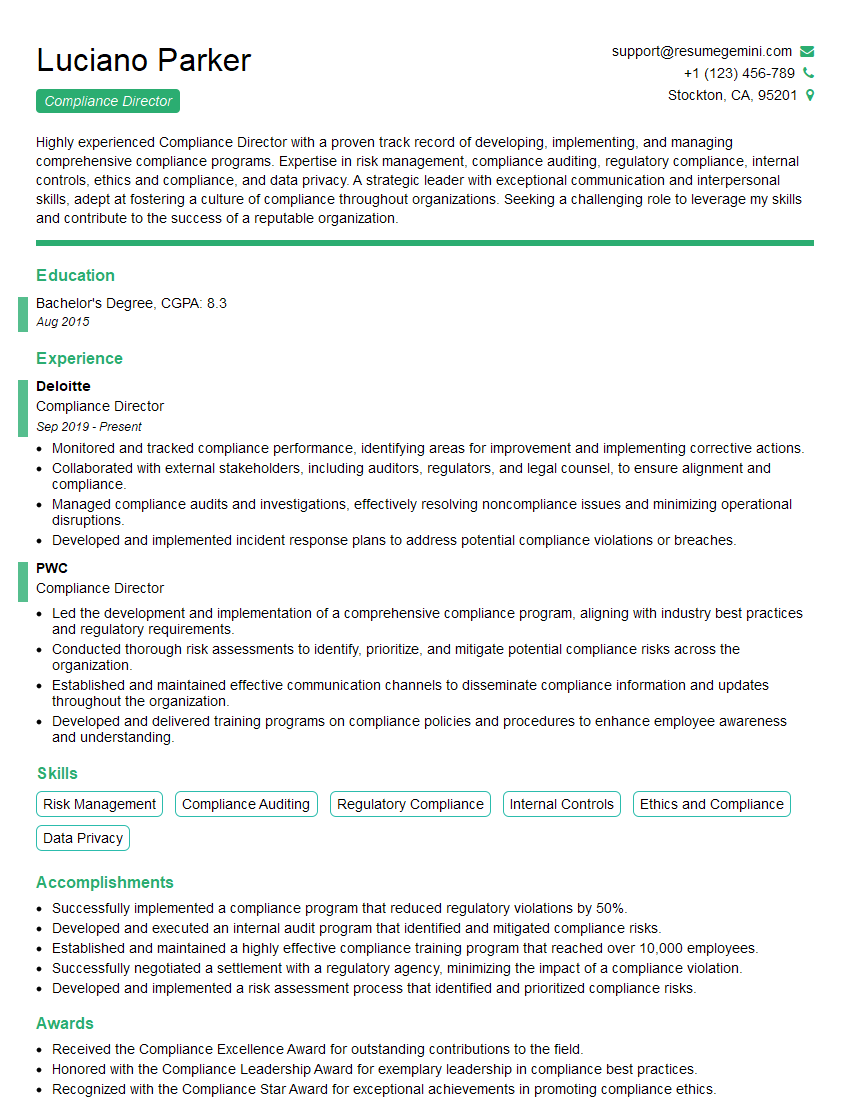
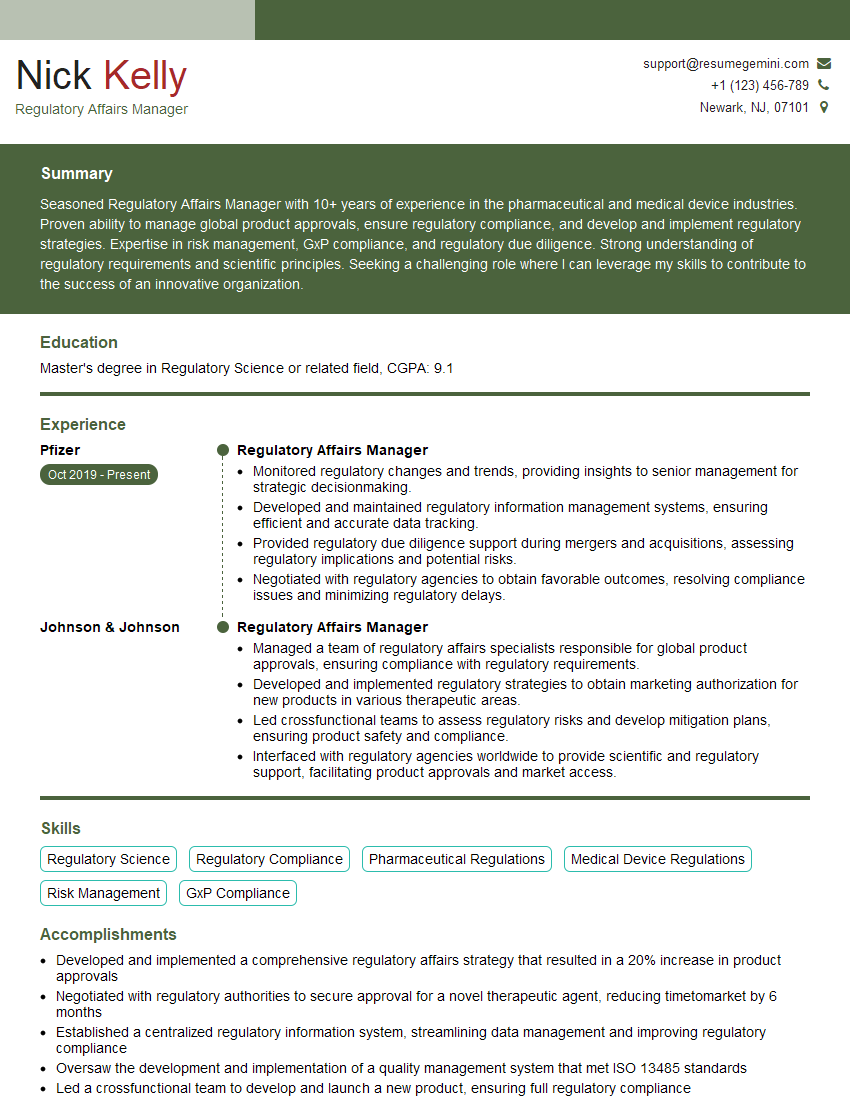
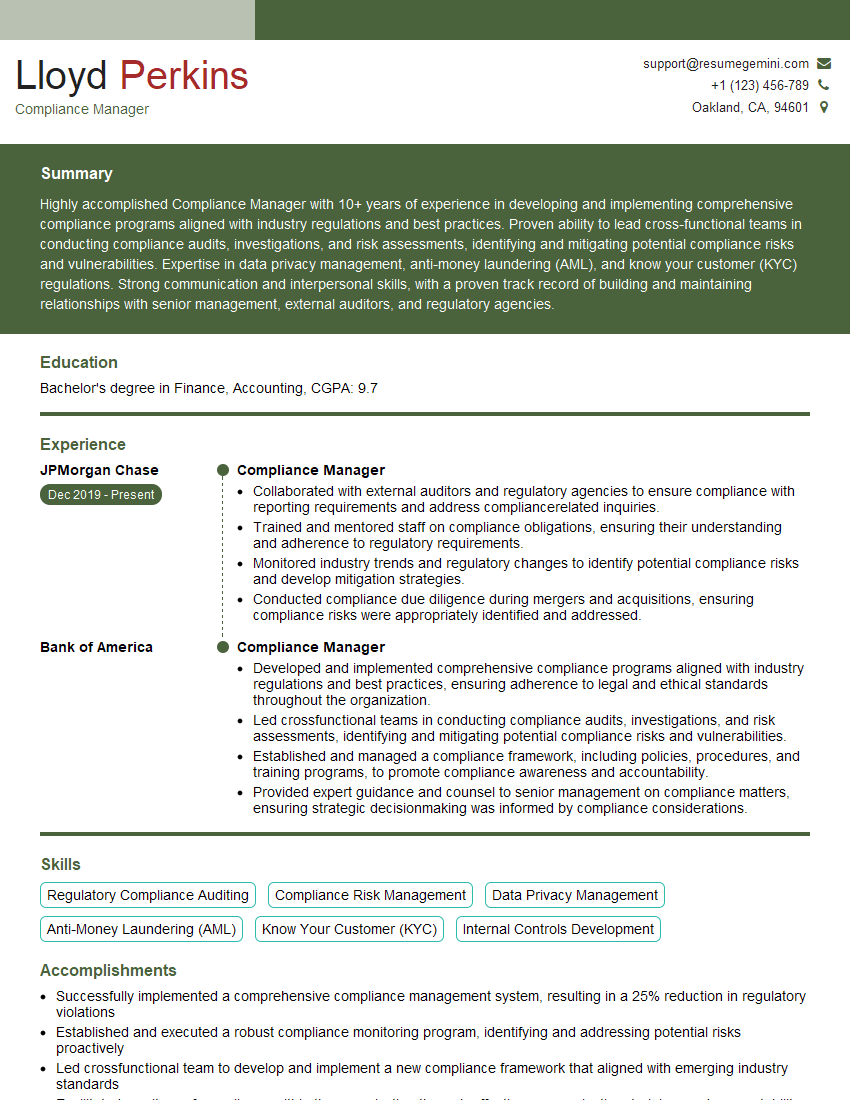
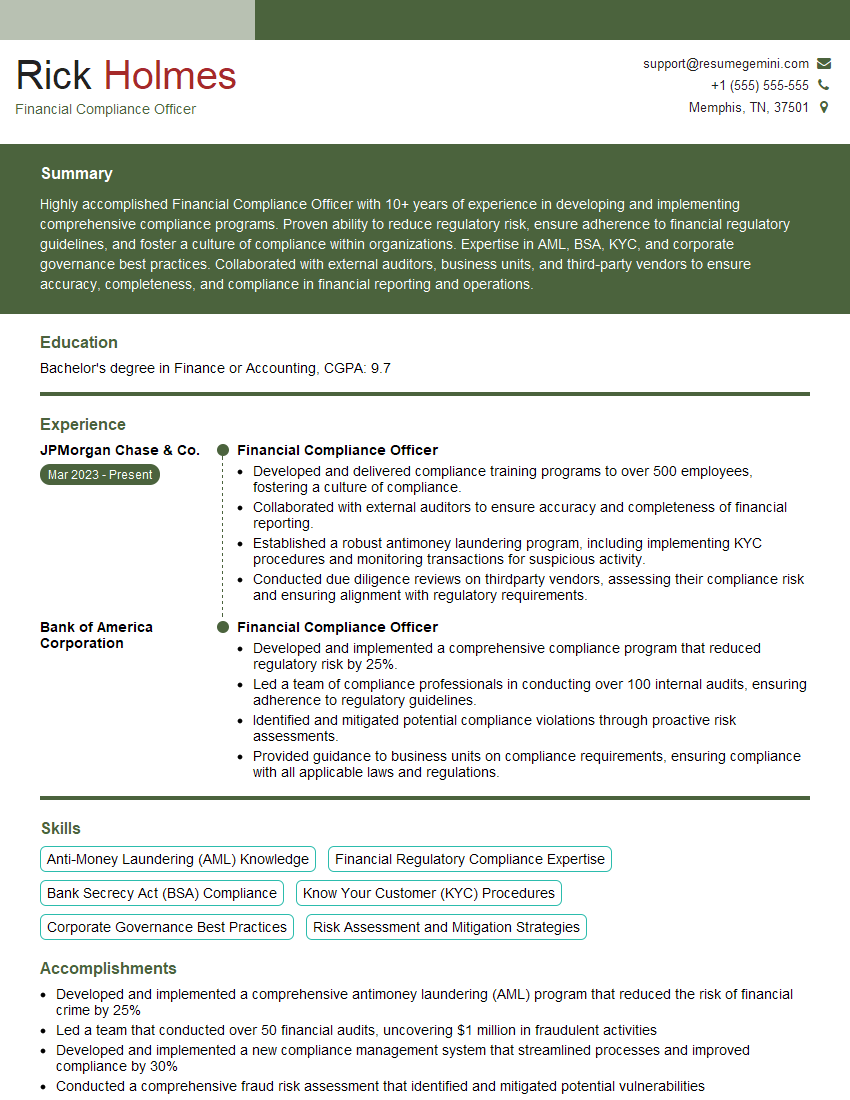
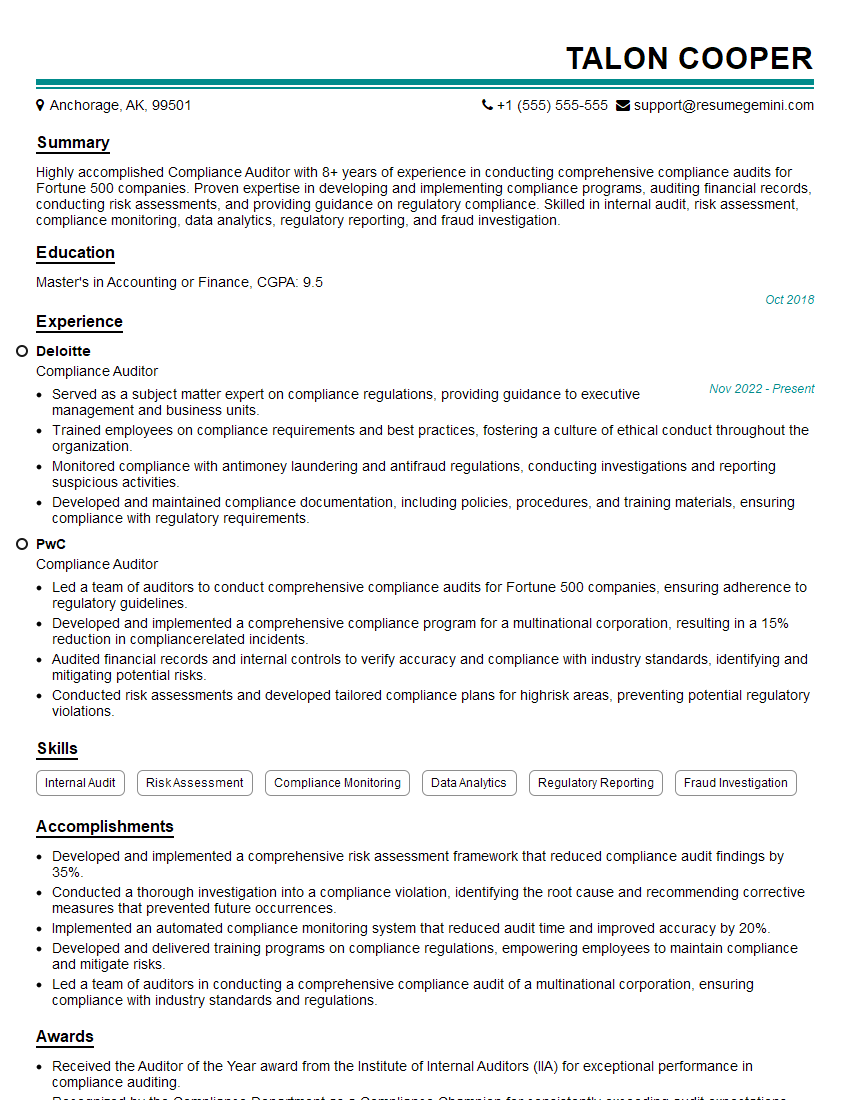
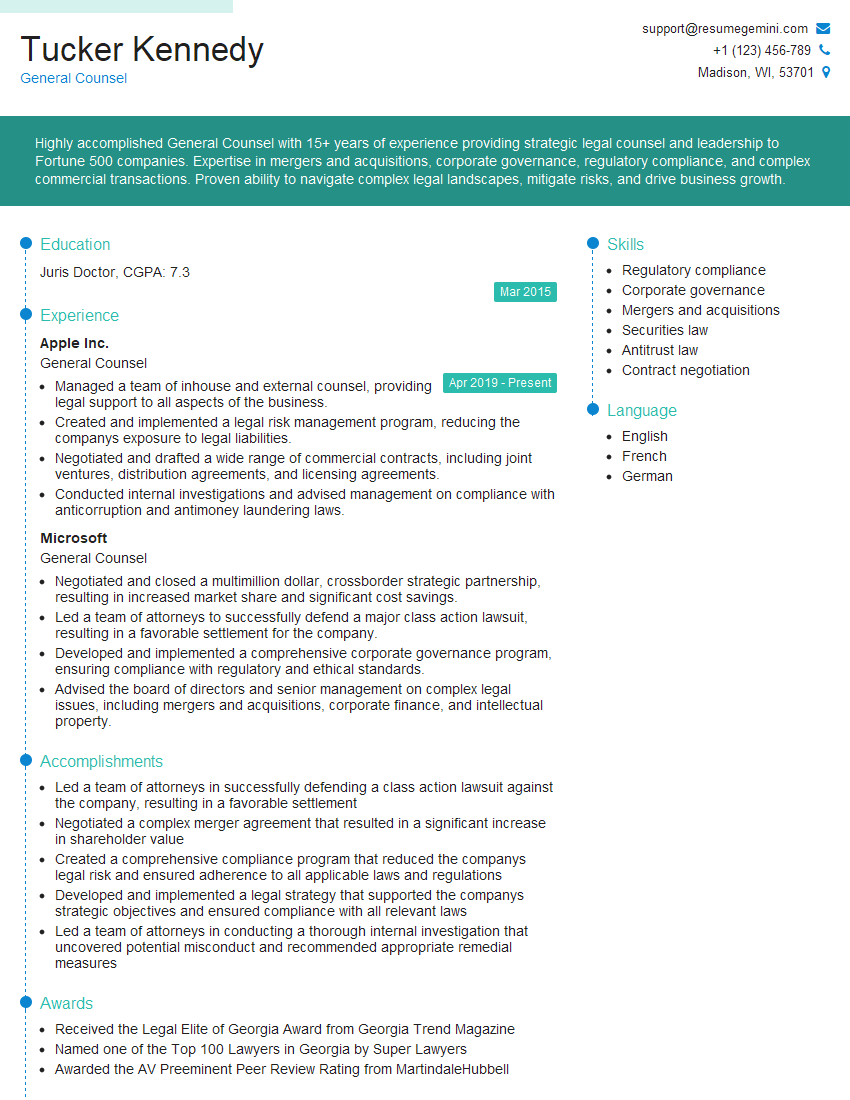
Mastering Compliance and Legal Issues is crucial for career advancement in today’s regulated environment. A strong understanding of these areas demonstrates responsibility, professionalism, and a commitment to ethical conduct – highly valued attributes in any organization. To significantly increase your job prospects, create an ATS-friendly resume that effectively showcases your skills and experience. ResumeGemini is a trusted resource that can help you build a professional and impactful resume tailored to the specific requirements of Compliance and Legal Issues roles. Examples of resumes tailored to this field are available within ResumeGemini to help guide your creation.

Explore more articles
Users Rating of Our Blogs
Share Your Experience
We value your feedback! Please rate our content and share your thoughts (optional).
What Readers Say About Our Blog
Really detailed insights and content, thank you for writing this detailed article.
IT gave me an insight and words to use and be able to think of examples