Cracking a skill-specific interview, like one for Use of Inspection Equipment, requires understanding the nuances of the role. In this blog, we present the questions you’re most likely to encounter, along with insights into how to answer them effectively. Let’s ensure you’re ready to make a strong impression.
Questions Asked in Use of Inspection Equipment Interview
Q 1. What types of inspection equipment are you familiar with?
My experience encompasses a wide range of inspection equipment, categorized broadly by the method of inspection and the type of material being inspected. This includes visual inspection tools like borescopes and magnifying glasses for detailed examination of hard-to-reach areas or small components. For dimensional measurements, I’m proficient with various instruments such as calipers, micrometers, dial indicators, and coordinate measuring machines (CMMs). In the realm of non-destructive testing (NDT), I’ve extensive hands-on experience with ultrasonic testing (UT) equipment, magnetic particle inspection (MPI) systems, liquid penetrant inspection (LPI) kits, and radiographic inspection (RT) equipment. Furthermore, I’m familiar with specialized equipment for specific applications, such as eddy current testing (ECT) for detecting surface flaws in conductive materials and infrared thermography (IRT) for detecting heat anomalies indicating potential defects.
- Visual Inspection Tools: Borescopes, microscopes, magnifying glasses.
- Dimensional Measurement Tools: Calipers, micrometers, dial indicators, CMMs.
- NDT Equipment: Ultrasonic testing (UT) equipment, magnetic particle inspection (MPI) systems, liquid penetrant inspection (LPI) kits, radiographic inspection (RT) equipment, eddy current testing (ECT) equipment, and infrared thermography (IRT) cameras.
Q 2. Describe your experience with non-destructive testing (NDT) methods.
My NDT experience is extensive, covering various methods and applications. I’ve performed countless inspections using ultrasonic testing (UT) to detect internal flaws in materials like welds and castings. The process involves using probes to transmit high-frequency sound waves, and analyzing the reflected signals to identify discontinuities. I’m equally proficient in magnetic particle inspection (MPI), which uses magnetic fields to detect surface and near-surface cracks in ferromagnetic materials. Liquid penetrant inspection (LPI) is another method I utilize regularly to locate surface-breaking flaws in non-porous materials. This involves applying a penetrating dye, a developer, and then visually inspecting for indications. My experience also extends to radiographic testing (RT), which uses X-rays or gamma rays to penetrate materials and reveal internal defects. Each method has its strengths and limitations, and I carefully select the appropriate technique based on the material, component geometry, and type of defect being sought.
For example, during a recent inspection of a pressure vessel, a combination of UT and RT was used to thoroughly assess the weld integrity. UT helped identify smaller subsurface flaws, while RT provided a comprehensive image of the weld structure, confirming the UT findings and ruling out any major discontinuities.
Q 3. Explain the process of calibrating inspection equipment.
Calibrating inspection equipment is crucial for ensuring accuracy and reliability. The process typically involves comparing the equipment’s readings to known standards, traceable to national or international standards organizations. This is often done using certified reference standards or calibrated master instruments. The specific calibration procedure depends on the type of equipment. For example, calibrating a micrometer involves comparing its measurements to gauge blocks of known dimensions. Ultrasonic testing equipment is calibrated using test blocks with known artificial flaws. Calibration usually involves adjusting the equipment to meet specified tolerances. Detailed records of the calibration process, including date, results, and any necessary adjustments, are meticulously maintained. Calibration frequency varies based on the equipment’s usage, environmental conditions, and manufacturer recommendations. Failure to calibrate equipment can lead to inaccurate measurements and potentially catastrophic consequences.
Imagine calibrating a digital caliper: You would use gauge blocks of known precise dimensions. You’d measure each block multiple times with the caliper, recording the readings. If the caliper’s readings systematically deviate from the known dimensions of the gauge blocks beyond the acceptable tolerance, adjustments may be needed, or the caliper might require repair or replacement. Documentation of this entire process is vital for maintaining traceability and demonstrating compliance with standards.
Q 4. How do you ensure the accuracy and reliability of inspection results?
Ensuring the accuracy and reliability of inspection results relies on a multi-faceted approach. Firstly, proper calibration of all equipment is paramount, as discussed previously. Secondly, the inspector’s skill and training are vital. A qualified and experienced inspector understands the limitations of each method and can interpret the results accurately. Thirdly, adhering to established procedures and standards is crucial. This includes using appropriate techniques, documenting all findings meticulously, and following established quality control protocols. Finally, using multiple inspection methods where appropriate can provide redundant data, leading to a higher degree of confidence in the results. This process of verification and validation ensures that the results are robust and reliable. For instance, if a crack is detected using MPI, confirming its presence and dimensions through UT or visual inspection provides added assurance. Using standardized forms and templates for data recording ensures consistency and data integrity.
Q 5. What are the safety precautions associated with using inspection equipment?
Safety is paramount when using inspection equipment. Specific precautions vary depending on the type of equipment, but general principles include appropriate personal protective equipment (PPE). For instance, when using radiographic equipment, lead aprons and shielding are essential to protect against ionizing radiation. When handling ultrasonic testing equipment, care must be taken to avoid electrical shock. Working in confined spaces requires additional precautions, such as proper ventilation and fall protection. Proper handling and storage of chemicals used in liquid penetrant testing are crucial to prevent health hazards. Furthermore, thorough training on the safe operation of all equipment is mandatory before any inspection work is performed. Regular safety checks and awareness of potential hazards are fundamental to maintaining a safe work environment.
Q 6. How do you troubleshoot malfunctions in inspection equipment?
Troubleshooting malfunctions in inspection equipment requires a systematic approach. First, I would consult the equipment’s operating manual for diagnostic information and troubleshooting steps. Then, I’d visually inspect the equipment for any obvious problems, such as loose connections, damaged cables, or physical damage. If the problem persists, I might check power supply and calibration. For complex issues, contacting the equipment manufacturer’s technical support is a necessary step. Keeping detailed records of the equipment’s maintenance history, including calibration dates and any repairs, is helpful in identifying recurring problems. In some cases, replacing faulty components or sending the equipment for professional repair may be necessary. Regular preventative maintenance, as outlined by the manufacturer, can significantly reduce the likelihood of equipment malfunctions.
For example, if an ultrasonic flaw detector shows erratic readings, I’d first check the probe connections, then the instrument’s internal settings, followed by checking the calibration and finally, examining the probe itself for damage.
Q 7. Describe your experience with different types of measuring instruments (e.g., calipers, micrometers).
My experience with measuring instruments such as calipers, micrometers, and dial indicators is extensive. I’m proficient in using both vernier calipers and digital calipers for accurate linear measurements. Micrometers provide even greater precision for smaller dimensions. I regularly use dial indicators for measuring surface roughness and runout. For more complex measurements, I’ve worked extensively with coordinate measuring machines (CMMs), which can measure three-dimensional coordinates with high accuracy. Selecting the appropriate measuring instrument depends on the required accuracy, the size and shape of the part being measured, and the specific characteristics being assessed. Accuracy and precision are paramount, and I understand the importance of proper techniques to minimize measurement errors. For example, understanding the zero setting and how to read the scale correctly is crucial for consistent and reliable results.
I recall using a CMM to precisely measure the dimensions of a complex aerospace component. The CMM’s ability to measure multiple points in three dimensions with high accuracy was crucial to ensuring the component met stringent design specifications.
Q 8. How do you interpret inspection data and generate reports?
Interpreting inspection data and generating reports is a crucial part of ensuring product quality and safety. It involves a systematic process of analyzing the collected data, identifying trends, and documenting findings in a clear and concise manner. This typically begins with a thorough review of the raw inspection data—this might include images from visual inspections, dimensional measurements, or readings from NDT equipment like ultrasonic or radiographic testers.
Once the raw data is reviewed, I’ll use statistical methods to analyze the data, looking for patterns and outliers. For instance, I might use control charts to monitor process variability or calculate the percentage of defects to assess the overall quality of a batch.
The final stage involves creating a comprehensive report, detailing the inspection procedures, the data collected, and the conclusions drawn. This report should include clear visuals (graphs, charts, images), detailed descriptions of any discrepancies found, and recommendations for corrective actions, if necessary. A well-written report is critical for communication with stakeholders and for providing a historical record of the inspection process.
For example, in a recent project involving the inspection of welded joints, I used ultrasonic testing data to identify a cluster of flaws in a specific area of the weld. This led to a detailed report recommending further investigation and potential rework of that section.
Q 9. What quality control standards are you familiar with (e.g., ISO 9001)?
I’m familiar with several key quality control standards, most notably ISO 9001. This international standard outlines the requirements for a quality management system (QMS), providing a framework for organizations to consistently meet customer and regulatory requirements. My understanding extends to its principles, such as customer focus, leadership, engagement of people, process approach, improvement, evidence-based decision making, and relationship management.
Beyond ISO 9001, I have experience applying other relevant standards depending on the specific industry and project. These might include standards specific to aerospace, automotive, or construction, all of which have stringent quality control requirements. I’m adept at interpreting and applying these standards to ensure inspections are conducted effectively and the results are documented appropriately.
Q 10. How do you identify and document inspection discrepancies?
Identifying and documenting inspection discrepancies requires a meticulous and systematic approach. First, any deviation from the predefined acceptance criteria—specifications outlined in blueprints, drawings, or standards—must be meticulously noted. This involves a careful comparison of the inspection results against the predetermined standards. Any inconsistencies or defects are carefully documented using clear, concise language.
Next, I employ a standardized format to document these discrepancies. This usually includes details like: the date and time of the inspection, the equipment used, the location and nature of the discrepancy, and any measurements or images associated with it. Detailed photographs or videos are often included to provide visual evidence. Each discrepancy is assigned a unique identifier for easy tracking and reference in subsequent reports or corrective actions.
For instance, if a visual inspection reveals a scratch on a polished surface exceeding the allowed depth, this would be documented with details of its location, dimensions, and a photograph, along with a clear statement indicating that it does not meet the specified surface finish requirements.
Q 11. What is your experience with specific inspection techniques (e.g., visual inspection, dimensional inspection)?
I have extensive experience in a range of inspection techniques. Visual inspection is a foundational skill, forming the basis of many inspection processes. This involves carefully examining components for any visible defects, using appropriate magnification tools where needed. I’m proficient in utilizing various lighting techniques to enhance visibility and identify subtle imperfections.
Dimensional inspection involves verifying the precise dimensions of parts, utilizing instruments such as calipers, micrometers, and coordinate measuring machines (CMMs). This is crucial for ensuring parts meet the required tolerances and specifications. I am skilled in using CMMs and interpreting their data outputs to assess the geometry and dimensions of complex parts accurately. My expertise also encompasses other specialized techniques tailored to specific material properties and applications.
Q 12. Explain your experience with different types of NDT equipment (e.g., ultrasonic testing, radiographic testing).
My experience with NDT equipment includes both ultrasonic testing (UT) and radiographic testing (RT). Ultrasonic testing uses high-frequency sound waves to detect internal flaws in materials. I’m proficient in operating various UT equipment, interpreting the resulting waveforms, and identifying different types of defects (e.g., cracks, voids, inclusions).
Radiographic testing uses ionizing radiation (X-rays or gamma rays) to create images of internal structures and detect defects. I am trained in handling and operating radiographic equipment safely and in accordance with relevant radiation safety regulations, analyzing radiographic images to identify flaws and assess their severity. This includes proper film processing and interpretation techniques.
Beyond UT and RT, I possess familiarity with other NDT methods including liquid penetrant testing (LPT), magnetic particle testing (MT), and eddy current testing (ECT), adapting my approach based on the material characteristics and the type of defect being sought.
Q 13. Describe a time you had to solve a problem related to faulty inspection equipment.
During a routine inspection using a CMM, we encountered a situation where the probe calibration was off, leading to consistently inaccurate measurements. This was initially identified when repeated measurements of a reference standard yielded inconsistent results.
To solve this, I first followed the established troubleshooting protocol by checking the CMM’s operational logs and verifying the probe’s calibration certificate. The logs revealed no unusual activity, but the certificate indicated the probe was due for recalibration. I then initiated the recalibration procedure following the manufacturer’s guidelines, using certified standards and documenting every step in detail. This involved a multi-stage process of measuring known standards, comparing the readings to the expected values, and adjusting the system settings accordingly.
After recalibration, repeat measurements of the reference standard provided consistent and accurate results. The faulty equipment was properly documented, and the data obtained before the recalibration was flagged to avoid incorrect conclusions. This event highlighted the critical importance of regular equipment maintenance and calibration to ensure the accuracy and reliability of inspection data.
Q 14. How do you maintain and organize inspection records?
Maintaining and organizing inspection records is vital for traceability, regulatory compliance, and continuous improvement. I utilize a combination of digital and physical methods to ensure a robust and readily accessible system. All inspection data, including measurements, images, reports, and any associated documentation, are stored in a secure, centralized database, often linked to the specific equipment used for each inspection. This database is usually accessible through a robust management information system (MIS).
Physical records, such as original inspection reports and calibration certificates, are archived in a secure, climate-controlled location according to company policy. A detailed indexing system is maintained, with both digital and physical records cross-referenced to ensure easy retrieval. The system is designed to meet regulatory requirements, and records are retained for the stipulated periods. Regular backups of the digital data are performed to protect against data loss.
This meticulous approach ensures that inspection data is readily available for analysis, audits, and any future reference, contributing to transparency and accountability throughout the inspection process.
Q 15. What are the limitations of different inspection methods?
Different inspection methods each have inherent limitations. Think of it like using different tools for a job – a hammer is great for nails, but not so good for screws. The best method depends entirely on the item being inspected and the type of defect you’re looking for.
Visual Inspection: Limited by human eyesight and potential for subjective interpretation. Tiny cracks or subtle variations in color might be missed, especially on complex parts. For example, identifying a hairline fracture on a turbine blade with the naked eye can be challenging and unreliable.
Ultrasonic Testing (UT): While excellent for detecting internal flaws, it struggles with rough surfaces or highly attenuating materials (materials that absorb sound waves readily). It can also be difficult to interpret results in complex geometries.
Radiographic Testing (RT): Powerful for detecting internal defects, but it involves ionizing radiation, requiring safety precautions and specialized training. It’s also not ideal for inspecting very thick sections or parts with complex geometries due to scatter and absorption of radiation.
Magnetic Particle Testing (MT): Limited to ferromagnetic materials (those that are attracted to magnets). Surface and near-surface flaws are detectable but deep internal defects might be missed. The method can be affected by part geometry and surface coatings.
Liquid Penetrant Testing (PT): Primarily detects surface-breaking flaws, making it unsuitable for internal defects. Porous materials or heavily coated surfaces can interfere with accurate results. Cleanliness of the part is crucial for reliable inspection.
Career Expert Tips:
- Ace those interviews! Prepare effectively by reviewing the Top 50 Most Common Interview Questions on ResumeGemini.
- Navigate your job search with confidence! Explore a wide range of Career Tips on ResumeGemini. Learn about common challenges and recommendations to overcome them.
- Craft the perfect resume! Master the Art of Resume Writing with ResumeGemini’s guide. Showcase your unique qualifications and achievements effectively.
- Don’t miss out on holiday savings! Build your dream resume with ResumeGemini’s ATS optimized templates.
Q 16. How do you handle situations where inspection results are ambiguous?
Ambiguous inspection results require a systematic approach. Imagine finding a faint indication in a radiographic image; is it a real defect or just noise? My approach involves:
Reviewing the inspection procedure: Was it followed correctly? Were there any deviations that could have influenced the results?
Re-examining the component: A second look, potentially with a different technique or using enhanced equipment, can confirm or refute the initial finding.
Consulting with colleagues: A fresh perspective can often illuminate an interpretation missed by one person. Discussion with experienced inspectors helps rule out common mistakes or biases.
Employing advanced analysis techniques: If possible, advanced image analysis tools or signal processing techniques can help clarify ambiguity. For example, using image enhancement software on radiographic images can highlight subtle details.
Documenting the ambiguity and the resolution process: Full transparency in the inspection report is critical. This prevents misinterpretations and ensures that any decision made is fully supported.
In situations where the ambiguity can’t be resolved, a conservative approach is key; erring on the side of caution by classifying the result as a potential defect until further investigation confirms otherwise.
Q 17. What is your experience with using computer-aided inspection systems?
I have extensive experience with computer-aided inspection systems, from simple automated measurement tools to advanced robotic inspection systems utilizing vision and AI. My experience includes:
Using automated optical inspection (AOI) systems for printed circuit board (PCB) analysis – detecting missing components, solder defects, and other manufacturing flaws.
Programming and operating Coordinate Measuring Machines (CMMs) for precise dimensional measurements of parts. This includes creating and executing inspection programs, analyzing measurement data, and generating reports.
Working with 3D scanning systems for creating digital models of components, allowing for detailed analysis of geometry and surface finish.
Utilizing software for data analysis and reporting from various inspection methods. This helps organize data, create comprehensive reports and facilitates quick and effective analysis of results.
I’m familiar with various software packages used for data analysis and interpretation such as Matlab, Python with libraries like OpenCV and Scikit-image, and dedicated software specific to CMM and AOI systems. This enables me to efficiently process and interpret the large amounts of data generated by these systems. For example, I’ve used Python scripting to automate the analysis of thousands of images from an AOI system to identify recurring defect patterns in a production run.
Q 18. How do you ensure the traceability of inspection equipment calibration?
Traceability of calibration is paramount to ensure the accuracy and reliability of inspection results. It’s like ensuring your measuring tape is always accurate; otherwise, your measurements are meaningless. We use a robust system:
Calibration certificates: Every piece of inspection equipment is calibrated at regular intervals by a certified laboratory. We maintain detailed records of calibration certificates, including the date, equipment details, and the results.
Calibration labels: Each piece of equipment is clearly labelled with its calibration status and due date. This is a visual indicator of the equipment’s status.
Calibration database: We use a digital database to track all calibration information centrally. This allows easy access to calibration records for any equipment. This database also generates alerts when calibration is due.
Internal audits: Regular internal audits ensure compliance with our calibration procedures and identify any potential gaps.
This systematic approach allows us to easily trace the calibration history of any equipment, and proves that our measurements are reliable and valid. Furthermore, it provides clear audit trails, crucial for compliance with industry standards and regulations.
Q 19. Describe your experience with different types of inspection software.
My experience spans several types of inspection software, catering to different inspection techniques and needs.
CMM software: I’m proficient in using software packages like
PC-DMISandCalypsofor programming CMMs, acquiring data, and generating reports. This software allows for complex geometric measurements and statistical analysis of the results.AOI software: I’ve worked with various AOI software packages, programming inspection routines for different components and using image processing tools for defect detection and analysis. This typically includes automated flaw classification and reporting features.
Data analysis software: I regularly use spreadsheets (
Microsoft Excel,Google Sheets) and statistical software (Minitab,JMP) to analyze inspection data, identify trends, and create comprehensive reports. This helps in presenting findings clearly and objectively.Specialized software for specific NDT methods: I have experience using software associated with specific non-destructive testing (NDT) techniques like ultrasonic testing and radiographic testing. These include tools for data acquisition, image processing, and defect characterization.
My adaptability to different software allows me to quickly learn and effectively utilize new systems as needed, ensuring I can meet the demands of diverse inspection projects.
Q 20. How do you prioritize inspection tasks in a high-pressure environment?
Prioritizing inspection tasks under pressure requires a structured approach. Imagine a scenario with multiple urgent requests. I use a combination of methods:
Risk assessment: I assess the potential consequences of not inspecting specific items. High-risk items that pose safety hazards or could lead to significant financial losses get prioritized.
Urgency and deadlines: Tasks with tight deadlines are prioritized to meet critical project timelines. This often involves careful allocation of resources and coordination with colleagues.
Severity of potential defects: Defects that could lead to catastrophic failure are given higher priority than those with less severe consequences. This helps focus efforts where they are most impactful.
Work breakdown structure (WBS): Breaking down complex tasks into smaller, manageable units allows for better prioritization and tracking of progress. This helps to ensure that all tasks are accounted for and completed efficiently.
Communication and collaboration: Maintaining open communication with stakeholders is crucial to ensure that priorities are aligned and expectations are managed effectively.
This system, coupled with clear communication and proactive planning, ensures that critical inspection tasks are always addressed effectively, even under high-pressure conditions. Efficiently managing time and resources is essential in achieving these goals.
Q 21. How do you communicate inspection findings to different stakeholders?
Communicating inspection findings effectively involves tailoring the message to the audience. A technical report for an engineer differs significantly from an update for a manager. My approach involves:
Clear and concise reporting: Inspection reports should be clear, concise, and easy to understand, avoiding technical jargon unless necessary.
Visual aids: Using images, diagrams, and charts to illustrate findings enhances understanding. For example, a highlighted area in a radiographic image makes the location of the defect very clear.
Tailored communication: I adjust my language and level of detail to match the audience’s technical expertise. A concise summary for management might include only the critical findings, whereas a detailed report for engineers would contain the full extent of the findings and detailed analysis.
Interactive communication: Holding meetings and providing opportunities for clarification ensures that the message is accurately conveyed and understood.
Data visualization: Presenting findings in clear graphs and charts aids in summarizing vast amounts of data concisely and effectively. Trend analysis visualizations can help stakeholders better understand the overall product quality.
Effective communication ensures that stakeholders understand the implications of inspection results and can make informed decisions. This minimizes misinterpretations and avoids costly delays or safety issues.
Q 22. What are the key differences between preventative and corrective maintenance of inspection equipment?
Preventative maintenance and corrective maintenance are two crucial aspects of keeping inspection equipment in top condition. Preventative maintenance focuses on preventing equipment failure through scheduled inspections, cleaning, lubrication, and calibration. Think of it like regular check-ups for your car – changing the oil and checking tire pressure before a long road trip. This approach avoids costly downtime and ensures consistent accuracy. Corrective maintenance, on the other hand, addresses issues after they have occurred. This means fixing broken parts, replacing worn components, or repairing damage. It’s like fixing a flat tire after it’s already happened. While necessary, corrective maintenance is often more expensive and time-consuming than preventative measures.
- Preventative Maintenance Example: A regular schedule for calibrating a micrometer to ensure its accuracy within acceptable tolerances.
- Corrective Maintenance Example: Replacing a broken lens on a video inspection camera after it was dropped.
In short, preventative maintenance is proactive and cost-effective, while corrective maintenance is reactive and often more disruptive to operations.
Q 23. Describe your experience with statistical process control (SPC) in relation to inspection.
Statistical Process Control (SPC) is an invaluable tool for ensuring the reliability and consistency of inspection data. I’ve extensively used SPC charts, particularly Control Charts (like X-bar and R charts), to monitor the performance of our inspection processes. For example, when inspecting the diameter of manufactured parts using a CMM (Coordinate Measuring Machine), I would collect data samples at regular intervals and plot them on an X-bar chart. This allows me to identify trends, shifts in the mean, or increases in variability that might indicate a problem with the machine, the process, or even the measuring technique itself.
By using control limits based on historical data, we can quickly identify when the process is out of control and requires attention. This prevents the production of defective parts and ensures the quality of the product. Any points outside of the control limits would trigger an investigation to pinpoint the root cause of the variation – perhaps a tool needs adjustment, the raw material is inconsistent, or operator error is occurring. I’ve found this proactive approach significantly improves the overall efficiency and accuracy of our inspection processes.
Q 24. How familiar are you with regulatory compliance concerning inspection equipment and procedures?
Regulatory compliance is paramount in the field of inspection. My experience encompasses working with various standards, including ISO 9001 (Quality Management Systems), ISO 17025 (Testing and Calibration Laboratories), and industry-specific regulations. For instance, in the aerospace industry, adherence to FAA (Federal Aviation Administration) or EASA (European Union Aviation Safety Agency) regulations is crucial, and these often dictate stringent requirements for equipment calibration, documentation, and traceability. I’m familiar with maintaining detailed records of calibration certificates, inspection reports, and equipment maintenance logs to ensure complete traceability and compliance. Understanding the legal implications of non-compliance is critical, and I actively participate in regular training to stay abreast of the latest updates and changes in relevant regulations.
Q 25. What are the common sources of error in inspection and how can they be minimized?
Sources of error in inspection are multifaceted and can stem from equipment, human factors, or the process itself. Common errors include:
- Equipment Calibration Errors: Out-of-calibration equipment produces inaccurate readings. Regular calibration and maintenance are essential.
- Human Error: Mistakes in reading measurements, misinterpreting data, or improper sample selection. Training, standardized procedures, and double-checking mechanisms can mitigate these.
- Environmental Factors: Temperature, humidity, or vibration can affect the accuracy of certain measuring devices. Maintaining a controlled environment is crucial for some types of inspection.
- Sampling Errors: Non-representative samples can lead to inaccurate conclusions about the entire population. Proper statistical sampling methods should be employed.
- Software Glitches: Errors in inspection software can lead to incorrect data analysis. Regular software updates and verification are vital.
Minimizing errors involves a multi-pronged approach. This includes regular equipment calibration and maintenance, rigorous training for inspectors, adherence to standardized procedures, environmental controls, robust quality control checks, and the use of statistical methods for data analysis and sampling.
Q 26. How do you stay updated on the latest advancements in inspection technology?
Staying current with advancements in inspection technology is crucial. I actively participate in industry conferences, workshops, and webinars to learn about new techniques and equipment. I also subscribe to relevant journals and online publications, and I regularly review the websites of leading manufacturers of inspection equipment. Furthermore, I participate in online professional communities and forums where I can engage with other experts and learn about the latest trends and best practices. This continuous learning approach keeps me up-to-date on cutting-edge technologies such as AI-powered image analysis systems, advanced non-destructive testing techniques, and improvements in sensor technology.
Q 27. Describe your experience with using specialized inspection equipment in a specific industry.
In the automotive manufacturing industry, I have extensive experience using Coordinate Measuring Machines (CMMs) for dimensional inspection. CMMs are highly precise instruments used to measure the physical dimensions and geometry of parts with micrometer accuracy. I’ve utilized CMMs to verify the dimensions of critical automotive components such as engine blocks, transmission housings, and body panels. My experience includes programming CMMs using various software packages, analyzing measurement data, and generating reports to ensure compliance with engineering specifications. This often involved working with CAD models to compare the actual measurements with the designed dimensions and identifying any deviations that might require corrective actions. This work is crucial for ensuring the quality, safety, and functionality of the final product.
Q 28. What are your strengths and weaknesses regarding the use of inspection equipment?
Strengths: I possess a strong foundation in metrology principles, a proven ability to troubleshoot complex equipment issues, and a meticulous approach to data analysis and report generation. I excel at adapting to new technologies and am a skilled trainer, capable of instructing others in proper inspection techniques and safety procedures.
Weaknesses: While I’m proficient with many types of inspection equipment, there are always emerging technologies that require further training and expertise. I’m actively working to expand my knowledge in the areas of advanced laser scanning and non-destructive testing methodologies. I also recognize the need to continually refine my skills in data visualization to present complex data in more user-friendly ways.
Key Topics to Learn for Use of Inspection Equipment Interview
- Understanding Inspection Equipment Types: Familiarize yourself with various types of inspection equipment, their functionalities, and appropriate applications (e.g., visual inspection tools, dimensional measuring devices, non-destructive testing equipment). Consider the strengths and limitations of each type.
- Calibration and Maintenance Procedures: Master the procedures for calibrating and maintaining inspection equipment to ensure accurate and reliable results. Understand the importance of proper documentation and record-keeping.
- Data Acquisition and Analysis: Learn how to accurately acquire data using inspection equipment and interpret the results effectively. Practice analyzing data to identify trends, anomalies, and potential issues.
- Safety Procedures and Regulations: Understand and adhere to all relevant safety regulations and procedures when operating inspection equipment. This includes personal protective equipment (PPE) requirements and safe handling practices.
- Problem-Solving and Troubleshooting: Develop your ability to troubleshoot common issues encountered during inspections. Practice identifying the root cause of problems and implementing effective solutions.
- Specific Equipment Expertise: Depending on the role, focus on mastering the specific types of inspection equipment mentioned in the job description. Develop a strong understanding of their operation and capabilities.
- Reporting and Documentation: Learn how to effectively document inspection findings, including clear and concise reports, photographic evidence, and relevant data analysis. Understand industry best practices for reporting.
Next Steps
Mastering the use of inspection equipment is crucial for career advancement in many technical fields, opening doors to higher-paying roles and greater responsibility. A well-crafted resume is your key to unlocking these opportunities. To significantly improve your chances of landing your dream job, focus on creating an ATS-friendly resume that highlights your skills and experience effectively. ResumeGemini is a trusted resource that can help you build a professional and impactful resume, ensuring your qualifications shine. Examples of resumes tailored to Use of Inspection Equipment are available to guide you through the process. Invest the time to build a strong resume – it’s an investment in your future.
Quality Assurance Inspector Resume Sample

Metrologist Resume Sample

Quality Control Engineer Resume Sample

Quality Assurance Engineer Resume Sample

Safety Inspector Resume Sample
Calibration Technician Resume Sample

Construction Inspector Resume Sample
Inspection Supervisor Resume Sample
Dimensional Inspector Resume Sample
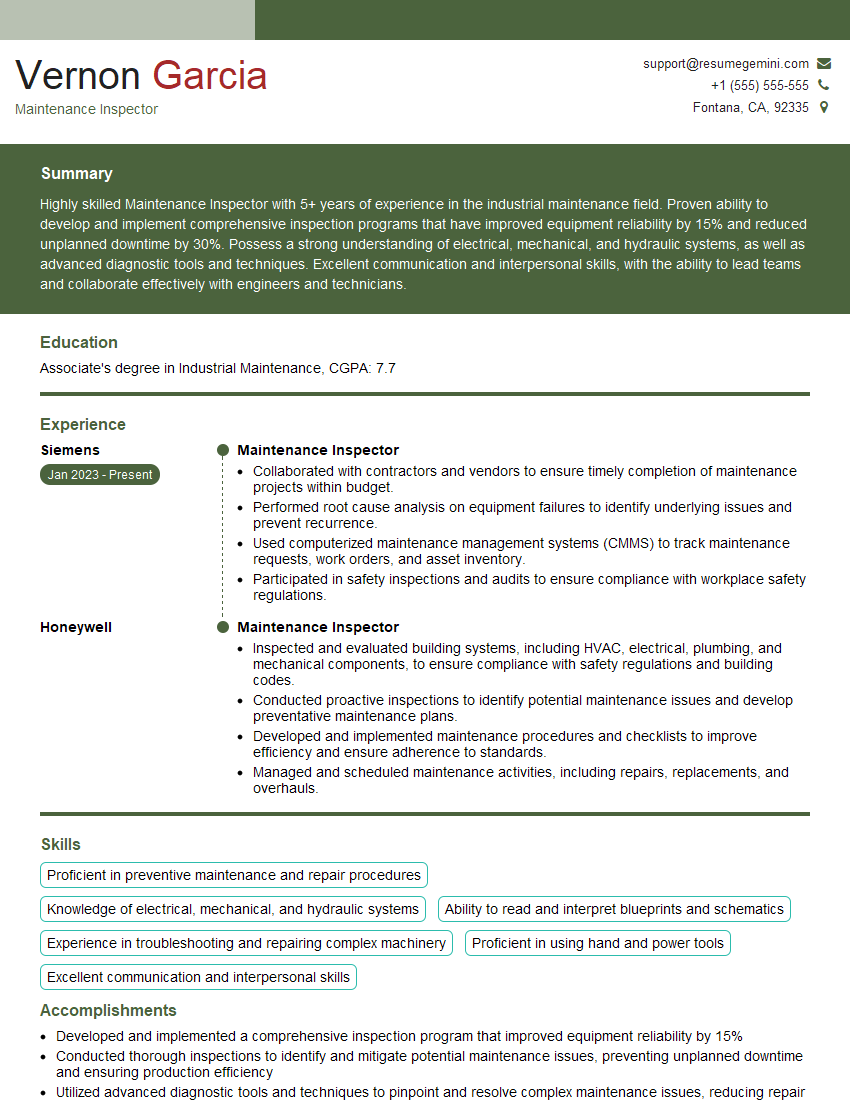
Maintenance Inspector Resume Sample
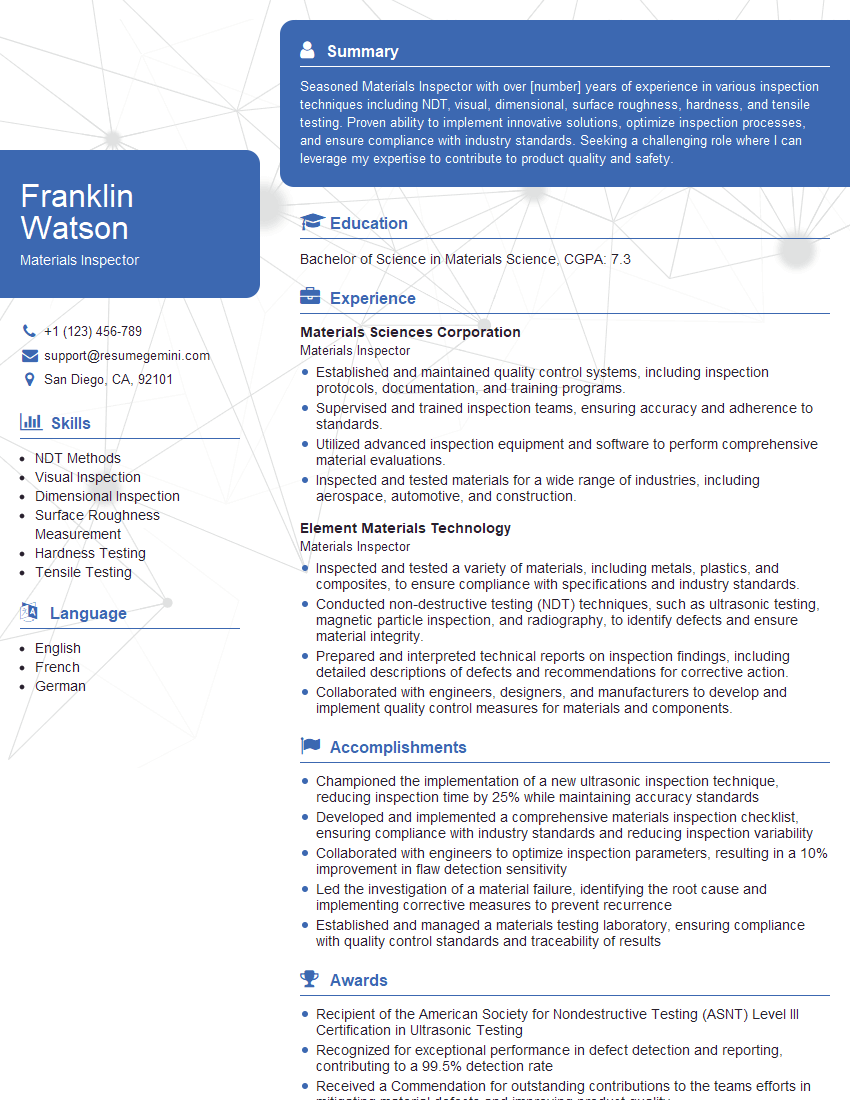
Materials Inspector Resume Sample
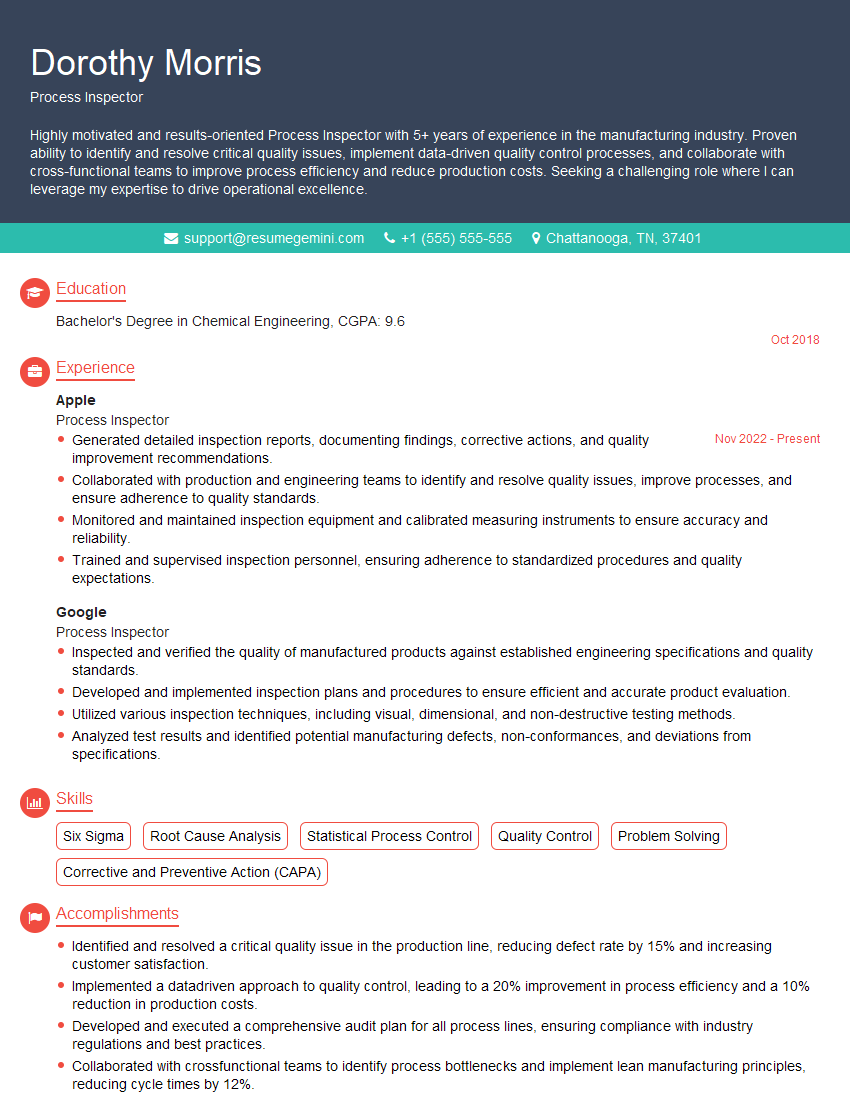
Process Inspector Resume Sample
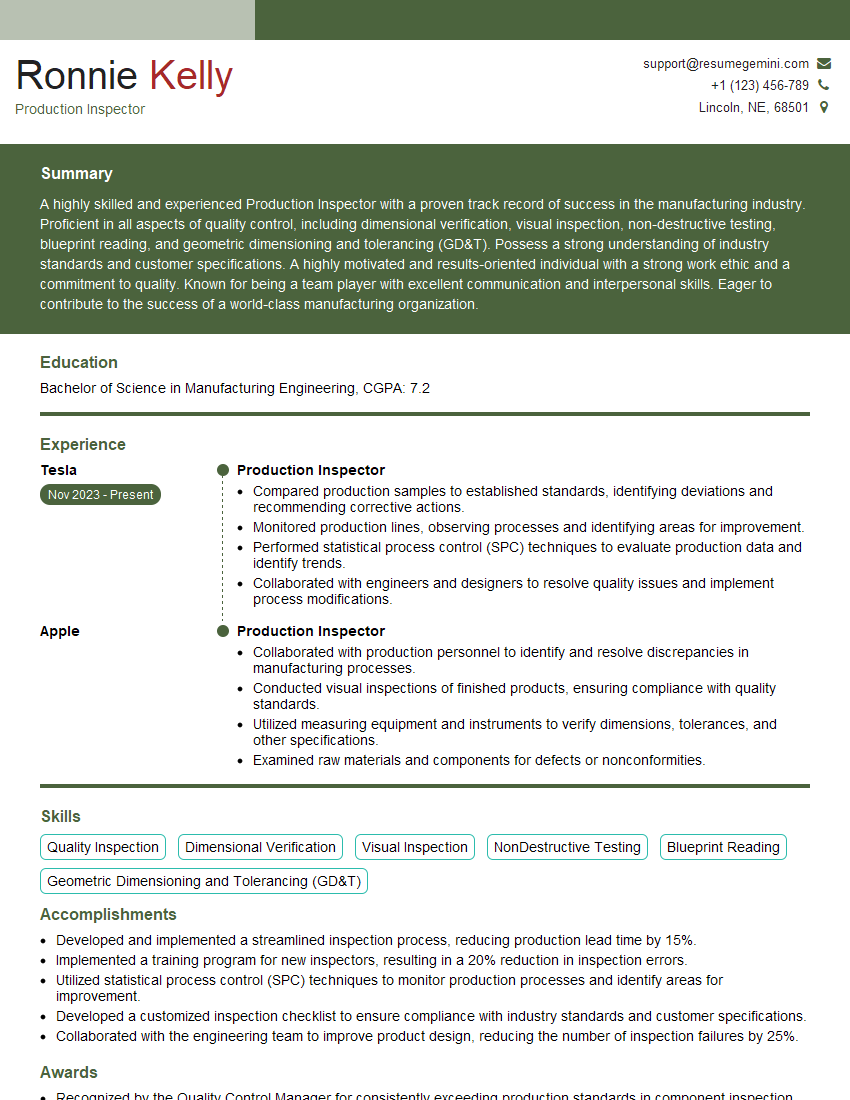
Production Inspector Resume Sample

Quality Control Inspector Resume Sample
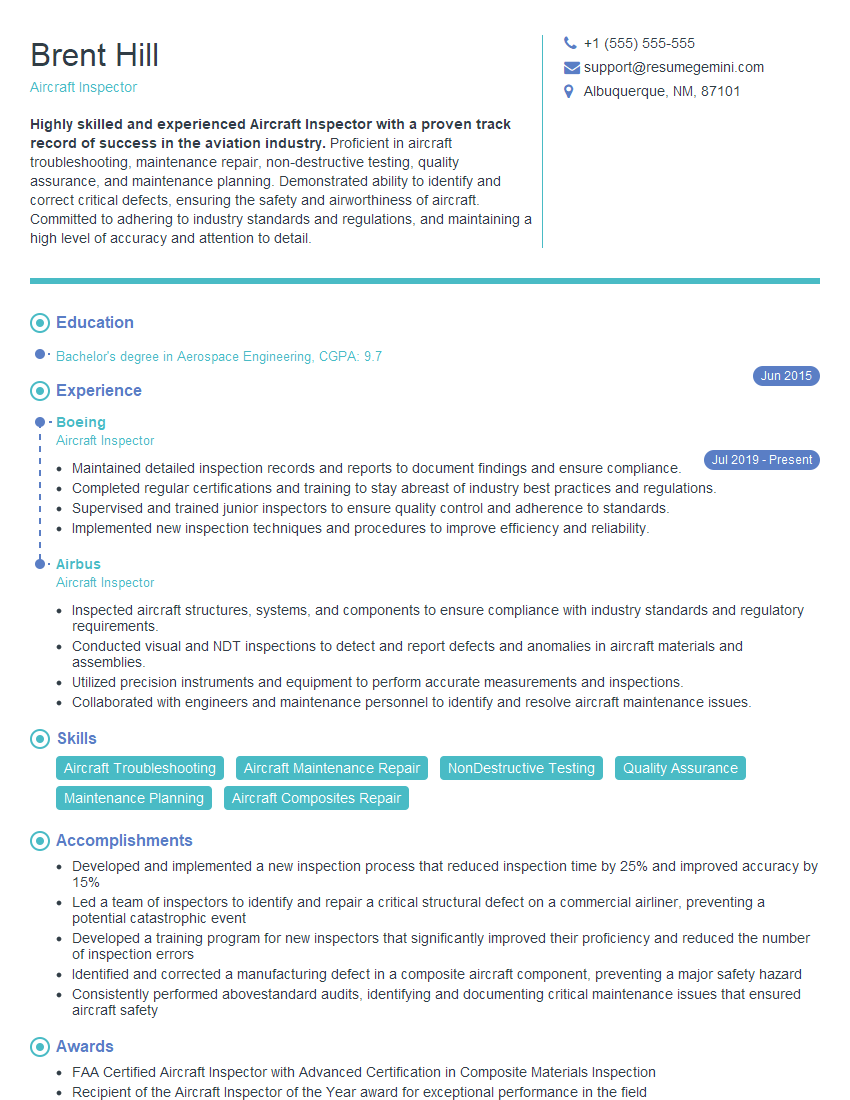
Aircraft Inspector Resume Sample
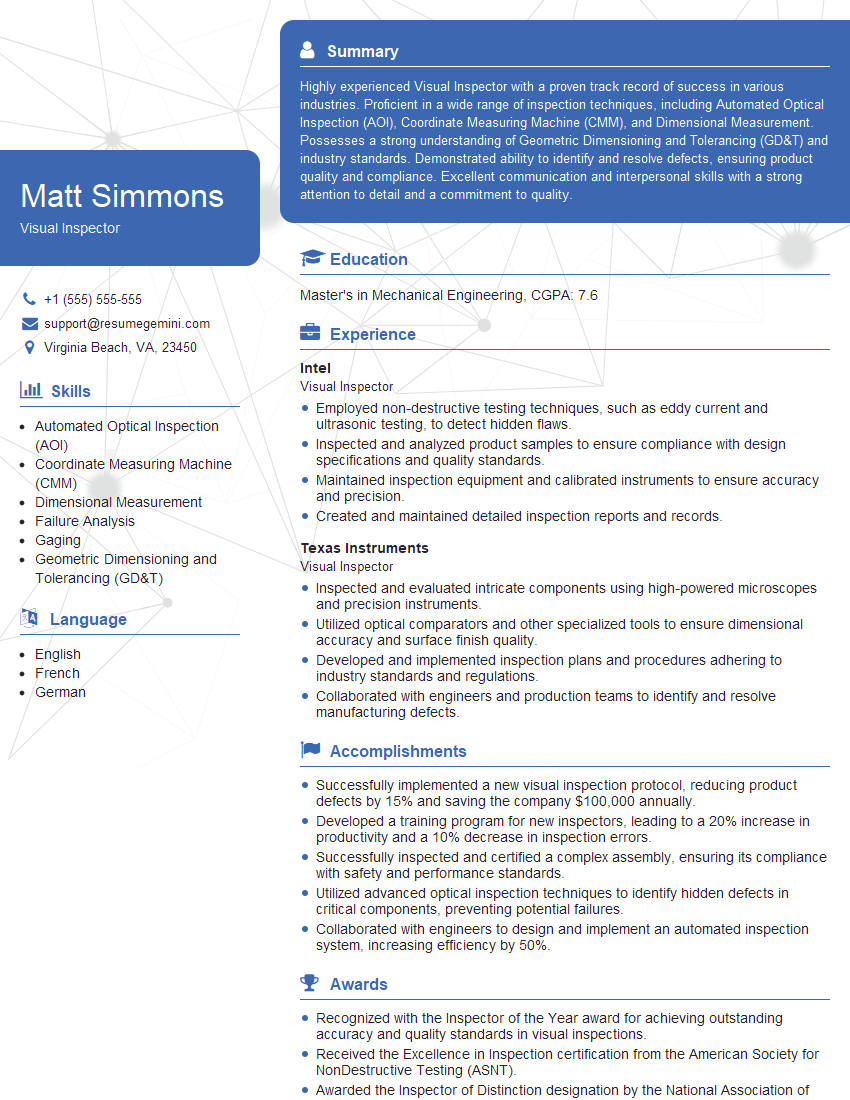
Visual Inspector Resume Sample
- Quality Assurance Inspector
- Metrologist
- Quality Control Engineer
- Quality Assurance Engineer
- Safety Inspector
- Calibration Technician
- Construction Inspector
- Inspection Supervisor
- Dimensional Inspector
- Maintenance Inspector
- Materials Inspector
- Process Inspector
- Production Inspector
- Quality Control Inspector
- Aircraft Inspector
- Visual Inspector
Explore more articles
Users Rating of Our Blogs
Share Your Experience
We value your feedback! Please rate our content and share your thoughts (optional).
What Readers Say About Our Blog
Really detailed insights and content, thank you for writing this detailed article.
IT gave me an insight and words to use and be able to think of examples