Unlock your full potential by mastering the most common Experience with archival outreach and education interview questions. This blog offers a deep dive into the critical topics, ensuring you’re not only prepared to answer but to excel. With these insights, you’ll approach your interview with clarity and confidence.
Questions Asked in Experience with archival outreach and education Interview
Q 1. Describe your experience developing and implementing archival outreach programs.
Developing and implementing archival outreach programs requires a multifaceted approach, focusing on identifying target audiences, crafting compelling narratives around archival materials, and selecting appropriate delivery methods. I’ve consistently started by conducting a thorough needs assessment, identifying gaps in community knowledge and understanding related to the archive’s holdings. This informs the design of programs tailored to specific interests and needs.
For example, at my previous institution, we discovered a significant interest in local history among younger generations. In response, we developed a series of interactive workshops using photographs and documents from our collection to create engaging historical narratives. We also partnered with local schools to integrate these workshops into their curriculum. Another program centered on oral history projects, where we trained community members to interview elders and preserve their stories for future generations. This fostered a sense of ownership and participation, increasing engagement and ensuring the longevity of the project.
Successful implementation also involves robust marketing and promotion. This can involve leveraging social media, creating visually appealing brochures, and working with local media to generate publicity. Consistent evaluation and adaptation are crucial to ensure the programs remain relevant and effective.
Q 2. What strategies have you used to engage diverse audiences with archival materials?
Engaging diverse audiences requires recognizing and addressing their unique needs and preferences. I believe in employing a strategy of inclusivity, moving away from a one-size-fits-all approach. This means utilizing diverse communication channels and program formats. For instance, translating materials into multiple languages, offering programs in different formats (online, in-person, workshops, lectures), and partnering with community organizations that represent various demographic groups are crucial.
One successful example involved partnering with a local Hispanic community center to host a family history workshop using archival records related to immigration. We provided bilingual staff and tailored the activities to engage children and adults. This collaborative approach not only broadened our reach but also fostered trust and a sense of ownership within the community. Another strategy involved creating accessible digital versions of our archival materials, including transcripts for audio and video recordings and descriptive metadata for images, making the collections accessible to people with disabilities. By actively seeking feedback and making adjustments based on audience response, we’ve continuously improved our capacity to engage diverse groups.
Q 3. Explain your approach to designing educational programs using archival resources.
Designing educational programs using archival resources begins with identifying a compelling narrative or theme woven through the archives. The program must then be tailored to the specific learning objectives and the target audience’s prior knowledge and skills. I employ a learner-centered approach, using active learning techniques to foster engagement and critical thinking.
This can include interactive exercises, group discussions, primary source analysis workshops, and digital storytelling projects. For instance, a program focused on the history of women’s suffrage might use archival photographs, letters, and newspaper clippings to explore the challenges and triumphs of the movement. Participants could analyze primary sources to understand different perspectives and craft their own narratives based on their findings. Assessing the prior knowledge of the audience is critical. For example, a program for high school students would differ significantly from one designed for professional historians. Clear learning objectives, well-structured activities, and varied assessment methods are key to maximizing the educational impact of the program.
Q 4. How do you assess the effectiveness of your outreach and educational initiatives?
Assessing the effectiveness of outreach and educational initiatives is crucial for continuous improvement. My approach uses a mixed-methods evaluation strategy, combining both quantitative and qualitative data. Quantitative measures might include attendance figures, website analytics (for online programs), and pre- and post-program surveys to gauge changes in knowledge and understanding. Qualitative data is equally important; I use focus groups, individual interviews, and feedback forms to gain a deeper understanding of participants’ experiences and perspectives.
For example, post-program surveys might ask participants to rate the program’s clarity, engagement, and relevance. Focus groups allow for a more in-depth exploration of participants’ reflections on the program and suggestions for improvement. Analyzing this data helps identify areas of strength and weakness, enabling informed adjustments to future programs. Regular monitoring of website traffic and social media engagement also provides valuable insights into audience reach and interests.
Q 5. What technologies or platforms have you used to promote archival materials online?
Promoting archival materials online requires a multi-platform approach that leverages the strengths of different technologies. I’ve extensively used content management systems (CMS) like WordPress to create user-friendly websites with searchable databases, high-quality digital images, and transcriptions of archival materials. Social media platforms like Twitter, Instagram, and Facebook are essential for outreach and community engagement, allowing for interactive discussions and sharing snippets of archival content.
For example, we’ve used Instagram to showcase captivating images from our collections with short, engaging captions. On Twitter, we’ve participated in relevant hashtags and engaged with other institutions and individuals. We’ve also explored digital storytelling platforms to create interactive timelines and narratives based on our archives. Furthermore, using online archives, like Omeka, provides an accessible and easily searchable platform for public engagement with our collections. The key is to present the information in an accessible, visually appealing, and user-friendly format.
Q 6. How have you adapted your outreach strategies in response to changing technologies?
Adapting to changing technologies is essential for maintaining relevance and maximizing reach. This requires staying informed about new platforms and tools, continually experimenting with innovative approaches, and being flexible in response to user feedback. For example, the rise of virtual reality (VR) and augmented reality (AR) technologies offers exciting new possibilities for presenting archival materials in immersive and engaging ways. Likewise, the growing popularity of podcasts and video blogs (vlogs) offers alternative ways to share stories from the archives.
When social media algorithms shifted, our strategy adapted to ensure visibility. We experimented with different types of content, including short videos, infographics, and live Q&A sessions. We also actively monitored analytics to track engagement and refine our approach. Adaptability is key, necessitating a continuous cycle of learning, experimentation, and evaluation.
Q 7. Describe your experience with grant writing or fundraising for archival projects.
Grant writing and fundraising are crucial for securing resources to support archival projects. My experience includes developing compelling proposals that clearly articulate the project’s goals, methodology, and anticipated impact. I have a proven track record of successfully securing funding from diverse sources, including foundations, government agencies, and private donors. The process involves careful research to identify appropriate funding opportunities, crafting well-written proposals that address the funder’s priorities, and developing strong relationships with potential funders.
For example, I secured a grant from the National Endowment for the Humanities to digitize and make accessible a significant collection of local historical newspapers. The proposal highlighted the collection’s historical significance, the project’s rigorous methodology, and its potential to broaden access and engagement with local history. Developing a strong narrative that showcases the project’s value and impact is crucial in convincing funders to invest in archival preservation and outreach initiatives.
Q 8. How do you balance preservation needs with public access to archival collections?
Balancing preservation and access is a core tenet of archival work. It’s like finding the sweet spot between protecting a priceless painting and allowing the public to appreciate its beauty. We achieve this through a multi-pronged approach:
- Controlled Access: Digitizing fragile materials allows for wider access while keeping the originals safe in climate-controlled environments. We might offer high-resolution digital surrogates while limiting physical handling of the originals to researchers with a demonstrable need.
- Preservation-focused Handling Procedures: We establish strict guidelines for handling original materials, including the use of archival-quality gloves, appropriate lighting, and controlled environmental conditions. This ensures the longevity of the collection while still permitting limited access.
- Education and Training: Educating researchers and the public about proper handling techniques and the fragility of archival materials is crucial. We often provide training sessions and workshops to emphasize responsible use.
- Technological Solutions: Implementing digital rights management (DRM) systems allows for controlled access to digitized collections, permitting viewing while preventing downloading or unauthorized reproduction.
For instance, at a previous institution, we digitized a collection of fragile Civil War letters. Researchers could access high-quality digital copies online, while the originals remained securely stored, preserving them for future generations. This balance allowed for extensive research while ensuring the collection’s long-term survival.
Q 9. What is your experience with metadata creation and management for archival materials?
Metadata is the lifeblood of archival organization and access. It’s the descriptive information that makes archival materials findable, usable, interoperable, and manageable (the FAIR principles). My experience encompasses the entire lifecycle, from initial creation to ongoing maintenance and updates.
- Creation: I’m proficient in creating descriptive metadata using various schemas, including Dublin Core, Encoded Archival Description (EAD), and MODS. I meticulously document every aspect, from the creator and date to the subject matter and physical characteristics of the item. This includes creating controlled vocabularies and using thesauruses to ensure consistency and searchability.
- Management: I understand the importance of using metadata management systems to track changes, control access, and ensure data integrity. I’m experienced with databases like ArchivesSpace and other content management systems. Regular audits and quality control are crucial for ensuring data accuracy and consistency.
- Enrichment: Metadata is not a one-time task. Ongoing enrichment, such as adding additional descriptive terms, contextual information, or links to related resources, enhances discoverability and user experience. I actively seek opportunities to improve and expand existing metadata to ensure the collection’s continued relevance.
For example, when working on a collection of photographs, I would not only record basic descriptive information but also add geographic coordinates, keywords relevant to the subject, and cross-references to other relevant materials within the collection or related online resources. This enhances the usability of the collection significantly.
Q 10. Explain your understanding of copyright and intellectual property concerns related to archival materials.
Copyright and intellectual property (IP) are critical considerations in archival work. It’s about balancing the rights of creators and the public’s right to access information.
- Copyright Determination: I am adept at determining copyright status, considering factors like the date of creation, authorship, and any existing copyright registrations. Understanding the complexities of copyright law, including fair use and exceptions, is paramount.
- Rights Management: Implementing strategies to manage copyright and other intellectual property rights associated with archival materials is vital. This includes documenting permissions, restrictions, and any necessary licenses.
- Permissions and Licensing: I have extensive experience in obtaining permissions to reproduce or disseminate materials subject to copyright. This involves researching rights holders, negotiating agreements, and ensuring appropriate attribution.
- Public Domain Materials: I recognize and properly identify materials in the public domain, ensuring they can be accessed and utilized freely, while still providing appropriate provenance information.
For instance, before making any images from a recently acquired collection publicly available online, I would meticulously research copyright status and obtain necessary permissions from copyright holders before making those materials available digitally.
Q 11. How do you handle requests for access to sensitive or restricted archival materials?
Handling requests for sensitive or restricted materials requires a balanced approach, prioritizing ethical considerations and legal obligations. It’s about protecting privacy while respecting researchers’ needs.
- Access Policies and Procedures: We establish clear and comprehensive access policies and procedures, outlining the process for requesting access to restricted materials, the criteria for granting access, and any conditions attached to such access. This usually includes a formal application process.
- Privacy Considerations: We carefully review requests, weighing the researcher’s need for access against the potential harm to individuals or organizations mentioned within the collection. Anonymization techniques might be applied if permissible.
- Redaction or Restriction: For materials with highly sensitive content, redaction might be necessary. Alternatively, access might be restricted to authorized personnel or granted only under specific conditions.
- Consultation with Stakeholders: When necessary, we consult with relevant stakeholders, such as donors, legal counsel, or individuals whose privacy might be affected.
For example, if a researcher requests access to personnel files containing sensitive personal information, we would carefully review the request and determine whether access could be granted, potentially redacting identifying information before providing copies.
Q 12. Describe your experience with digital preservation and access strategies for archival materials.
Digital preservation and access are crucial for ensuring the long-term availability of archival collections. It’s about safeguarding information and making it readily accessible to future generations.
- Digital Formats and Standards: We employ appropriate digital formats and conform to established preservation standards (e.g., OAIS) to ensure long-term accessibility and interoperability. This involves selecting stable formats and regularly migrating to newer formats as technology evolves.
- Metadata Standards: We use robust metadata schemas to enhance discoverability and facilitate long-term access. Consistent and comprehensive metadata is essential for managing and retrieving digital assets.
- Data Backup and Disaster Recovery: Multiple backups and disaster recovery plans are integral for ensuring the safety and security of digital assets. Redundancy and offsite storage are crucial components of our strategy.
- Digital Preservation Systems: I have experience implementing and managing digital preservation systems, using software designed specifically for the long-term management of digital objects. This involves regular system maintenance, data integrity checks, and performance monitoring.
For instance, at a previous project, we migrated a vast collection of digitized audio recordings from an obsolete format to a more stable, open format, implementing a robust metadata scheme to ensure future users can easily locate and utilize the materials.
Q 13. How do you collaborate with other departments or stakeholders to promote archival resources?
Collaboration is key to promoting archival resources. It’s about building bridges and creating synergies to reach wider audiences.
- Internal Collaboration: I work closely with other departments, such as education, public relations, and IT, to develop collaborative programs and outreach initiatives. This includes co-creating exhibits, developing educational materials, and leveraging digital platforms for increased visibility.
- External Partnerships: Building relationships with external stakeholders, including researchers, community groups, educational institutions, and other organizations is essential for promoting access and use of archival materials. This may involve co-hosting events or establishing joint research projects.
- Outreach Programs: We create diverse outreach programs, such as workshops, public lectures, and online exhibitions, tailored to specific audiences to engage diverse communities and promote the value of archival materials.
- Social Media and Digital Engagement: I utilize various social media platforms and other digital channels to promote archival collections and engage with online audiences.
For example, we collaborated with the local historical society and a university history department to create an exhibit on local history. This involved combining our archival materials with their resources, creating a richer, more complete narrative and reaching a wider audience.
Q 14. What experience do you have with creating finding aids or other descriptive metadata?
Finding aids and descriptive metadata are fundamental to archival access. They’re the keys that unlock the treasures within a collection.
- EAD Creation: I am proficient in creating Encoded Archival Description (EAD) finding aids, following established standards and best practices to ensure consistency and searchability. EAD allows for rich descriptions including hierarchical structures, complex relationships, and controlled vocabulary terms.
- Descriptive Metadata Standards: My experience includes working with diverse metadata schemas to enhance the discoverability of archival resources. I select the most appropriate schema based on the specific needs of the collection and user requirements.
- Contextualization: I understand the importance of providing contextual information, including historical background, biographical details, and subject matter descriptions, to enhance users’ understanding of the archival materials.
- User-centered Approach: Finding aids are designed for users – I tailor them to the needs and knowledge levels of diverse audiences to ensure ease of use and accessibility.
For example, when creating a finding aid for a collection of personal papers, I wouldn’t simply list the contents, but would also include biographical information about the creator, highlight key themes and topics within the collection, and provide contextual information to help users understand the historical context.
Q 15. Describe your experience working with diverse archival formats (e.g., photographs, audio recordings, manuscripts).
My experience spans a wide range of archival formats, from delicate 19th-century manuscripts requiring specialized handling to large-format photographs needing specific lighting and storage conditions, and encompassing born-digital materials like audio recordings and videotapes. I’m proficient in assessing the condition of these materials, implementing preservation strategies, and utilizing appropriate digitization techniques to enhance access while minimizing damage. For example, when working with fragile photographs, I’ve utilized archival-quality photo sleeves and handled them with cotton gloves to avoid introducing contaminants. With audio recordings, I’ve employed specialized cleaning and playback equipment to preserve audio quality, often transferring them to digital formats for easier access and preservation.
My work also involves understanding the metadata associated with each format – the descriptive information that helps us understand the context and value of the materials. This metadata is crucial for effective retrieval, cataloging, and interpretation. This understanding allows me to provide researchers and the public with accurate and comprehensive information.
Career Expert Tips:
- Ace those interviews! Prepare effectively by reviewing the Top 50 Most Common Interview Questions on ResumeGemini.
- Navigate your job search with confidence! Explore a wide range of Career Tips on ResumeGemini. Learn about common challenges and recommendations to overcome them.
- Craft the perfect resume! Master the Art of Resume Writing with ResumeGemini’s guide. Showcase your unique qualifications and achievements effectively.
- Don’t miss out on holiday savings! Build your dream resume with ResumeGemini’s ATS optimized templates.
Q 16. How do you incorporate different learning styles and accessibility needs into your educational programs?
Creating inclusive educational programs requires catering to diverse learning styles and accessibility needs. I incorporate various methodologies, such as visual aids, interactive activities, hands-on workshops, and audio-visual presentations, to reach a broad audience. For example, when discussing photographs, I might use large-scale prints, allowing visually impaired participants to feel the textures and details. For those with auditory processing challenges, I provide detailed handouts and transcripts of any audio materials used. Similarly, captioning and transcripts accompany any video elements.
I also consider learning styles, such as visual, auditory, and kinesthetic learners. A program about historical maps might include a guided tour of the materials, followed by small-group discussions and a hands-on activity where participants create their own simple maps. This multi-modal approach ensures that everyone can engage with the material in a way that suits their individual strengths.
Furthermore, I prioritize universal design principles to create programs that are inherently accessible to everyone, regardless of their abilities. This includes the use of clear and concise language, adequate lighting, comfortable seating, and consideration for physical mobility needs.
Q 17. Explain your approach to evaluating and selecting archival materials for educational use.
Selecting archival materials for educational use involves a careful evaluation process focused on several key criteria. First, I assess the materials’ relevance to the educational objectives and the target audience. The materials need to be engaging and relatable to the audience, sparking their curiosity and facilitating learning. For example, when designing a program for high school students on the history of immigration, I would select photographs, letters, and oral histories that showcase the personal experiences of immigrants.
Second, I consider the materials’ condition and preservation needs. I avoid selecting materials that are too fragile or susceptible to damage through handling. Digital surrogates (high-quality digital copies) are preferred whenever possible for educational purposes to preserve the original materials. Third, I evaluate the materials’ intellectual property rights and any restrictions on access or use. I ensure that any materials used are ethically sourced and properly credited. Lastly, I look for a diversity of formats and perspectives to create a rich and balanced learning experience.
Q 18. How do you handle inquiries from researchers or the public regarding archival materials?
Handling inquiries from researchers and the public requires a combination of professionalism, accuracy, and empathy. I begin by actively listening to the inquiry, clarifying any ambiguities, and gathering all relevant information. Then, I conduct a thorough search of the archival collections using the appropriate finding aids and cataloging systems.
If the materials requested are available, I provide clear and concise information about their location and access procedures. This might involve scheduling a research appointment or providing digital access to the materials. If the materials are not available or require specialized handling, I explain the reason politely and suggest alternative resources or approaches. I maintain detailed records of all inquiries to ensure efficient follow-up and to track public interest in different collections. It’s crucial to be responsive and transparent, creating a positive research experience for everyone.
Q 19. Describe a time you had to overcome a challenge related to archival outreach or education.
One challenge I faced was creating an engaging program about a rather obscure historical event for a diverse audience, including children. The initial plan was a traditional lecture-based format, which I quickly realized would not resonate with the young audience. To overcome this, I revamped the program by incorporating interactive elements, such as a hands-on artifact-handling session (with appropriately preserved replicas!), a short film created from archival footage, and a role-playing activity where children could step into the shoes of historical figures. This multi-sensory and participatory approach transformed the program, resulting in high engagement and a much more successful outcome than anticipated. The success hinged on adapting to the audience and understanding their needs beyond a simple presentation of facts.
Q 20. What professional development activities have you undertaken in archival outreach and education?
My professional development has focused on enhancing my skills in archival outreach and education through a combination of workshops, conferences, and online courses. I’ve participated in workshops on digital archiving, effective communication strategies for diverse audiences, and accessible design principles. Conferences have allowed me to network with other professionals in the field and stay abreast of emerging trends and best practices. Online courses have supplemented my knowledge on topics such as metadata creation and digital preservation techniques. This continuous learning ensures that I maintain a high level of proficiency in my field and adapt to the evolving needs of the archival profession.
Q 21. What are some best practices for promoting archival materials through social media?
Promoting archival materials through social media requires a strategic and engaging approach. It’s crucial to use high-quality images and videos, short captions that are concise and attention-grabbing, and relevant hashtags to reach a broader audience. For example, sharing a photograph from a collection might include a caption highlighting a fascinating detail from the image, such as a unique fashion trend or a historical event.
Behind-the-scenes content, like glimpses into the archival process, can also be very engaging. Additionally, incorporating interactive features like polls or quizzes can boost engagement. Regular posting and consistent branding are essential for building a strong online presence. Furthermore, collaborating with other institutions or organizations can significantly extend reach. Finally, using analytics tools to monitor the performance of posts helps to refine future strategies.
Q 22. Describe your experience with creating and delivering presentations or workshops on archival topics.
I have extensive experience designing and delivering presentations and workshops on diverse archival topics, catering to audiences ranging from primary school students to seasoned researchers. My approach emphasizes interactive learning and tailoring content to the specific knowledge level and interests of the participants. For instance, when presenting to school children, I utilize engaging storytelling techniques incorporating primary source materials like photographs and letters to bring history to life. For researchers, my presentations focus on advanced research methodologies and the ethical considerations involved in utilizing archival materials. I frequently incorporate hands-on activities such as simulated archival research exercises or workshops on digital preservation techniques to enhance engagement and practical application.
For example, I recently developed and delivered a workshop on using oral histories for community engagement, which included a practical session where participants learned how to transcribe and analyze oral history interviews. Another example is a presentation I gave on the preservation of digital photographs for a local historical society, which incorporated a demonstration of digital asset management software.
Q 23. How do you measure the impact of your archival outreach and education programs?
Measuring the impact of archival outreach and education programs requires a multi-faceted approach. We can’t just assume success; we need data. I use a combination of quantitative and qualitative methods. Quantitative methods include tracking attendance figures at workshops and presentations, website analytics to monitor online resource usage, and surveys to gauge participant satisfaction and knowledge gain. For example, pre- and post-workshop quizzes can assess changes in participants’ understanding of archival concepts. Qualitative methods involve gathering feedback through focus groups, informal conversations, and analyzing comments from written evaluations. This provides rich insights into the effectiveness and impact of the program.
I also look at longer-term impacts. Did participation lead to increased engagement with the archives? Did it inspire further research or community projects? Documenting these indirect results is crucial for demonstrating the overall value and significance of the outreach efforts.
Q 24. Explain your understanding of archival ethics and professional standards.
Archival ethics and professional standards are paramount in my work. They guide how we handle sensitive materials, ensure preservation, and maintain transparency and integrity. Key principles include respecting intellectual property rights, adhering to privacy regulations (like GDPR or HIPAA, depending on the context), and ensuring accurate and unbiased representation of archival materials. This includes carefully considering the potential for misinterpretation or bias in the context of the materials, particularly when presenting information to the public. Proper citation and attribution are fundamental, as is protecting the physical and intellectual integrity of the collection.
For example, I always obtain necessary permissions before using archival materials in presentations or publications. I’m also mindful of the potential harm that could result from misrepresenting or taking materials out of context, and I take steps to mitigate this risk through careful research and responsible interpretation.
Q 25. Describe your experience with managing volunteers or interns in an archival setting.
I have considerable experience managing both volunteers and interns in archival settings. My approach emphasizes clear communication, providing thorough training, assigning appropriate tasks based on skill levels, and fostering a supportive and collaborative environment. Before assigning tasks, I conduct a thorough orientation to ensure that volunteers and interns understand the importance of archival procedures and handling materials with care. I also create clear guidelines for handling sensitive materials and maintaining confidentiality.
I regularly provide feedback, offer opportunities for professional development, and create opportunities for them to participate in meaningful projects. For instance, I’ve supervised interns in cataloging projects, digitization initiatives, and creating educational resources. Volunteers have assisted with outreach events, processing donations, and basic preservation tasks. I’ve found that providing constructive feedback and acknowledging their contributions is key to maintaining motivation and ensuring successful outcomes.
Q 26. How do you stay up-to-date on best practices in archival outreach and education?
Staying current in the field of archival outreach and education requires continuous learning. I actively participate in professional organizations such as the Society of American Archivists (SAA) and attend their conferences and workshops. I regularly read scholarly journals and publications focusing on archival studies and museum education. This helps me stay abreast of new technologies, methodologies, and best practices in the field. I also participate in online professional development opportunities and webinars, which offer flexible and convenient learning experiences.
Furthermore, I actively seek out opportunities for collaboration with colleagues in other institutions to share knowledge and best practices. Staying connected with the wider professional community is essential for adapting to the evolving landscape of archival practice and providing the most effective outreach and education initiatives.
Q 27. What are your salary expectations for this position?
My salary expectations are commensurate with my experience and qualifications and align with the industry standards for a similar position in this location. I am open to discussing a competitive salary range based on the specifics of the job description and benefits package offered. I am happy to provide further details during our discussion.
Q 28. What are your long-term career goals in the field of archival outreach and education?
My long-term career goals involve continuing to develop and implement innovative and impactful archival outreach and education programs. I aspire to take on increasing leadership responsibilities within the field and contribute to advancements in archival practice, particularly in areas like digital preservation and community engagement. I’m also interested in exploring opportunities to mentor and train the next generation of archivists, ensuring the continued growth and sustainability of the profession. I would also like to pursue opportunities that allow me to leverage my skills to create broader public access to archival collections and to promote a deeper understanding of history and culture.
Key Topics to Learn for Experience with Archival Outreach and Education Interview
- Understanding Diverse Archival Materials: Explore various archival formats (photographs, documents, audio-visual materials) and their unique preservation needs and access considerations.
- Developing Outreach Strategies: Learn to craft engaging and effective outreach plans targeting diverse audiences (students, researchers, the general public). Consider strategies for digital and in-person engagement.
- Designing Educational Programs: Master the creation of educational materials and programs, including workshops, tours, and online resources, catering to varying levels of knowledge and interest.
- Public History and Community Engagement: Explore the role of archives in public history, and understand how to connect archival materials with community narratives and interests.
- Accessibility and Inclusivity: Learn how to make archival materials and programs accessible to individuals with disabilities and from diverse backgrounds, considering issues of representation and bias.
- Digital Archives and Online Engagement: Understand the challenges and opportunities presented by digital archives, including metadata creation, online exhibit development, and digital preservation best practices.
- Grant Writing and Funding: Explore the process of securing funding for archival projects through grant proposals and other fundraising initiatives.
- Collaboration and Teamwork: Discuss experiences working collaboratively with archivists, educators, and community members to achieve outreach and education goals.
- Assessment and Evaluation: Understand the importance of measuring the impact of outreach and education programs and using data to inform future strategies.
- Ethical Considerations: Discuss the ethical responsibilities of archivists in making archival materials accessible and engaging while ensuring their proper preservation and respectful handling.
Next Steps
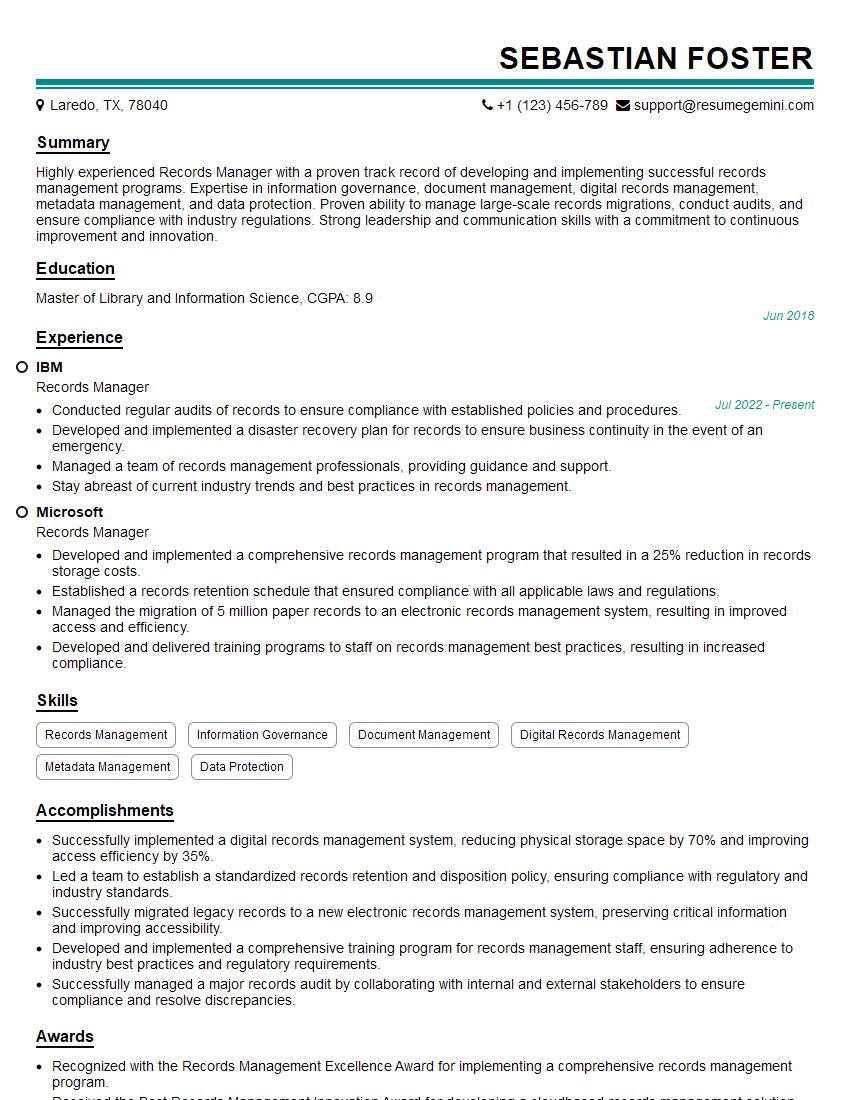
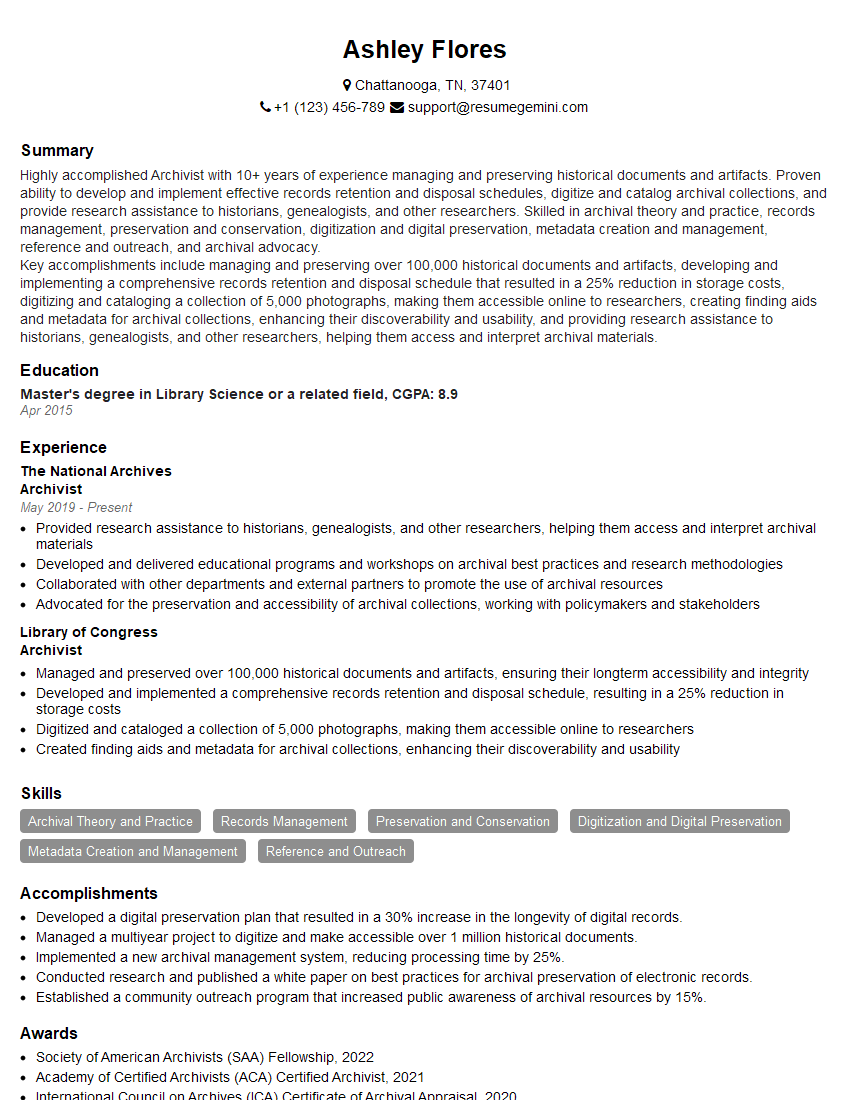
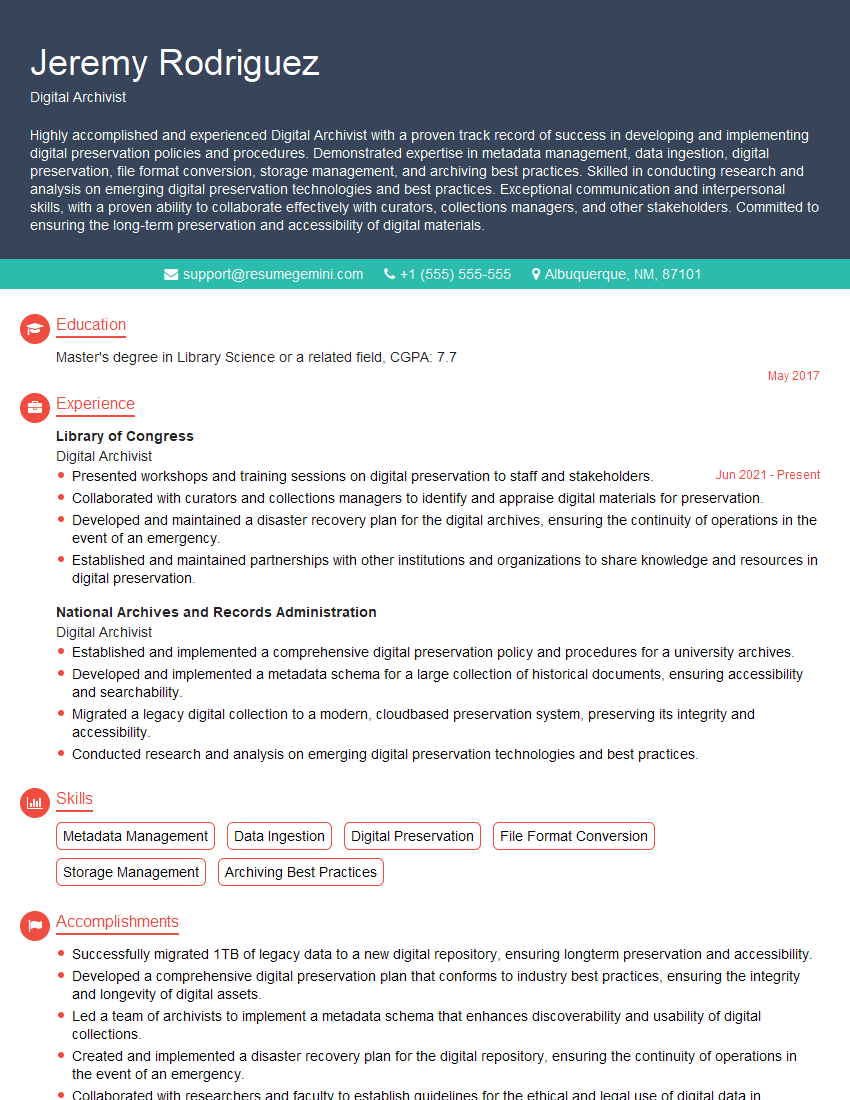
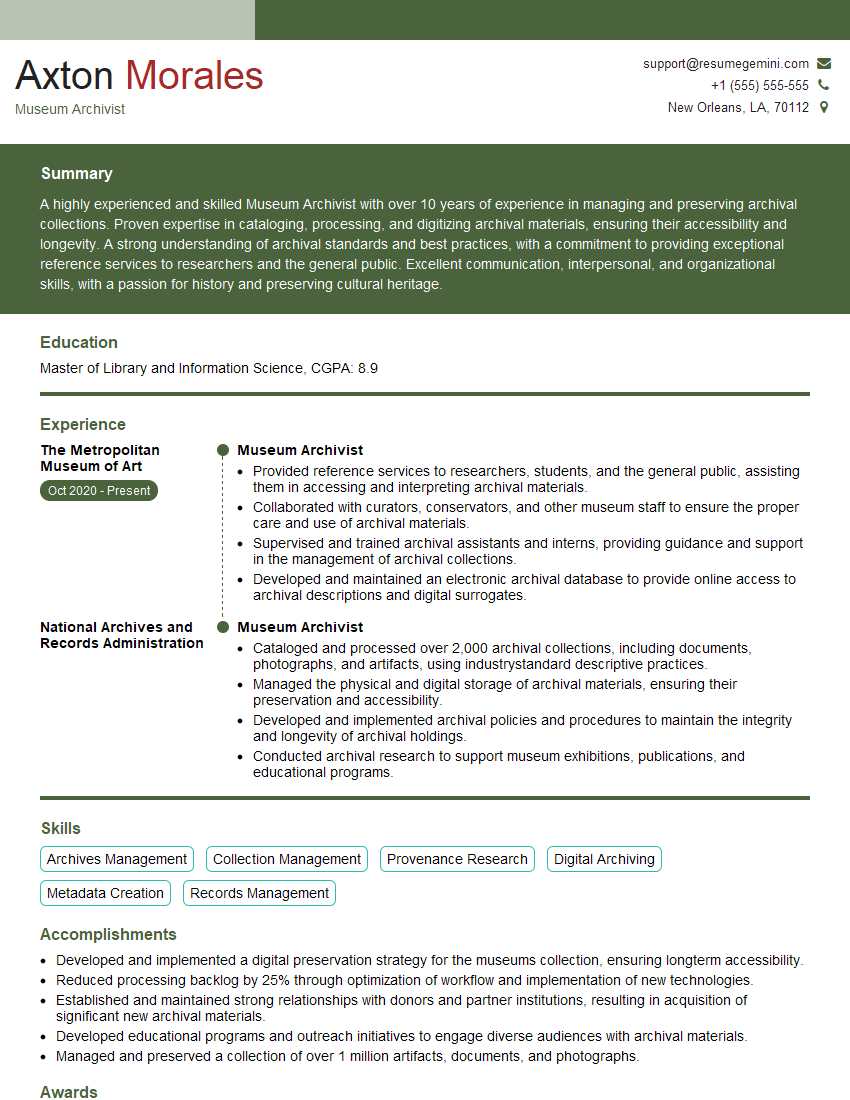
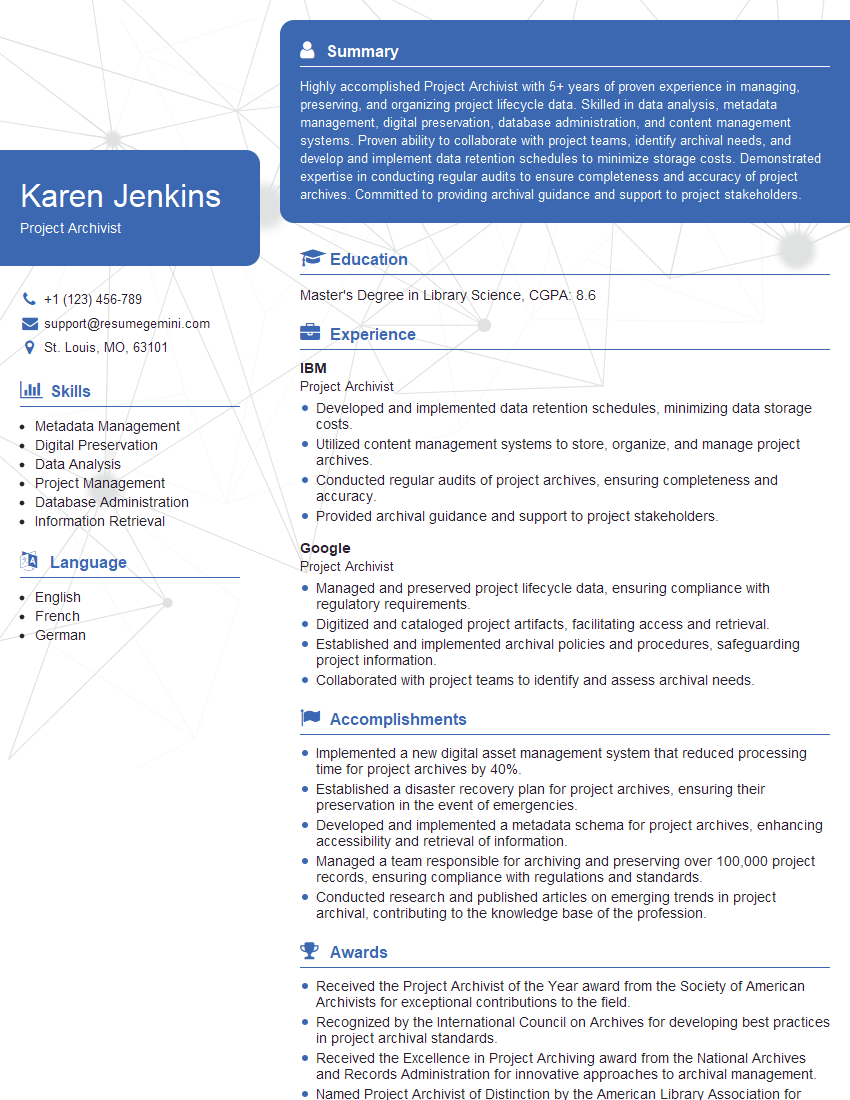
Mastering Experience with archival outreach and education is crucial for career advancement in the field, opening doors to exciting opportunities in museums, libraries, historical societies, and other cultural institutions. A strong, ATS-friendly resume is your key to unlocking these opportunities. To significantly improve your job prospects, we encourage you to leverage ResumeGemini, a trusted resource for building professional and impactful resumes. ResumeGemini provides examples of resumes tailored to “Experience with archival outreach and education,” helping you showcase your skills and experience effectively.
Explore more articles
Users Rating of Our Blogs
Share Your Experience
We value your feedback! Please rate our content and share your thoughts (optional).
What Readers Say About Our Blog
Really detailed insights and content, thank you for writing this detailed article.
IT gave me an insight and words to use and be able to think of examples