Unlock your full potential by mastering the most common Curatorial Research and Scholarship interview questions. This blog offers a deep dive into the critical topics, ensuring you’re not only prepared to answer but to excel. With these insights, you’ll approach your interview with clarity and confidence.
Questions Asked in Curatorial Research and Scholarship Interview
Q 1. Describe your experience with archival research methodologies.
Archival research is the cornerstone of curatorial work. My approach involves a systematic process, beginning with identifying the relevant archives. This might involve consulting finding aids, online databases, or contacting archive repositories directly. Once located, I employ a multi-faceted methodology. This includes:
- Careful Examination of Primary Sources: This includes meticulously reviewing documents, photographs, letters, diaries, and other materials, paying close attention to context, authorship, and potential biases.
- Contextual Analysis: I don’t just read documents; I analyze them within their historical, social, and cultural contexts. Understanding the creator’s background, the circumstances of creation, and the intended audience is crucial for accurate interpretation.
- Critical Source Evaluation: I rigorously assess the reliability and validity of sources. This involves identifying potential biases, inaccuracies, or gaps in the information, and cross-referencing data with other sources for corroboration.
- Digital Archiving Techniques: I am proficient in using digital tools to organize, analyze, and preserve archival materials. This involves utilizing digital transcription software, OCR technologies, and appropriate digital asset management systems to maintain the integrity and accessibility of the documents. For instance, in my work on a recent exhibition on 19th-century women’s fashion, I utilized OCR software to transcribe hundreds of handwritten letters from a fashion designer’s archive, allowing for efficient keyword searching and thematic analysis.
For example, during my research on a specific artist, I discovered a previously unknown sketchbook in a private collection. Through careful analysis of the sketches, along with contemporary reviews and letters, I was able to piece together a more complete understanding of the artist’s development and creative process. This led to a more nuanced and accurate presentation of the artist’s work in an upcoming exhibition.
Q 2. Explain your approach to cataloging and managing museum collections.
Cataloging and managing museum collections requires a rigorous and standardized approach. My methodology centers around creating comprehensive and detailed records for each object. This involves:
- Object Examination and Documentation: Meticulous examination of each object, recording physical characteristics (size, material, condition), and any markings or inscriptions. High-quality photography and digital imaging are essential.
- Descriptive Cataloging: Using standardized cataloging systems like Dublin Core or other museum-specific standards, creating detailed descriptions including the object’s title, creator, date, medium, and subject matter. I ensure that the descriptions are clear, concise, and consistent, allowing for easy retrieval and understanding.
- Data Management: Utilizing a Collections Management System (CMS) to input, manage, and update collection data. This ensures the integrity and accessibility of the data, enabling efficient querying and analysis of the collection. This also facilitates the generation of reports for collection analysis and long-term planning.
- Digital Asset Management: Integrating digital images, documents, and other media related to the object into the CMS, creating a rich digital record that expands on the catalog information.
- Preservation Planning: Assessing the conservation needs of the objects and developing appropriate storage and handling procedures to minimize deterioration and ensure longevity. This includes establishing environmental controls and security measures.
For instance, I recently implemented a new CMS for a museum, improving data accessibility and search functionality, resulting in a 30% increase in staff efficiency in conducting collection research.
Q 3. How do you conduct provenance research?
Provenance research, tracing an object’s ownership and history, is crucial for verifying authenticity and understanding its context. My approach involves a systematic investigation of all available evidence, building a chain of custody for each artifact. This includes:
- Examining Object Documentation: Close examination of any existing documentation associated with the object, such as labels, markings, invoices, receipts, or previous catalog records.
- Archival Research: Exploring relevant archives—museum records, auction catalogs, private papers, and institutional collections—to find records of previous ownership or transactions.
- Oral Histories and Interviews: Conducting interviews with individuals who may have information about the object’s history, including collectors, dealers, family members, or previous owners.
- Comparative Analysis: Comparing the object to similar known examples to establish its stylistic features, techniques, and materials, supporting or challenging existing claims about its origin and history.
- Scientific Analysis: Employing scientific techniques (e.g., radiocarbon dating, material analysis) to verify claims of age and authenticity. This often is crucial in resolving ambiguities arising from conflicting evidence gathered earlier in the process.
For example, while researching a suspected antique clock, I used archival records to trace its ownership back to the original maker, corroborated by stylistic features and expert opinion. This not only authenticated the clock but also added depth to its narrative and cultural significance.
Q 4. What software or databases are you proficient in for curatorial research?
Proficiency in relevant software and databases is essential for efficient curatorial research. I’m experienced with a variety of tools including:
- Collections Management Systems (CMS): PastPerfect, TMS, and MuseumPlus are examples of systems I’ve utilized for data entry, management, and reporting.
- Databases: I am familiar with various bibliographic databases such as JSTOR, Artstor, and the Getty Research Institute’s online resources, as well as archival databases like Ancestry.com and various institutional archives’ online catalogs.
- Digital Imaging Software: Adobe Photoshop and Lightroom for image editing and enhancement. I also have experience with specialized imaging software for digitization and analysis.
- Data Analysis Software: I have experience with spreadsheet programs (Excel, Google Sheets) and statistical software (R or SPSS) for analyzing large datasets derived from the CMS or other sources. This allows for effective identification of trends and patterns across the collection.
- Transcription Software: Audio and video transcription software to efficiently process oral history interviews and other audio-visual materials.
Q 5. Detail your experience with object conservation and handling.
Object conservation and handling are critical for preserving museum collections. While I am not a conservator, I possess a thorough understanding of proper handling techniques and environmental considerations. My experience involves:
- Following Established Protocols: Strict adherence to established museum handling protocols, using appropriate gloves, supports, and tools. This includes understanding the different materials that make up the object and the appropriate handling techniques for each.
- Environmental Monitoring: Understanding the importance of controlled environmental conditions (temperature, humidity, light) in preventing deterioration. This includes understanding how different materials respond to environmental change.
- Collaboration with Conservators: Close collaboration with professional conservators on projects requiring specialized expertise, ensuring that object handling and storage comply with conservation recommendations. This might involve documenting the condition of an object before and after any conservation treatment.
- Understanding Conservation Ethics: Applying ethical principles to decision-making related to object preservation, balancing intervention with the preservation of originality and integrity.
For example, when handling delicate textiles, I strictly follow guidelines on using appropriate support materials and handling techniques, always consulting with a conservator before undertaking any cleaning or repair.
Q 6. How do you identify and assess the authenticity of artifacts?
Authenticity assessment is a complex process requiring a multi-pronged approach. It combines visual examination, material analysis, historical research, and stylistic comparison. My methodology involves:
- Visual Inspection: Careful examination of the object’s form, style, materials, and craftsmanship, comparing it to known authentic examples.
- Material Analysis: Using scientific techniques (e.g., X-ray fluorescence, microscopy) to analyze the object’s materials and construction, verifying its age and composition.
- Stylistic Analysis: Assessing the object’s stylistic features and comparing them to the established work of known artists or makers of the period. This also includes assessing consistency with the purported production method and associated cultural context.
- Historical Research: Researching the object’s history through archival documentation, auction records, or other sources to trace its provenance and identify previous owners or transactions.
- Expert Consultation: Seeking advice and expertise from specialists in relevant fields, such as art historians, conservators, or materials scientists. This can provide crucial insights when dealing with complex or ambiguous evidence.
For example, I once helped determine the authenticity of a painting by comparing its brushstrokes, pigment composition, and canvas type to the artist’s known works and using archival records to trace its provenance back to the artist’s estate.
Q 7. Explain your understanding of intellectual property rights related to museum collections.
Understanding intellectual property rights (IPR) is crucial in managing museum collections. This involves navigating complex legal frameworks regarding copyright, trademarks, and other rights related to the objects and their associated information. My understanding encompasses:
- Copyright: Recognizing that copyright protects artistic works and designs, often extending to photographs and digital reproductions of objects. This implies securing appropriate permissions before publishing images or creating derivative works.
- Moral Rights: Respecting the artist’s moral rights, including the right of attribution and integrity, acknowledging the creator’s association with the artwork and preventing any distortion or mutilation that could harm their reputation.
- Trademark: Identifying and respecting trademarks associated with objects or their makers, particularly in cases of commercial reproduction or marketing.
- Attribution and Documentation: Ensuring accurate attribution of authorship and ownership, documenting the relevant rights and obtaining necessary permissions whenever using images or information related to the collection for publication or exhibitions. This often involves extensive research and clear documentation of permission granted by copyright holders.
- Public Domain: Identifying when works are in the public domain and understand the implications of using such material for curatorial and educational purposes. This is especially important in research for exhibitions or publications.
For instance, before using an image of a copyrighted artwork in a museum publication, I always ensure that we have secured the necessary permissions from the copyright holder and provide proper attribution.
Q 8. Describe your experience developing exhibition themes and narratives.
Developing exhibition themes and narratives is a multifaceted process that begins with identifying a compelling story. It’s not just about displaying objects; it’s about weaving a narrative that engages the visitor and sparks intellectual curiosity. I start by conducting extensive research, often exploring multiple avenues – archival documents, scholarly articles, oral histories, and even relevant popular culture – to identify potential themes. I then consider the museum’s collection and identify artifacts that can best support the chosen theme and its narrative arc. For example, while curating an exhibition on the impact of the Industrial Revolution, I wouldn’t simply show a collection of factory machinery; I’d consider how to illustrate the social, economic, and environmental consequences through a blend of artifacts, images, and interactive elements. A crucial aspect is creating a clear chronological or thematic structure that guides the visitor’s journey through the exhibition, allowing them to understand the bigger picture.
For example, in an exhibition about the history of fashion in a specific region, I might structure the narrative chronologically, showcasing how styles changed over time and reflect socio-economic shifts. Or I might group objects thematically, exploring the influence of specific designers or cultural movements on clothing styles. Each approach requires a careful selection of artifacts and accompanying text to support the chosen narrative.
Q 9. How do you select and interpret artifacts for exhibition?
Selecting and interpreting artifacts for an exhibition requires a rigorous and thoughtful approach. It’s not simply about choosing the ‘prettiest’ or most visually striking objects. The selection process involves careful consideration of the exhibition’s theme and narrative, and demands a deep understanding of each object’s historical, cultural, and artistic context. I begin by reviewing the museum’s collection database and conducting thorough research on potential artifacts, examining their provenance (history of ownership), condition, and significance.
Interpretation involves making the object’s meaning accessible to the visitor. This requires considering the object’s inherent meaning, its context within the exhibition’s narrative, and the audience’s prior knowledge. For example, a seemingly simple piece of pottery might represent intricate craftsmanship, socio-economic status, or cultural beliefs. Careful consideration of accompanying labels and contextual materials is crucial to effectively convey this information. Often, I’ll work with conservators to ensure the artifacts’ safe handling and display, and I involve other specialists (e.g., historians, anthropologists) to enrich my understanding and interpretation.
Q 10. Explain your approach to creating engaging exhibition labels and educational materials.
Creating engaging exhibition labels and educational materials is crucial for making the exhibition accessible and meaningful to visitors. I believe labels should be concise, accurate, and engaging, avoiding overly technical language. I use a storytelling approach, aiming to connect with visitors on an emotional and intellectual level. For example, instead of a dry description of an artifact, I might weave a narrative around it, placing it within its historical context and highlighting its significance. I carefully consider the reading level and visual appeal of the materials, utilizing various media like images, videos, and interactive elements to enhance understanding.
Educational materials are developed with diverse learning styles in mind. I might create interactive displays, worksheets, audio guides, and online resources to cater to different needs and interests. In creating these materials, I constantly aim for clarity and accuracy, utilizing feedback from educators, accessibility specialists, and test audiences to ensure effectiveness. For example, I would ensure all materials are available in multiple languages if the target audience is diverse.
Q 11. Describe your experience working with diverse stakeholders (e.g., donors, researchers, the public).
Working with diverse stakeholders is an integral part of my curatorial practice. Successful exhibitions require collaboration and effective communication. I believe in establishing strong relationships built on mutual respect and trust. With donors, I clearly communicate the exhibition’s goals and how their contributions will contribute to the project’s success. With researchers, I foster a collaborative environment, sharing research findings and incorporating their expertise into the exhibition’s narrative. I also engage with the public through surveys, focus groups, and community events to gather feedback and ensure the exhibition resonates with its intended audience. This collaborative approach ensures that the exhibition reflects a diverse range of perspectives and fulfills the museum’s mission.
For instance, in a recent project focused on local history, I collaborated with community members to gather oral histories and incorporate their perspectives into the exhibition narrative. This approach not only enriched the exhibition but also helped build stronger ties with the local community.
Q 12. How do you manage competing priorities and deadlines in a fast-paced museum environment?
Managing competing priorities and deadlines in a museum environment requires strong organizational skills and a proactive approach. I utilize project management tools such as Gantt charts to visualize timelines, assign tasks, and track progress. Prioritization is crucial; I focus on the most critical tasks first, ensuring that key milestones are met. Effective communication with colleagues and stakeholders is essential to manage expectations and anticipate potential delays. I build in buffer time for unforeseen circumstances and remain flexible to adapt to changing priorities.
For instance, if a critical artifact’s conservation takes longer than anticipated, I might re-sequence the exhibition’s layout or adjust the timeline to accommodate the delay, while keeping all stakeholders informed. Regular meetings and progress reports ensure everyone stays aligned.
Q 13. Explain your familiarity with museum accreditation standards.
I am thoroughly familiar with museum accreditation standards, specifically those set by the American Alliance of Museums (AAM) in the US, or equivalent international standards. These standards encompass collections management, exhibitions, education, and overall museum operations. My understanding encompasses best practices for collections care (preservation, documentation, and access), ethical acquisition and deaccessioning policies, exhibition design and installation, and visitor engagement strategies. Compliance with these standards is not just about meeting regulatory requirements; it’s about ensuring the long-term preservation of our cultural heritage and providing visitors with high-quality experiences.
For example, I am well-versed in proper environmental controls for artifact storage and display to prevent damage. Understanding and adhering to these standards allows the museum to maintain its credibility and secure funding.
Q 14. How do you incorporate digital technologies into curatorial practice?
Digital technologies have revolutionized curatorial practice, offering exciting opportunities to enhance visitor engagement and expand access to collections. I leverage digital tools in various ways, including creating virtual tours, interactive exhibits, and online databases. I utilize digital mapping and 3D modeling to create immersive experiences, allowing visitors to explore artifacts in detail or even experience historical environments virtually. Online collections databases enhance access to objects not currently on display, expanding the museum’s reach beyond its physical walls. Digital technologies also facilitate collaborative research, allowing curators to share data and collaborate with researchers globally.
For example, I’ve used augmented reality to overlay digital information onto physical artifacts, enriching the visitor experience by providing additional context and details that would otherwise be difficult to display in a physical space. This allows for a more dynamic and personalized approach to interpretation.
Q 15. Discuss your experience with grant writing and fundraising for curatorial projects.
Grant writing and fundraising are crucial skills for curatorial projects. Securing funding allows us to realize ambitious exhibitions and research initiatives that might otherwise be impossible. My experience spans various funding bodies, from private foundations like the National Endowment for the Humanities to corporate sponsors and individual donors. I’ve developed a systematic approach, starting with thorough research to identify suitable funding opportunities aligned with the project’s goals. This includes carefully reviewing grant guidelines, understanding the funder’s priorities, and tailoring the proposal accordingly.
For example, when securing funding for an exhibition on the impact of the Industrial Revolution on local crafts, I highlighted the educational outreach programs and community engagement activities alongside the scholarly merit of the exhibition itself. This multi-faceted approach proved highly effective, demonstrating the project’s broader societal impact. Beyond the initial proposal, maintaining consistent communication with funders, providing regular updates, and meticulously managing the budget are essential for building trust and ensuring project success. I also believe in cultivating strong relationships with potential funders, attending networking events and proactively seeking opportunities to build rapport.
Career Expert Tips:
- Ace those interviews! Prepare effectively by reviewing the Top 50 Most Common Interview Questions on ResumeGemini.
- Navigate your job search with confidence! Explore a wide range of Career Tips on ResumeGemini. Learn about common challenges and recommendations to overcome them.
- Craft the perfect resume! Master the Art of Resume Writing with ResumeGemini’s guide. Showcase your unique qualifications and achievements effectively.
- Don’t miss out on holiday savings! Build your dream resume with ResumeGemini’s ATS optimized templates.
Q 16. How do you evaluate the success of an exhibition?
Evaluating the success of an exhibition goes beyond simply counting visitor numbers. While attendance figures provide a valuable metric, a holistic evaluation requires considering multiple factors. These include visitor engagement (measured through feedback surveys, observation, and social media analysis), the exhibition’s impact on scholarly discourse (publications, presentations, and academic citations), its contribution to the museum’s mission and strategic goals, and its broader community impact (educational programs, collaborations, and public discussions).
For instance, when assessing the success of a recent exhibition on 19th-century photography, we analyzed visitor feedback to identify areas of strength and weakness. We also tracked media coverage and monitored social media conversations to understand public perception and gauge the exhibition’s reach beyond the museum walls. Ultimately, successful exhibitions not only entertain and inform but also stimulate dialogue, foster understanding, and leave a lasting legacy.
Q 17. Describe your experience with collection digitization and online access.
Collection digitization and online access are vital for expanding the reach and accessibility of museum collections. My experience encompasses various stages, from metadata creation and image capture to platform selection and content management. I’ve worked with both high-resolution imaging systems and specialized software for metadata creation, adhering to best practices for digital preservation and accessibility (e.g., using controlled vocabularies and structured metadata).
For a project digitizing a large collection of historical maps, we adopted a phased approach, prioritizing materials based on condition, research value, and public demand. We used a collaborative platform allowing researchers and the public to access and interact with the digitized maps, improving access and encouraging further scholarship. The online platform also included robust search functionalities and detailed metadata, making it easy for users to find the specific information they needed. This project demonstrated the power of digitization in transforming collections from static objects into dynamic research and educational resources.
Q 18. How do you ensure the ethical and responsible handling of sensitive materials?
Ethical and responsible handling of sensitive materials is paramount. This requires a multifaceted approach involving careful consideration of cultural sensitivity, community engagement, and legal and ethical guidelines. For materials containing potentially offensive or harmful content (e.g., racist imagery or depictions of violence), we prioritize contextualization within educational frameworks. This includes providing appropriate warnings and framing the materials within their historical context to encourage critical reflection and understanding rather than uncritical acceptance. We also engage with relevant communities and consult with subject matter experts to ensure representation and avoid perpetuating harm.
For example, when dealing with collections relating to indigenous cultures, we work closely with tribal representatives to obtain their permission and input, ensuring their stories are told respectfully and accurately. This often involves involving community members in all stages of the process, from research and interpretation to exhibition design and programming.
Q 19. Explain your understanding of different museum collection management systems.
Museum collection management systems (CMS) are crucial for organizing, preserving, and accessing collections. My experience includes working with various systems, from simple database systems to sophisticated integrated platforms like TMS (The Museum System) and PastPerfect. Each system has its strengths and weaknesses, and the choice depends on the specific needs of the institution. Factors to consider include scalability, functionality, data security, and integration with other systems (e.g., website, library catalog).
For smaller museums, a simpler database system might suffice, while larger institutions often benefit from integrated platforms offering advanced features such as accessioning, cataloging, condition reporting, and loan management. Understanding the capabilities and limitations of different systems is vital for selecting the best solution to manage a collection effectively and efficiently.
Q 20. How do you assess the condition of artifacts and plan for their preservation?
Assessing the condition of artifacts and planning for their preservation is an ongoing process involving regular monitoring, documentation, and preventative measures. This starts with a thorough visual inspection, noting any signs of deterioration (e.g., cracks, discoloration, pest infestation). We use specialized tools and techniques to assess the condition more accurately, such as environmental monitoring equipment, microscopy, and x-ray fluorescence spectroscopy.
Based on the assessment, we develop a preservation plan outlining appropriate storage conditions (temperature, humidity, light levels), handling procedures, and conservation treatments. This might involve stabilizing deteriorating materials, cleaning artifacts, or creating custom storage enclosures. For example, we might use acid-free archival materials for storage and employ climate-controlled storage facilities to minimize the risk of damage. Regular condition checks are vital to detect any deterioration early and take proactive steps to prevent further damage.
Q 21. Describe your experience with conducting oral history interviews.
Conducting oral history interviews requires careful planning and execution. I approach each interview with a structured but flexible approach, starting with thorough research to establish the interviewee’s background and relevant experiences. I develop a list of open-ended questions, aiming to elicit rich narratives and personal perspectives rather than simply factual information.
It’s crucial to build rapport with the interviewee, creating a comfortable and trustful environment where they feel safe sharing their stories. I always obtain informed consent, explaining the purpose of the interview, how the recordings will be used, and their rights regarding access and control. Following the interview, I transcribe the recordings meticulously, ensuring accuracy and preserving the nuances of the interviewee’s language. The resulting transcripts are then archived securely and may be used for exhibitions, publications, or research projects. For example, when conducting oral history interviews with veterans, I prioritized creating a safe and respectful space for them to share their experiences, ensuring their voices were heard and respected.
Q 22. How do you prioritize research tasks within a large-scale curatorial project?
Prioritizing research tasks in a large-scale curatorial project requires a strategic approach. Think of it like building a house – you wouldn’t start painting before laying the foundation. I employ a phased approach, starting with a detailed project timeline that breaks down the research into manageable components. This involves identifying key research questions and objectives, which then dictate the order of tasks.
- Phase 1: Foundational Research: This involves establishing the historical context, identifying key objects and themes, and conducting preliminary literature reviews. This forms the bedrock for subsequent research.
- Phase 2: In-depth Research: Once the foundation is set, I delve into more specific areas, such as archival research, object analysis, and interviews with experts. This phase prioritizes tasks crucial for addressing the core themes of the exhibition or publication.
- Phase 3: Synthesis and Interpretation: Finally, I synthesize findings, analyze data, and interpret the results within the broader historical and cultural context. This phase includes writing drafts, preparing presentations, and refining narratives.
Throughout, I utilize project management tools to track progress, deadlines, and dependencies between tasks, ensuring efficiency and accountability. For example, in a recent project on 19th-century photography, the foundational research on photographic techniques preceded the investigation of specific photographers and their works. This ensures a strong theoretical basis before jumping into detailed analyses.
Q 23. Explain your approach to managing a curatorial budget.
Managing a curatorial budget requires meticulous planning and transparency. It’s essential to create a detailed budget breakdown, anticipating all potential expenses – from travel and research materials to conservation and fabrication costs. I generally start with a comprehensive needs assessment, identifying all necessary resources and services. Then, I research vendors and compare prices to find the best value for money.
Contingency planning is crucial. Unexpected expenses often arise, so I build a buffer of 10-15% into the budget to account for unforeseen circumstances. Regular monitoring of expenses is also vital, ensuring that the project remains within budget. For example, I might explore collaborative opportunities with other institutions to share resources and reduce individual project costs. This could involve sharing transportation costs for joint research trips or negotiating group discounts for conservation services. Clear communication with stakeholders is essential to manage expectations and ensure that any budget adjustments are transparent and well-justified.
Q 24. Describe your experience with working collaboratively with conservators and other specialists.
Collaboration with conservators and other specialists is fundamental to successful curatorial work. It’s like an orchestra – each instrument (specialist) plays a crucial role, and the conductor (curator) harmonizes their contributions. I foster strong working relationships built on mutual respect and trust. This involves clearly communicating research goals and timelines to all team members.
For instance, in a recent exhibition on ancient textiles, close collaboration with conservators was crucial for assessing the condition of the objects, determining appropriate handling procedures, and selecting appropriate display methods. This collaboration ensured the safety and preservation of fragile artifacts while allowing for their effective presentation to the public. Regular meetings and shared documentation (e.g., shared online databases, detailed condition reports) are instrumental in maintaining seamless communication and efficient workflow. I encourage open dialogue and value the diverse perspectives that specialists bring to the table. This collaborative approach ensures a holistic and accurate representation of the collection and its history.
Q 25. How do you stay current with best practices in the field of curatorial research and scholarship?
Staying current in curatorial research necessitates a multi-pronged approach. Think of it as continuous professional development. I actively engage with professional organizations like the American Alliance of Museums and the College Art Association, attending conferences and workshops to learn about the latest research methodologies and best practices. I subscribe to relevant journals and newsletters, such as Museum Anthropology or Curator: The Museum Journal, staying abreast of cutting-edge research.
Furthermore, I actively participate in professional networks and engage in ongoing conversations with colleagues through email lists and online forums. I regularly review current museum exhibitions and publications, taking note of emerging trends and innovative approaches to research and presentation. This combination of formal and informal learning ensures I remain at the forefront of my field, applying the most current methods and standards in my research.
Q 26. Describe your experience with writing exhibition catalogs and scholarly publications.
Writing exhibition catalogs and scholarly publications is a crucial aspect of curatorial work, it’s the culmination of research. I approach this task as a narrative construction, aiming to communicate complex information in an engaging and accessible manner. I begin by outlining a clear structure, considering the target audience and the overall message I want to convey. This includes crafting clear, concise, and accurate text that is engaging to a broad readership.
For example, in a catalog for a recent exhibition on indigenous art, I structured the text to reflect the exhibition’s thematic progression, incorporating both detailed object descriptions and broader contextual information. I also worked closely with designers and editors to ensure that the catalog was visually appealing and complemented the exhibition’s narrative. I always ensure that the writing style is both academically rigorous and accessible, bridging the gap between scholarly discourse and public engagement. This process usually involves several rounds of revisions, with peer review or feedback from colleagues or editors to enhance clarity and accuracy.
Q 27. How do you adapt your research methods to different types of collections?
Adapting research methods to different collection types is essential. Each collection presents unique challenges and opportunities. Think of it as being a detective with different cases – each case (collection) requires different investigative tools (research methods). For instance, researching a collection of paintings requires different approaches than researching an archive of personal letters.
- Archival Collections: My approach emphasizes careful cataloging, transcription, and contextual analysis of documents. This might involve using digital tools for text analysis or employing methods of historical criticism to interpret the documents within their historical context.
- Object-based Collections: Here, my research involves detailed examination of the objects themselves, using techniques such as material analysis, stylistic comparison, and provenance research. I might consult conservation reports, historical inventories, or auction records to gain a deeper understanding of the objects.
- Digital Collections: This demands specialized skills in digital humanities methodologies. This could include text mining, network analysis, or using GIS for spatial analysis of data.
In each case, my goal remains consistent: to thoroughly document, contextualize, and interpret the collection to generate insightful knowledge. The chosen methods are tailored to the specific nature and structure of the collection.
Q 28. Explain your approach to interpreting and presenting complex research findings to diverse audiences.
Interpreting and presenting complex research findings to diverse audiences requires clear communication. It’s like translating a scientific paper into everyday language. I adapt my communication style to resonate with the specific audience. For a scholarly audience, I might utilize more technical language and complex arguments. However, for a public audience, I prioritize clarity, conciseness, and storytelling techniques, employing visual aids like images, maps, or interactive displays.
For example, when presenting findings from research on migration patterns to a general audience, I utilize visually engaging maps and charts to illustrate complex demographic data. I use storytelling methods, highlighting personal narratives within the larger historical context. For scholarly audiences, I might present the same data using statistical analysis and sophisticated theoretical frameworks. In essence, the core message remains consistent, but the delivery method changes to ensure effective communication across different audiences. Testing different approaches through pilot presentations and gathering feedback is a key part of this process.
Key Topics to Learn for Curatorial Research and Scholarship Interview
- Object-Based Research Methodologies: Understanding different approaches to researching museum objects, including material analysis, provenance research, and contextual studies. Practical application: Analyzing an object’s history to inform its interpretation and exhibition.
- Archival Research & Source Criticism: Mastering techniques for navigating archives, evaluating source reliability, and synthesizing information from diverse sources. Practical application: Building a compelling narrative about an artist or a collection based on primary and secondary sources.
- Theoretical Frameworks in Curatorial Practice: Familiarity with key theories influencing contemporary curatorial work, such as post-colonial theory, feminist theory, and critical race theory. Practical application: Applying theoretical lenses to challenge traditional exhibition practices and create inclusive narratives.
- Exhibition Development & Interpretation: Understanding the process of developing exhibitions, from concept to installation, including audience engagement and accessibility considerations. Practical application: Designing engaging and informative exhibition labels and accompanying materials.
- Collection Management & Documentation: Knowledge of best practices in cataloging, conservation, and managing collections, including digital asset management. Practical application: Contributing to the maintenance and growth of a museum’s collection database.
- Writing & Communication Skills: Demonstrating strong writing skills for scholarly publications, exhibition catalogs, grant proposals, and other forms of curatorial communication. Practical application: Crafting compelling narratives for diverse audiences.
- Ethical Considerations in Curatorial Practice: Understanding the ethical implications of curatorial work, including issues of repatriation, cultural sensitivity, and intellectual property. Practical application: Making informed decisions that prioritize ethical considerations in research and exhibition development.
Next Steps
Mastering Curatorial Research and Scholarship is crucial for career advancement in the museum and cultural heritage sectors. It opens doors to diverse opportunities, from research-based exhibitions to leading scholarly projects. To maximize your job prospects, crafting a strong, ATS-friendly resume is essential. ResumeGemini is a trusted resource to help you build a professional and impactful resume that highlights your skills and experience effectively. Examples of resumes tailored to Curatorial Research and Scholarship are available to guide you through the process.
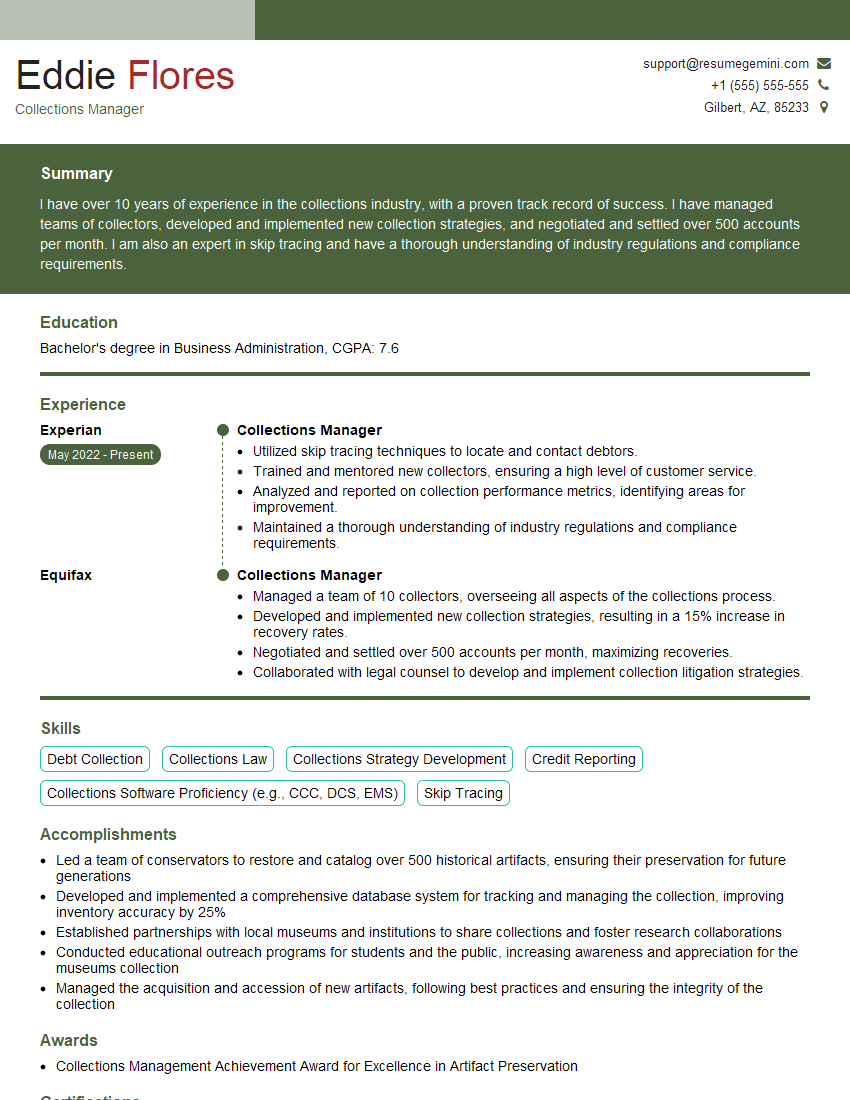
Collections Manager Resume Sample
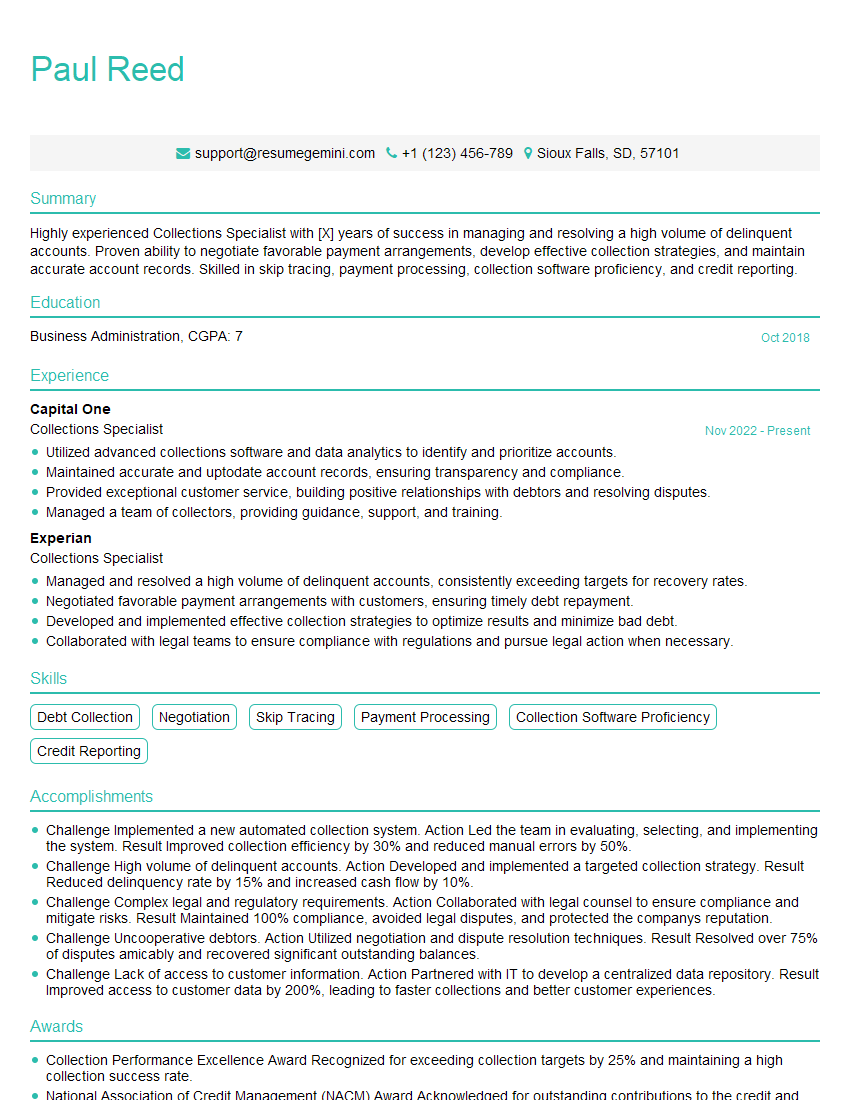
Collections Specialist Resume Sample
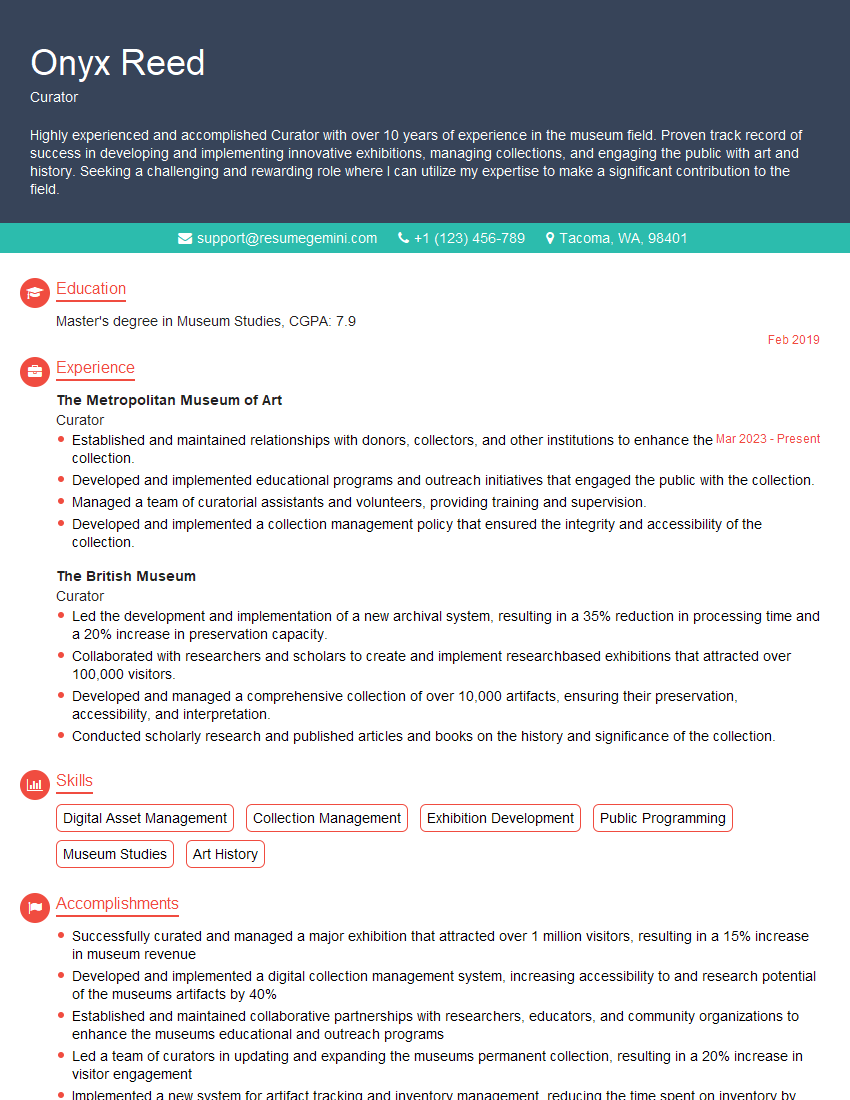
Curator Resume Sample
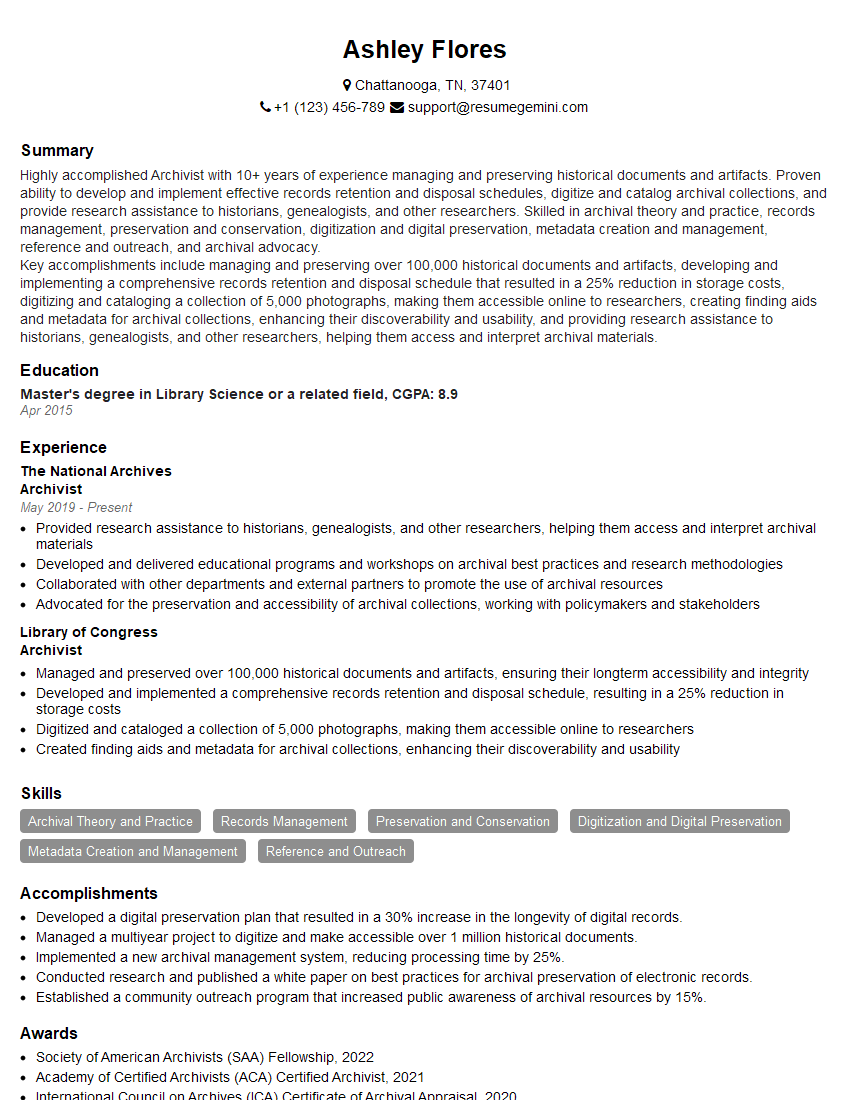
Archivist Resume Sample
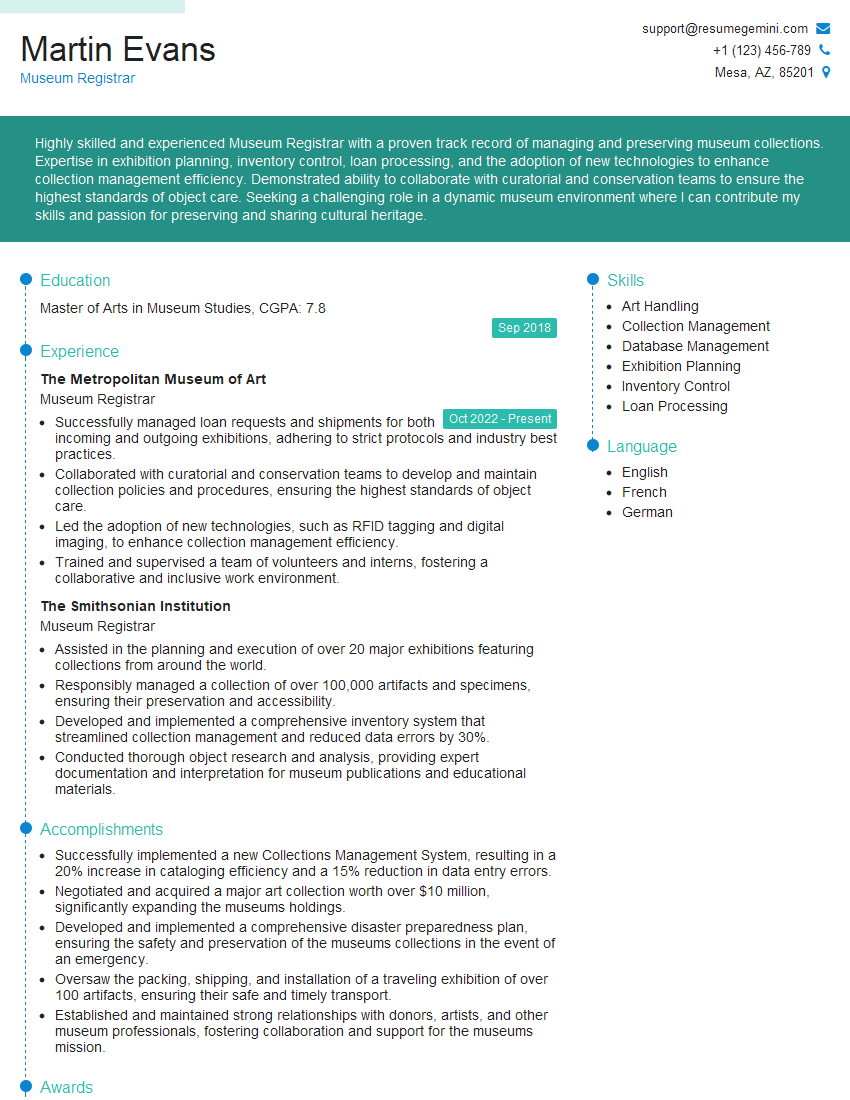
Museum Registrar Resume Sample
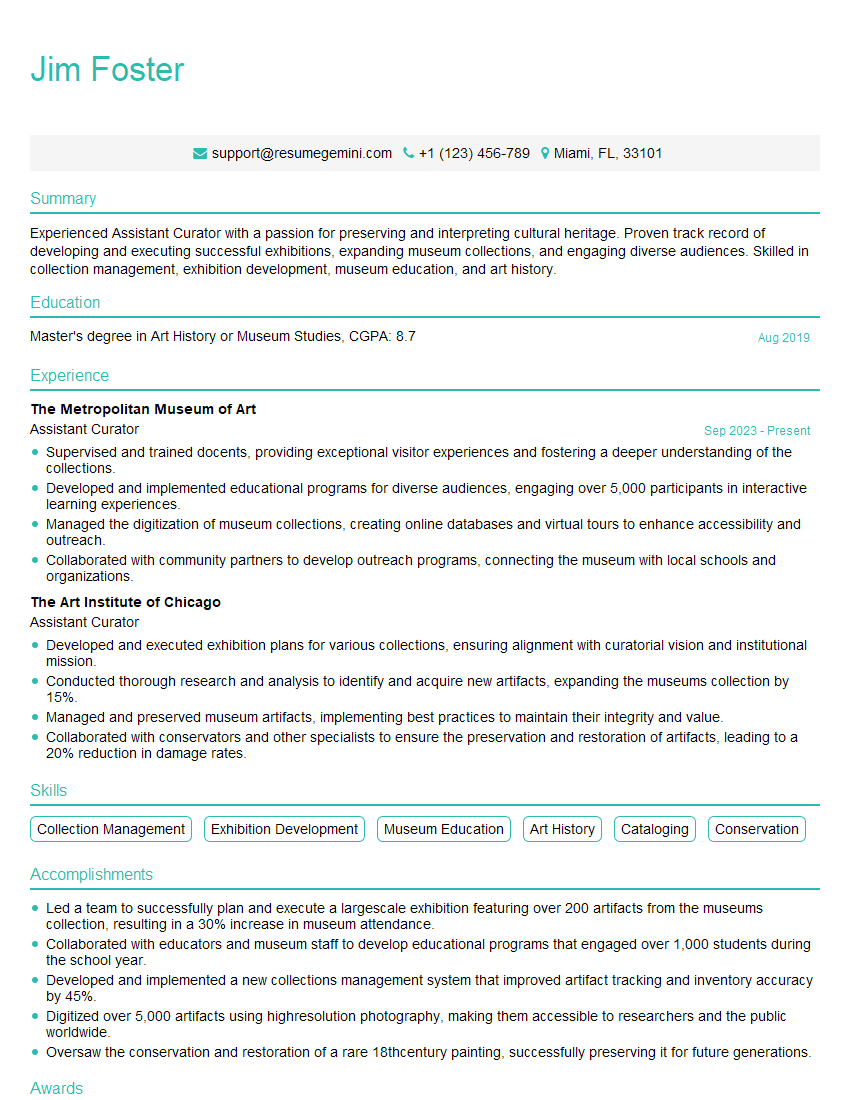
Assistant Curator Resume Sample
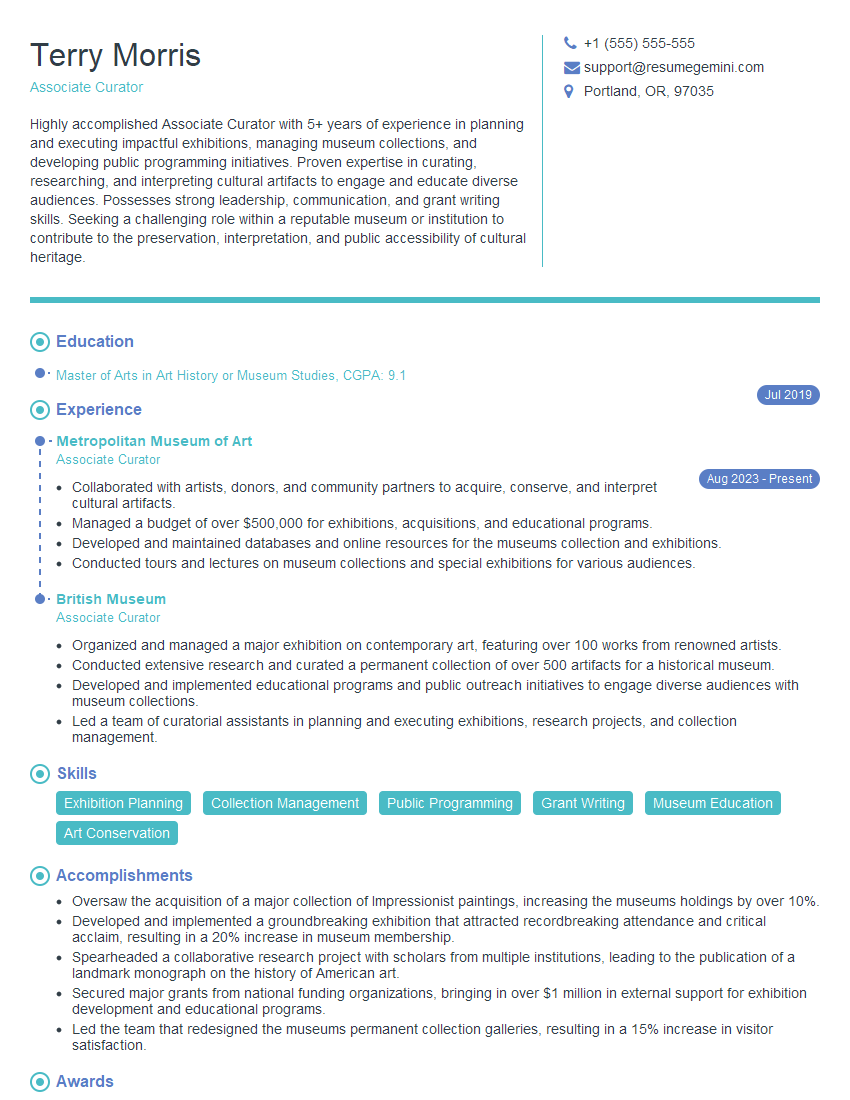
Associate Curator Resume Sample
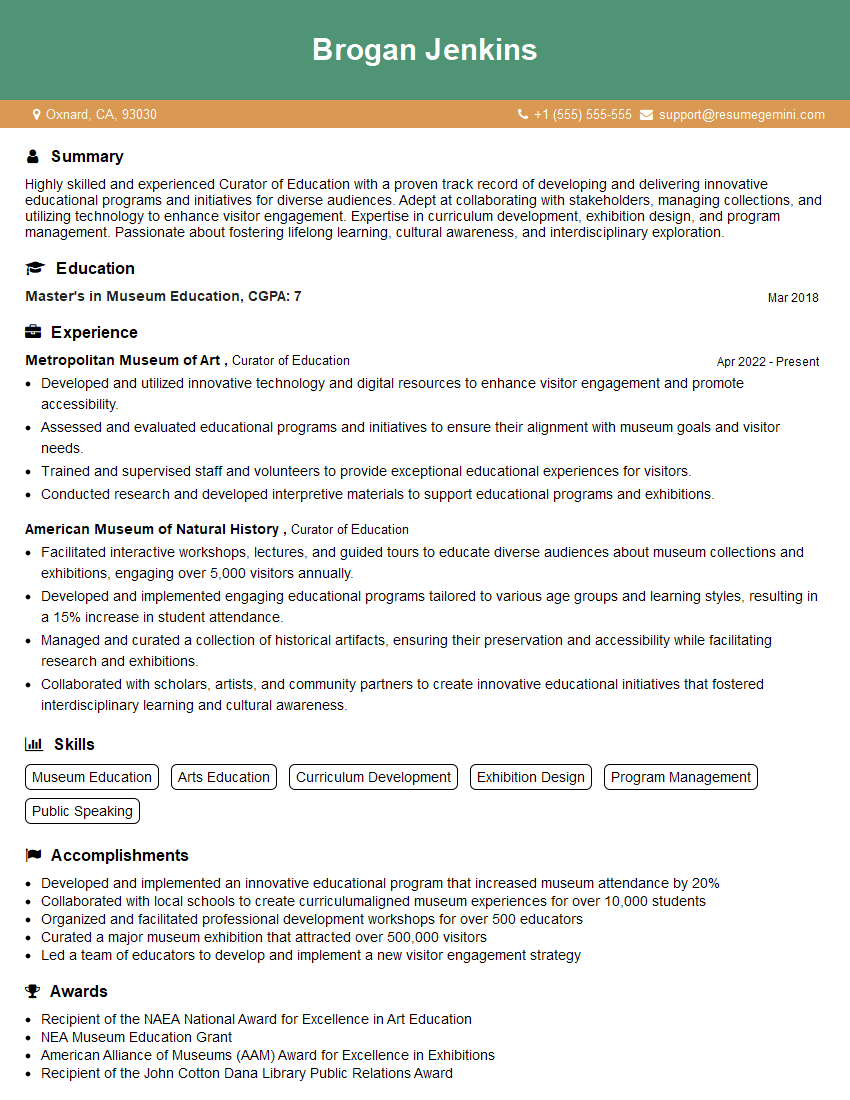
Curator of Education Resume Sample
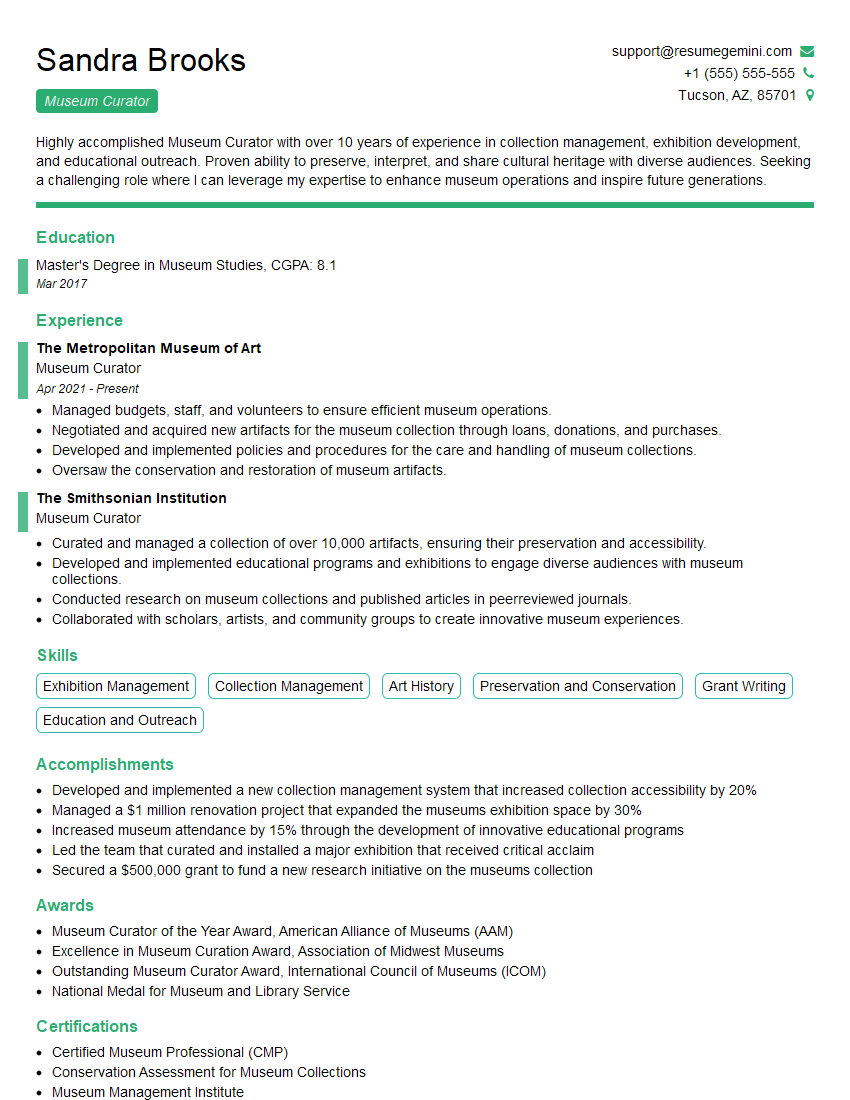
Museum Curator Resume Sample
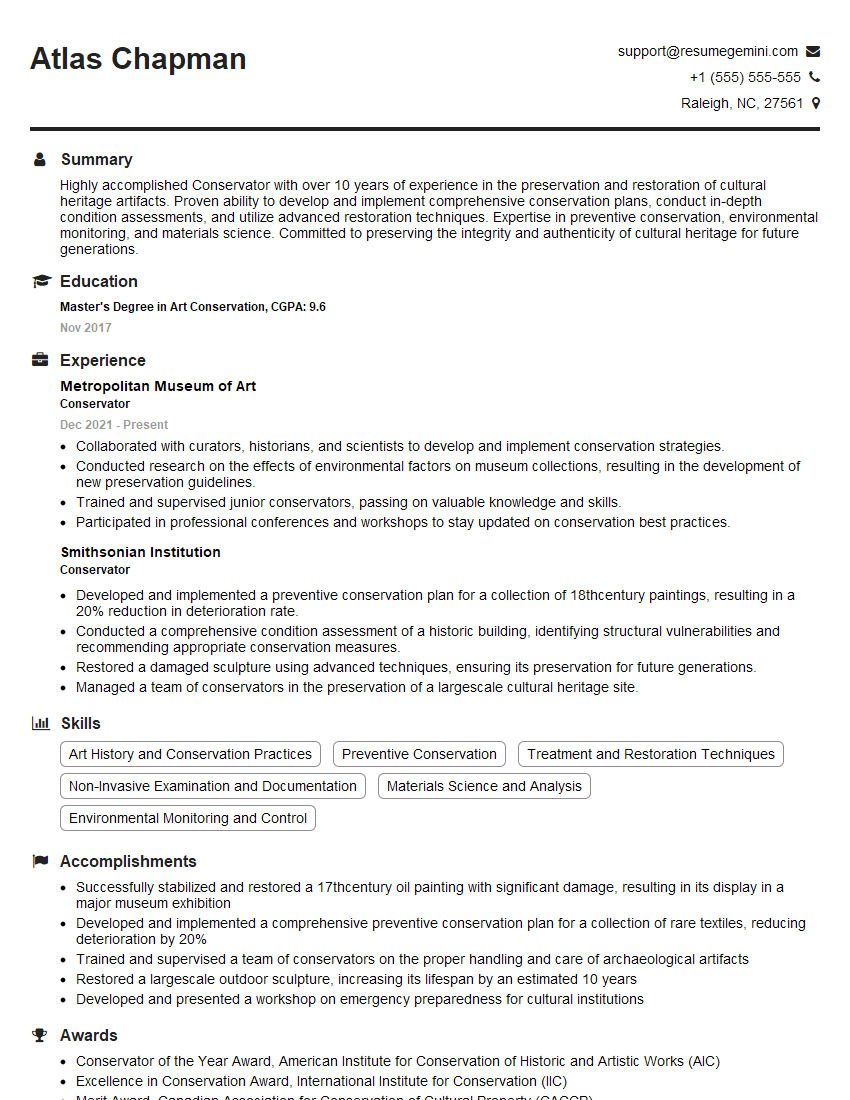
Conservator Resume Sample
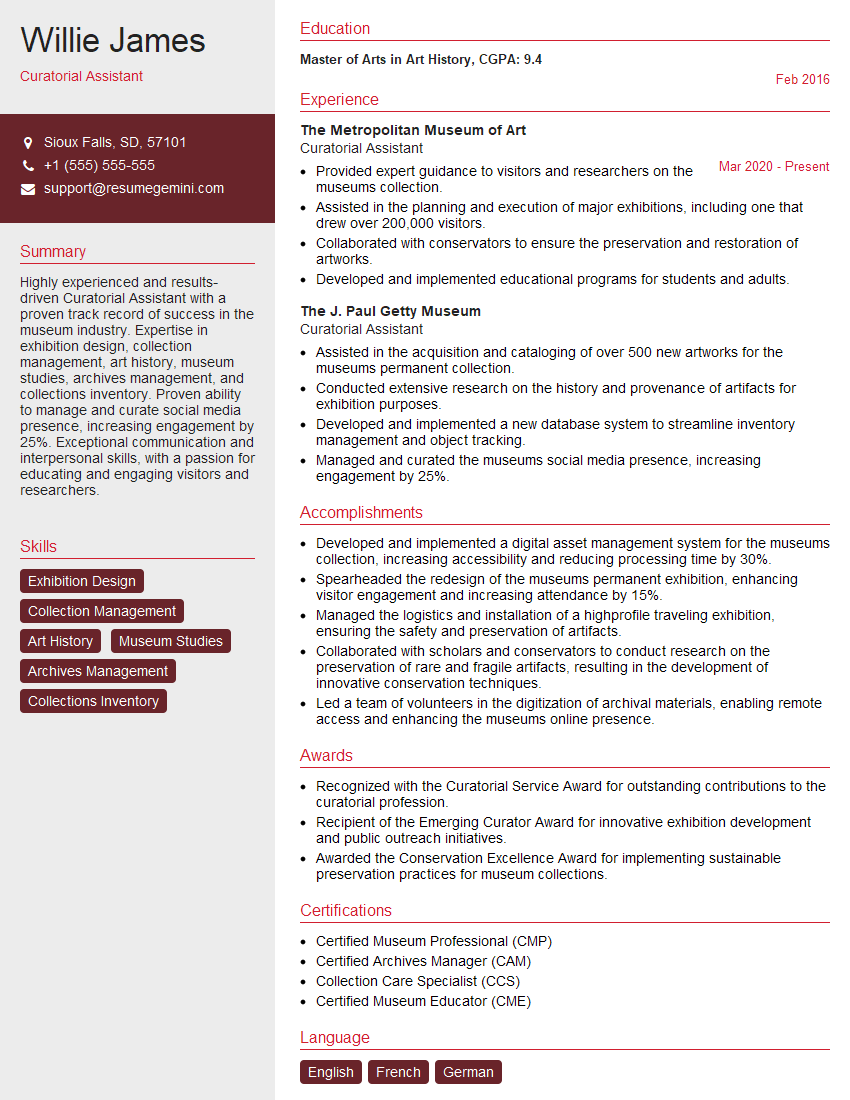
Curatorial Assistant Resume Sample
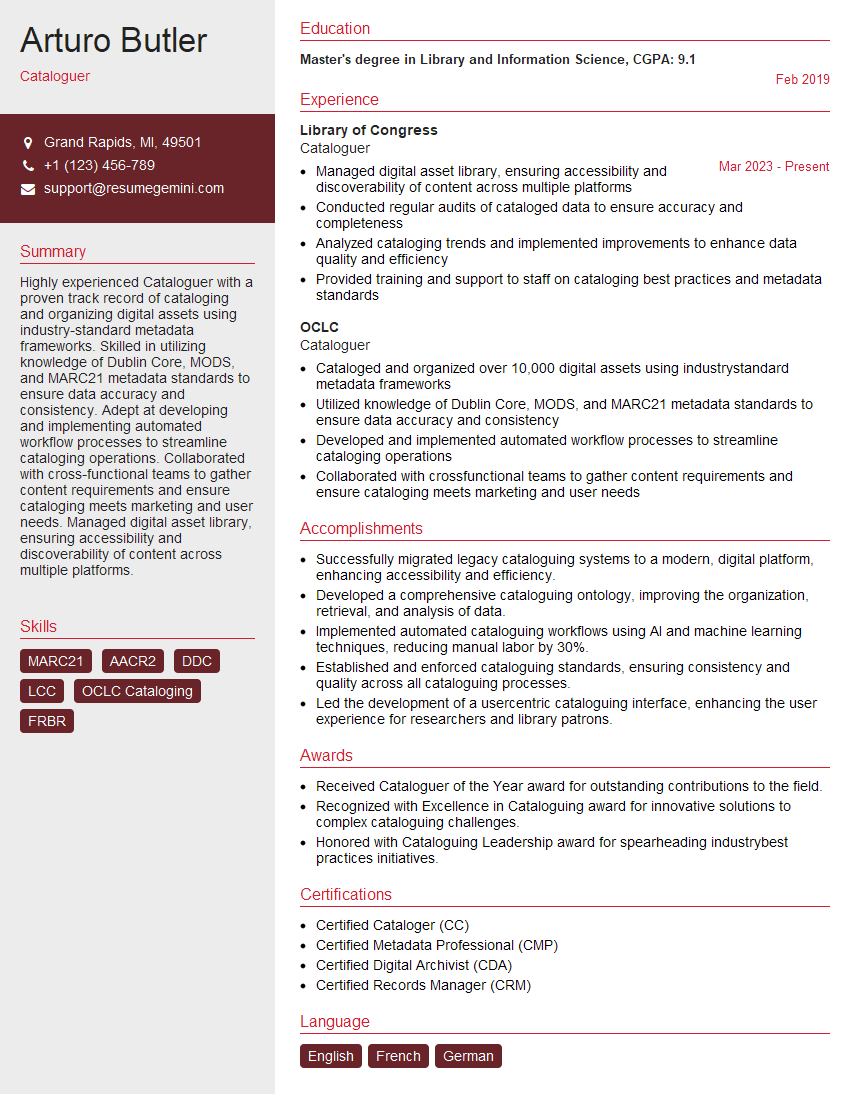
Cataloguer Resume Sample
Explore more articles
Users Rating of Our Blogs
Share Your Experience
We value your feedback! Please rate our content and share your thoughts (optional).
What Readers Say About Our Blog
I Redesigned Spongebob Squarepants and his main characters of my artwork.
https://www.deviantart.com/reimaginesponge/art/Redesigned-Spongebob-characters-1223583608
IT gave me an insight and words to use and be able to think of examples
Hi, I’m Jay, we have a few potential clients that are interested in your services, thought you might be a good fit. I’d love to talk about the details, when do you have time to talk?
Best,
Jay
Founder | CEO