Interviews are opportunities to demonstrate your expertise, and this guide is here to help you shine. Explore the essential Nautical Rules and Regulations interview questions that employers frequently ask, paired with strategies for crafting responses that set you apart from the competition.
Questions Asked in Nautical Rules and Regulations Interview
Q 1. Explain the significance of the International Regulations for Preventing Collisions at Sea (COLREGs).
The International Regulations for Preventing Collisions at Sea (COLREGs) are a set of international maritime rules designed to prevent collisions and promote safe navigation. Think of them as the ‘rules of the road’ for ships. They’re crucial for maintaining order and preventing accidents on the world’s oceans, which are often crowded with vessels of all sizes and types, navigating in diverse conditions. These regulations cover a wide range of topics, from the use of lights and shapes to the conduct of vessels in restricted visibility and the responsibilities of the vessel’s Master.
The significance lies in their universality. COLREGs are adopted by the vast majority of maritime nations, ensuring a standardized approach to safe navigation regardless of a ship’s flag state or the location it’s navigating in. This uniformity minimizes confusion and promotes predictable behavior amongst seafarers. Failure to comply can lead to serious consequences, including collisions, loss of life, environmental damage, and legal repercussions.
Q 2. Describe the different types of navigational warnings and how they are disseminated.
Navigational warnings alert mariners to potential hazards. They can range from temporary obstructions to permanent dangers, weather conditions, or even security threats. There are several types:
- Notices to Mariners (NTMs): These provide information on changes to charts, navigational aids, or other relevant information impacting safe navigation. They’re typically issued by national hydrographic offices.
- Urgent Notices to Mariners (UNTMs): These are issued for immediate dangers requiring urgent action, such as a sudden appearance of a wreck or a significant navigational hazard. They often require immediate action from mariners.
- Warnings (e.g., storm warnings, gale warnings): These communicate impending severe weather conditions that can seriously impact ship safety. These are often relayed via meteorological services and broadcast through radio broadcasts.
- Safety broadcasts: These may alert mariners to piracy threats, search and rescue operations, or other situations posing a risk to vessels in the vicinity.
Dissemination is crucial. These warnings are distributed through various channels: radio broadcasts (using both long-range and short-range frequencies), NAVTEX (Navigational Telex) services, satellite broadcasts, and increasingly, through electronic navigational charts (ENCs) and dedicated maritime websites and apps. Mariners have a responsibility to monitor these channels regularly to stay informed about potential hazards.
Q 3. What are the responsibilities of a Master regarding the safety of the vessel and crew?
The Master of a vessel holds ultimate responsibility for the safety of the vessel and its crew. This is a weighty responsibility, encompassing all aspects of the voyage. Their duties include:
- Safe Navigation: Ensuring the vessel is navigated safely and in accordance with COLREGs and all other applicable regulations.
- Crew Safety: Maintaining a safe working environment for all crew members, providing appropriate training and ensuring compliance with safety standards.
- Maintenance: Overseeing the maintenance of the vessel, its equipment, and its life-saving appliances.
- Cargo Safety: Ensuring the safe handling and stowage of cargo to prevent accidents and damage.
- Compliance: Ensuring adherence to all relevant maritime laws, regulations, and company procedures.
- Emergency Preparedness: Developing and implementing emergency procedures and ensuring that the crew is adequately trained to respond to emergencies.
Imagine a captain navigating a storm. Their decisions regarding speed, route, and emergency procedures directly impact the safety of everyone on board. The Master’s responsibility is paramount in minimizing risk and ensuring a successful voyage. Failure to fulfil these responsibilities can lead to severe penalties and legal action.
Q 4. Explain the concept of ‘safe speed’ according to COLREGs.
‘Safe speed’ under COLREGs is defined as a speed appropriate for the prevailing circumstances and conditions so that the vessel can take proper and effective action to avoid a collision. It’s not just about minimizing speed; it’s about maintaining a speed that allows the vessel to react safely to foreseeable circumstances.
Factors influencing safe speed include:
- Visibility: Reduced visibility (fog, night) necessitates a lower safe speed to increase reaction time.
- Traffic density: Heavily trafficked waters demand slower speeds to avoid collisions.
- Sea state: Rough seas can affect maneuverability, requiring reduced speed.
- Vessel characteristics: The ship’s handling characteristics, such as turning radius and stopping distance, should be considered.
- Navigational hazards: The presence of shallow waters, reefs, or other navigational hazards requires caution and reduced speed.
For example, a large container ship navigating a busy port in thick fog would need to significantly reduce its speed compared to a smaller vessel in open waters with excellent visibility. The key is the ability to react effectively to anticipated risks, and safe speed is the critical factor that enables that reaction.
Q 5. Describe the procedures for reporting a collision or marine incident.
Reporting a collision or marine incident is a crucial aspect of maritime safety and investigation. Procedures vary slightly depending on the flag state and the severity of the incident, but generally involve the following steps:
- Immediate action: First, prioritize safety of life and property, rendering assistance where necessary and taking steps to minimize further damage or risk.
- Notification: Contact the relevant authorities immediately. This usually includes the coast guard or other designated maritime authority in the area, reporting the location, time, vessels involved, and nature of the incident.
- Investigation: A formal investigation will likely be conducted, possibly involving an inquiry or hearing. Cooperation with investigators is mandatory.
- Documentation: Maintaining detailed records of the incident, including logbook entries, witness statements, photographs, and any other relevant evidence.
- Reporting forms: Many jurisdictions require the completion of specific incident reporting forms.
Failure to report a collision or marine incident can lead to severe penalties, including fines and even criminal prosecution. Prompt and accurate reporting is essential for both safety and legal reasons.
Q 6. What are the requirements for maintaining a ship’s logbook?
Maintaining a ship’s logbook is a legal requirement under international and national maritime regulations. It acts as a crucial record of the vessel’s voyage and activities. The logbook must contain accurate and detailed entries covering various aspects of the voyage, including:
- Navigation details: Course, speed, position fixes, and any significant navigational events.
- Weather conditions: Wind speed and direction, sea state, visibility, and atmospheric pressure.
- Maintenance activities: Records of all maintenance and repair work carried out on the vessel and its equipment.
- Cargo operations: Details of cargo loading, unloading, and any incidents related to cargo handling.
- Personnel details: Crew changes, illnesses, or any other relevant personnel matters.
- Engine room entries: Detailed information on engine performance, fuel consumption, and any engine room incidents or maintenance.
- Radio communications: Records of important radio communications, especially those related to safety or navigation.
Logbook entries must be made promptly and accurately, typically by designated personnel. The logbook serves as a critical piece of evidence in case of incidents, investigations, or disputes. Falsifying or neglecting to maintain a proper logbook is a serious offense with significant penalties.
Q 7. Explain the different types of lights used on vessels and their meanings.
Vessels use a system of lights and shapes to communicate their presence, type, and status to other vessels at night and in reduced visibility. These are crucial for collision avoidance. Key examples include:
- Masthead light (white): Indicates the vessel’s presence and shows its height above the waterline. Usually found at the highest point of the ship’s structure.
- Sidelights (port red, starboard green): Show the vessel’s direction. The red light is visible to the port side, and the green to the starboard side.
- Stern light (white): Indicates the vessel’s stern (rear) and assists in identifying the vessel from astern.
- All-round light (white or other colours): These are used by vessels with limited maneuverability (e.g. tugs, dredgers) to highlight their restricted movement.
- Shapes: Some vessels use shapes (balls, cones, diamonds) in addition to or instead of lights to further indicate their type and status (e.g., a vessel engaged in dredging operations).
- Fog signals: Vessels use various sound signals (whistles, horns, gongs) in foggy conditions to indicate their position and course.
Understanding these lights and shapes is vital for safe navigation. Incorrect or missing lights can lead to collisions. For example, seeing only a red light indicates that a vessel is approaching from port. A proper understanding of the lighting system is essential for any mariner.
Q 8. How do you interpret nautical charts and publications?
Nautical charts and publications are the mariner’s bible, providing essential information for safe navigation. Interpreting them involves understanding their symbology, scales, and the various data layers they present. Charts depict water depths, navigational hazards (rocks, wrecks, etc.), aids to navigation (buoys, lighthouses), and coastal features. Publications, like sailing directions and tide tables, provide complementary information such as details on port facilities, currents, and predicted tidal heights.
Chart Interpretation: A chart’s scale dictates its level of detail. A large-scale chart shows a smaller area with greater detail, ideal for harbor approaches. A small-scale chart covers a larger area with less detail, suitable for open ocean passages. Understanding chart symbology is crucial; for example, a red buoy with a cone-shaped top usually marks the port side of a channel.
Publication Usage: Sailing directions provide comprehensive descriptions of coastlines, navigational hazards, and pilotage information. Tide tables predict the height and time of high and low water, essential for safe entry and departure from ports. Using these publications in conjunction with the chart allows for a complete understanding of the navigational environment.
Practical Application: Imagine planning a voyage from A to B. You would first consult a small-scale chart to plan the overall route, then progressively use larger-scale charts as you approach your destination. You would also consult sailing directions for local knowledge and tide tables to determine safe times for entering a shallow harbor. Failure to properly interpret these documents can lead to grounding, collision, or other maritime incidents.
Q 9. What is the role of the Global Maritime Distress and Safety System (GMDSS)?
The Global Maritime Distress and Safety System (GMDSS) is a globally standardized system for maritime distress alerting, communication, and search and rescue (SAR) coordination. It replaces older, less reliable systems, providing a more efficient and reliable method for summoning help in an emergency.
Distress Alerting: The core of GMDSS is its ability to transmit distress alerts using various communication technologies, including Inmarsat satellite systems, VHF radio, and MF/HF radio. These alerts reach a wide network of coast stations and other vessels, triggering immediate SAR responses.
Communication: GMDSS facilitates communication between vessels and coast stations, enabling the exchange of safety-related information, meteorological warnings, and navigational alerts. This improves maritime safety by enhancing situational awareness.
Search and Rescue Coordination: GMDSS plays a pivotal role in coordinating SAR operations. The precise location of a vessel in distress is relayed, allowing SAR authorities to efficiently deploy rescue assets.
Example: Imagine a vessel encountering a severe storm at sea. Using its GMDSS equipment, the vessel can transmit a distress alert, including its position and the nature of the emergency. This automatically triggers alerts to nearby ships and coastal authorities, facilitating a rapid and coordinated rescue operation.
Q 10. Describe the procedures for conducting a passage plan.
A passage plan is a crucial pre-voyage document outlining a safe and efficient route from origin to destination. It’s not just a simple route on a chart; it’s a comprehensive risk assessment and mitigation strategy.
Information Gathering: The process starts with gathering relevant information: destination, departure time, weather forecast, navigational charts, sailing directions, tide tables, and any other relevant publication.
Route Selection: A safe and efficient route is selected, considering factors like water depth, currents, traffic density, and navigational hazards.
Timing: The passage plan considers the time required to complete the voyage, factoring in speed, currents, and tidal effects.
Contingency Planning: This involves identifying potential risks and developing alternative plans in case of unforeseen circumstances (e.g., equipment failure, adverse weather). This may include alternate routes or emergency anchorages.
Documentation: The entire plan is meticulously documented, including charts with the planned route marked, anticipated arrival times, and emergency procedures. This should be reviewed and approved by the master of the vessel before departure.
Monitoring and Adjustment: During the voyage, the passage plan is constantly monitored, and adjustments are made as needed based on real-time data (weather, traffic, etc.).
Example: A cargo ship traveling across the Atlantic would meticulously plan its route, considering weather patterns, potential icebergs (in specific seasons), and areas of high shipping traffic. Their plan would account for the ship’s speed, fuel consumption, and potential delays due to rough seas. Regular updates to this plan are made throughout the voyage to address changing weather conditions and other factors.
Q 11. Explain the importance of maintaining proper lookout and bridge watchkeeping.
Maintaining proper lookout and bridge watchkeeping is paramount for safe navigation, acting as the vessel’s primary safety net. It ensures early detection of potential hazards and allows for timely corrective action.
Lookout: A designated lookout, or the officer of the watch (OOW) themselves, constantly scans the horizon and surroundings for potential hazards such as other vessels, floating debris, navigational marks, and changes in weather. The lookout’s responsibility is to immediately report any potential threats to the OOW.
Bridge Watchkeeping: The OOW is responsible for the safe navigation of the vessel during their watch. This includes monitoring navigational equipment (radar, GPS, ECDIS), maintaining proper speed and course, and executing the passage plan. The OOW must remain alert and effectively manage all aspects of the vessel’s operation.
Importance: A vigilant lookout and an attentive OOW can prevent collisions, groundings, and other accidents. Early detection of potential hazards allows for proactive measures to be taken, minimizing risk.
Example: A lookout spotting another vessel on a collision course with insufficient time to respond can immediately alert the OOW, allowing them to take evasive maneuvers, preventing a serious accident. Similarly, noticing a sudden change in weather can prompt the OOW to adjust course or reduce speed, avoiding potential problems. Failure to maintain proper lookout and watchkeeping has been a causal factor in numerous maritime accidents.
Q 12. What is the role of the International Maritime Organization (IMO)?
The International Maritime Organization (IMO) is a specialized agency of the United Nations responsible for improving maritime safety and security, preventing marine pollution, and facilitating international cooperation in shipping. They create and enforce international regulations.
Development of Standards: The IMO develops and adopts international regulations and standards concerning the design, construction, equipment, and operation of ships. They strive for a global level playing field across maritime nations.
Environmental Protection: The IMO works to prevent and reduce marine pollution caused by ships. They regulate the discharge of harmful substances into the sea, developing standards for ballast water management and emissions control.
Safety Standards: The IMO develops safety standards for ships and their operations, including SOLAS (Safety of Life at Sea), which establishes minimum safety standards for ships, and the STCW (Standards of Training, Certification and Watchkeeping) Convention, which establishes standards for seafarers’ training, certification, and watchkeeping.
Facilitation of Trade: The IMO simplifies the international transport of goods by sea, facilitating maritime trade and economic growth through standardized procedures and regulations.
Example: The IMO’s work on reducing sulfur emissions from ships has significantly improved air quality in ports and coastal regions around the world. Similarly, their regulations on ballast water management are helping to prevent the spread of invasive species.
Q 13. Explain the key provisions of the Safety of Life at Sea (SOLAS) convention.
The Safety of Life at Sea (SOLAS) Convention is a vital international maritime treaty that sets minimum safety standards for ships, covering various aspects of ship construction, equipment, operation, and crew training. It’s a cornerstone of international maritime safety.
Hull Integrity: SOLAS mandates structural requirements for ships to ensure their strength and resistance to damage. Regular inspections are also a critical component.
Fire Protection: SOLAS specifies fire detection and suppression systems onboard ships, aiming to minimize the risk of fire and facilitate safe evacuation.
Life-Saving Appliances: The convention mandates the carriage of sufficient lifeboats, life rafts, and other life-saving equipment, ensuring that all crew and passengers can be safely rescued in an emergency.
Radio Communications: SOLAS requires ships to maintain effective radio communication systems for distress alerting, reporting, and navigational safety.
Safety Management: SOLAS incorporates the International Safety Management (ISM) Code, establishing a safety management system for ship operations, requiring companies to establish formal safety management procedures.
Example: A ship’s compliance with SOLAS requirements can be checked by port state control, meaning that if a ship is found lacking in any area during a port state control inspection, they can be detained. This ensures that ships consistently meet minimum safety standards worldwide. The existence of SOLAS is critical for ensuring consistent global maritime safety.
Q 14. Describe your experience with various types of electronic navigation systems (e.g., GPS, radar, ECDIS).
My experience encompasses a wide range of electronic navigation systems, crucial for modern maritime operations. I’m proficient in using and interpreting data from each system, and I understand their limitations and interoperability.
GPS (Global Positioning System): I’m highly proficient in using GPS receivers for position fixing, route planning, and monitoring speed and course. I understand the limitations of GPS, such as potential signal interference and the need for redundancy.
Radar: I have extensive experience in interpreting radar images to identify other vessels, navigational hazards, and weather phenomena. I understand how to adjust radar settings for optimal performance in various conditions.
ECDIS (Electronic Chart Display and Information System): I’m proficient in using ECDIS for route planning, navigation, and monitoring vessel position. I understand the importance of maintaining up-to-date charts and ensuring the system is properly configured and functioning correctly. ECDIS provides significantly enhanced situational awareness when integrated with other navigational aids.
Integration: My experience includes the integration of these systems to enhance situational awareness. For example, using radar data with ECDIS information can provide a comprehensive picture of the vessel’s surroundings.
Example: During a passage in heavy fog, radar would be crucial for detecting other vessels and navigational hazards, while ECDIS would provide an electronic chart of the surrounding area showing my planned route and potential risks.
Q 15. How do you handle situations involving restricted visibility?
Restricted visibility, often caused by fog, heavy rain, or snow, dramatically reduces a vessel’s ability to see other vessels or navigational hazards. The key is to proceed with extreme caution and prioritize safety.
- Reduce speed: This is paramount. Slowing down gives you more time to react to unexpected situations. Think of it like driving in heavy snow – the slower you go, the more control you have.
- Sound signals: Use your fog horn regularly as per the COLREGs (International Regulations for Preventing Collisions at Sea) to warn other vessels of your presence. The frequency and duration are crucial and depend on your vessel type.
- Navigation lights: Ensure all navigation lights are functioning correctly and brightly visible. These are your vessel’s ‘eyes’ in low visibility.
- Maintain a proper lookout: Employ additional lookouts, utilizing all available means – radar, binoculars, and even listening for unusual sounds. A good lookout is vigilant and reports immediately.
- Consider anchoring: If the situation deteriorates, anchoring in a safe location might be necessary to avoid collisions.
- GPS and Chart Plotting: Rely on electronic navigational aids like GPS and ensure your paper charts are up-to-date and you are using them effectively.
For example, imagine you’re navigating a busy shipping lane in dense fog. Reducing speed to near-zero and using your fog horn frequently would be essential to prevent a collision. A continuous vigilant lookout using radar, combined with precise chart plotting will prevent the ship from running aground.
Career Expert Tips:
- Ace those interviews! Prepare effectively by reviewing the Top 50 Most Common Interview Questions on ResumeGemini.
- Navigate your job search with confidence! Explore a wide range of Career Tips on ResumeGemini. Learn about common challenges and recommendations to overcome them.
- Craft the perfect resume! Master the Art of Resume Writing with ResumeGemini’s guide. Showcase your unique qualifications and achievements effectively.
- Don’t miss out on holiday savings! Build your dream resume with ResumeGemini’s ATS optimized templates.
Q 16. What are the procedures for entering and leaving a port?
Entering and leaving a port involves a series of procedures aimed at ensuring safe passage, preventing collisions, and complying with local regulations. These procedures vary depending on the size of the port, local rules, and the type of vessel.
- Prior notification: Contacting port authorities before arrival to receive instructions and necessary clearances is essential.
- Pilot boarding: In many ports, a pilot, a local expert, will board to assist with navigation through potentially challenging waters.
- Traffic separation schemes (TSS): Adhering to designated traffic lanes and separation zones is vital, especially in busy ports.
- VHF communication: Maintaining constant contact with port control via VHF radio allows for coordination and immediate communication regarding any issues.
- Berthing/unberthing: Careful maneuvering and coordination with tugboats and other vessels are crucial during berthing and unberthing operations.
- Local port regulations: Specific rules and regulations regarding speed limits, navigational aids, and anchoring areas must be carefully followed.
For instance, when entering a major port like Rotterdam, prior notification to port control is mandatory. The vessel will typically use a pilot, follow designated channels within the TSS, and communicate regularly with port control via VHF to ensure a safe and efficient arrival at the designated berth.
Q 17. How do you manage emergencies, such as fire or man overboard?
Emergency situations at sea require immediate and decisive action. Effective emergency response depends on training, preparedness, and adherence to established procedures.
- Fire: A well-rehearsed fire-fighting plan, including the location of fire-fighting equipment and crew responsibilities, is crucial. Early detection and containment are vital. Emergency broadcasts must be made.
- Man overboard (MOB): Immediate action is critical. The ‘MOB’ button on the navigation system should be activated to record the location. The ‘man overboard’ procedures must be followed immediately, including throwing a lifebuoy with a light and deploying rescue boats while simultaneously making mayday calls.
- Abandon ship: If a vessel is in imminent danger of sinking, an abandon-ship procedure is followed, which involves launching lifeboats and rafts in an orderly manner. Following an abandon ship, a mayday transmission should be made.
- Mayday: A mayday transmission is the urgent distress signal used to alert nearby vessels and coastal authorities of an emergency. This is done through VHF radio.
For example, if a fire breaks out in the engine room, immediate action according to the ship’s fire plan is paramount. Crew members trained in fire-fighting would tackle the fire while others ensure the ship’s stability and make distress calls. If a person falls overboard, the location is immediately recorded using the MOB button and the recovery procedure starts immediately, with emergency broadcasts made.
Q 18. Explain the different types of cargo securing and related regulations.
Cargo securing is essential to prevent shifting or damage during transit. Regulations aim to ensure safety and prevent accidents.
- Securing methods: Various methods are used depending on the type of cargo – lashing, blocking, bracing, and dunnage are common techniques. Lashing uses straps or chains to secure cargo, blocking uses materials to fill gaps, and bracing adds additional support.
- Stowage plans: A detailed stowage plan outlines how cargo should be secured and loaded. This is crucial for stability and preventing damage.
- Inspection: Regular inspections of cargo securing arrangements during the voyage are mandatory. Any issues must be addressed immediately.
For example, containers on a container ship are secured using twist locks and lashing systems, according to the vessel’s stowage plan and in line with IMO regulations. Failure to properly secure cargo could result in damage to the cargo and, even more importantly, endanger the stability of the vessel and could lead to a serious incident.
Q 19. What is your understanding of load lines and stability?
Load lines and stability are critical aspects of vessel safety, ensuring that a vessel doesn’t overload and remains stable at sea.
- Load lines: These are markings on a vessel’s hull indicating the maximum safe draft (depth to which a vessel is submerged) in different conditions (e.g., fresh water, saltwater, tropical waters). They prevent overloading, which could cause capsizing.
- Stability: This refers to a vessel’s ability to remain upright and resist capsizing. It’s affected by factors such as cargo distribution, freeboard (the distance between the waterline and the deck), and the vessel’s design.
- Intact stability: This refers to the vessel’s ability to remain upright while undamaged. Calculations are done to ensure this remains within acceptable limits.
- Damage stability: This considers a vessel’s stability even after suffering damage, like a flooding compartment. Calculations are performed to assess the vessel’s ability to float under those conditions.
Imagine a cargo ship loading containers unevenly. This could compromise stability, leading to listing (tilting) or even capsizing. The load line markings ensure that the vessel doesn’t load beyond its safe draft in various conditions, even with a perfectly balanced weight distribution. A vessel’s stability is maintained through proper calculations and load management.
Q 20. How do you ensure compliance with MARPOL regulations?
MARPOL (International Convention for the Prevention of Pollution from Ships) is a crucial international convention aiming to minimize pollution from ships. Compliance requires a multi-faceted approach.
- Oil record book: This detailed record tracks all oil transfers and discharges, ensuring accurate monitoring and preventing illegal dumping.
- Garbage management: Specific regulations dictate how garbage is handled and disposed of at sea. Plastics are generally forbidden from disposal at sea.
For instance, a ship’s crew is responsible for maintaining the oil record book accurately. The ship should have an effective garbage disposal plan complying with MARPOL, and it must ensure that the sewage treatment facilities are operating correctly. Failure to comply with MARPOL can lead to hefty fines and port state control detentions.
Q 21. Explain the concept of a vessel’s load line certificate.
A vessel’s load line certificate is an official document issued by a classification society or a designated authority, certifying that a vessel’s load lines have been correctly marked according to international conventions. It’s crucial for safe operation.
- Load line markings: The certificate verifies the accuracy of the load line markings on the vessel’s hull, indicating safe draft limits in various conditions.
- Verification and inspection: Issuance of the certificate follows rigorous inspections and verifications of the vessel’s structure and load line markings.
- Legal requirement: Carrying a valid load line certificate is a legal requirement for most vessels operating internationally.
Without a valid load line certificate, a vessel would be unable to operate legally internationally, and would face potential detentions if found operating without it. The certificate proves to authorities that the vessel’s load lines are marked correctly and that the vessel is operating within safe limits to prevent overloading.
Q 22. Describe your experience with vessel inspections and audits.
Vessel inspections and audits are crucial for ensuring maritime safety and regulatory compliance. My experience encompasses both internal audits, where I’ve reviewed operational procedures, safety management systems, and crew competency, and external audits, collaborating with port state control officers and classification societies. I’ve conducted thorough checks on lifesaving appliances, navigation equipment, stability data, and the overall condition of the vessel’s hull and machinery. For example, during a recent audit on a bulk carrier, I identified a minor deficiency in the emergency generator’s maintenance log, which, although seemingly insignificant, could indicate a larger lapse in preventative maintenance. This highlight the importance of meticulous record-keeping and proactive maintenance.
During inspections, I meticulously follow checklists to ensure complete coverage. I also look beyond the checklists, using my experience to identify potential hazards or areas needing improvement. For instance, I once noticed worn-out mooring lines during a routine inspection, which, if not replaced, could lead to serious damage during berthing. This proactive identification prevented a potential accident. I’m proficient in using relevant International Maritime Organization (IMO) conventions and codes as a basis for my assessments.
Q 23. How do you deal with conflicts or disagreements among crew members?
Conflict resolution among crew members requires a calm, fair, and decisive approach. My strategy focuses on active listening, understanding the root cause of the disagreement, and facilitating a constructive dialogue. I begin by providing a safe and neutral space for all parties to express their concerns without interruption. Then, I work to identify the underlying issues, separating emotions from facts. Often, disagreements stem from misunderstandings, fatigue, or workload imbalances.
For example, I once mediated a conflict between two officers concerning a navigation decision. By carefully reviewing the charts and weather reports, we were able to determine that both officers had valid points based on different interpretations of the situation. Through open discussion, we developed a clear plan for future navigation decisions, minimizing the likelihood of similar conflicts. If the conflict persists, I’m not afraid to involve senior management or, in extreme cases, consider disciplinary measures.
- Active listening and empathy
- Identifying the root cause of the conflict
- Facilitating open communication
- Finding common ground and mutually agreeable solutions
- Involving senior management when necessary
Q 24. Explain your understanding of ISM Code requirements.
The International Safety Management (ISM) Code is a crucial international standard for the safe management and operation of ships and for pollution prevention. It mandates a company’s Safety Management System (SMS), a structured approach to managing safety and environmental risks. My understanding of the ISM Code covers its key elements, including the establishment of a safety management system, the assignment of safety responsibilities, and the development of operational procedures. It also stresses the importance of regular internal audits, management review, and non-conformity reporting and corrective actions.
The SMS must be documented and regularly reviewed, ensuring that it remains relevant and effective. Crucially, the ISM Code emphasizes the importance of continuous improvement through regular safety drills and training, promoting a strong safety culture within the organization. Failure to comply with the ISM Code can lead to significant penalties, including detention of the vessel. I’ve actively participated in developing and implementing SMS for various vessels, ensuring all operations comply with the code’s requirements. I believe a robust SMS is not just a regulatory requirement but an essential component of efficient and safe ship operation.
Q 25. Describe your experience with navigation in different types of weather conditions.
Navigating in various weather conditions requires a comprehensive understanding of meteorology, ship handling, and safety procedures. My experience encompasses navigating through calm seas, heavy storms, fog, and ice. In calm conditions, navigation is relatively straightforward, relying on electronic charts and GPS. However, challenging weather necessitates a more cautious and adaptive approach.
During heavy storms, I prioritize safety by reducing speed, modifying the course to avoid hazardous areas, and ensuring the vessel is properly secured. I use weather forecasting services, radar, and other navigational tools to anticipate changes in weather patterns and make informed decisions. Fog requires utilizing radar and acoustic signaling devices, while ice necessitates extra caution in planning the route and monitoring ice charts closely. For instance, while navigating through a severe storm in the North Atlantic, I employed a combination of weather routing software and real-time observations to successfully navigate the vessel to safety.
Q 26. What are the procedures for using life-saving appliances?
Procedures for using life-saving appliances are strictly regulated and vary based on the type of appliance and the emergency situation. Regular drills and training are critical for crew competency. The procedures for deploying lifeboats, life rafts, and life jackets are clearly outlined in the ship’s safety management system. These drills, often involving emergency scenarios, help crew familiarize themselves with the equipment and procedures. Before launching a lifeboat, for example, it’s essential to check its readiness, ensuring the engine is working, the lifeboat is properly stocked with provisions, and the crew understand their roles.
The procedures for donning life jackets are straightforward but crucial, emphasizing proper fitting and securing. Life rafts are deployed in a similar manner, with a focus on controlled deployment and ensuring everyone aboard the vessel is accounted for. After launching the life-saving appliance, proper communication procedures must be followed to inform relevant authorities and coordinate rescue efforts. Regular inspections, maintenance, and servicing of these appliances are vital to guarantee their operational reliability in an emergency.
Q 27. How do you use information from meteorological forecasts to plan a voyage?
Meteorological forecasts are indispensable for safe and efficient voyage planning. I use various sources, including meteorological services and specialized weather routing software to obtain accurate and up-to-date information. This information helps in anticipating weather patterns and making informed decisions regarding the optimal route, speed, and timing of the voyage.
I typically begin by assessing the forecast for the entire voyage duration, identifying potential hazards such as storms, strong winds, and fog. Using weather routing software, I explore different routes to optimize the voyage while avoiding potential risks. The software analyzes various parameters, including wind, currents, and wave height, to suggest the most efficient and safest route. I then integrate this information with my knowledge of the vessel’s capabilities and limitations. Factors such as vessel type, cargo, and crew experience also influence the route selection. For example, if the forecast indicates a large storm system along the planned route, I’d adjust the course or delay the departure to avoid it, ensuring the safety and well-being of the crew and cargo.
Key Topics to Learn for Nautical Rules and Regulations Interview
- COLREGs (International Regulations for Preventing Collisions at Sea): Understand the fundamental principles, rules for various situations (e.g., crossing, overtaking, restricted visibility), and their practical application in different scenarios.
- Navigation Rules and Procedures: Master the use of nautical charts, electronic charts, GPS, and other navigational aids. Practice applying rules of the road to real-world navigation problems.
- Buoyage Systems: Become proficient in interpreting lateral and cardinal buoy systems, as well as other navigational marks, to ensure safe passage.
- Vessel Traffic Services (VTS): Learn the procedures and protocols for communicating with VTS, understanding their role in maintaining safe and efficient vessel traffic flow.
- Safety Regulations and Procedures: Familiarize yourself with safety regulations concerning fire prevention, emergency procedures, and personal safety equipment. Understand the importance of risk assessment and mitigation.
- Port State Control: Understand the role of Port State Control and the implications of non-compliance with international regulations.
- Maritime Law and Liability: Gain a basic understanding of maritime law’s relevance to navigational safety and the responsibilities of seafarers.
- Practical Application and Problem Solving: Practice applying the rules to various scenarios, including collision avoidance, passage planning, and decision-making under pressure. Consider using case studies and simulations to enhance your understanding.
Next Steps
Mastering Nautical Rules and Regulations is crucial for career advancement in the maritime industry, demonstrating your commitment to safety and professionalism. A strong understanding of these rules opens doors to a wider range of opportunities and higher levels of responsibility. To maximize your job prospects, create an ATS-friendly resume that highlights your skills and experience effectively. ResumeGemini is a trusted resource to help you build a professional and impactful resume, ensuring your application gets noticed. ResumeGemini provides examples of resumes tailored to Nautical Rules and Regulations roles, giving you a head start in crafting your perfect application.
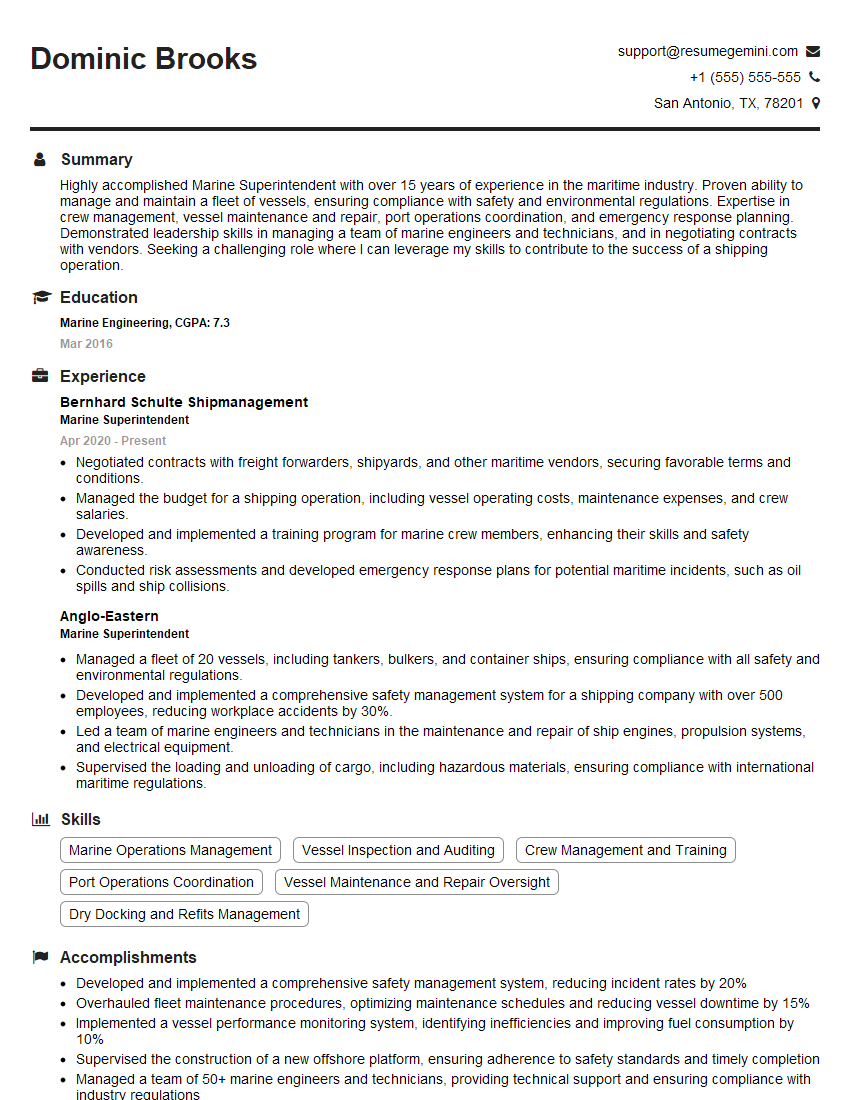
Marine Superintendent Resume Sample
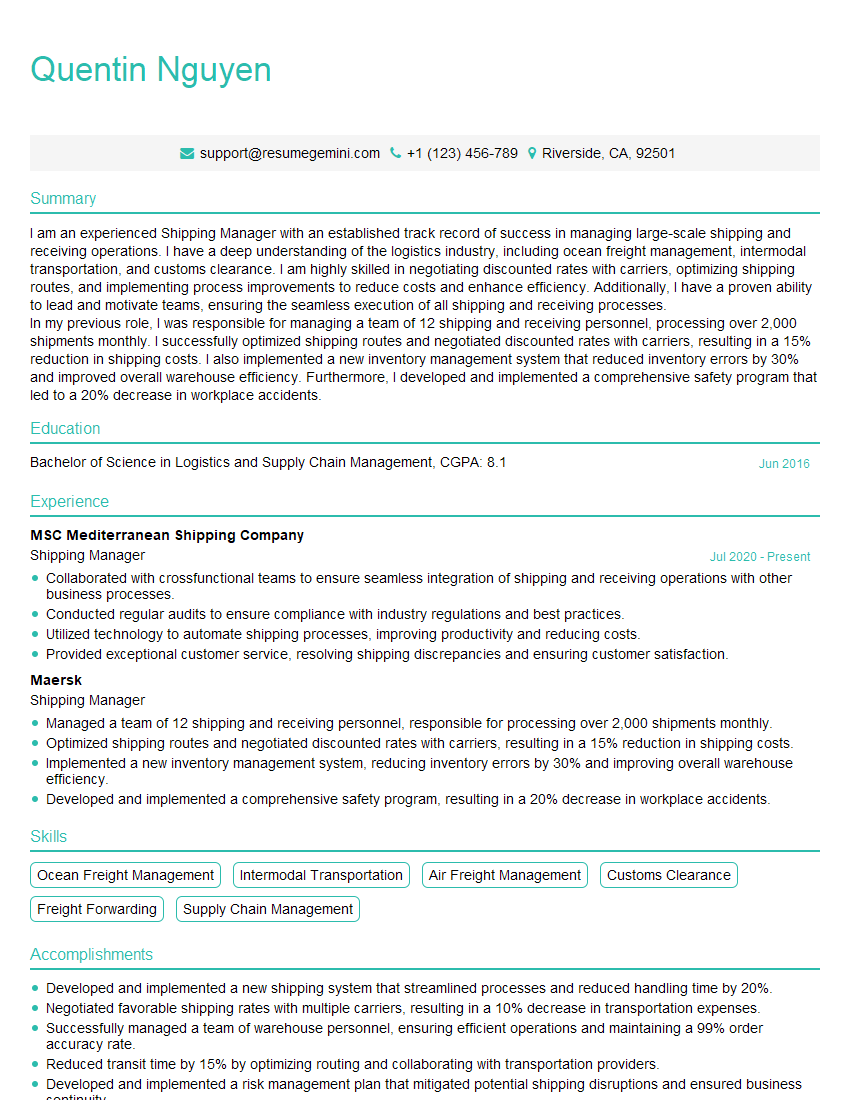
Shipping Manager Resume Sample
Regulatory Affairs Manager Resume Sample
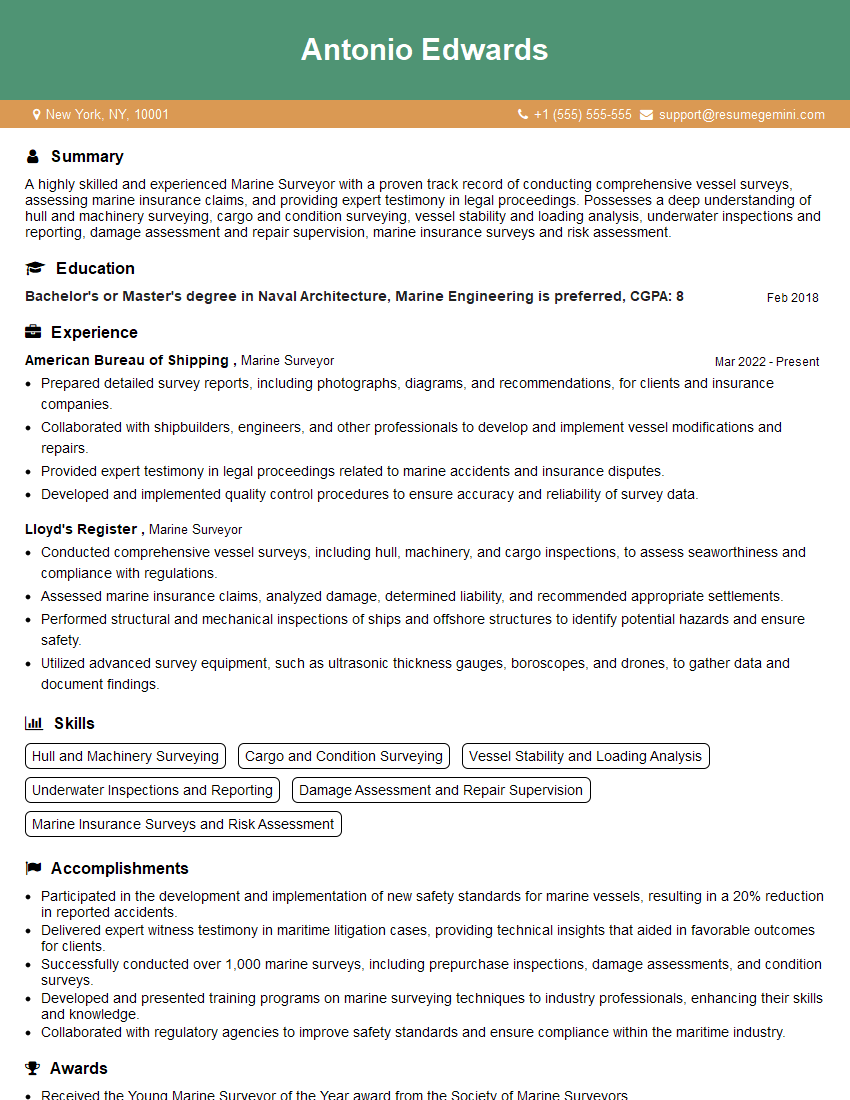
Marine Surveyor Resume Sample
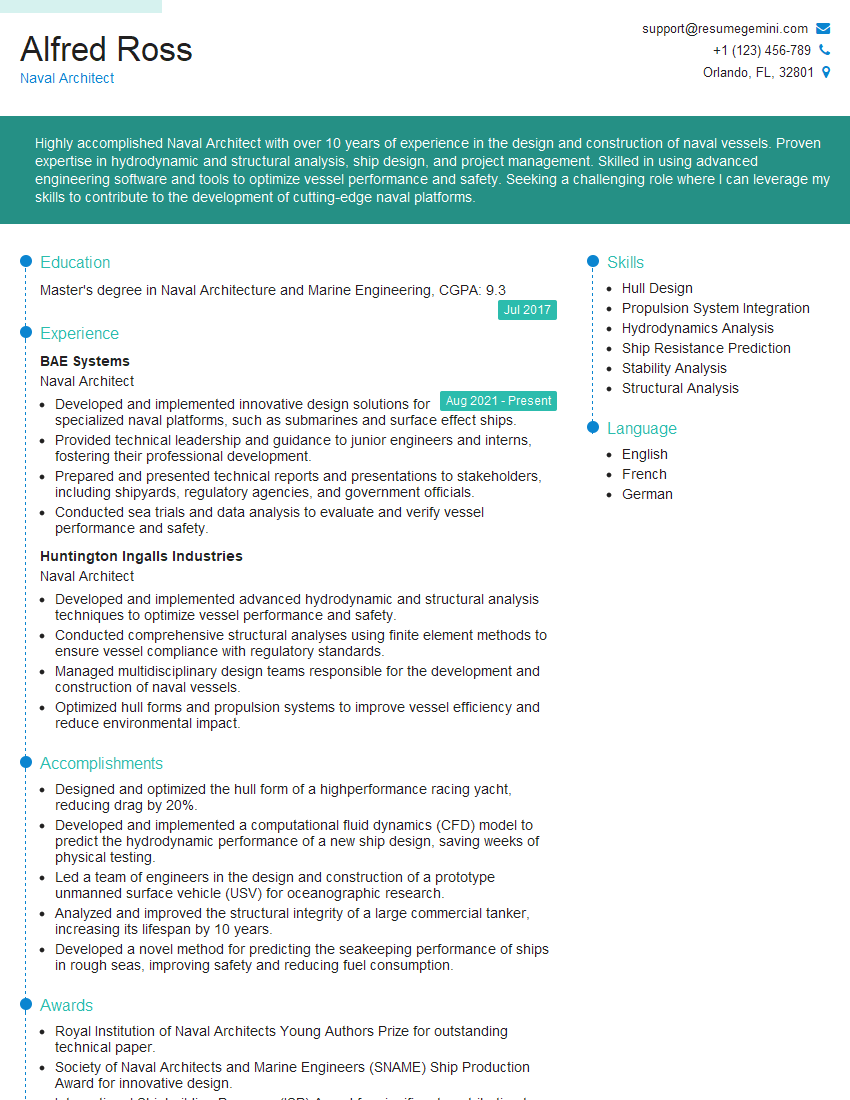
Naval Architect Resume Sample
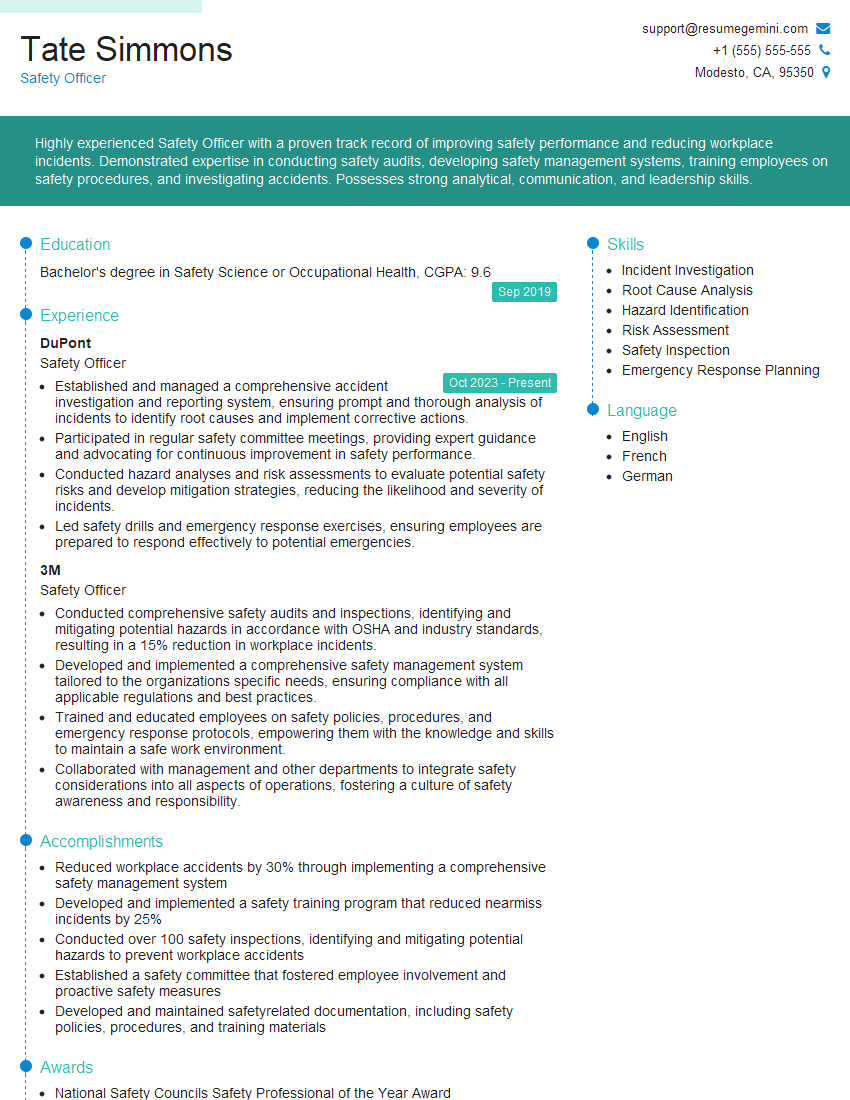
Safety Officer Resume Sample
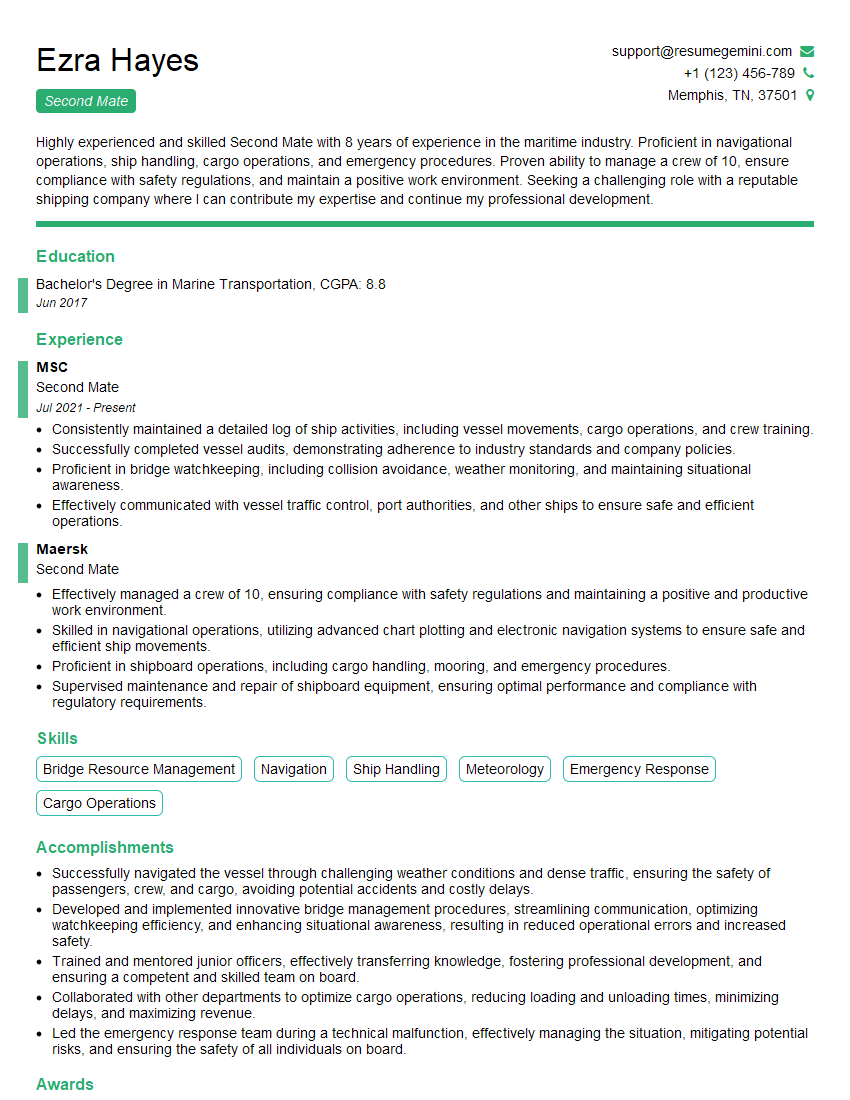
Second Mate Resume Sample
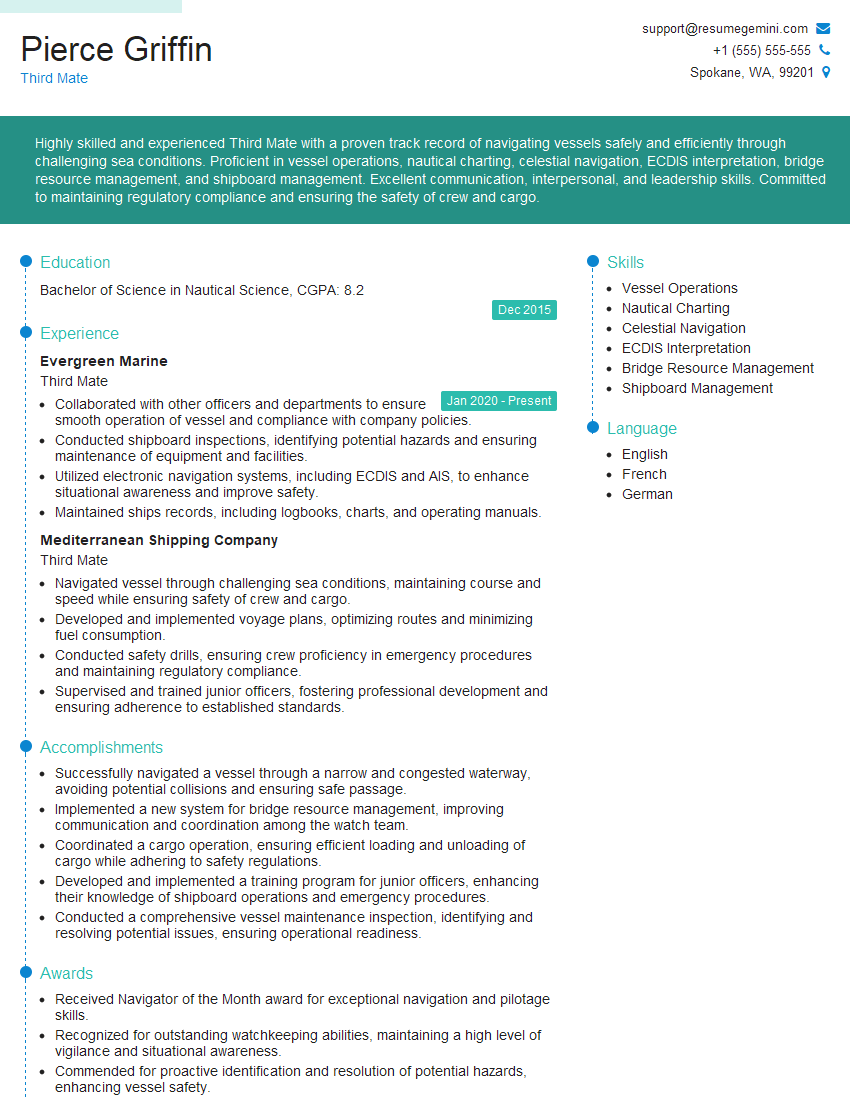
Third Mate Resume Sample
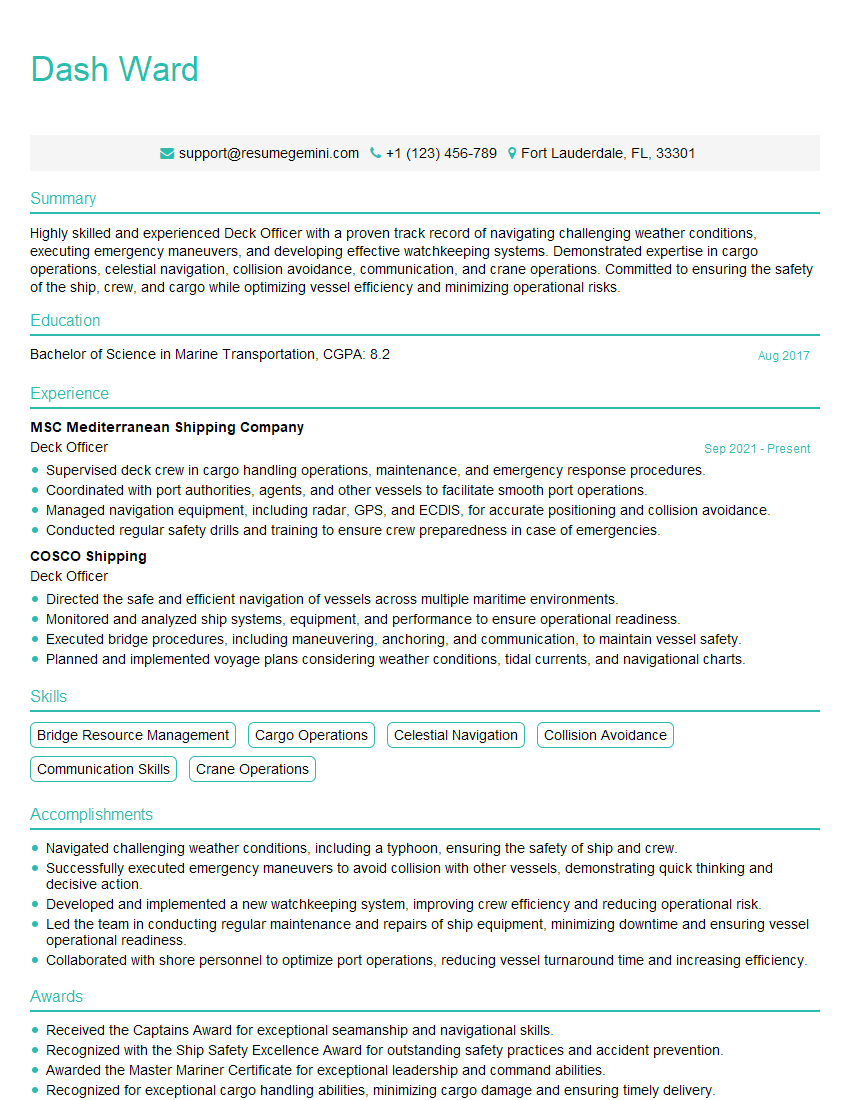
Deck Officer Resume Sample
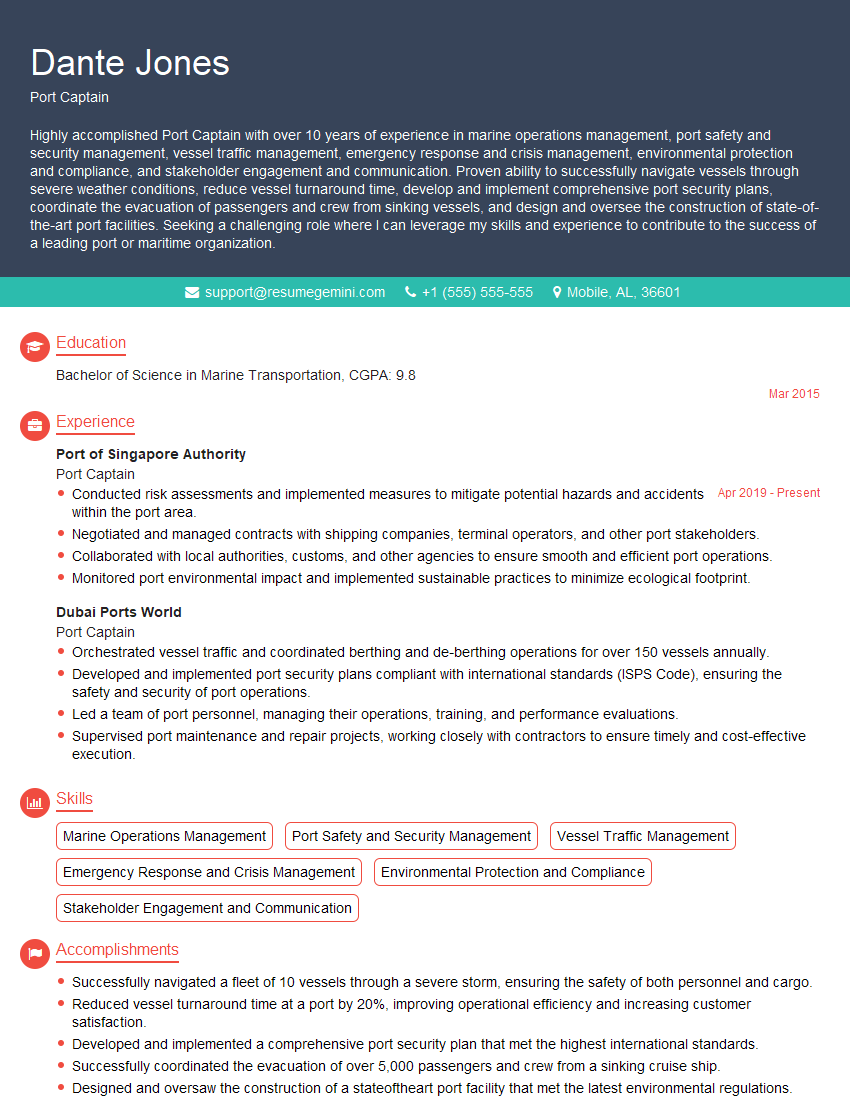
Port Captain Resume Sample
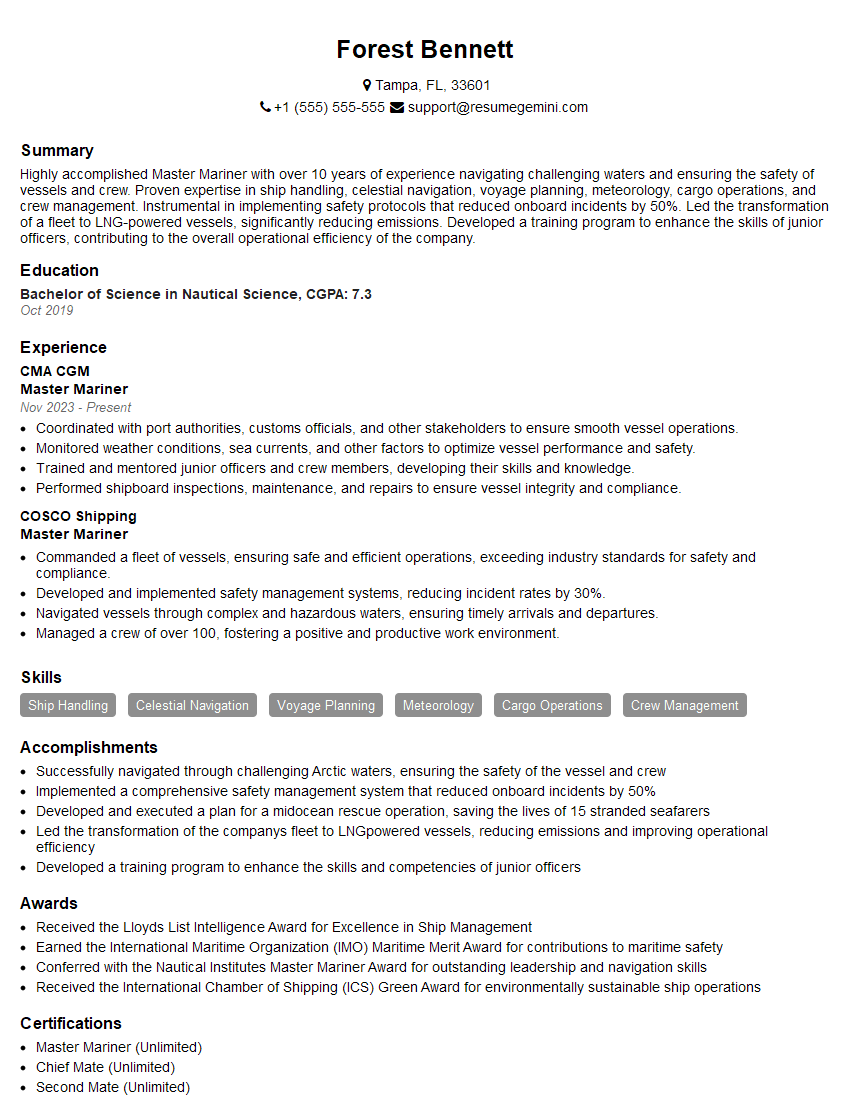
Master Mariner Resume Sample
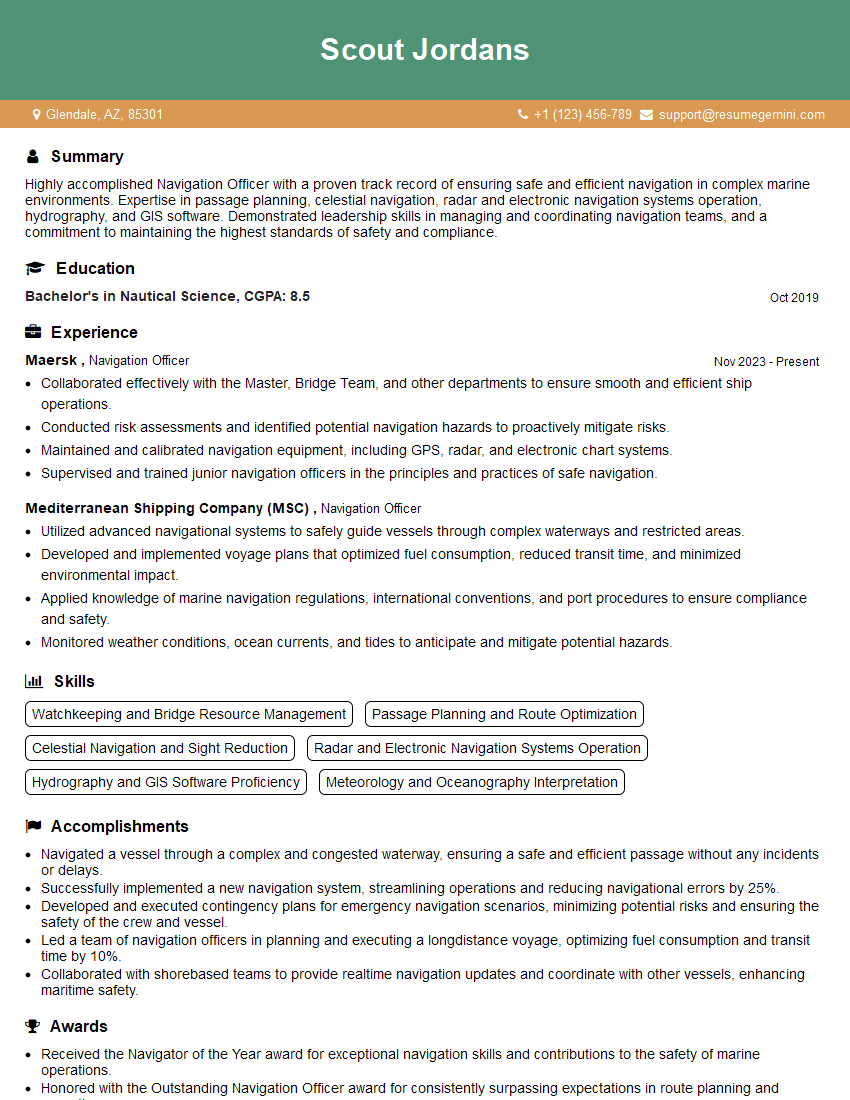
Navigation Officer Resume Sample
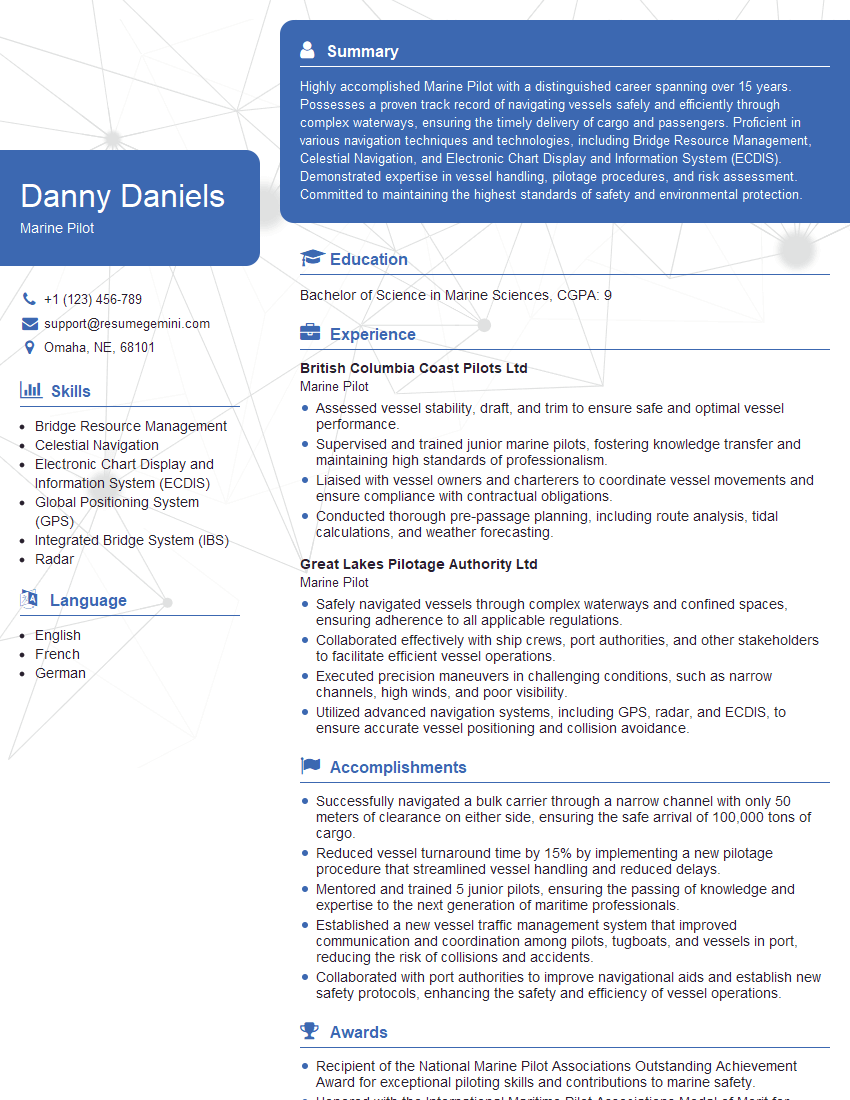
Marine Pilot Resume Sample
Explore more articles
Users Rating of Our Blogs
Share Your Experience
We value your feedback! Please rate our content and share your thoughts (optional).
What Readers Say About Our Blog
Really detailed insights and content, thank you for writing this detailed article.
IT gave me an insight and words to use and be able to think of examples