Are you ready to stand out in your next interview? Understanding and preparing for Sand Slinger Machine Operation interview questions is a game-changer. In this blog, we’ve compiled key questions and expert advice to help you showcase your skills with confidence and precision. Let’s get started on your journey to acing the interview.
Questions Asked in Sand Slinger Machine Operation Interview
Q 1. Describe your experience operating a sand slinger machine.
My experience with sand slinger machines spans over eight years, encompassing various projects ranging from small-scale restoration work on antique furniture to large-scale industrial applications like cleaning and preparing steel structures for painting. I’ve operated several models of sand slingers, from pneumatic to centrifugal, mastering their unique operational characteristics and maintenance requirements. I am proficient in setting up the equipment, adjusting the air pressure and nozzle configuration to achieve the desired surface profile, and maintaining the machine’s optimal performance. For instance, on a recent project involving the restoration of a historic bridge, I successfully used a centrifugal sand slinger to remove years of accumulated rust and grime, preparing the metal surfaces for protective coating within the project’s tight timeframe.
Q 2. What safety precautions do you take while operating a sand slinger machine?
Safety is paramount when operating a sand slinger. Before starting any work, I always ensure I’m wearing the appropriate personal protective equipment (PPE), including a full-face respirator with a properly fitted cartridge designed for silica dust, a protective suit, gloves, and safety footwear. The work area must be properly barricaded to prevent unauthorized entry. Regular checks of the equipment are crucial; I inspect hoses for wear and tear, check the pressure gauge frequently, and ensure all safety interlocks are functioning correctly. I never operate the machine if there is any malfunction or suspicion of a problem. Before beginning, I always perform a thorough inspection of the surrounding area to identify any hazards, including overhead obstructions and the presence of others. After the operation is complete, I always properly shut down the machine, depressurize the system, and thoroughly clean up the area.
Q 3. How do you ensure the proper air pressure and nozzle configuration for different materials?
Air pressure and nozzle configuration are crucial for achieving the desired blasting outcome. The type of abrasive, the material being blasted, and the desired surface finish all influence these settings. For example, cleaning soft materials like wood requires lower pressure and a wider nozzle to avoid damage, while removing stubborn rust from steel may demand higher pressure and a narrower nozzle. I typically start with a lower pressure and gradually increase it until I achieve the desired result, constantly monitoring the surface to avoid over-blasting. The nozzle size selection is linked directly to the pressure; smaller nozzles usually require higher pressure for the same flow rate. Choosing the right combination requires experience and a keen eye for detail, and I always consult manufacturers’ recommendations for specific material combinations. I also fine-tune the air pressure and nozzle configuration based on the observed material removal rate and surface quality.
Q 4. Explain the process of preparing a surface for sandblasting.
Proper surface preparation is essential for a successful sandblasting operation. This involves removing loose paint, rust, scale, or other contaminants from the surface to be blasted. This is often achieved using tools such as wire brushes, scrapers, and chisels. The surface must be cleaned to eliminate any debris that might clog the nozzle. If there are any areas that might be particularly sensitive to the blasting process, these areas might be covered and protected. It’s also critical to ensure the area surrounding the work is well protected and that any fragile objects in the area are shielded. On a recent project involving a concrete structure, I first used a wire brush to remove loose paint before proceeding with the sandblasting process. This ensured effective cleaning and prevented damage to the underlying substrate.
Q 5. How do you identify and address nozzle clogging issues?
Nozzle clogging is a common issue in sandblasting. I address this by first shutting down the machine and depressurizing the system. I then carefully remove the nozzle and inspect it for obstructions. The clog is typically removed using compressed air or a small wire brush. If the clog persists, I might need to replace the nozzle. Regular inspection of the abrasive material for excessive fines (very small particles) can help prevent clogging. If I observe a lot of fines, I consider sieving the abrasive to remove them and improve efficiency. In some cases, moisture in the abrasive can lead to clogging, therefore I ensure the storage of abrasives is in a dry environment.
Q 6. What are the different types of abrasives used in sandblasting, and when would you use each?
Various abrasives are used in sandblasting, each suited for specific applications. Common abrasives include silica sand (although its use is decreasing due to health concerns), glass beads (for delicate surfaces), aluminum oxide (for aggressive cleaning), and garnet (a popular, environmentally friendly alternative to silica sand). Silica sand, while effective, poses significant health risks, so I avoid it whenever possible. Glass beads are ideal for softer materials, as they offer a gentler cleaning action. Aluminum oxide is reserved for extremely tough cleaning applications where aggressive removal of material is necessary. Garnet offers a balance of effectiveness and environmental friendliness, making it a preferred choice for many applications. The choice of abrasive depends on the substrate material, the desired surface finish, and environmental concerns.
Q 7. How do you determine the appropriate blasting pressure for various substrates?
The appropriate blasting pressure depends on several factors, including the type of abrasive being used, the hardness of the substrate, and the desired surface profile. For instance, blasting softer materials like wood requires lower pressure to avoid damage. Conversely, removing heavy rust from steel might require higher pressure for effective cleaning. I determine the appropriate pressure through a combination of experience, manufacturer recommendations, and on-site testing. I start with a lower pressure and gradually increase it until I achieve the desired result, observing the surface for any signs of damage. Using a pressure gauge to monitor the pressure is critical, along with a visual inspection to ensure that the blasting process is not damaging the underlying substrate. Safety is paramount, and I always err on the side of caution when determining blasting pressure.
Q 8. Describe your experience with different types of sand slinger machines (e.g., pressure pot, vacuum blasting).
My experience encompasses a wide range of sand slinging machines, primarily pressure pot and vacuum blasting systems. Pressure pot systems utilize compressed air to propel abrasive media, offering high-velocity blasting ideal for removing heavy coatings or rust. I’ve worked extensively with various pressure pot models, differing in size and air compressor capacity, adapting my technique to each machine’s specific capabilities. For example, I’ve used smaller, portable units for intricate detail work and larger, industrial-sized systems for large-scale projects like cleaning entire ship hulls. Vacuum blasting systems, on the other hand, offer a more contained and environmentally friendly approach by recovering most of the abrasive media. My experience with these includes both open-loop and closed-loop systems, understanding the nuances of media recycling and containment. I’ve found closed-loop systems particularly valuable for minimizing environmental impact and reducing abrasive media costs.
The choice between pressure pot and vacuum blasting depends heavily on the job at hand. For projects requiring high impact and speed, a pressure pot is frequently preferred, while for delicate work, environmentally sensitive areas, or where material recovery is crucial, vacuum blasting is a better choice.
Q 9. How do you maintain and troubleshoot a sand slinger machine?
Maintaining a sand slinger machine is crucial for both safety and operational efficiency. My maintenance routine includes regular inspections, cleaning, and lubrication. This involves checking air pressure gauges, hoses for leaks, and ensuring the abrasive media hopper is properly filled and free from contaminants. I meticulously inspect the blasting nozzle for wear and tear, replacing it as needed to maintain consistent performance and prevent uneven blasting. Lubrication of moving parts, such as the air compressor and any moving components in the hopper mechanism, is essential to prevent premature wear and tear.
Troubleshooting involves a systematic approach. For example, if the blasting pressure is low, I would first check the air compressor’s functionality and air pressure, then inspect the hoses for leaks or blockages, before moving on to potential issues within the machine itself. If the abrasive media flow is inconsistent, I’d examine the hopper for clogs or obstructions. I keep detailed logs of maintenance and repairs, aiding in predictive maintenance and identifying recurring problems.
Q 10. What are the signs of a malfunctioning sand slinger machine?
Several signs indicate a malfunctioning sand slinger machine. Reduced blasting pressure is a common sign, often caused by leaks in the air system, a malfunctioning air compressor, or clogged hoses. Inconsistent abrasive media flow might indicate blockages in the hopper or delivery system. Unusual noises, such as grinding or excessive vibrations, could suggest wear and tear on internal components that needs immediate attention. A significant reduction in abrasive media consumption can indicate that the media isn’t being properly propelled, signifying a problem with the machine’s air pressure or nozzle system. If the machine overheats unexpectedly, it usually implies a problem in the system’s cooling mechanism or airflow. Safety is paramount, and any unusual behavior should trigger immediate investigation and shutdown of the machine.
Q 11. Explain the importance of proper ventilation during sandblasting.
Proper ventilation during sandblasting is absolutely critical for worker safety and environmental protection. Sandblasting generates significant amounts of dust, which can contain silica, a known carcinogen. Inhaling silica dust can cause serious respiratory illnesses like silicosis. A well-ventilated work area, using either local exhaust ventilation or general ventilation systems, removes these harmful particles from the breathing zone. Local exhaust ventilation captures the dust at its source, for example, through a hood placed directly over the blasting operation. General ventilation uses systems like fans to circulate and exhaust air throughout the work space. It’s important to ensure that the ventilation system is appropriately sized for the job and effectively removes the dust from the area. Think of it like this: sandblasting without proper ventilation is like working in a dust storm – extremely hazardous.
Q 12. How do you ensure compliance with safety regulations and environmental protection standards?
Compliance with safety regulations and environmental protection standards is a top priority. I am familiar with OSHA (Occupational Safety and Health Administration) regulations for sandblasting, including the use of proper PPE, ventilation requirements, and confined space entry procedures (if applicable). I also understand regulations concerning the disposal of waste abrasive media and any potentially hazardous byproducts. I ensure that all waste materials are handled and disposed of in accordance with local and national environmental guidelines. Regular training on these regulations is a critical part of maintaining safety and compliance. This often involves keeping records of training and inspections to be able to demonstrate compliance to regulatory authorities. For example, we utilize enclosed blasting booths when possible to further mitigate environmental impact.
Q 13. Describe your experience working with various types of protective equipment (PPE).
My experience with protective equipment (PPE) is extensive. This includes the consistent and correct use of respirators (specifically those designed for silica dust), full-body coveralls to protect skin from abrasive media impact, safety glasses or a face shield to protect eyes from flying particles, and sturdy gloves to prevent abrasions and cuts. I am trained in the proper donning and doffing procedures for all PPE, ensuring a proper seal and preventing contamination. Regular inspections of PPE are crucial to ensure its effectiveness and to immediately identify and replace damaged items. The proper use and maintenance of PPE is not merely a matter of safety rules, but of personal health and well-being; I consider it a critical aspect of every job.
Q 14. How do you handle unexpected equipment failures during operation?
Unexpected equipment failures require a calm and methodical response. My first action is to immediately shut down the machine and secure the area, preventing further damage and ensuring the safety of myself and others nearby. After ensuring safety, I will conduct a thorough assessment of the problem, referencing maintenance logs and technical manuals to identify potential causes. Depending on the nature of the failure, I may attempt minor repairs myself, or I will contact qualified maintenance personnel or the manufacturer for assistance. In the meantime, I’ll carefully document all aspects of the failure, including the time, circumstances, and any steps taken to mitigate the issue. This is vital for future troubleshooting and to prevent similar incidents. Effective communication with supervisors or clients about the situation is key to minimizing disruption and ensuring everyone is informed.
Q 15. How do you manage waste materials generated during sandblasting?
Managing waste from sandblasting is crucial for environmental responsibility and worker safety. The process involves several key steps. First, we use a properly sized and efficient dust collection system, often incorporating baghouses or cyclones, to capture the majority of the spent abrasive and dust generated. These systems are regularly inspected and maintained to ensure optimal performance. Second, the collected material is then properly contained in sealed containers for disposal. The type of disposal method depends on the abrasive used; some are recyclable and can be reused, while others need to be disposed of according to local environmental regulations. For example, if using silica sand, we would carefully follow all regulations concerning silica dust disposal, which often involves special waste haulers. Finally, regular monitoring of air quality around the blasting area is performed to ensure we are meeting all safety and environmental standards. Failure to do so can result in significant fines and health risks.
Career Expert Tips:
- Ace those interviews! Prepare effectively by reviewing the Top 50 Most Common Interview Questions on ResumeGemini.
- Navigate your job search with confidence! Explore a wide range of Career Tips on ResumeGemini. Learn about common challenges and recommendations to overcome them.
- Craft the perfect resume! Master the Art of Resume Writing with ResumeGemini’s guide. Showcase your unique qualifications and achievements effectively.
- Don’t miss out on holiday savings! Build your dream resume with ResumeGemini’s ATS optimized templates.
Q 16. What is your understanding of surface profile requirements and how do you achieve them?
Surface profile requirements are crucial for ensuring the proper adhesion of coatings or the desired surface finish. These requirements are usually specified in terms of surface roughness, often measured in micrometers (µm) or using a profile measurement tool. For example, a project might specify a surface roughness of 50-75 µm for optimal paint adhesion. Achieving the correct surface profile depends on several factors including: the abrasive type (glass beads produce a finer finish than garnet), the blasting pressure, the distance between the nozzle and the surface, and the blasting time. We carefully control these parameters, often using calibrated equipment and surface profile gauges, to ensure the final profile meets the specifications. If the initial pass doesn’t meet requirements, we adjust the parameters and repeat the process. Think of it like baking – achieving the perfect texture requires precise control of ingredients and oven temperature.
Q 17. How do you calculate the amount of abrasive needed for a given job?
Calculating the abrasive needed is a critical step for efficient job management and cost control. It isn’t a simple formula but involves considering several factors. First, we estimate the surface area to be blasted. Next, we determine the desired surface profile and the type of abrasive being used. Different abrasives have different blasting rates; finer abrasives generally require more material. Additionally, the material’s thickness and hardness influence abrasive consumption. We might use historical data from similar projects to refine our estimate. For example, a project requiring a rough profile on a thick steel plate will consume significantly more abrasive than a project requiring a fine profile on a smaller aluminum component. A rule of thumb is to overestimate slightly to account for unforeseen circumstances. We always monitor consumption during the project and adjust as needed.
Q 18. Explain the difference between wet and dry blasting techniques.
Wet and dry blasting techniques differ primarily in the presence of a liquid medium during the blasting process. Dry blasting uses compressed air to propel abrasive media onto the surface, creating dust. Wet blasting, on the other hand, adds water or another liquid to the process. The liquid mixes with the abrasive, suppressing dust and often providing a cleaner finish. Dry blasting is generally faster and more economical for larger areas, while wet blasting is preferred when dust control is paramount, or when working with delicate materials. Wet blasting also reduces the rebound effect of the abrasive, leading to less material consumption. The choice between wet and dry depends on the specific application, environmental concerns, and the required surface finish. Think of it like using a dry sponge versus a wet sponge; both can clean, but one is better suited for certain tasks.
Q 19. What are the common causes of surface imperfections after sandblasting?
Several factors can lead to surface imperfections after sandblasting. Improperly calibrated equipment (incorrect air pressure or nozzle distance) is a common cause. Using inappropriate blast media for the substrate can also result in damage. For example, using too aggressive an abrasive on a delicate material can lead to pitting or gouging. Insufficient cleaning before blasting can trap contaminants, resulting in uneven surface textures. Inconsistent blasting technique, like spending too much time in one spot or moving too slowly, can create inconsistent profiles. Environmental factors such as temperature and humidity can also slightly affect the outcome. Finally, using dirty or contaminated blast media also leads to poor quality.
Q 20. How do you inspect the quality of the sandblasted surface?
Inspecting the quality of a sandblasted surface involves several steps. Visually inspecting the surface for uniformity and the absence of imperfections is the first step. This involves looking for any pitting, gouging, or inconsistent profiles. Then, we use a surface profile gauge or a roughness tester to quantitatively measure the surface roughness to ensure it meets the specified requirements. Sometimes, we use a microscope to inspect finer details. For critical applications, additional non-destructive testing, such as dye penetrant testing, may be utilized to check for surface cracks. Documentation of these inspections, often including photographic evidence, is also crucial for ensuring quality control and traceability.
Q 21. Describe your experience with different types of blast media.
My experience encompasses various blast media, each with its own properties and applications. I’ve worked extensively with silica sand, a common, relatively inexpensive abrasive, but aware of its potential health hazards. I’ve also used garnet, a harder, more durable abrasive, ideal for tougher materials and providing a good surface profile. Glass beads are frequently used for finer finishes, minimizing surface damage. Steel grit is useful for removing heavy coatings and creating a rougher profile. In certain applications, I’ve also used walnut shell media, a softer, more eco-friendly option, particularly suitable for delicate surfaces or where dust control is a major concern. The choice of media is always dictated by the project’s requirements and the material being blasted.
Q 22. How do you adjust the sandblasting technique for different surface types (e.g., metal, concrete)?
Adjusting sandblasting technique for different surfaces hinges on understanding the material’s hardness and desired finish. For example, delicate surfaces like aluminum require a softer approach with lower pressure and a finer abrasive, preventing damage. Conversely, tough materials like steel can tolerate higher pressure and coarser abrasives for faster removal of heavier coatings.
- Metal: Typically requires medium to high pressure, depending on the thickness of the coating and the type of metal. The choice of abrasive is crucial; silica sand is common for heavy-duty cleaning but angular abrasives like garnet are preferable for less aggressive cleaning that leaves a smoother finish. We might use a lower pressure and finer abrasive for aluminum to prevent warping or scratching, compared to a higher pressure and coarser abrasive for thicker steel plates.
- Concrete: Often necessitates a higher pressure and a more durable abrasive like silicon carbide or crushed glass to remove stubborn stains, coatings, or surface imperfections. The goal might be to create a profile for better bonding in subsequent work, so aggressive cleaning might be necessary. However, excessive pressure can damage the concrete surface, creating pitting, so precision and experience are key.
In practice, I always start with a lower pressure and gradually increase it while observing the surface reaction. Regular inspection throughout the process is essential to prevent damage and ensure the desired outcome.
Q 23. What are the potential hazards associated with sandblasting, and how can they be mitigated?
Sandblasting presents several significant hazards, primarily concerning respiratory health, eye injury, and silica exposure. Silica dust, a common component of many abrasives, is a serious health risk leading to silicosis, a debilitating lung disease. Other hazards include hearing loss due to the high noise levels, skin irritation from abrasive particles, and fire hazards if flammable materials are present.
- Mitigation Strategies: We employ a multi-layered approach to minimize risk. This includes using appropriate personal protective equipment (PPE) such as respirators with HEPA filters (High-Efficiency Particulate Air), safety glasses with side shields, hearing protection, and protective clothing. Proper ventilation is critical; we use enclosed blasting booths or carefully manage airflow in open-air blasting to contain dust. Regular air monitoring is conducted to ensure safe silica levels. Pre-blasting surface preparation, such as removing loose debris, also minimizes dust generation. Thorough operator training emphasizes safe work practices and emergency procedures.
Safety is our paramount concern. Any deviation from established safety protocols results in immediate work stoppage for corrective action.
Q 24. How do you handle different types of surface contamination before blasting?
Handling surface contamination before blasting is vital for a successful and safe operation. The method varies depending on the type of contaminant. For example, loose debris is easily removed by brushing or vacuuming, while oil or grease requires degreasing with solvents.
- Loose Debris: We start by using brushes, scrapers, or vacuums to remove any loose paint, rust, dirt, or other materials that could interfere with the blasting process or become airborne during blasting.
- Oil and Grease: Effective degreasing agents are used to remove oil or grease before blasting to ensure proper adhesion of any subsequent coating. The chosen solvent must be compatible with the surface material. We always comply with all relevant regulations regarding solvent handling and disposal.
- Rust: Heavy rust often requires pre-treatment before blasting, such as wire brushing or using chemical rust removers to loosen the rust and improve the efficiency of the blasting operation.
Proper surface preparation is fundamental to achieving consistent results. It also ensures that the abrasive material is used efficiently, and it minimizes potential health risks from excessive dust generation.
Q 25. Describe your experience working from heights or confined spaces.
I have extensive experience working from heights and in confined spaces, always adhering to strict safety guidelines. In situations requiring working at heights, we use appropriate fall protection systems such as harnesses, lanyards, and anchor points, meticulously inspected before each use. Confined-space entry requires a thorough risk assessment, including atmospheric testing for hazardous gases and sufficient ventilation to prevent oxygen depletion. A designated entry supervisor coordinates the entry and exit, and a standby person is always present.
For instance, during a recent project involving sandblasting a large bridge structure, we employed a comprehensive fall protection plan, regularly inspected equipment, and conducted daily safety briefings to ensure the safety of the team working at heights. Similarly, when sandblasting the interior of a large storage tank, we rigorously followed confined-space entry protocols, ensuring continuous air monitoring and a safe working environment.
Q 26. Explain your understanding of relevant safety data sheets (SDS).
Safety Data Sheets (SDS) are critical documents providing comprehensive information about hazardous materials, including abrasives used in sandblasting. My understanding of SDS includes recognizing that they provide details on the material’s composition, hazards, handling precautions, first-aid measures, and disposal methods. Before using any material, I always review the SDS to ensure I understand the associated risks and appropriate safety precautions. This knowledge informs my choices of PPE and work practices to mitigate those risks.
For example, when working with silica sand, the SDS highlights the dangers of silica dust inhalation, leading me to select appropriate respirators and implement strict dust control measures. This proactive approach ensures both personal safety and environmental protection.
Q 27. How do you ensure proper cleanup and disposal of used abrasive materials?
Proper cleanup and disposal of used abrasive materials are crucial for environmental protection and worker safety. We begin by containing the spent abrasive, preventing its dispersion into the environment. This involves using vacuum systems equipped with HEPA filtration to collect dust. Spent abrasives are then disposed of in accordance with all applicable local, state, and federal regulations. Depending on the composition of the abrasive, this may involve recycling, specialized waste disposal services, or landfill disposal. For example, silica sand necessitates careful handling and disposal, often requiring a dedicated hazardous waste facility.
Documentation of disposal methods and quantities is meticulously maintained for regulatory compliance and environmental responsibility.
Q 28. Describe a time you had to troubleshoot a complex problem with a sand slinger machine.
During a project involving a large-scale sandblasting operation, the sand slinger machine experienced a sudden loss of air pressure. Initial checks revealed no obvious leaks in the air lines. After systematically inspecting each component, we discovered a blockage in the air filter, restricting airflow and resulting in the pressure drop. Simply replacing the clogged filter restored normal operation. This experience highlighted the importance of regular maintenance and the necessity of thoroughly investigating potential causes before making assumptions.
The incident also reinforced the need for a systematic troubleshooting approach; we followed a stepwise process, starting with the most likely causes and progressively checking more complex components. This systematic approach ensured that the problem was identified and resolved efficiently and safely.
Key Topics to Learn for Sand Slinger Machine Operation Interview
- Machine Components and Functions: Understand the various parts of a sand slinger machine, their individual functions, and how they interact as a system. This includes the hopper, conveyor belts, metering system, air compressor, and nozzle assembly.
- Material Handling and Preparation: Learn about different types of sand and aggregates used, their properties, and how to properly prepare and load them into the machine for optimal performance. This includes understanding potential issues with material consistency and flow.
- Operational Procedures and Safety Protocols: Master the safe and efficient operation of the sand slinger machine. This includes start-up procedures, shutdown procedures, routine maintenance checks, and emergency response protocols. Safety is paramount.
- Calibration and Adjustment: Understand how to calibrate the machine for different materials and application requirements, adjusting settings for optimal throw distance, material consistency, and coverage. This often involves understanding pressure and flow rate adjustments.
- Troubleshooting and Maintenance: Develop your problem-solving skills related to common malfunctions and maintenance issues. Be prepared to discuss preventative maintenance schedules and quick fixes for operational disruptions.
- Quality Control and Inspection: Understand how to ensure the quality of the sand slinging process, including techniques for inspecting the finished product for consistency and adherence to specifications.
- Environmental Considerations: Familiarize yourself with environmental regulations and best practices related to sand slinging operations, including dust control and waste management.
Next Steps
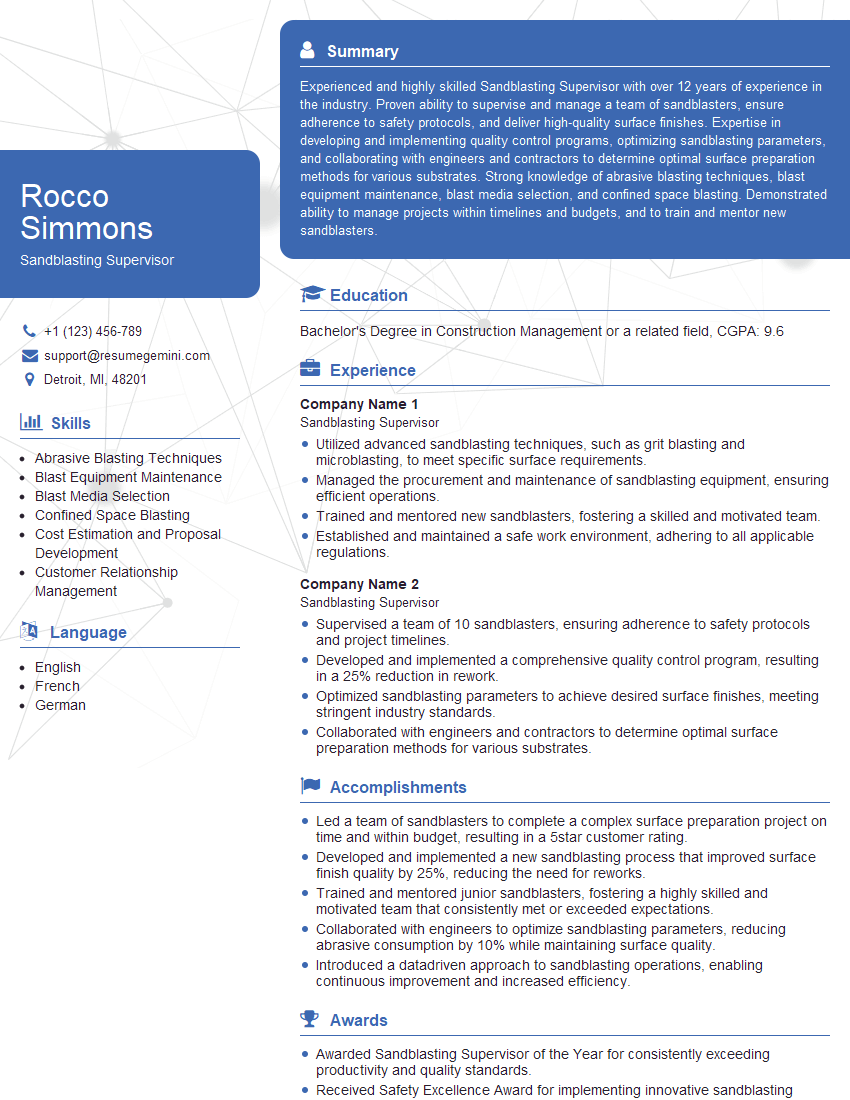
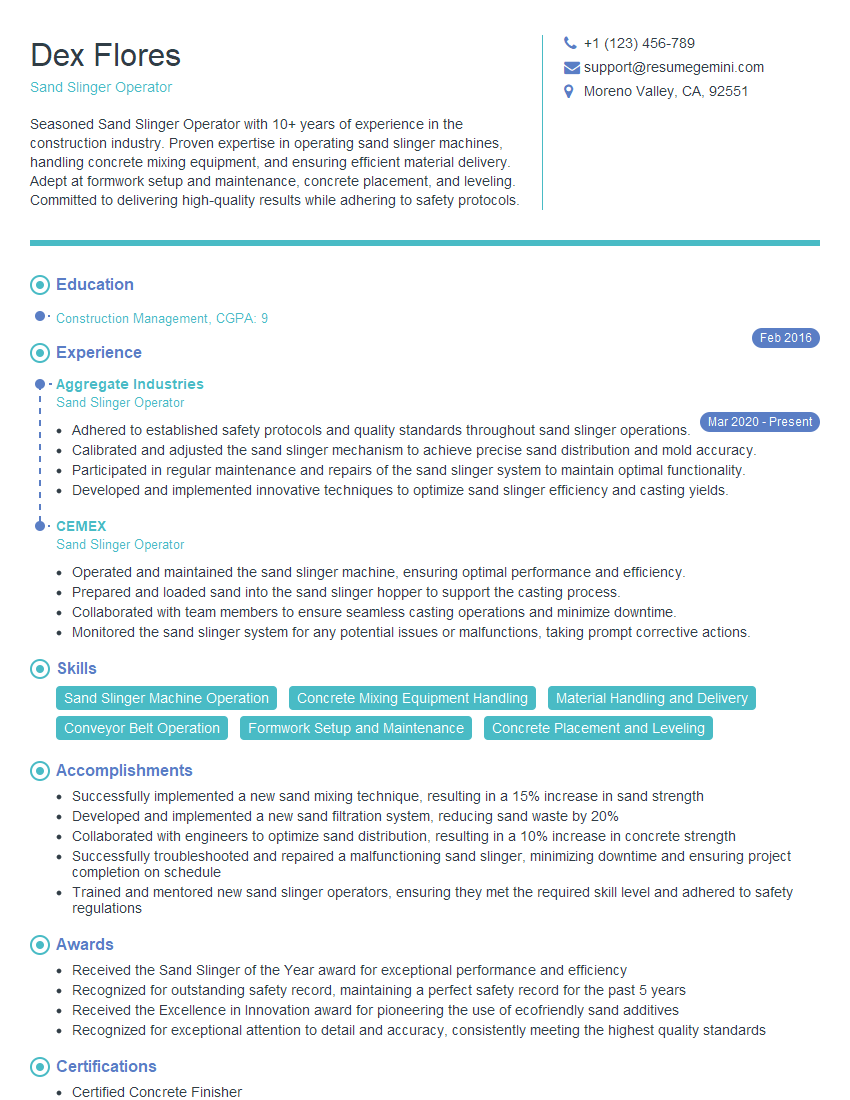
Mastering Sand Slinger Machine Operation opens doors to rewarding careers with excellent growth potential in construction, infrastructure, and industrial settings. To make the most of your job search, creating a strong, ATS-friendly resume is crucial. ResumeGemini can help you build a professional and impactful resume that highlights your skills and experience effectively. They offer examples of resumes tailored to Sand Slinger Machine Operation to give you a head start. Invest time in building a compelling resume – it’s your first impression on potential employers.

Explore more articles
Users Rating of Our Blogs
Share Your Experience
We value your feedback! Please rate our content and share your thoughts (optional).
What Readers Say About Our Blog
Really detailed insights and content, thank you for writing this detailed article.
IT gave me an insight and words to use and be able to think of examples