The right preparation can turn an interview into an opportunity to showcase your expertise. This guide to Animal Welfare Advocacy and Education interview questions is your ultimate resource, providing key insights and tips to help you ace your responses and stand out as a top candidate.
Questions Asked in Animal Welfare Advocacy and Education Interview
Q 1. Describe your experience in developing and implementing animal welfare education programs.
Developing and implementing effective animal welfare education programs requires a multifaceted approach. It begins with a thorough needs assessment to understand the target audience’s existing knowledge, misconceptions, and learning styles. For example, a program for children will differ significantly from one designed for veterinarians or policymakers.
My experience includes designing curricula covering various topics, from responsible pet ownership to the ethical implications of factory farming. I’ve incorporated interactive elements like workshops, online modules, and community outreach events to maximize engagement. One successful program I developed focused on teaching school children about responsible dog ownership, incorporating hands-on activities like learning basic dog handling skills and understanding canine body language. We saw a significant increase in responsible dog ownership attitudes among participating families post-program. Evaluation is crucial; we used pre- and post-program surveys and tracked program participation rates to measure impact and refine future iterations.
- Curriculum Development: Creating age-appropriate, engaging materials.
- Instructional Design: Choosing the best methods for teaching specific concepts.
- Community Engagement: Partnering with local organizations to maximize reach.
- Program Evaluation: Assessing effectiveness and making improvements.
Q 2. How would you address a conflict between animal welfare needs and economic realities?
Balancing animal welfare needs with economic realities is a constant challenge in animal welfare advocacy. It often necessitates finding creative solutions that benefit both animals and people. This requires a nuanced approach that goes beyond simply stating that animal welfare should always come first, as such a stance can be unrealistic and unproductive.
For example, consider the poultry industry. Demanding an immediate transition to free-range farming could cripple many businesses, leading to job losses and potentially higher food prices. Instead, a more effective strategy involves advocating for gradual improvements in farming practices, such as phased reductions in stocking density or implementing welfare audits. This allows businesses to adapt and remain economically viable while gradually enhancing animal welfare standards. Collaboration with industry stakeholders is key; engaging in open dialogue and developing mutually beneficial solutions can create more lasting change than confrontational approaches. This might involve offering financial incentives for improved welfare standards or supporting the development of more humane technologies. Ultimately, education and consumer demand for ethically sourced products play a significant role in driving this transition.
Q 3. Explain your understanding of different animal welfare assessment methods.
Animal welfare assessment methods aim to measure and evaluate the welfare status of animals objectively. Different methods exist, each with its strengths and limitations. They can be broadly categorized into:
- Resource-based assessments: These evaluate the environment and resources provided to animals, such as space, food, water, and shelter. For example, measuring the amount of space per pig in a farrowing crate. This method is relatively easy to implement but doesn’t directly assess the animal’s experience.
- Outcome-based assessments: These focus on the animal’s physiological and behavioral responses. Examples include measuring cortisol levels (a stress hormone) or observing indicators of poor welfare such as self-mutilation or repetitive behaviors. This approach provides a more direct measure of welfare but can be more complex and costly.
- Qualitative assessments: These incorporate expert opinion and observation to assess welfare. This can include interviews with animal care staff, detailed observations of animal behavior and interactions, and considering the context and management practices surrounding the animals.
Choosing the appropriate assessment method depends on the species, the context, and the specific welfare concerns. Often, a combination of methods is used for a more comprehensive evaluation. For instance, assessing the welfare of dairy cows might involve resource-based measures (housing, access to pasture), outcome-based measures (milk production, lameness scores), and qualitative assessments (behavioral observations, farmer interviews).
Q 4. What are the key ethical considerations in animal research?
Ethical considerations in animal research are paramount. The core principle is the 3Rs: Replacement, Reduction, and Refinement.
- Replacement: Whenever possible, researchers should replace the use of animals with non-animal methods, such as computer modeling or in vitro studies.
- Reduction: Researchers should use the minimum number of animals necessary to obtain statistically valid results. Careful experimental design and statistical analysis are crucial here.
- Refinement: Researchers should minimize pain, suffering, distress, and lasting harm to animals. This involves using appropriate anesthetic, analgesic, and other humane endpoints, as well as ensuring proper housing and care.
Beyond the 3Rs, ethical oversight is critical. This involves Institutional Animal Care and Use Committees (IACUCs) that review and approve research protocols, ensuring that the research is scientifically justified, that the welfare of animals is prioritized, and that the potential benefits outweigh the potential harms. Transparency and public accountability are also essential aspects of ethical animal research.
Q 5. Describe your experience with animal advocacy campaigns.
My experience with animal advocacy campaigns spans various approaches, from grassroots activism to large-scale media campaigns. One successful campaign involved advocating for stricter regulations on puppy mills in my region. This involved working with legislators, organizing public demonstrations, and engaging in targeted media outreach to highlight the cruelty inflicted on breeding dogs. We leveraged social media to amplify our message, creating engaging content to raise public awareness and encourage people to contact their elected officials. We also worked closely with local animal shelters and rescue organizations to share resources and support each other’s efforts. The success of the campaign was ultimately measured by the number of individuals who contacted their representatives and the legislative changes that followed, showing a significant improvement in regulations.
Another campaign focused on raising awareness about the negative impacts of wildlife trafficking, utilizing educational materials and working with local communities to promote sustainable practices.
Q 6. How do you identify and address animal cruelty or neglect?
Identifying and addressing animal cruelty or neglect requires a multi-pronged approach. The first step often involves recognizing the signs – these can vary depending on the species and the type of abuse. For example, neglect might manifest as malnutrition, lack of veterinary care, or inadequate shelter, while abuse could involve physical injuries, fear-based behaviors, or lack of social interaction.
If you suspect animal cruelty, reporting is crucial. This generally involves contacting local animal control authorities, humane societies, or the relevant law enforcement agencies. Detailed documentation is very important; photographs, videos, and witness accounts can strengthen a case. Direct intervention should only be attempted if it is safe to do so and only by trained professionals.
Addressing animal cruelty often involves working within the legal system to ensure that perpetrators are held accountable. This includes providing evidence to support investigations and testifying in court, if necessary. Additionally, providing rehabilitation and care for the affected animals is a critical part of the response.
Q 7. What are your strategies for communicating effectively about animal welfare issues to diverse audiences?
Communicating about animal welfare issues effectively to diverse audiences requires tailoring your message to the specific audience and understanding their values and concerns.
For example, when communicating with farmers, the emphasis might be on demonstrating how improved animal welfare can lead to economic benefits, such as increased productivity or improved product quality. When communicating with children, a focus on the animals’ feelings and creating empathy can be more effective. When speaking to policymakers, the focus might be on evidence-based arguments and highlighting the economic and social benefits of implementing stronger animal welfare regulations.
Using diverse communication channels is important—social media, websites, public speaking engagements, and collaborative partnerships with other organizations. Utilizing visuals such as photographs and videos can strongly amplify the message and engage diverse groups effectively. Finally, actively listening to and acknowledging concerns from different perspectives is critical to building trust and fostering a productive dialogue.
Q 8. How would you develop a successful fundraising campaign for an animal welfare organization?
A successful fundraising campaign for an animal welfare organization hinges on a compelling narrative, a well-defined target audience, and a diversified fundraising strategy. It’s not just about asking for money; it’s about building relationships and demonstrating the impact of donations.
- Storytelling: Develop a compelling narrative that highlights the organization’s mission, its successes, and the urgent needs of the animals. Use powerful imagery and real-life stories of animals rescued or helped by the organization. For example, showcasing a rescued dog’s transformation from neglect to a loving home is far more impactful than simply stating statistics.
- Target Audience Segmentation: Identify your key donor segments (e.g., young professionals, senior citizens, animal lovers with specific interests). Tailor your messaging and fundraising appeals to resonate with each group. A young professional might respond to a social media campaign emphasizing volunteer opportunities, while a senior citizen might prefer a direct mail appeal focusing on legacy giving.
- Diversified Fundraising Strategies: Employ a multi-faceted approach. This might include online crowdfunding campaigns (e.g., GoFundMe, Kickstarter), grant writing, corporate sponsorships, planned giving programs, and in-person fundraising events like galas or adoption days. Each strategy should align with your overall narrative and target audience.
- Transparency and Accountability: Be transparent about how donations are used. Regularly report on the impact of donations, showcasing the positive changes made possible by supporters’ generosity. This builds trust and encourages repeat donations.
For instance, a campaign for a wildlife rehabilitation center might focus on the individual stories of rescued birds, showcasing their journey from injury to release back into the wild, accompanied by stunning photography and compelling video footage. This visual storytelling creates an emotional connection, encouraging donations far more effectively than simply stating budgetary needs.
Q 9. Explain your knowledge of relevant animal welfare legislation.
My knowledge of animal welfare legislation encompasses a broad range of laws at both the national and local levels. These laws aim to prevent animal cruelty, protect endangered species, and regulate animal use in research, agriculture, and entertainment. The specifics vary significantly depending on jurisdiction.
- Animal Cruelty Laws: These laws define and prohibit acts of cruelty and neglect, outlining penalties for offenses such as physical abuse, starvation, and abandonment. Many jurisdictions also have specific laws addressing particular animals, like companion animals or farm animals.
- Endangered Species Acts: These regulations protect threatened and endangered species through habitat protection, breeding programs, and restrictions on trade and hunting. The focus is on conservation and preserving biodiversity.
- Animal Research Regulations: These laws govern the use of animals in scientific research, emphasizing the ethical treatment of animals and minimizing pain and distress. They typically require Institutional Animal Care and Use Committees (IACUCs) to oversee research protocols.
- Agricultural Laws: These laws regulate animal husbandry practices, focusing on standards for housing, feeding, and transportation of livestock. They vary widely based on the type of animal and intended use.
Staying abreast of these constantly evolving laws requires continuous professional development, monitoring of legislative changes, and participation in relevant professional organizations and networks. Understanding these laws is crucial for effective advocacy and ensuring compliance within animal welfare organizations.
Q 10. How do you stay up-to-date on current issues and advancements in animal welfare?
Staying informed in the dynamic field of animal welfare necessitates a multi-pronged approach. It’s a continuous learning process.
- Professional Journals and Publications: I regularly read peer-reviewed journals such as the Journal of Applied Animal Welfare Science and publications from organizations like the RSPCA and the Humane Society of the United States. These provide insights into the latest research, policy developments, and best practices.
- Conferences and Workshops: Attending conferences and workshops allows for networking and learning from experts in the field. This includes opportunities to exchange ideas and gain practical knowledge.
- Online Resources and Databases: Utilizing online resources, databases like PubMed and Google Scholar, keeps me updated on current research and studies concerning animal welfare.
- Professional Organizations: Membership in professional organizations like the American Veterinary Medical Association (AVMA) provides access to resources, networking opportunities, and updates on policy changes.
- Networking: Engaging with other professionals in the field through online forums, social media groups, and attending industry events is crucial to stay informed on emerging trends.
For example, recently I attended a conference where I learned about innovative approaches to pain management in animal shelters, significantly improving our ability to enhance animal care.
Q 11. Describe your experience working with volunteers or interns in an animal welfare setting.
I have extensive experience supervising and mentoring volunteers and interns in animal welfare settings. Effective management involves clear communication, appropriate training, and a supportive environment.
- Structured Training Programs: I develop and implement comprehensive training programs tailored to the specific tasks and roles of volunteers and interns. This ensures they have the necessary skills and knowledge to perform their duties safely and effectively.
- Clear Roles and Responsibilities: Assigning clear responsibilities and expectations minimizes confusion and maximizes efficiency. Regular feedback sessions are crucial to monitor progress and address any concerns.
- Mentorship and Support: I provide ongoing mentorship and support to ensure volunteers and interns feel valued and empowered. This includes regular check-ins, addressing questions, and providing constructive feedback.
- Evaluation and Recognition: I regularly evaluate volunteer and intern performance and provide constructive feedback. Recognizing their contributions builds morale and encourages continued commitment.
In a previous role, I successfully trained and mentored a team of volunteers who assisted in our shelter’s daily operations, significantly enhancing our capacity to care for a large number of animals. We implemented a buddy system to help new volunteers integrate into the team.
Q 12. How do you manage conflicts within a team focused on animal welfare?
Conflict resolution within a team focused on animal welfare requires a collaborative and empathetic approach, prioritizing the well-being of both the team members and the animals under our care.
- Open Communication: Encourage open communication and active listening to understand the root causes of conflict. This might involve facilitating a neutral meeting space to openly discuss issues.
- Mediation and Facilitation: If necessary, act as a mediator, facilitating a discussion to help team members find common ground and mutually acceptable solutions.
- Focus on Shared Goals: Remind the team of their shared goals and the importance of collaborative work to achieve their mission. Framing disagreements in the context of animal welfare can help prioritize shared objectives.
- Clear Policies and Procedures: Having clear policies and procedures in place can help prevent conflicts from arising. Regular team meetings to discuss workflows and address potential issues proactively.
- Conflict Resolution Training: Providing team members with conflict resolution training can equip them with the skills to manage disagreements effectively in the future.
For example, I once resolved a conflict between two staff members who had differing opinions on the best approach to socializing a fearful dog. By facilitating a calm discussion and emphasizing the animal’s well-being as the priority, we collaboratively developed a plan that integrated both their perspectives.
Q 13. What are your skills in data analysis and reporting related to animal welfare outcomes?
My data analysis and reporting skills are essential for evaluating the effectiveness of animal welfare programs and demonstrating impact to funders and stakeholders. This involves collecting, analyzing, and interpreting data to understand trends and outcomes.
- Data Collection Methods: I am proficient in collecting data through various methods, such as surveys, databases, observational studies, and animal health records. This ensures a comprehensive and reliable dataset.
- Data Analysis Techniques: I utilize statistical software (e.g., SPSS, R) to analyze data, identify trends, and assess the impact of programs. This might include calculating adoption rates, assessing animal health outcomes, or evaluating program effectiveness.
- Data Visualization: I effectively communicate findings through clear and concise reports, presentations, and data visualizations (e.g., graphs, charts). This allows for a transparent and accessible presentation of program outcomes.
- Performance Indicators (KPIs): I help define and track key performance indicators (KPIs) to monitor progress towards program goals. These may include metrics like animal adoption rates, successful rehabilitations, or reduced euthanasia rates.
For example, I recently analyzed data from our shelter’s adoption program, identifying a correlation between pre-adoption training and successful long-term placements. This data informed our decision to expand our training program and improve our adoption success rates.
Q 14. How would you evaluate the effectiveness of an animal welfare program?
Evaluating the effectiveness of an animal welfare program requires a comprehensive and multifaceted approach, going beyond simple metrics and looking at the bigger picture.
- Define Clear Goals and Objectives: Start by clearly defining the program’s goals and objectives. What are you hoping to achieve? This provides a benchmark against which to measure success.
- Develop Measurable Indicators: Identify specific, measurable, achievable, relevant, and time-bound (SMART) indicators to track progress towards your goals. This could include quantitative data (e.g., number of animals rescued, adoption rates, veterinary care provided) and qualitative data (e.g., animal behavioral changes, volunteer feedback, community impact).
- Data Collection and Analysis: Systematically collect data throughout the program’s duration and analyze it using appropriate statistical methods. This might involve comparing outcomes before and after program implementation.
- Stakeholder Feedback: Gather feedback from relevant stakeholders, including animals, staff, volunteers, and the community. This provides valuable insights into the program’s strengths and weaknesses.
- Cost-Benefit Analysis: Conduct a cost-benefit analysis to assess the program’s overall value and return on investment. This often involves comparing program costs against the benefits achieved.
For instance, evaluating a spay/neuter program might involve tracking the number of animals sterilized, the reduction in shelter intake, and the overall impact on the community’s stray animal population. Qualitative data like community survey responses would provide additional insights into program effectiveness.
Q 15. Describe your experience with crisis management related to animal welfare emergencies.
Crisis management in animal welfare often involves rapid response to emergencies like natural disasters, disease outbreaks, or mass animal cruelty cases. My experience includes coordinating rescue efforts during Hurricane Katrina, where we mobilized volunteers and resources to evacuate and shelter thousands of animals. This involved establishing temporary shelters, securing veterinary care, managing logistics like food and water distribution, and working with local authorities and other NGOs. Another critical incident involved a large-scale hoarding case; we had to develop a structured plan for safely removing and assessing the condition of hundreds of neglected animals, and then working with law enforcement for prosecution while simultaneously providing appropriate veterinary care and rehabilitation. Successful crisis management relies on a pre-emptive disaster plan, clear communication protocols, a strong network of collaborators, and the ability to adapt quickly to evolving circumstances. Each situation requires a unique approach, but the core principles of prioritization, risk assessment, and resource allocation remain constant.
Career Expert Tips:
- Ace those interviews! Prepare effectively by reviewing the Top 50 Most Common Interview Questions on ResumeGemini.
- Navigate your job search with confidence! Explore a wide range of Career Tips on ResumeGemini. Learn about common challenges and recommendations to overcome them.
- Craft the perfect resume! Master the Art of Resume Writing with ResumeGemini’s guide. Showcase your unique qualifications and achievements effectively.
- Don’t miss out on holiday savings! Build your dream resume with ResumeGemini’s ATS optimized templates.
Q 16. How do you build and maintain relationships with stakeholders in the animal welfare community?
Building and maintaining strong relationships within the animal welfare community is crucial for effective advocacy. I approach this by actively participating in professional organizations like the American Veterinary Medical Association (AVMA) and the Humane Society of the United States (HSUS), attending conferences and workshops, and contributing to peer-reviewed publications. Direct engagement is key – I regularly meet with representatives from shelters, rescue organizations, veterinary clinics, and government agencies. This collaborative approach allows for information sharing, resource coordination, and the development of shared strategies for tackling complex welfare issues. For example, in a recent project focused on reducing feral cat populations, I worked closely with local animal control, a trap-neuter-return organization, and community volunteers to implement a successful TNR program that significantly reduced the number of unwanted kittens and improved the overall health of the feral cat population. Open communication, mutual respect, and a shared commitment to animal welfare are foundational to these partnerships.
Q 17. How would you handle a situation where a colleague disagrees with your approach to animal welfare?
Disagreements are inevitable in a field as complex as animal welfare. My approach prioritizes respectful dialogue and collaboration to find common ground. When a colleague and I have differing opinions on a particular approach, I begin by actively listening to understand their perspective, acknowledging their expertise and concerns. Then, I present my rationale clearly and concisely, supporting my arguments with evidence-based research or relevant case studies. For instance, if we disagree on the best method for rehoming a specific animal, I would propose we review relevant data on adoption success rates for various approaches. Ultimately, the goal is not to “win” the argument, but to find the most effective solution for the animal’s welfare. If a compromise cannot be reached, I believe in escalating the issue to a supervisor or team leader to facilitate mediation and a fair decision-making process.
Q 18. Explain your understanding of different animal housing and care standards.
Animal housing and care standards vary depending on the species, age, and individual needs of the animal. For example, dogs require access to clean water, adequate shelter protecting from weather extremes, and opportunities for exercise and socialization. Cats need vertical space to climb and scratch, litter boxes, and safe resting places. Farm animals have specific needs concerning space allowance per animal, environmental enrichment, and access to feed and water. The standards are often established by national and international organizations, such as the American Society for the Prevention of Cruelty to Animals (ASPCA) or the World Organisation for Animal Health (OIE). These guidelines focus on minimizing stress, providing species-appropriate enrichment, preventing disease, and ensuring humane treatment. These standards are not just ethical imperatives but also crucial for animal health, productivity (in the case of farm animals), and public safety. Compliance is often monitored through inspections and audits, with penalties for non-compliance.
Q 19. What is your experience with animal transportation and relocation?
My experience with animal transportation and relocation includes coordinating the transport of animals from overcrowded shelters to facilities with more space, facilitating the relocation of rescued animals to new homes, and managing the transportation of animals for research or conservation purposes. Successful relocation requires careful planning and adherence to strict protocols. This includes ensuring appropriate climate control within transport vehicles, providing adequate food and water, minimizing stress through careful handling, and complying with all relevant regulations, both national and international. I have personally overseen the transport of several hundred animals, and each instance demands a risk assessment, detailed route planning, and the allocation of skilled personnel. The well-being of the animals is paramount, and any potential risks, such as extreme temperatures or unexpected delays, must be proactively mitigated.
Q 20. How do you ensure the safety of both animals and staff in a high-stress animal welfare environment?
Ensuring the safety of both animals and staff in high-stress environments requires a multi-faceted approach. This starts with comprehensive training for all personnel on proper handling techniques, animal behavior, and emergency protocols. We also prioritize the use of appropriate restraint and safety equipment, and maintain a clean and organized workspace to reduce the risk of injury. Furthermore, implementing clear communication systems helps prevent mishaps. For instance, in a shelter environment, color-coded identification systems for animals with behavioral concerns, combined with detailed care instructions communicated via digital systems, helps ensure staff safety. Regular risk assessments, safety audits, and the creation of emergency action plans are critical components of our protocols. By prioritizing preventative measures and providing staff with the necessary training and support, we strive to create a safe and effective working environment for everyone involved.
Q 21. Describe your experience with public speaking and presentations on animal welfare.
I have extensive experience delivering public speaking engagements and presentations on animal welfare topics. My presentations range from educational talks for school children to professional presentations at veterinary conferences and workshops for government officials. I tailor my approach to the audience, using clear, concise language, engaging visuals, and real-life examples to make the information accessible and impactful. For example, when speaking to schoolchildren, I use storytelling and interactive activities to communicate the importance of animal welfare. For professionals, I focus on presenting data-driven information and sharing best-practice examples. I also utilize various media, including Powerpoint presentations, videos, and hands-on demonstrations depending on the setting. Positive audience feedback and the measurable impact of my presentations – such as increased awareness or adoption rates – demonstrate the success of my communication strategy.
Q 22. How would you respond to criticism or negative feedback regarding an animal welfare initiative?
Responding to criticism of an animal welfare initiative requires a thoughtful and professional approach. It’s crucial to acknowledge the feedback, demonstrating respect for the person’s perspective even if you disagree. I begin by actively listening and summarizing their concerns to ensure I fully understand their point of view. This helps build rapport and shows that their concerns are valued.
Next, I’d analyze the criticism. Is it based on factual inaccuracies, misunderstandings of the initiative’s goals, or legitimate concerns about its implementation? If it’s based on inaccuracies, I’d politely correct the misinformation, providing credible sources and data to support our position. For example, if someone criticizes a spay/neuter program for being ineffective, I’d present data on reduced animal populations in similar programs. If it’s a misunderstanding, I’d clarify the program’s goals and objectives, perhaps using simpler language or providing additional context.
If the criticism highlights a legitimate concern, such as a logistical problem or an area needing improvement, I would thank them for bringing it to my attention. This would demonstrate a commitment to continuous improvement. I would then explain what steps are being taken or will be taken to address the concern. Transparency is key. Finally, I’d follow up to let them know the status of any action taken. This entire process is about building trust and showing a genuine commitment to effective animal welfare.
Q 23. What are your skills in grant writing and proposal development for animal welfare projects?
Grant writing and proposal development are essential skills for securing funding for animal welfare projects. My expertise in this area stems from years of experience crafting compelling narratives that highlight the project’s significance, feasibility, and impact. I’m proficient in researching funding opportunities, tailoring proposals to specific funders’ priorities, and developing detailed budgets. My approach involves understanding the funder’s mission and aligning the project goals accordingly.
I’ve successfully secured funding for various initiatives, including a community spay/neuter program, a wildlife rehabilitation center upgrade, and an educational campaign promoting responsible pet ownership. I’m adept at using data to demonstrate the need and the projected impact of the project, including quantifiable metrics such as the number of animals directly helped or the projected reduction in animal cruelty cases. My proposals always include a strong evaluation plan to measure success and demonstrate accountability. I understand that strong writing, clear articulation of the project’s goals, and rigorous budget justification are crucial for securing funding, and I am committed to ensuring these elements are perfectly executed in every proposal.
Q 24. Explain your understanding of animal behavior and how it relates to welfare.
Understanding animal behavior is fundamental to ensuring animal welfare. Animals exhibit a wide range of behaviors that reflect their physical and psychological states. For example, stress in animals can manifest in various ways, such as repetitive pacing, self-mutilation, or changes in appetite. Recognizing these behavioral indicators is vital for identifying potential welfare issues.
Different species have unique behavioral needs. A dog’s need for social interaction differs from a cat’s preference for independent exploration. Likewise, the welfare needs of a herd animal, such as a cow, are very different from the needs of a solitary animal such as a tiger. Considering these differences is crucial for designing appropriate housing, enrichment activities, and social structures. Understanding normal behavior allows us to detect deviations that may indicate a problem. For instance, a normally playful dog suddenly exhibiting lethargy and withdrawal might be showing signs of illness or distress, requiring veterinary attention.
My understanding of animal behavior informs my advocacy by enabling me to identify welfare concerns, advocate for appropriate husbandry practices, and design effective educational programs. I work with ethical treatment of animals as a primary principle, using my understanding of animal behavior to help design effective and humane solutions for both the animals and the humans who care for them.
Q 25. How do you utilize social media for animal welfare advocacy and education?
Social media is a powerful tool for animal welfare advocacy and education. I utilize platforms like Facebook, Instagram, and Twitter to reach a broad audience, sharing informative content and raising awareness about pressing issues. My strategy involves creating engaging content, such as videos showcasing successful rescue stories, infographics explaining animal welfare legislation, and compelling images of animals in need. I also use social media to promote events, such as fundraising campaigns or adoption days.
I actively engage with followers by responding to comments and messages, fostering a sense of community and addressing concerns. I utilize relevant hashtags to increase visibility and connect with others working in animal welfare. Data analytics help me understand audience engagement and refine my strategy, ensuring that my messages are effective and reaching the intended audience. For instance, I’ve used Instagram stories to highlight the daily lives of rescued animals, increasing adoption rates significantly. I also employ targeted advertising to reach specific demographic groups interested in animal welfare.
Social media allows for immediate dissemination of urgent information such as lost pet alerts or requests for emergency funding. It’s an efficient tool for building public support and promoting positive change in animal welfare practices.
Q 26. Describe your experience working with different animal species and their specific welfare needs.
My experience working with various animal species encompasses a wide range, from companion animals like dogs and cats to farm animals such as pigs and chickens, and wildlife including birds of prey and marine mammals. Each species has unique welfare needs that require a species-specific approach.
For example, while dogs thrive on social interaction and physical exercise, cats often prefer a more independent environment with opportunities for climbing and hiding. Farm animals require appropriate space, enrichment, and protection from the elements, and their welfare is significantly impacted by farming practices such as overcrowding or the lack of environmental enrichment. Wildlife rehabilitation demands specialized knowledge of the species’ natural behaviors, diet, and habitat requirements. Marine mammals have complex social structures and need vast living spaces to maintain their physical and psychological well-being.
My experience has taught me the importance of adapting my approach to each species’ unique characteristics and needs. This includes understanding their communication signals, recognizing signs of stress or illness, and providing appropriate environmental enrichment and husbandry practices. I am committed to staying abreast of the latest scientific research on animal welfare to ensure my practices reflect current best practices for each species.
Q 27. What are your long-term goals in the field of animal welfare?
My long-term goals in animal welfare involve a multifaceted approach to creating a more humane and compassionate world for animals. I aim to continue advocating for stronger animal protection laws and policies at both local and national levels. This includes working to improve enforcement of existing laws and advocating for changes to agricultural practices that often compromise animal welfare.
I also plan to focus on expanding animal welfare education programs to foster empathy and responsibility towards animals, targeting young people in particular. This can involve school programs, public awareness campaigns, and partnerships with community organizations. Furthermore, I aim to contribute to scientific research on animal welfare, focusing on improving our understanding of animal cognition, behavior, and needs to enhance welfare practices.
Ultimately, I envision a future where animal welfare is integrated into all aspects of our society, from farming and industry to our daily interactions with animals, promoting a more just and sustainable world for all living beings.
Q 28. How do you balance the emotional demands of animal welfare work with maintaining your own well-being?
Animal welfare work can be emotionally demanding, exposing individuals to distressing situations involving animal cruelty and suffering. It is crucial to maintain a healthy work-life balance to avoid burnout and compassion fatigue. My approach involves several strategies to manage these challenges.
First, I prioritize self-care. This includes regular exercise, a healthy diet, sufficient sleep, and engaging in activities that bring me joy and relaxation. Second, I build a strong support network of colleagues, friends, and family who understand the nature of the work and can offer emotional support. Third, I practice mindfulness and stress-reduction techniques, such as meditation or deep breathing exercises. Finally, I actively seek professional supervision when necessary to process challenging experiences and develop coping mechanisms. Recognizing the emotional toll of this work and actively managing it is crucial for maintaining my own well-being and ensuring the effectiveness of my work.
It is critical to remember that taking care of oneself is not selfish, it is essential to the sustainability of my role and to preventing burnout. This not only allows me to better serve the animals I work with but also prevents compassion fatigue that can result from prolonged exposure to distress.
Key Topics to Learn for Animal Welfare Advocacy and Education Interview
- Animal Welfare Legislation and Policy: Understanding current animal welfare laws, regulations, and policies at local, national, and international levels. This includes knowledge of enforcement mechanisms and potential loopholes.
- Effective Communication Strategies: Developing and implementing persuasive communication campaigns targeting diverse audiences (e.g., public awareness campaigns, lobbying efforts, educational materials). This involves understanding different communication styles and tailoring your message accordingly.
- Ethical Considerations in Animal Welfare: Analyzing ethical dilemmas related to animal research, farming practices, pet ownership, and wildlife conservation. Demonstrating a strong ethical compass and the ability to articulate your positions thoughtfully.
- Educational Program Development and Implementation: Designing and delivering engaging and effective educational programs for various age groups and backgrounds, focusing on responsible pet ownership, wildlife conservation, and cruelty prevention. This includes understanding different learning styles and adapting your approach accordingly.
- Fundraising and Grant Writing: Securing funding for animal welfare initiatives through grant proposals, fundraising events, and donor cultivation. This involves understanding budgeting, financial reporting, and grant writing best practices.
- Collaboration and Stakeholder Engagement: Building and maintaining strong relationships with diverse stakeholders, including government agencies, animal shelters, veterinary professionals, and community organizations. This requires excellent interpersonal and negotiation skills.
- Data Analysis and Program Evaluation: Measuring the effectiveness of animal welfare programs using quantitative and qualitative data. This involves understanding research methodologies and utilizing data to inform program improvements.
- Crisis Management and Response: Developing strategies for handling animal welfare crises, such as natural disasters or outbreaks of animal disease. This requires quick thinking, problem-solving skills, and the ability to work effectively under pressure.
Next Steps
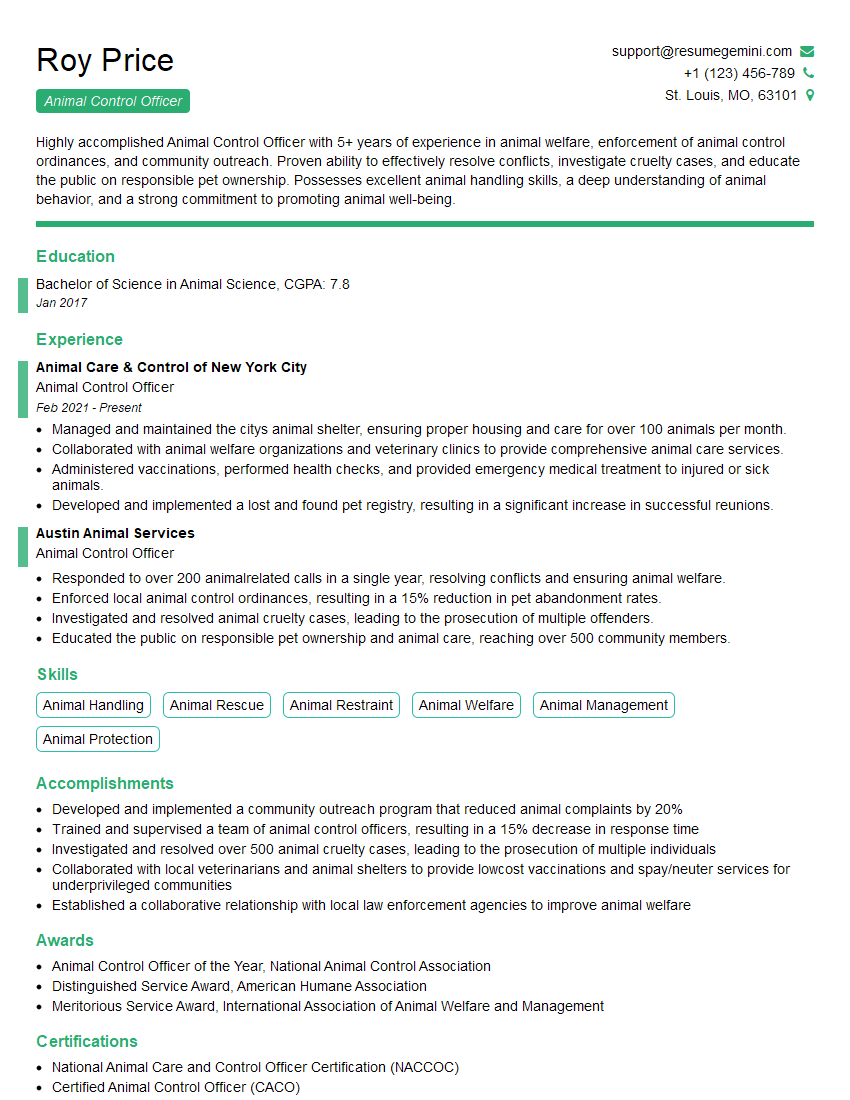
Mastering Animal Welfare Advocacy and Education is crucial for a rewarding and impactful career. It opens doors to diverse roles with significant influence on animal welfare outcomes. To maximize your job prospects, crafting a strong, ATS-friendly resume is essential. ResumeGemini is a trusted resource that can significantly enhance your resume-building experience, helping you present your skills and experience effectively to potential employers. We provide examples of resumes tailored to Animal Welfare Advocacy and Education to guide you in creating a compelling application that showcases your qualifications. Invest time in crafting a professional resume – it’s your first impression and a key to unlocking your career aspirations.

Explore more articles
Users Rating of Our Blogs
Share Your Experience
We value your feedback! Please rate our content and share your thoughts (optional).
What Readers Say About Our Blog
I Redesigned Spongebob Squarepants and his main characters of my artwork.
https://www.deviantart.com/reimaginesponge/art/Redesigned-Spongebob-characters-1223583608
IT gave me an insight and words to use and be able to think of examples
Hi, I’m Jay, we have a few potential clients that are interested in your services, thought you might be a good fit. I’d love to talk about the details, when do you have time to talk?
Best,
Jay
Founder | CEO