Unlock your full potential by mastering the most common Expertise in Agricultural Best Practices interview questions. This blog offers a deep dive into the critical topics, ensuring you’re not only prepared to answer but to excel. With these insights, you’ll approach your interview with clarity and confidence.
Questions Asked in Expertise in Agricultural Best Practices Interview
Q 1. Explain the principles of integrated pest management (IPM).
Integrated Pest Management (IPM) is a sustainable approach to pest control that aims to minimize the use of pesticides while maximizing crop protection. It relies on a holistic understanding of the agricultural ecosystem, considering the pest, the crop, the environment, and the economic impact of pest damage. Instead of relying on a single, often chemical, solution, IPM employs a variety of strategies in a coordinated way.
- Monitoring and Identification: Regularly checking crops for pests and diseases is crucial. Accurate identification allows for targeted control measures.
- Prevention: This focuses on actions to make the farm less hospitable to pests. Examples include crop rotation, using pest-resistant varieties, and proper sanitation practices.
- Cultural Controls: These are non-chemical methods that modify the environment to reduce pest populations. Examples are adjusting planting times, optimizing plant spacing for better air circulation, and using cover crops.
- Biological Controls: This involves introducing natural enemies of pests, such as beneficial insects, nematodes, or microorganisms. For example, using ladybugs to control aphids.
- Chemical Controls: Pesticides are used only as a last resort, and then only with the least-toxic, most targeted products available. This ensures minimal environmental impact and reduces the risk of pesticide resistance.
Example: Imagine an apple orchard facing codling moth infestation. An IPM approach would start with monitoring moth populations using pheromone traps. If numbers are low, cultural controls like proper pruning to improve air circulation might suffice. If the infestation is more severe, biological controls like introducing parasitic wasps might be implemented. Only if all other methods fail would a targeted insecticide be considered, and then only with careful application to minimize environmental harm.
Q 2. Describe different soil conservation techniques.
Soil conservation techniques aim to prevent soil erosion, maintain soil fertility, and improve water infiltration. These techniques are crucial for long-term agricultural sustainability.
- Contour Farming: Plowing and planting along the contours of slopes reduces the speed of water runoff, minimizing erosion.
- Terracing: Creating level platforms on slopes slows down water flow and reduces erosion. This is particularly effective on steep hillsides.
- Strip Cropping: Planting alternating strips of different crops helps slow down water runoff and prevent erosion. The different crops have different root systems and growth habits, further enhancing soil health.
- Cover Cropping: Planting crops such as legumes or grasses during fallow periods protects the soil from erosion, improves soil structure, and adds organic matter.
- No-Till Farming: Minimizing or eliminating tillage reduces soil disturbance, preventing erosion and improving soil structure. This also protects beneficial soil organisms.
- Windbreaks: Planting trees or shrubs in rows acts as barriers, reducing wind erosion, particularly in dry areas.
- Crop Rotation: Rotating different crops helps maintain soil fertility and reduce pest and disease pressure. Different crops have different nutrient needs, helping prevent depletion of specific nutrients.
Example: A farmer on a hilly region would benefit from using terracing and contour farming to prevent topsoil loss. In drier regions, windbreaks are crucial to protect fields from wind erosion. No-till farming is increasingly popular as it improves soil health and reduces reliance on fuel for tilling.
Q 3. What are the benefits and challenges of precision agriculture?
Precision agriculture uses technology to optimize agricultural practices at a field-specific level, leading to increased efficiency and sustainability. It involves using data-driven decisions to manage inputs such as fertilizers, pesticides, and water.
Benefits:
- Increased Efficiency: Optimized input use reduces costs and minimizes environmental impact.
- Improved Yields: Targeted application of resources leads to better crop growth and higher yields.
- Better Resource Management: Reduces waste of water, fertilizers, and pesticides.
- Enhanced Sustainability: Minimizes environmental impact by reducing pollution and conserving resources.
Challenges:
- High Initial Investment: Requires investment in advanced technologies, such as GPS, sensors, and data management systems.
- Data Management and Analysis: Requires expertise in data management, analysis, and interpretation.
- Technological Dependence: Relies on functioning technology and internet connectivity.
- Accessibility: Not all farmers have access to the necessary technology or expertise.
Example: Variable rate technology allows for applying fertilizer at different rates based on the nutrient needs of specific areas within a field. Sensors can monitor soil moisture, allowing farmers to irrigate only when and where necessary, conserving water.
Q 4. How do you assess soil health and fertility?
Assessing soil health and fertility is critical for making informed decisions about crop management. It involves both visual observation and laboratory analysis.
- Visual Observation: Inspecting soil color, texture, structure, and drainage can provide clues about its health. The presence of earthworms and other soil organisms is a good indicator of healthy soil.
- Soil Sampling: Collecting soil samples from different areas of the field provides a representative sample for laboratory analysis.
- Laboratory Analysis: Determining soil pH, nutrient levels (nitrogen, phosphorus, potassium, etc.), organic matter content, and other parameters provides a more precise assessment of soil health and fertility.
- Soil Texture Analysis: Determining the proportions of sand, silt, and clay helps understand soil drainage and water-holding capacity.
Example: A farmer might notice compacted soil in a specific area, suggesting poor drainage and low fertility. Soil sampling from that area and laboratory analysis would confirm the findings and help determine the appropriate amendments (e.g., organic matter, lime) to improve soil health.
Q 5. Explain the importance of crop rotation in sustainable agriculture.
Crop rotation is the practice of planting different crops in a planned sequence on the same piece of land over several growing seasons. It is a cornerstone of sustainable agriculture.
- Improved Soil Fertility: Different crops have different nutrient requirements. Rotating crops helps prevent depletion of specific nutrients in the soil.
- Reduced Pest and Disease Pressure: Alternating crops disrupts the life cycles of many pests and diseases, reducing their populations.
- Improved Soil Structure: Different crops have different root systems that affect soil structure. Rotating crops helps maintain a healthy soil structure.
- Weed Control: Some crops are less susceptible to certain weeds than others, and rotating crops can help manage weed pressure.
- Enhanced Biodiversity: Crop rotation promotes greater diversity in the soil ecosystem, supporting a healthier environment.
Example: A common rotation might involve a legume (e.g., soybeans or clover) followed by a cereal crop (e.g., corn or wheat). Legumes fix nitrogen in the soil, benefiting the following cereal crop. This rotation also helps break the life cycle of certain pests and diseases that might affect either the legume or the cereal.
Q 6. Describe various irrigation methods and their suitability for different crops.
Irrigation methods vary in their efficiency and suitability for different crops and environmental conditions.
- Flood Irrigation: Water is applied by flooding the entire field. Suitable for level land and crops that tolerate standing water but is inefficient and leads to waterlogging.
- Furrow Irrigation: Water flows in furrows between crop rows. Simple and inexpensive but can be inefficient, with water loss through evaporation and runoff.
- Drip Irrigation: Water is delivered directly to plant roots through a network of tubes and emitters. Highly efficient, minimizing water loss and maximizing water use efficiency.
- Sprinkler Irrigation: Water is sprayed over the field, mimicking rainfall. Suitable for various terrains and crops but can be inefficient due to evaporation and wind drift.
- Center Pivot Irrigation: A system of sprinklers rotates around a central pivot, irrigating a circular area. Efficient for large fields but not suitable for hilly or uneven terrain.
Suitability: Drip irrigation is ideal for high-value crops like fruits and vegetables that are sensitive to overwatering. Flood irrigation might be appropriate for rice paddy fields. Sprinkler irrigation is well-suited for crops that need consistent moisture, while furrow irrigation is often used for crops that tolerate some waterlogging.
Q 7. How do you manage livestock diseases and health?
Managing livestock diseases and health is crucial for animal welfare, productivity, and food safety. A multi-pronged approach is essential.
- Biosecurity: Implementing strict biosecurity measures prevents the introduction and spread of diseases. This includes quarantine of new animals, disinfection of facilities, and restricting access to farms.
- Vaccination: Regular vaccination programs protect livestock from common diseases, reducing mortality and improving productivity.
- Parasite Control: Implementing regular parasite control programs, including using appropriate medications and pasture management, prevents infestations and improves animal health.
- Nutrition: Providing balanced and appropriate nutrition ensures strong immune systems and reduces susceptibility to diseases.
- Regular Health Checks: Routine veterinary checks help detect diseases early, allowing for timely treatment and preventing outbreaks.
- Record Keeping: Maintaining accurate records of animal health, treatments, and vaccinations allows for better disease management and traceability.
Example: A dairy farm might implement a strict biosecurity protocol, vaccinating cows against common diseases like mastitis. Regular parasite control and nutritional management contribute to healthy and productive animals. Immediate veterinary intervention at the first signs of illness is crucial.
Q 8. What are the key factors affecting crop yield?
Crop yield, the amount of harvested crop per unit area, is a complex interplay of several factors. Think of it like baking a cake – you need the right ingredients and the perfect environment for a delicious result. Similarly, optimal crop yield depends on a delicate balance of several key elements:
- Climate: Temperature, rainfall, sunlight duration, and extreme weather events (droughts, floods, frosts) significantly influence plant growth and development. For example, insufficient sunlight can lead to reduced photosynthesis and lower yields.
- Soil: Soil fertility (nutrient content), texture (sand, silt, clay), structure (drainage, aeration), and pH level directly impact root growth and nutrient uptake. Poor soil drainage can lead to root rot and significantly reduced yields.
- Genetics: The choice of crop variety plays a crucial role. Different varieties exhibit varying levels of resistance to pests, diseases, and environmental stresses, directly impacting yield potential. Using hybrid varieties often results in higher yields compared to traditional varieties.
- Nutrient Management: Providing the right balance of essential nutrients (nitrogen, phosphorus, potassium, etc.) through fertilizers and organic matter is critical for healthy plant growth. Deficiencies can lead to stunted growth and reduced yields.
- Pest and Disease Management: Pests and diseases can significantly reduce crop yields if not managed effectively. Integrated pest management (IPM) strategies, involving biological control, crop rotation, and targeted pesticide application, are crucial.
- Water Management: Appropriate irrigation techniques are essential, especially in arid and semi-arid regions. Over-irrigation can lead to waterlogging and nutrient leaching, while under-irrigation results in stunted growth and reduced yields.
- Farming Practices: Planting density, tillage methods, weed control, and harvesting techniques all influence yield. For instance, precision planting can optimize seed spacing, maximizing yield potential.
Optimizing these factors requires careful planning and management throughout the growing season.
Q 9. Discuss the economic considerations of different farming practices.
Economic considerations in farming are paramount. Different farming practices carry varying costs and returns, impacting overall profitability. Let’s explore some key aspects:
- Conventional Farming: This involves high inputs of synthetic fertilizers, pesticides, and irrigation. While it can lead to higher yields initially, it comes with substantial input costs. Long-term sustainability might be questioned due to environmental concerns.
- Organic Farming: This excludes synthetic inputs, relying on natural methods like crop rotation, cover cropping, and compost. While it commands premium prices and minimizes environmental impact, it usually yields lower quantities per unit area, requiring larger land holdings.
- Precision Agriculture: This utilizes technology like GPS, sensors, and data analytics for precise application of inputs (fertilizers, water, pesticides). While initial investment is high, it optimizes resource use, minimizing waste and potentially boosting profitability through increased efficiency.
- Integrated Pest Management (IPM): This strategy combines different methods to control pests, including biological control, cultural practices, and targeted pesticide application. It minimizes pesticide use, lowering costs and environmental impact while still controlling pests effectively.
- Vertical Farming: Cultivating crops in stacked layers indoors, typically using hydroponics or aeroponics. While high initial investment is required, it allows for year-round production and space optimization, making it viable in urban areas and potentially offsetting higher operation costs with premium product pricing.
The best farming practice from an economic perspective depends on several factors, including market demand, land availability, labor costs, and the farmer’s risk tolerance. A comprehensive cost-benefit analysis is essential for making informed decisions.
Q 10. Explain the role of technology in modern agriculture.
Technology is revolutionizing modern agriculture, increasing efficiency, productivity, and sustainability. It’s transforming how we manage every stage of the agricultural process:
- Precision Farming Technologies: GPS-guided machinery, sensors for monitoring soil conditions, drones for crop surveillance, and variable rate technology for precise input application optimize resource use and improve yields.
- Data Analytics and AI: Analyzing large datasets from sensors and other sources helps predict yields, optimize irrigation schedules, and detect diseases early, enabling timely interventions.
- Robotics and Automation: Robots are increasingly used for tasks like planting, weeding, and harvesting, improving efficiency and reducing labor costs. Automated systems monitor environmental conditions and adjust irrigation and fertilization accordingly.
- Gene Editing and Biotechnology: Genetic modification and gene editing technologies can enhance crop traits like disease resistance, drought tolerance, and nutritional value, boosting yields and resilience to climate change.
- Remote Sensing and GIS: Satellite imagery and Geographic Information Systems (GIS) help monitor large fields, identify areas needing attention, and make informed decisions about resource allocation.
The integration of these technologies requires investment in infrastructure and skilled personnel but promises to transform agriculture into a more precise, efficient, and sustainable system.
Q 11. How do you ensure food safety and quality throughout the production process?
Ensuring food safety and quality requires a holistic approach, encompassing all stages from farm to table. Think of it as a chain – if one link is weak, the entire system is compromised. Key aspects include:
- Good Agricultural Practices (GAPs): Implementing standardized practices for crop production, including hygiene, pest control, and fertilizer application, minimizes contamination risks.
- Hazard Analysis and Critical Control Points (HACCP): This systematic approach identifies potential hazards at each stage and establishes control measures to eliminate or minimize risks. It’s particularly critical in processing and packaging.
- Traceability Systems: Tracking products throughout the supply chain enables rapid identification of contamination sources in case of an outbreak, facilitating swift recall actions.
- Proper Storage and Transportation: Maintaining appropriate temperatures and preventing cross-contamination during storage and transportation are crucial for preserving food quality and safety.
- Regular Testing and Monitoring: Routine testing for pesticide residues, heavy metals, and microbial contamination ensures that products meet safety standards.
- Worker Training and Hygiene: Training farmworkers on proper hygiene practices and safe handling of food minimizes the risk of contamination.
Collaboration among farmers, processors, distributors, and regulatory agencies is crucial for maintaining a robust food safety and quality system. A proactive, preventive approach is far more effective and cost-efficient than reacting to outbreaks.
Q 12. What are the environmental impacts of agricultural practices, and how can they be mitigated?
Agricultural practices have significant environmental impacts, both positive and negative. Sustainability is no longer optional; it’s a necessity. Key issues include:
- Greenhouse Gas Emissions: Agriculture contributes to greenhouse gas emissions through activities like livestock farming (methane), fertilizer use (nitrous oxide), and deforestation for farmland. Mitigation strategies include improving manure management, using low-emission fertilizers, and adopting carbon sequestration practices.
- Water Pollution: Runoff from farms carrying fertilizers and pesticides contaminates water bodies, impacting aquatic life. Best management practices like buffer strips, reduced tillage, and precision fertilizer application can minimize this.
- Soil Degradation: Intensive farming can lead to soil erosion, nutrient depletion, and reduced fertility. Practices like cover cropping, crop rotation, and no-till farming help conserve soil health.
- Biodiversity Loss: Monoculture farming can reduce biodiversity, making ecosystems more vulnerable to pests and diseases. Agroforestry, integrated pest management, and habitat restoration help support biodiversity.
- Deforestation: Clearing forests for farmland contributes to habitat loss and climate change. Sustainable land-use planning and reducing deforestation are essential.
Mitigating these impacts requires adopting sustainable agricultural practices, promoting biodiversity, improving resource efficiency, and reducing reliance on synthetic inputs. Investing in research and development of climate-resilient crops is also crucial.
Q 13. Describe your experience with data analysis in agriculture.
My experience with data analysis in agriculture is extensive. I’ve utilized various techniques to optimize farm operations and improve decision-making. For example, I’ve:
- Used statistical software (R, SAS) to analyze yield data, identifying correlations between environmental factors and crop performance. This allowed for the development of predictive models to forecast yields and optimize resource allocation.
- Worked with Geographic Information Systems (GIS) to map fields, analyze soil properties, and optimize fertilizer application. Precision agriculture techniques based on this analysis have significantly improved nutrient use efficiency and reduced fertilizer costs.
- Developed machine learning models to predict pest outbreaks and disease incidence based on historical data and weather patterns. Early warning systems based on these models enabled timely interventions, minimizing crop losses.
- Integrated data from various sources, including sensors, weather stations, and farm management systems, to create comprehensive datasets. This comprehensive approach facilitates holistic analysis and improves the accuracy of decision-support tools.
I am proficient in various statistical and machine learning techniques and can effectively interpret and visualize data to provide actionable insights for improving farm productivity and profitability. I believe that data-driven decision making is critical for modern agriculture.
Q 14. How do you manage farm labor and resources efficiently?
Efficient farm labor and resource management is essential for profitability and sustainability. My approach is multi-faceted:
- Labor Management: This involves careful planning of tasks, optimizing the use of available labor, and providing adequate training. Technology like automated systems can reduce labor requirements for certain tasks, freeing up workers for more complex responsibilities. Fair wages and benefits are essential for attracting and retaining skilled workers.
- Resource Optimization: This includes maximizing the use of water, fertilizers, and other inputs. Precision agriculture techniques, data-driven decision making, and the adoption of efficient irrigation methods play a key role. Regular maintenance of machinery and equipment minimizes downtime and ensures efficient operation.
- Inventory Management: Proper storage and inventory tracking help avoid spoilage and ensure timely access to necessary inputs and supplies. Efficient supply chain management minimizes transportation costs and ensures timely delivery.
- Financial Management: Careful budgeting, accurate record-keeping, and proactive financial planning are essential for assessing profitability and securing needed resources. This includes analyzing production costs, market prices, and exploring different financing options.
A holistic approach that integrates technology, efficient management strategies, and a focus on employee well-being is key to optimizing farm labor and resources. Continuous improvement and adaptation based on data and market conditions are essential for long-term success.
Q 15. Explain the principles of sustainable livestock management.
Sustainable livestock management centers around balancing the economic needs of farming with the environmental and social responsibilities inherent in animal agriculture. It’s about ensuring the long-term health of the land, the animals, and the communities that rely on them.
- Improved Pasture Management: Implementing rotational grazing, where animals graze on a portion of pasture before moving to another, allowing the previous section to recover. This mimics natural grazing patterns and enhances pasture health and biodiversity. For example, a farmer might divide their pasture into 5 paddocks and move their herd every few days.
- Manure Management: Proper manure handling is crucial. Composting manure reduces odor and pathogens while creating a valuable soil amendment rich in nutrients. Poor manure management can lead to water contamination and greenhouse gas emissions. I’ve personally seen a substantial improvement in soil health on farms that implement effective composting techniques.
- Animal Health and Welfare: Prioritizing animal health through preventative measures reduces the need for antibiotics and improves animal welfare. This involves regular veterinary checkups, appropriate housing, and access to clean water and nutritious feed. A happy and healthy animal is a more productive animal.
- Reducing Greenhouse Gas Emissions: Livestock contribute significantly to greenhouse gas emissions, primarily methane. Sustainable practices focus on reducing these emissions through dietary changes, improved manure management, and the use of silvopasture (integrating trees into pastures).
- Water Management: Efficient water use is paramount. Implementing water troughs with automatic controls minimizes waste and ensures animals always have access to clean drinking water. Water scarcity is a growing concern globally, and efficient water use in livestock farming is vital.
Sustainable livestock management isn’t just an environmental concern; it’s an economic one too. Healthy animals and productive pastures translate directly to increased profitability and long-term sustainability for the farm.
Career Expert Tips:
- Ace those interviews! Prepare effectively by reviewing the Top 50 Most Common Interview Questions on ResumeGemini.
- Navigate your job search with confidence! Explore a wide range of Career Tips on ResumeGemini. Learn about common challenges and recommendations to overcome them.
- Craft the perfect resume! Master the Art of Resume Writing with ResumeGemini’s guide. Showcase your unique qualifications and achievements effectively.
- Don’t miss out on holiday savings! Build your dream resume with ResumeGemini’s ATS optimized templates.
Q 16. What are your strategies for risk management in agriculture?
Risk management in agriculture is a multifaceted process that involves identifying potential threats, assessing their likelihood and impact, and developing strategies to mitigate those risks. It’s crucial for ensuring the long-term viability of any agricultural operation.
- Diversification: Don’t put all your eggs in one basket! Diversifying crops or livestock reduces the impact of a single crop failure or disease outbreak. For instance, growing a variety of crops with different maturity dates can help spread out income and reduce risk.
- Insurance: Crop and livestock insurance protects against losses due to weather events, diseases, and other unforeseen circumstances. It’s a crucial safety net for farmers.
- Market Analysis: Understanding market trends and price fluctuations is vital. Farmers can utilize futures contracts or other hedging strategies to mitigate price risk and ensure stable income.
- Pest and Disease Management: Implementing integrated pest management (IPM) strategies minimizes the use of chemical pesticides while controlling pest populations. IPM uses a combination of biological, cultural, and chemical controls to ensure sustainable and effective pest management. I’ve successfully implemented IPM strategies on various farms, significantly reducing reliance on harmful chemicals.
- Financial Planning: Careful budgeting and financial planning are vital. This includes creating contingency plans for unexpected expenses and maintaining sufficient cash reserves to weather difficult times.
Risk management is a continuous process, requiring regular monitoring and adaptation to changing conditions. Regularly reviewing your risk profile and adjusting your strategies is essential for success.
Q 17. How do you adapt to changing weather patterns and climate change?
Adapting to changing weather patterns and climate change requires a proactive and multifaceted approach. Climate change is already impacting agricultural production globally, making adaptation crucial for long-term success.
- Drought-Resistant Crops: Selecting and planting drought-resistant crop varieties is crucial in regions experiencing increased drought frequency and severity. Many advancements in crop breeding are focusing on this specific trait.
- Water Management: Implementing efficient irrigation techniques, like drip irrigation, conserves water and reduces reliance on unsustainable irrigation practices. This reduces the environmental impact while ensuring sufficient water availability.
- Climate-Resilient Livestock Breeds: Selecting livestock breeds that are more tolerant to heat stress and other climate change impacts is vital for livestock farming. Some breeds are naturally more adapted to harsh conditions.
- Precision Agriculture: Using technology like GPS and sensors for precision irrigation and fertilization optimizes resource use and reduces waste, mitigating the impact of variable weather conditions. I have personally witnessed the effectiveness of precision agriculture in optimizing water and fertilizer use, leading to increased yields and reduced environmental impact.
- Crop Diversification: Growing a variety of crops reduces the risk of complete crop failure due to extreme weather events. Diversification ensures some income even if one crop is severely impacted.
Adapting to climate change is an ongoing process requiring continuous learning, innovation, and collaboration amongst farmers, researchers, and policymakers.
Q 18. Describe your experience with different types of farming systems (e.g., organic, conventional).
My experience encompasses both conventional and organic farming systems. Both approaches have their strengths and weaknesses, and the optimal choice often depends on factors like market demand, environmental considerations, and personal values.
- Conventional Farming: This system typically involves the use of synthetic fertilizers, pesticides, and genetically modified organisms (GMOs) to maximize yields. I’ve worked extensively in conventional farming, optimizing yields and production efficiency through precision agriculture and advanced farming techniques.
- Organic Farming: This approach focuses on environmentally friendly practices, excluding synthetic inputs and promoting biodiversity. I’ve also been involved in organic farming projects, emphasizing soil health, pest control through natural methods, and building resilient ecosystems. Organic farming requires more detailed planning and management, but offers its own significant rewards such as enhanced soil health and reduced environmental impact.
The choice between these two systems isn’t always mutually exclusive. Integrated approaches that combine elements of both can often provide the most sustainable and economically viable outcomes. For example, a farmer may use organic practices for some crops and conventional methods for others.
Q 19. How do you monitor and evaluate the effectiveness of agricultural practices?
Monitoring and evaluating agricultural practices involves a combination of quantitative and qualitative methods to assess their effectiveness and efficiency. This continuous feedback loop is vital for improvement and ensures sustainability.
- Yield Monitoring: Tracking crop yields over time provides a clear indication of the success of different farming practices. This can be done manually or using yield mapping technologies.
- Soil Testing: Regularly testing soil nutrient levels helps assess the effectiveness of soil fertility management practices and guides adjustments as needed.
- Water Use Efficiency: Monitoring water use allows for identifying areas where irrigation efficiency can be improved, leading to water conservation and cost savings.
- Pest and Disease Monitoring: Regularly monitoring pest and disease pressure allows for timely intervention and prevents larger outbreaks, reducing crop losses and the need for heavy pesticide use.
- Economic Analysis: Analyzing the economic performance of different practices, considering costs and revenue, helps in determining the profitability and overall sustainability of the farming operation.
Data analysis and record-keeping are critical aspects of monitoring and evaluation. Software programs and farm management systems can streamline data collection and provide valuable insights into the effectiveness of different approaches.
Q 20. What are your strategies for improving soil fertility?
Improving soil fertility is fundamental to sustainable agriculture. Healthy soil is the foundation of productive and resilient farms.
- Crop Rotation: Rotating different crops helps to balance nutrient depletion and improve soil structure. Different crops have varying nutrient requirements, and rotating them prevents the depletion of specific nutrients.
- Cover Cropping: Planting cover crops during fallow periods helps to improve soil health by preventing erosion, suppressing weeds, and adding organic matter. Cover crops like legumes can also fix nitrogen, reducing the need for synthetic fertilizers.
- Composting: Composting organic materials, such as crop residues and manure, creates a valuable soil amendment that enriches the soil with nutrients and improves its structure. I’ve personally witnessed significant improvements in soil fertility through consistent composting.
- No-Till Farming: Minimizing soil disturbance through no-till farming techniques protects soil structure, reduces erosion, and improves water retention. No-till reduces the loss of vital organic matter and supports soil biodiversity.
- Manure Management: Applying well-composted manure adds essential nutrients back into the soil, improving its fertility and reducing the need for synthetic fertilizers.
Improving soil fertility is a long-term commitment, requiring consistent effort and careful management. The benefits of healthy soil translate into increased yields, reduced input costs, and improved environmental sustainability.
Q 21. Describe your experience with GPS-guided machinery.
My experience with GPS-guided machinery is extensive. Precision agriculture technologies, utilizing GPS and other sensors, have revolutionized modern farming, leading to increased efficiency and reduced resource waste.
- Variable Rate Technology (VRT): GPS-guided machinery allows for VRT application of inputs like fertilizers, pesticides, and seeds. This ensures that inputs are applied only where needed, optimizing resource use and minimizing environmental impact. For example, a GPS-guided sprayer can apply different rates of herbicide based on weed density in different areas of the field.
- Auto-Steer: Auto-steer systems enable tractors and other machinery to operate autonomously, following pre-programmed routes. This reduces operator fatigue, improves accuracy, and increases efficiency. This is particularly useful for large fields.
- Yield Mapping: GPS-guided harvesters can generate yield maps, providing valuable data on variations in crop yields across the field. This information guides future management decisions, optimizing planting and fertilization strategies.
- Data Acquisition and Analysis: GPS-guided machinery generates large amounts of data that can be analyzed to identify areas for improvement in farming practices and resource use. I’ve utilized this data to optimize irrigation, fertilization, and pest control strategies, resulting in increased productivity.
GPS-guided machinery is a powerful tool for enhancing farming efficiency, precision, and sustainability. It allows for data-driven decision making, leading to improved resource management and increased farm profitability.
Q 22. Explain the principles of nutrient management.
Nutrient management is the science and art of supplying essential nutrients to crops in the right amounts, at the right time, and in the right form, to optimize yield and quality while minimizing environmental impact. It’s about balancing crop needs with soil health and environmental sustainability. Think of it like providing a balanced diet for your plants.
- Soil Testing: This is foundational. We analyze soil samples to determine existing nutrient levels (nitrogen, phosphorus, potassium, and micronutrients). This provides a baseline for fertilizer recommendations.
- Fertilizer Selection: Choosing the right fertilizer depends on soil test results, crop requirements, and environmental considerations. Options include organic fertilizers (like compost and manure) and synthetic fertilizers (containing specific nutrient ratios). Organic options improve soil health over time, but synthetic fertilizers provide faster nutrient release for immediate needs.
- Timing and Application Methods: Nutrients are absorbed best at specific growth stages. Application methods vary; we might use broadcasting (spreading evenly over the field), banding (applying in rows near the seeds), or foliar application (spraying nutrients directly onto leaves).
- Manure Management: Properly managing manure is crucial. We consider its nutrient content, storage, and application to avoid nutrient runoff and maximize its benefits. Composting manure reduces odor and improves nutrient availability.
- Crop Rotation and Cover Cropping: Rotating crops helps improve soil health and nutrient balance. Cover crops enrich the soil with nutrients, suppress weeds, and improve soil structure.
For example, on a corn farm, we might use soil testing to reveal a deficiency in phosphorus. We’d then choose a phosphorus-rich fertilizer and apply it strategically during planting, using banding to place it near the roots for efficient uptake. Simultaneously, we’d plan to incorporate a legume (like soybeans) in the next rotation to naturally enrich the soil with nitrogen.
Q 23. How do you use data to make informed decisions in agriculture?
Data-driven decision-making is revolutionizing agriculture. We use various data sources to optimize farm operations and improve efficiency. Imagine having a detailed map of your field showing variations in soil nutrient levels, moisture content, and even plant health. That’s what data enables us to do.
- Precision Agriculture Technology: GPS-guided machinery, sensors, drones, and remote sensing provide real-time data on numerous factors. This enables variable rate application of inputs (fertilizers, pesticides, irrigation), optimizing their use and reducing waste.
- Yield Monitoring: Using yield monitors during harvest allows us to map yields across the field, pinpointing areas that need improvement (e.g., soil amendment, irrigation adjustments). This data informs our decisions in subsequent growing seasons.
- Farm Management Software: Software platforms consolidate data from various sources (weather, soil sensors, yield monitors) to generate insightful reports. We can track costs, analyze profitability, and predict future outcomes based on these reports.
- Data Analysis: Statistical analysis and data visualization are essential. We identify trends, patterns, and anomalies to optimize resource use and improve decision-making.
For instance, data from sensors in an irrigation system could reveal localized water stress in specific areas. This information enables us to target irrigation precisely to those areas, conserving water while ensuring adequate moisture for optimal crop growth. We would avoid overwatering, saving on costs and protecting the environment.
Q 24. What are your strategies for pest and weed control?
Integrated pest and weed management (IPM) is a sustainable approach focusing on minimizing pest and weed populations using a combination of methods. It’s about preventing problems rather than just reacting to them.
- Cultural Practices: This includes crop rotation, proper planting dates, and appropriate plant spacing to minimize pest and weed pressures.
- Biological Control: Introducing natural enemies (like beneficial insects) to control pests. This avoids chemical pesticides.
- Mechanical Control: This involves techniques like tillage, hand weeding, and mowing to physically remove weeds and pests.
- Chemical Control: Pesticides are used judiciously, targeting specific pests with minimal environmental impact. We use the least-toxic options and always follow label instructions.
- Monitoring and Scouting: Regularly checking fields to detect pests and weeds early allows for timely interventions, minimizing the need for extensive chemical control.
For instance, in a vineyard battling grapevine aphids, we’d start with monitoring their populations. If the numbers remain low, we might employ beneficial insects like ladybugs. If the infestation becomes severe, we would selectively apply a targeted pesticide, minimizing its use and protecting beneficial insects as much as possible.
Q 25. Describe your experience with farm budgeting and financial planning.
Farm budgeting and financial planning are crucial for successful agricultural operations. It’s about understanding costs, predicting income, and making sound financial decisions.
- Detailed Cost Accounting: We meticulously track all farm expenses (seeds, fertilizers, labor, machinery, etc.) and categorize them for better analysis.
- Income Projections: We estimate income based on projected yields, market prices, and sales volumes. We build scenarios factoring in potential variations in market conditions.
- Cash Flow Management: We monitor cash inflows and outflows to ensure sufficient funds for day-to-day operations and investments. Effective cash flow management is essential for navigating seasonal fluctuations in income.
- Financial Statements: Preparing balance sheets, income statements, and cash flow statements provides a comprehensive view of the farm’s financial health. These statements facilitate informed decision-making.
- Long-Term Financial Planning: We develop long-term plans that include investments in new technologies, infrastructure upgrades, and debt management. We work with financial advisors or lenders when necessary.
In a practical scenario, a detailed budget helps us determine if the potential profit from a new crop is sufficient to cover the increased expenses, ensuring responsible investment decisions.
Q 26. How do you ensure compliance with agricultural regulations?
Compliance with agricultural regulations is paramount. It protects the environment, ensures food safety, and maintains public trust.
- Understanding Regulations: We stay up-to-date on all relevant federal, state, and local regulations related to pesticide use, water quality, soil conservation, and worker safety.
- Record Keeping: Maintaining detailed records of all farm operations, chemical applications, and employee training is crucial for demonstrating compliance during inspections.
- Pest Management Plans: Developing and implementing IPM plans that minimize pesticide use while effectively controlling pests is essential for compliance.
- Employee Training: Regular training for employees on safe pesticide handling, environmental protection, and workplace safety is crucial.
- Collaboration with Regulatory Agencies: Maintaining open communication and collaboration with relevant agencies helps us understand and adapt to changing regulations.
For example, meticulous record-keeping regarding pesticide applications allows us to demonstrate compliance during inspections. We can present documentation of when, where, and how much pesticide was applied, demonstrating adherence to labeling instructions and regulations.
Q 27. Describe your experience with agricultural marketing and sales.
Agricultural marketing and sales involve getting our produce to consumers while maximizing profitability. It’s a blend of understanding market demands and effectively reaching consumers.
- Market Research: We conduct market research to understand consumer preferences, pricing strategies, and distribution channels for our products.
- Value-Added Products: Processing and packaging produce to create value-added products can enhance marketability and profitability (e.g., making jams from surplus berries).
- Direct Marketing: Direct-to-consumer sales through farmers’ markets, farm stands, or online platforms can create stronger customer relationships and build brand loyalty.
- Wholesale Channels: Selling produce through wholesalers, distributors, or food retailers requires negotiating contracts and meeting their quality and volume requirements.
- Branding and Packaging: Creating a strong brand identity and attractive packaging can differentiate products and command higher prices in the market.
For instance, instead of selling plain pumpkins at a low price, we might create unique pumpkin pies or add value by offering custom carving services at a farmers market, directly reaching customers and maximizing profit.
Q 28. What are your career goals in the field of agriculture?
My career goals in agriculture center on leveraging my expertise to promote sustainable and profitable farming practices. I aim to combine technological advancements with traditional farming knowledge to create a more resilient and efficient agricultural sector. I want to help farmers thrive while protecting the environment.
- Leadership Roles: I aspire to take on leadership roles where I can mentor and guide other farmers towards adopting best practices.
- Technological Innovation: I am eager to explore and implement emerging technologies to optimize farm operations and enhance sustainability.
- Advocacy for Sustainable Agriculture: I aim to contribute to policy discussions and promote sustainable agricultural practices at a larger scale.
- Research and Development: I’m interested in participating in research projects focused on enhancing soil health, improving crop yields, and minimizing environmental impact.
Ultimately, my goal is to contribute to a future where agriculture is both profitable and environmentally responsible, ensuring food security for generations to come.
Key Topics to Learn for Expertise in Agricultural Best Practices Interview
- Sustainable Farming Techniques: Understanding and applying principles of organic farming, integrated pest management (IPM), and precision agriculture.
- Crop Management: Discuss practical experience in soil health management, crop rotation, irrigation techniques, and fertilizer application strategies. Be prepared to discuss challenges faced and solutions implemented.
- Livestock Management: Knowledge of animal husbandry, breeding programs, disease prevention and control, and ethical considerations in livestock farming.
- Agricultural Technology & Data Analysis: Familiarity with GPS-guided machinery, precision farming technologies, and the use of data analytics to optimize farm operations. Be ready to discuss how you’ve used data to improve efficiency or yields.
- Post-Harvest Handling & Processing: Understanding best practices for storage, preservation, and processing of agricultural products to minimize waste and maintain quality.
- Economic Aspects of Agriculture: Knowledge of market trends, pricing strategies, risk management, and financial planning in agricultural businesses.
- Environmental Sustainability: Discuss your understanding of environmental impact assessments, carbon footprint reduction strategies, and water conservation methods in agriculture.
- Regulatory Compliance: Familiarity with relevant agricultural regulations, safety standards, and best practices for compliance.
- Problem-Solving & Decision-Making: Prepare examples illustrating your ability to analyze complex agricultural challenges, develop effective solutions, and make informed decisions based on data and best practices.
Next Steps
Mastering Expertise in Agricultural Best Practices is crucial for career advancement in this dynamic field. A strong understanding of these principles will significantly enhance your job prospects and allow you to contribute meaningfully to sustainable and efficient agricultural operations. To increase your chances of landing your dream role, creating an ATS-friendly resume is essential. ResumeGemini is a trusted resource to help you build a professional and impactful resume that highlights your skills and experience effectively. Examples of resumes tailored to Expertise in Agricultural Best Practices are available to guide you.
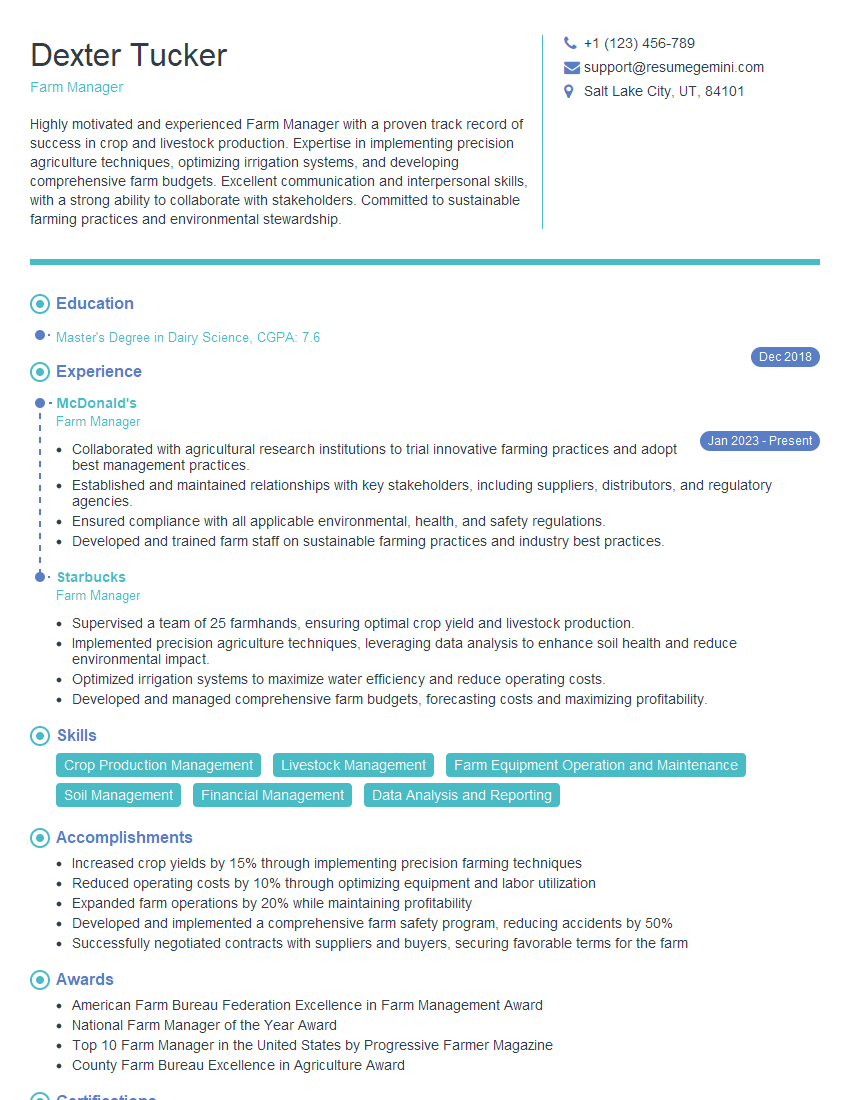
Farm Manager Resume Sample
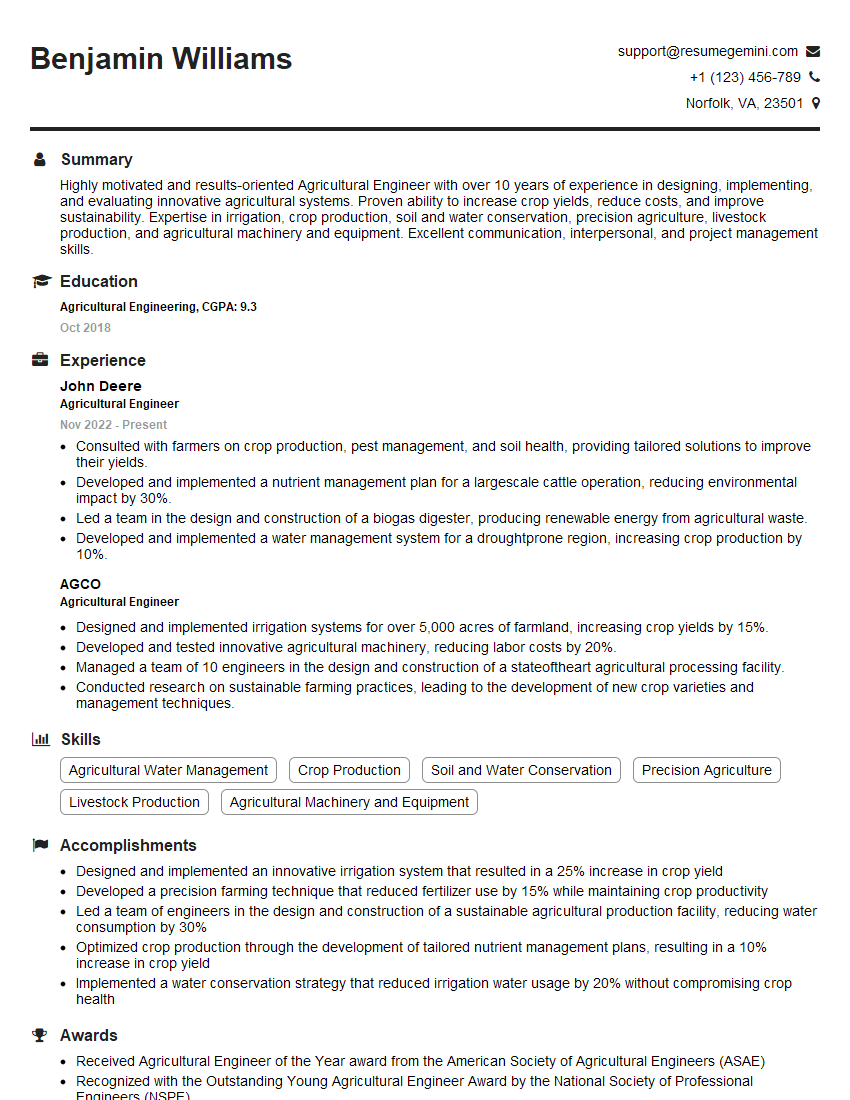
Agricultural Engineer Resume Sample
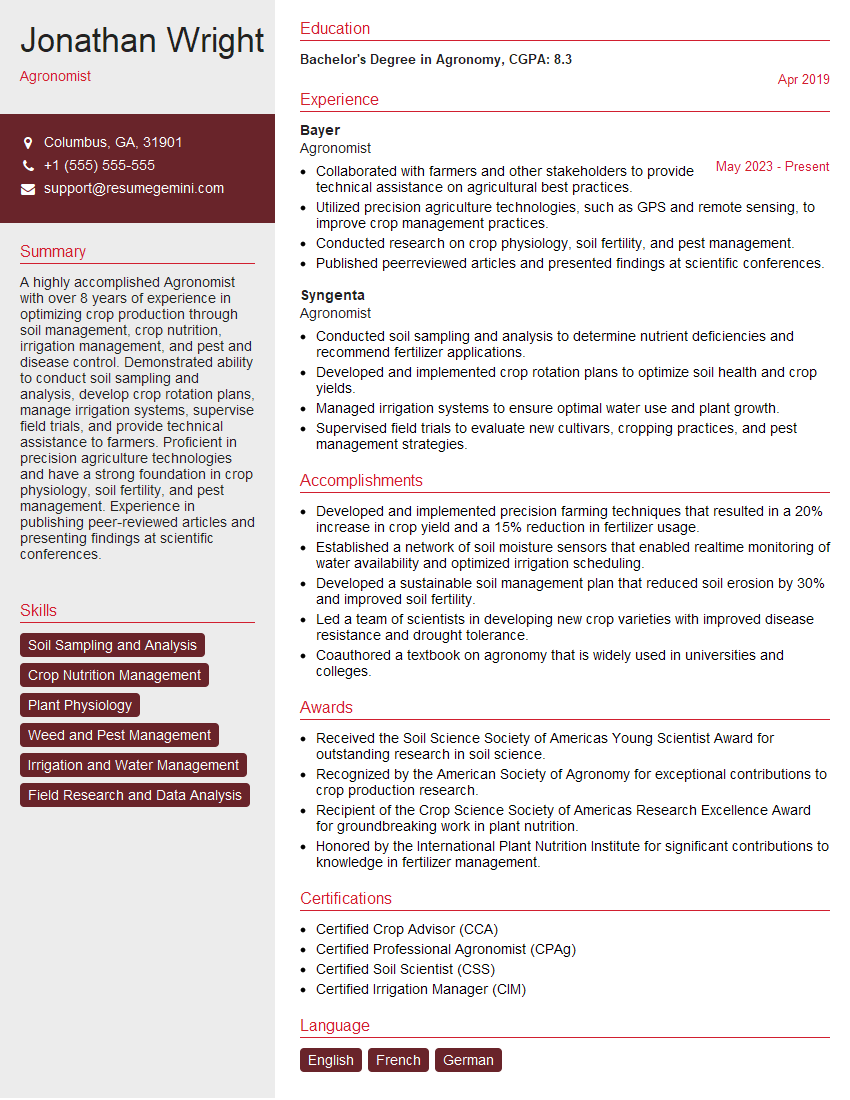
Agronomist Resume Sample

Soil Scientist Resume Sample
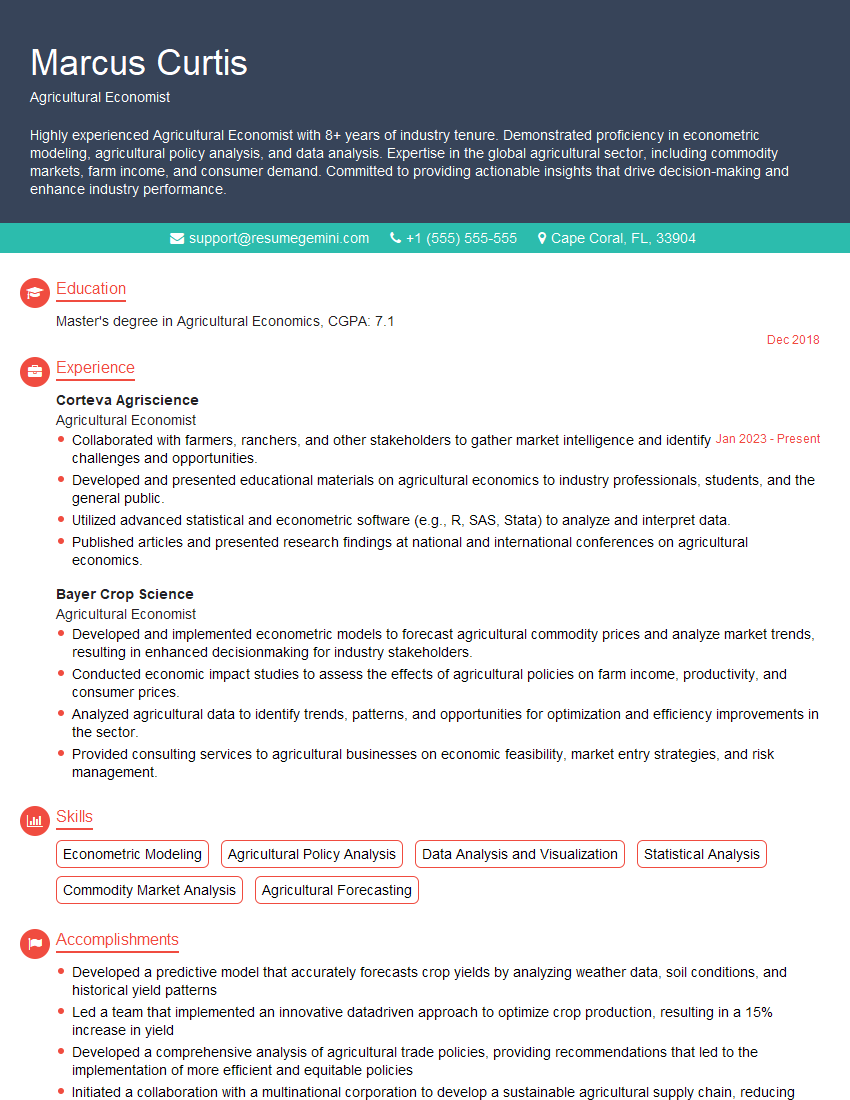
Agricultural Economist Resume Sample
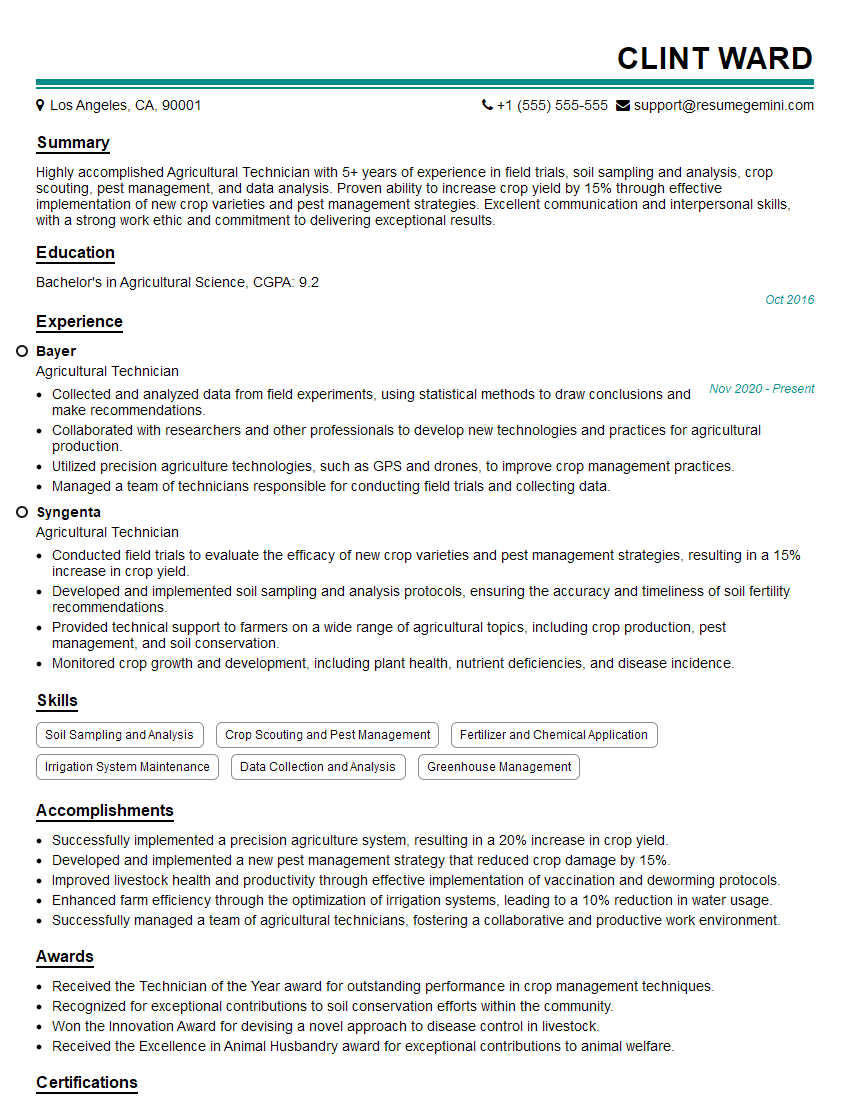
Agricultural Technician Resume Sample
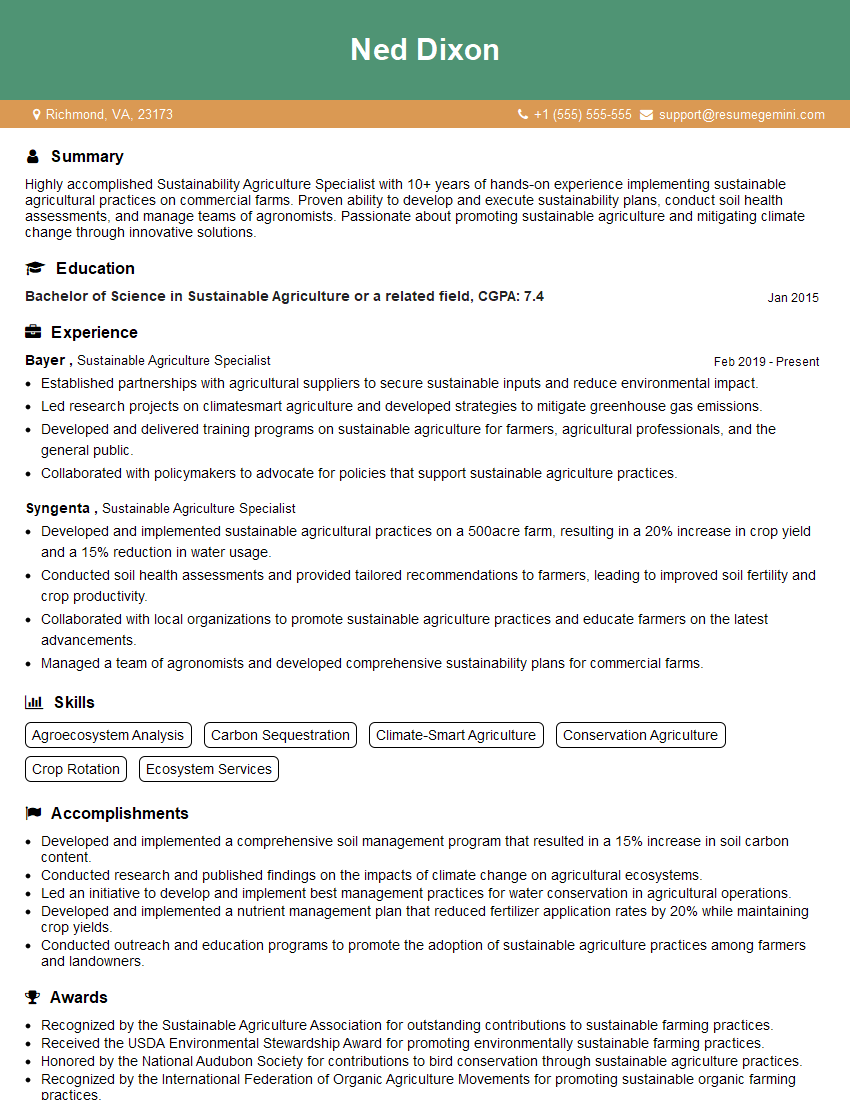
Sustainable Agriculture Specialist Resume Sample
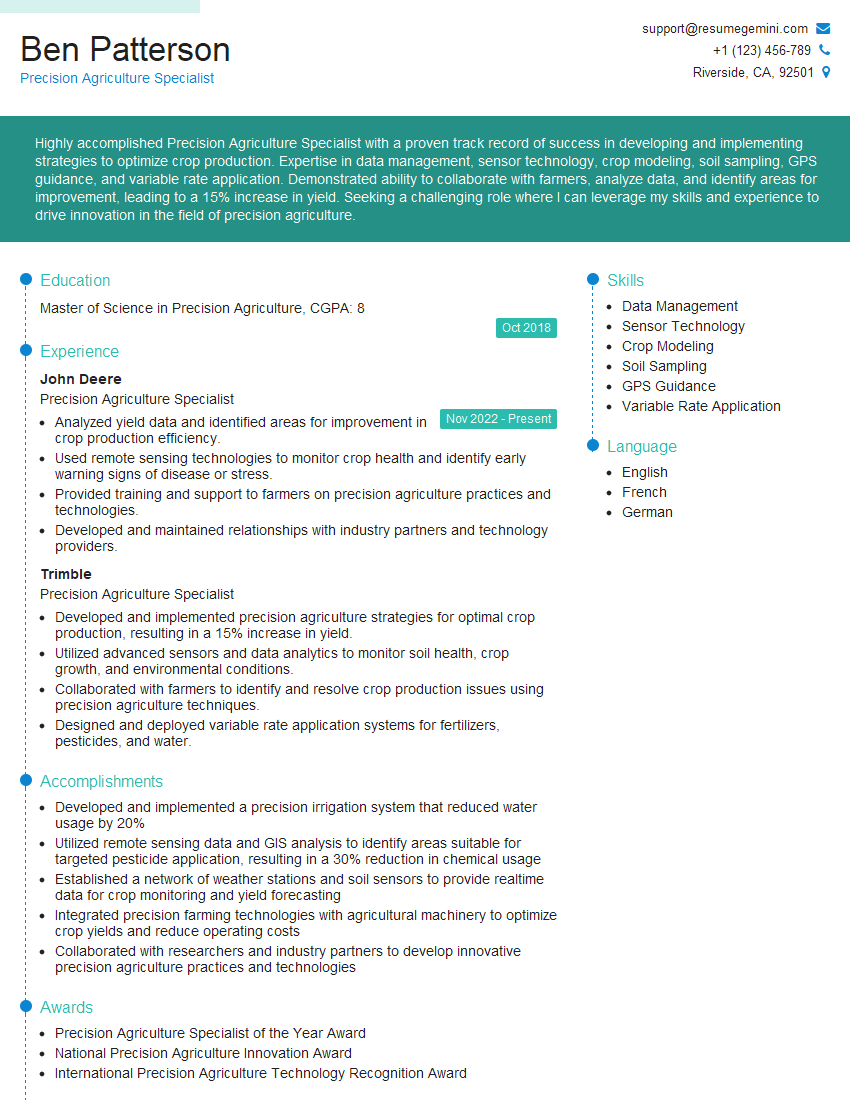
Precision Agriculture Specialist Resume Sample
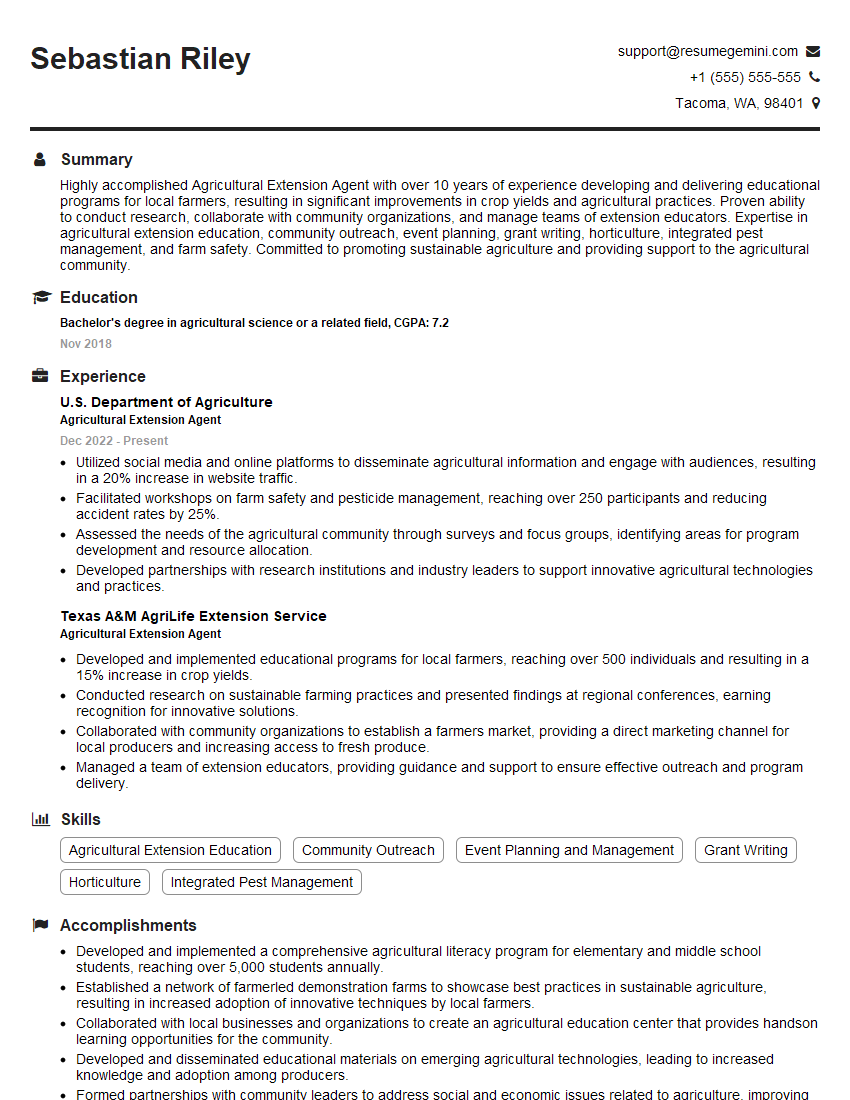
Agricultural Extension Agent Resume Sample
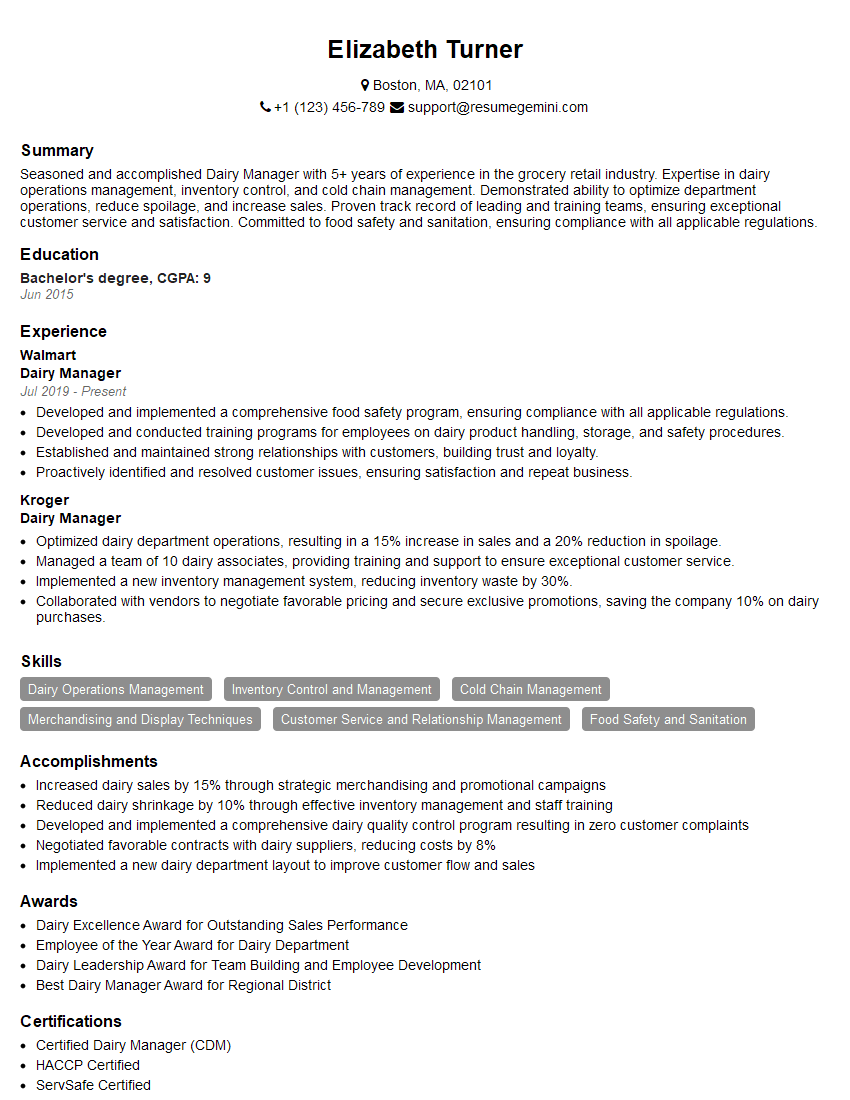
Dairy Manager Resume Sample
Explore more articles
Users Rating of Our Blogs
Share Your Experience
We value your feedback! Please rate our content and share your thoughts (optional).
What Readers Say About Our Blog
Really detailed insights and content, thank you for writing this detailed article.
IT gave me an insight and words to use and be able to think of examples