Interviews are more than just a Q&A session—they’re a chance to prove your worth. This blog dives into essential GPS/GNSS Data Processing and Analysis interview questions and expert tips to help you align your answers with what hiring managers are looking for. Start preparing to shine!
Questions Asked in GPS/GNSS Data Processing and Analysis Interview
Q 1. Explain the difference between GPS and GNSS.
GPS (Global Positioning System) is a satellite-based radionavigation system operated by the United States government. It’s just one component of a larger system. GNSS (Global Navigation Satellite System) is a more encompassing term that refers to any satellite-based radionavigation system, including GPS, GLONASS (Russia), Galileo (European Union), BeiDou (China), and QZSS (Japan). Think of GPS as a specific brand of car, while GNSS is the category of all cars.
In essence, all GPS signals are GNSS signals, but not all GNSS signals are GPS signals. Using multiple GNSS constellations enhances accuracy and reliability by providing more satellite observations and mitigating the effects of signal blockage or interference.
Q 2. Describe the various error sources affecting GPS measurements.
GPS measurements are susceptible to a variety of error sources. These can be broadly categorized as:
- Atmospheric Errors: The ionosphere and troposphere delay the GPS signals, causing positional errors. Ionospheric delays are caused by charged particles, while tropospheric delays are caused by water vapor and other atmospheric constituents. These errors are often mitigated through sophisticated models and data processing techniques.
- Satellite Clock Errors: Atomic clocks onboard satellites aren’t perfectly accurate, leading to timing errors. These errors are constantly monitored and corrected using precise orbital and clock information broadcast by the satellites.
- Ephemeris Errors: The precise position of each satellite isn’t perfectly known; hence, errors in the satellite’s reported location can occur. Precise ephemeris data, regularly updated, significantly reduces this error.
- Multipath Errors: Signals can bounce off buildings, trees, or other surfaces before reaching the receiver, causing inaccurate measurements. These errors are particularly problematic in urban canyons or densely vegetated areas.
- Receiver Noise: Electronic noise within the receiver can introduce random errors into the measurements. High-quality receivers are designed to minimize this noise.
- Orbital Errors: Imperfect knowledge of the satellite’s orbit introduces errors into the position calculations.
- Receiver Clock Errors: Similar to satellite clock errors, the receiver’s internal clock can also drift slightly. This is corrected through techniques like double differencing.
Understanding and mitigating these error sources is crucial for achieving high-accuracy GPS positioning.
Q 3. What are the different types of GPS receivers and their applications?
GPS receivers vary significantly in their capabilities and applications. Here are some examples:
- Single-frequency receivers: These are the most basic type, using signals from a single frequency band. They are relatively inexpensive but have lower accuracy compared to other types. Applications include basic navigation, surveying with lower precision requirements.
- Dual-frequency receivers: These receivers use signals from two frequency bands, allowing for better ionospheric delay correction, resulting in higher accuracy. They are commonly used in precision agriculture, mapping, and surveying.
- Multi-constellation receivers: These receivers track signals from multiple GNSS constellations (GPS, GLONASS, Galileo, BeiDou). This increases the number of satellites visible, improving accuracy, reliability, and availability, especially in challenging environments. These are used in demanding applications such as autonomous vehicles and precise mapping.
- RTK (Real-Time Kinematic) receivers: These are high-precision receivers capable of centimeter-level accuracy. Their function is described in more detail in a later answer. Applications include high-precision surveying, construction, and machine control.
The choice of receiver depends heavily on the specific application and the required level of accuracy.
Q 4. Explain the concept of Differential GPS (DGPS).
Differential GPS (DGPS) improves the accuracy of GPS measurements by correcting for common errors. It employs a reference station—a receiver at a known, fixed location—that receives the same GPS signals as the roving receiver (the receiver whose position is being determined). The reference station calculates the difference between its known position and the position calculated from the GPS signals. These corrections are then transmitted to the roving receiver, allowing it to compensate for systematic errors.
Imagine two people trying to hit a target. One person (the roving receiver) has slightly faulty eyesight (systematic errors), while the other (the reference station) has perfect vision and knows exactly where the target is. The second person can tell the first how far off their aim is, leading to greater precision. DGPS improves accuracy from several meters to sub-meter level.
Q 5. How does Real-Time Kinematic (RTK) GPS work?
Real-Time Kinematic (RTK) GPS is a technique that achieves centimeter-level accuracy by using two receivers: a base station at a known location and a rover at an unknown location. Both receivers track the same GPS satellites. The base station processes the data to determine precise corrections for atmospheric and other errors. These corrections are then transmitted in real-time to the rover, enabling it to calculate its position with extremely high accuracy. The core concept is the use of double differencing techniques to eliminate many error sources.
Imagine two highly skilled archers, one shooting from a fixed, known spot (base station) and the other shooting from an unknown location (rover). They communicate the slight deviations in their arrows to achieve perfect synchronization and almost identical results, allowing them to pinpoint the rover’s location with extreme precision.
Q 6. Describe the process of GPS data pre-processing.
GPS data pre-processing involves preparing the raw GPS data for further analysis or use in applications. It typically includes:
- Cycle-slip detection and repair: Identifying and correcting instances where the GPS signal is temporarily lost, causing a discontinuity in the data.
- Outlier removal: Identifying and removing erroneous measurements due to multipath, atmospheric anomalies or other factors.
- Atmospheric correction: Correcting for the effects of the ionosphere and troposphere on the GPS signal using models or measurements.
- Satellite selection: Selecting the satellites used for positioning, often based on their geometry and signal quality.
- Coordinate transformation: Converting coordinates from one reference system to another (e.g., WGS84 to a local coordinate system).
- Data filtering: Smoothing the data to reduce noise and improve accuracy.
Proper pre-processing is essential for obtaining reliable and accurate results from GPS data.
Q 7. What are the common data formats used in GPS/GNSS data processing?
Several common data formats are used for storing and exchanging GPS/GNSS data. The choice depends on the application and the software used for processing.
- RINEX (Receiver INdependent EXchange): A widely used format for exchanging raw GPS observation data. It’s independent of the specific receiver type.
- SP3 (Satellite Precise Ephemeris): This format contains precise satellite orbit information, essential for high-accuracy post-processing.
- CSV (Comma Separated Values): A simple and widely compatible format for storing processed GPS data. It is often used to export coordinates and other relevant information.
- GPS Exchange Format (GXF): Designed to handle vast quantities of location and related data. It’s used by many professional GPS software packages.
- Proprietary formats: Many GPS manufacturers use their own proprietary data formats.
Understanding the different data formats is crucial for interoperability and efficient data processing.
Q 8. Explain the concept of ephemeris and almanac data.
Ephemeris and almanac data are crucial pieces of information broadcast by GPS satellites that allow receivers to determine their position. Think of them as navigational instructions for your GPS device.
Ephemeris data provides highly precise information about the current orbital position of each individual satellite. It’s like a detailed, real-time roadmap for each satellite, constantly updated to account for subtle variations in their orbits due to gravitational influences and other factors. This data is essential for accurate positioning calculations. The ephemeris is quite large and only contains information for a relatively short period.
Almanac data, on the other hand, is a less precise, but more broadly encompassing set of data that provides approximate orbital information for all GPS satellites. It’s like a general overview map showing the approximate location of all the satellites. It’s much smaller than the ephemeris data and can cover a period of many weeks. The almanac enables the receiver to quickly acquire the signals and determine which satellites are visible, speeding up the initial acquisition process. While it is less accurate than the ephemeris data it is useful for a quick estimate of location or time.
Q 9. How do you handle multipath errors in GPS data?
Multipath errors occur when GPS signals reflect off surfaces like buildings or bodies of water before reaching the receiver. Imagine throwing a ball at a wall; it bounces off and arrives at a different place than it would if it had traveled directly. This creates false signals that distort the precise positioning.
Handling multipath errors is crucial for accurate positioning. Several techniques are used:
- Signal Processing Techniques: Advanced signal processing algorithms, such as narrow correlator techniques, can help to discriminate between direct and reflected signals. These algorithms analyze the subtle time delays and phase differences between arriving signals to identify and mitigate multipath effects.
- Antenna Design: Using antennas with specific characteristics, such as choke rings or ground planes, can minimize the reception of reflected signals and reduce the impact of multipath errors. For example, the antenna may be designed to be less sensitive to signals arriving from certain directions, thereby suppressing multipath effects.
- Data Filtering: Employing appropriate filtering methods, such as Kalman filtering or median filtering, can further smooth out the impact of multipath-induced errors on the final position estimate. This involves mathematically removing the noisy or erratic measurements that are characteristic of multipath.
- Carrier Phase Measurements: In applications requiring centimeter-level accuracy (like surveying), carrier phase measurements can be very effective in mitigating multipath. However, these require advanced techniques to resolve integer ambiguities.
The choice of method depends on the application and the level of accuracy required. Often, a combination of these techniques is employed for optimal performance.
Q 10. What are the different coordinate systems used in GPS?
GPS uses several coordinate systems to represent positions on Earth. The most common are:
- Earth-Centered, Earth-Fixed (ECEF): This is a three-dimensional Cartesian coordinate system with its origin at the Earth’s center. The X-axis points towards the prime meridian at the equator, the Z-axis points towards the north pole, and the Y-axis completes the right-handed system. It’s a convenient system for satellite calculations.
- Geodetic Coordinates (Latitude, Longitude, Height): This is the most familiar system for most users, using latitude and longitude to define the position on the Earth’s surface and an ellipsoidal height to represent the elevation above the reference ellipsoid. The ellipsoid is a mathematical approximation of the Earth’s shape.
- UTM (Universal Transverse Mercator): This system projects the Earth’s surface onto a grid of rectangular coordinates. It’s particularly useful for mapping and surveying applications because it avoids distortions caused by mapping a curved surface onto a flat plane.
- MGRS (Military Grid Reference System): A derivative of UTM, MGRS provides zone identification and a grid-based reference system.
The choice of coordinate system depends on the specific application. For instance, ECEF is often used for precise satellite orbit calculations, while geodetic coordinates are better suited for displaying positions on maps.
Q 11. Explain the concept of GPS signal propagation.
GPS signal propagation describes how the signals travel from the satellite to the receiver. The process involves several steps:
- Transmission from Satellite: GPS satellites transmit signals at specific frequencies (L1 and L2 primarily).
- Atmospheric Effects: The signals pass through the ionosphere and troposphere, resulting in delays and signal distortions (discussed in detail in the next question).
- Free Space Propagation: Once outside of the atmospheric influence, the signals travel at the speed of light in a vacuum.
- Reception by Receiver: The receiver’s antenna captures the weakened signals, which are processed to extract positioning information.
- Multipath Effects: As previously discussed, signals can reflect off surfaces, leading to multipath errors.
Understanding signal propagation is essential for accurately modeling and correcting errors in GPS positioning. This includes using models for atmospheric delays, which can be substantial.
Q 12. What are the various atmospheric effects on GPS signals?
Atmospheric effects significantly impact GPS signal propagation, introducing errors in positioning calculations. These effects include:
- Ionospheric Delay: The ionosphere, a layer of charged particles in the Earth’s upper atmosphere, causes delays in GPS signals due to the interaction of the radio waves with free electrons. This delay is frequency-dependent, meaning that signals at different frequencies are affected differently. This is why dual-frequency receivers can mitigate this error more effectively.
- Tropospheric Delay: The troposphere, the lower part of the Earth’s atmosphere, also causes delays due to the refractive index of water vapor and other atmospheric constituents. This delay is less frequency-dependent than ionospheric delay. Various models are used to estimate these delays for correction.
Precise GPS positioning requires accurate modeling and correction of these atmospheric effects. Models such as the Klobuchar ionospheric model and the Hopfield tropospheric model are commonly used for this purpose, but their accuracy can vary geographically and temporarily. More sophisticated, location-specific models can improve the precision of the correction.
Q 13. Describe different methods for GPS data filtering and smoothing.
GPS data filtering and smoothing techniques aim to remove noise and improve the accuracy and smoothness of the position estimates. Common methods include:
- Kalman Filtering: A recursive algorithm that estimates the state of a dynamic system (in this case, the GPS receiver’s position) from a series of noisy measurements. It’s very effective for smoothing noisy data and incorporating dynamic information about the receiver’s motion.
- Median Filtering: Replaces each data point with the median value of its neighboring points, which is robust to outliers (extreme values) often caused by sudden signal interruptions or multipath.
- Moving Average Filtering: Replaces each data point with the average of its neighboring points. It’s simpler than Kalman filtering but less effective at dealing with sudden changes.
- Savitzky-Golay Filter: A polynomial smoothing filter that can preserve the features of the signal while smoothing noise.
The choice of filter depends on the characteristics of the noise and the desired level of smoothing. For example, a Kalman filter might be better suited for applications where the receiver’s movement is predictable, while a median filter might be more appropriate when dealing with impulsive noise.
Q 14. What are the common techniques for GPS data quality control?
GPS data quality control is essential for ensuring reliable results. Common techniques include:
- Checking the Number of Satellites Used: A sufficient number of satellites (generally at least 4 for 3D positioning) are required for a robust solution. Fewer satellites can reduce accuracy and increase uncertainty. The GDOP (Geometric Dilution of Precision) value indicates the relative geometry of satellites and how it impacts positioning accuracy. Lower GDOP is preferred.
- Assessing Signal Strength (C/N0): Low signal-to-noise ratios (C/N0) indicate weak signals, which often lead to less accurate positioning. This can be due to factors like atmospheric conditions, obstructions, or multipath.
- Analyzing Residuals and Error Statistics: Examining the residuals (differences between observed and predicted measurements) can reveal systematic errors or outliers. Analyzing statistical measures, such as standard deviation, can help quantify the overall uncertainty in the position estimates.
- Using Data Validation Techniques: Checking for plausibility of the data—for example, making sure that the reported position is within a reasonable geographical area. Also, checking for unrealistic jumps or inconsistencies in the data stream.
- Comparing with Other Data Sources: When possible, comparing GPS data with data from other positioning systems (like inertial navigation) or reference stations can provide an independent assessment of the accuracy.
By implementing robust quality control procedures, you minimize the chance of faulty data contaminating your analysis and potentially leading to incorrect conclusions.
Q 15. How do you perform GPS baseline processing?
GPS baseline processing involves determining the precise vector (distance and direction) between two GPS receivers. This is crucial for many applications, from surveying to deformation monitoring. The process generally involves collecting data simultaneously from both receivers, then using post-processing software to analyze the data. This analysis accounts for various error sources inherent in GPS measurements, such as atmospheric delays (ionospheric and tropospheric) and satellite clock errors.
The steps typically involve:
- Data Acquisition: Simultaneous data logging from both receivers, often at a high sampling rate (e.g., 1 Hz or higher).
- Data Preprocessing: This involves cycle-slip detection and correction (jumps in the carrier phase measurements), outlier removal, and potentially data editing.
- Precise Point Positioning (PPP): Using precise ephemeris and clock corrections from services like IGS (International GNSS Service) to obtain highly accurate positions for each receiver independently.
- Double Differencing: This technique subtracts the phase measurements of a common satellite from both receivers, then further subtracts the differences for a common satellite to remove many common error sources.
- Ambiguity Resolution: This critical step involves determining the integer number of carrier phase cycles between the receivers (explained further in question 2). This significantly improves the accuracy of the baseline estimate.
- Baseline Estimation: Finally, the baseline vector is computed using the processed carrier phase and pseudorange measurements.
Software packages like Bernese GNSS Software, RTKLIB, or commercial solutions from companies like Leica or Trimble are commonly used for this type of processing. The accuracy of the baseline depends on factors like observation time, receiver quality, and atmospheric conditions. For instance, a longer observation time generally leads to higher accuracy, especially when resolving ambiguities.
Career Expert Tips:
- Ace those interviews! Prepare effectively by reviewing the Top 50 Most Common Interview Questions on ResumeGemini.
- Navigate your job search with confidence! Explore a wide range of Career Tips on ResumeGemini. Learn about common challenges and recommendations to overcome them.
- Craft the perfect resume! Master the Art of Resume Writing with ResumeGemini’s guide. Showcase your unique qualifications and achievements effectively.
- Don’t miss out on holiday savings! Build your dream resume with ResumeGemini’s ATS optimized templates.
Q 16. Explain the concept of ambiguity resolution in RTK GPS.
Ambiguity resolution in Real-Time Kinematic (RTK) GPS is the process of determining the integer number of carrier cycles between the satellite and the receiver. The GPS signal contains two components: the pseudorange (code measurement) and the carrier phase. The pseudorange is relatively coarse (meter-level accuracy), while the carrier phase is very precise (millimeter-level accuracy). However, the carrier phase measurement contains an unknown integer number of cycles (the ambiguity) which must be resolved to unlock its precision.
Imagine trying to measure the distance to a faraway object using a tape measure. You can easily determine the distance to within a meter, but you may need to find that last missing part of the measurement. That final portion is analogous to the integer ambiguity.
Several techniques are employed for ambiguity resolution, including:
- Least-squares ambiguity decorrelation adjustment (LAMBDA): A widely used method that transforms the float ambiguity solution (a real-number approximation) into an integer solution through decorrelation, increasing the probability of finding the correct integer solution.
- Integer least squares (ILS): This directly searches for the integer ambiguity solution that best fits the observation equations.
Once the integer ambiguity is correctly resolved, the centimeter-level accuracy of RTK is achievable. This is critical for applications requiring high-precision positioning, such as surveying, machine control, and autonomous navigation. Incorrect ambiguity resolution leads to significant errors, and reliability checks are therefore crucial.
Q 17. Describe the different types of GPS antennas and their characteristics.
GPS antennas vary significantly in design and characteristics, each tailored to specific applications and environments. Key characteristics include:
- Gain: Measures the antenna’s ability to receive weak signals.
- Phase center variation (PCV): The location of the antenna’s effective phase center changes with elevation angle and frequency. Accurate PCV models are crucial for high-precision applications.
- Multipath resistance: The ability to mitigate errors caused by signal reflections from surrounding objects.
- Size and weight: Practical considerations for mobile applications.
Common types include:
- Patch antennas: Small, low-profile antennas with moderate gain, commonly used in handheld devices.
- Helical antennas: Provide good circular polarization, reducing signal loss and improving multipath resistance. Often used in geodetic surveys.
- Choke-ring antennas: Designed to suppress ground reflections, ideal for ground-based applications where multipath is a major concern.
- Geodetic antennas: Highly stable and accurate antennas with precise phase center models, essential for centimeter-level positioning in surveying and geodetic applications.
The choice of antenna significantly impacts the accuracy and reliability of GPS measurements. For example, a high-gain antenna is preferable in areas with weak signal reception, whereas a choke-ring antenna may be more suitable in urban environments to minimize multipath errors.
Q 18. What are the limitations of GPS in urban canyons?
Urban canyons, characterized by tall buildings that block or reflect GPS signals, pose significant challenges to GPS positioning. Several limitations arise:
- Signal blockage: Buildings obstruct the line-of-sight to satellites, reducing the number of visible satellites and potentially causing signal loss. This leads to dilution of precision (DOP), increasing positional errors.
- Multipath effects: Reflected signals from buildings interfere with direct signals, leading to inaccurate pseudorange and carrier phase measurements. The resulting errors can be significant, impacting the accuracy of positioning.
- Atmospheric effects: Increased atmospheric delays in urban canyons, especially due to humidity and pollution, can further degrade the accuracy of GPS measurements.
- Non-line-of-sight errors: Errors stemming from signals reaching the receiver indirectly, by reflecting off buildings.
To mitigate these challenges, techniques such as using high-gain antennas, applying advanced signal processing algorithms (e.g., multipath mitigation techniques), employing multiple antennas, and integrating other positioning systems (e.g., inertial navigation systems) are often employed. However, achieving high-accuracy positioning in dense urban environments remains a significant challenge.
Q 19. How does GPS contribute to precision agriculture?
GPS plays a vital role in precision agriculture by enabling precise location-based operations. This includes:
- Variable-rate technology (VRT): GPS allows for the precise application of inputs such as fertilizers, pesticides, and seeds, varying the rate based on the specific needs of the field. This optimizes resource use and reduces environmental impact. Imagine applying fertilizer only where needed, rather than uniformly across the entire field.
- Guidance systems: GPS-guided tractors and machinery allow for precise field operations, reducing overlap and improving efficiency. This ensures that the entire field is covered without unnecessary passes.
- Yield monitoring: GPS combined with yield sensors provides detailed yield maps, identifying areas with high and low yields. This helps farmers to optimize future planting strategies and resource management.
- Automated irrigation: GPS-enabled irrigation systems optimize water usage by applying water only to needed areas.
- Precision spraying: GPS-guided sprayers enable targeted pesticide application, reducing chemical usage and environmental concerns.
Ultimately, GPS enhances productivity, optimizes resource utilization, minimizes environmental impact, and increases the overall profitability of farming operations. The use of GPS enables data-driven decision-making, creating a more efficient and sustainable agricultural system.
Q 20. How is GPS used in autonomous driving?
GPS is a critical component of autonomous driving systems, providing the vehicle’s location information. However, GPS alone is insufficient for fully autonomous driving due to its limitations in accuracy and availability (e.g., in tunnels or under dense tree cover). Therefore, it’s typically integrated with other sensors and systems such as:
- Inertial Measurement Units (IMUs): IMUs measure acceleration and rotation rate to provide short-term, high-frequency position and orientation data. This helps bridge gaps in GPS availability and improve accuracy.
- Cameras and LiDAR: These sensors provide detailed environmental information, enabling the vehicle to perceive its surroundings and navigate obstacles. They improve location accuracy and support safe path planning.
- Mapping systems: High-definition maps provide detailed road geometry and other relevant information, improving localization accuracy and enabling more precise navigation.
GPS data, in conjunction with these other sensors, contributes to the vehicle’s localization, path planning, and navigation. For example, GPS provides the vehicle’s global position, while IMU data helps to maintain location accuracy between GPS updates. The combination of these sources offers robustness and precision crucial for the safety and reliability of autonomous driving systems.
Q 21. Explain the role of GNSS in surveying and mapping.
GNSS (Global Navigation Satellite Systems), which includes GPS and other satellite systems like GLONASS, Galileo, and BeiDou, plays a transformative role in surveying and mapping. It provides the foundational positioning information for many geospatial tasks. Key applications include:
- Geodetic surveying: Determining precise coordinates of points on the Earth’s surface. GNSS enables highly accurate coordinate determination for creating geodetic control networks.
- Topographic mapping: Creating detailed maps of the Earth’s surface, showing features such as elevation, land cover, and infrastructure. GNSS helps in positioning survey points for creating digital elevation models (DEMs) and other topographic datasets.
- Cadastral surveying: Defining and mapping land boundaries. GNSS facilitates the accurate measurement of land parcels and assists in resolving boundary disputes.
- Engineering surveying: Supporting various construction and engineering projects by providing accurate positioning information for setting out, monitoring construction progress, and performing deformation analysis.
- GIS data acquisition: Collecting spatial data for geographic information systems. GNSS-enabled mobile mapping systems collect millions of data points, creating detailed and up-to-date maps for various purposes.
GNSS technology has significantly improved the speed, efficiency, and accuracy of surveying and mapping operations, enabling the creation of highly precise and detailed geospatial data for diverse applications, from urban planning to environmental monitoring.
Q 22. Describe your experience with specific GPS/GNSS software packages.
My experience with GPS/GNSS software packages is extensive, encompassing both commercial and open-source solutions. I’m proficient in using RTKLIB, a powerful and versatile open-source software for precise point positioning (PPP) and post-processing kinematic (PPK) solutions. RTKLIB’s flexibility allows for customization and in-depth analysis of raw GNSS data. I have also worked extensively with commercial packages like Leica Geo Office, which provides a user-friendly interface for processing large datasets and creating high-quality maps and visualizations. Additionally, I have experience with Trimble Business Center, known for its robust processing capabilities and integration with various Trimble receivers. My proficiency extends to programming scripts for automation of tasks within these software packages, significantly improving workflow efficiency.
For example, in a recent project involving high-precision surveying, I used RTKLIB to process raw data from multiple GNSS receivers, achieving centimeter-level accuracy. The ability to fine-tune parameters in RTKLIB allowed me to optimize the processing for the specific conditions of the project, leading to significantly improved results compared to using default settings. In another project, I utilized Leica Geo Office for data management and visualization, streamlining the process of creating 3D models and maps for large-scale infrastructure projects.
Q 23. How do you handle outliers in GPS data?
Handling outliers in GPS data is crucial for achieving accurate results. Outliers, which are data points significantly deviating from the expected values, can severely impact the overall accuracy of the positioning solution. I employ a multi-pronged approach. Firstly, I visually inspect the data using scatter plots or time series to identify potential outliers. This gives a quick overview of any gross errors. Secondly, I utilize statistical methods like the 3-sigma rule, removing any data point that falls outside three standard deviations from the mean. However, blindly removing outliers based solely on statistical criteria can lead to loss of valid data. Therefore, I also investigate the underlying causes of outliers. These can include things like multipath, cycle slips, or atmospheric disturbances. Understanding the cause allows for more informed decisions on whether to remove the outlier or try to correct it.
For instance, if I observe a sudden jump in the position solution that appears to be caused by a cycle slip, I might attempt to correct the slip using a cycle-slip detection and repair algorithm. If the outlier is attributable to a clear multipath effect, I may attempt to mitigate the effect by using advanced techniques such as precise point positioning (PPP) that addresses such effects. Only if the outlier remains unexplained and impacts the overall accuracy significantly after these steps, will I opt to remove the data point.
Q 24. What are your preferred methods for visualizing GPS data?
Visualization is key to understanding GPS data. My preferred methods depend on the specific application and the type of data. For raw data, I often use time series plots to observe the variation of position coordinates (latitude, longitude, and height) over time. This helps to quickly identify anomalies and trends. For spatial data, I utilize Geographic Information Systems (GIS) software like ArcGIS or QGIS to create maps visualizing the GPS tracks and locations. This allows for easy interpretation of the spatial distribution of measurements, especially when working with large datasets. 3D visualizations are particularly useful for representing complex spatial data, helping understand the trajectory of a moving object or the spatial arrangement of multiple points.
For example, when analyzing data from a drone survey, I might use a 3D visualization to inspect the coverage of the survey area. Similarly, when assessing the accuracy of a geodetic network, I could use a map visualizing the coordinate residuals to identify potential errors or areas that need further investigation.
Q 25. Explain your experience with different GNSS constellations (GPS, GLONASS, Galileo, BeiDou).
My experience encompasses various GNSS constellations, including GPS, GLONASS, Galileo, and BeiDou. Understanding the strengths and weaknesses of each constellation is crucial for selecting the optimal system for a particular application. GPS, the most mature system, offers wide coverage and good signal strength. GLONASS, the Russian system, provides complementary coverage, especially in higher latitudes. Galileo, the European system, emphasizes accuracy and civilian signal availability, and BeiDou, the Chinese system, boasts growing global coverage. The use of multiple constellations (multi-GNSS) significantly enhances the reliability and accuracy of positioning solutions by mitigating the impact of satellite geometry and signal blockage.
For example, in a project requiring high accuracy in a region with limited GPS visibility, I might incorporate GLONASS and Galileo observations to improve the overall solution. The combination of multiple constellations provides redundancy and improved satellite geometry, leading to a more robust and precise positioning solution.
Q 26. Describe your understanding of ionospheric and tropospheric delays.
Ionospheric and tropospheric delays are significant error sources in GNSS measurements. The ionosphere, a layer of charged particles in the Earth’s upper atmosphere, causes delays in the signal propagation time due to the refractive effects of the charged particles. The troposphere, the lower layer of the Earth’s atmosphere, introduces delays mainly due to the refractive effects of water vapor and dry air. These delays are often significant, particularly at low elevation angles. Accurate modeling and mitigation of these delays are critical to achieving high-precision positioning. Various models, such as the Klobuchar model for ionospheric delay and the Saastamoinen model for tropospheric delay, are commonly used. Advanced techniques such as precise point positioning (PPP) also leverage precise ionospheric and tropospheric models for better correction.
Failure to account for these delays can lead to significant errors, especially in long-range or high-precision applications. For example, in precise surveying or geodetic applications, ignoring these delays could lead to centimeter-level errors in position determination, rendering the results unusable for many purposes.
Q 27. How do you assess the accuracy of GPS measurements?
Assessing the accuracy of GPS measurements involves multiple approaches. The simplest is to compare the measured position with a known reference point, for instance, a geodetic marker with known coordinates. The difference is the positional error. However, this only assesses the accuracy at a single point in time. More sophisticated methods look at the precision of the measurements. This can be done using statistical metrics like standard deviation of position coordinates over time. A smaller standard deviation indicates higher precision. Another approach involves analyzing the residuals or differences between the observed and predicted pseudoranges, which provides insight into the systematic and random errors in the measurements. Furthermore, we can utilize the Dilution of Precision (DOP) values, which reflect the geometric strength of the satellite constellation. A lower DOP implies better accuracy. Finally, I always examine the formal error estimates produced by the processing software which provide an estimate of the uncertainty of the solution.
For instance, in a project aiming for centimeter-level accuracy, I would need to carefully consider all aspects, including satellite geometry, atmospheric conditions, and the quality of the receiver hardware. A thorough analysis of the results, including error estimates and visualization of residuals, would be crucial in determining whether the required accuracy has been achieved.
Q 28. Explain your experience with post-processing kinematic (PPK) GPS.
Post-processed kinematic (PPK) GPS is a powerful technique that leverages precise ephemerides and clock corrections to significantly enhance the accuracy of GPS measurements. In PPK, the raw data from a rover receiver is processed simultaneously with data from a base station receiver located at a precisely known location. This enables correction of several error sources that affect positioning, including atmospheric delays, satellite clock errors, and orbital errors. The high accuracy of PPK makes it suitable for numerous applications requiring centimeter-level accuracy, such as surveying, mapping, and machine control. The processing typically involves using specialized software packages, such as RTKLIB or commercial solutions like Trimble Business Center. These packages implement sophisticated mathematical models and algorithms to generate precise position solutions.
I have extensive experience using PPK for various projects, including high-precision surveying for construction projects and precise positioning for infrastructure monitoring. In a recent project involving precise mapping of a landslide area, PPK proved invaluable for accurately capturing the terrain changes with centimeter-level precision, enabling accurate assessment of the risk posed by the landslide. Compared to real-time kinematic (RTK), PPK offers higher accuracy as it does not need real-time communication and is less susceptible to signal interruptions.
Key Topics to Learn for GPS/GNSS Data Processing and Analysis Interview
- GPS/GNSS Fundamentals: Understanding the underlying principles of GPS and GNSS technologies, including satellite constellations, signal structures, and error sources. Consider exploring different GNSS systems (GPS, GLONASS, Galileo, BeiDou).
- Signal Acquisition and Tracking: Familiarize yourself with techniques for acquiring and tracking GNSS signals, including code and carrier tracking loops. Understand the challenges associated with signal attenuation and multipath.
- Precise Point Positioning (PPP): Learn the theory and practical applications of PPP, including its advantages and limitations compared to other positioning techniques. Be prepared to discuss different PPP models and their respective accuracies.
- Atmospheric Effects Correction: Master the correction of ionospheric and tropospheric delays on GNSS signals. Understand different correction models and their impact on positioning accuracy.
- Data Processing Techniques: Become proficient in various data processing techniques, including filtering, smoothing, and outlier detection. Explore different software packages used for GNSS data processing.
- Error Analysis and Mitigation: Develop a strong understanding of different error sources affecting GNSS measurements and techniques for mitigating them. This includes understanding the impact of multipath, atmospheric delays, and receiver noise.
- Applications of GPS/GNSS Data: Be ready to discuss practical applications in areas such as surveying, navigation, precision agriculture, and autonomous vehicles. Highlight specific projects or experiences where you have utilized GNSS data.
- Advanced Topics (Optional): Depending on the seniority of the role, you might consider exploring advanced topics like integrated navigation systems, real-time kinematic (RTK) GPS, or inertial navigation systems.
Next Steps
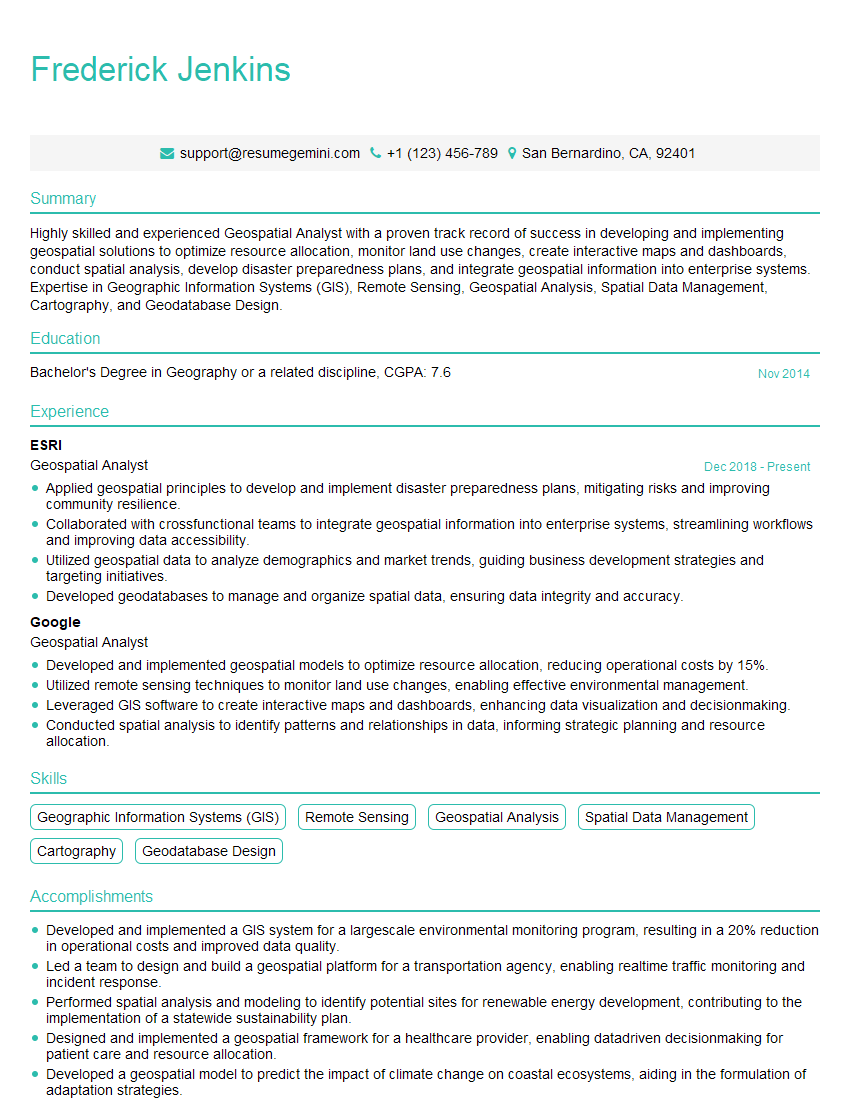
Mastering GPS/GNSS Data Processing and Analysis opens doors to exciting and impactful career opportunities in various industries. A strong understanding of these concepts is highly valued by employers seeking skilled professionals in this rapidly evolving field. To maximize your job prospects, focus on creating an ATS-friendly resume that effectively showcases your skills and experience. ResumeGemini is a trusted resource that can help you build a professional and impactful resume tailored to the specific requirements of GPS/GNSS Data Processing and Analysis roles. Examples of resumes tailored to this field are available for your review, further enhancing your job search success.

Explore more articles
Users Rating of Our Blogs
Share Your Experience
We value your feedback! Please rate our content and share your thoughts (optional).
What Readers Say About Our Blog
Really detailed insights and content, thank you for writing this detailed article.
IT gave me an insight and words to use and be able to think of examples