Every successful interview starts with knowing what to expect. In this blog, we’ll take you through the top Ability to Operate Power Tools interview questions, breaking them down with expert tips to help you deliver impactful answers. Step into your next interview fully prepared and ready to succeed.
Questions Asked in Ability to Operate Power Tools Interview
Q 1. What safety precautions do you take before operating power tools?
Before operating any power tool, safety is paramount. My routine begins with a thorough inspection of the tool itself – checking for any damage to the cord, casing, or any moving parts. I ensure all guards are in place and functioning correctly. Next, I assess the workspace. This includes clearing the area of any obstructions, ensuring adequate lighting, and wearing appropriate Personal Protective Equipment (PPE). This PPE always includes safety glasses, hearing protection, and appropriate work gloves. For tasks involving dust, I’ll also use a respirator. Finally, I always make sure I understand the tool’s operation fully before switching it on, referring to the instruction manual if needed. For example, before using a circular saw, I’ll check the blade is securely fastened and the depth of cut is correctly adjusted for the material. This meticulous pre-operation check helps prevent accidents and ensures a safe working environment.
Q 2. Describe your experience with different types of saws (circular, miter, reciprocating).
I have extensive experience with various saws. With circular saws, I’m comfortable with both ripping (cutting along the grain) and cross-cutting (cutting across the grain), understanding the importance of proper blade selection for each. I regularly use miter saws for precise angle cuts, especially in framing and trim work, emphasizing the need to secure the workpiece firmly to prevent kickback. Reciprocating saws, or sawsalls, are my go-to for demolition and rough cuts, where speed and maneuverability are key. For each saw, I’m proficient in adjusting the blade depth and bevel angles, and I always follow the manufacturer’s recommendations for safe operation. For instance, when using a circular saw on a long board, I use a support to prevent the wood from binding and causing the saw to kickback.
Q 3. How do you maintain and clean your power tools?
Maintaining power tools is crucial for both safety and longevity. After each use, I clean the tool thoroughly, removing sawdust and debris with a brush or compressed air. I regularly inspect cords for fraying or damage, replacing them immediately if necessary. Lubrication, as specified by the manufacturer, is essential for moving parts. For example, I lubricate the chuck of my drill and the guide rails of my miter saw periodically. I also store tools in a clean, dry place, protecting them from dust and moisture. Regular maintenance, like this, prevents costly repairs and ensures tools function optimally. Ignoring maintenance could lead to tool malfunction, causing injury or damage.
Q 4. Explain the proper use of a drill press.
The drill press is a powerful and versatile tool, but safety is paramount. Before using a drill press, I always ensure the workpiece is securely clamped to the table, preventing movement during drilling. I select the appropriate drill bit for the job and ensure it’s properly tightened into the chuck. I adjust the speed of the drill press according to the material being drilled – slower speeds for harder materials to prevent overheating and breakage. I always feed the bit into the workpiece steadily and slowly to prevent binding or breakage. The bit should always be kept perpendicular to the workpiece to prevent wandering and ensure a clean hole. After drilling, I always turn off the machine before removing the workpiece and the drill bit, applying the same caution and method as when using hand drills. Failing to do so can lead to serious injury.
Q 5. What are the different types of drill bits and when would you use each one?
Drill bits come in various types, each suited for specific materials and applications. Twist bits are general-purpose bits for drilling wood, metal, and plastic. Forstner bits create flat-bottomed holes with clean edges, ideal for woodworking. Brad point bits are excellent for precise holes in wood, minimizing splintering. Masonry bits are designed for drilling into brick, concrete, or stone. I choose the bit based on the material and the required hole size and type. For example, when drilling pilot holes for screws in hardwood, I’d use a brad point bit to minimize splitting. Selecting the wrong bit could lead to broken bits, damaged material, or personal injury.
Q 6. How do you handle different types of wood when using power tools?
Different types of wood require different approaches when using power tools. Hardwoods, like oak or maple, are denser and require slower speeds and sharper bits to prevent tool damage and burning. Softwoods, like pine or fir, are easier to work with, allowing for faster speeds. I always consider the grain direction when cutting wood, avoiding tear-out by making cuts with the grain whenever possible. Additionally, I adjust the blade or bit according to the thickness of the wood to ensure a clean cut. For example, when cutting hardwoods with a circular saw, I’d use a fine-tooth blade to minimize tear-out and maintain a clean finish, whereas a coarser blade would suffice for softwoods.
Q 7. Describe your experience with routers and their various bits.
Routers are extremely versatile tools, capable of creating intricate designs and shapes. I have experience with various router bits, including straight bits for creating grooves and rabbets, roundover bits for creating rounded edges, and cove and bead bits for decorative molding. The choice of bit depends on the desired profile and the material being worked. Like all power tools, I always ensure the workpiece is securely clamped and that the router bit is properly installed and adjusted before operation. I use appropriate jigs and guides to ensure precise and safe cuts. For instance, using a router table with a fence allows for precise cuts to make repetitive mouldings. A proper understanding of the router and its various bits is essential to prevent accidents and achieve clean, precise results.
Q 8. How do you ensure the accuracy of cuts when using power tools?
Ensuring accurate cuts with power tools involves a combination of preparation, technique, and tool maintenance. Think of it like baking a cake – if your ingredients (materials and tools) aren’t right, or your technique (method) is flawed, the result won’t be perfect.
Proper Setup: Always start by ensuring your workpiece is securely clamped to a stable surface. Movement during cutting is the enemy of accuracy. For example, when using a circular saw, I’d always use a clamp to secure the wood and a guide to ensure a straight cut.
Sharp Blades/Bits: Dull blades cause tear-out and inaccurate cuts. Regularly inspect and sharpen or replace blades and bits. Imagine trying to cut bread with a dull knife – it’s messy and uneven.
Correct Tool Selection: Choose the right tool for the job. A jigsaw is ideal for curves, while a table saw excels at straight cuts. Using the wrong tool will inevitably lead to inaccurate results.
Consistent Speed and Pressure: Avoid rushing. Maintain a steady speed and even pressure throughout the cut. Jerky movements will create uneven cuts. Think of it like drawing a straight line – a steady hand is crucial.
Test Cuts: Before making the final cut on valuable material, always do a test cut on a scrap piece to check blade alignment, speed, and depth of cut.
Q 9. What are the safety procedures for using a table saw?
Safety is paramount when operating a table saw. It’s not just about following rules; it’s about respecting the powerful machine you’re working with. A single mistake can have serious consequences.
Push Sticks and Featherboards: Always use push sticks and featherboards to keep your hands clear of the blade. This prevents kickback and potential injury. Think of them as your personal safety guards.
Blade Guard and Splitter: Ensure the blade guard and splitter are properly installed and functioning. These are crucial safety features designed to prevent kickback and bind.
Clear the Area: Keep the area around the table saw clear of clutter. A trip hazard could easily lead to an accident.
Proper Clothing: Wear appropriate safety gear, including safety glasses, hearing protection, and a dust mask. Long hair should be tied back, and loose clothing should be avoided. Think of it as putting on a suit of armor before battle.
Never Reach Over the Blade: This is a fundamental safety rule. Never reach over the blade to remove scraps or make adjustments. Always turn off the saw and unplug it before doing anything near the blade.
Ripping vs. Crosscutting: Understand the difference between ripping (cutting with the grain) and crosscutting (cutting against the grain). Each requires different techniques and safety precautions.
Q 10. How do you identify and address malfunctions in power tools?
Identifying and addressing malfunctions in power tools requires a systematic approach. I always prioritize safety first, turning off and unplugging the tool before any inspection or repair.
Visual Inspection: Start with a thorough visual inspection, checking for loose parts, damaged cords, or unusual wear and tear. A simple visual check can often pinpoint the problem quickly.
Listen for Unusual Noises: Unusual grinding, squealing, or humming sounds often indicate a problem. These sounds can provide clues to the nature of the malfunction.
Check for Power: If the tool isn’t functioning, check the power source – the outlet, cord, and plug. The problem might be as simple as a blown fuse or a tripped breaker.
Test the Tool (Safely): If possible, try the tool with a different power source to rule out issues with the power supply.
Consult the Manual: Refer to the tool’s operating manual for troubleshooting information and maintenance guides. Manuals often contain valuable insights into common problems and their solutions.
Professional Repair: If the problem is beyond your expertise, or if you suspect a safety hazard, seek professional repair from a qualified technician.
Q 11. Explain your experience with pneumatic tools.
My experience with pneumatic tools is extensive, ranging from nail guns and staple guns to impact wrenches and sanders. I’ve used them in various construction projects and find them highly efficient for certain tasks.
Nail Guns: I’ve used various types of nail guns, including framing nailers, finish nailers, and brad nailers, for tasks ranging from framing walls to installing trim. I’m proficient in loading, adjusting the depth of drive, and clearing jams.
Impact Wrenches: I find impact wrenches invaluable for quickly tightening or loosening nuts and bolts, particularly in automotive repair and heavy-duty construction. Their ability to handle stubborn fasteners is unmatched.
Air Compressors: I understand the importance of maintaining proper air pressure and ensuring adequate airflow to the pneumatic tools. Without sufficient air pressure, the tools won’t operate correctly or safely.
Safety Considerations: When using pneumatic tools, I always prioritize safety by wearing appropriate eye and hearing protection. I’m also familiar with the risks associated with high-pressure air and take all necessary precautions.
Q 12. Describe your experience with various types of sanders.
My experience encompasses various types of sanders, each suited for different applications. Think of them as specialized tools, each designed for a specific surface and finish.
Belt Sanders: Excellent for removing large amounts of material quickly, but require careful control to avoid gouging. I’ve used them extensively for shaping wood and metal.
Orbital Sanders: Ideal for smoothing surfaces and removing scratches. The random orbital action creates a less aggressive sanding pattern than a belt sander, leaving a finer finish. I prefer these for finishing work.
Sheet Sanders: These are great for large, flat surfaces and offer good control. They’re particularly useful for sanding walls or large panels.
Detail Sanders: Used for intricate work and tight spaces, detail sanders offer exceptional maneuverability for sanding curves and edges.
Grinders (Angle Grinders): Used with abrasive wheels and discs for more aggressive material removal and shaping. These require extra caution and safety measures.
Q 13. What are the different types of nail guns and their applications?
Nail guns come in various types, each with a specific application and nail capacity. Choosing the wrong one could lead to inefficiencies or even injury.
Framing Nailers: These are heavy-duty tools designed for large-scale framing projects, using long, thick nails to join structural lumber. They demand strength and expertise.
Finish Nailers: Used for smaller nails and finer carpentry work, such as trim installation. They produce a much neater finish than framing nailers.
Brad Nailers: Ideal for even finer work, employing small brads for delicate tasks like attaching molding or cabinetry.
Roofing Nailers: Specifically designed for attaching roofing materials with long, hardened nails, suited for tough external conditions.
Coil vs. Strip Nailers: Coil nailers offer higher capacity, while strip nailers are more compact. The choice depends on the scale of the project.
Q 14. How do you select the appropriate bit or blade for a specific task?
Selecting the right bit or blade is crucial for both efficiency and safety. Using the wrong one can damage the material, dull the bit or blade quickly, or lead to dangerous situations.
Material Type: The material you are cutting or drilling will determine the appropriate bit or blade. Wood requires different bits than metal or concrete. For instance, a wood-cutting blade won’t work on metal.
Size and Shape: The size and shape of the bit or blade should match the task. Consider the diameter of the hole you are drilling or the width of the cut you need to make.
Tooth Design (for Blades): Blades have varying tooth configurations for different materials and cut types. A fine-tooth blade is better for making clean cuts in softer materials, while a coarse-tooth blade is suited for rough cuts in harder materials. This is similar to choosing the right saw for a job.
Shank Type (for Bits): Drill bits have different shank types (e.g., straight shank, shank with reduced diameter) that are suited for different drill chucks. Always ensure compatibility.
Manufacturer Recommendations: Always refer to the tool’s manual and the manufacturer’s recommendations for the proper types and sizes of bits and blades.
Q 15. Explain the importance of using personal protective equipment (PPE) when operating power tools.
Personal Protective Equipment (PPE) is paramount when operating power tools. It’s your first line of defense against injuries, safeguarding your body from flying debris, sharp objects, and potential electrical hazards. Think of PPE as your safety armor.
- Eye Protection: Safety glasses or a face shield are essential to protect your eyes from flying debris or sparks. I always start by putting on my safety glasses, even for small tasks, it’s a habit I’ve built over years of experience.
- Hearing Protection: Many power tools are incredibly loud. Earmuffs or earplugs significantly reduce noise exposure, preventing hearing damage over time. I’ve seen firsthand the debilitating effects of prolonged noise exposure on colleagues, so this is non-negotiable for me.
- Respiratory Protection: When working with materials like dust or fumes, a respirator is crucial. This could be a simple dust mask for woodworking or a more advanced respirator for working with chemicals. Proper respiratory protection is crucial when using things like cutting compounds.
- Hand Protection: Gloves can prevent cuts, abrasions, and blisters. Choosing the right glove for the task—whether it’s a lightweight pair for fine work or heavy-duty gloves for rough jobs—is also important.
- Foot Protection: Steel-toe boots are necessary to protect your feet from falling objects or accidental impacts. This is vital regardless of the tool being used; heavy materials are always a risk on a worksite.
Failing to use appropriate PPE can lead to serious injuries, impacting your health and ability to work. It’s not just about following regulations; it’s about prioritizing your well-being.
Career Expert Tips:
- Ace those interviews! Prepare effectively by reviewing the Top 50 Most Common Interview Questions on ResumeGemini.
- Navigate your job search with confidence! Explore a wide range of Career Tips on ResumeGemini. Learn about common challenges and recommendations to overcome them.
- Craft the perfect resume! Master the Art of Resume Writing with ResumeGemini’s guide. Showcase your unique qualifications and achievements effectively.
- Don’t miss out on holiday savings! Build your dream resume with ResumeGemini’s ATS optimized templates.
Q 16. How do you handle unexpected situations or emergencies while using power tools?
Unexpected situations can arise while using power tools, from power outages to equipment malfunctions. My approach is based on preparedness, quick thinking, and adherence to safety procedures.
- Immediate Action: If a tool malfunctions, immediately turn it off and unplug it. Never attempt to repair a running tool. I’ve had a few close calls where tools started to vibrate excessively, and the immediate shutdown prevented further problems.
- Assessment: Once the tool is safely secured, I assess the situation – What happened? Are there any injuries? Is there a potential fire hazard?
- Emergency Procedures: I’m familiar with my workplace’s emergency procedures. This includes knowing the location of first aid kits, fire extinguishers, and emergency exits. This knowledge was invaluable during an incident involving a spark igniting nearby sawdust – I was able to quickly extinguish the small fire before it escalated.
- Reporting: I always report incidents to the supervisor, even minor ones. This allows for corrective actions to prevent recurrence and improves overall workplace safety. Accurate reporting is crucial for maintaining a safe working environment.
- Prevention: Regular maintenance and inspection of tools greatly reduce the likelihood of unexpected problems. I regularly check for loose parts, worn blades, and frayed cords.
Handling emergencies effectively requires training, awareness, and a proactive safety mindset. My approach is to always err on the side of caution.
Q 17. Describe your experience with using a planer.
I have extensive experience using a planer, both hand-held and stationary models. I’m proficient in using it for various tasks, including smoothing rough lumber, creating consistent thicknesses, and shaping wood for specific projects.
For example, I recently used a planer to prepare lumber for a custom-built cabinet. I carefully fed the wood through the planer, adjusting the depth of cut to achieve the desired thickness. I regularly checked the blade for sharpness and alignment to ensure a clean and consistent cut. Before using any planer, I always ensure the wood is securely clamped to prevent kickback. I prioritize smooth operation and even cuts to ensure minimal wood waste.
My experience includes working with different types of wood, understanding the grain patterns, and adjusting the planing technique accordingly. I’m comfortable with both basic planing techniques and more advanced shaping techniques like chamfering and beveling. I always understand and follow the manufacturer’s instructions before using any new equipment.
Q 18. What are the safety regulations for operating power tools in your state/region?
(Note: This answer will vary depending on the specific state/region. Replace the bracketed information with your actual state/region’s regulations.)
Safety regulations for operating power tools in [State/Region] are comprehensive and strictly enforced. Key regulations include:
- Mandatory PPE: The use of appropriate PPE, as discussed earlier, is mandatory for all power tool operations.
- Tool Maintenance: Regular inspection and maintenance of tools are crucial. Tools must be kept in good working order, with damaged tools immediately removed from service.
- Lockout/Tagout Procedures: Strict lockout/tagout procedures must be followed before performing any maintenance or repairs on power tools. This prevents accidental starts.
- Training and Certification: Operators may need specific training or certification depending on the type of power tools used and the complexity of the work. Many employers conduct regular safety training.
- Specific Tool Regulations: Specific regulations might exist concerning particular power tools, such as those related to guarding, speed control, and dust collection.
It’s essential to consult the relevant authorities and workplace safety manuals for detailed and up-to-date information. Ignoring safety regulations can result in serious penalties and harm to workers.
Q 19. How do you ensure the proper alignment and setup of power tools?
Proper alignment and setup of power tools are crucial for safety and achieving accurate results. This involves several key steps:
- Leveling: Ensuring the tool is level is often the first step, particularly for stationary tools like table saws or planers. An uneven base can lead to inaccurate cuts and safety hazards.
- Blade Alignment: For tools like table saws and miter saws, ensuring the blade is perfectly perpendicular to the table is crucial. Misalignment can cause binding and kickback. I use a combination square and feeler gauges to meticulously check the alignment.
- Fence Adjustment: The fence on tools like table saws and jointers needs to be precisely adjusted to the desired distance from the blade. This is important for making accurate rips or jointer cuts. Careful measurement and checking are important here.
- Depth of Cut Adjustment: Setting the depth of cut appropriately is essential to prevent overloading the tool or causing damage to the workpiece. I usually start with shallow passes and gradually increase the depth as needed.
- Material Support: Adequate support for the workpiece is vital to prevent it from twisting or binding during operation, which can be dangerous. I use featherboards or hold-downs for extra support when necessary.
Neglecting these steps can lead to inaccurate cuts, damaged tools, and potential injuries. A precise setup is essential for both quality and safety.
Q 20. Explain your experience with different types of joinery techniques using power tools.
I have extensive experience with various joinery techniques using power tools, including:
- Dado Joints: Using a table saw with a dado stack to create slots for shelves or drawers. This requires careful attention to blade alignment and depth of cut. I often use a sled for added safety and accuracy.
- Mortise and Tenon Joints: Using a router, drill press, and chisel to create strong and accurate mortise and tenon joints for furniture making. Precise measurement and careful execution are vital for a strong joint.
- Box Joints: Creating interlocking box joints using a router table or a specialized jig for accurate and consistent results. This is a reliable technique for creating strong boxes and drawers.
- Pocket Hole Joinery: Using a Kreg jig and drill press to create concealed pocket holes for joining pieces quickly and efficiently. This method is particularly useful for furniture projects that need a clean finish.
- Finger Joints: Using a table saw or specialized jig to create intricate finger joints for complex woodworking projects. Precise measurements and careful setup are absolutely crucial.
My skill with these techniques allows me to construct a variety of strong and aesthetically pleasing joints. I select the appropriate technique based on the project’s design and the properties of the wood.
Q 21. How do you troubleshoot common problems encountered when operating power tools?
Troubleshooting power tools often involves a systematic approach. Here’s my typical process:
- Safety First: Always unplug the tool before attempting any troubleshooting.
- Identify the Problem: Pinpoint the specific issue—is it a lack of power, unusual noise, inaccurate cuts, or something else?
- Check Obvious Causes: Start with the simplest checks. Is the power cord plugged in? Is the circuit breaker tripped? Are there any obvious obstructions? Many issues are easily resolved with simple checks.
- Inspect the Tool: Carefully examine the tool for loose parts, damaged components, or worn-out blades. Check for anything out of the ordinary. Look for obvious signs of damage or wear.
- Consult Manuals: Refer to the tool’s user manual for troubleshooting tips and diagrams. Manufacturers often provide useful guides for common problems.
- Seek Expert Advice: If the problem persists, consult with a qualified technician or contact the tool’s manufacturer for assistance. Sometimes a second set of eyes can make a difference.
By following a logical and systematic approach, many power tool problems can be resolved efficiently and safely. Preventative maintenance is also key to minimizing troubleshooting needs. Regular cleaning and lubrication can prevent issues from developing in the first place.
Q 22. Describe your experience working with different materials (wood, metal, plastic) using power tools.
My experience with power tools spans a wide range of materials, including wood, metal, and plastics. Each material requires a different approach and tool selection. With wood, I’ve extensively used routers for intricate shaping, table saws for precise cuts, and planers for smoothing surfaces. For example, I once built a custom bookshelf using a combination of these tools, requiring careful attention to grain direction and cut angles to avoid splintering. Metalworking has involved using angle grinders for cutting and shaping, drills for precise holes, and band saws for curved cuts. I remember fabricating a custom metal bracket for a project, requiring precise measurements and careful control of the angle grinder to avoid damage. Finally, with plastics, I’ve employed techniques like routing and drilling, often using lower speeds and specialized bits to avoid melting or fracturing the material. A recent project involved creating custom plastic housings for electronic components, requiring meticulous work to achieve clean, precise cuts.
Q 23. What are the key factors to consider when choosing a power tool for a specific task?
Choosing the right power tool depends on several key factors. Firstly, the material being worked dictates the appropriate tool. Cutting wood requires different tools than cutting metal. Secondly, the task itself needs consideration. A delicate cut demands precision tools like a jigsaw, while rough shaping might benefit from a reciprocating saw. Thirdly, the desired finish influences tool selection. For a fine finish, a sander or planer is necessary, while a rough cut might suffice with a circular saw. Finally, the scale of the project matters. Small jobs can be handled by smaller, more maneuverable tools, while large projects often need larger, more powerful tools. For instance, drilling a small hole in plastic might use a hand drill, while drilling many holes in metal for a large assembly requires a drill press for consistency and precision.
Q 24. Describe a time you had to repair or fix a broken power tool. What was the process?
During a recent project, my circular saw’s blade became jammed and the motor wouldn’t turn off. My first step was to unplug the saw immediately to prevent injury. After disconnecting the power, I carefully examined the blade, identifying a piece of wood lodged between the blade and the housing. I used pliers to gently remove the obstruction. Once cleared, I tested the motor – it was still unresponsive. I suspected a tripped internal circuit breaker. Consulting the saw’s manual, I located the reset button, usually hidden within the body of the tool. After pressing the reset, the saw functioned correctly. This experience reinforced the importance of immediately disconnecting the power source before attempting any repair and the value of carefully reading and understanding the tool’s manual.
Q 25. How do you stay up-to-date on the latest safety regulations and best practices for power tool operation?
Staying up-to-date on safety regulations and best practices is crucial for safe power tool operation. I regularly attend safety workshops offered by tool manufacturers and industry associations. I also subscribe to relevant trade publications and online resources that provide updates on new regulations and recommended procedures. Furthermore, I regularly review the safety manuals for each tool before use, paying close attention to warnings and safety precautions specific to that particular tool. Staying informed allows me to adapt to evolving standards and maintain a high level of safety in my work.
Q 26. What is your experience with operating cordless versus corded power tools?
I have experience using both cordless and corded power tools. Corded tools offer consistent power and are generally less expensive. However, they restrict mobility due to the cord. Cordless tools provide greater freedom of movement, making them ideal for working in confined spaces or on elevated surfaces. However, battery life and charging time are limitations. The choice between cordless and corded often depends on the task and the work environment. For example, I prefer cordless drills for overhead work because the cord doesn’t restrict movement. For tasks requiring sustained power, like using a large circular saw, a corded tool is often more practical.
Q 27. How do you ensure the longevity of your power tools?
Ensuring longevity of power tools involves several key steps. Regular cleaning and maintenance are paramount. I always clean the tools after each use, removing sawdust, metal shavings, or any other debris. Lubricating moving parts according to the manufacturer’s recommendations helps prevent wear and tear. Proper storage is also important, keeping tools in a dry, clean environment, away from extreme temperatures. Finally, I always follow the manufacturer’s instructions for maintenance and repairs. Regularly checking for wear and tear on parts and replacing worn components helps prevent more significant damage. Treating your tools with respect and attention to detail significantly extends their lifespan.
Q 28. Explain your understanding of power tool torque and its implications.
Torque refers to the rotational force a power tool can exert. It’s essentially the twisting power of the tool. Higher torque is needed for driving larger screws or bolts or for working with harder materials. For example, a high-torque drill is essential for driving large lag screws into dense hardwood. Lower torque is sufficient for lighter tasks like drilling small holes in softer materials. Understanding torque is critical for selecting the appropriate tool for a given task. Choosing a tool with insufficient torque can result in stripped screws or damaged materials, whereas using excessive torque can lead to tool damage or injury. Knowing the torque specifications of your tools helps you work efficiently and safely.
Key Topics to Learn for Ability to Operate Power Tools Interview
- Safety Procedures and Regulations: Understanding and adhering to all relevant safety protocols, including personal protective equipment (PPE) use, lockout/tagout procedures, and hazard identification.
- Tool Selection and Maintenance: Knowing which power tool is appropriate for a given task, performing routine maintenance checks (e.g., blade sharpness, lubrication), and identifying signs of tool malfunction.
- Operational Techniques: Mastering the safe and efficient operation of various power tools, including drills, saws, grinders, and sanders. This includes understanding proper grip, speed control, and material handling.
- Material Knowledge: Familiarity with different materials and their properties, and how this influences tool selection and operation (e.g., cutting wood vs. metal).
- Troubleshooting and Repair: Basic troubleshooting skills to identify and resolve common issues with power tools, and understanding when professional repair is necessary.
- Project Planning and Execution: Applying knowledge of power tools to complete projects efficiently and accurately, including planning the sequence of operations and managing materials.
Next Steps
Mastering the ability to operate power tools safely and efficiently is crucial for career advancement in many skilled trades. A strong understanding of these skills demonstrates competence and commitment, opening doors to higher-paying positions and more challenging projects. To maximize your job prospects, focus on creating an ATS-friendly resume that highlights your expertise. ResumeGemini is a trusted resource to help you build a professional and impactful resume that showcases your abilities effectively. We provide examples of resumes tailored to highlight “Ability to Operate Power Tools” experience, ensuring your application stands out from the competition.
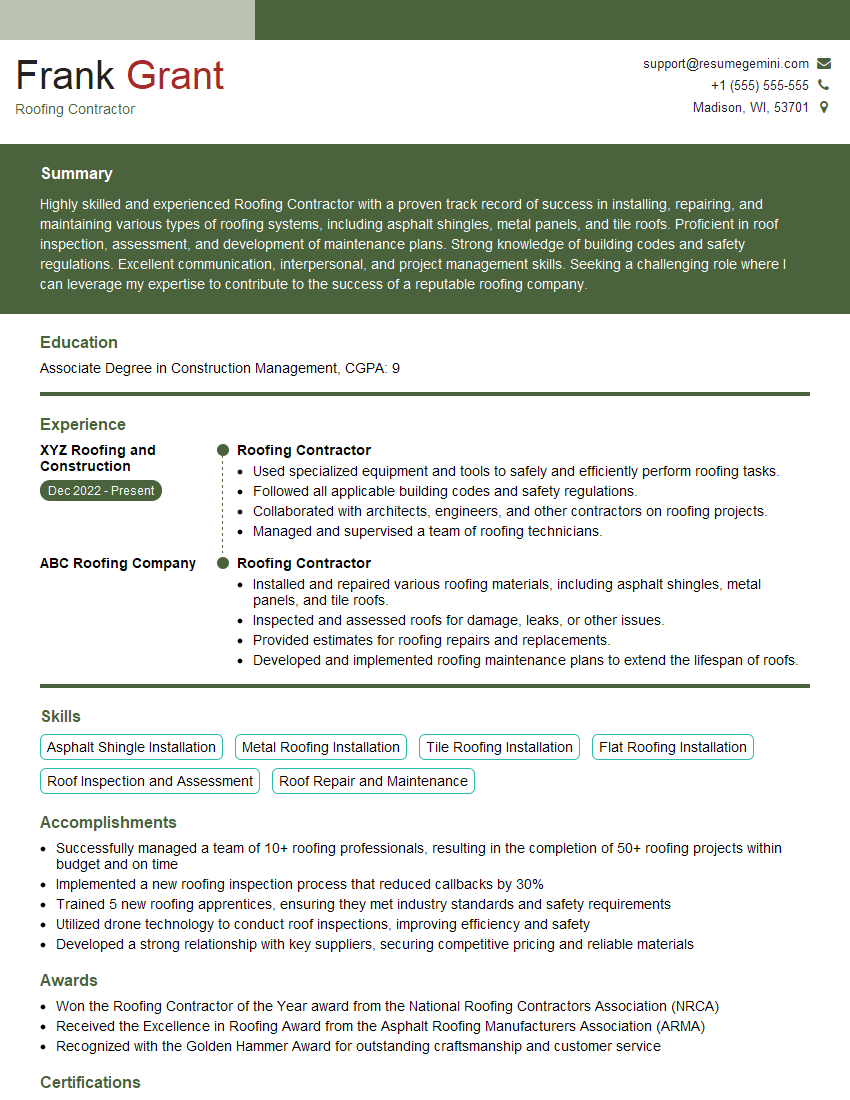
Roofing Contractor Resume Sample

Maintenance Technician Resume Sample

Machinist Resume Sample

Furniture Maker Resume Sample

Mechanic Resume Sample

Finish Carpenter Resume Sample

Cabinet Maker Resume Sample

Construction Worker Resume Sample
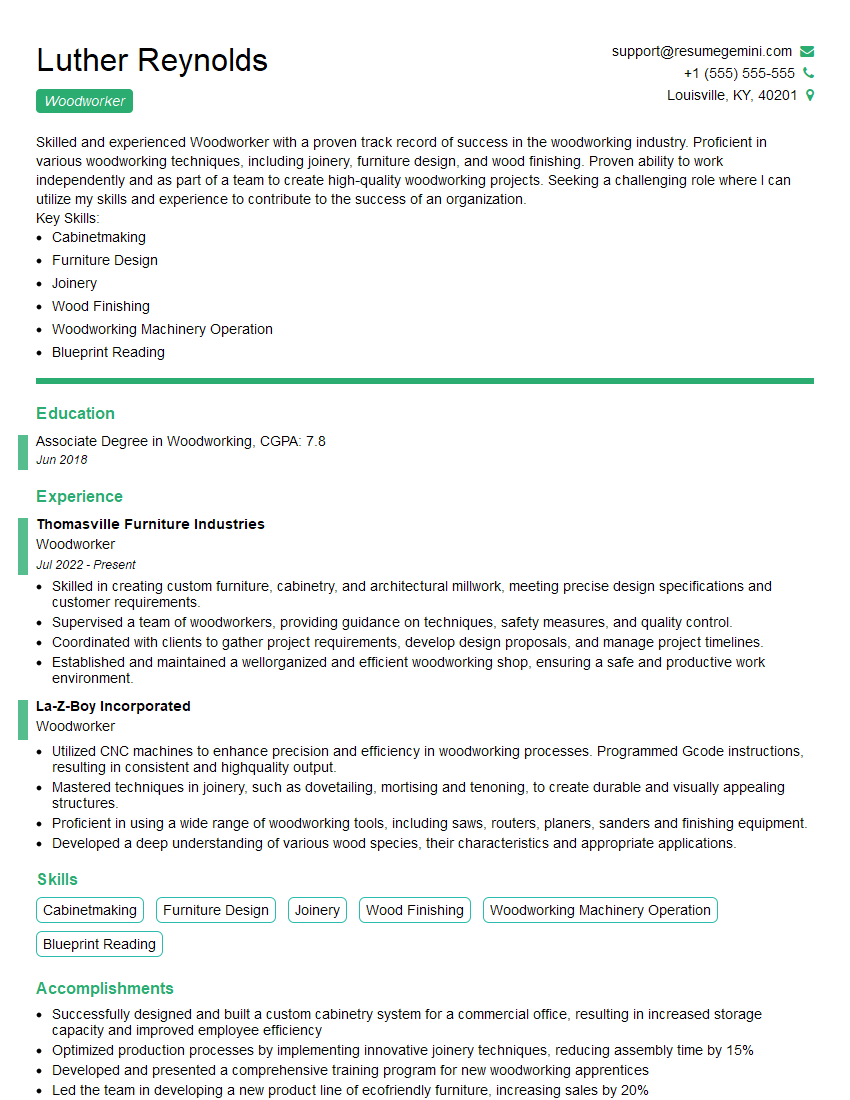
Woodworker Resume Sample

Carpenter Resume Sample

Floor Installer Resume Sample
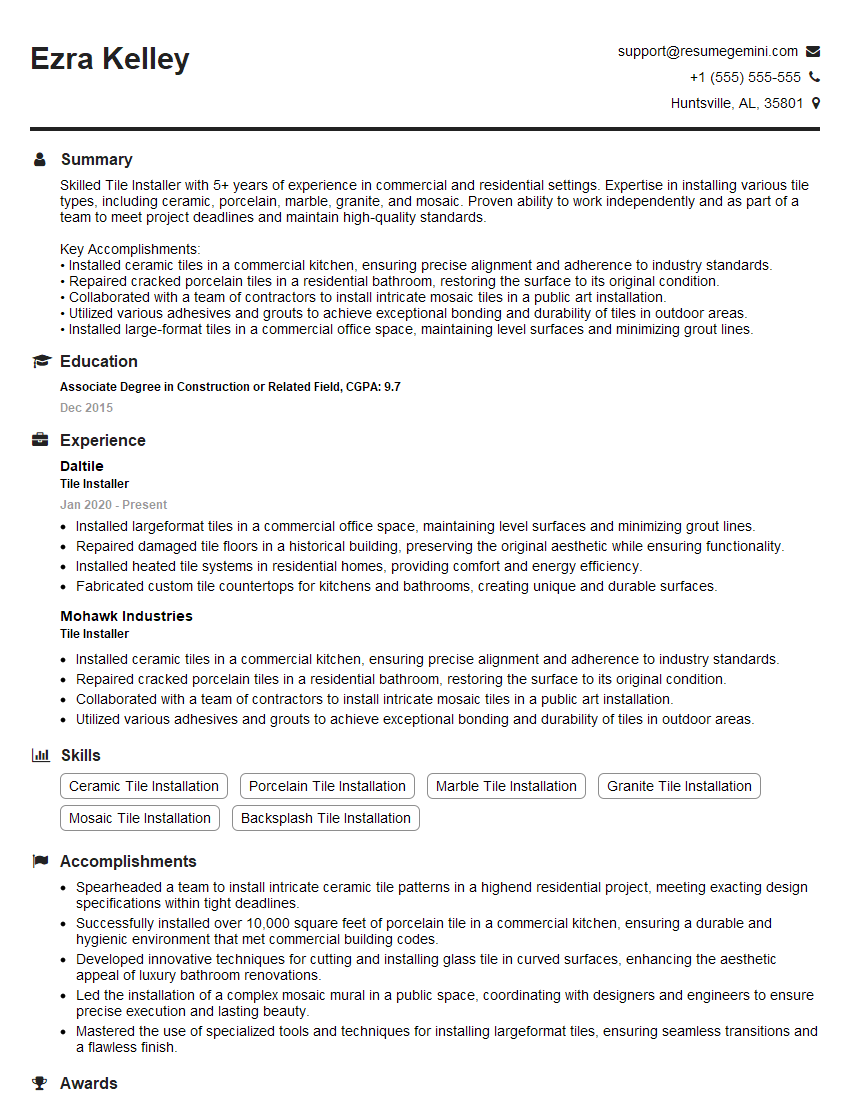
Tile Installer Resume Sample
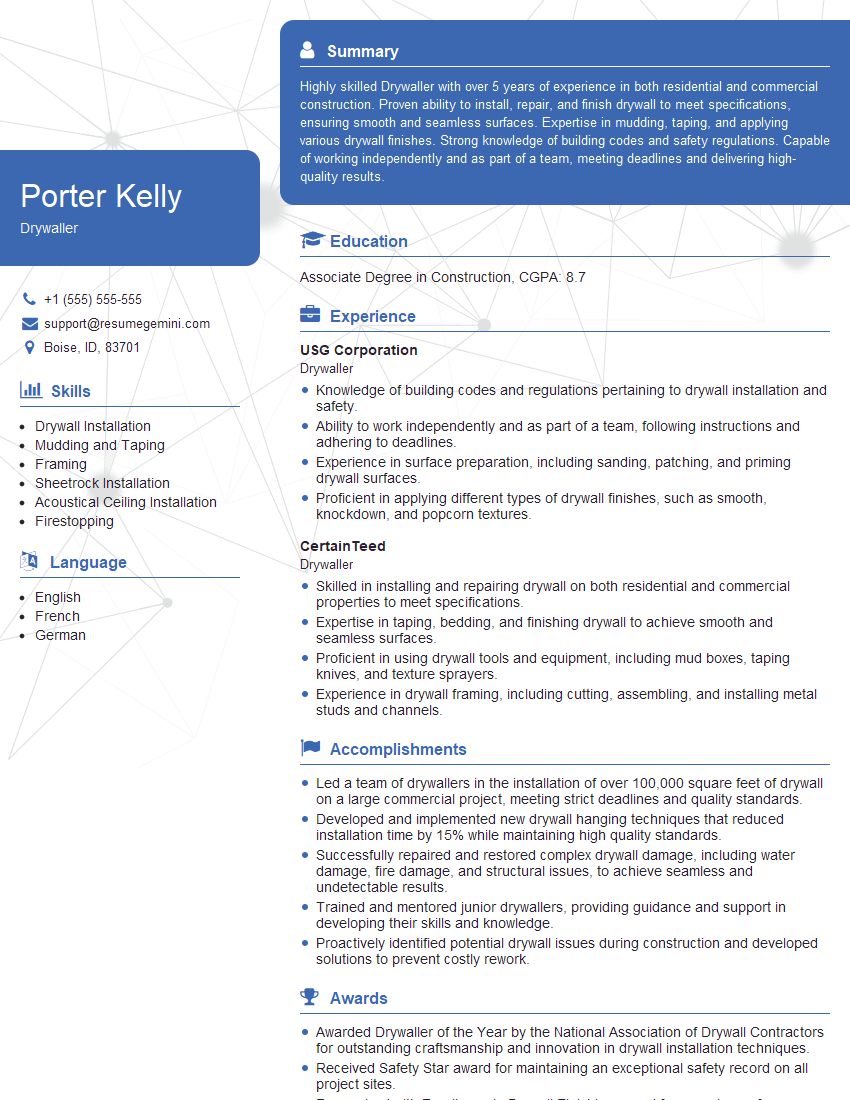
Drywaller Resume Sample

Electrician Resume Sample

Plumber Resume Sample

Auto Body Technician Resume Sample

Welder Resume Sample

Industrial Mechanic Resume Sample

Millwright Resume Sample

Fabricator Resume Sample
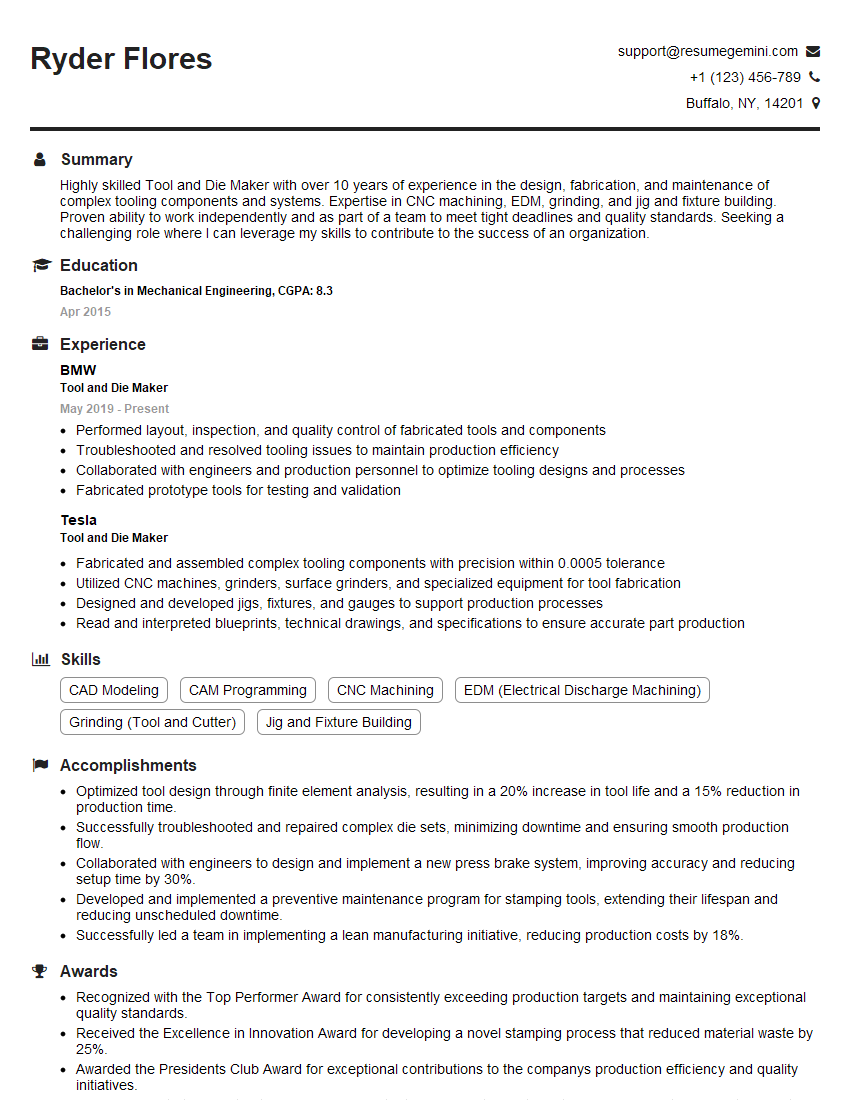
Tool and Die Maker Resume Sample

HVAC Technician Resume Sample
- Roofing Contractor
- Maintenance Technician
- Machinist
- Furniture Maker
- Mechanic
- Finish Carpenter
- Cabinet Maker
- Construction Worker
- Woodworker
- Carpenter
- Floor Installer
- Tile Installer
- Drywaller
- Electrician
- Plumber
- Auto Body Technician
- Welder
- Industrial Mechanic
- Millwright
- Fabricator
- Tool and Die Maker
- HVAC Technician
Explore more articles
Users Rating of Our Blogs
Share Your Experience
We value your feedback! Please rate our content and share your thoughts (optional).
What Readers Say About Our Blog
Really detailed insights and content, thank you for writing this detailed article.
IT gave me an insight and words to use and be able to think of examples