Every successful interview starts with knowing what to expect. In this blog, we’ll take you through the top Proficient in using HVI (High Volume Instrument) for cotton analysis interview questions, breaking them down with expert tips to help you deliver impactful answers. Step into your next interview fully prepared and ready to succeed.
Questions Asked in Proficient in using HVI (High Volume Instrument) for cotton analysis Interview
Q 1. Explain the principle of operation of an HVI instrument.
The High Volume Instrument (HVI) analyzes cotton fiber properties using a combination of optical and mechanical techniques. Essentially, it measures a small sample of cotton fibers, preparing them for analysis by first carefully cleaning and aligning them. Then, using a high-intensity light source, it determines fiber length and length uniformity. Simultaneously, mechanical sensors gauge fiber strength and maturity (micronaire). Think of it like a sophisticated, automated cotton fiber ‘health check’ providing a comprehensive profile.
The instrument works by feeding a precisely weighed sample of cotton fibers onto a rotating drum. These fibers are then subjected to a series of tests: a precise light source scans the fibers for length measurements; a pressure sensor measures the fiber strength; and air permeability assessment determines the micronaire which gives us an indication of fiber maturity and fineness. All these measurements are then processed to provide a detailed report of the cotton sample’s quality.
Q 2. Describe the different parameters measured by the HVI.
The HVI measures a range of crucial parameters providing a detailed cotton fiber profile. These parameters are:
- Fiber Length: Average length of fibers and their length uniformity.
- Fiber Strength: The force required to break a fiber.
- Micronaire: A measure of fiber fineness and maturity (related to air permeability). Think of it as the cotton’s ‘fluffiness’ – more mature fibers tend to have lower micronaire.
- Length Uniformity: Indicates the consistency of fiber length within a sample. A higher value indicates more uniform lengths.
- Fiber Maturity: Related to the micronaire value, reflecting the degree of fiber wall development.
- Fiber Color: Assesses the color of the fiber using reflectance measurements which is critical in some applications, such as apparel production.
- Fiber Trash Content: Measures foreign materials present in the cotton sample. This can include things like leaf fragments or other debris.
- Short Fiber Index: The percentage of short fibers in the sample.
Q 3. How do you calibrate an HVI instrument?
Calibrating an HVI is crucial for accurate results. It involves using standardized reference cotton samples with known properties. The process typically includes:
- Using certified reference materials: These are samples of cotton with precisely measured HVI properties.
- Adjusting instrument settings: Following the manufacturer’s instructions, you would make adjustments to ensure that the instrument produces results matching those of the reference materials.
- Regular checks: Frequent calibration checks are vital to maintain accuracy and reliability. These checks should include running the reference materials to verify that the readings are within an acceptable range.
- Documentation: A detailed record is kept of all calibration procedures, dates, and the results, following the lab’s quality control procedures. Any deviations must be fully explained and addressed.
Calibration must be performed according to the manufacturer’s guidelines and in compliance with relevant standards. This ensures consistent and reliable measurements across different testing locations and time periods.
Q 4. What are the common sources of error in HVI measurements?
Several factors can introduce errors in HVI measurements. These include:
- Sample preparation: Improper cleaning or preparation of the cotton sample can lead to inaccurate results.
- Instrument maintenance: Poor maintenance can result in sensor drift or malfunction.
- Environmental factors: Temperature and humidity variations can affect the instrument’s performance.
- Operator error: Incorrect sample handling or instrument operation can affect readings.
- Instrument wear and tear: Over time, certain components can wear down, leading to less precise measurements. Regular maintenance and part replacements mitigate this.
- Sample heterogeneity: Variations in fiber properties within a single bale can contribute to variations between subsamples.
Minimizing these errors requires meticulous attention to detail throughout the testing process, from sample preparation to instrument maintenance and calibration.
Q 5. How do you troubleshoot common HVI instrument malfunctions?
Troubleshooting HVI malfunctions requires systematic problem-solving. This involves:
- Checking error messages: The instrument usually displays error codes that indicate the source of the problem.
- Inspecting sensors and components: Look for visible damage, loose connections, or signs of wear and tear.
- Verifying calibration: Run reference samples to ensure the instrument is properly calibrated.
- Reviewing operating procedures: Ensure that the instrument is being operated correctly according to the manufacturer’s instructions.
- Seeking technical support: If the problem persists, contact the instrument manufacturer or a qualified technician for assistance.
A well-maintained HVI with a preventive maintenance program will minimize the frequency and severity of malfunctions. Keeping detailed logs of maintenance and calibration is vital for tracking the instrument’s health and identifying potential issues early on.
Q 6. Explain the significance of each HVI parameter (e.g., length, strength, micronaire).
Each HVI parameter provides critical information about cotton quality:
- Fiber Length: Longer fibers generally produce stronger, finer yarns and fabrics.
- Fiber Strength: Higher strength translates to durable fabrics with better tear resistance.
- Micronaire: This influences yarn spinnability and fabric hand feel. A suitable micronaire value is crucial for optimal processing.
- Length Uniformity: More uniform fiber lengths result in smoother yarns and fabrics with less variability.
- Fiber Maturity: Influences fiber strength, elongation, and processing properties. Proper maturity is key for high-quality yarns.
- Fiber Color: Crucial for aesthetic value and marketability, particularly in apparel applications.
- Fiber Trash Content: High trash content indicates lower quality and may necessitate additional cleaning during processing.
- Short Fiber Index: A high short fiber index can lead to weaker yarns and fabrics, reducing quality.
Understanding the interrelationships between these parameters is essential for accurate assessment of cotton quality.
Q 7. How do you interpret HVI data to assess cotton quality?
Interpreting HVI data involves considering all parameters in relation to the intended end-use of the cotton. For instance, long-staple cotton with high strength and uniformity is ideal for premium apparel fabrics, while shorter, stronger cotton might be suitable for industrial applications.
The data is often visualized in tables and graphs to facilitate comparison with industry standards. Statistical analysis might be employed to identify trends and outliers. For example, a cotton sample with a high micronaire value might suggest the cotton needs more drying before processing. In contrast, a low micronaire might indicate the fiber is too mature and prone to breaking.
Ultimately, interpreting HVI data requires a deep understanding of the parameters, their interrelationships, and the specific demands of the downstream textile processes. Experienced textile professionals use this data to make informed decisions about cotton selection, blending, and pricing.
Q 8. What are the limitations of HVI analysis?
HVI analysis, while incredibly valuable, isn’t without limitations. One key limitation is that it provides a snapshot of the cotton’s properties at a specific moment, not necessarily reflecting the entire bale’s uniformity. Think of it like taking a single temperature reading – it tells you something about the current state, but not the overall temperature fluctuations throughout the day. Another limitation lies in the fact that HVI only measures certain properties. It doesn’t directly assess factors like fiber maturity or the presence of certain impurities that could affect yarn quality. For instance, while HVI measures fiber length, it doesn’t directly assess the strength of the fibers, which is a crucial spinning characteristic. Finally, the accuracy of HVI results heavily relies on proper sample preparation and instrument calibration, which, if flawed, can lead to inaccurate readings and misinterpretations.
Furthermore, the instrument itself has inherent limitations. While advanced HVI machines minimize these, there’s always a degree of inherent variation in measurement. This is similar to using a highly precise scale – while it’s precise, it won’t be 100% accurate every time due to minute environmental factors. Regular calibration and quality control procedures are essential to mitigate these limitations.
Q 9. How do you prepare a cotton sample for HVI testing?
Preparing a cotton sample for HVI testing is a crucial step to ensure accurate and reliable results. The process aims to obtain a representative subsample from the larger bale. We begin with obtaining a core sample from the bale using a specially designed coring device. This core sample should represent the entire bale’s fiber characteristics. The goal is to avoid bias – we must ensure the sample isn’t preferentially taken from one area of the bale over another. This is akin to selecting a representative sample of candies from a jar – you want a mix of all colors and sizes, not just those easily accessible on top.
Next, the core sample undergoes rigorous cleaning, removing extraneous materials like leaves, trash, and seeds. This cleaning process often involves using specialized equipment to ensure consistency. After cleaning, the sample is carefully weighed and prepared for feeding into the HVI instrument. The amount needed is generally predetermined by the instrument’s specifications. Incorrect preparation can lead to errors in the final HVI results; for example, if the sample is too small or too large, the machine might not function optimally or give skewed results. Ultimately, proper preparation is paramount for accurate HVI analysis, mirroring the importance of precise ingredient measurement in a culinary recipe.
Q 10. Describe the cleaning and maintenance procedures for an HVI instrument.
Cleaning and maintenance of an HVI instrument are crucial for ensuring the accuracy and reliability of measurements. The cleaning procedure involves regular removal of lint and dust accumulation from the instrument’s various components. This often requires using compressed air and specialized brushes to avoid damaging sensitive parts. Think of this as regularly cleaning your kitchen tools – it prevents build-up and ensures they operate optimally. The frequency of cleaning depends on the instrument’s usage, but generally, a daily cleaning routine is recommended following the manufacturer’s instructions.
Beyond daily cleaning, periodic maintenance tasks are necessary. These tasks may include replacing worn parts, calibrating sensors, and checking the instrument’s overall functionality. Calibration, particularly of the length and strength sensors, is vital for ensuring accurate measurements and requires certified reference materials. We conduct this calibration using standardized samples with known characteristics, to confirm the instrument’s performance and adjust it as necessary. Proper maintenance prolongs the instrument’s lifespan and safeguards the quality of the data produced. Just as a car needs regular servicing, an HVI instrument needs consistent care to operate at peak performance. Neglecting maintenance can lead to inaccurate measurements, costly repairs, and even instrument damage.
Q 11. What quality control measures do you use when performing HVI analysis?
Quality control measures are essential during HVI analysis to ensure the accuracy and reliability of the results. This includes using standardized procedures and calibrated instruments as discussed previously. We begin by meticulously documenting all aspects of the sampling and testing process. This detailed record keeps a trace of each step, helping identify and correct any potential errors or inconsistencies that may have occurred in the process.
We also perform regular checks on the instrument’s performance, using standard reference samples with known HVI values. Any significant deviations from the expected values indicate a potential problem, prompting recalibration or maintenance. Moreover, we maintain rigorous quality control standards for sample preparation, aiming for consistent and representative samples. To prevent systematic errors, we regularly audit our procedures and cross-check results using multiple instruments or techniques when possible. The same sample is rarely tested by only one HVI; other techniques are also applied to verify results. This comprehensive quality control strategy guarantees high-quality data and reliable interpretations in the HVI analysis.
Q 12. How do HVI results impact cotton pricing and grading?
HVI results significantly impact cotton pricing and grading. The various parameters measured by the HVI, such as fiber length, strength, uniformity, and micronaire, are all critical indicators of cotton quality, which directly correlates to its suitability for various yarn and fabric applications. For example, longer, stronger, and more uniform fibers generally command higher prices because they produce superior yarn quality. Higher quality cotton translates into better-quality garments, and therefore, manufacturers are willing to pay a premium.
Grading systems often incorporate HVI data to classify cotton into different quality categories. This enables buyers and sellers to establish fair prices based on objective measurements rather than subjective assessments. Imagine trying to sell a car – you wouldn’t just say it’s “good”; you’d provide details about its mileage, engine condition, etc. HVI data provides the equivalent objective measurements for cotton, ensuring transparency and fairness in the marketplace. Different markets place different levels of emphasis on various HVI parameters, but they all rely on these data points to determine the value of the cotton.
Q 13. Explain the relationship between HVI parameters and yarn properties.
HVI parameters are intrinsically linked to yarn properties. The relationship is quite straightforward: better HVI values generally lead to better yarn properties. For example, longer fiber length (as measured by HVI) contributes to stronger, smoother yarns with less hairiness. Similarly, higher fiber uniformity results in more even yarn, leading to improved quality and reduced imperfections. Micronaire, which reflects fiber fineness, influences yarn appearance, texture, and the overall feel of the finished fabric.
For instance, high micronaire cotton can produce softer yarns, while low micronaire cotton might yield stronger but harsher yarns. Fiber strength, another key HVI parameter, is directly related to yarn strength, tensile strength, and the yarn’s resistance to breakage. Understanding these relationships allows spinners to select cotton grades based on desired yarn properties. In essence, HVI data serves as a guide in predicting yarn quality, enabling spinners to make informed decisions about cotton selection, spinning parameters, and ultimately, the cost-effectiveness of their production processes. This is analogous to a chef selecting ingredients based on their understanding of how they impact the final dish’s taste and texture.
Q 14. How do environmental conditions affect HVI measurements?
Environmental conditions can significantly impact HVI measurements. Factors like temperature and humidity greatly influence fiber properties, leading to variations in HVI readings. High humidity, for example, can cause fibers to swell, affecting length and strength measurements. Similarly, temperature fluctuations can influence the instrument’s internal mechanics and sensor readings, leading to inaccurate results.
To mitigate these effects, HVI instruments are typically housed in controlled environments with stable temperature and humidity levels. These controlled environments help minimize the influence of environmental factors on the measurements. Moreover, standard operating procedures often include precise specifications for environmental conditions during testing, ensuring consistency and comparability of results. Ignoring these environmental considerations could lead to significant errors in the HVI readings, impacting cotton classification and pricing, hence the importance of environmental control in the testing laboratory.
Q 15. What are the differences between different HVI models?
Different HVI models, while all aiming to measure the same cotton properties, vary in their technology and capabilities. Older models might rely on less sophisticated sensors and processing power, leading to slightly lower precision and slower testing times. Newer models often incorporate advancements like improved fiber length measuring systems (e.g., longer measurement lengths for improved accuracy), more precise micronaire sensors, and faster processing algorithms. For example, a difference could be seen in the way strength is measured – some older models might have a lower sampling rate compared to newer instruments, affecting the statistical representation of the fiber’s tensile strength. Another crucial difference lies in their software capabilities, with newer models offering enhanced data analysis tools and more robust quality control features. The choice of model often depends on budget, required throughput, and desired level of analytical sophistication. Think of it like comparing a basic smartphone to a high-end one: both make calls, but the high-end model offers much more advanced features.
Career Expert Tips:
- Ace those interviews! Prepare effectively by reviewing the Top 50 Most Common Interview Questions on ResumeGemini.
- Navigate your job search with confidence! Explore a wide range of Career Tips on ResumeGemini. Learn about common challenges and recommendations to overcome them.
- Craft the perfect resume! Master the Art of Resume Writing with ResumeGemini’s guide. Showcase your unique qualifications and achievements effectively.
- Don’t miss out on holiday savings! Build your dream resume with ResumeGemini’s ATS optimized templates.
Q 16. How do you ensure the accuracy and reliability of HVI data?
Ensuring the accuracy and reliability of HVI data is paramount. This involves a multi-faceted approach. First, meticulous instrument calibration is crucial. We follow a rigorous schedule involving standardized reference samples with known properties. These reference samples are tested frequently to verify the instrument’s accuracy against known values. Regular maintenance, including cleaning of optical components and checking sensor alignment, is also essential. Second, proper sample preparation is vital. A representative sample of the cotton bale must be prepared according to standard procedures to avoid biases. Third, we implement quality control checks within the HVI software itself, often flagging potentially unreliable results based on pre-defined parameters. For example, if the standard deviation of a particular measurement is unusually high, it might trigger a review of the sample or the instrument. Finally, running duplicate tests on the same sample provides an additional layer of validation, helping identify any potential errors. If discrepancies arise between duplicates, the cause is investigated, ensuring data integrity before reporting results.
Q 17. Describe your experience with different cotton varieties and their HVI profiles.
My experience encompasses a wide range of cotton varieties, each with distinct HVI profiles. For example, extra-long staple cottons like Pima or Egyptian often exhibit significantly longer fiber lengths, higher strength, and finer micronaire values compared to Upland cottons. Upland cottons themselves show considerable variation; certain varieties might be bred for strength, others for length, or a balance of both. This leads to noticeable differences in their HVI data. I’ve worked with cotton from various growing regions, and I’ve observed how environmental factors like rainfall and soil conditions can influence fiber properties and consequently alter the HVI profile. For instance, stress during growth can result in shorter fibers and lower strength values. Recognizing these characteristic HVI profiles is critical for assessing quality, predicting yarn performance, and guiding breeding programs. One recent project involved comparing the HVI profiles of a new drought-resistant Upland variety against a standard variety, revealing valuable insights into its quality attributes under stress conditions.
Q 18. How do you handle outliers or unexpected results in HVI data?
Outliers or unexpected HVI results require careful investigation. First, we visually inspect the data, looking for inconsistencies or patterns. If a single data point is drastically different from the rest, we check the sample preparation process – ensuring proper cleaning and preparation techniques were followed. We also verify the instrument’s calibration status and repeat the test using a fresh sample from the same bale. If the outlier persists, we examine the instrument log files for any potential errors or malfunctions. In some cases, we might even investigate external factors, such as unusual environmental conditions in the lab. A statistical approach, such as excluding data points beyond a certain standard deviation, might be employed after careful consideration and documentation, but only after thorough investigation to rule out procedural errors. Documentation of the outlier investigation process is extremely important to maintain data integrity and transparency.
Q 19. What software do you use to analyze HVI data?
The specific software used depends on the HVI model, but most manufacturers provide dedicated software packages for data acquisition, analysis, and reporting. I have extensive experience with the industry-standard software packages provided by companies like Uster Technologies. These software packages typically allow for data import, quality control checks, statistical analysis (including calculations of means, standard deviations, and histograms), and the generation of customized reports. It provides tools for visualizing data trends, identifying outliers, and comparing different cotton samples. The software also often includes features for managing large databases of HVI data.
Q 20. How do you generate reports from HVI data?
Generating reports from HVI data typically involves using the built-in reporting features of the HVI software. I typically customize reports to include key parameters, such as fiber length, strength, uniformity, micronaire, and maturity. I often include statistical summaries such as mean values, standard deviations, and histograms, providing a comprehensive overview of the cotton sample. Reports are tailored to the specific needs of the client; for example, a report for a textile mill might emphasize parameters crucial for yarn spinning, while a report for a cotton breeder might focus on genetic variability. Visual aids like graphs and charts enhance understanding and highlight important trends in the data. The reports always include clear labeling, units, and a statement about the data’s quality and the methods used.
Q 21. Describe your experience with data management and analysis in relation to HVI data.
Effective data management and analysis are crucial for maximizing the value of HVI data. I utilize databases to store and manage large datasets from multiple cotton samples, ensuring data integrity and easy retrieval. This organized approach allows for easy comparison of different samples, tracking trends over time, and identifying patterns related to variety, growing conditions, or processing methods. I use statistical software packages along with the HVI software to perform more sophisticated analyses, such as correlations between different HVI parameters, principal component analysis to reduce data dimensionality, or regression analysis to predict yarn properties based on HVI data. Data visualization is key, and I regularly create charts and graphs to communicate findings clearly and effectively. My approach ensures traceability, preventing errors and promoting transparency throughout the process, ultimately supporting informed decision-making in cotton quality control and improvement.
Q 22. How familiar are you with ASTM standards related to cotton testing?
I’m very familiar with ASTM standards related to cotton testing, particularly those concerning HVI analysis. These standards, such as ASTM D1768 (for fiber length), ASTM D1441 (for fiber strength), and ASTM D2435 (for micronaire), provide the crucial guidelines for consistent and accurate measurements. My experience includes not only using instruments calibrated to these standards but also understanding the implications of variations and the importance of maintaining adherence to the protocols outlined in these documents. For example, understanding the tolerance levels specified in these standards is critical for ensuring the reliability of test results and for comparing data across different laboratories and testing facilities. Deviation from these standards can lead to significant discrepancies in the evaluation of cotton quality.
Q 23. Explain the importance of proper sample handling in HVI testing.
Proper sample handling is paramount in HVI testing; it directly impacts the accuracy and reliability of the results. Think of it like baking a cake – if you don’t use the correct ingredients and follow the recipe meticulously, the outcome will be compromised. In HVI testing, this means following a strict protocol starting from sample collection. This involves obtaining a representative sample that accurately reflects the entire bale of cotton. Then, the sample needs to be carefully prepared, ensuring it is free from contamination (e.g., seeds, trash, foreign fibers). The sample must then be processed according to the ASTM standards, ensuring consistent cleaning and preparation before testing. Any deviation from this process can introduce biases and errors in the final HVI readings. For instance, if the sample is not properly cleaned, the presence of extraneous material can skew measurements of fiber length and strength. I have extensive experience in this, using methods to ensure uniformity in the test samples, optimizing the process for minimal variability.
Q 24. How would you handle a situation where the HVI instrument malfunctions during a critical test?
During a critical test, an HVI malfunction is a serious event. My first response is to systematically troubleshoot the problem. This starts with checking the obvious: power supply, software errors, and any visible mechanical issues. I would refer to the instrument’s troubleshooting guide and contact the manufacturer’s technical support immediately. If a quick fix is not possible, and the test is time-sensitive, my next step would be to document everything meticulously – the error messages, the point of failure, and the steps already taken. If the results are critical for a shipment decision, I would explore the possibility of sending the sample to another HVI testing lab with a verified instrument to ensure the analysis is completed on schedule. This demonstrates both problem-solving skills and dedication to delivering results promptly. In the meantime, I would prioritize preventing the issue from recurring through a thorough investigation and preventative maintenance.
Q 25. What is your experience with different types of cotton fiber (e.g., upland, extra-long staple)?
My experience encompasses a wide range of cotton fiber types, including upland cotton (the most prevalent type globally) and extra-long staple (ELS) cotton, known for its superior length and strength. The HVI instrument can analyze both types effectively, but the interpretation of results is different. Upland cotton typically has shorter fiber lengths and a wider range of micronaire values compared to ELS cotton. Understanding these differences is crucial for accurately assessing cotton quality and suitability for various textile applications. For instance, ELS cotton is better suited for high-end textiles such as luxury shirts and towels, whereas upland cotton might be appropriate for less demanding applications. I’m adept at tailoring the HVI testing procedures to the specific needs of each fiber type, ensuring the data accurately reflects its unique characteristics. This includes understanding the instrument settings and calibrations appropriate for each fiber type to obtain the most accurate and reliable results.
Q 26. How do you ensure the integrity of the cotton samples throughout the testing process?
Maintaining sample integrity is crucial. From the moment a sample is taken from the bale to the completion of testing, the procedures are designed to prevent contamination, degradation, or loss of representativeness. This includes storing samples under controlled conditions (temperature and humidity), utilizing appropriate packaging to avoid moisture absorption, and ensuring careful handling to prevent fiber damage. Throughout the testing process, meticulous record-keeping is essential. This documentation ensures traceability and assists in identifying any potential sources of error or contamination. Strict adherence to chain-of-custody protocols helps maintain the integrity and validity of test results. The documentation would include details on the origin of the sample, handling procedures, testing dates, instrument calibration details, and the final results. This is critical in maintaining quality control and providing credible results.
Q 27. Explain your experience with statistical analysis of HVI data.
Statistical analysis of HVI data is integral to my work. I use statistical software and techniques (e.g., ANOVA, regression analysis) to identify trends, compare different cotton samples, and evaluate the variability within and between different batches. This helps in better understanding the quality of the cotton and identifying factors that may be influencing quality attributes. For example, analyzing the relationship between fiber length and strength helps determine the overall quality of the cotton. Further, statistical process control (SPC) charts are utilized to track the performance of the HVI instrument and ensure its accuracy over time. This type of analysis allows me to make data-driven decisions about the suitability of the cotton for specific applications and to provide insightful reports to clients.
Q 28. Describe a time when you had to troubleshoot a complex HVI problem and how you resolved it.
I once encountered an issue where the HVI instrument was consistently producing unusually high values for fiber strength. My first step was to check all the calibration settings and confirm they were within the acceptable range defined by ASTM standards. This check was normal. Next, I suspected a problem with the sensor itself. After carefully examining the instrument’s manual and conducting a visual inspection, I found that a small amount of lint had accumulated within the clamping mechanism, causing the readings to be artificially inflated. Once I cleaned the lint carefully, the readings returned to normal, showing the importance of routine maintenance and meticulous attention to detail. This experience highlighted that seemingly insignificant details can significantly affect the accuracy of HVI measurements and reinforced the importance of comprehensive troubleshooting procedures.
Key Topics to Learn for Proficient in using HVI (High Volume Instrument) for cotton analysis Interview
- HVI Instrument Operation: Understanding the mechanical functions of the HVI, including fiber preparation, testing procedures, and data acquisition.
- Data Interpretation & Analysis: Mastering the interpretation of HVI data, including fiber length, strength, uniformity, micronaire, and other key parameters. Learn to identify outliers and potential sources of error.
- Quality Control & Assurance: Understanding the role of HVI data in quality control processes, including identifying acceptable ranges for different cotton grades and applications.
- Calibration & Maintenance: Knowledge of routine maintenance procedures, calibration techniques, and troubleshooting common issues with the HVI instrument.
- Fiber Properties & their Applications: Connecting HVI data to the physical properties of cotton fibers and how these properties influence the final product (e.g., yarn strength, fabric drape).
- Reporting & Communication: Effectively presenting and communicating HVI data and analysis to technical and non-technical audiences.
- Troubleshooting & Problem Solving: Develop strategies for diagnosing and resolving issues related to inaccurate or inconsistent HVI data, including identifying potential sources of error in the testing process.
- Industry Standards & Best Practices: Familiarity with relevant industry standards and best practices for HVI testing and data reporting.
Next Steps
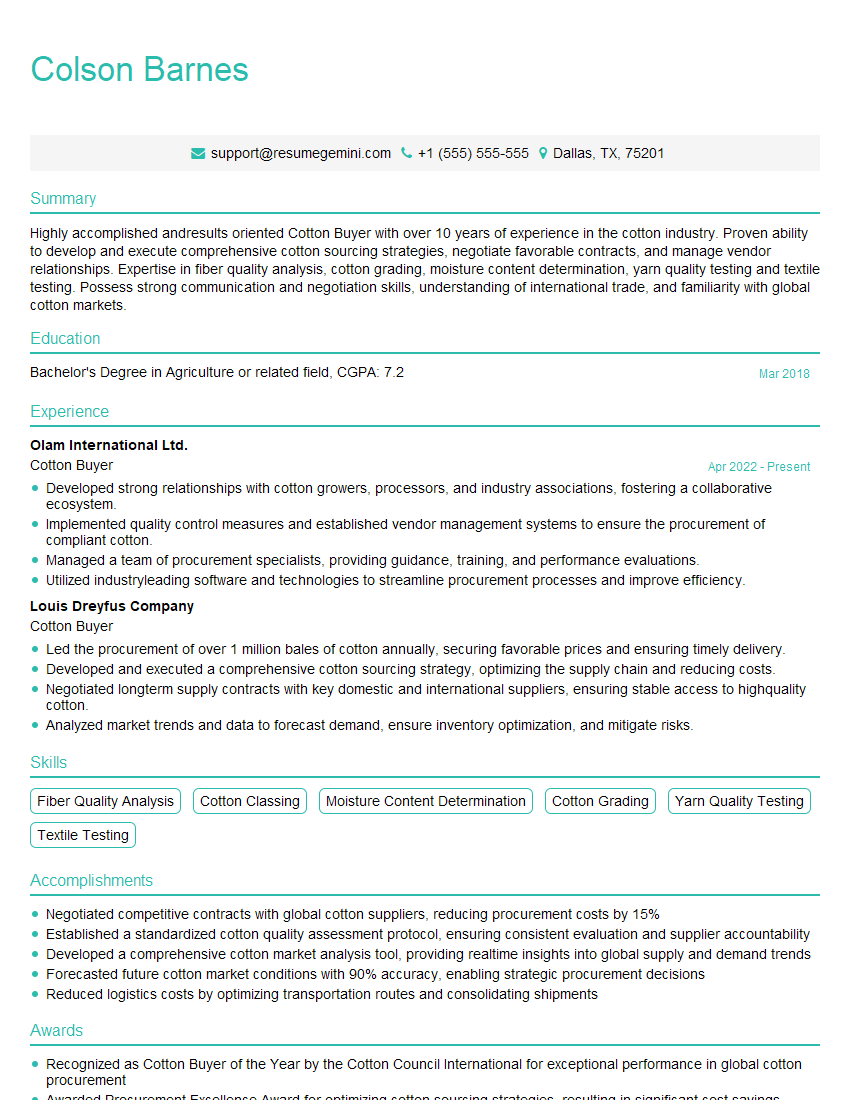
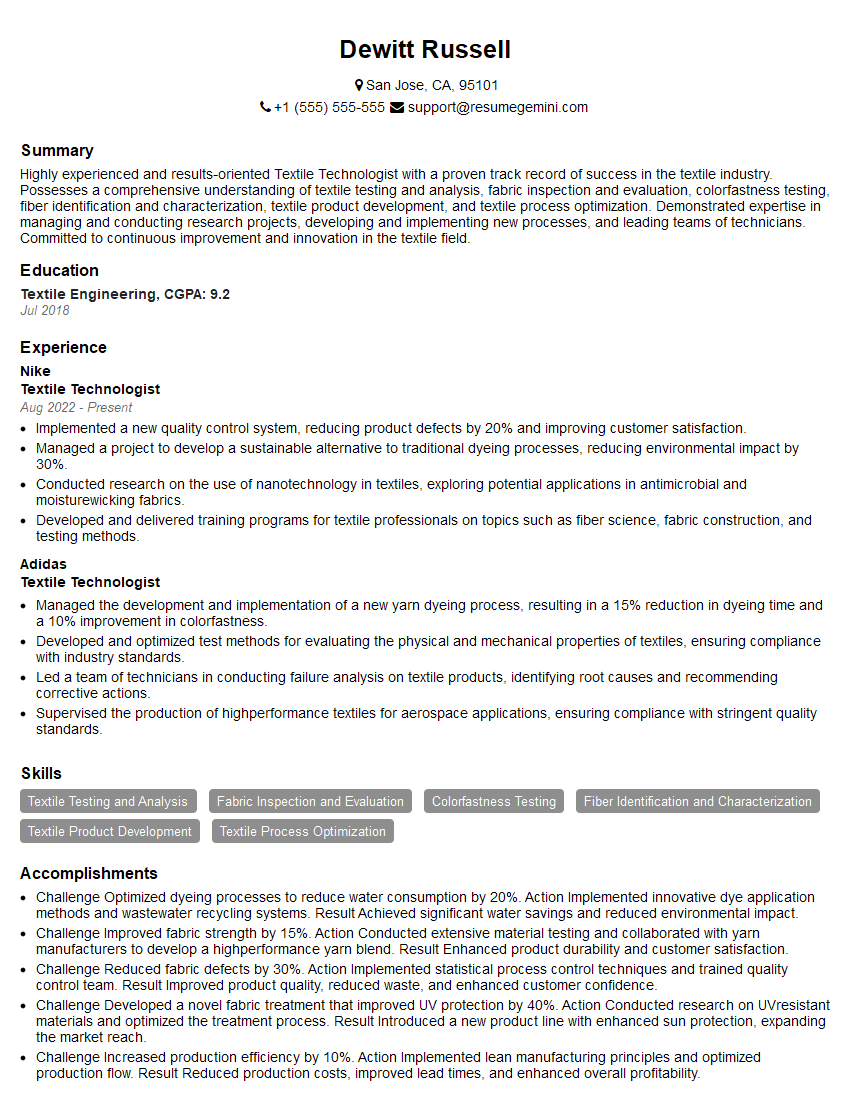
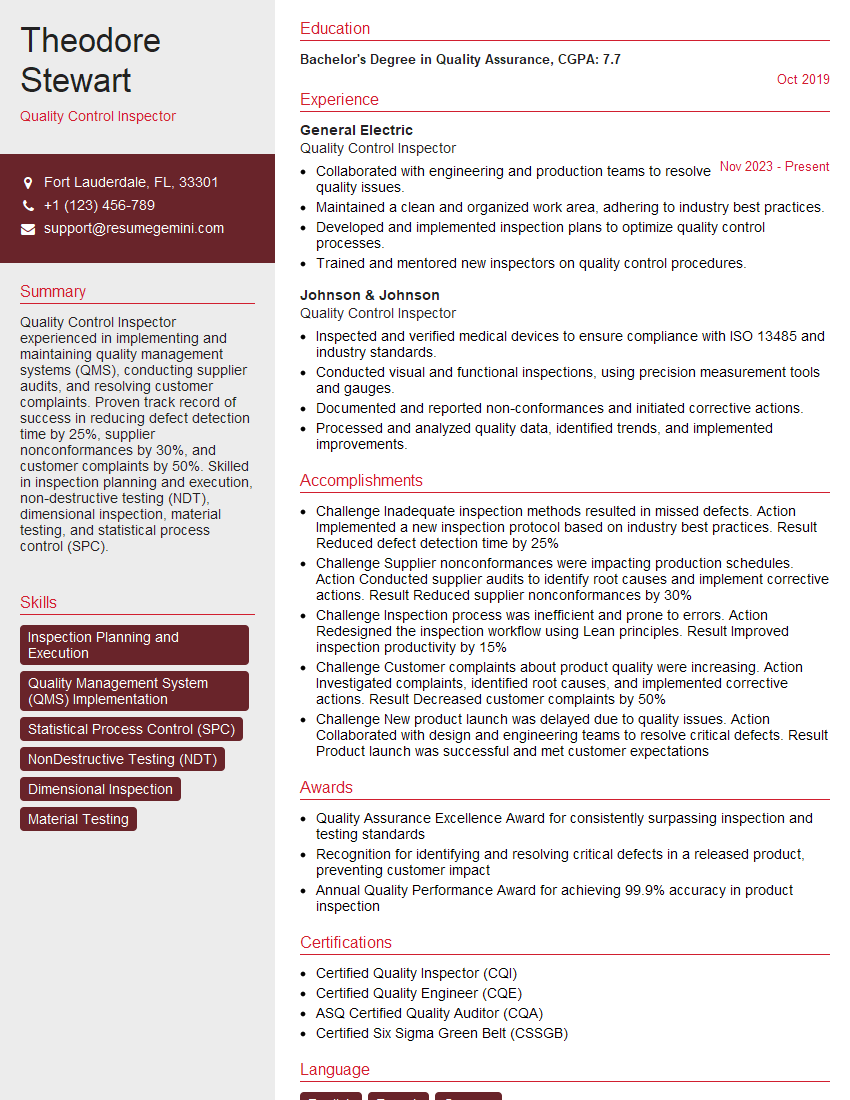
Mastering HVI analysis is crucial for advancement in the textile industry, opening doors to specialized roles and higher earning potential. A strong resume is essential to showcase your expertise. An ATS-friendly resume increases your chances of getting your application noticed by recruiters. To build a compelling and effective resume, we highly recommend using ResumeGemini. This tool can help you craft a professional document tailored to highlight your HVI skills and experience. Examples of resumes tailored to showcasing proficiency in HVI cotton analysis are available to help guide you.


Explore more articles
Users Rating of Our Blogs
Share Your Experience
We value your feedback! Please rate our content and share your thoughts (optional).
What Readers Say About Our Blog
Really detailed insights and content, thank you for writing this detailed article.
IT gave me an insight and words to use and be able to think of examples