Every successful interview starts with knowing what to expect. In this blog, we’ll take you through the top Roller Installation Procedures interview questions, breaking them down with expert tips to help you deliver impactful answers. Step into your next interview fully prepared and ready to succeed.
Questions Asked in Roller Installation Procedures Interview
Q 1. Describe your experience with different types of roller bearings.
My experience encompasses a wide range of roller bearings, from simple cylindrical rollers used in conveyor systems to more complex tapered roller bearings found in heavy machinery. I’ve worked extensively with different materials, including steel, ceramic, and specialized alloys, each chosen for its unique properties to suit specific applications. For instance, I’ve installed high-speed, precision roller bearings in textile machinery requiring minimal friction and vibration, and heavy-duty roller bearings in mining equipment designed to withstand extreme loads. Understanding the nuances of each bearing type – their load capacity, speed rating, and lubrication requirements – is crucial for successful installation and optimal performance.
- Cylindrical Rollers: Simple, cost-effective, ideal for radial loads.
- Tapered Rollers: Handle both radial and axial loads, often found in automotive applications.
- Spherical Rollers: Self-aligning, tolerate misalignment, commonly used in applications with fluctuating loads.
- Needle Rollers: Compact, high load capacity, suitable for limited space.
Q 2. Explain the process of aligning rollers for optimal performance.
Aligning rollers is critical for preventing premature wear and maximizing efficiency. The process begins with meticulous preparation of the mounting surfaces. These must be clean, free of debris, and perfectly level. We use precision measuring tools like dial indicators and alignment lasers to ensure the rollers are perfectly aligned with the shafts and housings. For instance, when installing a roller on a conveyor system, slight misalignment can lead to uneven wear on the rollers and belts, causing premature failure. The proper alignment also reduces vibration and noise, improving the overall efficiency and lifespan of the equipment.
The precise alignment method will vary depending on the type of roller and the application, but the core principle remains consistent: minimizing any deviation from the ideal geometry. This often involves adjusting shims or using specialized alignment tools to achieve the perfect fit.
Q 3. What are the common causes of roller misalignment and how do you troubleshoot them?
Roller misalignment stems from several factors. Common causes include improper installation, damaged or worn components (such as shafts, housings, or the rollers themselves), and foundation settling. For example, a poorly leveled foundation can cause significant misalignment over time. Uneven wear on the rollers or raceways is also a telltale sign of prior misalignment.
Troubleshooting involves a systematic approach. I typically start with visual inspection, checking for obvious damage or deviations. Then, I employ precision measuring tools like dial indicators to quantify the misalignment. This data helps determine the root cause. Solutions range from simple adjustments (like shimming) to replacing damaged components. In cases of significant foundation problems, structural remediation might be necessary. Each case requires a careful diagnosis and tailored solution.
Q 4. How do you ensure proper roller spacing and tension during installation?
Ensuring proper roller spacing and tension is paramount to avoid premature wear and optimize performance. Roller spacing is usually dictated by the manufacturer’s specifications and the application requirements. We use precision measuring tools to verify spacing, making adjustments as needed using spacers or shims. Tension, on the other hand, depends on the type of system. In roller conveyors, for example, proper tension is crucial for smooth material flow and prevents belt slippage. We use tensioning devices and measuring instruments to ensure the correct tension is applied. Incorrect tension can lead to uneven wear and damage to both the rollers and the conveying medium (belt, chain, etc.).
Q 5. What safety precautions do you take when installing rollers?
Safety is my top priority. Before commencing any roller installation, I ensure the area is properly secured, with appropriate safety barriers in place. I always use personal protective equipment (PPE), including safety glasses, gloves, and sturdy footwear. When working with heavy rollers, I use lifting equipment like hoists or cranes to avoid injuries. The power to the equipment must be isolated before starting the work. Furthermore, I’m meticulous in following the manufacturer’s safety instructions and relevant safety regulations.
Q 6. What are the different methods for securing rollers in place?
Securing rollers in place involves various methods depending on the application. Common methods include:
- Set screws: These are widely used for securing rollers to shafts.
- Snap rings: Offer a quick and easy way to retain rollers in place.
- Keyways and keys: Provide a more robust and precise method for securing rollers against rotation.
- Retaining rings: Used in housings to prevent rollers from coming out.
- Welding (in some cases): Used for permanent fixation in specialized high-stress applications.
The selection of the securing method depends on factors like the load capacity, speed, and the desired level of security.
Q 7. How do you determine the appropriate type of roller for a specific application?
Determining the appropriate roller type for a given application involves considering several critical factors. These include the anticipated load (both radial and axial), the operating speed, the required accuracy or precision, the environment (temperature, humidity, etc.), and the space constraints. For example, a high-speed application would necessitate a roller with a high-speed rating and specialized lubrication, whereas a high-load application would require a roller with increased load capacity. Detailed analysis of these factors helps select a roller with the appropriate size, material, and design to meet the specific requirements, ensuring optimal performance and longevity.
Q 8. What tools and equipment are essential for efficient roller installation?
Efficient roller installation requires a specific set of tools and equipment. The exact tools will vary depending on the type of roller, the conveyor system, and the specific installation environment, but here’s a comprehensive list of essentials:
- Measuring tools: Tape measure, calipers, level, square to ensure proper alignment and spacing.
- Installation tools: Wrenches (various sizes), sockets, screwdrivers (Phillips and flathead), hammer, punch, possibly a torque wrench for precise tightening.
- Lifting and handling equipment: Depending on the size and weight of the rollers, this might include a forklift, hand truck, or even a crane for larger industrial applications. Safety harnesses and lifting straps are crucial for heavier rollers.
- Lubrication tools: Grease gun, appropriate grease, and potentially brushes for cleaning.
- Safety equipment: Safety glasses, gloves, steel-toed boots, hearing protection (especially when using power tools). A hard hat might be needed in certain environments.
- Specialized tools: For certain types of rollers or conveyor systems, you might need specialized tools like bearing pullers, shaft alignment tools, or even welding equipment.
For example, when installing heavy-duty rollers in a food processing plant, strict sanitation protocols might require specialized cleaning agents and tools to prevent contamination.
Q 9. Describe your experience with installing rollers in confined spaces.
Working in confined spaces presents unique challenges for roller installation. It demands meticulous planning and a thorough understanding of the space’s limitations. My experience includes installations within tight machinery compartments, under low-clearance structures, and even within trenches. I’ve adapted my techniques to incorporate smaller tools, flexible shafts, and specialized access methods.
In one instance, we had to install rollers within a narrow section of an automated packaging line. Access was severely limited, so we used a combination of articulated tools, remote-controlled tightening mechanisms, and a small camera to guide the process. We also prioritized using lightweight, compact rollers designed for such constrained environments. Thorough planning and utilizing the right tools for the job are paramount in these scenarios.
Q 10. How do you handle damaged or worn rollers during installation?
Damaged or worn rollers should never be installed. They compromise the safety and efficiency of the entire conveyor system. Upon discovering such rollers during installation, I immediately remove them from the process.
The next step involves a thorough assessment of the damage: is it a minor surface scratch, significant wear and tear on the bearing, or a structural crack? Based on this assessment, the decision is made to repair or replace the roller. Minor scratches might be addressed through cleaning and lubrication. However, significant wear or damage necessitates replacing the roller with a new, correctly sized component. Documentation of the damaged roller and the reason for its rejection is crucial for maintenance records.
Q 11. Explain your process for inspecting rollers before and after installation.
Pre- and post-installation inspections are vital for ensuring smooth operation. Before installation, I visually inspect each roller for any damage, checking for cracks, dents, or signs of wear on the bearings and outer shell. I also verify dimensions, ensuring they match the specifications of the conveyor system. I check bearing play to ensure it falls within the manufacturer’s tolerances.
Post-installation, I perform a comprehensive check of the roller alignment, ensuring they are properly spaced and operate smoothly. I also verify the proper functioning of the bearings, checking for unusual noises or resistance during rotation. I usually spin each roller by hand to check for smoothness. A final check involves confirming that the rollers are securely fastened and that there is no play or excessive movement.
Q 12. What are the common problems encountered during roller installation?
Several common problems can arise during roller installation. Misalignment is a major one – causing uneven load distribution, premature wear, and even system failure. Improper lubrication can lead to increased friction, heat buildup, and shortened roller lifespan. Incorrect roller spacing can result in jamming and material damage. Lastly, using the wrong type of roller for the application can lead to performance issues or complete failure.
For instance, using rollers not designed for heavy loads in a high-throughput system can result in catastrophic failure. Therefore, understanding the application requirements and selecting the appropriate roller type is fundamental to successful installation.
Q 13. How do you ensure the longevity and durability of installed rollers?
Ensuring longevity and durability requires attention to detail throughout the entire process. Proper selection of rollers, suitable for the intended application and load capacity, is the foundation. Correct installation, including precise alignment and secure fastening, prevents premature wear. Regular lubrication with appropriate grease, following the manufacturer’s recommendations, is crucial for minimizing friction. Finally, routine inspections and maintenance, including cleaning and lubrication, significantly extend the service life of the rollers and the overall conveyor system. Think of it like maintaining your car – regular servicing prevents major breakdowns.
Q 14. Describe your experience working with different types of conveyor systems.
My experience encompasses a wide range of conveyor systems, from simple gravity conveyors to complex automated systems. I’ve worked with various types, including belt conveyors, roller conveyors (live and dead), chain conveyors, and even specialized systems in unique industries like food processing and warehousing. This experience has given me a comprehensive understanding of the nuances of each system’s design and the specific challenges related to roller installation in each application.
For example, installing rollers on a high-speed, automated packaging line requires different precision and safety protocols compared to installing rollers on a simple gravity conveyor in a small warehouse. Each project demands a tailored approach, optimized for its specific requirements.
Q 15. How do you handle situations where rollers are difficult to access?
Accessing difficult-to-reach rollers requires a multi-pronged approach prioritizing safety and efficiency. First, a thorough assessment is crucial. This involves carefully studying the system’s layout, identifying potential obstacles, and planning the access route. We might use specialized tools like extendable wrenches, magnetic retrieval tools, or even employ a mirror and lighting system to visually inspect and maneuver in tight spaces. For example, on a large conveyor system, we might use a combination of scaffolding and specialized lifting equipment to reach high rollers. In more confined spaces, we may require the use of flexible shaft tools and smaller, more precise hand tools.
Safety is paramount. If working at heights, proper fall protection equipment, like harnesses and safety lines, is mandatory. If working in confined spaces, we must ensure adequate ventilation and use appropriate respiratory protection if necessary. A confined space entry permit would likely be required in such situations, following strict safety protocols.
Career Expert Tips:
- Ace those interviews! Prepare effectively by reviewing the Top 50 Most Common Interview Questions on ResumeGemini.
- Navigate your job search with confidence! Explore a wide range of Career Tips on ResumeGemini. Learn about common challenges and recommendations to overcome them.
- Craft the perfect resume! Master the Art of Resume Writing with ResumeGemini’s guide. Showcase your unique qualifications and achievements effectively.
- Don’t miss out on holiday savings! Build your dream resume with ResumeGemini’s ATS optimized templates.
Q 16. How do you ensure the rollers are properly lubricated?
Proper lubrication is vital for extending roller lifespan and preventing premature wear. The type of lubricant used depends entirely on the roller material and operating environment. For example, high-temperature applications might necessitate specialized grease resistant to extreme heat. We typically use grease guns for centralized lubrication systems or manually apply lubricant using brushes or oil cans to individual rollers. Application must be meticulous, avoiding over-lubrication, which can attract dirt and debris, leading to contamination and premature failure. Under-lubrication, however, is equally damaging, leading to friction and increased wear. A good visual inspection and regular maintenance schedule help determine if the lubrication is effective. We might examine the lubricant’s consistency and look for signs of excessive wear or friction on the roller surfaces. Consistent monitoring and scheduled maintenance, including periodic lubrication checks, is key.
Q 17. Explain the importance of proper roller alignment on overall system performance.
Proper roller alignment is critical for optimal system performance and preventing damage. Misalignment causes increased friction, leading to premature wear of rollers and bearings, increased energy consumption, and even system failure. It can also cause excessive noise and vibration, affecting operational efficiency. Imagine a conveyor belt with misaligned rollers – the belt will track unevenly, potentially causing it to run off the track or experience uneven stress. This is similar to how any roller system would behave. This can lead to product damage, safety hazards, and costly repairs. We use precise measuring tools like dial indicators and alignment gauges to ensure accurate alignment, following manufacturer’s specifications. Regular alignment checks as part of the preventative maintenance program are essential to maintain efficiency and prevent costly problems down the line.
Q 18. What is your experience with using specialized roller installation tools?
My experience encompasses a wide range of specialized roller installation tools. This includes hydraulic presses for installing large rollers, precision alignment tools for ensuring accurate positioning, and specialized pullers for removing damaged or worn rollers. I’m proficient in using torque wrenches to ensure proper tightening of fasteners, preventing damage to the rollers and their mounts. For example, working with heavy-duty industrial conveyors often requires using specialized lifting equipment to position and install large, heavy rollers. Understanding the nuances of each tool and its application is crucial, ensuring safe and efficient installation, reducing the risk of accidents and damage. This includes using the proper safety precautions for each tool, like eye protection and gloves. Regular calibration and maintenance of these tools is also a critical aspect of responsible tool use.
Q 19. How do you interpret engineering drawings and specifications related to roller installation?
Interpreting engineering drawings and specifications is fundamental to successful roller installation. I’m experienced in reading blueprints, understanding component specifications (materials, dimensions, tolerances), and identifying installation sequences. This includes understanding critical details such as roller spacing, alignment tolerances, and the type and quantity of fasteners required. For example, a drawing might specify a precise alignment tolerance of ±0.005 inches for adjacent rollers. This requires precise measuring tools and meticulous installation techniques. My skill in interpreting these documents ensures the correct installation and alignment, preventing errors that could lead to system malfunction and costly rework. We must always double check all specifications and make sure the work completed is precisely as per the documents provided.
Q 20. Describe your experience with preventative maintenance of roller systems.
Preventative maintenance is critical for extending the lifespan and ensuring the reliable operation of roller systems. This includes regular inspections for wear and tear, lubrication checks, alignment verification, and cleaning of debris. We might establish a schedule for lubrication every three months, alignment checks every six months, and thorough inspections annually. During these inspections we look for signs of wear, such as scoring, pitting, or excessive corrosion, on the roller surfaces and bearings. Early detection of problems prevents catastrophic failure and minimizes downtime. A well-documented preventative maintenance program reduces the likelihood of unexpected failures and extends the overall life of the roller system, resulting in significant cost savings in the long run. We also use condition monitoring techniques, such as vibration analysis, to detect early signs of bearing wear before they cause significant issues.
Q 21. How do you troubleshoot issues related to roller noise or vibration?
Troubleshooting roller noise and vibration involves a systematic approach. First, we need to pinpoint the source of the problem. Excessive noise could indicate insufficient lubrication, worn bearings, or misalignment. Vibration could stem from imbalance, resonance issues, or damage to the roller or its mounting structure. We use tools like vibration meters and acoustic sensors to measure the frequency and amplitude of noise and vibration, helping isolate the problem area. For example, high-frequency vibration might suggest a bearing issue, whereas lower-frequency vibration might indicate misalignment. Once the source is identified, the appropriate corrective action can be taken, which might include re-lubrication, bearing replacement, realignment, or even structural repairs. It’s a process of elimination and careful observation. A comprehensive understanding of the system’s mechanics is key to solving these types of issues efficiently.
Q 22. What is your familiarity with different types of roller materials?
My familiarity with roller materials is extensive, encompassing various types used in diverse industrial applications. This includes understanding the properties and limitations of each material to select the optimal roller for the specific application.
- Steel rollers: These are common for heavy-duty applications due to their strength and durability. Different grades of steel offer varying levels of hardness and resistance to wear. I’m experienced with selecting the appropriate steel alloy based on factors such as load capacity, speed, and environmental conditions (e.g., corrosion resistance).
- Polyurethane rollers: These are known for their abrasion resistance, resilience, and ability to handle shock loads. I have experience specifying polyurethane rollers for applications requiring quiet operation and those involving abrasive materials. The durometer (hardness) of the polyurethane needs careful consideration.
- Nylon rollers: Offering good chemical resistance and self-lubricating properties, nylon rollers are ideal for applications with light to moderate loads and where noise reduction is important. I understand the limitations of nylon in terms of load capacity and temperature resistance.
- Rubber rollers: Various rubber compounds exist, each with its own characteristics. I’m familiar with selecting rubber rollers based on factors like the material being conveyed and the required grip. Factors like temperature resistance and oil resistance must be taken into account.
Understanding these material properties is crucial for selecting the right roller for the job, ensuring longevity and optimal performance.
Q 23. How do you handle emergency situations during roller installation?
Emergency situations during roller installation require immediate, decisive action. My approach is based on a prioritization of safety and damage control.
- Safety First: The primary concern is always the safety of personnel. Securing the area and ensuring everyone is clear of any potential hazards is paramount. This might involve shutting down power to machinery or evacuating the immediate vicinity.
- Assessment: Quickly assessing the nature of the emergency is critical. Is it a mechanical failure, a hydraulic leak, or an electrical issue? Understanding the root cause informs the appropriate response.
- Emergency Procedures: Our team is trained in specific emergency procedures, including lockout/tagout procedures for machinery and emergency shutdown protocols. Following established procedures is vital to minimizing further damage and ensuring everyone’s safety.
- Communication: Clear and concise communication is essential, particularly when dealing with multiple team members. Keeping everyone informed and coordinating efforts is key to a swift and effective response.
- Damage Control: Once the immediate danger is mitigated, the next step is controlling any potential damage. This might involve isolating a section of the system to prevent further spread of an issue, such as a hydraulic leak.
- Reporting and Documentation: Following the incident, a thorough report detailing the event, cause, actions taken, and any corrective measures is crucial for preventing similar incidents in the future.
Think of it like a fire drill – practice makes perfect. Regular training and drills help us respond effectively and safely during any unexpected events.
Q 24. Describe your experience with working on large-scale roller installations.
I’ve been involved in several large-scale roller installations, including conveyor systems for mining operations and automated warehouses. These projects demanded meticulous planning, coordination, and a deep understanding of logistics.
- Project Management: Large-scale projects require robust project management. This includes careful scheduling, resource allocation, and maintaining detailed records of progress. I’m proficient in using project management software to track progress and manage resources effectively.
- Teamwork: Successful large-scale installations require seamless collaboration between various teams, including engineers, technicians, and site personnel. Effective communication and coordination are critical.
- Quality Control: Maintaining strict quality control throughout the entire installation process is essential. This includes regular inspections to ensure that each roller is properly installed and functioning correctly.
- Problem Solving: Large projects often present unforeseen challenges. My experience in problem-solving, adapting to changing conditions, and finding creative solutions is crucial for staying on schedule and within budget.
For example, on a recent warehouse automation project, we had to install hundreds of rollers within a tight deadline. By implementing a modular installation approach and leveraging specialized tools, we completed the project on time and within budget, ensuring smooth operation of the new system.
Q 25. How do you ensure compliance with safety regulations during roller installation?
Safety is paramount in any roller installation. Compliance with all relevant safety regulations is non-negotiable.
- OSHA Compliance: We strictly adhere to OSHA guidelines, including proper use of personal protective equipment (PPE) such as safety glasses, gloves, and steel-toed boots.
- Lockout/Tagout Procedures: Before any work begins on machinery, we meticulously follow lockout/tagout procedures to prevent accidental startup and injuries.
- Fall Protection: When working at heights, fall protection systems, such as harnesses and safety nets, are mandatory.
- Hazard Communication: We ensure that all personnel are aware of potential hazards and have received appropriate training on safe work practices.
- Regular Inspections: Regular safety inspections are carried out to identify and rectify potential hazards before they become accidents.
Safety is not just a set of rules; it’s a culture. We emphasize proactive safety measures and encourage reporting of near misses to prevent accidents before they happen.
Q 26. What is your experience with hydraulic or pneumatic roller systems?
My experience extends to both hydraulic and pneumatic roller systems. Understanding the unique characteristics of each system is crucial for proper installation and maintenance.
- Hydraulic Systems: I’m familiar with installing and maintaining hydraulic roller systems, including understanding the pressure requirements, fluid types, and potential leak points. Experience with troubleshooting hydraulic issues, such as pressure loss or leaks, is essential.
- Pneumatic Systems: With pneumatic systems, I have expertise in installing and troubleshooting air lines, ensuring proper air pressure, and addressing issues such as leaks or air flow restrictions. Understanding the different types of pneumatic actuators and valves is also important.
Both systems require attention to detail during installation and regular maintenance to ensure their efficient and safe operation. The proper sizing of components, such as cylinders and valves, is critical in both systems to handle the required load and speed.
Q 27. What is your process for documenting roller installation procedures?
Documentation is the cornerstone of any successful roller installation. Our process is designed to ensure clarity, accuracy, and traceability throughout the project.
- Pre-Installation Documentation: This includes detailed drawings, specifications, and material lists. This ensures all necessary parts are available and the installation proceeds according to plan.
- Installation Logs: During the installation, we maintain detailed logs that track the progress, any modifications, and any challenges encountered. This information is invaluable for future maintenance and troubleshooting.
- Inspection Reports: Thorough inspection reports are generated at various stages of the installation to verify that everything meets the required standards.
- Post-Installation Documentation: This includes as-built drawings, operational manuals, and maintenance schedules. This documentation is essential for ongoing operation and maintenance of the system.
- Digital Documentation: We utilize digital tools to store and share documentation, ensuring accessibility and ease of use.
Comprehensive documentation is vital for ensuring that the system is installed correctly, operates efficiently, and can be maintained effectively throughout its lifespan.
Q 28. Describe a challenging roller installation you overcame and how you solved it.
One challenging installation involved a conveyor system in a food processing plant with extremely tight tolerances. The rollers had to be precisely aligned to prevent product damage and ensure smooth operation.
The challenge stemmed from the existing infrastructure, which was not perfectly level, and the high-speed operation of the conveyor. Initial attempts at alignment were unsuccessful, resulting in product jams and inconsistent speed.
To overcome this, we implemented a three-step approach:
- Precision leveling: We used laser leveling equipment to precisely level the conveyor frame, correcting for imperfections in the existing infrastructure.
- Iterative Adjustment: We adopted an iterative approach to roller alignment, making small adjustments and constantly monitoring the conveyor’s performance. This required patience and careful attention to detail.
- Specialized Tools: We utilized specialized alignment tools that allowed for precise adjustments of individual rollers.
Through this meticulous approach, we achieved the required precision and ensured the successful and smooth operation of the high-speed conveyor system, avoiding further delays and product loss. The experience highlighted the importance of careful planning, precision measurement, and iterative adjustments when working with tight tolerances.
Key Topics to Learn for Roller Installation Procedures Interview
- Safety Procedures: Understanding and adhering to all relevant safety regulations and protocols during installation, including proper use of personal protective equipment (PPE).
- Roller Selection and Specifications: Knowing how to choose the correct rollers based on application requirements (load capacity, speed, material compatibility, etc.). This includes understanding technical specifications and datasheets.
- Surface Preparation: Mastering the techniques for preparing the installation surface to ensure proper adhesion and longevity of the roller system. This includes cleaning, leveling, and potentially priming.
- Installation Techniques: Proficiency in various roller installation methods, including aligning, securing, and tensioning rollers according to manufacturer guidelines and best practices.
- Troubleshooting and Maintenance: Ability to identify and resolve common issues during and after installation. Understanding preventative maintenance procedures to extend roller lifespan.
- Specific Roller Types and Applications: Familiarity with different types of rollers (conveyor, idler, guide, etc.) and their respective applications in various industries (manufacturing, logistics, etc.).
- Measuring and Alignment Tools: Proficiency in using specialized tools for precise measurements and alignment during installation, ensuring optimal performance.
- Documentation and Reporting: Understanding the importance of accurate record-keeping, including installation reports and maintenance logs.
Next Steps
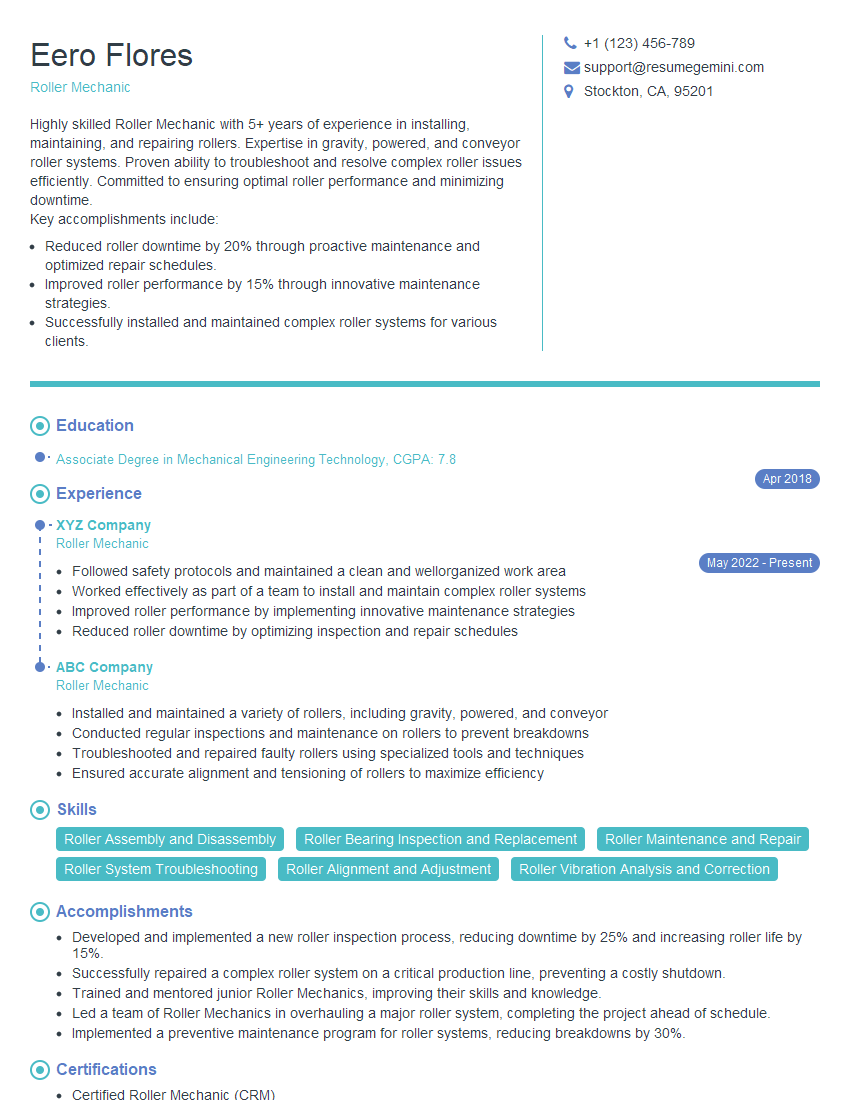
Mastering Roller Installation Procedures opens doors to exciting career opportunities in various industries, offering growth potential and competitive salaries. A strong resume is crucial for showcasing your skills and experience to potential employers. Building an ATS-friendly resume increases your chances of getting your application noticed. ResumeGemini is a trusted resource that can help you craft a professional and impactful resume tailored to highlight your expertise in Roller Installation Procedures. Examples of resumes tailored to this specific field are available to guide you. Invest time in creating a compelling resume – it’s your first impression on potential employers.
Explore more articles
Users Rating of Our Blogs
Share Your Experience
We value your feedback! Please rate our content and share your thoughts (optional).
What Readers Say About Our Blog
Really detailed insights and content, thank you for writing this detailed article.
IT gave me an insight and words to use and be able to think of examples