Interviews are opportunities to demonstrate your expertise, and this guide is here to help you shine. Explore the essential Music Education and Mentoring interview questions that employers frequently ask, paired with strategies for crafting responses that set you apart from the competition.
Questions Asked in Music Education and Mentoring Interview
Q 1. Describe your experience teaching music theory to different age groups.
Teaching music theory effectively requires adapting to the cognitive and developmental stages of different age groups. With younger children (elementary school), I prioritize hands-on activities, games, and visual aids. For example, I might use colored blocks to represent musical intervals or create a rhythmic game using body percussion. The focus is on building foundational understanding through playful engagement. With older students (middle and high school), the approach becomes more analytical and abstract. We delve deeper into harmonic analysis, counterpoint, and compositional techniques. I incorporate more theoretical exercises, analyzing scores of different musical styles, and encourage independent exploration and composition projects. My teaching style, however, remains consistent across age groups: fostering curiosity, encouraging questions, and providing clear, concise explanations with ample opportunities for practice and application.
Q 2. What methods do you use to assess student progress in music?
Assessing student progress in music requires a multi-faceted approach that goes beyond just written tests. I utilize a combination of methods to gain a comprehensive understanding of a student’s musical development. These include:
- Formal Assessments: Written exams on music theory concepts, sight-reading tests, and performance evaluations provide a structured measurement of their knowledge and skills.
- Informal Assessments: Observation of students during class participation, their engagement in group activities, and their ability to apply theoretical concepts in practical performance settings offer valuable insights into their understanding.
- Portfolio Assessment: Students maintain a portfolio of their work, including compositions, analysis papers, and recordings of performances. This allows for tracking growth over time and showcasing individual strengths and areas for improvement.
- Self-Assessment: Encouraging students to reflect on their progress and identify their challenges through journaling or self-reflection prompts is crucial for fostering metacognitive awareness.
By combining these methods, I get a holistic picture of each student’s musical journey, allowing for targeted feedback and individualized support.
Q 3. How do you adapt your teaching methods to accommodate diverse learning styles?
Recognizing that students learn in diverse ways is fundamental to effective music education. I cater to different learning styles by employing a variety of teaching methods. For example:
- Visual Learners: I use diagrams, charts, and multimedia presentations to illustrate musical concepts. Color-coded notation and visual representations of musical structures are helpful.
- Auditory Learners: Listening activities, aural exercises, and discussions about musical sounds and textures are crucial. We actively analyze recordings of different musical genres and styles.
- Kinesthetic Learners: Hands-on activities like composing with instruments, movement-based activities that correspond to rhythms, and group improvisation sessions allow for active engagement and experiential learning.
- Reading/Writing Learners: Analyzing musical scores, writing essays on musical pieces, and creating compositional assignments allows them to consolidate their understanding through writing and reading.
Differentiating instruction based on these varied learning preferences ensures that all students have the opportunity to succeed.
Q 4. Explain your approach to creating a positive and inclusive music classroom environment.
Creating a positive and inclusive music classroom environment is paramount. My approach centers around respect, collaboration, and celebrating diversity. I start by establishing clear expectations for behavior and encouraging students to participate actively and respectfully in class discussions and group projects. I explicitly address issues of bias and discrimination within music history and culture, highlighting the contributions of diverse composers and musicians. I strive to create a space where students feel comfortable taking risks, making mistakes, and expressing themselves creatively without judgment. We celebrate each other’s achievements and work collaboratively on projects, building a sense of community and mutual support. Regularly checking in with students individually, listening to their concerns, and fostering open communication builds trust and strengthens the classroom community.
Q 5. How do you handle challenging student behaviors in a music setting?
Handling challenging student behaviors requires a proactive and consistent approach that focuses on understanding the root cause of the behavior. I start by establishing a clear set of classroom rules and expectations. When challenging behavior arises, I address it privately and calmly, attempting to understand the underlying reasons. Is the student struggling with the material? Feeling overwhelmed? Is there an issue outside the classroom impacting their behavior? Often, a simple conversation is sufficient to resolve the issue. For persistent or severe issues, I collaborate with parents, school counselors, and administration to develop a support plan. Positive reinforcement, consistent expectations, and a supportive classroom environment are vital to preventing and addressing challenging behaviors effectively.
Q 6. What strategies do you employ to motivate students to practice and improve their musical skills?
Motivating students to practice requires making practice enjoyable and relevant. I employ several strategies:
- Goal Setting: Students set achievable short-term and long-term goals, tracking their progress and celebrating milestones. This fosters a sense of accomplishment.
- Personalized Practice Plans: I work with each student to create personalized practice plans that fit their learning style and goals, ensuring that practice feels manageable and relevant.
- Positive Reinforcement: Regular praise and encouragement for effort and improvement fosters motivation. Celebrating small achievements, large and small, keeps students engaged.
- Gamification: Incorporating game elements, such as points, rewards, and challenges, into practice routines makes it more engaging and fun.
- Performance Opportunities: Providing opportunities for students to perform, whether it is in class, school events, or community concerts, gives them a purpose for their practice and boosts their confidence.
By fostering a positive and supportive learning environment, students are more likely to engage with practice as a rewarding and enriching experience.
Q 7. Describe your experience developing and implementing music curricula.
Developing and implementing music curricula requires careful consideration of learning objectives, age appropriateness, and available resources. My approach involves:
- Needs Assessment: Determining the musical needs and interests of the students is paramount. This can be done through surveys, interviews, and observation.
- Curriculum Mapping: Creating a comprehensive curriculum map that outlines learning objectives, activities, and assessment methods for each unit or term.
- Resource Selection: Gathering appropriate resources, including textbooks, sheet music, technology tools, and guest speakers, to supplement the curriculum.
- Lesson Planning: Developing engaging lesson plans that incorporate a variety of teaching methods and cater to different learning styles. This includes detailed lesson plans and aligned assessments.
- Assessment and Evaluation: Developing assessment methods that provide ongoing feedback to students and inform curriculum adjustments, ensuring students are meeting the learning objectives.
- Collaboration and Review: Regularly reviewing the curriculum with colleagues and stakeholders to ensure its effectiveness and relevance.
A well-designed music curriculum ensures that students develop a comprehensive understanding of music theory, history, and performance skills. It encourages creative expression and fosters a lifelong appreciation for music.
Q 8. How do you incorporate technology into your music education?
Technology is an invaluable tool in modern music education, enhancing both learning and engagement. I integrate it in several ways. For instance, I use digital audio workstations (DAWs) like GarageBand or Ableton Live to let students compose and arrange music, fostering creativity and digital literacy. This allows for experimentation and immediate feedback, unlike traditional methods which can be slower. I also utilize music notation software like Sibelius or MuseScore for creating and editing scores, which is particularly useful for advanced theory studies and ensemble work. Furthermore, online platforms like YouTube offer access to a vast library of educational videos, masterclasses, and performance recordings, expanding students’ musical horizons beyond the classroom. Finally, collaborative platforms allow for easy sharing of projects and feedback, promoting teamwork and student autonomy. For example, a student struggling with rhythm could use a metronome app to practice timing, receive immediate feedback, and track their progress. This personalized approach makes learning more accessible and engaging.
Q 9. What are some effective strategies for teaching music to students with special needs?
Teaching music to students with special needs requires a highly individualized approach, focusing on their strengths and adapting methods to accommodate their learning styles and challenges. For students with auditory processing difficulties, I might emphasize visual aids like color-coded charts or graphic representations of musical concepts. For students with motor skill challenges, I adapt instrument playing techniques or utilize assistive technology such as adaptive keyboards or percussion instruments. I always incorporate plenty of hands-on activities, games, and movement, making learning fun and less stressful. For example, a student with ADHD might benefit from short, focused practice sessions interspersed with movement breaks. Working closely with the student’s therapists and special education teachers is crucial for creating a supportive and effective learning environment. This collaborative approach ensures that the musical instruction is seamlessly integrated with their overall educational plan. I regularly assess their progress, celebrating small victories and adjusting my approach as needed to maximize their musical growth.
Q 10. How do you foster creativity and self-expression in your music students?
Fostering creativity and self-expression is paramount in music education. I encourage this by providing opportunities for improvisation and composition, using open-ended assignments that allow students to explore their unique musical voices. For example, I might ask students to compose a piece inspired by a piece of artwork or a poem, encouraging them to translate their emotions and ideas into music. I also create a supportive and risk-free classroom environment where students feel comfortable experimenting and making mistakes, knowing that these are valuable learning experiences. Encouraging peer feedback and sharing work helps students learn from each other and grow their confidence. Group projects involving songwriting or arranging music also foster collaborative creativity and teamwork. I constantly celebrate the unique musical perspectives of each student, recognizing and affirming their individual contributions to the classroom.
Q 11. Describe your experience mentoring aspiring music educators.
I’ve had the privilege of mentoring aspiring music educators for several years, guiding them through various aspects of teaching, curriculum development, and classroom management. My mentoring approach is highly individualized, focusing on each mentee’s specific needs and goals. I offer guidance on lesson planning, effective teaching strategies, and assessment techniques. We regularly discuss classroom challenges and problem-solving strategies, creating a safe space for sharing experiences and receiving constructive feedback. I also encourage them to attend professional development workshops and conferences to stay current on best practices in music education. I’ve witnessed my mentees grow into confident and effective teachers, embracing innovative teaching methodologies and fostering a love of music in their students. One mentee, for instance, initially struggled with classroom management but, through consistent mentoring and reflection, developed effective strategies that significantly improved her student engagement and classroom control.
Q 12. What are your strategies for providing constructive feedback to students?
Providing constructive feedback is essential for student growth. I focus on being specific and positive, highlighting both strengths and areas for improvement. I avoid vague criticisms, instead offering concrete suggestions and examples. For instance, instead of saying “Your rhythm needs work,” I might say, “Your rhythm was slightly off in the second bar; let’s focus on practicing that section using a metronome to improve precision.” I also frame my feedback within the context of the student’s goals and aspirations, helping them understand how improvements will help them achieve their musical objectives. I encourage students to actively participate in the feedback process, asking them to reflect on their performance and identify areas for improvement. This collaborative approach ensures that the feedback is meaningful and actionable, empowering them to take ownership of their musical development.
Q 13. How do you build strong relationships with parents/guardians?
Building strong relationships with parents/guardians is crucial for creating a supportive learning environment. I maintain open communication through regular updates, emails, or newsletters, keeping them informed about their child’s progress and upcoming events. I encourage parent-teacher conferences where we can discuss their child’s development and set mutual goals. I also value their input and perspectives, recognizing that they play a vital role in their child’s musical journey. For instance, I actively solicit feedback on how I can better support their child’s musical learning and tailor my teaching to meet their specific needs and expectations. I strive to create a partnership where parents feel valued and are actively involved in their child’s musical education.
Q 14. How do you manage your time effectively in a demanding music education role?
Effective time management is essential in the demanding role of a music educator. I utilize various strategies, including detailed lesson planning, efficient scheduling, and prioritizing tasks. I utilize digital calendars and to-do lists to organize my workload, ensuring that I allocate sufficient time for lesson preparation, grading, communication with parents, and professional development. I also prioritize self-care, recognizing that maintaining my well-being is crucial for my effectiveness. I delegate tasks when possible, such as asking student assistants to help with setup or clean-up. Moreover, I utilize technology to streamline certain processes, such as using online platforms for assignment submission and feedback. By strategically managing my time and prioritizing tasks, I can effectively balance the diverse demands of my role and maintain a healthy work-life balance.
Q 15. Describe your experience working collaboratively with colleagues.
Collaboration is the cornerstone of effective music education. In my experience, successful teamwork hinges on clear communication, shared goals, and mutual respect. I’ve worked extensively with colleagues across various disciplines – from classroom teachers to special education specialists and administrators – to create inclusive and enriching music programs.
- Example: In one instance, I collaborated with a special education teacher to adapt a percussion ensemble arrangement for a student with limited motor skills. We modified the rhythms and instrumentation to ensure full participation and success.
- Example: Another successful collaboration involved working with the drama department to integrate music into a school play. This required careful scheduling, shared rehearsals, and open communication to ensure a seamless performance.
My approach prioritizes open dialogue and a shared understanding of student needs and learning objectives. I firmly believe that by leveraging each team member’s strengths, we can achieve a far richer and more impactful learning experience for our students.
Career Expert Tips:
- Ace those interviews! Prepare effectively by reviewing the Top 50 Most Common Interview Questions on ResumeGemini.
- Navigate your job search with confidence! Explore a wide range of Career Tips on ResumeGemini. Learn about common challenges and recommendations to overcome them.
- Craft the perfect resume! Master the Art of Resume Writing with ResumeGemini’s guide. Showcase your unique qualifications and achievements effectively.
- Don’t miss out on holiday savings! Build your dream resume with ResumeGemini’s ATS optimized templates.
Q 16. How do you stay current with best practices in music education?
Staying current in music education requires a multifaceted approach. It’s not just about learning the latest trends, but about critically evaluating and adapting new methodologies to meet the specific needs of my students.
- Professional Organizations: I’m an active member of the National Association for Music Education (NAfME), regularly attending conferences and webinars to stay abreast of research-based best practices.
- Peer Learning: I actively participate in professional learning communities (PLCs) with colleagues, sharing experiences, resources, and innovative teaching strategies. This collaborative approach allows us to learn from each other and challenge traditional approaches.
- Scholarly Journals: I regularly read journals like the *Journal of Research in Music Education* and *Music Educators Journal* to stay updated on the latest research and findings in the field.
- Online Resources: I leverage online platforms and resources, such as educational websites and YouTube channels featuring leading music educators, to access a wealth of diverse teaching techniques and technological advancements.
This continuous learning process allows me to refine my teaching methods, integrate cutting-edge technology, and remain adaptable to the ever-evolving landscape of music education.
Q 17. What are your professional development goals in music education?
My professional development goals center around enhancing my skills in inclusive music education and incorporating technology effectively into my teaching. I aim to become a more proficient user of digital audio workstations (DAWs) to create personalized learning experiences for students.
- Inclusive Practices: I want to deepen my understanding of differentiated instruction to better meet the diverse needs of learners with varying abilities and learning styles.
- Technology Integration: I intend to become more skilled in utilizing music technology, such as notation software, recording software, and online collaboration tools, to enhance student engagement and creative expression.
- Assessment Strategies: I aim to improve my skills in creating and utilizing authentic assessments that accurately reflect student understanding and musical growth, moving beyond traditional grading methods.
Achieving these goals will allow me to create a more dynamic, inclusive, and engaging learning environment for all students, fostering a deeper love and appreciation for music.
Q 18. How do you use assessment data to inform your teaching practices?
Assessment data is crucial for informing my teaching practices and ensuring student success. I use a variety of assessment methods – formative and summative – to gain a comprehensive understanding of student learning.
- Formative Assessment: I regularly incorporate informal assessments like classroom observations, questioning, and informal performance checks to monitor student progress in real-time and adjust instruction accordingly. This allows for immediate feedback and targeted support.
- Summative Assessment: Formal assessments such as tests, projects, and formal performances provide a more comprehensive picture of student achievement at specific points in time. This data helps in identifying areas of strength and weakness across the class.
For example, if a summative assessment reveals that students struggle with a particular musical concept, I might adjust my teaching strategies in subsequent lessons, perhaps incorporating more interactive activities or providing additional practice opportunities. The data-driven approach ensures that my teaching aligns with student needs, maximizes learning, and leads to better outcomes.
Q 19. How do you ensure that your music program is accessible to all students?
Creating an accessible music program for all students is a fundamental principle of my teaching philosophy. This involves considering the diverse learning styles, abilities, and backgrounds of my students.
- Differentiated Instruction: I adapt my teaching methods to meet the diverse needs of my students, providing varied learning opportunities and assessment methods. This may include providing visual aids, modifying assignments, or offering alternative performance options.
- Adaptive Technology: I utilize assistive technologies and adaptive instruments when needed to ensure students with disabilities can fully participate in music activities.
- Culturally Responsive Teaching: I incorporate diverse musical styles and traditions into my curriculum to create an inclusive and representative learning environment. This helps all students feel seen, heard, and valued.
- Collaboration: I work closely with special education teachers, administrators, and other support staff to ensure that all students have access to appropriate resources and support.
Accessibility isn’t just about removing barriers; it’s about creating a welcoming and empowering environment where every student feels confident and capable of expressing themselves musically.
Q 20. Describe your experience with different music genres and styles.
My experience encompasses a wide range of musical genres and styles. I am proficient in teaching and performing classical, jazz, world music, and popular music.
- Classical Music: I have extensive experience teaching classical music theory, history, and performance techniques on various instruments.
- Jazz Music: I’m familiar with jazz improvisation techniques, harmony, and rhythm, often incorporating jazz elements into my curriculum to enhance student creativity.
- World Music: I incorporate various world music styles into my lessons, exposing students to diverse musical cultures and traditions. This expands their musical horizons and cultivates appreciation for global musical diversity.
- Popular Music: I leverage popular music to connect with students’ interests and demonstrate the underlying musical principles in a relatable context. This can enhance engagement and demonstrate the relevance of music theory and practice.
This broad musical background allows me to create a dynamic and engaging curriculum that caters to diverse student interests and fosters a deeper appreciation for the richness and diversity of music.
Q 21. What is your experience with different instrumental and vocal techniques?
My instrumental and vocal training is extensive, enabling me to provide effective instruction across various disciplines.
- Instrumental Techniques: I am proficient in teaching various instrumental techniques on instruments such as piano, guitar, percussion, woodwinds, and brass instruments. My experience includes instructing both beginning and advanced students.
- Vocal Techniques: My vocal training encompasses breath control, vocal production, sight-singing, and various vocal styles. I tailor my instruction to different voice types and levels of experience.
- Music Theory and Composition: I have a strong foundation in music theory and composition, enabling me to effectively teach music fundamentals and assist students in developing their own musical compositions.
This expertise allows me to provide tailored instruction, addressing the individual needs and aspirations of each student. This ensures a comprehensive and fulfilling musical learning journey for everyone in my program.
Q 22. How do you encourage student participation and engagement in music activities?
Encouraging student participation and engagement in music is crucial for fostering a love of music and developing their skills. I approach this by creating a positive and inclusive classroom environment where students feel safe to take risks and express themselves. This involves several key strategies:
Varied Activities: I incorporate a diverse range of activities, including listening exercises, performance opportunities, composing tasks, music games, and technology integration to cater to different learning styles and interests. For example, one day we might analyze a piece of classical music, while the next we compose our own short melodies using GarageBand.
Student Choice: Offering choices in assignments and activities empowers students and increases their investment. This could involve selecting their instrument for a project or choosing a piece of music to perform.
Positive Reinforcement: Celebrating successes, both big and small, boosts confidence and motivates students. This might involve public praise, individual feedback, or showcasing student work during class.
Collaboration and Peer Learning: Group activities, ensemble work, and peer assessment opportunities allow students to learn from each other, develop teamwork skills, and gain a deeper understanding of the material.
Real-World Connections: Linking musical concepts to their interests outside of the classroom helps students make connections and see the relevance of music. This could involve incorporating pop songs to illustrate musical theory or discussing the role of music in different cultures.
Q 23. Describe a time you had to resolve a conflict in a music class.
In one instance, two students in my advanced ensemble had a disagreement over a musical interpretation. One student believed the piece should be performed with a faster tempo, while the other advocated for a slower, more lyrical approach. Instead of simply dictating a solution, I facilitated a discussion between them, encouraging each student to articulate their rationale and listen to the other’s perspective. We analyzed the score together, examining the composer’s markings and considering different interpretations. We explored recordings by various performers to expose them to a range of stylistic choices. Ultimately, they collaboratively decided on a tempo that combined elements of both their interpretations, resulting in a richer and more nuanced performance. The experience taught them valuable skills in communication, compromise, and collaborative problem-solving, essential attributes in any ensemble setting.
Q 24. How do you deal with students who struggle with specific musical concepts?
When students struggle with specific musical concepts, I employ a multi-faceted approach that prioritizes individualized support and adapts to their learning styles. This includes:
Identifying the Root Cause: First, I carefully assess the nature of the struggle. Is it a conceptual misunderstanding, a technical difficulty, or a lack of confidence?
Differentiated Instruction: Once I understand the cause, I adjust my teaching methods accordingly. For instance, if a student struggles with rhythm, I might use visual aids, kinesthetic activities, or technology-based tools to reinforce the concept. For a student who struggles with sight-reading, I might break down complex passages into smaller, manageable sections or utilize flashcards.
Breaking Down Complex Tasks: Complex tasks are broken down into smaller, more achievable steps. This helps students build confidence and master the material gradually.
Utilizing Various Teaching Methods: I leverage visual, auditory, and kinesthetic learning strategies. For example, I might use diagrams, rhythmic clapping games, or manipulatives to enhance understanding.
Seeking External Support: If needed, I collaborate with other teachers, specialists, or parents to provide additional support and resources for the student.
Q 25. What strategies do you use to differentiate instruction in a music classroom?
Differentiation in music education means tailoring instruction to meet the diverse needs and learning styles of all students. My strategies include:
Tiered Assignments: I design assignments at varying levels of complexity to accommodate students with different skill levels. This allows students to challenge themselves appropriately while ensuring everyone feels successful.
Flexible Grouping: Students may work individually, in small groups, or in larger ensembles, based on their learning needs and the task at hand.
Choice Boards: These offer students options for completing assignments, allowing them to choose activities that best suit their interests and learning styles.
Assistive Technology: I integrate assistive technologies such as music notation software or audio recording devices to support students with specific learning disabilities.
Varied Assessment Methods: Assessments are diverse, including written tests, performances, projects, and presentations. This allows students to demonstrate their understanding in ways that best showcase their skills.
Q 26. How do you foster a sense of community and teamwork among your music students?
Building a strong sense of community and teamwork is essential in a music classroom. I foster this by:
Ensemble Activities: Participation in ensembles (band, choir, orchestra) inherently fosters teamwork and collaboration. Students learn to listen to each other, support one another, and work together to achieve a shared musical goal.
Group Projects: Collaborative projects involving composition, arranging, or creating musical presentations encourage teamwork and shared responsibility.
Peer Teaching and Mentoring: More advanced students can mentor younger or less experienced peers, promoting leadership skills and a sense of shared responsibility.
Class Discussions and Shared Experiences: Open discussions about musical preferences, experiences, and interpretations create a sense of shared identity and community. Sharing personal musical journeys can create strong bonds between students.
Classroom Performances and Celebrations: Regular performances, recitals, or celebrations provide students with opportunities to share their work with each other and the wider community, fostering pride and a sense of collective achievement.
Q 27. Explain your understanding of music pedagogy and its application.
Music pedagogy is the study and practice of teaching music. It encompasses the theoretical foundations of music education, as well as practical strategies for effective instruction. My understanding of music pedagogy informs every aspect of my teaching, from lesson planning and curriculum design to assessment and classroom management.
I apply music pedagogy by:
Developing well-structured lesson plans: These plans outline clear learning objectives, incorporate various teaching methods, and include opportunities for formative and summative assessment.
Creating a positive and engaging learning environment: This involves building rapport with students, promoting inclusivity, and encouraging active participation.
Utilizing a variety of teaching methods and resources: This ensures that I cater to diverse learning styles and needs, and that lessons are relevant and engaging.
Employing effective assessment strategies: Assessment should be comprehensive, going beyond grades and including feedback that helps students improve.
Continuously reflecting on my teaching practices: I regularly evaluate my effectiveness and adapt my strategies based on student feedback and outcomes.
Q 28. How do you incorporate music history and theory into your lessons?
Integrating music history and theory is vital for developing well-rounded musicians. I do this through:
Contextualizing Music: When introducing a musical piece, I provide historical context, exploring the composer’s life, the social and cultural influences of the time, and the musical styles prevalent during that period. This helps students understand the music’s meaning and significance.
Interactive Lessons: Rather than simply lecturing, I make music history and theory interactive. For instance, students may analyze musical scores, compare different compositional styles, create timelines, or present research projects on composers and periods.
Connecting Theory to Practice: I emphasize the practical application of music theory. We explore musical concepts like melody, harmony, rhythm, and form through hands-on activities, composition exercises, and analysis of familiar songs.
Using Technology: Technology like music notation software, interactive timelines, and online resources makes learning music history and theory more engaging and accessible.
Cross-curricular Connections: I might collaborate with other teachers to connect music history and theory to subjects like art, history, or literature. For instance, we might study the music of the Renaissance alongside paintings or literature from that period.
Key Topics to Learn for Your Music Education and Mentoring Interview
- Curriculum Development & Implementation: Understanding diverse learning styles, adapting curricula to meet individual student needs, and creating engaging lesson plans that foster creativity and critical thinking.
- Teaching Methodology & Assessment: Exploring effective teaching strategies (e.g., Kodály, Orff, Dalcroze), incorporating technology, developing formative and summative assessment methods, and providing constructive feedback.
- Student Motivation & Engagement: Strategies for fostering a positive learning environment, building rapport with students, addressing challenges in motivation and behavior management, and promoting a love for music.
- Mentorship & Guidance: Developing mentoring relationships, providing individualized support, navigating student challenges, understanding the role of a mentor beyond musical instruction, and fostering self-advocacy skills.
- Inclusive Music Education: Creating accessible and inclusive musical experiences for students of all backgrounds, abilities, and learning styles; addressing issues of equity and diversity in music education.
- Professional Development & Collaboration: Demonstrating a commitment to ongoing professional growth, highlighting collaborations with colleagues, and showcasing engagement in the broader music education community.
- Classroom Management & Organization: Effective strategies for managing a classroom environment, organizing materials, and creating a structured learning experience.
- Ethical Considerations: Understanding and applying ethical principles related to teaching, mentoring, and student well-being. This includes topics such as confidentiality, appropriate boundaries, and conflict resolution.
Next Steps
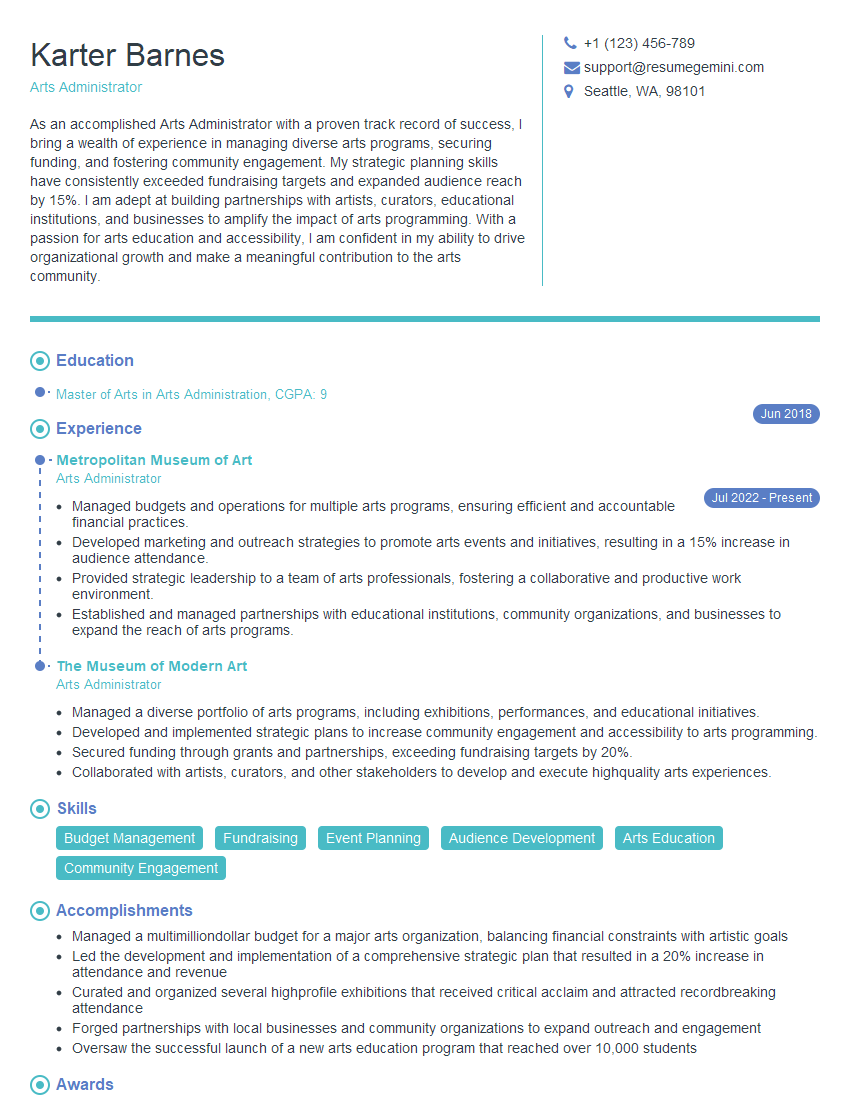
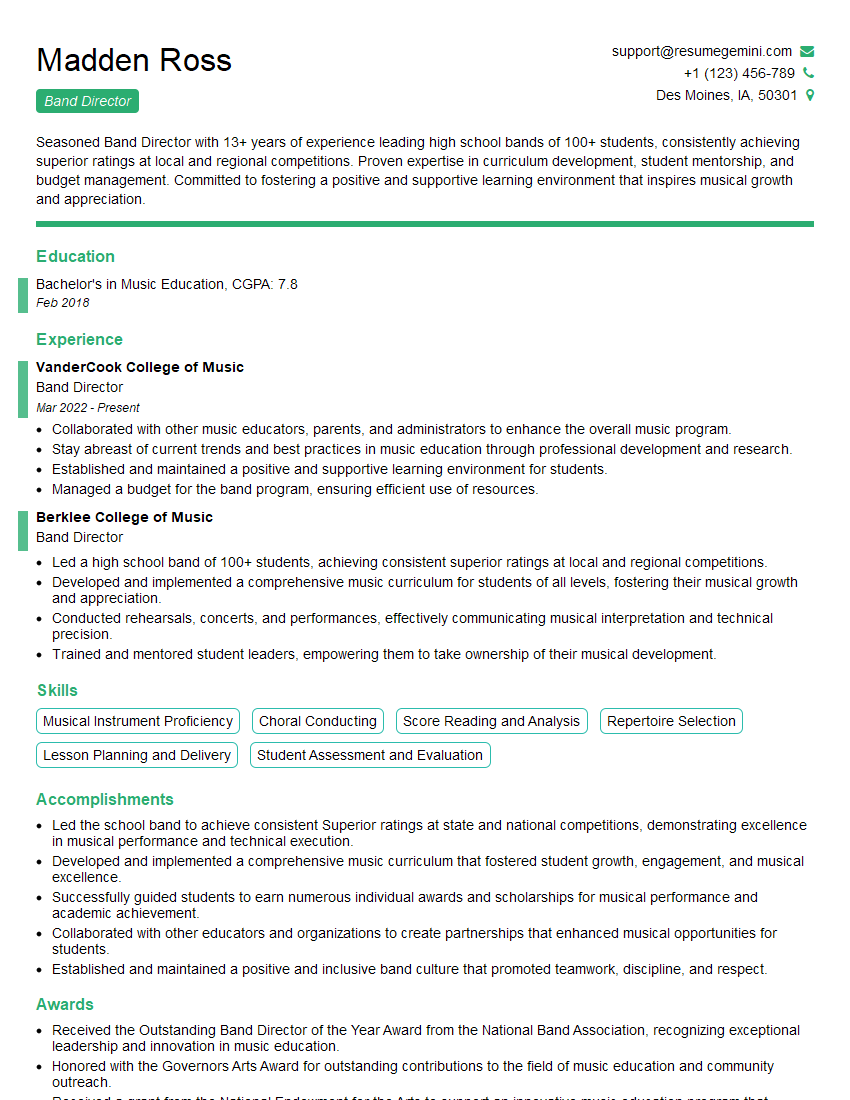
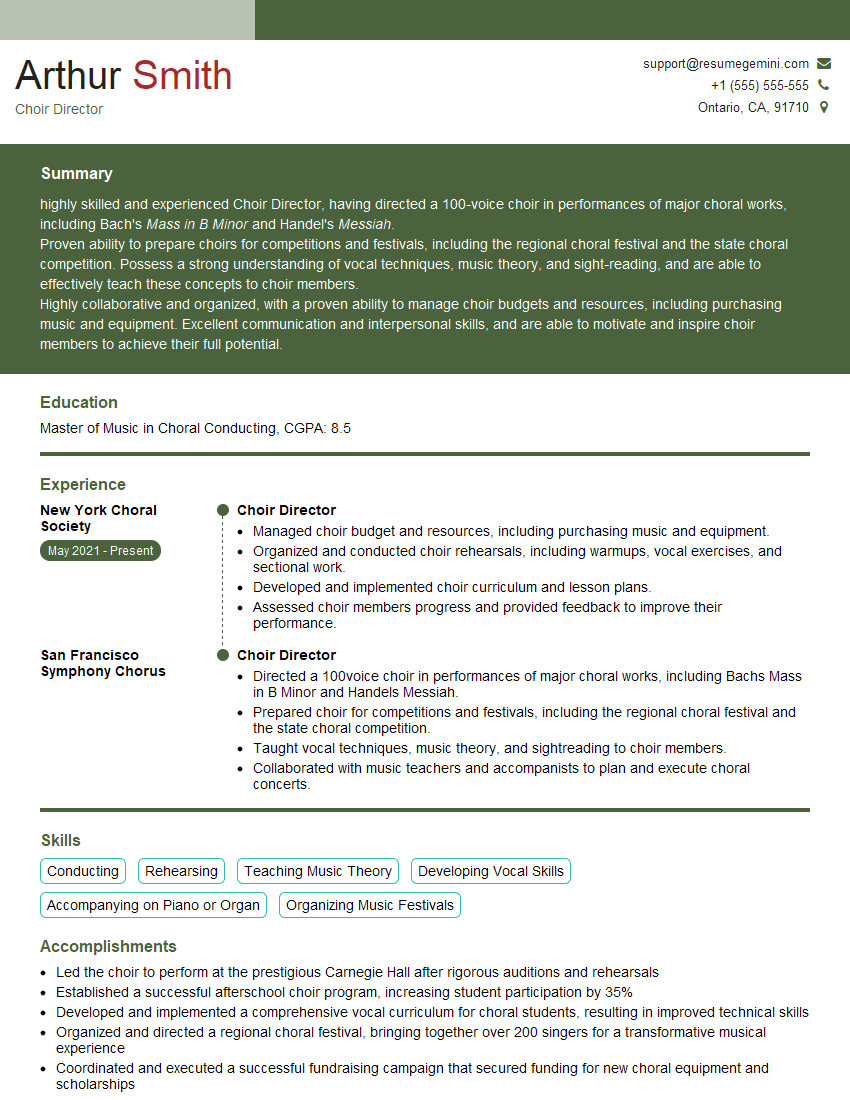
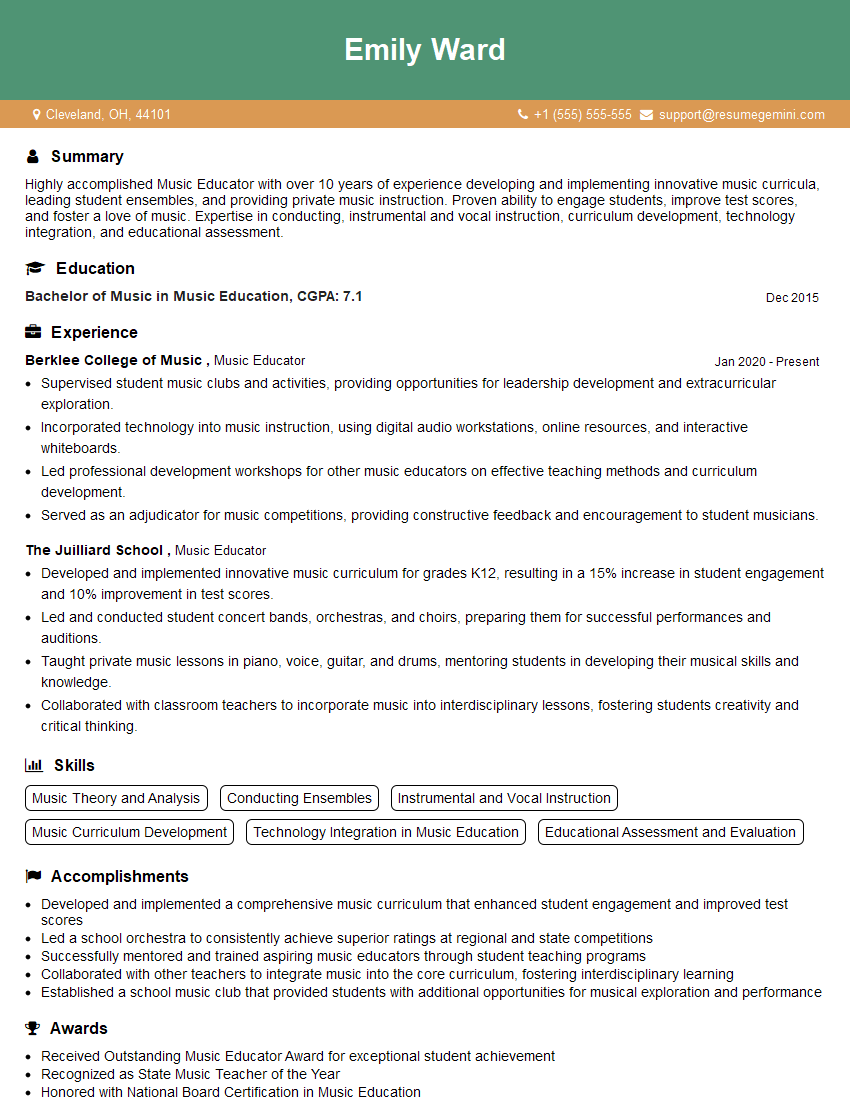
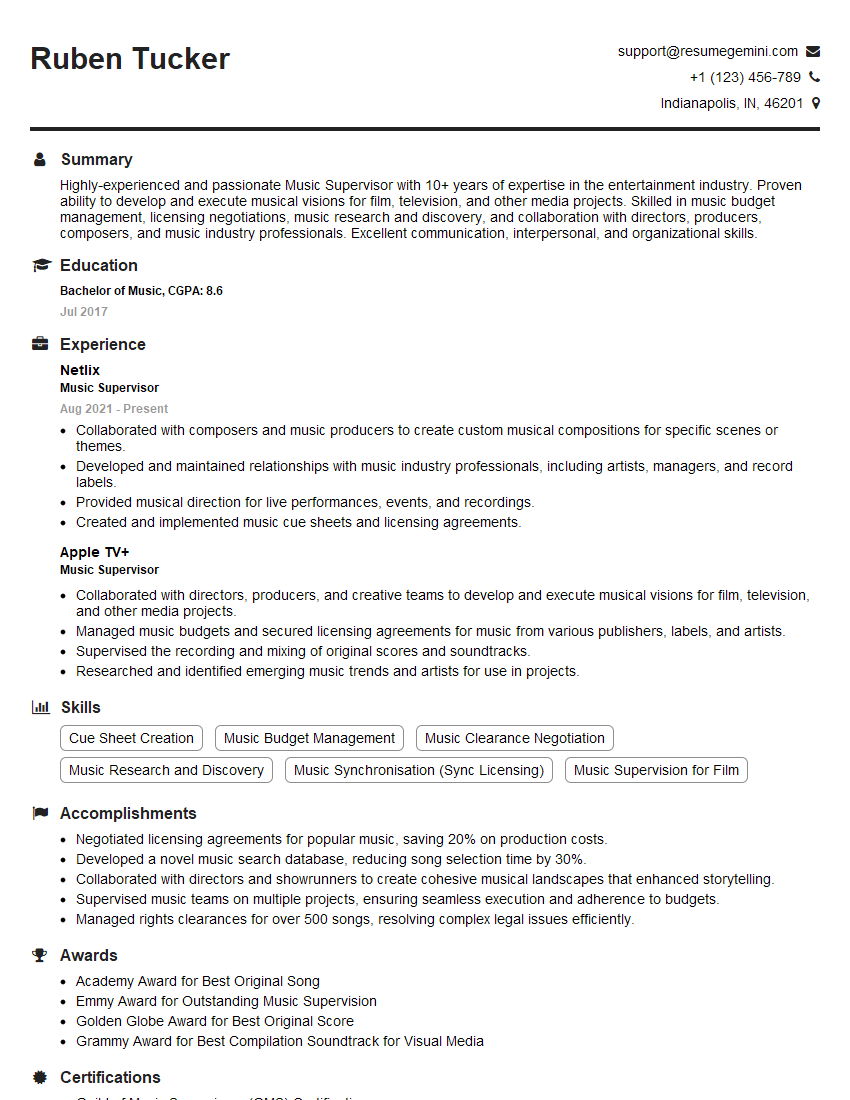
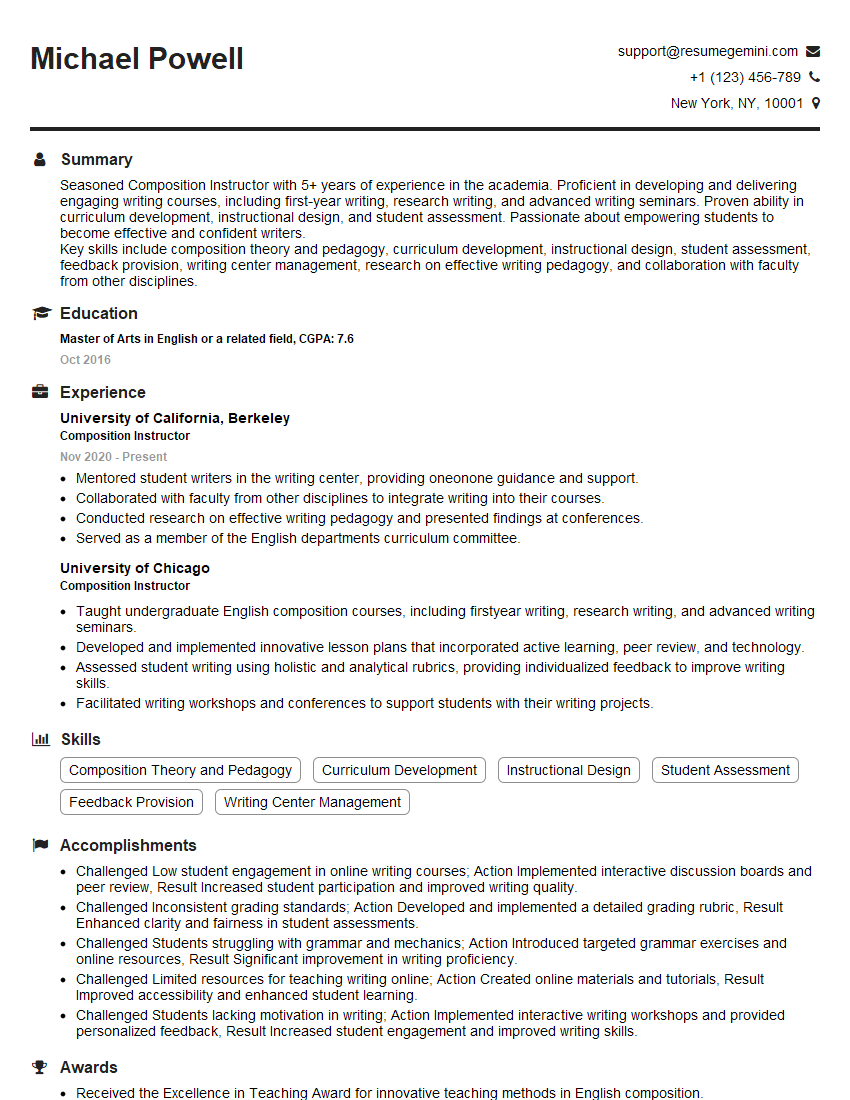
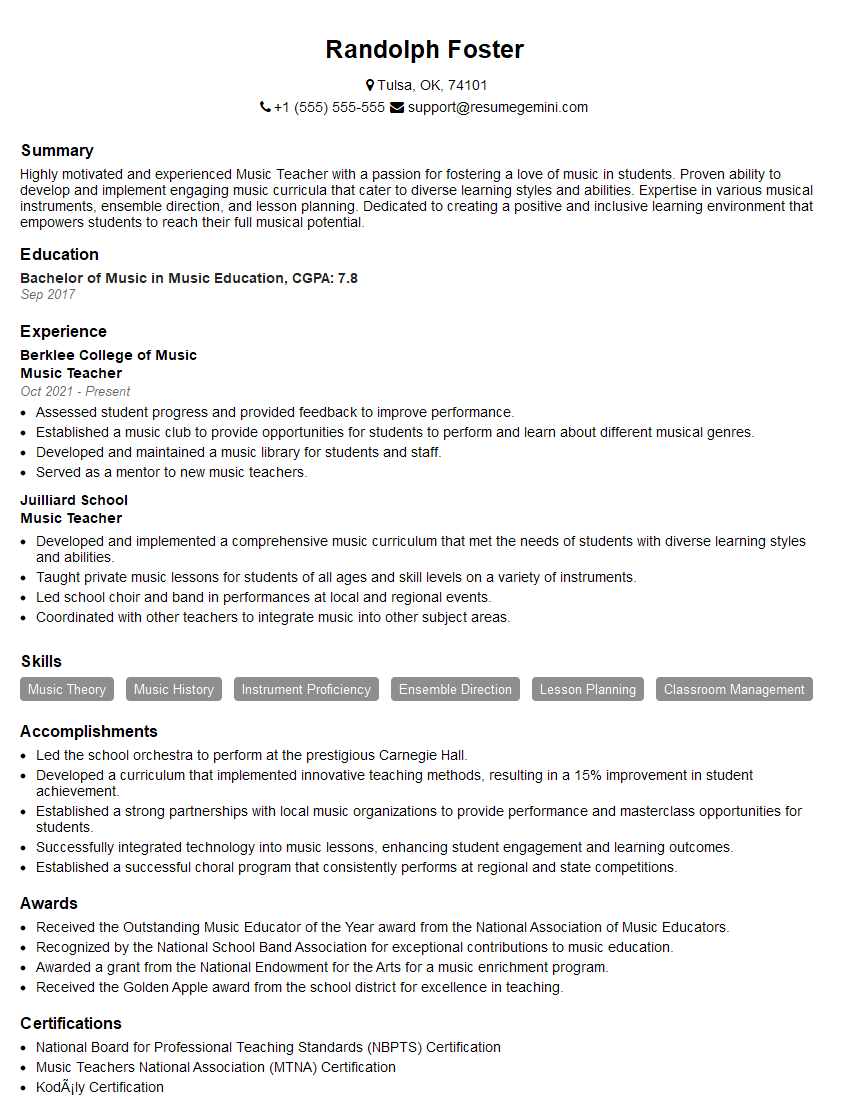
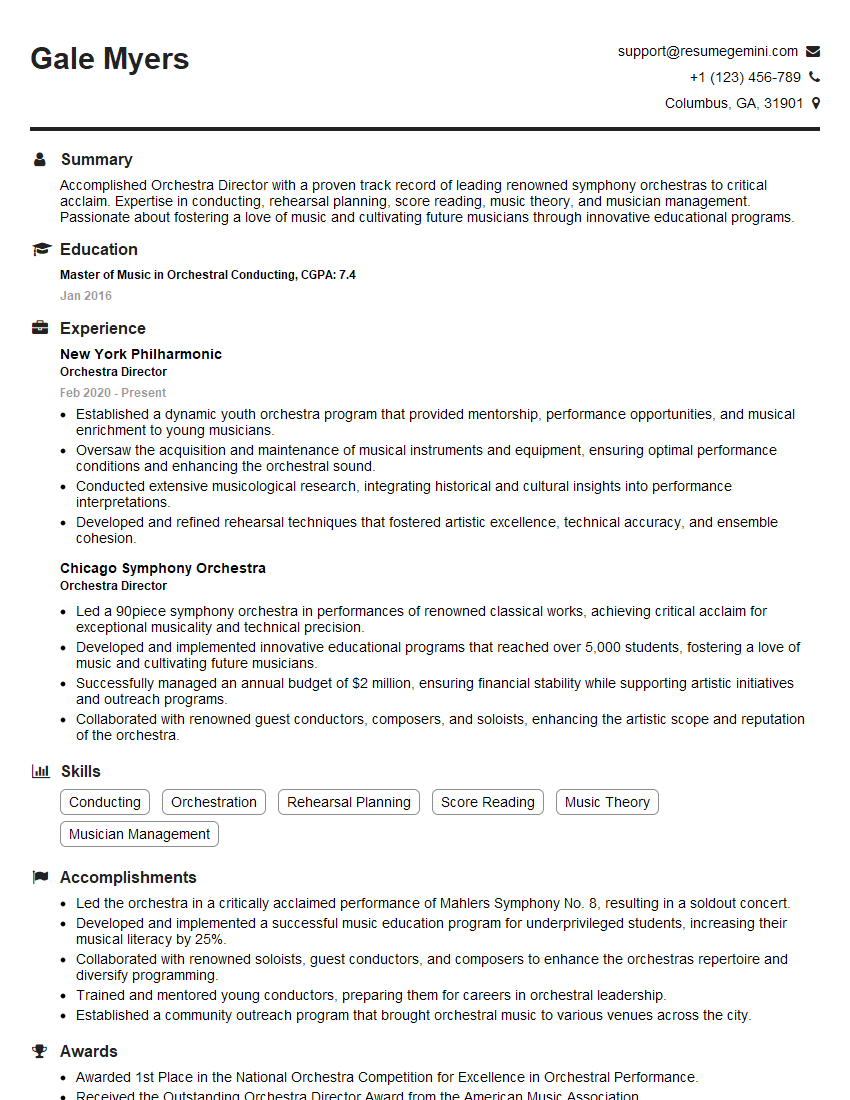
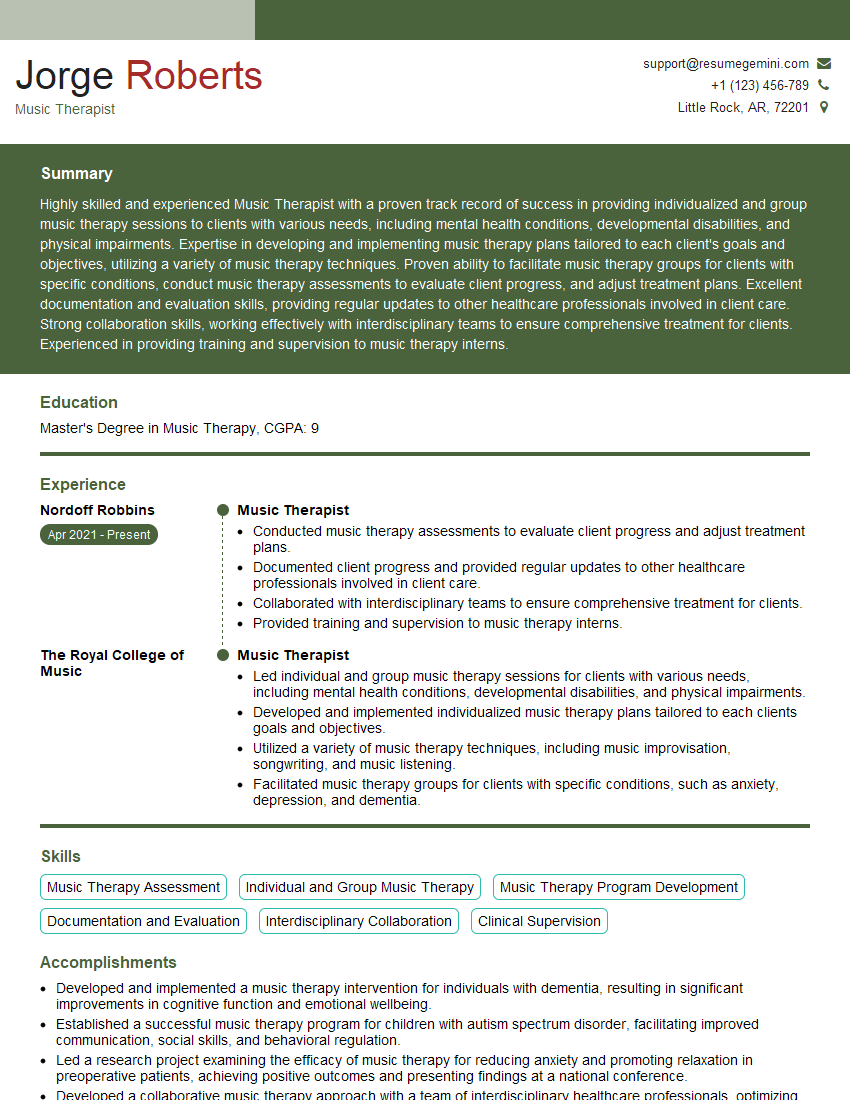
Mastering Music Education and Mentoring is crucial for a rewarding and impactful career. It allows you to shape young minds, foster creativity, and make a lasting difference in the lives of your students. To significantly boost your job prospects, it’s vital to create a resume that not only showcases your skills and experience but also speaks the language of Applicant Tracking Systems (ATS). We strongly encourage you to leverage ResumeGemini, a trusted resource, to build a professional and ATS-friendly resume that highlights your unique qualifications. Examples of resumes tailored specifically for Music Education and Mentoring positions are available to guide you.
Explore more articles
Users Rating of Our Blogs
Share Your Experience
We value your feedback! Please rate our content and share your thoughts (optional).
What Readers Say About Our Blog
Really detailed insights and content, thank you for writing this detailed article.
IT gave me an insight and words to use and be able to think of examples