The right preparation can turn an interview into an opportunity to showcase your expertise. This guide to Dimensional Measurements interview questions is your ultimate resource, providing key insights and tips to help you ace your responses and stand out as a top candidate.
Questions Asked in Dimensional Measurements Interview
Q 1. Explain the concept of GD&T (Geometric Dimensioning and Tolerancing).
Geometric Dimensioning and Tolerancing (GD&T) is a symbolic language used on engineering drawings to define the size, form, orientation, location, and runout of features on parts. It’s far more precise than traditional tolerancing methods. Instead of simply stating a size range (e.g., 10mm ± 0.1mm), GD&T uses symbols and zones to precisely define acceptable variations. This ensures parts fit together correctly and function as intended, even with slight manufacturing variations. Think of it as a highly detailed set of instructions for a part’s geometry, going beyond simple measurements.
For instance, a simple tolerance might specify a hole’s diameter. GD&T would add information on the hole’s circularity (how round it is), position (where it’s located relative to other features), and perpendicularity (how square it is to the surface).
In practice, using GD&T reduces ambiguity, improves communication between designers and manufacturers, and minimizes costly rework or scrapped parts. It’s crucial in industries like aerospace, automotive, and medical devices where precision is paramount.
Q 2. What are the different types of dimensional measurement instruments?
The world of dimensional measurement instruments is vast, offering a range of tools for various applications and precision levels. Some common types include:
- Calipers: These are basic but versatile tools for measuring external and internal dimensions, depths, and steps. They range from simple vernier calipers to digital calipers offering increased accuracy and ease of reading.
- Micrometers: Providing even higher precision than calipers, micrometers measure extremely small dimensions with exceptional accuracy. They often use a rotating thimble to provide fractional readings.
- Optical Comparators: These project the image of a part onto a screen, allowing for detailed visual inspection and measurement of complex shapes and profiles. They are invaluable for comparing a part to a master or blueprint.
- Coordinate Measuring Machines (CMMs): These are sophisticated automated systems capable of making highly accurate 3D measurements of parts. We’ll explore these in more detail in the next question.
- Laser Scanners: These non-contact devices use laser beams to rapidly capture surface data, creating detailed 3D models of parts. They are exceptionally useful for complex shapes or delicate items.
- Height Gauges: These are used for measuring the height or thickness of objects with high precision, often employed in conjunction with surface plates.
The choice of instrument depends on the required accuracy, the complexity of the part, and the budget.
Q 3. Describe your experience with Coordinate Measuring Machines (CMMs).
I have extensive experience working with Coordinate Measuring Machines (CMMs), both manually operated and CNC (Computer Numerical Control) models. My experience encompasses a wide range of applications, from simple dimensional checks to complex surface scans and geometric feature evaluations. I’m proficient in using various CMM software packages to program measurement routines, analyze results, and generate reports. For instance, I’ve used CMMs to verify the dimensions and tolerances of critical components in aerospace manufacturing, ensuring conformity to stringent specifications and preventing costly assembly issues.
One particular project involved inspecting a complex turbine blade assembly. Using a high-precision CMM equipped with a scanning probe, I was able to accurately measure the blade’s airfoil shape, angles, and surface finish, identifying minute deviations that could have compromised performance. The data generated by the CMM was crucial in optimizing the manufacturing process and ensuring the quality of the final product. I’m also familiar with different probe types and their appropriate applications, including touch probes, scanning probes, and optical probes, allowing me to select the best tool for the specific measurement task.
Q 4. How do you ensure the accuracy and reliability of dimensional measurements?
Ensuring the accuracy and reliability of dimensional measurements is critical. It’s a multi-faceted process involving several key steps:
- Proper Equipment Selection: Choosing the right instrument for the task is paramount. A micrometer is unsuitable for measuring a large part, and a caliper won’t suffice for micrometer-level precision.
- Regular Calibration: All measurement equipment must be regularly calibrated against traceable standards to ensure accuracy. This should be done according to a predetermined schedule and documented meticulously.
- Environmental Control: Temperature, humidity, and vibrations can all affect measurement accuracy. Maintaining a stable environment is essential.
- Proper Measurement Techniques: Operators must be trained in correct measurement techniques to minimize human error. This includes understanding how to properly handle the equipment, avoid introducing force, and read the instrument correctly.
- Statistical Process Control (SPC): Employing SPC techniques allows monitoring the measurement process over time, identifying trends, and detecting potential sources of variation before they become significant issues.
- Data Analysis: Careful analysis of measurement data is crucial to identify outliers, trends, and potential sources of error. Appropriate statistical methods help to ensure reliable conclusions are drawn.
By following these steps, we can ensure high confidence in the accuracy and reliability of dimensional measurements. This translates directly to improved product quality, reduced costs, and increased customer satisfaction.
Q 5. Explain the process of calibrating measurement equipment.
Calibrating measurement equipment is a systematic process designed to ensure accuracy. It involves comparing the instrument’s readings to those of a known standard of higher accuracy (a traceable standard). The process generally follows these steps:
- Preparation: The instrument is thoroughly cleaned and prepared according to the manufacturer’s instructions. The environment is stabilized to minimize external influences.
- Comparison: The instrument’s readings are compared to those of the traceable standard, using standardized measurement procedures. Multiple readings are taken to account for random variations.
- Adjustment (if needed): If the discrepancies between the instrument’s readings and the standard exceed acceptable tolerances, the instrument may need to be adjusted. This process depends on the type of instrument. Some instruments have adjustable mechanisms; others require more complex interventions.
- Documentation: The entire calibration process is meticulously documented, including date, time, standard used, readings obtained, adjustments made (if any), and the certificate of calibration issued. This documentation serves as proof of the instrument’s accuracy and compliance with established standards.
The frequency of calibration depends on the instrument’s type, usage frequency, and the required accuracy. Regular calibration is crucial to ensure the validity of the measurements and ultimately, the quality of the products being manufactured.
Q 6. What are the common sources of error in dimensional measurements?
Many factors can contribute to errors in dimensional measurements. Here are some common sources:
- Instrument Errors: These can include wear and tear, miscalibration, incorrect zeroing, and limitations of the instrument’s resolution.
- Environmental Errors: Temperature fluctuations, humidity changes, and vibrations can all influence the measurements.
- Human Errors: Improper handling of the instrument, incorrect reading of the scale, parallax errors (reading the scale from an angle), and operator fatigue can introduce significant errors.
- Part Errors: Imperfect parts with surface roughness, burrs, or other imperfections can lead to inaccurate measurements. The way a part is fixtured during measurement can also influence the results.
- Software Errors (for CMMs): In automated systems, programming errors, software glitches, and inaccurate models can lead to measurement errors.
Understanding these potential sources of error is critical in designing measurement procedures that minimize their impact and in analyzing results to identify potential inaccuracies.
Q 7. How do you handle discrepancies between measured values and specifications?
Discrepancies between measured values and specifications require a systematic investigation. The approach involves these steps:
- Verify the Measurement: Repeat the measurement multiple times using the same instrument and method. Check for operator errors or environmental influences.
- Check the Calibration: Ensure that the measuring instrument is properly calibrated. If not, recalibrate or replace the instrument.
- Investigate the Part: Inspect the part for any defects or imperfections that may contribute to the discrepancy, such as burrs, surface damage, or deformation.
- Review the Specifications: Double-check the specifications for any ambiguities or errors.
- Analyze the Data: Review all collected data to identify patterns, trends, and possible systematic errors. Consider using statistical methods to evaluate the significance of the discrepancy.
- Document Findings: Record all findings and actions taken. This documentation serves as a record of the issue, the investigation conducted, and the corrective actions implemented.
- Corrective Actions: Based on the investigation, implement necessary corrective actions. These may include adjusting the manufacturing process, reworking the part, or revising the specifications.
A thorough investigation is crucial to determine the root cause of the discrepancy and to prevent similar issues in the future. This emphasizes the importance of a robust quality control system throughout the manufacturing process.
Q 8. What software packages are you proficient in for dimensional analysis?
My proficiency in dimensional analysis software spans several leading packages. I’m highly experienced with PolyWorks, a powerful software suite for 3D point cloud processing and reverse engineering, frequently used for complex part inspection and analysis. I’m also adept at using CMM software packages like PC-DMIS, which is industry-standard for Coordinate Measuring Machine programming and data analysis. This allows me to create efficient measurement routines, analyze results, and generate comprehensive reports. Furthermore, I’m familiar with CAD software such as SolidWorks and AutoCAD, crucial for comparing measured data to nominal CAD models and identifying deviations. My experience encompasses not only using these tools but also optimizing measurement strategies within them to achieve the highest accuracy and efficiency.
For example, in a recent project involving the inspection of a complex turbine blade, I leveraged PolyWorks’ powerful alignment algorithms to accurately compare the scanned point cloud data to the CAD model, quickly identifying subtle deviations in the airfoil profile that might have been missed with simpler techniques.
Q 9. Describe your experience with statistical process control (SPC) in dimensional measurement.
Statistical Process Control (SPC) is integral to my dimensional measurement workflow. I routinely use control charts, such as X-bar and R charts, and individuals and moving range charts, to monitor process capability and identify potential sources of variation in manufacturing processes. This involves analyzing dimensional data collected from various measurement sources, including CMMs, vision systems, and hand-held gauges. Identifying trends and patterns on these charts allows for proactive intervention, preventing defects and ensuring consistent product quality. I’m familiar with various statistical methods including calculating Cp and Cpk values, which quantify process capability relative to the specification limits. I also have experience in implementing and interpreting control charts based on different sampling methods and frequencies.
For instance, in a previous role, we were experiencing high variability in the thickness of a sheet metal component. By implementing X-bar and R charts for thickness measurements, we were able to identify a specific machine setting that was the root cause of the variation. Correcting this setting led to a significant improvement in process capability and a substantial reduction in scrap rates.
Q 10. How do you interpret tolerance specifications on engineering drawings?
Interpreting tolerance specifications on engineering drawings is fundamental to my work. These specifications define the permissible variation in a part’s dimensions, ensuring it meets functional requirements. I understand various tolerance notations, including geometric dimensioning and tolerancing (GD&T), which uses symbols to define tolerances on form, orientation, location, and runout. I can interpret both unilateral and bilateral tolerances, understanding the difference between a maximum and minimum allowable dimension and understanding the implications of both. My experience includes interpreting both simple linear tolerances (e.g., 10 ± 0.1 mm) and more complex tolerances involving GD&T symbols like position, perpendicularity, and flatness.
Understanding these specifications is crucial for selecting the appropriate measurement instruments and developing accurate inspection plans. For example, a tolerance of 0.01 mm necessitates the use of a highly precise instrument like a CMM, whereas a tolerance of 1 mm might be adequately checked with a simple vernier caliper. Ignoring or misinterpreting tolerance specifications can lead to the rejection of perfectly acceptable parts or acceptance of non-conforming ones.
Q 11. Explain the difference between accuracy and precision in measurement.
Accuracy and precision are distinct yet often confused concepts in measurement. Accuracy refers to how close a measured value is to the true or accepted value. Precision, on the other hand, refers to the consistency or reproducibility of measurements. A measurement can be precise without being accurate, and vice-versa.
Imagine shooting arrows at a target: high accuracy means the arrows are clustered near the bullseye; high precision means the arrows are clustered tightly together, regardless of where they are on the target. A highly accurate and precise measurement system is ideal, but achieving both requires careful instrument calibration, proper measurement techniques, and an understanding of potential sources of error.
Q 12. How do you select the appropriate measurement instrument for a given task?
Selecting the appropriate measurement instrument is crucial for obtaining reliable and meaningful data. This decision depends on several factors, including:
- Required accuracy and precision: A high-precision task requires a more sophisticated instrument (e.g., a CMM) compared to a task requiring lower precision (e.g., a caliper).
- Part geometry and size: Complex geometries often necessitate a CMM or optical scanner, while simple shapes can be measured with simpler tools.
- Material properties: The material’s surface finish and hardness influence the choice of probe or measurement technique.
- Throughput requirements: High-volume production might require automated measurement systems.
For example, measuring the diameter of a cylindrical shaft with tight tolerances would require a high-precision micrometer or a CMM. Conversely, measuring the overall length of a large structural component might be adequately performed with a steel tape measure.
Q 13. Describe your experience with different types of CMM probes (e.g., touch-trigger, scanning).
My experience with CMM probes encompasses both touch-trigger and scanning probes. Touch-trigger probes measure points by detecting contact, providing discrete point data. They are versatile and well-suited for measuring simple geometries. Scanning probes, however, continuously measure points as they move across a surface, generating a point cloud representing the surface profile. This allows for faster measurement of complex curves and surfaces, yielding significantly more data than touch-trigger probes.
The choice between touch-trigger and scanning probes depends on the specific application. For instance, in measuring a complex free-form surface, a scanning probe would be far more efficient. Conversely, for a simple part with only a few critical dimensions, a touch-trigger probe would suffice. I am proficient in selecting and using both types of probes, understanding their strengths, limitations, and appropriate applications.
Q 14. How do you deal with complex geometries during dimensional inspection?
Dealing with complex geometries during dimensional inspection necessitates a multi-faceted approach. Strategies involve utilizing advanced measurement techniques and software capabilities. This might include using a CMM with a scanning probe to capture detailed surface data, or employing optical scanners for non-contact measurement. Appropriate software tools, such as PolyWorks or PC-DMIS, are essential for processing the large datasets generated from these scans. These tools allow for feature extraction, surface alignment, and comparison to nominal CAD models, enabling the identification of deviations and dimensional variations.
Furthermore, developing a comprehensive inspection plan is crucial. This involves carefully selecting points or areas of critical dimensions for measurement to efficiently capture necessary data. Precise alignment procedures, utilizing best-fit or other alignment methods, are also critical for minimizing errors during complex geometry analysis. Finally, advanced statistical methods are sometimes required to analyze data from complex shapes. This might include surface deviation analysis or other techniques to properly assess conformance to specifications.
Q 15. What are your strategies for minimizing measurement uncertainty?
Minimizing measurement uncertainty is paramount in dimensional metrology. It involves a multi-pronged approach focusing on both the equipment and the process. Think of it like baking a cake – you need precise ingredients and a perfect recipe to get a consistent result.
Calibration and Verification: Regularly calibrating measurement equipment against traceable standards is crucial. This ensures the equipment is performing within its specified accuracy. For instance, a CMM (Coordinate Measuring Machine) should be calibrated annually, or even more frequently depending on usage.
Environmental Control: Temperature, humidity, and vibrations can significantly affect measurements. Maintaining a stable environment minimizes these influences. Imagine trying to measure a precise metal component in a workshop with fluctuating temperatures – the thermal expansion alone would introduce significant error.
Proper Measurement Techniques: Using correct fixturing, probe selection, and measurement strategies is vital. A poorly designed fixture can introduce errors as large as the measurement itself. For example, using an inappropriate probe can lead to inaccurate readings on delicate surfaces. We should always follow best practices provided by the equipment manufacturer and relevant standards like ISO 10360.
Statistical Process Control (SPC): Implementing SPC methods allows for continuous monitoring of the measurement process, detecting and addressing sources of variation before they significantly impact accuracy. Control charts allow you to visualize the stability of your process, alerting you to potential problems early on.
Multiple Measurements and Data Analysis: Taking multiple measurements and analyzing them statistically (e.g., calculating the mean and standard deviation) helps to identify and reduce random errors. This provides a more robust and reliable result.
Career Expert Tips:
- Ace those interviews! Prepare effectively by reviewing the Top 50 Most Common Interview Questions on ResumeGemini.
- Navigate your job search with confidence! Explore a wide range of Career Tips on ResumeGemini. Learn about common challenges and recommendations to overcome them.
- Craft the perfect resume! Master the Art of Resume Writing with ResumeGemini’s guide. Showcase your unique qualifications and achievements effectively.
- Don’t miss out on holiday savings! Build your dream resume with ResumeGemini’s ATS optimized templates.
Q 16. Explain your experience with laser scanning or optical metrology techniques.
I have extensive experience with laser scanning and optical metrology techniques, primarily using laser trackers and structured light scanners. These techniques are invaluable for non-contact measurement of complex geometries and large components, something that’s impossible with traditional methods like CMMs alone. For example, imagine trying to measure a complete car body – a laser scanner can quickly provide a detailed 3D point cloud of the entire surface, far faster than a CMM could ever achieve.
My experience includes:
Data Acquisition: Setting up laser scanners, selecting appropriate scan parameters, and performing scans on various materials and geometries.
Data Processing: Using specialized software to process point cloud data, including noise filtering, alignment, and mesh generation. This requires expertise in software like PolyWorks, Geomagic, or similar.
Data Analysis and Interpretation: Analyzing the processed data to extract relevant dimensional information, identifying deviations from CAD models, and generating reports.
Applications: I’ve used these techniques in reverse engineering, part inspection, and CAD model validation in automotive, aerospace and manufacturing industries.
Q 17. How do you create and interpret measurement reports?
Creating and interpreting measurement reports is crucial for communicating findings effectively. A well-structured report should be clear, concise, and readily understandable by both technical and non-technical audiences. It’s essential to provide the right context to avoid misinterpretations.
My reports typically include:
Introduction: Stating the purpose of the measurement, the parts inspected, and the methods used.
Methodology: Describing the measurement equipment, procedures, and software utilized.
Results: Presenting the measurement data in a clear and organized manner using tables, graphs, and images. This could involve geometrical tolerance analysis or deviation visualization against a CAD model.
Analysis: Interpreting the results, highlighting key findings, such as deviations from specifications or potential problem areas.
Conclusion: Summarizing the key findings and providing recommendations based on the analysis.
Appendices (if necessary): Including raw data, calibration certificates, and other supporting documentation.
I use various software tools to automate the process of generating professional-looking reports that meet industry standards and customer requirements.
Q 18. Describe your experience with data analysis and interpretation in dimensional metrology.
Data analysis and interpretation are fundamental to dimensional metrology. It’s not just about collecting numbers; it’s about understanding what those numbers mean in the context of the part’s functionality and manufacturing process. I’m proficient in various statistical methods and software tools for analyzing dimensional measurement data. It’s like being a detective, piecing together clues to understand the ‘story’ the data is telling us.
My experience includes:
Statistical Analysis: Calculating means, standard deviations, tolerances, and other statistical parameters to assess measurement uncertainty and part variation. For example, I may use an ANOVA (Analysis of Variance) to assess if different manufacturing processes are significantly impacting dimensions.
Geometric Dimensioning and Tolerancing (GD&T) analysis: Evaluating part dimensions based on GD&T principles to determine whether parts are within specifications, using techniques such as least squares fitting and form error calculation. This ensures conformance to the engineering design intent.
Root Cause Analysis: Using statistical process control techniques, like control charts and capability analysis, to identify potential causes of measurement variation or deviations from specifications. This is vital for improving manufacturing processes.
Software Tools: I am proficient with statistical software packages like Minitab and specialized metrology software for data analysis and report generation.
Q 19. What are the key aspects of a successful dimensional measurement process?
A successful dimensional measurement process hinges on several key aspects. It’s about ensuring the right information is collected efficiently and accurately, so it can be used effectively to improve quality and productivity. This is a holistic approach, affecting the entire workflow.
Clear Objectives: Defining specific and measurable objectives beforehand. What exactly are we trying to measure and why? Are we checking for conformance to specifications, performing a first-article inspection, or conducting a root cause analysis?
Appropriate Equipment: Selecting the right measurement equipment based on the part’s geometry, size, material, and required accuracy. Using a micrometer to measure a large aircraft component would be inappropriate.
Well-defined Procedures: Establishing clear and documented measurement procedures to ensure consistency and repeatability across measurements.
Qualified Personnel: Employing trained and experienced personnel to operate the equipment and interpret the data correctly.
Data Management: Implementing a robust data management system to track measurements, manage results, and facilitate analysis. This ensures traceability and prevents data loss.
Continuous Improvement: Regularly reviewing the process to identify areas for improvement and minimize uncertainty.
Q 20. How do you troubleshoot problems with measurement equipment?
Troubleshooting measurement equipment problems requires a systematic approach. It’s a process of elimination, combined with in-depth knowledge of the equipment’s workings. Think of it like diagnosing a car problem – you wouldn’t just start replacing parts at random.
My troubleshooting strategy typically involves:
Visual Inspection: Carefully examining the equipment for any obvious physical damage or irregularities.
Calibration Verification: Checking if the equipment has been calibrated recently and is within its calibration limits. If not, this is often the source of the problem.
Testing: Performing simple tests to verify the functionality of the equipment’s components, such as checking probe functionality on a CMM or performing a laser alignment check on a scanner.
Diagnostics: Using built-in diagnostic features of the equipment to identify error codes or other problems.
Environmental Checks: Verifying that the environmental conditions (temperature, humidity, vibration) are within acceptable limits.
Software Checks: Ensuring that the software is functioning correctly and that the settings are appropriate.
Documentation Review: Consulting the equipment’s manuals and previous maintenance records for guidance.
Seeking Expert Assistance: If necessary, contacting the equipment manufacturer or a qualified service technician for assistance.
Q 21. Explain your experience with reverse engineering using dimensional measurement techniques.
Reverse engineering using dimensional measurement techniques involves recreating a CAD model of an existing physical part. This is often necessary when original design data is unavailable or when modifications are needed. Imagine needing to manufacture replacement parts for an obsolete machine – reverse engineering is your solution.
My experience encompasses:
Scanning: Using various scanning technologies (e.g., laser scanning, CMM probing) to capture the part’s geometry.
Data Processing: Cleaning and processing the scan data to remove noise and create a smooth, accurate 3D model.
Model Creation: Using CAD software to generate a 3D CAD model from the processed scan data.
Model Validation: Verifying the accuracy of the CAD model through further measurements and comparisons with the original part.
Feature Extraction: Identifying and extracting key geometric features from the model to define critical dimensions and tolerances for manufacturing.
This process requires a high level of expertise in both dimensional measurement and CAD software, ensuring the resulting model is accurate and suitable for manufacturing purposes. I have successfully applied this in various scenarios, from creating replacement parts to designing jigs and fixtures.
Q 22. Describe your understanding of different measurement units and their conversions.
Dimensional measurements utilize various units, primarily based on the International System of Units (SI). Understanding these units and their interconversions is crucial for accurate communication and data analysis. Common units include millimeters (mm), centimeters (cm), meters (m), inches (in), and feet (ft), among others. Conversions are straightforward, often involving simple multiplication or division. For example, 1 meter equals 100 centimeters (1m = 100cm), and 1 inch is approximately equal to 25.4 millimeters (1in ≈ 25.4mm).
- Length: mm, cm, m, in, ft, etc. Converting from inches to millimeters involves multiplying the inch value by 25.4.
inches * 25.4 = millimeters - Area: mm², cm², m², in², ft², etc. Area conversions require squaring the linear conversion factor. For example, to convert square inches to square millimeters, you would use
(inches * 25.4)² = square millimeters - Volume: mm³, cm³, m³, in³, ft³, etc. Similar to area, volume conversions involve cubing the linear conversion factor.
In practice, mastering unit conversions is essential to avoid errors in calculations and interpretations. Imagine designing a mechanical part: if you mistakenly use inches where millimeters are required, the resulting part will be significantly off-scale.
Q 23. How do you ensure traceability in your dimensional measurement procedures?
Traceability in dimensional measurement ensures that measurements can be linked back to internationally recognized standards. This is vital for reliability and consistency. We achieve traceability through a chain of calibrations. Our measuring instruments (e.g., CMM, micrometers) are calibrated against traceable standards, which themselves are calibrated against national or international standards. This forms a chain of custody, verifying the accuracy and reliability of our measurements. For example, our CMM might be calibrated against a certified gauge block, which in turn is traceable to the National Institute of Standards and Technology (NIST) standards.
Documentation is key. Each calibration event is meticulously recorded, including the date, equipment used, results, and calibration certificate information. This allows us to track the history of our instruments and assess the uncertainty associated with our measurements over time. This detailed record ensures we can justify the accuracy and reliability of our findings.
Q 24. How do you stay updated with the latest advancements in dimensional measurement technologies?
Staying current with advancements in dimensional measurement technologies is crucial for maintaining expertise and competitiveness. I actively engage in several strategies:
- Industry Publications and Conferences: I regularly read journals like Precision Engineering and attend industry conferences like the ASPE (American Society for Precision Engineering) conferences. These provide insights into cutting-edge technologies and research.
- Vendor Training and Webinars: Major equipment manufacturers (e.g., Zeiss, Hexagon) offer training programs and webinars on new software and hardware features. This ensures hands-on experience with the latest tools.
- Online Resources and Professional Networks: I actively follow online forums, industry blogs, and participate in professional networks such as LinkedIn groups focused on dimensional metrology. This allows for continuous learning and exchange of ideas.
Continuous learning in this field is essential, as advancements like laser scanning, advanced CMM software, and automated measurement systems continuously revolutionize how we approach precision measurement.
Q 25. Describe a challenging dimensional measurement problem you encountered and how you solved it.
I once faced a challenge measuring the internal dimensions of a complex, irregularly shaped casting. Traditional CMM probing was difficult due to the part’s intricate geometry and limited accessibility. The client needed extremely high accuracy for critical functionality. My solution involved a combination of techniques:
- Computed Tomography (CT) Scanning: We first used CT scanning to create a high-resolution 3D model of the casting’s internal structure. This provided a non-destructive way to access otherwise inaccessible areas.
- Digital Image Correlation (DIC): The CT scan data was then used to guide a DIC analysis. We painted a pattern on the casting’s exterior and used DIC to precisely measure surface deformation under controlled loading. This allowed us to indirectly derive internal dimensions.
- Finite Element Analysis (FEA): We then used FEA to validate the DIC results and refine the dimensional data, accounting for material properties and stress distribution.
Combining these techniques resulted in a highly accurate measurement of the internal dimensions, satisfying the client’s needs and demonstrating the value of a multi-faceted approach to complex measurement problems.
Q 26. How do you manage large datasets generated from dimensional measurement?
Dimensional measurement often generates substantial datasets. Managing these effectively involves a combination of strategies:
- Database Management Systems (DBMS): We utilize relational databases (e.g., SQL Server, MySQL) to store and organize the measurement data. This allows for efficient querying, filtering, and reporting.
- Data Analysis Software: Tools like MATLAB, Python (with libraries like Pandas and NumPy), or specialized metrology software are used to process and analyze large datasets, performing statistical analysis and identifying outliers or trends.
- Cloud Storage and Computing: For very large datasets, cloud-based storage and computing solutions offer scalability and enhanced processing capabilities.
- Data Compression Techniques: Appropriate data compression techniques are applied to reduce storage space and improve processing speed without sacrificing data integrity.
Proper data management is critical for efficient analysis, effective quality control, and facilitates long-term trend analysis.
Q 27. What are your preferred methods for communicating dimensional measurement results?
Clear and effective communication of dimensional measurement results is essential. My preferred methods include:
- Detailed Reports: Comprehensive reports containing all relevant information – measurement data, uncertainties, calibration details, and analysis results – are generated. These reports use clear visualizations like graphs and tables.
- Data Visualization: We use charts, graphs, and 3D models to represent the data in a visually intuitive way, making complex information easier to understand. This might involve creating CAD models that incorporate measurement results.
- Interactive Dashboards: For ongoing monitoring and trend analysis, we utilize interactive dashboards which display key performance indicators (KPIs) related to dimensional accuracy and quality.
- Verbal Presentations: I am proficient at delivering clear and concise verbal presentations to diverse audiences, explaining complex technical information in an easily understandable manner.
The key is tailoring communication to the audience; a technical report for engineers might differ from a simplified summary for management.
Q 28. How do you contribute to continuous improvement in dimensional measurement processes?
Continuous improvement in dimensional measurement processes is a constant goal. My contributions include:
- Regular Process Audits: We conduct regular audits to identify inefficiencies and areas for improvement in our measurement processes.
- Automation and Optimization: I explore opportunities to automate repetitive tasks and optimize measurement workflows using advanced software and robotics. This minimizes errors and improves efficiency.
- Implementation of Statistical Process Control (SPC): SPC techniques are used to monitor the stability and capability of our measurement processes, identifying potential problems early.
- Training and Knowledge Sharing: I provide training to colleagues, ensuring everyone is proficient in best practices and utilizing the latest technology.
- Feedback Loops: I actively seek feedback from colleagues and clients to identify areas where our processes can be improved.
This iterative approach, focused on data analysis and continuous learning, is essential for maintaining high accuracy and efficiency in dimensional measurement.
Key Topics to Learn for Dimensional Measurements Interview
- Units and Conversions: Mastering the conversion between different units (e.g., metric to imperial, and vice versa) is fundamental. Understand the implications of unit inconsistencies in calculations and practical scenarios.
- Measurement Techniques: Familiarize yourself with various measurement methods, including their accuracy, precision, and limitations. This includes both traditional methods and advanced technologies.
- Uncertainty and Error Analysis: Understand the concepts of accuracy, precision, and error propagation. Be prepared to discuss how to minimize errors and quantify uncertainties in measurements.
- Dimensional Analysis: Practice using dimensional analysis to check the validity of equations and to derive relationships between physical quantities. This is a powerful tool for problem-solving.
- Calibration and Standards: Learn about the importance of calibration in ensuring the accuracy of measurement instruments and the role of established standards in maintaining consistency.
- Practical Applications: Consider the applications of dimensional measurements in various fields such as manufacturing, engineering, quality control, and scientific research. Think about specific examples you can discuss.
- Problem-solving using Dimensional Measurements: Develop your ability to apply your knowledge of dimensional measurements to solve real-world problems. Practice tackling problems that involve multiple units and measurements.
Next Steps
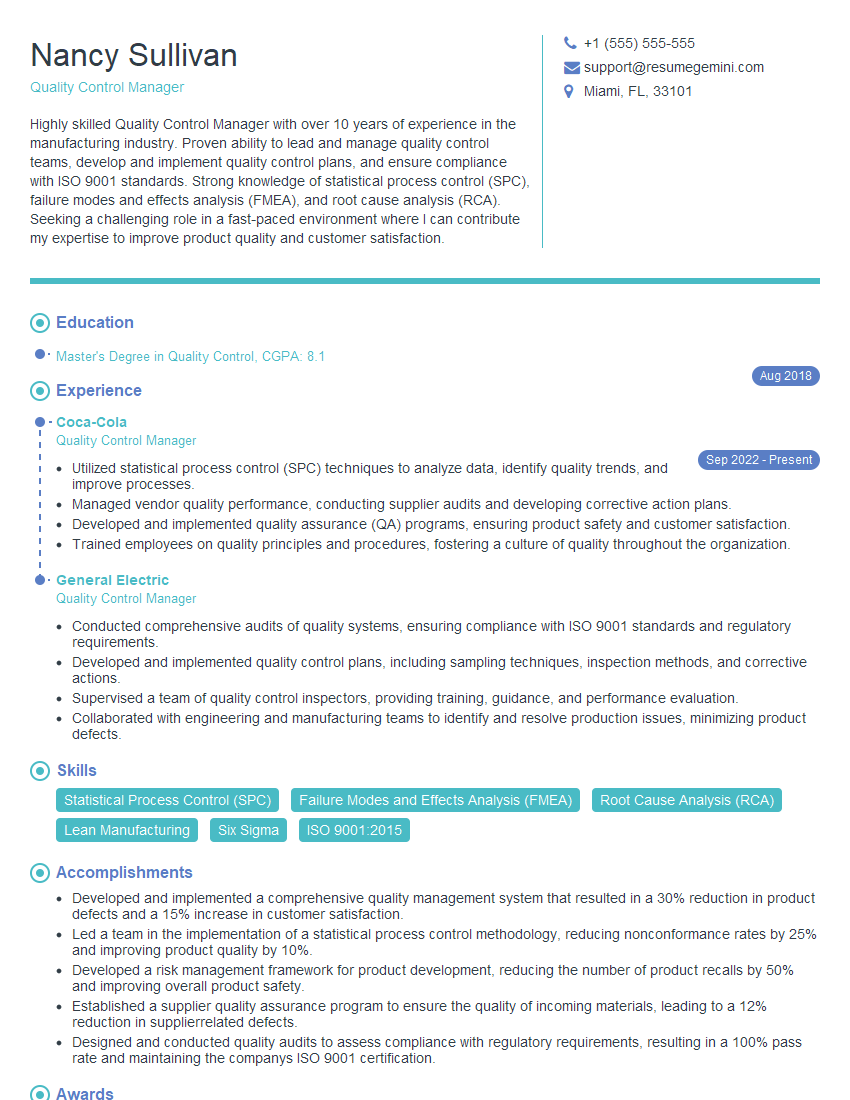
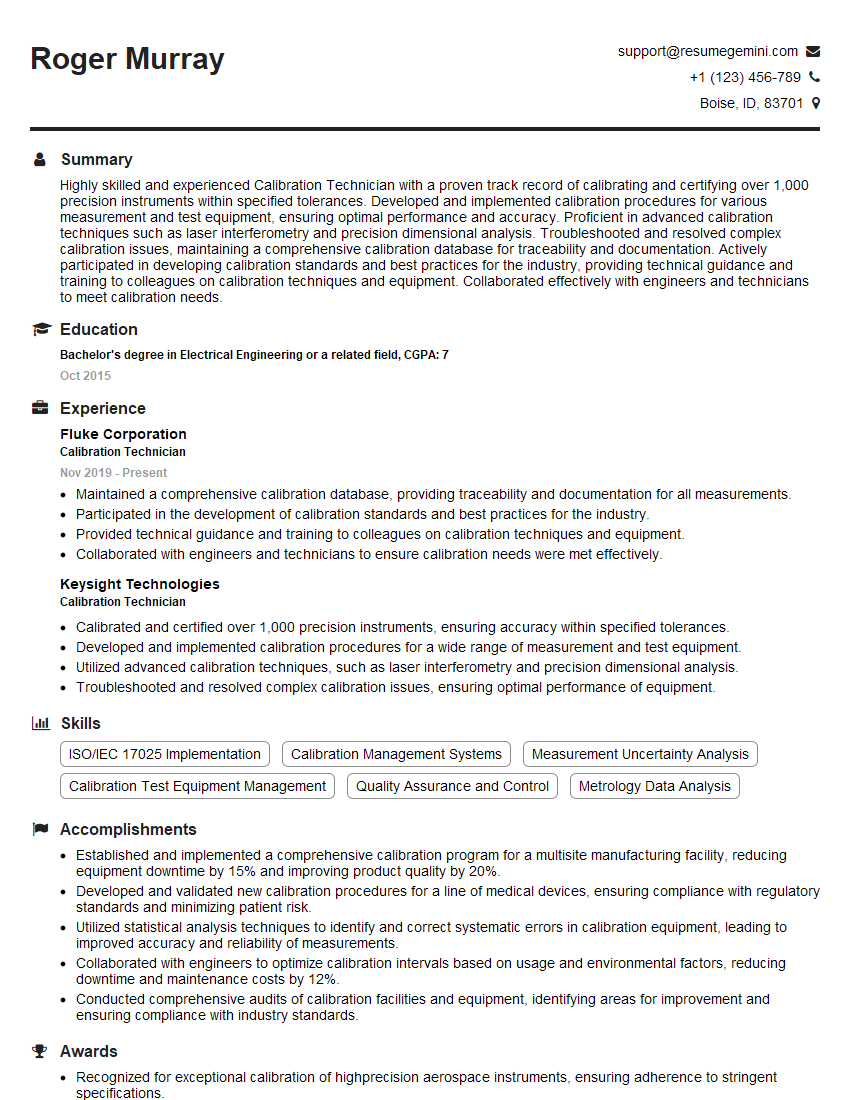
Mastering dimensional measurements is crucial for a successful career in many technical fields, opening doors to exciting opportunities and advancements. A strong understanding of this foundational topic will significantly enhance your problem-solving skills and technical capabilities. To maximize your job prospects, it’s vital to present your skills effectively. Creating an ATS-friendly resume is key to getting your application noticed. ResumeGemini is a trusted resource that can help you build a professional and impactful resume, ensuring your qualifications shine through. Examples of resumes tailored to Dimensional Measurements roles are available within ResumeGemini to help guide you.

Explore more articles
Users Rating of Our Blogs
Share Your Experience
We value your feedback! Please rate our content and share your thoughts (optional).
What Readers Say About Our Blog
Really detailed insights and content, thank you for writing this detailed article.
IT gave me an insight and words to use and be able to think of examples