Unlock your full potential by mastering the most common Urban Planning and Management interview questions. This blog offers a deep dive into the critical topics, ensuring you’re not only prepared to answer but to excel. With these insights, you’ll approach your interview with clarity and confidence.
Questions Asked in Urban Planning and Management Interview
Q 1. Explain the difference between zoning and master planning.
Zoning and master planning are both crucial components of urban development, but they operate at different scales and with distinct objectives. Think of master planning as the overarching vision and zoning as the detailed implementation strategy.
Master planning is a long-term, comprehensive plan that sets the overall vision for the growth and development of a city or region. It considers a wide range of factors, including land use, transportation, infrastructure, economic development, environmental protection, and social equity. A master plan guides future development by identifying areas suitable for residential, commercial, industrial, or recreational uses, and it outlines strategies to achieve desired outcomes. For example, a master plan might identify a need for new transit corridors to alleviate traffic congestion and promote sustainable transportation.
Zoning, on the other hand, is a regulatory tool used to implement the goals and policies outlined in the master plan. It divides the city into specific zones and regulates the type and intensity of development allowed within each zone. Zoning ordinances specify building height restrictions, density limits, lot sizes, setbacks, and permitted land uses. For instance, a residential zone might restrict building heights to three stories and require minimum lot sizes of 10,000 square feet, while a commercial zone might allow higher density and taller buildings. Zoning ensures that development adheres to the master plan’s vision and protects the overall quality of life in the community.
In essence, the master plan creates the blueprint, and zoning provides the rules for construction. They work together to shape the future of a city.
Q 2. Describe your experience with GIS software in urban planning projects.
GIS software is an indispensable tool in my urban planning work. I’ve extensively used ArcGIS and QGIS for various projects, leveraging their capabilities for spatial analysis and visualization. For example, in a recent project focused on improving accessibility in a low-income neighborhood, I used GIS to overlay census data showing population density and income levels with street network data and public transportation routes. This helped identify areas with limited access to essential services like healthcare and grocery stores. The spatial analysis capabilities of GIS allowed me to quantify the extent of this inequity and prioritize locations for targeted interventions such as new bus routes or community centers. Furthermore, I’ve utilized GIS to create interactive maps for community engagement, illustrating potential development scenarios and gathering public input. The ability to create visually compelling maps and conduct advanced spatial analysis is crucial for informed decision-making in urban planning.
Beyond basic mapping, I have experience with geoprocessing tools within GIS for tasks such as creating buffer zones around sensitive environmental areas to ensure proper protection during development, analyzing proximity to pollution sources, and modeling the potential impact of proposed infrastructure projects on traffic flow. The ability to combine and analyze various datasets within a GIS environment provides a comprehensive understanding of the complexities of urban environments, making it a vital component of my workflow.
Q 3. How do you incorporate principles of sustainability into urban planning strategies?
Sustainability is paramount in modern urban planning. I incorporate its principles throughout my work by focusing on several key areas:
- Reduced carbon footprint: This involves promoting energy-efficient building designs, encouraging the use of public transportation and alternative modes of transport, and implementing green building standards. For example, I would advocate for policies that incentivize the use of renewable energy sources in new developments and promote urban green spaces to mitigate the urban heat island effect.
- Resource efficiency: This includes strategies to reduce waste generation, conserve water, and manage stormwater effectively. For example, I might champion the use of permeable pavements to reduce runoff and replenish groundwater, and advocate for policies that encourage recycling and composting.
- Social equity: Sustainable urban planning must address social justice concerns and ensure equitable access to resources and opportunities for all residents, regardless of income or social status. For example, prioritizing affordable housing in mixed-use developments can increase access to jobs and services for low-income families.
- Environmental protection: Preserving green spaces, protecting biodiversity, and minimizing environmental impact are crucial. For instance, incorporating green infrastructure into urban design, like green roofs and urban forests, can improve air quality and biodiversity.
Ultimately, integrating these principles into urban planning requires a holistic approach that considers the interconnectedness of environmental, social, and economic factors. It’s not just about building green buildings; it’s about building green cities.
Q 4. What are the key challenges in managing urban growth?
Managing urban growth presents several significant challenges. One key challenge is infrastructure strain: Rapid population growth often outpaces the development of essential infrastructure, leading to traffic congestion, inadequate water and sanitation systems, and overburdened public services like schools and hospitals. For example, a sudden influx of residents in a previously rural area might overwhelm the existing road network, causing gridlock and negatively impacting air quality.
Another significant challenge is housing affordability: As cities grow, land values increase, making housing unaffordable for many residents. This leads to displacement and social inequities. For example, gentrification can force long-time residents out of their neighborhoods as property values rise.
Environmental sustainability is another crucial issue: Urban sprawl often leads to habitat loss, increased pollution, and strain on natural resources. Balancing economic development with environmental protection requires careful planning and innovative strategies.
Finally, managing social equity is vital. Rapid urban growth can exacerbate existing social inequalities, creating divides between different socioeconomic groups and communities. Effective urban planning strategies need to address these issues by promoting equitable access to resources and opportunities.
Q 5. Explain your understanding of smart city initiatives and their implementation.
Smart city initiatives leverage technology to enhance urban services and improve the quality of life for residents. They aim to create more efficient, sustainable, and livable urban environments. Key components often include:
- Smart transportation: Implementing intelligent transportation systems using sensors, data analytics, and connected vehicles to optimize traffic flow and reduce congestion.
- Smart energy: Utilizing smart grids and renewable energy sources to enhance energy efficiency and reduce reliance on fossil fuels.
- Smart governance: Employing data-driven decision-making to improve the efficiency and transparency of government services. This could involve using data analytics to identify areas needing improved public safety or to optimize the allocation of resources.
- Smart infrastructure: Implementing intelligent sensors and monitoring systems to manage infrastructure assets more effectively, such as tracking water usage, detecting leaks, and predicting infrastructure failure.
- Smart citizens: Engaging residents through interactive platforms and applications to improve communication and participation in city governance.
Implementing smart city initiatives requires a phased approach, starting with a comprehensive assessment of existing infrastructure and services, identifying key areas for improvement, and prioritizing projects based on their potential impact. Data security and privacy are critical considerations in the design and implementation of such initiatives. A successful smart city is one that leverages technology to enhance citizen well-being and create a more sustainable and equitable urban environment. It is not simply about deploying technology, but about designing holistic and inclusive urban systems.
Q 6. How do you assess the impact of transportation planning on urban development?
Transportation planning significantly influences urban development. It shapes land use patterns, access to opportunities, and the overall quality of life. Effective transportation planning facilitates economic growth, improves social equity, and reduces environmental impact.
For example, investing in public transportation can lead to higher density, mixed-use development around transit hubs, reducing the need for car dependency and promoting walkability. Conversely, reliance on car-centric transportation systems often results in urban sprawl, increased traffic congestion, and environmental pollution. The design of road networks directly impacts the accessibility of different neighborhoods and businesses, shaping social and economic opportunities.
I assess the impact of transportation planning through various methods, including:
- Travel demand modeling: Predicting future travel patterns to evaluate the effectiveness of different transportation strategies.
- Accessibility analysis: Assessing how easily people can reach various destinations using different modes of transport.
- Environmental impact assessment: Evaluating the greenhouse gas emissions and other environmental consequences of transportation options.
- Cost-benefit analysis: Comparing the economic costs and benefits of different transportation investments.
By integrating these assessments into the urban planning process, I can help ensure that transportation systems support broader urban development goals.
Q 7. Describe your experience with environmental impact assessments in urban planning.
Environmental impact assessments (EIAs) are crucial for responsible urban planning. EIAs are systematic processes to identify, predict, evaluate, and mitigate the environmental impacts of proposed projects. In my experience, I’ve been involved in EIAs for various projects, including large-scale residential developments, infrastructure projects like road construction and transit lines, and urban renewal initiatives.
The process typically involves:
- Scoping: Identifying the potential environmental impacts of a project.
- Baseline studies: Characterizing the existing environmental conditions.
- Impact prediction: Modeling the likely changes to the environment resulting from the project.
- Impact evaluation: Assessing the significance of the predicted impacts.
- Mitigation measures: Developing strategies to reduce or avoid negative impacts.
- Monitoring and evaluation: Tracking the actual environmental impacts after project implementation.
For example, in an EIA for a proposed highway expansion, I would assess potential impacts on air and water quality, noise levels, habitat fragmentation, and greenhouse gas emissions. The EIA would then recommend mitigation measures such as noise barriers, green infrastructure to improve air quality, and strategies to minimize habitat disturbance. The findings of the EIA are crucial for decision-making, ensuring that environmental concerns are addressed before project implementation.
Q 8. How do you engage the public in urban planning decision-making?
Public engagement is crucial for successful urban planning. It ensures that projects reflect the needs and desires of the community, fostering ownership and buy-in. My approach is multifaceted, employing various techniques to reach diverse groups.
- Public Forums and Workshops: These interactive sessions allow direct dialogue, gathering feedback on proposals and addressing concerns.
- Online Surveys and Platforms: Utilizing digital tools expands reach, allowing broader participation and anonymity where preferred. This includes interactive maps for community input on specific areas.
- Community Charrettes: These intensive collaborative sessions bring stakeholders together for focused brainstorming and design development.
- Targeted Outreach: Reaching specific demographics – for example, using community centers to engage seniors or partnering with schools to involve youth – ensures inclusive representation.
- Social Media Engagement: Using social media to disseminate information, solicit feedback, and address questions is vital in today’s digital age. This facilitates a continuous dialogue.
For instance, in a recent park redesign project, we employed a combination of online surveys, community workshops, and targeted outreach to elderly residents to ensure the park design catered to diverse needs and preferences, resulting in a space widely loved by the entire community.
Q 9. Explain your familiarity with various land use regulations and policies.
My familiarity with land use regulations and policies is extensive, encompassing zoning ordinances, building codes, environmental regulations, and subdivision regulations. Understanding these is critical for crafting legally compliant and sustainable urban plans.
- Zoning Ordinances: I’m proficient in interpreting zoning maps and regulations, understanding permitted uses, density limits, setbacks, and height restrictions. This informs site selection and building design.
- Building Codes: I’m well-versed in building safety requirements, ensuring that projects meet necessary standards for structural integrity, fire safety, and accessibility.
- Environmental Regulations: I have significant experience navigating environmental impact assessments (EIAs), understanding regulations related to stormwater management, air quality, and habitat protection. This is crucial for environmentally responsible urban development.
- Subdivision Regulations: I understand the requirements for platting and developing new subdivisions, including infrastructure design and provision of utilities.
For example, in a recent project involving a brownfield site, I successfully navigated environmental regulations and secured necessary permits, ensuring both environmental remediation and sustainable redevelopment.
Q 10. Describe your approach to analyzing demographic data for urban planning.
Analyzing demographic data is fundamental to creating equitable and effective urban plans. My approach involves a multi-step process:
- Data Collection: Gathering data from reliable sources such as census data, surveys, and local government records is the first step. This includes population size, age distribution, income levels, ethnicity, and housing patterns.
- Data Mapping and Visualization: Using GIS (Geographic Information Systems) software, I create maps to visualize demographic trends and identify patterns of spatial inequality.
- Trend Analysis: I analyze the data to identify current trends and predict future needs, anticipating potential challenges and opportunities. This might include projecting population growth or shifts in demographics.
- Scenario Planning: Based on the analysis, I develop different scenarios to explore various potential future outcomes and plan accordingly. This ensures adaptability to changing conditions.
For example, in a recent affordable housing project, I used demographic data to identify areas with a high concentration of low-income households and significant unmet housing needs, directly informing the project’s location and design.
Q 11. How do you address issues of social equity in urban planning projects?
Addressing social equity is paramount in urban planning. It requires proactive measures to ensure fair access to opportunities and resources for all members of society.
- Equitable Access to Resources: Ensuring that all neighborhoods have access to essential services such as parks, schools, public transportation, and healthcare is vital. This often involves addressing historical inequities in resource distribution.
- Affordable Housing: Incorporating a range of affordable housing options into urban development plans is crucial to prevent displacement and promote inclusivity.
- Community Engagement: Prioritizing meaningful engagement with marginalized communities ensures that their voices are heard and their needs are addressed in planning processes.
- Mitigation of Negative Impacts: Assessing and mitigating potential negative impacts of projects on vulnerable communities is crucial. This may involve implementing displacement prevention strategies.
In a previous project, we implemented a community benefits agreement that ensured local hiring and job training opportunities for residents of a low-income neighborhood undergoing redevelopment, promoting social equity and community empowerment.
Q 12. What are your strategies for managing conflicting stakeholder interests in planning projects?
Managing conflicting stakeholder interests is an inevitable aspect of urban planning. My strategy focuses on collaborative problem-solving and transparent communication.
- Stakeholder Identification and Analysis: Identifying all stakeholders – residents, businesses, government agencies, and NGOs – and understanding their interests is the starting point. This often requires careful research and outreach.
- Facilitated Dialogue and Negotiation: Creating a platform for open communication and negotiation among stakeholders allows them to express their concerns and find common ground.
- Mediation and Conflict Resolution: Employing mediation techniques to help resolve disagreements and reach compromises is sometimes necessary.
- Compromise and Consensus Building: Seeking mutually acceptable solutions that address the concerns of as many stakeholders as possible is essential. This may involve iterative negotiation and compromise.
- Transparent Decision-Making: Ensuring transparency in the decision-making process builds trust and enhances the legitimacy of the plan. This includes clear documentation of the process and justifications for key decisions.
In a recent transportation project, we successfully navigated conflicting interests between residents concerned about traffic and businesses advocating for improved access, ultimately reaching a compromise that addressed both concerns through a multi-modal approach to transportation.
Q 13. Explain your experience with urban design principles and their application.
Urban design principles guide the creation of functional, aesthetically pleasing, and sustainable urban environments. My experience encompasses applying these principles to a wide range of projects.
- Human-Scale Design: Creating spaces that are comfortable and engaging for people, considering pedestrian-friendly streets, green spaces, and public gathering areas.
- Mixed-Use Development: Combining residential, commercial, and recreational uses within a single area promotes walkability and reduces reliance on cars.
- Sustainable Design: Incorporating environmentally friendly elements like green infrastructure, energy-efficient buildings, and renewable energy sources.
- Transit-Oriented Development (TOD): Designing developments around public transportation hubs to reduce car dependency and enhance connectivity.
- Universal Design: Creating spaces that are accessible to people of all ages and abilities.
For example, in a recent downtown revitalization project, we applied principles of human-scale design, creating a pedestrian-friendly environment with inviting public spaces, contributing to a thriving and vibrant city center.
Q 14. How do you evaluate the economic feasibility of urban development projects?
Evaluating the economic feasibility of urban development projects involves a comprehensive analysis of costs and benefits.
- Cost Analysis: This includes land acquisition costs, construction costs, infrastructure development costs, and operating expenses.
- Revenue Projections: Estimating potential revenues from various sources, such as property taxes, development fees, and increased economic activity.
- Benefit-Cost Analysis (BCA): A systematic approach to comparing the total benefits of a project with its total costs, often expressed as a benefit-cost ratio. A ratio greater than 1 indicates that the project’s benefits exceed its costs.
- Financial Modeling: Creating financial models to simulate different scenarios and project potential financial outcomes under various assumptions.
- Sensitivity Analysis: Testing the model’s sensitivity to changes in key variables to assess the robustness of the projections.
For instance, in a proposed transit-oriented development, we conducted a detailed BCA, demonstrating the project’s long-term economic viability by showing significant returns in increased property values and tax revenue, alongside positive impacts on local businesses.
Q 15. What methods do you use for analyzing traffic patterns and transportation needs?
Analyzing traffic patterns and transportation needs requires a multi-faceted approach combining data collection and sophisticated modeling. I utilize several methods, starting with data collection from various sources: traffic counts from sensors embedded in roadways, GPS data from smartphones (anonymized, of course, respecting privacy regulations), and transit agency data on ridership and schedules. This raw data then informs several analytical techniques:
Traffic Simulation Modeling: Software like VISSIM or SUMO allows us to create virtual representations of road networks and simulate traffic flow under different scenarios (e.g., adding a new bus route, implementing traffic calming measures). This helps predict the impact of proposed changes before implementation.
Origin-Destination Surveys: These surveys, often conducted through questionnaires or GPS tracking, identify where people are traveling from and to. This information is crucial for understanding commuting patterns and planning efficient transportation networks.
GIS (Geographic Information Systems) Analysis: GIS software helps visualize traffic data spatially, identifying congestion hotspots, areas with inadequate public transit, and potential bottlenecks. For instance, overlaying traffic count data with population density maps helps pinpoint areas needing transit improvements.
Network Analysis: Techniques like shortest path algorithms help find the most efficient routes and identify areas where improvements to connectivity are most needed.
For example, in a recent project, we used a combination of traffic counts and origin-destination data to identify a significant bottleneck on a major arterial road during peak hours. Using simulation modeling, we tested several solutions, including adding dedicated bus lanes and implementing intelligent traffic signal systems, and ultimately recommended the most cost-effective and efficient solution.
Career Expert Tips:
- Ace those interviews! Prepare effectively by reviewing the Top 50 Most Common Interview Questions on ResumeGemini.
- Navigate your job search with confidence! Explore a wide range of Career Tips on ResumeGemini. Learn about common challenges and recommendations to overcome them.
- Craft the perfect resume! Master the Art of Resume Writing with ResumeGemini’s guide. Showcase your unique qualifications and achievements effectively.
- Don’t miss out on holiday savings! Build your dream resume with ResumeGemini’s ATS optimized templates.
Q 16. Describe your experience with preparing and presenting planning proposals.
Preparing and presenting planning proposals is a crucial part of my work. My experience involves a multi-stage process, beginning with thorough needs assessment and data analysis (as discussed in the previous question). Then, I develop a comprehensive proposal outlining the proposed plan, its rationale, implementation strategies, and projected outcomes. This includes detailed maps, charts, and graphics to clearly communicate complex information to diverse audiences.
The proposal is structured to demonstrate its feasibility and address potential challenges. This involves detailed budgeting and timeline development. In terms of presentation, I tailor my approach to the specific audience, whether it’s a community meeting, a council hearing, or a presentation to stakeholders. I emphasize visual aids, clear and concise language, and an interactive approach to encourage questions and feedback. For instance, when presenting a plan to revitalize a downtown area, I’ve used interactive maps to allow the audience to explore different scenarios and express their opinions.
Successfully securing approval requires persuasive communication, active listening, and addressing concerns proactively. One successful project involved a contentious zoning proposal. By engaging with the community, incorporating their feedback, and modifying the proposal accordingly, we achieved unanimous support from the council.
Q 17. How do you use data analysis to inform urban planning decisions?
Data analysis is the backbone of informed urban planning decisions. I utilize a range of quantitative and qualitative data sources, including:
Census Data: Provides demographic information like population density, age distribution, income levels, and household sizes, crucial for understanding community needs and resource allocation.
Crime Statistics: Identifies high-crime areas, which can inform strategies for improving public safety and community development.
Environmental Data: Includes air and water quality monitoring, green space availability, and climate risk assessments, which are essential for sustainable urban planning.
Once collected, I use statistical software (like R or SPSS) and GIS tools to analyze this data. For example, correlation analysis can identify relationships between factors such as crime rates and socioeconomic indicators, while spatial analysis can pinpoint areas with the greatest need for intervention. This data-driven approach helps prioritize projects, allocate resources effectively, and measure the impact of interventions. For example, we used crime statistics and demographic data to identify areas needing increased police presence and social services, resulting in a significant decrease in crime rates.
Q 18. How do you prioritize projects within a limited budget?
Prioritizing projects within a limited budget demands a structured approach. I use a combination of methods:
Cost-Benefit Analysis: This involves quantifying the costs and benefits of each project, helping to identify those with the highest return on investment. This often requires assigning monetary values to intangible benefits like improved quality of life.
Multi-Criteria Decision Analysis (MCDA): This technique allows for the consideration of multiple criteria beyond just cost, such as environmental impact, social equity, and community support. Each criterion is weighted according to its importance, allowing for a holistic assessment.
Phasing: Large projects are often broken down into smaller, manageable phases. This allows for flexibility and the possibility of adjusting the plan based on the outcome of early phases and budgetary constraints.
Stakeholder Consultation: Gathering input from community members and stakeholders is vital. This helps prioritize projects that align with community needs and increase the chances of successful implementation.
For instance, in a recent project, we used MCDA to weigh the benefits of several park improvements against their costs. This revealed that investing in accessible walkways for seniors yielded the greatest return on investment considering both cost and social impact.
Q 19. How do you measure the success of an urban planning project?
Measuring the success of an urban planning project requires a holistic approach, moving beyond simply completing the project on time and within budget. We utilize a mix of quantitative and qualitative methods:
Quantitative Measures: These include measurable outcomes like reduced traffic congestion, increased property values, improved air quality, or a decrease in crime rates. Data is collected before, during, and after the project to assess its impact.
Qualitative Measures: These focus on community perceptions and experiences. This includes surveys, focus groups, and interviews to gauge satisfaction with the project and assess its impact on quality of life. For instance, post-project surveys can capture residents’ opinions on improved park amenities or reduced noise pollution.
Benchmarking: Comparing the project’s outcomes to similar projects in other cities or regions can provide valuable context and insights.
A successful project will demonstrate positive changes in all these areas. For example, the success of a new transit line could be measured by an increase in ridership, a reduction in car traffic, and positive feedback from commuters in post-implementation surveys.
Q 20. Describe your understanding of the principles of urban design.
Urban design principles aim to create functional, aesthetically pleasing, and sustainable urban environments. Key principles include:
Human Scale: Designing spaces that are comfortable and relatable for people, considering pedestrian movement, sightlines, and human interaction.
Connectivity: Creating well-connected networks for pedestrians, cyclists, and public transit, promoting accessibility and reducing reliance on cars.
Mixed-Use Development: Combining residential, commercial, and recreational uses in a single area, fostering a vibrant and lively environment and reducing reliance on car travel.
Green Infrastructure: Integrating green spaces, trees, and water features to improve air quality, manage stormwater, and enhance the aesthetic appeal of the city.
Sustainability: Designing environmentally friendly buildings and infrastructure, reducing energy consumption, and promoting the use of renewable resources.
Sense of Place: Creating unique and memorable spaces that reflect the local culture and history, fostering a strong sense of community and identity.
For example, a successful urban design project might involve creating a pedestrian-friendly street with shops, restaurants, and residential units, incorporating green spaces, and providing safe cycling lanes. This fosters a vibrant and sustainable community, enhancing the quality of life for residents.
Q 21. What are the key considerations for planning in a historic district?
Planning in a historic district requires careful consideration of preservation and revitalization. Key considerations include:
Preservation of Historic Structures: Prioritizing the protection and restoration of historically significant buildings, ensuring that any new construction complements the existing character of the area.
Maintaining Architectural Character: Following design guidelines that respect the area’s architectural style, materials, and scale. This often involves working with historical preservation commissions and adhering to strict design review processes.
Archaeological Considerations: Conducting archaeological surveys before any construction to identify and protect potential historical artifacts.
Balancing Preservation with Modern Needs: Finding ways to meet the needs of modern residents while respecting the historical character of the district. This might involve adaptive reuse of old buildings or incorporating new infrastructure in a way that is sensitive to the historical context.
For example, a project to revitalize a historic downtown area might involve restoring facades of older buildings, creating pedestrian-friendly streetscapes, and providing improved access for visitors while ensuring the architectural integrity of the district is maintained. Successful projects often involve extensive community engagement to ensure that preservation efforts align with the needs and desires of local residents.
Q 22. How do you incorporate accessibility considerations into urban planning?
Incorporating accessibility into urban planning isn’t just about complying with regulations; it’s about creating a city that truly works for everyone. This means designing spaces that are usable and enjoyable for people of all ages, abilities, and backgrounds.
- Universal Design Principles: We apply the seven principles of universal design – equitable use, flexibility in use, simple and intuitive use, perceptible information, tolerance for error, low physical effort, and size and space for approach and use – to every aspect of the planning process, from streetscapes to public transportation.
- Multimodal Transportation: A truly accessible city offers a range of transportation choices. This includes well-maintained sidewalks and crosswalks, dedicated bike lanes, frequent and reliable public transit with accessible vehicles and stations, and provisions for ride-sharing and other micro-mobility options. For example, ensuring level boarding on buses and trains, and clear audio and visual announcements are crucial.
- Accessible Public Spaces: Parks, plazas, and other public spaces should be designed to be inclusive. This means providing ramps, accessible restrooms, clear signage with tactile elements, and ensuring adequate space for wheelchair users and people with visual impairments to navigate freely. Consider the placement of benches and other seating to be readily accessible.
- Information and Communication: Accessible information is critical. This includes providing maps and wayfinding systems in multiple formats (e.g., Braille, large print, audio descriptions), and making sure all digital platforms are accessible.
For instance, in a recent project, we worked with a community to redesign a main street, incorporating wider sidewalks, curb cuts at every intersection, tactile paving, and accessible bus stops. The result was a significantly more inclusive and welcoming environment for everyone.
Q 23. What are your strategies for mitigating the impact of climate change on urban areas?
Mitigating climate change’s impact on urban areas requires a multi-pronged approach focused on adaptation and mitigation strategies.
- Green Infrastructure: Implementing green roofs, green walls, urban forests, and permeable pavements helps reduce the urban heat island effect, manage stormwater runoff, and improve air quality. For example, green roofs can significantly reduce energy consumption in buildings by providing insulation and reducing the need for air conditioning.
- Resilient Infrastructure: Designing infrastructure that can withstand extreme weather events is paramount. This includes elevating critical infrastructure, building seawalls, and implementing flood control measures. Think of designing stormwater systems to handle intense rainfall events and building roads with materials that can withstand extreme temperatures.
- Sustainable Transportation: Promoting sustainable modes of transportation like walking, cycling, and public transit reduces greenhouse gas emissions and traffic congestion. This includes investing in high-quality public transit, creating dedicated bike lanes and pedestrian walkways, and incentivizing the use of electric vehicles.
- Energy Efficiency: Implementing energy-efficient building codes and retrofitting existing buildings to reduce energy consumption is crucial. This includes using energy-efficient building materials, installing smart grids and utilizing renewable energy sources.
- Climate Change Adaptation Planning: Developing comprehensive climate adaptation plans that incorporate risk assessments, vulnerability analyses, and community engagement is essential for proactive management of climate change impacts. This involves identifying areas most vulnerable to flooding or heat waves and creating strategies to protect those communities.
In a previous project, we developed a climate action plan for a coastal city, incorporating measures such as seawall construction, the creation of green spaces to mitigate flooding, and the implementation of a community-based early warning system for extreme weather events.
Q 24. Explain your understanding of brownfield redevelopment.
Brownfield redevelopment refers to the process of cleaning up and redeveloping contaminated or underutilized industrial or commercial sites. These sites often present environmental challenges, requiring careful assessment and remediation before they can be reused.
- Environmental Assessment: The first step is a thorough environmental assessment to identify the extent and nature of contamination. This may involve soil and groundwater testing, as well as air quality monitoring.
- Remediation: Once contamination is identified, remediation strategies are developed and implemented. These strategies may involve excavation and removal of contaminated soil, bioremediation (using natural processes to break down contaminants), or other innovative technologies.
- Site Planning and Design: The site is then planned and designed for its new use, considering the environmental constraints and opportunities. This may involve creating green spaces, installing stormwater management systems, and designing buildings to minimize environmental impact.
- Community Engagement: Involving the community in the redevelopment process is crucial, to ensure the project meets the needs and desires of local residents. This can involve public forums, surveys, and other engagement activities.
For example, I was involved in a project transforming a former industrial site into a mixed-use development, including residential units, commercial spaces, and a public park. This required extensive environmental cleanup and community engagement to address concerns about potential health risks and aesthetic improvements.
Q 25. Describe your experience with the use of participatory planning methods.
Participatory planning methods are essential for creating truly inclusive and effective urban plans. These methods emphasize collaboration and community engagement, ensuring that the plans reflect the needs and aspirations of all stakeholders.
- Charrettes: These intensive, multi-day workshops bring together diverse stakeholders to collaboratively develop design solutions. They’re particularly effective for generating creative ideas and building consensus.
- Public Forums and Meetings: These provide opportunities for the public to voice their opinions and provide feedback on proposed plans. Effective facilitation is key to ensure that all voices are heard.
- Surveys and Questionnaires: These are valuable tools for gathering information about the community’s preferences and priorities. They can be used to reach a wider audience than public forums.
- Online Engagement Platforms: Utilizing online platforms allows for broader participation and easier accessibility for community members. This can include interactive maps, online surveys, and comment forums.
In one project, we used a combination of charrettes, public forums, and online surveys to gather feedback from residents on the design of a new park. This participatory process ensured that the final design reflected the community’s preferences and priorities, leading to a more successful and well-loved park.
Q 26. How do you handle unexpected challenges or setbacks in a planning project?
Unexpected challenges are inevitable in urban planning. A proactive and flexible approach is crucial.
- Risk Assessment: Identifying potential challenges early on, through thorough planning and stakeholder engagement, is a crucial first step. This allows for proactive mitigation strategies.
- Contingency Planning: Developing alternative plans or solutions for foreseeable challenges allows for quick responses when setbacks occur.
- Adaptive Management: Regular monitoring and evaluation of the project allows for adjustments and course corrections based on new information or changing circumstances.
- Collaboration and Communication: Maintaining open communication with stakeholders and collaborating with other professionals is essential for navigating challenges effectively. Transparency and proactive communication can minimize conflicts.
For example, during the construction of a new transit line, we encountered unexpected geological conditions. By adapting the design and working closely with engineers and contractors, we managed to complete the project within budget and schedule, minimizing disruption.
Q 27. What is your experience with urban renewal initiatives?
Urban renewal initiatives aim to revitalize and improve blighted or underperforming urban areas. These projects require a holistic approach, considering economic, social, and environmental factors.
- Needs Assessment: Thorough assessment of the area’s physical, social, and economic conditions is crucial to identify specific needs and opportunities.
- Community Engagement: Involving the community in all stages of the process is essential to ensure that the project aligns with community needs and preferences. Displacement and gentrification should be carefully considered and mitigated.
- Economic Development Strategies: Strategies to attract investment, create jobs, and stimulate economic activity are key. This can involve tax incentives, infrastructure improvements, and the creation of business incubators.
- Sustainable Design and Development: Implementing sustainable design principles ensures that the renewed area is environmentally friendly and resilient. This includes incorporating green infrastructure, promoting energy efficiency, and minimizing environmental impact.
I participated in a large-scale urban renewal project that transformed a former industrial waterfront into a vibrant mixed-use district. This involved significant infrastructure improvements, attracting new businesses, and creating affordable housing options, while carefully considering the environmental impact.
Q 28. How do you stay updated on current trends and best practices in urban planning?
Staying abreast of current trends and best practices is vital in the dynamic field of urban planning.
- Professional Organizations: Active membership in professional organizations like the American Planning Association (APA) provides access to publications, conferences, and networking opportunities.
- Academic Journals and Publications: Regularly reading academic journals and industry publications keeps me updated on research findings and innovative approaches.
- Conferences and Workshops: Attending conferences and workshops allows for learning from experts and sharing best practices with colleagues.
- Online Resources: Utilizing online resources, such as databases, websites, and online courses, provides access to a wealth of information.
- Networking: Maintaining a strong professional network allows for sharing insights and learning from others’ experiences.
I regularly attend conferences, subscribe to relevant journals, and actively participate in online forums to stay informed about advancements in sustainable urban design, smart city technologies, and equitable development practices.
Key Topics to Learn for Urban Planning and Management Interview
- Sustainable Urban Development: Understanding principles of sustainable urban design, including green building practices, renewable energy integration, and resource management. Practical application: Analyzing a city’s sustainability initiatives and proposing improvements.
- Urban Transportation Planning: Knowledge of transportation systems, traffic management, and multimodal transportation strategies. Practical application: Evaluating the effectiveness of a city’s public transportation system and suggesting enhancements for improved accessibility and efficiency.
- Land Use Planning and Zoning: Familiarity with zoning regulations, land-use classifications, and urban design principles. Practical application: Developing a zoning plan for a specific area, considering factors like population density, environmental impact, and community needs.
- Community Engagement and Stakeholder Management: Skills in public participation, community consultation, and conflict resolution. Practical application: Designing a community engagement strategy for a large-scale urban development project.
- Urban Revitalization and Redevelopment: Understanding strategies for revitalizing blighted areas and redeveloping underutilized properties. Practical application: Developing a plan for revitalizing a specific neighborhood, considering economic, social, and environmental factors.
- Geographic Information Systems (GIS): Proficiency in using GIS software for spatial data analysis and visualization. Practical application: Using GIS to map urban areas, analyze land use patterns, and model transportation networks.
- Urban Economics and Finance: Understanding the economic principles governing urban development, including real estate markets and public finance. Practical application: Evaluating the financial feasibility of a proposed urban development project.
- Housing and Affordable Housing: Knowledge of housing policies, affordable housing strategies, and urban housing markets. Practical application: Developing a plan for increasing the availability of affordable housing in a specific city.
Next Steps
Mastering Urban Planning and Management opens doors to rewarding careers with significant impact on communities. To maximize your job prospects, it’s crucial to present yourself effectively. An ATS-friendly resume is key to getting your application noticed. ResumeGemini is a trusted resource that can help you craft a professional and impactful resume tailored to the specific demands of the Urban Planning and Management field. Examples of resumes tailored to this field are available to help you get started.
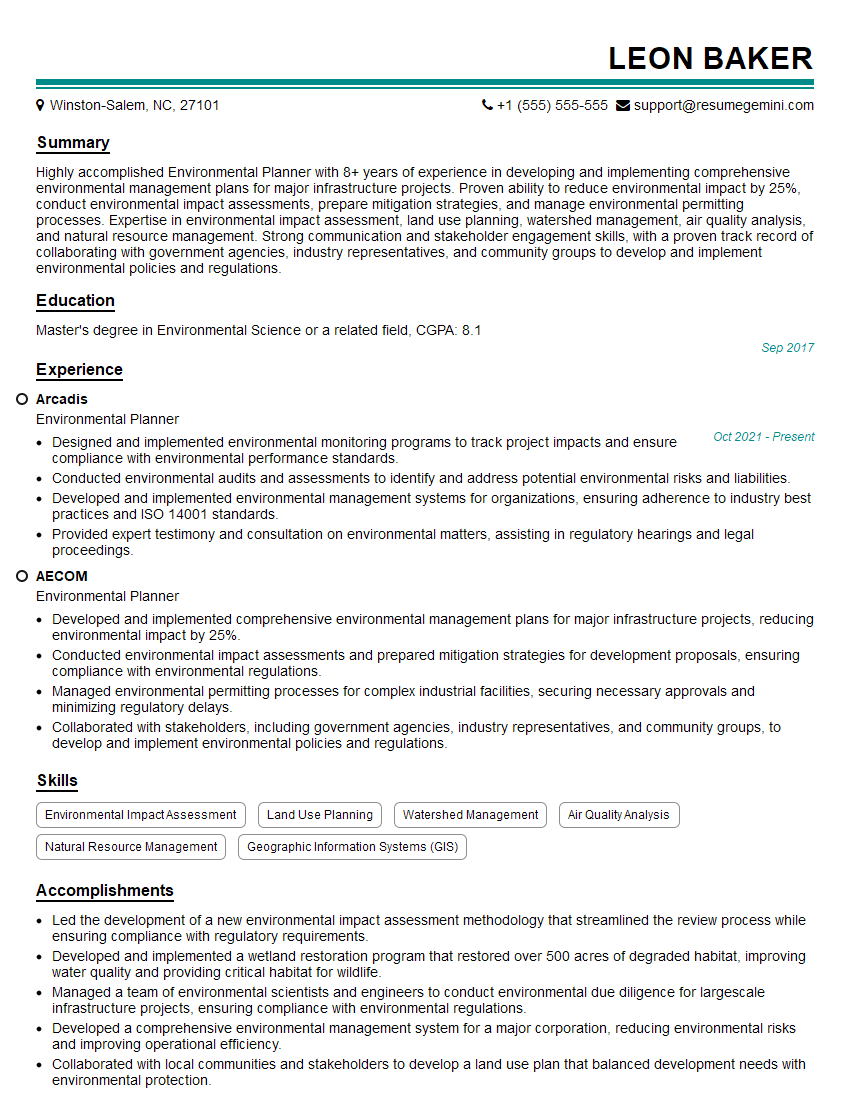
Environmental Planner Resume Sample
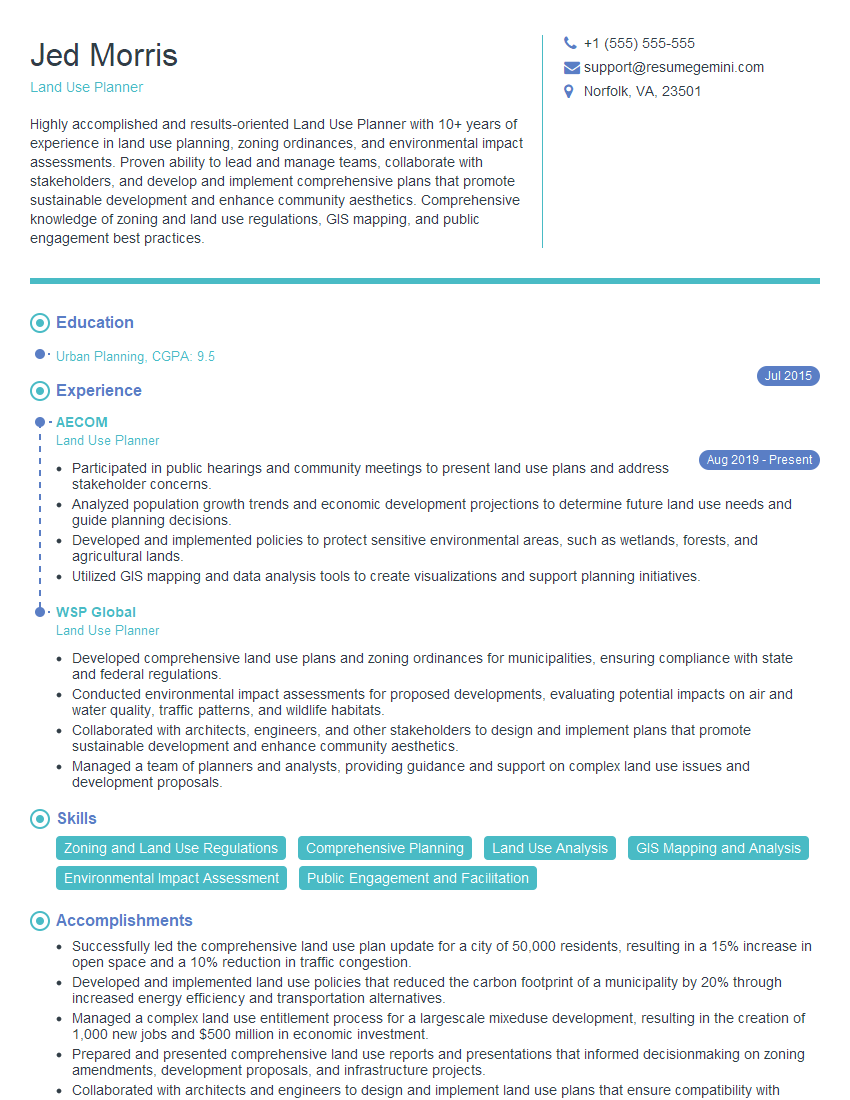
Land Use Planner Resume Sample
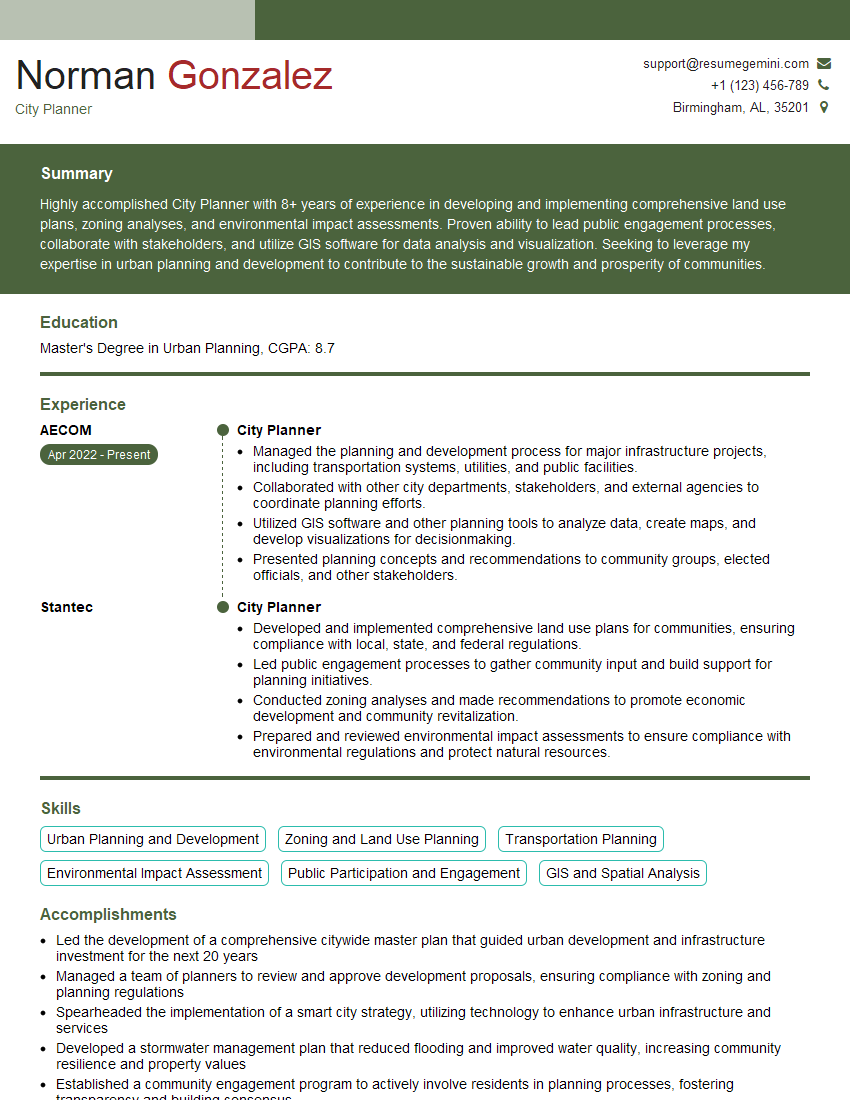
City Planner Resume Sample
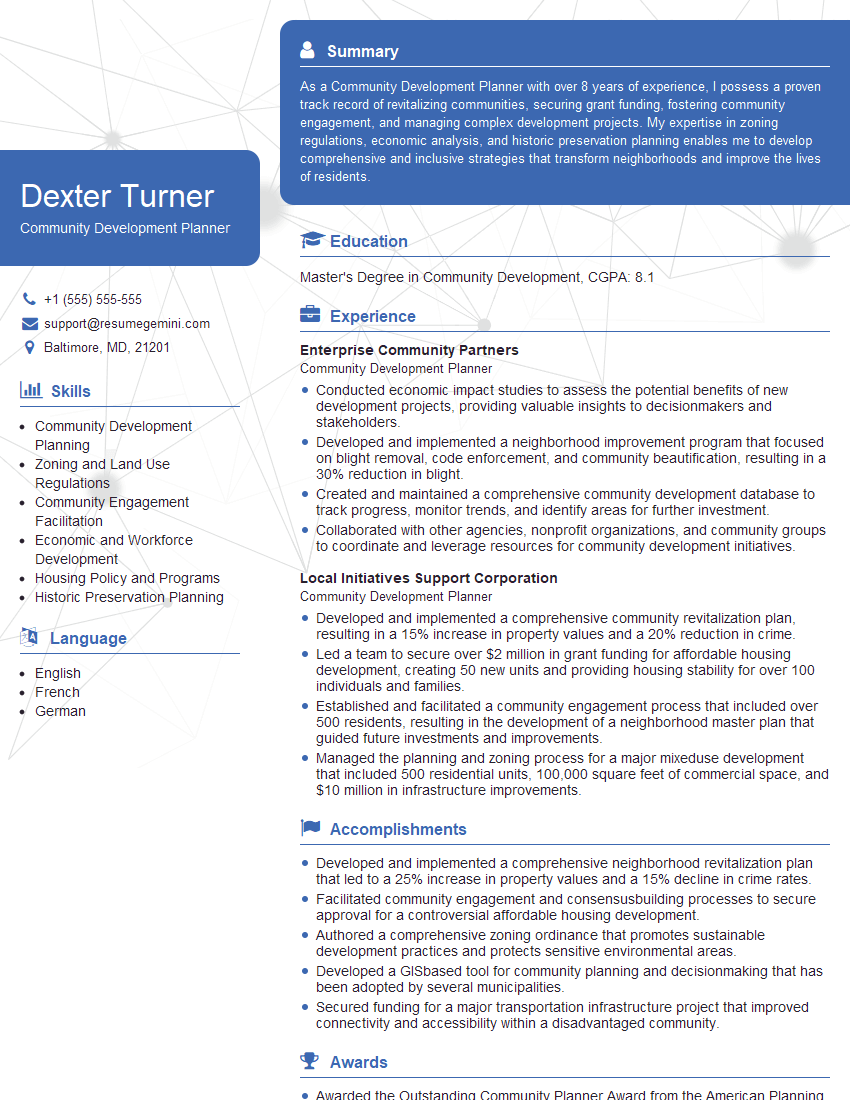
Community Development Planner Resume Sample
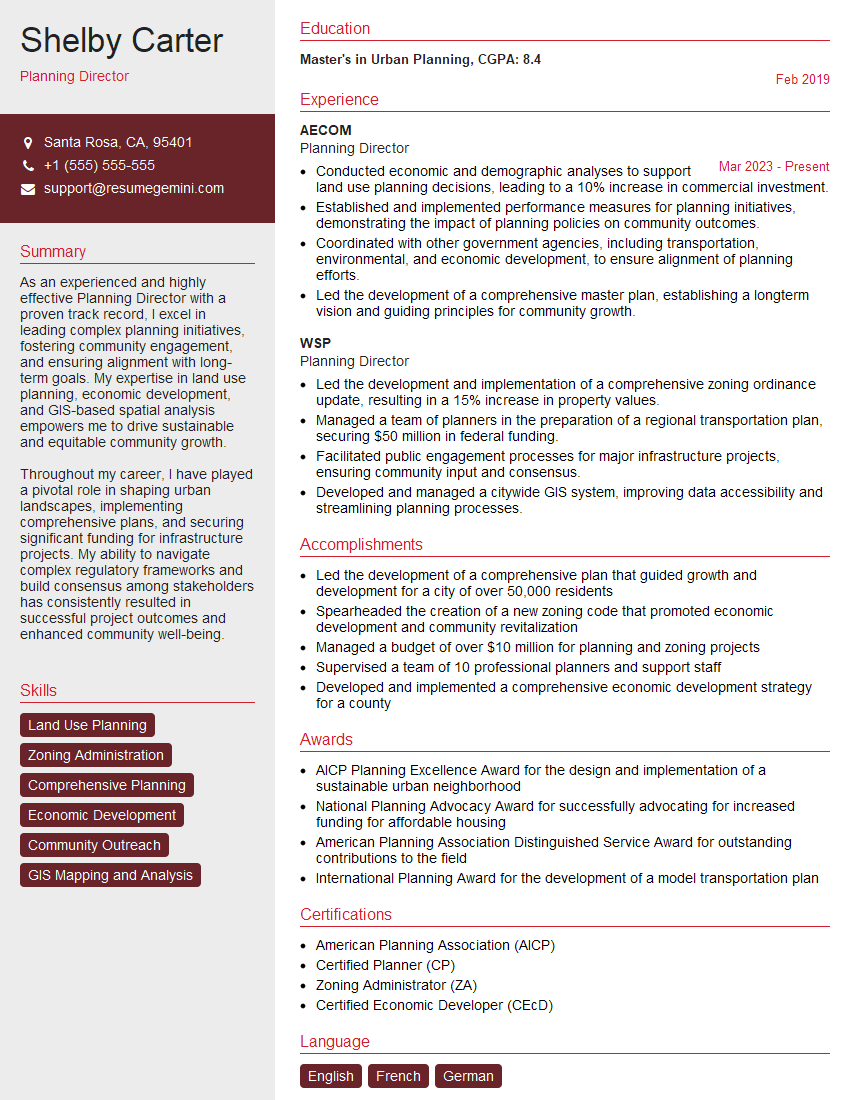
Planning Director Resume Sample
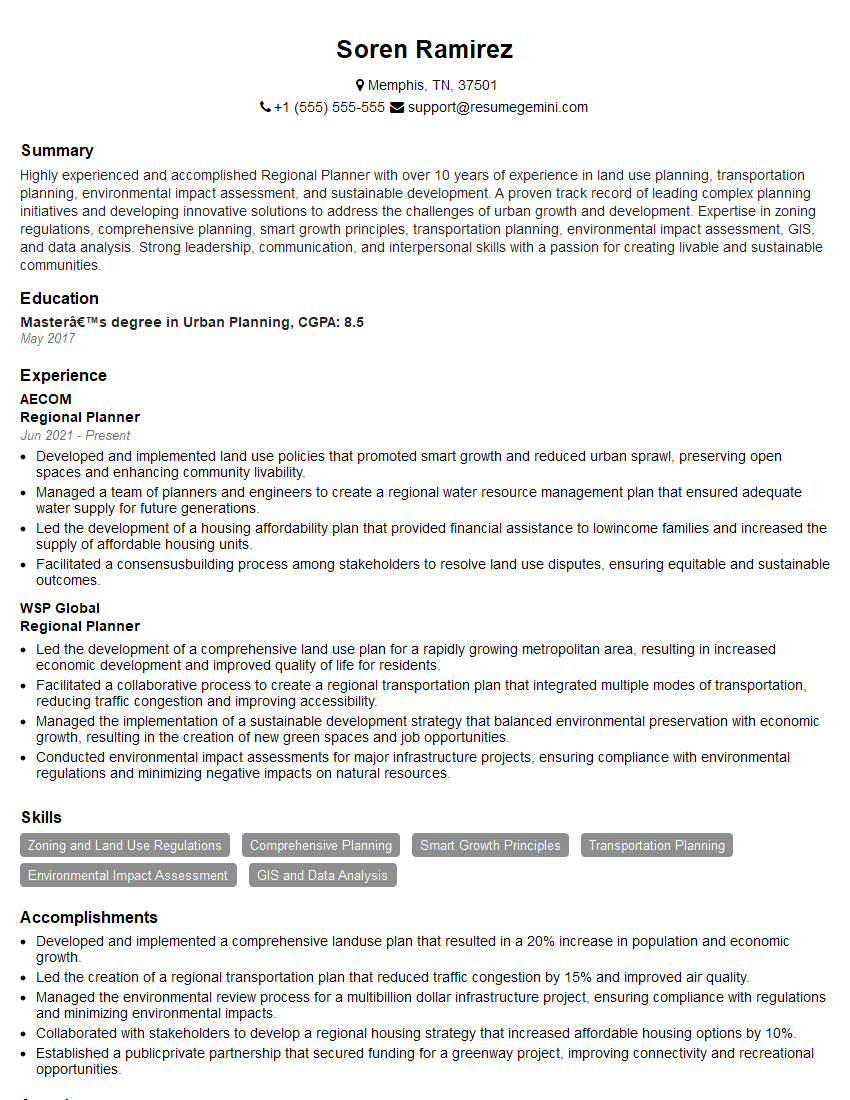
Regional Planner Resume Sample
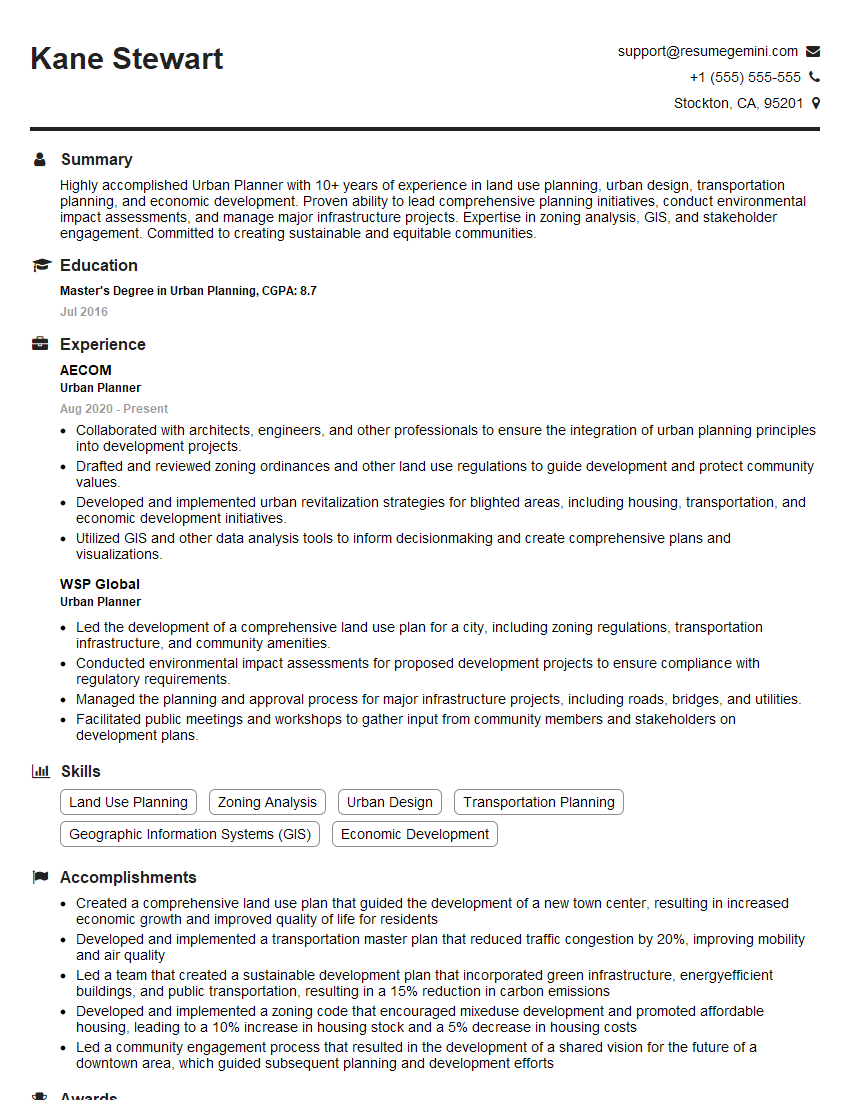
Urban Planner Resume Sample
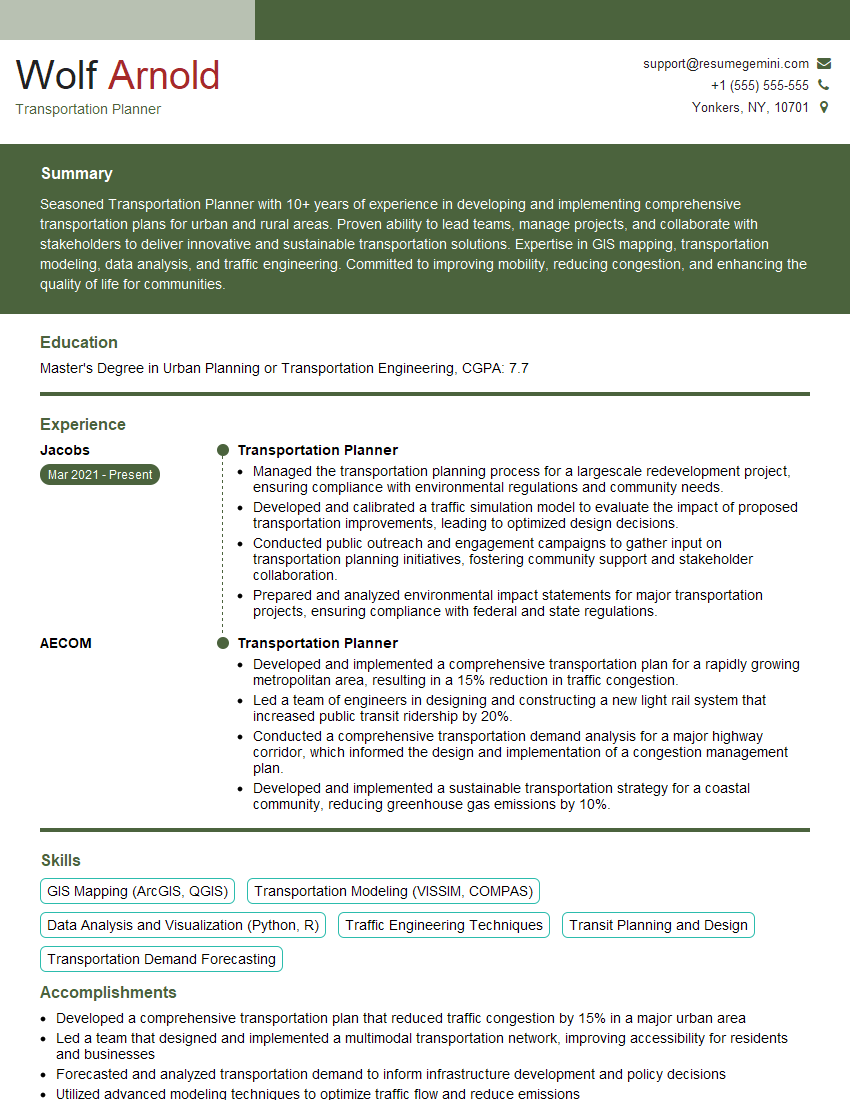
Transportation Planner Resume Sample
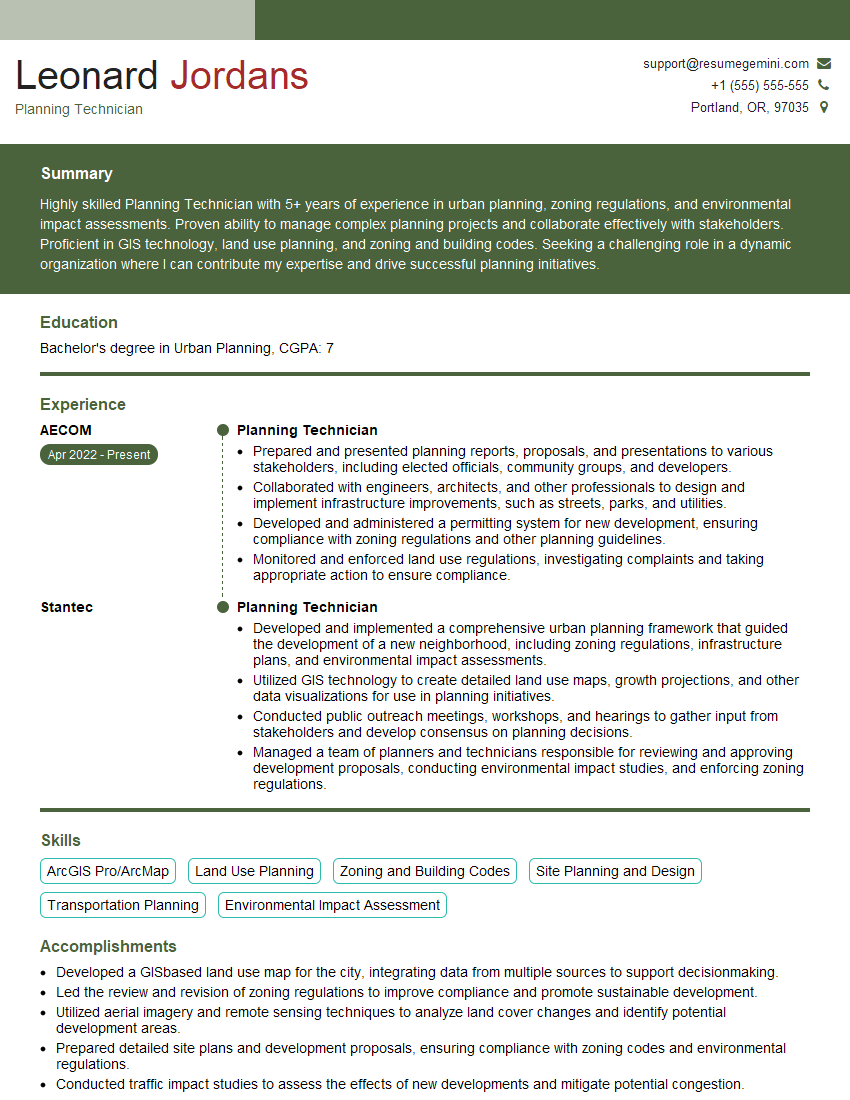
Planning Technician Resume Sample
Explore more articles
Users Rating of Our Blogs
Share Your Experience
We value your feedback! Please rate our content and share your thoughts (optional).
What Readers Say About Our Blog
Really detailed insights and content, thank you for writing this detailed article.
IT gave me an insight and words to use and be able to think of examples