Cracking a skill-specific interview, like one for Scientific Taxidermy, requires understanding the nuances of the role. In this blog, we present the questions you’re most likely to encounter, along with insights into how to answer them effectively. Let’s ensure you’re ready to make a strong impression.
Questions Asked in Scientific Taxidermy Interview
Q 1. Describe the different methods of skinning for scientific taxidermy.
Skinning methods in scientific taxidermy prioritize preserving anatomical integrity and minimizing damage. The choice depends on the species and the intended research. Common techniques include:
- Incision Method: A carefully planned incision is made along the belly, avoiding crucial muscle groups. This is ideal for larger mammals where access is needed for thorough cleaning. For example, with a deer, the incision might extend from the sternum to the base of the tail. We meticulously work our way through the subcutaneous tissue, separating skin from muscle with utmost care.
- Y-Incision Method: An incision starting at the base of the neck, extending down the belly and splitting at the pelvic area forming a ‘Y’ shape. This gives excellent access and is suited for smaller mammals and birds. Careful attention is paid to avoiding damage to the wings or legs in avian specimens.
- Open-Skin Method: The skin is peeled back from the head towards the tail, used for species with little subcutaneous fat. This requires expertise to avoid puncturing the skin. A good example is a small rodent where a precise and cautious approach is key.
Irrespective of the method, we use sharp, sterile instruments and work methodically to prevent tearing the skin. Special attention is given to delicate areas like the face and limbs, which require extra patience and skill.
Q 2. Explain the process of fleshing and degreasing a specimen.
Fleshing and degreasing are crucial steps to prevent decomposition and preserve the specimen. Fleshing involves removing all muscle tissue, fat, and connective tissue from the skin. This is often done using fleshing knives and tools and requires a delicate touch to avoid damaging the delicate skin. We start by carefully scraping the flesh away, then move on to using finer tools to remove stubborn areas. Degreasing removes oils and fats that can attract insects and cause the skin to spoil. This typically involves soaking the skin in a degreasing solution – often a detergent solution, sometimes enhanced with enzymes – over a period of days to weeks, changing the solution as needed. The duration depends on the size and species of the animal and the amount of fat present. A thorough rinsing completes the process, ensuring all traces of the degreasing solution are removed.
Q 3. What are the ethical considerations in acquiring specimens for scientific taxidermy?
Ethical considerations in scientific taxidermy are paramount. We prioritize obtaining specimens through legal and ethical channels. This includes:
- Permits and Licenses: We always ensure all necessary permits and licenses are obtained from relevant authorities before collecting any specimens. This ensures compliance with local and international laws.
- Minimizing Impact: We strive to minimize the environmental impact of our collecting practices by avoiding unnecessary harm to wildlife populations. This often involves utilizing roadkill or specimens naturally deceased.
- Responsible Disposal: If a specimen is deemed unsuitable for scientific taxidermy, it is disposed of responsibly, avoiding unnecessary waste and respecting animal remains.
- Collaboration: Working with researchers and conservation agencies to ensure specimens are used for worthwhile scientific pursuits.
In essence, our approach ensures ethical and sustainable specimen acquisition to allow for maximum value of scientific research.
Q 4. How do you prevent insect infestations in scientific specimens?
Preventing insect infestations is critical for long-term preservation. We employ several methods:
- Thorough Cleaning: Complete removal of all flesh and fats during fleshing minimizes the attraction of insects.
- Arsenical Soap Treatment: Applying arsenical soap (though alternatives are increasingly preferred due to toxicity concerns), prevents insect damage. Careful handling and appropriate safety measures are essential.
- Freezing: Freezing specimens at -20°C for several days kills any existing insect larvae or eggs. This is a particularly effective prophylactic measure.
- Storage Conditions: Maintaining a cool, dry, and well-ventilated storage environment is crucial for deterring insect infestation.
- Insect Repellents: Using mothballs or other suitable insect repellents in storage containers helps, although these can negatively impact specimens over long durations.
Regular inspection is crucial, and immediate action should be taken to address any signs of infestation.
Q 5. What are the different types of preservatives used in scientific taxidermy?
Various preservatives are used, each with specific advantages and disadvantages. Common ones include:
- Arsenical Soap: A traditional preservative, though its toxicity necessitates careful handling. It’s becoming less frequently used due to environmental and health concerns.
- Borax and Boric Acid: These are less toxic alternatives to arsenical soap offering decent preservation.
- Salt: A simple and effective method for short-term preservation, particularly useful for initial stages of preparation.
- Formaldehyde (Formalin): Used for fluid preservation of internal organs or smaller specimens. Its toxicity requires stringent safety precautions.
- Glycerol: Helps to maintain skin suppleness and flexibility. Used in combination with other preservatives.
The choice of preservative depends heavily on the specific specimen, the intended research, and ethical/safety considerations.
Q 6. Explain the process of mounting a bird specimen.
Mounting a bird specimen requires precision and anatomical knowledge. After careful preparation and preservation of the skin, we create an artificial body, usually from cotton or other suitable material, sculpted to mimic the bird’s original form. The skin is carefully fitted over this manikin, making sure that the feathers are correctly positioned and aligned. The legs and wings are carefully wired into pose. We employ specialized mounting techniques to maintain lifelike postures, relevant to the species and the scientific objective. For instance, a bird of prey might be posed in a hunting stance, while a songbird might be shown perched on a branch. Finally, the bird is attached to a display base, usually a naturalistic branch or stand.
Q 7. How do you pose a mammal specimen for a scientific study?
Posing a mammal specimen for scientific study hinges on the research question. The pose needs to clearly showcase the anatomical features of interest. We work with skeletal support systems to provide the armature for the pose. If studying locomotion, the specimen might be posed in a mid-stride. For examining musculature, we would ensure specific muscle groups are optimally visible. If it’s for studying skeletal structure, we might have it in a quadrupedal stance or prone. The pose is documented meticulously in photographs and notes, with clear identification of anatomical structures. The ultimate goal is to create a pose that facilitates accurate and repeatable scientific observations.
Q 8. Describe the process of creating an osteological preparation.
Creating an osteological preparation, essentially a clean skeleton, is a meticulous process crucial for anatomical studies and museum collections. It involves several key steps. First, the animal’s flesh must be removed. This can be done through various methods, including maceration (soaking in water), dermestid beetle colonies (using beetles to consume soft tissue), or enzymatic cleaning. Maceration is a common method where the carcass is submerged in water, changing it regularly to prevent bacterial growth. This process can take weeks, depending on the size of the animal. Dermestid beetles provide a faster, albeit more specialized, approach. Following the flesh removal, the remaining bones are cleaned meticulously. This involves removing any lingering soft tissue, often using fine tools like scalpels and brushes. Finally, the bones are carefully articulated and reassembled, often using wires or pins, to reconstruct the animal’s skeletal structure, accurately reflecting its natural posture. For example, preparing a small rodent skeleton is a relatively straightforward process, while a large mammal, like a deer, requires significantly more time and expertise.
Q 9. What are the key differences between scientific and artistic taxidermy?
Scientific and artistic taxidermy, while both involving the preservation of animals, serve vastly different purposes. Artistic taxidermy focuses on creating aesthetically pleasing mounts, prioritizing lifelike poses and vibrant displays. Think of the impressive, life-sized big game trophies found in hunting lodges. In contrast, scientific taxidermy prioritizes accuracy and data preservation. The goal is to produce a specimen suitable for research and education, ensuring proper anatomical representation and detailed documentation. For instance, a scientifically prepared bird might be posed in a standardized position to facilitate measurement and comparison with other specimens in a research collection, while an artistically prepared bird might be positioned more dynamically, perhaps mid-flight. The scientific approach emphasizes preservation of the specimen in a way that maximizes its research value rather than aesthetic appeal.
Q 10. How do you properly label and catalogue a scientific specimen?
Proper labeling and cataloging are paramount for the integrity and accessibility of scientific specimens. Each specimen should have a unique identification number, often a sequentially assigned code. The label should include critical data: the scientific name (genus and species), the common name, the collection date, the location of collection (including geographic coordinates if possible), the collector’s name, and any relevant observations about the animal’s condition at the time of collection (e.g., sex, age, weight, signs of disease). This information can be entered into a database, allowing for effective search and retrieval. The physical label should be securely attached to the specimen, typically with a numbered tag directly connected to the mount itself. Maintaining comprehensive databases and adhering to standardized labeling protocols ensure the long-term use and accessibility of specimens for research and education.
For example, a label might look like this: Specimen ID: 12345; Scientific Name: *Passer domesticus*; Common Name: House Sparrow; Collection Date: 2023-10-26; Location: 34.0522° N, 118.2437° W; Collector: Jane Doe
Q 11. What are the best practices for storing scientific specimens long-term?
Long-term storage of scientific specimens requires careful consideration to prevent damage and degradation. Specimens should be stored in a stable environment with controlled temperature and humidity to minimize fluctuations. This is particularly important to prevent damage from mold, insect infestation, and other environmental factors. Ideal conditions are typically cool (around 18-20°C) and relatively dry (40-60% relative humidity). Individual specimens should be appropriately protected. Birds and mammals are often stored in airtight containers with insect repellent (e.g., naphthalene flakes) to prevent infestations. Skeletal preparations may require storage in secure, dust-proof cases. Regular inspection for signs of damage or deterioration is necessary. A systematic record-keeping system tracks the specimen’s location and condition over time, ensuring effective management of the collection. This could be as simple as a detailed spreadsheet or as sophisticated as a museum-quality database.
Q 12. Explain the importance of accurate data recording in scientific taxidermy.
Accurate data recording is the cornerstone of scientific taxidermy. Without meticulous documentation, the specimens lose their scientific value. The data collected is essential for research in various fields, including zoology, ecology, and conservation biology. Accurate measurements, detailed observations, and precise location information contribute to a robust dataset. For example, knowing the exact location where a specimen was collected can aid in understanding species distribution and habitat preferences. Similarly, measurements such as wingspan or body length, coupled with weight and sex, contribute to studies of population dynamics and growth rates. Failure to record data accurately compromises the validity of research conclusions and diminishes the long-term usefulness of the collection.
Q 13. How do you handle damaged specimens during preparation?
Handling damaged specimens requires careful assessment and a strategic approach. The first step involves thoroughly documenting the extent of the damage, both visually and photographically. This documentation serves as a record of the specimen’s condition before restoration attempts. Depending on the nature of the damage (e.g., broken bones, missing parts, tissue degradation), different techniques can be employed. For skeletal preparations, broken bones might be repaired using specialized adhesives and pins. For skin mounts, damaged areas can sometimes be repaired using specialized tanning and stitching techniques. In cases of severe damage where restoration is impossible or impractical, the damaged parts should be documented thoroughly, and the specimen may still hold value for certain research purposes (e.g., DNA extraction). It’s crucial to preserve the integrity of the remaining information by carefully recording the extent of repair and any associated uncertainties. For example, a note might say: “Right wing damaged beyond repair. Missing feathers from primary remiges 1-3.”
Q 14. What are the common challenges faced in preserving different types of specimens?
Preserving different types of specimens presents unique challenges. Insects, for example, are often delicate and susceptible to damage during handling and require specialized mounting techniques. Their exoskeletons can be fragile, and their small size necessitates careful manipulation. Similarly, reptiles and amphibians pose challenges due to their skin’s unique characteristics. Their skin needs proper tanning to prevent shrinkage and preserve its flexibility. Large mammals, on the other hand, require specialized techniques to deal with their size and the volume of tissue that needs to be processed. The decomposition process varies significantly across species, and certain species are more prone to damage from insects or mold, requiring more diligent pest control measures and careful monitoring during the preservation process. The best approach is always to research the specific needs of each species before undertaking any preservation measures.
Q 15. Describe your experience with different types of tanning methods.
Tanning, a crucial step in scientific taxidermy, preserves the skin and prevents decomposition. I’ve extensive experience with various methods, each suited to different species and preservation goals.
- Chrome Tanning: This is my most frequently used method, employing chromium salts to cross-link collagen fibers. It’s effective, relatively fast, and produces supple, durable hides ideal for posing and mounting. For instance, I recently used chrome tanning on a collection of small mammals for a university research project, resulting in specimens that retained their natural flexibility.
- Alum Tanning: A traditional method using aluminum salts, it’s gentler but slower than chrome tanning. It’s best suited for delicate skins, like those of birds or reptiles, where minimizing shrinkage is critical. I’ve successfully employed alum tanning on several rare bird specimens requiring meticulous preservation.
- Oil Tanning: Primarily used for thicker hides like those of larger mammals, this method involves treating the skin with oils like cod liver oil or neatsfoot oil. It produces a very durable, water-resistant hide, but it’s a time-consuming process. I’ve used this technique in the past for larger specimens where robustness was paramount.
The choice of tanning method depends heavily on the specimen’s size, species, and the intended use of the final mount. Careful consideration ensures the long-term preservation and scientific integrity of the specimen.
Career Expert Tips:
- Ace those interviews! Prepare effectively by reviewing the Top 50 Most Common Interview Questions on ResumeGemini.
- Navigate your job search with confidence! Explore a wide range of Career Tips on ResumeGemini. Learn about common challenges and recommendations to overcome them.
- Craft the perfect resume! Master the Art of Resume Writing with ResumeGemini’s guide. Showcase your unique qualifications and achievements effectively.
- Don’t miss out on holiday savings! Build your dream resume with ResumeGemini’s ATS optimized templates.
Q 16. How do you ensure the anatomical accuracy of your preparations?
Anatomical accuracy is paramount in scientific taxidermy. It’s not about creating a visually appealing piece; it’s about representing the animal precisely as it was in life. I achieve this through a multi-step process:
- Detailed Study: Before beginning, I thoroughly study the animal’s anatomy using anatomical references, skeletal diagrams, and photographs. This groundwork is critical for understanding the muscle structure, bone arrangement, and posture.
- Careful Dissection & Muscle Mapping: During the skinning process, I meticulously document muscle attachments and locations. I often take photographs and make detailed sketches to aid in reconstruction. Think of it like a forensic reconstruction; each step is carefully documented.
- Skeletal Reconstruction (when necessary): For some projects, especially those involving damaged specimens, I may need to reconstruct parts of the skeleton using casts or 3D-printed models. This ensures the mount accurately reflects the animal’s skeletal structure.
- Pose and Mounting: The final pose is determined based on the animal’s natural habits and posture. I carefully manipulate the skin and armature to achieve the most accurate and scientifically sound representation.
For example, in preparing a specimen of a rare bird, I consulted several anatomical atlases to perfectly replicate the subtle curves of its neck and the positioning of its wings. The result was a scientifically accurate representation of the species.
Q 17. What software or tools do you use for data management in scientific taxidermy?
Data management is crucial for maintaining the integrity and traceability of scientific taxidermy projects. I use a combination of tools for this:
- Spreadsheet Software (Excel, Google Sheets): I use spreadsheets to meticulously record information about each specimen, including species identification, collection date, location, preparation methods used, and any relevant observations. This provides a comprehensive record for future reference and research.
- Database Software (FileMaker Pro, Access): For larger projects involving numerous specimens, I utilize database software. This allows for more sophisticated data organization, querying, and reporting.
- Digital Imaging & Photo Management Software (Adobe Lightroom, Capture One): Detailed photographs at each stage of the process are vital. This software helps in organizing, cataloging, and editing those images for inclusion in research publications and museum records.
- Specimen Tracking Software (Custom Solutions): For larger institutions, dedicated specimen tracking software might be available, allowing for barcode tracking and comprehensive inventory management.
A robust data management system ensures transparency and allows researchers to easily access and analyze data, maximizing the scientific value of the preserved specimens.
Q 18. Explain your experience with creating anatomical models.
Creating anatomical models is a valuable skill that complements my taxidermy work. These models can aid in understanding the complex anatomy of an animal, particularly when working with damaged specimens or when illustrating specific features.
- Clay Modeling: I frequently use clay (polymer clays are often preferred) to create accurate anatomical models. This allows for detailed sculpting of muscles, bones, and other structures. It’s a flexible and versatile method suitable for both large and small-scale models.
- 3D Printing: For more complex or intricate models, I utilize 3D printing technology. By using digital modeling software (such as Blender or ZBrush) I can create highly precise and detailed models that can be replicated easily.
- Casting: For replicating existing bones or structures, I use casting techniques. Silicone molds are often used to create accurate copies in various materials like resin or plaster.
For example, I recently created a series of clay models illustrating the musculature of the hind leg of a specific bird species for a comparative anatomy study. The models provided a clear and accessible visualization of intricate anatomical structures for the researchers involved.
Q 19. How do you deal with unexpected issues during the preparation process?
Unexpected issues are common in taxidermy. Problem-solving is a significant part of the job. Here’s how I approach it:
- Assessment & Documentation: The first step is to carefully assess the problem, document it thoroughly with photographs and notes, and analyze the root cause.
- Research & Consultation: I consult relevant literature, seek advice from colleagues, and leverage online resources to find potential solutions.
- Adaptive Techniques: I’m adaptable and employ a variety of techniques based on the specific challenge. This could involve adjusting the tanning process, using specialized repair materials, or modifying the mounting procedure.
- Transparency and Documentation: I clearly document any deviations from standard procedure and any corrective measures taken. This maintains the integrity of the scientific record.
For example, once I encountered significant insect damage in a specimen during preparation. Instead of discarding it, I meticulously documented the damage, cleaned and treated the affected areas, and repaired the skin using specialized adhesives and materials, ensuring the specimen remained valuable for research despite the initial setback.
Q 20. What are your knowledge of relevant health and safety regulations?
Health and safety is my top priority. I am well-versed in relevant regulations regarding the handling of biological materials, including:
- OSHA Regulations (US): I adhere strictly to OSHA guidelines regarding the handling of hazardous materials, such as tanning chemicals and preservatives. This includes appropriate personal protective equipment (PPE), such as gloves, eye protection, and respirators.
- Waste Disposal: I am meticulous about the proper disposal of hazardous waste, following all local and national regulations for tanning chemicals and other biological materials.
- Specimen Handling: I handle specimens with care to avoid injury to both myself and the specimen. This includes employing appropriate tools and techniques.
- Infection Control: I maintain a clean and sanitary workspace, adhering to infection control protocols to prevent contamination and reduce the risk of infection.
My adherence to these regulations ensures the safety of myself, my colleagues, and the environment, while maintaining the ethical and legal integrity of my work.
Q 21. Describe your experience with working in a museum or research setting.
I’ve had the privilege of working in both museum and research settings, significantly enhancing my understanding of scientific taxidermy’s practical applications.
- Museum Setting: My experience in museum settings involved working with vast collections of specimens, which necessitates precise documentation, careful handling, and an understanding of long-term preservation techniques. I gained valuable experience in exhibit preparation, and contributing to the museum’s public outreach programs by educating visitors about the scientific value of taxidermy.
- Research Setting: Collaborating with researchers has been invaluable. I’ve assisted in preparing specimens for various research projects, from anatomical studies to ecological investigations. This experience emphasizes the importance of meticulous documentation and adhering to strict scientific standards. For instance, I assisted in preparing a large collection of bat specimens for a study focusing on the impact of habitat loss on bat morphology, ensuring each specimen’s accurate documentation was aligned with the research goals.
These experiences have shaped my approach to scientific taxidermy, instilling a deep appreciation for the significance of detailed record-keeping, the importance of collaborating with researchers, and the responsibility of preserving biological specimens for future generations.
Q 22. How do you maintain the integrity of the specimen’s scientific value?
Maintaining a specimen’s scientific value in taxidermy hinges on meticulous attention to detail and rigorous adherence to established protocols. It’s not just about making the animal look lifelike; it’s about preserving its anatomical accuracy and providing researchers with a reliable resource for years to come. This means accurate measurements, detailed field notes (including location, date, time of collection, and any other relevant contextual information), and careful preservation of the specimen’s original features. Any alterations must be clearly documented. For instance, if a damaged part requires reconstruction, that should be meticulously noted and, ideally, photographed in its original state and after reconstruction. The goal is to ensure that the specimen is a reliable source of data for future scientific studies, and not just an attractive display piece.
For example, if I’m preparing a bird specimen, meticulous attention is paid to preserving the feather structure and arrangement, ensuring wingspan is accurately recorded, and that the bill and feet are posed naturally and accurately. Any missing feathers or damaged areas should be documented and, if possible, repaired using ethically sourced materials. This level of detail allows future researchers to conduct accurate morphological analysis, study plumage patterns, or even extract DNA for genetic studies.
Q 23. What are the limitations of different preservation techniques?
Different preservation techniques have distinct limitations. Traditional methods, like tanning hides, can alter the physical properties of the specimen, potentially shrinking or distorting it. This makes accurate measurements challenging. Further, tanning fluids can leech out over time, compromising the specimen’s structure. While effective for preserving the skin, it doesn’t always preserve the internal structures. Freezing, while seemingly simple, can lead to ice crystal formation that damages tissues, making it unsuitable for detailed anatomical study. The ideal method often depends on the research goals. For example, if the research focuses on genetic analysis, freezing might be preferred (if done correctly) to minimize DNA degradation, but if morphological studies are paramount, a different approach that emphasizes skeletal integrity might be favored, such as osteological preparation.
Another crucial limitation is the potential loss of data over time due to deterioration, irrespective of the chosen preservation technique. Proper storage conditions (temperature, humidity, pest control) are crucial to mitigate this issue but cannot eliminate it completely. This necessitates regular monitoring and, where appropriate, conservation efforts.
Q 24. Explain your experience with photography and documentation of specimens.
Photography and detailed documentation are integral parts of my workflow. I begin with detailed field photographs of the specimen in its natural state, including the surrounding environment for contextual data. This is followed by careful photographic documentation throughout each stage of the preparation process. High-resolution images are taken of the skinning process, skeletal structure, muscle arrangement, and the finished mount from various angles and using appropriate lighting. I also create detailed illustrations if necessary to highlight particular features or abnormalities. I use specialized software to organize these images and link them to corresponding field notes and a unique specimen ID. This creates a comprehensive digital record that allows researchers to access every stage of the preparation process and evaluate its accuracy and methodology.
Beyond standard photography, I utilize techniques like photogrammetry, creating 3D models of specimens for researchers who can virtually examine the specimen, measure features without having to physically handle it, and allow for a detailed comparison against others.
Q 25. How do you collaborate with researchers or curators in a museum setting?
Collaboration with researchers and curators is essential. I usually begin by discussing their research questions and identifying the specific information they need from the specimen. This determines how the preparation is carried out. Open communication is key. Regular updates during the preparation process help to avoid misunderstandings and ensure the final product meets the scientific standards. I may consult them on appropriate techniques for preserving specific tissues or organs relevant to their research. For instance, if they need DNA analysis, specific protocols are followed to prevent contamination. After the preparation is complete, I provide the researchers with a comprehensive report including the preparation methods, all measurements, any abnormalities noted, and complete photo documentation. This ensures transparency and allows them to evaluate the data obtained from the specimen.
In a museum setting, this might include working with curators to ensure the specimen is properly cataloged, labelled, and integrated into the museum’s existing collection and database, making the specimen readily accessible for future researchers.
Q 26. Describe a time you had to troubleshoot a difficult preparation.
I once received a badly damaged bird of prey. A significant portion of its wing was missing, and the remaining feathers were severely matted and damaged by the trauma. Initially, I considered simply documenting the damage and preserving what remained, but the curators wanted a specimen as complete as possible for educational purposes. After careful consideration, I opted for a reconstruction. I used ethically sourced, compatible feathers from other specimens (following museum protocols for using these resources) and meticulously crafted the missing wing sections, closely matching the texture, colour, and pattern of the existing feathers. I used fine, flexible wires to maintain the correct anatomical form. Every step was carefully documented with high-resolution photography. The reconstruction was painstaking, but the final result is a scientifically accurate and visually appealing specimen which can still serve its educational purpose.
Q 27. What are your strategies for time management and prioritization in this field?
Time management in scientific taxidermy requires careful planning and prioritization. I start by creating a detailed workflow for each specimen, breaking down the tasks into smaller, manageable steps. This allows for better tracking of progress and makes it easier to adjust schedules based on unexpected challenges. I use project management tools to track deadlines and allocate time efficiently. Prioritization is based on several factors, including the specimen’s scientific value, the urgency of the project, and the availability of resources. High-value, time-sensitive projects naturally get preference, but I always strive for a balanced workload to avoid delays. Delegation, where possible, is also crucial to improve overall efficiency.
Q 28. How do you stay updated on the latest techniques and advancements in scientific taxidermy?
Staying updated is crucial in this field. I attend professional conferences and workshops like those offered by the Guild of Scientific Taxidermists. These provide opportunities to learn new techniques, best practices, and the latest advancements in preservation technologies. I also actively engage with scientific literature and peer-reviewed publications, especially journals focusing on museum studies, ornithology, and mammalogy. Networking with other taxidermists and scientists allows for the sharing of knowledge and experience, and online forums offer an invaluable resource for staying abreast of the latest developments. Continuing education is vital for maintaining the highest level of expertise and ensuring the quality of the work.
Key Topics to Learn for Scientific Taxidermy Interview
- Specimen Preparation & Preservation: Understanding proper techniques for skinning, fleshing, and degreasing various animal specimens. Consider the ethical implications and the importance of meticulous record-keeping.
- Posing & Mounting: Mastering anatomical accuracy in posing animals to reflect natural postures and behaviors. Discuss different mounting methods and their suitability for various species.
- Material Selection & Application: Choosing appropriate materials (e.g., mannikins, eyes, armatures) based on specimen size, species, and desired aesthetic. Understand the properties and limitations of different materials.
- Taxidermy Techniques for Specific Animal Groups: Explore the unique challenges and techniques involved in taxidermy of birds, mammals, fish, and reptiles. Demonstrate knowledge of species-specific anatomy.
- Museum Collections & Display: Discuss the role of scientific taxidermy in museum collections and exhibits. Explain the importance of accurate labeling, data management, and preservation for long-term research.
- Ethical Considerations & Sustainability: Highlight the importance of ethical sourcing, adhering to regulations, and promoting sustainable practices within the field.
- Troubleshooting & Problem-Solving: Demonstrate your ability to identify and address common challenges encountered during the taxidermy process, such as damage repair, shrinkage prevention, and insect infestation.
- Advanced Techniques: Research advanced techniques such as digital modeling, 3D scanning and printing for creating custom mannikins or enhancing realism.
Next Steps
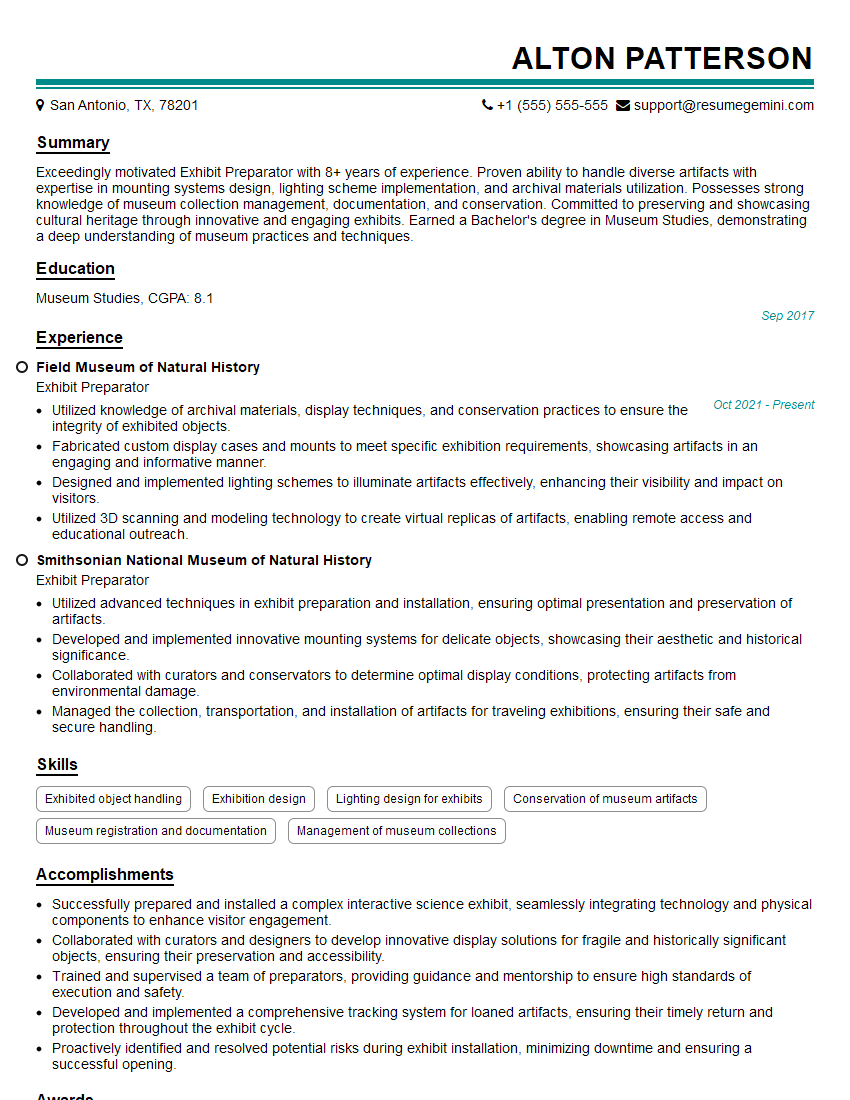
Mastering scientific taxidermy opens doors to exciting career opportunities in museums, research institutions, educational settings, and private practice. A strong understanding of these techniques and principles will significantly enhance your interview performance and career prospects. To maximize your chances of landing your dream job, it’s crucial to present your skills and experience effectively through a well-crafted resume. An ATS-friendly resume is key to getting past Applicant Tracking Systems and reaching the hiring manager’s desk. ResumeGemini is a trusted resource to help you build a professional and impactful resume. They provide examples of resumes tailored to the Scientific Taxidermy field, guiding you toward creating a document that showcases your unique abilities and qualifications.
Explore more articles
Users Rating of Our Blogs
Share Your Experience
We value your feedback! Please rate our content and share your thoughts (optional).
What Readers Say About Our Blog
Really detailed insights and content, thank you for writing this detailed article.
IT gave me an insight and words to use and be able to think of examples