Preparation is the key to success in any interview. In this post, we’ll explore crucial Free Motion Quilting interview questions and equip you with strategies to craft impactful answers. Whether you’re a beginner or a pro, these tips will elevate your preparation.
Questions Asked in Free Motion Quilting Interview
Q 1. What types of free motion quilting designs are you most proficient in?
My free motion quilting proficiency spans a wide range of designs. I’m particularly adept at organic, flowing patterns like meandering and echoing, which allow for improvisational creativity and beautiful texture. I also excel in geometric designs, including straight lines, various grids, and stylized feather patterns, requiring precision and control. I’m comfortable creating both dense, heavily quilted areas and more open, minimalist designs depending on the project’s needs. For example, a flowing landscape quilt might benefit from meandering, while a modern geometric quilt would call for precise grid work.
Beyond these, I regularly incorporate custom designs, working collaboratively with clients to develop unique patterns that complement their quilt’s overall aesthetic. I consider myself a versatile free motion quilter capable of adapting my style to various artistic expressions.
Q 2. Describe your experience with different quilting motifs and patterns.
My experience with quilting motifs and patterns is extensive. I’m familiar with classic designs like feathers, swirls, clamshells, and stippling, as well as more contemporary motifs such as pebbles, loops, and continuous lines. I understand how different motifs interact with fabric designs and overall quilt aesthetics. For example, delicate stippling works well with intricate piecing, while bolder designs like large feathers might be suitable for simpler block arrangements. I also incorporate nature-inspired patterns such as leaves, flowers, or even abstracted landscapes, allowing me to tailor the quilting to the quilt’s theme.
A crucial aspect is understanding the scale of the motif relative to the quilt’s size and the fabric’s pattern. Small motifs might get lost on a large quilt, while large motifs on a small quilt might overwhelm it. Selecting the right pattern and size is a critical step in successful free motion quilting.
Q 3. Explain your process for selecting appropriate thread tension for various fabrics.
Choosing the correct thread tension is paramount for successful free motion quilting. It’s a balancing act; too tight and the fabric puckers; too loose and the stitches are weak and inconsistent. My process involves considering both the fabric and the thread. I start by testing different tensions on a scrap of the same fabric I’ll be quilting. For example, a loosely woven cotton might require a looser thread tension than a tightly woven linen.
I adjust my machine’s tension dial based on the test results, often making minor adjustments as I quilt. Denser fabrics might necessitate slightly looser tension to avoid excessive pulling, while thinner fabrics might require slightly tighter tension for stitch definition. This iterative testing ensures that I get optimal tension every time. Sometimes, I even adjust the tension mid-project depending on the area I’m quilting.
Q 4. How do you manage fabric bulk while free motion quilting?
Managing fabric bulk during free motion quilting is crucial to preventing puckering and ensuring even stitching. My approach involves several strategies. Firstly, I use a quilting hoop or frame to keep the fabric taut and flat, minimizing wrinkles and bulges. Secondly, I work in manageable sections, focusing on small areas at a time rather than trying to quilt the entire quilt in one go. This prevents the fabric from bunching up under the needle.
Thirdly, I often use layers of batting that are appropriate for the weight and texture of the quilt top and backing. For heavily layered quilts, I may use a thinner batting to reduce bulk. Finally, I adjust my stitching to be more open in thicker areas to avoid stress and pucker. If needed, I might even use a walking foot for particularly bulky sections before switching back to free-motion.
Q 5. What techniques do you use to maintain consistent stitch density?
Maintaining consistent stitch density is key to a professional finish. My techniques start with a consistent speed and pressure on the feed dogs. I avoid rushing and maintain a steady, even pace. Think of it like drawing – a smooth, deliberate hand produces more consistent lines. I also practice regularly, which helps develop muscle memory and control.
Using a consistent quilting density guide, a template or even a simple grid drawn lightly on the backing fabric can help greatly. It creates a visual reminder to maintain a regular spacing between stitches. I regularly check my stitching to make sure the density remains consistent. If I notice any inconsistencies, I adjust my technique accordingly. Practicing different motifs on scrap fabric helps hone the skill of maintaining stitch density.
Q 6. Describe your method for achieving smooth curves and sharp turns during free motion quilting.
Achieving smooth curves and sharp turns in free motion quilting requires practice and a delicate touch. For smooth curves, I focus on maintaining a constant speed and gently guiding the fabric. I visualize the curve as a continuous flow, and I let the needle follow my hand’s natural movement. Thinking of it as drawing with thread helps tremendously.
Sharp turns require a slightly different approach. I slow down significantly before the turn and use tiny, controlled movements to pivot the fabric. It’s a bit like turning a car— you ease off the gas, slow down, and then gently steer into the turn. I often use the quilting frame to help me guide the fabric in sharp turns. Practicing different types of turns on scrap fabric before starting a project makes a big difference.
Q 7. How do you adjust your quilting speed to accommodate different fabric weights?
My quilting speed adapts depending on fabric weight. Heavier fabrics, such as wool or heavy cotton, require slower speeds to avoid breaking needles and puckering the fabric. Think of it like driving through mud versus driving on a smooth highway. You’d slow down significantly for the mud, and similarly you adjust your speed for different fabrics.
Lighter fabrics like silk or chiffon allow for faster speeds; however, maintaining control is still important to avoid skipping stitches. This means I adapt my pressure on the foot pedal, often going slower than what I might instinctively feel is appropriate, to maintain precision even at higher speeds. The aim is to achieve even stitching, regardless of the fabric weight.
Q 8. What are some common challenges encountered in free motion quilting, and how do you address them?
Free motion quilting, while incredibly rewarding, presents several challenges. One common issue is inconsistent stitch length and tension. This often stems from inconsistent hand movement or machine settings. Another hurdle is quilting in curves or tight spaces; navigating these areas requires practice and a light touch. Finally, managing thread breakage and tangles can be frustrating.
- Addressing Inconsistent Stitching: Practice controlled hand movements. Start with straight lines and gradually progress to curves. Experiment with your machine’s speed and stitch regulation to find your sweet spot. Regular machine maintenance, including cleaning and lubrication, is vital.
- Negotiating Curves and Tight Spaces: Use a walking foot or a free-motion quilting foot (darning foot) with a larger opening. Practice pivoting techniques; this involves changing direction smoothly, avoiding abrupt stops and starts. Break down complex curves into smaller, more manageable sections. Use pins to help guide your quilting path.
- Managing Thread Breakage and Tangles: Use high-quality thread suited for quilting. Ensure your machine’s tension is correctly balanced. Keep your work surface clean and free from debris. Regularly inspect your bobbin area for lint and thread build-up. Wind bobbins correctly and consistently.
Q 9. What is your experience with different types of quilting machines?
My experience spans various quilting machines, from domestic sewing machines to longarm quilting machines. I’ve worked extensively with Janome, Bernina, and Pfaff machines, appreciating their varying features and capabilities. Domestic machines are fantastic for smaller projects and offer excellent control for intricate quilting designs. However, they have limitations in terms of throat space and size of quilt they can handle. Longarm machines, on the other hand, provide significantly larger quilting areas and often have features like computerised stitch regulation and automated thread cutting. Each machine presents its own learning curve, demanding adjustments to technique and machine settings. For instance, the feel of a longarm’s larger needle plate versus a domestic machine requires a different approach to guiding the fabric.
Q 10. How do you maintain your sewing machine for optimal free motion quilting performance?
Maintaining my sewing machine is paramount for optimal free motion quilting. This includes regular cleaning, lubrication, and attention to tension. I clean the bobbin case, feed dogs, and needle plate regularly using a soft brush and compressed air. Lubrication with high-quality sewing machine oil is crucial, especially on moving parts. I check and adjust the tension regularly, ensuring a balanced tension between the top and bottom threads. I also replace needles frequently, typically after every few projects, to prevent skipped stitches or thread breakage. Lastly, I always check and clean my machine’s hook and timing mechanism according to manufacturer’s instructions.
Q 11. Explain your process for preparing fabric for free motion quilting.
Preparing fabric for free motion quilting involves several key steps. First, pre-washing and drying your fabrics is critical to prevent shrinkage after quilting. Next, I always iron my fabrics meticulously to remove any creases or wrinkles; a smooth fabric surface allows for a more consistent quilting experience. Then, depending on the fabric’s weight and texture, I may use a spray starch to improve handling and reduce puckering. I use a rotary cutter to trim the layers to the desired size after all the layers are sewn together. Finally, I often lightly press the layered fabric together before basting, to help maintain alignment during the quilting process.
Q 12. How do you determine appropriate quilting density for different projects?
Quilting density significantly impacts the quilt’s overall look, drape, and durability. For a delicate quilt, such as a baby quilt, a lighter density might be preferable to showcase the fabric’s design. Dense quilting, on the other hand, adds structure and warmth, often desired in heavier quilts designed for colder climates. My approach involves considering the fabric type and quilting design. A densely quilted area could be incorporated around high-stress points, like binding corners. While, areas featuring a detailed patterned fabric may call for a less dense quilting to allow the fabric to be appreciated.
Q 13. Describe your method for basting quilts for free motion quilting.
I use a combination of techniques for basting. For smaller quilts, I prefer spray basting, which is quick and efficient. For larger quilts, I often use a combination of safety pins and basting thread. Regardless of the method, accurate basting is key for preventing layers from shifting during quilting. I always ensure the layers are smooth and even before starting, and I pay close attention to avoid wrinkles or puckers during basting. A perfectly basted quilt prevents the frustrating shifting of layers mid-quilting, which can significantly impact final appearance. A perfectly smooth baste is a sign of a skilled quilter.
Q 14. How do you manage thread breaks and tangles during free motion quilting?
Thread breaks and tangles are inevitable in free motion quilting, but their frequency can be minimized. As mentioned previously, using high-quality thread, properly balanced machine tension, and regular cleaning are key. If a thread breaks, I identify the cause, whether it’s a faulty needle, incorrect tension, or a tangled bobbin. Before restarting, I always re-thread my machine and check the bobbin case for any problems. To manage tangles, I try to keep my fingers away from the thread path, maintaining a consistent thread flow throughout my work. If a major tangle occurs, I take the time to carefully untangle the thread instead of forcing it, avoiding potential damage to my machine and the project.
Q 15. What safety precautions do you employ while operating quilting machinery?
Safety is paramount in free motion quilting. Before even turning on the machine, I always ensure my workspace is clear of obstructions. This includes cords, fabric scraps, and anything that could get caught in the machine or cause me to trip. I also make sure my chair is positioned correctly for good posture to avoid strain.
While the machine is running, I keep my hands and fingers well away from moving parts, and I never reach over the needle while it’s in motion. I use a darning foot, specifically designed for free motion quilting, which keeps my fingers a safe distance from the needle. This foot also helps me maintain control and even feed the fabric.
Regular maintenance is crucial. I check the machine’s tension, needle sharpness, and the condition of the bobbin before each session. A dull needle or improperly threaded machine can increase the risk of needle breakage or thread jams, both potential safety hazards.
Finally, I always unplug the machine when making any adjustments or performing maintenance. This simple step prevents accidental starts and shocks.
Career Expert Tips:
- Ace those interviews! Prepare effectively by reviewing the Top 50 Most Common Interview Questions on ResumeGemini.
- Navigate your job search with confidence! Explore a wide range of Career Tips on ResumeGemini. Learn about common challenges and recommendations to overcome them.
- Craft the perfect resume! Master the Art of Resume Writing with ResumeGemini’s guide. Showcase your unique qualifications and achievements effectively.
- Don’t miss out on holiday savings! Build your dream resume with ResumeGemini’s ATS optimized templates.
Q 16. Describe your experience using different types of needles and threads for free motion quilting.
Needle and thread selection is critical for successful free motion quilting. The right combination dramatically affects stitch quality, fabric handling, and the overall look of the finished piece. I’ve experimented extensively with various options.
For example, when quilting heavier fabrics like denim, I use a heavier-weight needle (like a size 14 or 16) and a strong, high-quality thread such as a 50-weight quilting thread. A lighter-weight needle would likely bend or break under the strain.
On lighter fabrics like cotton lawn, I opt for a finer needle (size 9 or 11) and a thinner thread (like a 40-weight quilting thread). This prevents holes and puckering. The thread type also matters; I prefer threads designed for quilting because they are less prone to knotting or breaking during the continuous movement of free motion quilting.
I’ve learned that experimenting is key. Different thread weights and needle sizes interact differently with various fabrics. I always do test quilting on scraps of the same fabric as my project before starting the actual work, to find the optimal combination.
Q 17. How do you create custom quilting designs for client projects?
Creating custom quilting designs begins with a close consultation with the client. We discuss their preferences, the style of the quilt top (e.g., traditional, modern, or abstract), and the overall feel they want to achieve. I encourage them to bring inspirational images – anything from photographs to artwork to fabric patterns. This helps me understand their aesthetic sensibilities.
Once I have a clear picture of their vision, I start sketching. I often use graph paper to create detailed outlines of the quilting patterns, ensuring they’re well-balanced and proportioned in relation to the quilt top’s size and design. For more intricate designs, I might use quilting design software, which allows me to play with different motifs and stitch densities.
The process is iterative. I often present clients with several initial sketches or digital mockups, giving them a chance to provide feedback and help me refine the pattern. The final design is always a collaborative effort, ensuring the quilting complements the quilt top and reflects the client’s unique vision.
Q 18. Describe your process for communicating design ideas with clients.
Communication is essential for a successful client project. I begin by scheduling a thorough consultation, often in person or via video call. This allows me to understand their project fully and answer any questions they might have about the process.
Visual aids are indispensable. I use sketches, digital mockups, and even samples of previous work to illustrate design ideas and stitch densities. This helps clients visualize the final result and makes it easier for them to give feedback. I also maintain clear and regular communication throughout the project, providing updates and addressing any concerns promptly.
For more complex projects, I create a detailed proposal that outlines the design concept, the timeline, and the cost. This ensures transparency and sets clear expectations from the start. Open and honest communication is the key to a positive client experience.
Q 19. How do you handle client feedback and revisions?
Handling client feedback is a critical part of the process. I actively encourage feedback at every stage. I listen carefully to their comments and suggestions and then respond thoughtfully. Sometimes, it’s about making minor adjustments; other times, it requires revisiting the design entirely.
I treat every revision request with care and professionalism. Before making any significant changes, I always confirm with the client that their concerns are fully understood and that my proposed solution will meet their needs. I might offer multiple options if possible, allowing them to choose the best fit.
The goal is always client satisfaction. Even if it requires extra work or time, addressing feedback promptly and respectfully ensures a positive and collaborative working relationship.
Q 20. How do you manage deadlines and project timelines?
Managing deadlines starts with realistic project planning. When a client contacts me, I discuss the timeline and the project’s complexity in detail. We work together to establish a realistic timeframe that considers the size of the quilt, the intricacy of the quilting design, and my current workload.
I use project management tools to keep track of deadlines and milestones. This involves creating a detailed project schedule, breaking down the work into smaller, manageable tasks, and assigning deadlines to each task. I provide regular updates to my clients, keeping them informed of the project’s progress and addressing any potential delays proactively. Transparent communication is vital in managing expectations and ensuring smooth project completion.
In rare cases of unexpected delays, I immediately communicate with the client, explaining the reason for the delay and offering a revised timeline. Honesty and open communication are crucial to maintaining a positive relationship.
Q 21. What software or tools do you use to design and plan quilting patterns?
While I value hand-sketching for its creative freedom, I also utilize digital tools to enhance my design process and client communication. I use several software programs.
For creating digital mockups, I often employ Adobe Illustrator. Its vector-based capabilities allow me to create clean, scalable designs that can easily be adapted to different quilt sizes. I can also manipulate color and pattern elements effortlessly.
EQ7 (Electric Quilt 7) is another valuable tool, specifically designed for quilt designers. It allows me to import quilt top images and digitally ‘place’ quilting designs on top, allowing both myself and the client to visualize the finished project with greater clarity. It also helps with accurate estimations of thread needs and quilting time.
In addition, simple tools like Microsoft Excel or Google Sheets are helpful for tracking project details, managing costs, and ensuring deadlines are met efficiently.
Q 22. What is your experience with digital quilting designs and transferring them to fabric?
My experience with digital quilting designs is extensive. I’m proficient in using various software programs to create and manipulate designs, from simple geometric patterns to intricate floral arrangements. Transferring these designs to fabric involves several methods. I often use a projector to directly project the design onto the fabric, allowing for precise placement. Alternatively, I utilize heat-transfer methods, carefully printing the design onto special paper and transferring it using an iron. This is particularly useful for smaller, more detailed designs. For larger designs or those requiring less precise placement, I might opt for tracing the design onto the fabric using a lightbox or even freehand sketching based on a digital template. Each method offers unique advantages depending on the design complexity and the fabric type.
For example, I recently completed a large-scale landscape design using a projector. This allowed me to easily adjust the scale and placement of the design on my quilt backing, ensuring accurate proportions. Another time, I used heat transfer for a smaller, intricate floral pattern to preserve its detailed elements. My choice of method always prioritizes accuracy and efficiency.
Q 23. Describe your experience with different quilting feet and their applications.
Different quilting feet are essential tools for achieving various quilting effects. The standard free-motion quilting foot, with its open toe, provides ample visibility of the needle and allows for the most creative freedom. I also frequently use a walking foot for even feed on layers of different thicknesses or when quilting thicker fabrics to avoid puckering. A darning foot, similar in appearance to the free-motion foot, is beneficial for intricate designs or decorative stitching in smaller areas. A ruler foot provides precision for straight lines and accurate geometric designs, and I find this useful for creating borders or grid patterns. Lastly, a specialty foot might be used to create unique textures or effects.
For instance, I might use the ruler foot for creating a perfect grid pattern for a modern quilt, then switch to the free-motion foot for adding decorative flourishes within those grid squares. The choice of foot is entirely dependent on the desired outcome and the characteristics of the fabric.
Q 24. How do you maintain accurate quilting lines while working on large projects?
Maintaining accurate quilting lines on large projects requires careful planning and execution. Before I begin, I always baste my quilt layers securely to prevent shifting. Then, I establish clear guidelines or markings on the quilt top. I might use a marking pen, a ruler, or even masking tape depending on the complexity and scale of the design. Throughout the process, I frequently check my progress against these guidelines. For larger pieces, I often work in sections, completing one area at a time to prevent the quilt from becoming distorted.
For example, when working on a large king-sized quilt with a complex design, I’d divide it into four quadrants, marking each carefully. Then I would focus on quilting each quadrant individually, ensuring that all lines align perfectly within their respective sections and to each other. Regular checks and consistent attention to detail are crucial for maintaining accuracy.
Q 25. Explain your understanding of quilting theory and its relationship to fabric and design.
Quilting theory encompasses the principles of design, fabric selection, and construction techniques that influence the final aesthetic and structural integrity of a quilt. It involves understanding how different fabrics interact, considering their drape, weight, and texture. The design itself plays a crucial role, influencing the choice of quilting pattern and density. For example, a densely quilted section will add structure and stability, whilst a more loosely quilted area can add softness and visual interest. The selection of quilting patterns should complement the overall design of the quilt, enhancing rather than detracting from it. Understanding color theory, composition, and other design elements is integral to creating a visually appealing quilt.
In practice, I might choose a lightweight cotton for a summer quilt and a heavier wool for a winter quilt, selecting quilting patterns that suit each fabric’s character. A complex design might warrant intricate quilting, while a simple design could be enhanced with a minimal, subtle quilting pattern.
Q 26. How do you adapt your free motion quilting techniques to different fabric types?
Adapting free-motion quilting techniques to different fabric types is crucial. Heavy fabrics like wool or denim require a stronger, more stable stitch, often at a slower speed and with a heavier needle. Lighter fabrics, like silk or chiffon, demand a lighter touch, a finer needle, and a less dense quilting pattern to prevent distortion. I also consider the drape and texture of the fabric, selecting appropriate quilting patterns to either enhance or complement them. Stretchy fabrics, for example, require a quilting pattern that allows for the necessary give without causing puckering or stress.
For instance, while quilting a silk scarf, I’d use a finer needle, a lighter thread, and a loose, flowing quilting pattern to retain its delicate quality. For a heavy denim quilt, I’d utilize a heavier needle and thread and opt for a denser quilting pattern to ensure structural integrity and prevent sagging.
Q 27. What is your approach to problem-solving when encountering unexpected quilting challenges?
My approach to problem-solving in quilting starts with careful observation and analysis. I identify the specific issue—whether it’s tension problems, puckering, fabric breakage, or a design flaw. Then I systematically investigate potential causes. Is the tension on my machine properly adjusted? Am I using the correct needle and thread for the fabric? Are my layers securely basted? Once the root cause is identified, I implement the appropriate solution. This might involve adjusting machine settings, changing needles or thread, re-basting, or even adjusting the design to better suit the fabric.
For example, if I encounter consistent puckering, I might check my basting, machine tension, or even the needle itself. If the thread keeps breaking, I’d check the thread type and condition, and consider the needle size in relation to the thread. A systematic approach to troubleshooting is critical for successfully resolving quilting challenges.
Q 28. Describe your experience working independently versus collaboratively on quilting projects.
I have experience with both independent and collaborative quilting projects. Working independently allows me to set my own pace, explore my own creative vision, and develop my personal style. It provides a level of autonomy that fosters focused creativity. On the other hand, collaborating with others on large-scale projects is rewarding. It allows for the sharing of ideas, skills, and perspectives, often leading to more innovative and impactful results. Collaborative projects require strong communication and coordination to ensure a unified and cohesive final product. Each approach has its own benefits and challenges, and I embrace both depending on the project and its requirements.
For example, I recently completed a large community quilt independently, allowing me to focus on achieving a very personal aesthetic. Conversely, I’m currently collaborating on a large-scale exhibition piece with three other artists, where teamwork and communication are absolutely key.
Key Topics to Learn for Your Free Motion Quilting Interview
- Machine Setup and Operation: Understanding your sewing machine’s capabilities, including speed control, needle selection, and tension adjustments crucial for free motion quilting. Practical application includes demonstrating proficiency in changing machine settings to accommodate various fabric weights and thread types.
- Free Motion Quilting Techniques: Mastering fundamental techniques such as stippling, meandering, and echoing. Practical application involves showcasing your ability to create consistent stitch density and patterns, adapting your techniques based on the quilt’s design and fabric.
- Design and Planning: Understanding how quilting designs enhance a quilt’s aesthetic appeal and structural integrity. Practical application includes explaining your process for translating a design concept into a cohesive quilting plan, considering thread choice and fabric interaction.
- Thread Management and Tension: Proper thread selection, winding bobbins, and managing thread tension are critical for achieving even stitches and avoiding breakage. Practical application includes troubleshooting common tension problems and demonstrating techniques for maintaining consistent thread flow.
- Working with Different Fabrics: Understanding how different fabrics react to free motion quilting and adapting techniques accordingly. Practical application involves demonstrating experience with quilting various fabric weights and types, including cottons, silks, and blends.
- Troubleshooting and Problem Solving: Identifying and resolving common free motion quilting issues, such as skipped stitches, uneven tension, and fabric puckering. Practical application includes describing your problem-solving process and demonstrating your ability to adapt your approach based on the issue at hand.
- Safety Procedures: Understanding and adhering to proper safety procedures while operating a sewing machine, including needle disposal and maintaining a clean workspace. Practical application includes showcasing awareness and adherence to safety practices.
Next Steps
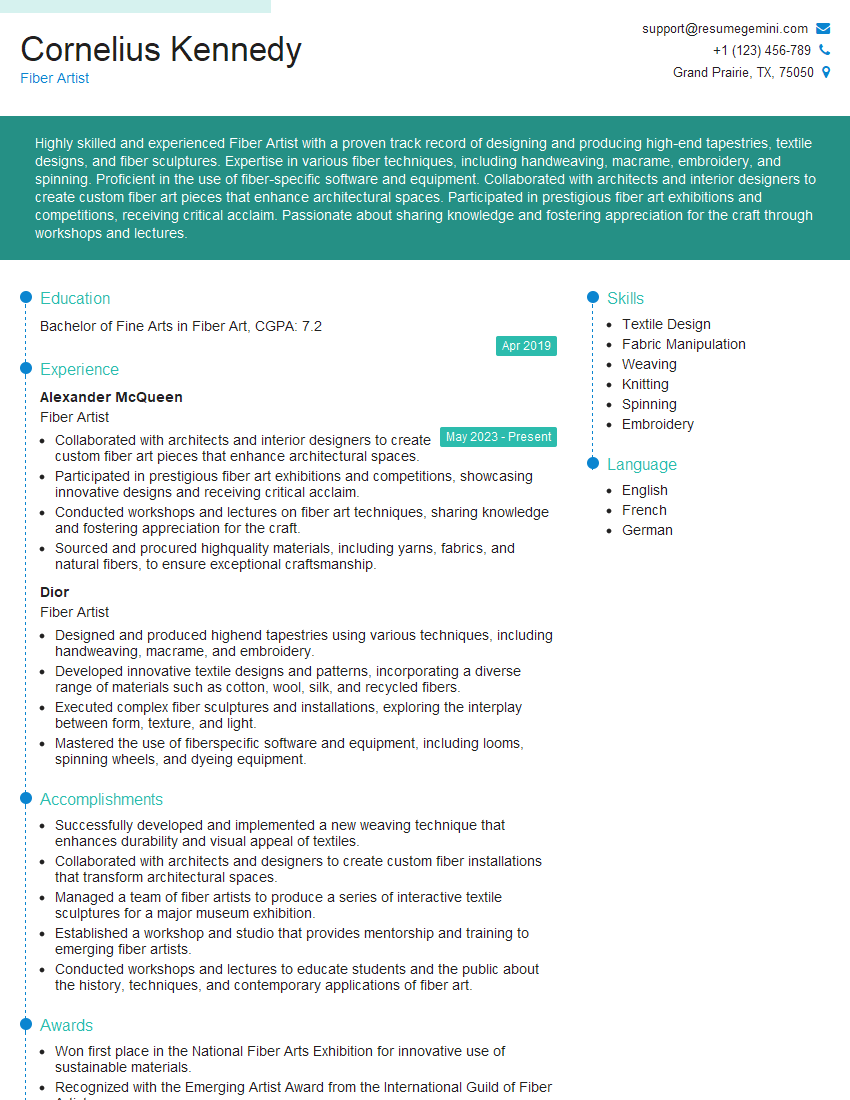
Mastering free motion quilting opens doors to exciting career opportunities, from independent quilting businesses to roles in design studios and fabric arts education. To significantly improve your job prospects, focus on crafting a professional and ATS-friendly resume that highlights your skills and experience. We recommend using ResumeGemini, a trusted resource, to build a compelling resume. ResumeGemini provides examples of resumes tailored to the Free Motion Quilting field, helping you showcase your unique qualifications effectively.
Explore more articles
Users Rating of Our Blogs
Share Your Experience
We value your feedback! Please rate our content and share your thoughts (optional).
What Readers Say About Our Blog
Really detailed insights and content, thank you for writing this detailed article.
IT gave me an insight and words to use and be able to think of examples