The right preparation can turn an interview into an opportunity to showcase your expertise. This guide to Crane and Davit Operations interview questions is your ultimate resource, providing key insights and tips to help you ace your responses and stand out as a top candidate.
Questions Asked in Crane and Davit Operations Interview
Q 1. What are the different types of cranes?
Cranes are categorized based on their mobility, structure, and operating mechanism. Here are some key types:
- Mobile Cranes: These cranes are self-propelled and highly versatile, including:
- Truck Cranes: Mounted on a truck chassis, offering excellent maneuverability.
- Crawler Cranes: Moving on tracks, providing exceptional stability for heavy lifting.
- All-Terrain Cranes: Combining features of truck and crawler cranes for diverse terrains.
- Tower Cranes: Tall, freestanding structures commonly used in high-rise construction. They are typically fixed in one location.
- Overhead Cranes: Found in industrial settings, they travel along runways suspended from the ceiling or structure.
- Gantry Cranes: Similar to overhead cranes, but their structure runs on ground-level tracks.
- Floating Cranes: Used in port operations and offshore construction, they operate from barges or ships.
The choice of crane depends heavily on the project’s specific needs regarding lifting capacity, reach, mobility, and site conditions.
Q 2. Explain the safe operating procedures for a mobile crane.
Safe operation of a mobile crane involves a multi-faceted approach, emphasizing pre-operational checks, adherence to guidelines, and ongoing vigilance. Here’s a breakdown:
- Pre-operational Inspection: A thorough check of all mechanical components, including brakes, hydraulics, and structural integrity, is crucial before any lifting operation.
- Site Assessment: The ground conditions, surrounding obstacles, and the proximity of power lines must be assessed to ensure stability and prevent accidents. Load calculations should be made considering the ground bearing capacity.
- Load Chart Adherence: Never exceed the crane’s rated lifting capacity as specified in the load chart. This chart is specific to the crane’s configuration (e.g., jib length, outriggers deployed) and accounts for various factors affecting stability and strength.
- Communication & Signaling: Clear communication between the crane operator, rigger (if applicable), and other personnel is essential. Standardized hand signals should be used to communicate instructions.
- Safe Lifting Techniques: Loads must be lifted smoothly and evenly to minimize swing and potential damage. Avoid lifting loads in high winds or extreme weather conditions.
- Emergency Procedures: A clear plan for emergency situations, such as load failures, mechanical malfunctions, or accidents, should be in place and practiced regularly. Everyone involved needs to know their role.
- Regular Maintenance: Scheduled maintenance keeps the crane in optimal working order and prevents unexpected failures.
Imagine trying to lift a heavy object with a faulty tool – the risks are obvious. Similarly, neglecting these procedures puts lives and property at serious risk.
Q 3. Describe the process of pre-operational crane inspections.
Pre-operational crane inspections are vital for ensuring safe operation. A systematic approach should be followed, covering all critical aspects of the crane’s structure and functionality.
- Visual Inspection: Look for any visible damage, such as cracks, bends, or corrosion, on the boom, jib, hooks, cables, and other components.
- Mechanical Checks: Verify the functionality of brakes, hydraulics, and other mechanical systems. Check the load indicators and other safety devices.
- Electrical Systems: Inspect the electrical wiring, control systems, and safety lights for any signs of damage or malfunction.
- Hydraulic Systems: Check fluid levels and look for leaks or damage. Verify the proper operation of hydraulic cylinders and valves.
- Testing Procedures: Conduct a test lift with a known weight to verify the crane’s operation and stability before lifting actual loads.
- Documentation: Record all findings of the inspection, noting any defects or maintenance requirements. This documentation provides an auditable trail for safety.
Think of a pre-flight checklist for an aircraft – this inspection is just as critical to the safe operation of the crane and the safety of personnel involved.
Q 4. How do you identify and mitigate potential crane hazards?
Identifying and mitigating potential crane hazards requires a proactive and comprehensive approach. Many hazards stem from human error, equipment malfunction, and inadequate site preparation.
- Load Instability: Improperly secured loads, exceeding the crane’s capacity, or uneven weight distribution can lead to tipping or load drops. Proper rigging and load balancing are crucial.
- Wind Conditions: High winds significantly reduce crane stability and can cause the crane to overturn. Wind speed limitations should be strictly adhered to.
- Ground Conditions: Soft or uneven ground can affect the crane’s stability. Ensure the ground is adequately prepared before operating the crane.
- Environmental Hazards: Proximity to power lines, nearby obstructions, or other environmental factors like rain or extreme temperatures need to be assessed.
- Equipment Malfunction: Regular maintenance and inspections prevent equipment failures. Promptly address any discovered faults.
- Human Error: Operator training, clear communication protocols, and adherence to safety regulations help minimize human error. Implementing a permit-to-work system for critical lifts adds another layer of safety control.
Mitigating hazards involves using appropriate safety equipment, implementing comprehensive safety training programs for operators and personnel, and enforcing strict adherence to safety regulations.
Q 5. What are the different types of davits and their applications?
Davits are smaller, simpler lifting devices primarily used for lifting and lowering personnel or equipment. They differ from cranes in scale and complexity.
- Knuckle Boom Davits: These have a hinged or ‘knuckle’ joint in the boom, providing a greater range of motion. Commonly found on ships and smaller vessels.
- Telescopic Davits: The boom can extend and retract, providing flexibility in positioning the load. Also frequently used on ships and for lifting equipment.
- Fixed Davits: The boom is fixed at a particular angle. They are often simpler in design and used for routine lifting tasks.
- Hydraulic Davits: Utilize hydraulic power to lift and lower loads, offering controlled movements and ease of operation.
Applications include personnel rescue, lifeboat deployment, lifting equipment onto vessels, and transferring materials in various settings.
Q 6. Explain the load chart and its importance in crane operations.
The load chart, sometimes called a capacity chart, is a crucial document specific to each crane. It shows the safe lifting capacity for various configurations and working radii (distances from the crane base to the load). It’s vital for safe operation.
Importance:
- Safety: The load chart determines the maximum weight a crane can lift safely at different boom angles and radii. Exceeding the limits can lead to catastrophic failures.
- Stability: The chart considers stability factors, including ground conditions, outrigger deployment (for mobile cranes), and wind speed, ensuring the crane doesn’t tip over.
- Legal Compliance: Operating outside the limits defined in the load chart violates safety regulations and can lead to legal repercussions.
- Planning: Before any lift, the chart is consulted to determine if the crane is suitable for the task and to plan the lift safely.
Think of it as an instruction manual for safe lifting – following it is not an option; it’s a necessity.
Q 7. What are the legal requirements and regulations for crane operation in your region?
Legal requirements for crane operations vary by region. However, common regulations generally include:
- Licensing and Certification: Crane operators usually require licenses or certifications demonstrating competency and adherence to safety standards.
- Regular Inspections and Maintenance: Cranes need regular inspections and maintenance by qualified personnel to ensure safety and compliance. Thorough records must be kept.
- Safety Regulations: Adherence to national and local safety standards and regulations related to crane operation, load capacity, and safe working practices is mandatory.
- Risk Assessments: Comprehensive risk assessments must be conducted before commencing any lifting operations to identify and mitigate potential hazards.
- Accident Reporting: Any accidents or near misses involving cranes must be reported to relevant authorities for investigation and to improve safety procedures.
- Training and Competency: Riggers and other personnel working with cranes also require appropriate training and competency assessment to ensure safety.
Specific regulations will be defined by relevant bodies such as OSHA (Occupational Safety and Health Administration) in the US or equivalent organizations in other countries. Always consult the latest, applicable regulations in your operating region. Non-compliance can lead to hefty fines and potential legal action.
Q 8. How do you calculate safe working loads for different lifting scenarios?
Calculating safe working loads (SWL) is paramount for crane safety. It’s not a single calculation but a process considering multiple factors. The fundamental principle is to ensure the load’s weight, including rigging, never exceeds the crane’s capacity at any point during the lift. This involves consulting the crane’s data plate for its rated capacity, which specifies the maximum weight it can lift under ideal conditions. However, this figure needs adjustments based on several variables.
- Radius of the boom: The farther the load is from the crane’s center, the less weight it can safely lift. Think of a seesaw – the farther out the weight is, the harder it is to balance.
- Boom angle: The angle of the crane’s boom affects its lifting capacity. A steeper angle generally allows for lifting heavier loads closer to the crane, while a shallower angle reduces capacity but allows for greater reach.
- Weight of the rigging: Hooks, chains, slings, and other rigging equipment all add weight to the load. This must be included in the SWL calculation.
- Wind speed and direction: Strong winds significantly reduce a crane’s lifting capacity and can make the lift unstable. Wind charts provided by the manufacturer help account for this.
- Ground conditions: Uneven or soft ground can affect the crane’s stability and reduce its lifting capacity.
Example: Let’s say a crane’s data plate shows a maximum capacity of 10 tons at a 10-meter radius with a 45-degree boom angle. If the load weighs 8 tons and the rigging weighs 0.5 tons, at that specific radius and boom angle, the lift is safe (8 + 0.5 < 10). However, if the radius is increased or the boom angle is decreased, or if strong winds are present, the SWL might be reduced, potentially making this same lift unsafe.
Software and charts are commonly used to assist in these calculations, and adhering to these calculations is crucial to prevent accidents.
Q 9. Describe your experience with different rigging techniques.
My experience encompasses a wide range of rigging techniques, crucial for ensuring safe and efficient lifts. I’m proficient in using various types of slings (chain, wire rope, synthetic fiber) and their appropriate hitches for different load configurations and types. I understand the importance of selecting slings with an appropriate SWL for the load and ensuring they are correctly inspected for wear and tear before each use. I’m also skilled in using shackles, hooks, and other rigging hardware according to safety regulations and best practices.
- Vertical lifts: Using vertical lifts requires a direct, centered rigging arrangement to prevent the load from swinging. I’ve frequently used this for lifting pre-fabricated sections and containers.
- Choker hitches: I have experience using choker hitches for loads that are difficult to fully encircle with a sling. This requires careful consideration to ensure the load is evenly distributed.
- Bridle slings: For heavier or awkwardly shaped loads, I utilize bridle slings, which distribute the load across multiple legs to provide better stability and control.
- Spreader beams: For extremely wide or delicate loads, spreader beams are employed to provide support across the load, enhancing the integrity of the lift. I’ve used these in industrial settings for heavy machinery transport.
Rigging techniques are highly dependent on the load’s shape, weight, and the environment. A thorough risk assessment is always conducted to select the safest and most efficient rigging method for any given task.
Q 10. What are the emergency procedures in case of a crane malfunction?
Emergency procedures in case of crane malfunction are critical. They begin with immediate action to ensure the safety of personnel and equipment. The first step is to immediately stop all crane operations and lower the load gently. Any attempt to handle the load while the crane is malfunctioning is dangerous.
- Evacuation: Clear the area immediately beneath and around the crane to prevent injury from falling objects or the crane itself. This includes communicating with those who might be affected by the malfunction.
- Assessment: Determine the nature of the malfunction. Is it a power failure? A mechanical fault? A safety device activation?
- Emergency shutdown: Utilize the emergency stop mechanisms on the crane to completely power down the system. This should be clearly marked and familiar to all operators.
- Reporting and communication: Notify the relevant authorities (supervisors, maintenance personnel, and possibly emergency services). A detailed report of the malfunction, its cause, and any damage should be documented.
- Inspection: A thorough inspection of the crane and load should be conducted by qualified personnel before operations resume. This inspection should identify the root cause of the malfunction and verify that all safety mechanisms are functioning correctly.
Regular preventative maintenance is essential to minimize the likelihood of crane malfunctions. This proactive approach is far more effective than relying solely on emergency procedures.
Q 11. How do you communicate effectively with a signal person?
Effective communication with a signal person is vital for safe crane operation. It forms the foundation of a safe lifting operation. The communication must be clear, concise, and unambiguous, using pre-agreed hand signals as a primary form of communication. Verbal communication can also be used as a secondary way to reinforce signals or clarify instructions, especially if there is noise.
- Standardized signals: Using recognized and standardized hand signals ensures clarity. Any deviations must be pre-agreed upon.
- Clear visibility: The signal person must have a clear line of sight to the crane operator and the load. Obstacles and environmental factors (weather conditions) should be considered.
- Confirmation: The crane operator should confirm each signal received from the signal person before executing the maneuver. A simple nod or verbal confirmation (‘Understood’) helps prevent misunderstandings.
- Emergency signals: Clear and easily recognizable emergency signals are essential, such as a raised arm to stop crane operation immediately.
- Regular training: Both crane operator and signal person must undergo regular training to ensure proficiency and to maintain consistency.
Example: Instead of vague instructions, the signal person may use the established signal to signal a ‘Hoist’ or ‘Lower’, which is then verbally reinforced by saying “Hoisting now” or “Lowering now”. This double-check ensures safety and efficiency.
Q 12. Explain your understanding of crane stability and its factors.
Crane stability is the ability of the crane to remain upright and in balance during operation. Maintaining stability prevents tipping and ensures the safe execution of the lift. It relies on several interconnected factors.
- Load weight and center of gravity: The heavier the load and the further its center of gravity is from the crane’s center, the greater the risk of instability. This is why precise load weight estimation is critical.
- Ground conditions: The ground must be level, firm, and capable of supporting the crane’s weight and the stresses from lifting. Soft or uneven ground significantly compromises stability.
- Outrigger deployment: Outriggers extend the crane’s base, significantly increasing stability, especially when lifting heavy loads or at greater radii. Their proper deployment and setting are essential.
- Wind conditions: High winds exert considerable force on the crane and the load, compromising stability. Wind speed and direction should always be considered.
- Boom angle and radius: The boom angle and radius affect the center of gravity of the entire system. As the boom extends and the angle changes, the crane’s stability changes.
Imagine a tightrope walker: the load is like their balancing pole; a firm surface is their rope, and the correct extension of outriggers is like having a wider base to make the tightrope walk safer and more stable.
Q 13. Describe your experience with different types of crane hooks and attachments.
My experience includes working with various crane hooks and attachments, each designed for specific lifting applications. Selection is crucial for ensuring a safe and effective lift.
- Standard hooks: These are the most common type and are suitable for general lifting applications. They come in various sizes and SWLs and must be inspected for defects regularly.
- Grab hooks: Used to lift materials such as timber, scrap metal, and other irregularly shaped items. They have a strong clamping action.
- Swivel hooks: These hooks rotate to prevent twisting of the sling or load, which reduces strain on the rigging equipment.
- Lifting magnets: Used to lift ferrous metals, they are extremely efficient but require specific safety precautions due to their powerful magnetic field.
- Vacuum lifters: These attachments are used to lift materials such as glass or large sheets. They utilize suction power to secure the load.
- Special purpose hooks: There are various specialized hooks designed for specific materials like concrete blocks, or pipes.
Each attachment has a specific SWL and operational limitations; using the wrong attachment can lead to dangerous situations. Thorough understanding of each type and careful selection based on the load and environment are imperative.
Q 14. How do you handle different weather conditions during crane operations?
Handling different weather conditions during crane operations requires careful planning and adherence to safety regulations. Weather affects crane stability, visibility, and the overall safety of the lifting operation. Wind is a significant factor that dictates whether a lift should proceed or be postponed.
- High winds: High winds reduce the crane’s lifting capacity and increase the risk of instability. Operations are typically suspended when wind speeds exceed the limits specified in the crane’s manufacturer’s guidelines and local safety regulations.
- Rain and snow: These conditions can reduce visibility, creating hazardous conditions. They may also affect the load’s weight (snow accumulation) or add an increased risk of slippage.
- Extreme temperatures: Extreme heat can cause material fatigue, reducing the strength of crane components, while extreme cold can affect the performance of hydraulic systems and make materials brittle. Regular maintenance checks and adherence to manufacturer instructions are vital.
- Lightning: Crane operations must cease immediately if lightning is present. The crane’s metal structure can attract lightning strikes.
- Fog: Reduces visibility and creates unsafe operating conditions. Lifting operations should be postponed until visibility improves.
A thorough weather forecast and risk assessment are crucial before starting any crane operation. Using anemometers to measure wind speed accurately is standard practice on many sites. If unsafe conditions are anticipated, work must be halted to ensure the safety of workers and equipment.
Q 15. What are the common causes of crane accidents and how to prevent them?
Crane accidents, sadly, are often caused by a combination of factors. Let’s break down some common culprits and how we can mitigate them.
- Operator Error: This is a significant factor, encompassing issues like exceeding the crane’s rated capacity, improper rigging techniques, swinging loads uncontrollably, and operating outside of safe zones. Prevention involves rigorous training programs focusing on practical application, regular competency assessments, and a strong emphasis on safe operating procedures. Think of it like learning to drive – you need thorough instruction and consistent practice to master the skill safely.
- Mechanical Failure: Malfunctioning components, such as worn brakes, damaged cables, or hydraulic leaks, can lead to catastrophic failures. Regular and meticulous maintenance, including detailed inspections and preventative lubrication, is crucial. We’re talking scheduled inspections, not just reactive repairs. Imagine a car needing regular oil changes and tire rotations – cranes require the same level of preventative care.
- Environmental Factors: High winds, inclement weather, and unstable ground conditions can significantly impact crane stability and operation. Strict adherence to weather-related operational limits and thorough site assessments are necessary. Think of it like building a house; you wouldn’t start construction during a hurricane, similarly, cranes shouldn’t operate in unsafe conditions.
- Inadequate Planning and Supervision: Poor planning, including inadequate load calculations, incorrect rigging setups, and lack of effective communication, often contribute to accidents. This necessitates detailed lift plans, pre-lift meetings, and on-site supervision by competent personnel who monitor every step of the process. It’s like following a well-defined recipe in cooking – every ingredient (and step) is vital for a successful outcome.
In short, a multi-pronged approach combining strict adherence to safety regulations, comprehensive training, proactive maintenance, and vigilant oversight is critical to prevent crane accidents. It’s not just about following rules; it’s about fostering a safety-first culture.
Career Expert Tips:
- Ace those interviews! Prepare effectively by reviewing the Top 50 Most Common Interview Questions on ResumeGemini.
- Navigate your job search with confidence! Explore a wide range of Career Tips on ResumeGemini. Learn about common challenges and recommendations to overcome them.
- Craft the perfect resume! Master the Art of Resume Writing with ResumeGemini’s guide. Showcase your unique qualifications and achievements effectively.
- Don’t miss out on holiday savings! Build your dream resume with ResumeGemini’s ATS optimized templates.
Q 16. What is your experience with crane maintenance and lubrication?
My experience with crane maintenance and lubrication is extensive. I’ve worked on various crane types, from tower cranes to mobile cranes, and my responsibilities have included everything from daily greasing and lubrication to major component overhauls. I am familiar with manufacturers’ maintenance schedules and lubrication charts, and I always use the correct lubricants for each component to ensure optimal performance and longevity. I’ve personally overseen the lubrication of slewing bearings, hoist mechanisms, and trolley systems, ensuring all moving parts operate smoothly and efficiently. Beyond just applying grease, I also inspect for wear and tear, identifying potential problems before they escalate into major failures. For instance, I might notice minor wear on a cable and recommend replacement before it becomes a safety hazard. Proper lubrication isn’t just about extending the lifespan of equipment; it’s crucial for operational safety.
Q 17. How do you perform a daily inspection on a davit system?
A daily inspection of a davit system is a critical safety procedure. It’s a systematic check designed to identify potential issues before they become serious problems. My approach follows a checklist, encompassing:
- Visual Inspection: Checking for any visible damage to the davit arm, base, or supporting structure. This includes looking for cracks, corrosion, signs of bending or deformation, and loose bolts or fasteners. I meticulously examine the cables or chains, looking for fraying, kinks, or broken strands.
- Mechanical Inspection: I test the free movement of the davit arm, ensuring it rotates smoothly and locks securely in place. I also check the hoisting mechanism, ensuring that the brakes are functioning correctly and that the load-handling mechanism operates without binding or unusual noises. I will also check for the proper functioning of any limit switches.
- Load Test (where applicable): While not always a daily procedure, a routine spot-check with a known, safe weight can help detect any hidden mechanical issues. Think of it as a quick ‘health check’.
- Documentation: I meticulously document all findings, noting any defects or required repairs. This documentation serves as a valuable record for maintenance planning and tracking.
This comprehensive approach helps ensure the davit system remains in optimal working condition and safe to operate.
Q 18. Explain the difference between a fixed and a mobile davit system.
The key difference lies in their mobility. A fixed davit system is permanently mounted to a structure, such as a ship’s deck or a building’s side. It’s ideal for repetitive lifting tasks in a fixed location, offering stability and often simplicity in operation. Think of a crane on a dock used for loading and unloading cargo. A mobile davit system, on the other hand, is mounted on a mobile base, allowing for easy repositioning. It offers flexibility for lifting operations in different areas but requires more attention to stability during operation and movement. Think of a davit on a trailer that could be repositioned on a construction site. Both have their strengths; choosing between them depends largely on application needs and site characteristics.
Q 19. Describe your experience with load testing and certification of lifting equipment.
I have extensive experience with load testing and certification of lifting equipment. This process is critical for ensuring the equipment can safely handle its intended load. My experience includes:
- Planning and Preparation: This involves selecting appropriate test weights, ensuring proper rigging techniques, and coordinating with the necessary personnel.
- Execution: I meticulously perform the load test, carefully monitoring the equipment’s performance throughout the process. This includes monitoring any deflection, unusual noises, or signs of stress.
- Documentation: Comprehensive documentation is vital, including the test results, any observations made during the testing, and the certification details. This ensures compliance with safety standards and provides a clear record for future reference.
I always adhere to relevant safety regulations and standards, and I’m familiar with various types of load testing, including proof testing and destructive testing. My experience ensures that the lifting equipment remains compliant and fit for intended use.
Q 20. What are the limitations of a particular crane type you are familiar with?
Let’s consider a common type of overhead crane – the double-girder overhead crane. While versatile and robust, these cranes have limitations. One key limitation is their reach. The crane’s span determines the maximum distance it can cover. Expanding the span often necessitates larger and heavier girders, impacting structural capacity and increasing costs. Another limitation is their height restriction. The crane’s height, including hook height, limits its ability to work in areas with low ceilings or obstructions. Finally, turning radius can be a significant consideration in tight spaces. Maneuvering a large double-girder crane within confined areas can be challenging and require careful planning. Understanding these limitations is essential for selecting and operating the right crane for the specific application.
Q 21. How do you ensure the safety of personnel during lifting operations?
Ensuring personnel safety during lifting operations is paramount. My approach is multifaceted:
- Clear Communication: Establishing and maintaining clear communication channels between the crane operator, riggers, signal persons, and other personnel involved is essential. This avoids misunderstandings and helps coordinate actions seamlessly.
- Restricted Access Zones: Implementing clearly defined restricted access zones around the lifting operation keeps personnel away from potential hazards. Signage, barricades, and spotters play a significant role in this.
- Proper Personal Protective Equipment (PPE): Enforcing the consistent use of PPE, including safety helmets, high-visibility clothing, and safety footwear, is crucial. This protects personnel from potential injuries.
- Rigorous Training and Supervision: Providing comprehensive training on safe lifting practices and ensuring adequate supervision during operations are key for preventing accidents.
- Emergency Procedures: Establishing clear emergency procedures and ensuring that all personnel are aware of them is crucial. This ensures a coordinated response in case of an incident.
Safety is not just a checklist; it’s a continuous process that requires vigilance, proactive measures, and a strong commitment to ensuring the well-being of everyone involved.
Q 22. Describe your experience working with different types of slings and their limitations.
Selecting the right sling is crucial for safe and efficient lifting. My experience encompasses various types, each with its strengths and weaknesses. For instance, wire rope slings are incredibly strong and durable, ideal for heavy, sharp-edged loads, but they can be susceptible to damage from abrasion and require regular inspection for broken wires. Conversely, nylon or polyester web slings are softer, less likely to damage loads, and easier to handle, but they have lower load limits and are vulnerable to UV degradation and chemical exposure. Chain slings offer high strength and resistance to abrasion, making them suitable for harsh environments, but they can be cumbersome and prone to stretching over time. Finally, synthetic fiber slings like those made from aramid or Dyneema offer high strength-to-weight ratios but are susceptible to cutting or snagging.
Limitations often revolve around load capacity, material compatibility with the lifted object, and environmental conditions. For example, a nylon sling might be unsuitable for lifting hot steel due to its low melting point. Proper sling selection involves considering the weight, shape, and material of the load, as well as the environmental factors at play. I always adhere to manufacturer’s guidelines and conduct thorough pre-lift inspections to ensure the sling’s suitability and safety.
Q 23. Explain the importance of proper load distribution in crane operations.
Proper load distribution is paramount in crane operations because it directly impacts stability and safety. An unevenly distributed load can lead to structural stress on the crane, sling damage, load shifting during the lift, and even catastrophic failure. Think of it like this: if you try to carry a heavy box with all the weight on one side, you’re much more likely to drop it. The same applies to a crane.
To ensure proper distribution, I always aim for a balanced load center. This involves using appropriate slings and attaching them strategically to the load’s center of gravity. For irregularly shaped loads, multiple slings might be necessary, carefully positioned to distribute the weight evenly. Pre-lift planning, including load calculations and detailed rigging plans, are essential to achieving this. Using load indicators and load cells further ensures that the weight is within the crane’s safe working limits and distributed equally.
Q 24. What are your experiences in troubleshooting crane mechanical or electrical issues?
Troubleshooting crane issues requires a systematic approach. My experience ranges from minor electrical faults to complex mechanical problems. I’ve dealt with instances of faulty limit switches causing operational malfunctions, requiring careful diagnosis and replacement. In other situations, hydraulic leaks have necessitated identifying the source of the leak, replacing seals, and ensuring proper fluid levels. Mechanical issues like worn-out bearings or damaged gears need thorough inspection and often necessitate replacing components.
My approach starts with a safety assessment to isolate the problem area and ensure safety for myself and those around me. Then, I perform visual inspections, check for error codes (if the crane has a diagnostic system), and use appropriate testing equipment like multimeters to pinpoint the cause. Documentation is key; I maintain detailed records of all troubleshooting steps and repairs. I also prioritize communicating with maintenance personnel or specialists if the problem is beyond my expertise to ensure timely resolution and prevent further damage.
Q 25. Describe your experience with different types of crane control systems.
I’m familiar with various crane control systems, from traditional lever-operated systems to modern computerized controls. Older cranes might use simple mechanical levers and drum brakes, requiring precise hand-eye coordination. Newer systems often incorporate PLC (Programmable Logic Controller) based controls, offering advanced features like load moment indicators (LMIs), anti-sway systems, and variable speed controls for smoother operation. Some systems even offer remote operation capabilities.
My experience includes working with both analog and digital control systems. Understanding the limitations and capabilities of each system is crucial. For instance, while digital systems offer greater precision and safety features, they may require more specialized training and troubleshooting skills. Regardless of the system, I always prioritize safe operating procedures and regular operator training to ensure everyone understands the controls and emergency shut-down procedures.
Q 26. How do you manage multiple tasks and prioritize safety during busy periods?
Managing multiple tasks during busy periods requires careful planning and prioritization. Safety always comes first. I use a combination of techniques, including creating a detailed task list with realistic timelines and assigning priorities based on urgency and safety implications. This allows me to efficiently manage multiple lifts and other tasks without compromising safety.
Effective communication is vital. I clearly communicate task assignments and potential hazards to my team. I also actively listen to any concerns raised by team members. Regular briefings and debriefings help ensure everyone is on the same page and aware of any changes to the plan. Throughout the process, I remain vigilant and proactively identify potential hazards, ensuring proper mitigation strategies are in place.
Q 27. What are the different types of crane hooks and their applications?
Crane hooks come in various designs, each suited to specific applications. The most common is the self-closing hook, simple, reliable, and widely used for general lifting. Clevis hooks have a larger opening, making it easier to attach slings, while grab hooks are designed for grasping and lifting specific types of loads. Alloy steel hooks are stronger and more resistant to wear and tear than mild steel hooks, making them suitable for heavier and more demanding applications.
Choosing the right hook is essential for safety and efficiency. A self-closing hook might not be suitable for a load that requires quick attachment and detachment. The hook’s load capacity must always exceed the weight of the lifted object. Regular inspections for cracks, deformation, and wear are crucial, as damage to a hook can lead to catastrophic failure.
Q 28. How do you ensure compliance with all relevant safety regulations during davit operations?
Ensuring compliance during davit operations requires strict adherence to regulations and best practices. This includes thorough pre-operational inspections of the davit, its components (winch, drum, cables, etc.), and any load-handling equipment. All personnel involved must be properly trained and certified to operate the davit and understand safety protocols. Load limits are strictly adhered to, and load charts are consulted before each lift. Appropriate personal protective equipment (PPE) must be worn by everyone involved.
Documentation is critical. Records of inspections, training, and operations are meticulously maintained. Emergency procedures are established and clearly communicated. I’m familiar with relevant safety standards and regulations, adapting practices to meet the specific requirements of each job site. A key aspect is proactive risk assessment – identifying potential hazards and implementing preventive measures before starting operations.
Key Topics to Learn for Crane and Davit Operations Interview
- Crane & Davit Types and Capabilities: Understanding the different types of cranes and davits (e.g., tower cranes, mobile cranes, knuckle boom cranes, davits) and their specific applications, load capacities, and limitations.
- Safe Operating Procedures (SOPs): Thorough knowledge of all relevant safety regulations, pre-operational checks, load securing techniques, and emergency procedures. Practical application includes demonstrating understanding of risk assessment and mitigation strategies.
- Load Calculations and Stability: Ability to perform basic load calculations, understanding center of gravity, and assessing the stability of the crane and load under various conditions. This includes recognizing potential hazards related to unbalanced loads or environmental factors (e.g., wind).
- Rigging and Lifting Techniques: Familiarity with different rigging hardware (e.g., shackles, slings, hooks), proper slinging techniques to ensure safe and efficient lifting operations, and understanding of load distribution.
- Maintenance and Inspection: Knowledge of routine maintenance procedures, pre- and post-operational inspections, and recognizing signs of wear and tear on equipment. This includes understanding the importance of preventative maintenance schedules.
- Communication and Teamwork: Understanding the importance of clear communication with ground crews, riggers, and other personnel involved in lifting operations. Highlighting experience in collaborative problem-solving during potentially stressful situations.
- Troubleshooting and Problem-Solving: Demonstrate an ability to identify and resolve common crane and davit operational problems, explain decision-making processes in high-pressure situations, and showcase experience with effective problem-solving strategies.
Next Steps
Mastering Crane and Davit Operations is crucial for career advancement in many industries, offering opportunities for specialized roles and increased earning potential. A strong resume is vital to showcasing your skills and experience to potential employers. Creating an ATS-friendly resume is key to maximizing your job prospects. We highly recommend using ResumeGemini to build a professional and effective resume that highlights your expertise. ResumeGemini provides examples of resumes tailored to Crane and Davit Operations to help you craft a compelling application.

Crane Operator Resume Sample

Heavy Equipment Operator Resume Sample

Rigger Resume Sample

Crane Mechanic Resume Sample
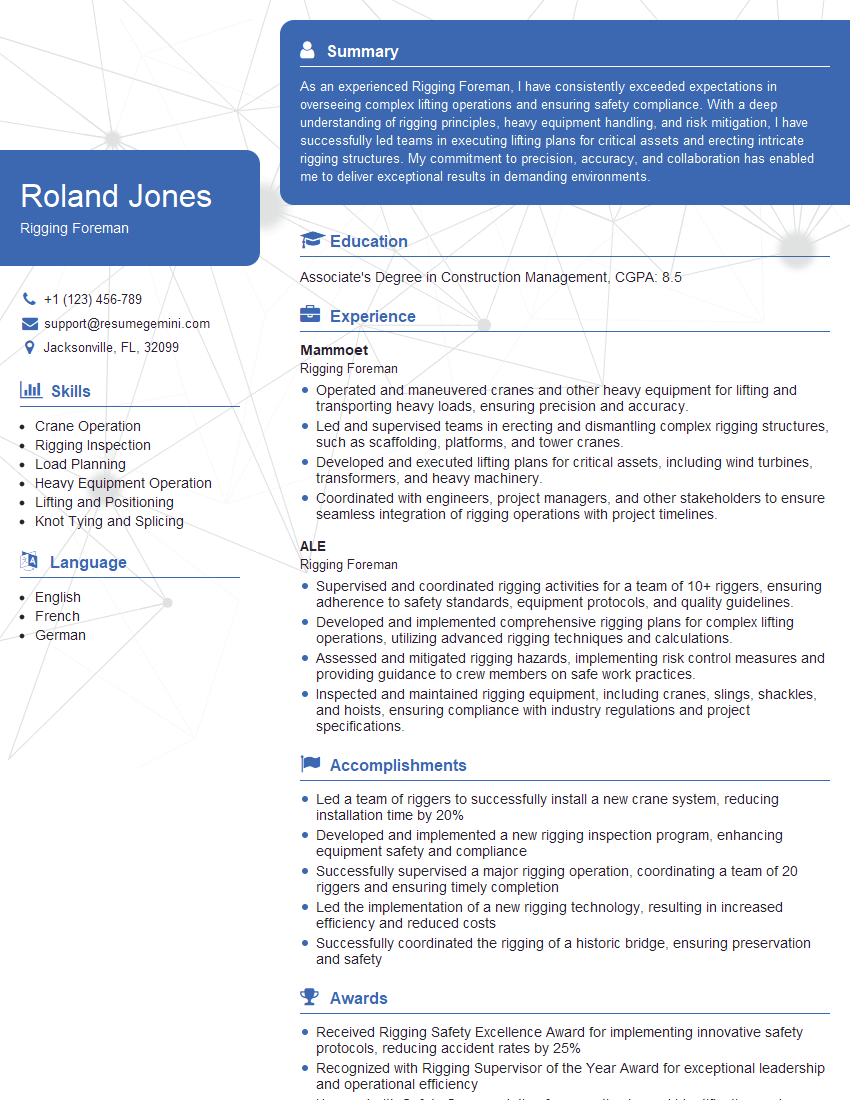
Rigging Foreman Resume Sample

Loadmaster Resume Sample

Signal Person Resume Sample

Derrickman Resume Sample

Mobile Crane Operator Resume Sample

Overhead Crane Operator Resume Sample

Port Crane Operator Resume Sample

Tower Crane Operator Resume Sample
Explore more articles
Users Rating of Our Blogs
Share Your Experience
We value your feedback! Please rate our content and share your thoughts (optional).
What Readers Say About Our Blog
Really detailed insights and content, thank you for writing this detailed article.
IT gave me an insight and words to use and be able to think of examples