Every successful interview starts with knowing what to expect. In this blog, we’ll take you through the top NFPA 70E Standard for Electrical Safety in the Workplace interview questions, breaking them down with expert tips to help you deliver impactful answers. Step into your next interview fully prepared and ready to succeed.
Questions Asked in NFPA 70E Standard for Electrical Safety in the Workplace Interview
Q 1. What are the key differences between NFPA 70 and NFPA 70E?
NFPA 70, the National Electrical Code (NEC), focuses on the installation of electrical systems to ensure safety. Think of it as the blueprint for safe electrical construction. It outlines requirements for wiring methods, equipment installation, and grounding, preventing hazards during the initial build and ensuring ongoing safe operation. NFPA 70E, on the other hand, focuses on the safety of personnel working on or near energized electrical equipment. It’s the worker safety manual built on top of the NEC’s foundation. 70E addresses the hazards associated with arc flash, shock, and other electrical dangers encountered during maintenance, repair, and operation of electrical systems. Essentially, 70E complements 70 by providing specific safety procedures and requirements for those who interact with already installed electrical systems.
In short: NFPA 70 is about safe installation; NFPA 70E is about safe work practices around existing electrical installations.
Q 2. Explain the concept of Arc Flash and its hazards.
Arc flash is a dangerous electrical hazard that occurs when a short circuit or other fault in an electrical system causes a sudden, high-energy release. Imagine a massive spark, far more powerful than a simple static shock. This release of energy produces intense heat, light, and pressure, capable of causing severe burns, hearing loss, and even fatalities. The hazards of arc flash extend beyond the immediate blast. The intense heat can ignite nearby flammable materials, causing a fire, while the pressure wave can throw objects, potentially injuring workers nearby.
For example, a worker might be performing maintenance on a switchgear when an unexpected arc flash occurs. The intense heat and pressure can cause severe burns to exposed skin and eyes, and the resulting blast could throw tools across the room, creating further hazards. The potential consequences underscore the critical importance of adhering to safety protocols and using appropriate personal protective equipment (PPE).
Q 3. How do you determine the incident energy levels for an electrical equipment?
Determining incident energy levels requires a professional arc flash risk assessment, typically performed by a qualified electrical engineer. The assessment uses specialized software and considers various factors, including:
- System voltage: Higher voltage systems typically result in higher incident energy.
- Fault current: The amount of current available during a fault directly impacts incident energy.
- Working distance: Closer proximity to the equipment increases exposure to higher incident energy.
- Equipment type: Different equipment types have varying arc flash characteristics.
- System impedance: The resistance in the electrical circuit affects the fault current and incident energy.
Software calculates the available fault current and applies it to established formulas that consider the working distance. The resulting calculation provides the incident energy in calories per square centimeter (cal/cm²).
Example: A calculation might reveal an incident energy level of 4 cal/cm² at a specific working distance from a piece of equipment. This information is crucial for selecting the appropriate PPE.
Q 4. Describe the process of performing an Arc Flash Risk Assessment.
An Arc Flash Risk Assessment is a systematic process to identify and mitigate the risks associated with arc flash hazards. It typically involves the following steps:
- Data gathering: Collect information about the electrical system, including schematics, one-line diagrams, and equipment details.
- System analysis: Determine available fault current, voltage levels, and other relevant parameters.
- Incident energy calculation: Use specialized software to calculate incident energy levels at various working distances.
- Hazard identification: Identify specific locations and tasks where arc flash hazards exist.
- Risk assessment: Evaluate the likelihood and severity of arc flash incidents.
- Mitigation strategies: Develop strategies to reduce or eliminate arc flash hazards, such as engineering controls (e.g., replacing equipment), administrative controls (e.g., work procedures), and PPE.
- Documentation: Prepare a detailed report outlining the assessment findings, mitigation strategies, and safety recommendations.
The assessment results are critical in implementing appropriate safety measures and selecting suitable PPE to protect workers. It’s a crucial step in creating a safer working environment.
Q 5. What are the different levels of PPE required based on Arc Flash calculations?
The required PPE is directly determined by the calculated incident energy level. NFPA 70E provides tables correlating incident energy levels to the required arc flash PPE categories. These categories specify the minimum arc rating (ARC rating) of the clothing and face protection. Higher incident energy levels require higher arc ratings.
Example: An incident energy level of 4 cal/cm² might require arc flash PPE with an arc rating of at least 4 cal/cm², while a higher incident energy level of 12 cal/cm² could require PPE with an arc rating of 12 cal/cm² or higher. This includes flame-resistant (FR) clothing, arc flash suits, arc flash face shields, and other protective equipment.
Ignoring the arc flash PPE requirements based on incident energy level exposes workers to potential serious injury or death.
Q 6. What are the requirements for lockout/tagout procedures according to NFPA 70E?
NFPA 70E emphasizes the critical importance of lockout/tagout (LOTO) procedures to de-energize electrical equipment before any work is performed. This ensures that the equipment cannot be accidentally re-energized while workers are working on it. The standard outlines detailed requirements for the LOTO process, including:
- Energy isolation: Completely de-energizing the equipment.
- Lockout devices: Using padlocks or other lockout devices to prevent accidental re-energization.
- Tagout devices: Using warning tags to further indicate that the equipment is locked out and should not be operated.
- Verification of de-energization: Using appropriate testing equipment to confirm that the equipment is de-energized before starting work.
- Authorized personnel: Only authorized and trained personnel should perform LOTO procedures.
- Training: Employees must be properly trained on safe LOTO procedures.
Failure to follow proper LOTO procedures can result in serious injuries or fatalities. For instance, if a worker is working on a seemingly de-energized circuit and someone unknowingly re-energizes it, the consequences could be fatal.
Q 7. Explain the importance of establishing a qualified electrical worker program.
Establishing a qualified electrical worker program is fundamental to electrical safety. This program identifies workers who have the necessary training, skills, and experience to perform work on or near energized electrical equipment safely. It ensures that workers understand the hazards, can recognize potentially dangerous situations, and know how to apply appropriate safety procedures and use PPE correctly. The program also includes ongoing training to ensure workers remain up-to-date on the latest safety standards and best practices.
The benefits of a qualified electrical worker program include reducing the risk of electrical accidents, improving worker competency, complying with NFPA 70E, and fostering a culture of safety within the workplace. It’s not just a legal requirement; it’s an investment in employee well-being and operational safety. Without such a program, the risks to employees are significantly increased, and the chance of costly accidents and legal repercussions grows substantially.
Q 8. Describe the requirements for training and qualifications of electrical workers under NFPA 70E.
NFPA 70E mandates a comprehensive electrical safety training program tailored to the specific tasks and hazards each worker faces. This isn’t a one-size-fits-all approach. The training must cover hazard recognition, safe work practices, and the proper use of personal protective equipment (PPE). Qualification levels are often tiered, with increasingly complex tasks requiring more extensive training and demonstrated competency. For example, an electrician working on energized equipment requires far more rigorous training than someone simply changing a lightbulb. The standard emphasizes hands-on training, demonstrating proficiency in lockout/tagout procedures, arc flash PPE selection, and other critical safety measures. Workers must also receive refresher training periodically to maintain competency and stay abreast of any changes in procedures or technologies.
Think of it like this: a pilot needs different training than a flight attendant. Both work on the same plane, but their roles and associated hazards are different, demanding tailored training.
- Competency-based training: Training focuses on demonstrating practical skills, not just theoretical knowledge.
- Hazard-specific training: Training is adjusted to the specific electrical hazards present in the worker’s job.
- Regular refresher training: Keeps workers up-to-date on changes in regulations and best practices.
Q 9. What are the responsibilities of an electrical safety professional?
An electrical safety professional (ESP) plays a crucial role in ensuring workplace compliance with NFPA 70E. Their responsibilities are broad and encompass various aspects of electrical safety management. Key duties include conducting risk assessments, developing and implementing electrical safety programs, performing arc flash hazard calculations, and providing training to employees. They are also responsible for the selection, inspection, and maintenance of appropriate PPE, and they are often involved in incident investigations to determine root causes and implement corrective actions. A strong ESP is proactive, anticipating potential hazards and implementing preventive measures rather than simply reacting to incidents. Think of them as the chief safety officer for all things electrical in a workplace.
- Risk Assessment & Hazard Analysis: Identifying and evaluating potential electrical hazards.
- Program Development & Implementation: Creating and maintaining comprehensive electrical safety programs.
- Training & Education: Providing and overseeing electrical safety training for workers.
- PPE Management: Selecting, inspecting, and maintaining appropriate personal protective equipment.
- Incident Investigation: Investigating electrical accidents to determine causes and implement preventative measures.
Q 10. How do you calculate the arc flash boundary?
Calculating the arc flash boundary requires a sophisticated process that isn’t easily done manually. It’s typically performed using specialized software and involves determining the incident energy at various distances from the equipment. The process starts with a thorough assessment of the electrical system, including voltage levels, fault current, and equipment characteristics. Software then uses this information, along with established formulas and industry standards, to model the arc flash event and calculate the incident energy (in cal/cm²) at various distances. The arc flash boundary is the distance at which the incident energy exceeds a threshold level (typically 1.2 cal/cm²), requiring the use of appropriate PPE. This is not a simple calculation, and mistakes can have serious consequences. It’s crucial to use validated software and experienced professionals for accurate results.
Imagine throwing a pebble into a pond – the energy dissipates with distance. Similarly, the energy from an arc flash decreases with distance, and the boundary defines the safe distance.
- System Information Gathering: Gathering details like voltage, fault current, and equipment type.
- Software Analysis: Using specialized software to calculate incident energy.
- Boundary Determination: Identifying the distance where incident energy exceeds the threshold.
- PPE Selection: Determining appropriate PPE based on the calculated incident energy.
Q 11. What are the different methods for reducing arc flash hazards?
Reducing arc flash hazards is paramount to electrical safety. Several effective methods exist, and they are often implemented in combination for maximum effectiveness. These include engineering controls, administrative controls, and PPE.
- Engineering Controls: These are the most effective, reducing the hazard at the source. Examples include using arc flash reduction devices, like arc flash relays, or implementing equipment modifications to reduce fault current. Imagine installing a safety valve on a pressure vessel to mitigate explosions.
- Administrative Controls: These address the hazard through work practices and procedures. This includes implementing lockout/tagout procedures (LOTO), using appropriate work permits, and establishing clear safety procedures. This is like having a set of rules and procedures for operating equipment safely.
- Personal Protective Equipment (PPE): This is the last line of defense. PPE includes arc flash suits, face shields, and gloves rated for the specific hazard level. It’s like wearing a seatbelt in a car – it helps mitigate the impact of an accident but doesn’t prevent the accident itself.
A layered approach is key. Combining engineering and administrative controls minimizes the need for reliance on PPE alone, as PPE is the least desirable method.
Q 12. How do you ensure compliance with NFPA 70E in the workplace?
Ensuring compliance with NFPA 70E requires a multifaceted approach. It starts with a thorough understanding of the standard’s requirements, developing and implementing a comprehensive electrical safety program, providing adequate training, and performing regular audits. The program must cover all aspects of electrical safety, from hazard identification and risk assessment to the selection and use of PPE. Regular inspections of electrical equipment and adherence to lockout/tagout procedures are essential. Furthermore, the program should include a mechanism for investigating and analyzing incidents, learning from mistakes, and implementing corrective actions to prevent future occurrences.
Think of compliance like maintaining a clean and organized house: regular cleaning, inspections, and repairs are essential to avoid larger issues.
- Comprehensive Electrical Safety Program: A written program outlining all safety procedures and practices.
- Regular Audits and Inspections: Verifying adherence to the program and identifying potential hazards.
- Employee Training and Competency Evaluation: Ensuring workers are properly trained and qualified.
- Incident Investigation and Corrective Actions: Analyzing incidents to identify root causes and prevent recurrence.
- Documentation: Maintaining thorough records of all safety activities.
Q 13. What are the employer’s responsibilities regarding electrical safety?
Employers have a legal and ethical responsibility to provide a safe working environment for their employees, and this extends to electrical safety. This responsibility starts with identifying and assessing electrical hazards in the workplace, implementing appropriate control measures, and providing training to employees. Employers must ensure that all electrical work is performed in accordance with NFPA 70E and other applicable standards, provide necessary PPE, and maintain accurate records of safety training and equipment inspections. Failure to fulfill these responsibilities can lead to serious consequences, including injuries, fatalities, and legal repercussions.
The employer is ultimately accountable for creating a safe workplace. They can’t delegate this responsibility away.
- Hazard Identification and Risk Assessment: Identifying and evaluating all electrical hazards in the workplace.
- Implementation of Control Measures: Implementing engineering, administrative, and PPE controls to mitigate hazards.
- Employee Training: Providing comprehensive electrical safety training to all employees.
- PPE Provision: Providing and maintaining appropriate PPE.
- Record Keeping: Maintaining detailed records of safety training, inspections, and incidents.
Q 14. Explain the role of energy control procedures in preventing electrical accidents.
Energy control procedures, primarily lockout/tagout (LOTO), are fundamental in preventing electrical accidents. LOTO is a process designed to isolate electrical equipment from its energy sources, preventing accidental energization during maintenance or repairs. This involves de-energizing the equipment, applying lockout devices to prevent accidental re-energization, and tagging the equipment to indicate that it’s locked out. The procedure ensures that no energy can flow through the circuit during work, protecting workers from electrical shock, arc flash, and other hazards. It’s a crucial step in many electrical maintenance processes and is critical for preventing injuries and fatalities.
Imagine a car engine: LOTO is like disconnecting the battery before working on the engine – ensuring no unexpected starting.
- Lockout: Physically locking out the energy source to prevent re-energization.
- Tagout: Attaching a tag to clearly indicate the equipment is locked out and work is in progress.
- Verification: Verifying that the equipment is truly de-energized before beginning work.
- Release: Following a controlled process to release the lockout/tagout devices once work is complete.
Q 15. What are the common causes of electrical accidents?
Electrical accidents stem from a multitude of factors, often involving a combination of unsafe conditions and human error. Common causes include:
- Lack of proper lockout/tagout procedures: Failure to de-energize equipment before working on it leads to unexpected energization and shocks.
- Improper grounding and bonding: Inadequate grounding can create dangerous voltage paths, resulting in shocks or arc flashes.
- Damaged or deteriorated equipment: Worn insulation, frayed cords, and faulty components increase the risk of electric shock, arc flash, and fire.
- Ignoring safety precautions: Not using appropriate personal protective equipment (PPE), disregarding warning signs, or taking shortcuts can lead to severe consequences.
- Improper work practices: Working on energized equipment without proper training and authorization significantly increases the risk of electrical accidents.
- Environmental factors: Wet or damp conditions can increase the conductivity of electricity, making workers more vulnerable to shock.
For example, a worker failing to properly lockout a circuit breaker before maintenance could result in a fatal shock. Similarly, working with damaged tools with exposed wires significantly raises the risk of electrocution.
Career Expert Tips:
- Ace those interviews! Prepare effectively by reviewing the Top 50 Most Common Interview Questions on ResumeGemini.
- Navigate your job search with confidence! Explore a wide range of Career Tips on ResumeGemini. Learn about common challenges and recommendations to overcome them.
- Craft the perfect resume! Master the Art of Resume Writing with ResumeGemini’s guide. Showcase your unique qualifications and achievements effectively.
- Don’t miss out on holiday savings! Build your dream resume with ResumeGemini’s ATS optimized templates.
Q 16. Describe the process of creating and implementing an electrical safety program.
Developing and implementing a robust electrical safety program requires a systematic approach. It involves:
- Risk Assessment: Identifying all electrical hazards present in the workplace. This includes evaluating the potential for arc flash, shock, and other electrical-related injuries. This often involves using arc flash analysis software to determine incident energy levels.
- Developing Safe Work Practices: Establishing clear procedures for all electrical work, including lockout/tagout, permit-required work, and the use of PPE. These procedures should align with NFPA 70E requirements.
- Training and Education: Providing comprehensive training to all employees on electrical safety, including hazard recognition, safe work practices, and emergency response. The training should be tailored to different roles and responsibilities.
- PPE Selection and Use: Selecting and providing appropriate PPE based on the risk assessment, including insulated tools, arc flash suits, and safety glasses. Employees should be trained on the proper use and maintenance of their PPE.
- Equipment Maintenance and Inspection: Establishing a regular schedule for inspecting and maintaining electrical equipment to prevent malfunctions and hazards. This includes testing insulation resistance and performing visual inspections for damage.
- Emergency Response Plan: Developing a plan for handling electrical emergencies, including first aid procedures, emergency contact information, and evacuation procedures. This plan should include the location and availability of appropriate safety equipment.
- Program Review and Updates: Regularly reviewing and updating the program to address changes in technology, work processes, and regulatory requirements. The program’s effectiveness should be regularly assessed.
Imagine a manufacturing plant that implements a comprehensive program. Regular inspections ensure equipment remains in optimal condition, minimizing the risk of equipment failure. Thorough training empowers workers to identify hazards and work safely, leading to a safer and more productive work environment.
Q 17. How do you select appropriate PPE for electrical work?
Selecting appropriate PPE for electrical work is crucial for worker safety and depends on the specific hazards involved. The selection process should be based on a thorough risk assessment that identifies the potential for shock, arc flash, and other electrical hazards. NFPA 70E provides guidance on selecting appropriate PPE based on the incident energy levels.
- Arc Flash Suits: These suits provide protection against the thermal energy released during an arc flash. The appropriate class of suit will depend on the calculated incident energy levels.
- Insulated Tools: Tools with insulated handles are essential to prevent shocks when working near energized conductors. The voltage rating of the tools must be higher than the voltage being worked on.
- Insulated Gloves: These gloves protect hands from electric shock. They must be appropriately rated and regularly inspected for damage.
- Safety Glasses/Face Shields: Protect eyes from arc flash and flying debris.
- Hearing Protection: Arc flashes can produce intense noise levels requiring hearing protection.
For example, a worker performing high-voltage work would require an arc flash suit rated for the appropriate incident energy, while a worker performing low-voltage work might only need insulated tools and gloves. Regular inspection and maintenance of PPE are also vital to ensure effectiveness.
Q 18. What is the importance of regular inspections and maintenance of electrical equipment?
Regular inspections and maintenance of electrical equipment are paramount in preventing electrical accidents. Deterioration of equipment is a major contributor to electrical hazards. A proactive maintenance program helps identify and correct potential hazards before they can lead to accidents or equipment failure.
- Preventative Maintenance: Regular inspections identify potential problems early, preventing catastrophic failures. This includes checking for loose connections, damaged insulation, and signs of overheating.
- Reduced Downtime: Addressing small issues during maintenance prevents major breakdowns, minimizing costly production downtime.
- Improved Safety: Regular maintenance reduces the risk of electrical shocks, arc flashes, and fires, protecting workers and property.
- Compliance: Regular maintenance and inspections demonstrate compliance with relevant safety standards and regulations, including NFPA 70E.
Imagine a scenario where a worn electrical cord sparks and causes a fire due to neglected maintenance. Regular inspection would have likely identified the issue, preventing the accident and its potential consequences. A robust maintenance program is an essential investment in safety and operational efficiency.
Q 19. Explain the concept of shock protection and how it relates to NFPA 70E.
Shock protection involves minimizing the risk of electric shock by implementing measures to prevent contact with energized conductors. NFPA 70E addresses this by establishing requirements for safe work practices, PPE, and equipment design to reduce the likelihood and severity of electric shock. Key elements include:
- Insulation: Using insulated conductors and equipment to prevent accidental contact with live parts.
- Grounding and Bonding: Establishing a low-impedance path to ground to prevent voltage buildup and reduce the risk of shock.
- Lockout/Tagout Procedures: De-energizing equipment before working on it and ensuring it cannot be accidentally re-energized.
- Safe Working Distances: Maintaining a safe distance from energized conductors to minimize the risk of accidental contact.
- Personal Protective Equipment (PPE): Using insulated tools and gloves to protect against electric shock.
NFPA 70E provides detailed guidance on these aspects, emphasizing a layered approach to safety. For example, working on a low-voltage circuit might only require insulated tools, while high-voltage work necessitates more extensive precautions, including arc flash suits and strict lockout/tagout procedures.
Q 20. How do you handle an electrical emergency?
Handling an electrical emergency requires immediate and appropriate action. The first step is ensuring personal safety. Never approach a victim of electrical shock before de-energizing the source, if possible. Here’s a step-by-step approach:
- Ensure Safety: De-energize the source of the electricity immediately if it’s safe to do so. If not, use a non-conductive material (like a dry wooden stick or a rope) to move the victim away from the electrical source.
- Call for Help: Immediately call emergency medical services (EMS) and your company’s emergency response team.
- Assess the Victim: Once the victim is safe, check for responsiveness and breathing. Begin CPR if necessary.
- First Aid: Provide appropriate first aid, focusing on maintaining the airway, breathing, and circulation (ABCs). Treat for burns and other injuries.
- Post-Incident Investigation: After the emergency, conduct a thorough investigation to determine the cause of the accident and implement corrective actions to prevent similar incidents in the future.
Remember, rapid response is crucial in electrical emergencies. The faster medical attention is given, the better the chances of survival and minimizing long-term effects.
Q 21. Describe the different types of electrical hazards.
Electrical hazards encompass a wide range of potential dangers, including:
- Electric Shock: The passage of electrical current through the body, which can cause injury or death. The severity depends on the current’s magnitude, duration, and path through the body.
- Arc Flash: A high-temperature, high-pressure explosion of electrical energy that can cause severe burns and other injuries. The energy released can be catastrophic.
- Electric Burns: Burns caused by contact with electrical conductors or by arc flash. These can be internal or external burns.
- Electrocution: Death due to electric shock.
- Fires: Electrical faults can cause fires, especially if the equipment is not properly maintained or if there is flammable material nearby.
- Falls: Electric shock can cause muscle spasms or loss of consciousness, leading to falls from heights.
- Explosion: In certain environments (like those with flammable gases), electrical faults can trigger explosions.
Understanding these hazards is critical in implementing appropriate safety measures. For instance, the presence of flammable materials necessitates additional precautions to prevent fire ignition during electrical work. Similarly, working at heights requires additional fall protection measures alongside electrical safety protocols.
Q 22. What are the requirements for working on energized electrical equipment?
Working on energized electrical equipment is inherently risky and should only be undertaken after a thorough risk assessment and implementation of appropriate safety measures. NFPA 70E dictates that such work must follow a hierarchy of controls, prioritizing engineering controls (like de-energizing the equipment) before relying on administrative controls (like procedures and training) or personal protective equipment (PPE).
- De-energization: This is always the preferred method. Before working on any energized equipment, you must attempt to de-energize it, following established lockout/tagout (LOTO) procedures to prevent accidental re-energization.
- Reduced Voltage: If de-energization is impossible, you may be able to reduce the voltage to a level where the risk is significantly minimized. This requires specialized equipment and expertise.
- Protective Equipment: If de-energization and voltage reduction aren’t feasible, then appropriate PPE, such as insulated tools, gloves, and protective clothing, must be used. The selection of PPE is dictated by the voltage and the potential arc flash hazard.
- Specialized Training: All personnel working on energized electrical equipment must undergo specific training covering the hazards, safe work practices, and use of PPE. This training must be documented.
For example, working on a 480-volt panel requires a rigorous risk assessment that considers the arc flash boundary, appropriate PPE based on the calculated arc flash hazard/incident energy, and adherence to strict LOTO procedures. If de-energization isn’t possible, the work must be done by highly trained personnel equipped with the appropriate PPE, ensuring the worker stays outside the arc flash boundary.
Q 23. Explain the role of incident investigations in improving electrical safety.
Incident investigations are crucial for improving electrical safety. They provide valuable insights into the root causes of electrical accidents, allowing organizations to identify weaknesses in their safety program and implement corrective actions to prevent future occurrences.
A thorough investigation should follow a structured process, typically involving:
- Fact-finding: Gathering information from eyewitnesses, reviewing documentation (e.g., permits, training records), and examining the physical evidence.
- Root cause analysis: Identifying the underlying causes of the incident, going beyond immediate causes to pinpoint systemic issues, like inadequate training or poor work practices.
- Corrective actions: Developing and implementing solutions to prevent similar incidents. This could include revised procedures, improved training, upgraded equipment, or changes to the safety program.
- Documentation: A comprehensive report detailing the findings, root causes, and corrective actions must be documented and shared with relevant personnel.
For instance, if an incident resulted from a failure to follow LOTO procedures, the investigation might reveal inadequate training on LOTO, a lack of enforcement of the procedure, or deficiencies in the LOTO program itself. The corrective action might involve enhanced training, stricter enforcement, or a complete overhaul of the LOTO program.
Q 24. How do you stay updated on changes and revisions to NFPA 70E?
Staying updated on NFPA 70E revisions is vital for maintaining compliance and ensuring worker safety. I utilize several methods to track changes:
- NFPA Subscription: I subscribe directly to NFPA updates, receiving notifications of revisions and new editions. This ensures prompt access to the latest information.
- Professional Organizations: Membership in professional organizations like IEEE and other electrical safety groups provides access to newsletters, conferences, and webinars that discuss changes and interpretations of NFPA 70E.
- Online Resources: I regularly check the NFPA website and reputable electrical safety websites for updates, news, and articles on changes in NFPA 70E.
- Training Courses: Attending regular training courses and workshops on NFPA 70E ensures I’m up-to-date with interpretations and practical applications of the standard.
- Networking: Networking with other electrical safety professionals keeps me informed of emerging trends and real-world applications of the standard.
By combining these methods, I ensure that my knowledge of NFPA 70E remains current and that my safety practices align with the latest best practices.
Q 25. What are the limitations of using personal protective equipment (PPE)?
While PPE is essential for electrical safety, it’s crucial to understand its limitations. PPE does not eliminate hazards; it only mitigates the risk. It’s the last line of defense, after engineering and administrative controls have been implemented.
- Failure: PPE can fail due to damage, misuse, or aging. Regular inspection and maintenance are crucial. A damaged glove, for instance, offers no protection.
- Limited Protection: PPE provides protection only against specific hazards and within certain parameters. It might not protect against all potential hazards in a given situation.
- Comfort and Fit: Improperly fitting or uncomfortable PPE can reduce effectiveness and lead to worker discomfort, potentially resulting in unsafe practices to increase comfort.
- Dependence: Over-reliance on PPE without addressing underlying hazards can create a false sense of security, leading to risky behaviors.
- Arc Flash Protection: Even properly selected arc flash PPE has limitations in terms of the incident energy it can withstand. The PPE must be properly rated for the specific hazard.
Therefore, a comprehensive electrical safety program relies on a layered approach, minimizing hazards first and using PPE only as a final layer of protection.
Q 26. Explain the concept of electrical safety program audits and their importance.
Electrical safety program audits are systematic evaluations of an organization’s electrical safety program to ensure its effectiveness in protecting workers. They are vital for identifying gaps, deficiencies, and areas needing improvement.
An audit typically involves:
- Review of Documentation: Examining relevant documents such as safety policies, procedures, training records, incident reports, and permits.
- Site Inspections: Physically inspecting workplaces to assess compliance with safety standards and procedures.
- Interviews: Conducting interviews with workers at all levels to gather their perspectives on safety practices and identify any concerns.
- Compliance Assessment: Evaluating the program’s compliance with applicable regulations, such as NFPA 70E.
- Gap Analysis: Identifying discrepancies between the documented program and actual practices.
The importance of audits lies in proactively identifying potential hazards and weaknesses before they lead to accidents. By regularly auditing the program, organizations can continuously improve their safety performance and demonstrate their commitment to worker safety.
Q 27. How do you communicate electrical safety procedures to non-electrical workers?
Communicating electrical safety procedures to non-electrical workers is crucial, as they might encounter electrical hazards in their work areas. It requires clear, concise, and accessible communication strategies:
- Simple Language: Avoid technical jargon and use plain language understandable to everyone.
- Visual Aids: Utilize diagrams, posters, and videos to illustrate safety procedures and hazards.
- Targeted Training: Deliver training tailored to the specific tasks and potential hazards encountered by each group of non-electrical workers.
- Hands-on Demonstrations: Where appropriate, use hands-on demonstrations to illustrate proper safety practices.
- Interactive Sessions: Engage non-electrical workers in interactive sessions, encouraging questions and feedback to clarify understanding.
- Regular Refreshers: Provide regular safety refreshers to reinforce key concepts and update workers on any changes.
For example, for maintenance workers who might encounter exposed electrical equipment, training should focus on recognizing hazardous situations, understanding the importance of staying clear of energized equipment, and reporting any concerns immediately.
Q 28. Describe a situation where you had to deal with a conflict between productivity and safety during electrical work.
In a previous role, we faced a conflict between productivity and safety during a large-scale plant upgrade. The schedule was extremely tight, placing significant pressure to complete the work quickly. Some members of the team advocated for shortcuts to meet deadlines, potentially compromising safety.
My approach involved:
- Re-emphasizing the Safety Program: I held a meeting to reiterate the importance of adhering to NFPA 70E and our company’s safety policies. I highlighted the potential consequences of shortcuts, including severe injuries, fatalities, and costly delays.
- Risk Assessment and Mitigation: We conducted a thorough risk assessment, identifying potential hazards and implementing appropriate mitigation measures. This included re-evaluating the schedule to incorporate sufficient time for safe work practices.
- Collaboration and Communication: I actively engaged with the project manager, supervisors, and the workers to foster open communication and collaboration. We discussed the potential trade-offs between productivity and safety, seeking solutions that balanced both.
- Transparent Reporting: Any safety concerns were immediately reported to management, ensuring timely intervention and resolution. This created an environment where reporting safety concerns was encouraged.
While the initial pressure to meet the deadline was significant, prioritizing safety ultimately resulted in a safer and more efficient project, averting potential accidents and subsequent delays.
Key Topics to Learn for NFPA 70E Standard for Electrical Safety in the Workplace Interview
- Hazard Risk Assessment: Understanding the process of identifying and evaluating electrical hazards, including arc flash and shock risks. Learn how to apply different risk assessment methodologies.
- Arc Flash Hazard Analysis: Mastering the calculations and analysis involved in determining arc flash boundary and incident energy. Practice applying this knowledge to real-world scenarios and equipment.
- Personal Protective Equipment (PPE): Gain a thorough understanding of the selection, use, and maintenance of appropriate PPE, including arc flash suits, face shields, and insulated tools. Be prepared to discuss specific PPE requirements based on different risk levels.
- Electrical Safety Programs: Familiarize yourself with the requirements for developing and implementing comprehensive electrical safety programs, including training, lockout/tagout procedures, and permit-required work.
- Lockout/Tagout (LOTO): Demonstrate a deep understanding of LOTO procedures, including the steps involved, the importance of proper documentation, and the potential consequences of improper implementation.
- Electrical Safety-Related Work Practices: Be prepared to discuss safe work practices for various electrical tasks, including working near energized equipment, de-energizing circuits, and performing maintenance on electrical systems.
- Emergency Response: Understand the procedures for responding to electrical emergencies, including electrical shocks and arc flash incidents. Be familiar with first aid and CPR.
- Compliance and Documentation: Know the importance of maintaining accurate records and documentation related to electrical safety, including training records, inspection reports, and incident investigations.
Next Steps
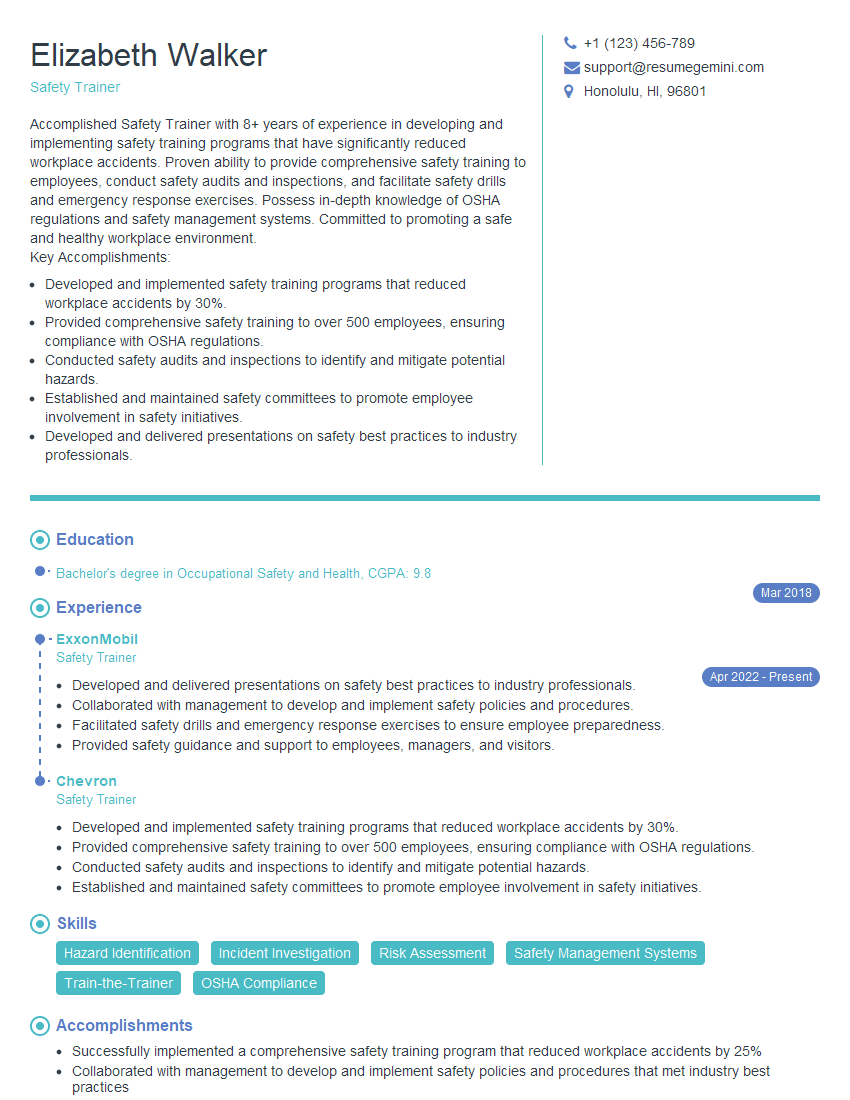
Mastering the NFPA 70E Standard is crucial for career advancement in any electrical safety-related field. It demonstrates your commitment to safety and your ability to protect yourself and others from electrical hazards. To maximize your job prospects, create a resume that highlights your knowledge and experience with this critical standard. An ATS-friendly resume is key to getting your application noticed. ResumeGemini is a trusted resource that can help you craft a professional and impactful resume tailored to your specific skills and experience. Examples of resumes tailored to the NFPA 70E Standard for Electrical Safety in the Workplace are available to help guide your resume development.
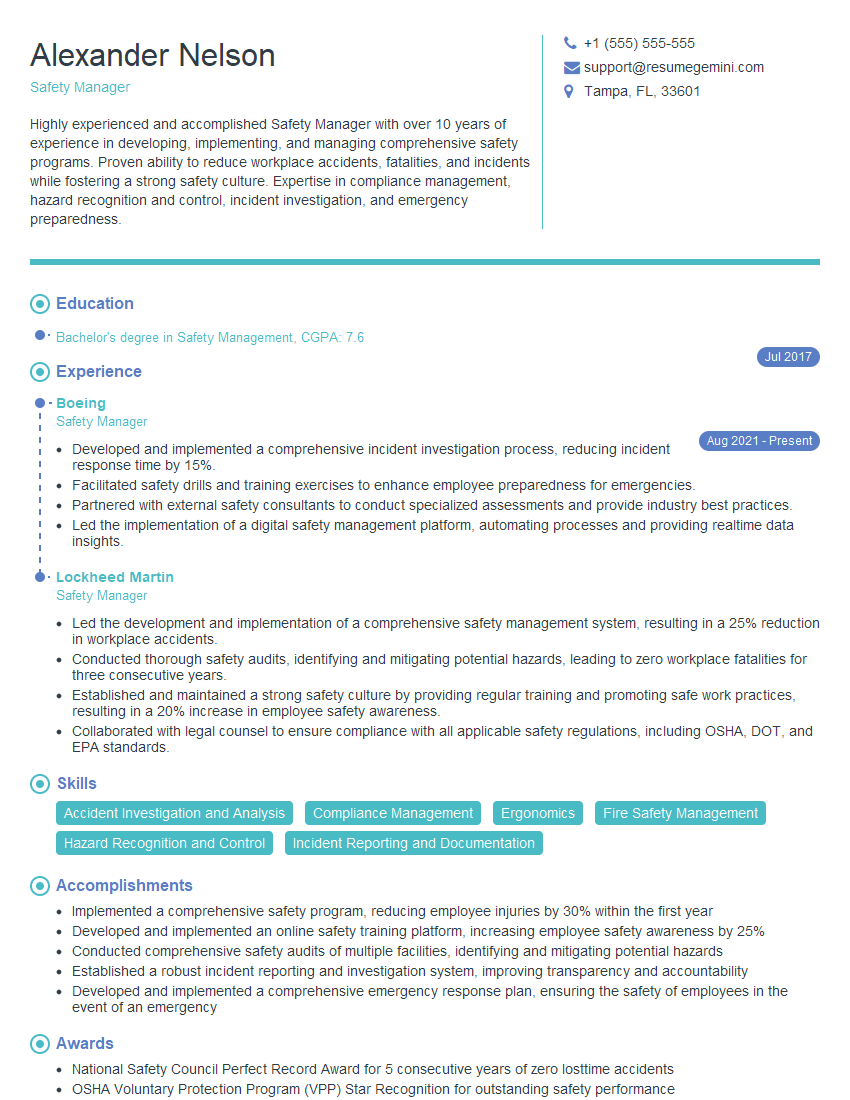
Safety Manager Resume Sample
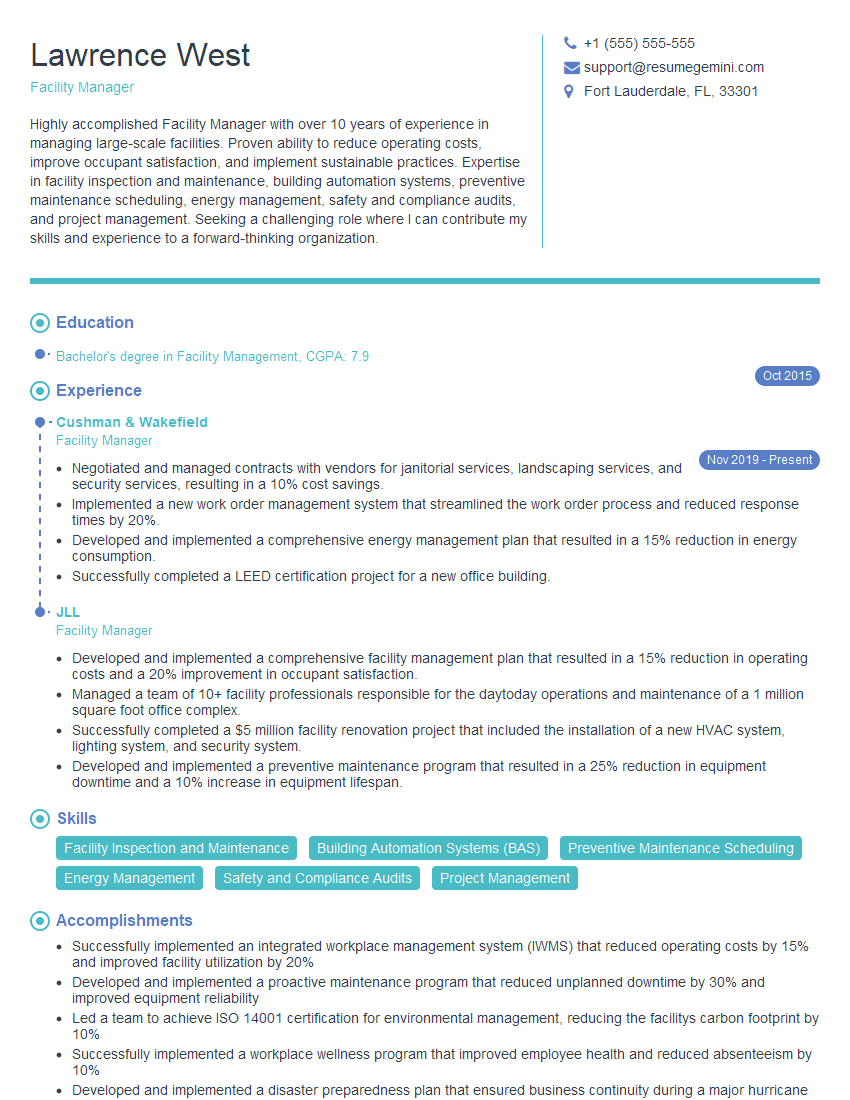
Facility Manager Resume Sample

Plant Manager Resume Sample
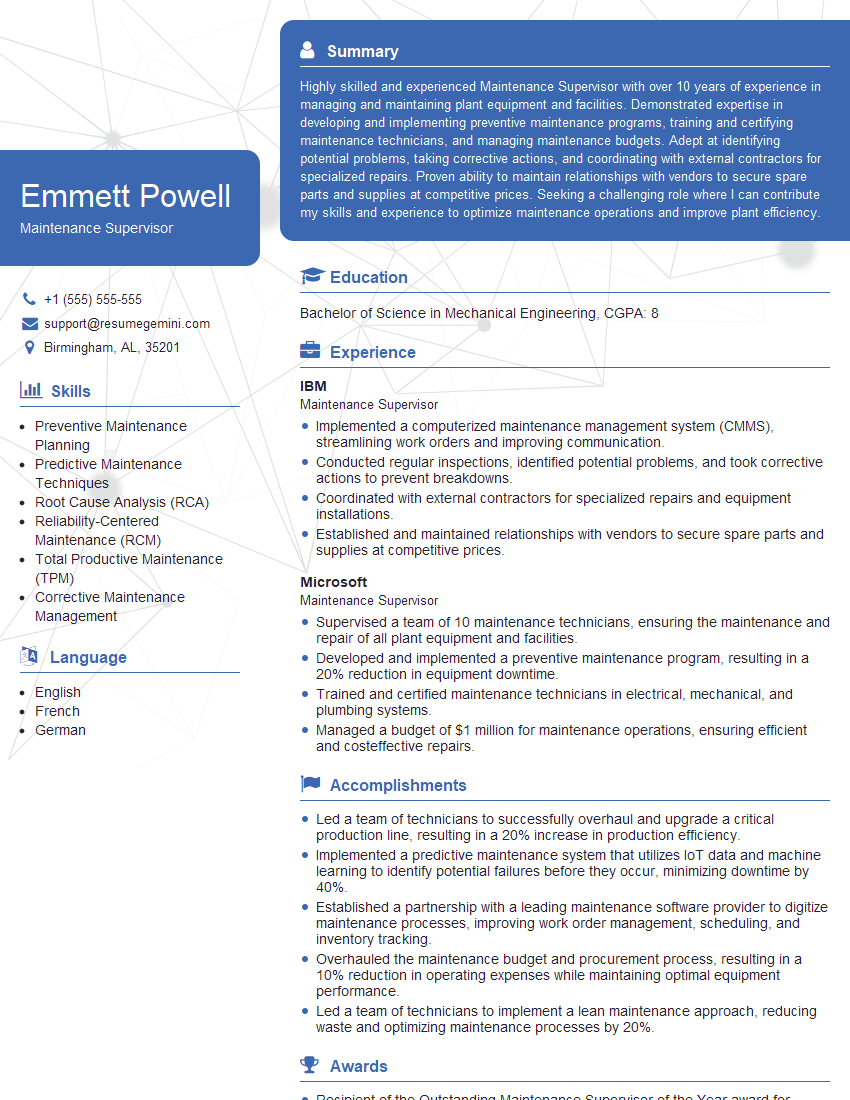
Maintenance Supervisor Resume Sample

Safety Director Resume Sample

Compliance Officer Resume Sample

Electrical Engineer Resume Sample

Power Systems Engineer Resume Sample
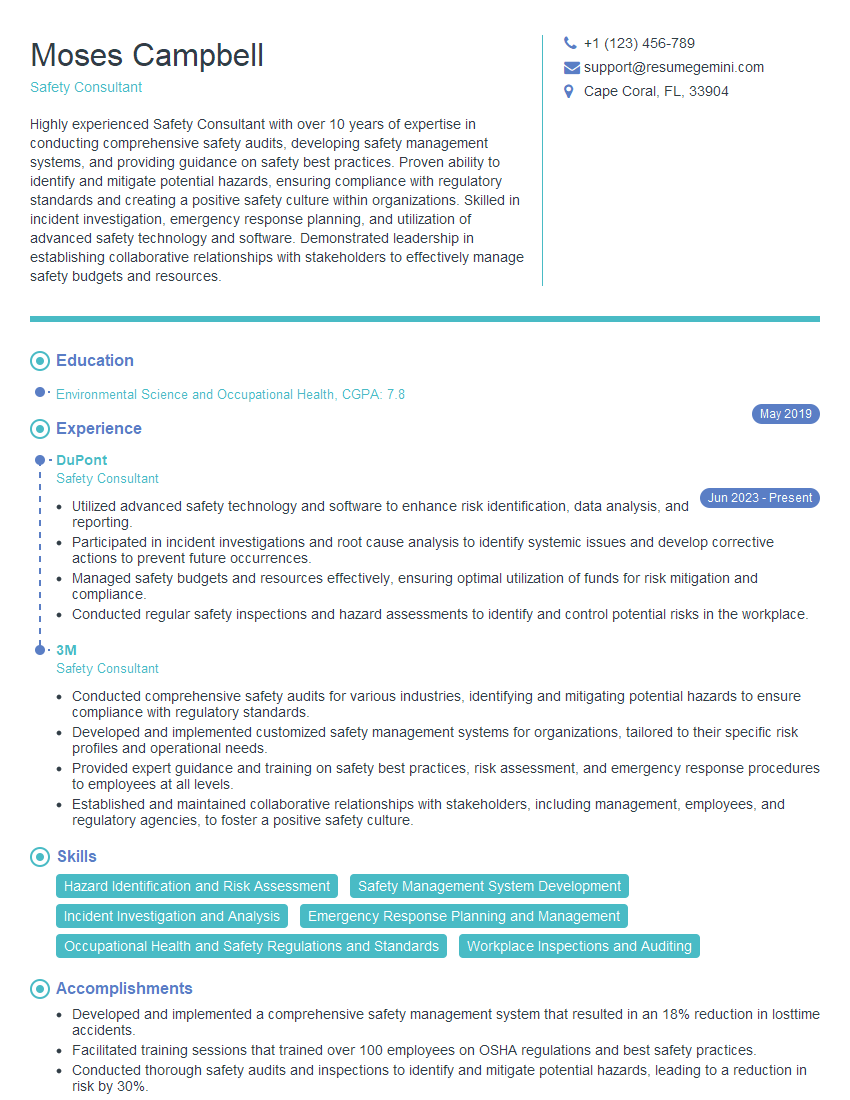
Safety Consultant Resume Sample
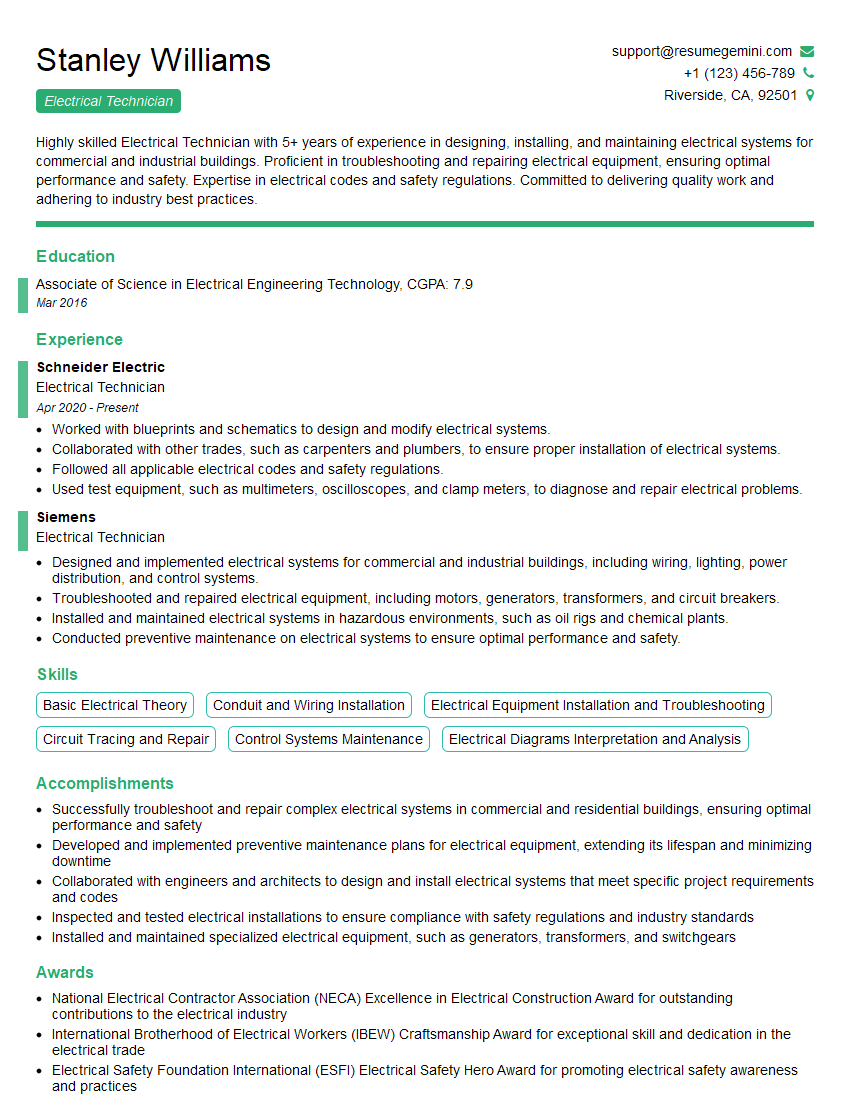
Electrical Technician Resume Sample

Risk Assessor Resume Sample
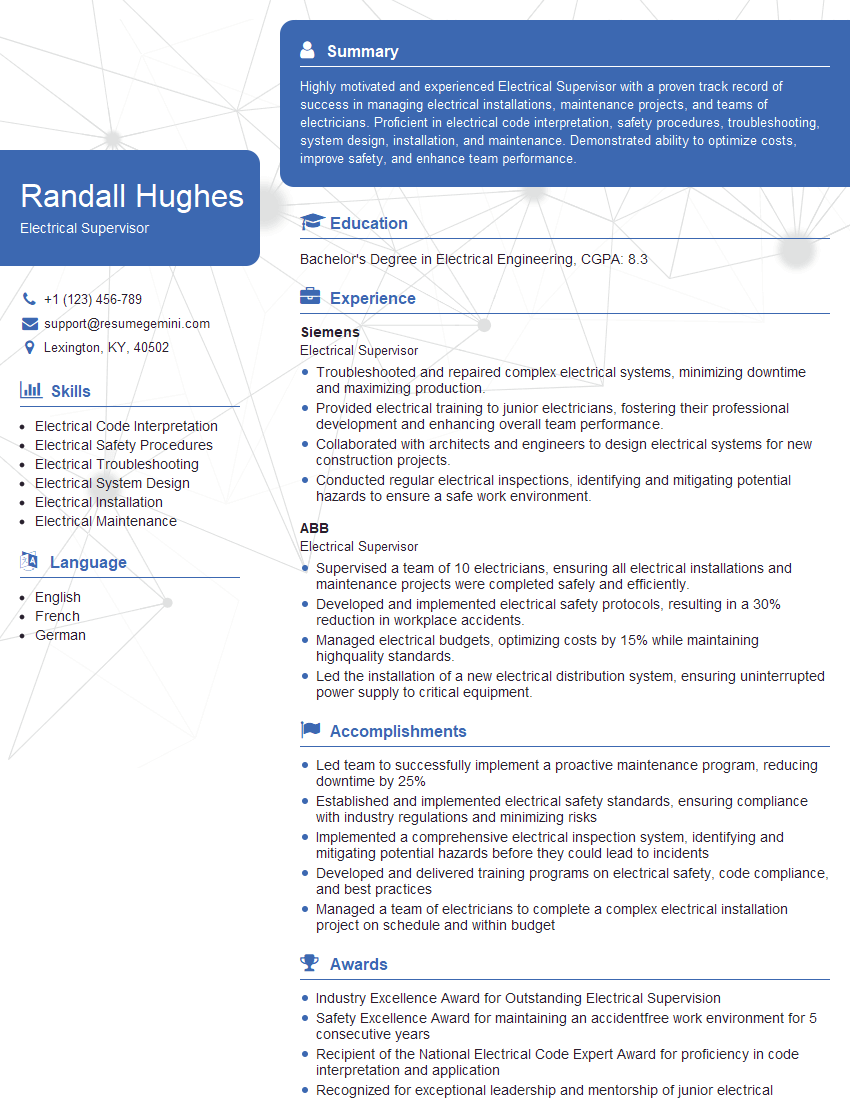
Electrical Supervisor Resume Sample

Construction Electrician Resume Sample
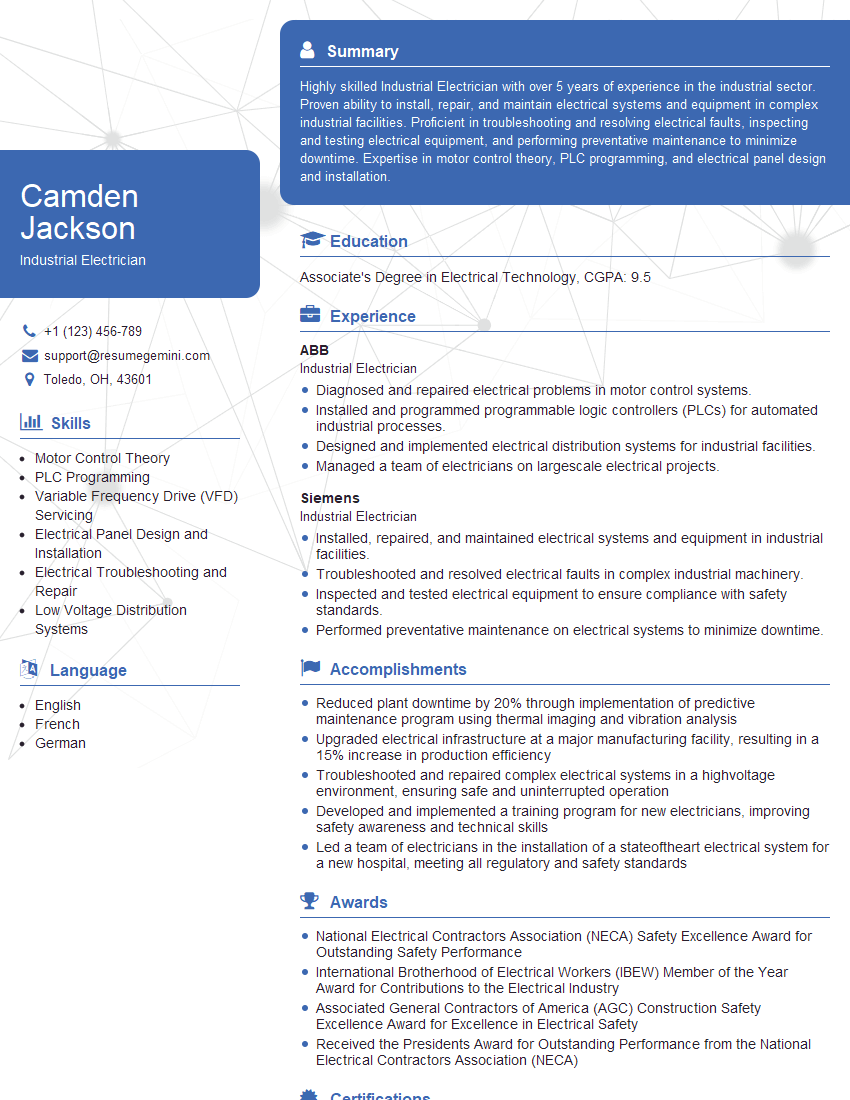
Industrial Electrician Resume Sample
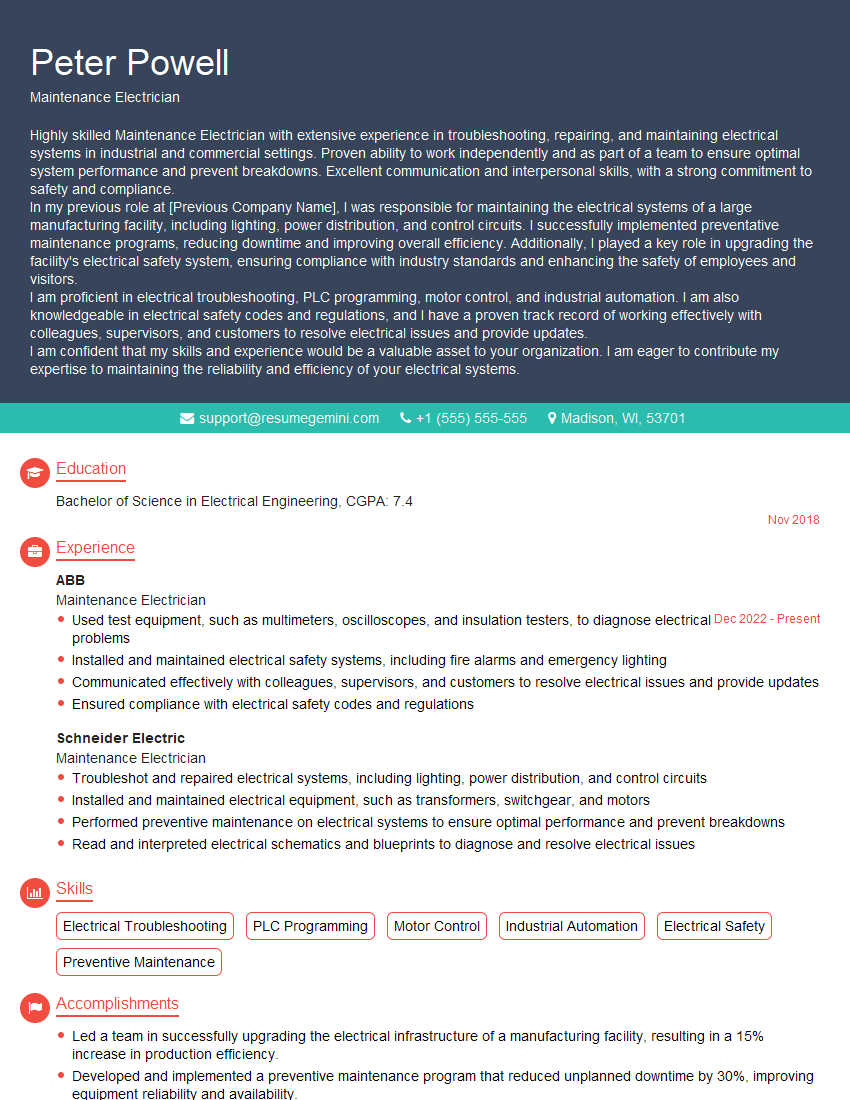
Maintenance Electrician Resume Sample
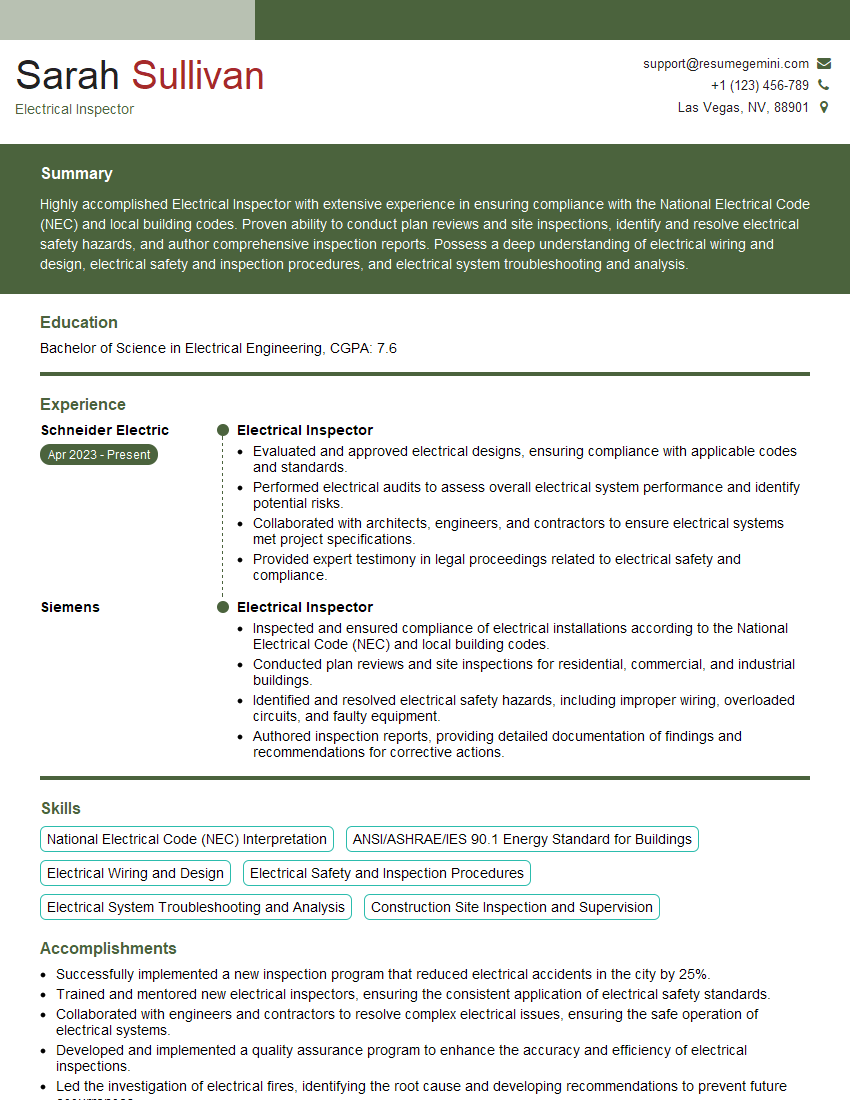
Electrical Inspector Resume Sample
- Safety Manager
- Facility Manager
- Plant Manager
- Maintenance Supervisor
- Safety Director
- Compliance Officer
- Electrical Engineer
- Power Systems Engineer
- Safety Consultant
- Electrical Technician
- Risk Assessor
- Electrical Supervisor
- Construction Electrician
- Industrial Electrician
- Maintenance Electrician
- Electrical Inspector
Explore more articles
Users Rating of Our Blogs
Share Your Experience
We value your feedback! Please rate our content and share your thoughts (optional).
What Readers Say About Our Blog
Really detailed insights and content, thank you for writing this detailed article.
IT gave me an insight and words to use and be able to think of examples