The thought of an interview can be nerve-wracking, but the right preparation can make all the difference. Explore this comprehensive guide to Tank Cleaning and Gas Freeing interview questions and gain the confidence you need to showcase your abilities and secure the role.
Questions Asked in Tank Cleaning and Gas Freeing Interview
Q 1. Explain the different methods used for tank cleaning.
Tank cleaning methods depend on the cargo previously carried and the tank’s condition. The goal is always to remove all residues safely and effectively. Common methods include:
- Manual Cleaning: This involves using hand tools like shovels, brushes, and squeegees to remove residues. It’s labor-intensive but effective for smaller tanks or removing stubborn deposits. Think of it like thoroughly scrubbing a really large, industrial bathtub.
- Mechanical Cleaning: This utilizes specialized equipment like rotating jets, high-pressure water sprays, or even robotic cleaning systems. High-pressure washing is a common example, much like a power washer, but significantly more powerful and controlled. This is ideal for larger tanks and bulk removal of less stubborn residues.
- Chemical Cleaning: Involves using detergents, solvents, or other chemicals to dissolve or emulsify the remaining cargo. The choice of chemical depends entirely on the nature of the residue – a specialized chemical is selected for each type of cargo. This needs careful handling and proper disposal of the cleaning solution afterwards, akin to using specific cleaning products for different kitchen messes.
- Combination Cleaning: Often, a combination of methods is employed for optimal results. For instance, high-pressure washing might be followed by manual cleaning for final residue removal. Imagine cleaning a greasy engine – you’d use degreaser, a pressure washer, and then finally a cloth for the detailed cleaning.
Q 2. Describe the process of gas freeing a tank.
Gas freeing is the process of purging a tank of flammable or toxic gases to make it safe for entry. It’s a crucial safety step and involves:
- Initial Assessment: Determining the type and concentration of gases present using gas detection equipment is the first priority. This is the crucial step in understanding the situation. We can’t just start working until we know exactly what we’re dealing with.
- Ventilation: Natural or forced ventilation using fans helps to dilute the gases present. Imagine opening windows and doors to let fresh air in, but on a much larger scale.
- Inerting (Optional): If the initial ventilation is not sufficient, inerting (introducing an inert gas like nitrogen) can displace the flammable or toxic gases. This makes the atmosphere non-combustible.
- Gas Testing: Continuous monitoring of the atmosphere is crucial to ensure gas levels are within safe limits before and during the entry.
- Documentation: All gas readings and procedures must be meticulously documented to maintain a detailed record of the process.
Q 3. What are the safety precautions involved in tank cleaning and gas freeing?
Safety is paramount in tank cleaning and gas freeing. Precautions include:
- Permit-to-Work System: A crucial requirement for authorizing access to the tank. It ensures all necessary checks and procedures are completed.
- Lockout/Tagout Procedures: Ensuring all power sources (electrical, pneumatic, etc.) are isolated and locked out to prevent accidental activation.
- Personal Protective Equipment (PPE): This includes respirators, protective suits, gloves, and safety footwear suitable for the hazards present.
- Confined Space Entry Procedures: Following strict protocols for entering and exiting confined spaces, including having at least two personnel present.
- Emergency Response Plan: Having a clear plan in place for emergencies, including evacuation procedures and access to emergency equipment.
- Regular Training and Competency Assessment: Ensuring all personnel involved have received adequate training and are regularly assessed for competency.
Q 4. How do you identify and mitigate potential hazards during tank entry?
Identifying and mitigating hazards during tank entry involves a systematic approach:
- Atmospheric Monitoring: Using gas detection equipment to identify the presence and concentration of any hazardous gases (oxygen deficiency, flammables, toxic gases).
- Visual Inspection: Checking the tank’s interior for structural damage, residual liquids or solids, and any other potential hazards.
- Risk Assessment: Evaluating potential hazards and implementing control measures to mitigate risks.
- Entry Procedures: Ensuring strict adherence to confined space entry procedures, including using appropriate PPE and having standby personnel.
- Emergency Communication: Maintaining effective communication with standby personnel for immediate assistance if needed.
- Post-Entry Monitoring: Regular atmospheric monitoring during the tank entry and immediate after the job is complete.
Q 5. What are the different types of gas detection equipment used?
Various gas detection equipment is employed depending on the potential hazards. Common types include:
- Fixed Gas Detectors: These are permanently installed within the tank and provide continuous monitoring of the atmosphere.
- Portable Gas Detectors: Handheld devices used for spot checks and monitoring during tank entry. These often detect multiple gases simultaneously.
- Multi-Gas Detectors: These can detect several different gases, such as oxygen, flammable gases, carbon monoxide, and hydrogen sulfide.
- Oxygen Analyzers: Specifically designed to measure the oxygen concentration in the atmosphere, identifying potential oxygen deficiency hazards.
- Combustible Gas Indicators (CGIs): Detect the presence of flammable gases. These use sensors that react to the presence of combustible vapors.
Q 6. Explain the importance of permit-to-work systems in tank cleaning.
Permit-to-work (PTW) systems are essential for tank cleaning and gas freeing. They provide a formal, documented process for authorizing and controlling high-risk activities. A PTW ensures:
- Risk Assessment: A thorough assessment of the hazards involved before work commences.
- Control Measures: Identification and implementation of control measures to mitigate the identified risks.
- Authorizations: Formal authorization from authorized personnel before starting any work.
- Communication: Clear communication between all personnel involved in the operation.
- Documentation: A detailed record of the entire process, including risk assessments, control measures, and authorization details.
- Audits and Reviews: Regular audits and reviews of PTWs to ensure effectiveness and compliance.
Without a PTW system, it’s like driving a car without a license – dangerous and potentially catastrophic.
Q 7. How do you ensure the complete removal of hazardous materials from a tank?
Ensuring complete removal of hazardous materials requires a multi-faceted approach:
- Thorough Cleaning: Employing appropriate cleaning methods (manual, mechanical, chemical, or a combination) to remove all visible residues.
- Residue Analysis: Sampling and analyzing residues to confirm the effectiveness of the cleaning process and identify any remaining contaminants.
- Rinse and Inspection: After cleaning, the tank is thoroughly rinsed with clean water or other appropriate solvents, followed by a visual inspection to verify the absence of residues.
- Gas-Freeing: This removes any hazardous vapors or gases that may remain after cleaning.
- Documentation: Meticulous documentation of the cleaning and analysis results to prove complete removal.
- Disposal of Waste: Proper disposal of waste materials generated during the cleaning process is also crucial.
Imagine washing dishes – you wouldn’t just wipe them once and be done. You’d scrub, rinse, and then inspect to ensure they are truly clean. Tank cleaning follows a similar, more rigorous approach.
Q 8. What are the legal and regulatory requirements for tank cleaning and gas freeing?
Tank cleaning and gas freeing operations are heavily regulated to ensure worker safety and environmental protection. Regulations vary by location, but generally involve adherence to standards set by organizations like OSHA (Occupational Safety and Health Administration) in the US, or equivalent bodies internationally. These regulations cover many aspects, including:
- Permit-to-Work Systems: A crucial element, requiring a documented process for authorizing entry into confined spaces like tanks. This involves risk assessments, hazard identification, and control measures.
- Atmospheric Monitoring: Regular testing of the tank atmosphere for oxygen levels, flammable gases, and toxic substances is mandated before, during, and after cleaning.
- Personal Protective Equipment (PPE): Regulations specify the necessary PPE for different tasks, based on the identified hazards. This includes respiratory protection, protective clothing, and safety harnesses.
- Waste Management: Proper disposal or treatment of waste generated during cleaning is strictly regulated to prevent environmental pollution. This often requires adherence to specific waste disposal codes and permits.
- Emergency Procedures: Detailed emergency response plans must be in place, including procedures for rescuing personnel from hazardous situations and contacting emergency services.
- Training and Competence: Workers involved in tank cleaning and gas freeing must receive comprehensive training and demonstrate competence in the relevant procedures.
Failure to comply with these regulations can result in severe penalties, including fines, operational shutdowns, and legal action.
Q 9. Describe your experience with different tank cleaning techniques (e.g., water washing, steam cleaning).
My experience encompasses a wide range of tank cleaning techniques, each suited to specific contaminants and tank types. I’ve overseen and participated in:
- Water Washing: A common method for removing soluble materials. This involves using high-pressure water jets to clean the tank’s interior. The water is then collected and treated before disposal. This is effective for removing relatively benign residues, but is less effective for stubborn coatings or sticky substances.
- Steam Cleaning: More effective for removing heavier residues and grease, steam cleaning utilizes high-pressure steam to melt and loosen contaminants. Post-cleaning, careful drying is crucial to prevent corrosion. Steam cleaning requires robust equipment and careful control of steam pressure to avoid damage to the tank.
- Chemical Cleaning: For tanks containing particularly stubborn or hazardous residues, specialized cleaning chemicals might be necessary. This requires careful selection of chemicals to ensure compatibility with the tank material and effective removal of the residue, while minimizing environmental impact. Strict safety procedures are paramount when using chemicals.
- Mechanical Cleaning: Techniques like scraping, brushing, or using specialized tools might be employed to remove heavy deposits or scale. This is often used in conjunction with other methods. Safety precautions must be observed to prevent injury and equipment damage.
Selecting the optimal cleaning technique involves a thorough risk assessment, considering the type of contaminant, the tank material, and environmental concerns. I always prioritize the safest and most efficient method for each specific situation.
Q 10. How do you manage waste generated during tank cleaning?
Waste management is a critical aspect of tank cleaning. We follow a strict protocol to ensure environmentally responsible disposal. This involves:
- Segregation: Different waste streams are carefully segregated at the source to facilitate proper treatment and disposal. For instance, oily water is separated from other wastewater.
- Treatment: Depending on the nature of the waste, different treatment methods might be used. This could involve settling, filtration, chemical neutralization, or biological treatment to remove harmful contaminants.
- Disposal: Treated wastewater is usually discharged according to permits and regulations. Solid waste might be sent for incineration, landfilling (if appropriate), or recycling, based on its composition and local regulations. Proper documentation of waste disposal is maintained throughout the process.
- Compliance: We ensure full compliance with all local, regional, and national regulations concerning waste management, including maintaining detailed records of all waste generated, treated, and disposed of.
We prioritize minimizing waste generation by optimizing the cleaning process and using environmentally friendly cleaning agents where possible. A crucial aspect is careful documentation—every step from collection to disposal is documented in accordance with the site’s safety and environmental management plans.
Q 11. Explain the process of atmospheric testing and gas monitoring.
Atmospheric testing and gas monitoring are crucial for ensuring a safe working environment inside a tank. This involves:
- Pre-entry Testing: Before any entry, the tank atmosphere is thoroughly tested using calibrated gas detectors to measure oxygen levels, flammable gases (like methane, propane, or butane), and toxic gases (such as hydrogen sulfide or carbon monoxide). This is vital to identify potential hazards and prevent accidents.
- Continuous Monitoring: During cleaning and gas freeing, continuous monitoring is often employed using fixed gas detection systems or portable instruments to track changes in the atmosphere and ensure safety.
- Post-cleaning Testing: After cleaning and before allowing personnel to enter for further work, another thorough atmosphere test is conducted to verify that hazardous gases have been removed and the oxygen level is within safe limits (typically 19.5-23.5%).
- Documentation: All test results are carefully documented and signed off, providing a clear record of the atmosphere’s composition at different stages of the process. These records are essential for compliance and safety audits.
The choice of testing equipment depends on the potential hazards involved. For instance, electrochemical sensors are used for oxygen and combustible gases, while infrared sensors are used for specific gases like carbon monoxide.
Q 12. What are the signs of an oxygen-deficient atmosphere?
An oxygen-deficient atmosphere, often referred to as hypoxia, poses a significant risk to human health. Signs can range from subtle to severe, depending on the oxygen level. Common signs include:
- Headache and Dizziness: These are often early indicators of insufficient oxygen.
- Shortness of Breath and Rapid Heart Rate: The body struggles to compensate for reduced oxygen levels.
- Nausea and Vomiting: These symptoms can manifest as oxygen deprivation becomes more severe.
- Loss of Coordination and Impaired Judgment: Oxygen deficiency affects cognitive function and motor skills.
- Loss of Consciousness: In severe cases, oxygen deficiency can lead to unconsciousness and potentially death.
It’s crucial to remember that the symptoms can develop subtly and might be mistaken for other conditions. Any suspicion of an oxygen-deficient atmosphere requires immediate evacuation and thorough atmospheric testing.
Q 13. How do you handle an emergency situation during tank cleaning or gas freeing?
Emergency preparedness is paramount in tank cleaning and gas freeing. Our procedures involve:
- Emergency Response Plan: A detailed plan is developed and regularly reviewed, detailing procedures for various emergencies such as gas leaks, fires, worker injuries, or equipment failures. The plan includes responsibilities, communication protocols, and emergency contact information.
- Emergency Equipment: Appropriate emergency equipment is readily available and regularly inspected, including self-contained breathing apparatus (SCBA), emergency showers, eye wash stations, and first aid kits.
- Evacuation Procedures: Clear evacuation routes and assembly points are identified and communicated to all personnel. Emergency drills are regularly conducted to ensure everyone understands the procedures.
- Communication: Effective communication is crucial during an emergency. We use designated communication channels and maintain clear lines of communication with emergency response teams and supervisors.
- Post-Incident Review: After any incident, a thorough investigation is conducted to identify the root cause and implement corrective actions to prevent future occurrences.
In the event of an emergency, the primary focus is always on the safety of personnel. We follow established procedures, providing immediate assistance and alerting emergency services as needed. Post-incident analysis is crucial to improve safety procedures and prevent similar incidents.
Q 14. What are the different types of personal protective equipment (PPE) used?
The type of personal protective equipment (PPE) used during tank cleaning and gas freeing depends on the specific hazards identified during the risk assessment. Common PPE includes:
- Self-Contained Breathing Apparatus (SCBA): Provides a supply of breathable air in oxygen-deficient or hazardous atmospheres.
- Respiratory Protection: Air-purifying respirators might be used if the atmosphere is not severely oxygen-deficient but contains harmful gases or vapours.
- Protective Clothing: This might include chemical-resistant suits, gloves, boots, and eye protection to prevent exposure to hazardous substances.
- Harnesses and Fall Protection: Essential for working at heights or in confined spaces to prevent falls.
- Safety Helmets: Provide head protection against falling objects.
- Hearing Protection: May be required depending on noise levels from equipment.
All PPE is regularly inspected and maintained to ensure it is in good working order. Training is provided to personnel on the proper use and limitations of each type of PPE.
Q 15. Describe your experience with different types of tanks (e.g., storage tanks, cargo tanks).
My experience encompasses a wide range of tank types, from large-scale storage tanks used in refineries and chemical plants to various cargo tanks found on ships and road tankers. I’ve worked with tanks constructed from different materials including steel, stainless steel, and aluminum, each requiring specific cleaning and gas-freeing protocols. For instance, cleaning a stainless steel food-grade tank demands a different approach – gentler cleaning agents and meticulous rinsing – than cleaning a crude oil cargo tank, which may involve heavier-duty methods and specialized degreasing agents. I’ve also dealt with tanks of varying sizes and configurations, including horizontal, vertical, and spherical designs, each presenting unique challenges in terms of access and cleaning efficiency.
My experience extends to understanding the different contents previously held within these tanks; from hydrocarbons and chemicals to foodstuffs and agricultural products. This is crucial as residue analysis and selection of appropriate cleaning methods directly depend on this information.
Career Expert Tips:
- Ace those interviews! Prepare effectively by reviewing the Top 50 Most Common Interview Questions on ResumeGemini.
- Navigate your job search with confidence! Explore a wide range of Career Tips on ResumeGemini. Learn about common challenges and recommendations to overcome them.
- Craft the perfect resume! Master the Art of Resume Writing with ResumeGemini’s guide. Showcase your unique qualifications and achievements effectively.
- Don’t miss out on holiday savings! Build your dream resume with ResumeGemini’s ATS optimized templates.
Q 16. How do you ensure the proper ventilation of a tank?
Proper tank ventilation is paramount for safety. It’s about creating a controlled airflow to remove hazardous vapors and gases before entry. This is usually achieved using a combination of methods. We’d start with an initial assessment, determining the tank’s contents and potential hazards. Then we’d employ methods such as:
- Natural Ventilation: Opening hatches and manholes to allow for natural air exchange (only if safe to do so).
- Mechanical Ventilation: Using specialized fans to forcefully exhaust air from the tank, drawing in fresh air from the outside. The type and size of fan are crucial and chosen based on tank volume and the nature of the gases involved. The fan would be positioned to optimally remove gases. This is commonly used in conjunction with other methods.
- Purge Ventilation: This is a more aggressive method which often involves introducing an inert gas like nitrogen to displace the hazardous atmosphere before entry. This is generally used for tanks containing highly volatile or toxic substances.
The effectiveness of ventilation is continuously monitored using gas detection equipment, ensuring the air within is safe for entry before any work commences.
Q 17. What is your experience with confined space entry procedures?
Confined space entry procedures are critical to my work and are always strictly adhered to. These procedures are designed to minimize the risk of injury or death to workers. A typical confined space entry process starts with a thorough risk assessment. We’d then:
- Isolate the tank: Prevent any further entry of hazardous substances.
- Ventilate the tank: Thoroughly purge and ventilate the space to achieve safe atmospheric conditions.
- Gas detection: Monitor for oxygen levels, toxic gases, and flammables.
- Permit-to-work system: A written authorization detailing the work to be performed and the necessary safety precautions is established and signed off by relevant personnel.
- Entry and monitoring: Only authorized and trained personnel, equipped with appropriate PPE (Personal Protective Equipment) like respirators, safety harnesses, and gas detection equipment enter the tank. A standby person remains outside to monitor the entry team.
- Emergency response: A clear rescue plan and emergency contact details are readily available.
I have extensive experience in these procedures and I’m fully conversant with all applicable regulations and best practices. I can confidently handle various scenarios in different tank types and conditions.
Q 18. Explain your understanding of hot work permits.
Hot work permits are essential documentation that authorises specific types of work that produce a source of ignition (such as welding or cutting). They ensure the necessary precautions are taken to prevent fires and explosions in potentially hazardous environments. The permit outlines the type of work, the location, the necessary precautions (such as gas testing, fire watch, and isolation of ignition sources), and the duration of the work. Each step must be meticulously followed and documented. A permit is only issued after a thorough risk assessment and confirmation that all safety measures are in place. After the completion of the hot work, a final inspection is conducted to confirm there are no signs of fire or lingering hazards. The permit is then closed-out accordingly.
For example, if welding is required inside a tank, a hot work permit would stipulate that the tank must be thoroughly gas-freed and continuously monitored for flammable gases during the operation. A fire watch must be positioned near the working area. If any potential issues arise, the work is to be immediately stopped. Failure to comply can result in severe consequences, including accidents and fatalities.
Q 19. How do you maintain and calibrate gas detection equipment?
Maintaining and calibrating gas detection equipment is crucial for ensuring accurate readings and worker safety. This involves regular checks and calibrations using standardized gas mixtures. I perform:
- Daily checks: Checking battery levels, sensor functionality (bump testing), and overall equipment condition.
- Regular calibrations: Using calibrated gas mixtures to verify the accuracy of the gas detection readings at predetermined intervals, as per manufacturer’s recommendations and regulatory requirements. Calibration data is meticulously recorded.
- Sensor replacements: Replacing sensors according to their manufacturer’s recommended lifespan to maintain accuracy.
- Equipment maintenance: Cleaning and maintaining the equipment according to the manufacturer’s instructions to ensure optimal performance and longevity.
Failure to maintain the equipment properly can lead to inaccurate readings, potentially exposing workers to hazardous atmospheres. Proper maintenance is therefore a non-negotiable aspect of my work.
Q 20. What are the common causes of accidents during tank cleaning?
Accidents during tank cleaning and gas freeing stem from several common causes, often linked to failures in safety procedures. These include:
- Inadequate ventilation: Insufficient ventilation can lead to the accumulation of hazardous gases, resulting in asphyxiation or explosions.
- Failure to follow confined space entry procedures: Ignoring or neglecting established safety protocols can result in fatalities.
- Malfunctioning or improperly calibrated gas detection equipment: Providing false sense of security and potentially leading to exposure to dangerous levels of gases.
- Inadequate training and competence: Lack of proper training or experience can significantly increase the risk of accidents.
- Improper use of cleaning agents: Using incompatible cleaning agents can create hazardous reactions and release toxic fumes.
- Inadequate risk assessment and planning: Ignoring potential hazards and not properly assessing risks greatly increase accident probability.
Many accidents can be prevented through strict adherence to safety regulations, thorough risk assessments, proper equipment maintenance and comprehensive training.
Q 21. How do you interpret and act upon gas detection readings?
Interpreting gas detection readings is a critical skill. The readings indicate the concentration of various gases present in the atmosphere, expressed typically as parts per million (ppm) or percent volume (%). I interpret them as follows:
- Oxygen level: Oxygen levels below 19.5% indicate oxygen deficiency, creating an asphyxiation risk. Levels above 23.5% present a risk of fire and explosion.
- Flammable gases: Readings above the lower explosive limit (LEL) indicate a risk of explosion. The LEL is the lowest concentration of a flammable gas in air that will support combustion.
- Toxic gases: Any detection of toxic gases, even at low concentrations, necessitates immediate action and evacuation. The permissible exposure limits (PELs) or occupational exposure limits (OELs) must be respected.
Based on these readings, I take appropriate action, such as:
- Stopping work immediately: If readings exceed safety limits.
- Improving ventilation: If gas concentrations are elevated.
- Evacuating the area: If immediate danger is detected.
- Alerting emergency services: If required.
Accurate interpretation and timely response to gas detection readings are crucial for preventing serious incidents.
Q 22. What are your experience with different types of cleaning agents?
My experience encompasses a wide range of cleaning agents, selected based on the specific cargo previously carried in the tank. We carefully consider factors like the cargo’s chemical properties, its solubility, and the material compatibility with the tank itself.
- Water washing: This is the most common method, suitable for removing water-soluble residues. However, it’s ineffective for removing sticky or heavy residues.
- Solvent cleaning: We utilize various solvents, always choosing those approved for the specific tank material and residue type. For example, we might use a hydrocarbon solvent for oil residues, but never something incompatible with the tank’s construction material (like using a chlorinated solvent on an aluminum tank).
- Chemical cleaning: This involves stronger chemicals like alkalis or acids, chosen carefully based on the residue’s chemical nature. This method is reserved for heavy or stubborn deposits and always requires meticulous safety precautions and careful disposal of waste.
- Mechanical cleaning: This might involve using high-pressure water jets, rotating brushes, or even specialized robotic cleaning systems. This approach is highly effective for removing tenacious residues but must be carried out safely to prevent tank damage.
Choosing the right agent is critical. For instance, I once encountered a tank that had carried a highly viscous polymer. Simple water washing was futile. We opted for a combination of mechanical cleaning with high-pressure jets followed by a specific solvent to break down and remove the polymer residue, ensuring complete cleaning and minimizing environmental impact.
Q 23. What are the limitations of different tank cleaning methods?
Each tank cleaning method has its limitations. The choice of method hinges on safety, efficiency, and the nature of the residue.
- Water washing: Ineffective against non-water-soluble residues, requires significant water disposal management and might not completely remove all traces of the previous cargo.
- Solvent cleaning: Can be expensive, requires careful selection to avoid damage to tank materials, presents environmental concerns regarding solvent disposal, and requires appropriate ventilation.
- Chemical cleaning: High risk of corrosion or damage to the tank if not carefully controlled; poses significant health and safety challenges due to the corrosive nature of the chemicals; requires careful waste management.
- Mechanical cleaning: Risk of damaging the tank’s internal structure, especially if high-pressure jets or abrasive tools are used incorrectly; can be time-consuming.
For example, high-pressure water jets, while effective, can cause damage to thin-walled tanks if used improperly. Similarly, chemical cleaning can lead to corrosion if the chosen agent isn’t compatible with the tank’s material. Careful planning and risk assessment are crucial to mitigate these limitations.
Q 24. How do you ensure the integrity of the tank after cleaning?
Ensuring tank integrity after cleaning is paramount. It’s a multi-step process involving visual inspection, non-destructive testing, and thorough documentation.
- Visual inspection: A thorough internal and external examination of the tank for any signs of damage, corrosion, or residue remains. This includes close scrutiny of welds, seams, and any fittings.
- Non-destructive testing (NDT): Techniques like ultrasonic testing, magnetic particle inspection, or radiographic testing might be employed to detect hidden flaws or corrosion. This is especially important for older tanks or those that have undergone aggressive cleaning.
- Documentation: A detailed report is compiled, including photographic evidence, NDT results, and a summary of any repairs or corrective actions taken. This ensures traceability and accountability.
I once worked on a project where visual inspection revealed minor corrosion in a specific area. Further NDT confirmed the extent of the corrosion. This allowed for targeted repairs to ensure the tank’s structural integrity before it was put back into service. Thorough documentation helped ensure this was a well-documented and approved procedure.
Q 25. Describe your experience with creating and following cleaning procedures.
Creating and following cleaning procedures is fundamental to safe and efficient tank cleaning. The procedure must be tailored to the specific tank, its history, and the nature of the previous cargo.
- Risk assessment: A comprehensive risk assessment identifies potential hazards (chemical exposure, confined space entry, falls, etc.) and proposes control measures.
- Detailed steps: The procedure should outline each step precisely: pre-cleaning preparations (ventilation, isolation, purging), cleaning method selection, agent usage, rinsing, inspection, and final documentation.
- Safety protocols: Clear safety protocols must be integrated. This includes personal protective equipment (PPE), gas monitoring, emergency procedures, and confined space entry permits.
- Compliance: The procedure should ensure adherence to all relevant regulations, standards, and company policies.
We use a standard operating procedure (SOP) template that is adapted for each tank cleaning job. The SOP includes checklists to ensure each step is performed correctly and safely. A thorough review and approval process guarantees clarity and consistency.
Q 26. How do you handle unexpected situations during tank cleaning?
Unexpected situations are inevitable. Our training emphasizes proactive risk management and preparedness for emergencies.
- Emergency response plan: We have a comprehensive emergency response plan covering different scenarios, from chemical spills to equipment malfunctions to medical emergencies. This includes contact information for emergency services and trained personnel.
- Communication: Clear and effective communication between team members is critical. This often includes the use of radio communication systems in confined spaces.
- Problem-solving: The team is trained to identify and analyze the unexpected situation, propose solutions, and implement corrective actions while prioritizing safety.
- Documentation: All deviations from the standard procedure and actions taken to mitigate the situation must be thoroughly documented.
For example, I recall an instance where a pump malfunctioned during the rinsing phase. Following our emergency procedure, we immediately stopped the operation, isolated the affected area, and implemented a manual rinsing solution. The incident was fully investigated, and the procedure was reviewed and updated to prevent future recurrences.
Q 27. What is your understanding of the different types of tank entry permits?
Tank entry permits are essential for authorizing personnel to enter confined spaces. Different types exist depending on the level of risk.
- Hot work permit: Required when any work involving sparks or flames will occur inside the tank. This entails additional safety measures to prevent fire or explosion.
- Cold work permit: Used for work that doesn’t involve sparks or flames. However, safety protocols concerning confined space entry still apply.
- Gas-free certificate: A critical document verifying that the tank’s atmosphere is safe for entry. It’s usually issued by a competent person after gas testing and ventilation procedures.
Each permit requires a detailed risk assessment, specifies the authorized personnel, the work to be performed, and the safety precautions required. These permits are legally mandatory and form a crucial part of safety procedures.
Q 28. Explain your experience with documenting and reporting tank cleaning activities.
Comprehensive documentation is crucial for auditing and regulatory compliance. Our documentation process includes:
- Pre-cleaning inspection reports: Detail the tank’s condition before cleaning begins.
- Cleaning procedure records: Documenting adherence to the established procedures, including dates, times, personnel involved, and materials used.
- Gas testing results: Show the atmospheric composition before, during, and after cleaning.
- Post-cleaning inspection reports: Provide a detailed overview of the tank’s condition after cleaning and any necessary repairs.
- Waste disposal records: Document the type and quantity of waste generated and how it was disposed of.
All documents are stored securely and are readily accessible for auditing purposes. This ensures transparency and enables continuous improvement in our safety procedures. Using digital documentation systems helps streamline the process and improve data management.
Key Topics to Learn for Tank Cleaning and Gas Freeing Interview
- Safety Procedures and Regulations: Understanding and applying relevant safety regulations (e.g., OSHA, IMO), including permit-to-work systems, lockout/tagout procedures, and personal protective equipment (PPE) requirements. Consider practical scenarios involving emergency response and hazard identification.
- Tank Entry and Inspection: Thorough knowledge of pre-entry checks, atmospheric testing procedures (oxygen, flammable gases, toxic gases), confined space entry techniques, and documentation processes. Think about how to troubleshoot issues encountered during inspections.
- Cleaning Methods and Technologies: Familiarity with various cleaning methods (e.g., water washing, steam cleaning, chemical cleaning), their applications, and limitations. Explore the practical considerations of choosing the appropriate method for different tank types and contents.
- Gas Freeing Techniques: Understanding the principles of gas freeing, including ventilation methods, inert gas purging, and the use of specialized equipment. Develop problem-solving skills related to achieving and maintaining a gas-free atmosphere.
- Waste Management and Disposal: Knowledge of proper procedures for handling and disposing of waste generated during tank cleaning and gas freeing operations, adhering to environmental regulations. Consider the practical challenges in managing different types of waste.
- Documentation and Reporting: Mastering the accurate completion of all necessary documentation, including pre-entry checks, gas detection readings, cleaning logs, and post-cleaning inspections. Practice creating clear and concise reports.
- Equipment Operation and Maintenance: Familiarity with the operation and maintenance of specialized equipment used in tank cleaning and gas freeing, including pumps, ventilation systems, and gas detection instruments. Think about troubleshooting scenarios and preventative maintenance.
Next Steps
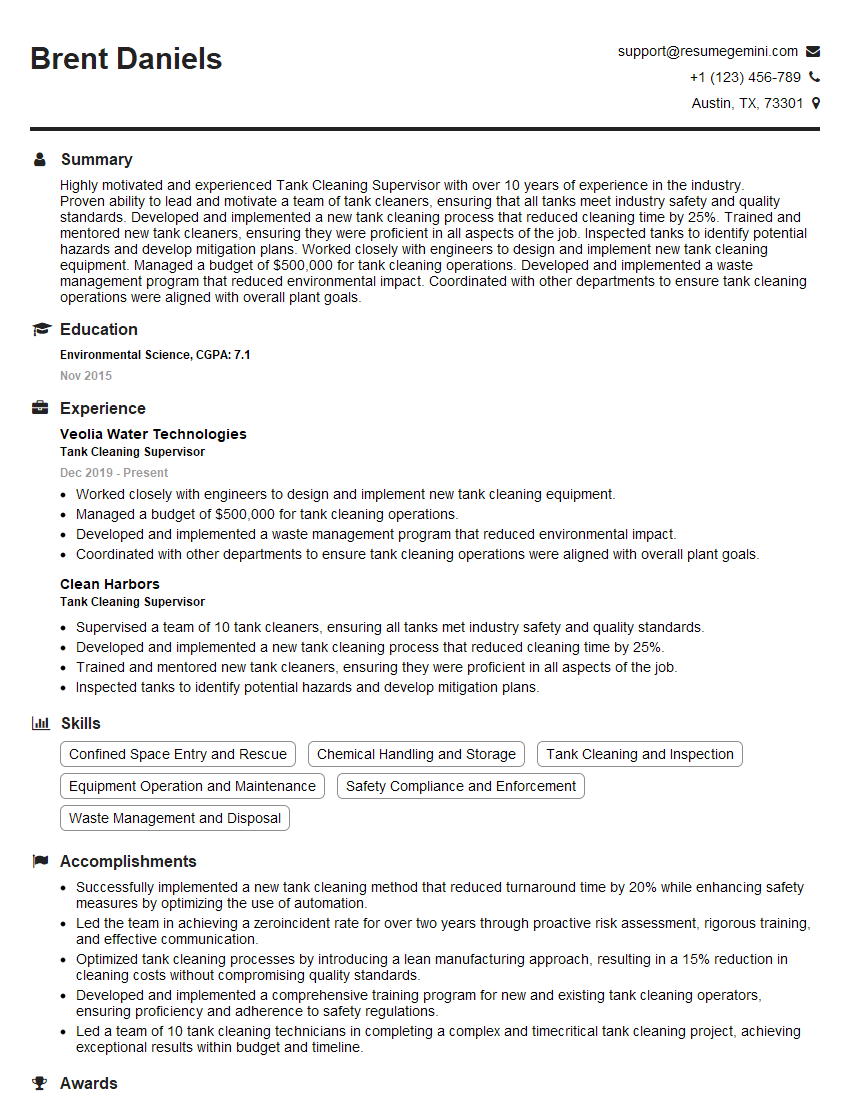
Mastering Tank Cleaning and Gas Freeing opens doors to rewarding and specialized careers in the maritime, petrochemical, and industrial sectors, offering excellent growth potential and competitive salaries. To maximize your job prospects, creating a compelling and ATS-friendly resume is crucial. ResumeGemini is a trusted resource to help you build a professional resume that highlights your skills and experience effectively. ResumeGemini provides examples of resumes tailored to Tank Cleaning and Gas Freeing, allowing you to showcase your qualifications in the best possible light. Invest time in crafting a strong resume; it’s your first impression on potential employers.
Explore more articles
Users Rating of Our Blogs
Share Your Experience
We value your feedback! Please rate our content and share your thoughts (optional).
What Readers Say About Our Blog
Really detailed insights and content, thank you for writing this detailed article.
IT gave me an insight and words to use and be able to think of examples