Interviews are opportunities to demonstrate your expertise, and this guide is here to help you shine. Explore the essential Insect Biology interview questions that employers frequently ask, paired with strategies for crafting responses that set you apart from the competition.
Questions Asked in Insect Biology Interview
Q 1. Describe the life cycle of a typical insect.
The insect life cycle, while varying across species, generally follows four stages: egg, larva, pupa, and adult. Think of it like a butterfly’s transformation! The egg stage begins with the female laying fertilized eggs, often in a specific location chosen to provide optimal conditions for the developing larva. The larval stage is a period of rapid growth and feeding, during which the insect undergoes several molts (shedding its exoskeleton) as it increases in size. The pupal stage is a transformative phase, where the larva undergoes complete reorganization of its body tissues and organs, resulting in the emergence of a fully developed adult. The adult stage is primarily focused on reproduction, with the adult insect seeking a mate and producing the next generation of eggs. This cycle is repeated, ensuring the continuation of the species.
- Egg Stage: Eggs can vary significantly in size, shape, color, and number, depending on the species.
- Larval Stage: Larvae are often very different in appearance and behavior from the adults. Examples include caterpillars (butterflies/moths) and grubs (beetles).
- Pupal Stage: The pupa is a non-feeding, relatively inactive stage. This stage is where metamorphosis occurs. The pupa of a butterfly is known as a chrysalis.
- Adult Stage: The adult is the reproductive stage and is responsible for dispersing the species.
Q 2. Explain the process of metamorphosis in insects.
Metamorphosis is the process of transformation from an immature form to an adult form in two main types: complete and incomplete. Think of it as a massive remodeling project for the insect!
- Complete Metamorphosis (Holometabolous): This involves four distinct stages (egg, larva, pupa, adult) with significant differences in appearance and behavior between the larval and adult stages. Butterflies, beetles, flies, and wasps are examples of insects with complete metamorphosis. The larval stage is primarily focused on feeding and growth, while the pupal stage facilitates the complete reorganization of tissues to form the adult body plan.
- Incomplete Metamorphosis (Hemimetabolous): This involves three stages (egg, nymph, adult), where the nymph resembles a smaller version of the adult, gradually developing wings and reproductive organs over several molts. Grasshoppers, cockroaches, and true bugs exhibit incomplete metamorphosis. The nymph actively feeds and molts, slowly transforming into the adult form.
Understanding the type of metamorphosis an insect undergoes is crucial for designing effective pest control strategies.
Q 3. What are the different types of insect mouthparts and their functions?
Insect mouthparts are highly diverse, reflecting their feeding habits. They’re like specialized tools adapted to different food sources.
- Chewing: Found in grasshoppers and beetles, these mouthparts are strong and designed for biting and chewing solid food.
- Piercing-Sucking: Possessed by mosquitoes and aphids, these mouthparts form a needle-like structure to pierce plant or animal tissue and suck fluids.
- Siphoning: Butterflies and moths use a long, coiled proboscis to suck nectar from flowers.
- Sponging: House flies have sponging mouthparts that soak up liquid food.
- Rasping-Sucking: Thrips use rasping mouthparts to scrape plant surfaces and suck out the sap.
The specific type of mouthparts an insect possesses dictates its preferred food source and significantly influences its ecological role and interactions with other organisms.
Q 4. Discuss the role of insects in pollination.
Insects play a vital role in pollination, the process of transferring pollen from the male part (anther) of a flower to the female part (stigma), enabling fertilization and seed production. Many flowering plants rely heavily on insects for pollination, leading to a mutualistic relationship.
Bees are arguably the most well-known pollinators, with their hairy bodies collecting pollen as they move between flowers. However, many other insects, including butterflies, moths, flies, beetles, and even some wasps, contribute to pollination. Different insect species often specialize in pollinating specific plant species, highlighting the intricate interplay between insect and plant evolution. The decline in insect populations, particularly pollinators, poses a significant threat to global food security and biodiversity.
Q 5. Explain the principles of integrated pest management (IPM).
Integrated Pest Management (IPM) is a holistic approach to pest control that aims to minimize the use of pesticides while effectively managing pest populations. It’s about finding a balance between protecting crops and preserving the environment.
The core principles of IPM include:
- Monitoring: Regular monitoring of pest populations to determine the need for intervention.
- Economic Threshold: Identifying the pest population level at which economic damage occurs, justifying control measures.
- Prevention: Implementing preventative measures to reduce pest establishment and spread (e.g., crop rotation, resistant varieties).
- Control Methods: Utilizing a combination of control methods, prioritizing less harmful approaches (e.g., biological control, cultural practices) before resorting to pesticides.
- Evaluation: Regularly assessing the effectiveness of IPM strategies and making necessary adjustments.
IPM requires a thorough understanding of the pest, its biology, and its interactions with the environment.
Q 6. Describe various methods for insect pest control, highlighting their pros and cons.
Various methods exist for insect pest control, each with its own set of advantages and disadvantages:
- Chemical Control (Pesticides): Highly effective in quickly reducing pest populations, but can harm non-target organisms, pollute the environment, and lead to pesticide resistance.
- Biological Control: Utilizing natural enemies of the pest, such as predators, parasites, or pathogens. Environmentally friendly, but can be slow-acting and require careful selection of control agents.
- Cultural Control: Modifying farming practices to reduce pest susceptibility (e.g., crop rotation, sanitation). Environmentally friendly and cost-effective, but may not be effective against all pests.
- Physical Control: Employing physical barriers or traps to exclude or capture pests. Simple and effective for some pests, but may not be suitable for all situations.
- Genetic Control: Using genetic modification to make crops resistant to pests or to sterilize pest populations. Potentially highly effective, but ethical considerations and public perception need to be addressed.
The choice of control method depends on various factors, including the type of pest, the crop being protected, the environmental conditions, and economic considerations. Often, a combination of methods (integrated approach) is most effective and sustainable.
Q 7. How do insects communicate with each other?
Insects utilize a variety of communication methods, often surprisingly sophisticated. Think of it as their own intricate language!
- Chemical Communication (Pheromones): Insects release pheromones, chemical signals, to attract mates, mark territories, or alarm nestmates. These signals can travel over considerable distances.
- Visual Communication: Some insects use visual signals, such as flashing lights or brightly colored patterns, for mating displays or territorial defense. Fireflies’ bioluminescence is a classic example.
- Auditory Communication: Crickets and grasshoppers use stridulation (rubbing body parts together) to produce sound for communication, often related to mating or territoriality.
- Tactile Communication: Ants communicate through physical contact, using antennae to exchange information about food sources or threats.
Understanding insect communication is crucial for developing strategies in pest control, pollination management, and ecological studies. For example, pheromone traps are effectively used to monitor and control pest populations.
Q 8. What are pheromones and their significance in insect behavior?
Pheromones are chemical signals released by insects to communicate with other members of their species. Think of them as insect perfumes, but instead of attracting humans, they trigger specific behavioral responses in other insects. These responses can be incredibly diverse, ranging from attracting mates to triggering alarm signals or marking trails.
Their significance in insect behavior is enormous. For example, sex pheromones, released by females to attract males, are crucial for reproduction and species survival. Imagine a world without these signals – mating would be far more challenging, if not impossible for many insect species. Aggregation pheromones, on the other hand, cause insects to cluster together, aiding in finding food sources, defending against predators, or even preparing for overwintering. Trail pheromones, like those laid by ants, help them navigate their complex nests and foraging routes. Understanding pheromones is critical for developing environmentally-friendly pest control strategies, such as using synthetic pheromones to disrupt mating or attract pests to traps.
Q 9. Explain the concept of insect mimicry and give examples.
Insect mimicry is a fascinating evolutionary phenomenon where one organism evolves to resemble another organism, often for protection or to deceive prey. This resemblance can be in appearance, behavior, or even sound. There are several types of mimicry:
- Batesian mimicry: A harmless species (the mimic) evolves to resemble a harmful or unpalatable species (the model). This protects the mimic from predators who have learned to avoid the model. A classic example is the viceroy butterfly mimicking the monarch butterfly – the monarch is toxic to many predators, so the viceroy gains protection by looking like it.
- Müllerian mimicry: Two or more harmful species evolve to resemble each other. This benefits all the species because predators learn to avoid the shared warning signal more quickly. Many species of stinging wasps exhibit Müllerian mimicry, each reinforcing the others’ warning signal through similar appearances.
- Aggressive mimicry: A predator or parasite evolves to resemble a harmless organism, luring its prey or host. The orchid mantis mimics the flowers it lives on, attracting unsuspecting pollinators which it then preys upon.
Understanding insect mimicry is important for understanding the complex evolutionary arms races between species and can inform our understanding of biodiversity and conservation efforts.
Q 10. Discuss the role of insects in decomposition.
Insects play a crucial, often overlooked, role in decomposition, the breakdown of organic matter. They are key components of many ecosystems, accelerating the nutrient cycling process.
Many insect groups, including beetles, flies, and ants, are involved in various stages of decomposition. Scavengers, like carrion beetles, feed on carcasses, breaking them down into smaller pieces. Then come the detritivores, like dung beetles, consuming decaying plant and animal matter. These insects also facilitate the process by fragmenting the material, increasing the surface area available for microorganisms, like bacteria and fungi, to further break down the organic matter. This breakdown releases essential nutrients back into the soil, making them available for plants and other organisms. Without insects, the decomposition process would be significantly slower, potentially leading to a build-up of organic matter and disruptions in nutrient cycling.
Q 11. How can insects be used in forensic investigations?
Forensic entomology uses the study of insects and other arthropods to aid in criminal investigations. It’s a fascinating and often crucial part of crime scene analysis.
Insects can help determine the time of death (Post Mortem Interval or PMI) by analyzing the species and developmental stages of insects found on a corpse. Different insects colonize a body at different stages of decomposition, providing clues about how long the body has been there. Insects can also reveal whether a body has been moved after death or if the victim was exposed to certain toxins or drugs by analyzing their tissues. Furthermore, insects found on clothing or other evidence can link a suspect to a crime scene.
Forensic entomologists are trained to identify insect species, understand their life cycles, and apply this knowledge to solve crimes. Their expertise is invaluable in many cases, offering a unique perspective on time of death and other crucial details.
Q 12. Describe the impact of climate change on insect populations.
Climate change poses significant threats to insect populations globally. Changes in temperature, precipitation patterns, and extreme weather events are impacting insect life cycles, distribution, and overall abundance.
Rising temperatures can alter the timing of insect life cycles, causing mismatches between insects and their food sources or habitats. Changes in precipitation can affect breeding habitats and larval development. Extreme weather events, such as droughts and floods, can directly kill insects or damage their habitats. Some species might benefit from warmer temperatures initially, but many species are already facing range shifts and habitat loss due to climate change. These changes have cascading effects on entire ecosystems, given the crucial roles insects play as pollinators, decomposers, and food sources for other organisms. The decline in insect populations could have profound consequences for agriculture, biodiversity, and the health of entire ecosystems.
Q 13. What are the major insect-borne diseases and their vectors?
Insect-borne diseases, also known as vector-borne diseases, are a major global health concern. These diseases are transmitted to humans (and other animals) through the bite or sting of infected insects. Here are some major examples:
- Malaria: Transmitted by Anopheles mosquitoes, causing fever, chills, and potentially death.
- Dengue fever: Transmitted by Aedes mosquitoes, causing flu-like symptoms.
- Zika virus: Also transmitted by Aedes mosquitoes, causing mild symptoms in most people, but linked to severe birth defects in pregnant women.
- Lyme disease: Transmitted by ticks, causing rash, fever, fatigue, and potentially long-term neurological problems.
- West Nile virus: Transmitted by mosquitoes, causing flu-like symptoms or more severe neurological symptoms in some cases.
Understanding the vectors, their life cycles, and their interactions with pathogens is vital for developing effective prevention and control strategies for these diseases. This includes measures such as vector control, insecticide use, and public health education.
Q 14. Explain the process of insect taxonomy and classification.
Insect taxonomy is the science of classifying and naming insects. It’s a hierarchical system, starting with broad groups and narrowing down to specific species. The process generally follows these steps:
- Identification: Examining the insect’s morphological characteristics (physical features), such as body shape, wing structure, leg type, and antennae. Modern techniques also include DNA analysis.
- Classification: Placing the insect into a hierarchical system, using established taxonomic ranks. This system typically includes Kingdom, Phylum, Class, Order, Family, Genus, and Species. For example, the housefly is classified as Musca domestica, with Musca being the genus and domestica the species.
- Nomenclature: Assigning a scientific name (binomial nomenclature) to the insect following the Linnaean system. The scientific name is universal, regardless of language, avoiding the ambiguity of common names.
This classification system helps scientists organize the vast diversity of insects, understand evolutionary relationships, and communicate effectively about specific species. Accurate classification is essential for research, pest management, and conservation efforts.
Q 15. Describe the different orders of insects and their key characteristics.
Insect classification is a vast field, with over a million described species organized into different orders. These orders are defined by shared characteristics, primarily in their morphology (body structure) and development. Think of it like sorting a massive collection of stamps – each order represents a distinct category with unique features.
- Coleoptera (Beetles): Characterized by their hardened forewings (elytra) that protect their hindwings. They exhibit immense diversity, encompassing a wide range of ecological roles, from decomposers to predators. Example: Ladybugs (beneficial predators) and Japanese beetles (agricultural pests).
- Lepidoptera (Butterflies and Moths): Defined by their scaled wings and a coiled proboscis for feeding on nectar. Their metamorphosis is complete, involving a larval stage (caterpillar). Example: Monarch butterflies (known for migration) and Gypsy moths (forest defoliators).
- Hymenoptera (Ants, Bees, Wasps): Distinguished by their membranous wings (in most species) and often a constricted waist. Many exhibit social behavior and play crucial roles in pollination and ecosystem regulation. Example: Honeybees (important pollinators) and fire ants (invasive species).
- Diptera (Flies): Possess only one pair of functional wings, with the hindwings reduced to halteres (balancing organs). They are incredibly diverse, with many species acting as pollinators, decomposers, or disease vectors. Example: Houseflies (disease vectors) and hoverflies (pollinators).
- Orthoptera (Grasshoppers, Crickets, Katydids): Possess powerful hind legs adapted for jumping and usually have long antennae. Many are herbivores and serve as important food sources for other animals. Example: Locusts (agricultural pests) and crickets (used as food in some cultures).
These are just a few examples. Understanding the different orders is crucial for effective pest management, biodiversity conservation, and ecological research.
Career Expert Tips:
- Ace those interviews! Prepare effectively by reviewing the Top 50 Most Common Interview Questions on ResumeGemini.
- Navigate your job search with confidence! Explore a wide range of Career Tips on ResumeGemini. Learn about common challenges and recommendations to overcome them.
- Craft the perfect resume! Master the Art of Resume Writing with ResumeGemini’s guide. Showcase your unique qualifications and achievements effectively.
- Don’t miss out on holiday savings! Build your dream resume with ResumeGemini’s ATS optimized templates.
Q 16. What are the ethical considerations in insect research?
Ethical considerations in insect research are paramount and often overlooked. We must always balance the advancement of scientific knowledge with the responsible treatment of living organisms. Key concerns include:
- Minimizing harm: Research protocols should be designed to minimize pain, distress, and suffering. This includes using the smallest number of insects necessary, choosing appropriate anesthetics, and ensuring proper housing conditions.
- Species selection: Prioritizing research on less-threatened species. Avoid focusing on endangered or vulnerable insects without compelling conservation reasons.
- Regulation and oversight: Following established ethical guidelines and institutional review board (IRB) procedures. This ensures compliance with relevant laws and regulations.
- Environmental impact: Considering the potential impact of research activities on insect populations and their habitats. This might involve carefully selecting research sites and implementing mitigation strategies.
- Openness and transparency: Researchers have a responsibility to be transparent about their methods and results, particularly regarding any negative impacts on insect welfare.
For example, studying the effects of pesticides on honeybees requires careful consideration of colony health and potential impacts on pollination services. Ethical insect research ensures the integrity of scientific findings and maintains public trust.
Q 17. How can insect populations be monitored and assessed?
Monitoring and assessing insect populations is essential for understanding their ecological roles and managing pest species. Methods vary depending on the insect species and research objectives. Imagine it like conducting a census, but for insects.
- Visual surveys: Direct observation and counting of insects, often using standardized sampling methods (e.g., pitfall traps, sweep nets). This provides a quick overview but can be subjective and labor-intensive.
- Trapping: Using various traps to capture and count insects. These can be species-specific (e.g., pheromone traps for moths) or generalist traps (e.g., light traps). Trap data provides quantitative information.
- Mark-recapture studies: Involves capturing, marking, and releasing insects, then recapturing them to estimate population size. This is a powerful method but requires careful planning and execution.
- Molecular techniques: Using DNA analysis to identify insect species and assess population genetic diversity (e.g., metabarcoding). This method is especially useful for detecting cryptic species and monitoring invasive species.
- Remote sensing: Utilizing aerial imagery and satellite data to estimate insect populations, particularly useful for large-scale monitoring of pest outbreaks.
The choice of methods depends on factors such as the insect’s behavior, habitat, and the resources available. Often, a combination of methods is employed to achieve a more comprehensive assessment.
Q 18. Discuss the use of molecular techniques in insect biology.
Molecular techniques have revolutionized insect biology, allowing for unprecedented insights into insect genetics, evolution, and ecology. Think of it as using powerful microscopic tools to explore the insect’s inner workings.
- Polymerase Chain Reaction (PCR): Used to amplify specific DNA sequences, allowing for the detection of particular genes or species. This is crucial for identifying insect pests, studying their genetic diversity, and developing pest management strategies.
- DNA barcoding: Uses short, standardized gene regions to identify insect species, often using mitochondrial DNA (mtDNA). This facilitates rapid species identification and phylogenetic analysis.
- Next-Generation Sequencing (NGS): Enables the sequencing of entire genomes or transcriptomes (the complete set of RNA transcripts), providing comprehensive information about an insect’s genetic makeup and gene expression. This helps us understand insect adaptation and evolution.
- Gene editing: Techniques like CRISPR-Cas9 can be used to modify insect genes, potentially controlling pest populations or enhancing beneficial insect traits. However, it requires careful consideration of ethical implications.
For example, PCR can be used to detect the presence of insect-borne diseases, while NGS can be used to study the evolution of insecticide resistance in agricultural pests. Molecular techniques are increasingly important for addressing challenges in insect biology and related fields.
Q 19. What are the challenges in developing insect-resistant crops?
Developing insect-resistant crops is a crucial aspect of sustainable agriculture, but it faces significant challenges. It’s a continuous arms race between humans and insects.
- Insecticide resistance: Insects can quickly evolve resistance to insecticides, rendering previously effective strategies useless. This requires constant development of new insecticides and integrated pest management strategies.
- Non-target effects: Insecticides can harm beneficial insects, such as pollinators and natural enemies of pests. This can disrupt the ecological balance and negatively impact agricultural productivity.
- Gene flow: Genes conferring resistance can spread from engineered crops to wild relatives, potentially creating superweeds or resistant pest populations.
- Economic and social considerations: Developing and implementing new insect-resistant technologies can be expensive and may not be accessible to all farmers. It’s essential to ensure equity and access.
- Consumer acceptance: Some consumers have concerns about genetically modified (GM) crops, which may impact market acceptance of insect-resistant varieties.
Overcoming these challenges requires a multi-faceted approach, integrating different pest management strategies, developing more environmentally friendly insecticides, and carefully considering the economic, social, and ecological impacts of new technologies.
Q 20. Explain the role of beneficial insects in agriculture.
Beneficial insects play an indispensable role in agriculture, providing essential ecosystem services and reducing the reliance on chemical pesticides. They are nature’s pest control agents.
- Pollination: Insects, particularly bees, are crucial for pollinating many agricultural crops, ensuring successful fruit and seed production. Honeybees alone contribute billions of dollars annually to global agricultural economies.
- Biological control: Many insects prey on or parasitize crop pests, helping to regulate their populations. Examples include ladybugs feeding on aphids and parasitic wasps attacking caterpillars. This reduces pest damage and reduces the need for insecticides.
- Nutrient cycling: Insects contribute to soil health by breaking down organic matter and increasing nutrient availability for plants. Termites, for example, play a crucial role in nutrient cycling in some ecosystems.
- Soil aeration: Some insects, such as earthworms, improve soil structure by creating channels that increase aeration and water infiltration. This improves plant growth and reduces soil compaction.
Promoting beneficial insect populations through habitat conservation, reducing pesticide use, and introducing biological control agents are crucial for sustainable agriculture and ecosystem health.
Q 21. How do insects adapt to different environments?
Insects have evolved remarkable adaptations to survive in diverse environments, showcasing their incredible resilience. Think of it as a survival toolkit honed over millions of years.
- Physiological adaptations: Insects can tolerate extreme temperatures, water stress, and salinity through adaptations in their physiology. Desert insects, for example, have specialized mechanisms to conserve water.
- Behavioral adaptations: Insects exhibit diverse behaviors to cope with environmental challenges. Migration is a classic example, with insects traveling vast distances to find suitable breeding grounds or overwintering sites.
- Morphological adaptations: Physical structures can be modified for specific environments. Aquatic insects might have modified legs for swimming, while desert insects might have reduced body surface area to minimize water loss.
- Genetic adaptations: Changes in an insect’s genes can lead to adaptations that enhance survival and reproduction. This includes adaptations to insecticide resistance, host plant specialization, and tolerance to pathogens.
These adaptations are often interconnected, enabling insects to thrive in a wide range of habitats. For example, desert beetles have physiological adaptations for water conservation, behavioral adaptations for nocturnal activity, and morphological adaptations to reduce body surface area, working together to ensure survival in harsh environments.
Q 22. Discuss the economic impact of insect pests.
Insect pests cause significant economic losses globally, impacting agriculture, forestry, and public health. Their impact is felt through reduced crop yields, damaged timber, and increased costs associated with pest control. Let’s look at a few examples:
- Agriculture: Pests like aphids, boll weevils, and locusts can decimate entire harvests, leading to food shortages and price increases. For example, the fall armyworm, an invasive pest, has caused billions of dollars in damage to maize crops across Africa and beyond.
- Forestry: Bark beetles and other wood-boring insects can severely damage and kill trees, leading to reduced timber yields and increased costs for forest management. This can impact industries reliant on timber such as construction and paper production.
- Public Health: Mosquitoes transmit diseases like malaria and Zika virus, placing a huge burden on healthcare systems and economies. The cost of treating these diseases, along with lost productivity due to illness, represents a significant economic drain.
Estimating the precise economic impact is challenging, but it’s safe to say that it runs into hundreds of billions of dollars annually worldwide.
Q 23. Describe the use of insects in biocontrol strategies.
Biocontrol, using natural enemies to manage pest populations, offers a sustainable and environmentally friendly alternative to chemical pesticides. Insects play a crucial role in these strategies. Here are some common examples:
- Predators: Ladybugs are voracious aphid predators, effectively controlling aphid populations in agricultural settings. Similarly, lacewings and praying mantises are widely used in integrated pest management programs.
- Parasitoids: These insects lay their eggs on or in other insects, with their larvae eventually killing the host. Trichogramma wasps, for instance, are effective parasitoids of various moth and butterfly larvae, impacting crop-damaging pests.
- Pathogens: Certain bacteria, fungi, and viruses that infect insects are used as biocontrol agents. Bacillus thuringiensis (Bt), for example, produces toxins that are lethal to specific insect groups and are used in some genetically modified crops.
The success of biocontrol depends on factors such as the careful selection of suitable agents, understanding the target pest’s ecology, and appropriate release strategies. Biocontrol offers a powerful tool for sustainable agriculture and pest management.
Q 24. What are the potential applications of insect-derived products?
Insects offer a surprising array of valuable products with various applications. These include:
- Food and Feed: Insects are a highly sustainable source of protein and other nutrients, increasingly considered a vital part of future food security. Cricket flour, for example, is gaining popularity as a protein-rich ingredient in various food products.
- Pharmaceuticals: Certain insect-derived compounds possess medicinal properties. For example, honey has antibacterial and wound-healing properties, while bee venom is being investigated for its potential in treating autoimmune diseases.
- Industrial Products: Shelac, a resin secreted by lac insects, is used in various industries such as coatings, inks, and polishes. Silk, produced by silkworms, remains a highly valued textile fiber.
- Bioremediation: Some insects are being studied for their ability to break down pollutants and help in environmental cleanup processes.
Research continues to uncover further potential applications of insect-derived products, showcasing their potential to address various challenges in food, medicine, and industry.
Q 25. Explain the differences between complete and incomplete metamorphosis.
Insect metamorphosis, the process of transformation from immature to adult stages, occurs in two primary forms: complete and incomplete.
Complete Metamorphosis (Holometabolous): This involves four distinct stages: egg, larva, pupa, and adult. The larval stage is often radically different from the adult, both morphologically and ecologically. Butterflies, beetles, and flies exemplify complete metamorphosis. The larval stage is dedicated to feeding and growth, while the pupa is a non-feeding, transformative stage where the insect undergoes a complete reorganization of its body plan.
Incomplete Metamorphosis (Hemimetabolous): This involves three stages: egg, nymph, and adult. The nymph resembles a miniature version of the adult, gradually increasing in size and developing wings (if present) through a series of molts. Grasshoppers, dragonflies, and true bugs are examples. Nymphs actively feed and gradually transition to the adult form.
The key difference lies in the presence or absence of a pupal stage. Complete metamorphosis allows for greater ecological specialization, as the larva and adult can occupy different niches, reducing competition for resources.
Q 26. Describe the role of insects in nutrient cycling.
Insects play a vital role in nutrient cycling within ecosystems. Their actions contribute to the decomposition of organic matter, nutrient turnover, and soil fertility.
- Decomposition: Insects, especially detritivores (like dung beetles and many fly larvae), break down dead plants and animals. This process releases nutrients back into the environment, making them available for other organisms.
- Nutrient Turnover: Insects feed on plants, incorporating nutrients into their bodies. When they die or are consumed by predators, these nutrients are released back into the soil or transferred to higher trophic levels within the food web.
- Soil Aeration: Insects like earthworms and some beetle larvae create burrows, improving soil aeration and water infiltration, enhancing nutrient availability for plant growth.
- Pollination: Many insects, like bees, butterflies, and flies, act as pollinators, facilitating plant reproduction and nutrient transfer within plant communities.
Their diverse feeding habits and high abundance make insects critical components of healthy ecosystems, maintaining nutrient flow and promoting overall ecological balance.
Q 27. How do insecticides work at a physiological level?
Insecticides work through a variety of physiological mechanisms, depending on their chemical composition. Here are a few examples:
- Neurotoxins: Many insecticides target the insect nervous system. Organophosphates and carbamates, for example, inhibit acetylcholinesterase, an enzyme essential for nerve impulse transmission, leading to paralysis and death.
- Disruption of Hormone Production or Action: Some insecticides mimic or block insect hormones, disrupting development or reproduction. Insect growth regulators (IGRs) interfere with molting and metamorphosis.
- Inhibition of Metabolic Processes: Certain insecticides inhibit key metabolic enzymes, disrupting energy production or other vital processes within the insect.
- Contact Poisons: These insecticides act upon direct contact, disrupting the insect’s cuticle or causing cellular damage.
The specific mechanism of action dictates the insecticide’s toxicity, target insect species, and potential environmental impacts. Understanding these mechanisms is crucial for developing safer and more effective pest control strategies.
Q 28. Discuss the importance of biodiversity in insect communities.
Biodiversity in insect communities is essential for maintaining healthy ecosystems and providing crucial ecosystem services. High insect diversity promotes:
- Enhanced Ecosystem Stability: A diverse insect community is more resilient to environmental changes and disturbances. If one species declines, others can often compensate, preventing a major disruption of ecosystem functions.
- Improved Pollination: Diverse pollinator communities ensure efficient pollination of a wider range of plants, supporting plant diversity and crop production.
- Better Pest Control: A complex web of predator-prey interactions within a diverse insect community naturally regulates pest populations, reducing the need for chemical interventions.
- Increased Nutrient Cycling: Different insect groups play varied roles in nutrient cycling. High diversity enhances the efficiency of decomposition, nutrient turnover, and soil fertility.
The decline in insect populations worldwide highlights the importance of conservation efforts. Protecting insect habitats, reducing pesticide use, and promoting sustainable land management practices are crucial steps towards maintaining healthy and biodiverse insect communities.
Key Topics to Learn for Your Insect Biology Interview
- Insect Physiology: Understand insect metabolic processes, respiration, digestion, excretion, and endocrine systems. Consider how these systems differ across insect orders and relate to their ecological niches.
- Insect Ecology and Behavior: Explore insect interactions with their environment, including predator-prey relationships, competition, and symbiotic interactions. Analyze various behavioral patterns like mating rituals, communication, and social structures.
- Insect Morphology and Taxonomy: Master the classification of insects, understanding their evolutionary relationships and the key morphological characteristics that define different orders and families. Be prepared to discuss phylogenetic trees and evolutionary adaptations.
- Insect Pest Management: Discuss integrated pest management strategies, including biological control, chemical control, and cultural practices. Be ready to evaluate the effectiveness and potential environmental impacts of various approaches.
- Insect Molecular Biology and Genetics: Understand the application of molecular techniques to insect biology research, including genomic analysis, gene expression, and genetic manipulation. Consider the implications for pest control and understanding insect evolution.
- Practical Applications: Be prepared to discuss the applications of insect biology in various fields such as agriculture, medicine (e.g., disease vectors), forensics, and conservation.
- Problem-Solving: Practice applying your knowledge to hypothetical scenarios. For example, how would you address a specific pest infestation or interpret data from a field study?
Next Steps
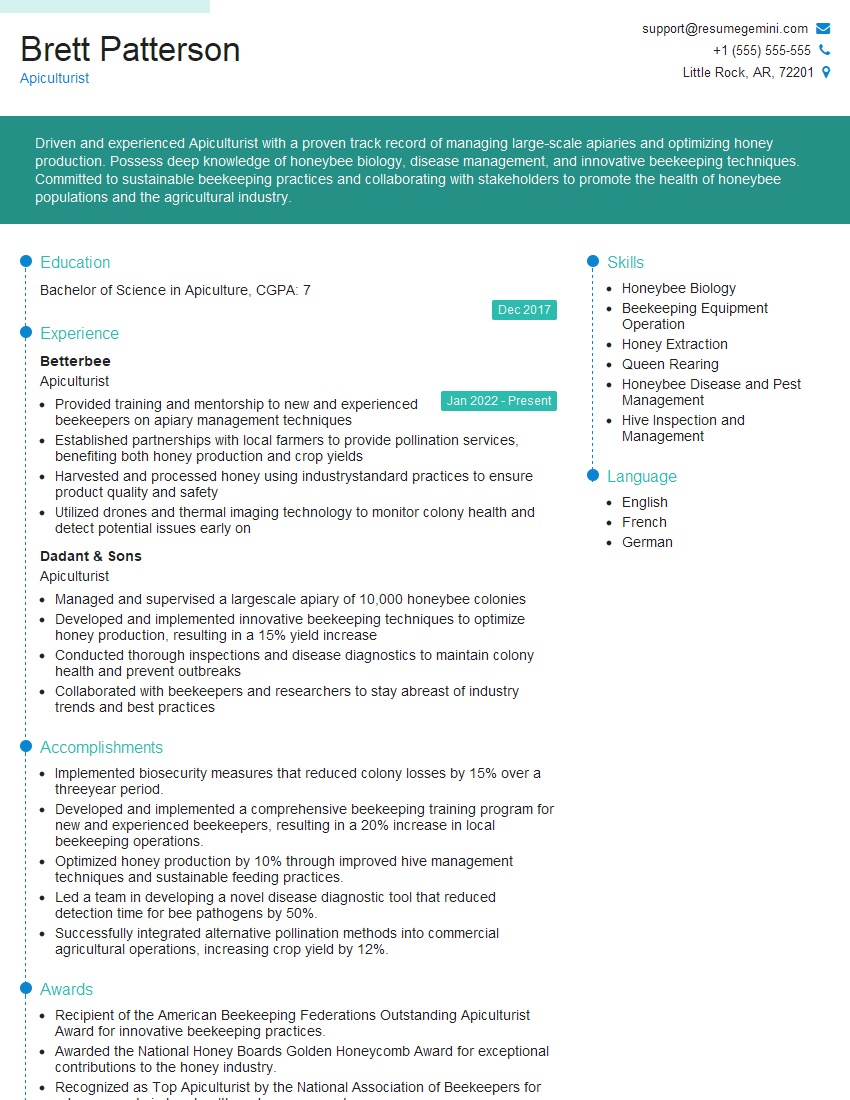
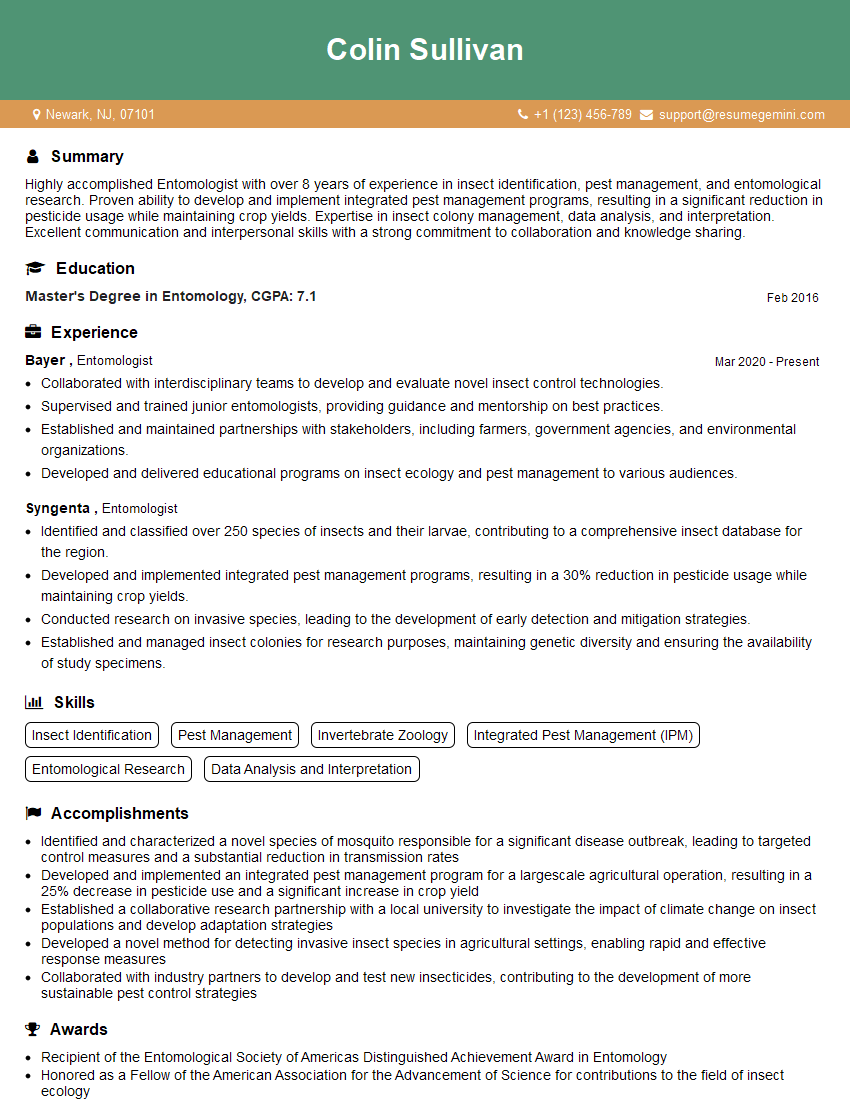
Mastering Insect Biology opens doors to exciting careers in research, academia, agriculture, and environmental conservation. To maximize your job prospects, it’s crucial to have a strong, ATS-friendly resume that showcases your skills and experience effectively. ResumeGemini is a trusted resource that can help you craft a compelling and professional resume tailored to the specific demands of the Insect Biology field. We provide examples of resumes tailored to Insect Biology roles to help guide you in creating your own. Invest time in building a standout resume; it’s your first impression and a key to unlocking your career potential.
Explore more articles
Users Rating of Our Blogs
Share Your Experience
We value your feedback! Please rate our content and share your thoughts (optional).
What Readers Say About Our Blog
Really detailed insights and content, thank you for writing this detailed article.
IT gave me an insight and words to use and be able to think of examples