Interviews are opportunities to demonstrate your expertise, and this guide is here to help you shine. Explore the essential Understanding of Refrigeration and HVAC Principles interview questions that employers frequently ask, paired with strategies for crafting responses that set you apart from the competition.
Questions Asked in Understanding of Refrigeration and HVAC Principles Interview
Q 1. Explain the refrigeration cycle.
The refrigeration cycle is a thermodynamic process that moves heat from a cold space to a warmer space, using a refrigerant as a working fluid. Think of it like a heat pump in reverse. It operates on a continuous loop, typically involving four key components: a compressor, a condenser, an expansion valve, and an evaporator.
- Evaporation: The refrigerant, a low-pressure, low-temperature liquid, absorbs heat from the cold space (like your fridge’s interior) and evaporates into a low-pressure, low-temperature gas. This is where the cooling effect happens.
- Compression: The compressor increases the refrigerant’s pressure and temperature, turning it into a high-pressure, high-temperature gas. Imagine squeezing a balloon – the air inside gets hotter.
- Condensation: The high-pressure, high-temperature refrigerant releases its heat to the surrounding environment (the room air) in the condenser, transforming back into a high-pressure, high-temperature liquid. This heat rejection is crucial for the cycle to work.
- Expansion: The expansion valve reduces the pressure and temperature of the refrigerant, turning it back into a low-pressure, low-temperature liquid, ready to start the cycle again. This sudden pressure drop causes a temperature drop, further enhancing the cooling effect.
This cycle repeats continuously, providing constant cooling. Different types of refrigeration systems might use slightly different configurations (like cascade refrigeration), but the fundamental principles remain the same.
Q 2. Describe the different types of refrigerants and their properties.
Refrigerants are the working fluids in refrigeration and air conditioning systems, responsible for absorbing and releasing heat. They are chosen based on their thermodynamic properties, environmental impact, and safety. Over the years, we’ve seen a shift towards environmentally friendly options.
- CFCs (Chlorofluorocarbons): Older refrigerants, now largely phased out due to their ozone-depleting potential. Examples include R-12 (Freon).
- HCFCs (Hydrochlorofluorocarbons): Transitional refrigerants with lower ozone depletion potential than CFCs, but still contribute to global warming. R-22 is an example.
- HFCs (Hydrofluorocarbons): Don’t deplete the ozone layer but are potent greenhouse gases. R-134a is a common example.
- Natural Refrigerants: Environmentally friendly options such as ammonia (R-717), carbon dioxide (R-744), propane (R-290), and water (R-718). These are gaining popularity due to their low global warming potential and reduced environmental impact. However, some require specific safety considerations.
The choice of refrigerant depends heavily on the application, considering factors like efficiency, safety (flammability, toxicity), cost, and environmental regulations. For instance, ammonia is highly efficient but toxic and requires specialized handling.
Q 3. What are the common types of compressors used in refrigeration systems?
Compressors are the heart of a refrigeration system, responsible for increasing the refrigerant’s pressure and temperature. Several types exist, each with its own advantages and disadvantages:
- Reciprocating Compressors: These use pistons to compress the refrigerant, similar to a car engine. They are relatively simple and cost-effective, suitable for smaller systems.
- Rotary Compressors: Use rotating components (like scrolls or screws) to compress the refrigerant, offering smoother operation and higher efficiency than reciprocating compressors. They are often preferred for larger systems.
- Centrifugal Compressors: Employ centrifugal force to increase refrigerant pressure, best suited for very large-scale applications, such as industrial chillers.
- Scroll Compressors: These use two spiral-shaped components to compress the refrigerant. They offer high efficiency and relatively quiet operation.
The selection of compressor type is critical; it impacts the system’s efficiency, reliability, and overall cost. For example, scroll compressors are popular in residential air conditioning due to their quiet operation and high efficiency, whereas centrifugal compressors are used in large industrial systems due to their higher capacity.
Q 4. Explain the function of an expansion valve.
The expansion valve (also called a metering device) is responsible for controlling the flow of refrigerant and reducing its pressure and temperature before it enters the evaporator. This is a crucial step because it allows the refrigerant to absorb heat efficiently in the evaporator.
Imagine a water hose: If you squeeze the hose, the water’s flow and pressure decrease. Similarly, the expansion valve restricts the flow of refrigerant, causing a pressure drop. This pressure drop results in a significant temperature drop, allowing the low-pressure, low-temperature refrigerant to efficiently absorb heat from the space being cooled.
Different types of expansion valves exist, including thermostatic expansion valves (TXV) which sense the temperature of the evaporator and adjust the refrigerant flow accordingly, and capillary tubes which offer a simpler, fixed-restriction design.
Q 5. How does a condenser work?
The condenser’s function is to reject the heat absorbed by the refrigerant in the evaporator to the surrounding environment. It changes the refrigerant from a high-pressure, high-temperature gas to a high-pressure, high-temperature liquid.
Think of it as a radiator. The hot refrigerant gas enters the condenser, where it’s cooled by either air (air-cooled condenser) or water (water-cooled condenser). This cooling process causes the refrigerant to condense (change from a gas to a liquid), releasing the absorbed heat into the surroundings. The heat rejection is essential because it’s what allows the cycle to continue. The efficiency of a condenser directly impacts the overall efficiency of the refrigeration system.
Q 6. What are the different types of heat exchangers used in HVAC systems?
Heat exchangers are devices used to transfer heat between two fluids. In HVAC systems, they are critical for efficient heating and cooling. Several types are employed:
- Plate Heat Exchangers: Use thin plates to separate the two fluids, offering a large surface area for heat transfer in a compact design. They’re efficient and commonly used in water-to-water heat exchangers.
- Shell and Tube Heat Exchangers: One fluid flows inside tubes, while the other flows outside the tubes in a shell. These are robust and used in a wide range of applications, suitable for high pressures and temperatures.
- Finned Tube Heat Exchangers: Utilize fins to increase the surface area for heat transfer. Common in air-to-refrigerant applications such as condensers and evaporators in air conditioning systems.
- Coil Heat Exchangers: Simple and cost-effective, often used in air handling units for heating or cooling air.
The choice of heat exchanger type depends on factors such as the fluids involved, the required heat transfer rate, pressure drops, and the overall system design. For example, finned tube heat exchangers are used extensively in air conditioners because they effectively transfer heat between air and refrigerant, maximizing efficiency.
Q 7. Explain the difference between sensible and latent heat.
Sensible heat and latent heat are both forms of heat, but they manifest differently:
- Sensible Heat: This is the heat that causes a change in temperature. When you heat a pot of water on the stove, the water’s temperature increases – that’s sensible heat. In HVAC, sensible heat is the heat that changes the air’s temperature without changing its phase (solid, liquid, or gas).
- Latent Heat: This is the heat that causes a change in phase without a change in temperature. When ice melts into water, it absorbs latent heat (the heat of fusion) at a constant temperature of 0°C. Similarly, when water boils, it absorbs latent heat (the heat of vaporization) at a constant temperature of 100°C. In HVAC, latent heat is responsible for changes in humidity. Removing latent heat from humid air causes the moisture to condense, thereby reducing humidity.
Understanding the difference is crucial for designing efficient HVAC systems. Heating and cooling loads are made up of both sensible and latent heat. For instance, air conditioning systems need to remove both sensible (to cool the air) and latent heat (to dehumidify) to provide comfortable conditions. Properly balancing sensible and latent cooling is essential for optimal comfort and energy efficiency.
Q 8. Describe the principles of psychrometrics.
Psychrometrics is the study of the thermodynamic properties of moist air. Think of it as the science of how air’s temperature, humidity, and pressure interact. It’s crucial in HVAC because it allows us to understand and control the comfort levels within a building. We use psychrometric charts – essentially graphs that illustrate the relationship between these properties – to design and troubleshoot HVAC systems.
For example, a psychrometric chart helps us determine the amount of moisture that needs to be removed from the air to achieve a desired relative humidity at a specific temperature. Let’s say we have air at 80°F and 60% relative humidity. The chart will show us the absolute humidity (the actual amount of water vapor in the air), and from there, we can calculate how much moisture needs to be removed to lower the relative humidity to, say, 50% for improved comfort.
In practice, this knowledge is applied in designing air conditioning systems, determining the capacity of dehumidifiers, and predicting the performance of cooling towers. Understanding psychrometrics ensures efficient and effective climate control.
Q 9. How do you troubleshoot a refrigeration system with low cooling capacity?
Low cooling capacity in a refrigeration system means it’s not removing heat efficiently. Troubleshooting involves a systematic approach:
- Check refrigerant charge: Low refrigerant levels are a common culprit. We’d use gauges to measure the pressure at different points in the system. Low pressure across the system usually indicates a refrigerant leak, which needs to be located and repaired before recharging.
- Inspect condenser operation: A dirty condenser coil (the heat exchanger that releases heat to the environment) can restrict airflow and reduce cooling capacity. Cleaning the coil is often the solution.
- Examine the evaporator: Similar to the condenser, a dirty evaporator coil (where heat is absorbed) can reduce efficiency. Frost buildup can also severely limit heat transfer. Proper defrost cycles are crucial.
- Verify compressor function: A faulty compressor can’t pump refrigerant effectively. We’d check for unusual noises, overheating, or low amp draw. A compressor failure often requires replacement.
- Check for airflow restrictions: Poor airflow through the evaporator or condenser can significantly impact cooling. Filters, fans, and ducting should be inspected and cleaned.
- Evaluate expansion device: A malfunctioning expansion device (like a capillary tube or TXV) can restrict refrigerant flow, reducing cooling capacity. This might need replacement or adjustment.
It’s important to note that some issues might overlap. For instance, a low refrigerant charge might be caused by a leak in a component that requires further investigation.
Q 10. How do you troubleshoot a system with high head pressure?
High head pressure indicates that the condenser is struggling to reject heat. Here’s how to troubleshoot:
- Check condenser airflow: Restricted airflow, usually from a dirty condenser coil or clogged fan, is a primary cause. Cleaning or replacing the fan often resolves this.
- Inspect condenser coil: Accumulated dirt and debris reduce heat transfer. A thorough cleaning is necessary.
- Verify refrigerant charge: Overcharging can lead to high head pressure. This requires careful refrigerant removal using proper techniques.
- Check for non-condensables: Air or other non-condensable gases in the system can increase head pressure and impair efficiency. This often necessitates evacuating and recharging the system.
- Inspect condenser fan motor: A malfunctioning or undersized fan motor won’t provide sufficient airflow. Repair or replacement might be required.
- Consider ambient temperature: High outside temperatures naturally increase condenser pressure. This isn’t necessarily a fault but may necessitate increased capacity during hot periods.
Remember to always use proper safety precautions when working with refrigerants and electrical components.
Q 11. How do you troubleshoot a system with low suction pressure?
Low suction pressure indicates a problem in the evaporator or the refrigerant circuit. The troubleshooting steps are:
- Check refrigerant charge: The most common reason; a low charge restricts refrigerant flow, reducing suction pressure. We’d use gauges to verify and recharge if necessary. A leak needs to be located and sealed before recharging.
- Inspect evaporator coil: A frosted or ice-covered evaporator restricts airflow, resulting in low suction pressure. Ensure proper defrost cycles and address airflow blockages.
- Verify airflow over the evaporator: Insufficient airflow over the evaporator limits heat absorption and reduces suction pressure. Check fan operation and airflow paths.
- Check expansion device function: A restricted or malfunctioning expansion device (like a TXV) prevents enough refrigerant from entering the evaporator. This often requires replacement or adjustment.
- Evaluate compressor performance: A weak or failing compressor may not be able to draw enough refrigerant into the system. This would require investigation, testing, and potentially replacement.
- Examine for leaks: Low suction pressure can also indicate a refrigerant leak. Locating and repairing leaks is crucial before recharging.
Thorough inspection of all components is crucial for diagnosing the root cause. For example, low refrigerant might be caused by a leak, but the leak itself must be pinpointed to prevent further issues.
Q 12. Explain the function of a pressure relief valve.
A pressure relief valve (PRV) is a safety device that automatically releases refrigerant in case of excessive pressure buildup within a refrigeration system. Think of it as a pressure safety valve that prevents dangerous situations like explosions or equipment damage. It’s critical for preventing catastrophic failures. The PRV opens when the system pressure exceeds a predetermined threshold, venting refrigerant to the atmosphere (or to a recovery tank depending on design and regulations).
For example, if the compressor fails and starts generating excessive heat, causing pressure to rise beyond the PRV’s setpoint, the valve will open, releasing the refrigerant and preventing system damage. However, this usually signals a serious problem that requires prompt attention and repair.
Different types of PRVs exist, such as spring-loaded and temperature-activated valves, each designed to protect against specific pressure or temperature extremes. Regularly inspecting the PRV and verifying its functionality are part of routine system maintenance.
Q 13. What are the safety precautions when working with refrigerants?
Working with refrigerants requires strict adherence to safety protocols due to their potential hazards. Key precautions include:
- Proper training and certification: Only trained and certified technicians should handle refrigerants. This ensures they understand the risks and know how to work safely.
- Personal protective equipment (PPE): This includes safety glasses, gloves, and respiratory protection, especially when dealing with potential leaks or high-pressure systems.
- Ventilation: Adequate ventilation is essential to prevent the accumulation of refrigerant vapors, which can displace oxygen and cause asphyxiation. Work in well-ventilated areas or use respiratory protection.
- Leak detection: Regular leak checks are crucial. Employ electronic leak detectors to identify and repair leaks promptly. Small leaks can accumulate over time, and large leaks pose significant dangers.
- Proper handling and disposal: Follow established procedures for handling and disposing of refrigerants. This helps prevent environmental damage and health risks. Dispose of refrigerant using appropriate techniques as per regulations.
- Emergency preparedness: Know the location of emergency shut-off valves and have a plan in case of a leak or other emergency. Understand how to respond to various scenarios safely.
Ignoring safety measures can lead to severe consequences, ranging from minor injuries to fatalities. Safe practices are paramount.
Q 14. Describe the different types of HVAC systems (e.g., split system, packaged unit).
HVAC systems are broadly categorized based on their design and application. Here are a few examples:
- Split Systems: These are common in residential and light commercial applications. They consist of an outdoor unit (condenser) and an indoor unit (evaporator), connected by refrigerant lines. They’re popular for their compact size and ease of installation.
- Packaged Units: These are self-contained units that house both the condenser and evaporator in a single cabinet. They’re often used in smaller commercial spaces or for rooftop installations. They’re easier to install than split systems, but typically less efficient for larger buildings.
- VAV (Variable Air Volume) Systems: These systems provide variable amounts of air to different zones within a building, optimizing energy efficiency and comfort. They utilize variable speed fans and dampers to control airflow.
- Chiller Systems: These systems use chillers (large refrigeration units) to cool water, which is then circulated through air handling units (AHUs) to condition air. They are widely used in large commercial and industrial buildings.
- Heat Pumps: These are versatile systems capable of both heating and cooling, making them energy-efficient in climates with moderate temperature variations. They move heat rather than generating it, resulting in lower energy consumption.
The selection of an appropriate HVAC system depends on factors such as building size, climate, budget, and desired level of comfort and efficiency.
Q 15. Explain the function of a thermostat.
A thermostat is essentially the brain of your HVAC system. It’s a temperature-sensing device that acts as a control mechanism, automatically turning your heating or cooling system on and off to maintain a set temperature. Think of it like a highly sophisticated room thermometer that takes action based on its readings.
It works by comparing the actual room temperature to the desired temperature you’ve set. If the room is too cold, the thermostat signals the heating system to turn on. Conversely, if the room gets too warm, it signals the cooling system to start. Many modern thermostats offer programmable settings, allowing you to schedule temperature changes throughout the day to optimize energy efficiency and comfort. For instance, you might program it to lower the temperature at night while you’re asleep and raise it again before you wake up.
Different types of thermostats exist, including mechanical, electronic, and smart thermostats. Smart thermostats offer advanced features like remote control via smartphone apps, learning algorithms to adapt to your preferences, and energy usage monitoring.
Career Expert Tips:
- Ace those interviews! Prepare effectively by reviewing the Top 50 Most Common Interview Questions on ResumeGemini.
- Navigate your job search with confidence! Explore a wide range of Career Tips on ResumeGemini. Learn about common challenges and recommendations to overcome them.
- Craft the perfect resume! Master the Art of Resume Writing with ResumeGemini’s guide. Showcase your unique qualifications and achievements effectively.
- Don’t miss out on holiday savings! Build your dream resume with ResumeGemini’s ATS optimized templates.
Q 16. How do you calculate the cooling or heating load of a building?
Calculating the cooling or heating load of a building is crucial for designing an efficient and effective HVAC system. It determines the size and capacity of the equipment needed to maintain the desired indoor temperature. This involves considering various factors contributing to heat gain or loss in the building.
The process generally involves using specialized software or manual calculation methods that account for:
- Building Envelope: This includes the walls, roof, windows, and doors. Their insulation levels and materials significantly influence heat transfer.
- Internal Loads: These are heat gains from occupants, lighting, equipment (computers, refrigerators), and appliances. Occupancy density and equipment wattage are key factors.
- Climate Data: External temperature, humidity, solar radiation, and wind speed are critical inputs. These are usually obtained from local weather data.
- Ventilation Requirements: The amount of outside air needed for proper indoor air quality affects the load calculation. This often involves considering ASHRAE standards.
Load calculations are typically performed by trained HVAC engineers or designers. They use various calculation methods, often based on the Manual J (for residential) or similar standards (for commercial projects). These methodologies consider the heat transfer through various building components and the heat generated inside the building to determine the total heating and cooling load in BTUs or kilowatts.
Q 17. What are the common types of ductwork used in HVAC systems?
Ductwork forms the circulatory system of your HVAC system, distributing conditioned air throughout a building. Several common types exist, each with its advantages and disadvantages:
- Sheet Metal Ducts: These are the most common type, made from galvanized steel or aluminum. They are durable, relatively inexpensive, and easily customizable to fit various spaces. However, they can be prone to leaks if not properly sealed.
- Flexible Ducts: These are made of flexible materials like foil-faced fiberglass or plastic. They are easy to install and navigate around obstacles, but they are less durable and more prone to air leakage than sheet metal ducts, leading to reduced efficiency.
- Fiberglass Ducts: These are often used in attics and crawl spaces. They are lightweight and relatively inexpensive but can be more susceptible to damage and air leakage. They are generally not recommended for high-pressure systems.
- Fabric Ducts: These are becoming increasingly popular in certain applications, providing a lighter and more aesthetically pleasing option. They can be customized but require careful installation.
The choice of ductwork depends on factors like budget, building design, airflow requirements, and aesthetics.
Q 18. What are the different types of air filters and their applications?
Air filters are essential for maintaining indoor air quality and protecting HVAC equipment. Various types are available, each with specific applications:
- Fiberglass Filters: These are the most common and least expensive. They are effective at removing larger particles but not as efficient at capturing smaller particles like dust mites or pollen. They’re often used in residential applications.
- Pleated Filters: These offer more surface area than fiberglass filters, resulting in higher efficiency and longer life. They are better at trapping smaller particles and are suitable for homes with allergy sufferers.
- HEPA (High-Efficiency Particulate Air) Filters: These are the most effective at removing particles from the air, capturing up to 99.97% of particles 0.3 microns or larger. They are commonly used in hospitals and cleanrooms but can also be used in homes for individuals with severe allergies or respiratory conditions.
- Electrostatic Filters: These filters use electrostatic charges to attract and trap particles. They offer good efficiency and can be longer lasting than other filter types.
Selecting the right air filter depends on factors like the level of air quality required, the building’s environment, and occupant’s health concerns. Regular filter replacement is crucial for maintaining optimal system performance and air quality.
Q 19. Explain the principles of air distribution in HVAC systems.
Air distribution in HVAC systems is all about ensuring comfortable and even temperatures throughout a building. It involves careful planning and design to properly deliver conditioned air to all occupied spaces.
Key principles include:
- Proper Sizing of Ducts: Ducts must be sized appropriately to handle the required airflow volume without excessive pressure drop. Improper sizing can lead to uneven temperatures and reduced efficiency.
- Strategic Placement of Registers and Grilles: These are the outlets and inlets that distribute and return air. Their placement influences air distribution patterns. Registers can be adjusted to direct airflow and control temperature variations.
- Maintaining Proper Airflow Balance: Ensuring the airflow to each zone is balanced is essential. An imbalance can lead to uncomfortable hot or cold spots. Balancing involves adjusting dampers in the ductwork.
- Minimizing Air Leakage: Leaks in the ductwork can significantly reduce efficiency and disrupt air distribution. Proper sealing and insulation of ductwork is essential.
Computational Fluid Dynamics (CFD) modeling is often used to simulate air distribution patterns and optimize the design before construction.
Q 20. Describe the different types of HVAC controls.
HVAC controls manage and regulate the operation of heating, ventilation, and air conditioning systems. They can range from simple on/off switches to sophisticated computerized systems.
Common types include:
- Thermostats: These are the most basic controls, regulating temperature based on set points.
- Room-Level Controllers: These allow individual control of temperature in different zones or rooms.
- Building Management Systems (BMS): These are sophisticated computerized systems that monitor and control all aspects of a building’s HVAC system, often integrating with other building systems such as lighting and security.
- Direct Digital Controls (DDC): These use digital controllers to regulate various parameters of the HVAC system, such as temperature, humidity, and airflow. They provide precise control and often include data logging and monitoring capabilities.
- Programmable Logic Controllers (PLCs): These are robust and flexible controllers used in larger buildings or industrial applications for complex control logic.
The choice of control system depends on the size and complexity of the HVAC system and the level of control required.
Q 21. How do you troubleshoot a malfunctioning HVAC control system?
Troubleshooting a malfunctioning HVAC control system requires a systematic approach. The process typically involves:
- Identify the Problem: Determine the specific symptoms of the malfunction. Is the system not turning on? Is the temperature inconsistent? Are there error codes displayed?
- Check the Obvious: Start with simple checks like ensuring power is supplied to the system, the thermostat is properly set, and the circuit breaker hasn’t tripped.
- Inspect Wiring and Connections: Carefully examine all wiring and connections for loose wires, shorts, or damaged insulation. Use a multimeter to test voltage and continuity.
- Test Sensors and Actuators: Check the operation of temperature sensors, pressure sensors, and actuators (devices that control valves or dampers). Replace faulty components as needed.
- Check the Control Panel: Inspect the control panel for any error codes or indications of malfunction. Consult the system’s documentation for troubleshooting guides.
- Consider Environmental Factors: In some cases, environmental factors such as extreme temperatures or humidity can impact the control system’s operation.
- Consult Documentation: Refer to the system’s manuals and schematics for detailed information on troubleshooting and diagnostics.
- Call for Professional Help: If the problem persists or you’re not comfortable troubleshooting the system yourself, call a qualified HVAC technician.
Remember safety precautions when working with electrical systems. Always disconnect power before working on any wiring or components.
Q 22. What is the difference between a VAV and CAV system?
VAV (Variable Air Volume) and CAV (Constant Air Volume) systems are two common approaches to delivering conditioned air in HVAC systems. The key difference lies in how they control the airflow.
In a CAV system, the air volume remains constant throughout the system, while the temperature is adjusted using dampers or other means. Imagine a single, large fan blowing air consistently; to change the temperature of a room, you only adjust the heating or cooling element. This is simpler to design and install but often less energy-efficient because it delivers more air than needed to some zones.
A VAV system, on the other hand, adjusts both air volume and temperature. Think of it as having many smaller fans, each individually controlled to deliver only the necessary amount of air for a specific room or zone. This results in more precise temperature control and improved energy efficiency because less energy is wasted on unnecessary airflow. VAV systems are more complex to design and install but offer greater flexibility and control.
In short: CAV systems are simpler and cheaper, but less efficient. VAV systems are more complex and expensive, but offer better efficiency and precise control.
Q 23. Explain the concept of zoning in HVAC systems.
Zoning in HVAC systems involves dividing a building into separate climate-controlled areas, or zones, each with its own thermostat and air distribution system. This allows for individual temperature control in different areas of the building, optimizing comfort and energy efficiency.
For example, a large office building might have separate zones for individual offices, conference rooms, and common areas. During off-hours, zones that are not occupied can be set to a lower temperature, reducing energy consumption. Similarly, areas with high occupancy can be maintained at a more comfortable temperature, increasing occupant satisfaction.
Zoning can be achieved using various methods, including dampers to control airflow, separate heating and cooling units for each zone, and smart thermostats linked to a central control system. Proper zoning requires careful consideration of the building’s layout, occupancy patterns, and thermal loads.
Q 24. What are the energy efficiency standards for HVAC systems?
Energy efficiency standards for HVAC systems vary by region and are constantly evolving to meet environmental goals. These standards typically focus on factors like Seasonal Energy Efficiency Ratio (SEER) for air conditioners, Energy Efficiency Ratio (EER) for air conditioners, Heating Seasonal Performance Factor (HSPF) for heat pumps, and Integrated Energy Efficiency Ratio (IEER) for heat pumps. Higher ratings indicate greater efficiency.
For instance, minimum SEER ratings for air conditioners often range from 13 to 16 or higher, depending on the location and applicable codes. This means a unit with a SEER rating of 16 is 16 times more efficient than a unit that consumes one kilowatt-hour of energy for each hour of operation. Similarly, HSPF ratings for heat pumps reflect heating efficiency and are often subject to minimum standards. Compliance with these standards is crucial for both new installations and replacements.
These standards are regularly updated, often driven by advancements in technology and a growing emphasis on sustainability. Keeping up-to-date with these evolving standards is essential for HVAC professionals to ensure they are designing and installing systems that meet regulatory requirements and promote energy conservation.
Q 25. Describe the different types of HVAC maintenance procedures.
HVAC maintenance procedures can be broadly categorized into several types:
- Preventive Maintenance: This involves regular inspections, cleaning, and adjustments to prevent failures and ensure optimal performance. This includes tasks like filter changes, coil cleaning, lubrication of moving parts, and checking refrigerant levels.
- Predictive Maintenance: This uses data analysis and monitoring tools (like vibration sensors) to predict potential failures before they occur. This allows for proactive repairs, minimizing downtime and extending equipment lifespan.
- Corrective Maintenance: This is reactive maintenance performed after a failure has occurred. It involves diagnosing the problem, repairing or replacing faulty components, and restoring the system to operational condition.
- Emergency Maintenance: This deals with immediate system failures that require urgent attention, such as refrigerant leaks, major component failures, or safety hazards.
The specific procedures involved depend on the type of HVAC system and its components. A comprehensive maintenance program combines these approaches to maximize system uptime, efficiency, and lifespan.
Q 26. Explain the importance of regular HVAC maintenance.
Regular HVAC maintenance is crucial for several reasons:
- Energy Efficiency: Clean coils, filters, and properly functioning components improve energy efficiency, reducing operating costs and environmental impact. A neglected system will work harder, consuming more energy and costing more to run.
- Extended Lifespan: Regular maintenance prevents premature wear and tear on components, significantly extending the life of your HVAC equipment. Addressing minor issues early prevents them from becoming major and costly repairs.
- Improved Indoor Air Quality (IAQ): Clean filters and regular inspections reduce the buildup of dust, allergens, and other contaminants in the air, improving indoor air quality and the health of occupants.
- Enhanced Comfort: A well-maintained system operates efficiently, providing consistent and reliable heating and cooling, resulting in enhanced occupant comfort.
- Safety: Regular inspections identify potential safety hazards, such as refrigerant leaks or electrical issues, preventing accidents and ensuring safe operation.
In short, neglecting HVAC maintenance is like neglecting your car. Regular maintenance prevents expensive repairs down the line, and keeps your system running smoothly and efficiently for years to come.
Q 27. Describe your experience with troubleshooting and repairing HVAC/R equipment.
Throughout my career, I’ve extensively dealt with troubleshooting and repairing diverse HVAC/R equipment. This includes diagnosing issues in residential, commercial, and industrial settings. My approach typically involves a systematic process:
- Initial Assessment: I start by listening carefully to the client’s description of the problem, observing the system’s operation, and checking for obvious issues like tripped breakers or clogged filters.
- Data Collection: I use various tools, including pressure gauges, temperature sensors, multimeters, and specialized diagnostic equipment, to gather data on the system’s performance.
- Diagnosis: Based on the gathered data and my experience, I pinpoint the likely cause of the problem. This might involve checking refrigerant levels, examining electrical components, or inspecting airflow patterns.
- Repair or Replacement: Once the issue is identified, I perform the necessary repairs, which might involve cleaning components, replacing faulty parts, or recharging the refrigerant. If repair isn’t feasible, I advise on replacement options.
- Testing and Verification: After completing repairs, I thoroughly test the system to ensure it’s operating correctly and efficiently. I also provide the client with recommendations for future maintenance.
For example, I once diagnosed a commercial rooftop unit experiencing erratic cooling by identifying a faulty capacitor in the compressor motor. Replacing the capacitor restored normal operation. Another instance involved tracing a refrigerant leak in a residential system, repairing the leak, and recharging the system to its optimal level.
I am proficient in working with various types of equipment, including chillers, air handlers, heat pumps, and refrigeration systems, and am confident in my ability to handle complex troubleshooting scenarios.
Key Topics to Learn for Understanding of Refrigeration and HVAC Principles Interview
- Thermodynamics of Refrigeration Cycles: Understanding the principles behind vapor-compression, absorption, and other refrigeration cycles, including pressure-enthalpy diagrams and their interpretation.
- Refrigerant Properties and Selection: Knowledge of various refrigerants (e.g., R-410A, R-134a), their environmental impact (ODP and GWP), and appropriate selection criteria for different applications.
- HVAC System Components and Operation: Detailed understanding of compressors, condensers, evaporators, expansion valves, and their interaction within a complete system. Include practical troubleshooting scenarios.
- Air Distribution and Ventilation: Principles of airflow, duct design, fan selection, and the impact of ventilation on indoor air quality and energy efficiency.
- Heat Transfer Mechanisms: Understanding conduction, convection, and radiation, and their role in heat transfer within HVAC systems. Be prepared to discuss insulation and heat load calculations.
- Control Systems and Automation: Familiarity with thermostats, sensors, controllers, and programmable logic controllers (PLCs) used in HVAC systems. Discuss common control strategies and troubleshooting techniques.
- Energy Efficiency and Sustainability: Discuss methods for improving the energy efficiency of HVAC systems, including best practices and emerging technologies. Understanding of building codes and energy standards is valuable.
- Troubleshooting and Maintenance: Practical experience with diagnosing and resolving common HVAC system issues. Be prepared to discuss preventative maintenance procedures.
- Safety Regulations and Codes: Understanding of relevant safety regulations and industry codes related to refrigerant handling, electrical safety, and system maintenance.
Next Steps
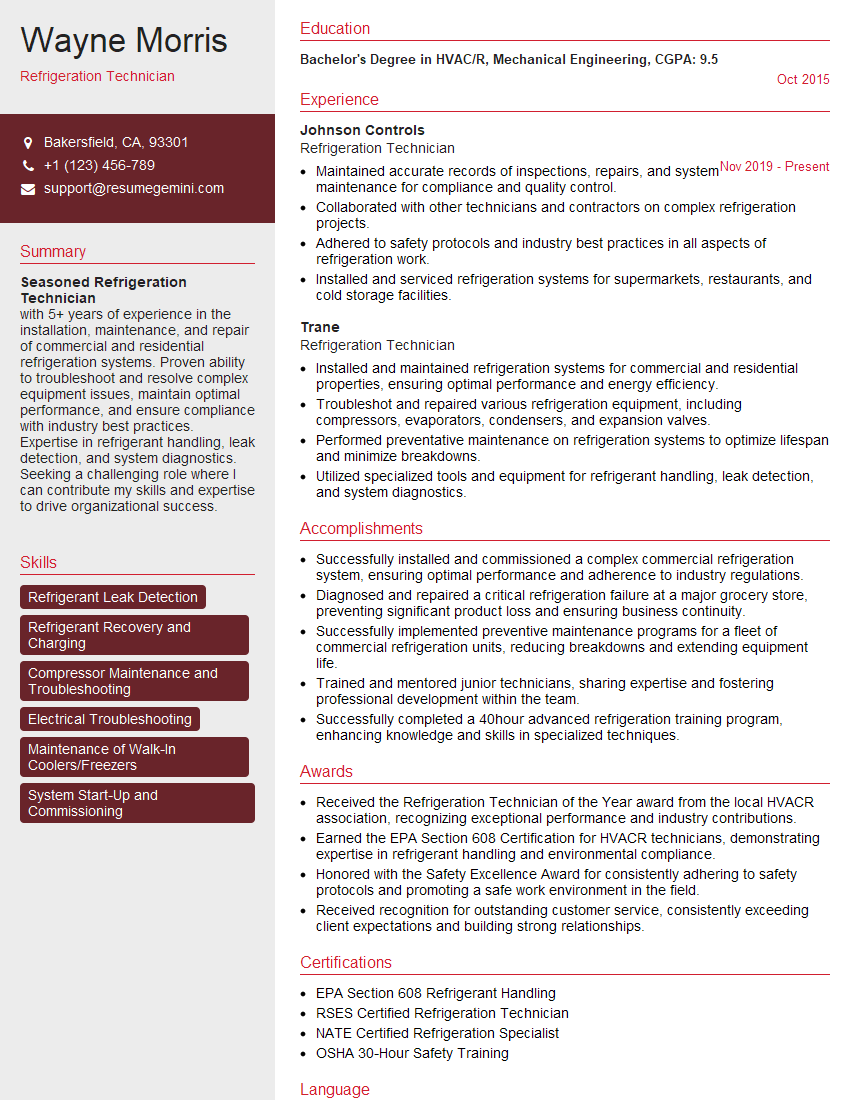
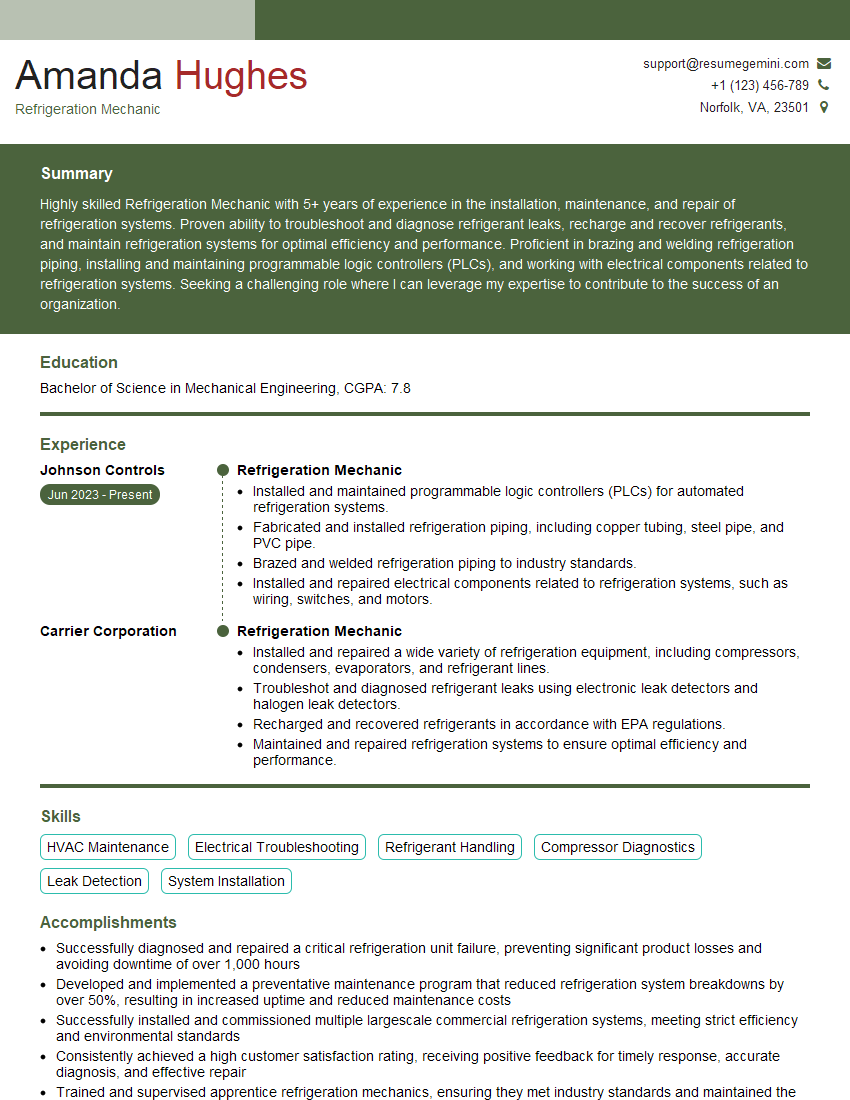
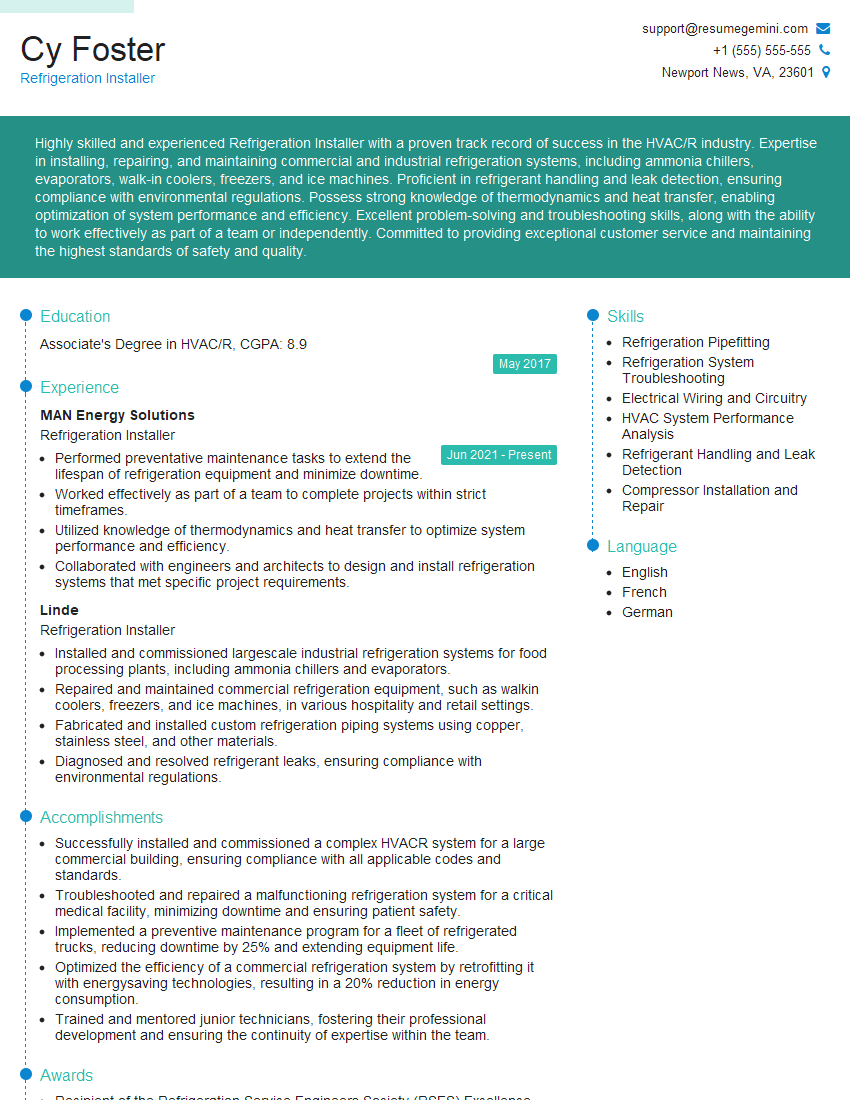
Mastering the principles of refrigeration and HVAC is crucial for a successful and rewarding career in this growing field. A strong understanding of these concepts will significantly enhance your job prospects and open doors to exciting opportunities. To maximize your chances of landing your dream role, it’s essential to present your skills and experience effectively through a well-crafted resume. An ATS-friendly resume is key to getting noticed by potential employers. We highly recommend using ResumeGemini to build a professional and impactful resume that highlights your expertise in Understanding of Refrigeration and HVAC Principles. ResumeGemini provides examples of resumes tailored to this field, helping you create a document that stands out from the competition.
Explore more articles
Users Rating of Our Blogs
Share Your Experience
We value your feedback! Please rate our content and share your thoughts (optional).
What Readers Say About Our Blog
Really detailed insights and content, thank you for writing this detailed article.
IT gave me an insight and words to use and be able to think of examples