Are you ready to stand out in your next interview? Understanding and preparing for Tuck Pointing interview questions is a game-changer. In this blog, we’ve compiled key questions and expert advice to help you showcase your skills with confidence and precision. Let’s get started on your journey to acing the interview.
Questions Asked in Tuck Pointing Interview
Q 1. What are the different types of mortar used in tuckpointing?
Mortar selection for tuckpointing is crucial for longevity and aesthetic appeal. The type of mortar used depends largely on the existing mortar and the building’s age and style. We typically use a Type N mortar for most tuckpointing jobs. This is a medium-strength mortar suitable for most masonry applications and provides a good balance of strength and workability. However, matching the historical mortar type is paramount in preserving the building’s character. For instance, older buildings might have used a lime-based mortar, requiring a specifically blended mix to achieve a proper match in strength and appearance. Other types include Type S (high strength, good for load-bearing walls) and Type M (high strength, for severe exposure). The choice is always made after a careful assessment of the existing structure.
- Type N: Medium strength, common choice for most tuckpointing.
- Type S: High strength, ideal for load-bearing walls.
- Type M: High strength, used in severe exposure conditions.
- Lime-based mortars: Historically used, require specific blends for matching.
Q 2. Explain the process of tuckpointing, step-by-step.
Tuckpointing is a meticulous process, demanding precision and patience. Think of it as a delicate form of masonry surgery. Here’s a step-by-step breakdown:
- Preparation: Thoroughly clean the brick surface, removing loose mortar, dirt, and debris. This is often done with wire brushes, chisels, and water pressure washing.
- Mortar Removal: Carefully remove the deteriorated mortar from the joints using a tuckpointing chisel, creating a clean, V-shaped groove. Avoid damaging the bricks. Think of it as carving away only the diseased part of a tooth, leaving the healthy part untouched.
- Joint Preparation: Once the old mortar is removed, dampen the brickwork to aid adhesion of the new mortar. This is crucial for proper bonding.
- Mortar Mixing: Mix the mortar according to manufacturer’s instructions, ensuring a consistent, workable consistency. The mix should be neither too dry nor too wet.
- Tuckpointing: Using a tuckpointing tool (a narrow trowel), carefully fill the raked-out joints with the new mortar, ensuring a tight, even fit. The goal is to create a crisp, clean joint matching the original profile. The key here is subtle pressure; you’re not forcing the mortar in, but rather precisely placing it.
- Tooling: Once the mortar is partially set, use a tuckpointing tool to shape and refine the joints, creating a concave profile. This step gives the tuckpointing its characteristic look. This requires a light touch, almost a ‘sculpting’ motion.
- Curing: Protect the freshly tuckpointed area from harsh weather and allow it to cure properly according to the mortar manufacturer’s instructions. This is often done by covering the area to prevent too-rapid drying or freezing, to ensure a strong bond.
Q 3. What tools and equipment are essential for tuckpointing?
The right tools are essential for successful tuckpointing; it’s not just about brute force, but precision. Here’s what you’ll need:
- Tuckpointing Chisels: Various sizes for different joint widths.
- Wire Brushes: For cleaning brick surfaces.
- Tuckpointing Trowels: Narrow trowels for applying and shaping mortar.
- Pointing Tools: Jointing tools that assist in shaping the final appearance of the joints.
- Brick Hammer (or bolster chisel): For carefully removing stubborn mortar.
- Safety Glasses and Gloves: Crucial for protecting your eyes and hands.
- Wheelbarrow or buckets: For transporting mortar and water.
- Measuring tools: to accurately measure materials.
- Mixing tools: A hoe or other type of sturdy mixing tool.
Q 4. How do you prepare a surface for tuckpointing?
Surface preparation is the foundation of a successful tuckpointing job; it’s like prepping a canvas before painting. Thorough preparation will prevent problems later on. The process involves several key steps:
- Cleaning: Remove all loose mortar, dirt, debris, efflorescence (white powdery deposits), and any other contaminants from the brick surface. This often involves using wire brushes, chisels, and possibly a pressure washer (carefully – high pressure can damage the bricks).
- Moisture Testing: Assess the moisture content of the brickwork. Excessive moisture can hinder the adhesion of the new mortar. Allow sufficient drying time before proceeding.
- Raking Joints: Carefully remove the deteriorated mortar from the joints, creating a clean, V-shaped groove. The depth of the raking should be consistent across the entire surface. Avoid damaging the bricks.
- Repairing Damaged Bricks: If necessary, repair or replace severely damaged or crumbling bricks before proceeding with tuckpointing. This may involve using matching brick or specialized repair mortars.
Q 5. How do you match existing mortar color?
Color matching is an art in itself. Achieving an invisible repair requires precise color matching. I typically use a combination of techniques:
- Sample Collection: Collect samples of the existing mortar from inconspicuous areas.
- Visual Comparison: Compare the samples with available mortar colors. Note the shades, tones, and textures. Natural light is crucial for accurate comparison.
- Mortar Testing: Mix small batches of different mortar colors and test them on a inconspicuous section of the wall. Observe the appearance in varying lighting conditions.
- Color Adjustment: Adjust the color of the mortar by adding pigments or using pre-mixed colors. Small, incremental changes are best.
- Consultation with Suppliers: Mortar suppliers can help you find a close match or even custom blend a mortar based on your samples.
Remember, exact matching is rarely possible. The goal is to achieve a visually harmonious blend, minimizing the contrast between the new and old mortar.
Q 6. What are the common problems encountered during tuckpointing?
Several common problems can occur during tuckpointing. Identifying and addressing these proactively is crucial.
- Poor Mortar Adhesion: This often results from inadequate surface preparation or using the wrong mortar type. The solution is proper cleaning and selecting the right mortar for the substrate and conditions.
- Inconsistent Joint Widths: Inconsistent joint widths lead to an uneven appearance. Careful raking and consistent mortar application are key to avoid this.
- Uneven Mortar Application: Uneven application leads to an unprofessional finish. Proper technique and skilled workmanship are vital.
- Incorrect Mortar Color: Poor color matching is noticeable and ruins the aesthetic effect. Thorough sample collection and testing are essential to achieve a match.
- Insufficient Curing Time: Not allowing sufficient curing time weakens the mortar and compromises durability. Following the manufacturer’s curing instructions is crucial.
Q 7. How do you address crumbling or deteriorated brickwork before tuckpointing?
Addressing crumbling brickwork before tuckpointing is essential for a lasting repair. It’s like fixing the foundation before building a house.
- Assessment: Thoroughly inspect the brickwork to identify the extent of damage. Look for cracks, loose bricks, and deteriorated mortar.
- Loose Brick Repair: Carefully remove loose bricks and repoint them using a suitable mortar. If a brick is severely damaged, it must be replaced with a matching brick.
- Cracks and Holes Repair: Repair any cracks using appropriate patching techniques or epoxy. Larger holes may require specialized mortars or brick infill.
- Cleaning and Stabilization: Clean the affected area and stabilize the brickwork before tuckpointing to ensure the new mortar will have a sound base to adhere to.
- Efflorescence Removal: Removing efflorescence, the white, powdery deposits that can occur, prevents it from interfering with the proper adhesion of the tuckpointing mortar.
In severe cases of deterioration, consult a structural engineer to assess the structural integrity of the wall before any repair work begins.
Q 8. Describe your experience with different types of brick and stone.
My experience spans a wide range of brick and stone types commonly found in historical and modern structures. I’ve worked with everything from common clay bricks – varying in size, color, and texture – to more specialized materials like reclaimed brick, various types of stone (limestone, sandstone, granite, etc.), and even concrete blocks that require a nuanced approach to tuckpointing.
For example, working with reclaimed brick necessitates extra care due to its age and often fragile condition. The mortar selection and application technique must be adjusted to avoid further damage. Similarly, the porous nature of sandstone requires a mortar mix with specific properties to ensure proper adhesion and prevent water penetration. Understanding the characteristics of each material—its porosity, strength, and potential weaknesses—is crucial for successful tuckpointing.
- Clay Bricks: These come in various sizes, colors, and textures, demanding careful matching of mortar color and texture.
- Reclaimed Bricks: Require a gentler touch due to their age and potential fragility.
- Stone: Limestone, sandstone, granite, and others all need specific mortar considerations based on their porosity and strength.
- Concrete Blocks: These present unique challenges due to their different bonding properties compared to brick and stone.
Q 9. What safety precautions do you follow during tuckpointing?
Safety is paramount. On every tuckpointing job, I prioritize safety through meticulous adherence to established procedures. This includes:
- Fall Protection: Using harnesses and safety lines when working at heights.
- Respiratory Protection: Wearing a respirator to prevent inhalation of dust and harmful particles from the mortar and old material.
- Eye Protection: Safety glasses are mandatory to protect against flying debris.
- Hearing Protection: Ear protection is utilized, especially when using power tools like grinders.
- Proper Tool Usage: Ensuring all tools are in good working order and used correctly to minimize the risk of injury.
- Site Cleanup: Maintaining a clean and organized worksite to prevent accidents.
I also emphasize regular safety briefings with my team to ensure everyone is aware of potential hazards and best practices.
Q 10. How do you determine the appropriate mortar mix for a specific project?
Determining the appropriate mortar mix is a critical step that influences the longevity and aesthetic appeal of the tuckpointing. It’s not a one-size-fits-all process.
I consider several factors:
- The type of brick or stone: The porosity and strength of the existing material dictate the mortar’s properties.
- The existing mortar: Analyzing the existing mortar helps determine its composition and informs the selection of a compatible replacement. Sometimes, I even take samples for laboratory analysis.
- The climate: The project’s location and its typical weather patterns influence the mortar’s ability to withstand freeze-thaw cycles and moisture.
- Aesthetic requirements: The color and texture of the mortar should complement the existing brickwork for a seamless finish.
I typically work with a mix of Portland cement, lime, and sand, adjusting the proportions to meet the specific project needs. For instance, a higher lime content might be beneficial in harsh climates, while a different ratio might be necessary for a particular brick type.
Q 11. Explain the difference between repointing and tuckpointing.
While both repointing and tuckpointing involve replacing deteriorated mortar, there’s a significant difference in the approach.
Repointing is a more aggressive process where all the existing mortar is removed, often to a considerable depth. It’s typically used when the mortar is severely damaged or decayed. Think of it as a complete overhaul.
Tuckpointing, conversely, is a more conservative and precise technique. It involves removing only the deteriorated mortar from the joints, leaving the sound mortar intact. New mortar is then carefully applied, matching the color and texture of the original as closely as possible. It’s like a cosmetic restoration focused on preserving the original look.
Think of it this way: repointing is like replacing a whole wall, while tuckpointing is like patching a few cracks.
Q 12. How do you ensure the longevity of your tuckpointing work?
Ensuring the longevity of my tuckpointing work involves a multi-faceted approach:
- Proper Material Selection: Using high-quality materials that are appropriate for the climate and the type of brick or stone.
- Meticulous Application: Precisely filling the joints to prevent water penetration and ensure structural integrity. Proper tooling is crucial here.
- Protection during curing: Protecting the newly applied mortar from harsh weather conditions during the curing process.
- Detailed documentation: Maintaining detailed records of the materials used and the techniques applied, providing valuable information for future maintenance.
By carefully following these steps, I ensure the tuckpointing work not only looks great but also stands the test of time, protecting the structure from water damage and extending its lifespan.
Q 13. How do you handle unforeseen challenges during a tuckpointing project?
Unforeseen challenges are inevitable in any construction project. My approach involves careful preparation and adaptability. For example, I might encounter unexpectedly deteriorated brickwork requiring more extensive repair than initially planned. Or, the existing mortar might be more difficult to remove than anticipated.
In such cases, I thoroughly assess the situation, document the findings, and discuss the necessary adjustments with the client. This may involve revising the project scope, adjusting the timeline, and re-evaluating the budget. Open communication and proactive problem-solving are crucial to overcome these challenges and deliver a successful outcome.
For example, discovering crumbling bricks during a project necessitates a shift from tuckpointing to more extensive brick repair, which I’d clearly communicate and document for the client’s approval.
Q 14. What is the importance of proper tooling in tuckpointing?
Proper tooling is absolutely essential for high-quality tuckpointing. The right tools ensure precision, efficiency, and a clean finish. Using the wrong tools can damage the existing brickwork and result in a subpar result.
My toolkit includes specialized items such as:
- Tuckpointing tools: These include various chisels, rakes, and pointing trowels designed specifically for careful mortar removal and application.
- Grinders and other power tools: Used cautiously and strategically for removing stubborn mortar, but always with due attention to the surrounding brickwork.
- Brushes and sponges: For cleaning the joints and ensuring a smooth finish.
- Levels and measuring tools: For maintaining accuracy and consistency throughout the project.
Each tool plays a critical role in achieving a professional and long-lasting result. The skill lies not only in selecting the correct tools but also in mastering their use to minimize damage to the surrounding brickwork.
Q 15. What are the signs of improper tuckpointing?
Improper tuckpointing is often subtle but can lead to significant long-term damage. Look for these telltale signs:
- Uneven mortar joints: The mortar should be neatly recessed, flush with the brick face, and consistent in width. Ragged, bulging, or excessively deep joints indicate poor workmanship.
- Cracking or crumbling mortar: This suggests the mortar mix was incorrect or improperly applied, lacking sufficient strength or adhesion. Cracks often run along the joint, sometimes extending into the brick itself.
- Different mortar color: The new mortar should closely match the existing mortar in color and texture. A stark contrast is a clear sign of poorly matched materials or inadequate preparation.
- Visible gaps between mortar and brick: Proper tuckpointing ensures a tight bond between the mortar and brick. Gaps allow water penetration, leading to freeze-thaw damage and brick deterioration. This is often a sign that the bricks weren’t properly cleaned before application.
- Mortar staining on brick face: This occurs when excess mortar is not promptly removed during the process, leaving unsightly marks on the brick.
Think of it like baking a cake: if you don’t use the right ingredients and follow the recipe, the end result won’t be good. Similarly, improper techniques in tuckpointing lead to a weak and visually unappealing outcome.
Career Expert Tips:
- Ace those interviews! Prepare effectively by reviewing the Top 50 Most Common Interview Questions on ResumeGemini.
- Navigate your job search with confidence! Explore a wide range of Career Tips on ResumeGemini. Learn about common challenges and recommendations to overcome them.
- Craft the perfect resume! Master the Art of Resume Writing with ResumeGemini’s guide. Showcase your unique qualifications and achievements effectively.
- Don’t miss out on holiday savings! Build your dream resume with ResumeGemini’s ATS optimized templates.
Q 16. How do you clean up after a tuckpointing job?
Clean-up after a tuckpointing job is crucial for both aesthetics and safety. My process involves these steps:
- Removal of excess mortar: This is done immediately using tools like a stiff brush, a wire brush, and even a chisel (for hardened mortar). Careful scraping prevents damaging the brickwork.
- Washing the surface: Once the excess mortar is removed, I use a low-pressure water spray to wash away any remaining dust and debris. High-pressure washing can damage the mortar and brick.
- Disposal of waste materials: Mortar scraps and debris must be properly disposed of according to local regulations. This often involves using heavy-duty bags and appropriate waste containers.
- Protection of surrounding areas: Throughout the entire process, I use drop cloths and masking tape to protect windows, walkways, and plants from dust and accidental mortar splashes.
- Final inspection: Before leaving, I perform a thorough inspection to ensure that all excess mortar is removed, and the area is clean and safe.
Clean-up is a critical part of the job. A messy finish can undermine the excellent workmanship of the pointing itself.
Q 17. What is your experience with different types of pointing tools?
My experience encompasses a wide range of pointing tools, each suited for specific tasks. This includes:
- Pointing tools: These are essential for creating the precise, neatly recessed mortar joints. Different profiles and sizes cater to varying brick sizes and joint widths. I’ve worked with both traditional hand tools and newer, more ergonomic options.
- Mortar mixers: From small hand-held mixers for smaller jobs to larger, motorized mixers for extensive projects, I’ve used them all. The choice depends on the scale of the project and the desired consistency of the mortar.
- Chisels and hammers: These are critical for removing old, deteriorated mortar before applying new pointing. I am adept at using different types of chisels to efficiently remove mortar without causing unnecessary damage to the brickwork.
- Brushes and sponges: Essential for cleaning excess mortar and ensuring a smooth, finished appearance. The type of brush or sponge depends on the texture of the brick and the type of mortar used.
- Safety equipment: This includes appropriate safety glasses, gloves, and harnesses for working at heights – all tools I use diligently.
The right tool for the job is paramount. Improper tools can compromise the quality of the work and even lead to injury. My experience gives me the knowledge to select and use them appropriately.
Q 18. Describe a time you had to troubleshoot a problem during a tuckpointing project.
On a recent project, we encountered unexpectedly soft brick. The old mortar was easily removed, but the brick itself crumbled under pressure during the tuckpointing process. This threatened to significantly delay the project and compromise its structural integrity.
My solution involved a multi-step approach:
- Assessment: First, we carefully assessed the extent of the brick deterioration. We tested several areas to identify the affected areas.
- Material selection: We selected a high-strength, flexible mortar that would be more forgiving with the compromised brick.
- Technique adaptation: We adjusted our technique to minimize pressure on the bricks, using gentler tools and taking extra care during application. We also employed a smaller, more precise method to work around the weakened brick sections.
- Communication: We communicated the problem to the client, explaining the adapted approach and its impact on the timeline.
Successfully navigating this challenge required careful assessment, quick thinking, and clear communication. The result was a quality job delivered, albeit with a slightly adjusted timeline.
Q 19. How do you manage your time effectively on a tuckpointing project?
Effective time management on a tuckpointing project relies on meticulous planning and execution. My approach involves:
- Detailed assessment: Before starting, I conduct a thorough assessment of the area to be pointed, calculating the amount of material needed and the estimated time for each phase. This involves careful measurements and consideration of any unexpected issues that might arise.
- Phased approach: I break down the project into manageable phases, such as preparation, mortar mixing, application, and clean-up. This helps to track progress and adjust timelines as needed.
- Prioritization: I prioritize tasks to ensure the most critical aspects are completed first. For example, cleaning and preparing the bricks usually precedes the mortar application.
- Efficient workflows: I strive to optimize the workflow, minimizing downtime and material wastage. This includes having the appropriate tools and materials readily available.
- Regular monitoring: I regularly monitor progress against the schedule and make adjustments as necessary. This may involve reassessing the project scope or adjusting the workflow based on the site conditions.
Just like a conductor of an orchestra, I ensure that each part of the project plays its role efficiently and in perfect harmony with the other elements.
Q 20. How do you maintain quality control throughout a tuckpointing project?
Maintaining quality control is paramount in tuckpointing. My strategy involves:
- Material quality: I use high-quality materials from reputable suppliers, ensuring the mortar mix is correctly proportioned and consistent. This includes regular checks on the mix throughout the project.
- Adherence to specifications: I meticulously follow the project specifications, ensuring proper joint width, depth, and color matching.
- Regular inspections: Throughout the process, I perform regular inspections to check for inconsistencies in the mortar application, ensuring the work meets the required standards.
- Quality control checks: I have a system of checkpoints at each stage of the project. These allow me to identify and rectify problems early, minimizing the need for rework.
- Documentation: I maintain clear documentation throughout the project, including photographs and notes of any challenges faced or adjustments made.
Quality control is not an afterthought. It’s a continuous process ensuring the project delivers the best possible results.
Q 21. What is your experience with working at heights?
I have extensive experience working at heights. I’m certified in fall protection and always follow OSHA guidelines. This includes using appropriate safety harnesses, lanyards, and anchor points. I am comfortable with various scaffolding systems and rope access techniques. Safety is not negotiable; I prioritize my own well-being and the safety of others on the job site.
In fact, on several projects, I’ve had to adapt my approach to overcome height-related challenges—sometimes incorporating innovative solutions to ensure both safety and efficiency. For example, on one project, we used a specialized platform to safely work on a steeply pitched roof. Safety is not a luxury; it’s a fundamental aspect of every task I perform. It’s not just following regulations; it’s creating a secure environment for everyone involved.
Q 22. How do you estimate the time and materials needed for a tuckpointing project?
Estimating time and materials for a tuckpointing project requires a meticulous approach. It’s not just about the square footage; it’s about the condition of the existing mortar, the complexity of the design, and the accessibility of the area.
First, I conduct a thorough site inspection. This involves assessing the extent of deteriorated mortar, identifying any loose bricks or stones, and checking for underlying structural issues. I then meticulously measure the area requiring tuckpointing, documenting the height, length, and any irregularities.
- Material Estimation: This includes calculating the amount of matching mortar (considering color and type), brick cleaning solutions, and any necessary pointing tools. I factor in a percentage for waste and unforeseen circumstances.
- Time Estimation: This is where experience truly comes into play. I estimate the time needed for preparation (such as cleaning and removing loose mortar), the actual tuckpointing process, and the final cleaning. I consider factors like the weather, accessibility (scaffolding needs?), and the intricacy of the brickwork. For instance, a complex pattern will naturally take longer than a simple running bond.
Finally, I provide a detailed breakdown of these estimates, clearly outlining the materials and their costs, along with the estimated labor hours and corresponding charges. This ensures transparency and allows for a clear understanding of the total project cost.
Q 23. What is your experience with working in various weather conditions?
Weather significantly impacts tuckpointing. Water is the enemy of mortar, causing it to freeze and thaw, leading to further deterioration. Ideal conditions are dry, with temperatures above freezing.
My experience spans various climates. I’ve worked in scorching summers where shade and hydration were crucial, and in cold winters where windbreaks and controlled heating were essential to maintain mortar workability.
- Hot Weather: We use techniques like misting the bricks to prevent premature drying and ensure the mortar cures properly. Scheduling work during cooler parts of the day is essential.
- Cold Weather: This necessitates the use of special, frost-resistant mortars and possibly temporary enclosures to protect the work area from freezing temperatures. Careful monitoring of curing times is crucial.
- Rainy Weather: Tuckpointing cannot be done in the rain. We anticipate and adjust our schedules accordingly, using weather forecasting tools to optimize productivity.
Safety is paramount in any weather condition. Proper protective gear and equipment are used consistently to mitigate risks.
Q 24. Describe your experience with working on historic buildings.
I have extensive experience working on historic buildings, where preservation is paramount. These projects require a deep understanding of traditional techniques and materials to ensure the integrity of the original structure.
On a recent project restoring a Victorian-era townhouse, I worked closely with historical preservationists to match the original mortar color and texture perfectly. The use of lime-based mortars was critical, as it’s more compatible with older brickwork and allows for breathability, preventing moisture damage.
Beyond the materials, the approach is different. It’s not just about fixing the problem; it’s about blending seamlessly with the existing structure. We carefully document the process and take extra precautions to avoid causing any unnecessary damage. We often use specialized tools and techniques to minimize disruption and maintain the historic character of the building.
Q 25. How do you ensure compliance with building codes and regulations?
Compliance with building codes and regulations is a top priority. I stay up-to-date on local, state, and national building codes, including those related to masonry repair and historic preservation.
Before starting any project, I review the relevant codes and obtain the necessary permits. I work closely with building inspectors throughout the project, ensuring that all work adheres to the standards. Documentation is key, meticulously keeping records of materials used, techniques employed, and inspections conducted.
For example, in a recent project, we had to comply with strict guidelines regarding the type of mortar allowed for a historically designated building. Understanding and adhering to these specific requirements ensured the project’s success and avoided potential delays or complications.
Q 26. What are your strengths and weaknesses as a tuckpointer?
My greatest strength is my meticulous attention to detail. Tuckpointing requires precision, and I pride myself on creating seamless, long-lasting repairs that are virtually invisible.
My experience in working with diverse materials and techniques, especially on historic buildings, sets me apart.
If I had to point out a weakness, it would be my perfectionism. Sometimes, this can lead to taking slightly longer to complete a project than initially estimated, although I always strive to be efficient and well-organized.
Q 27. What are your salary expectations?
My salary expectations are commensurate with my experience and the market rate for skilled tuckpointers in this region. I’m open to discussing a compensation package that reflects the specific requirements and challenges of the role.
Q 28. Do you have any questions for me?
Yes, I have a few questions. Could you tell me more about the specific projects your company is currently undertaking? I’d also like to understand more about the company’s commitment to using sustainable and historically appropriate materials. Finally, what are the opportunities for professional development and advancement within the company?
Key Topics to Learn for Your Tuck Pointing Interview
- Mortar Selection and Preparation: Understanding different mortar types (lime, cement, etc.), their properties, and the proper mixing techniques for achieving optimal strength and durability in tuck pointing projects.
- Matching Existing Mortar: Identifying the existing mortar type and color to ensure a seamless and aesthetically pleasing repair. This includes practical techniques for color matching and achieving consistent results.
- Tool Selection and Usage: Familiarity with various tools used in tuck pointing, including rakes, pointing trowels, and jointing tools, and demonstrating knowledge of their proper application and maintenance.
- Joint Preparation and Cleaning: Understanding the process of preparing the joints for tuck pointing, including raking out damaged mortar, cleaning the joint surfaces, and ensuring proper depth for new mortar application. This involves both theoretical knowledge and practical skills.
- Tuck Pointing Techniques: Mastering the techniques for applying new mortar to the joints, achieving a neat and uniform finish, and controlling the depth and shape of the pointing. This requires a deep understanding of the process and its nuances.
- Weather Considerations: Understanding the impact of weather conditions on tuck pointing and the necessary precautions to take to ensure the successful completion of the project. This includes knowledge of ideal working conditions and potential challenges posed by adverse weather.
- Health and Safety: Demonstrating awareness of health and safety regulations and best practices related to tuck pointing, including the use of personal protective equipment (PPE) and safe handling of materials.
- Troubleshooting and Problem Solving: Being able to identify and address common problems encountered during tuck pointing, such as cracking, crumbling, and uneven joints. This involves understanding the root causes of these issues and implementing appropriate solutions.
- Project Management and Estimation: Demonstrating understanding of project planning, material estimation, and scheduling for efficient tuck pointing projects.
Next Steps
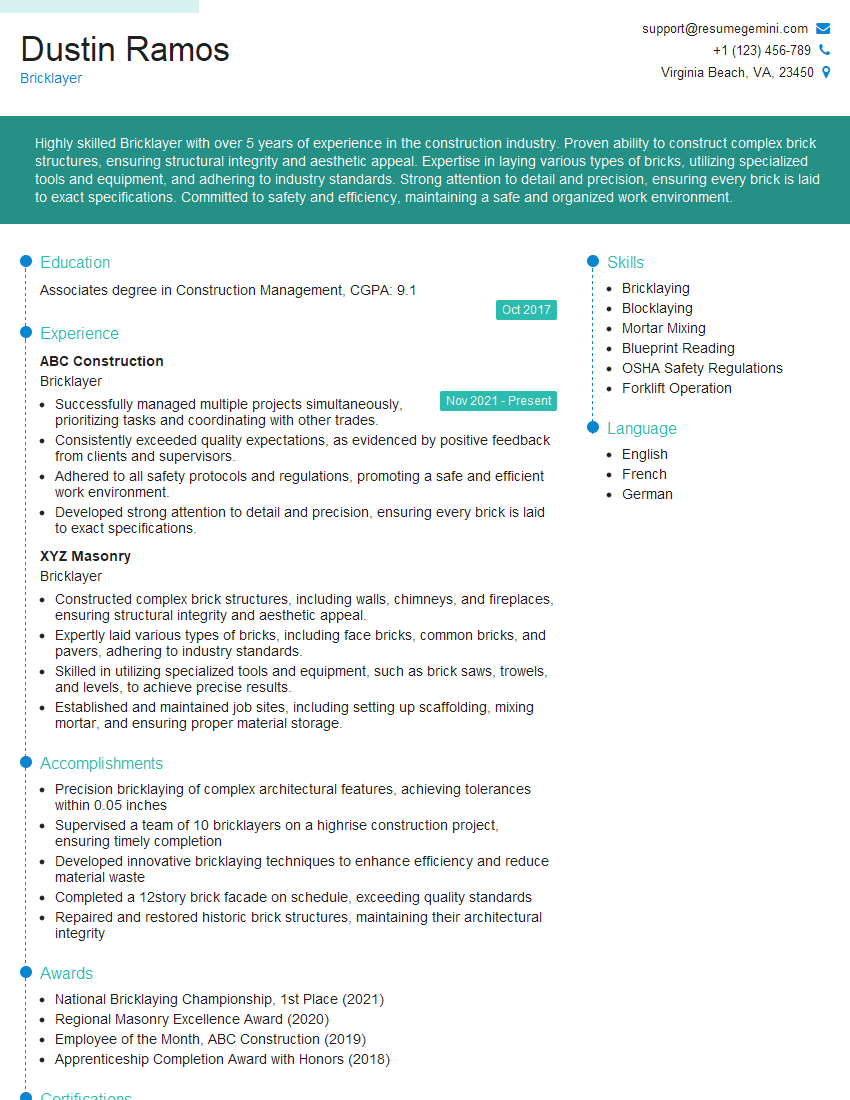
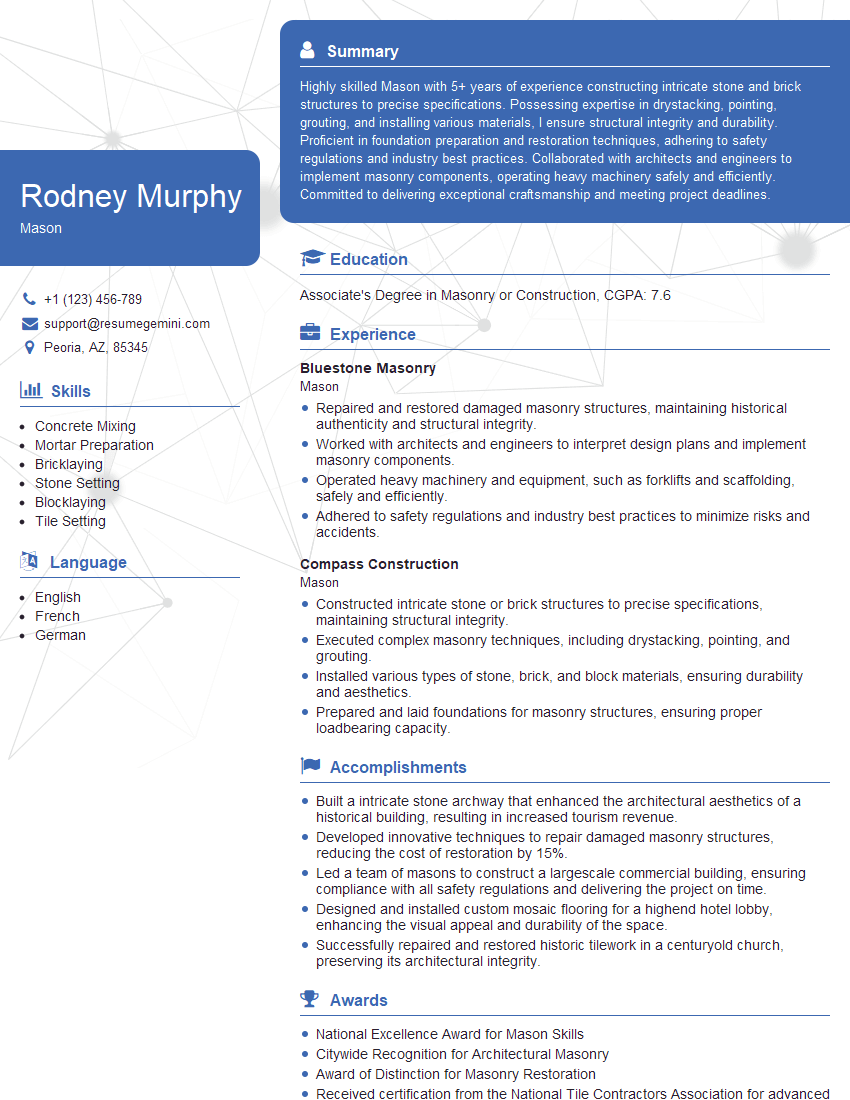
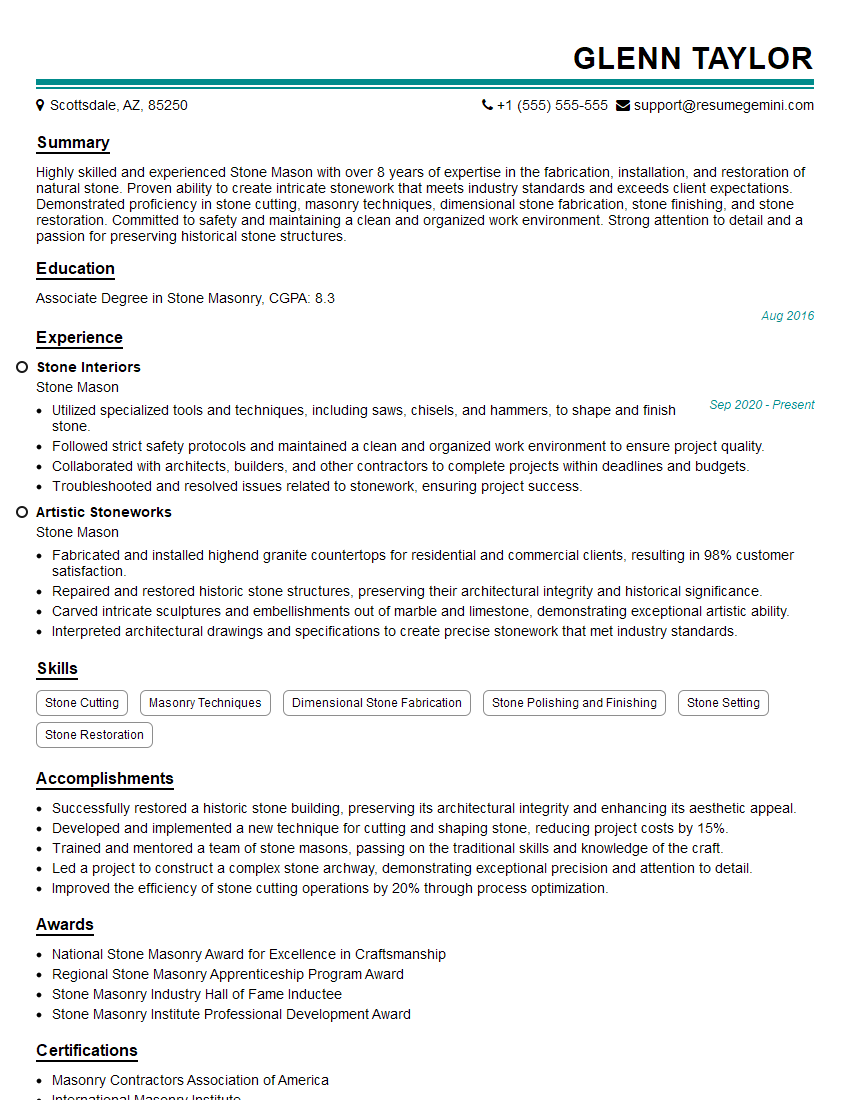
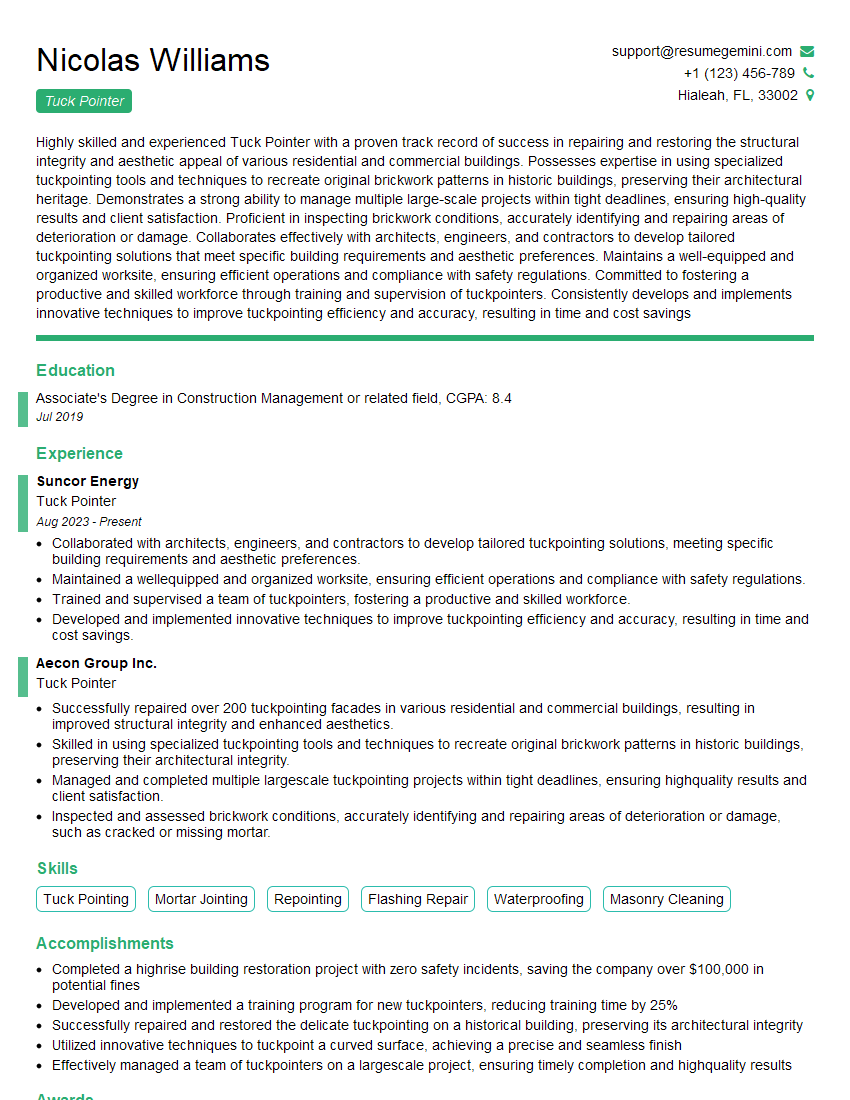
Mastering tuck pointing opens doors to a rewarding career in the construction industry, offering opportunities for specialization and advancement. A well-crafted resume is crucial for showcasing your skills and experience to potential employers. Creating an ATS-friendly resume is essential for maximizing your job prospects. ResumeGemini is a trusted resource to help you build a professional and impactful resume. We provide examples of resumes tailored to the Tuck Pointing field to help you get started.
Explore more articles
Users Rating of Our Blogs
Share Your Experience
We value your feedback! Please rate our content and share your thoughts (optional).
What Readers Say About Our Blog
Really detailed insights and content, thank you for writing this detailed article.
IT gave me an insight and words to use and be able to think of examples