Interviews are opportunities to demonstrate your expertise, and this guide is here to help you shine. Explore the essential Diagnosis of Compressor Faults interview questions that employers frequently ask, paired with strategies for crafting responses that set you apart from the competition.
Questions Asked in Diagnosis of Compressor Faults Interview
Q 1. Explain the different types of compressors and their typical failure modes.
Compressors are broadly categorized into several types, each with its own failure mechanisms. Let’s look at some common ones:
- Reciprocating Compressors: These use pistons to compress gas. Failures often involve piston ring wear, valve issues (sticking or broken), connecting rod problems, and crankshaft damage. Think of it like a car engine – wear and tear on moving parts are common causes. For example, a worn piston ring can lead to reduced compression and increased oil consumption.
- Rotary Screw Compressors: These use two meshing helical screws to compress gas. Typical failures include rotor damage (scoring or wear), oil leaks (from seals or bearings), and bearing failures. Imagine the screws as gears – if one is damaged, the entire system is affected. A common problem is oil contamination, leading to poor lubrication and eventual rotor damage.
- Centrifugal Compressors: These use rotating impellers to increase gas pressure. Failures can include impeller damage (due to foreign objects or imbalance), bearing failures, and seal leaks. Consider a spinning fan – if it’s unbalanced, it will vibrate excessively and potentially damage the bearings. Similarly, an unbalanced impeller in a centrifugal compressor can cause significant damage.
- Scroll Compressors: These employ two spiral scrolls to trap and compress gas. Typical failures are relatively rare but include scroll damage (from foreign objects), bearing wear, and refrigerant leaks. Due to their design, scroll compressors are often known for their quieter operation and fewer moving parts compared to other types.
The specific failure modes often depend on factors like the type of gas being compressed, operating conditions (temperature, pressure), and maintenance practices.
Q 2. Describe the process for diagnosing a compressor that is not starting.
Troubleshooting a compressor that won’t start requires a systematic approach. Let’s break it down:
- Check the Power Supply: Ensure the power is on and that the breaker hasn’t tripped. A simple check but often overlooked!
- Examine the Motor: Check for any visible damage, such as burnt wiring or a seized motor. Listen for any unusual sounds when trying to start it – a grinding sound might indicate a seized bearing.
- Verify the Controls: Examine the pressure switches, safety switches, and control circuitry to ensure they’re operating correctly. Often a simple switch problem prevents startup. Consult wiring diagrams if necessary.
- Check Starting Components: Depending on the type of compressor, this might include examining starting capacitors (for single-phase motors), starter relays, or other starting mechanisms. A faulty capacitor, for example, is a frequent cause of motor failure to start.
- Inspect the Unloader Valve (if applicable): Ensure the unloader valve is working correctly and allowing the compressor to start without excessive load. This valve relieves pressure before startup.
- Check for Low Oil Level: Low oil level can prevent the motor from starting or cause immediate damage. Refer to the compressor’s manual for the correct oil level.
Remember to always follow safety procedures and consult the manufacturer’s documentation for your specific compressor model.
Q 3. How would you troubleshoot a compressor with high discharge temperature?
High discharge temperature is a critical issue that can significantly damage a compressor. The troubleshooting process involves checking several components:
- Check for Refrigerant Charge: Insufficient refrigerant can cause high discharge temperatures. Proper refrigerant levels need to be maintained.
- Inspect the Condenser: A dirty or blocked condenser restricts airflow, leading to increased discharge temperatures. Cleaning the condenser coils (if applicable) is often a simple fix.
- Examine the Cooling Fans: Check that the condenser fans are working properly. A faulty fan motor or obstructed airflow can dramatically increase temperatures.
- Verify the Expansion Valve (or capillary tube): A restricted expansion valve or capillary tube will reduce refrigerant flow, causing overheating.
- Check the Compressor Valves: Faulty suction or discharge valves can increase the temperature. This might require a specialist to diagnose.
- Inspect for Internal Leaks: Internal leaks in the compressor itself can cause excessive temperatures, indicating a serious problem requiring professional attention.
Always use appropriate safety measures when working with refrigerant and high-pressure systems. A professional technician should be consulted for diagnosis and repair if problems are not immediately obvious.
Q 4. What are the common causes of compressor overheating?
Compressor overheating stems from several potential issues:
- Insufficient Cooling: This is the most common cause, including dirty condensers, faulty cooling fans, restricted airflow, and high ambient temperatures.
- Low Refrigerant Charge: Less refrigerant leads to less efficient cooling and higher temperatures.
- High Suction Pressure: This can be caused by problems in the refrigeration cycle, such as restricted evaporator coils.
- High Discharge Pressure: Often caused by system restrictions such as plugged filters or other components.
- Internal Compressor Problems: Worn or damaged internal components can lead to friction and heat generation.
- Motor Overload: If the motor is overworked, it generates excessive heat.
Imagine a car engine – without proper cooling, it will overheat. Similarly, compressors need efficient cooling to operate correctly.
Q 5. How do you diagnose a compressor with excessive vibration?
Excessive vibration indicates a mechanical problem that requires immediate attention. The troubleshooting process starts with:
- Visual Inspection: Carefully examine the compressor for any loose parts, misalignment, or damage. Look for cracks, bends, or signs of wear and tear.
- Check for Foundation Problems: Ensure the compressor is securely mounted on a stable foundation. Poor mounting is a common source of vibration.
- Measure Vibration Levels: Use a vibration meter to quantify the vibration levels. Compare the readings to the manufacturer’s specifications to identify excessive vibration.
- Check for Internal Imbalance: Internal parts like impellers or rotors may be unbalanced, leading to excessive vibration. This usually requires professional diagnosis.
- Inspect Bearings: Worn or damaged bearings are a major source of vibration. Listen for unusual noises – growling or rumbling sounds often indicate bearing problems.
- Check for Misalignment: Misalignment between the motor and compressor can cause significant vibrations. This requires careful checking of alignment using appropriate tools.
Excessive vibration can cause premature wear, damage, and ultimately catastrophic failure. Early detection and correction are crucial.
Q 6. Explain the steps involved in checking compressor oil level and quality.
Checking compressor oil is essential for maintaining its health and longevity. Here’s the process:
- Safety First: Always turn off and de-energize the compressor before checking the oil.
- Locate the Oil Sight Glass (or dipstick): Most compressors have a sight glass or dipstick to check the oil level. Consult your manual to locate it precisely.
- Check the Oil Level: Observe the oil level in the sight glass or use the dipstick. Ensure it’s within the manufacturer’s recommended range. Low oil level is a serious problem.
- Check the Oil Condition: Inspect the oil for color, clarity, and the presence of contaminants. Fresh oil is usually clear and amber. Dark, cloudy oil suggests contamination or degradation.
- Sample the Oil (If Possible): For a more thorough check, sample the oil and send it to a laboratory for analysis. This provides a more detailed evaluation of its quality and condition.
- Consult the Manual: Always refer to the manufacturer’s instructions for proper oil type and change intervals. Incorrect oil can severely damage the compressor.
Regular oil checks and changes are crucial for preventing premature wear and maintaining optimal compressor performance. Think of it as regular maintenance on a car engine; it’s vital for long-term reliability.
Q 7. How would you diagnose a compressor with low capacity?
Low compressor capacity means it’s not delivering the required amount of compressed air or refrigerant. To diagnose this:
- Check System Pressure: Measure the suction and discharge pressures to compare them to the manufacturer’s specifications. Low suction pressure can indicate issues in the refrigeration or air handling system. Low discharge pressure could indicate a problem with the compressor itself.
- Inspect for Leaks: Check for leaks in the entire system – leaks reduce the system’s capacity and efficiency.
- Check the Refrigerant Charge (if applicable): Insufficient refrigerant charge dramatically reduces the cooling or compression capacity.
- Examine the Condenser and Evaporator (if applicable): Fouled or restricted coils can severely reduce the capacity of the system.
- Verify Motor Performance: Ensure the motor is receiving adequate power and is functioning correctly. A failing motor will reduce the compressor’s capacity.
- Inspect Compressor Valves: Worn or damaged valves significantly reduce capacity and should be checked by a specialist.
- Check for Internal Compressor Problems: Internal wear or damage can result in a marked drop in performance. This might require professional diagnosis and repair.
Addressing low capacity issues early prevents further damage and ensures the system operates efficiently. Consider this analogous to a car engine lacking power – there’s usually an underlying cause.
Q 8. What are the signs of a compressor with internal leaks?
Internal leaks in a compressor manifest in several ways, primarily impacting its efficiency and performance. Imagine a punctured tire – it loses pressure, and similarly, a compressor with internal leaks loses refrigerant. This leads to a reduction in cooling capacity and increased energy consumption.
- Reduced Cooling Capacity: The system struggles to reach the desired temperature because refrigerant is escaping.
- Increased Running Time: The compressor works harder and longer to compensate for the refrigerant loss.
- Lower Discharge Pressure: Since less refrigerant is circulating, the pressure at the discharge side will be lower than expected.
- Oil Slugging: In severe cases, escaping refrigerant can carry lubricating oil into the system, causing further complications.
- Refrigerant Leaks: You might notice a significant drop in refrigerant levels over time. This is often accompanied by a hissing sound near the compressor or other components.
For example, a refrigerator consistently running but failing to adequately cool its contents strongly suggests an internal leak. In industrial settings, a significant drop in system pressure despite adequate refrigerant charge points towards internal leaks in the compressor or other components.
Q 9. Describe the procedure for checking compressor suction and discharge pressures.
Checking compressor suction and discharge pressures is crucial for diagnosing various issues. It’s like taking a patient’s vital signs – the readings offer critical information about the system’s health.
The procedure involves using pressure gauges connected to the appropriate ports on the compressor. Safety is paramount – always ensure the system is de-energized and the refrigerant is properly handled. Here’s a step-by-step guide:
- Safety First: Isolate the system and ensure it’s depressurized before attempting any pressure checks.
- Connect Gauges: Attach low-pressure gauges to the suction line and high-pressure gauges to the discharge line. Ensure leak-free connections.
- Start the Compressor: Turn on the compressor and allow it to run for a sufficient period to stabilize pressure readings.
- Record Readings: Carefully record both suction and discharge pressures. These readings should be compared against the manufacturer’s specifications for the specific refrigerant and compressor model.
- Analyze Readings: Compare the readings to the manufacturer’s specifications. Significant deviations indicate potential problems.
For instance, abnormally low suction pressure coupled with normal discharge pressure might point to a restriction in the suction line. Conversely, low discharge pressure alongside normal suction pressure could signify an internal compressor leak or a discharge restriction.
Q 10. How do you interpret compressor amp readings?
Compressor amp readings directly reflect the electrical current drawn by the motor. High amp draw indicates that the compressor is working harder than it should, analogous to a car engine struggling to climb a steep hill. Interpreting these readings requires careful analysis and a comparison against the nameplate current (the maximum safe current the motor can handle).
- High Amp Draw: This can indicate several problems, including internal leaks, low refrigerant charge, dirty condenser coils, or a failing compressor motor. A consistently high amp draw exceeding the nameplate current can lead to overheating and motor burnout.
- Low Amp Draw: This is generally less problematic, but it could signal low refrigerant charge, a system restriction, or an electrical problem.
- Fluctuating Amp Draw: Erratic changes in the amp draw frequently indicate issues such as a faulty starting capacitor or a problem with the compressor’s internal valves.
Let’s say the nameplate current of a compressor is 15 amps, but the reading consistently shows 20 amps. This substantial increase indicates an excessive load on the motor, possibly due to a restricted system or internal compressor issues needing immediate attention.
Q 11. Explain the importance of proper compressor lubrication.
Proper compressor lubrication is absolutely critical for longevity and performance. The oil acts as a lubricant, coolant, and sealant within the compressor, minimizing friction and preventing wear. Think of it as the lifeblood of the compressor.
- Reduced Friction and Wear: Lubrication minimizes friction between moving parts, extending the compressor’s lifespan and preventing premature failure.
- Effective Cooling: The oil helps to dissipate heat generated during operation, preventing overheating and damage.
- Sealing: The oil assists in sealing the compressor’s internal components, preventing refrigerant leaks.
- Preventing Corrosion: Lubrication protects internal components from corrosion and rust.
Insufficient lubrication leads to increased friction, overheating, and ultimately, catastrophic failure. The consequences can be significant, from costly repairs to system downtime.
Q 12. What safety precautions should be taken when working on a compressor?
Safety is paramount when working on any compressor. Refrigerants are often toxic, flammable, or both. High-pressure systems can cause severe injuries. Remember always to treat a compressor system with respect.
- Lockout/Tagout Procedures: Always lock out and tag out the electrical power to the compressor before performing any work.
- Personal Protective Equipment (PPE): Wear appropriate PPE, including safety glasses, gloves, and protective clothing. Consider respiratory protection depending on the refrigerant in use.
- Proper Handling of Refrigerants: Follow safe handling procedures when dealing with refrigerants. Dispose of refrigerant properly according to environmental regulations.
- Pressure Relief: Carefully depressurize the system before performing any maintenance or repairs.
- Trained Personnel: Compressor work should be undertaken only by trained and qualified personnel.
Ignoring these precautions can lead to severe injuries, equipment damage, or environmental hazards.
Q 13. How do you determine the cause of a compressor short cycle?
A compressor short cycle, where the compressor frequently cycles on and off, is often a sign of a problem. This erratic behavior can be caused by several factors.
- Low Refrigerant Charge: Insufficient refrigerant forces the compressor to work harder, leading to short cycles.
- Restricted Airflow: A dirty condenser coil, blocked airflow, or other obstructions can cause overheating and short cycling.
- Faulty Pressure Switch or Thermostat: A malfunctioning pressure switch or thermostat can trigger premature shutdowns.
- Overheating: High ambient temperature or insufficient cooling can lead to short cycling.
- Internal Compressor Problems: Problems with the compressor’s internal components can also cause short cycling.
Troubleshooting involves systematically checking each of these areas. For example, you might check the refrigerant charge first using a pressure gauge and then inspect the condenser for cleanliness. Using a multimeter to check the functionality of the pressure switch and thermostat helps isolate problems in these critical components.
Q 14. Describe the process for replacing a compressor.
Replacing a compressor is a complex procedure that should only be performed by skilled technicians. Safety is paramount.
- System Shutdown and Isolation: Completely shut down and isolate the system, ensuring no power is present.
- Refrigerant Recovery: Properly recover the refrigerant from the system using specialized equipment. This is crucial for environmental reasons and safety.
- Component Removal: Carefully disconnect the compressor’s electrical connections, suction and discharge lines, and any other associated components.
- Compressor Installation: Install the new compressor, ensuring proper alignment and secure connections.
- System Evacuation and Charging: Evacuate the system to remove any air or moisture. Then charge the system with the correct amount and type of refrigerant.
- Leak Detection and System Testing: Perform a thorough leak test to ensure no leaks exist. Test the system to verify proper operation.
Improper replacement can lead to system damage and refrigerant leaks. Remember, this is a complex process, and professional guidance is strongly recommended. The process may require specialized tools, and always follow manufacturer’s guidelines.
Q 15. What are the different types of compressor valves and their potential problems?
Compressor valves are crucial for the proper functioning of a refrigeration system. They ensure the unidirectional flow of refrigerant, preventing backflow and maintaining system pressure. Different types exist, each with its own potential issues:
- Suction Valves: These prevent refrigerant from flowing back into the suction line. Problems include sticking, leaking (causing reduced cooling capacity), or damage from foreign objects (causing noise and reduced efficiency).
- Discharge Valves: These prevent refrigerant from flowing back into the compressor cylinder. Issues include sticking (leading to overheating and potential compressor failure), leaking (reducing system pressure and cooling capacity), and cracking (due to high pressure and temperature).
- Reed Valves (Plate Valves): These are simpler, often found in smaller compressors. Problems arise from wear and tear, causing leaks or improper sealing, leading to reduced efficiency and performance. They can also break or become misaligned.
Imagine a one-way valve in a water pipe; if it malfunctions, water flow is disrupted, similarly, if a compressor valve fails, refrigerant flow is affected, impacting cooling performance.
Career Expert Tips:
- Ace those interviews! Prepare effectively by reviewing the Top 50 Most Common Interview Questions on ResumeGemini.
- Navigate your job search with confidence! Explore a wide range of Career Tips on ResumeGemini. Learn about common challenges and recommendations to overcome them.
- Craft the perfect resume! Master the Art of Resume Writing with ResumeGemini’s guide. Showcase your unique qualifications and achievements effectively.
- Don’t miss out on holiday savings! Build your dream resume with ResumeGemini’s ATS optimized templates.
Q 16. How would you diagnose a compressor with erratic run times?
Erratic run times in a compressor suggest a problem with the system’s control mechanism or a malfunctioning component. Here’s a diagnostic approach:
- Check the refrigerant charge: Insufficient refrigerant can lead to frequent cycling and erratic run times. Verify the charge using pressure gauges and temperature readings.
- Inspect the pressure switches: These switches control the compressor’s on/off cycle. A faulty switch may cause premature shutdowns or delayed starts.
- Examine the thermostat or controller: A malfunctioning thermostat might send inaccurate signals, causing the compressor to run erratically. Test the thermostat’s accuracy and response.
- Investigate electrical connections: Loose wiring or faulty connections can interrupt the power supply, causing inconsistent operation.
- Check the capacitor (for start-up): A faulty capacitor can prevent the compressor from starting or cause it to cycle improperly.
- Inspect for compressor internal faults: Though less likely to cause erratic run times alone, internal issues within the compressor (such as worn bearings) may contribute to the problem if combined with other issues.
Think of it like a car’s erratic acceleration – it could be a fuel issue, a faulty sensor, or a problem with the accelerator itself. Systematic troubleshooting pinpoints the root cause.
Q 17. Explain the relationship between compressor efficiency and refrigerant charge.
Compressor efficiency and refrigerant charge are intimately linked. The correct refrigerant charge is critical for optimal performance.
- Undercharge: Too little refrigerant leads to reduced cooling capacity, increased compressor run time (to compensate), higher discharge temperatures, and ultimately lower efficiency. The compressor works harder to achieve the desired cooling, wasting energy.
- Overcharge: Too much refrigerant increases the system pressure, leading to higher discharge temperatures, increased compressor current draw (potentially causing overheating and damage), and again, reduced efficiency. The extra refrigerant doesn’t contribute to cooling and creates unnecessary strain.
- Optimal Charge: The correct refrigerant charge ensures that the compressor operates at its design parameters, maximizing efficiency and minimizing energy consumption. This translates to lower operating costs and a longer lifespan for the compressor.
Imagine a car engine; too little fuel (refrigerant) causes sputtering and poor performance, whereas too much fuel leads to inefficient combustion. The ideal amount ensures optimal power and efficiency.
Q 18. What are the common causes of compressor noise?
Compressor noise can indicate various problems, and diagnosing the source requires careful listening and observation:
- Bearing Wear: A growling, rumbling, or grinding noise often points to worn compressor bearings. This is a serious issue requiring attention before catastrophic failure.
- Loose Components: Rattling or clanging sounds could indicate loose mounting bolts, internal components, or debris within the compressor.
- Valve Problems: Clicking, knocking, or hissing noises may indicate problems with suction or discharge valves, such as sticking or leaking.
- Refrigerant Flow Issues: High-pitched squeals or whistles might signal excessive refrigerant flow or restrictions in the system.
- Electrical Issues: Buzzing or humming sounds can sometimes indicate electrical problems, such as a bad capacitor or motor windings.
Think of the noise as a symptom; identifying the specific type of noise helps narrow down the potential causes.
Q 19. Describe how you would troubleshoot a compressor with a refrigerant leak.
Troubleshooting a refrigerant leak requires a systematic approach:
- Identify the leak: Use an electronic leak detector to pinpoint the leak location. Visual inspection may also reveal obvious leaks, especially if there’s oil staining or frost formation.
- Isolate the section: Once the leak is located, isolate that section of the system to prevent further refrigerant loss.
- Repair or replace the component: Depending on the leak location and the extent of the damage, the component might be repairable (e.g., soldering a small leak) or require replacement (e.g., a damaged compressor).
- Evacuate the system: Before recharging, evacuate the system to remove any remaining air and moisture.
- Recharge the system: After repair, carefully recharge the system with the correct amount and type of refrigerant.
- Test and monitor: After recharging, monitor the system’s pressure and temperature to ensure proper operation and the absence of further leaks.
Think of it like repairing a punctured tire. You locate the puncture, patch or replace the tire, and then refill it with air to ensure functionality.
Q 20. How do you identify and address problems with compressor wiring and controls?
Compressor wiring and controls are critical for safe and efficient operation. Problems can be broadly classified into two categories:
- Wiring Problems: Loose connections, damaged insulation, short circuits, incorrect wiring, or inadequate grounding can all cause compressor malfunctions, overheating, or even fires. Use a multimeter to test continuity and insulation resistance of all wiring.
- Control Problems: Faulty pressure switches, start relays, overload protectors, or electronic controllers can disrupt the compressor’s operation. These need to be individually tested to identify faulty components. Test the components for proper voltage, current, and switching action.
Properly functioning wiring and controls are like the nervous system of the compressor, ensuring appropriate power and control signals.
Q 21. Explain the use of diagnostic tools for compressor fault finding.
Diagnostic tools significantly aid in identifying compressor faults. These include:
- Multimeter: Essential for checking voltages, currents, resistances, and continuity in electrical circuits. This helps to locate short circuits, open circuits, and faulty components.
- Clamp Meter: Measures current without interrupting the circuit, crucial for assessing motor current draw, which helps detect overloads or compressor winding issues.
- Refrigerant Pressure Gauges: Measure high and low-side pressures to determine refrigerant charge levels, identify leaks, and assess system health. These gauges are vital for determining correct refrigerant charge.
- Temperature Sensors: Measure refrigerant temperatures at various points in the system to identify overheating, superheating, or subcooling issues, and further aid in diagnosis.
- Electronic Leak Detectors: Detect refrigerant leaks even small ones, enabling precise location of leaks in the system.
- Refrigerant Analyzers: Used to analyze the composition of refrigerant to detect contamination, which can negatively impact the compressor and its efficiency.
These tools, used effectively, enable a more precise and efficient diagnosis, reducing downtime and unnecessary repairs.
Q 22. Describe your experience with different compressor brands and models.
My experience spans a wide range of compressor brands and models, including reciprocating, centrifugal, and screw compressors from manufacturers like Ingersoll Rand, Sullair, Atlas Copco, and Kaeser. I’ve worked extensively with various sizes and applications, from small air compressors used in dental offices to large industrial compressors powering manufacturing plants. This broad exposure allows me to effectively troubleshoot issues across different designs and technologies. For instance, I’ve become intimately familiar with the nuances of variable speed drives (VSDs) used in modern compressors, as well as the complexities of oil-free and oil-flooded designs. Understanding the specific design characteristics of each brand and model is key to effective diagnosis.
Specifically, I’ve gained expertise in identifying common failure points within each brand. For example, I know that certain Ingersoll Rand models are prone to specific valve issues, while others might show more frequent issues with their cooling systems. This brand-specific knowledge enables me to prioritize my diagnostic steps and get to the root cause of a problem much more quickly.
Q 23. How would you determine if a compressor is damaged beyond repair?
Determining if a compressor is beyond repair requires a thorough assessment involving visual inspection, performance data analysis, and sometimes, destructive testing. I typically start with a visual inspection, looking for signs of significant physical damage like cracks in the casing, severe pitting on internal components, or extensive corrosion. Next, I analyze performance data – comparing actual performance to the manufacturer’s specifications. Significant deviations, like excessively high discharge temperatures or low compression ratios, often indicate internal damage.
Sometimes, we may need more detailed investigations. For example, a significant drop in the compressor’s efficiency, coupled with unusual noises or vibrations, might require us to disassemble parts of the compressor to inspect internal components like pistons, valves, or bearings for wear and tear. If these components are severely damaged or worn beyond manufacturer’s tolerances – typically documented in service manuals – then it becomes economically unfeasible to repair, signaling the need for replacement. In extreme cases, destructive testing, such as metallurgical analysis of a failed component, may be necessary to definitively determine the root cause of the failure and assess the extent of the damage.
Q 24. What are the environmental considerations when dealing with compressor malfunctions?
Environmental considerations are paramount when dealing with compressor malfunctions. Refrigerant leaks, for example, are a major concern. Many refrigerants used in industrial compressors are potent greenhouse gases, and their release into the atmosphere contributes to climate change. Therefore, detecting and repairing leaks quickly is crucial. We must follow strict environmental regulations and industry best practices for handling refrigerants, such as proper recovery and recycling procedures. This often involves specialized equipment and trained personnel.
Beyond refrigerants, compressor malfunctions can also lead to the release of lubricating oils, which can contaminate soil and water sources. Proper containment and cleanup are necessary in these scenarios to minimize environmental impact. Furthermore, the noise pollution generated by a malfunctioning compressor can be significant. Addressing this often involves implementing noise reduction strategies, or in some cases, moving the equipment away from sensitive areas. Finally, responsible disposal of worn-out compressors and their components is essential, minimizing the risk of hazardous materials entering the environment.
Q 25. Explain the importance of preventative maintenance for compressors.
Preventative maintenance is absolutely crucial for extending the lifespan of compressors, optimizing efficiency, and preventing costly breakdowns. A well-maintained compressor operates at peak performance, reducing energy consumption and minimizing downtime. Preventative maintenance typically involves a scheduled program of inspections, cleaning, and component replacements. This can include:
- Regular oil changes and filter replacements
- Inspection of belts, pulleys, and other moving parts for wear and tear
- Checking for refrigerant leaks
- Monitoring vibration levels
- Testing electrical components
Failing to perform preventative maintenance can lead to premature wear, component failures, and ultimately, catastrophic compressor failure. A regular preventative maintenance program, tailored to the specific compressor and its operating conditions, is a cost-effective way to maximize uptime and minimize operational expenses. Think of it like regular servicing of a car – it’s much cheaper to change the oil regularly than to replace the engine.
Q 26. Describe a time you successfully diagnosed a complex compressor fault.
I once encountered a complex fault on a large centrifugal compressor in a chemical plant. The compressor was exhibiting unusually high discharge temperatures and significantly reduced capacity. Initial checks revealed no obvious problems with the electrical system or the cooling system. However, the vibration analysis showed unusual high-frequency vibrations, indicating a potential problem within the compressor’s rotating assembly.
After a careful review of the operational logs and a thorough vibration analysis, I hypothesized that an internal imbalance within the impeller was the most likely cause. This was a challenging diagnosis to confirm because it required a significant disassembly of the compressor. However, after carefully dismantling the compressor, we indeed discovered a cracked impeller blade. Replacing the impeller blade resolved the issue, restoring the compressor to its original performance levels. The successful resolution of this problem underscored the importance of thorough analysis, combining both operational data and sophisticated diagnostic techniques, to pin down complex compressor faults.
Q 27. How do you stay updated on the latest advancements in compressor technology?
Staying updated on advancements in compressor technology is an ongoing process. I achieve this through several key methods:
- Industry publications and journals: I regularly read publications like Compressor Technology and other relevant trade magazines to stay abreast of new technologies, best practices, and case studies.
- Manufacturer websites and training: I actively participate in webinars and training programs offered by major compressor manufacturers. These often cover the latest developments in their products and technologies.
- Industry conferences and workshops: Attending industry conferences and workshops allows me to network with other experts, learn about new technologies firsthand, and hear about the challenges and solutions encountered in the field.
- Online resources: I utilize online resources such as industry forums and technical websites to find information on specific troubleshooting issues or new technological developments.
By combining these approaches, I ensure that my knowledge base remains current and comprehensive, allowing me to efficiently tackle the challenges of diagnosing and repairing compressors in a constantly evolving technological landscape.
Key Topics to Learn for Diagnosis of Compressor Faults Interview
- Compressor Types and Operating Principles: Understand the differences between reciprocating, centrifugal, and screw compressors, including their thermodynamic cycles and performance characteristics.
- Fault Detection Methods: Master the practical application of various diagnostic techniques, such as vibration analysis, temperature monitoring, pressure measurements, oil analysis, and acoustic emission detection.
- Common Compressor Faults: Familiarize yourself with identifying and troubleshooting typical compressor problems like valve failures, bearing wear, internal leaks, and lubrication issues. Practice diagnosing these faults based on observed symptoms.
- Troubleshooting Strategies: Develop a systematic approach to problem-solving, including using flowcharts, diagnostic trees, and root cause analysis techniques.
- Safety Procedures and Regulations: Understand the safety protocols involved in compressor maintenance and repair, including lockout/tagout procedures and working with high-pressure systems.
- Preventive Maintenance: Discuss the importance of scheduled maintenance, including lubrication, filter changes, and component inspections, to minimize the occurrence of faults.
- Data Analysis and Interpretation: Practice analyzing compressor performance data (pressure, temperature, flow rate) to identify trends and potential issues before they become major problems.
- Compressor Control Systems: Gain familiarity with programmable logic controllers (PLCs) and other control systems used in compressor operation and their role in fault detection and protection.
Next Steps
Mastering the diagnosis of compressor faults is crucial for career advancement in industrial maintenance, refrigeration, and HVAC fields. It demonstrates a high level of technical expertise and problem-solving skills, opening doors to more challenging and rewarding opportunities. To maximize your job prospects, it’s essential to present your skills effectively. Creating an ATS-friendly resume is key to getting your application noticed. ResumeGemini can help you craft a compelling resume that showcases your abilities and experience in compressor fault diagnosis. Examples of resumes tailored to this specialization are available through ResumeGemini to guide you in building your own.

Maintenance Supervisor Resume Sample

Maintenance Technician Resume Sample

Engineering Technician Resume Sample

Field Service Engineer Resume Sample

Maintenance Engineer Resume Sample

Instrumentation Technician Resume Sample

Mechanical Technician Resume Sample

Process Technician Resume Sample

Production Technician Resume Sample

Control Systems Technician Resume Sample
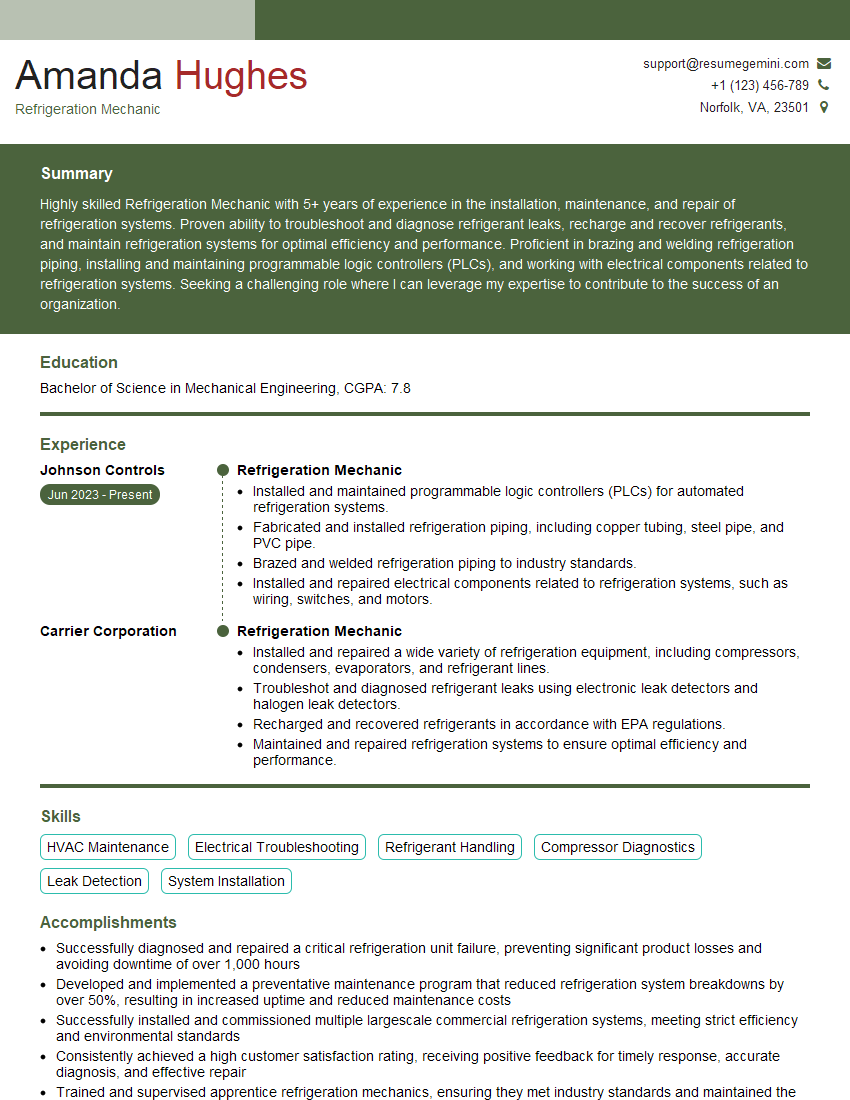
Refrigeration Mechanic Resume Sample

Industrial Mechanic Resume Sample

Facility Maintenance Technician Resume Sample

Plant Maintenance Technician Resume Sample
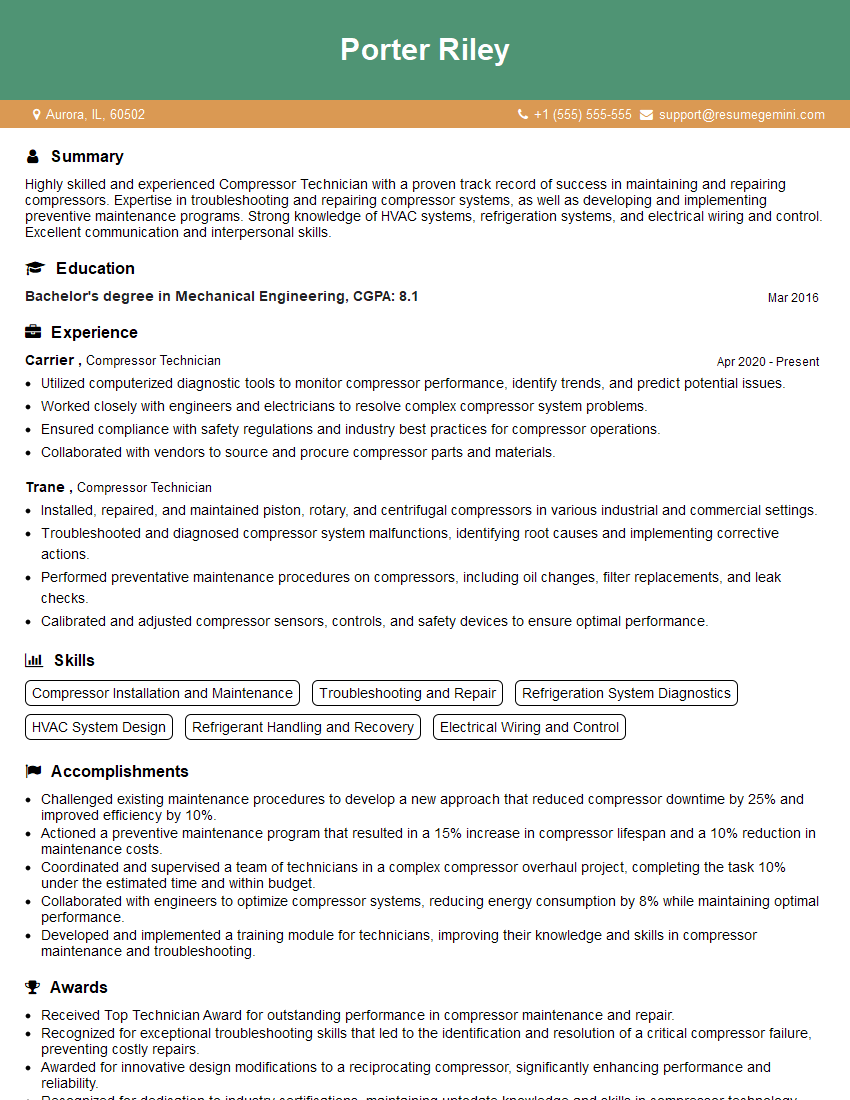
Compressor Technician Resume Sample
- Maintenance Supervisor
- Maintenance Technician
- Engineering Technician
- Field Service Engineer
- Maintenance Engineer
- Instrumentation Technician
- Mechanical Technician
- Process Technician
- Production Technician
- Control Systems Technician
- Refrigeration Mechanic
- Industrial Mechanic
- Facility Maintenance Technician
- Plant Maintenance Technician
- Compressor Technician
Explore more articles
Users Rating of Our Blogs
Share Your Experience
We value your feedback! Please rate our content and share your thoughts (optional).
What Readers Say About Our Blog
Really detailed insights and content, thank you for writing this detailed article.
IT gave me an insight and words to use and be able to think of examples