Interviews are more than just a Q&A session—they’re a chance to prove your worth. This blog dives into essential Tank Cleaning Procedures interview questions and expert tips to help you align your answers with what hiring managers are looking for. Start preparing to shine!
Questions Asked in Tank Cleaning Procedures Interview
Q 1. Describe the different methods used for tank cleaning.
Tank cleaning methods vary depending on the tank’s contents, size, and construction. The most common methods include:
- Manual Cleaning: This involves using hand tools like brushes, scrapers, and squeegees to remove residue. It’s suitable for smaller tanks and less hazardous materials, but is labor-intensive and may not be thorough enough for complex contaminants.
- Water Washing: This uses high-pressure water jets or spray nozzles to remove loose material. It’s effective for many substances but requires careful management of wastewater and may not be suitable for all materials (e.g., those sensitive to water).
- Chemical Cleaning: This uses solvents or detergents to dissolve or emulsify the residue. This is crucial for removing stubborn or hazardous materials but requires careful selection of cleaning agents to avoid damage to the tank or environmental issues. The choice of cleaning agent must always be compatible with the tank material and the type of contaminant.
- Steam Cleaning: High-temperature steam effectively melts and removes various residues. It’s effective for grease, oils, and some sticky materials but requires specialized equipment and careful safety procedures due to the high temperatures and pressure involved.
- Mechanical Cleaning: This method involves using rotating equipment such as rotating brushes or nozzles to scour the tank’s interior. This is suitable for removing heavy deposits but may cause damage if not used correctly.
Often, a combination of these methods is employed to achieve optimal cleaning and meet regulatory requirements.
Q 2. Explain the importance of pre-cleaning inspections.
Pre-cleaning inspections are paramount for safety and efficiency. They allow for a risk assessment, helping to identify potential hazards before cleaning begins. This includes:
- Identifying the tank’s contents: Knowing what was previously stored is crucial in choosing the right cleaning method and PPE. For example, a tank previously holding flammable liquids requires different precautions than one holding food-grade products.
- Assessing the tank’s condition: Checking for structural damage, corrosion, or leaks prevents accidents during cleaning. A damaged tank might pose risks of collapse or leaks of potentially hazardous materials during the cleaning process.
- Checking for atmosphere hazards: Testing for oxygen levels, flammable gases, or toxic vapors ensures a safe working environment. An oxygen-deficient atmosphere can lead to asphyxiation, while flammable vapors can create an explosion risk.
- Locating and identifying potential access points and limitations: This helps plan the cleaning process efficiently and safely. Knowing access points, such as manholes or entry points, facilitates safe and efficient cleaning strategies.
A thorough pre-cleaning inspection helps to avoid costly delays, injuries, and environmental damage.
Q 3. What safety precautions are crucial before entering a tank?
Entering a tank is inherently dangerous; thus, stringent safety precautions are vital. These include:
- Testing the atmosphere: Using appropriate gas detection equipment to check for oxygen deficiency, flammable or toxic gases before entry. A confined space entry permit is often required which includes verifying the atmosphere.
- Implementing a confined space entry permit system: This system requires authorized personnel, appropriate rescue procedures, and continuous monitoring during entry.
- Providing adequate ventilation: Before entry, proper ventilation is required to remove hazardous vapors and ensure sufficient oxygen levels. This often involves mechanical ventilation systems to continuously exchange air.
- Ensuring proper lighting: Adequate lighting within the tank is essential for visibility and safety.
- Having standby personnel: At least one person should remain outside the tank to monitor and provide assistance if needed.
- Using appropriate communication systems: Establishing clear communication between personnel inside and outside the tank. This can include the use of two-way radios.
Failure to follow these precautions can lead to serious injury or death.
Q 4. Detail the proper procedures for Personal Protective Equipment (PPE) selection and use during tank cleaning.
PPE selection depends on the identified hazards. For tank cleaning, typical PPE includes:
- Respiratory protection: Self-contained breathing apparatus (SCBA) is often required for confined space entry and when dealing with hazardous atmospheres. Air-supplied respirators are an alternative, but need a reliable air supply.
- Eye protection: Safety glasses or goggles are essential to protect against splashes of chemicals or debris.
- Protective clothing: Chemical-resistant suits are necessary when handling hazardous materials. The choice depends on the material’s chemical resistance.
- Gloves: Chemical-resistant gloves must be selected based on the specific chemicals involved. Different glove materials offer protection against different substances.
- Footwear: Steel-toe boots offer protection against falling objects, while chemical-resistant boots protect against spills.
- Hard hats: Protect against impacts from falling objects.
PPE must be correctly fitted, inspected before each use, and immediately discarded if damaged.
Q 5. How do you identify and address potential hazards in a tank?
Identifying potential hazards involves a thorough risk assessment before and during the cleaning process. This involves:
- Material Safety Data Sheets (MSDS): Reviewing the MSDS for all materials involved in the cleaning process to understand their hazards and required precautions.
- Visual inspection: Closely examining the tank’s interior for any potential hazards such as corrosion, leaks, or remaining residue.
- Atmospheric monitoring: Using gas detection equipment to identify any hazardous gases or vapors present in the tank atmosphere.
- Physical hazards: Assessing potential hazards like falls, slips, trips, and confined space issues.
- Ergonomic hazards: Considering the physical demands of the task to prevent musculoskeletal injuries.
Addressing these hazards involves implementing control measures such as ventilation, PPE use, lockout/tagout procedures, and proper waste disposal.
Q 6. Explain the process of cleaning a tank contaminated with hazardous materials.
Cleaning tanks contaminated with hazardous materials requires specialized procedures and equipment. It involves:
- Identifying the contaminant: Accurate identification is crucial to selecting the appropriate cleaning method and PPE. Laboratory analysis may be needed for complex or unknown contaminants.
- Developing a cleaning plan: This plan outlines the steps involved, including the cleaning agents to use, the PPE needed, the ventilation required, and the waste disposal procedures.
- Decontamination procedures: This often involves several stages to remove the contaminant thoroughly. It may involve pre-rinsing, chemical cleaning, and post-rinsing stages.
- Waste management: Hazardous waste must be managed according to regulations. This may involve using specialized containers, labeling, and transportation to licensed disposal facilities.
- Post-cleaning verification: Testing the tank to ensure that the contaminant has been removed effectively and that the tank is safe for further use.
Regulatory compliance is paramount when dealing with hazardous materials. This often involves following specific procedures set by OSHA or other relevant agencies.
Q 7. What are the different types of tank cleaning equipment and their applications?
Various types of equipment are used for tank cleaning, each suited to specific tasks:
- High-pressure washers: Used for water washing, removing loose debris. The pressure needs to be carefully selected to avoid damaging the tank.
- Rotary cleaning systems: Use rotating brushes or nozzles to remove heavy deposits and coatings. These systems can be automated and programmed for varied cleaning patterns.
- Vacuum trucks: Used to remove liquids and sludge from tanks. Their capacity and features vary depending on the type and volume of waste.
- Steam cleaning equipment: Generates high-temperature steam for cleaning grease, oils, and other sticky materials. Safety precautions are crucial due to the high temperatures.
- Chemical dispensing systems: Allow for precise application of cleaning agents while minimizing exposure. These systems often include safety features like automatic shut-off and leak detection.
- Air agitation systems: Used to enhance mixing and cleaning efficiency when using chemical cleaning agents.
The choice of equipment depends on factors like tank size, contaminant type, and regulatory requirements.
Q 8. How do you ensure the complete removal of residues from a tank?
Ensuring complete residue removal from a tank is crucial for safety and preventing contamination. It’s not a one-size-fits-all process; it depends heavily on the type of residue, the tank material, and the intended future use. We employ a multi-stage approach.
- Pre-cleaning: This involves initial removal of loose solids using tools like shovels, scrapers, or vacuum trucks. Think of it like tidying up your room before a deep clean.
- Washing: High-pressure washing with hot water and appropriate detergents is the next step. The choice of detergent is critical and depends on the residue’s nature (e.g., oily residue requires a degreaser). Imagine power washing your car, but on a much larger scale.
- Chemical Cleaning (if necessary): For stubborn residues, we may use specialized cleaning agents. This often involves recirculating the cleaning solution within the tank to maximize contact time and efficiency. For instance, if we’re dealing with a tank that previously held a sticky, polymeric substance, we may employ a solvent that dissolves it. Safety precautions, such as proper ventilation and PPE, are paramount during this phase.
- Final Rinse: After chemical cleaning (if used), multiple thorough rinses with clean water are essential to remove all traces of cleaning agents. We often conduct water quality testing to ensure all cleaning agents are sufficiently removed. It’s akin to rinsing your dishes multiple times to remove all traces of soap.
- Inspection: A final visual inspection, often complemented by residue testing (e.g., swab testing), confirms complete cleaning. This ensures we’ve met the required cleanliness standards.
The entire process is meticulously documented, including the cleaning agents used, the cleaning methods employed, and the inspection results.
Q 9. Describe the process of tank entry and confined space entry permits.
Tank entry and confined space entry are extremely hazardous procedures, necessitating strict adherence to safety protocols. Before any entry, a thorough risk assessment is mandatory. This assessment identifies potential hazards like oxygen deficiency, toxic fumes, or flammable vapors.
A confined space entry permit is required and must be signed off by authorized personnel. This permit outlines:
- The hazards present: Detailed descriptions of potential risks within the tank.
- Precautions to be taken: Specific safety measures to mitigate identified hazards, including the use of appropriate PPE (Personal Protective Equipment), such as respirators and safety harnesses.
- Emergency procedures: Clear instructions on what to do in case of emergencies, including the location of rescue equipment and communication protocols.
- Atmospheric monitoring: Before entry, atmospheric testing is conducted to measure oxygen levels, flammable gas concentrations, and the presence of toxic substances. Continuous monitoring is maintained throughout the entry. This is non-negotiable; it’s like checking if the air is breathable before entering a potentially dangerous space.
- Rescue plans: Detailed plans on how personnel will be rescued from the tank in case of an emergency.
At least two trained personnel are always required; one enters the tank, and the other acts as an attendant outside, constantly monitoring conditions and maintaining communication. The attendant has the authority to immediately halt entry if safety concerns arise.
Q 10. How do you manage waste generated during tank cleaning?
Waste management is a vital aspect of tank cleaning. We are committed to responsible disposal of generated waste in compliance with all relevant environmental regulations. The generated waste typically includes:
- Residue: The residue removed from the tank is categorized and handled accordingly. Hazardous wastes are segregated and disposed of via licensed hazardous waste disposal facilities; non-hazardous waste might be sent for recycling or landfilling depending on its nature.
- Spent cleaning agents: These are handled with special care and disposed of in accordance with regulations. Some spent cleaning solutions might require neutralization before disposal to mitigate environmental impact.
- Wastewater: Wastewater generated during rinsing needs treatment to reduce pollutants before discharge. This might include filtration, neutralization, and/or biological treatment. We regularly monitor the wastewater discharge to ensure it complies with local discharge standards.
Detailed records of waste generation, handling, and disposal are maintained, including waste manifests and certificates of disposal. It’s all about reducing our environmental footprint and acting responsibly.
Q 11. What are the regulations and standards governing tank cleaning in your region?
Regulations and standards governing tank cleaning vary by region but generally cover safety, environmental protection, and waste management. In my region, [Insert your region and relevant legislation and regulations here e.g., OSHA (Occupational Safety and Health Administration) standards in the US, COSHH (Control of Substances Hazardous to Health) regulations in the UK, etc.] These regulations dictate safe working practices, the use of appropriate PPE, permit-to-work systems for confined spaces, emergency response plans, and stringent waste disposal requirements. We undergo regular audits and inspections to ensure our procedures are in compliance.
Failure to adhere to these regulations can lead to severe penalties, including fines and legal action. More importantly, non-compliance can lead to accidents causing injuries or fatalities.
Q 12. Explain the importance of documentation and record-keeping in tank cleaning.
Documentation and record-keeping are paramount in tank cleaning. Comprehensive records provide crucial information for auditing, incident investigation, and continuous improvement. They also ensure accountability and traceability. Think of it as a meticulous diary of every cleaning operation.
Our documentation includes:
- Pre-cleaning inspections: Detailed notes on the tank’s condition before cleaning.
- Cleaning procedures: A record of the methods, cleaning agents, and equipment used.
- Waste management records: Records detailing the type, quantity, and disposal method for all generated waste.
- Post-cleaning inspections: Documentation of the tank’s condition after cleaning, including results from any residue testing.
- Atmospheric monitoring data: Records of oxygen levels, flammable gas concentrations, and other atmospheric parameters during confined space entry.
- Permit-to-work documents: Completed confined space entry permits.
This detailed documentation helps us track our performance, identify areas for improvement, and meet regulatory requirements. Accurate records are essential for proving compliance and for responding effectively to potential investigations or accidents.
Q 13. How do you handle unexpected issues or emergencies during tank cleaning?
Unexpected issues during tank cleaning are addressed through a structured emergency response plan. This plan, integrated into our safety management system, outlines procedures for handling various emergencies. This includes having established communication protocols, emergency equipment readily available, and pre-designated roles for team members.
Examples of unexpected issues and how we handle them:
- Equipment malfunction: If a cleaning pump fails, backup equipment is readily available. The cleaning operation is temporarily suspended until the issue is rectified.
- Unexpected release of hazardous materials: In this scenario, the immediate priority is to isolate the release and evacuate personnel. Emergency services are contacted, and containment measures are implemented following established procedures. Proper ventilation is crucial to minimize the risk to personnel.
- Personnel injury: First aid is administered immediately, and emergency medical services are contacted. The incident is thoroughly investigated to determine its cause and to prevent similar incidents in the future.
After any incident, a thorough post-incident investigation is conducted to understand what happened, why it happened, and how to prevent future recurrence. Lessons learned are documented and used to improve our safety protocols and training programs.
Q 14. Describe your experience with different cleaning agents and their appropriate applications.
My experience encompasses a wide range of cleaning agents, each suitable for specific types of residues. The selection of a cleaning agent always depends on the nature of the residue and the material of the tank. Using the wrong cleaning agent can damage the tank or create hazardous situations.
- Water-based cleaners: These are commonly used for relatively benign residues and are generally environmentally friendly. Examples include detergents and emulsifiers.
- Solvent-based cleaners: These are often used for removing oily or greasy residues. They’re more aggressive and require careful handling and disposal due to their potential environmental impact.
- Acid and alkali cleaners: These are used for specific types of residues; however, these require careful consideration and stringent safety precautions. Acids and alkalis can be highly corrosive and require appropriate protective equipment.
- Specialized cleaning agents: For very stubborn residues, like polymers or paints, we sometimes use specialized cleaning agents such as solvents or stripping agents, again ensuring safe usage and disposal.
Before using any cleaning agent, we consult Safety Data Sheets (SDS) to understand its properties, handling instructions, and safety precautions. It’s all about choosing the right tool for the job, prioritizing both safety and efficacy.
Q 15. How do you ensure the quality of the cleaning process?
Ensuring the quality of a tank cleaning process involves a multi-faceted approach, focusing on thoroughness, safety, and compliance. It’s not just about visually inspecting a clean tank; it’s about verifying the absence of residue to a level suitable for the tank’s next use.
- Visual Inspection: A thorough visual inspection is the first step. This involves checking all surfaces for any visible residue, stains, or build-up. We use high-intensity lighting and potentially endoscopes for hard-to-reach areas.
- Residue Testing: We utilize various methods to confirm the absence of residual product, including swab testing (followed by laboratory analysis) and rinse water analysis. These tests quantify remaining residues, ensuring they are below acceptable limits specific to the previous and intended contents of the tank.
- Documentation: Meticulous record-keeping is crucial. This includes logging all cleaning steps, personnel involved, the cleaning agents used, test results, and any deviations from standard operating procedures. This documentation provides audit trails and facilitates continuous improvement.
- Quality Control Checks: Regular checks and audits of our cleaning processes help us identify areas for improvement and ensure consistency in our quality standards. This might include peer reviews or external audits.
For instance, in a recent project cleaning a tanker that previously carried food-grade liquids, we implemented stricter swab testing protocols and conducted multiple rinse cycles to ensure all traces of the previous cargo were removed, complying with the stringent hygiene requirements for its subsequent use in transporting milk.
Career Expert Tips:
- Ace those interviews! Prepare effectively by reviewing the Top 50 Most Common Interview Questions on ResumeGemini.
- Navigate your job search with confidence! Explore a wide range of Career Tips on ResumeGemini. Learn about common challenges and recommendations to overcome them.
- Craft the perfect resume! Master the Art of Resume Writing with ResumeGemini’s guide. Showcase your unique qualifications and achievements effectively.
- Don’t miss out on holiday savings! Build your dream resume with ResumeGemini’s ATS optimized templates.
Q 16. What are the key performance indicators (KPIs) for effective tank cleaning?
Key Performance Indicators (KPIs) for effective tank cleaning are crucial for monitoring efficiency and identifying areas for improvement. They encompass safety, efficiency, and compliance aspects.
- Cleaning Time: The time taken to complete the cleaning process is a crucial KPI. Reduced cleaning times indicate improved efficiency and optimized processes.
- Cleaning Costs: Tracking costs, including labor, materials, and waste disposal, is vital for budgetary control and continuous improvement. We strive to minimize costs without compromising cleaning quality.
- Waste Generated: Monitoring the volume of waste generated helps in optimizing cleaning procedures and identifying opportunities for resource conservation.
- Number of Cleaning Defects/Re-cleans: This KPI highlights the effectiveness of the cleaning process. A high number indicates a need to review cleaning methods or training.
- Safety Incidents: This is paramount. A zero-incident rate is the ultimate goal. Tracking near misses helps in proactively addressing potential hazards.
- Compliance Rate: This measures adherence to environmental regulations and safety standards. Regular audits and internal reviews are key to maintaining a high compliance rate.
For example, we regularly analyze our cleaning time data to pinpoint bottlenecks and introduce process improvements, such as optimizing the use of cleaning agents or implementing better scheduling. This has resulted in a 15% reduction in cleaning time over the last year.
Q 17. How do you maintain and troubleshoot tank cleaning equipment?
Maintaining and troubleshooting tank cleaning equipment is critical for safety and efficiency. Regular maintenance prevents costly breakdowns and ensures the equipment operates at peak performance.
- Preventative Maintenance: This involves scheduled inspections, lubrication, and cleaning of equipment components. We follow manufacturer guidelines and create checklists to ensure consistency.
- Corrective Maintenance: This involves repairing or replacing faulty components. We maintain a detailed inventory of spare parts to minimize downtime.
- Operator Training: Proper training on the operation and maintenance of equipment is essential. We regularly conduct training sessions to refresh knowledge and introduce best practices.
- Troubleshooting: We use a systematic approach to troubleshooting, starting with visual inspections, followed by testing individual components, and consulting manufacturer manuals if necessary. Common issues might include pump malfunctions, nozzle blockages, or issues with the high-pressure cleaning system.
For example, we experienced a recurring issue with a specific high-pressure nozzle becoming clogged. Through detailed analysis, we found that the cleaning agent was sometimes improperly mixed, leading to premature hardening and clogging. We addressed this by revising the mixing procedure and providing additional operator training, eliminating the problem.
Q 18. Explain the concept of confined space entry and its relevant safety protocols.
Confined space entry into a tank presents significant hazards due to the enclosed environment. Strict safety protocols are essential to protect workers.
- Permit-to-Work System: A formal permit-to-work system is mandatory. This system ensures that all necessary risk assessments are conducted, appropriate safety measures are in place, and authorized personnel are present.
- Atmospheric Testing: Before entry, the tank’s atmosphere must be tested for oxygen levels, flammable gases, and toxic substances. Only after receiving satisfactory test results can entry be authorized.
- Ventilation: Adequate ventilation is crucial to remove hazardous gases and maintain a safe oxygen level. This might involve using mechanical ventilation systems or ensuring natural ventilation is sufficient.
- Personal Protective Equipment (PPE): Workers must wear appropriate PPE, including respirators, safety harnesses, and protective clothing, as determined by the risk assessment.
- Standby Personnel: At least one standby person must remain outside the tank, monitoring the situation and ready to provide assistance in case of an emergency.
- Rescue Plan: A comprehensive rescue plan must be in place, outlining procedures for rescuing workers in case of an emergency.
Imagine a scenario where a worker enters a tank without proper atmospheric testing. If hazardous gases are present, it could result in asphyxiation or explosion, highlighting the critical importance of these protocols.
Q 19. Describe your experience with various tank types (e.g., horizontal, vertical, different materials).
My experience encompasses a wide range of tank types and materials. I have worked extensively with:
- Horizontal Tanks: These often require specialized cleaning techniques to access all areas. We use rotating nozzles and high-pressure jets to ensure complete cleaning.
- Vertical Tanks: These present challenges in terms of access and potential for build-up at the bottom. Specialized cleaning equipment and techniques are used to address these.
- Materials: I’ve worked with tanks made of various materials, including stainless steel, carbon steel, aluminum, and fiberglass. The cleaning methods are adjusted based on the material’s properties to avoid damage.
For example, cleaning a large stainless steel storage tank for a pharmaceutical company demanded a very different approach than cleaning a horizontal crude oil tanker. In the former, the focus was on preventing any contamination, while in the latter, we had to prioritize removing hazardous residues safely and efficiently. This variety has enriched my understanding of the nuances involved in different cleaning procedures.
Q 20. How do you ensure compliance with environmental regulations during tank cleaning?
Compliance with environmental regulations is paramount in tank cleaning. We meticulously follow all applicable local, national, and international regulations.
- Wastewater Management: We ensure that all wastewater generated during the cleaning process is properly treated and disposed of in accordance with regulations. This often involves using specialized treatment facilities.
- Hazardous Waste Disposal: Any hazardous waste generated is handled and disposed of according to strict regulations. We utilize licensed waste disposal contractors and maintain comprehensive documentation of all disposal activities.
- Air Emissions Control: We employ measures to control air emissions generated during the cleaning process, such as using closed-loop systems or implementing appropriate ventilation.
- Spill Prevention and Control: We have contingency plans in place to manage any potential spills during the cleaning process. This includes appropriate containment measures and procedures for cleanup.
- Record Keeping: We maintain detailed records of all cleaning activities, including waste generated, disposal methods, and compliance certifications, for regulatory audits.
For example, when cleaning a tank that previously contained a listed chemical, we meticulously followed the stringent regulations for handling and disposal, ensuring all wastewater met the required treatment standards before release into the municipal sewer system.
Q 21. What are the common causes of tank cleaning accidents, and how can they be prevented?
Tank cleaning accidents can have severe consequences, often stemming from negligence or inadequate safety protocols. Common causes include:
- Lack of Proper Training: Inadequate training on safe work practices and the use of equipment can lead to accidents. Thorough training and competency assessments are essential.
- Inadequate Risk Assessment: Failure to conduct thorough risk assessments and identify potential hazards can lead to unforeseen incidents. A comprehensive risk assessment should always be performed before commencing work.
- Equipment Malfunction: Faulty equipment can pose significant risks. Regular maintenance and inspection are critical to prevent equipment-related accidents.
- Atmospheric Hazards: Entering a tank without proper atmospheric testing is extremely hazardous and can lead to asphyxiation, explosion, or exposure to toxic substances. Strict adherence to confined space entry protocols is vital.
- Lack of Communication: Poor communication between workers can lead to misunderstandings and accidents. Clear communication channels are vital in all phases of the cleaning operation.
Prevention strategies focus on addressing these causes: Implement robust safety training programs, conduct thorough risk assessments, establish a robust preventative maintenance program, enforce strict adherence to confined space entry protocols, and emphasize the importance of clear communication and teamwork. By proactively addressing these potential causes, we minimize the risk of accidents and ensure a safe working environment.
Q 22. Describe your experience with different cleaning techniques (e.g., high-pressure washing, steam cleaning).
My experience encompasses a wide range of tank cleaning techniques, each chosen based on the specific tank contents, material, and required cleanliness level. High-pressure washing is frequently used for removing loose debris and residues. I’m proficient in selecting the appropriate nozzle and pressure to avoid damage to the tank’s structure. For instance, cleaning a stainless steel tank requires a lower pressure than cleaning a carbon steel tank to prevent scratching. Steam cleaning is another effective method, particularly for removing stubborn organic matter. The high temperature of the steam helps to break down these materials, making them easier to remove. I’ve also worked with chemical cleaning, employing various detergents and solvents tailored to specific contaminants, always adhering to strict safety protocols and environmental regulations. The selection of a cleaning method is always a risk assessment driven process.
For example, in one project involving a tank that had previously held vegetable oil, high-pressure washing with a specialized detergent proved highly effective in removing the remaining residue. In contrast, a tank containing a dried, adhesive chemical required a combination of steam cleaning followed by a solvent wash to achieve complete cleanliness.
Q 23. How do you verify the cleanliness of a tank after the cleaning process?
Verifying tank cleanliness is a critical step, ensuring that residues are completely removed and the tank is safe for its next use. This process typically involves visual inspection, which helps to detect any visible residues. Beyond visual checks, I regularly use swab testing to collect samples from various points inside the tank and these samples are sent to a laboratory for analysis. This provides a quantitative measure of the remaining contaminants, guaranteeing the tank meets the required cleanliness standards. The specific tests depend on the previous tank contents. For instance, if the tank previously held food products, microbiological analysis might be required. For chemical residues, specific chemical analysis will be done to confirm their absence. Documentation of all cleaning procedures and test results is essential, contributing to full traceability and compliance.
In one instance, a visual inspection after high-pressure washing showed minimal residue, however, swab testing revealed trace amounts of a specific chemical. This highlighted the importance of using laboratory testing to confirm the complete absence of contaminants, preventing potential safety hazards or product contamination in the future.
Q 24. What are your experience with different types of tank coatings and their cleaning considerations?
My experience includes working with various tank coatings, each presenting unique cleaning considerations. Epoxy coatings are common and require careful cleaning to avoid damaging their protective layer. High-pressure washing should be used cautiously, with lower pressure and specialized nozzles to prevent scratching or peeling. Similarly, polyurethane coatings need gentle cleaning to maintain their integrity. In contrast, some coatings are more resistant to aggressive cleaning methods. The choice of cleaning method always depends on the coating material’s properties and the type of contaminants present. Understanding the manufacturer’s recommendations for each specific coating is crucial to prevent damage and ensure the coating’s long-term effectiveness.
For example, I encountered a situation where an epoxy-coated tank needed cleaning after containing a highly corrosive substance. A gentle, low-pressure wash with a specialized detergent was employed, followed by thorough rinsing to remove all traces of the cleaning agents. This approach ensured the coating’s integrity remained intact, avoiding costly repairs or replacement.
Q 25. How do you manage the communication and coordination with other workers during tank cleaning operations?
Effective communication and coordination are vital for safe and efficient tank cleaning operations. Before starting any work, a pre-job briefing is held with all team members. This briefing clearly outlines the task, the specific safety procedures to be followed, including potential hazards, and the designated roles and responsibilities of each team member. Clear communication channels are established, typically using a combination of verbal instructions and written work permits. Regular check-ins are conducted throughout the cleaning process to ensure smooth operation and address any emerging issues. Use of standardized checklists and communication logs help in the management and documentation of the whole process.
For example, during a large-scale tank cleaning project, I utilized a pre-job briefing to clearly outline the various safety precautions, including confined space entry procedures and the proper use of respiratory protection equipment. Regular communication during the process ensured everyone was aware of the progress and any potential hazards, leading to a smooth and safe completion of the job.
Q 26. Describe your experience with respiratory protection equipment and procedures.
Respiratory protection is paramount in tank cleaning, as workers may be exposed to hazardous substances. My experience includes extensive training on the selection, fitting, and use of various respiratory protection equipment (RPE), such as respirators with appropriate cartridges or self-contained breathing apparatus (SCBA). The type of RPE used is determined by a thorough hazard assessment, which identifies the specific contaminants present and their potential health effects. Regular fitting checks and training ensure the equipment is correctly used and provides adequate protection. All team members must be fully trained and certified in the use of RPE before undertaking any tank cleaning operation.
In one case, where a tank had contained highly volatile organic compounds, the team used SCBA for complete respiratory protection. Proper training and fitting ensured everyone was safe from exposure to potentially harmful substances.
Q 27. What are the different types of ventilation systems used in tank cleaning?
Various ventilation systems are used in tank cleaning to ensure a safe working environment. The choice of ventilation system depends on the tank’s size, the type of contaminants present, and the required level of air quality. Common systems include forced ventilation, which uses fans to draw air out of the tank, creating negative pressure and preventing the build-up of hazardous fumes. Another common method is positive-pressure ventilation, which introduces clean air into the tank, displacing potentially hazardous atmospheres. Specialized systems, such as air-purifying respirators, may also be used in conjunction with ventilation systems to provide additional protection. The effectiveness of the chosen ventilation system is regularly monitored to ensure it maintains the required air quality.
For instance, in a confined space tank cleaning scenario, a combination of forced ventilation and air monitoring was used. Continuous monitoring ensured the ventilation system was effectively removing any hazardous vapors, making the environment safe for workers.
Q 28. How do you develop and implement a comprehensive tank cleaning safety plan?
Developing a comprehensive tank cleaning safety plan is a crucial first step in any project. The process begins with a thorough hazard assessment, identifying all potential risks associated with the cleaning operation, such as exposure to hazardous substances, confined space entry, and working at heights. Based on this assessment, appropriate control measures are implemented, including the selection of appropriate PPE, ventilation systems, and work permits. The safety plan outlines emergency procedures, including evacuation plans and contact information for emergency services. Regular training is conducted to ensure all personnel are fully aware of the safety procedures and emergency response plans. Compliance with all relevant health, safety, and environmental regulations is essential and is carefully followed and documented.
In a recent project, the safety plan included detailed procedures for confined space entry, specifying the need for atmospheric testing, standby personnel, and rescue equipment. Regular monitoring ensured compliance with these procedures, resulting in a safe and efficient completion of the project.
Key Topics to Learn for Tank Cleaning Procedures Interview
- Safety Regulations and Procedures: Understanding and adhering to all relevant safety regulations, including PPE requirements, hazard identification, and emergency response protocols.
- Tank Types and Cleaning Methods: Knowing the different types of tanks (e.g., road tankers, storage tanks) and appropriate cleaning methods for each, including wash procedures, chemical cleaning, and specialized techniques.
- Cleaning Agents and Their Applications: Familiarity with various cleaning agents, their properties, appropriate concentrations, and safe handling practices. Understanding the selection criteria based on the tank’s contents and materials.
- Pre-Cleaning Inspection and Documentation: Thorough understanding of pre-cleaning inspections to assess tank condition, identify potential hazards, and complete necessary documentation.
- Post-Cleaning Inspection and Certification: Knowing the procedures for post-cleaning inspection, residue testing, and certification to ensure the tank is clean and safe for subsequent use.
- Waste Disposal and Environmental Compliance: Understanding regulations and procedures for the safe disposal of cleaning agents and waste materials, complying with environmental protection standards.
- Equipment Operation and Maintenance: Familiarity with the operation and maintenance of cleaning equipment, including pumps, hoses, nozzles, and other specialized tools.
- Troubleshooting and Problem-Solving: Ability to identify and troubleshoot common problems during the cleaning process, such as equipment malfunctions, unexpected residues, or safety concerns.
- Quality Control and Assurance: Implementing quality control measures to ensure consistent and effective tank cleaning, meeting industry standards and client requirements.
Next Steps
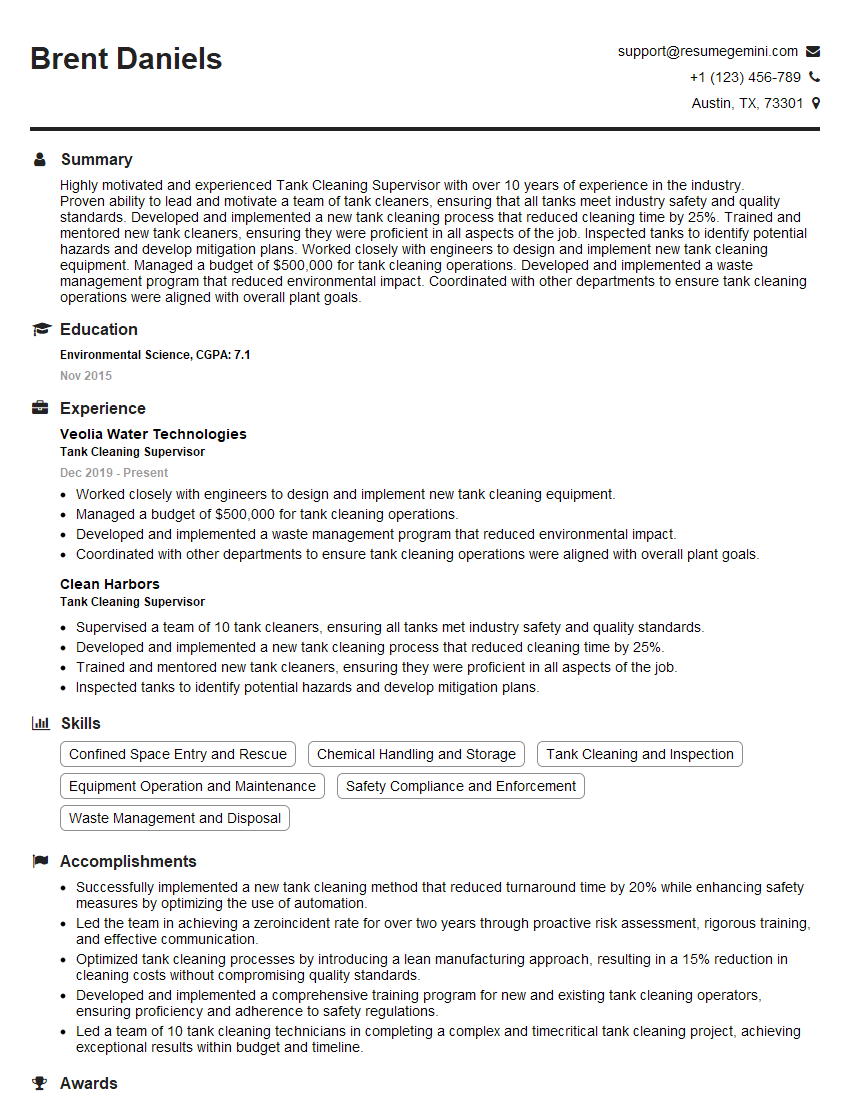
Mastering Tank Cleaning Procedures is crucial for career advancement in the industry. A strong understanding of these procedures demonstrates your commitment to safety, efficiency, and environmental responsibility – all highly valued attributes by employers. To significantly boost your job prospects, creating an ATS-friendly resume is essential. This ensures your application gets noticed by recruiters and hiring managers. We strongly recommend using ResumeGemini, a trusted resource for building professional and impactful resumes. Examples of resumes tailored specifically to Tank Cleaning Procedures are available to help you craft a compelling application that highlights your skills and experience effectively.
Explore more articles
Users Rating of Our Blogs
Share Your Experience
We value your feedback! Please rate our content and share your thoughts (optional).
What Readers Say About Our Blog
Really detailed insights and content, thank you for writing this detailed article.
IT gave me an insight and words to use and be able to think of examples