Preparation is the key to success in any interview. In this post, we’ll explore crucial Detail Design interview questions and equip you with strategies to craft impactful answers. Whether you’re a beginner or a pro, these tips will elevate your preparation.
Questions Asked in Detail Design Interview
Q 1. Explain the difference between conceptual design and detail design.
Conceptual design is the high-level, big-picture phase where we define the overall project goals, functionality, and major components. Think of it like sketching out a house’s floor plan – you’re focusing on the overall layout, room sizes, and general arrangement. Detail design, on the other hand, is where we dive deep into the specifics. It’s like creating detailed blueprints for that same house, specifying exact dimensions, material types, connections, and construction methods for every single element. Conceptual design is about ‘what’ and ‘why’, while detail design is about ‘how’.
For example, in a bridge design, the conceptual design would determine the type of bridge (arch, suspension, beam), its approximate span, and the overall traffic capacity. Detail design would then involve precise calculations for structural members, detailing of foundation designs, specification of materials with tolerances, and production drawings for fabrication.
Q 2. Describe your experience with various CAD software packages (e.g., AutoCAD, Revit, MicroStation).
I’m proficient in several CAD packages, each suited to different design tasks. AutoCAD has been my workhorse for general 2D drafting and detailed drawings, especially for mechanical and structural components. Its precision and extensive library of tools are invaluable for creating intricate details and annotations. Revit, on the other hand, is my go-to for Building Information Modeling (BIM) on architectural and structural projects. Its parametric modeling capabilities are exceptional for managing complex building systems and facilitating collaboration within a design team. I’ve also utilized MicroStation for large-scale infrastructure projects, appreciating its strength in handling massive datasets and its ability to integrate with GIS (Geographic Information System) data. My experience spans from creating basic site plans to complex assembly drawings, showcasing versatility across different software and project types.
Q 3. How do you manage revisions and updates in detail design drawings?
Revision management in detail design is crucial for maintaining accuracy and preventing errors. I typically use a version control system within the CAD software itself, leveraging features like revision clouds and revision tables to clearly highlight changes. Each revision is documented with a unique revision number, date, and a description of the modifications made. This allows for easy tracking of updates and enables stakeholders to review the evolution of the design. For larger projects, I’ve also utilized cloud-based collaboration platforms that allow multiple users to access and modify drawings simultaneously, while maintaining a complete audit trail of all changes. Think of it like a ‘history’ feature for your drawings.
Q 4. What are your preferred methods for checking the accuracy of detail drawings?
Accuracy checking is a multifaceted process. I start with internal checks, using the CAD software’s built-in tools for geometry verification, dimension checks, and tolerance analysis. This ensures dimensional consistency and detects potential clashes or interferences between different components. Next, I perform visual checks to ensure the drawings are clear, unambiguous, and reflect the design intent. I also use calculations independently (often using spreadsheet software) to verify key dimensions and quantities, comparing the results with those from the CAD model. Finally, peer reviews and quality control checks by senior engineers help identify potential oversights or errors before the drawings are released.
Q 5. Explain your process for creating detailed shop drawings.
Creating detailed shop drawings involves translating the design intent into fabrication-ready documentation. My process begins with a thorough review of the design documents and specifications, ensuring a clear understanding of the requirements. Next, I meticulously model the components using CAD software, paying close attention to tolerances, materials, and fabrication processes. I then generate detailed views, sections, and assembly drawings with clear dimensions, annotations, and material specifications. I incorporate manufacturing standards and best practices to ensure the drawings are efficient and easily understood by the fabrication team. Finally, the drawings are reviewed for accuracy and completeness before release to the fabricator. This collaborative process often involves direct communication with the fabricators to address any uncertainties or potential issues.
Q 6. How do you handle conflicting design requirements or specifications?
Conflicting requirements are inevitable in complex projects. My approach involves first clearly identifying the conflicting specifications, documenting them, and then systematically analyzing the potential impacts. This often requires discussions with the various stakeholders involved – architects, engineers, contractors, and clients – to understand the priorities and constraints. We weigh the options, exploring potential compromises or modifications to the design that address the conflicts while maintaining the overall functionality and aesthetic goals. Sometimes, this might involve trade-off analysis to determine the best solution considering cost, time, and performance implications. The resolution is always documented and approved by all relevant parties.
Q 7. Describe your experience with BIM (Building Information Modeling) and its applications in detail design.
BIM (Building Information Modeling) has revolutionized detail design. My experience with BIM extends to using Revit for architectural, structural, and MEP (Mechanical, Electrical, and Plumbing) modeling. The advantages are numerous: BIM enables clash detection, preventing costly errors during construction. It facilitates better collaboration by providing a central, shared model accessible to all stakeholders. It allows for accurate quantity take-offs and cost estimations early in the design phase, improving project budgeting. Furthermore, BIM generates detailed schedules and documentation automatically, streamlining the design process. For example, during a recent high-rise project, BIM’s clash detection feature prevented a major conflict between the HVAC ductwork and structural beams, saving significant time and resources.
Q 8. How do you ensure that your detail design aligns with building codes and regulations?
Ensuring alignment with building codes and regulations is paramount in detail design. It’s not just about avoiding penalties; it’s about ensuring the safety and functionality of the structure. My approach involves a multi-stage process. First, I thoroughly review all applicable codes – local, regional, and national – relevant to the project’s location and type. This includes fire codes, accessibility standards (like ADA compliance), structural requirements, and material specifications. I then create a detailed checklist, mapping specific code requirements to design elements. During the design process, each detail is checked against this checklist. For example, if we’re designing a staircase, the checklist would verify compliance with rise and run requirements, handrail height, and tread depth. Finally, I collaborate with a third-party code reviewer for an independent assessment, catching potential oversights. This methodical review helps identify and correct any discrepancies early in the process, preventing costly revisions later.
Q 9. What are some common challenges you encounter in detail design, and how do you overcome them?
Detail design presents numerous challenges. One common issue is conflicting requirements between different disciplines – for instance, architectural preferences clashing with structural limitations. To overcome this, I employ robust coordination meetings and utilize BIM (Building Information Modeling) software to visualize and resolve these conflicts in a 3D environment. Another significant hurdle is dealing with unforeseen site conditions. We might discover unexpected underground utilities or soil variations during construction. To mitigate this, I advocate for thorough site investigations before detail design starts and incorporate contingency plans that address potential surprises. Finally, managing changes to the design is crucial. Client requests or evolving project needs can require nimble adaptation. I employ a change management system with clear documentation and approvals to control and track all revisions, minimizing disruptions.
Q 10. Explain your understanding of tolerance and its importance in detail design.
Tolerance in detail design refers to the permissible variation from specified dimensions. Think of it as the acceptable margin of error. It’s crucial because perfect precision is practically impossible in construction. For instance, specifying a 100mm steel beam might allow a tolerance of +/- 1mm. This means the actual beam could be anywhere between 99mm and 101mm and still be considered acceptable. The importance of tolerance lies in its impact on assembly, functionality, and cost. Tight tolerances require more precise manufacturing and often increase costs, while overly loose tolerances might compromise structural integrity or aesthetics. Determining appropriate tolerances involves a balancing act between precision, feasibility, and budget. I typically consult with fabricators and manufacturers to establish realistic tolerances that meet project requirements without unnecessary expense. The tolerance levels are meticulously documented on drawings to avoid any misunderstandings during fabrication and construction.
Q 11. Describe your experience with different material specifications and their impact on detail design.
Experience with material specifications is essential for successful detail design. Different materials behave differently under load, have varying durability, and require specific detailing. For example, designing a connection for timber requires different considerations than one for steel. Timber is susceptible to rot and requires proper sealing and detailing to protect it from moisture. Steel, while strong, can corrode and needs appropriate protective coatings. Concrete’s strength varies depending on the mix design, and proper reinforcement detailing is critical. I have extensive experience with specifying various materials – from structural steel and timber to reinforced concrete, masonry, and various cladding systems. This involves understanding not just the material’s properties but also its availability, cost, and sustainability implications. I often use material libraries and databases to access accurate data, ensuring the chosen materials meet performance requirements and are environmentally responsible.
Q 12. How do you coordinate your work with other disciplines during the detail design phase?
Coordination with other disciplines is a cornerstone of successful detail design. It’s a continuous process, not a one-time event. I regularly participate in design coordination meetings involving architects, structural engineers, mechanical, electrical, and plumbing (MEP) engineers, and contractors. These meetings are crucial for resolving clashes and ensuring that all systems integrate seamlessly. We use BIM software to create a shared model where everyone can visualize and review the design in 3D, identifying potential conflicts before they become costly problems. For example, an HVAC duct running through a structural beam would be easily detected and relocated in the BIM model. I also utilize cloud-based collaborative platforms to share design documents, track revisions, and maintain clear communication throughout the process. Proactive communication and collaborative problem-solving are key to a successful project.
Q 13. What are your methods for managing large and complex detail design projects?
Managing large, complex projects necessitates a structured approach. I use a Work Breakdown Structure (WBS) to break down the project into manageable tasks, assigning responsibilities and deadlines to team members. We utilize project management software to track progress, allocate resources, and identify potential bottlenecks. Regular progress meetings and detailed reporting ensure transparency and accountability. Risk management is crucial; we identify potential risks – such as material delays or code changes – and develop mitigation strategies. I also advocate for establishing clear communication protocols and utilizing design review processes to ensure quality control throughout the project lifecycle. Efficient communication and systematic project tracking are essential for navigating the complexity of large-scale projects and delivering them on time and within budget.
Q 14. Describe your experience with creating detailed fabrication drawings.
Creating detailed fabrication drawings is a critical aspect of my role. These drawings serve as the instructions for fabricators to produce the components of the structure. Precision and clarity are paramount. My drawings include detailed dimensions, tolerances, material specifications, and fabrication notes. I utilize CAD software (Computer-Aided Design) with specific attention to detail, ensuring all information is clear, unambiguous, and accurately reflects the design intent. I often incorporate sections, details, and enlarged views to highlight critical areas. For example, a connection detail might show the exact dimensions, bolt sizes, and welding specifications. Before releasing the drawings, I conduct thorough quality checks, including a peer review, to minimize errors and ensure the drawings are ready for fabrication. Finally, clear and concise annotations are essential for preventing misinterpretations by fabricators, ensuring a smooth and accurate construction process.
Q 15. How do you ensure clarity and accuracy in your detail design drawings?
Ensuring clarity and accuracy in detail design drawings is paramount. It’s like creating a precise recipe – any ambiguity can lead to disastrous results on site. My approach is multifaceted, involving several key steps:
Clear and Concise Annotation: I utilize a consistent annotation style, adhering to industry standards and project-specific requirements. Dimensions, materials, and tolerances are explicitly stated, leaving no room for guesswork. For example, instead of writing “Use standard brick,” I’d specify “Use Acme Brick Company’s Standard Red Brick, per specification X-123.”
Detailed Section Views and Elevations: I create comprehensive section views and elevations to reveal concealed details, eliminating ambiguity regarding connections, intersections, and hidden components. This is especially crucial for complex junctions like beam-column connections or intricate wall assemblies.
Consistent Scales and Units: Maintaining consistent scales and units (metric or imperial) throughout the drawings is non-negotiable. This prevents misinterpretations and ensures accurate measurements during construction. I always explicitly state the scale used on each drawing sheet.
Revision Control: A robust revision control system is essential. I meticulously track all changes, using clear revision clouds and a detailed revision log. This maintains the integrity of the drawings and ensures everyone is working with the latest version.
Cross-referencing: I cross-reference different drawing sheets, schedules and specifications. This ensures consistency and prevents conflicts between different parts of the design. For example, a door schedule would be clearly referenced on architectural plans.
Career Expert Tips:
- Ace those interviews! Prepare effectively by reviewing the Top 50 Most Common Interview Questions on ResumeGemini.
- Navigate your job search with confidence! Explore a wide range of Career Tips on ResumeGemini. Learn about common challenges and recommendations to overcome them.
- Craft the perfect resume! Master the Art of Resume Writing with ResumeGemini’s guide. Showcase your unique qualifications and achievements effectively.
- Don’t miss out on holiday savings! Build your dream resume with ResumeGemini’s ATS optimized templates.
Q 16. What are your strategies for identifying and resolving design errors?
Identifying and resolving design errors is a proactive, not reactive, process. It’s akin to quality control in a manufacturing plant – catching errors early saves significant time and cost later. My strategies include:
Peer Reviews: I actively encourage peer reviews. A fresh pair of eyes can often spot errors that I’ve overlooked due to familiarity with the design. This also helps improve team knowledge and collaboration.
Software-Based Checks: I utilize design software’s built-in checking tools, such as clash detection software (Navisworks, for example) to identify inconsistencies between different disciplines’ models (structural, architectural, MEP). This highlights conflicts like pipes running through beams before construction begins.
Design Checks and Calculations: I always verify design calculations independently, using different methods where appropriate, to ensure accuracy. For instance, manually checking structural steel member sizing against software calculations.
Detailed Model Review: A thorough 3D model review helps catch geometric errors and identify potential clashes between different elements. I’ll often use walk-throughs in the virtual environment to check accessibility and feasibility.
Standard Operating Procedures: Adherence to standard operating procedures (SOPs) and checklists aids in catching common errors during design, such as missing details or improper material selection.
Q 17. Explain your understanding of design standards and best practices.
My understanding of design standards and best practices is deeply rooted in experience and continuous learning. It’s like knowing the rules of a game before you play – it helps you to strategize efficiently and avoid penalties. I am well-versed in:
National and International Codes: I am proficient in relevant building codes (e.g., IBC, ACI), accessibility standards (ADA), and other industry-specific regulations. Understanding these ensures compliance and safety.
Industry Best Practices: I stay updated with the latest industry best practices through professional development, conferences, and publications. This keeps my designs aligned with current standards and promotes efficiency.
Sustainability Principles: I incorporate sustainability principles into my designs, considering material selection, energy efficiency, and waste reduction. This is crucial for environmentally responsible construction.
Client-Specific Requirements: I am always mindful of the client’s specific needs and requirements, ensuring the design meets their expectations and budget.
Q 18. How do you prioritize tasks when working on multiple detail design projects simultaneously?
Prioritizing tasks across multiple detail design projects requires a structured approach. It’s like managing multiple projects as a conductor of an orchestra – each instrument needs attention, but the overall harmony is the goal. I utilize:
Project Prioritization Matrix: I employ a matrix that considers urgency, importance, and dependencies. Tasks with critical deadlines and significant impact are tackled first.
Work Breakdown Structure (WBS): Breaking down each project into smaller, manageable tasks allows for better time estimation and tracking of progress. This allows more flexible shifting of resources.
Gantt Charts: I use Gantt charts to visualize project timelines, dependencies, and resource allocation, identifying potential conflicts and adjusting priorities as needed.
Agile Methodology: In some instances, an Agile approach, where projects are broken into sprints, allows for more flexibility and responsiveness to changing priorities.
Regular Progress Reviews: Consistent progress reviews are essential to ensure tasks stay on track, adapt to any unforeseen challenges, and make necessary adjustments to priorities.
Q 19. Describe your experience with using design review tools and processes.
Design review tools and processes are integral to my workflow. They’re like a safety net – preventing mistakes from reaching the construction phase. I have extensive experience with:
BIM Software (Revit, ArchiCAD): I use BIM software for model coordination, clash detection, and quantity takeoff. This helps visualize the design in 3D and detect potential issues before construction.
Collaboration Platforms (SharePoint, BIM 360): These platforms facilitate seamless collaboration, allowing the team to access and review drawings and models concurrently, enhancing efficiency and communication.
Formal Design Review Meetings: Structured design review meetings, involving various stakeholders (architects, engineers, contractors), are essential for identifying errors and ensuring the design meets all project requirements.
Issue Tracking Systems: I use issue tracking systems to document and track design changes, ensuring that all issues are addressed and resolved appropriately.
Q 20. How do you communicate effectively with other members of the design team?
Effective communication is the cornerstone of successful teamwork. It’s like the glue that holds the design process together. My strategies include:
Clear and Concise Communication: I focus on clear and concise written and verbal communication, avoiding jargon and ensuring everyone understands the message.
Regular Team Meetings: Regular team meetings provide opportunities for discussion, brainstorming, and problem-solving. These meetings also keep everyone informed on progress.
Active Listening: I practice active listening, ensuring I fully understand the input of other team members before offering my own perspectives.
Constructive Feedback: I provide constructive feedback to my colleagues, focusing on solutions rather than criticism.
Collaboration Tools: I leverage collaboration tools such as instant messaging and project management software to facilitate quick communication and information sharing.
Q 21. How familiar are you with different construction methods and their impact on detail design?
Understanding construction methods is crucial for detail design; it’s like knowing how a recipe translates into a dish. Ignoring the realities of construction can lead to impractical designs. My familiarity includes:
Traditional Construction Methods: I understand and incorporate aspects of traditional methods, such as cast-in-place concrete, masonry construction, and wood framing.
Modern Methods of Construction (MMC): I am aware of the use of prefabricated components, modular construction, and 3D printing. This awareness helps in designing details that are compatible with these methods.
Impact on Detail Design: I recognize the impact of construction sequencing on detailing. For instance, the order of construction phases influences the design of temporary supports or formwork.
Material Handling and Logistics: I consider material handling and logistics, ensuring that designs allow for efficient transportation and placement of building materials on the site.
Site Constraints: I account for site-specific conditions such as soil type, climate, and accessibility when developing details. This is very crucial in design.
Q 22. Explain your understanding of sustainable design principles and their application in detail design.
Sustainable design principles in detail design prioritize minimizing environmental impact throughout a project’s lifecycle. This goes beyond simply using ‘green’ materials; it involves a holistic approach encompassing material selection, energy efficiency, waste reduction, and lifecycle cost analysis.
- Material Selection: Choosing materials with low embodied carbon (the carbon emissions associated with a material’s production, transport, and disposal), recycled content, and local sourcing reduces the environmental footprint. For example, specifying sustainably harvested timber over concrete can significantly lower carbon emissions.
- Energy Efficiency: Detail design plays a crucial role in optimizing building performance. This includes specifying high-performance insulation, efficient windows, and designing for natural ventilation to minimize energy consumption for heating, cooling, and lighting. A detailed analysis of solar orientation, for instance, can drastically reduce reliance on artificial lighting.
- Waste Reduction: Careful planning and coordination during detail design minimize material waste. Precise detailing and BIM modeling can help optimize cutting patterns and reduce offcuts. Specifying prefabricated components can further streamline construction and reduce on-site waste.
- Lifecycle Cost Analysis: Sustainable design considers the long-term cost implications, factoring in maintenance, repair, and eventual demolition and disposal. Choosing durable, easily replaceable materials, for example, can minimize lifecycle costs and reduce the need for frequent repairs.
In practice, I’ve integrated these principles by developing detailed specifications that prioritize sustainable materials, collaborating with engineers to optimize building systems for energy efficiency, and incorporating waste reduction strategies into my design process. On a recent project, implementing a prefabrication strategy reduced on-site waste by 25% and significantly accelerated construction.
Q 23. What is your experience with clash detection and resolution in BIM projects?
Clash detection is an essential part of my BIM workflow. I use software like Navisworks to identify clashes between different disciplines’ models (MEP, structural, architectural). My experience involves not only detecting clashes but also resolving them collaboratively.
The process typically involves:
- Regular Clash Detection: Scheduled clash detection sessions are critical, allowing for early identification and mitigation of issues.
- Classification and Prioritization: Clashes are categorized by severity (critical, major, minor) and prioritized based on their impact on the project schedule and budget.
- Collaborative Resolution: I work with other disciplines to find solutions. This might involve minor model adjustments, material substitutions, or design changes to accommodate the clash. Detailed communication and clear documentation are essential during this process.
- Documentation and Tracking: All clashes, their resolutions, and responsible parties are meticulously documented. This ensures accountability and provides a valuable record for future reference.
For instance, on a recent hospital project, clash detection revealed a conflict between a ductwork run and a structural beam. By collaborating with the MEP and structural engineers, we rerouted the ductwork, avoiding a costly and time-consuming on-site rework.
Q 24. How do you ensure the maintainability and accessibility of your detail design documents?
Maintainability and accessibility of detail design documents are paramount. I ensure this through several key strategies:
- Organized Digital Archiving: I utilize a structured cloud-based system for storing drawings, specifications, and other relevant documents, making them easily accessible to all stakeholders. This often involves using a BIM project folder structure that logically groups design elements.
- Clear and Concise Documentation: Drawings are clearly labeled, with a consistent drawing number and revision control. Specifications are written concisely, using standardized terminology, and cross-referencing where necessary.
- Version Control: Implementing a robust version control system (like a cloud storage platform with version history or dedicated software) prevents overwriting documents and ensures that all parties are working from the latest version. Revision clouds on drawings are also crucial.
- Metadata tagging: Documents are meticulously tagged with relevant keywords to aid in quick retrieval and searching. This is especially useful for large projects with numerous files.
- Accessibility: I adhere to accessibility standards (like WCAG) by creating documents that are compatible with assistive technologies. This includes providing alternative text for images and ensuring sufficient color contrast.
My approach ensures that the detail design information remains easily retrievable, updated, and understood throughout the project’s lifespan and beyond, even for long-term maintenance and future renovations.
Q 25. Describe your experience with quantity take-offs and cost estimation related to detail design.
Quantity take-offs (QTO) and cost estimation are integral to detail design. I’m proficient in using both manual methods and BIM software to extract quantities from models and create detailed cost estimates.
The process generally involves:
- Accurate Modeling: Precise and detailed BIM models are the foundation for accurate QTO. The model should contain all necessary information, including dimensions, materials, and specifications.
- Software Utilization: I utilize BIM software that offers automated quantity take-off features, enhancing speed and accuracy. This is crucial for complex projects with numerous components.
- Material Databases: Using comprehensive and regularly updated material databases that include unit costs is vital to provide precise cost estimations.
- Labor Cost Estimation: In addition to materials, I consider labor costs associated with different construction tasks, factoring in local labor rates and efficiency factors.
- Contingency Planning: Cost estimates must include contingencies to account for unforeseen issues or price fluctuations.
For example, in a recent commercial building project, using BIM software for QTO reduced the time needed for this process by 50% compared to manual methods. This enabled us to provide the client with a more accurate and timely cost estimate, leading to smoother project budgeting and better decision-making.
Q 26. How do you stay up-to-date with the latest advancements in detail design technology and software?
Staying current with advancements in detail design technology and software is crucial. I employ several strategies:
- Professional Development: I regularly attend industry conferences, webinars, and workshops focusing on BIM and detail design. This provides hands-on experience with new software features and industry best practices.
- Online Courses and Tutorials: I supplement my learning with online courses and tutorials focusing on specific software tools and techniques related to detail design.
- Industry Publications and Journals: I regularly read relevant industry publications and journals to stay abreast of current trends and advancements in detail design methodologies and technologies.
- Software Updates and Training: I actively participate in software updates and vendor-provided training sessions to maximize my efficiency and proficiency in using the latest software features.
- Networking with Professionals: Engaging with other detail designers, architects, and engineers through online forums and networking events allows for the exchange of knowledge and insights.
Continuous learning is essential in this field, as technological advancements and industry standards are constantly evolving. By embracing these strategies, I maintain a high level of proficiency in the tools and techniques used in detail design.
Q 27. Explain your experience working with clients and contractors to provide detail design support.
Collaboration with clients and contractors is key to successful detail design. My experience involves fostering clear communication and effective coordination to ensure that the design meets their needs and aligns with the project’s budget and schedule.
My approach includes:
- Regular Communication: Maintaining open and frequent communication with both clients and contractors is vital. This involves regular meetings, email updates, and prompt responses to inquiries.
- Active Listening: Understanding the client’s vision and the contractor’s construction capabilities is essential for creating detail designs that are both feasible and meet expectations.
- Clear and Concise Communication: Explaining technical aspects in a clear and accessible manner, avoiding jargon whenever possible, ensures that everyone understands the design intent. Visual aids like 3D models and animations can greatly improve communication.
- Addressing Concerns Promptly: I address any concerns or questions from clients and contractors swiftly and efficiently, proactively finding solutions to potential challenges.
- Collaborative Design Reviews: Conducting regular design reviews with clients and contractors allows for feedback and ensures that everyone is aligned on the design direction.
For example, on a recent renovation project, I proactively identified a potential cost-saving opportunity through a minor design modification that was well-received by both the client and the contractor. This collaborative approach led to a successful project completion within budget and schedule.
Key Topics to Learn for Detail Design Interview
- Data Modeling: Understanding entity-relationship diagrams (ERDs), normalization techniques, and choosing appropriate database technologies for specific project needs. Practical application includes designing efficient database schemas for large-scale applications.
- API Design: Mastering RESTful principles, designing efficient and scalable APIs, and understanding various API documentation formats (e.g., OpenAPI/Swagger). Practical application includes designing and documenting APIs for seamless integration between different systems.
- System Architecture: Comprehending different architectural patterns (microservices, monolithic, event-driven), understanding trade-offs between various architectures, and designing scalable and maintainable systems. Practical application involves choosing the right architecture for a given project based on requirements and constraints.
- Algorithm and Data Structure Design: Analyzing algorithm efficiency (Big O notation), selecting appropriate data structures for specific tasks, and optimizing performance. Practical application includes designing efficient algorithms for data processing and manipulation.
- Security Considerations: Incorporating security best practices into design, addressing authentication, authorization, and data protection. Practical application includes designing secure systems resistant to common vulnerabilities.
- Non-Functional Requirements: Understanding and addressing performance, scalability, security, usability, and maintainability aspects during design. Practical application includes designing systems that meet specific performance targets and are easy to maintain.
- Design Patterns: Familiarity with common design patterns (e.g., Singleton, Factory, Observer) and their appropriate applications. Practical application involves choosing and implementing design patterns to improve code reusability and maintainability.
Next Steps
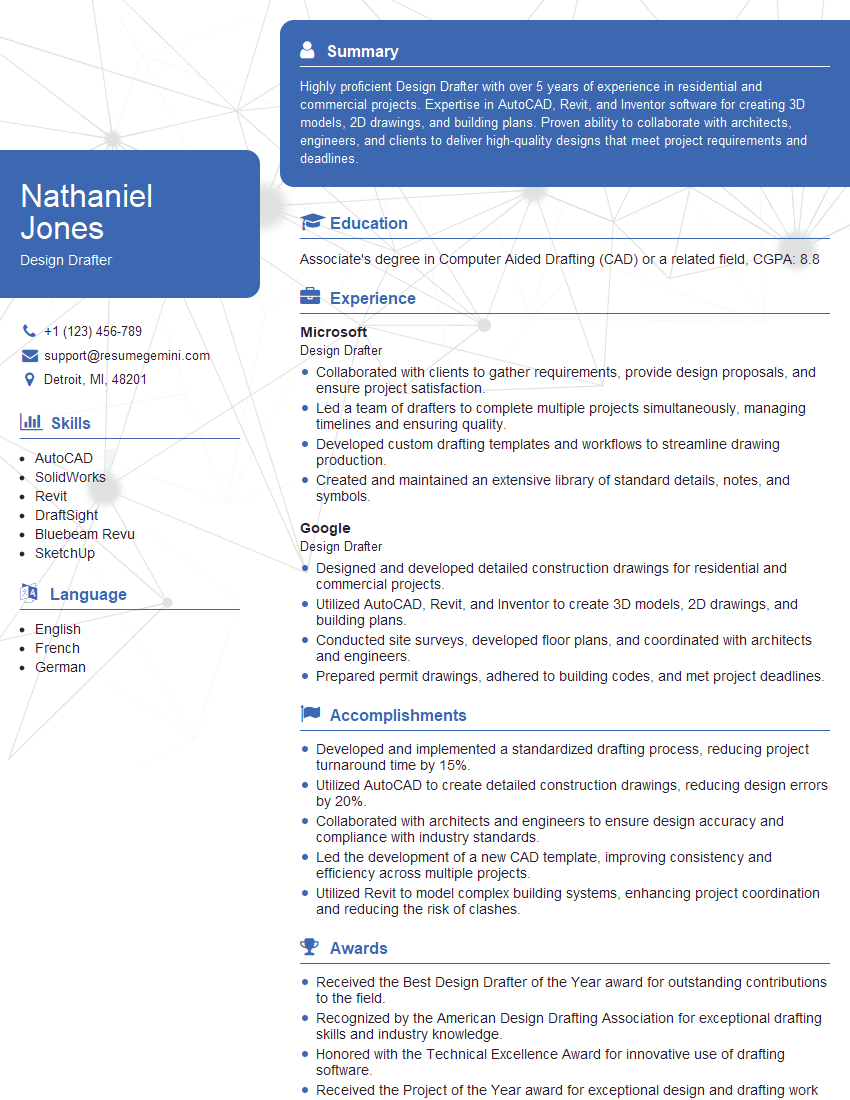
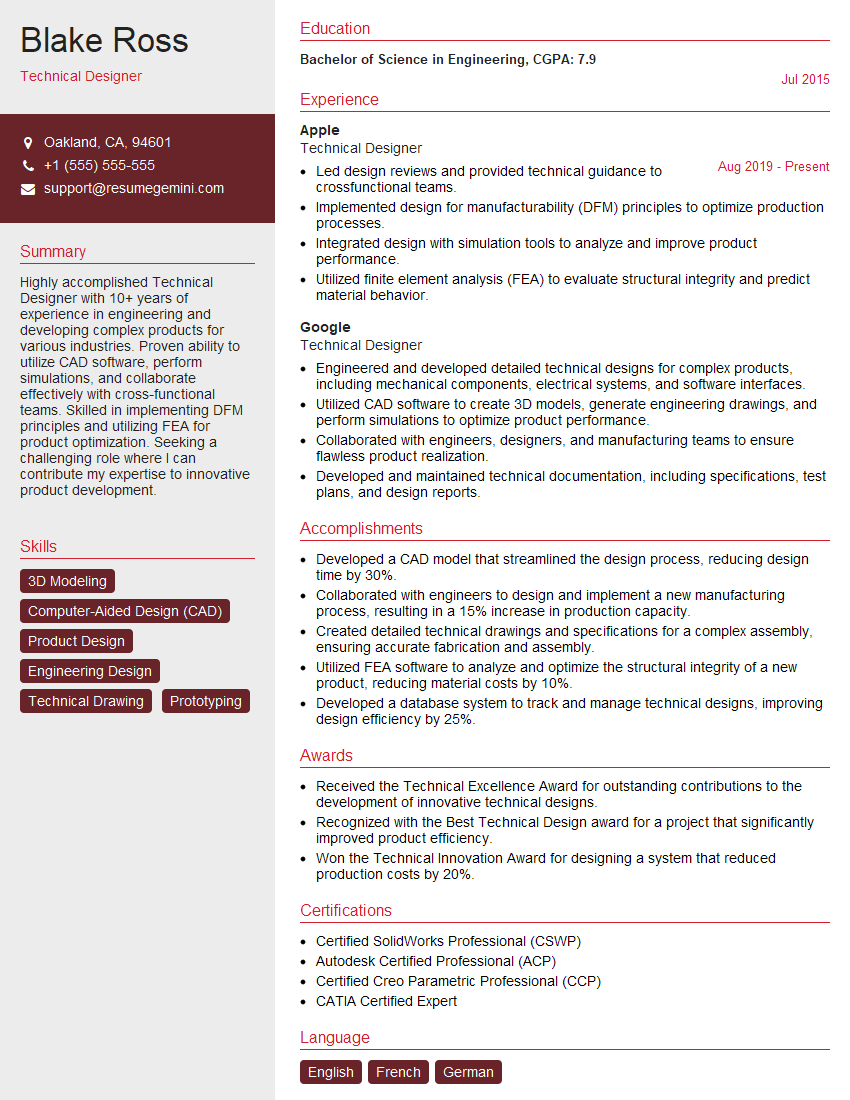
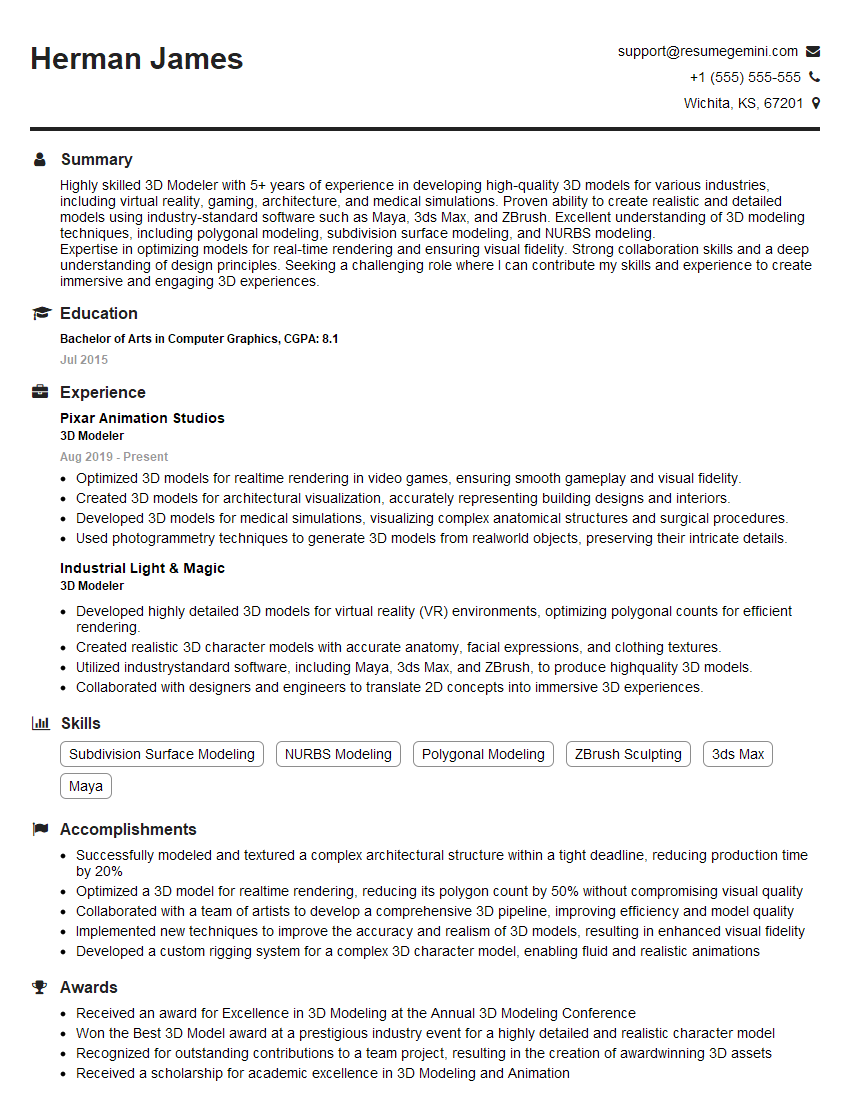
Mastering Detail Design is crucial for career advancement in software development, allowing you to build robust, scalable, and maintainable systems. An ATS-friendly resume is vital for showcasing your skills and experience to potential employers. To create a compelling and effective resume, leverage the power of ResumeGemini. ResumeGemini provides a trusted platform for building professional resumes, and we offer examples of resumes tailored specifically for Detail Design roles to help you get started. Invest in crafting a strong resume – it’s your first impression!

Explore more articles
Users Rating of Our Blogs
Share Your Experience
We value your feedback! Please rate our content and share your thoughts (optional).
What Readers Say About Our Blog
Really detailed insights and content, thank you for writing this detailed article.
IT gave me an insight and words to use and be able to think of examples