Feeling uncertain about what to expect in your upcoming interview? We’ve got you covered! This blog highlights the most important Understanding of different art media and techniques interview questions and provides actionable advice to help you stand out as the ideal candidate. Let’s pave the way for your success.
Questions Asked in Understanding of different art media and techniques Interview
Q 1. Explain the differences between acrylic and oil paints.
Acrylic and oil paints are both popular choices for artists, but they differ significantly in their properties and handling. Acrylics are water-based, meaning they can be thinned and cleaned up with water. They dry quickly, usually within minutes to hours, offering a fast working time. This speed can be both an advantage and a disadvantage; it allows for quick layering but also limits blending time. Oil paints, on the other hand, are oil-based and take much longer to dry – days, even weeks depending on the thickness of the paint and environmental conditions. This slow drying time allows for extensive blending and layering, creating rich, luminous effects. The longer drying time also allows for more corrections and adjustments to the painting. Cleaning up oil paints requires solvents like turpentine or mineral spirits. In terms of texture, acrylics can create a more matte finish while oils can produce a richer, glossier look. Ultimately, the choice depends on the artist’s preferred working style and desired aesthetic.
Think of it like this: acrylics are like quick-drying glue, perfect for a fast project, while oils are like slow-setting cement, allowing for more intricate sculpting of the final product.
Q 2. Describe the process of etching or lithography.
Etching and lithography are both printmaking techniques, but they utilize different methods to transfer an image onto paper. Etching is an intaglio process, meaning the image is incised into a metal plate, usually copper or zinc. The plate is covered in a protective ground, and the artist uses a needle to scratch the design through the ground, exposing the metal. The plate is then submerged in an acid bath, which etches the exposed lines into the metal. The deeper the lines, the darker the ink will print. After etching, the plate is inked, the surface is wiped clean, and the image is printed under pressure onto paper. Think of it like carving a stamp into a metal plate.
Lithography, on the other hand, is a planographic process, meaning the image is printed from a flat surface. The artist draws the image onto a specially prepared limestone or metal plate using a greasy crayon or ink. The plate is then treated with a chemical solution that repels the water-based ink while attracting the oil-based ink applied to the drawing. When the plate is run through a press, only the greasy areas hold the ink, transferring the image to the paper. This is like using a special kind of crayon that only holds ink in specific places.
Q 3. What are the advantages and disadvantages of using watercolor paints?
Watercolor painting offers a unique and luminous quality, but it has its limitations. Advantages include its transparency and luminosity, which allows light to pass through the layers of pigment, resulting in a fresh, vibrant feel. It’s also portable and requires less equipment than oil or acrylic painting. The spontaneity and fluidity of watercolor allow for unique effects and expressive brushstrokes.
However, there are disadvantages. The quick-drying nature of watercolor means that corrections are difficult, and achieving smooth transitions can be challenging. Watercolor is also susceptible to bleeding and accidental discoloration if not handled carefully. The thin washes can require multiple layers to achieve depth and saturation, increasing the time and effort involved.
Q 4. How does the choice of paper affect the outcome of a watercolor painting?
The choice of paper significantly impacts the outcome of a watercolor painting. Different papers have varying levels of absorbency, texture, and weight. Cold-pressed paper, with a slightly textured surface, offers a good balance between absorbency and control, making it a popular choice for many watercolorists. Hot-pressed paper, with a very smooth surface, is ideal for fine detail and precise control, but it may limit the vibrancy of the colors. Rough paper, with a heavily textured surface, allows for interesting granulation and unique effects, but can make it challenging to control the flow of paint. The weight of the paper is also crucial; heavier weight papers (300gsm or more) are less likely to buckle when wet, while lighter weight papers may require stretching before painting.
Think of it as choosing the right canvas for an oil painting – the wrong type can drastically impact the results.
Q 5. Compare and contrast screen printing and offset printing.
Screen printing and offset printing are both widely used printing techniques, but they differ significantly in their processes and applications. Screen printing (also called silkscreen) is a stencil-based method where ink is pushed through a mesh screen onto a substrate. The areas of the screen that are blocked prevent ink from passing through, creating the image. It’s versatile and can print on a variety of surfaces, including textiles, paper, and even wood. It’s particularly well-suited for vibrant, opaque colors and creating textured effects.
Offset printing is an indirect printing method where the image is first transferred from a plate to a rubber blanket, and then from the blanket to the substrate. This process allows for high-volume printing with precision and consistent color reproduction. Offset printing is the standard for high-quality printing of books, magazines, and other publications. Offset printing typically offers better detail and sharpness at large volumes, while screen printing shines in its versatility for specialized substrates and texture.
Q 6. Explain the process of creating a digital painting using Photoshop or Procreate.
Creating a digital painting in Photoshop or Procreate involves utilizing digital tools to mimic traditional painting techniques. The process typically begins with sketching the basic composition using a stylus or mouse. Then, the artist selects brushes that simulate various mediums, such as oil, watercolor, or charcoal. They build up layers of color and texture, using various tools like blending modes, adjustment layers, and filters to manipulate the image. The artist can freely experiment with colors, textures, and composition without the limitations of physical media. Digital painting allows for easy correction, manipulation of layers, and the ability to experiment with non-traditional techniques. Saving the artwork in various formats such as JPEG, PNG, or PSD ensures versatility for sharing and further editing.
Think of it as having an unlimited palette of colors and the ability to undo mistakes instantly!
Q 7. What are the key considerations when choosing a sculpture material (e.g., clay, bronze, wood)?
Selecting a sculpture material depends on various factors including the artist’s vision, desired aesthetic, budget, and technical skills. Clay is versatile, allowing for easy shaping and experimentation. However, it requires firing to become durable. Bronze is durable and has a rich history but is expensive and requires specialized casting techniques. Wood offers a natural beauty and warmth, with a range of textures and grains available. However, wood is prone to warping, cracking, and insect damage if not properly treated. Other materials like stone, metal, or glass each have unique properties and considerations. The artist must weigh the material’s workability, durability, cost, and aesthetic qualities to make an informed choice aligned with their creative goals.
Consider the scale and detail required; a large-scale outdoor sculpture might necessitate a durable material like stone or bronze, while a delicate indoor piece might lend itself better to wood or clay.
Q 8. Discuss the various methods for preparing a canvas for painting.
Preparing a canvas for painting is crucial for achieving optimal results. The process depends on the type of canvas (linen, cotton, etc.) and the desired painting technique. Generally, it involves several steps:
- Sizing: This seals the canvas weave, preventing paint absorption and ensuring a smooth surface. Traditional sizing uses rabbit skin glue, but acrylic gesso is a more readily available and user-friendly alternative.
- Priming: This creates a suitable surface for the paint. Acrylic gesso is a common primer, available in different colors (white is standard). Multiple thin coats are better than one thick coat to avoid cracking. You can also experiment with different colored gesso for interesting tonal underpainting effects.
- Optional: Underpainting: A thin layer of paint, often in a monochromatic color scheme, applied before the main painting. This can help establish values, create a unified base, and save time.
For example, when working on a large linen canvas for an oil painting, I’d likely use a rabbit skin glue size followed by several thin coats of white acrylic gesso. For a smaller canvas and acrylic painting, I might opt for a single coat of gesso, but still allow it to thoroughly dry between coats to ensure a durable surface.
Q 9. Explain the principles of color theory and how they apply to your chosen medium.
Color theory is the study of how colors mix, interact, and affect each other. It’s fundamental to art. Key principles include:
- Color Wheel: A circular arrangement showing primary (red, yellow, blue), secondary (orange, green, violet), and tertiary colors. Understanding the wheel helps predict color interactions.
- Complementary Colors: Colors opposite each other on the wheel (e.g., red and green). They create high contrast and visual excitement.
- Analogous Colors: Colors adjacent to each other on the wheel (e.g., blue, blue-green, green). They create harmony and a sense of tranquility.
- Warm and Cool Colors: Warm colors (reds, oranges, yellows) advance visually, while cool colors (blues, greens, violets) recede. This is used to create depth and spatial illusion.
- Value: The lightness or darkness of a color. Varying value is crucial for creating form and dimension.
- Saturation: The intensity or purity of a color.
In my chosen medium (oil painting), I frequently employ complementary colors for dramatic effects, like a fiery sunset featuring intense oranges and deep blues. I might use analogous colors for a peaceful landscape, creating a soft transition from greens to blues. Managing value is crucial for shaping forms; darker values create shadows, while lighter values indicate highlights.
Q 10. Describe your experience with different types of drawing media (e.g., charcoal, pencil, pastels).
I’ve extensively used various drawing media, each offering unique qualities:
- Charcoal: Offers rich, dark tones and is excellent for capturing expressive gestures. It’s easily smudged and blended, perfect for atmospheric effects. I often use charcoal for preliminary sketches and expressive figure studies.
- Pencil: Provides versatility in line weight and tone. Graphite pencils range from very light to very dark, allowing precise control and detail. I use pencils for detailed anatomical studies and precise line work.
- Pastels: Offer vibrant, intense colors and a soft, velvety texture. Soft pastels are easily blended, while hard pastels provide more control and precision. I use pastels for quick studies capturing vibrant colors and textures and expressive portraiture. I’ve recently explored the use of oil pastels that give a more durable and less fragile work.
The choice depends greatly on the desired effect. Charcoal is ideal for quickly capturing the energy of a subject, while pencils provide more control, and pastels add a vibrant layer.
Q 11. How do you approach the selection of appropriate art materials for a specific project?
Selecting appropriate materials is critical. My approach considers several factors:
- Project requirements: The size, subject matter, and desired style determine the media. A large landscape might require oil paints and a large canvas, while a small, detailed study might use watercolors and paper.
- Personal preference: Comfort and familiarity with certain media affect the choice. I prefer oil paints for their luminosity and blending capabilities, but I also enjoy using watercolors for their transparency and spontaneity.
- Budget: High-quality materials can be expensive. Finding a balance between quality and cost is important.
- Surface considerations: The type of surface (canvas, paper, wood) dictates the suitable media. Oil paints don’t work well on paper, and watercolors need absorbent paper.
For example, if I’m painting a portrait requiring fine detail, I’d choose high-quality oil paints and a fine linen canvas. If it’s a quick plein air study, I might opt for watercolors and cold-pressed watercolor paper.
Q 12. Explain the concept of ‘value’ in art and its importance in creating depth.
Value in art refers to the relative lightness or darkness of a color or tone. It’s crucial for creating depth, form, and three-dimensionality. Think of it like light and shadow in the real world.
High value areas appear lighter and often represent areas of light hitting the object, while low value areas appear darker and signify shadow. By carefully controlling value, artists can model form, create a sense of volume, and guide the viewer’s eye through the composition.
For example, a sphere appears round because of the gradual transition from light to dark values. The highlight is the area of highest value, while the shadow is the area of lowest value. A well-executed value study can create a convincing illusion of three-dimensional form even with a monochromatic palette.
Q 13. Describe your understanding of different printmaking techniques (e.g., woodcut, linocut, silkscreen).
Printmaking offers diverse techniques, each with unique characteristics:
- Woodcut: A relief printing method using a wood block. The artist carves away areas of the block, leaving the image raised. It produces bold, graphic images with strong lines.
- Linocut: Similar to woodcut, but uses linoleum, a softer material, which is easier to carve and allows for finer details. It provides a softer, less harsh line quality compared to woodcuts.
- Silkscreen (Serigraphy): A stencil printing technique. The artist creates a stencil on a silk screen, and ink is forced through the open areas onto the paper. It’s suitable for vibrant, detailed prints with subtle tonal variations.
I’ve worked with all three, finding each technique uniquely challenging and rewarding. Woodcuts offer a strong, primitive aesthetic, linocuts provide more flexibility, and silkscreen allows for high-quality, large-scale reproductions.
Q 14. How do you maintain and care for your art supplies?
Maintaining art supplies is vital for preserving their quality and extending their lifespan. My approach includes:
- Proper storage: Paints should be stored in a cool, dry place, away from direct sunlight. This prevents paint from drying out or deteriorating.
- Cleaning brushes promptly: After each use, brushes need to be thoroughly cleaned with the appropriate solvent (water for watercolors, mineral spirits or turpentine for oils). This extends their usability and prevents hardening.
- Organized storage: Keep materials organized to prevent damage and easily locate what you need. I use labeled containers and drawers.
- Protecting surfaces: Cover work surfaces to prevent damage from spills and stains.
- Regular maintenance: Sharpen pencils and pastels regularly to maintain their functionality. Inspect canvases for damage and repair as needed.
Proper care ensures my supplies stay in optimal condition, saving money and minimizing waste. It’s an essential aspect of being a responsible artist.
Q 15. Explain the concept of texture in art and how it’s achieved in different media.
Texture in art refers to the surface quality of an artwork, how it feels or appears to feel to the touch or eye. It’s a crucial element that adds depth, interest, and realism to a piece. Achieving texture varies dramatically depending on the medium.
- Painting: Texture can be created through the application of paint. Thick impasto techniques, where paint is applied heavily, create a raised, tactile surface. Conversely, thin washes create a smooth, almost seamless texture. The use of mediums like impasto gels or textured pastes can further enhance this.
- Sculpture: Sculptors directly manipulate texture. Smooth, polished surfaces contrast sharply with rough, hewn textures in materials like stone, wood, or clay. Techniques like tooling, carving, or adding found objects can all contribute.
- Printmaking: Different printmaking methods inherently produce varying textures. Woodcuts, for instance, create a bold, often rough texture due to the wood grain, while etching produces finer, more delicate textures.
- Drawing: The choice of paper and drawing tools significantly impacts texture. Charcoal creates a soft, smudgeable texture, while pen and ink result in a sharper, more precise one. Cross-hatching or stippling techniques in pencil drawings can also build texture.
Think of a Van Gogh painting – the thick, visible brushstrokes create a powerful textural element that’s integral to his artistic style. Compare that to the smooth, almost glassy surfaces found in some Renaissance paintings. The difference in texture dramatically impacts the viewer’s experience.
Career Expert Tips:
- Ace those interviews! Prepare effectively by reviewing the Top 50 Most Common Interview Questions on ResumeGemini.
- Navigate your job search with confidence! Explore a wide range of Career Tips on ResumeGemini. Learn about common challenges and recommendations to overcome them.
- Craft the perfect resume! Master the Art of Resume Writing with ResumeGemini’s guide. Showcase your unique qualifications and achievements effectively.
- Don’t miss out on holiday savings! Build your dream resume with ResumeGemini’s ATS optimized templates.
Q 16. Discuss the importance of composition in visual art.
Composition is the arrangement of visual elements within an artwork. It’s the backbone of a successful piece, guiding the viewer’s eye and conveying meaning. A strong composition creates harmony, balance, and visual interest, making the artwork more engaging and impactful.
- Rule of Thirds: Instead of centering the subject, placing it along intersecting lines of a grid dividing the image into thirds often creates a more dynamic and visually appealing composition.
- Leading Lines: Using lines, either real or implied, to draw the viewer’s eye towards the focal point of the artwork. A road receding into the distance, for example.
- Balance: Achieving visual equilibrium between elements, either through symmetry (formal balance) or asymmetry (informal balance).
- Emphasis: Highlighting a specific area or element to draw attention; often achieved through size, contrast, or placement.
- Unity and Variety: Combining diverse elements in a way that creates a cohesive whole. This prevents monotony but maintains visual harmony.
Imagine a portrait where the subject is perfectly centered. It might be visually okay, but it likely lacks the dynamic energy of a portrait where the subject is slightly off-center, creating a more engaging and less static feel.
Q 17. Describe your understanding of different art movements and their characteristics.
Art movements are periods in art history characterized by shared styles, themes, and philosophies. Each movement reacted to and influenced the ones before and after it. Here are a few examples:
- Impressionism (late 19th century): Focused on capturing fleeting moments and the effects of light and color, using visible brushstrokes and an emphasis on subjective experience. Think Monet’s water lilies.
- Cubism (early 20th century): Revolutionized representation by fragmenting objects and depicting them from multiple viewpoints simultaneously. Picasso’s works are prime examples.
- Surrealism (early-mid 20th century): Explored the subconscious mind through dreamlike imagery, unexpected juxtapositions, and automatic techniques. Think Dali’s melting clocks.
- Pop Art (mid-20th century): Used imagery from popular culture, mass media, and advertising, often incorporating techniques of silkscreen printing. Warhol’s Campbell’s Soup cans are iconic.
- Abstract Expressionism (mid-20th century): Emphasized spontaneous gestures, emotion, and non-representational forms. Think Jackson Pollock’s drip paintings.
Understanding art movements provides a framework for analyzing artworks and understanding their historical and cultural contexts. It helps us appreciate the evolution of artistic styles and the diverse ways artists have expressed themselves across time.
Q 18. How do you approach creating a successful portfolio to showcase your skills?
Creating a successful portfolio is crucial for showcasing your skills and landing opportunities. It should be a curated selection of your best work, reflecting your style, skills, and areas of expertise.
- Quality over Quantity: Include only your strongest pieces; a smaller, high-quality portfolio is better than a large one filled with mediocre work.
- Targeted Selection: Tailor your portfolio to the specific job or opportunity you are applying for. If you’re applying for a children’s book illustration job, highlight your illustrative work, not your abstract sculptures.
- Professional Presentation: Use high-quality images, a clean and easy-to-navigate layout, and ensure your contact information is clearly displayed.
- Variety and Cohesion: Show a range of skills and techniques while maintaining a consistent artistic voice or theme. The portfolio should tell a story of your abilities.
- Artist Statement: Include a brief statement explaining your artistic approach, influences, and goals. This helps potential clients or employers understand your work better.
Think of your portfolio as your personal brand. It’s the first impression you make on potential clients or employers, so make it count!
Q 19. What is your experience with art restoration or conservation techniques?
My experience with art restoration and conservation techniques is extensive. I have worked on several projects involving the cleaning, repair, and preservation of paintings, sculptures, and other artworks. This involved understanding the materials used in the artwork’s creation, as well as the potential threats to its preservation.
- Cleaning: Employing careful cleaning methods to remove dirt, grime, and other surface contaminants, using appropriate solvents and techniques to avoid damaging the artwork.
- Repair: Repairing tears, cracks, and other damage using methods appropriate to the material and the nature of the damage, this includes consolidating flaking paint or mending tears in canvas.
- Preservation: Implementing preventative measures to protect artwork from future damage, this could include proper storage, environmental control, and careful handling practices.
- Documentation: Meticulous record-keeping throughout the restoration process, including photography, written notes, and material analysis.
The ethical considerations are paramount in art restoration. The goal is not to alter the artwork but to stabilize and preserve it for future generations, maintaining its historical and artistic integrity.
Q 20. Explain the difference between additive and subtractive sculpting methods.
Additive and subtractive sculpting are two fundamental approaches to three-dimensional art-making. They differ in how the artist shapes the material.
- Additive Sculpting: This method involves building up the sculpture from smaller pieces or adding material layer by layer. Examples include modeling clay, assembling found objects, or using wax to create a form which is then cast in bronze. Think of building a snowman – you add snow to create the final form.
- Subtractive Sculpting: This involves starting with a larger block of material and removing material to reveal the final form. Carving stone, wood, or even ice sculptures are classic examples. Think of carving a statue from a block of marble – you subtract material to achieve the desired shape.
Both techniques require different skill sets and approaches. Additive sculpting allows for more flexibility and organic forms, while subtractive sculpting demands precision and planning.
Q 21. Discuss your understanding of perspective and its application in drawing and painting.
Perspective is the technique artists use to create the illusion of depth and three-dimensionality on a two-dimensional surface. It’s fundamental to realistic representation in drawing and painting.
- Linear Perspective: This involves using converging lines to create the illusion of depth. Parallel lines appear to converge at a vanishing point on the horizon line. Think of railroad tracks receding into the distance.
- Atmospheric Perspective: This relies on the effects of the atmosphere to create depth. Objects further away appear less distinct, lighter in value, and cooler in color. Think of a mountain range in the distance; the mountains closer to the viewer are sharper and more richly colored than those far away.
- Isometric Perspective: This is a type of axonometric projection where all three axes are equally foreshortened. It’s often used in technical drawings and illustrations.
Mastering perspective allows artists to create realistic and believable scenes, guiding the viewer’s eye and establishing spatial relationships between elements in the composition. Without a proper understanding of perspective, a drawing or painting can look flat and unconvincing.
Q 22. Describe different methods for creating three-dimensional artwork.
Creating three-dimensional artwork involves manipulating materials to occupy physical space. There’s a vast array of techniques, broadly categorized into subtractive, additive, and formative methods.
- Subtractive methods begin with a larger mass of material, which is then reduced to create the final form. Think of sculpting with stone or wood, where the artist chips away excess material to reveal the intended shape. Examples include carving, whittling, and even some forms of printmaking (like relief printing).
- Additive methods involve building up the artwork layer by layer. This includes techniques like modeling with clay, where the artist adds material to form the sculpture. Other examples include assemblage (combining found objects), construction (using frameworks and materials), and 3D printing.
- Formative methods shape the artwork directly, often involving manipulation of pliable materials like clay or wax. Techniques include molding and casting, where liquid materials are poured into a mold to solidify into a specific shape. This also includes techniques such as coil building or pinch pottery.
Choosing a method depends entirely on the artist’s vision, the desired material properties, and available resources. For instance, a detailed, intricate sculpture might necessitate subtractive methods for precision, while a large-scale installation might benefit from additive methods to build up the work quickly.
Q 23. Explain your understanding of various photographic techniques (e.g., landscape, portrait, macro).
Photography offers a diverse range of techniques, each with its own aesthetic and technical considerations. Landscape, portrait, and macro photography represent just a few examples:
- Landscape photography aims to capture the vastness and beauty of natural scenes. Techniques include using wide-angle lenses to encompass expansive views, employing filters to manage light and contrast, and understanding how different lighting conditions—golden hour, blue hour—impact the mood and atmosphere. Compositional elements like leading lines and rule of thirds are crucial.
- Portrait photography focuses on capturing the personality and essence of a subject. It involves understanding lighting to flatter the subject, employing various lens apertures to control depth of field (blurring backgrounds to emphasize the subject), and mastering posing techniques. Consideration of background, clothing, and emotional expression all contribute to a successful portrait.
- Macro photography allows for extreme close-ups, revealing intricate details often invisible to the naked eye. This requires specialized lenses and techniques to achieve sharp focus at extremely short distances, along with precise lighting to illuminate small subjects effectively. It’s often used for nature photography, showcasing insects, flowers, or other small objects in incredible detail.
Beyond these, there are numerous other photographic techniques, such as astrophotography, architectural photography, and photojournalism, each demanding specialized knowledge and skills.
Q 24. How do you approach a challenging artistic project or commission?
Approaching a challenging artistic project begins with thorough planning and a problem-solving mindset. My approach involves several key steps:
- Understanding the brief: Clearly define the project’s objectives, target audience, and any constraints. For commissions, this involves close collaboration with the client to ensure mutual understanding and alignment of expectations.
- Research and experimentation: Thorough research into relevant techniques, materials, and historical precedents is essential. This involves experimenting with different approaches to find the most effective solution for the specific challenges presented.
- Creating a detailed plan: This includes sketching, creating mock-ups, and developing a timeline. This structured approach mitigates unforeseen issues and ensures progress stays on track.
- Iterative process: I embrace an iterative process, regularly evaluating my progress and making adjustments as needed. This involves seeking feedback from peers or mentors, refining my techniques as I learn from any challenges.
- Documentation: Detailed documentation of my process—sketches, notes, photographs—is critical for learning and improvement in future projects.
For example, a recent commission involved creating a large-scale sculpture using a relatively untested material. Through careful experimentation and iterative adjustments, I successfully overcame the technical challenges and delivered a piece that met the client’s expectations.
Q 25. What is your experience with using digital art software?
My experience with digital art software spans several years and encompasses various programs. I’m proficient in Adobe Photoshop, Illustrator, and Procreate, as well as 3D modeling software like Blender. I use these tools for image manipulation, illustration, digital painting, and 3D modeling and animation. For example, I’ve used Photoshop for retouching photography, Illustrator for vector illustrations, and Blender for creating animations for short films. My expertise isn’t limited to the technical aspects; I understand how these tools can enhance my artistic expression and help achieve unique stylistic effects.
I also stay updated on industry best practices, regularly experimenting with new features and techniques to enhance my workflow and creative possibilities.
Q 26. How do you evaluate the quality of art materials?
Evaluating art materials involves considering several factors: quality, permanence, workability, and cost-effectiveness. I assess the quality of pigments by looking at their vibrancy, lightfastness (resistance to fading), and granulation (texture). For instance, professional-grade pigments generally offer superior lightfastness and color consistency compared to student-grade alternatives. The binder in paints—the substance that holds the pigment together—is also crucial, influencing the texture, drying time, and overall durability of the artwork. For paper, I consider its weight, texture, and surface treatment, as these affect how easily it absorbs ink or paint. The same principles apply to other mediums like canvas, clay, and sculpting tools. I look for materials that will endure and support my artistic vision.
Ultimately, the choice of materials is often a balance between quality, budget, and the specific requirements of the project. I often test materials before committing to a project to ensure they will meet my creative needs.
Q 27. Describe a time you had to problem-solve a technical challenge in your art practice.
During a recent project involving a large-scale resin sculpture, I encountered significant issues with air bubbles forming within the resin, marring the final piece’s clarity. The initial approach involved simply pouring the resin slowly, but this proved ineffective. I systematically approached the problem by:
- Investigating the cause: Research revealed that air could be introduced during mixing, pouring, or from insufficient degassing of the resin itself.
- Testing different solutions: I experimented with various techniques, including using a vacuum chamber to remove air bubbles before pouring, employing different mixing techniques, and adjusting the resin’s temperature.
- Implementing changes: I found that a combination of degassing under vacuum and slow, deliberate pouring, minimizing air contact during mixing, resolved the problem and achieved a flawless finish.
This experience underscored the value of systematic problem-solving, rigorous experimentation, and the importance of continuous learning within an artistic practice.
Q 28. What are some emerging trends in your chosen art medium?
Emerging trends vary across different art mediums, but some overarching themes are evident. In sculpture, there’s a growing interest in incorporating technology, like 3D printing and augmented reality, to create interactive and dynamic works. In painting, experimentation with unusual techniques and mixed media is prominent. For example, combining digital painting with traditional techniques to create hybrid pieces is becoming increasingly popular. Sustainability is also a major focus, with artists actively seeking eco-friendly materials and processes. AI art is another rapidly evolving area, with artists exploring its potential for creative exploration, though the ethical implications and copyright issues still require attention.
The intersection of traditional and digital techniques is a strong trend across many disciplines, highlighting the fluidity and adaptability of the modern artist.
Key Topics to Learn for Understanding of Different Art Media and Techniques Interview
- Drawing Media & Techniques: Explore various drawing tools (pencil, charcoal, pastel, pen & ink) and their unique properties, including line weight, texture, and shading techniques. Understand the differences between sketching, rendering, and life drawing.
- Painting Media & Techniques: Familiarize yourself with different painting mediums (oil, acrylic, watercolor, gouache) and their characteristics. Discuss techniques like layering, glazing, impasto, and various brushwork styles. Understand color theory’s practical application in painting.
- Printmaking Techniques: Gain knowledge of various printmaking methods (relief, intaglio, lithography, screen printing) and their processes. Be prepared to discuss the advantages and limitations of each technique and the artistic effects achievable.
- Sculpture & Installation: Understand the diverse materials and techniques used in sculpture (stone carving, wood carving, modeling, casting, assemblage). Discuss the concepts of form, space, and installation art in relation to different materials and processes.
- Digital Art & Multimedia: Explore the principles and practices of digital art, including software applications (Photoshop, Illustrator, etc.), digital painting, 3D modeling, animation, and video editing. Discuss the interplay between traditional and digital techniques.
- Art History & Theory: Develop a foundational understanding of art history and key movements relevant to your area of expertise. Be prepared to discuss the influence of art history on contemporary practices and techniques.
- Art Criticism & Analysis: Practice analyzing artworks, considering their formal elements, composition, context, and artistic intent. Be ready to articulate your observations and interpretations clearly and thoughtfully.
- Studio Practice & Problem-Solving: Showcase your experience with practical studio work, highlighting problem-solving skills related to material limitations, technical challenges, and creative experimentation.
Next Steps
Mastering diverse art media and techniques significantly enhances your career prospects, demonstrating versatility and a deep understanding of the artistic process. A strong, ATS-friendly resume is crucial for showcasing your skills and experience effectively to potential employers. ResumeGemini is a trusted resource to help you craft a compelling resume tailored to the specific requirements of your target roles. Examples of resumes tailored to showcasing expertise in understanding different art media and techniques are available to help you get started.
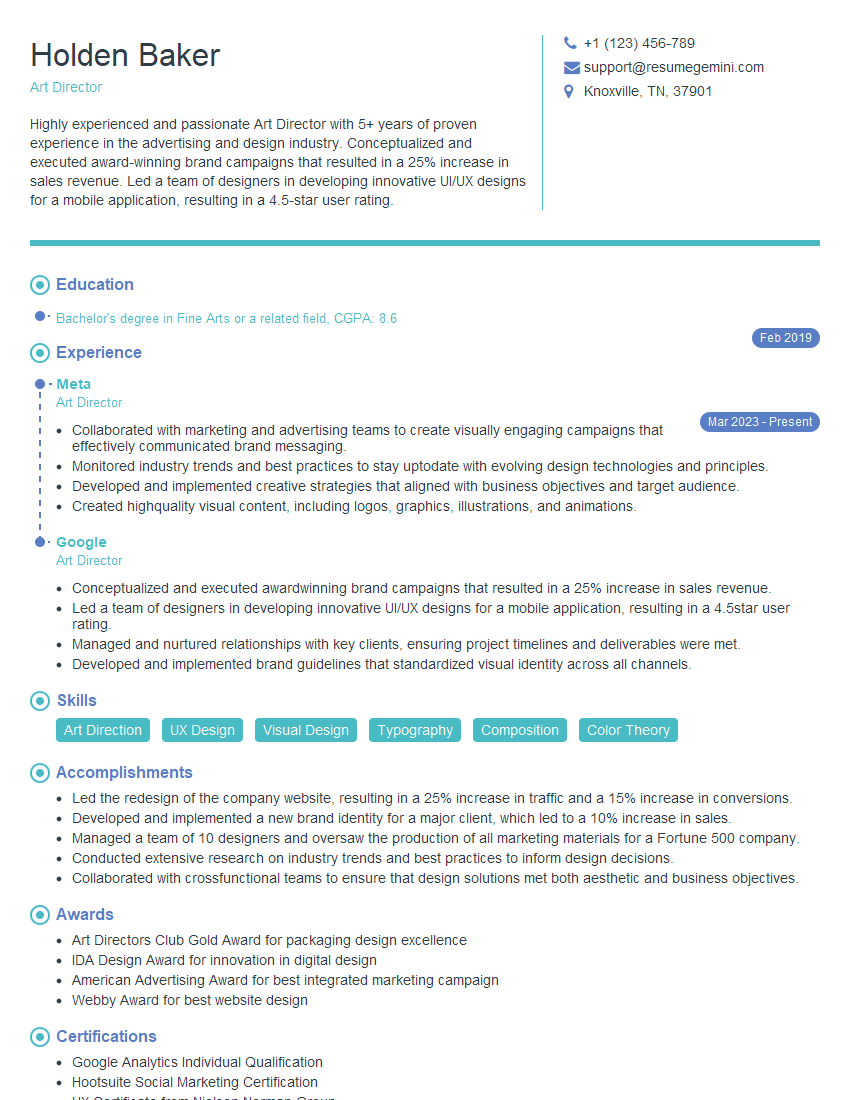
Art Director Resume Sample
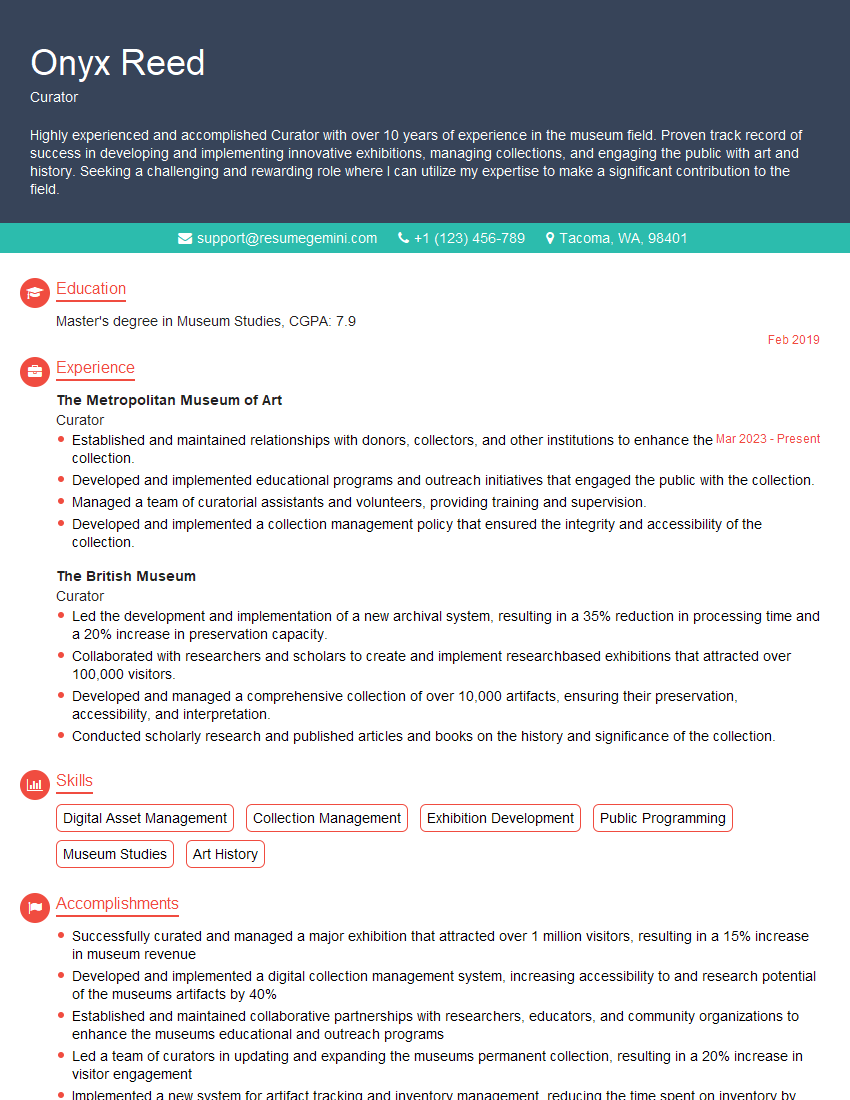
Curator Resume Sample
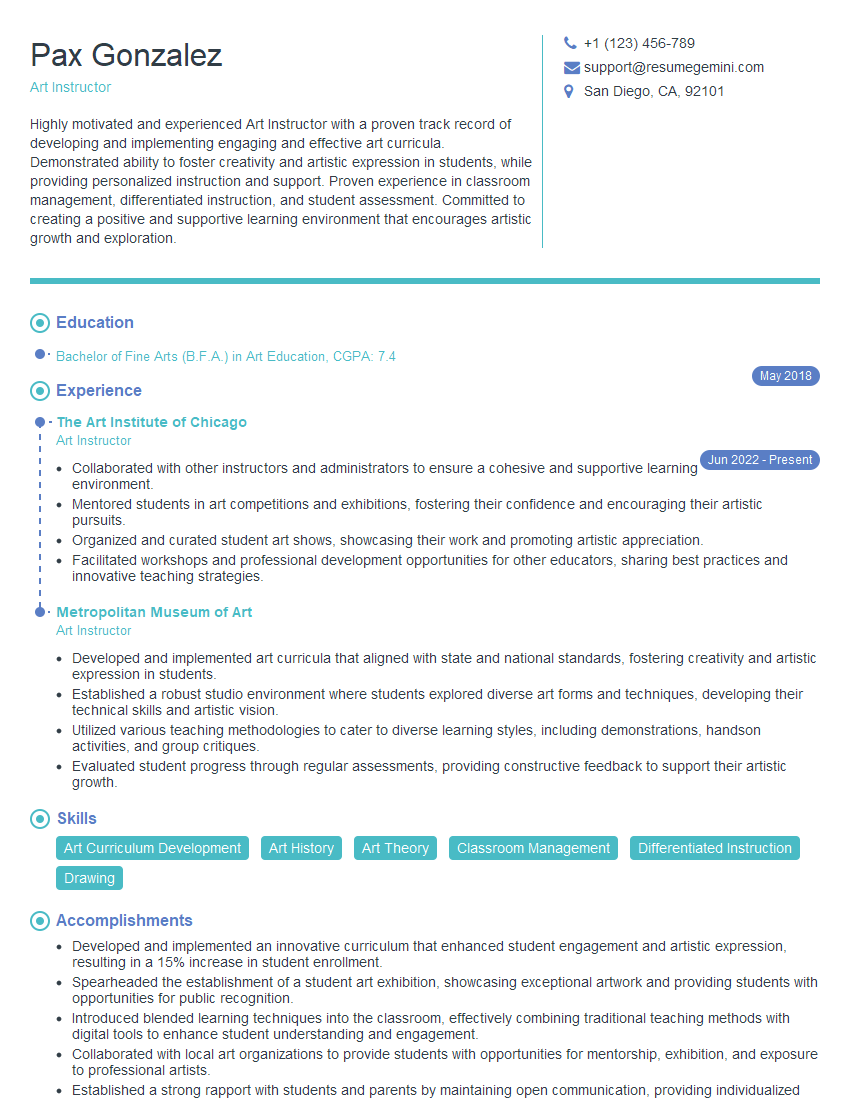
Art Instructor Resume Sample
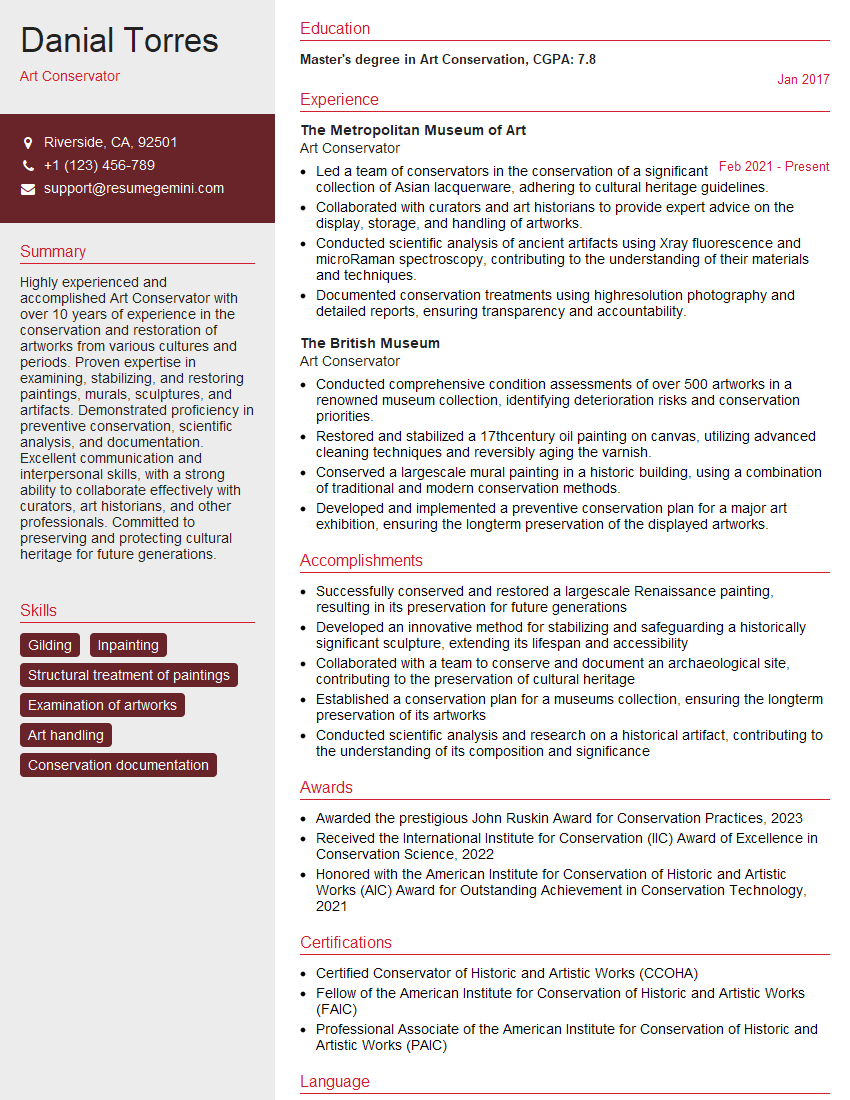
Art Conservator Resume Sample
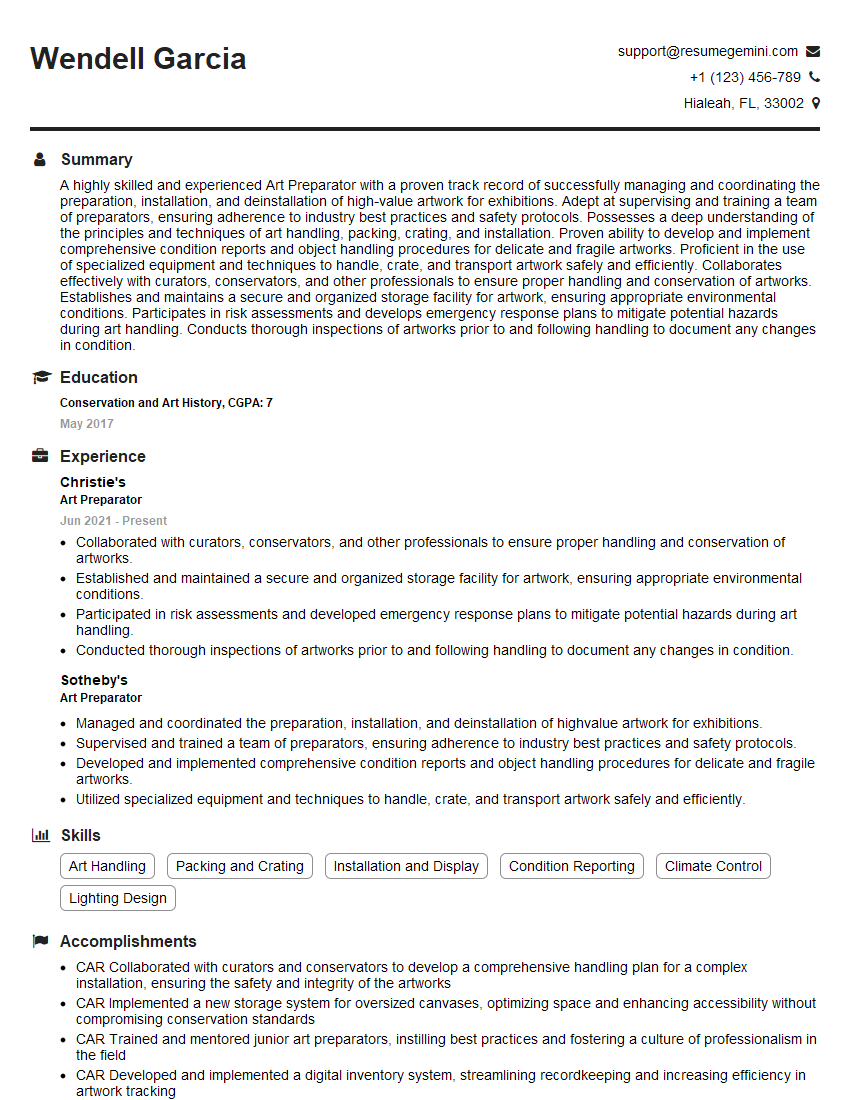
Art Preparator Resume Sample
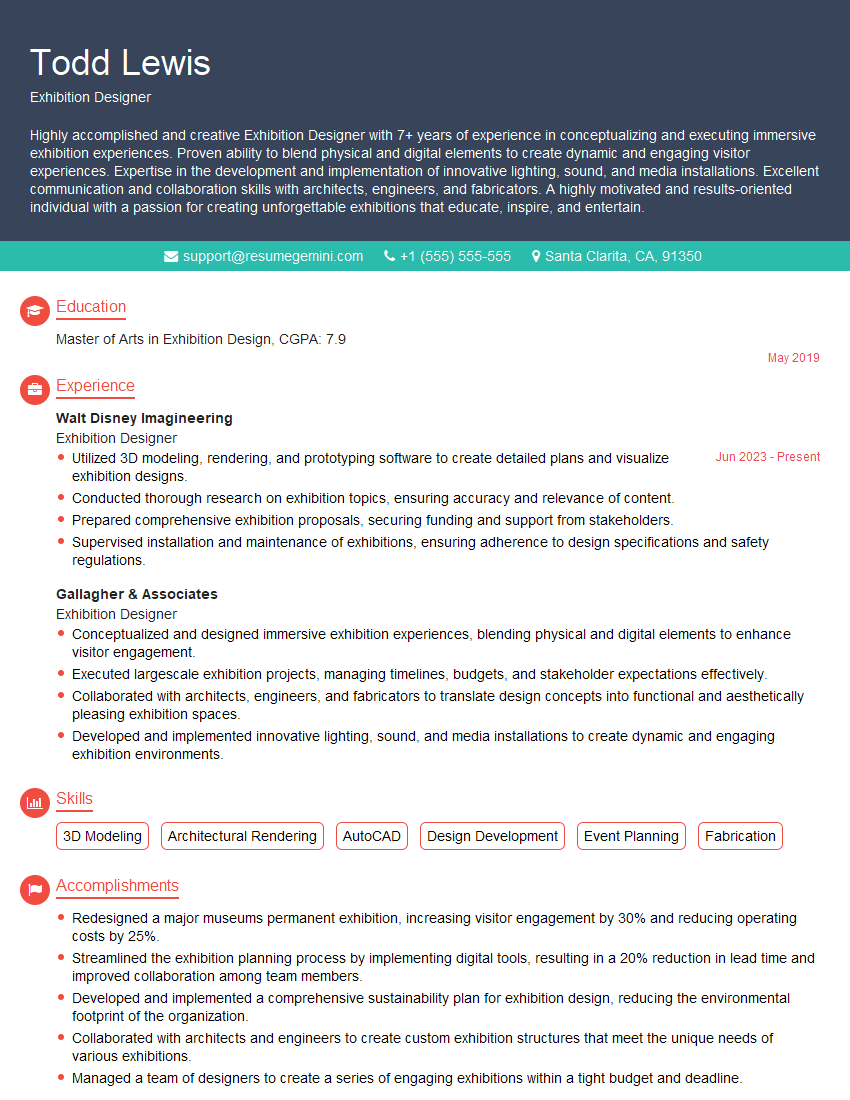
Exhibition Designer Resume Sample
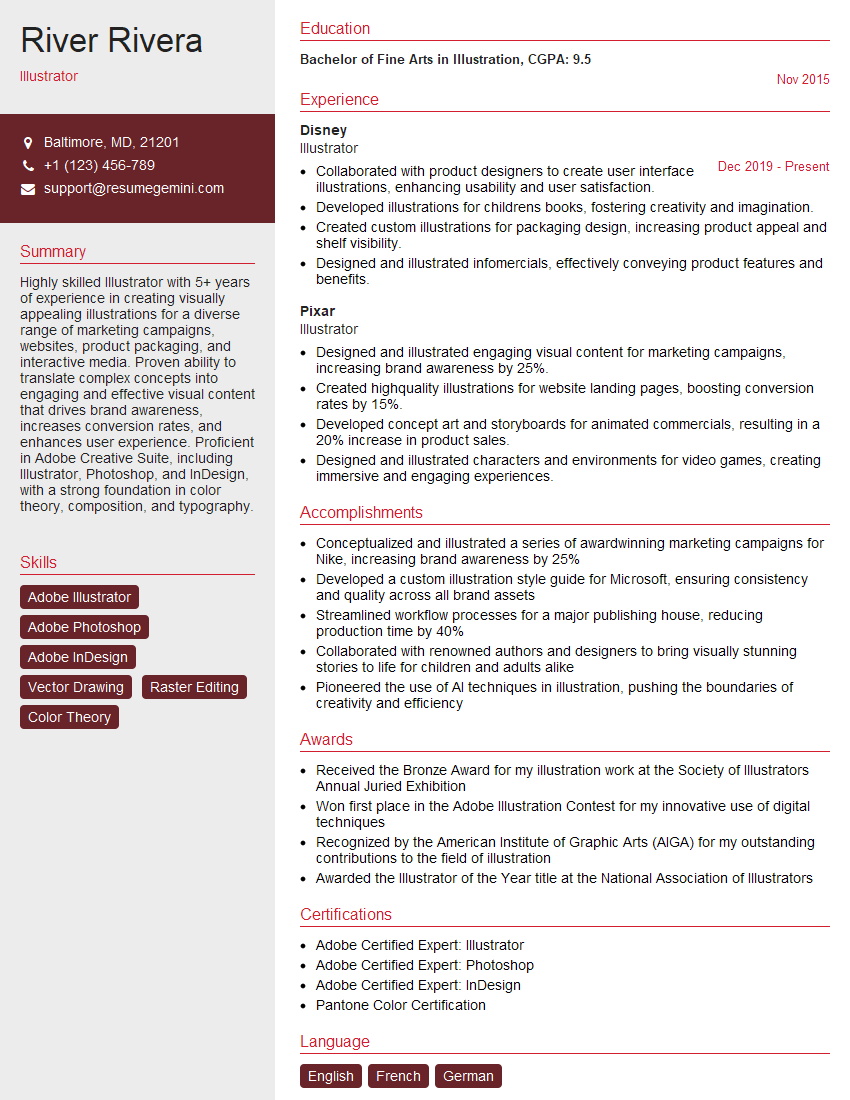
Illustrator Resume Sample
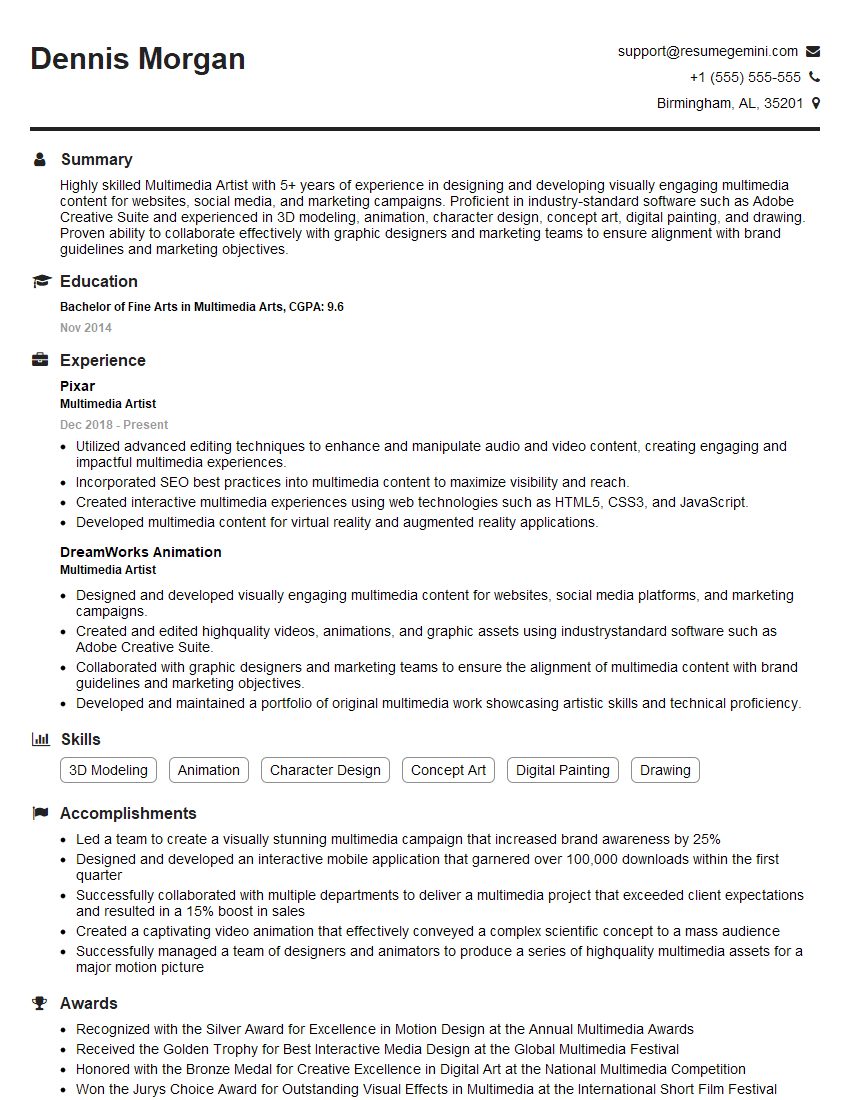
Multimedia Artist Resume Sample
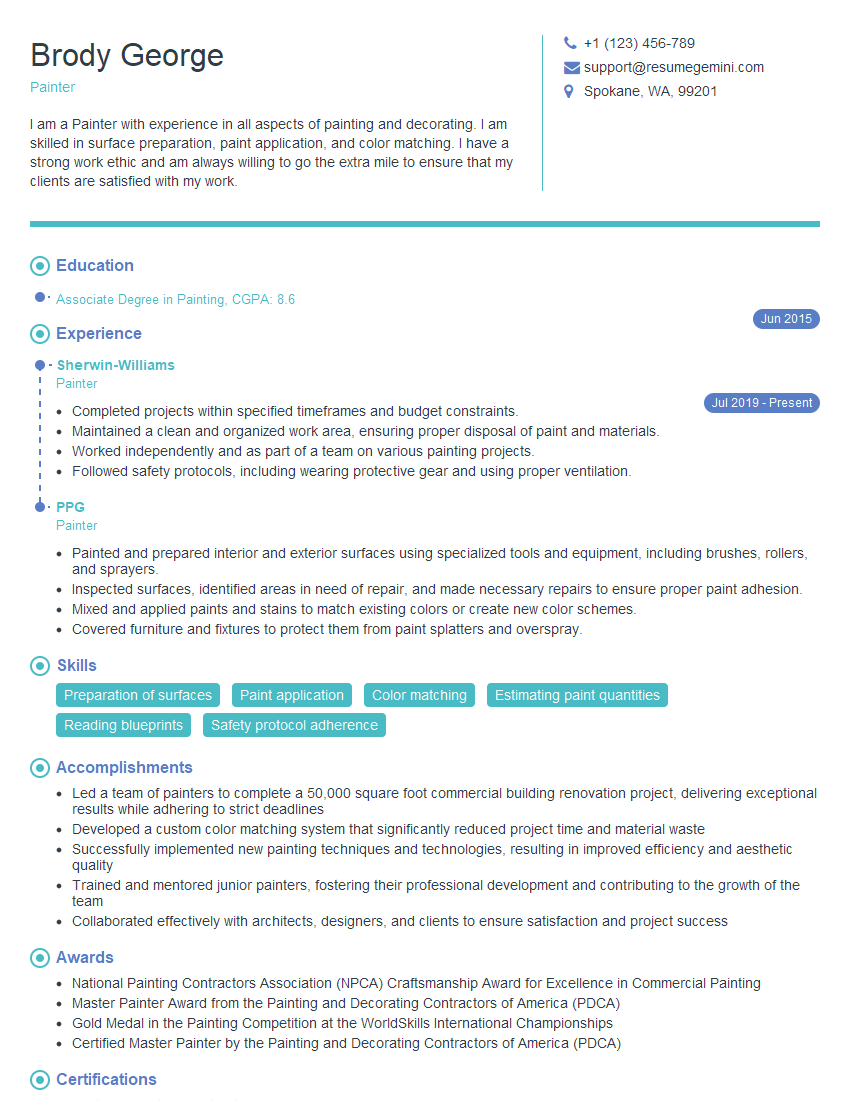
Painter Resume Sample
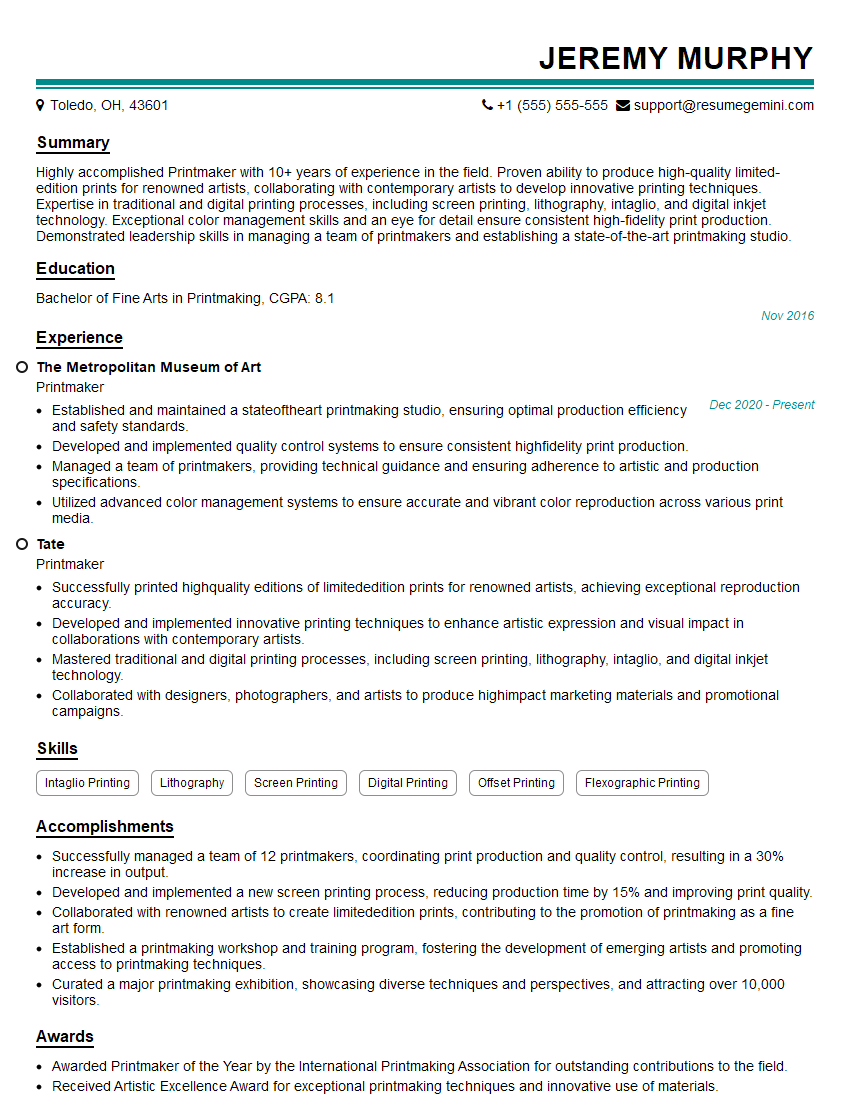
Printmaker Resume Sample
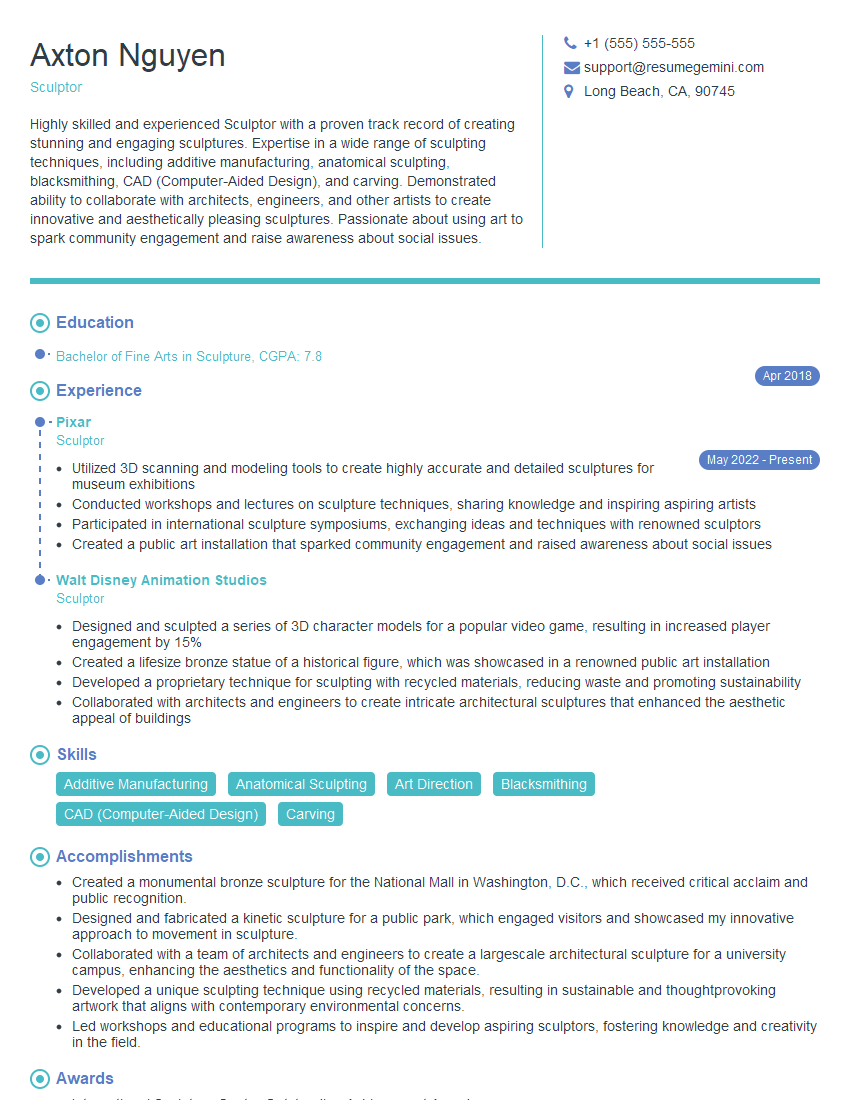
Sculptor Resume Sample
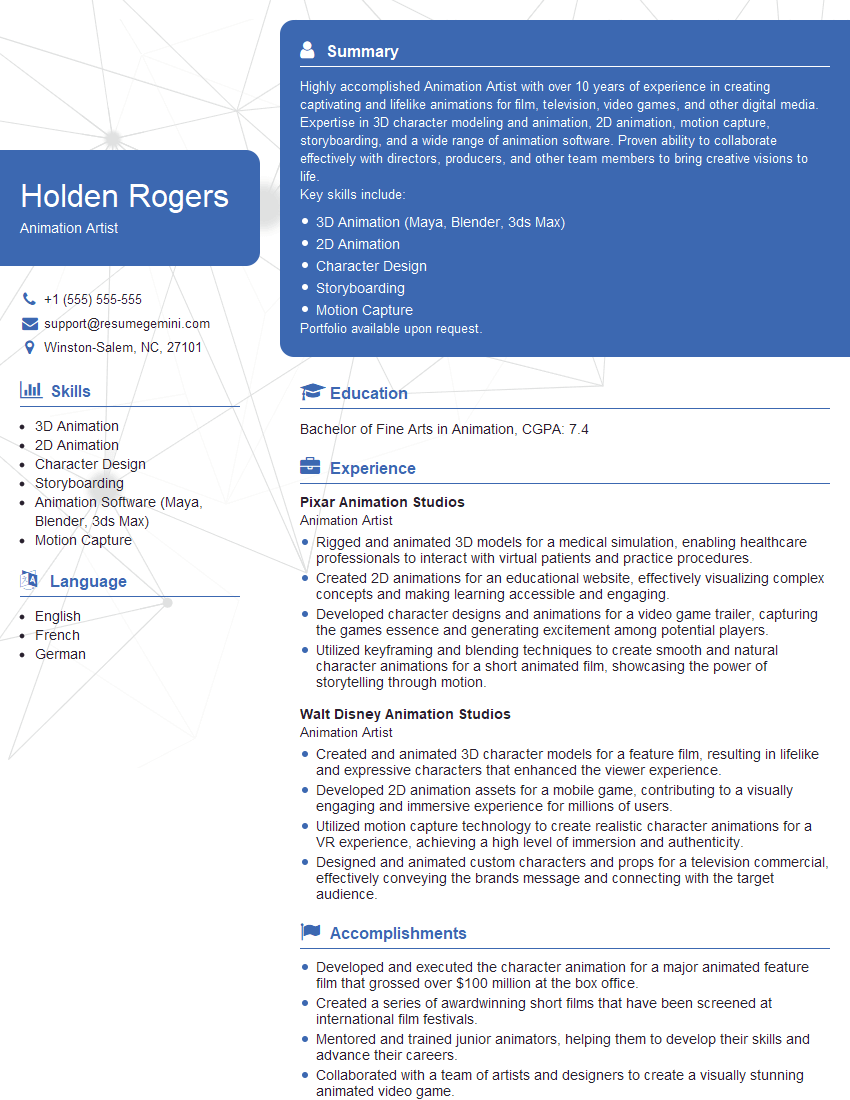
Animation Artist Resume Sample
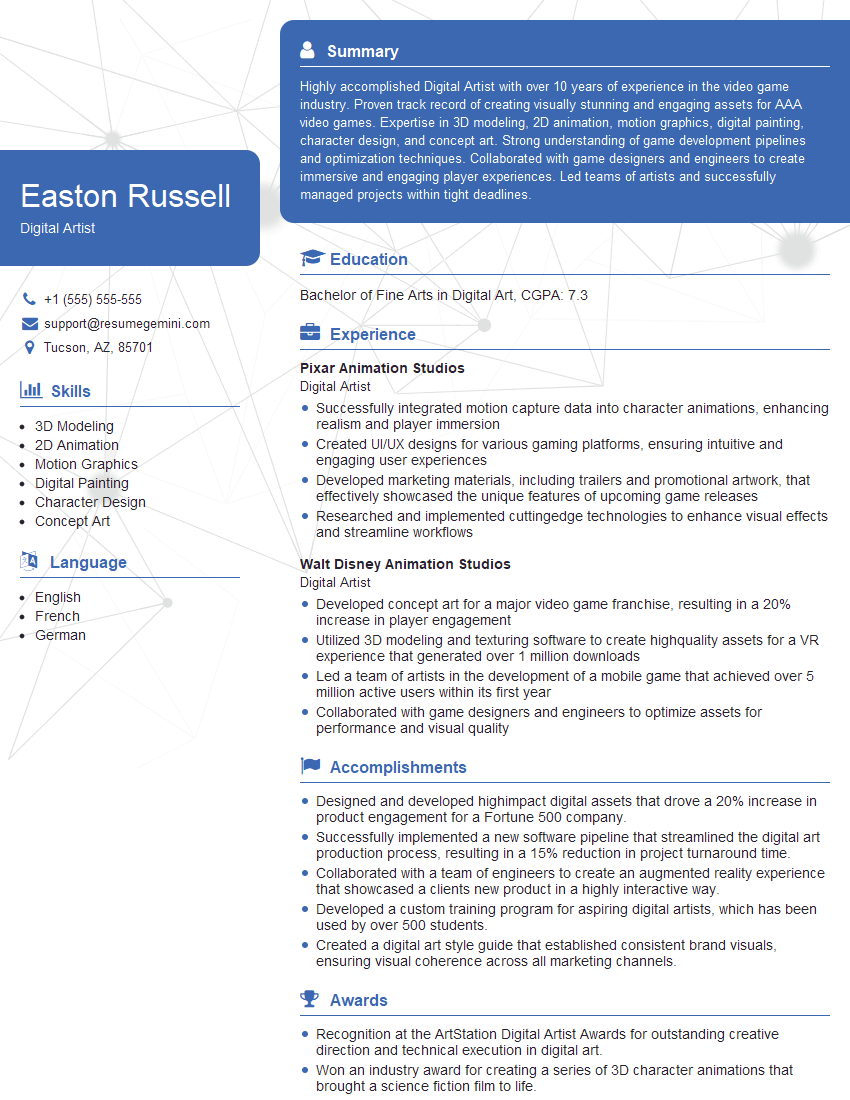
Digital Artist Resume Sample
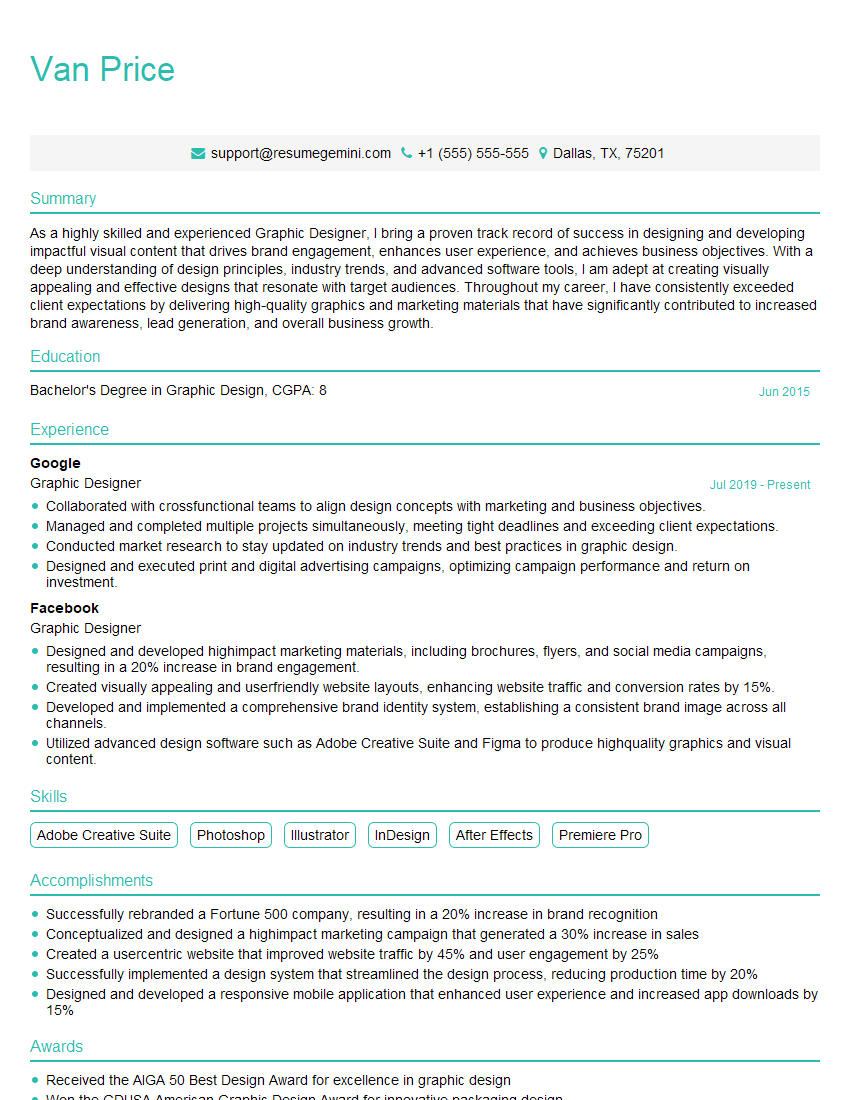
Graphic Designer Resume Sample
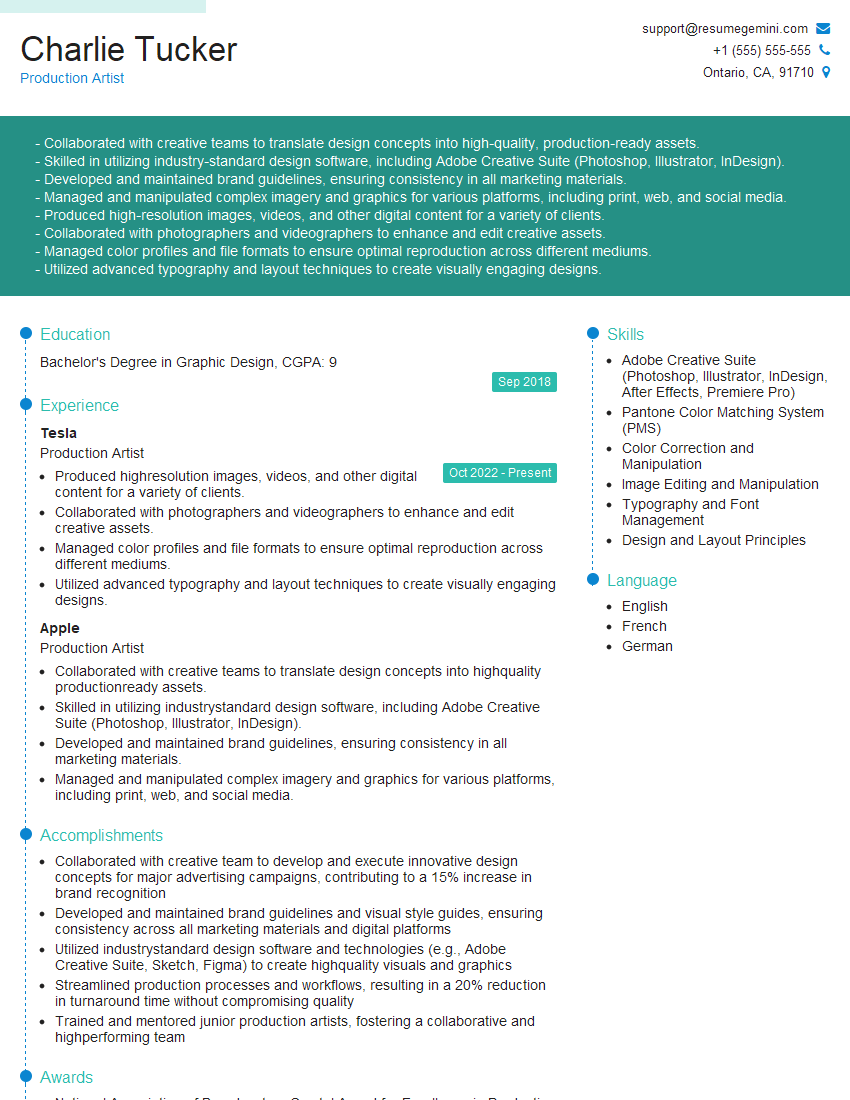
Production Artist Resume Sample
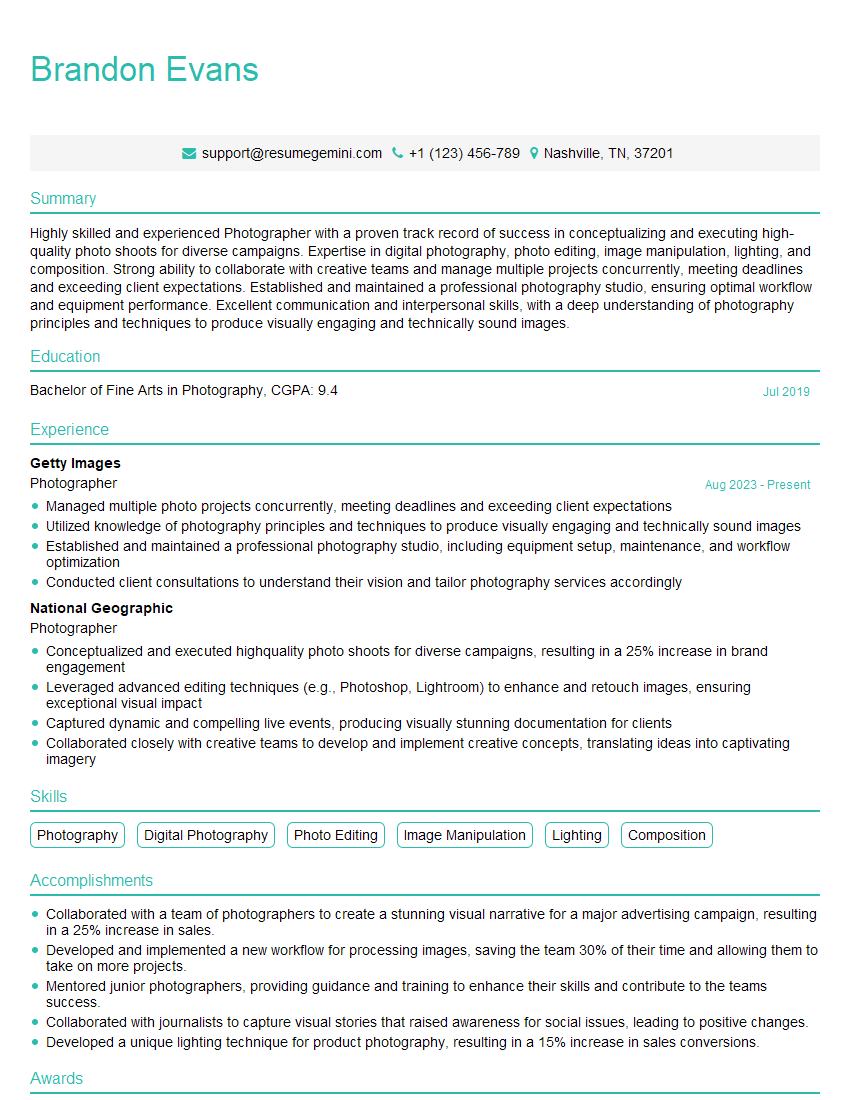
Photographer Resume Sample
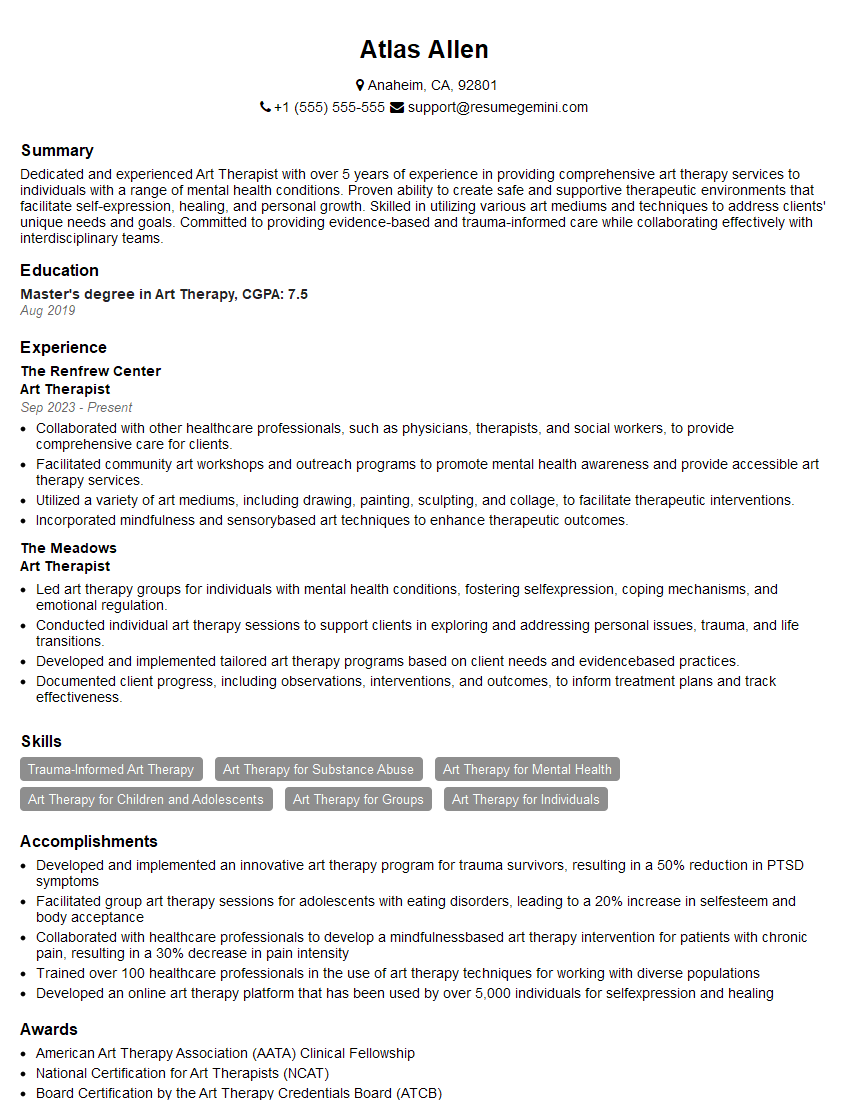
Art Therapist Resume Sample
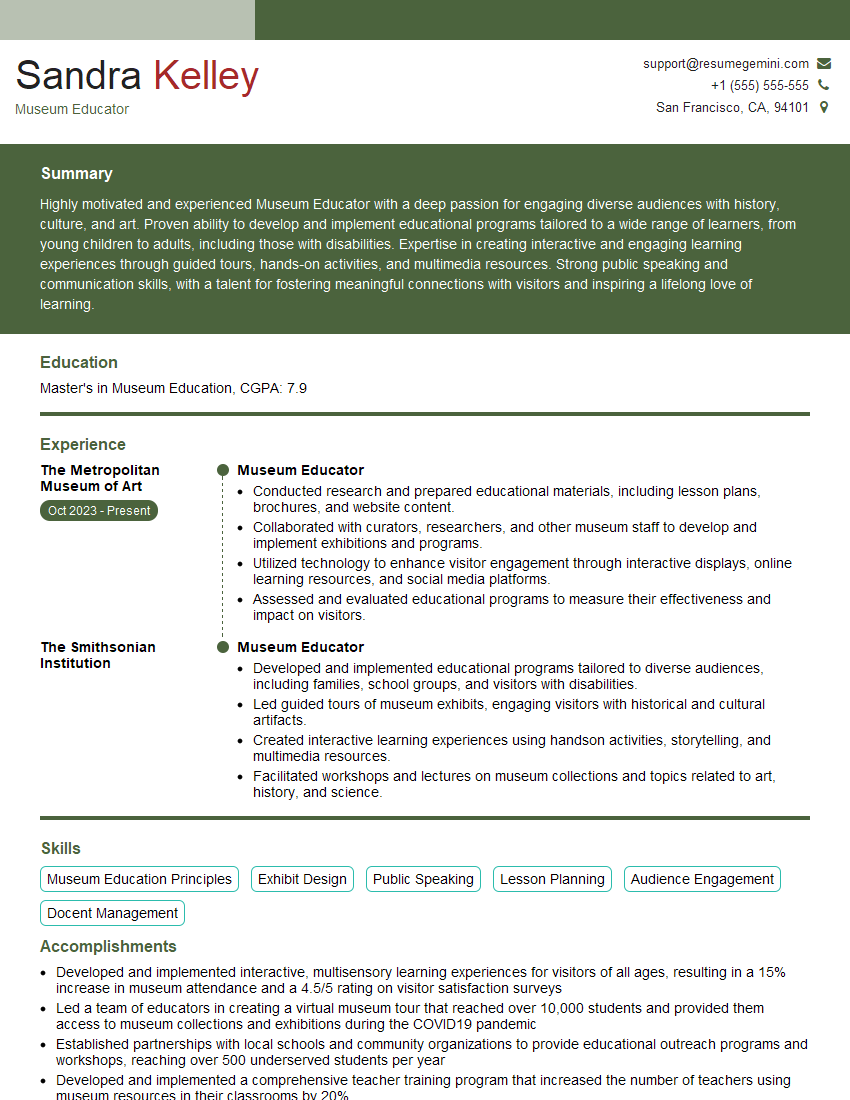
Museum Educator Resume Sample
Explore more articles
Users Rating of Our Blogs
Share Your Experience
We value your feedback! Please rate our content and share your thoughts (optional).
What Readers Say About Our Blog
Really detailed insights and content, thank you for writing this detailed article.
IT gave me an insight and words to use and be able to think of examples