Interviews are more than just a Q&A session—they’re a chance to prove your worth. This blog dives into essential Welding Process Selection interview questions and expert tips to help you align your answers with what hiring managers are looking for. Start preparing to shine!
Questions Asked in Welding Process Selection Interview
Q 1. What are the primary factors to consider when selecting a welding process?
Selecting the right welding process is crucial for ensuring a strong, reliable, and cost-effective weld. It’s like choosing the right tool for a job – using a hammer to screw in a screw is inefficient and potentially damaging. Several key factors influence this decision:
- Base Material: The type of metal (steel, aluminum, titanium, etc.) and its thickness significantly impact weldability and the suitability of different processes. Thicker materials often require processes capable of higher heat input.
- Joint Design: The geometry of the joint (butt, fillet, lap, etc.) dictates the accessibility and the process best suited to filling the gap effectively. A complex joint might necessitate a more versatile process.
- Weld Quality Requirements: The desired weld strength, appearance, and tolerance levels determine the necessary precision and control. Processes like GTAW are known for producing high-quality welds.
- Production Rate: High-volume production favors faster processes like GMAW (MIG welding), while smaller-scale projects or intricate designs might benefit from the precision of GTAW (TIG welding) or SMAW (stick welding).
- Cost Considerations: This includes equipment cost, consumables (filler metal, shielding gas), labor costs, and potential rework expenses. Simple processes with lower material costs are preferred for budget-conscious projects.
- Environment: Outdoor welding might necessitate processes less susceptible to wind and environmental factors, while indoor work might focus on minimizing fumes and spatter.
Careful consideration of these factors ensures optimal weld quality, efficiency, and cost-effectiveness.
Q 2. Explain the differences between GMAW, GTAW, and SMAW welding processes.
GMAW (Gas Metal Arc Welding), GTAW (Gas Tungsten Arc Welding), and SMAW (Shielded Metal Arc Welding) are three common arc welding processes, each with distinct characteristics:
- GMAW (MIG Welding): Uses a continuous consumable electrode wire fed through a contact tip, with shielding gas protecting the weld pool. It’s fast, efficient, and versatile, suitable for various materials and thicknesses. Think of it as a ‘spray painting’ approach to welding, applying molten metal continuously.
- GTAW (TIG Welding): Employs a non-consumable tungsten electrode, with shielding gas (usually argon) protecting the weld pool. It offers excellent control and produces high-quality welds, often preferred for critical applications requiring precision and aesthetic appeal. It’s like ‘drawing’ with molten metal, allowing meticulous control over the weld.
- SMAW (Stick Welding): Uses a consumable electrode coated with flux that provides shielding. It’s relatively simple and portable, ideal for outdoor or remote locations with limited power sources. It’s a more ‘rustic’ approach, but effective in its own right.
The key differences lie in the type of electrode (consumable vs. non-consumable), the shielding method, and the level of control and speed each process offers.
Q 3. Describe the advantages and disadvantages of using MIG welding for thin sheet metal.
MIG welding offers several advantages for thin sheet metal:
- High Deposition Rate: It’s a fast process, reducing overall welding time.
- Good Penetration Control: With proper parameter adjustments, penetration can be controlled to prevent burn-through, a common issue with thin materials.
- Relatively Easy to Learn: Compared to TIG welding, MIG welding is easier to master, leading to quicker training and higher productivity.
However, there are also disadvantages:
- Potential for Burn-Through: If not carefully controlled, the high heat input can easily cause holes in thin materials.
- More Spatter: MIG welding produces more spatter than TIG welding, requiring more cleanup.
- Less Precise Control: While penetration control is possible, it lacks the fine control offered by TIG welding.
Successfully welding thin sheet metal with MIG requires careful selection of parameters, including lower amperage, shorter arc length, and potentially using a pulse setting to better control the heat input.
Q 4. When is resistance welding a suitable choice, and what are its limitations?
Resistance welding is ideal for high-volume production of repetitive welds, particularly in sheet metal applications. It’s like using a powerful clamp to squeeze two pieces of metal together until they fuse. The heat generated by the electrical resistance at the joint forms the weld.
- Suitable Applications: Spot welding, seam welding, and projection welding are common resistance welding techniques used extensively in automotive manufacturing, appliance production, and other industries requiring rapid and automated welding processes.
However, it does have limitations:
- Limited Material Thickness: It’s most effective with relatively thin materials; thicker materials require significantly higher power and may not weld effectively.
- Surface Preparation: Clean and properly prepared surfaces are critical for good weld quality; oxides or coatings can hinder the welding process.
- Joint Design Restrictions: The joint design must be suitable for the specific resistance welding technique employed.
- Accessibility: Certain joint configurations might be inaccessible for resistance welding techniques.
Therefore, resistance welding is a cost-effective high-speed process, but its application is limited by the material type, thickness, and joint design.
Q 5. How do you determine the appropriate welding parameters (voltage, amperage, etc.) for a given application?
Determining appropriate welding parameters depends on numerous factors. It’s not a simple formula, but rather a process of understanding the interplay between different variables and making adjustments based on experience and testing. Think of it like cooking – you need the right recipe and adjustments based on your oven and taste preferences.
- Base Material: Different metals require different heat input and current levels.
- Material Thickness: Thicker materials require higher amperage and voltage.
- Joint Design: Joint geometry impacts the heat distribution and the required penetration.
- Welding Process: Each process (GMAW, GTAW, SMAW, etc.) has its own set of parameter ranges.
- Shielding Gas: The type of shielding gas influences the weld pool behavior.
The process typically involves:
- Consulting Welding Data Sheets: These provide recommended parameters for specific materials and processes.
- Performing Test Welds: Adjusting parameters to obtain the desired weld bead appearance and penetration.
- Visual Inspection: Checking the weld for defects like porosity or undercutting.
- Destructive Testing (optional): Conducting tensile or bend tests to verify the weld strength.
Experienced welders develop a strong intuitive understanding, adjusting parameters based on subtle visual cues during the welding process.
Q 6. What are the common weld defects associated with different welding processes, and how are they avoided?
Weld defects are common, but avoidable with proper technique and attention to detail. They’re like mistakes in any craft, and understanding their causes is vital for prevention.
- Porosity: Gas entrapment in the weld metal, often caused by improper shielding gas coverage or contamination. Avoiding it involves ensuring adequate shielding and maintaining a clean welding environment.
- Undercutting: A groove along the edge of the weld, typically caused by excessive current or insufficient travel speed. Proper parameter selection and consistent technique are crucial.
- Incomplete Fusion: Failure of the weld metal to fuse completely with the base material, often due to insufficient heat input or poor joint fit-up. Pre-weld preparation and correct parameters prevent this.
- Cracking: Fractures in the weld metal, often caused by high residual stresses or improper heat input. Pre and post-weld heat treatments can often help.
- Slag Inclusion: Non-metallic inclusions from the flux or shielding gas in the weld, usually caused by improper cleaning or excessive heat input. Maintaining cleanliness and optimal parameters are key.
The specific defects associated with each process vary, but careful attention to welding parameters, joint preparation, and cleanliness are critical factors in preventing them. Regular inspections and adherence to welding codes and standards are also vital.
Q 7. Explain the importance of pre-weld and post-weld heat treatments.
Pre-weld and post-weld heat treatments play a crucial role in optimizing the properties and lifespan of welded components. These treatments are like tempering a sword, refining its strength and durability.
- Pre-weld Heat Treatment: This is primarily used to relieve residual stresses in the base material before welding. It can help reduce distortion and cracking during welding, especially in high-strength steels. It’s like preparing the ground before building a house; a level foundation is essential.
- Post-weld Heat Treatment (PWHT): This is applied after welding to relieve residual stresses introduced during the welding process. It improves the weld’s toughness and reduces the risk of cracking. It’s like annealing the sword after forging; it reduces internal stress and makes it stronger.
The specific heat treatment parameters (temperature and time) depend on the base material, welding process, and the required mechanical properties. Incorrect heat treatment can be detrimental, potentially leading to embrittlement or reduced strength. Therefore, precise control and adherence to established procedures are crucial. It is often conducted according to a predefined specification or code.
Q 8. How does the base metal’s composition affect welding process selection?
The base metal’s composition is paramount in welding process selection because it dictates the weldability and the potential for issues like cracking, porosity, or metallurgical changes. Different metals have vastly different melting points, thermal conductivities, and susceptibilities to various welding defects. For example, stainless steel, with its high chromium content, requires specialized welding processes to prevent chromium carbide precipitation, which can lead to intergranular corrosion. Similarly, high-strength low-alloy (HSLA) steels are prone to hydrogen cracking, necessitating processes that minimize hydrogen absorption. Aluminum, with its low melting point and high thermal conductivity, demands techniques that control heat input effectively to prevent excessive melting and distortion. In contrast, welding titanium necessitates a highly controlled environment to prevent oxidation and contamination. In short, choosing the right welding process often means matching the process capabilities to the base metal’s specific properties and potential challenges.
Consider this: You wouldn’t use a simple arc welding process on a high-precision titanium component; instead, you might opt for gas tungsten arc welding (GTAW) or electron beam welding (EBW) to ensure superior control and prevent contamination. Similarly, mild steel might be effectively joined with shielded metal arc welding (SMAW), while stainless steel may require GTAW or gas metal arc welding (GMAW) with appropriate filler and shielding gas.
Q 9. Describe the role of shielding gas in different welding processes.
Shielding gas plays a critical role in many welding processes by protecting the molten weld pool from atmospheric contamination. This contamination, primarily from oxygen and nitrogen, can lead to weld defects such as porosity, brittleness, and reduced strength. The choice of shielding gas depends heavily on the welding process and the base metal.
- GMAW (MIG): Common shielding gases include argon, carbon dioxide (CO2), or mixtures of the two. Argon provides excellent arc stability and weld quality, while CO2 is cheaper but can lead to more spatter. Mixtures offer a compromise between cost and quality.
- GTAW (TIG): Pure argon or a mixture of argon and helium is typically used. Argon offers excellent arc stability and protection, while helium increases penetration but reduces arc stability. Helium is often used for welding thicker materials.
- SMAW (Stick): The flux coating on the electrode provides the shielding gas, preventing atmospheric contamination. The composition of this flux varies depending on the application and base metal.
Think of shielding gas as a protective blanket for the weld. Without it, the molten metal would react with the air, leading to inferior welds, just like leaving a freshly painted surface unprotected from the elements would spoil the final finish.
Q 10. What safety precautions are crucial when selecting and performing a welding process?
Safety is paramount in welding. Selecting and performing a welding process requires meticulous attention to several crucial precautions:
- Personal Protective Equipment (PPE): This includes welding helmets with appropriate shade lenses to protect eyes from intense UV and infrared radiation, welding gloves to safeguard hands from burns and sparks, and flame-resistant clothing to prevent burns and ignition. Foot protection is also critical.
- Ventilation: Welding often generates fumes and gases that can be toxic, so good ventilation is essential. In confined spaces, respiratory protection is mandatory.
- Fire Safety: Welding operations pose a fire risk. Flammable materials must be removed from the work area, and fire extinguishers must be readily available. A fire watch is often required.
- Electrical Safety: Welding involves high currents, so ensuring proper grounding, cable management, and insulation is vital. Workers must be trained to identify and avoid electrical hazards.
- UV Radiation Protection: Welding arcs produce intense ultraviolet radiation, which can cause skin burns (‘welder’s flash’) and eye damage. Adequate shielding is non-negotiable.
Failing to adhere to these safety measures can lead to serious injuries or even fatalities. Safety should never be compromised for efficiency or speed. It’s always better to err on the side of caution.
Q 11. Explain the significance of weld penetration and how it’s controlled.
Weld penetration refers to the depth of fusion of the weld metal into the base metal. Sufficient penetration ensures a strong and reliable joint, while insufficient penetration can lead to weakness and failure. It’s a critical parameter for assessing weld quality. Weld penetration is controlled through several factors:
- Current (Amperage): Higher current generally results in deeper penetration.
- Voltage: Higher voltage usually leads to increased penetration.
- Welding Speed: Slower welding speeds allow for greater heat input and deeper penetration.
- Travel Angle: The angle of the welding torch or electrode affects penetration. A more upright angle often leads to deeper penetration.
- Shielding Gas: The type of shielding gas and its flow rate can influence penetration.
- Filler Metal: The type and diameter of the filler metal can influence penetration.
- Joint Design: The joint geometry (e.g., butt joint, lap joint) greatly impacts penetration.
Imagine trying to join two pieces of wood with only a surface connection. It would be very weak. Similarly, insufficient penetration in a weld results in a weak joint. Controlling penetration is about balancing the heat input to achieve a strong and sound weld without excessive distortion.
Q 12. What are the different types of filler metals and their applications?
Filler metals are added materials used to fill the joint during welding. They are carefully chosen to match or complement the properties of the base metal. Different filler metals have varying compositions and properties, catering to diverse applications:
- Mild Steel Filler Metals: Used for welding low-carbon steels, these filler metals typically have a similar composition to the base metal.
- Stainless Steel Filler Metals: These fillers contain chromium and nickel to maintain the corrosion resistance of stainless steel welds. They are carefully chosen to match the specific type of stainless steel.
- Aluminum Filler Metals: Designed for aluminum welding, these fillers usually contain alloying elements tailored to match specific aluminum alloys.
- High-Strength Low-Alloy (HSLA) Steel Filler Metals: These fillers provide strength and toughness similar to the base metal.
- Nickel Alloys: Used for welding high-temperature or corrosion-resistant applications, nickel alloys offer excellent resistance to extreme environments.
The choice of filler metal depends on several factors, including the base metal’s properties, the desired weld properties, and the welding process. Just as you choose the right paint for a specific surface, you select the right filler metal for the intended application to achieve the desired result.
Q 13. How do you assess the suitability of a welding process for a specific joint design?
Assessing the suitability of a welding process for a specific joint design involves considering several factors that interact in a complex way. This is not a simple checklist, but rather an iterative process of considering the pros and cons of each technique in the context of the geometry, material, and required quality.
- Joint Geometry: A butt joint will have different requirements than a lap joint or T-joint. Some processes are better suited to specific geometries. For instance, GTAW is highly versatile and can accommodate various joint types effectively.
- Base Metal: The base material’s thickness, composition, and weldability dictate the feasible welding processes. Thick materials often require processes with high penetration, while thin materials require controlled heat input to prevent burn-through. Different base materials need filler metals with corresponding compositions.
- Weld Access: The accessibility of the joint will restrict the choice of process. Some welding processes, like SMAW, are suited for limited access, whereas others might need more open access.
- Weld Quality Requirements: The required mechanical strength, appearance, and level of flaw tolerance will influence the process. Applications requiring high strength might favor GTAW or EBW, whereas less demanding applications might opt for SMAW.
- Cost and Availability: The availability of equipment, skilled labor, and materials should also be considered.
Often, experienced welders and engineers use a combination of theoretical knowledge and practical experience to make the best selection. This includes reviewing past successful applications of specific processes for similar projects. It’s a process of informed decision-making rather than a simple formula.
Q 14. What are the destructive and non-destructive testing methods used to evaluate welds?
Weld evaluation uses both destructive and non-destructive testing (NDT) methods. Destructive methods involve sacrificing a sample of the weld to examine its internal structure, while NDT methods assess the weld without causing damage.
- Destructive Testing (DT):
- Tensile Testing: Measures the weld’s tensile strength and ductility.
- Bend Testing: Assesses the weld’s ability to withstand bending forces.
- Impact Testing: Determines the weld’s resistance to fracture under impact loads (important for low-temperature applications).
- Macro Examination: A visual examination of a cross-section of the weld to assess penetration and fusion.
- Metallography: Microscopic examination of the weld microstructure to detect defects and assess the weld’s grain size and structure.
- Non-Destructive Testing (NDT):
- Visual Inspection: A visual examination of the weld surface for visible defects such as cracks, porosity, or undercutting.
- Radiographic Testing (RT): Uses X-rays or gamma rays to detect internal flaws.
- Ultrasonic Testing (UT): Uses high-frequency sound waves to detect internal defects.
- Magnetic Particle Testing (MT): Detects surface and near-surface cracks in ferromagnetic materials.
- Liquid Penetrant Testing (PT): Detects surface-breaking flaws in non-porous materials.
The choice of testing method depends on the required level of inspection and the nature of the weld. Often, a combination of DT and NDT methods is employed to provide a comprehensive assessment of weld quality. This is like a thorough medical checkup – some tests are non-invasive (NDT) for general screening, and other, more invasive tests (DT) are used only when more detailed information is required.
Q 15. Explain the concept of weldability and its impact on process selection.
Weldability refers to a material’s suitability for welding. It’s a crucial factor in selecting the appropriate welding process because it dictates how easily and successfully a material can be joined. A material with poor weldability might be prone to cracking, porosity (tiny holes), or other defects, rendering the weld unsound. Factors influencing weldability include the material’s chemical composition (e.g., carbon content in steel significantly affects its susceptibility to cracking), its physical properties (like melting point and thermal conductivity), and its pre-weld condition (e.g., cleanliness). For instance, high-carbon steel is notoriously difficult to weld due to its tendency to harden and crack during the welding process, often requiring preheating and special welding techniques. Conversely, aluminum alloys are generally more weldable due to their lower melting point and good thermal conductivity, but they are susceptible to oxidation and require specific techniques such as TIG welding to prevent porosity.
When choosing a welding process, engineers must consider the weldability of the base material. A material with low weldability might necessitate a process that minimizes heat input (like laser welding) to reduce the risk of cracking, whereas a highly weldable material could tolerate higher heat input processes (like submerged arc welding) for increased speed and efficiency.
Career Expert Tips:
- Ace those interviews! Prepare effectively by reviewing the Top 50 Most Common Interview Questions on ResumeGemini.
- Navigate your job search with confidence! Explore a wide range of Career Tips on ResumeGemini. Learn about common challenges and recommendations to overcome them.
- Craft the perfect resume! Master the Art of Resume Writing with ResumeGemini’s guide. Showcase your unique qualifications and achievements effectively.
- Don’t miss out on holiday savings! Build your dream resume with ResumeGemini’s ATS optimized templates.
Q 16. Describe your experience with different welding codes and standards (e.g., AWS D1.1).
My experience encompasses a wide range of welding codes and standards, primarily focusing on AWS (American Welding Society) standards. I’m proficient in AWS D1.1, Structural Welding Code – Steel, which provides guidance on the qualification of welders, welding procedures, and the inspection of structural steel welds. I’ve also worked extensively with AWS D1.6, Structural Welding Code – Aluminum, considering its specific requirements for aluminum alloys, including pre-cleaning and post-weld heat treatments. In addition, my experience includes familiarity with ASME Section IX, Welding and Brazing Qualifications, essential for ensuring welder and welding procedure qualification in pressure vessel applications. Understanding these codes isn’t just about adhering to regulations; it’s about ensuring the structural integrity and safety of the welded components. For example, during a recent project involving a large steel structure, I was responsible for ensuring our welding procedures adhered strictly to AWS D1.1, leading to the successful completion of the project without any safety issues or code violations.
Q 17. How do you troubleshoot common welding problems?
Troubleshooting welding problems is a systematic process. I start by visually inspecting the weld for obvious defects such as cracks, porosity, undercut, or lack of fusion. Then I analyze the process parameters: what type of welding process was used, what were the amperage, voltage, and travel speed settings? Was the shielding gas flow correct, and was the electrode properly prepared? I’ll also consider the material itself: Was it properly cleaned and prepared before welding? Was preheating or post-weld heat treatment necessary? For instance, excessive porosity could indicate insufficient shielding gas coverage, improper electrode preparation, or contamination of the base material. Cracking could be due to too high a heat input, improper preheating, or the use of an unsuitable electrode for the material. I typically use a combination of visual inspection, metallurgical analysis (if necessary), and a review of the welding parameters to pinpoint the root cause. Once identified, corrective actions are implemented, and the weld is re-evaluated to ensure the problem has been resolved. In one project, we experienced consistent undercut in our welds. Through careful analysis, we discovered that the welding speed was too high, and reducing the speed along with slight adjustments to the arc length resolved the issue immediately.
Q 18. Explain the process of selecting the right electrode for a specific welding task.
Electrode selection is crucial for achieving high-quality welds. Several factors guide this selection: the base material’s type and thickness, the desired weld properties (strength, toughness, etc.), and the welding process used. For example, shielded metal arc welding (SMAW) requires careful electrode selection. The electrode’s coating (flux) plays a vital role in shielding the weld pool from atmospheric contamination, providing alloying elements, and controlling the arc characteristics. The electrode’s diameter will dictate the penetration, heat input and ability to weld thicker sections. When welding mild steel, an E6010 electrode might be chosen for its excellent penetration in the vertical upward position, whereas an E7018 electrode is preferred for its superior strength and toughness in flat or horizontal positions. For stainless steel, specialized electrodes with appropriate alloying elements in the coating are selected to ensure proper weld metal composition and corrosion resistance. The selection process usually involves consulting the electrode manufacturer’s data sheets and welding codes to determine which electrode meets the specified requirements.
Q 19. What is the importance of joint preparation in achieving a sound weld?
Joint preparation is paramount for obtaining a sound weld. Proper preparation ensures good weld penetration, minimizes stress concentration, and facilitates complete fusion between the base material and the weld metal. Poor joint design can lead to several issues, including incomplete fusion, weld porosity, and increased stress concentrations—all contributing to a weaker or even failed weld. The type of joint preparation depends on the base material thickness, the welding process, and the design requirements. For example, a bevel angle is typically used for thicker sections to create a larger weld pool and ensure complete penetration. A butt joint is favored for joining edges flush and can be prepared by various techniques depending on thickness. The quality of the preparation—cleanliness, proper fit-up, and consistent bevel angles are critical. Contaminants on the joint faces can lead to weld defects. Improper fit-up can result in incomplete fusion or a non-uniform weld bead. Therefore, joint preparation is not merely a step but a crucial aspect in obtaining optimal weld quality and ensuring the structural integrity of the weldment.
Q 20. How does the thickness of the base material influence the choice of welding process?
Base material thickness significantly impacts welding process selection. Thin materials are more susceptible to distortion and burn-through. Processes with low heat input, such as TIG (Gas Tungsten Arc Welding) or laser welding, are preferred for thin materials. These processes offer better control over the heat input, reducing the likelihood of distortion and burn-through. As the thickness increases, high heat input processes such as submerged arc welding (SAW) or flux-cored arc welding (FCAW) become more efficient and economical. They can generate a larger weld pool and achieve better penetration, reducing welding time. For very thick sections, multi-pass welding techniques are commonly employed, where several layers of weld metal are deposited to build up the weld. Choosing the appropriate process is essential to avoid issues like insufficient penetration, excessive distortion or cracking.
Q 21. Describe your experience with automated welding systems.
I have extensive experience with various automated welding systems, including robotic welding systems using different processes like GMAW (Gas Metal Arc Welding) and SAW. Automated systems offer significant advantages in terms of improved consistency, higher production rates, and reduced labor costs. The programming and setup of these systems requires a detailed understanding of the welding process parameters and the desired weld geometry. It’s essential to accurately program the robot’s movements, weld parameters (voltage, current, travel speed, etc.), and other variables, such as pre- and post-weld treatments, to achieve high-quality welds consistently. I’ve been involved in projects implementing robotic welding for large-scale production of parts, ensuring optimized robot paths, fixture designs, and quality control procedures. One significant project involved implementing a robotic SAW system for welding large steel plates in a shipyard, resulting in a significant increase in productivity and a reduction in welding defects.
Q 22. How do you manage the cost-effectiveness of different welding processes?
Managing the cost-effectiveness of different welding processes involves a careful balancing act between material costs, labor costs, equipment costs, and the potential for rework or scrap. It’s not simply about choosing the cheapest process; the most economical process considers the overall project cost.
- Material Costs: Some processes use more filler material than others. For example, submerged arc welding (SAW) generally uses less filler metal than Gas Metal Arc Welding (GMAW) for similar applications. This directly impacts material expenditure.
- Labor Costs: Processes like robotic welding significantly reduce labor costs compared to manual welding, even though initial investment is higher. The speed and efficiency of the process must be considered.
- Equipment Costs: The initial investment in equipment varies drastically. TIG welding requires specialized equipment that’s more expensive than stick welding. Consider the total cost of ownership including maintenance and consumables.
- Rework and Scrap: A process that produces high-quality welds the first time minimizes costly rework and scrap material. Processes with high quality and repeatability are often more economical in the long run.
Example: Choosing between GMAW and SAW for a large-scale pipe welding project. While SAW requires a higher initial investment in equipment, its higher deposition rate and lower filler metal consumption makes it more cost-effective for high-volume projects. For smaller projects, the lower initial investment of GMAW might be more suitable.
Q 23. Explain your familiarity with different types of welding power sources.
Welding power sources are the heart of the welding process, providing the necessary energy for creating the weld. My experience encompasses a range of power sources, each with its unique characteristics and applications.
- Constant Current (CC) Power Sources: These sources maintain a constant current regardless of changes in arc length. They’re commonly used with SMAW (Shielded Metal Arc Welding) and some types of GMAW. They’re robust and relatively simple to operate.
- Constant Voltage (CV) Power Sources: These maintain a constant voltage, allowing the current to adjust based on arc length. They are ideal for GMAW and FCAW (Flux-Cored Arc Welding) processes, allowing for better control of the welding speed and penetration.
- Pulse Power Sources: These power sources deliver current in pulses, offering precise control over heat input and penetration. This is advantageous for welding thin materials or sensitive alloys, resulting in less distortion and improved weld quality. They are often used with GMAW and GTAW (Gas Tungsten Arc Welding).
- AC/DC Power Sources: For GTAW, having both AC and DC capabilities offers versatility. AC current is better for cleaning oxide layers on materials like aluminum, while DC offers better penetration for steels.
Understanding the nuances of each power source and their effect on the weld is crucial for selecting the right equipment and achieving desired results. For instance, a constant current power source is not ideal for GMAW because variations in arc length would lead to inconsistent welds.
Q 24. How do you ensure the quality and consistency of welds?
Ensuring consistent weld quality involves a multi-faceted approach that starts even before the welding begins.
- Proper Procedure Qualification: Developing and qualifying welding procedures (WPS) according to relevant codes (like AWS D1.1) is critical. This involves defining parameters like current, voltage, travel speed, and shielding gas type. The WPS is rigorously tested to ensure consistent weld quality.
- Operator Qualification: Welders must be properly trained and qualified to perform to the standards outlined in the WPS. Regular testing and certification ensure they maintain their skill.
- Material Selection and Preparation: Cleanliness and proper surface preparation of the base materials are critical. Contamination or improper fit-up significantly impacts weld quality.
- Equipment Calibration and Maintenance: Regularly calibrating welding equipment and maintaining it in top condition prevents inconsistencies caused by malfunctioning equipment.
- Non-Destructive Testing (NDT): Utilizing NDT methods like radiography, ultrasonic testing, or visual inspection helps identify and address defects that may be invisible to the naked eye. This provides confidence in the weld quality and its ability to withstand stress.
Example: In a pipeline project, a strict procedure qualification process with regular welder qualifications and NDT are critical to ensure the safety and longevity of the pipeline. Any deviation from the WPS would be meticulously investigated.
Q 25. Describe your experience with different types of welding jigs and fixtures.
Welding jigs and fixtures are essential for ensuring consistent weld quality and productivity, especially in high-volume applications. My experience includes a wide variety of these tools.
- Simple Clamps and Vises: For small, simple welds, clamps and vises provide a cost-effective way to hold parts in place.
- Modular Fixturing Systems: These systems use interchangeable components, allowing for flexibility and adaptability to different parts. They are particularly useful in manufacturing environments where diverse parts are being welded.
- Magnetic Fixtures: These are ideal for holding ferrous metals in place quickly and easily. They are useful for fast turnaround projects or when precision is not as critical.
- Custom-Designed Fixtures: For complex parts or high-precision requirements, custom-designed jigs and fixtures are often necessary. These ensure proper alignment and positioning of the parts to be welded.
- Robotics and Automation: Advanced automated systems use robotic welders that can be programmed to weld parts with high precision and repeatability using dedicated fixtures.
The selection of the appropriate jig and fixture depends on the complexity of the part, required precision, production volume, and the available resources. For example, in an automotive manufacturing plant, robotic welding with complex fixtures is commonplace for high-speed, high-volume production, while in a small repair shop, simple clamps might suffice.
Q 26. What are your preferred methods for documenting and controlling welding procedures?
Documenting and controlling welding procedures is paramount for maintaining quality and consistency across projects. My preferred methods leverage both physical and digital documentation.
- Welding Procedure Specifications (WPS): These are formal documents that outline all parameters of a specific welding process, including material specifications, welding parameters, and required NDT procedures. They should be developed and qualified according to relevant codes and standards.
- Procedure Qualification Records (PQR): These are records of the tests performed to qualify the WPS, providing evidence that the defined parameters produce acceptable weld quality.
- Welding Procedure Qualification Record (WPQR): These records detail the welder’s performance during qualification tests.
- Digital Documentation and Databases: Storing WPSs, PQRs, and other relevant documents in a digital database ensures accessibility and version control. This prevents using outdated or incorrect procedures.
- Work Instructions and Visual Aids: Clear and concise work instructions with visual aids (like diagrams or photos) can help ensure the welder understands the process and follows it correctly.
This integrated approach – combining meticulous physical documentation with a well-organized digital system – significantly improves traceability, reduces errors, and ensures compliance with industry standards and regulations.
Q 27. How do you stay updated on the latest advancements in welding technology?
Staying updated in the rapidly evolving field of welding technology requires a proactive approach involving several strategies.
- Industry Publications and Journals: Regularly reviewing technical publications like the Welding Journal keeps me abreast of the latest research and advancements.
- Conferences and Trade Shows: Attending industry conferences provides opportunities to network with experts, learn about new technologies, and see demonstrations of innovative equipment.
- Online Resources and Webinars: Numerous websites and online platforms offer educational resources, webinars, and courses covering various aspects of welding technology.
- Manufacturer Training and Certifications: Many welding equipment manufacturers provide comprehensive training programs and certifications that enhance knowledge of their specific products and techniques.
- Professional Organizations: Joining professional organizations like the American Welding Society (AWS) grants access to resources, publications, and networking opportunities within the welding community.
Continuous learning is essential in this field. By proactively engaging in these activities, I can ensure my knowledge and skills remain current and relevant to the evolving demands of the industry.
Q 28. Describe a time you had to select a welding process for a challenging application.
I once faced a challenging application involving welding dissimilar metals – specifically, joining high-strength aluminum alloy to stainless steel for a critical component in a high-pressure system. The challenge stemmed from the vastly different thermal properties and melting points of the two metals, along with the need for a weld that could withstand significant stress and corrosion.
My approach involved a systematic process:
- Material Compatibility Assessment: I researched the compatibility of the two metals and explored options for pre- and post-weld treatments to enhance adhesion.
- Process Selection: Given the need for precision and control, I selected Gas Tungsten Arc Welding (GTAW) with a pulsed current power source. Pulsed GTAW allowed for precise control of the heat input, minimizing the risk of distortion and cracking.
- Filler Metal Selection: A filler metal compatible with both aluminum and stainless steel was selected, ensuring a metallurgical bond between the two dissimilar materials.
- Pre-weld Preparation: Meticulous surface preparation, including cleaning and degreasing, was essential to remove any contaminants that could compromise the weld.
- Weld Procedure Qualification: A thorough WPS was developed and rigorously tested to ensure consistent and high-quality welds. This included destructive and non-destructive testing to verify the weld’s strength and integrity.
Through this meticulous process, we successfully produced welds that met the required strength, corrosion resistance, and dimensional tolerances. The project demonstrated the importance of a thorough understanding of material science, welding processes, and quality control in addressing complex welding applications.
Key Topics to Learn for Welding Process Selection Interview
- Joint Design and Preparation: Understanding the impact of joint geometry on weldability, including different joint types (butt, lap, T-joint, etc.) and surface preparation techniques (cleaning, beveling).
- Base Metal Properties: Knowing how the chemical composition and mechanical properties of the base metal influence weld process selection, including considerations for strength, ductility, and corrosion resistance.
- Weldability of Materials: Assessing the suitability of various welding processes for different materials (steel, aluminum, stainless steel, etc.), considering factors like thickness, heat input, and potential for cracking or distortion.
- Welding Process Characteristics: Familiarizing yourself with the strengths and limitations of various welding processes (SMAW, GMAW, GTAW, FCAW, SAW) including heat input, penetration depth, speed, and cost-effectiveness.
- Filler Metal Selection: Understanding how to choose the appropriate filler metal based on the base metal, welding process, and desired weld properties. This includes considerations of chemical composition, mechanical properties, and AWS classifications.
- Weld Quality and Inspection: Knowing common weld defects (porosity, cracks, slag inclusions), inspection methods (visual inspection, radiography, ultrasonic testing), and the importance of quality control in welding.
- Health and Safety: Demonstrating awareness of safety precautions and regulations related to different welding processes, including personal protective equipment (PPE) and hazard mitigation.
- Cost Analysis and Process Optimization: Evaluating the overall cost-effectiveness of different welding processes considering factors like material costs, labor costs, and equipment costs. Understanding techniques to optimize welding parameters for improved efficiency and reduced costs.
- Advanced Welding Processes: A brief overview of specialized welding techniques like laser welding, electron beam welding, or friction stir welding, and their applications in specific industries.
Next Steps
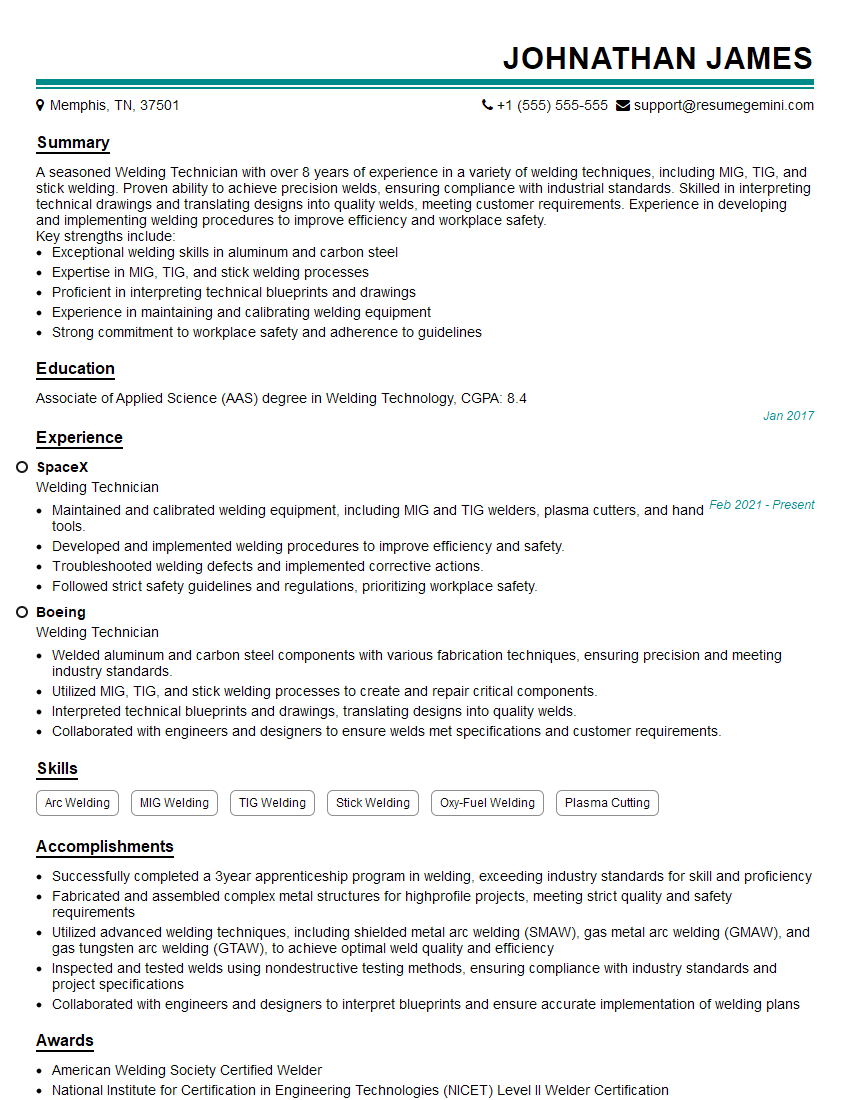
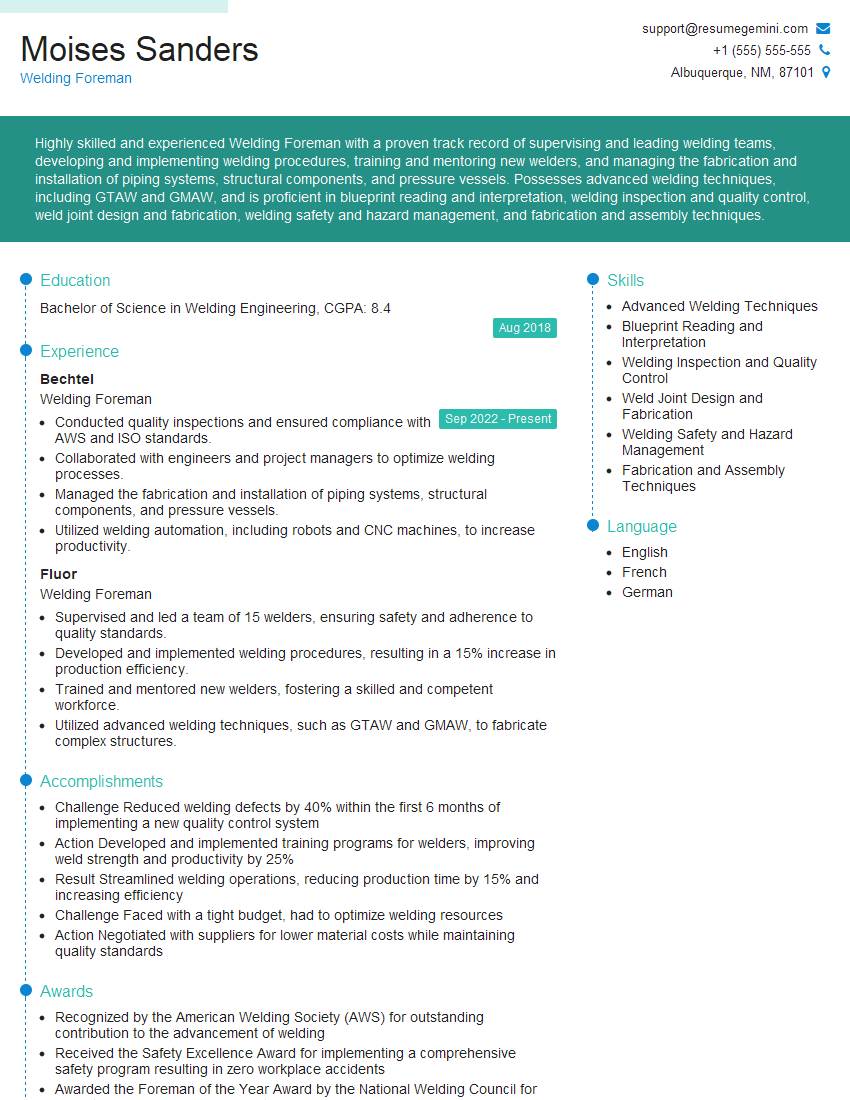
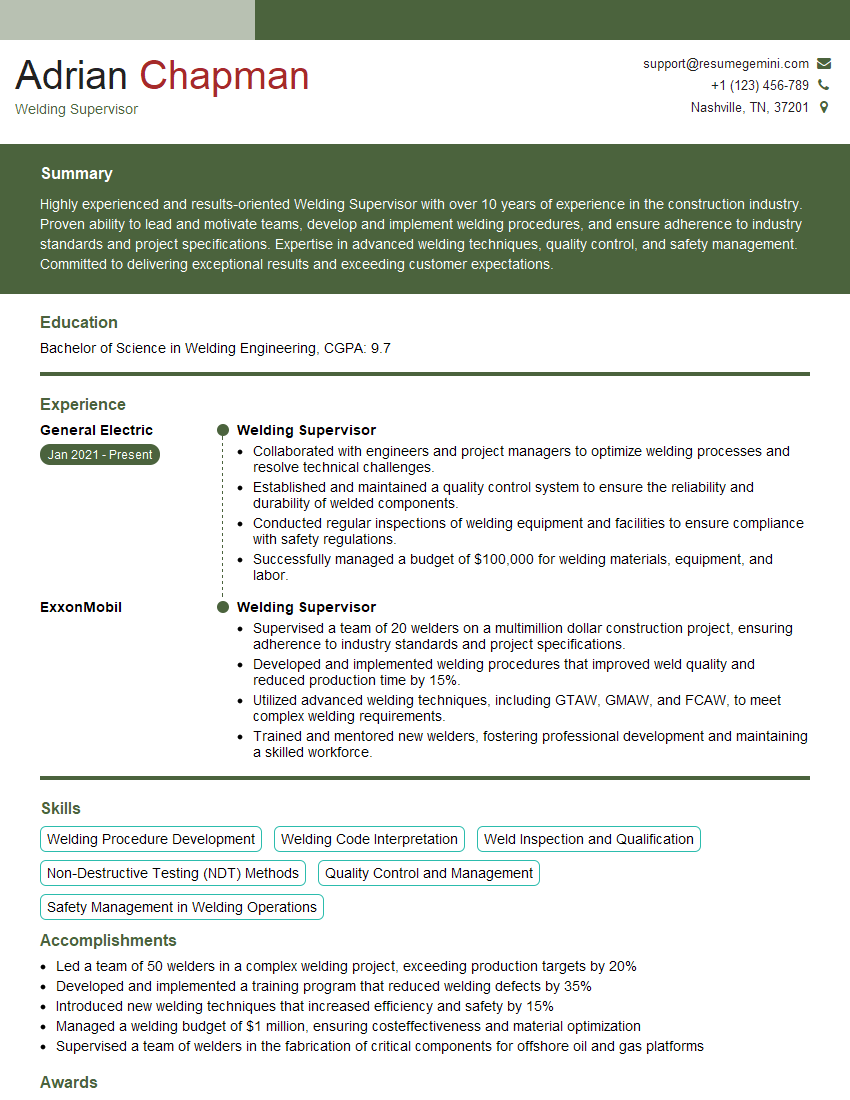
Mastering Welding Process Selection is crucial for career advancement, opening doors to more challenging and rewarding roles within the industry. A well-crafted resume is your first step towards landing your dream job. Building an ATS-friendly resume, optimized for applicant tracking systems, significantly increases your chances of getting noticed by recruiters. ResumeGemini is a trusted resource to help you create a professional and impactful resume. We provide examples of resumes tailored to Welding Process Selection to guide you through the process. Invest the time to create a strong application – your future self will thank you!

Explore more articles
Users Rating of Our Blogs
Share Your Experience
We value your feedback! Please rate our content and share your thoughts (optional).
What Readers Say About Our Blog
Really detailed insights and content, thank you for writing this detailed article.
IT gave me an insight and words to use and be able to think of examples