Interviews are opportunities to demonstrate your expertise, and this guide is here to help you shine. Explore the essential Prescribed Fire Management interview questions that employers frequently ask, paired with strategies for crafting responses that set you apart from the competition.
Questions Asked in Prescribed Fire Management Interview
Q 1. Describe the different types of prescribed fires.
Prescribed fires are categorized based on their intensity, objectives, and the resulting fuel consumption. Think of it like choosing the right tool for a job – different fires achieve different outcomes.
- Underburning: This involves a low-intensity fire that consumes only the surface litter and smaller fuels. Imagine gently cleaning up fallen leaves under a tree – it leaves the larger trees and understory vegetation relatively untouched. It’s great for reducing fuel load without significantly impacting the overall ecosystem.
- Backing fire: This type of fire burns slowly against the wind. It’s like carefully controlled burning along a fire break; a very safe and effective way to contain a fire’s spread. It’s commonly used to create a firebreak or control the head of a wildfire.
- Head fire: A high-intensity fire that spreads rapidly with the wind. This is more aggressive, used in scenarios where more extensive fuel reduction is necessary, such as in grasslands. Requires very precise planning and experienced fire crews due to its intensity.
- Flank fire: This burns along the side of a fire, usually parallel to the wind direction. It’s a controlled approach often used to create a more gradual transition between burned and unburned areas. It combines the safety of a backing fire with the effectiveness of a head fire.
- Strip Head Fire: This technique involves igniting multiple strips of fuel, allowing the fire to burn quickly from one strip to the next. This is particularly useful in large areas that require fast, wide-scale fuel reduction.
Q 2. Explain the process of planning a prescribed burn.
Planning a prescribed burn is meticulous and requires a multi-step process. It’s not just about lighting a match; it’s about meticulous preparation to ensure safety and achieve desired ecological outcomes.
- Define Objectives: Clearly state the goals – are you reducing fuel loads, improving wildlife habitat, or controlling invasive species?
- Site Assessment: Conduct a thorough assessment of the area including fuel types, topography, vegetation, and proximity to structures and infrastructure.
- Weather Monitoring: This is critical. Factors like wind speed, relative humidity, temperature, and air stability determine when and if a burn can proceed safely.
- Pre-burn Preparation: Construct firebreaks (gaps in vegetation that act as barriers), identify ignition points, and assemble the necessary equipment and personnel.
- Permitting and Notification: Obtain necessary permits from relevant authorities and notify neighbours and emergency services.
- Implementation and Monitoring: Execute the burn according to the plan, actively monitoring the fire’s behavior and implementing control measures.
- Post-burn Assessment: Evaluate the success of the burn in meeting objectives, documenting findings, and making any adjustments for future burns.
Q 3. What are the key factors to consider when selecting a prescribed fire ignition technique?
Choosing the right ignition technique is essential for safety and efficacy. The best technique depends heavily on factors such as fuel type, topography, and weather conditions.
- Drip Torches: These are often used for underburning or backing fires in areas with relatively uniform fuels. They are safer than other options as the fire is smaller and more contained.
- Helitorches: Ideal for large areas, especially in less accessible terrain. They allow for rapid ignition across extensive areas, but require precise aerial navigation and control.
- Hand-held torches: Suitable for smaller areas or spot ignition, offering greater control and accuracy, but are more labor-intensive.
- Fusees: Simple and effective for controlled burning, especially in situations where precision is needed, but they burn for a specific duration and might not be ideal for larger areas.
For example, in a densely forested area, a drip torch might be less effective than a helitorch, but in a sensitive area with sparse vegetation, a hand-held torch offers better control to prevent unintended damage.
Q 4. How do you ensure public safety during a prescribed burn?
Public safety is paramount. It’s not enough to just ‘hope’ for the best; meticulous planning and careful execution minimize risks. We treat public safety as a non-negotiable item.
- Communication: This is key. Neighbors, emergency services, and the public need to be notified well in advance, outlining the burn plan, dates, and potential impacts.
- Firebreaks: Constructing effective firebreaks and creating buffer zones around sensitive areas prevents the fire from spreading beyond the designated area. It’s like building a controlled perimeter around your activities.
- Personnel: A well-trained and equipped team is essential. This includes firefighters, spotters, and communication personnel ready to respond to any unforeseen events.
- Monitoring: Constant monitoring of weather conditions, smoke patterns, and fire behavior is crucial to prevent unexpected spread and rapidly adjust tactics if needed.
- Emergency Response Plan: A comprehensive plan to address potential issues, including evacuation routes, access points for emergency vehicles, and communication protocols, is vital.
Q 5. What are the environmental benefits of prescribed fire?
Prescribed fire offers a multitude of environmental benefits. It’s a powerful tool for ecosystem restoration and management – akin to a controlled pruning of a garden.
- Improved Wildlife Habitat: Many plant and animal species depend on fire for germination, regeneration, and foraging. Prescribed fire mimics natural fire regimes, promoting biodiversity.
- Reduced Fuel Loads: This significantly minimizes the risk of uncontrolled wildfires, protecting both human communities and natural ecosystems.
- Nutrient Cycling: Fire releases nutrients locked in dead vegetation, making them available to support plant growth.
- Invasive Species Control: Some invasive plant species are less resilient to fire than native species, allowing prescribed fire to restore native ecosystems.
- Improved Forest Health: By reducing fuel loads and controlling diseases, prescribed fire creates a healthier, more resilient forest.
Q 6. Describe the role of weather in prescribed fire planning and execution.
Weather is the most important factor influencing prescribed fire planning and execution. Think of it as the conductor of an orchestra – it dictates the tempo and harmony of the burn.
- Wind Speed and Direction: Crucial for predicting fire spread and controlling its behavior. Strong winds can make a fire unpredictable and dangerous.
- Relative Humidity: Low humidity increases fire risk, while higher humidity can dampen fuels, making ignition more difficult.
- Temperature: High temperatures increase flammability and accelerate fire spread.
- Air Stability: Atmospheric stability influences smoke dispersion and visibility. Unstable air can lead to unpredictable fire behavior.
We use weather forecasts and real-time monitoring to determine if conditions are suitable for a burn. A seemingly minor shift in wind direction could drastically alter the fire’s behavior and could potentially lead to an uncontrolled wildfire.
Q 7. How do you monitor and control a prescribed fire?
Monitoring and controlling a prescribed fire is a dynamic process requiring constant vigilance and adaptability. It’s like shepherding a flock; you need to guide and control the fire’s movement safely and effectively.
- Fire Behavior Observation: Experienced personnel continuously monitor the fire’s rate of spread, intensity, and direction, adapting strategies as needed.
- Ignition Patterns: Carefully planned ignition patterns help control the fire’s spread and ensure that the burn proceeds as intended.
- Water and Equipment: Having sufficient water and equipment, such as hand tools, pumps, and firebreaks, allows for quick response to unexpected situations. It’s critical to have these resources readily available for immediate deployment.
- Communication: Clear communication among the fire crew is essential for coordination and quick response to changes in fire behavior.
- Contingency Plans: Backup plans are crucial to address potential problems like unexpected wind shifts, changes in fuel conditions, or equipment malfunctions. We have to plan for the worst-case scenario, even if it’s unlikely.
Q 8. What are the potential risks associated with prescribed fire?
Prescribed fire, while a valuable tool for land management, carries inherent risks. These risks can be broadly categorized into ecological, social, and operational hazards. Ecological risks include unintended damage to sensitive habitats or species, the spread of fire beyond the planned boundaries (escape), or the creation of undesirable vegetation patterns. Social risks involve impacts on air quality leading to respiratory problems in nearby communities, property damage from fire spread, and potential safety hazards to firefighters and the public. Operational risks relate to the challenges of accurately predicting fire behavior, effectively controlling the burn, and managing resources like personnel and equipment.
- Example: An escape from a prescribed burn could damage a nearby forest stand with threatened species, creating significant ecological consequences.
- Example: Poor smoke management could lead to violations of air quality standards, resulting in fines or legal action.
Q 9. How do you mitigate the risks associated with prescribed fire?
Mitigating risks associated with prescribed fire requires a comprehensive approach that starts long before ignition. This involves meticulous planning, careful execution, and thorough post-burn monitoring. Key mitigation strategies include:
- Pre-burn planning: Conducting thorough fuel assessments, weather forecasting, and site preparation to minimize fire spread. This includes creating firebreaks and selecting appropriate ignition techniques.
- Resource allocation: Ensuring sufficient personnel, equipment (e.g., engines, water pumps, hand tools), and communication systems are available for quick response to unexpected events.
- Weather monitoring: Closely monitoring weather conditions, including wind speed and direction, temperature, and humidity. Burns should only be conducted under favorable weather conditions, often requiring postponement or cancellation if conditions change unexpectedly.
- Smoke management planning: Developing a smoke management plan to minimize air quality impacts on nearby communities, possibly including the use of specialized equipment like smoke stacks or helicopters for dispersion.
- Post-burn monitoring: Conducting patrols after the burn to monitor for lingering hot spots, ensuring the fire is completely extinguished, and to evaluate effectiveness against objectives.
Example: Creating a fuel break, a cleared area around the burn unit, significantly reduces the risk of fire escaping the intended boundaries. This acts as a barrier to fire spread, containing the burn within the planned area.
Q 10. What is your experience with fire behavior prediction tools?
I have extensive experience using a variety of fire behavior prediction tools, including both empirical models (like the Rothermel model) and sophisticated simulation software (such as FARSITE). These tools allow us to predict fire spread rate, intensity, and behavior under different weather and fuel conditions. This is crucial for planning a prescribed burn and determining the appropriate ignition techniques and safety measures. I’m proficient in using these tools to create fire behavior scenarios, which are then used in planning and in decision-making during the burn operation.
Example: Before a prescribed burn, I’d use FARSITE to model different fire scenarios under varying wind speeds and humidity levels. This helps identify potential escape routes and adjust the burn plan to minimize risks.
Q 11. Explain your understanding of smoke management during prescribed burns.
Smoke management is a critical aspect of responsible prescribed fire. It involves minimizing the impact of smoke on air quality, visibility, and public health. This is achieved through strategic planning and execution that considers factors such as weather patterns, burn timing, and surrounding geography. Techniques to mitigate smoke include:
- Burning during favorable meteorological conditions: Conducting burns when atmospheric conditions favor smoke dispersion, such as stable air and moderate winds. Avoiding burns during inversions or calm periods when smoke settles close to the ground.
- Strategic ignition patterns: Utilizing specific ignition patterns (e.g., backing fire, head fire) to control smoke production and movement.
- Coordination with air quality agencies: Consulting with relevant agencies, providing timely smoke forecasts and updates, and adhering to air quality guidelines.
- Public notification and communication: Keeping the public informed about planned burns and potential smoke impacts to reduce anxiety and ensure public safety.
Example: In a high-population-density area, we might use a combination of techniques such as burning on cooler days with stable air, utilizing backing fires to keep smoke low to the ground, and employing smoke stacks to help direct plumes away from populated areas.
Q 12. Describe your experience with different types of fire equipment.
My experience encompasses a wide range of fire equipment, from basic hand tools to sophisticated machinery. This includes:
- Hand tools: Such as drip torches, shovels, rakes, axes, and Pulaski’s for ignition, fireline construction, and mop-up operations.
- Engines: Various types of fire engines for water supply, pump operation, and fire suppression in case of an escape.
- Water pumps: Centrifugal pumps and other pumps for establishing water supply to firelines.
- Communication equipment: Two-way radios and satellite phones for maintaining communication within the burn crew and with external support.
- Specialized equipment: Smoke stacks for directing smoke plumes, helicopters for aerial ignition or water drops, and GPS devices for accurate mapping and location tracking.
Example: In a large prescribed burn, I’ve used a combination of drip torches for initial ignition, followed by strategic use of hand crews to build and maintain firelines, supported by fire engines and water pumps to manage potential spot fires.
Q 13. How do you ensure compliance with all relevant regulations and permits for prescribed burns?
Compliance with regulations and permits is paramount. I meticulously follow all relevant local, state, and federal regulations concerning prescribed burns. This involves:
- Permitting: Obtaining all necessary permits from the appropriate agencies well in advance of the burn. This usually involves detailed plans, environmental assessments, and smoke management plans.
- Notification: Notifying relevant stakeholders and agencies, including neighboring landowners, emergency services, and air quality management districts.
- Safety protocols: Adhering strictly to all safety protocols and training requirements, both for personnel and equipment.
- Post-burn reporting: Submitting required post-burn reports documenting the burn operation and its effectiveness, including any deviations from the plan.
Example: Before any burn, I ensure the burn plan meticulously follows the requirements set forth by the relevant agencies. I ensure all required approvals are obtained and appropriate notices are issued to those potentially affected by the burn.
Q 14. What is your experience with post-fire monitoring and evaluation?
Post-fire monitoring and evaluation are crucial for assessing the success of a prescribed burn and making improvements for future operations. This involves:
- Immediate post-burn patrol: Conducting thorough patrols to ensure complete extinguishment and to identify any lingering hot spots.
- Vegetation monitoring: Tracking the regeneration of desirable vegetation and evaluating the impact of the burn on the targeted plant community.
- Wildlife monitoring: Assessing the effects of the burn on wildlife populations and habitats.
- Soil monitoring: Assessing the impact on soil health and erosion.
- Data analysis: Analyzing data collected during the burn and post-burn monitoring to evaluate the effectiveness of the burn plan and to identify areas for improvement.
Example: We might use vegetation transects to measure the density and species composition of vegetation after the burn. This allows us to determine the effectiveness of the treatment in achieving desired ecological outcomes such as reducing fuel loads or promoting the growth of specific plant species.
Q 15. Describe your experience with communicating with stakeholders about prescribed fire projects.
Effective communication with stakeholders is paramount to successful prescribed fire projects. My approach involves a multi-faceted strategy, starting with early and frequent engagement. This includes public meetings, presentations to community groups, and individual consultations with landowners and concerned parties. I use clear, non-technical language whenever possible, explaining the ecological benefits of prescribed fire, such as reducing wildfire risk, improving habitat for wildlife, and restoring forest health. Visual aids, such as maps showing burn boundaries and anticipated smoke impacts, are invaluable. I also address concerns proactively, addressing potential issues like smoke impacts on air quality and visibility, and the safety of nearby residents and infrastructure. Open communication channels, including email updates and dedicated websites or social media pages, maintain transparency and keep stakeholders informed throughout the entire process. Following the burn, post-burn assessments and follow-up discussions allow for feedback and improve future communication efforts.
For example, during a project near a popular hiking trail, I worked with local authorities to schedule the burn outside peak hiking hours and used social media to broadcast the burn schedule and any necessary trail closures, ensuring public safety and minimizing disruption.
Career Expert Tips:
- Ace those interviews! Prepare effectively by reviewing the Top 50 Most Common Interview Questions on ResumeGemini.
- Navigate your job search with confidence! Explore a wide range of Career Tips on ResumeGemini. Learn about common challenges and recommendations to overcome them.
- Craft the perfect resume! Master the Art of Resume Writing with ResumeGemini’s guide. Showcase your unique qualifications and achievements effectively.
- Don’t miss out on holiday savings! Build your dream resume with ResumeGemini’s ATS optimized templates.
Q 16. How do you assess and manage fuel loads before a prescribed burn?
Assessing and managing fuel loads is crucial for safe and effective prescribed burns. This involves a combination of field surveys and remote sensing data. Field surveys include walking transects to assess fuel types (grass, shrubs, timber), density, and moisture content. We use tools like fuel ladders and dendrometers to quantify fuel volume and structure. Remote sensing techniques, such as aerial photography and LiDAR (Light Detection and Ranging), provide a broader view of fuel distribution across the landscape. GIS software allows us to integrate this data, creating maps showing fuel load variability. This helps identify areas of high fuel concentration, which might require pre-treatment like thinning or mechanical fuel reduction. Moisture content is critical; we utilize weather forecasts and on-site measurements to determine when fuel conditions are optimal for a controlled burn, minimizing escape risk.
For instance, in a recent project, LiDAR data revealed a dense concentration of ladder fuels in a specific area. This informed our pre-burn strategy, allowing us to thin that area selectively before the prescribed fire to reduce the risk of crown fire.
Q 17. What are the different types of fuel breaks and their effectiveness?
Fuel breaks are strategically placed barriers designed to slow or stop the spread of wildfires. Different types exist, each with varying effectiveness:
- Mechanical Fuel Breaks: These are created by removing vegetation through mechanical means like mowing, plowing, or mastication. Their effectiveness depends on the width and depth of the break, as well as the type and density of vegetation remaining. Narrow breaks may be sufficient in areas with low fuel loads, while wider breaks are necessary in areas with heavy fuels.
- Natural Fuel Breaks: These utilize existing features like rivers, lakes, or rocky outcrops to act as natural barriers. Their effectiveness varies based on the natural features and their ability to interrupt fire spread.
- Fuel Management Breaks: These involve careful management of vegetation over time to create a zone with lower fuel loads. This can be achieved through prescribed burning, thinning, or grazing. The long-term effectiveness of this approach depends on consistent management.
The effectiveness of any fuel break is highly context-dependent. Factors like wind speed, fuel moisture, and topography significantly influence fire behavior and the effectiveness of fuel break strategies. It’s important to consider these factors when designing and implementing fuel breaks.
Q 18. Describe your experience with using GIS technology in prescribed fire planning and management.
GIS technology is an indispensable tool in prescribed fire planning and management. I use ArcGIS and QGIS extensively for various tasks, including:
- Mapping fuel types and loads: Integrating data from field surveys and remote sensing to create detailed fuel maps.
- Identifying potential fire spread paths: Using terrain data and wind modeling to predict fire behavior and identify areas at high risk.
- Planning burn units and ignition patterns: Designing burn units that are manageable and safe, considering factors like slope, aspect, and wind direction.
- Monitoring fire progress: Using real-time data from GPS trackers and thermal imagery to monitor fire behavior during the burn.
- Post-burn assessment: Evaluating burn effectiveness and identifying areas that need further treatment.
For example, during a large prescribed burn, GIS helped us to model the potential spread of the fire under various wind scenarios. This allowed us to adjust our ignition patterns and implement contingency plans, ensuring the burn stayed within the planned boundaries. This level of precision is critical for safe and effective prescribed fire operations.
Q 19. Explain your understanding of fire ecology and its role in ecosystem health.
Fire ecology is the study of the role of fire in natural ecosystems. Fire is a natural disturbance that shapes the structure, composition, and function of many ecosystems. Understanding fire ecology is crucial for responsible prescribed fire management. Many ecosystems have evolved with fire as an integral part of their life cycle. Fire promotes the germination of certain plant species, recycles nutrients, reduces fuel loads to prevent catastrophic wildfires, and creates habitat diversity for various plant and animal species. For example, many pine species require fire to open their cones and release seeds. Conversely, fire suppression can lead to fuel buildup, increasing the risk of larger, more intense wildfires that can negatively impact ecosystem health and biodiversity.
My understanding of fire ecology guides my prescribed burn plans, ensuring we use fire in a way that mimics natural fire regimes and promotes ecological benefits while minimizing negative impacts. This approach leads to healthier, more resilient ecosystems.
Q 20. How do you adapt prescribed fire plans to changing weather conditions?
Adapting prescribed fire plans to changing weather conditions is a critical aspect of safe and effective burn operations. Weather forecasts are carefully monitored leading up to and throughout the burn. Factors like temperature, relative humidity, wind speed, and direction significantly influence fire behavior. If conditions deviate significantly from the predicted values, adjustments to the burn plan may be needed. This could involve delaying the burn, reducing the burn unit size, altering ignition patterns, or even cancelling the burn altogether if conditions are unsafe.
For example, if unexpectedly high winds are forecast, we may opt to reduce the size of the burn unit to improve control or postpone the burn until conditions are more favorable. Real-time monitoring during the burn allows for immediate adjustments if necessary, ensuring safety and maintaining control.
Q 21. Describe your experience with developing and implementing prescribed fire training programs.
I have extensive experience developing and implementing prescribed fire training programs. My approach focuses on a tiered system catering to different skill levels and experience. Beginner programs emphasize fundamental concepts such as fire behavior, safety procedures, and basic ignition techniques. Advanced programs delve into more complex topics like strategic planning, fire effects monitoring, and advanced ignition techniques. I incorporate hands-on field training, classroom lectures, and simulations to provide a comprehensive learning experience. I use a combination of theory and practical exercises to ensure trainees develop the necessary skills and knowledge. Training programs are tailored to specific roles and responsibilities, whether it’s for fire crews, land managers, or community members. A robust assessment system ensures that trainees meet the required competency standards before they are allowed to participate in active prescribed burns. I also emphasize continuous professional development and staying updated on the latest techniques and technologies in prescribed fire management.
One successful example involved a program for landowners where we combined classroom sessions with site-specific field training, enabling them to confidently manage prescribed burns on their own properties. This resulted in increased participation in prescribed fire programs in the region.
Q 22. How do you handle unexpected events or emergencies during a prescribed burn?
Unexpected events during prescribed burns, while hopefully rare, demand immediate and decisive action. Our pre-burn planning includes detailed contingency plans addressing potential scenarios like escaped fire, changes in weather conditions (unexpected wind shifts or rapid temperature increases), or equipment malfunctions.
For example, if wind speeds increase beyond the predetermined safety threshold, we immediately halt burning operations and deploy our suppression resources – this might involve hand crews, water pumps, and potentially aircraft, depending on the scale and severity. Clear communication is paramount. We utilize two-way radios and predetermined signal systems to ensure all personnel are aware of the situation and their assigned roles in the response. Post-incident reviews are crucial for learning from each event, improving our preparedness, and refining our contingency plans.
Another crucial aspect is having a well-defined communication protocol with local fire departments and emergency services. This includes pre-arranged notification procedures and access points to ensure a swift and coordinated response should the situation escalate beyond our control.
Q 23. What is your understanding of liability and legal aspects related to prescribed fire?
Liability and legal aspects are significant concerns in prescribed fire management. We operate under a strict legal framework, needing permits and approvals from relevant agencies (e.g., state forestry departments, land management agencies). These permits outline specific conditions, burn plans, and safety protocols we must adhere to. Failure to comply can result in legal repercussions, including fines or even criminal charges.
Before any burn, we conduct thorough risk assessments, identifying potential liabilities and implementing mitigation strategies. This includes ensuring adequate insurance coverage, meticulously documenting all pre-burn preparations and actions during the burn, and maintaining precise records of weather conditions, personnel involved, and any observed impacts. We also emphasize thorough communication with neighboring landowners and residents, keeping them informed of the planned burn and any potential impacts. This proactive communication helps to build trust and minimizes potential disputes.
Q 24. Explain your experience with working in a team environment during prescribed fire operations.
Teamwork is fundamental to safe and effective prescribed fire operations. Our team typically consists of highly trained personnel with diverse skills, including burn bosses, ignition crews, monitoring crews, and support personnel. Effective communication, clear roles, and mutual respect are essential. Before any burn, we conduct thorough briefings to ensure everyone understands the burn plan, their responsibilities, and emergency procedures.
I’ve been involved in numerous projects where effective teamwork was instrumental in successfully completing the burn. For example, during a large-scale restoration burn, a sudden shift in wind direction threatened to push the fire beyond our control zone. However, through immediate and coordinated action by the monitoring and suppression crews, we were able to effectively contain the fire, preventing any damage to surrounding areas. This involved clear communication via radio, and the efficient deployment of personnel and resources to critical points.
Q 25. Describe your experience with different types of prescribed fire monitoring equipment.
Monitoring equipment is crucial for safe and effective prescribed fire. This ranges from basic tools like hand-held weather stations measuring temperature, wind speed, and relative humidity to more sophisticated technologies. We use infrared thermometers to monitor fire intensity and spread rates, GPS devices for precise location tracking of fire perimeters, and drones equipped with thermal cameras for real-time monitoring of large burn areas.
Data loggers are also important, recording environmental variables and fire behavior data over time, providing valuable information for analysis and future planning. Additionally, we utilize various communication systems, including two-way radios and satellite phones, ensuring seamless communication among crews during the burn.
Q 26. How do you integrate prescribed fire into a broader fuels management strategy?
Prescribed fire is an integral component of a holistic fuels management strategy, not a standalone solution. It’s most effective when integrated with other methods such as mechanical thinning, controlled grazing, and forest stand improvement.
For instance, mechanical thinning might reduce fuel loads in high-risk areas before a prescribed burn, creating safer conditions. Following a prescribed fire, controlled grazing can help prevent the re-establishment of undesirable vegetation, maintaining the desired post-fire conditions. Integrating these practices allows for a more comprehensive and effective approach to forest management. It minimizes risks, optimizes outcomes, and promotes long-term ecosystem health.
Q 27. What are your skills in data analysis and reporting related to prescribed fire projects?
Data analysis is critical for evaluating the success and efficacy of prescribed burns. We gather extensive data during and after each burn, including weather data, fire behavior observations, fuel consumption estimates, and post-fire vegetation assessments. We use various software programs for data analysis, creating maps and visualizations to assess fire spread, impact on vegetation, and effectiveness in achieving management objectives.
We also utilize statistical techniques to analyze the data, determining correlations between environmental factors and fire behavior. This information is crucial for refining future burn plans, improving our prediction models, and demonstrating the success and effectiveness of our prescribed fire program to stakeholders. Detailed reports, summarizing the data and highlighting key findings, are essential for transparency and accountability.
Q 28. Describe your experience with using prescribed fire to achieve specific land management objectives.
Prescribed fire is a powerful tool to achieve diverse land management objectives. I’ve used it extensively for ecosystem restoration, reducing hazardous fuel loads, improving wildlife habitat, and controlling invasive species.
In one project, we used prescribed fire to restore a fire-dependent pine savanna. By carefully controlling the burn intensity and timing, we successfully reduced the encroachment of undesirable hardwood species, promoting the growth of native grasses and forbs essential for the local wildlife. Similarly, we’ve employed prescribed fire to reduce wildfire risks in forested areas, creating defensible spaces and lowering the potential for catastrophic wildfire events. Each application requires careful planning and execution tailored to the specific objectives and environmental conditions.
Key Topics to Learn for Prescribed Fire Management Interview
- Fire Behavior and Effects: Understanding fire triangles, fuel types, weather influences, and the impact of fire on ecosystems (e.g., nutrient cycling, species composition).
- Prescribed Fire Planning and Implementation: Developing burn plans, including objectives, safety considerations, resource allocation, and post-burn monitoring. Practical application: Discuss experience with site assessment, weather monitoring, and ignition techniques.
- Smoke Management: Strategies for minimizing smoke impacts on air quality and public health. This includes understanding air quality regulations and dispersion modeling.
- Safety and Risk Management: Detailed knowledge of safety protocols, emergency response procedures, and risk assessment in prescribed fire operations. Discuss practical experience with safety briefings and incident management.
- Environmental Regulations and Compliance: Familiarity with relevant permits, regulations, and reporting requirements associated with prescribed burning. Practical application: Experience navigating permitting processes and adhering to environmental regulations.
- Equipment and Technology: Proficiency with various prescribed fire equipment (e.g., drip torches, pumps, water tanks) and technologies (e.g., GPS, weather stations, fire modeling software).
- Post-Fire Monitoring and Evaluation: Techniques for assessing burn effectiveness, ecological outcomes, and identifying areas for improvement in future burns.
- Communication and Teamwork: Effective communication skills for collaborating with landowners, agencies, and the public during prescribed fire operations.
Next Steps
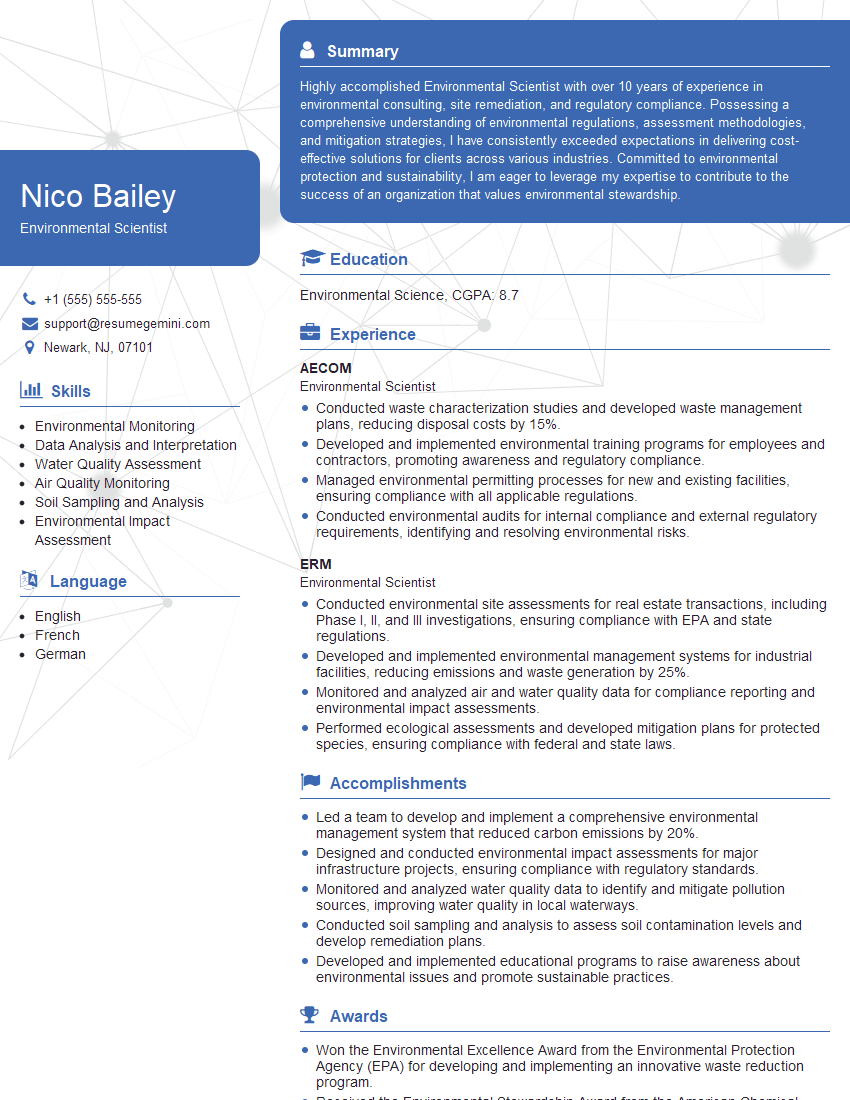
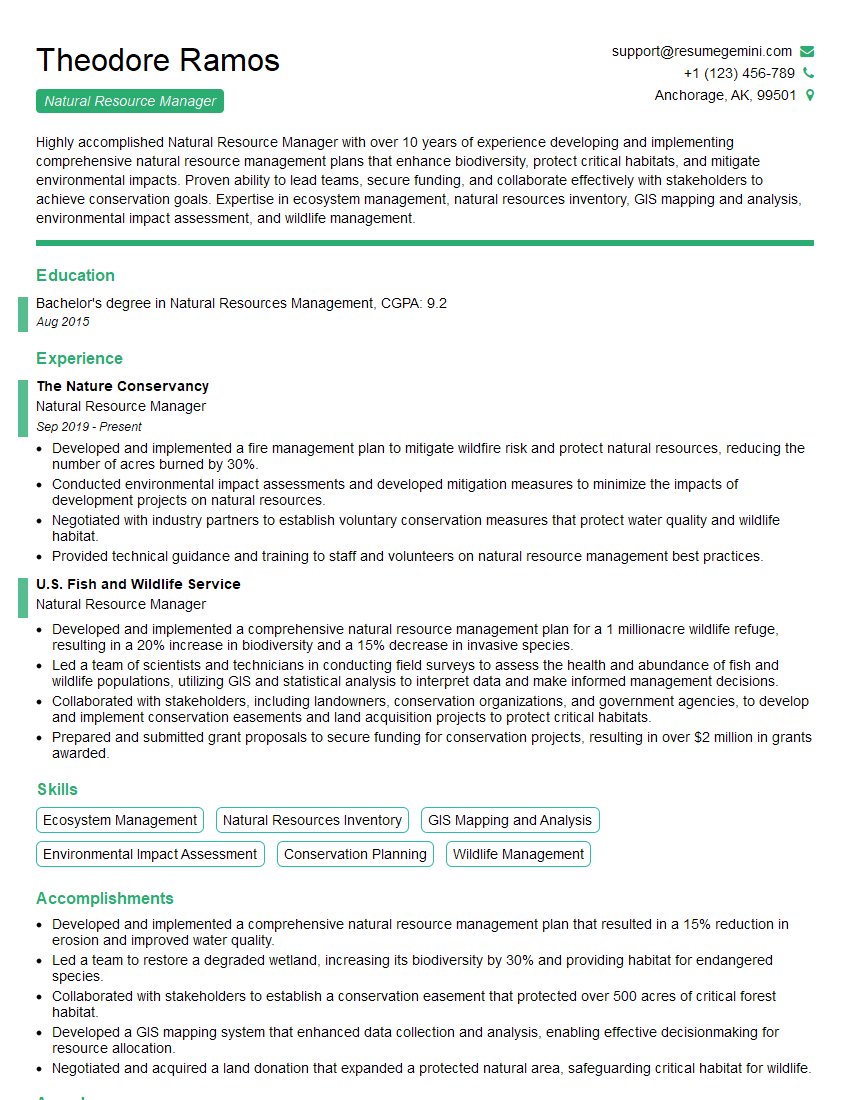
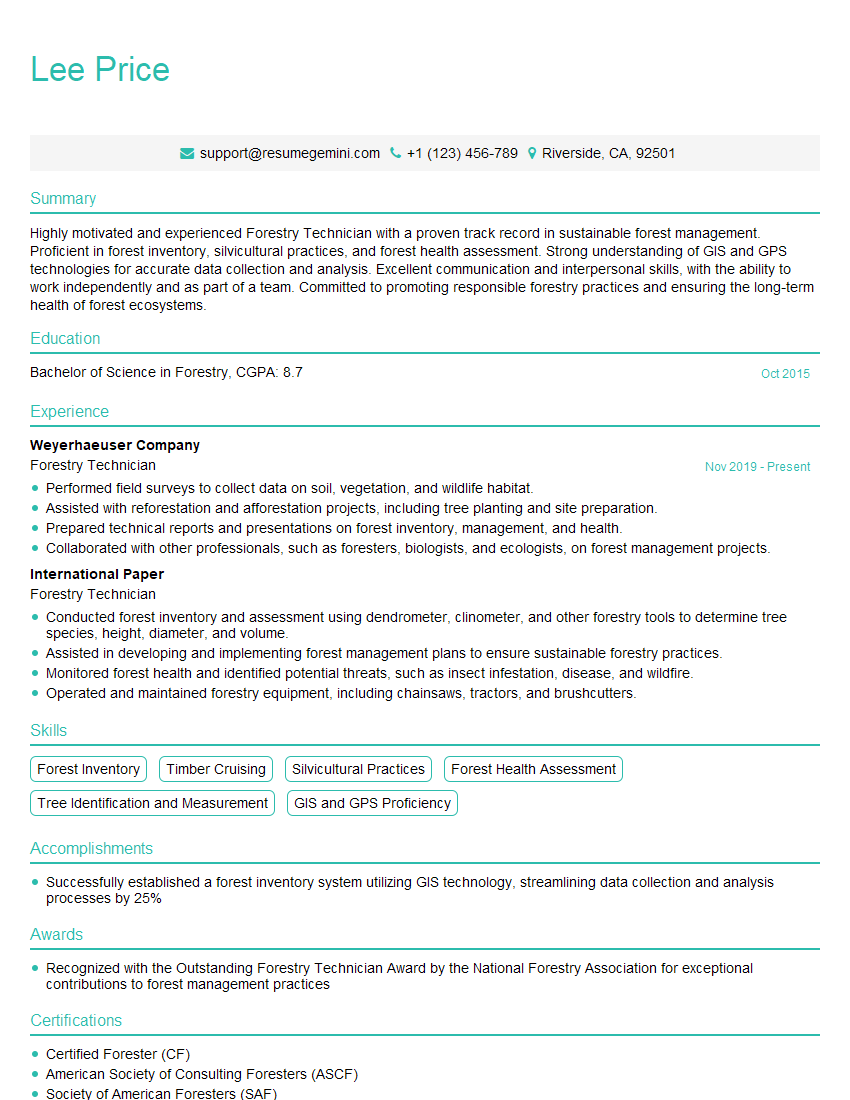
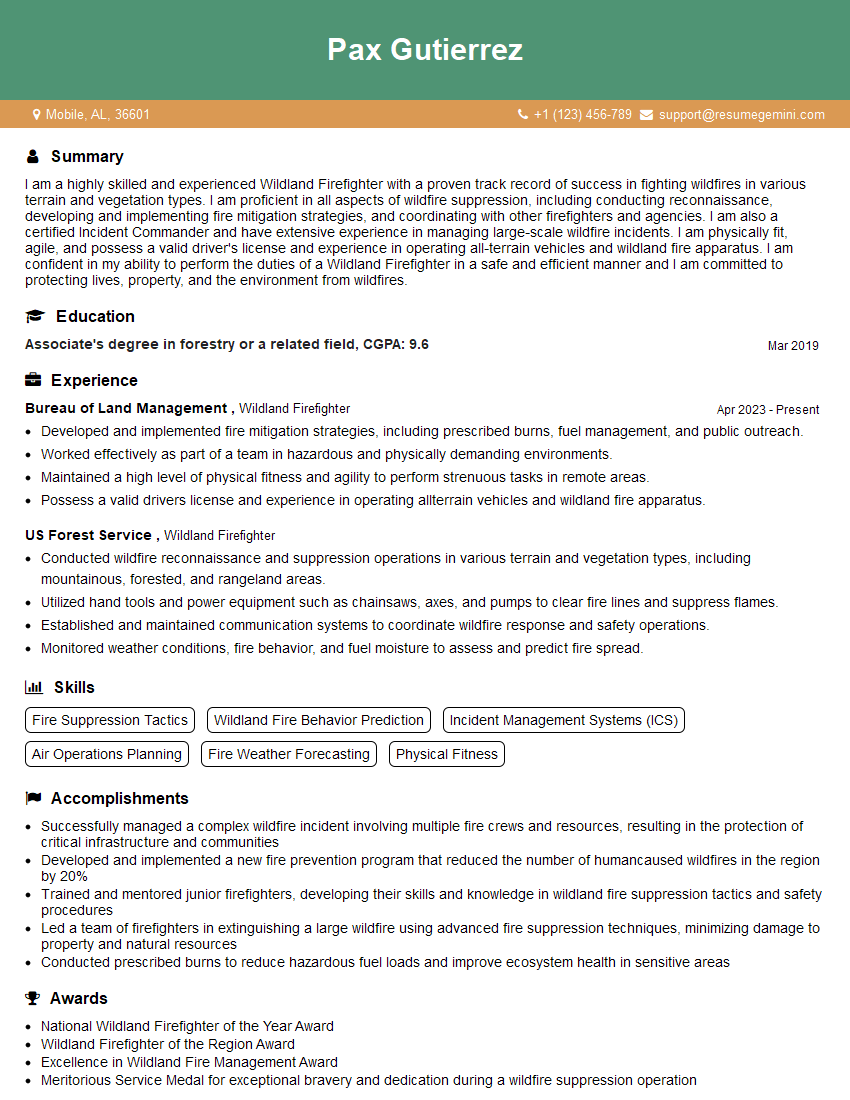
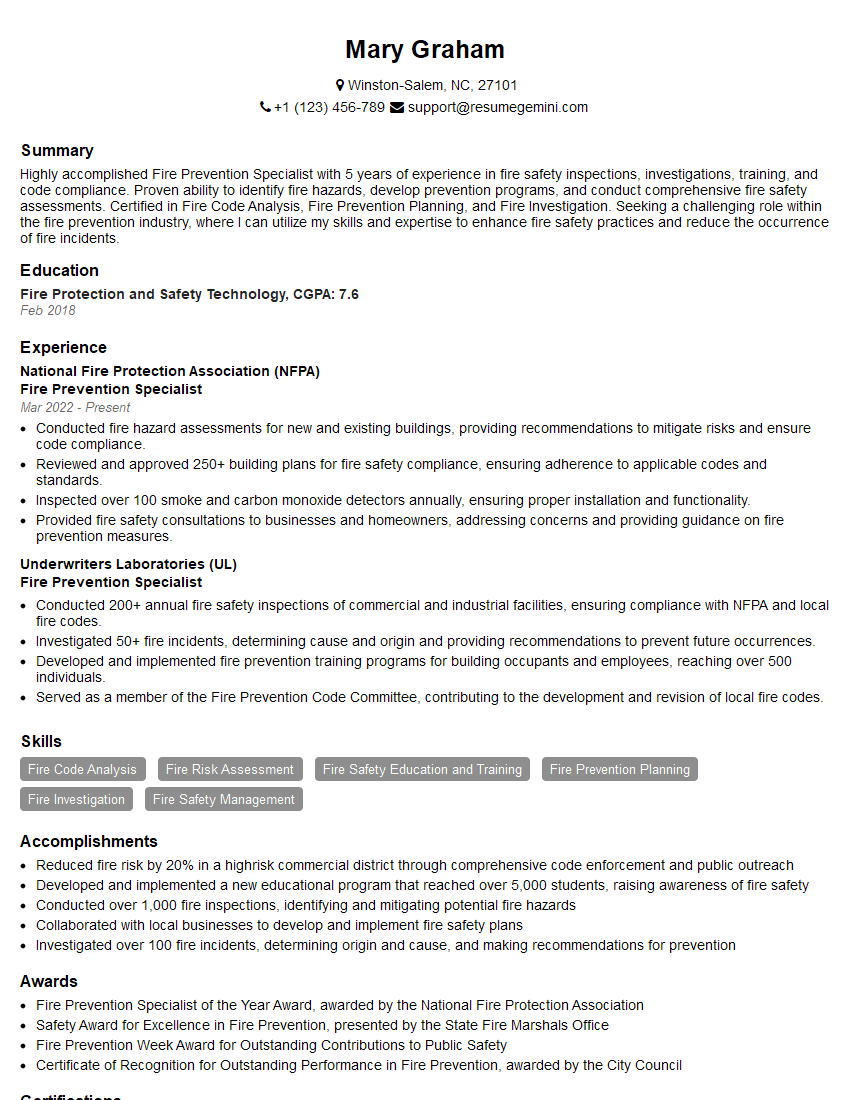
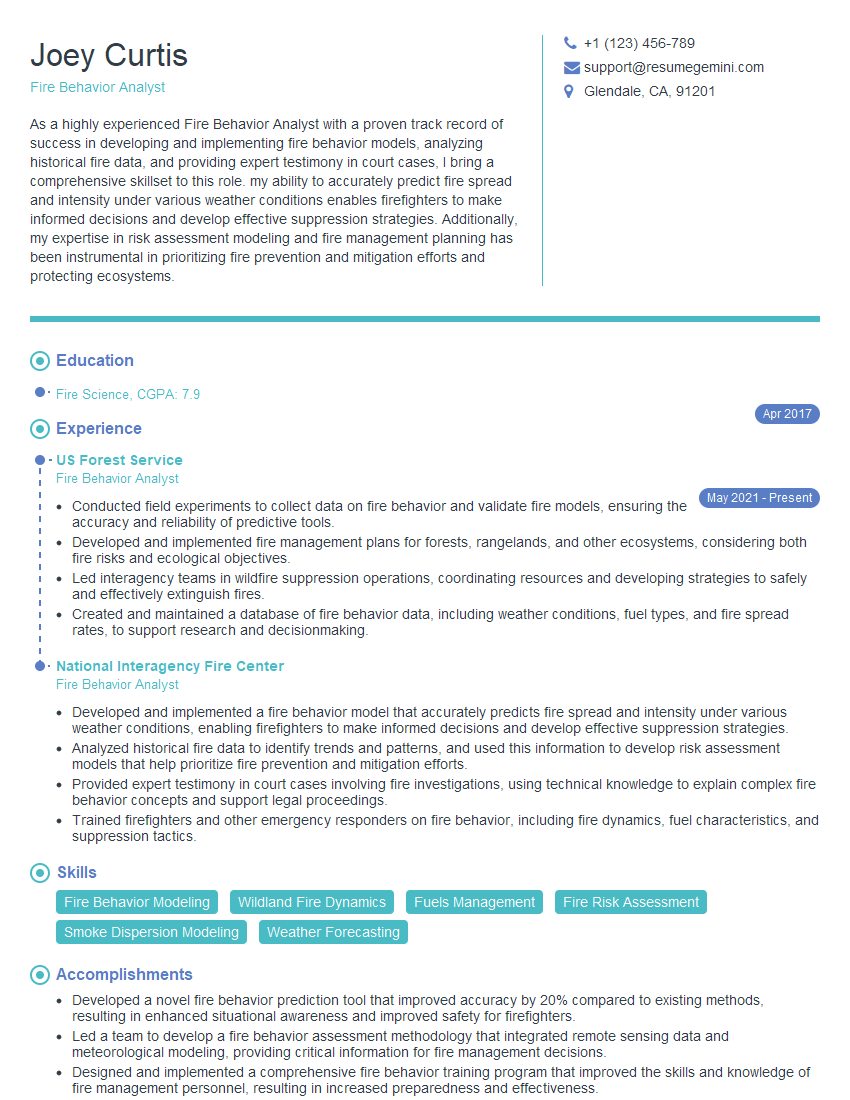
Mastering Prescribed Fire Management opens doors to a rewarding career with significant growth potential in environmental conservation and land management. A strong resume is crucial for showcasing your skills and experience to potential employers. Creating an ATS-friendly resume significantly increases your chances of getting noticed by Applicant Tracking Systems used by many organizations. We highly recommend using ResumeGemini to build a professional and effective resume that highlights your unique qualifications. ResumeGemini provides examples of resumes tailored to Prescribed Fire Management to guide you through the process.
Explore more articles
Users Rating of Our Blogs
Share Your Experience
We value your feedback! Please rate our content and share your thoughts (optional).
What Readers Say About Our Blog
Really detailed insights and content, thank you for writing this detailed article.
IT gave me an insight and words to use and be able to think of examples