Cracking a skill-specific interview, like one for Airline Economic Analysis, requires understanding the nuances of the role. In this blog, we present the questions you’re most likely to encounter, along with insights into how to answer them effectively. Let’s ensure you’re ready to make a strong impression.
Questions Asked in Airline Economic Analysis Interview
Q 1. Explain the concept of yield management in the airline industry.
Yield management in the airline industry is the art and science of maximizing revenue from available seats by strategically pricing and allocating those seats to different customer segments. Think of it like this: you wouldn’t sell all your concert tickets at the same price, would you? You might offer early-bird discounts, premium seating at a higher cost, and last-minute deals to fill empty seats. Airlines do something similar.
It involves forecasting demand, segmenting customers based on their willingness to pay, and dynamically adjusting prices based on factors like time until departure, seat availability, and competitor pricing. Airlines use sophisticated revenue management systems and algorithms to predict demand and optimize pricing. A key aspect is understanding the price elasticity of demand – how sensitive the demand is to changes in price. For example, business travelers are often less price-sensitive than leisure travelers.
- Forecasting Demand: Predicting how many passengers will book at different price points.
- Segmentation: Identifying different passenger types (business, leisure, etc.) with varying price sensitivities.
- Pricing Optimization: Dynamically adjusting prices to maximize revenue, filling seats and leaving less empty seats to avoid losses.
- Inventory Control: Strategically allocating seats to different fare classes to manage risk and maximize profitability.
Q 2. How do you forecast airline demand?
Forecasting airline demand is a crucial aspect of revenue management. It’s not just about guessing how many people will fly; it’s about predicting this demand with high accuracy at various price points and across different time periods. We use a variety of techniques, combining quantitative and qualitative methods.
- Historical Data Analysis: Examining past passenger numbers, booking trends, and seasonal fluctuations to identify patterns. This could involve statistical techniques like time series analysis.
- Market Research: Gathering information about economic conditions, travel trends, competitor activities, and consumer preferences. Surveys, focus groups, and travel agency data are important sources.
- External Factors: Considering factors such as economic growth, fuel prices, global events, and changes in government policies. For example, the economy improving usually increases leisure travel.
- Advanced Analytics: Utilizing machine learning algorithms and data mining techniques to analyze vast datasets and identify complex relationships between factors influencing demand. This could involve algorithms like ARIMA or Prophet for time series forecasting.
For example, an airline might use historical data to predict demand for a particular route during the peak summer season and then factor in potential economic slowdowns or competitor pricing strategies to refine their forecast.
Q 3. Describe different airline pricing strategies and their applications.
Airlines employ various pricing strategies to maximize revenue and cater to diverse customer segments. These strategies are often used in combination.
- Hub-and-Spoke Pricing: This leverages the efficiency of connecting flights through central hubs. Flights from smaller cities to a hub will often have different prices than the final destination. Thus the airline is able to offer competitive prices for long-haul trips by offering shorter trips at potentially lower prices.
- Peak and Off-Peak Pricing: Prices are higher during periods of high demand (e.g., holidays, weekends) and lower during off-peak times.
- Competitive Pricing: Setting prices based on competitors’ offerings, often aiming for a slightly lower or comparable price to attract price-sensitive customers.
- Dynamic Pricing: Continuously adjusting prices based on real-time factors like seat availability and competitor pricing, similar to what hotels and ride-sharing apps do.
- Bundled Pricing: Offering packages combining airfare with other services like baggage, seat selection, and in-flight meals at a discounted price.
- Yield Management Pricing: This is an advanced technique that involves controlling inventory to manage revenue across different fare classes to maximize overall revenue. It uses forecasting to predict demand at various price points. This ties back to question #1.
For instance, a low-cost carrier might primarily focus on competitive pricing, while a full-service airline might use a combination of dynamic pricing and bundled pricing to attract different customer segments.
Q 4. What are the key factors influencing airline fuel costs?
Airline fuel costs are a significant portion of their operating expenses. Several factors influence these costs:
- Crude Oil Prices: The price of crude oil in the global market is the most dominant factor. Increases in crude oil price directly translate to higher jet fuel costs.
- Refining Costs: The process of refining crude oil into jet fuel involves additional costs that contribute to the final price. These costs can fluctuate based on supply, demand, and technological factors.
- Exchange Rates: Airlines often purchase fuel in US dollars, which means fluctuations in exchange rates can affect their fuel costs, particularly for international airlines.
- Fuel Efficiency of Aircraft: Newer aircraft models are typically more fuel-efficient, reducing fuel consumption per passenger kilometer. Airlines are increasingly focusing on newer, more efficient fleets.
- Fuel Hedging: Airlines can use hedging strategies (e.g., purchasing fuel futures contracts) to mitigate the risk of price volatility. However, hedging can also have its own complexities and risks.
- Distribution Costs: The cost of transporting jet fuel from refineries to airports also contributes to the overall fuel expense.
For example, a sudden spike in crude oil prices due to geopolitical instability can severely impact an airline’s profitability, forcing it to adjust its pricing strategies or seek other cost-cutting measures.
Q 5. How does seasonality affect airline revenue?
Seasonality significantly impacts airline revenue. Demand fluctuates considerably throughout the year, with peaks during holiday seasons, summer vacations, and other popular travel periods and troughs during the off-season. This creates challenges and opportunities for airlines.
High Season: Demand is high, leading to increased fares and higher occupancy rates. Airlines can maximize revenue by strategically managing capacity and pricing.
Low Season: Demand is low, leading to lower fares and potentially lower occupancy rates. Airlines need to implement strategies to stimulate demand, such as offering promotional fares or targeting specific customer segments.
Airlines use forecasting techniques (as discussed in Question #2) to anticipate these seasonal fluctuations and adjust their capacity and pricing strategies accordingly. This might involve scheduling more flights during peak seasons and fewer during off-peak periods, and adjusting prices based on the expected demand.
Imagine a ski resort: they make most of their money in the winter; airlines have their own similar busy and slow periods.
Q 6. Explain the importance of capacity planning in airline operations.
Capacity planning is critical for airline operations. It involves determining the optimal number of seats (or aircraft) to offer on each route, ensuring the airline can meet anticipated demand while managing costs effectively. Poor capacity planning can lead to missed revenue opportunities (empty seats) or operational inefficiencies (overcrowded planes).
The process typically includes:
- Demand Forecasting: Accurately predicting passenger demand for each route, as discussed earlier.
- Aircraft Scheduling: Allocating aircraft to different routes based on capacity needs and operational constraints.
- Fleet Planning: Determining the optimal size and composition of the airline’s fleet, considering fuel efficiency, passenger capacity, and route requirements.
- Network Planning: Designing an efficient flight network that maximizes connectivity and minimizes operational costs.
- Crew Scheduling: Ensuring sufficient crew members (pilots, cabin crew) are available for all scheduled flights.
Effective capacity planning requires a sophisticated understanding of market demand, operational constraints, and cost considerations. A well-planned capacity strategy optimizes revenue, reduces costs, and enhances operational efficiency.
Q 7. How do you analyze the impact of competition on airline pricing?
Analyzing the impact of competition on airline pricing requires a thorough understanding of the competitive landscape. Several factors need to be considered:
- Competitor Pricing: Monitoring competitor fares on overlapping routes is crucial. Airlines often react to competitor price changes, adjusting their own prices to remain competitive.
- Market Share: Airlines strive to maintain or increase their market share. Competitive pricing strategies are often used to attract customers from rivals.
- Competitive Strategies: Different airlines adopt varying strategies (low-cost, full-service, niche). Understanding these strategies helps in anticipating competitor actions.
- Route Structure: The degree of overlapping routes between competitors significantly impacts pricing. High route overlap often leads to more intense competition.
- Differentiation: Airlines differentiate themselves through services, amenities, and brand image. Differentiation can allow for premium pricing, even in competitive markets. For example, a full-service carrier with better amenities might charge higher prices than a low-cost carrier.
Analyzing competition involves using quantitative methods (market share analysis, price elasticity analysis) and qualitative methods (assessment of competitor strategies and brand positioning). This analysis helps airlines develop effective pricing strategies that balance competitiveness with profitability.
Q 8. What are the key performance indicators (KPIs) used in airline economic analysis?
Key Performance Indicators (KPIs) in airline economic analysis are crucial for monitoring financial health and operational efficiency. They are broadly categorized into financial, operational, and customer-related metrics.
- Financial KPIs: These focus on profitability and revenue generation. Examples include Revenue per Available Seat Mile (RASM), Cost per Available Seat Mile (CASM), Load Factor, Yield, Net Profit Margin, and Return on Investment (ROI). A high RASM indicates strong pricing power, while a low CASM reflects efficient operations. Load factor represents how well an airline fills its seats.
- Operational KPIs: These measure the efficiency of airline operations. Examples include On-Time Performance (OTP), aircraft utilization rate, baggage handling efficiency, and fuel consumption per seat mile. High OTP translates to improved customer satisfaction and reduced operational costs. High aircraft utilization means maximizing the revenue potential of each aircraft.
- Customer-related KPIs: These gauge customer satisfaction and loyalty. Examples include Customer Satisfaction Score (CSAT), Net Promoter Score (NPS), Average Revenue per Passenger (ARPP), and customer retention rate. High CSAT and NPS show positive customer perception and brand loyalty.
Analyzing these KPIs together provides a holistic view of an airline’s performance and guides strategic decision-making.
Q 9. Describe your experience with revenue management software.
My experience with revenue management software spans over eight years, encompassing both implementation and optimization phases. I’ve worked extensively with leading systems like Sabre, Amadeus, and IDeaS. My expertise includes configuring pricing rules, forecasting demand, optimizing seat allocation across different fare classes, and analyzing the impact of pricing strategies on revenue generation. For example, I recently led a project implementing a new revenue management system for a low-cost carrier. This involved customizing the system to match the airline’s specific business model, which focused on dynamic pricing and ancillary revenue. We saw a 15% increase in RASM within six months of implementation due to better inventory control and optimized pricing strategies.
My skills also include leveraging data analytics to identify patterns, predict demand fluctuations, and fine-tune pricing models. I’m proficient in using various statistical techniques, such as regression analysis and machine learning algorithms, to enhance forecasting accuracy and maximize revenue.
Q 10. How do you handle uncertainty in demand forecasting?
Uncertainty in demand forecasting is inherent in the airline industry due to several factors like economic fluctuations, seasonality, and unforeseen events (e.g., pandemics, natural disasters). To handle this, I use a multifaceted approach:
- Scenario Planning: We develop multiple demand forecasts based on different assumptions about key variables. For example, we might create optimistic, pessimistic, and most likely scenarios for fuel prices and overall economic growth.
- Statistical Modeling with Error Bands: Instead of relying on single-point forecasts, we use statistical models that generate a range of possible outcomes with associated probabilities. This provides a more realistic picture of the uncertainty involved.
- Real-Time Data Monitoring and Adjustment: We continuously monitor actual bookings and adjust our forecasts dynamically. This involves using advanced algorithms that quickly adapt to changes in demand patterns.
- Sensitivity Analysis: We assess the impact of changes in key variables (e.g., fuel price, competitor actions) on our forecasts to understand how sensitive our predictions are to these factors.
By integrating these methods, we reduce the risk of relying on overly optimistic or pessimistic forecasts and make more robust decisions.
Q 11. Explain the concept of elasticity of demand in the context of airline pricing.
Elasticity of demand measures the responsiveness of demand to a change in price. In the airline industry, it’s crucial for pricing decisions. Price elasticity of demand (PED) is calculated as the percentage change in quantity demanded divided by the percentage change in price.
- Elastic Demand (PED < -1): A small price increase leads to a proportionally larger decrease in demand. This is common for discretionary travel during off-peak seasons.
- Inelastic Demand (PED > -1): A price increase leads to a proportionally smaller decrease in demand. This is often seen for business travel or during peak seasons where demand is less sensitive to price changes.
- Unitary Elastic Demand (PED = -1): Percentage change in quantity demanded equals the percentage change in price.
Understanding PED helps airlines optimize pricing strategies. For example, during high demand, airlines can increase prices with a relatively small impact on demand, maximizing revenue. Conversely, during low demand, they might need to offer discounts to stimulate demand. Airlines often segment their market based on PED, offering different price points to different customer groups.
Q 12. How do you evaluate the profitability of a new airline route?
Evaluating the profitability of a new route involves a thorough cost-benefit analysis. This is a multi-step process:
- Demand Forecasting: Estimate potential passenger demand based on market research, historical data, and competitor analysis. This might include analyzing origin-destination flows, demographic data, and travel patterns.
- Revenue Projections: Project potential revenue based on the forecasted demand and various pricing scenarios. This takes into account different fare classes, ancillary revenue streams (e.g., baggage fees, onboard purchases), and potential load factors.
- Cost Estimation: Calculate all associated costs, including aircraft operating costs (fuel, maintenance, crew), airport fees, marketing and advertising expenses, and ground handling charges. These costs can be further categorized as fixed and variable costs.
- Profitability Analysis: Compare the projected revenue with the estimated costs to determine the potential profitability of the route. Key metrics to consider are Net Present Value (NPV), Internal Rate of Return (IRR), and payback period.
- Risk Assessment: Evaluate potential risks, such as economic downturns, competitor actions, and unforeseen events (e.g., natural disasters). Develop contingency plans to mitigate these risks.
This detailed analysis provides a comprehensive view of the route’s potential profitability and guides the decision-making process.
Q 13. What are the key economic factors impacting airline profitability?
Several key economic factors significantly impact airline profitability:
- Fuel Prices: Fuel is a major operating expense for airlines. Fluctuations in fuel prices directly impact profitability, making fuel hedging strategies crucial for risk management.
- Economic Conditions: Economic recessions or slowdowns reduce discretionary spending on travel, impacting demand and fares. Conversely, strong economic growth usually stimulates air travel.
- Interest Rates: Higher interest rates increase the cost of borrowing, making financing aircraft and other assets more expensive.
- Exchange Rates: Airlines operating internationally are exposed to exchange rate risk. Fluctuations in currency values can impact revenue and costs.
- Government Regulations: Changes in regulations, such as taxes, environmental regulations, and airport charges, can affect airline profitability.
- Competition: Intense competition among airlines can pressure fares and margins, requiring efficient operations and innovative strategies to remain profitable.
Airlines must constantly monitor these economic factors and adapt their strategies accordingly to ensure long-term profitability.
Q 14. How do you analyze the impact of external factors (e.g., fuel price changes, economic recessions) on airline performance?
Analyzing the impact of external factors requires a systematic approach combining quantitative and qualitative methods:
- Quantitative Analysis: Use econometric models and statistical techniques (e.g., regression analysis, time series analysis) to quantify the relationship between external factors and airline performance. For example, we can build a model to estimate the impact of fuel price changes on operating costs and profitability.
- Scenario Planning: Develop different scenarios based on various potential outcomes for external factors (e.g., high, medium, and low fuel prices, mild vs. severe recession). This helps in assessing the range of potential impacts on airline performance.
- Sensitivity Analysis: Evaluate how sensitive key performance indicators (KPIs) are to changes in external factors. This helps in identifying the most critical factors and prioritizing risk mitigation strategies.
- Qualitative Analysis: Conduct qualitative assessments to understand the non-quantifiable aspects of external factors. For example, we would analyze the impact of public perception following a major safety incident or how governmental policies might shift travel patterns.
By combining quantitative and qualitative approaches, we can develop a comprehensive understanding of how external factors affect airline performance and devise appropriate strategies for managing these risks and capitalizing on opportunities.
Q 15. Describe your experience with data analysis and visualization tools in the context of airline economics.
My experience with data analysis and visualization in airline economics is extensive. I’m proficient in tools like SQL, R, Python (with libraries such as Pandas, NumPy, and Scikit-learn), and Tableau. I’ve used these tools to analyze vast datasets encompassing passenger bookings, flight operations, fuel consumption, maintenance costs, and marketing campaign performance. For instance, I used SQL to query operational databases to identify the average cost per passenger per flight, then leveraged R to perform statistical analysis on that data, uncovering key correlations with factors like flight distance, aircraft type, and time of year. Finally, I visualized these findings in Tableau to create interactive dashboards that provided actionable insights for management, allowing them to quickly grasp complex trends.
One specific example involved analyzing passenger booking patterns to predict future demand. Using time series analysis in R, I built a predictive model that accurately forecasted passenger loads with a high degree of accuracy, enabling more efficient capacity planning and optimized resource allocation.
Career Expert Tips:
- Ace those interviews! Prepare effectively by reviewing the Top 50 Most Common Interview Questions on ResumeGemini.
- Navigate your job search with confidence! Explore a wide range of Career Tips on ResumeGemini. Learn about common challenges and recommendations to overcome them.
- Craft the perfect resume! Master the Art of Resume Writing with ResumeGemini’s guide. Showcase your unique qualifications and achievements effectively.
- Don’t miss out on holiday savings! Build your dream resume with ResumeGemini’s ATS optimized templates.
Q 16. How do you use data to support pricing decisions?
Data is fundamental to effective airline pricing. I utilize a multifaceted approach that combines historical data analysis with predictive modeling and real-time market intelligence. We start by segmenting our customer base based on factors like booking behavior, demographics, and trip purpose. This allows for differentiated pricing strategies.
For example, we might analyze past booking data to understand the price elasticity of demand for different customer segments. This helps us determine the optimal price point for each segment, maximizing revenue without sacrificing market share. We use regression analysis to understand the relationship between price and demand. We then incorporate real-time data, such as competitor pricing and available capacity, to refine our pricing strategies dynamically. We might also use machine learning algorithms to predict future demand and adjust prices proactively.
Ultimately, the goal is to optimize revenue by balancing price sensitivity, demand forecasting, and competitive pressures.
Q 17. Explain the concept of break-even analysis in the airline industry.
Break-even analysis in the airline industry determines the point where total revenue equals total costs. It’s crucial for evaluating the financial viability of routes, aircraft acquisitions, or marketing campaigns. For airlines, costs are complex and include direct operating costs (fuel, crew salaries, maintenance) and indirect costs (overhead, administrative expenses).
The calculation often involves determining the break-even load factor – the percentage of seats that need to be filled to cover all costs. Imagine a route with fixed costs (e.g., airport fees, salaries) of $100,000 per month and variable costs (e.g., fuel, meals) of $50 per passenger. If the average ticket price is $200, then the break-even number of passengers would be 1000 ($100,000 / ($200-$50) = 1000). Therefore, the airline needs to sell at least 1000 tickets to break even. A break-even analysis helps airlines understand their cost structure and price points to achieve profitability.
Q 18. How do you measure the effectiveness of different marketing campaigns on airline revenue?
Measuring marketing campaign effectiveness on airline revenue requires a robust attribution model. We use a multi-channel attribution approach to determine the contribution of each marketing channel (e.g., online advertising, social media, email marketing) to bookings and revenue.
We track key metrics such as click-through rates, conversion rates, cost per acquisition (CPA), and return on investment (ROI) for each channel. Using techniques like A/B testing, we compare the performance of different marketing messages and creatives. Moreover, we analyze post-campaign booking data to identify the long-term impact of a campaign. By attributing revenue to specific marketing activities, we can optimize our marketing spend and target our efforts towards the most effective channels. For example, if we find that email marketing delivers a higher ROI than social media advertising, we’ll allocate more budget to email marketing.
Q 19. Describe your experience with statistical modeling in the context of airline economics.
Statistical modeling plays a vital role in airline economics. I’ve extensively used regression analysis, time series analysis, and machine learning techniques to forecast demand, optimize pricing, and manage risk. For example, I have developed regression models to predict passenger demand based on factors such as seasonality, economic indicators, and competitor pricing.
Time series analysis helps us forecast future demand based on historical booking patterns, considering trends and seasonality. Machine learning algorithms, such as random forests and neural networks, can improve predictive accuracy by incorporating various non-linear relationships between variables. I’ve used these models to predict fuel prices, optimize aircraft maintenance schedules, and improve operational efficiency. These models contribute to more effective decision making, reducing risk and enhancing profitability.
Q 20. How do you develop and implement a revenue management strategy for a new airline?
Developing a revenue management strategy for a new airline starts with market research and competitive analysis. This includes identifying target customer segments and understanding their price sensitivity. Next, we determine optimal pricing strategies for different fare classes, taking into consideration competitor pricing and projected demand. A crucial element is building a robust forecasting model based on historical data (if available) or comparable markets.
We would then implement a dynamic pricing system that adjusts prices in real-time based on demand, capacity, and competitor pricing. We would also employ techniques like overbooking and yield management to maximize revenue while minimizing empty seats. Finally, regular monitoring and analysis of revenue performance are essential to fine-tune the strategy based on real-world data and market feedback. Continuous improvement is key to optimize revenue and achieve profitability.
Q 21. How do you determine the optimal pricing for different fare classes?
Determining optimal pricing for different fare classes relies heavily on understanding customer segmentation and price elasticity. We segment customers based on their willingness to pay, booking behavior, and trip purpose. For example, business travelers are generally less price-sensitive than leisure travelers.
We use a combination of techniques to determine optimal pricing for each fare class. These include: analyzing historical booking data to understand price-demand relationships for different segments, incorporating competitor pricing, considering the cost of providing the service associated with each fare class, and using optimization algorithms to find the price points that maximize revenue for each fare class. The goal is to fill seats effectively by offering a range of prices that caters to the varying price sensitivity of each segment, while maintaining profitability overall.
Q 22. How do you account for customer segmentation in airline pricing strategies?
Airline pricing strategies heavily rely on understanding customer segmentation. We don’t treat all passengers the same; their willingness to pay varies significantly. This segmentation allows for optimized pricing, maximizing revenue across different customer groups.
For instance, business travelers are generally less price-sensitive and willing to pay a premium for convenience and flexibility, like last-minute bookings or preferred seating. Leisure travelers, on the other hand, are often more price-sensitive and book well in advance to secure lower fares. We identify these segments through data analysis, looking at factors like booking time, travel dates, chosen fare class, and demographic information.
- Loyalty Programs: Frequent flyers often receive discounted fares or upgrades, rewarding their loyalty and incentivizing repeat business.
- Price Discrimination: Different fares are offered based on factors like the day of the week, time of day, or how far in advance a ticket is purchased. This is a form of price discrimination, maximizing revenue by charging different prices to different customer segments based on their demand elasticity.
- Targeted Advertising: Online advertising allows us to tailor our fare offerings to specific demographics or traveler profiles, reaching the right customers with the right price.
By analyzing this data, we build sophisticated pricing models that dynamically adjust fares based on predicted demand from each segment, ensuring we capture the optimal revenue from each passenger group.
Q 23. Explain the concept of network effects in the airline industry.
Network effects in the airline industry refer to the increase in value of the airline’s services as more routes and destinations are added to its network. Think of it like this: a single route from City A to City B might not be very profitable on its own. However, if that airline also flies from City B to City C and City D, passengers can more easily connect through City B, increasing the overall attractiveness and value of the airline’s network.
This creates several benefits:
- Increased Connectivity: Passengers appreciate a broader network of destinations, leading to higher demand and potentially higher fares.
- Improved Efficiency: Airlines can better utilize their aircraft and crews by connecting routes. This reduces operational costs and increases overall profitability.
- Competitive Advantage: A wider network provides a competitive edge over airlines with less extensive coverage, drawing in more passengers seeking convenient connections.
A classic example is a hub-and-spoke system where a large airport (the hub) connects many smaller airports (the spokes). This system leverages network effects by offering passengers convenient connections through the central hub.
Q 24. How do you utilize historical data to predict future airline revenue?
Predicting future airline revenue using historical data is a crucial aspect of our work. It involves a multi-faceted approach incorporating various statistical and econometric techniques. We don’t just rely on simple trend analysis; a robust prediction requires a deeper dive into the underlying factors driving revenue.
Our process generally includes:
- Data Cleaning and Preprocessing: This stage involves handling missing values, outliers, and ensuring data consistency. Data from various sources – booking systems, operational databases, weather information – needs to be integrated and standardized.
- Time Series Analysis: We utilize techniques like ARIMA (Autoregressive Integrated Moving Average) models to capture temporal patterns in revenue data. This helps us forecast future trends based on historical seasonality and cyclical variations.
- Regression Analysis: We build regression models incorporating external factors impacting revenue, such as fuel prices, economic indicators (GDP growth, unemployment rates), competitor pricing, and special events (holidays, sporting events). This enables us to quantify the impact of these variables on revenue.
- Segmentation: We analyze revenue by customer segment (business vs. leisure), route, and booking channel. This helps create more accurate forecasts by recognizing the unique characteristics of each segment.
- Model Validation: We constantly validate our models using different subsets of historical data, ensuring their accuracy and reliability. Backtesting against past performance helps us assess the model’s predictive power.
The combination of time series analysis and regression modeling, along with careful consideration of segmentation and external factors, provides a more comprehensive and accurate revenue prediction than relying on a single approach.
Q 25. What are the challenges in implementing dynamic pricing in the airline industry?
Implementing dynamic pricing in the airline industry presents several challenges. While offering the potential for increased revenue, it also requires careful consideration of several factors:
- Complexity: Developing and maintaining a dynamic pricing system requires sophisticated algorithms and real-time data processing capabilities. It’s not a simple task and needs constant monitoring and adjustment.
- Data Requirements: Accurate and timely data is essential. This includes historical fare data, booking patterns, competitor pricing, and external factors like economic indicators and fuel prices. Data acquisition and integration can be a significant hurdle.
- Customer Perception: Rapid price fluctuations can irritate customers, leading to negative reviews and a perception of unfairness. Transparency and clear communication are key to mitigating this risk.
- Competitor Response: Competitors will also react to changes in pricing, potentially triggering price wars that negatively impact profitability for all involved.
- External Factors: Unforeseen events like sudden economic downturns, natural disasters, or global pandemics can significantly impact demand and render previously successful pricing strategies ineffective. Adaptability is key.
- System Failures: Any disruption to the system’s functioning can lead to major revenue losses, emphasizing the need for robust system architecture and backup measures.
Successfully implementing dynamic pricing requires a well-structured approach that prioritizes data quality, algorithm accuracy, and customer satisfaction.
Q 26. Explain how you would use various forecasting techniques (e.g., time series analysis, regression) for airline demand prediction.
Airline demand prediction relies heavily on forecasting techniques. Time series analysis and regression analysis are crucial tools in our arsenal.
Time Series Analysis: This focuses on the historical pattern of demand. We use techniques like ARIMA to model the temporal dependencies in the data. For example, we might observe seasonal peaks in demand during holidays or school breaks. ARIMA helps us capture these patterns and project them into the future. We also explore exponential smoothing methods, which provide a weighted average of past demand, allowing more recent data to have a greater influence on the forecast.
Regression Analysis: Here we identify the relationship between demand and external factors. We might build a multiple linear regression model where demand is the dependent variable, and independent variables include fuel prices, GDP growth, competitor actions, weather patterns, and marketing expenditure. The coefficients of these variables indicate their impact on demand, allowing us to incorporate these factors into our forecast.
Combining Techniques: Often, the best results are obtained by combining time series and regression analyses. We might use time series to capture the inherent patterns in demand and then incorporate external factors through regression analysis to refine the forecast. For example, we might use ARIMA to predict base demand and then adjust this prediction using regression analysis, factoring in anticipated fuel price increases or economic growth.
The choice of specific techniques depends on the nature of the data and the forecast horizon. We always assess the accuracy of our predictions using metrics like Mean Absolute Error (MAE) and Root Mean Squared Error (RMSE), ensuring our models deliver reliable results.
Q 27. Describe your experience with airline operational data and its application to economic analysis.
My experience with airline operational data is extensive. It’s not just about passenger numbers and revenue; operational data provides a wealth of information crucial for economic analysis.
I have worked extensively with data sets including:
- Flight schedules and on-time performance: This helps assess operational efficiency and its impact on passenger satisfaction and revenue. Delays and cancellations directly impact customer experience and can lead to significant costs.
- Aircraft maintenance logs: This data is vital for predicting maintenance expenses and optimizing aircraft utilization. Unexpected maintenance issues can disrupt schedules and impact revenue.
- Crew scheduling and assignment: Analyzing crew scheduling data allows for optimization of labor costs and minimizing disruption from crew shortages or fatigue.
- Fuel consumption data: Accurate fuel consumption data is critical for predicting fuel costs, a major expense for airlines. Fuel efficiency improvements are directly tied to profitability.
- Baggage handling data: Analysis of baggage handling performance indicates efficiency and customer satisfaction. Lost or delayed luggage can lead to significant costs and negative brand perception.
By combining operational data with revenue and market data, we can build more comprehensive economic models. For example, we might analyze the relationship between on-time performance and customer loyalty, or between fuel efficiency and overall profitability. This integrated approach offers valuable insights for strategic decision-making, helping airlines optimize operations and maximize profits.
Key Topics to Learn for Airline Economic Analysis Interview
- Demand Forecasting & Revenue Management: Understanding and applying various forecasting models (e.g., time series analysis, regression models) to predict passenger demand and optimize pricing strategies. Practical application includes analyzing historical data to predict future ticket sales and maximizing revenue through dynamic pricing.
- Cost Analysis & Control: Analyzing various cost components (fuel, labor, maintenance, etc.) and developing strategies for cost reduction and efficiency improvement. This includes understanding cost allocation methods and applying them to different airline departments.
- Network Planning & Optimization: Evaluating the profitability and efficiency of different route networks, considering factors like passenger demand, operating costs, and competition. This involves using network optimization tools and models to design efficient flight schedules.
- Market Analysis & Competition: Assessing the competitive landscape, analyzing market share, and identifying opportunities for growth and profitability. This includes understanding different competitive strategies and their impact on airline performance.
- Financial Statement Analysis: Interpreting airline financial statements (income statement, balance sheet, cash flow statement) to assess financial health and performance. This involves calculating key financial ratios and identifying trends.
- Airline Regulation & Policy: Understanding the regulatory environment impacting airline operations and its implications for economic decisions. This includes analyzing the impact of government policies on airline profitability.
- Risk Management: Identifying and mitigating potential risks affecting airline operations and profitability, including fuel price volatility, economic downturns, and geopolitical events.
- Data Analysis & Interpretation: Proficiency in using data analysis tools and techniques (e.g., Excel, statistical software) to interpret large datasets, draw meaningful conclusions, and support decision-making. This includes presenting data findings clearly and concisely.
Next Steps
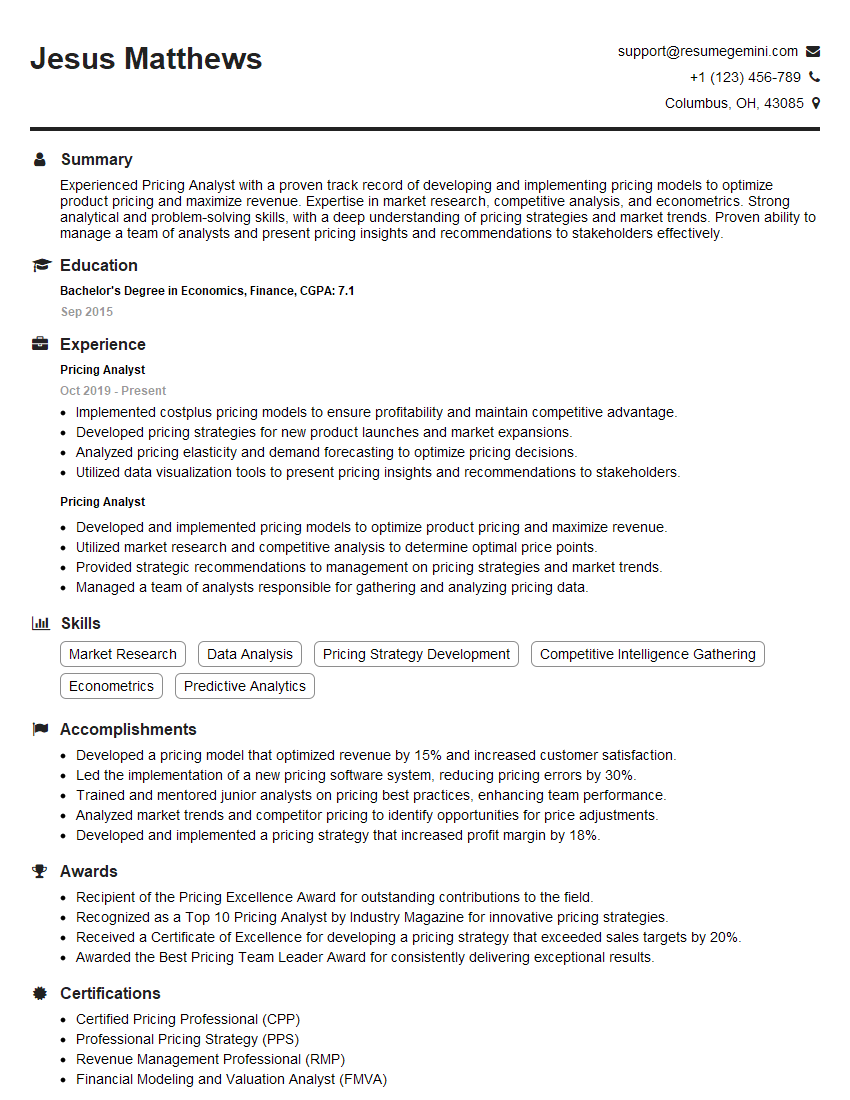
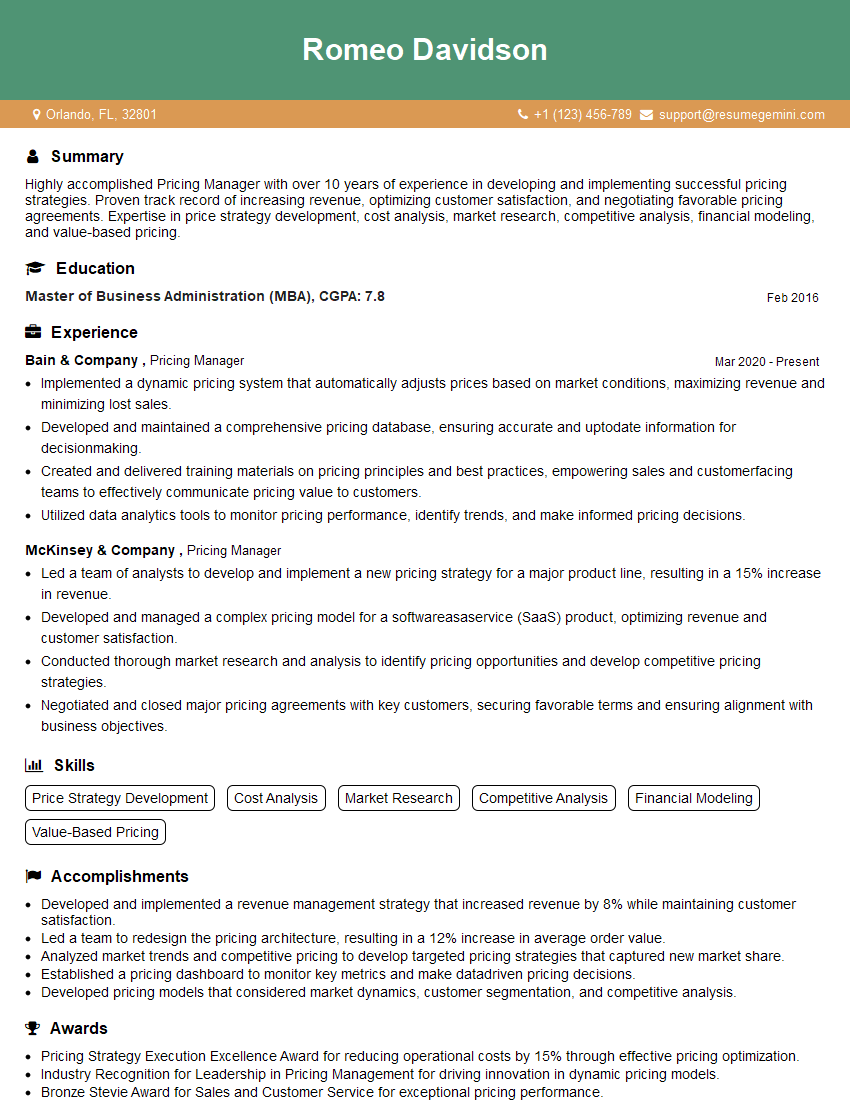
Mastering Airline Economic Analysis is crucial for career advancement within the aviation industry, opening doors to higher-paying roles and increased responsibility. A strong understanding of these principles will make you a highly sought-after candidate. To maximize your job prospects, it’s vital to create an ATS-friendly resume that highlights your skills and experience effectively. ResumeGemini is a trusted resource that can help you build a professional and impactful resume tailored to the specific requirements of Airline Economic Analysis roles. Examples of resumes tailored to this field are available to help you craft a compelling application. Take the next step towards your dream career – build your best resume today.
Explore more articles
Users Rating of Our Blogs
Share Your Experience
We value your feedback! Please rate our content and share your thoughts (optional).
What Readers Say About Our Blog
Really detailed insights and content, thank you for writing this detailed article.
IT gave me an insight and words to use and be able to think of examples