Every successful interview starts with knowing what to expect. In this blog, we’ll take you through the top Quality Control Inspection Certification interview questions, breaking them down with expert tips to help you deliver impactful answers. Step into your next interview fully prepared and ready to succeed.
Questions Asked in Quality Control Inspection Certification Interview
Q 1. Explain the different types of quality control inspections.
Quality control inspections can be categorized in several ways, often depending on the stage of production or the specific characteristic being assessed. Here are some key types:
- Incoming Inspection: This verifies that materials and components received from suppliers meet specified requirements before they enter the production process. Think of it as a ‘gatekeeper’ ensuring only acceptable materials are used. For example, a manufacturer of electronics might inspect incoming circuit boards for defects in soldering or component placement.
- In-Process Inspection: These inspections happen during the manufacturing process at various stages. This allows for early detection of defects, minimizing wasted materials and effort. Imagine a car manufacturer checking the alignment of the chassis midway through the assembly line.
- Final Inspection: This is the final check before the product is shipped to the customer. It ensures that the completed product conforms to all specifications and quality standards. Consider a clothing manufacturer inspecting finished garments for stitching quality, proper sizing, and any fabric flaws.
- Acceptance Inspection: This type of inspection is performed on a batch or lot of finished goods to determine if the entire lot meets the acceptance criteria. This may involve sampling techniques, checking for consistency across the lot.
- Visual Inspection: This is a basic method involving careful visual examination of the product for defects. This could be used in any industry where visual defects are important, from inspecting food products for blemishes to checking for scratches on furniture.
- Dimensional Inspection: This involves measuring the physical dimensions of a product to ensure it meets specifications. Tools like calipers, micrometers, and coordinate measuring machines (CMMs) are frequently used.
The type of inspection used depends on the product, the manufacturing process, and the level of risk involved.
Q 2. Describe your experience with Statistical Process Control (SPC).
Statistical Process Control (SPC) is crucial for monitoring and improving process capability. My experience with SPC includes designing and implementing control charts (like X-bar and R charts, p-charts, c-charts) to track key process parameters. I’ve used these charts to identify trends, variations, and potential sources of defects. For example, in a food processing plant, I used X-bar and R charts to monitor the weight of packaged goods, identifying a variation that was causing underfilling of some packages. By analyzing the data, we pinpointed the source to a faulty weighing machine. I’m also proficient in using capability analysis tools (Cp, Cpk) to evaluate the process’s ability to meet specifications, and in calculating control limits based on historical data. Moreover, I have experience with using software like Minitab to perform these analyses and generate reports for management.
Q 3. How do you identify and document non-conformances?
Identifying and documenting non-conformances is a critical step in maintaining quality. My process involves several key steps:
- Immediate Identification: Non-conformances are identified through inspections, customer feedback, internal audits, or other quality control activities.
- Detailed Documentation: A non-conformance report (NCR) is created, detailing the specific deviation from requirements. This includes the part number, date, location, description of the non-conformance, quantity affected, and the severity (e.g., critical, major, minor).
- Evidence Collection: Physical evidence like photos or samples of the defective product are attached to the NCR to support the findings. It is crucial to capture the sufficient evidence of the root cause of the nonconformance.
- Verification: A review process ensures accuracy and completeness of the NCR information.
- Distribution: The NCR is distributed to relevant personnel, including production, engineering, and management, to ensure timely investigation and resolution.
An example might be identifying a batch of incorrectly sized screws during a final inspection. The NCR would clearly describe the deviation, include images, and specify the number of affected screws. This ensures the issue is addressed promptly and prevents them from reaching the customer.
Q 4. What are your preferred methods for root cause analysis?
Effective root cause analysis (RCA) is essential for preventing future non-conformances. My preferred methods include:
- 5 Whys: This simple yet powerful technique involves repeatedly asking “Why?” to drill down to the root cause of a problem. It’s useful for uncovering the underlying issues, one level at a time.
- Fishbone Diagram (Ishikawa Diagram): This visual tool helps brainstorm potential causes categorized by categories (e.g., manpower, material, method, machine, measurement, environment). This approach is useful when multiple factors can contribute to a problem.
- Pareto Analysis: This statistical technique identifies the vital few causes responsible for the majority of problems. It helps prioritize corrective actions by focusing on the most significant causes.
- Fault Tree Analysis (FTA): This method uses a tree-like structure to graphically depict the relationships between events leading to a failure. This works well for complex systems.
The choice of method depends on the complexity of the issue. For a simple problem, the 5 Whys might suffice. For more intricate issues, a combination of techniques, such as a Fishbone diagram followed by a Pareto analysis, might be more effective.
Q 5. Explain your experience with corrective and preventive actions (CAPA).
Corrective and Preventive Actions (CAPA) are crucial for continuous improvement. My experience includes developing and implementing CAPA plans to address identified non-conformances and prevent their recurrence. The process typically involves:
- Immediate Containment: Stopping further production or use of the non-conforming product or process.
- Root Cause Analysis: Using the methods described above to identify the underlying cause(s) of the problem.
- Corrective Action: Implementing immediate actions to rectify the current situation and address the immediate nonconformances.
- Preventive Action: Implementing long-term solutions to prevent the problem from recurring. This may include process improvements, training, or changes to equipment.
- Verification: Checking the effectiveness of the corrective and preventive actions to ensure the problem has been resolved and will not happen again.
- Documentation: Maintaining detailed records of all actions taken, their effectiveness, and any follow-up required.
For example, if a machine malfunction causes defects, the CAPA process might involve immediate repair of the machine (corrective action) and preventative maintenance schedule implementation (preventative action) to prevent future failures.
Q 6. How familiar are you with ISO 9001 standards?
I am very familiar with ISO 9001 standards. I understand the requirements for establishing, implementing, maintaining, and continually improving a quality management system (QMS). This includes knowledge of the key clauses, such as those related to context of the organization, leadership, planning, support, operation, performance evaluation, improvement, and risk-based thinking. I have been involved in several internal and external audits, where I have assessed organizations’ compliance against ISO 9001 standards. I’m also aware of the importance of documentation, process mapping, and internal audits in maintaining a robust QMS according to ISO 9001. The principles of continuous improvement and customer focus are central to my work, aligning perfectly with the core values of ISO 9001.
Q 7. Describe your experience with various inspection tools and equipment.
Throughout my career, I’ve gained extensive experience using various inspection tools and equipment. This includes:
- Measuring Instruments: Calipers, micrometers, dial indicators, height gauges, surface roughness testers, CMMs (Coordinate Measuring Machines).
- Optical Instruments: Microscopes (optical and digital), borescopes, and magnifying glasses for detailed visual inspections.
- Testing Equipment: Hardness testers, tensile strength testers, and other specialized equipment relevant to the materials being inspected.
- Gauges: Go/No-Go gauges, plug gauges, ring gauges, and other specialized inspection tools.
- Software: Dimensional inspection software for CMMs, Statistical Process Control (SPC) software (Minitab, JMP), and data analysis tools.
My proficiency extends to properly calibrating and maintaining this equipment to ensure accurate and reliable measurements. I am adept at selecting the appropriate tools for each specific inspection based on the product’s characteristics and the type of inspection needed. For example, I would use a CMM for precise dimensional measurements of a complex part, while a simple caliper would suffice for routine checks on simpler parts.
Q 8. How do you ensure accurate and reliable inspection data?
Ensuring accurate and reliable inspection data is paramount in Quality Control. It’s achieved through a multi-pronged approach focusing on meticulous planning, standardized procedures, and robust data management.
- Standardized Procedures: We utilize documented Standard Operating Procedures (SOPs) for every inspection task. These SOPs detail the inspection methods, acceptance criteria, and data recording format, ensuring consistency across inspectors and minimizing human error. For example, an SOP for measuring the diameter of a component might specify the use of a calibrated micrometer, the number of measurements to take, and the calculation of the average.
- Calibration and Equipment Maintenance: All inspection equipment is regularly calibrated against traceable standards, ensuring accuracy and reliability. We maintain a detailed calibration log, recording the date, results, and any necessary adjustments. Imagine a scenario where a faulty caliper is used – the entire batch could be wrongly assessed.
- Data Verification and Audits: We employ a system of checks and balances, including peer reviews and internal audits, to verify data accuracy. This involves a second inspector independently verifying a sample of the first inspector’s work. Discrepancies are investigated and resolved immediately.
- Digital Data Management: Utilizing digital inspection systems minimizes manual data entry errors and provides a readily accessible audit trail. This includes using software to record results directly from inspection equipment and managing them in a central database.
By combining these elements, we can be confident that our inspection data is accurate, reliable, and suitable for informed decision-making.
Q 9. How do you handle disagreements with production teams regarding inspection results?
Disagreements with production teams regarding inspection results are inevitable, but addressing them constructively is critical. Open communication and collaboration are key.
- Review the Evidence: The first step involves a thorough review of the inspection results, including the data, the inspection methods used, and the relevant specifications. If the disagreement is about measurement discrepancies, we’d revisit the calibration of instruments.
- Joint Investigation: We initiate a joint investigation with the production team, involving representatives from both sides. This collaborative approach aims to identify the root cause of the discrepancy, whether it’s a problem with the production process, the inspection process, or misinterpretation of specifications. For instance, if a batch fails due to surface finish issues, we’d work with the production team to identify potential causes like improper cleaning or machine malfunction.
- Data Analysis and Documentation: We analyze the data collected during the inspection and investigation to reach a mutually agreed-upon conclusion. All findings, including any corrective actions, are meticulously documented. This documentation is crucial for continuous improvement and future reference.
- Focus on Problem Solving, Not Blame: The goal is to find a solution, not to assign blame. A collaborative, problem-solving approach fosters a better working relationship and improves overall quality.
By following these steps, we can resolve disagreements efficiently, while simultaneously improving our processes and strengthening our relationship with the production team. It’s a win-win scenario.
Q 10. Describe your experience with different sampling techniques.
My experience encompasses a variety of sampling techniques, chosen based on the specific context, the characteristics of the product, and the required level of confidence.
- Random Sampling: This involves selecting units randomly from the population, ensuring each unit has an equal chance of selection. This is useful for large homogenous populations, but it might not be effective if the population has significant variations or clusters.
- Stratified Sampling: This is used when the population is divided into subgroups (strata) with different characteristics. We then randomly sample from each stratum, proportionally to its size. This is useful when there’s variation within the population, ensuring representation from each subgroup. For example, inspecting a batch of parts produced across different machines using stratified sampling to account for potential machine variability.
- Systematic Sampling: Here, we select units at regular intervals from the population (e.g., every tenth unit). It’s efficient but can be problematic if the population has a pattern that coincides with the sampling interval.
- Acceptance Sampling: This involves inspecting a sample to determine whether to accept or reject a whole batch. Specific sampling plans are used, often based on statistical process control (SPC) principles. This is common in receiving inspection.
The choice of sampling technique is crucial for ensuring the representativeness of the sample and the accuracy of the conclusions drawn from the inspection. Each technique has its strengths and weaknesses, and choosing the right one depends heavily on the context.
Q 11. What are your methods for maintaining inspection records and documentation?
Maintaining accurate and organized inspection records is essential for traceability, accountability, and continuous improvement. We use a combination of digital and physical methods to manage our inspection documentation.
- Digital Record Keeping: We utilize a dedicated quality management system (QMS) software to store all inspection data electronically. This ensures easy access, searchability, and the prevention of data loss. The system tracks inspection results, deviations, corrective actions, and associated documentation.
- Physical Records: Hard copies of critical inspection documentation (e.g., calibration certificates, non-conformance reports) are stored in a secure, climate-controlled environment to meet regulatory compliance requirements. This serves as a backup in case of any digital system failure.
- Data Security: We adhere to strict data security protocols, ensuring confidentiality and integrity of our records. Access is controlled, and records are regularly backed up.
- Retention Policy: We follow a defined record retention policy, compliant with relevant regulations and industry best practices. This ensures that necessary records are kept for the appropriate duration while also managing storage efficiently.
This integrated approach allows for efficient management of our inspection records, providing easy access to data for analysis, audit trails, and continuous improvement initiatives. It’s organized for easy retrieval and compliance with auditing standards.
Q 12. How do you prioritize inspection tasks in a high-volume production environment?
Prioritizing inspection tasks in a high-volume production environment requires a systematic approach to ensure critical products are inspected first and bottlenecks are avoided.
- Risk-Based Prioritization: We prioritize inspections based on risk assessment. Products with a higher potential for failure or those with critical safety implications are inspected first. This ensures that the most crucial items receive the most attention.
- Criticality Analysis: We analyze the critical characteristics of each product and prioritize inspections accordingly. Features that significantly impact functionality or safety take precedence.
- Statistical Process Control (SPC): By employing SPC, we can identify trends and patterns in production data, allowing us to proactively focus inspections on areas showing increased variability or potential for defects. This helps prevent widespread problems before they arise.
- Production Scheduling Integration: We coordinate with production planning to align inspection schedules with production cycles, ensuring that inspections are completed timely and efficiently without causing delays.
- Automated Inspection: Where possible, we utilize automated inspection systems to handle high-volume, routine inspections, freeing up inspectors to focus on more complex tasks requiring judgment and expertise.
Combining these methods enables us to balance the need for thorough inspection with the demands of a high-volume production environment, optimizing efficiency while ensuring product quality. It’s about strategic allocation of resources and personnel.
Q 13. Explain your experience with calibration procedures for inspection equipment.
Calibration procedures for inspection equipment are vital for maintaining accuracy and ensuring reliable results. We follow a rigorous calibration schedule and documented procedures.
- Calibration Schedule: Each piece of equipment has a defined calibration schedule based on its type, usage frequency, and manufacturer’s recommendations. This ensures regular checks and minimizes the risk of drift or malfunction. Frequency can range from daily for critical instruments to annually for others.
- Calibration Procedures: Detailed written procedures specify the method for calibrating each piece of equipment, including the standards used, the acceptance criteria, and the actions to be taken if the equipment is found to be out of tolerance.
- Traceable Standards: We use traceable standards that can be linked to national or international standards, ensuring the accuracy and reliability of our calibrations. This traceability is important for audits and regulatory compliance.
- Calibration Records: A comprehensive calibration log is maintained for each piece of equipment, recording the calibration date, results, any adjustments made, and the technician who performed the calibration. This creates a detailed audit trail.
- Out-of-Tolerance Equipment: If equipment is found to be out of tolerance, it is immediately taken out of service and sent for repair or replacement. Any inspection data obtained using the faulty equipment is reviewed and corrected if necessary.
This disciplined approach to calibration ensures our inspection equipment remains accurate and reliable, contributing significantly to the overall accuracy and validity of our inspection results. It’s not simply a box to tick; it’s a cornerstone of reliability.
Q 14. How do you ensure the accuracy and traceability of your measurements?
Accuracy and traceability of measurements are ensured through a combination of strategies focused on equipment, procedures, and record-keeping.
- Calibrated Equipment: As previously mentioned, regularly calibrated equipment is fundamental. We use only calibrated instruments, and calibration certificates are readily available for audits. Think of a measuring tape – its accuracy is only as good as its last calibration.
- Standard Operating Procedures (SOPs): Detailed SOPs for each measurement type dictate the correct method, ensuring consistency and minimizing variability between inspectors. This reduces human error and ensures all measurements are taken the same way.
- Environmental Control: Where relevant, we control the environmental conditions to minimize the effects of temperature, humidity, or other factors on measurement accuracy. For instance, precise temperature control might be necessary when measuring dimensions of sensitive materials.
- Data Traceability: Every measurement is recorded with a unique identifier, linking it to the specific lot, batch, component, and the inspector who made the measurement. This allows for complete traceability and efficient investigation of any issues.
- Statistical Process Control (SPC): Applying SPC helps to identify and address any trends or patterns in measurement variability, enabling proactive adjustments to the inspection process and minimizing errors.
By implementing these measures, we achieve a high level of confidence in the accuracy and traceability of our measurements, enhancing the reliability of our inspection data and supporting evidence-based decision-making. It provides a full chain of custody for each measurement.
Q 15. Describe your experience with different types of inspection reports.
Throughout my career, I’ve worked extensively with various inspection reports, each tailored to specific needs and industries. Think of inspection reports as a detective’s case file – they meticulously document the findings of an investigation into a product’s or process’s quality.
Acceptance Inspection Reports: These reports document whether a batch of materials or a finished product meets predefined acceptance criteria. For example, I’ve used these reports extensively in manufacturing settings to ensure incoming raw materials conform to specifications before they enter the production line. A simple pass/fail assessment, along with any deviations noted, is crucial here.
In-process Inspection Reports: These are used to monitor quality during the manufacturing process. Think of them as progress reports, showing the status of quality attributes at various production stages. In a car manufacturing plant, for instance, these reports might track the alignment of car doors at different points in the assembly line.
Final Inspection Reports: These are the culmination of all inspections, summarizing the overall quality of a product before shipment. This is the final verdict – a comprehensive document detailing all checks and any non-conformances. I’ve been responsible for signing off on such reports, ensuring customer satisfaction and legal compliance.
Corrective Action Reports (CARs): These reports document non-conformances and the corrective and preventative actions (CAPA) taken to rectify them and prevent recurrence. They are essential for continuous improvement, serving as a learning tool from identified shortcomings. One example was using a CAR to address a recurring weld defect in a large-scale project, improving the welding process and preventing future defects.
The key is to ensure clarity, accuracy, and completeness in all reports. A well-written report is not just about documenting findings, it’s a tool for communication, problem-solving, and continuous improvement.
Career Expert Tips:
- Ace those interviews! Prepare effectively by reviewing the Top 50 Most Common Interview Questions on ResumeGemini.
- Navigate your job search with confidence! Explore a wide range of Career Tips on ResumeGemini. Learn about common challenges and recommendations to overcome them.
- Craft the perfect resume! Master the Art of Resume Writing with ResumeGemini’s guide. Showcase your unique qualifications and achievements effectively.
- Don’t miss out on holiday savings! Build your dream resume with ResumeGemini’s ATS optimized templates.
Q 16. How familiar are you with different types of non-destructive testing (NDT)?
My familiarity with Non-Destructive Testing (NDT) methods is extensive. NDT techniques are like having X-ray vision for materials – allowing us to assess their integrity without causing damage. I’m proficient in several methods, each with its strengths and weaknesses:
Visual Inspection (VT): This is the most basic method, but crucial. It involves careful visual examination for surface defects like cracks, corrosion, or dents. It’s often the first step in any inspection process and is fundamental to any NDT program.
Liquid Penetrant Testing (LPT): This method detects surface-breaking defects by applying a dye that seeps into cracks, which are then revealed with a developer. I’ve used this extensively to inspect castings and welds for surface cracks.
Magnetic Particle Testing (MT): This method detects surface and near-surface defects in ferromagnetic materials. A magnetic field is applied, and magnetic particles are used to reveal any discontinuities in the magnetic flux. I’ve successfully employed this on pipelines and pressure vessels.
Ultrasonic Testing (UT): This uses high-frequency sound waves to detect internal flaws in materials. It’s incredibly useful for finding subsurface defects in components like aircraft parts or concrete structures. I’ve used UT extensively in the aerospace industry.
Radiographic Testing (RT): This uses X-rays or gamma rays to create images of internal structures, revealing defects like porosity or inclusions. Safety protocols are paramount here, requiring strict adherence to radiation safety regulations.
Choosing the appropriate NDT method depends on the material, type of defect suspected, and accessibility. I excel in selecting and applying the most effective techniques for the given situation.
Q 17. Explain your experience with auditing quality management systems.
Auditing quality management systems (QMS) is a critical part of ensuring consistent quality. Think of a QMS as a company’s recipe for quality – a set of processes and procedures designed to achieve and maintain quality standards. Auditing verifies whether this ‘recipe’ is being followed correctly.
My experience includes conducting internal and external audits according to ISO 9001 standards, identifying areas of strength and weakness, and helping organizations implement corrective actions. The process typically involves:
Review of documentation: This includes quality manuals, procedures, records, and work instructions. This stage is similar to reviewing the ‘recipe’ itself – ensuring its completeness and accuracy.
On-site observations: This involves observing processes and interviewing personnel to assess compliance with documented procedures. This is like watching a chef prepare a dish to see if they follow the recipe.
Record verification: This involves verifying the accuracy and completeness of quality records to ensure that what is recorded actually happened. This is like reviewing the chef’s kitchen notes and comparing it to the end product.
Reporting and follow-up: This involves preparing a detailed audit report highlighting findings, recommendations, and corrective actions. It’s like providing feedback to the chef on how to improve the recipe and execution.
I’ve been successful in helping organizations improve their QMS by providing constructive feedback and guidance. This has resulted in increased efficiency, reduced costs, and improved customer satisfaction.
Q 18. How do you identify and mitigate potential inspection risks?
Identifying and mitigating inspection risks is paramount. A proactive approach is essential to prevent issues before they escalate. It’s like a risk assessment for your inspection process.
My approach involves:
Risk identification: This involves brainstorming potential hazards that could affect the inspection process. For example, inadequate training for inspectors, inappropriate tools, or environmental conditions.
Risk assessment: This step evaluates the likelihood and severity of each identified risk. We consider factors like the probability of occurrence and the potential impact on product quality and safety.
Risk mitigation: This is where we develop strategies to reduce or eliminate the identified risks. This could involve providing additional training, improving inspection procedures, using better tools, or modifying the inspection environment.
Monitoring and review: Continuously monitoring the effectiveness of our mitigation strategies is crucial. Regular reviews help ensure that the risks remain under control.
For example, in a high-pressure environment like offshore oil rig inspections, I would meticulously assess the risks associated with working at heights, equipment failures, and environmental hazards, implementing stringent safety measures and procedures to mitigate those risks.
Q 19. Describe your experience with using quality control software.
Proficiency in quality control software is essential for efficient and accurate inspections. These tools streamline the entire process, from planning and execution to reporting and analysis. I’ve extensive experience with various software packages, including:
Statistical Process Control (SPC) software: I’ve used Minitab and JMP to analyze process data, identify trends, and predict potential issues. This is like having a crystal ball for your production process – helping anticipate and prevent problems before they occur.
Computerized Maintenance Management Systems (CMMS): These systems are crucial for scheduling and tracking inspections, maintenance activities, and related documents. This improves efficiency and ensures consistent adherence to scheduled inspection frequencies.
Quality Management Systems (QMS) software: I’ve utilized software like ISOTools and MasterControl to manage and track non-conformances, corrective actions, and audit findings. This streamlines compliance with standards and regulations.
My ability to leverage these tools ensures data integrity, improved traceability, and reduced administrative burden, enabling more focused time on critical inspection activities.
Q 20. How do you stay current with industry best practices and regulations?
Staying updated with industry best practices and regulations is an ongoing commitment. The quality control landscape is constantly evolving, with new standards and technologies emerging regularly. My approach involves a multi-pronged strategy:
Professional certifications: I actively maintain certifications, such as ASQ certifications, to demonstrate my ongoing commitment to professional development and staying abreast of industry standards.
Industry conferences and webinars: I regularly attend industry conferences and webinars to network with peers and learn about new developments and best practices. This is an invaluable way to stay ahead of the curve.
Professional journals and publications: I subscribe to relevant journals and publications to stay informed about the latest research, trends, and regulations. These offer in-depth insights into emerging challenges and solutions.
Online courses and training: I participate in online courses and training programs to update my skills and knowledge in specific areas. This allows for focused learning on specific areas of interest or regulatory updates.
This continuous learning ensures I’m equipped with the latest tools, techniques, and knowledge to perform inspections effectively and efficiently, adhering to the highest standards of quality and safety.
Q 21. How do you ensure the safety of yourself and others during inspections?
Safety is my top priority during inspections. It’s not just about me – it’s about everyone involved. A safe inspection ensures the well-being of the inspection team and avoids potential damage to equipment or the environment.
My approach incorporates:
Risk assessment and planning: Before any inspection, I perform a thorough risk assessment, identifying potential hazards and developing a detailed safety plan. This involves considering the specific environment and the potential dangers involved.
Personal Protective Equipment (PPE): I always use appropriate PPE, including safety glasses, gloves, safety footwear, hard hats, and any other equipment necessary for the specific inspection task. This ensures I am protected from potential hazards.
Safe work practices: I rigorously follow established safe work practices, including lockout/tagout procedures, proper lifting techniques, and confined space entry protocols. This is crucial for preventing accidents.
Emergency preparedness: I am familiar with emergency procedures, including evacuation plans and first aid. I ensure that communication systems are in place and that everyone on the inspection team knows what to do in case of an emergency.
Regular safety training: I regularly participate in safety training programs to stay up-to-date with best practices and new regulations.
For example, while inspecting a refinery, I would be exceptionally vigilant about fire hazards, toxic fumes, and high-pressure equipment, strictly following all safety protocols and ensuring that the entire team is equally aware and prepared.
Q 22. Describe a time you had to deal with a critical quality issue. What was your approach?
During my time at Acme Manufacturing, we experienced a significant spike in customer returns due to a faulty component in our flagship product. The initial reaction was panic, but I immediately implemented a structured approach. First, I initiated a thorough root cause analysis, involving the engineering team, production line supervisors, and the quality assurance department. We used various tools like Pareto charts and Fishbone diagrams to identify the contributing factors. We found the problem stemmed from a supplier providing substandard materials.
My approach was multi-pronged. We immediately implemented a robust corrective action (CAPA) plan, focusing on stringent incoming inspection of the components from the supplier, implementing stricter quality control checks during production, and initiating a dialogue with the supplier to address the root cause of their material defects. We also implemented a robust process of tracking and analyzing the defects. This included meticulously documenting the defects, assigning fault codes, and continuously monitoring the improvements via control charts. The result was a significant reduction in defective products and an increase in customer satisfaction. This situation highlighted the importance of proactive and systematic problem-solving in quality control.
Q 23. How familiar are you with Six Sigma methodologies?
I’m very familiar with Six Sigma methodologies, having utilized them extensively throughout my career. My understanding encompasses the DMAIC (Define, Measure, Analyze, Improve, Control) and DMADV (Define, Measure, Analyze, Design, Verify) cycles. I’ve actively participated in projects utilizing statistical process control (SPC) techniques like control charts (X-bar and R charts, p-charts, c-charts), and capability analysis (Cp, Cpk). For example, in a previous role, we used Six Sigma DMAIC to reduce defects in a packaging process by 80% by identifying and eliminating the root causes of variability.
I’m proficient in using Minitab and JMP statistical software packages to analyze data and interpret results. Understanding the underlying statistical principles behind Six Sigma allows me to not only identify problems but also to predict potential future issues and proactively prevent them. The discipline of Six Sigma fosters a data-driven approach to quality control, leading to continuous improvement and consistent high-quality outputs.
Q 24. What is your experience with Lean Manufacturing principles?
My experience with Lean Manufacturing principles is extensive. I understand and have implemented various Lean tools and techniques, including 5S (Sort, Set in Order, Shine, Standardize, Sustain), Value Stream Mapping (VSM), Kaizen events, and Kanban systems. I’ve found these principles instrumental in streamlining processes and eliminating waste. For instance, in a previous project, we used Value Stream Mapping to identify bottlenecks in a production line, resulting in a 20% reduction in lead times.
Applying Lean principles enhances efficiency and quality by focusing on continuous improvement and minimizing unnecessary steps. I’ve witnessed firsthand how the elimination of Muda (waste) – be it overproduction, waiting, transportation, inventory, motion, over-processing, or defects – directly contributes to improved quality and reduced costs. The focus on continuous improvement, a cornerstone of Lean, ensures the processes are always optimized.
Q 25. Describe your experience with different types of measurement systems analysis (MSA).
I have extensive experience with various measurement system analysis (MSA) techniques. This includes Gauge Repeatability and Reproducibility (GR&R) studies, which assess the variation within and between different measurement systems. I am familiar with using Attribute Agreement Analysis (AA) for attributes data and various graphical methods for analyzing the data from MSA studies. I’m also skilled in performing Gage Linearity and Bias studies to ensure accuracy across the measurement range.
In practice, I utilize MSA to ensure our measurement tools are precise and reliable. For example, before implementing a new measuring device, I’d conduct a GR&R study to determine if the measurement system is capable of reliably distinguishing between acceptable and unacceptable products. A well-designed MSA ensures that our quality control data is reliable and accurate, and thus supports the effectiveness of our quality control efforts. The results guide decisions on whether to use, recalibrate, or replace a measurement system.
Q 26. How do you balance speed and accuracy in your inspections?
Balancing speed and accuracy in inspections is crucial and requires a strategic approach. It’s not a compromise, but an optimization. I achieve this by employing efficient inspection techniques, prioritizing critical quality characteristics, and using appropriate sampling plans. This might involve utilizing statistical sampling methods rather than inspecting every single item, thus balancing efficiency and thoroughness.
The key is to understand the risk associated with each quality characteristic. High-risk characteristics demand meticulous and thorough inspection, even if it slows down the overall process slightly. For low-risk characteristics, efficient and faster methods might be acceptable. The use of automated inspection equipment where appropriate, combined with well-defined procedures and checklists, can significantly improve both speed and accuracy. Regular calibration and maintenance of equipment are essential for maintaining accuracy over time.
Q 27. What are your strengths and weaknesses as a quality control inspector?
My strengths as a quality control inspector include meticulous attention to detail, a strong analytical mind, and a proactive approach to problem-solving. I am highly proficient in statistical analysis and data interpretation, allowing me to identify trends and patterns that others might miss. My experience with various quality methodologies, such as Six Sigma and Lean, enables me to implement and improve quality control systems effectively.
One area for development is enhancing my leadership skills to better mentor and train junior inspectors. While I’m comfortable sharing my knowledge, I aim to improve my ability to coach and guide others, empowering them to achieve higher levels of competence and efficiency. I am actively seeking opportunities to develop this skill through mentorship programs and professional development courses.
Q 28. Where do you see yourself in five years regarding your quality control career?
In five years, I envision myself in a leadership role within the quality control department, potentially as a Quality Manager or a Senior Quality Engineer. I aim to leverage my expertise and experience to lead and mentor teams, driving continuous improvement initiatives and optimizing quality management systems. I want to contribute to the strategic growth of an organization by ensuring consistently high-quality products and services.
My goal is to be recognized not just for my technical skills, but also for my leadership abilities and strategic thinking. I plan to achieve this by pursuing advanced certifications in quality management and actively seeking leadership opportunities within my organization. Continuous learning and professional development will be key to reaching this ambition.
Key Topics to Learn for Quality Control Inspection Certification Interview
- Statistical Process Control (SPC): Understanding control charts (e.g., X-bar and R charts, p-charts, c-charts), process capability analysis (Cp, Cpk), and their application in identifying and reducing process variation.
- Inspection Methods and Techniques: Mastering various inspection methods like visual inspection, dimensional inspection, functional testing, and destructive/non-destructive testing. Knowing when to apply each method based on product characteristics and risk assessment.
- Quality Standards and Regulations: Familiarity with relevant industry standards (e.g., ISO 9001, AS9100, etc.) and regulatory requirements (e.g., FDA guidelines). Understanding the importance of compliance and documentation.
- Root Cause Analysis (RCA): Proficiency in using RCA techniques like the 5 Whys, Fishbone diagrams, and Pareto charts to identify the underlying causes of quality defects and implement effective corrective actions.
- Calibration and Measurement Systems Analysis (MSA): Understanding the importance of calibrated equipment and the principles of MSA to ensure accurate and reliable measurement data. Knowing how to assess measurement system variation (Gauge R&R).
- Auditing and Reporting: Understanding the process of conducting internal audits, preparing inspection reports, and presenting findings effectively to stakeholders.
- Problem-Solving and Decision-Making: Demonstrating the ability to analyze complex situations, identify potential problems, and make data-driven decisions to improve quality.
- Continuous Improvement Methodologies: Familiarity with Lean Manufacturing principles, Six Sigma methodologies (DMAIC, DMADV), and their application in driving continuous improvement initiatives within a quality control environment.
Next Steps
Mastering Quality Control Inspection Certification significantly enhances your career prospects, opening doors to higher-paying roles and greater responsibility within the manufacturing, engineering, and other related industries. A well-crafted resume is crucial for showcasing your skills and experience to potential employers. Building an ATS-friendly resume is essential to ensure your application gets noticed. ResumeGemini is a trusted resource to help you create a professional and effective resume that highlights your qualifications and gets you noticed by recruiters. Examples of resumes tailored to Quality Control Inspection Certification are available to guide your resume building process.
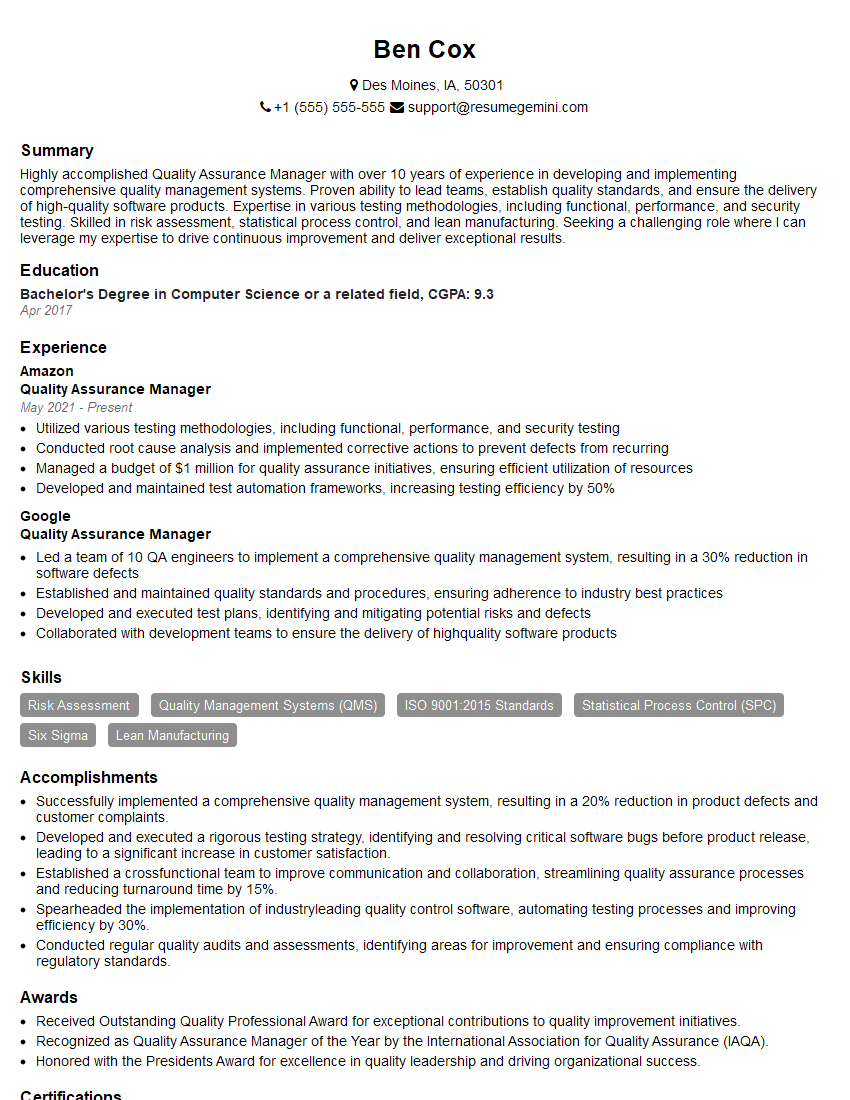
Quality Assurance Manager Resume Sample
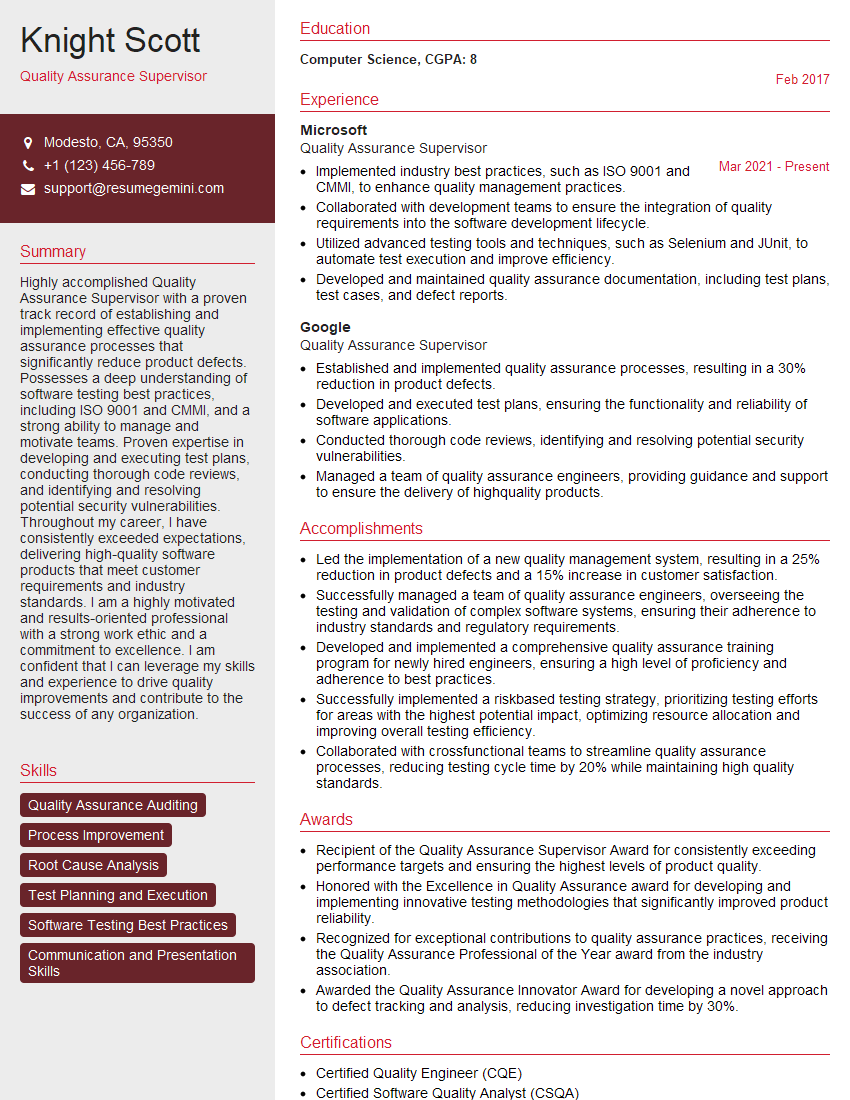
Quality Assurance Supervisor Resume Sample
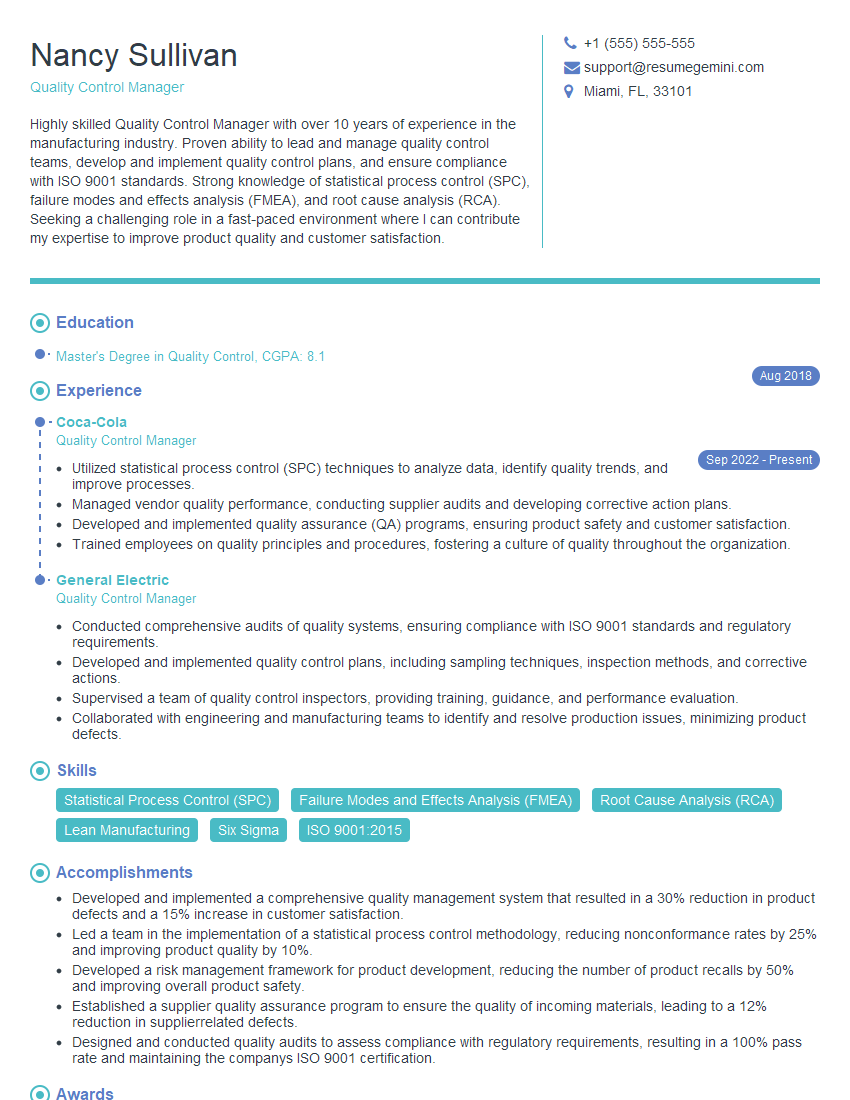
Quality Control Manager Resume Sample
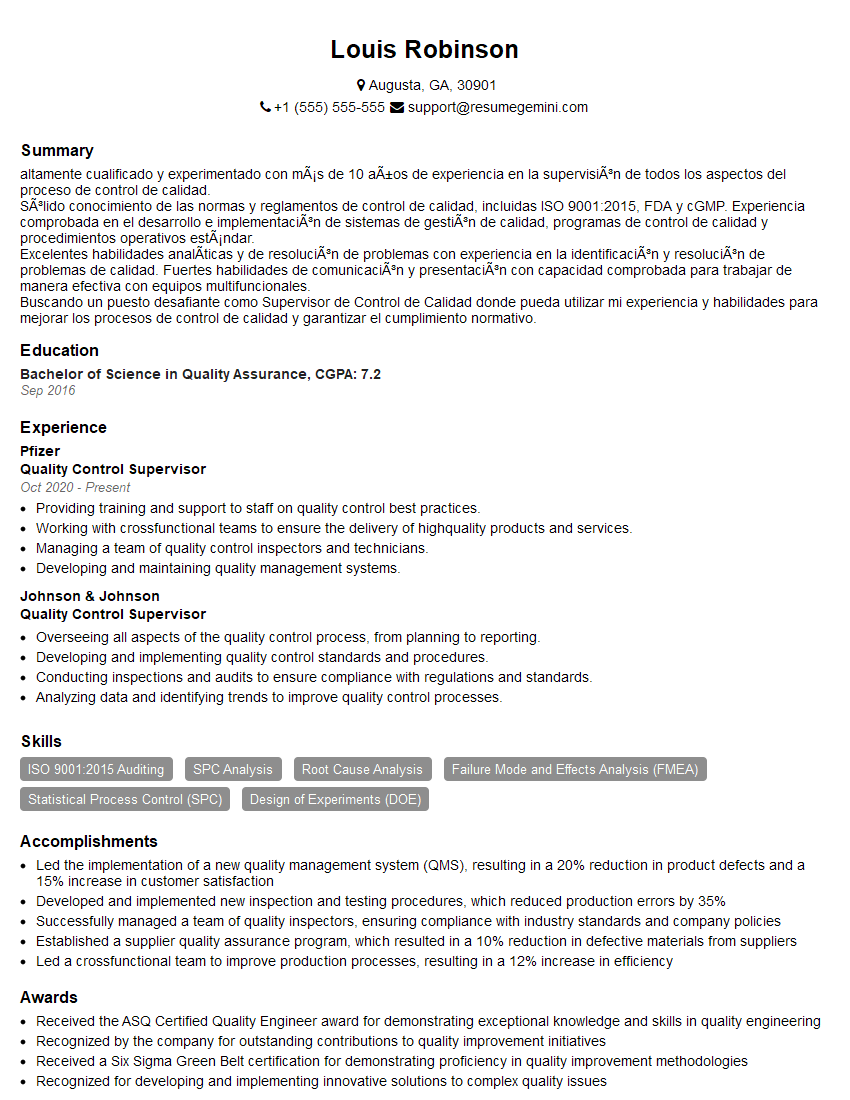
Quality Control Supervisor Resume Sample
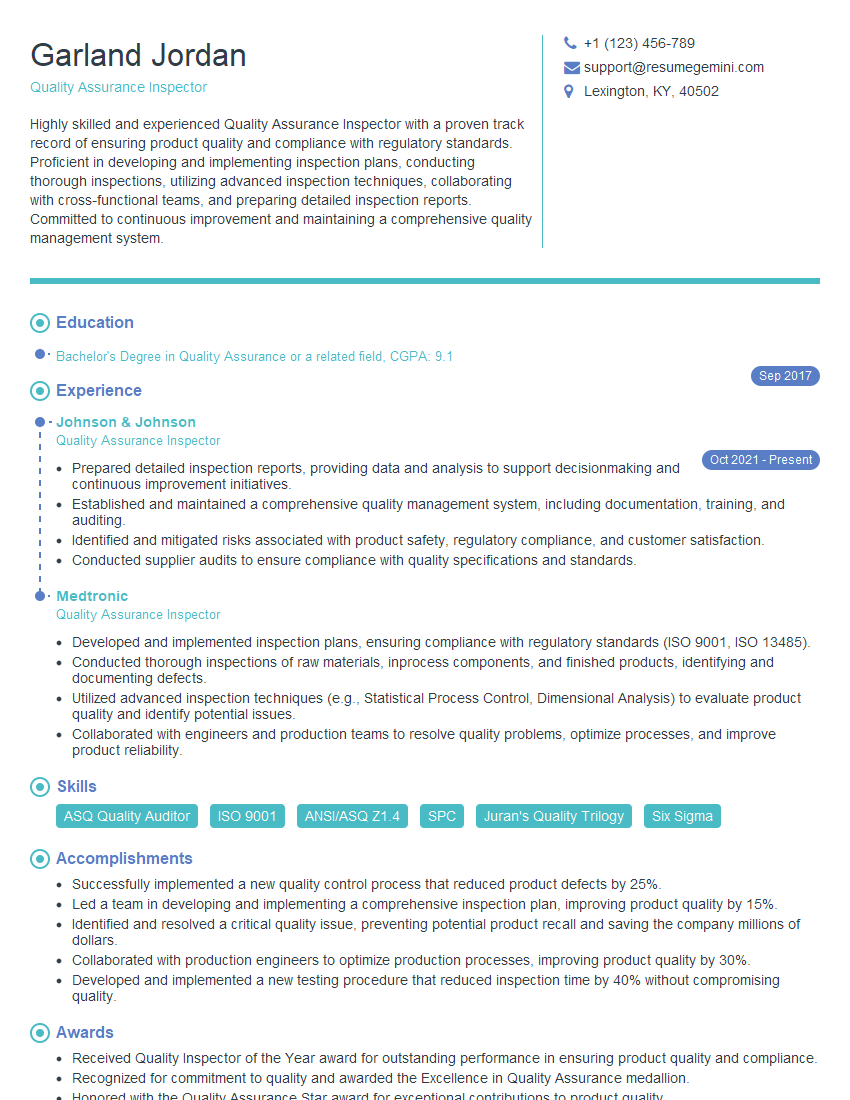
Quality Assurance Inspector Resume Sample
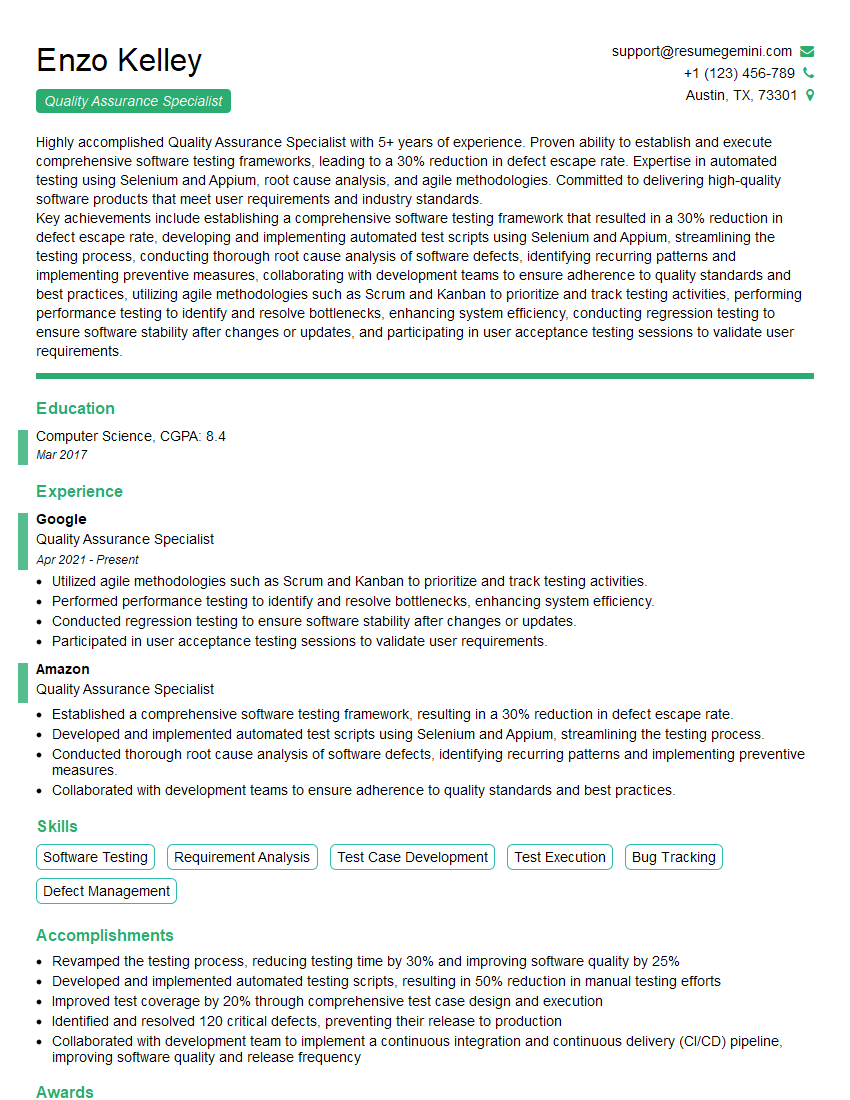
Quality Assurance Specialist Resume Sample
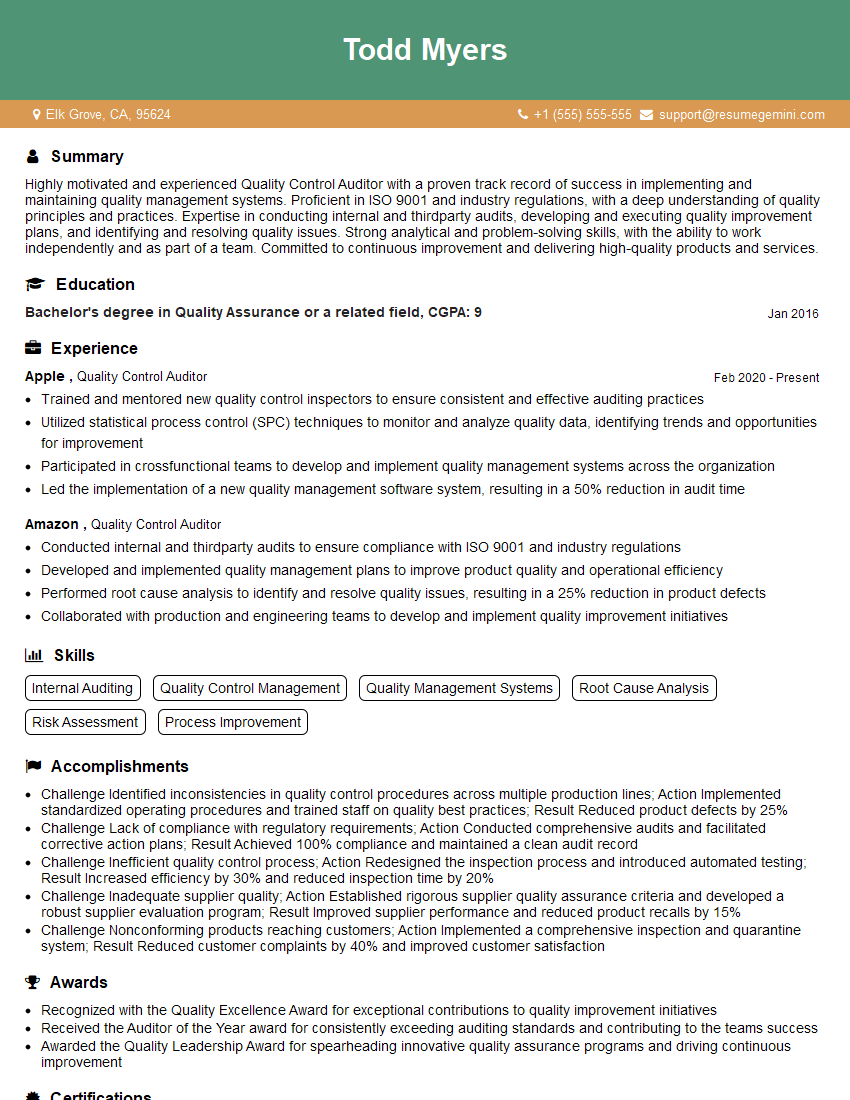
Quality Control Auditor Resume Sample

Quality Assurance Technician Resume Sample
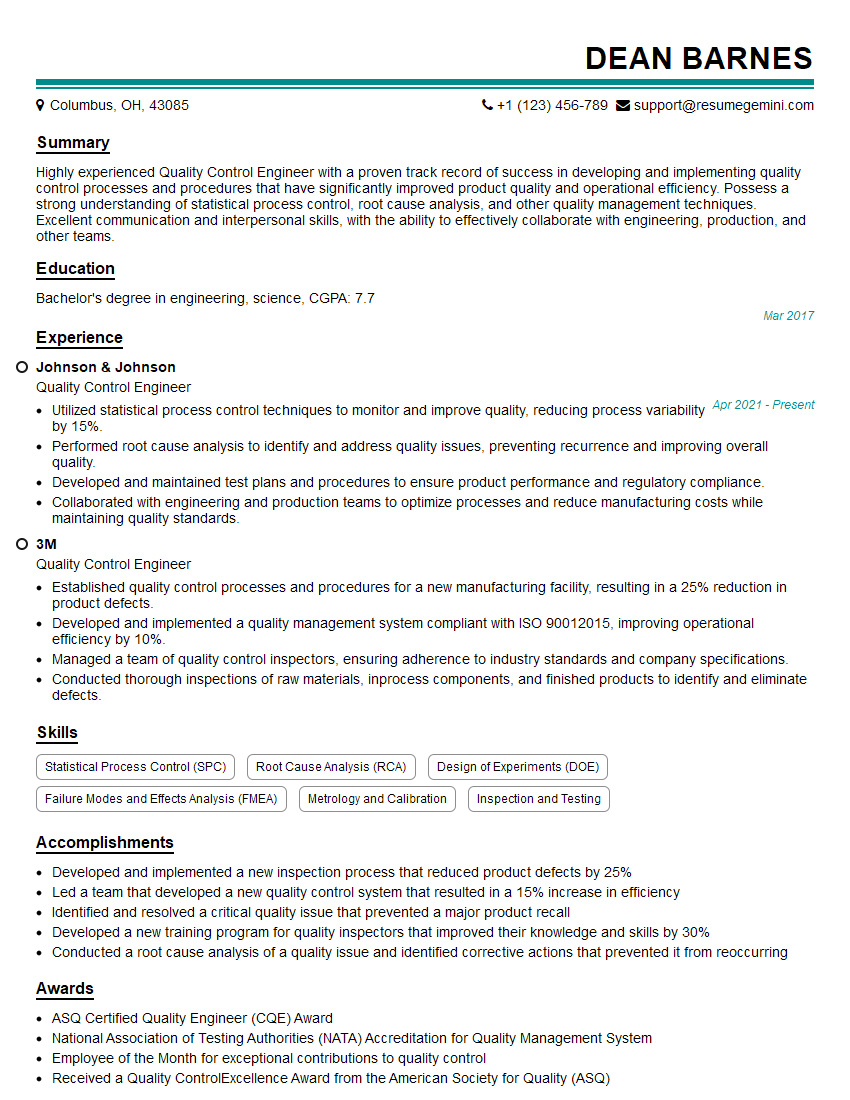
Quality Control Engineer Resume Sample
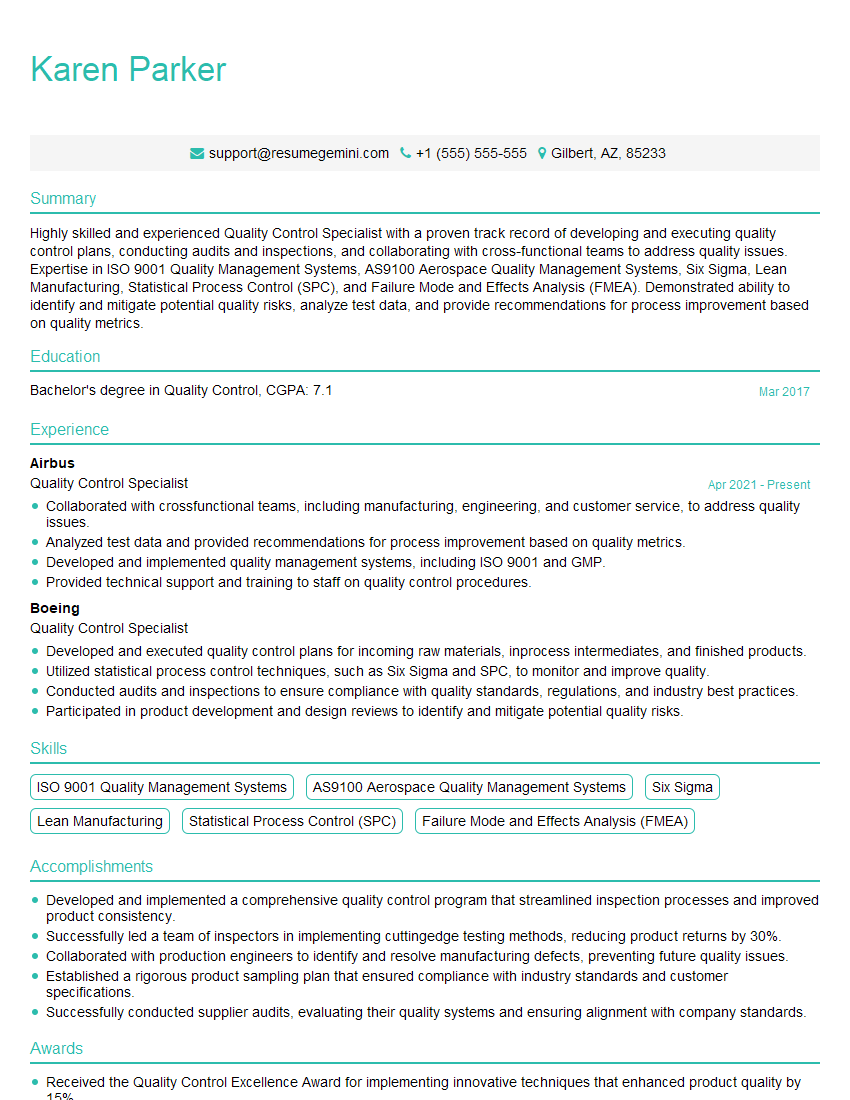
Quality Control Specialist Resume Sample
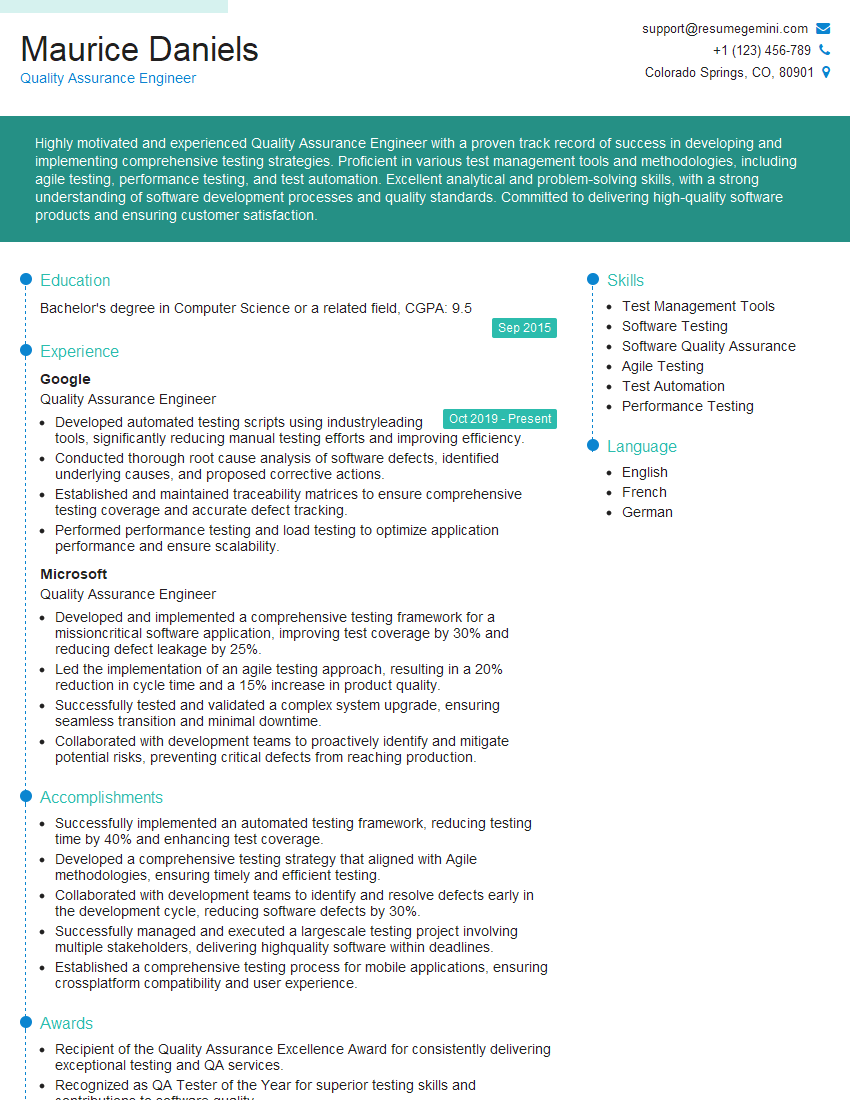
Quality Assurance Engineer Resume Sample
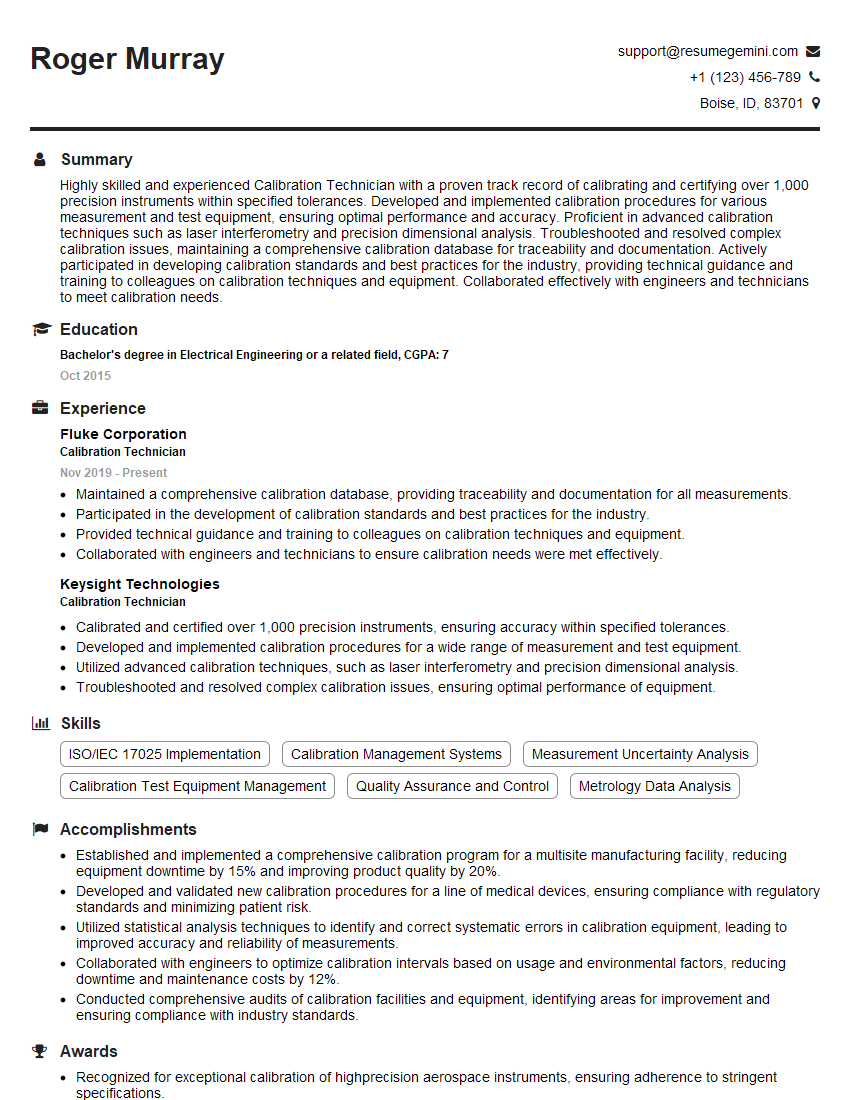
Calibration Technician Resume Sample
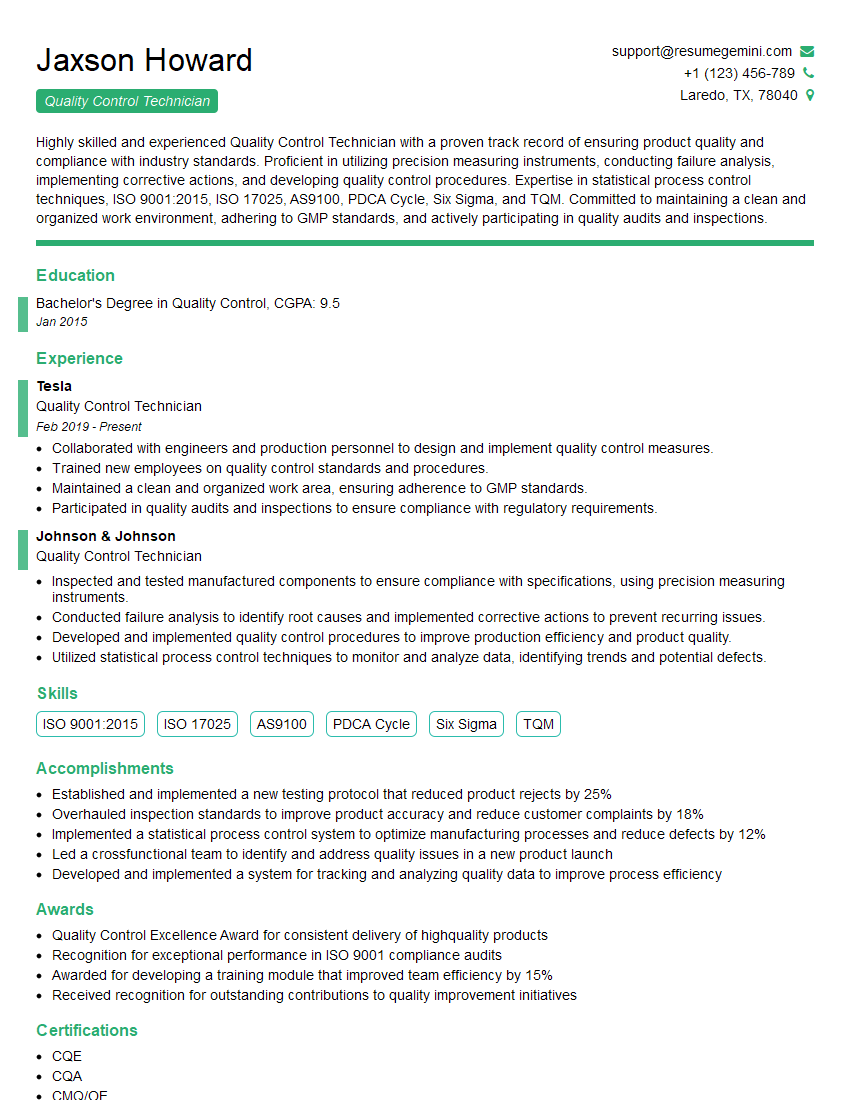
Quality Control Technician Resume Sample
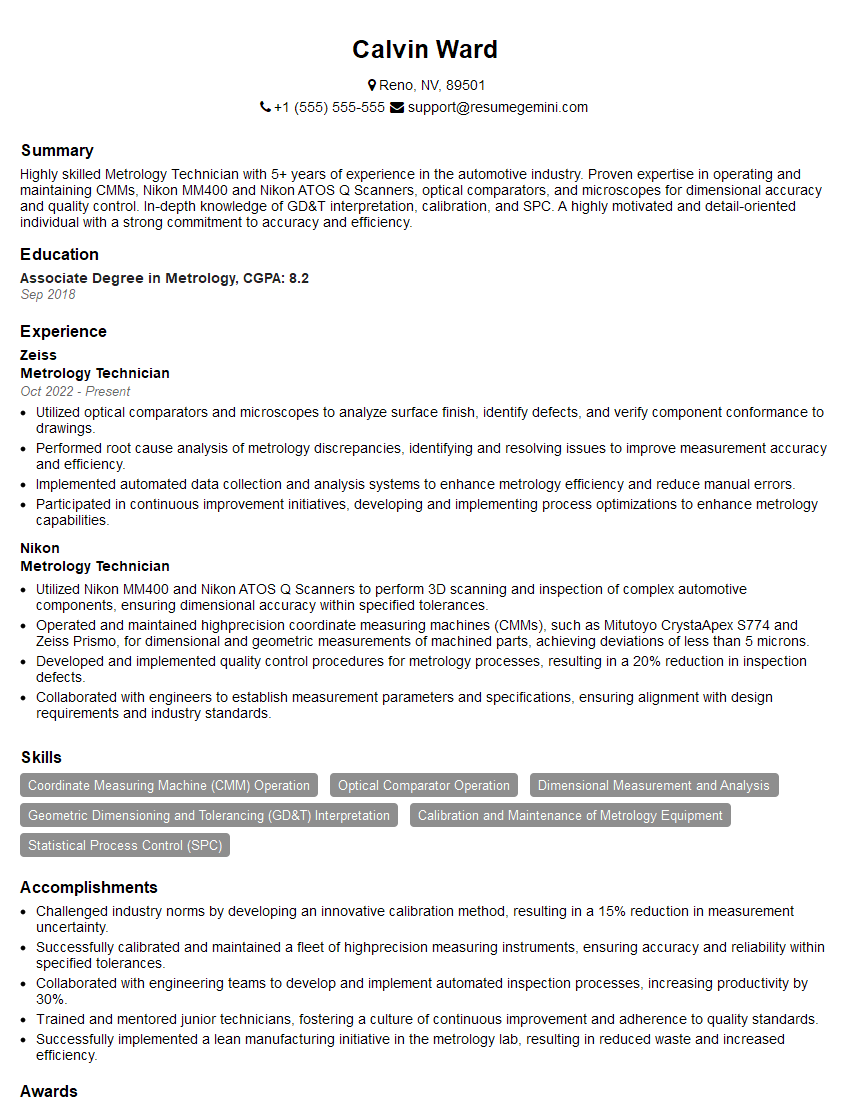
Metrology Technician Resume Sample
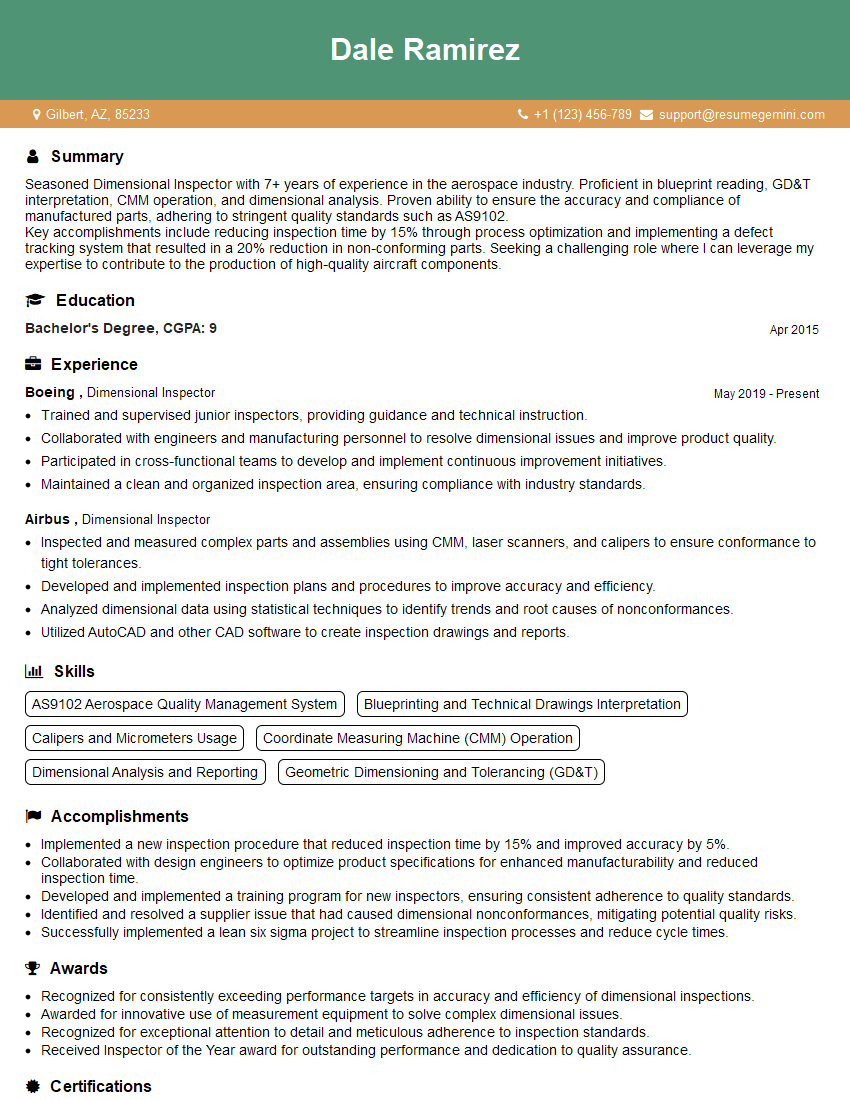
Dimensional Inspector Resume Sample
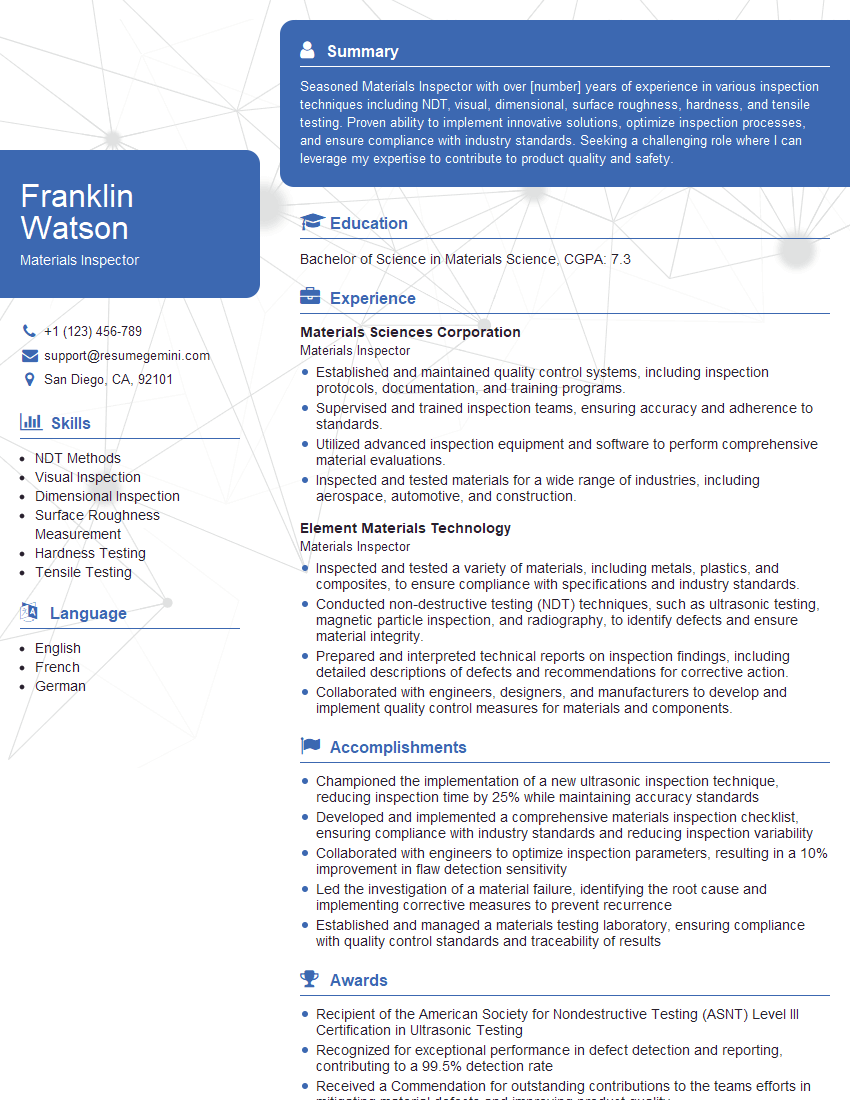
Materials Inspector Resume Sample
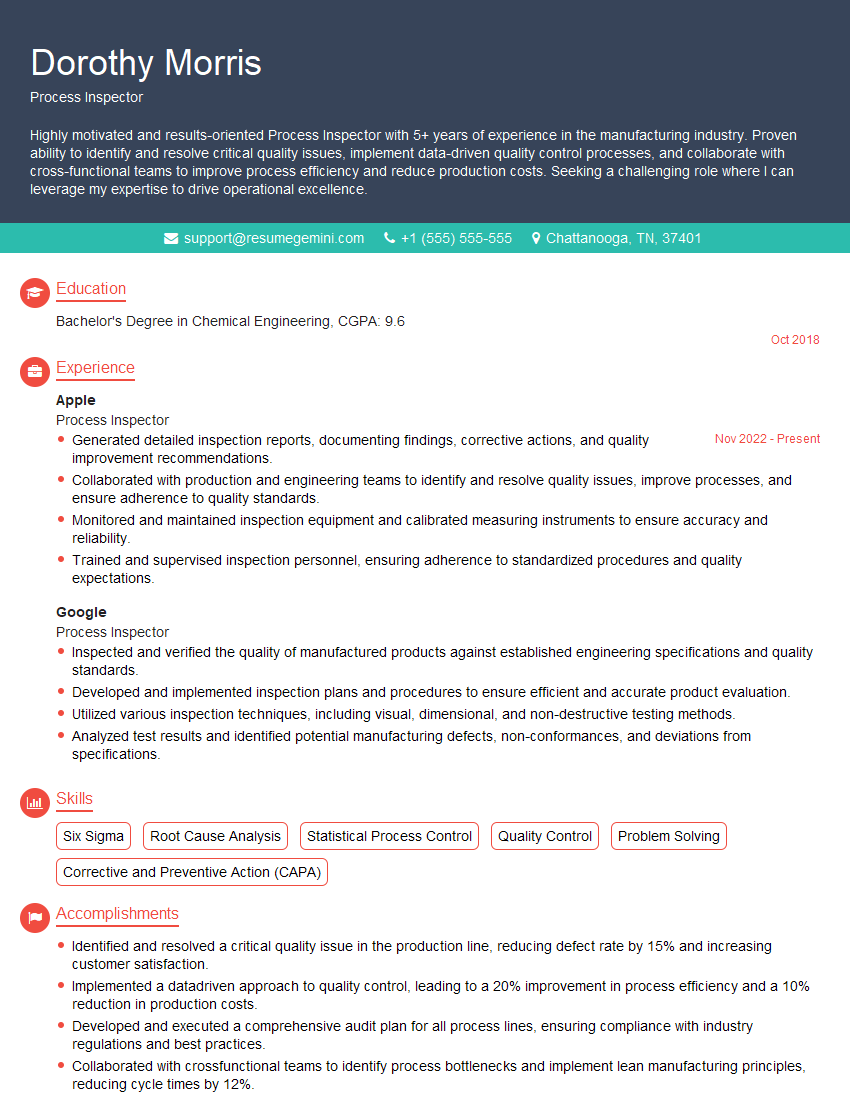
Process Inspector Resume Sample
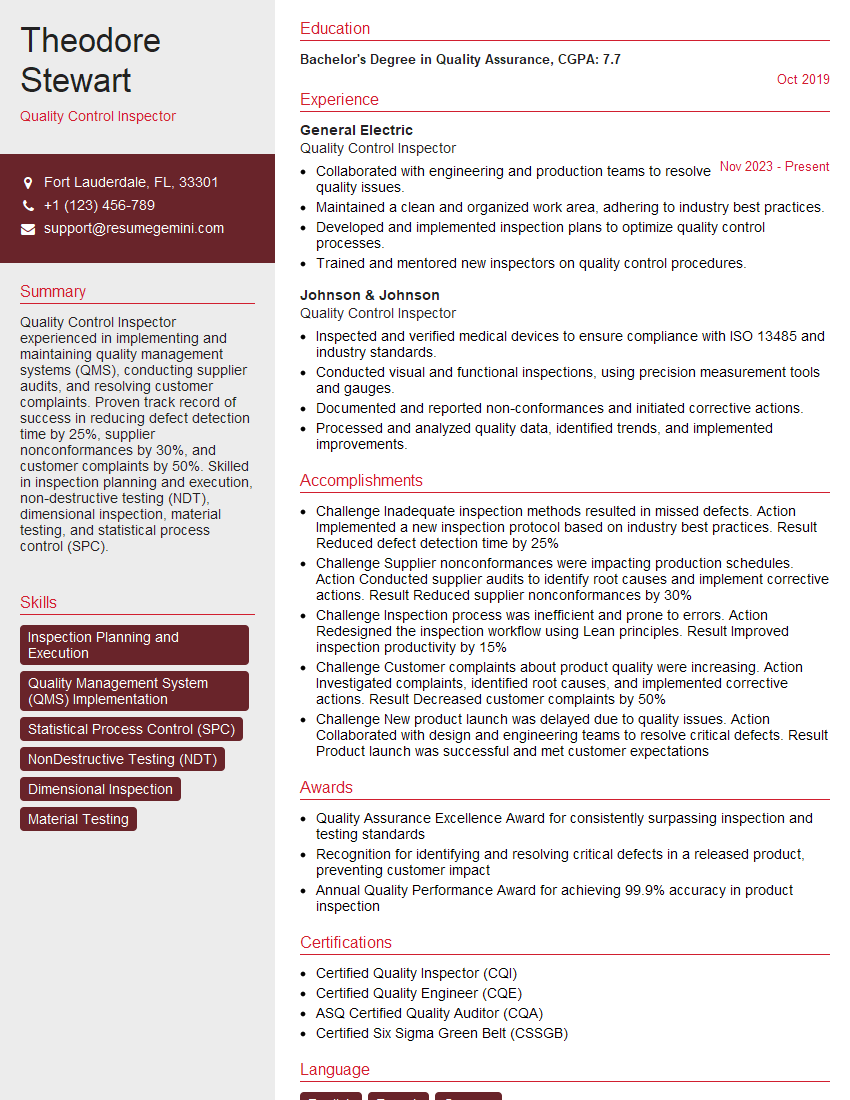
Quality Control Inspector Resume Sample
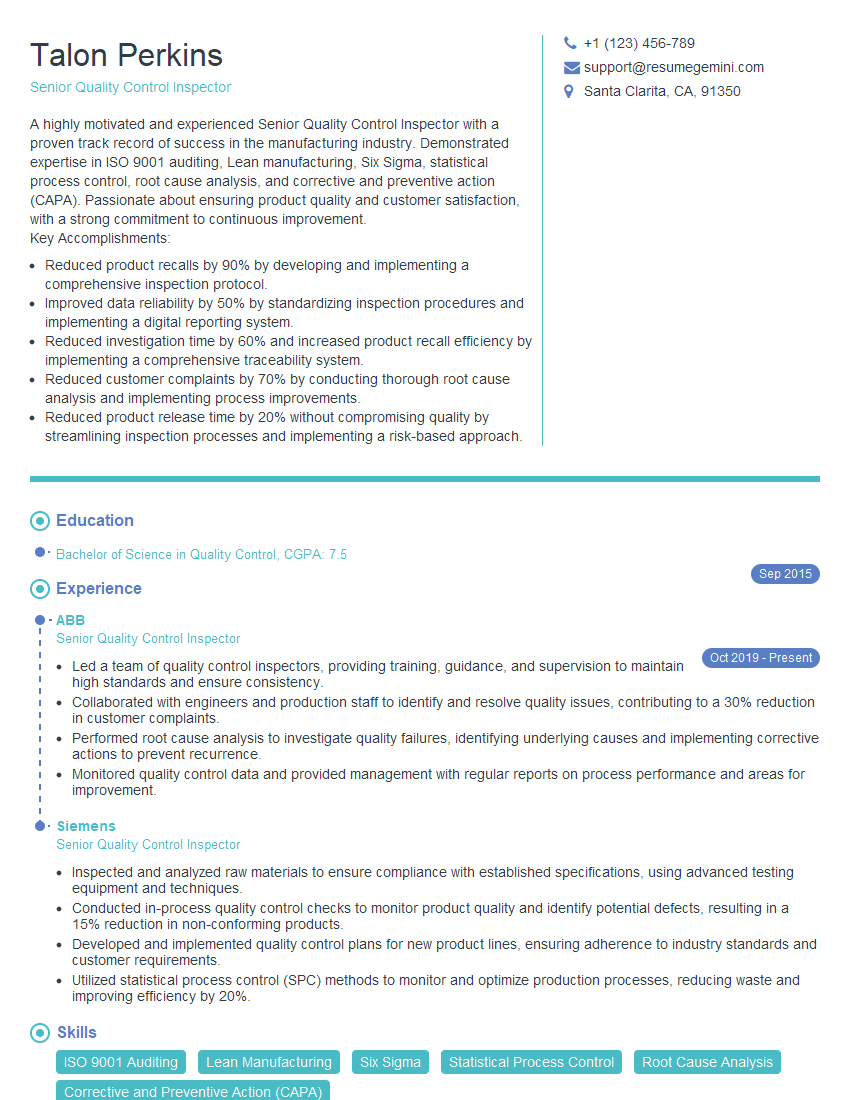
Senior Quality Control Inspector Resume Sample
- Quality Assurance Manager
- Quality Assurance Supervisor
- Quality Control Manager
- Quality Control Supervisor
- Quality Assurance Inspector
- Quality Assurance Specialist
- Quality Control Auditor
- Quality Assurance Technician
- Quality Control Engineer
- Quality Control Specialist
- Quality Assurance Engineer
- Calibration Technician
- Quality Control Technician
- Metrology Technician
- Dimensional Inspector
- Materials Inspector
- Process Inspector
- Quality Control Inspector
- Senior Quality Control Inspector
Explore more articles
Users Rating of Our Blogs
Share Your Experience
We value your feedback! Please rate our content and share your thoughts (optional).
What Readers Say About Our Blog
Really detailed insights and content, thank you for writing this detailed article.
IT gave me an insight and words to use and be able to think of examples