The thought of an interview can be nerve-wracking, but the right preparation can make all the difference. Explore this comprehensive guide to Laser Beam Shaping interview questions and gain the confidence you need to showcase your abilities and secure the role.
Questions Asked in Laser Beam Shaping Interview
Q 1. Explain the difference between Gaussian and uniform beam profiles.
The fundamental difference between Gaussian and uniform beam profiles lies in their intensity distribution across the beam cross-section. A Gaussian beam, the most common type produced by lasers, exhibits a bell-shaped intensity profile. Its intensity drops off smoothly and exponentially from the center to the edges. Think of it like a smooth hill. The intensity at the center is highest, and it gradually decreases as you move outwards.
In contrast, a uniform beam profile possesses a flat-top intensity distribution. Ideally, the intensity remains constant across the entire beam cross-section. Imagine a perfectly flat plateau. This uniformity is crucial for applications requiring even energy distribution, like laser material processing where consistent ablation is required. Achieving a truly uniform profile is challenging, and slight variations usually exist in practice.
Q 2. Describe different techniques for laser beam shaping (e.g., diffractive optics, refractive optics, spatial light modulators).
Several techniques exist for laser beam shaping, each with its own strengths and limitations. Here are three prominent methods:
- Diffractive Optics: Diffractive optical elements (DOEs) use a micro-structured surface to diffract the incident laser beam, altering its phase and consequently its intensity profile. DOEs are often fabricated using lithographic techniques and can achieve complex beam shaping functionalities, including generating uniform, top-hat, or other custom profiles. They are compact and cost-effective for mass production.
- Refractive Optics: Refractive optics, like lenses, prisms, and cylindrical lenses, manipulate the beam profile by bending the light rays through different refractive indices. Refractive lenses are commonly used to focus or collimate beams, and combinations of lenses can generate more complex beam shapes, though usually less versatile than DOEs. They are known for their high efficiency but can be bulky and expensive for complex shapes.
- Spatial Light Modulators (SLMs): SLMs are dynamic devices that can change the phase or amplitude of the incident laser beam in real-time. They typically consist of an array of pixels that can be individually controlled, enabling rapid and flexible beam shaping. SLMs offer exceptional versatility for adaptive optics and dynamic beam shaping applications. They are typically more expensive than DOEs or refractive optics, and their resolution and efficiency can limit the quality of beam shaping.
Q 3. What are the advantages and disadvantages of using diffractive optical elements for beam shaping?
Diffractive optical elements (DOEs) offer several advantages but also have some drawbacks:
- Advantages: Compact size, lightweight design, ability to generate complex beam shapes (e.g., flat-top, Bessel, and Gaussian to top-hat), cost-effective for mass production, potential for high diffraction efficiency.
- Disadvantages: Sensitivity to wavelength and incident angle (monochromatic light often preferred), lower efficiency compared to refractive optics for some designs, potential for multiple diffraction orders (requiring careful design to suppress unwanted orders), diffraction efficiency is dependent on the manufacturing quality of the DOE.
For example, a DOE designed for a specific wavelength may not perform optimally at a slightly different wavelength. Careful consideration of these factors is essential for successful DOE implementation.
Q 4. How do you characterize a laser beam’s profile (e.g., beam quality, M² factor)?
Characterizing a laser beam’s profile involves measuring several parameters. Beam quality is a comprehensive metric indicating how closely the beam resembles an ideal Gaussian beam. It’s often expressed by the M² factor (beam propagation factor). An M² value of 1 represents a perfect Gaussian beam; values greater than 1 signify deviations from an ideal Gaussian profile due to factors like aberrations or higher-order modes. The larger the M² value, the poorer the beam quality.
To measure these parameters, instruments like beam profilers are used. These devices capture a cross-sectional image of the laser beam’s intensity and measure the beam diameter at various points. By analyzing this data, the M² factor, beam divergence, and other beam parameters can be calculated. Techniques like the knife-edge method and CCD camera measurements are common.
Q 5. Explain the concept of beam homogenization and its applications.
Beam homogenization aims to create a uniform intensity distribution across the beam’s cross-section from an initially non-uniform beam (like a Gaussian). It’s achieved using various techniques, including microlenses, DOEs, and SLMs. The goal is to transform the typically Gaussian output of a laser into a flat-top beam with consistent intensity.
Applications of beam homogenization are extensive, notably in:
- Laser material processing: Ensuring even ablation across the workpiece, improving process repeatability and quality.
- Laser micromachining: Achieving uniform etching or cutting of delicate materials, minimizing edge effects and improving precision.
- Medical applications: Providing even illumination for tissue treatment or imaging.
- Optical metrology: Creating uniform illumination for precise measurements.
Q 6. Describe how you would design a beam shaping system for a specific application (e.g., laser material processing, laser micromachining).
Designing a beam shaping system for laser micromachining, for instance, involves a systematic approach. Let’s assume we need a 100 µm diameter, uniform intensity spot for delicate material removal.
- Define Specifications: Clearly specify the desired beam shape (uniform), size (100 µm diameter), and power uniformity (e.g., <5% variation).
- Select Shaping Technique: Considering the requirements, a DOE or an array of microlenses would be suitable candidates. A DOE offers compactness and potentially higher efficiency, while microlenses provide a robust and simple solution.
- Design and Simulation: Use optical design software to model the system, considering factors like the laser’s wavelength, beam quality, and the chosen optical element’s specifications. Simulate the resulting beam profile to verify it meets the specified criteria.
- Component Selection: Choose appropriate lenses, beam expanders, and other components to achieve the necessary beam size and focusing. Careful consideration of the optical element’s materials and tolerances is essential.
- System Integration and Testing: Assemble the system and conduct rigorous testing to verify that the beam profile, size, and uniformity meet the initial specifications. Iterative adjustments might be necessary during this phase.
Q 7. What are the key considerations for selecting appropriate beam shaping optics?
Selecting appropriate beam shaping optics depends on several key factors:
- Desired Beam Profile: The target shape (e.g., Gaussian, uniform, Bessel) dictates the type of optics needed (DOEs, refractive lenses, or a combination).
- Laser Wavelength: Diffractive elements are highly wavelength-sensitive. Refractive optics are less sensitive but still exhibit some wavelength dependence.
- Beam Quality: High beam quality lasers result in better shaped output beams compared to lower quality lasers, so the input beam quality impacts the effectiveness of the shaping process.
- Power Handling Capacity: The optics must be able to withstand the power of the laser without damage. This can limit the choice of materials and coatings.
- Cost and Size Constraints: DOEs offer cost advantages for mass production, but refractive systems can be more robust and easier to align for some applications. The overall system size and packaging requirements need consideration.
- Dynamic Requirements: If real-time beam shaping is needed, SLMs offer unmatched versatility. For static beam shaping, DOEs or refractive optics provide stable, efficient, and often more cost-effective solutions.
A thorough analysis of these factors ensures selection of the optimal beam shaping optics for a particular application.
Q 8. How do you account for aberrations in a beam shaping system?
Aberrations in a beam shaping system, like distortions in a funhouse mirror, degrade the quality of the shaped beam. They arise from imperfections in optical components (lenses, mirrors, etc.) and can lead to uneven intensity distributions or changes in the beam’s shape. Accounting for them involves a multi-pronged approach.
Careful Component Selection: Using high-quality optical components with low aberration coefficients is crucial. This often involves specifying tight tolerances for surface figure and material homogeneity.
Aberration Measurement and Characterization: Techniques like interferometry precisely measure the wavefront aberrations. This data provides a quantitative understanding of the distortions.
Adaptive Optics: For demanding applications, adaptive optics systems dynamically adjust the wavefront to compensate for aberrations in real-time. Deformable mirrors, controlled by a wavefront sensor, actively reshape the beam to correct for distortions.
Design Optimization: Software tools simulate the optical path and predict the impact of aberrations. This allows for iterative design refinement to minimize their effect. This often involves optimizing the placement and design of optical elements.
Aberration Correction Optics: Specific optical elements, such as aspheric lenses or diffractive optical elements (DOEs), can be designed to counteract known aberrations.
For instance, in laser material processing, aberrations can lead to uneven heating and inconsistent results. By carefully controlling and mitigating aberrations, we achieve precise and repeatable processing.
Q 9. Explain the role of polarization in laser beam shaping.
Polarization plays a vital, often overlooked, role in laser beam shaping. Think of polarization as the orientation of the light wave’s oscillation. It’s not just about the intensity profile but also the direction of the electric field vector.
Polarization-Dependent Beam Splitters and Combiners: These components route or combine beams based on their polarization state. This allows for the creation of complex beam profiles by combining multiple beams with different polarizations.
Polarization Control for Anisotropic Materials: When shaping beams interacting with anisotropic materials (materials with different optical properties along different axes), polarization management is crucial. The interaction of the polarized beam with the material is highly dependent on the polarization state.
Polarization Maintaining Fibers: For applications involving fiber delivery, maintaining a specific polarization state is critical to ensure that the beam maintains its shape and quality through the fiber. Special fibers are designed to minimize polarization mode dispersion.
Polarization-Sensitive Beam Shaping Devices: Some beam shaping components, like certain liquid crystal devices (LCDs), are polarization-sensitive. Their operation is intrinsically tied to the input polarization state. Therefore, careful control and management of the polarization are essential.
For example, in microscopy, controlling polarization is essential for techniques like polarization microscopy and reducing glare and unwanted reflections.
Q 10. Describe different types of laser beam scanners and their applications.
Laser beam scanners are the heart of many laser processing and imaging systems, precisely directing the laser beam across a target area. Different types cater to specific needs.
Galvanometer Scanners: These use rotating mirrors to deflect the beam, offering high speed and precision. They’re commonly found in laser marking, engraving, and micromachining systems.
Resonant Scanners: These employ oscillating mirrors driven at a resonant frequency, ideal for high-speed applications like laser printing and barcode scanning. They offer exceptional speed but typically have a limited scan range.
Polygon Scanners: These use a rotating multifaceted mirror to create a rapid, line-by-line scan. Their applications include laser displays and high-speed laser printing. They provide very high speeds but may have limitations on scan linearity.
Acousto-optic Deflectors (AODs): These use acoustic waves to diffract and deflect the beam, offering high speed, precise control, and broad bandwidth. AODs are frequently used in optical trapping and laser spectroscopy.
The choice depends on speed requirements, scan area, precision needs, and cost considerations. For instance, a galvanometer scanner might be best for detailed laser engraving, while a resonant scanner is better for fast laser printing.
Q 11. How do you ensure the safety of personnel working with high-power laser beam shaping systems?
Safety is paramount when working with high-power laser beam shaping systems. It requires a layered approach.
Enclosure and Interlocks: The system should be enclosed to prevent accidental exposure. Interlocks ensure the laser is off unless the enclosure is properly secured.
Laser Safety Signage: Clearly marked warnings and hazard labels must be visible to all personnel.
Personal Protective Equipment (PPE): Appropriate laser safety eyewear is crucial, matched to the laser’s wavelength and power. Other PPE may include laser-resistant gloves and clothing.
Beam Path Management: The beam path should be clearly defined and protected to prevent stray reflections or scattering.
Emergency Shutdown Procedures: Clearly defined procedures for immediate laser shutdown must be readily accessible to all operators.
Regular Safety Inspections and Maintenance: Periodic checks are critical to ensure that safety systems are functioning correctly.
Laser Safety Training: All personnel must receive adequate training on laser safety procedures and the risks associated with high-power lasers.
Imagine a scenario where a beam shaping system malfunctions. The layered safety approach ensures that the risk of accidental exposure is minimized.
Q 12. What are the limitations of different beam shaping techniques?
Various beam shaping techniques, while powerful, have limitations.
Diffractive Optical Elements (DOEs): These are highly efficient for creating complex beam shapes, but they can be sensitive to wavelength changes and may suffer from diffraction efficiency limitations at certain wavelengths.
Refractive Lenses: These are relatively simple and robust but struggle to produce highly complex beam shapes. Aberrations can also significantly impact their performance.
Micro-Optics: These offer highly customized beam shaping but can be challenging to fabricate and are often more expensive.
Spatial Light Modulators (SLMs): They are highly versatile and allow for dynamic beam shaping but may suffer from lower efficiency and slower response times compared to some other techniques.
Freeform Optics: Freeform optics can produce very complex shapes, but their manufacturing and testing can be exceptionally difficult and expensive.
For example, a DOE might be ideal for generating a uniform flat-top beam, but it might be less effective in creating a rapidly varying complex profile. Choosing the right technique requires careful consideration of the application’s requirements and limitations.
Q 13. Explain the concept of beam steering and its applications.
Beam steering involves precisely directing the direction of a laser beam without changing its shape or intensity profile. It’s like aiming a flashlight, but with much finer control.
Applications: Beam steering is critical in many fields, including laser scanning microscopy, laser surgery, laser communication, and laser pointing systems.
Methods: Various methods achieve beam steering, including:
Rotating Mirrors/Galvanometers: These deflect the beam mechanically by changing the mirror’s angle.
Acousto-Optic Deflectors (AODs): These use sound waves to change the refractive index of a material, deflecting the beam.
Electro-Optic Deflectors (EODs): These use an applied electric field to change the refractive index of a crystal, thus steering the beam.
For example, in laser surgery, precise beam steering is essential to target specific tissues without damaging surrounding areas. In laser scanning microscopy, it allows for the systematic scanning of a sample to build a high-resolution image.
Q 14. How do you compensate for thermal effects in high-power laser beam shaping systems?
High-power laser beam shaping systems generate significant heat, causing thermal lensing and other undesirable effects that distort the beam. Compensation strategies are essential.
Active Cooling: Effective cooling systems, such as water cooling or thermoelectric coolers, are critical to maintain the optical components at a stable temperature.
Thermal Modeling and Simulation: Computational tools can predict temperature distributions within the system, helping optimize the design for minimal thermal effects.
Material Selection: Choosing optical materials with low thermal expansion coefficients minimizes distortion due to temperature changes.
Adaptive Optics: As mentioned earlier, adaptive optics systems can dynamically correct for distortions caused by thermal lensing. This involves sensing the thermally-induced aberrations and then adjusting the wavefront to compensate.
Thermal Compensation Optics: Special optical elements can be designed to counteract the effects of thermal lensing.
For instance, in high-power laser cutting, thermal lensing can blur the focal spot and reduce the cutting precision. Employing thermal compensation methods is crucial for maintaining the quality and accuracy of the cutting process. Without it, the laser’s cutting performance degrades considerably.
Q 15. What are the common challenges in designing and implementing beam shaping systems?
Designing and implementing beam shaping systems presents several significant challenges. One major hurdle is achieving the desired beam profile with high fidelity. This involves careful selection and precise control of optical components, such as lenses, diffractive optical elements (DOEs), and spatial light modulators (SLMs), to manipulate the wavefront of the laser beam. The complexity increases exponentially as the desired profile becomes more intricate. For instance, creating a uniform, flat-top beam from a Gaussian beam requires intricate calculations and precise alignment.
Another challenge lies in managing aberrations. Imperfections in the optical components, misalignments, and environmental factors (e.g., temperature fluctuations, vibrations) can introduce aberrations, distorting the shaped beam and degrading its performance. Minimizing these aberrations often necessitates the use of high-quality optics and robust mounting systems.
Furthermore, the efficiency of beam shaping systems is crucial. Energy losses due to scattering, absorption, or reflection within the optical components can significantly reduce the power of the shaped beam. This is particularly critical in high-power applications. Careful component selection and optimized design are vital to maximize efficiency.
Finally, cost and scalability are important considerations. High-precision optical components and complex systems can be expensive. Balancing performance requirements with budget constraints is a constant challenge. Furthermore, scaling up a beam shaping system for high-throughput industrial applications requires careful attention to system stability and reliability.
Career Expert Tips:
- Ace those interviews! Prepare effectively by reviewing the Top 50 Most Common Interview Questions on ResumeGemini.
- Navigate your job search with confidence! Explore a wide range of Career Tips on ResumeGemini. Learn about common challenges and recommendations to overcome them.
- Craft the perfect resume! Master the Art of Resume Writing with ResumeGemini’s guide. Showcase your unique qualifications and achievements effectively.
- Don’t miss out on holiday savings! Build your dream resume with ResumeGemini’s ATS optimized templates.
Q 16. Discuss your experience with different beam profiling techniques.
My experience with beam profiling techniques is extensive, encompassing both direct and indirect methods. I’ve extensively used beam profilers based on CCD (Charge-Coupled Device) cameras for direct measurement of the beam’s intensity distribution. This method provides high-resolution spatial data, allowing for accurate characterization of beam parameters like beam diameter, M2 factor (beam quality), and profile uniformity. I’ve worked with various CCD cameras, differing in pixel size and sensitivity, tailoring the selection to the specific laser wavelength and power levels.
I’ve also employed indirect methods such as the knife-edge technique and scanning slit methods. These are useful, particularly when dealing with high-power lasers where direct measurement using CCD cameras might damage the sensor. The knife-edge method involves slowly scanning a razor blade across the beam and measuring the transmitted power; the resulting data is then used to reconstruct the beam profile. This method is simple and cost-effective, but can be less accurate than direct measurement methods.
Beyond the hardware, my expertise includes data analysis and interpretation. I’m proficient in using software packages to process the raw data from beam profilers, extracting relevant beam parameters, and generating comprehensive reports. This ensures accurate assessment of the beam quality and enables informed adjustments to the beam shaping system.
Q 17. Describe your experience with different types of laser sources used in beam shaping applications.
My experience spans a wide range of laser sources used in beam shaping applications. I’ve worked extensively with diode lasers, fiber lasers, and solid-state lasers such as Nd:YAG and Yb:YAG. Each source presents unique characteristics that affect beam shaping strategies. Diode lasers, for example, often have elliptical or asymmetrical beam profiles, necessitating more complex shaping techniques to achieve the desired output. Fiber lasers, known for their excellent beam quality and high power, are ideal for many applications, but require careful consideration of polarization and mode control for optimal beam shaping.
Solid-state lasers, such as Nd:YAG and Yb:YAG, provide high power and good beam quality, but are typically more expensive and require more complex cooling systems. Understanding the specific attributes of each laser source—wavelength, coherence length, power, beam quality (M2)—is crucial for selecting appropriate beam shaping components and designing effective systems. For example, the choice between a refractive or diffractive element often depends on the laser’s wavelength and coherence length.
In one project, we successfully used a spatial light modulator to shape the output of a high-power fiber laser for laser material processing, achieving a precisely controlled rectangular beam profile that significantly improved the quality and efficiency of the machining process. Choosing the appropriate laser source based on factors such as power requirements, material properties, and processing speed was crucial for success.
Q 18. How do you evaluate the performance of a beam shaping system?
Evaluating the performance of a beam shaping system involves a multi-faceted approach, encompassing both quantitative and qualitative assessments. Quantitatively, we measure key parameters such as:
- Beam profile uniformity: How consistently the intensity is distributed across the target area. This is often expressed as a uniformity ratio or deviation from the ideal profile.
- Beam shape accuracy: How closely the actual beam profile matches the desired profile. This is often assessed by comparing the measured profile to the design specifications.
- Beam quality (M2): A measure of the beam’s divergence relative to an ideal Gaussian beam. A lower M2 indicates higher quality.
- Power efficiency: The ratio of the output power of the shaped beam to the input power of the laser source. Losses due to reflection, absorption, and scattering are taken into account.
Qualitatively, we assess aspects like system stability (resistance to environmental factors), ease of use and maintainability, and cost-effectiveness. For example, in a micro-machining application, a high degree of uniformity is essential to ensure consistent processing results. In a laser display application, accurate beam shape and high power efficiency are paramount. The specific metrics prioritized will be tailored to the unique requirements of the application.
Q 19. What software tools are you familiar with for designing and simulating beam shaping systems (e.g., Zemax, Code V)?
I’m proficient in several software tools used for designing and simulating beam shaping systems. My primary tools include Zemax and LightTools. Zemax, a powerful optical design software, allows for precise modeling and optimization of complex optical systems, including the design of custom diffractive optical elements and the analysis of aberrations. I use Zemax to simulate the propagation of laser beams through various optical components, predicting the final beam profile and identifying potential design flaws.
LightTools offers similar capabilities, specifically excelling in the simulation of complex lighting systems and non-sequential ray tracing, which is particularly useful when dealing with scattering or complex beam shaping elements. I often use it in conjunction with Zemax, leveraging the strengths of both software packages for comprehensive design and analysis.
Beyond commercial software, I possess experience using MATLAB for custom beam propagation simulations and data analysis. This allows for a higher degree of customization and flexibility, particularly when dealing with non-standard beam profiles or complex algorithms.
In a recent project involving the design of a custom DOE for creating a Bessel beam, I utilized Zemax to optimize the DOE parameters for minimal aberrations and high diffraction efficiency. The resulting simulation provided invaluable insights, leading to a more efficient and robust system design.
Q 20. Describe your experience with laser safety regulations and standards.
Laser safety is paramount in my work, and I have extensive experience adhering to relevant regulations and standards, including ANSI Z136.1 (American National Standards Institute) and IEC 60825 (International Electrotechnical Commission). These standards provide comprehensive guidelines for laser safety, covering aspects such as classification of lasers based on their potential hazards, safe operating procedures, and required safety controls.
My understanding encompasses the proper use of laser safety eyewear, the implementation of appropriate laser safety enclosures and interlocks, and the importance of comprehensive risk assessments. I’m well-versed in hazard classifications, understanding the implications of working with different laser classes and the necessary precautions for each. For example, Class 4 lasers, which are the most hazardous, require stringent safety protocols, including dedicated laser laboratories with strict access control and specialized safety equipment.
In all projects, safety is integrated into the design process from the outset. Safety considerations are incorporated in all aspects, from the selection of appropriate optical components to the development of operating procedures, and I ensure all personnel involved are adequately trained on the safe operation and maintenance of laser systems.
Q 21. How do you troubleshoot issues related to laser beam quality and alignment?
Troubleshooting issues related to laser beam quality and alignment is a regular part of my work. My approach is systematic and methodical, using a combination of observation, measurement, and analysis. I start by visually inspecting the entire system for any obvious issues, such as misalignments, loose components, or damage to optical elements. This often involves careful examination using appropriate optical tools, like a beam profiler, power meter, and alignment tools.
Next, I perform quantitative measurements using beam profiling techniques to precisely characterize the beam quality, identify aberrations, and quantify deviations from the expected profile. This provides a clearer picture of the problem’s nature. For instance, a significantly degraded M2 factor might indicate an issue with the laser source or a problem with beam quality degradation within the optical path.
If aberrations are detected, I systematically investigate potential sources, such as misalignment of optical components, imperfections in the optics, or thermal effects. I systematically adjust components one by one, meticulously measuring the effects of each adjustment on beam quality using the beam profiler. Once a potential culprit is identified, I take corrective actions such as re-aligning the optics, replacing damaged components, or implementing thermal stabilization measures. A detailed log of the troubleshooting process is crucial for efficient problem solving and knowledge retention.
For example, if I observe astigmatism in the beam profile, this can indicate a tilt or deformation of a lens element within the beam shaping system. Careful realignment of the element or substitution of the element with a corrected component can address the problem. Thorough documentation helps avoid repeating the same mistakes in future projects.
Q 22. Explain the concept of beam cleanup and its applications.
Beam cleanup, in the context of laser beam shaping, refers to the process of improving the spatial quality of a laser beam by removing or minimizing undesirable features like higher-order modes, aberrations, or intensity noise. Think of it like polishing a diamond – you’re refining the raw material to enhance its overall brilliance and utility.
Imagine a laser beam with a speckled, uneven intensity profile. This is indicative of higher-order transverse modes, which degrade its focusing capabilities and overall performance. Beam cleanup aims to transform this irregular beam into a cleaner, smoother, and more uniform Gaussian profile (the ideal beam shape).
- Applications: Beam cleanup is crucial in numerous applications requiring high-quality beams, such as:
- Micromachining: Achieving precise material removal requires a highly focused, uniform beam.
- Laser surgery: Minimizing collateral damage demands accurate energy delivery. A clean beam ensures the energy is precisely concentrated in the target area.
- Optical data storage: The data density and reading accuracy depend on the precision and uniformity of the laser beam used to read and write data.
- Laser interferometry: High-precision measurements are sensitive to beam imperfections, making beam cleanup essential.
Q 23. Discuss your experience with different types of beam shaping materials (e.g., glass, crystals, polymers).
My experience encompasses a wide range of beam shaping materials, each with its own advantages and limitations. The choice of material depends critically on the laser wavelength, required power handling, and the specific beam shaping technique being employed.
- Glass: Offers excellent optical clarity and is widely used for simple refractive beam shaping elements like lenses and prisms. However, glass can have limitations with high-power lasers due to its susceptibility to thermal lensing (a change in refractive index due to heat). I’ve extensively used fused silica, a type of glass, for its high damage threshold and low dispersion.
- Crystals: Certain crystals, such as those exhibiting birefringence (double refraction), are used in more complex beam shaping techniques like polarization-based shaping. I have experience with BBO (beta-barium borate) crystals and KTP (potassium titanyl phosphate) for applications requiring precise control over polarization and nonlinear optical processes. Their higher cost and more demanding fabrication processes need to be carefully considered.
- Polymers: Polymers offer flexibility in design and cost-effectiveness, especially for diffractive optical elements (DOEs). However, their lower damage threshold and susceptibility to environmental degradation limit their use in high-power applications. I’ve worked with various polymers, including photopolymers, for creating custom DOEs with complex profiles.
Q 24. How do you optimize the design of a beam shaping system for a specific wavelength?
Optimizing a beam shaping system for a specific wavelength is a multi-step process that involves careful consideration of several factors.
- Material Selection: The refractive index and dispersion of the shaping material must be appropriate for the wavelength. For example, materials with high dispersion might be unsuitable for broadband applications, while those with low dispersion are preferred for precise shaping across a narrow wavelength range.
- Design Optimization: This involves using optical design software (like Zemax or Code V) to model and simulate the beam shaping system. The design is iteratively refined to achieve the desired beam profile, minimizing aberrations and maximizing efficiency. This step is highly wavelength-dependent, as the diffraction effects and refractive index variations change with wavelength.
- Anti-Reflection Coatings: Minimizing reflections at interfaces is crucial for maximizing throughput and preventing unwanted interference effects. The design of anti-reflection coatings is optimized for the specific wavelength to ensure minimum reflection losses.
- Experimental Verification: Once the design is finalized, the system is built and experimentally tested using a laser of the target wavelength. The actual beam profile is characterized using techniques like beam profiling cameras and compared to the simulation results. Adjustments might be needed based on experimental results.
Q 25. Explain the concept of Talbot effect and its relevance to beam shaping.
The Talbot effect, also known as the self-imaging phenomenon, describes the periodic reproduction of a diffraction pattern at specific distances from a periodic grating illuminated by coherent light. In simpler terms, imagine shining a laser through a patterned mask – at certain distances, a replica of that pattern will magically reappear.
Relevance to Beam Shaping: The Talbot effect can be used to create periodic intensity distributions or arrays of beams from a single input beam. By carefully designing the grating, we can tailor the resulting pattern to match the desired beam shape. This technique offers a simple and elegant way to generate complex beam profiles, particularly for applications like micromachining and optical trapping.
For example, a binary amplitude grating can produce a periodic array of spots, while a more complex grating can shape the beam into more intricate patterns. This effect is highly dependent on the wavelength and the grating period. One has to ensure proper alignment and control over the illumination source for successful implementation.
Q 26. How do you design a beam shaping system that meets specific power and intensity requirements?
Designing a beam shaping system to meet specific power and intensity requirements demands careful consideration of several key aspects.
- Damage Threshold: All optical components must have a damage threshold exceeding the peak intensity of the laser beam. This requires selecting materials with appropriate damage resistance and employing appropriate safety measures.
- Thermal Effects: High-power lasers can induce thermal lensing and other thermal effects in optical components. These effects can distort the beam profile and degrade system performance. Strategies like using larger-diameter optics, employing active cooling, or selecting materials with low thermal absorption coefficients are crucial.
- Beam Expansion/Reduction: To achieve the desired intensity, the beam diameter might need to be expanded or reduced using telescopes or other beam manipulation techniques. This needs to be carefully designed to avoid inducing aberrations or exceeding component damage thresholds.
- Beam Uniformity: For applications requiring uniform intensity distribution, diffusers or homogenizers are frequently employed. These need to be chosen to balance uniformity with efficiency and power handling.
Q 27. What are the emerging trends in laser beam shaping technology?
Several emerging trends are revolutionizing laser beam shaping technology:
- Adaptive Optics: Using deformable mirrors to dynamically correct for aberrations in real time. This is particularly important for high-power applications and applications requiring high-precision beam shaping.
- Micro-optics and MEMS: The integration of micro-optical components and microelectromechanical systems (MEMS) allows for the creation of compact, versatile, and potentially low-cost beam shaping devices.
- Digital Micromirror Devices (DMDs): Using arrays of tiny mirrors to dynamically shape the beam profile. This offers excellent flexibility and control, particularly for applications requiring rapid beam shaping.
- Artificial Intelligence (AI) and Machine Learning (ML): AI and ML algorithms are increasingly used in the design and optimization of beam shaping systems, allowing for more efficient and robust solutions.
- Metamaterials and metasurfaces: These artificial materials with subwavelength structures offer the potential for creating extremely compact and efficient beam shaping devices with unique capabilities.
Q 28. Describe your experience with integrating beam shaping systems into larger optical systems.
Integrating beam shaping systems into larger optical systems requires a systematic approach that considers both optical and mechanical aspects. My experience involves several key steps:
- System Design: The beam shaping system needs to be designed to seamlessly integrate with the rest of the optical system, taking into account factors like beam size, divergence, and spatial position. This often involves using ray tracing software for precise alignment and tolerance analysis.
- Mechanical Mounting: Robust and stable mechanical mounts are essential to maintain the precise alignment of the beam shaping components. Vibration isolation might be necessary for high-precision applications.
- Thermal Management: In high-power systems, heat dissipation from the beam shaping components needs to be considered to prevent thermal distortions and damage. Active cooling solutions might be required.
- Alignment Procedures: Rigorous alignment procedures are needed to ensure optimal performance of the integrated system. This typically involves using precision adjustment mechanisms and beam profiling techniques for monitoring the beam quality throughout the system.
- Environmental Considerations: Factors like temperature fluctuations, humidity, and vibrations can affect the performance of the beam shaping system. Enclosing the system in an environmentally controlled environment might be necessary.
Key Topics to Learn for Laser Beam Shaping Interview
- Fundamentals of Laser Beam Propagation: Understand Gaussian beams, beam divergence, M2 factor, and the impact of different optical elements.
- Beam Shaping Techniques: Familiarize yourself with various methods like diffractive optical elements (DOEs), refractive lenses, and spatial light modulators (SLMs), including their advantages and limitations.
- Applications of Beam Shaping: Explore diverse applications such as laser material processing (cutting, welding, marking), laser micromachining, optical trapping, and medical applications (laser surgery, ophthalmology).
- Aberration Correction: Understand the causes and effects of aberrations on beam quality and explore techniques for their correction, such as adaptive optics.
- Design and Simulation of Beam Shaping Systems: Learn to use optical design software (e.g., Zemax, Code V) to model and optimize beam shaping systems.
- Practical Considerations: Become familiar with real-world challenges such as beam alignment, power stability, and thermal effects in beam shaping systems.
- Advanced Concepts (Optional): Depending on the seniority of the role, explore topics like Bessel beams, Airy beams, and other non-diffracting beams.
- Problem-Solving Approach: Practice analyzing beam shaping problems systematically, identifying key parameters, and proposing solutions. This includes understanding the trade-offs between different approaches.
Next Steps
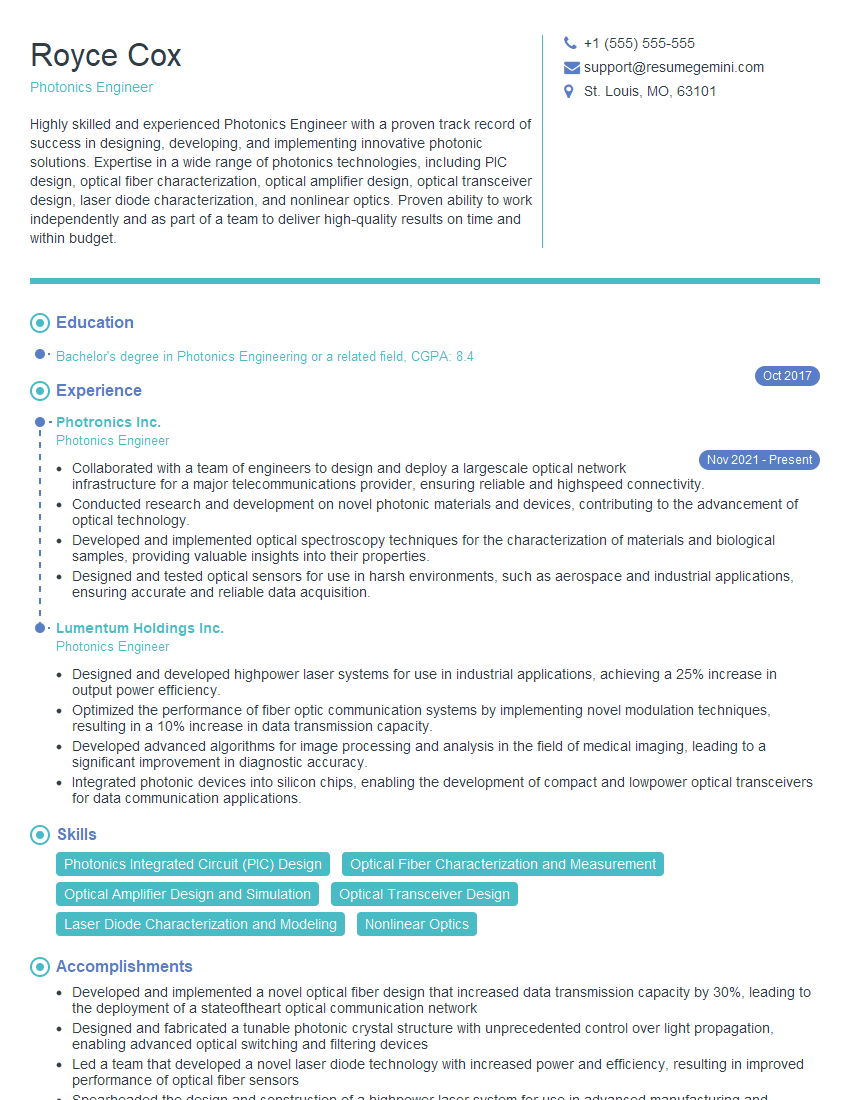
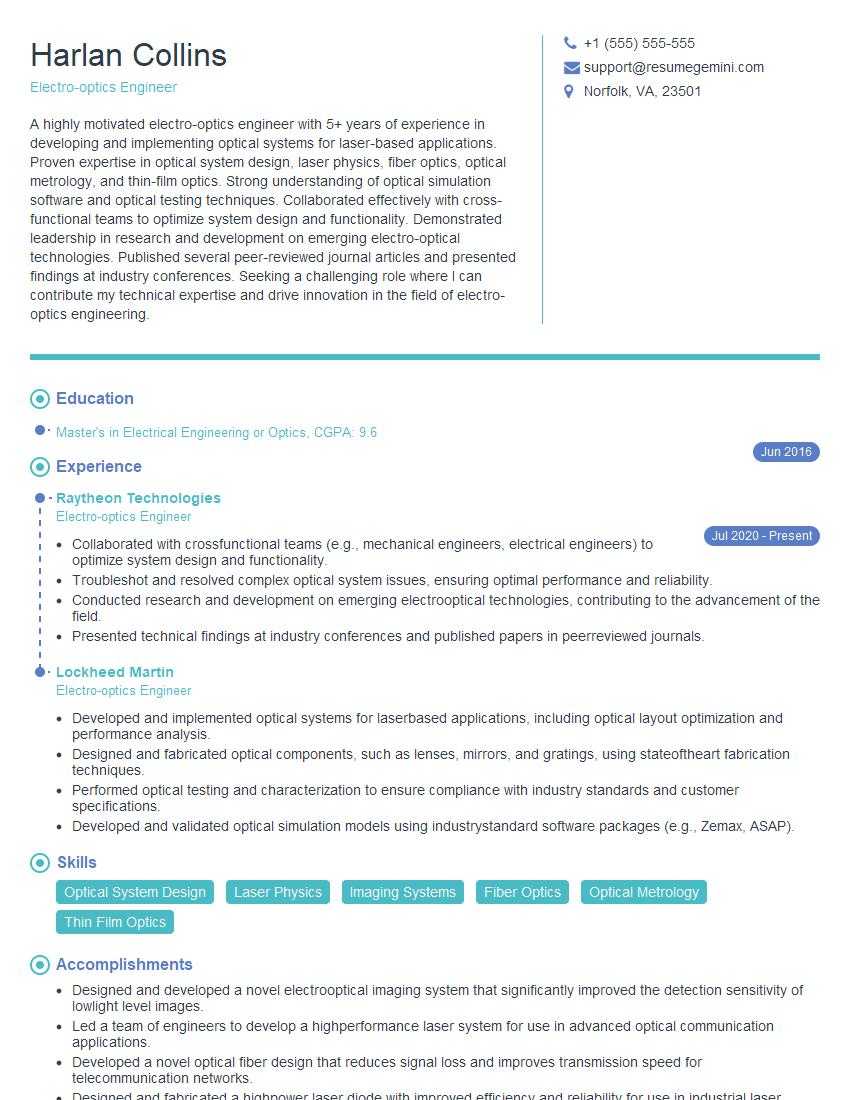
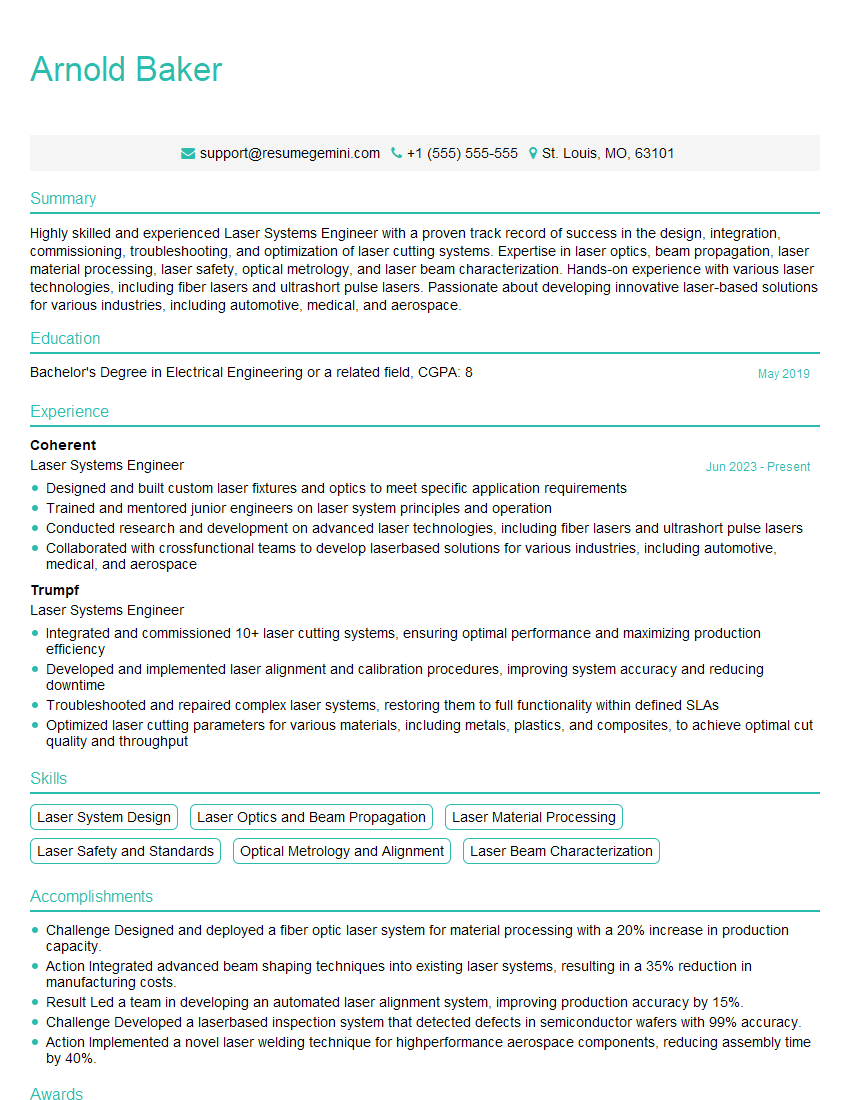
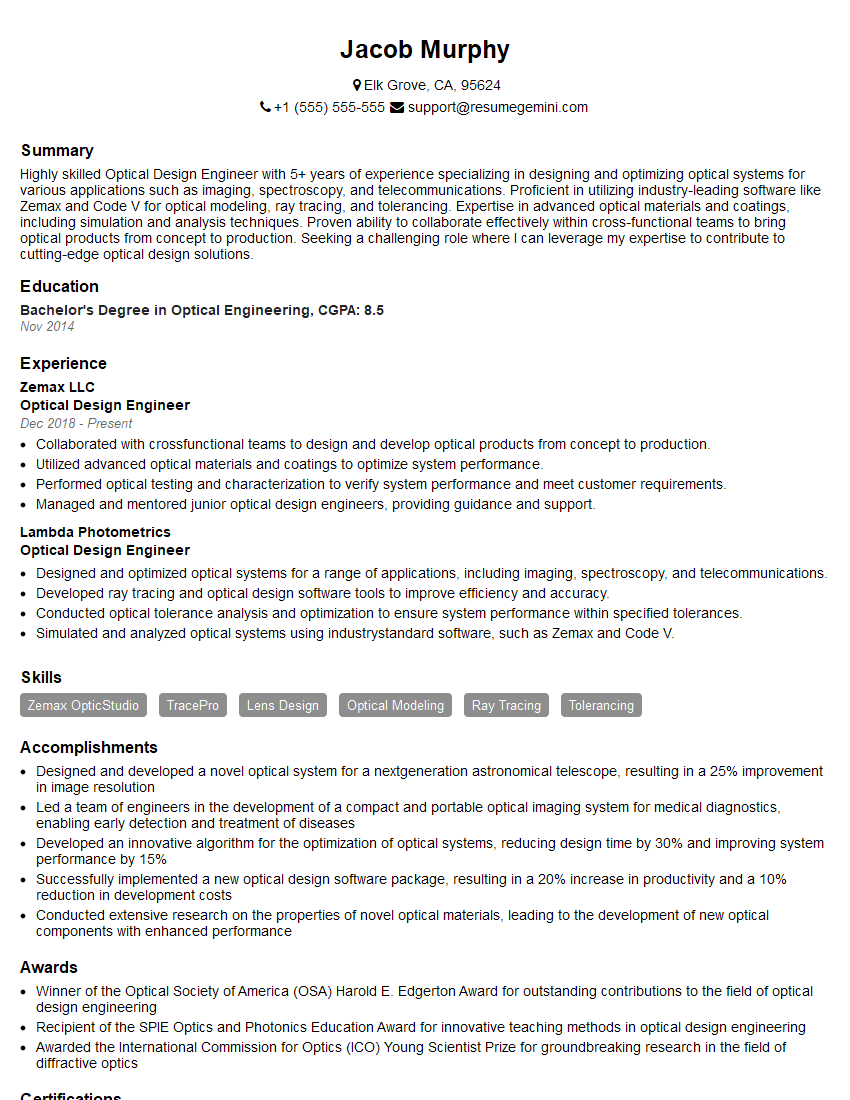
Mastering laser beam shaping opens doors to exciting and innovative career opportunities in a rapidly growing field. To maximize your chances of landing your dream job, crafting a compelling and ATS-friendly resume is crucial. ResumeGemini is a trusted resource to help you build a professional resume that showcases your skills and experience effectively. We offer examples of resumes tailored specifically to Laser Beam Shaping to give you a head start. Invest the time in creating a strong resume—it’s your first impression on potential employers.
Explore more articles
Users Rating of Our Blogs
Share Your Experience
We value your feedback! Please rate our content and share your thoughts (optional).
What Readers Say About Our Blog
Really detailed insights and content, thank you for writing this detailed article.
IT gave me an insight and words to use and be able to think of examples