Interviews are opportunities to demonstrate your expertise, and this guide is here to help you shine. Explore the essential Safety Regulation Compliance interview questions that employers frequently ask, paired with strategies for crafting responses that set you apart from the competition.
Questions Asked in Safety Regulation Compliance Interview
Q 1. Explain your understanding of OSHA’s General Duty Clause.
OSHA’s General Duty Clause, found in Section 5(a)(1) of the Occupational Safety and Health Act of 1970, is a cornerstone of workplace safety. It essentially states that employers have a responsibility to provide a workplace free from recognized hazards that are causing or are likely to cause death or serious physical harm to their employees. This is a catch-all provision, meaning it covers hazards not specifically addressed by OSHA’s more detailed standards.
Think of it as a safety net. While OSHA has numerous specific regulations (like those for lockout/tagout procedures or fall protection), the General Duty Clause steps in when a hazard exists, even if there isn’t a specific regulation covering it. For example, if a new piece of equipment presents an unforeseen hazard, the employer still has a duty under the General Duty Clause to identify and mitigate that hazard. OSHA will look at whether the hazard was ‘recognized’ in the industry, whether the employer knew or should have known about the hazard, and whether feasible corrective actions were available.
Enforcement under this clause involves proving the existence of a hazard, its recognition within the industry, and the feasibility of abatement. It often leads to citations and penalties if an employer fails to meet their obligations. It’s a powerful tool emphasizing the fundamental responsibility of employers to proactively protect their workers.
Q 2. Describe your experience conducting safety audits and inspections.
I have extensive experience conducting both planned and unplanned safety audits and inspections across various industries, including manufacturing, construction, and healthcare. My approach is methodical and comprehensive, combining a thorough review of safety documentation (policies, training records, incident reports) with on-site observations. I use checklists tailored to specific industry standards and regulations to ensure consistency and thoroughness.
During an audit, I’ll interview employees at all levels to get diverse perspectives on safety practices and identify potential hazards. For instance, while observing a production line, I might notice a lack of machine guarding, which would immediately trigger a detailed assessment. My reports are detailed, including photographic evidence, specific observations, and recommendations for corrective actions. I also prioritize the root cause analysis of any identified issues, aiming to prevent recurrence. I’ve successfully identified several significant hazards, including improper lockout/tagout procedures, inadequate personal protective equipment (PPE), and deficient emergency response plans, leading to corrective actions that dramatically improved safety performance.
Q 3. How do you identify and assess workplace hazards?
Identifying and assessing workplace hazards requires a multi-faceted approach. I typically begin with a thorough walk-through of the facility, paying close attention to potential sources of harm. This is supplemented by reviewing existing safety data, such as incident reports and near-miss records. I then interview employees to gain their insights and perspectives on potential hazards they might encounter daily. This process uses a combination of methods:
- Job Hazard Analysis (JHA): A systematic process of breaking down each job task to identify potential hazards associated with each step.
- Hazard and Operability Study (HAZOP): A structured technique that uses a team of experts to systematically examine all aspects of a process to identify potential hazards.
- Checklists and Surveys: Standardized questionnaires designed to identify common hazards in specific work environments.
Once identified, hazards are assessed based on their severity (potential for injury) and probability (likelihood of occurrence). This assessment allows prioritization of hazard mitigation efforts, focusing on those posing the greatest risk. For example, a hazard with high severity and high probability (e.g., unguarded machinery) would receive immediate attention, while a hazard with low severity and low probability might be addressed later.
Q 4. What methods do you use to develop and implement safety programs?
Developing and implementing effective safety programs requires a structured approach, starting with a comprehensive risk assessment. This assessment forms the basis for the program, determining the specific hazards to address and the appropriate controls to implement. My approach involves:
- Establishing Clear Policies and Procedures: Developing concise, easy-to-understand documents outlining safety rules, responsibilities, and emergency procedures.
- Providing Comprehensive Training: Tailoring safety training programs to the specific needs of different roles and hazard types, ensuring employees are equipped with the knowledge and skills to work safely.
- Implementing Engineering Controls: Prioritizing engineering solutions that eliminate or reduce hazards at their source (e.g., machine guarding, improved ventilation).
- Using Administrative Controls: Establishing work procedures, job rotations, and other administrative strategies to mitigate risks.
- Providing Personal Protective Equipment (PPE): Ensuring employees have access to and are trained on the proper use of appropriate PPE.
- Monitoring and Evaluation: Regularly monitoring the program’s effectiveness, tracking safety performance indicators (e.g., incident rates, near misses), and conducting periodic audits to ensure compliance and identify areas for improvement.
For example, in a construction setting, a safety program would incorporate fall protection measures, hazard communication protocols, and regular safety meetings. The key is to create a safety culture, where employees feel empowered to report hazards and participate in safety improvements.
Q 5. Explain your experience with incident investigation and root cause analysis.
Incident investigation and root cause analysis are crucial for preventing future occurrences. My approach follows a structured methodology, typically involving:
- Securing the Scene: Protecting the area to preserve evidence and prevent further harm.
- Gathering Information: Collecting data from multiple sources, including witness statements, physical evidence, and records (e.g., maintenance logs).
- Analyzing Data: Using tools like fault tree analysis, fishbone diagrams, or the “5 Whys” technique to identify the root cause of the incident, not just the immediate cause.
- Developing Corrective Actions: Implementing practical, effective measures to prevent recurrence, including engineering, administrative, or procedural changes.
- Reporting and Documentation: Preparing a comprehensive report summarizing the findings, root cause analysis, and corrective actions.
For example, if a worker was injured while operating a machine, the investigation would not just focus on the immediate cause (e.g., the worker’s hand being caught in the machine), but also investigate why the machine lacked proper guarding, why the worker wasn’t properly trained, or if maintenance procedures were lacking. The goal is to identify and fix the underlying systems failures that contributed to the accident.
Q 6. How do you ensure compliance with relevant safety regulations?
Ensuring compliance with relevant safety regulations requires a proactive, multi-pronged strategy. This begins with a thorough understanding of all applicable laws, standards, and industry best practices. I regularly consult resources like OSHA’s website, industry-specific standards, and relevant legal updates to stay informed about changes.
My approach to compliance includes:
- Regular Audits and Inspections: Conducting routine internal audits to identify potential compliance gaps before they become major issues. This also helps ensure our safety program remains effective.
- Record Keeping: Maintaining detailed records of training, inspections, audits, incidents, and corrective actions, demonstrating compliance to regulatory bodies. This also assists with continuous improvement.
- Training Programs: Providing thorough training to employees on relevant regulations and safety procedures.
- Emergency Preparedness: Developing and regularly practicing emergency response plans to ensure preparedness in the event of an accident.
- Collaboration with Regulatory Bodies: Proactively engaging with regulatory agencies like OSHA to build relationships and ensure we understand their expectations.
Proactive compliance not only avoids penalties but also fosters a strong safety culture and reduces the likelihood of workplace incidents. It’s a continuous process of improvement, adapting to evolving standards and technologies.
Q 7. Describe your experience with safety training and employee education.
I have significant experience designing, delivering, and evaluating safety training programs for employees at all levels. My approach prioritizes practical application and engagement, moving beyond simple lectures to interactive methods that reinforce learning.
I use a variety of methods, including:
- On-the-Job Training (OJT): Direct supervision and instruction within the actual work environment.
- Classroom Training: Structured sessions covering theoretical concepts and practical applications.
- Interactive Workshops: Hands-on activities and simulations to reinforce training content.
- E-Learning Modules: Online training programs for convenient access to information.
- Regular Refresher Courses: Keeping employee knowledge current and addressing any changes in regulations or procedures.
For example, I’ve developed and delivered training programs on hazard communication, lockout/tagout, and emergency response procedures, tailoring the content to specific audience needs. I always incorporate assessment methods to evaluate employee understanding and retention, and frequently update training materials to ensure their ongoing relevance and effectiveness. Effective safety training is an investment that pays off in reduced incidents and a stronger safety culture.
Q 8. How do you handle safety violations and non-compliance issues?
Handling safety violations and non-compliance starts with a proactive approach, focusing on prevention rather than just reaction. When a violation occurs, my process involves a structured investigation to determine the root cause, not just assigning blame.
- Immediate Action: First, I ensure the hazardous situation is immediately addressed to prevent further incidents. This might involve halting operations, isolating equipment, or evacuating personnel depending on the severity.
- Investigation: A thorough investigation follows, gathering information from witnesses, reviewing documentation (e.g., training records, maintenance logs), and examining the physical evidence. The goal is to understand the contributing factors that led to the violation, not just the immediate cause.
- Corrective Actions: Based on the investigation’s findings, I develop and implement corrective actions to prevent recurrence. This might include retraining employees, revising safety procedures, improving equipment maintenance, or modifying the work environment.
- Documentation: All steps of the process, from initial detection to corrective actions, are meticulously documented. This documentation serves as a record for future reference, helps track improvements, and demonstrates compliance with regulatory requirements.
- Follow-up: Regular follow-up is critical to ensure that the corrective actions are effective and that the problem has been resolved. This might involve revisiting the site, conducting audits, and monitoring key metrics.
For example, I once investigated a near-miss incident where a worker almost fell from a scaffold. The investigation revealed inadequate training on fall protection procedures and a lack of readily available safety harnesses. Corrective actions included mandatory retraining, ensuring sufficient safety equipment was available, and implementing a new inspection checklist for scaffolds.
Q 9. What is your experience with developing and implementing safety policies and procedures?
Developing and implementing safety policies and procedures requires a systematic approach that considers the specific hazards of the workplace and aligns with relevant regulations. My experience involves:
- Hazard Identification and Risk Assessment: Thorough identification of potential hazards within the workplace using methods such as Job Safety Analyses (JSAs), HAZOP studies, and workplace inspections.
- Policy Development: Creating comprehensive safety policies that address these identified hazards and outline the organization’s commitment to safety. These policies should be clear, concise, and easily understood by all employees.
- Procedure Development: Developing detailed Standard Operating Procedures (SOPs) that outline specific steps for performing tasks safely. These SOPs should be readily available and regularly reviewed and updated.
- Training and Communication: Providing comprehensive safety training to employees, covering topics such as hazard recognition, safe work practices, and emergency response. Effective communication is vital to ensure that policies and procedures are understood and followed.
- Implementation and Monitoring: Implementing the policies and procedures and continuously monitoring their effectiveness through regular audits, inspections, and safety meetings. This allows for identifying areas needing improvement and making necessary adjustments.
In a previous role, I led the development of a new safety management system for a construction company, resulting in a 30% reduction in recordable incidents within a year. This involved creating new policies and procedures addressing fall protection, confined space entry, and heavy equipment operation, followed by extensive employee training.
Q 10. Describe your experience with risk assessment and mitigation strategies.
Risk assessment is a cornerstone of safety management. It involves identifying hazards, analyzing their potential for harm, and implementing controls to mitigate the risks. My approach to risk assessment uses a systematic process:
- Hazard Identification: Using various techniques, such as walkthroughs, checklists, and interviews to identify potential hazards.
- Risk Analysis: Assessing the likelihood and severity of harm associated with each identified hazard. This often involves using a risk matrix that considers probability and consequence.
- Risk Evaluation: Determining the overall level of risk based on the likelihood and severity analysis. This helps prioritize risks and focus resources on the most critical hazards.
- Risk Control: Developing and implementing control measures to reduce or eliminate the risks. These controls can be hierarchical, starting with elimination, substitution, engineering controls, administrative controls, and finally, personal protective equipment (PPE).
- Monitoring and Review: Regularly monitoring the effectiveness of the control measures and reviewing the risk assessment periodically to ensure it remains accurate and relevant.
For instance, in a manufacturing setting, I conducted a risk assessment for a machine operation that identified a risk of hand injuries. The mitigation strategies implemented included machine guarding, improved training on safe operating procedures, and the provision of appropriate PPE such as cut-resistant gloves.
Q 11. How familiar are you with the different types of safety permits and their requirements?
Familiarity with various safety permits and their requirements is crucial for ensuring safe work practices. The specific permits vary greatly depending on the industry and the nature of the work being undertaken. However, some common types include:
- Hot Work Permits: Required for activities that involve the use of open flames or sparks, such as welding, cutting, or soldering. These permits usually require a fire watch, the removal of flammable materials, and appropriate fire suppression equipment.
- Confined Space Permits: Required for entry into confined spaces, such as tanks, vessels, or trenches. These permits involve atmospheric testing, ventilation, rescue plans, and the use of specialized equipment and PPE.
- Lockout/Tagout Permits: Used to control hazardous energy sources during maintenance or repair activities (discussed in more detail in the next answer).
- Work at Height Permits: Required for work performed at heights that could lead to falls. These permits specify the necessary fall protection equipment, the use of scaffolding or other elevated platforms, and rescue plans.
The requirements for each permit are usually specified in company procedures and relevant legislation. Understanding these requirements ensures that work is undertaken safely and that risks are minimized.
Q 12. Explain your understanding of lockout/tagout procedures.
Lockout/Tagout (LOTO) procedures are critical for preventing the unexpected release of hazardous energy during maintenance or repair activities. LOTO involves isolating energy sources, preventing their re-energization, and verifying that the energy is indeed locked out before work commences.
- Energy Isolation: The first step involves identifying all energy sources that need to be isolated, such as electrical, mechanical, hydraulic, or pneumatic. These sources are then physically disconnected using appropriate lockout devices.
- Lockout and Tagout: Once the energy is isolated, each energy source is locked out using a padlock and tagged with a warning tag clearly indicating that work is being performed. The tag usually identifies the worker and the task being undertaken.
- Verification: Before work begins, the authorized worker must verify that the energy source is indeed locked out and cannot be accidentally reactivated.
- Release: After the work is complete, only the authorized worker who initiated the lockout can release the energy sources, ensuring that all personnel are clear of the hazard before releasing the energy source.
Effective LOTO procedures are vital to prevent serious accidents, such as electrocution or machine-related injuries. They require a high level of discipline and adherence to established procedures to ensure worker safety.
Q 13. Describe your experience with personal protective equipment (PPE) selection and usage.
Selecting and using appropriate personal protective equipment (PPE) is a fundamental aspect of safety. The selection process depends on the specific hazards encountered in the workplace. This involves:
- Hazard Assessment: Identifying the specific hazards present in the work area, such as chemical exposure, noise, or physical impact.
- PPE Selection: Choosing the appropriate PPE to mitigate each identified hazard. This requires understanding the performance characteristics of different types of PPE and selecting equipment that meets or exceeds relevant standards.
- Training and Fit Testing: Providing adequate training to employees on the proper use, care, and limitations of the PPE. Where necessary, fit testing should be conducted to ensure that the PPE fits correctly and provides the required protection.
- Inspection and Maintenance: Regularly inspecting the PPE for damage or deterioration and ensuring that it is properly maintained. Damaged or worn PPE should be replaced immediately.
For example, in a chemical handling facility, appropriate PPE might include respirators, gloves, eye protection, and protective clothing selected based on the specific chemicals handled and their associated hazards. Regular training on respirator use and fit testing would be critical.
Q 14. What is your experience with emergency response planning and execution?
Emergency response planning and execution are essential for minimizing the impact of unforeseen events. My experience includes:
- Hazard Identification and Risk Assessment: Identifying potential emergencies, such as fires, chemical spills, or natural disasters, and assessing their potential impact.
- Emergency Response Plan Development: Creating a comprehensive emergency response plan that outlines procedures for handling various emergencies. This plan should include evacuation procedures, communication protocols, and responsibilities for different personnel.
- Training and Drills: Providing regular training to employees on the emergency response plan and conducting drills to practice the procedures. This ensures that employees are familiar with their roles and responsibilities in an emergency situation.
- Emergency Equipment and Supplies: Ensuring that adequate emergency equipment, such as fire extinguishers, first-aid kits, and emergency communication systems, is readily available and properly maintained.
- Post-Incident Review: Conducting a thorough review after each emergency incident to identify areas for improvement in the emergency response plan and procedures. This helps to refine the plan and improve its effectiveness.
In one instance, I developed an emergency response plan for a manufacturing plant that included procedures for handling hazardous material spills, fire emergencies, and medical emergencies. The implementation of this plan, along with regular drills, significantly improved the plant’s preparedness and response capabilities.
Q 15. How do you ensure that safety regulations are effectively communicated to employees?
Effective communication is the cornerstone of a strong safety culture. It’s not enough to simply post safety rules; employees need to understand why these rules are in place and how they apply to their daily tasks. My approach is multi-faceted and includes:
- Regular Safety Meetings: These aren’t just announcements; they’re interactive sessions where we discuss recent incidents (without blaming individuals), review safety procedures, and address employee concerns. For example, a recent near-miss involving a forklift prompted a review of pedestrian safety protocols and the implementation of new signage.
- Toolbox Talks: Short, focused discussions on specific hazards at the start of work shifts or before specialized tasks. This ensures that safety is top-of-mind before employees begin their work. For instance, before working at heights, we would discuss harness checks, fall protection procedures, and anchor points.
- Visual Communication: Clear signage, posters, and safety alerts in multiple languages are crucial, particularly in diverse workplaces. Using images alongside text makes safety information easily accessible and understandable.
- Training Programs: Comprehensive training programs, tailored to different job roles, ensure that employees understand specific hazards and procedures. This includes hands-on training, simulations, and quizzes to reinforce learning.
- Open Communication Channels: Creating a culture where employees feel comfortable reporting safety concerns, near-misses, or hazards without fear of reprisal. This can be done through suggestion boxes, anonymous reporting systems, or regular feedback sessions.
Career Expert Tips:
- Ace those interviews! Prepare effectively by reviewing the Top 50 Most Common Interview Questions on ResumeGemini.
- Navigate your job search with confidence! Explore a wide range of Career Tips on ResumeGemini. Learn about common challenges and recommendations to overcome them.
- Craft the perfect resume! Master the Art of Resume Writing with ResumeGemini’s guide. Showcase your unique qualifications and achievements effectively.
- Don’t miss out on holiday savings! Build your dream resume with ResumeGemini’s ATS optimized templates.
Q 16. What are your strategies for maintaining a safe and healthy work environment?
Maintaining a safe and healthy work environment requires a proactive and holistic approach. My strategies focus on:
- Hazard Identification and Risk Assessment: Regularly identifying potential hazards through walkthroughs, audits, and employee feedback. We then conduct thorough risk assessments to determine the level of risk and implement appropriate control measures.
- Engineering Controls: Prioritizing engineering solutions to eliminate hazards at the source. This could involve installing machine guards, improving ventilation systems, or implementing ergonomic workstations.
- Administrative Controls: Implementing safe work procedures, providing personal protective equipment (PPE), and establishing clear lines of authority and responsibility. This also includes regular safety inspections and audits.
- Personal Protective Equipment (PPE): Ensuring employees have the appropriate PPE and receive training on its proper use. This includes regular inspections and replacement of damaged or worn PPE.
- Emergency Preparedness: Developing and regularly practicing emergency response plans, including evacuation procedures, first aid protocols, and communication strategies. We conduct regular drills and keep emergency equipment well-maintained and readily accessible.
- Employee Wellness Programs: Promoting employee well-being through initiatives like ergonomic assessments, health and wellness workshops, and stress management programs. A healthy workforce is a safer workforce.
Q 17. Describe your experience with safety data sheets (SDS) and hazard communication.
Safety Data Sheets (SDS) and hazard communication are critical components of a robust safety program. My experience encompasses:
- SDS Management: Maintaining an up-to-date inventory of all SDSs for chemicals and materials used in the workplace. This includes ensuring SDSs are readily accessible to employees, properly labeled, and updated as needed.
- Hazard Communication Training: Providing comprehensive training to employees on how to interpret SDSs and understand the hazards associated with the materials they handle. This includes training on the Globally Harmonized System of Classification and Labelling of Chemicals (GHS).
- Labeling and Signage: Ensuring all containers of hazardous materials are properly labeled according to GHS standards, and that clear signage is displayed in areas where hazardous materials are stored or used.
- Incident Reporting and Investigation: Using SDS information during incident investigations to determine contributing factors and implement preventative measures. For example, if a chemical spill occurs, we review the SDS to understand the necessary cleanup procedures and the appropriate personal protective equipment.
I am well-versed in OSHA’s Hazard Communication Standard and other relevant regulations regarding SDS and hazard communication.
Q 18. How do you manage safety documentation and record-keeping?
Effective safety documentation and record-keeping are essential for demonstrating compliance and identifying trends. My approach involves:
- Centralized System: Utilizing a centralized system, either physical or digital, to store all safety-related documentation, including SDSs, training records, incident reports, inspection reports, and risk assessments.
- Version Control: Implementing version control to ensure that the most up-to-date documents are readily available. This is especially crucial for SDSs, which may be updated regularly.
- Data Security: Maintaining the confidentiality and integrity of safety records. This might involve password-protected access to digital records or secure storage for physical files.
- Regular Audits: Conducting regular audits of safety records to ensure completeness, accuracy, and adherence to regulatory requirements.
- Data Analysis: Analyzing safety data to identify trends and patterns that may indicate areas for improvement. For example, tracking the frequency of near-misses can help pinpoint recurring hazards that need to be addressed.
Q 19. What is your experience with conducting safety meetings and training sessions?
I have extensive experience conducting engaging and informative safety meetings and training sessions. My approach focuses on:
- Interactive Sessions: Using interactive methods such as discussions, case studies, and hands-on activities to engage participants and enhance learning. Rather than simply lecturing, I encourage questions and actively involve employees.
- Tailored Content: Developing training materials and meeting agendas that are tailored to the specific needs and roles of the participants. This ensures the information is relevant and readily applicable.
- Assessment and Feedback: Including assessments, such as quizzes or practical exercises, to evaluate learning outcomes and provide feedback to participants. This allows for reinforcement of key concepts and identification of any knowledge gaps.
- Documentation and Record-Keeping: Maintaining accurate records of training attendance, assessment results, and any feedback received. This is important for demonstrating compliance and tracking training effectiveness.
- Post-Training Support: Providing ongoing support and resources to employees after training to reinforce learning and encourage continuous improvement. This might include access to additional materials, regular refresher courses, or opportunities for follow-up questions.
Q 20. How do you prioritize safety concerns and allocate resources?
Prioritizing safety concerns and allocating resources requires a systematic approach. I use a combination of methods, including:
- Risk Assessment Matrix: Using a risk assessment matrix to prioritize hazards based on their likelihood and severity. This allows us to focus resources on the most critical risks first.
Likelihood x Severity = Risk Priority - Cost-Benefit Analysis: Conducting cost-benefit analyses for potential safety improvements to determine the most effective use of resources. This involves weighing the costs of implementing safety measures against the potential costs of accidents or injuries.
- Data-Driven Decisions: Using safety data, such as incident reports and near-miss data, to inform resource allocation decisions. This ensures that resources are directed to the areas where they are most needed.
- Management Support: Securing management support for safety initiatives and ensuring that adequate resources are allocated to support the safety program. This includes budgetary approvals and staff assignments.
- Regular Review: Regularly reviewing the prioritization of safety concerns and resource allocation to ensure that it aligns with the current needs and risks of the organization. This is an ongoing process, not a one-time event.
Q 21. Describe your experience with the implementation of safety management systems (SMS).
Safety Management Systems (SMS) provide a structured framework for managing safety effectively. My experience includes:
- Implementation: Participating in the implementation of SMS in previous roles, including developing safety policies, procedures, and work instructions, establishing safety goals, and defining roles and responsibilities.
- Hazard Identification and Risk Management: Using SMS tools and techniques for hazard identification, risk assessment, and control. This includes using methodologies such as HAZOP (Hazard and Operability Study) and fault tree analysis.
- Monitoring and Measurement: Implementing key performance indicators (KPIs) and regularly monitoring safety performance to identify areas for improvement. This includes tracking incident rates, near-misses, and other relevant metrics.
- Continuous Improvement: Utilizing data analysis and regular reviews to drive continuous improvement in the SMS. This is an iterative process that involves identifying areas for improvement and implementing corrective and preventive actions (CAPA).
- Compliance: Ensuring that the SMS aligns with all applicable safety regulations and standards. This includes staying informed on regulatory changes and ensuring our practices reflect the current requirements.
I am familiar with various SMS standards and best practices, including ISO 45001.
Q 22. How do you measure the effectiveness of safety programs?
Measuring the effectiveness of a safety program isn’t a simple task; it requires a multifaceted approach. We can’t solely rely on the absence of incidents. Instead, we need to look at leading and lagging indicators.
Lagging Indicators are outcomes—what has already happened. These include things like the number of accidents, injuries, illnesses, and lost-time incidents. A decrease in these is positive, but it only tells part of the story. It’s like looking in the rearview mirror.
Leading Indicators, on the other hand, predict future outcomes. They focus on the processes and behaviors that contribute to safety. Examples include the number of safety training hours completed, the frequency of safety audits and inspections, the rate of near-miss reporting, employee satisfaction with safety measures, and the number of safety observations conducted.
Effective measurement combines both: tracking lagging indicators to see overall performance and leading indicators to identify weaknesses and predict future risks. For instance, a decrease in near-miss reports might initially seem positive, but it could actually indicate underreporting, suggesting a lack of trust in the reporting system. Therefore, a comprehensive review of both leading and lagging indicators is vital. We’d analyze trends over time, compare performance to industry benchmarks, and conduct regular reviews to continually refine and improve the safety program.
Q 23. How do you stay updated on changes in safety regulations and best practices?
Staying current in safety regulations and best practices is crucial, and it’s an ongoing process. I utilize a multi-pronged approach.
- Professional Organizations: Active membership in organizations like the Occupational Safety and Health Administration (OSHA), and relevant industry-specific groups provides access to up-to-date information, training, and networking opportunities.
- Regulatory Websites: I regularly monitor the websites of relevant regulatory bodies, such as OSHA, EPA, and other agencies pertinent to the industries I work with. This ensures I’m aware of any updates, changes to regulations, or new guidance documents.
- Industry Publications and Journals: Keeping abreast of the latest research and trends through relevant industry publications and journals keeps me informed about new safety technologies and best practices.
- Conferences and Workshops: Attending safety conferences and workshops allows for direct engagement with experts, learning about cutting-edge techniques, and networking with peers in the field.
- Continuing Education: I dedicate time to professional development courses and certifications to maintain and expand my expertise in safety management systems.
This combined approach helps ensure I’m always at the forefront of safety knowledge and practice, allowing me to provide the most effective and compliant advice.
Q 24. What is your experience with environmental regulations and compliance?
My experience with environmental regulations and compliance is extensive. I’ve worked on projects requiring adherence to various environmental laws and regulations, including those concerning waste disposal, air and water quality, and the handling of hazardous materials. This includes understanding and implementing best practices for waste reduction, pollution prevention, and environmental impact assessments.
For example, I successfully guided a manufacturing facility through a comprehensive environmental audit, identifying areas of non-compliance and developing a corrective action plan that minimized environmental impact and ensured regulatory compliance. This involved working closely with various teams, including production, engineering, and environmental health and safety, to ensure a coordinated and effective response. The experience highlighted the need for strong communication and collaboration to address environmental challenges effectively.
Q 25. Describe a time you had to deal with a challenging safety issue. What was your approach?
In a previous role, we faced a challenging safety issue involving a significant increase in near-miss incidents related to a particular piece of heavy machinery. My approach was systematic and involved several key steps.
- Data Analysis: We thoroughly analyzed the near-miss reports, identifying common contributing factors. This revealed a pattern of operator error due to insufficient training and unclear operating procedures.
- Root Cause Analysis: We employed a root cause analysis technique, such as the 5 Whys, to identify the underlying causes beyond the immediate operator errors. This helped us understand why the training and procedures were inadequate.
- Corrective Actions: Based on our analysis, we implemented several corrective actions including enhanced operator training with hands-on simulations and updated operating procedures with clearer instructions and visual aids. We also implemented a system for regular machinery inspections to proactively address potential problems.
- Monitoring and Evaluation: Following the implementation of these changes, we monitored near-miss incident rates closely and tracked employee feedback to evaluate the effectiveness of our interventions. We made further adjustments as needed.
The outcome was a significant decrease in near-miss incidents and a demonstrable improvement in operator safety and confidence. This experience reinforced the importance of proactive safety measures, thorough investigation, and a commitment to continuous improvement.
Q 26. How do you handle conflict resolution regarding safety concerns between different departments?
Handling conflicts regarding safety concerns between different departments requires a collaborative and diplomatic approach. I typically employ a structured approach:
- Facilitate Open Communication: I start by bringing all involved parties together in a neutral setting to foster open communication and ensure everyone feels heard.
- Identify the Root Cause: The focus isn’t on assigning blame but on understanding the underlying reasons for the conflict. This may involve identifying conflicting priorities, resource limitations, or communication breakdowns.
- Explore Solutions Collaboratively: I guide the discussion towards collaborative solutions that address the concerns of all departments without compromising safety. This may involve brainstorming, compromise, and prioritizing safety improvements.
- Document Agreements: Once a solution is agreed upon, I ensure it’s documented clearly, outlining responsibilities and timelines.
- Follow-Up and Monitoring: I follow up regularly to ensure the agreed-upon solution is implemented effectively and that any outstanding issues are addressed.
The key is to create a collaborative environment where all parties understand the importance of safety and work together to find solutions that address everyone’s concerns. Sometimes, escalation to senior management may be necessary, but that should be a last resort after attempting to find a collaborative solution.
Q 27. Describe your experience with near-miss reporting and analysis.
Near-miss reporting and analysis are critical components of a proactive safety program. My experience involves establishing and maintaining a robust near-miss reporting system, encouraging open and honest reporting without fear of reprisal.
The analysis involves identifying trends and patterns in near-misses. This helps us proactively identify potential hazards and implement corrective actions before they result in an incident. We use various analytical techniques, including Pareto analysis (identifying the 20% of causes responsible for 80% of the effects) and fault tree analysis (a top-down approach to identifying causes of failure).
For instance, a cluster of near-misses related to a particular work process might indicate a need for improved training, equipment modification, or changes in the work procedures themselves. By analyzing near-misses, we can prevent future accidents, improve safety performance, and reduce costs associated with incidents. It’s about learning from almost-accidents to prevent actual ones.
Q 28. What is your approach to fostering a strong safety culture within an organization?
Fostering a strong safety culture involves more than just rules and regulations; it’s about creating a mindset where safety is everyone’s responsibility. My approach is multifaceted:
- Leadership Commitment: Visible and active leadership commitment is paramount. Leaders need to champion safety and demonstrate their dedication through their actions and communication.
- Open Communication and Feedback: Creating a culture where employees feel comfortable reporting hazards, near-misses, and safety concerns without fear of retribution is essential. Regular feedback sessions and open dialogue create a safe space for discussion.
- Employee Empowerment: Empowering employees to stop work if they identify a safety hazard is crucial. This involves providing them with the authority and resources to address potential risks.
- Effective Training and Education: Comprehensive and ongoing safety training tailored to the specific roles and hazards in the workplace is crucial. This helps employees understand safety procedures and develop safe work practices.
- Recognition and Incentives: Recognizing and rewarding safe behaviors reinforces positive safety practices and encourages employees to continue prioritizing safety.
- Regular Safety Audits and Inspections: Regular audits and inspections identify potential hazards and ensure compliance with safety regulations. This demonstrates a commitment to proactive safety measures.
Ultimately, a strong safety culture is achieved when everyone feels personally responsible for their safety and the safety of their colleagues. It’s a continuous journey, not a destination.
Key Topics to Learn for Safety Regulation Compliance Interview
- Regulatory Frameworks: Understanding relevant legislation (OSHA, ISO, etc.) and their practical implications within different industries. This includes knowing how to identify applicable regulations and interpret their requirements.
- Hazard Identification & Risk Assessment: Mastering techniques for identifying potential hazards, analyzing risks, and developing effective control measures. Be prepared to discuss practical examples from your experience or studies.
- Accident Investigation & Reporting: Understanding root cause analysis methodologies and the process of compiling thorough and accurate accident reports, complying with all reporting regulations.
- Emergency Response Planning & Procedures: Familiarity with developing and implementing emergency response plans, including evacuation procedures, emergency communication protocols, and training programs.
- Safety Audits & Inspections: Knowledge of conducting safety audits and inspections, identifying non-compliances, and recommending corrective actions. Be ready to discuss different audit methodologies and their effectiveness.
- Safety Training & Communication: Understanding the principles of effective safety training and communication strategies to ensure employees understand and comply with safety regulations. This includes various training methods and their application.
- Compliance Monitoring & Documentation: Maintaining accurate records, conducting regular compliance checks, and ensuring all documentation meets regulatory requirements. This involves understanding record-keeping best practices.
- Continuous Improvement Initiatives: Demonstrating knowledge of implementing and monitoring continuous improvement programs to enhance safety performance and proactively address potential hazards.
Next Steps
Mastering Safety Regulation Compliance is crucial for a successful and rewarding career. It demonstrates your commitment to workplace safety and your ability to mitigate risks, making you a valuable asset to any organization. To significantly enhance your job prospects, creating a compelling and ATS-friendly resume is essential. ResumeGemini is a trusted resource that can help you build a professional and impactful resume. We provide examples of resumes tailored to Safety Regulation Compliance to guide you through the process, ensuring your qualifications shine through.
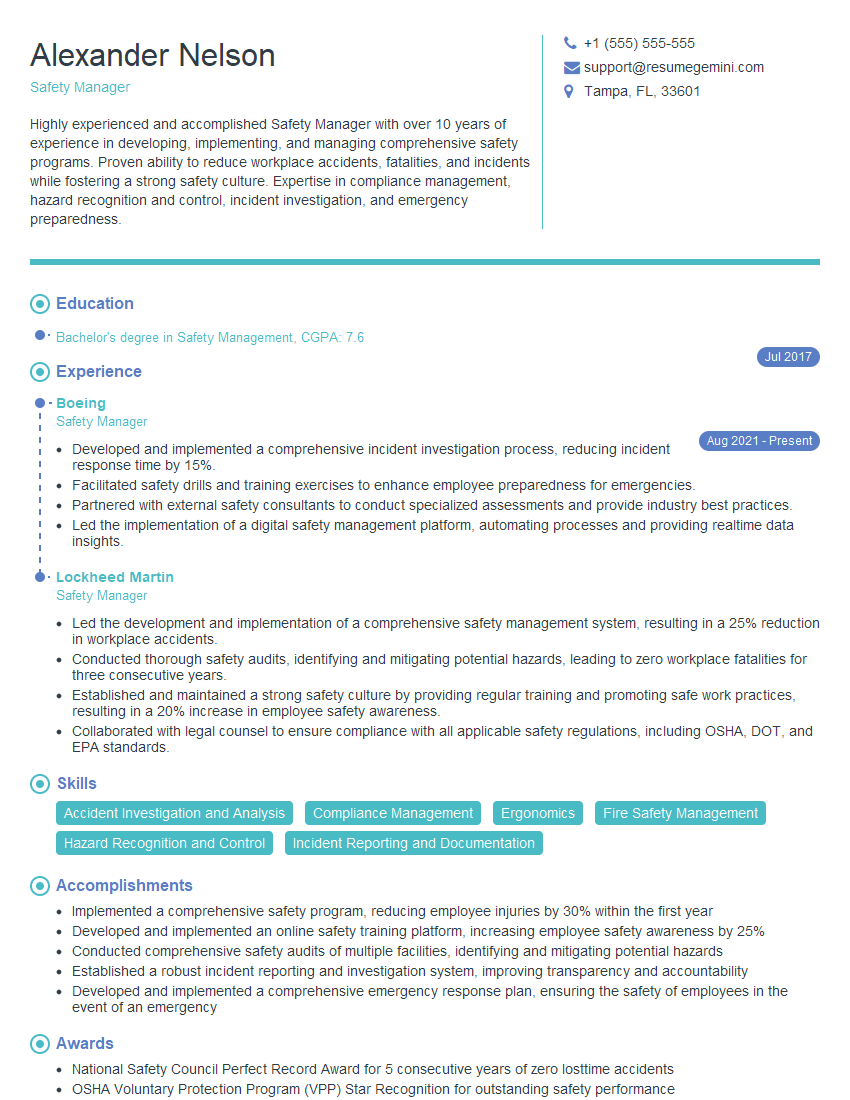
Safety Manager Resume Sample
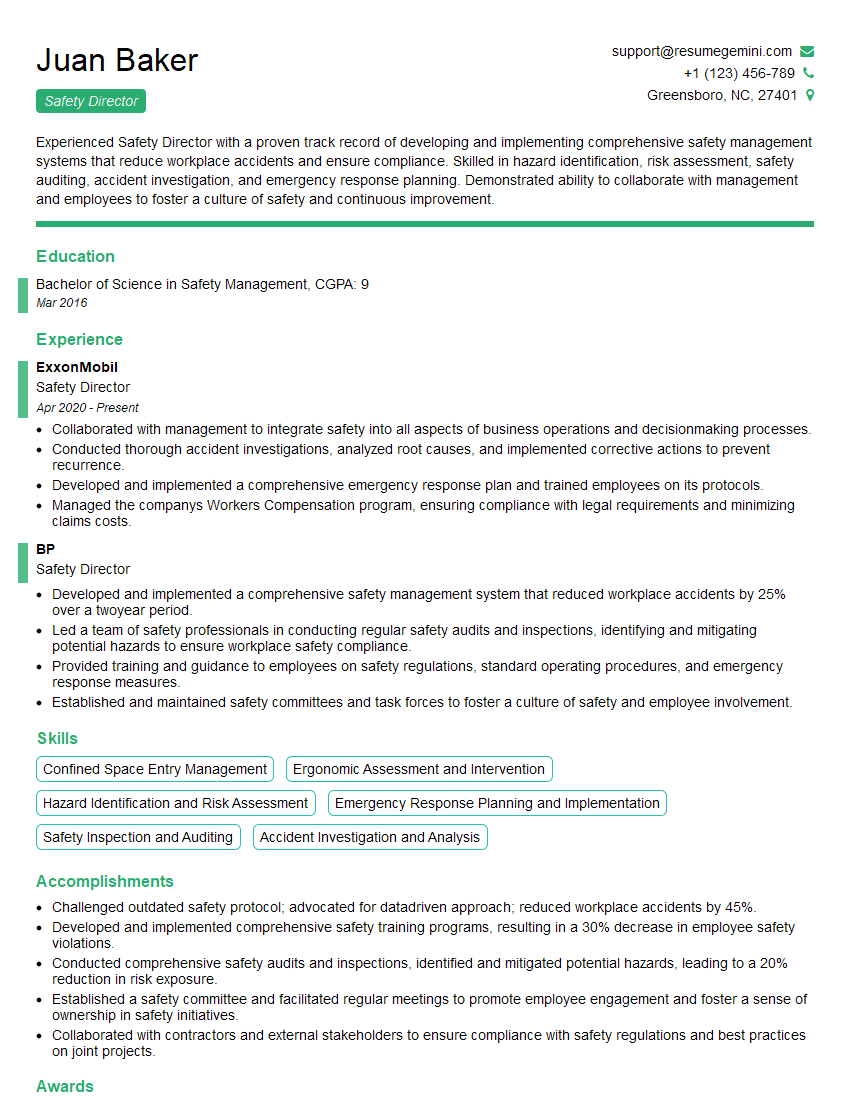
Safety Director Resume Sample
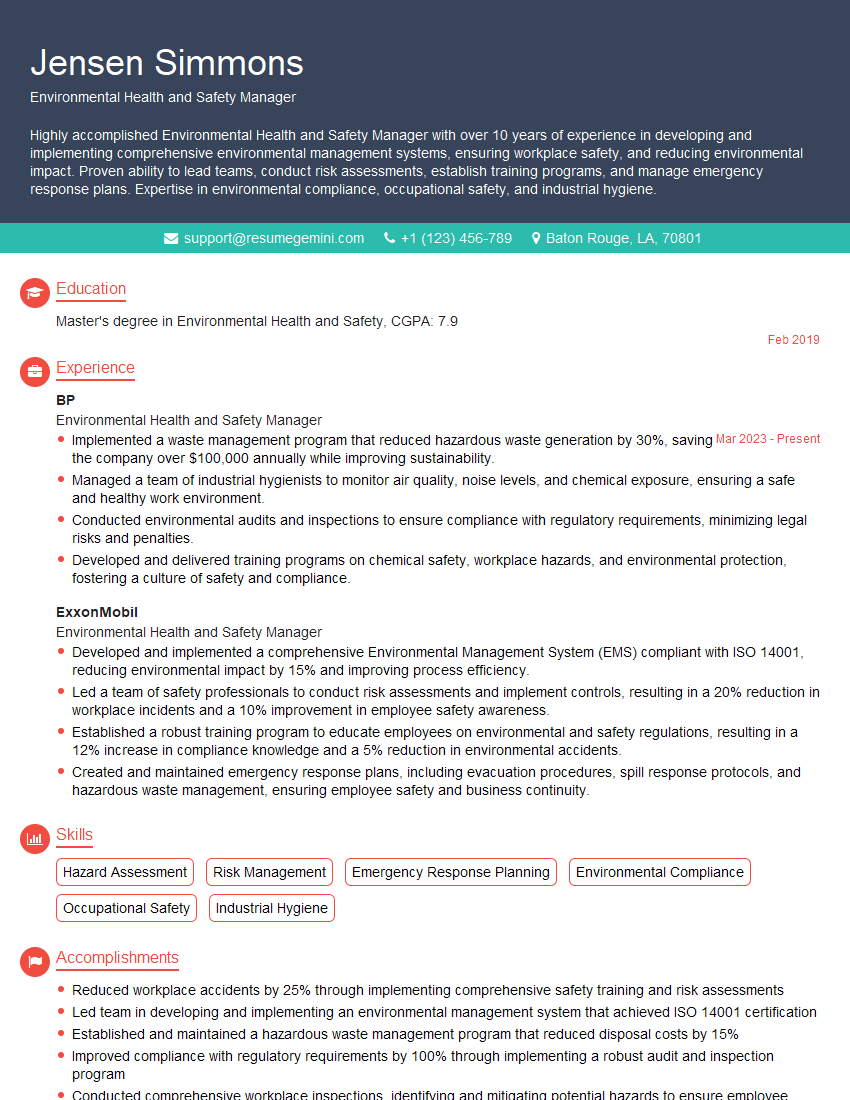
Environmental Health and Safety Manager Resume Sample
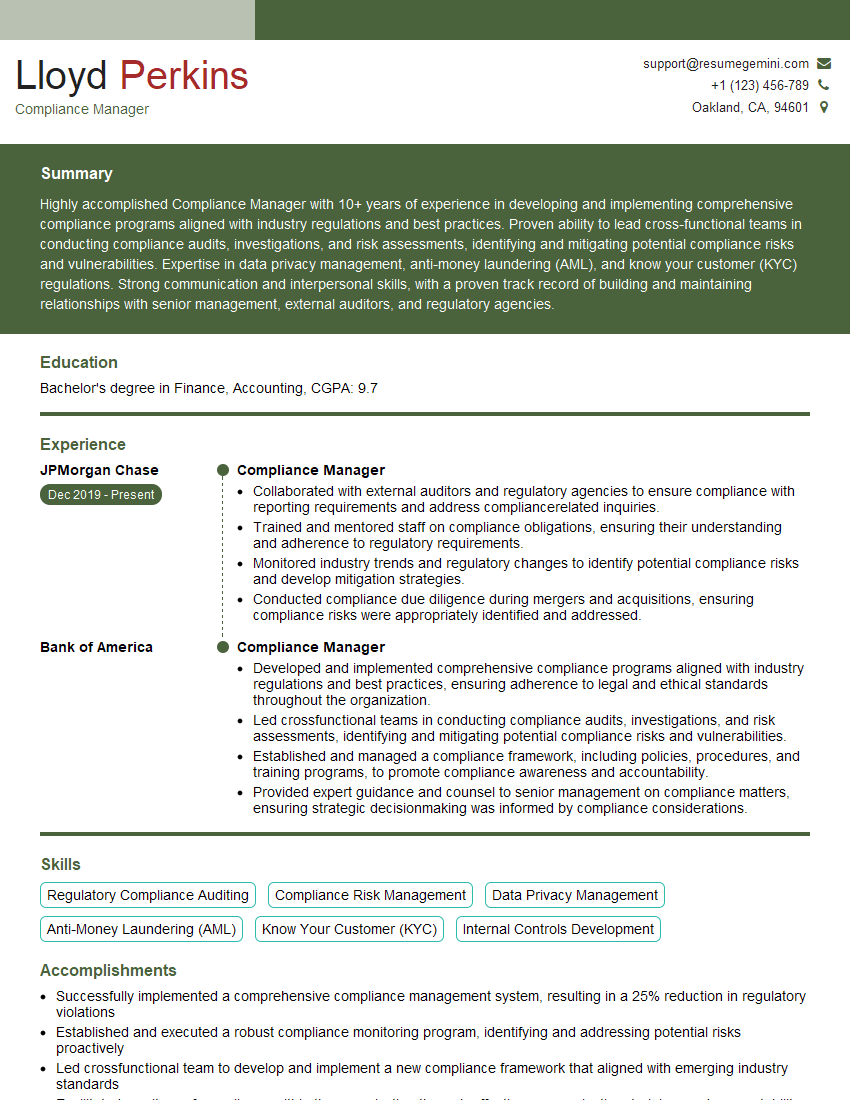
Compliance Manager Resume Sample
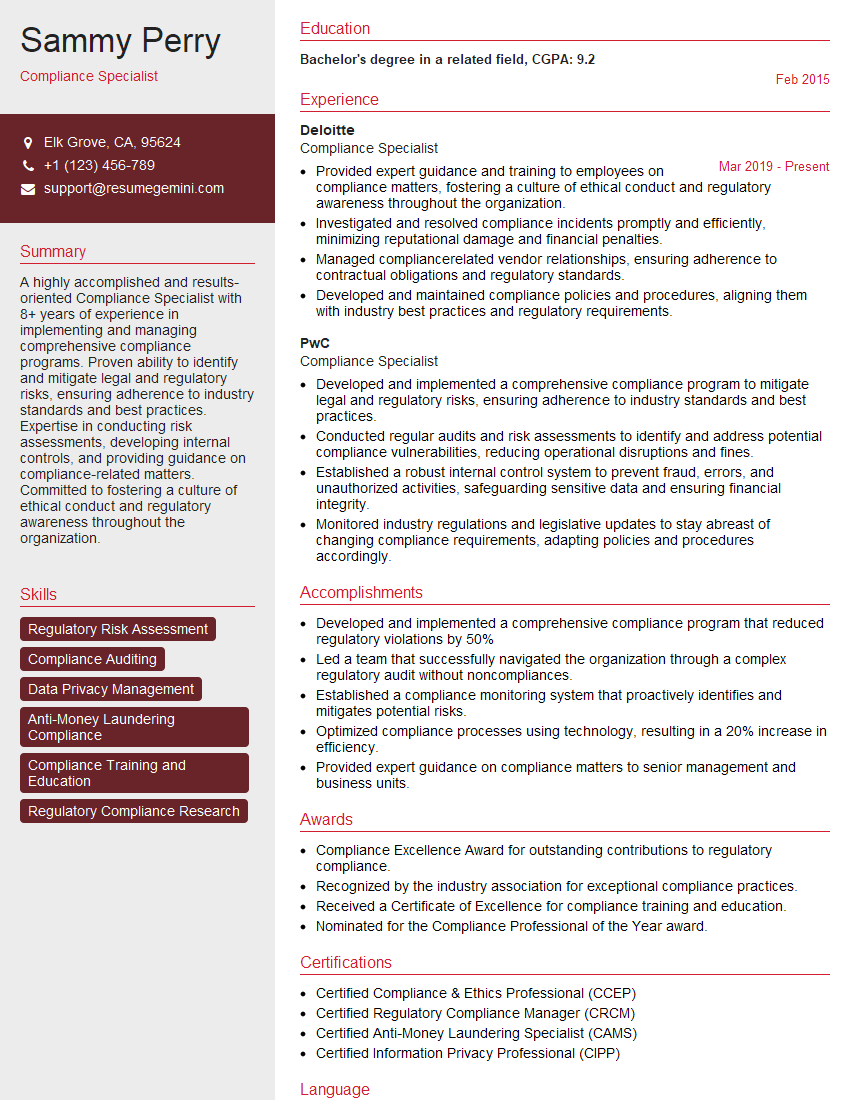
Compliance Specialist Resume Sample
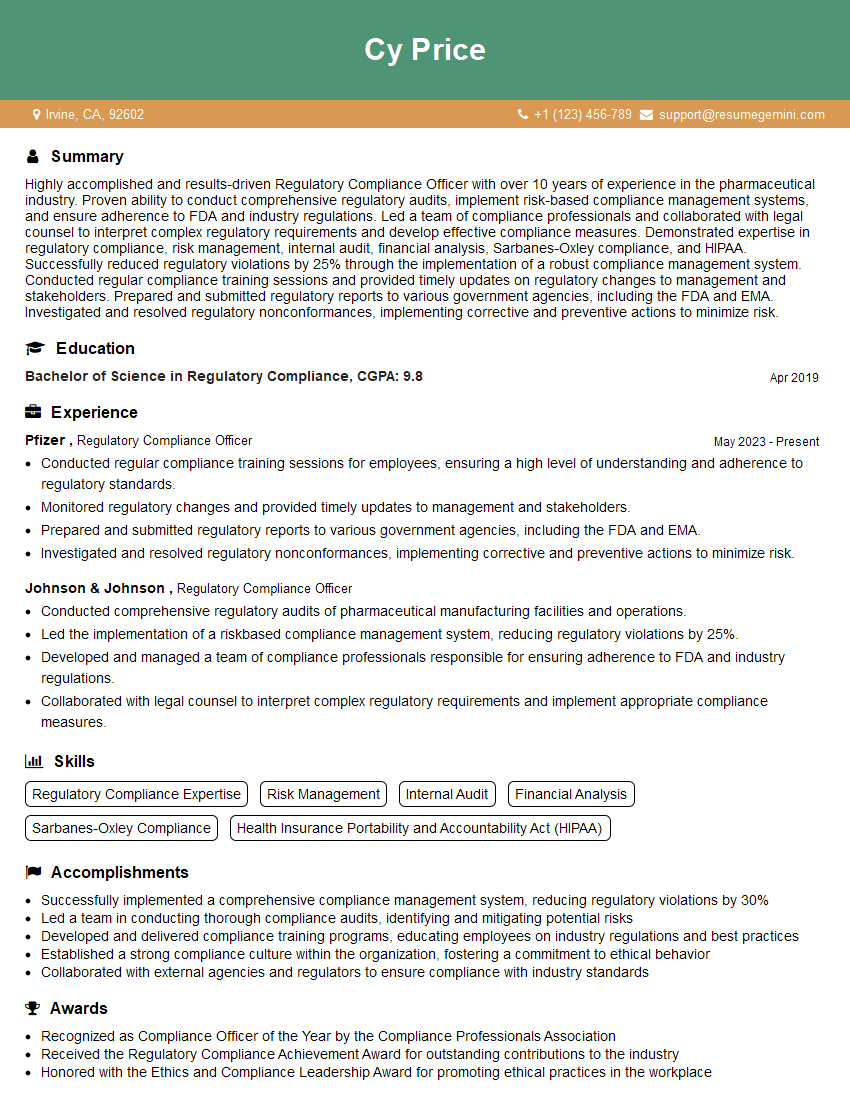
Regulatory Compliance Officer Resume Sample
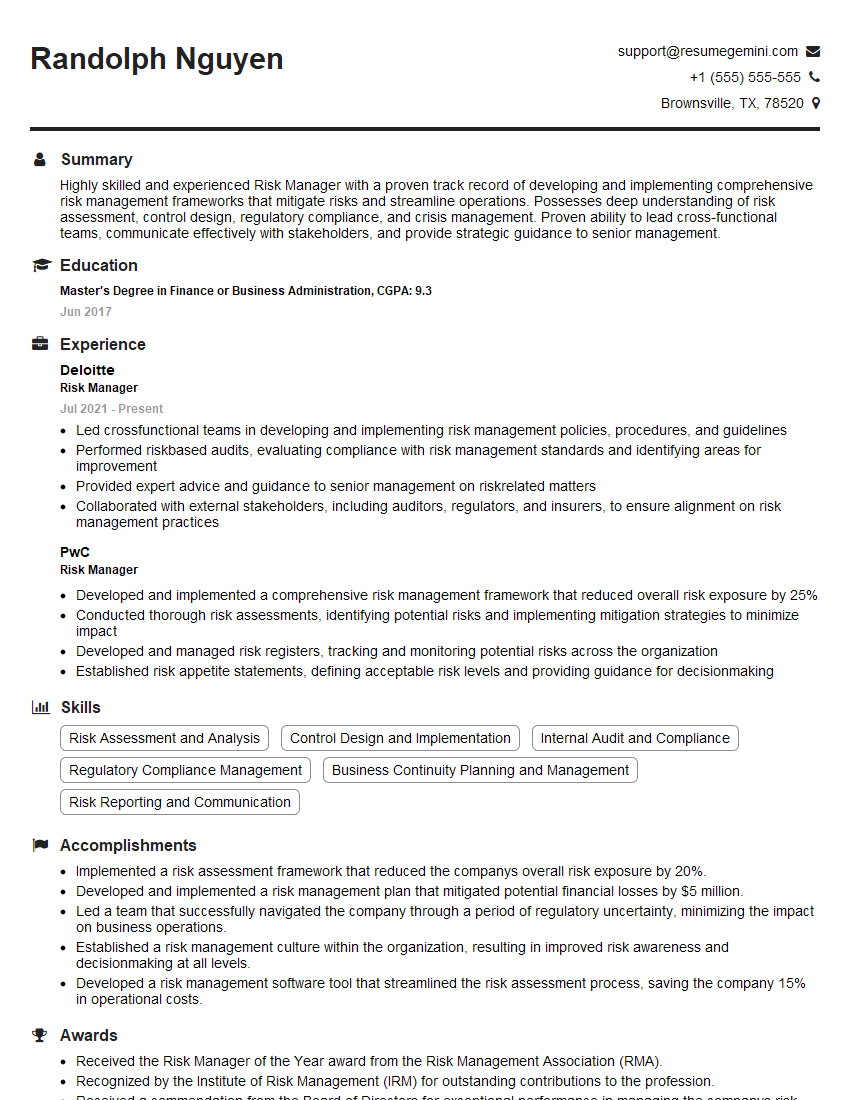
Risk Manager Resume Sample
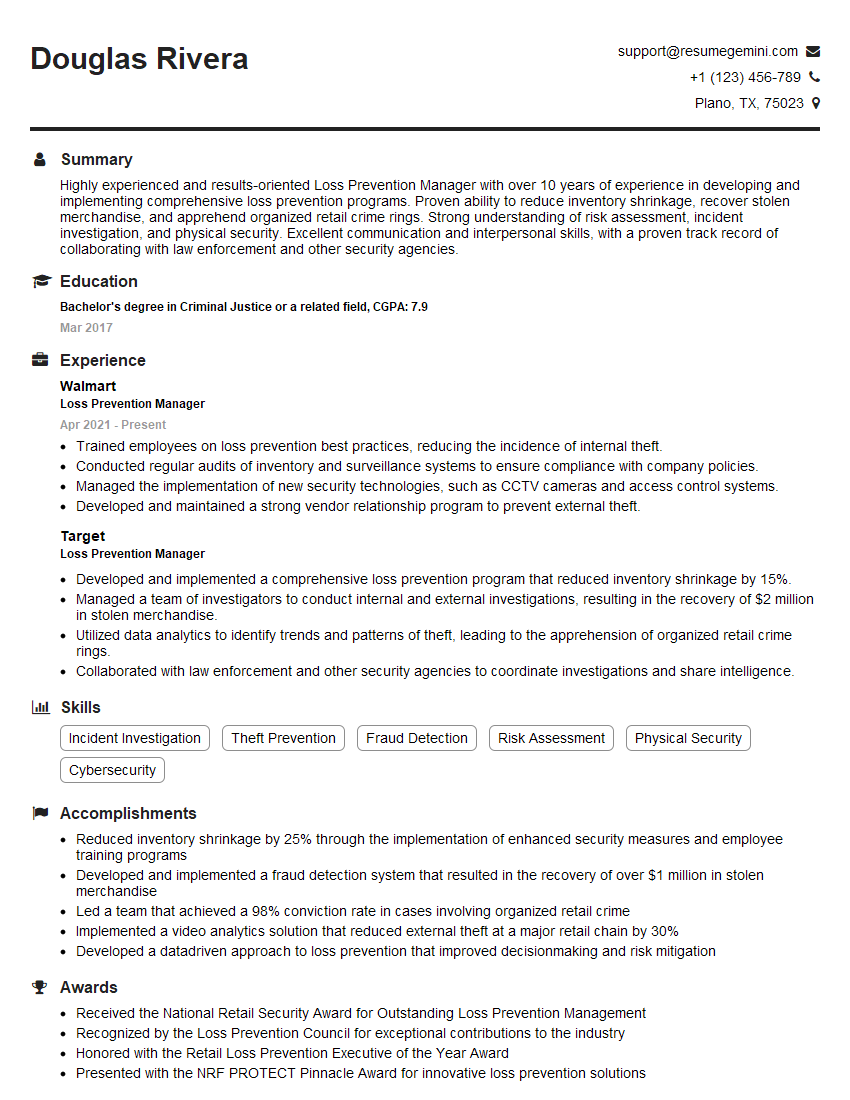
Loss Prevention Manager Resume Sample
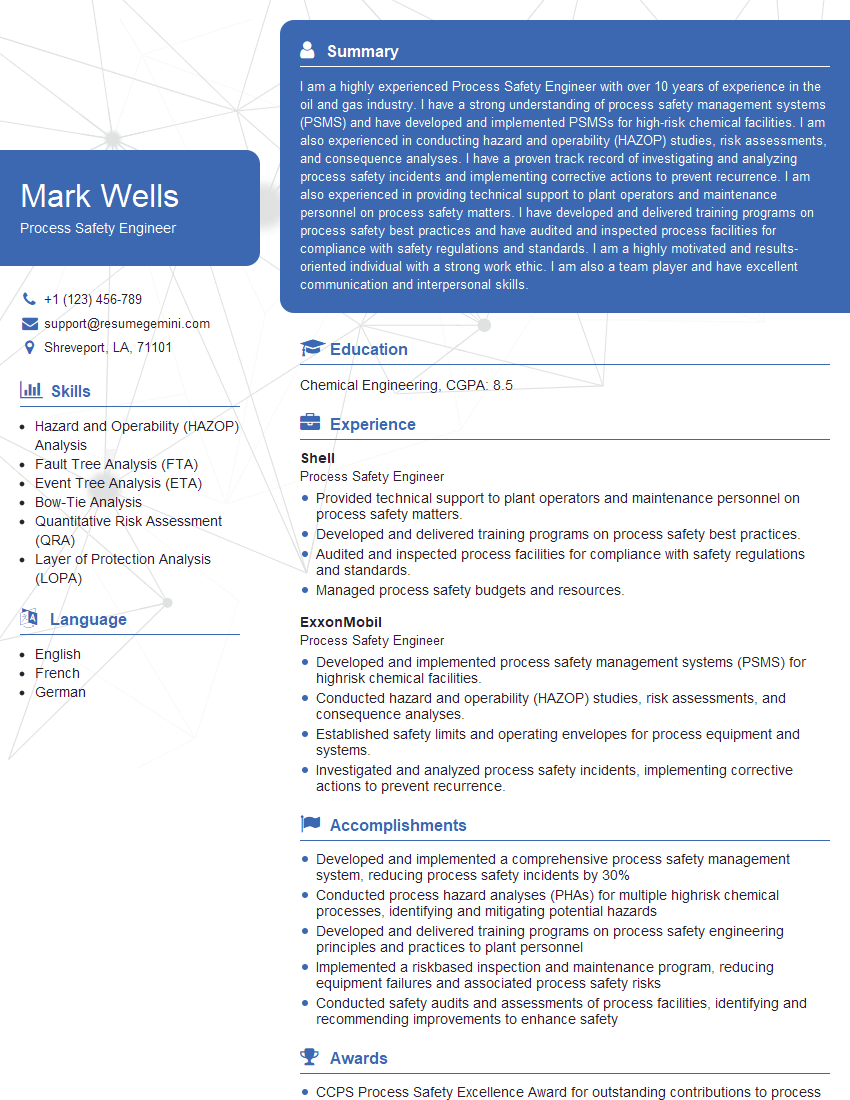
Process Safety Engineer Resume Sample
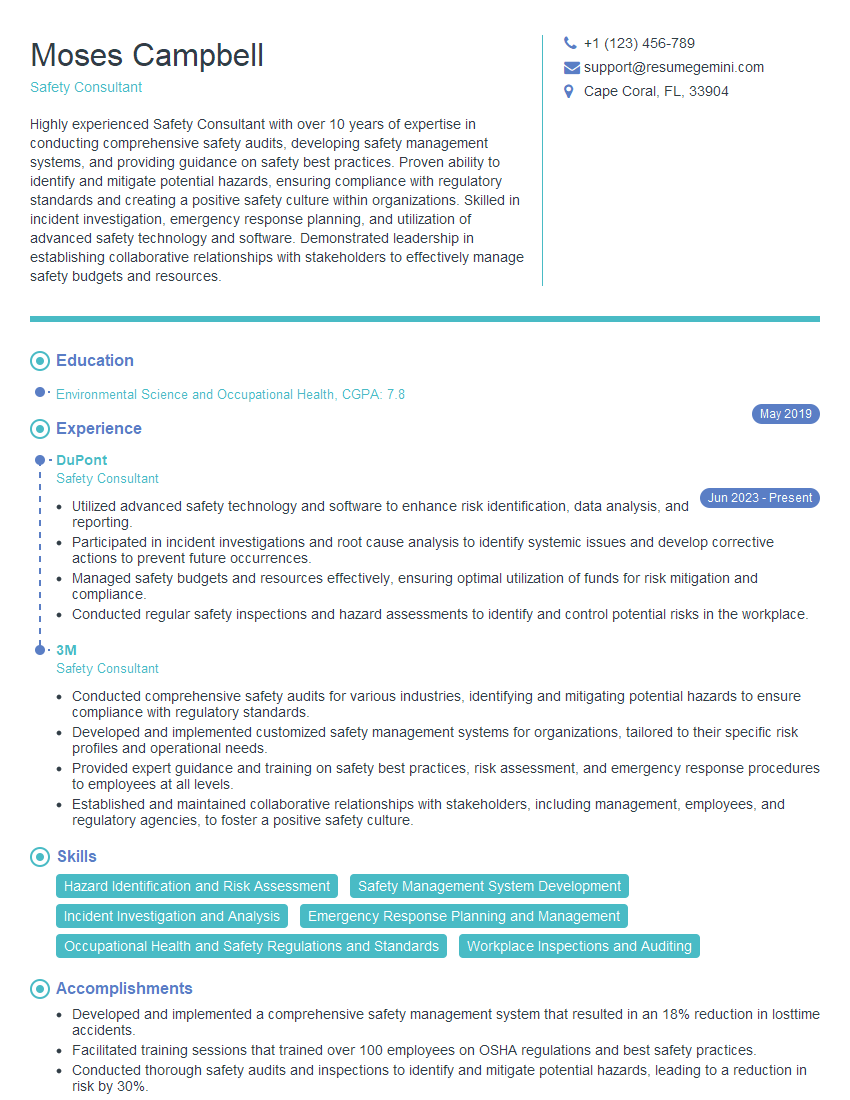
Safety Consultant Resume Sample
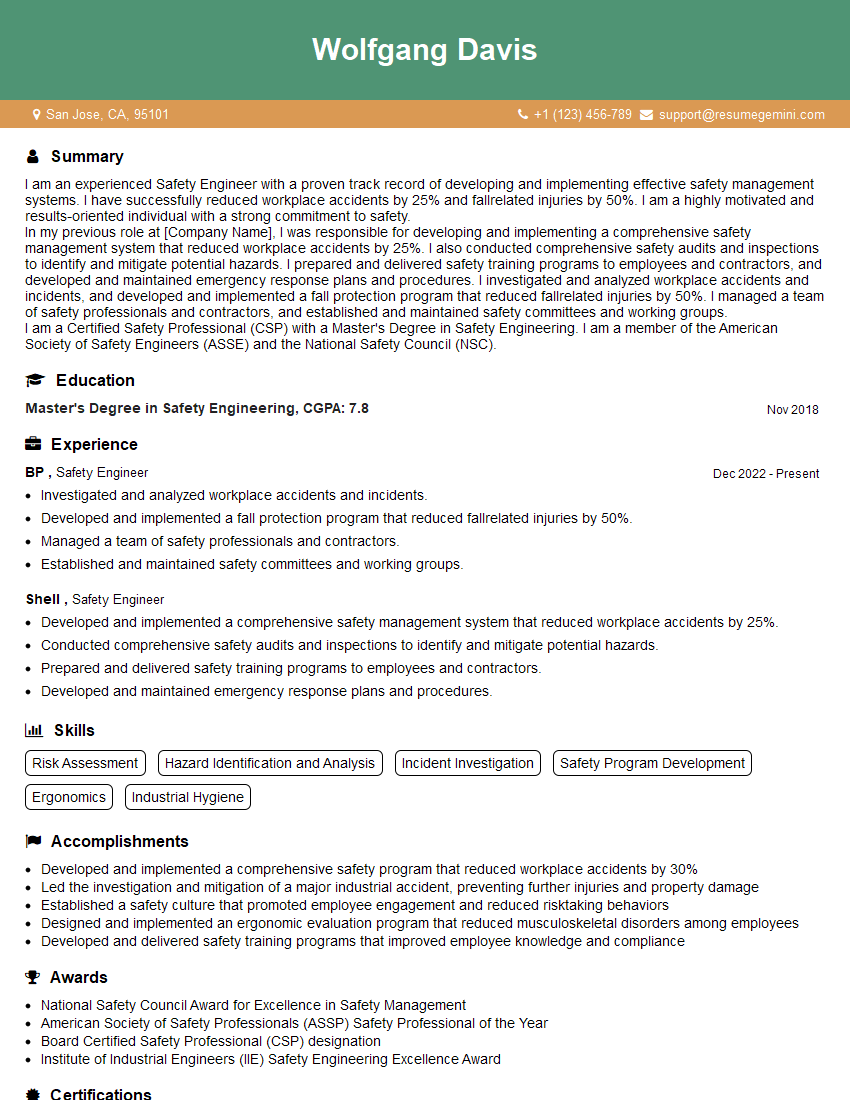
Safety Engineer Resume Sample
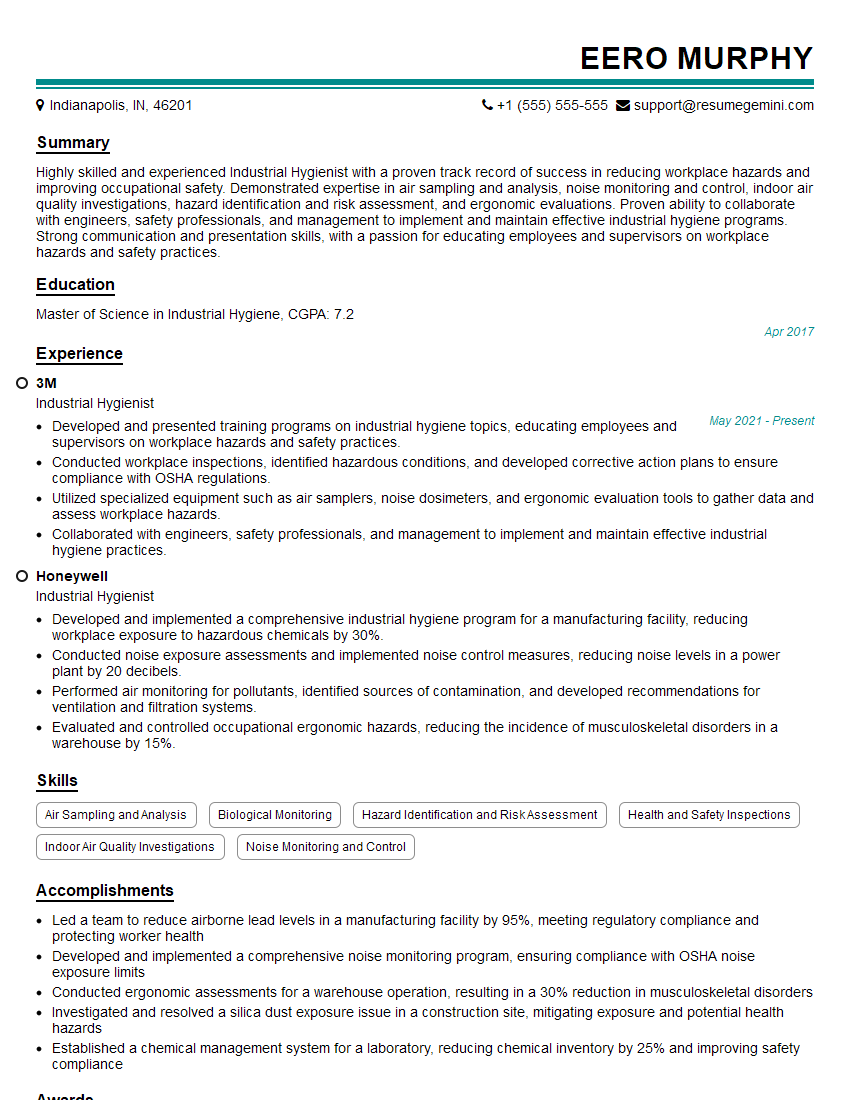
Industrial Hygienist Resume Sample
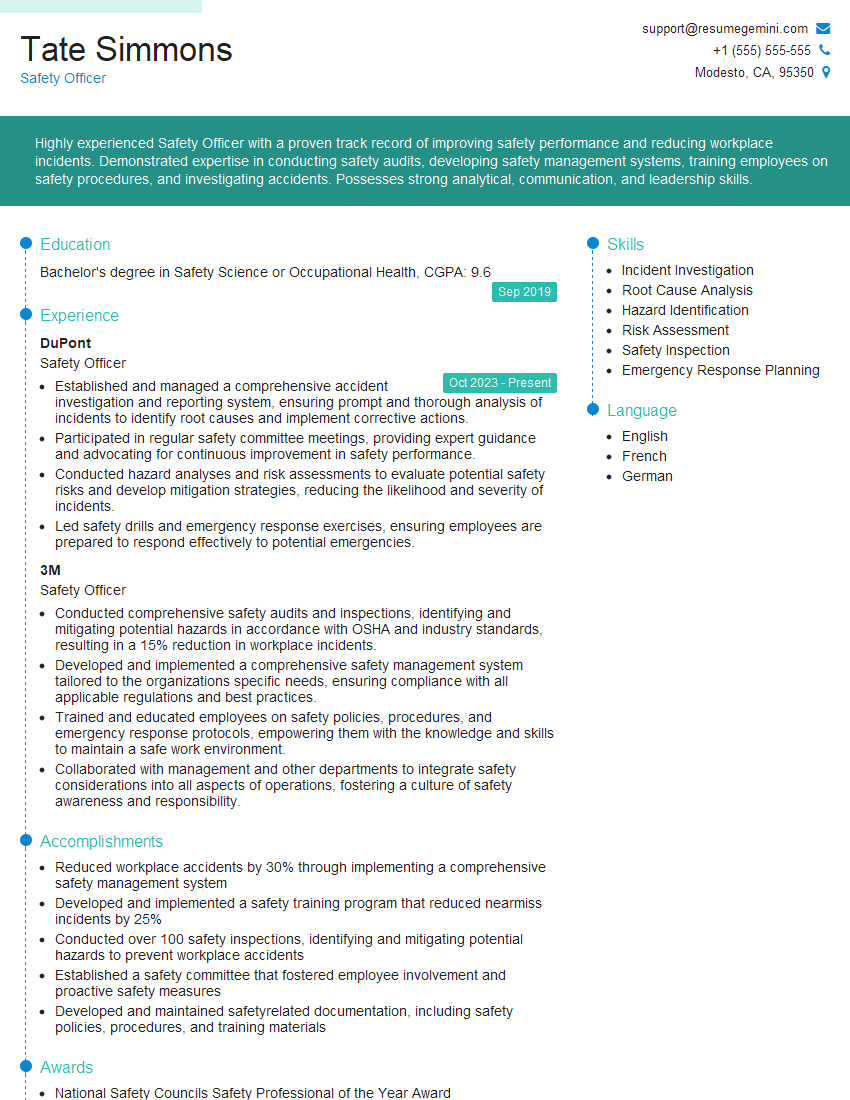
Safety Officer Resume Sample
Explore more articles
Users Rating of Our Blogs
Share Your Experience
We value your feedback! Please rate our content and share your thoughts (optional).
What Readers Say About Our Blog
Really detailed insights and content, thank you for writing this detailed article.
IT gave me an insight and words to use and be able to think of examples