The right preparation can turn an interview into an opportunity to showcase your expertise. This guide to Dodge and Burn interview questions is your ultimate resource, providing key insights and tips to help you ace your responses and stand out as a top candidate.
Questions Asked in Dodge and Burn Interview
Q 1. Explain the difference between Dodge and Burn tools.
Dodge and Burn tools are fundamental in image editing for controlling contrast and enhancing details. Think of them as virtual light and shadow manipulators. The Dodge tool lightens areas of an image, effectively ‘dodging’ the light away from them. Conversely, the Burn tool darkens areas, ‘burning’ in more shadow. They are non-destructive tools in most applications, meaning your original image remains untouched.
Q 2. Describe the various blending modes used with Dodge and Burn.
The blending modes used with Dodge and Burn significantly impact their effect. Common options include:
- Normal: The default mode; straightforward lightening or darkening.
- Soft Light: A subtle approach, ideal for gradual adjustments and avoiding harsh changes.
- Hard Light: Creates more pronounced contrast, useful for specific highlights or shadows.
- Overlay: Similar to Hard Light but with less intensity.
The choice depends on the desired effect and the image’s dynamic range. For delicate adjustments on a portrait, Soft Light might be preferable, while a bolder adjustment on a landscape might call for Hard Light.
Q 3. How do you determine the appropriate opacity and exposure settings for Dodge and Burn?
Opacity and Exposure are crucial for control. Opacity determines the strength of the tool’s effect – 100% applies the full effect, while lower values create more subtle changes. Exposure dictates how quickly the tool alters tones. A high exposure value will create stronger changes more rapidly than a lower one.
Start with low opacity (around 10-20%) and exposure settings. This allows for gradual adjustments and prevents overdoing it. You can always increase these settings later, but it’s much harder to undo over-correction. Think of it like painting – it’s easier to add another layer of paint than to remove it!
Q 4. What are the advantages of using Dodge and Burn over other contrast adjustment tools?
Dodge and Burn offer precise, localized control over contrast that other tools often lack. Global adjustments like curves or levels affect the entire image uniformly, whereas Dodge and Burn allows for selective, targeted manipulation. This is invaluable for refining details and creating a more natural look. For example, subtle dodging on eyes can make them sparkle without affecting the surrounding skin tones, something that’s difficult to achieve with global adjustments alone.
Q 5. How do you avoid creating harsh or unnatural results when using Dodge and Burn?
Avoiding harsh results requires careful technique and mindful application. Key strategies include:
- Low Opacity & Exposure: As mentioned earlier, starting with low values helps to build up the effect gradually, preventing harsh transitions.
- Soft Brushes: Using soft-edged brushes minimizes abrupt changes in tone. Experiment with brush size and hardness.
- Multiple Layers: Work non-destructively by applying Dodge and Burn to separate layers. This allows for fine-tuning and correction without affecting previous adjustments.
- Blending Modes: Experiment with different blending modes to soften the effect.
- Feathering: Lightly feathering brush edges further softens the transition and prevents harsh lines.
Remember, subtle changes often have the biggest impact. It’s better to build up the effect gradually than to try and achieve the desired result in one go.
Q 6. Explain how you would use Dodge and Burn to enhance the details in a portrait.
Enhancing a portrait involves strategically using Dodge and Burn to accentuate key features. For example:
- Dodge: Lightly dodge the highlights in the eyes to make them sparkle; add highlights to the hair to give it more dimension; brighten the cheekbones for a subtle contour.
- Burn: Burn the shadows under the eyes (carefully!) to create depth; add subtle shadows to the side of the nose to enhance the structure; darken the hair to give it more definition.
Always use low opacity and exposure settings and work gradually. Focus on creating subtle shifts in tone rather than bold changes. The goal is to enhance natural features, not create artificial ones.
Q 7. Describe your workflow for using Dodge and Burn in a high-resolution image.
My workflow for high-resolution images is essentially the same as for lower resolutions, but with a stronger emphasis on organization and efficiency. I typically:
- Work on a Zoomed View: This allows for precise control and avoids accidental harsh effects.
- Use Separate Layers: Create multiple layers for different areas (eyes, hair, skin, etc.). This maintains flexibility and allows for non-destructive editing.
- Regular Zooming Out: Zoom out periodically to see the overall effect and make sure the changes are harmonious.
- Regular Saving: Frequently save the file to avoid data loss, especially with large files.
- Use a Graphics Tablet: A graphics tablet offers greater control and precision when applying Dodge and Burn tools.
- High Resolution Brush: Employ a brush with a resolution that matches or exceeds the image resolution to avoid pixelation.
Working methodically and paying attention to detail are crucial when handling large images. The added complexity necessitates careful planning and organized execution.
Q 8. How do you maintain color accuracy while using Dodge and Burn?
Maintaining color accuracy while using Dodge and Burn is crucial for a natural-looking result. The key is to work subtly and use tools that allow for precise adjustments. Think of it like sculpting with light; you wouldn’t add a huge glob of clay at once, would you? Instead, you’d work in layers, gently shaping the form.
Avoid using high opacity settings. Instead, work with low opacities (around 5-15%) and multiple passes. This allows for gradual adjustments and prevents harsh, unnatural changes to the colors. Also, using a low-flow brush further refines control. Another crucial aspect is using a neutral mid-tone gray or a color similar to the surrounding area as your base for your dodge and burn tools. This will avoid unintentionally shifting the hue as you lighten or darken the image.
Furthermore, consider working in a color mode that provides better control, such as 16-bit. This gives you a wider range of tonal values to work with before clipping highlights or shadows. Always check your histogram regularly to prevent clipping.
Q 9. What are the best practices for using Dodge and Burn on different file formats (e.g., RAW, JPEG)?
The best practices for Dodge and Burn vary slightly depending on the file format. Working with RAW files provides maximum flexibility, as it contains more image information and allows for more non-destructive edits. Since RAW files are generally larger, this approach is best when working with high-resolution images and on a machine that can handle the increased processing time.
With JPEGs, which are lossy compressed, you have less room for manipulation before artifacts become noticeable. Be extra careful to avoid overdoing Dodge and Burn; it’s easier to introduce unwanted noise and banding in a JPEG. Often, subtle adjustments are best. For both formats, non-destructive editing is highly recommended so you can always revert to a previous version and work in layers.
Q 10. Explain how you would use Dodge and Burn to create a realistic lighting effect.
Creating realistic lighting effects with Dodge and Burn involves mimicking how light naturally interacts with objects. Imagine a spotlight on a person’s face: it will brighten the areas directly illuminated and create subtle shadows in the surrounding areas. You can achieve this by carefully applying Dodge to the areas where light directly hits, such as the forehead, cheekbones, and nose bridge, remembering to be subtle.
Simultaneously, use Burn to subtly darken the areas where shadows naturally fall, like the eye sockets, under the chin, or the side of the face away from the light source. The key here is gradual application. Begin with a soft, large brush at low opacity and gradually reduce brush size to carefully refine the effect. Pay attention to the light source’s direction and how it affects the surrounding environment to ensure your lighting effects feel believable and cohesive.
Q 11. How do you use Dodge and Burn to enhance textures in an image?
Dodge and Burn is remarkably effective at enhancing textures within an image. By selectively lightening and darkening areas, you can create the illusion of depth and dimension that highlights the surface details. Think of the texture of rough bark on a tree; the light will catch the raised areas, making them appear brighter, while the crevices remain darker.
To enhance textures, use a smaller, harder brush to target specific areas within the texture. Apply Dodge to the areas where you want the texture to appear raised and brighter. Apply Burn to areas that should appear recessed and darker. Again, subtle adjustments are key—repeated, light passes are more effective than one strong application.
Q 12. Describe your approach to using local adjustments with Dodge and Burn.
My approach to local adjustments with Dodge and Burn centers on using masks and layer blending modes. I rarely use global adjustments, opting for local adjustments to provide fine-grained control and avoid unintended consequences.
Using a layer mask allows me to target specific areas. I start by creating a new layer above my image and then use a brush to selectively reveal the dodge and burn effects on the layer below where needed. This allows me to paint the effects on precisely where needed without altering other parts of the image. I often use multiple layers for different aspects of the image to maintain maximum control.
Q 13. How do you handle the challenges of using Dodge and Burn on complex images with multiple elements?
Handling complex images with multiple elements requires a well-structured, layered approach. It’s like painting a complex landscape—you wouldn’t paint the entire scene at once, would you? You’d start with the background, then work on individual elements.
I usually start by separating the different elements into individual layers. This allows me to work on each element independently. Once isolated, I apply Dodge and Burn to enhance the details and lighting of each element, always considering how the elements interact with each other in terms of light and shadow. The organizational power of layers is critical for managing the complexity and makes the process much more manageable.
Q 14. What are some common mistakes to avoid when using Dodge and Burn?
Some common mistakes to avoid include using too high opacity, resulting in harsh, unrealistic changes. Overdoing it is a frequent issue; start with low opacity and multiple passes. Another mistake is neglecting to consider the overall image balance. Remember to view your work at different zoom levels and from a distance to gauge the overall effect. Too much contrast can make the image appear unnatural and jarring.
Failing to use layer masks and working directly on the base layer is another significant error. This prevents the ability to undo or refine adjustments easily. Finally, ignoring the histogram can lead to clipping highlights and shadows, leading to a loss of detail and an unnatural look. Regular histogram checks are critical.
Q 15. How do you use frequency separation techniques in conjunction with Dodge and Burn?
Frequency separation is a powerful technique used in conjunction with Dodge and Burn to achieve incredibly refined retouching. It essentially separates the image into two layers: one containing the details (textures like skin pores, hair strands), and another containing the color and tones (base skin color, overall lighting). This allows you to work on the tones and colors with Dodge and Burn without affecting the fine details, preventing that dreaded muddy or artificial look.
How it works: You create a high-pass filtered layer (usually a copy of your image, high-pass filtered to a suitable radius), which contains only the detail information. Then, you create a copy of your image on a layer below, containing the base tones. You perform your Dodge and Burn on the base tones layer, achieving smooth, natural-looking changes in brightness and contrast, while the details layer retains sharpness and texture.
Example: Imagine retouching a portrait. By separating the frequencies, you can carefully lighten the under-eye area on the base tones layer without affecting the subtle wrinkles and textures on the high-pass layer. The result is a more natural looking correction compared to applying Dodge and Burn directly to the whole image. This method offers significantly more control and precision.
Career Expert Tips:
- Ace those interviews! Prepare effectively by reviewing the Top 50 Most Common Interview Questions on ResumeGemini.
- Navigate your job search with confidence! Explore a wide range of Career Tips on ResumeGemini. Learn about common challenges and recommendations to overcome them.
- Craft the perfect resume! Master the Art of Resume Writing with ResumeGemini’s guide. Showcase your unique qualifications and achievements effectively.
- Don’t miss out on holiday savings! Build your dream resume with ResumeGemini’s ATS optimized templates.
Q 16. Describe how to use Dodge and Burn effectively on skin tones.
Dodge and Burn on skin tones requires a delicate touch and a keen eye for natural variation. The goal is to subtly enhance features and create believable luminosity, not to create a mask-like effect. Avoid harsh lines and sudden changes in tone.
Techniques: Use a soft, low opacity brush. Start with very low opacity (around 5-10%) and build up gradually. Work in layers, allowing yourself to easily correct mistakes. Focus on areas like the cheekbones, forehead, and bridge of the nose to create a sense of volume and dimension. Pay attention to the direction of light and shade to ensure realism.
Example: When brightening the cheekbones, you might start with a low-opacity dodge tool along the area where the light would naturally hit the face. The brush should feather out gradually into the surrounding skin so there are no harsh lines. Always zoom in to check your work at high resolution, ensuring you don’t lose detail or create unnatural patches of light.
Q 17. How do you use non-destructive editing techniques with Dodge and Burn?
Non-destructive editing means you can always go back and adjust your work without losing your original image data. This is crucial for professional retouching. With Dodge and Burn, this is achieved by working on adjustment layers or using layer masks.
Methods: Create a new adjustment layer (Brightness/Contrast, Curves, Levels) and use a layer mask to selectively apply your Dodge and Burn adjustments. You can paint black on the mask to hide the effect and white to reveal it, offering precise control and the ability to refine or undo your work later.
Benefits: Non-destructive editing allows for experimentation without risk and flexibility throughout the entire editing process, ensuring a professional and adaptable workflow.
Q 18. Explain the use of masking with Dodge and Burn.
Masking is essential when using Dodge and Burn, allowing for targeted adjustments and preventing unwanted changes in other areas of the image. Without masks, the effect of Dodge and Burn is applied globally, often leading to unrealistic and unnatural results.
Techniques: Use layer masks to isolate the areas you want to affect. Create a new layer and paint on the mask to protect areas that shouldn’t be modified. This allows fine control and prevents unwanted changes to textures and details in areas adjacent to your Dodge and Burn adjustments. You can even use gradient masks for gradual transitions between dodged and burned areas for a smoother look.
Example: When brightening eyes, use a carefully crafted mask to only affect the iris and pupil, preventing accidental lightening of the surrounding skin.
Q 19. What are some alternatives to Dodge and Burn for achieving similar results?
While Dodge and Burn is a classic technique, several alternatives offer similar results with different workflows. These tools often provide more streamlined approaches, especially for complex adjustments.
Alternatives:
- Curves Adjustment Layer: Offers precise control over tonal adjustments and can be masked for targeted changes.
- Levels Adjustment Layer: Great for adjusting overall contrast and brightness in a selective manner.
- Radial Filter (in Photoshop): Allows for vignette-like or localized brightness and contrast changes.
- HDR Toning: Can create a similar effect of brightening and darkening, but often with a more dramatic and stylized look.
The best alternative depends on the desired outcome and the specific software used.
Q 20. How do you assess the quality of your Dodge and Burn work?
Assessing the quality of your Dodge and Burn work involves a critical review for both technical skill and artistic effect. It’s a blend of objective and subjective evaluation.
Checklist:
- Smooth Transitions: Ensure no harsh lines or abrupt changes in tone.
- Natural Look: The result should look realistic and believable, not overly processed.
- Detail Preservation: The fine textures and details in the image shouldn’t be lost or blurred.
- Consistency with Lighting: The Dodge and Burn adjustments should complement the overall lighting scheme.
- Subtlety: Less is often more. Overdoing it will make the image look artificial.
Tip: Take breaks during your editing process. Fresh eyes are crucial for spotting subtle imperfections.
Q 21. How would you approach correcting over-exposed areas using Dodge and Burn?
Correcting over-exposed areas using Dodge and Burn requires a careful approach, as it’s essentially working against the existing highlights. You’ll be aiming for recovery rather than enhancement.
Strategy: Instead of using the Dodge tool, focus primarily on the Burn tool on a layer mask set on top of the overexposed area. Use a very low opacity and soft brush, gradually bringing down the brightness in the blown-out areas. Avoid applying Burn directly to the entire overexposed area at once. If your overexposure is extreme, you might first try using tools like the Shadows/Highlights adjustment in Photoshop to recover some detail before carefully applying Burn to further refine.
Example: If a sky is severely overexposed, you would mask your Burn tool to selectively darken specific parts of the sky where you want to recover detail, starting with a lower opacity and slowly increasing it as you refine your work. Patience and attention to detail are critical in this process.
Q 22. How would you handle under-exposed areas using Dodge and Burn?
Dodge and Burn is a classic technique for selectively lightening (Dodge) or darkening (Burn) areas of an image. For under-exposed areas, we use the Dodge tool. Think of it like gently lifting shadows to reveal detail. Instead of globally brightening the image, which can lead to washed-out areas, we carefully target only the under-exposed parts.
My approach involves working on a separate layer in Photoshop (or equivalent). This is crucial for non-destructive editing. I typically use a low opacity (around 10-20%) and a soft brush to gradually lighten the shadows. I start with a large brush size for general brightening and then switch to smaller sizes for more precise detail work. I constantly zoom in to check for detail and avoid harsh edges. For instance, if I’m working on a portrait, I might dodge the area under the eyes to bring out the detail and reduce the darkness without creating an unnatural look.
A common mistake is to use a high opacity and a hard brush which results in harsh, unnatural-looking highlights. The key is subtlety and patience. It’s a process of iterative refinement rather than a one-time fix.
Q 23. How do you use Dodge and Burn to improve image sharpness?
Dodge and Burn can subtly enhance image sharpness, particularly in areas that lack contrast. It’s not a replacement for sharpening filters but a complementary technique. By carefully dodging the highlights and burning the shadows along edges, you increase local contrast which makes those edges appear crisper and more defined.
For example, consider a slightly blurry portrait. Instead of applying a global sharpening filter, I might selectively burn the shadows slightly inside the outlines of the subject’s hair and then dodge the highlights along the edges to improve the perception of definition. This localized approach prevents haloing or other artifacts often associated with over-sharpening.
It’s important to remember that we’re not adding detail here, but making existing detail more visible by accentuating the contrast.
Q 24. How do you maintain consistency across multiple images when using Dodge and Burn?
Maintaining consistency across multiple images requires a structured workflow. Before starting, I establish a set of parameters: opacity levels for dodge and burn, brush sizes, and a general style guide. This could involve creating custom brushes with specific hardness and sizes.
Furthermore, I often create an action in Photoshop (or use presets in Lightroom) to streamline the process. This action replicates the same dodge and burn settings across images, ensuring a consistent look. This is especially useful when working on a series of images for a client or portfolio. Finally, I regularly step back and compare the edited images side-by-side to ensure visual harmony.
Q 25. How would you use Dodge and Burn to create a specific mood or atmosphere in an image?
Dodge and burn is a powerful tool for mood manipulation. By strategically controlling light and shadow, you can significantly alter the atmosphere of a photograph. For a dramatic, high-contrast mood, I would use strong burns to deepen shadows and strong dodges to accentuate highlights, creating a more intense and emotional image.
Conversely, for a softer, more ethereal mood, I’d use gentle, low-opacity dodges and burns to subtly adjust the tonal range. For example, in a landscape photo, I might burn down the sky to emphasize the foreground elements, and subtly dodge the clouds to enhance their luminosity and create a feeling of serenity.
The key is to consider the emotional impact of light and shadow and use the tools accordingly. Darker shadows create mystery and drama, while brighter highlights suggest hope and optimism.
Q 26. Describe your experience working with different software that utilizes Dodge and Burn tools (e.g., Photoshop, Lightroom).
I have extensive experience with both Adobe Photoshop and Lightroom. Photoshop provides the most control, particularly for intricate work on individual layers. I use its advanced brush capabilities and layer masks to achieve precise results. Lightroom, on the other hand, offers a non-destructive, more intuitive workflow, ideal for large-scale adjustments and batch processing. Its local adjustment tools provide a similar effect to Dodge and Burn but with a different approach and are fantastic for quick edits.
I often utilize both programs concurrently. I might do initial adjustments in Lightroom, then fine-tune the details in Photoshop. For instance, I’ll use Lightroom’s radial filter for global adjustments, followed by precision Dodge and Burn in Photoshop for areas requiring more delicate work.
Q 27. What are the limitations of Dodge and Burn, and how do you work around them?
One primary limitation is the potential for a ‘muddy’ look if the dodge and burn is overdone or applied carelessly. Another is the time-consuming nature, particularly when striving for very subtle adjustments.
To overcome these limitations, I always start with a good base image, properly exposed and with good dynamic range. Then, I apply dodge and burn in subtle layers, constantly zooming in to check my work. I also frequently step away from the screen to maintain a fresh perspective. In cases where the image requires extensive correction, I might consider using frequency separation techniques to work on different aspects (detail and tones) of the image independently, making the process less muddied.
Q 28. How do you keep your Dodge and Burn work looking natural and not over-processed?
The key to natural-looking Dodge and Burn is subtlety and restraint. Think of it as sculpting light, not painting it. Avoid hard edges and abrupt transitions. Use low opacity, soft brushes, and work iteratively, checking your progress frequently.
I often compare my work to a traditional painter’s approach. Instead of slapping on thick layers of paint, they gradually build up the image with thin, translucent layers, allowing for subtle gradations of light and shadow. I apply the same principle with Dodge and Burn. I check the image under different lighting conditions to ensure that the adjustments look natural under varied situations. Finally, if I’m unsure, I always step back and ask myself: ‘Does this look like something I could have captured with real-world lighting?’
Key Topics to Learn for Dodge and Burn Interview
- Understanding Dodge and Burn Tools: Explore the differences between Dodge and Burn tools in various software (Photoshop, GIMP, etc.), including their functionality and impact on image contrast and tonal range.
- Practical Application in Image Editing: Learn how to effectively use Dodge and Burn to enhance portraits, retouch images, and create specific lighting effects. Consider examples like highlighting eyes, sculpting facial features, and adding depth to landscapes.
- Non-Destructive Workflow: Master techniques for using adjustment layers, masks, and other non-destructive methods to ensure flexibility and easy edits throughout the process. This demonstrates a professional and efficient workflow.
- Frequency Separation: Understand the principles and techniques of frequency separation for advanced retouching, allowing for targeted adjustments to skin texture and color.
- Color Correction and Tone Adjustment: Learn how Dodge and Burn interacts with overall color balance and tone adjustments. This shows a holistic understanding of image editing.
- Understanding Light and Shadow: Demonstrate a solid grasp of how light and shadow affect an image and how Dodge and Burn can be used to manipulate these elements for artistic and realistic results.
- Troubleshooting Common Issues: Be prepared to discuss common problems encountered when using Dodge and Burn, such as haloing or unnatural-looking results, and how to solve them.
Next Steps
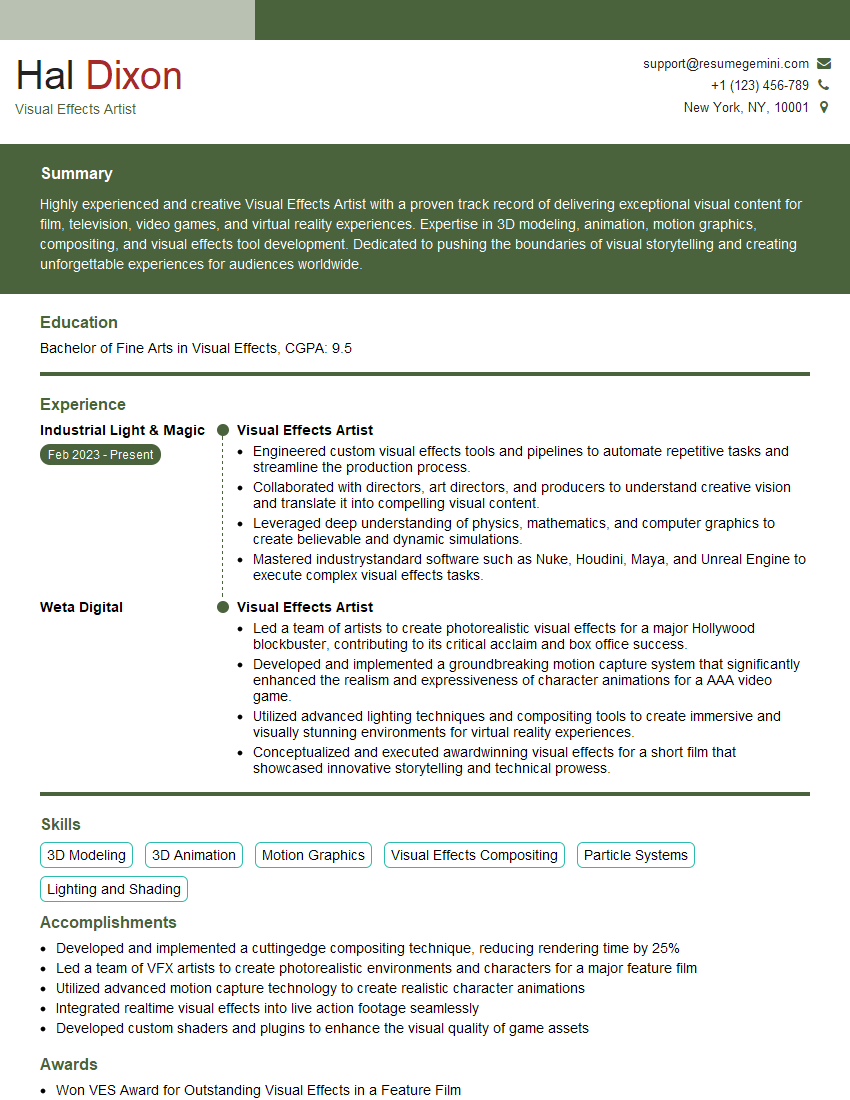
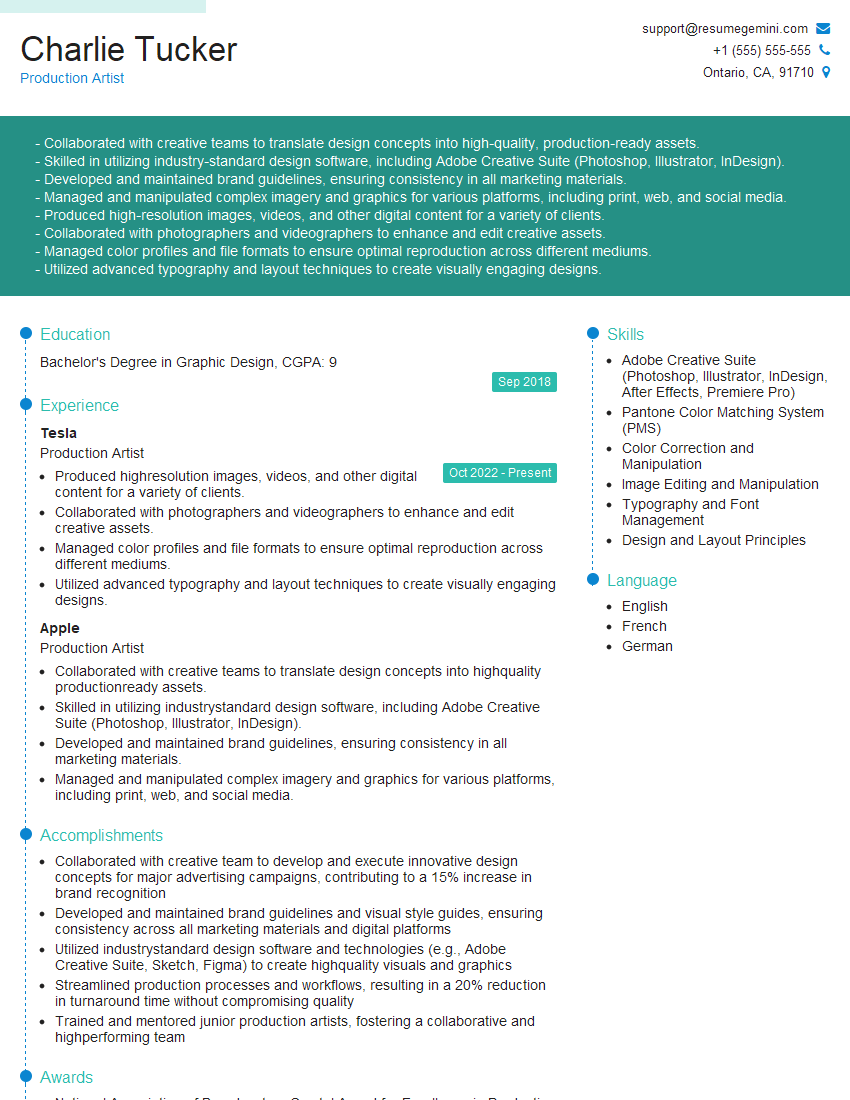
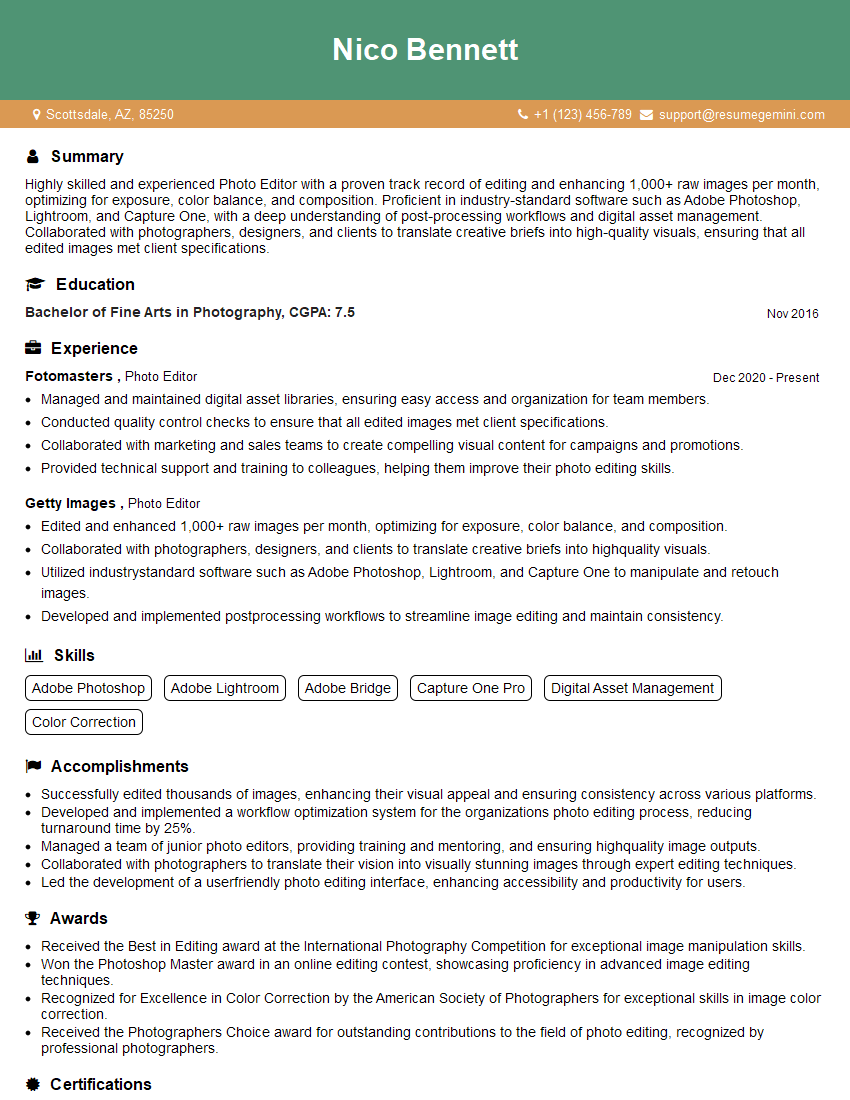
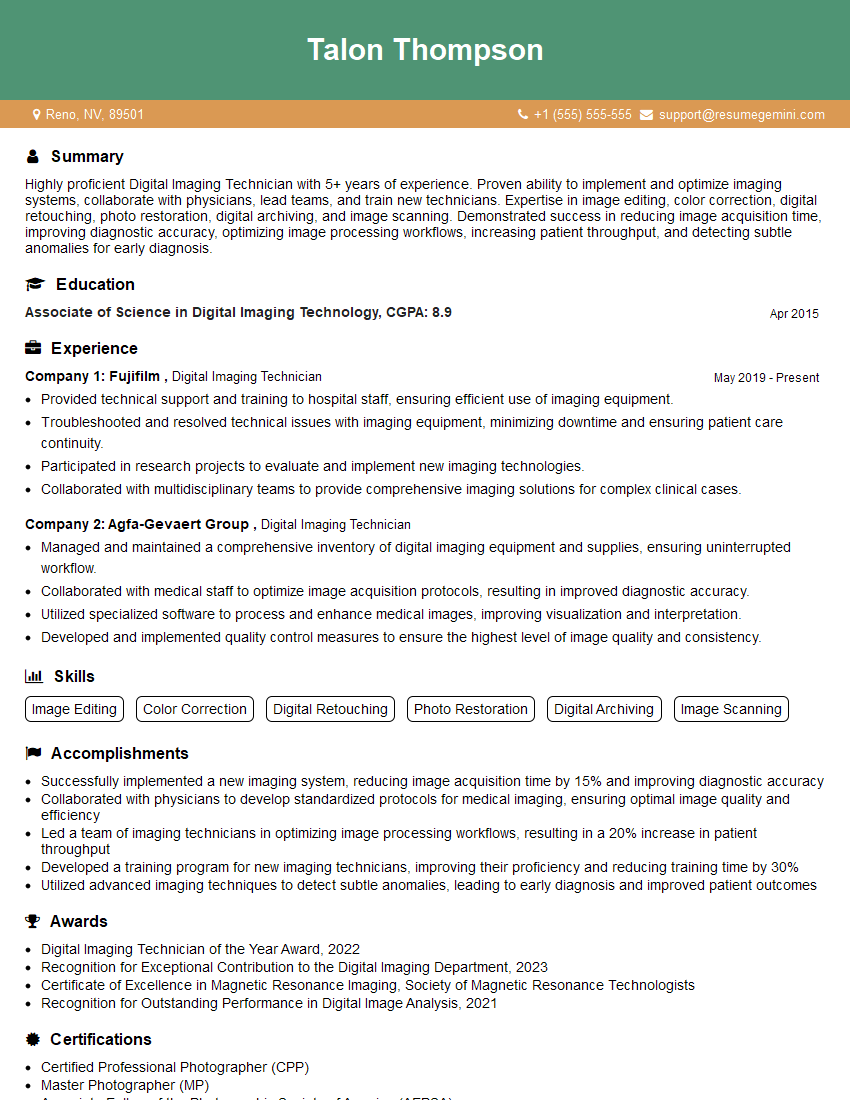
Mastering Dodge and Burn techniques is crucial for showcasing your advanced image editing skills, significantly enhancing your marketability in the competitive creative industry. A strong portfolio showcasing your proficiency in these techniques is vital. To maximize your job prospects, create an ATS-friendly resume that effectively highlights your skills and experience. ResumeGemini is a trusted resource to help you build a professional and impactful resume that grabs the attention of recruiters. Examples of resumes tailored to Dodge and Burn skills are available to help you get started.
Explore more articles
Users Rating of Our Blogs
Share Your Experience
We value your feedback! Please rate our content and share your thoughts (optional).
What Readers Say About Our Blog
Really detailed insights and content, thank you for writing this detailed article.
IT gave me an insight and words to use and be able to think of examples