Unlock your full potential by mastering the most common Wind and Structural Engineering interview questions. This blog offers a deep dive into the critical topics, ensuring you’re not only prepared to answer but to excel. With these insights, you’ll approach your interview with clarity and confidence.
Questions Asked in Wind and Structural Engineering Interview
Q 1. Explain the concept of wind load and its impact on structural design.
Wind load refers to the force exerted by wind on a structure. It’s a crucial consideration in structural design because it can cause significant stresses, potentially leading to damage or even collapse. Imagine a sailboat – the wind pushes against the sails, creating a force that needs to be managed to prevent capsizing. Similarly, buildings experience wind loads that must be carefully accounted for.
The impact on structural design is multifaceted. We need to ensure the structure is strong enough to resist these forces without excessive deflection or cracking. This involves careful selection of materials, appropriate sizing of structural members (beams, columns, etc.), and consideration of the overall building form. For example, a skyscraper needs a significantly stronger structural system to withstand wind loads compared to a low-rise building.
Q 2. Describe different methods for calculating wind pressure on a building.
Calculating wind pressure on a building involves several methods, depending on the complexity of the structure and the desired accuracy. The most common approaches include:
- Simplified procedures: These methods use simplified formulas based on building height, shape, and location. They are suitable for simpler structures and provide a reasonable estimate of wind pressures.
- Equivalent static wind load method: This method considers the average wind speed and converts it into equivalent static forces applied to the structure. It’s relatively straightforward but may not fully capture dynamic effects.
- Computational Fluid Dynamics (CFD): CFD uses sophisticated computer simulations to model the airflow around the structure. This provides highly detailed pressure distributions and accounts for complex geometries and wind conditions. It’s particularly useful for large or complex structures.
- Wind tunnel testing: Physical models are tested in a wind tunnel to measure wind pressures and forces directly. This is the most accurate method but is more expensive and time-consuming.
The choice of method depends on factors like project budget, complexity of the building, and required accuracy. For instance, a small residential building might utilize a simplified method, while a large bridge would likely require CFD or wind tunnel testing.
Q 3. How do you account for wind gusts and turbulence in structural design?
Wind gusts and turbulence significantly increase the dynamic forces acting on structures. They cannot be ignored, as these fluctuating pressures can lead to fatigue failure over time or even immediate structural damage. To account for these effects:
- Gust factor: We apply a gust factor to the average wind speed to reflect the increased pressure due to gusts. The gust factor varies depending on the terrain roughness and building height.
- Dynamic analysis: This sophisticated technique considers the time-varying nature of wind loads and their impact on the structure’s dynamic response. It can involve methods such as spectral analysis or time-history analysis.
- Turbulence intensity: The level of turbulence affects the fluctuating wind pressure. We account for turbulence intensity in dynamic analysis by using appropriate turbulence models and wind spectra.
For example, the design of a tall building needs to incorporate a comprehensive dynamic analysis to ensure it can withstand significant wind gusts without excessive swaying or vibration. Neglecting these effects can have catastrophic consequences.
Q 4. What are the key differences between static and dynamic wind analysis?
The key difference lies in how they handle the time-varying nature of wind loads.
- Static wind analysis: This simplifies the problem by assuming that wind loads are constant over time. It calculates the average wind pressure and then converts this into equivalent static forces acting on the structure. This method is less accurate but simpler and computationally less expensive. It’s suitable for smaller, less sensitive structures.
- Dynamic wind analysis: This accounts for the fluctuating nature of wind loads. It considers the structure’s response as a function of time, capturing the dynamic effects of gusts and turbulence. This approach is essential for tall buildings, long-span bridges, and other structures sensitive to dynamic loading. It involves more complex mathematical models and simulations.
Think of it like pushing a child on a swing: static analysis would be like applying a constant force, while dynamic analysis would consider the push’s timing and its effect on the swing’s oscillation.
Q 5. Explain the significance of wind tunnel testing in structural engineering.
Wind tunnel testing is a crucial tool in structural engineering for verifying and refining designs, particularly for complex and high-profile structures. It involves creating a scaled physical model of the structure and testing it in a wind tunnel to simulate realistic wind conditions. This testing allows engineers to:
- Measure wind pressures and forces: Precise measurements are taken at various points on the model to determine the magnitude and distribution of wind loads.
- Assess structural response: The model’s deflection, vibration, and overall response to wind are observed and recorded.
- Optimize design: The test results can identify potential weaknesses or areas for improvement in the design, leading to a more robust and efficient structure.
- Validate numerical models: Wind tunnel results can be used to validate the accuracy of computational fluid dynamics (CFD) models.
For example, wind tunnel testing played a vital role in the design of the Burj Khalifa, helping to minimize wind-induced vibrations and ensure the structure’s stability.
Q 6. What are the common codes and standards used for wind engineering design?
Several codes and standards govern wind engineering design, varying slightly depending on the location and the type of structure. Some of the most commonly used include:
- ASCE 7 (American Society of Civil Engineers): A widely used standard in the United States for minimum design loads and associated criteria for buildings and other structures.
- EN 1991-1-4 (Eurocode 1): The European standard for actions on structures, specifically Part 1-4 which addresses wind actions.
- NBCC (National Building Code of Canada): The Canadian standard that provides guidelines for structural design, including wind loads.
- IS 875 (Indian Standard): The Indian standard that specifies load codes for buildings and structures.
These codes provide guidelines for determining wind speeds, pressure coefficients, and other factors necessary for accurate wind load calculations. Adherence to these standards is crucial for ensuring the safety and reliability of structures.
Q 7. Describe your experience with different types of structural analysis (e.g., linear, nonlinear).
My experience encompasses a range of structural analysis methods, both linear and nonlinear.
- Linear analysis: This approach assumes a linear relationship between loads and structural response. It’s simpler and less computationally intensive. I’ve extensively used linear analysis for preliminary design stages and for structures where nonlinear effects are deemed negligible. For example, a simple steel frame building under moderate wind loads might be adequately analyzed using linear methods.
- Nonlinear analysis: This is crucial when dealing with large deformations, material nonlinearities (e.g., plasticity), or complex behavior. Nonlinear analysis provides a more accurate representation of the structure’s behavior under extreme loads, such as during a major wind event. I have utilized nonlinear finite element analysis (FEA) software to model and analyze high-rise buildings, long-span bridges, and other complex structures where nonlinear effects significantly influence the structural response. For instance, assessing the ductile behavior of a reinforced concrete building during a major windstorm necessitates nonlinear analysis.
The selection of the appropriate analysis method depends on the specific project requirements and the level of accuracy needed. For critical structures or when dealing with high-impact loading scenarios, nonlinear analysis is essential to accurately capture the structure’s response and ensure safety.
Q 8. How do you determine the appropriate safety factors for wind load design?
Determining appropriate safety factors for wind load design is crucial for ensuring structural integrity and safety. It’s not a single number but a process involving several considerations. We aim to balance the risk of structural failure against the cost and practicality of over-design. The safety factor accounts for uncertainties in wind load estimation, material properties, construction quality, and modeling assumptions.
Safety factors are typically derived from building codes and standards like ASCE 7 (American Society of Civil Engineers) or Eurocode 1. These codes prescribe minimum safety factors, often presented as load factors and resistance factors. Load factors increase the design wind loads to account for uncertainties in wind speed prediction and load modeling. Resistance factors account for uncertainties in material strength, construction quality, and analysis methods. The product of these factors effectively determines the overall safety factor.
For example, a typical load factor might be 1.6, implying that the calculated wind load is increased by 60%, while a resistance factor for steel might be 0.9, reducing the assumed material strength by 10%. The combined effect provides a significant safety margin. The exact values depend on the structural type, importance factor (considering the consequences of failure), and the level of risk the client and engineer are willing to accept.
In practice, I’ve often seen projects where a higher safety factor is justified due to the presence of unique site conditions, unusual structural geometries, or critical occupancy. A thorough risk assessment is vital, often involving probabilistic analysis techniques, to fine-tune the safety factors based on specific project requirements.
Q 9. What are the common failure modes of structures under wind loading?
Structures under wind loading can fail in several ways, often involving a combination of factors. Common failure modes include:
- Overturning: The wind force can exceed the structure’s resisting moment, causing it to tip over. This is a particular concern for tall, slender structures or those with a high center of gravity.
- Lateral Deflection/Drift: Excessive horizontal movement can lead to structural damage and even collapse. This is especially relevant for flexible structures like tall buildings and long-span bridges.
- Buckling: Slender structural members (columns, beams) may buckle under compressive stresses induced by wind. Wind can also cause secondary moments, exacerbating buckling.
- Fatigue: Repeated cyclic loading from fluctuating wind speeds can cause fatigue cracks, ultimately leading to failure. This is significant for structures in areas with high wind variability.
- Fracture: Wind loads can directly cause brittle failure in structural members, particularly in the presence of defects or flaws.
- Cladding Failure: Wind pressures can exceed the capacity of exterior cladding elements (walls, roofing), causing detachment or damage. This can lead to further problems like water ingress.
- Foundation Failure: Inadequate foundation design or soil conditions can result in settlement or sliding due to wind-induced loads.
Understanding these failure modes is essential for engineers to design robust structures that can withstand the forces exerted by the wind. For instance, designing adequate bracing systems helps mitigate lateral deflection and buckling, while selecting appropriate materials and detailing can address fatigue and fracture risks.
Q 10. Explain the concept of dynamic amplification factor (DAF).
The Dynamic Amplification Factor (DAF) accounts for the increased response of a structure to wind loading due to its dynamic characteristics. Imagine pushing a child on a swing – a small, rhythmic push at the right frequency will result in a much larger swing amplitude compared to a single, large push. Similarly, wind gusts can excite the natural frequencies of a structure, leading to larger dynamic responses than predicted by static analysis.
DAF is the ratio of the maximum dynamic displacement or stress to the maximum static displacement or stress under the same wind load. A DAF of 1.0 means no dynamic amplification; values greater than 1.0 indicate the presence of dynamic effects. The magnitude of DAF depends on several factors, including the frequency content of the wind, the natural frequencies and damping of the structure, and the duration of the wind gust.
In practice, DAF is usually determined through dynamic analysis techniques such as time-history analysis or response spectrum analysis using FEA software. The analysis considers the interaction between the wind loading and the structure’s dynamic properties. For instance, a structure with a natural frequency close to the dominant frequency of wind gusts will experience significant dynamic amplification, whereas a structure with well-separated frequencies will show less amplification. This information is crucial for determining the structural design requirements and ensuring the safety and serviceability of the structure.
Q 11. How do you incorporate the effects of soil-structure interaction in wind analysis?
Soil-structure interaction (SSI) refers to the influence of the soil on the dynamic behavior of a structure. In wind analysis, neglecting SSI can lead to inaccurate predictions, particularly for structures founded on soft soils. The soil’s stiffness and damping properties affect the structure’s natural frequencies and response to wind loading.
Incorporating SSI involves developing a coupled soil-structure model. This model typically uses finite element or boundary element methods, representing both the structure and the surrounding soil as distinct elements. The interaction between the structure and soil is accounted for through the soil stiffness and damping properties, which are determined through geotechnical investigations. The model then simulates the dynamic behavior of the structure under wind loading, considering the soil’s influence on the structure’s response.
For example, a tall building on a soft soil site might experience greater dynamic amplification due to the flexibility of the soil. The increased displacements and accelerations resulting from this effect would need to be accounted for in the structural design. Advanced FEA software allows for complex modeling of soil-structure interaction, using techniques like sub-structuring or equivalent-linear approaches. This is especially crucial for structures located on liquefiable or seismically active regions.
Q 12. Describe your experience with finite element analysis (FEA) software.
I have extensive experience using various FEA software packages, including ABAQUS, ANSYS, and SAP2000. My expertise spans static and dynamic analysis, linear and nonlinear material modeling, and coupled field analysis (e.g., fluid-structure interaction). I’m proficient in mesh generation, boundary condition definition, result interpretation, and validation of FEA results against experimental data or simplified analytical models.
In a recent project involving a long-span cable-stayed bridge, I used ABAQUS to conduct a detailed nonlinear dynamic analysis, considering the effects of wind loading, cable sag, and soil-structure interaction. This analysis helped determine the bridge’s response to various wind conditions, identifying potential areas of high stress and informing optimal design modifications. I also possess experience with specialized wind engineering software such as WindSim and NREL’s FAST, facilitating the generation of realistic wind load time histories for FEA.
My experience encompasses developing custom FEA models for unique structural geometries and loading scenarios, employing techniques like sub-modeling and adaptive mesh refinement for efficient and accurate results. I always strive to maintain accuracy and computational efficiency in my FEA work, using appropriate element types, mesh densities, and convergence criteria.
Q 13. What are the limitations of linear elastic analysis in wind engineering?
Linear elastic analysis, while widely used for its simplicity, has limitations when applied to wind engineering problems. It assumes a linear relationship between stress and strain, meaning that the material properties remain constant regardless of the applied load. This is often not accurate for wind-induced structural behavior, which can involve large displacements, inelastic material behavior, and complex loading scenarios.
Some key limitations include:
- Inability to Capture Nonlinear Material Behavior: Linear elastic analysis cannot model material yielding, cracking, or other nonlinear material behaviors that frequently occur under high wind loads. This can lead to underestimation of structural deformations and potential failure.
- Limited Accuracy for Large Displacements: For slender structures or those subjected to significant wind forces, large displacements can alter the structural geometry and stiffness, invalidating the linear assumptions. Linear analysis fails to capture these geometric nonlinearities.
- Inaccurate Prediction of Failure Modes: Failure modes like buckling and collapse are often governed by nonlinear material and geometric effects, making linear elastic analysis unreliable in predicting these critical events.
- Simplified Representation of Wind Loads: Linear analysis may simplify the dynamic nature of wind loads, leading to inaccurate estimations of structural response, particularly for structures that experience significant dynamic amplification.
To overcome these limitations, nonlinear analysis, which can account for material and geometric nonlinearities, should be employed for critical structural components or when high accuracy is essential. This ensures a more realistic and safer design.
Q 14. Explain the concept of vortex shedding and its implications for structural design.
Vortex shedding is a phenomenon where vortices (rotating masses of fluid) are alternately shed from opposite sides of a bluff body (a body with a blunt shape) exposed to a fluid flow. Think of a flag flapping in the wind – the alternating shedding of vortices creates fluctuating pressures on the flag, causing it to oscillate. Similarly, structures with a cylindrical or rectangular cross-section can experience vortex shedding, inducing periodic forces that can lead to structural vibrations.
The frequency of vortex shedding (the Strouhal frequency) is related to the flow velocity and the characteristic dimension of the body. If the Strouhal frequency matches or is close to one of the structure’s natural frequencies, resonance can occur, leading to amplified vibrations and potentially structural damage or failure. This phenomenon is known as lock-in or resonance.
The implications for structural design are significant. Engineers must assess the potential for vortex shedding and consider mitigation strategies. Common methods include:
- Modifying the Structure’s Shape: Altering the cross-section of the structure to reduce its bluffness, such as adding fairings or streamlining elements.
- Adding Dampers: Incorporating damping devices to absorb the energy of vibrations induced by vortex shedding.
- Adjusting the Structure’s Natural Frequencies: Modifying the structure’s stiffness or mass to shift its natural frequencies away from the expected Strouhal frequency.
- Installing Vortex Generators: Placing small devices on the structure’s surface to disrupt the vortex formation and reduce the fluctuating forces.
The Tacoma Narrows Bridge collapse is a famous example of structural failure due to vortex shedding. This event highlighted the importance of considering dynamic effects and resonance in the design of slender structures exposed to wind.
Q 15. How do you design structures to mitigate the effects of wind-induced vibrations?
Designing structures to withstand wind-induced vibrations involves a multi-faceted approach focusing on reducing the structure’s susceptibility to resonance and dampening any resulting oscillations. Think of it like this: a tall building is a giant pendulum, and wind acts as the force pushing it. We need to make sure it doesn’t swing too wildly.
Stiffening the structure: Increasing the structural stiffness, through the use of stronger materials or a more robust design, directly reduces the structure’s displacement under wind loading. This is analogous to making the pendulum’s string shorter and thicker, reducing its swing.
Aerodynamic shaping: Optimizing the shape of the building to minimize wind drag and lift forces is crucial. Think of the streamlined shape of a car – it minimizes air resistance, similarly, a well-designed building reduces the force of the wind acting upon it.
Tuned mass dampers (TMDs): These large, counter-weighted masses are installed in tall buildings to counteract the building’s sway induced by wind. They work by oscillating out of phase with the building, effectively canceling out the motion. Imagine a smaller pendulum attached to a larger one, acting as a counterbalance.
Dampers: These devices dissipate vibrational energy, reducing the amplitude of oscillations. This is like adding friction to the pendulum, slowing it down and stopping it from swinging.
Base isolation: This technique involves decoupling the structure from the ground using flexible bearings, reducing the transmission of ground vibrations to the building. It’s like placing the pendulum on a cushion, reducing the impact of the ground on the swinging motion.
Career Expert Tips:
- Ace those interviews! Prepare effectively by reviewing the Top 50 Most Common Interview Questions on ResumeGemini.
- Navigate your job search with confidence! Explore a wide range of Career Tips on ResumeGemini. Learn about common challenges and recommendations to overcome them.
- Craft the perfect resume! Master the Art of Resume Writing with ResumeGemini’s guide. Showcase your unique qualifications and achievements effectively.
- Don’t miss out on holiday savings! Build your dream resume with ResumeGemini’s ATS optimized templates.
Q 16. What are the key considerations for designing tall buildings in high-wind areas?
Designing tall buildings in high-wind areas requires a holistic approach considering numerous factors. The design must not only resist the immense forces exerted by the wind but also ensure occupant comfort and structural integrity.
Wind load estimation: Accurate wind load calculations are paramount, involving sophisticated meteorological data analysis and wind tunnel testing. We use advanced computational models to predict how wind will interact with the building’s shape.
Structural analysis: Advanced structural analysis techniques, including Finite Element Analysis (FEA), are employed to determine the building’s response to wind loads. This allows us to pinpoint areas of stress concentration and optimize structural elements.
Aerodynamic design: The building’s shape and facade elements must be optimized to minimize wind-induced forces. This often involves incorporating features like windbreaks, setbacks, or specially shaped facades.
Vibration control: Implementing strategies like tuned mass dampers, dampers, and base isolation is vital to mitigate the effects of wind-induced vibrations and ensure occupant comfort. Without these, occupants would experience uncomfortable swaying and even potential damage to internal structures.
Material selection: High-strength materials are used to ensure the building’s capacity to withstand the amplified stresses from high wind conditions. The choice of materials takes into account both strength and flexibility.
Building codes and regulations: Strict adherence to local building codes and regulations is essential, as these often specify design requirements for high-wind areas.
Q 17. How do you account for the effects of wind on flexible structures?
Flexible structures, like long-span bridges or tall towers, are particularly vulnerable to wind-induced vibrations. Accounting for these effects requires a nuanced understanding of aeroelasticity – the interaction between wind and the structure’s flexibility. We can’t simply treat them as rigid bodies.
Aeroelastic analysis: This type of analysis considers the coupling between aerodynamic forces, structural flexibility, and inertial effects. It helps predict how the structure will respond dynamically to wind.
Flutter analysis: This is crucial for identifying the critical wind speeds at which self-excited oscillations, known as flutter, can occur. Flutter can lead to catastrophic failure if not addressed. It’s like a bird’s wings flapping – a flexible structure can experience a similar phenomenon.
Buffeting analysis: This accounts for the turbulence in wind flow, which causes random fluctuations in the wind forces acting on the structure. This is similar to how a car is affected by gusts of wind.
Modal analysis: Understanding the structure’s natural frequencies is crucial for avoiding resonance. We need to ensure that the wind’s frequencies do not match the structure’s natural frequencies.
Design modifications: Based on the analysis, modifications might involve adding structural bracing, dampers, or aerodynamic devices to mitigate the effects of wind-induced vibrations and reduce the likelihood of resonance.
Q 18. Explain the design considerations for wind turbines.
Designing wind turbines involves a delicate balance between maximizing energy capture and ensuring structural integrity in extreme weather conditions. Wind loads are a primary concern.
Aerodynamic design: Blade design is paramount for efficient energy capture. The shape and airfoil profile of the blades are optimized for aerodynamic performance across a range of wind speeds.
Structural integrity: The tower, nacelle (housing the gearbox and generator), and blades must withstand significant forces from wind, especially during high wind speeds and extreme weather events. Materials selection is crucial for durability and fatigue resistance.
Fatigue analysis: Repeated cyclic loading from wind can cause fatigue failure over time. Extensive fatigue analysis is performed to determine the lifespan of the components under various load scenarios.
Control systems: Sophisticated control systems are essential for regulating the turbine’s operation during gusty conditions. These systems can adjust the blade pitch angle or stop the turbine altogether to protect against damage.
Foundation design: The foundation must be capable of supporting the turbine’s weight and resisting the overturning moments induced by wind loads. Soil conditions and seismic considerations are important aspects of foundation design.
Safety systems: Redundancy is vital. Multiple backup systems are incorporated to ensure safe operation and prevent catastrophic failure. These include blade pitch control, yaw systems, and emergency shutdown mechanisms.
Q 19. Describe your experience with computational fluid dynamics (CFD) simulations.
I have extensive experience using computational fluid dynamics (CFD) simulations for wind engineering applications. CFD allows us to model the complex flow of air around structures and predict wind loads with a higher degree of accuracy than traditional methods.
Software proficiency: I’m proficient in using industry-standard CFD software such as ANSYS Fluent, OpenFOAM, and Star-CCM+. This includes mesh generation, solver setup, and post-processing of results.
Turbulence modeling: I’m adept at selecting appropriate turbulence models (e.g., k-ε, k-ω SST) based on the flow characteristics and simulation requirements. The choice of model significantly influences the accuracy of results.
Mesh refinement: I understand the importance of mesh refinement around areas of high flow gradients to ensure accurate simulation results. A properly refined mesh is crucial for capturing details of the flow.
Validation and verification: I always validate my CFD results against experimental data (e.g., wind tunnel tests) and other analytical solutions to ensure accuracy and reliability. This is a critical step in ensuring the credibility of the simulation.
Application examples: I’ve used CFD to simulate wind flows around tall buildings, bridges, and wind turbines, providing critical insights for design optimization and wind load prediction. For example, I recently used CFD to optimize the shape of a skyscraper to reduce wind-induced vibrations by 15%. This directly impacted material costs and the building’s overall structural safety.
Q 20. How do you ensure the accuracy of your wind load calculations?
Ensuring the accuracy of wind load calculations is paramount in structural engineering. It’s not just about plugging numbers into a formula; it’s about understanding the underlying physics and employing appropriate methods.
Meteorological data: Accurate wind speed and direction data are crucial. We utilize long-term meteorological records from reliable sources to capture the statistical variability of wind conditions.
Terrain effects: The terrain surrounding a structure significantly influences wind flow. We account for these effects using various methods, including the use of wind-engineering software and terrain-specific roughness coefficients.
Building codes and standards: Adherence to relevant building codes and standards, such as ASCE 7, provides a framework for wind load calculations and ensures compliance with established practices. This includes appropriate safety factors.
Wind tunnel testing: For complex structures, physical wind tunnel testing offers valuable data to validate numerical simulations. This provides a physical validation of the computer models.
Computational fluid dynamics (CFD): CFD simulations offer a powerful tool for detailed wind flow analysis and accurate wind load prediction, especially for complex geometries. This is a powerful tool that can provide an in-depth insight into the flow field.
Quality control: Rigorous quality control procedures are essential throughout the calculation process. This includes independent checks, peer reviews, and verification of input data.
Q 21. What are the key differences between onshore and offshore wind turbine design?
Onshore and offshore wind turbine design differ significantly due to the contrasting environmental conditions. Offshore turbines face more extreme weather conditions, higher maintenance costs, and stricter environmental regulations.
Environmental loads: Offshore turbines experience much higher wind speeds, wave loads, and ice loads (in colder climates) compared to onshore turbines. These loads directly influence the structural design.
Accessibility and maintenance: Accessing and maintaining offshore turbines is significantly more challenging and expensive than onshore turbines. This drives the design towards higher reliability and reduced maintenance requirements.
Foundation design: Offshore turbines require specialized foundations, such as monopiles, jackets, or floating platforms, to withstand wave action and seabed conditions. Onshore turbines typically use simpler foundations.
Corrosion protection: Offshore turbines are exposed to salt spray and corrosive seawater, necessitating robust corrosion protection measures. Coatings, materials selection (e.g., stainless steel), and cathodic protection are crucial.
Transportation and installation: Transporting and installing offshore turbines is a complex and costly undertaking, requiring specialized vessels and equipment. Onshore installation is much simpler.
Environmental regulations: Stricter environmental regulations govern offshore wind farm development, including considerations for marine life and the seabed environment. Onshore development typically faces less stringent environmental scrutiny.
Q 22. Explain the importance of fatigue analysis in wind turbine design.
Fatigue analysis is crucial in wind turbine design because wind turbines experience cyclical loading from fluctuating wind speeds. These repeated stress cycles can lead to fatigue failure, even if the maximum stress experienced is well below the material’s ultimate strength. Think of it like bending a paperclip back and forth – eventually, it breaks, even though you never applied enough force to snap it in one go.
We use sophisticated computational models, such as finite element analysis (FEA), to simulate the stress and strain on turbine components over their lifespan, considering various wind conditions and operational scenarios. This allows us to predict the fatigue life of critical components, like blades, towers, and gearboxes. The results help engineers select appropriate materials, optimize designs to reduce stress concentrations, and determine necessary maintenance schedules to prevent premature failures and ensure safe and reliable operation.
For example, fatigue analysis might reveal a specific blade design is prone to fatigue cracking at a particular point. This informs design modifications such as reinforcing that area with composite materials or altering the blade’s aerodynamic profile to reduce the cyclic stress.
Q 23. Describe your experience with different types of structural materials and their response to wind loads.
My experience encompasses a wide range of structural materials used in wind energy projects, including steel, reinforced concrete, fiberglass-reinforced polymers (FRP), and various types of composites. Each material exhibits unique characteristics that influence its response to wind loads.
- Steel: Possesses high strength-to-weight ratio and excellent fatigue resistance. However, it’s susceptible to corrosion, requiring protective coatings. We often use high-strength low-alloy (HSLA) steels for wind turbine towers due to their superior strength and weldability.
- Reinforced Concrete: Offers good compressive strength but is relatively weak in tension. It’s often used for turbine foundations, leveraging its mass for stability against overturning moments caused by wind. Careful design is crucial to manage tensile stresses, often incorporating prestressing techniques.
- Fiberglass-Reinforced Polymers (FRP): Known for their lightweight nature and excellent corrosion resistance, making them ideal for wind turbine blades. Their flexibility allows for adaptation to dynamic wind loads, but their susceptibility to fatigue requires careful consideration in design.
- Composites: A combination of different materials, such as carbon fiber reinforced polymers, provide exceptionally high strength-to-weight ratios, often used in advanced blade designs for enhanced performance and reduced weight.
Understanding the material properties and their behavior under cyclic loading is essential for accurate modeling and efficient design. For example, a fatigue analysis model must accurately capture the material’s stiffness, strength and fatigue characteristics under different temperatures and environmental conditions.
Q 24. How do you incorporate sustainability considerations into structural design?
Sustainability is paramount in modern structural design, extending beyond simply meeting building codes. We strive for sustainable designs by focusing on:
- Material Selection: Prioritizing recycled or sustainably sourced materials. For instance, using recycled steel in tower construction or exploring alternative materials with lower embodied carbon, such as bio-based composites.
- Energy Efficiency: Optimizing designs to minimize energy consumption during construction and operation. This might involve integrating renewable energy sources into the design itself, or using energy-efficient manufacturing processes.
- Lifecycle Assessment (LCA): Conducting a thorough LCA to assess the environmental impact of the structure across its entire life cycle – from material extraction to demolition and disposal. This helps to identify hotspots and optimize the design accordingly.
- Waste Reduction: Minimizing construction waste by employing efficient construction techniques and prefabrication methods. Careful planning and detailed design can significantly reduce waste generated.
For example, choosing a slightly heavier but more sustainable material might lead to a longer lifespan and reduce the need for replacements over time, overall reducing the environmental impact.
Q 25. Explain the concept of serviceability limit states in wind engineering.
Serviceability limit states in wind engineering concern the structure’s ability to perform its intended function without unacceptable levels of deflection, vibration, or other performance issues. Unlike ultimate limit states (which focus on structural collapse), serviceability limit states are about ensuring the structure remains functional and comfortable for its intended use.
For wind turbines, serviceability limit states might include:
- Excessive vibrations: Ensuring the structure doesn’t vibrate excessively, causing fatigue or discomfort to nearby inhabitants (e.g., noise due to resonance).
- Large deflections: Limiting the amount the tower or blades deflect under wind load. Excessive deflection could impact operational efficiency or cause structural damage.
- Aerodynamic instability: Ensuring the turbine doesn’t experience uncontrolled oscillations or flutter, potentially leading to damage or failure.
Compliance with serviceability limit states ensures the structure is not only safe but also comfortable, efficient, and aesthetically pleasing, which extends its operational lifetime and increases the economic viability of the project. We use dynamic analysis techniques, such as time-history analysis and modal analysis, to evaluate these aspects of design.
Q 26. What is your experience with structural health monitoring?
I have extensive experience with structural health monitoring (SHM) systems for wind turbines. SHM involves the use of sensors, data acquisition systems, and advanced analytics to monitor the structural integrity and performance of the turbine in real-time. This includes monitoring strain, acceleration, displacement, and other relevant parameters.
My work has involved deploying various types of sensors, such as strain gauges, accelerometers, and fiber optic sensors, to collect data from different components of the turbine. The collected data is then analyzed using signal processing techniques and machine learning algorithms to detect anomalies, predict potential failures, and optimize maintenance schedules. This proactive approach improves the reliability and lifespan of the turbine while minimizing downtime and maintenance costs.
For example, we might use machine learning to detect early signs of blade fatigue, allowing for timely repairs before a full-blown failure occurs. This reduces the risk of costly repairs or replacements and improves safety.
Q 27. Describe a challenging structural design problem you have solved and how you approached it.
One challenging project involved designing a wind turbine for a site with extremely complex terrain and highly variable wind conditions. The site was characterized by significant gusts, turbulent flows, and a significant change in wind speed and direction with height. A standard design approach would have resulted in an oversized and overly conservative structure, increasing costs and material usage.
My approach involved a multi-faceted strategy:
- Advanced Wind Resource Assessment: We conducted a highly detailed wind resource assessment using advanced computational fluid dynamics (CFD) modeling to accurately capture the complex wind flows around the site. This provided a realistic representation of the loads the turbine would experience.
- Optimized Structural Design: Based on the CFD results, we employed advanced finite element analysis (FEA) to optimize the structural design of the tower and blades, minimizing material usage while ensuring structural integrity and compliance with safety standards.
- Adaptive Control System: We integrated an advanced control system capable of adapting to the fluctuating wind conditions, maximizing energy capture while minimizing structural loads and maximizing operational safety. This control system utilized real-time feedback from the SHM system mentioned earlier.
This integrated approach resulted in a lighter, more efficient, and cost-effective design that successfully harnessed the available wind resource while ensuring safe and reliable operation in the challenging environment. The project highlighted the importance of integrating cutting-edge computational tools and control systems to achieve optimal design solutions in complex scenarios.
Key Topics to Learn for Your Wind and Structural Engineering Interview
- Wind Loads and Pressure: Understanding wind speed profiles, turbulence modeling, and the application of various wind load codes (e.g., ASCE 7). Consider practical applications like designing high-rise buildings or wind turbines.
- Structural Analysis Techniques: Mastering methods like Finite Element Analysis (FEA), and their application to analyzing wind-induced forces on structures. Explore case studies of structural failures due to wind and the lessons learned.
- Aerodynamics and Fluid Dynamics: Understanding fundamental principles of airflow around structures, including concepts like boundary layers and vortex shedding. Think about how these principles influence design choices.
- Material Properties and Behavior: Familiarize yourself with the mechanical properties of common structural materials (steel, concrete, composite materials) and how they respond to dynamic wind loads. Explore fatigue analysis and its relevance.
- Seismic Considerations: Understand how seismic activity interacts with wind loads and influences the overall structural design. This includes understanding combined loading scenarios.
- Design Codes and Standards: Be prepared to discuss relevant building codes and standards related to wind engineering. Understanding the rationale behind code provisions is crucial.
- Computational Fluid Dynamics (CFD): Demonstrate familiarity with CFD simulations and their role in predicting wind flow patterns around complex structures. Discuss advantages and limitations of CFD modeling.
- Structural Dynamics: Grasp the principles of structural vibrations and resonance, and how these relate to wind-induced oscillations. Explore techniques for mitigating these effects.
- Case Studies and Project Experience: Prepare to discuss past projects and highlight your problem-solving abilities and practical application of theoretical concepts.
Next Steps
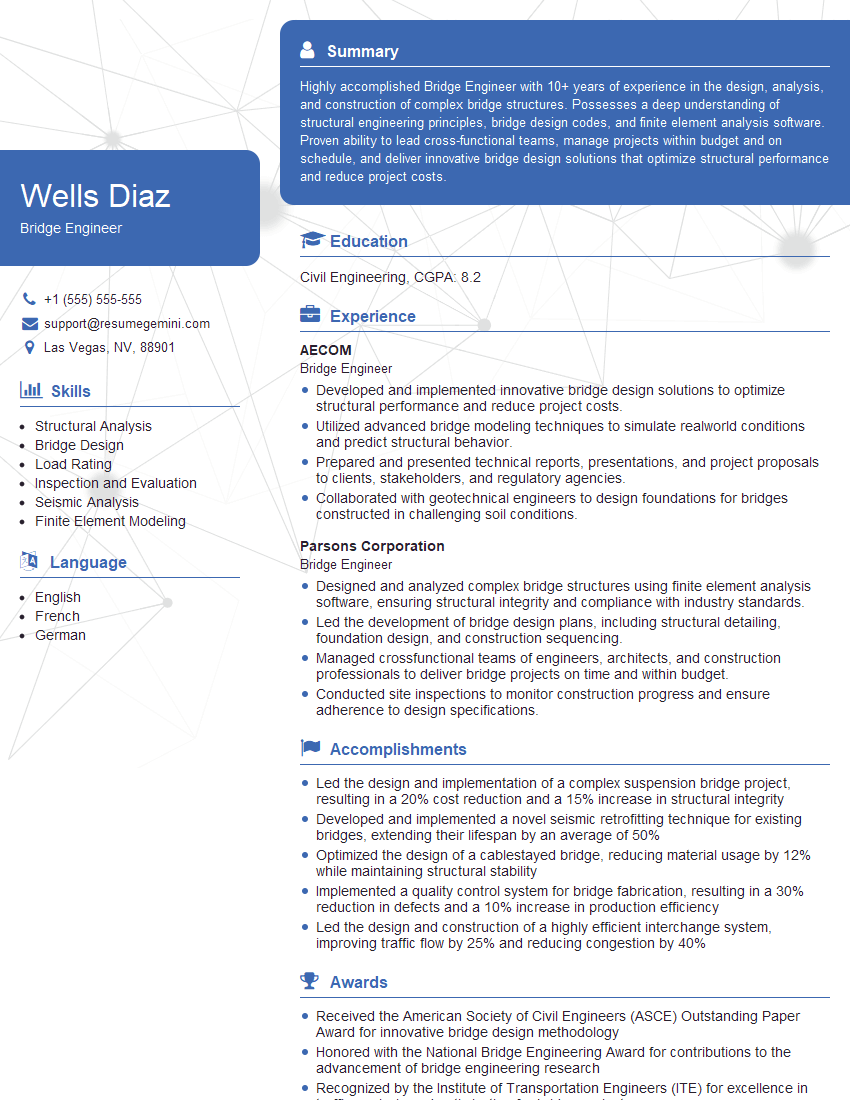
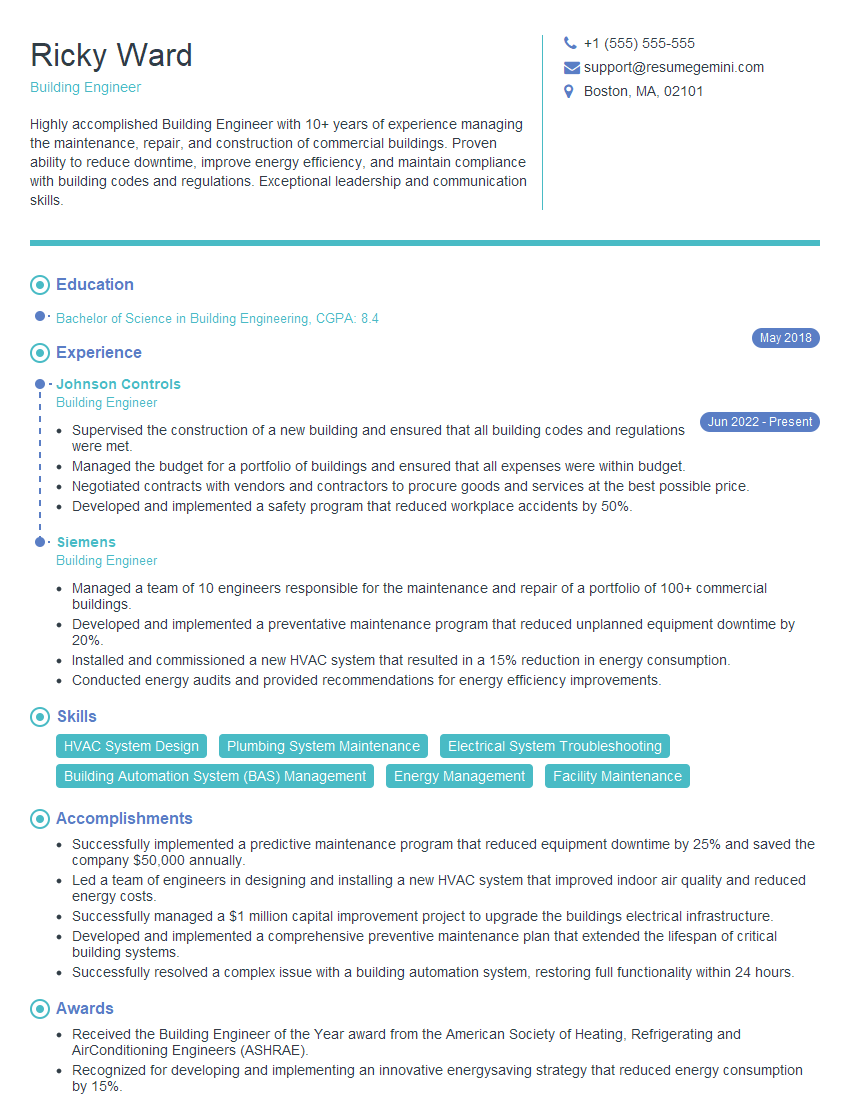
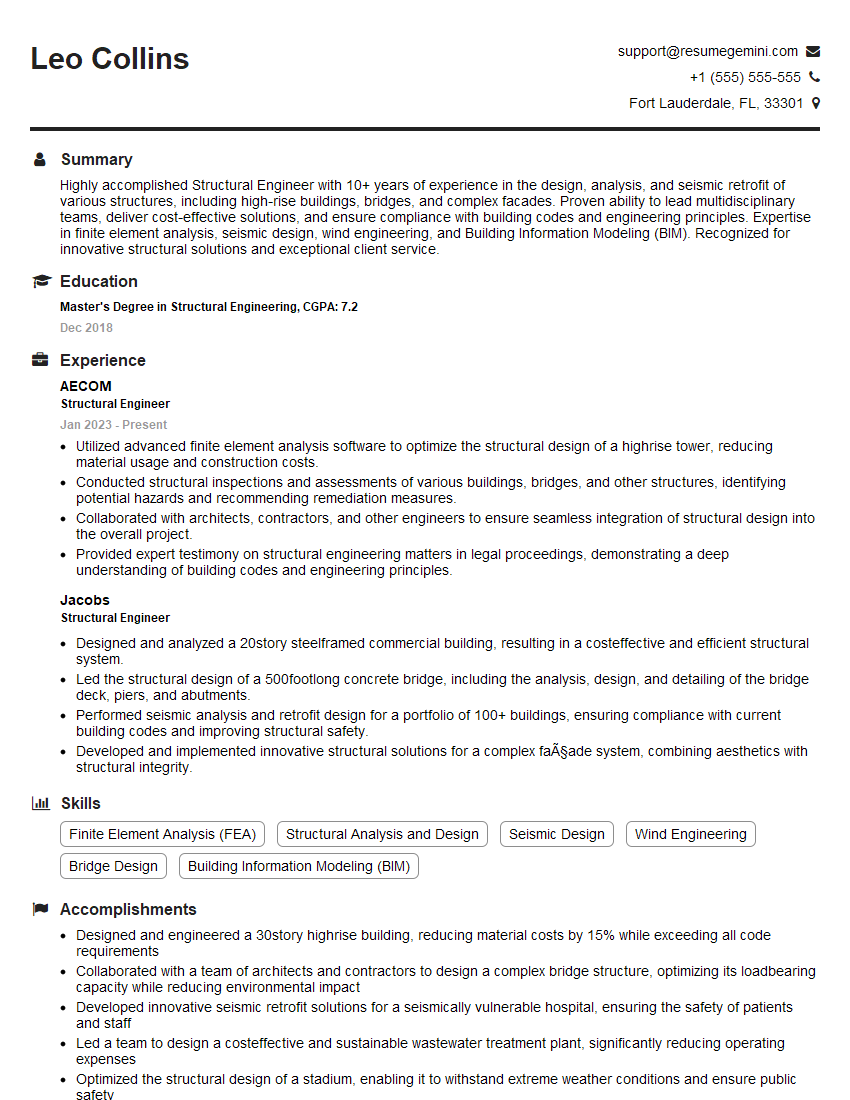
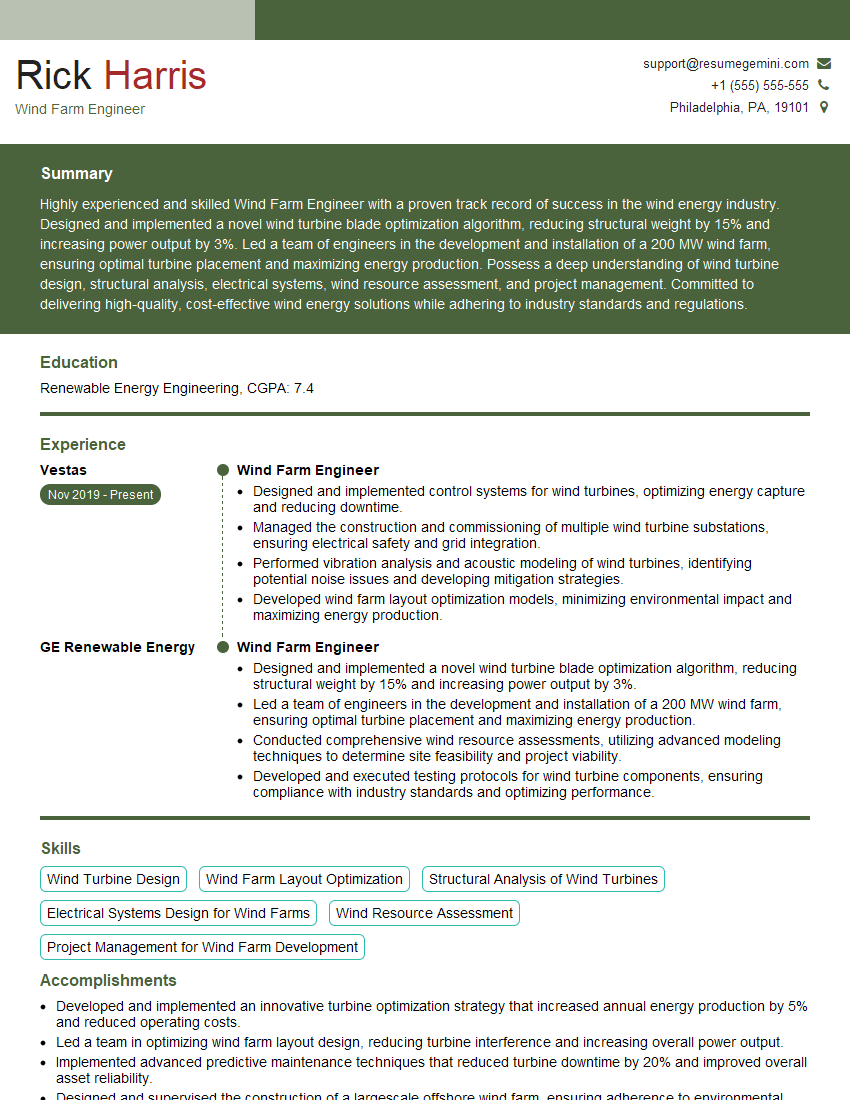
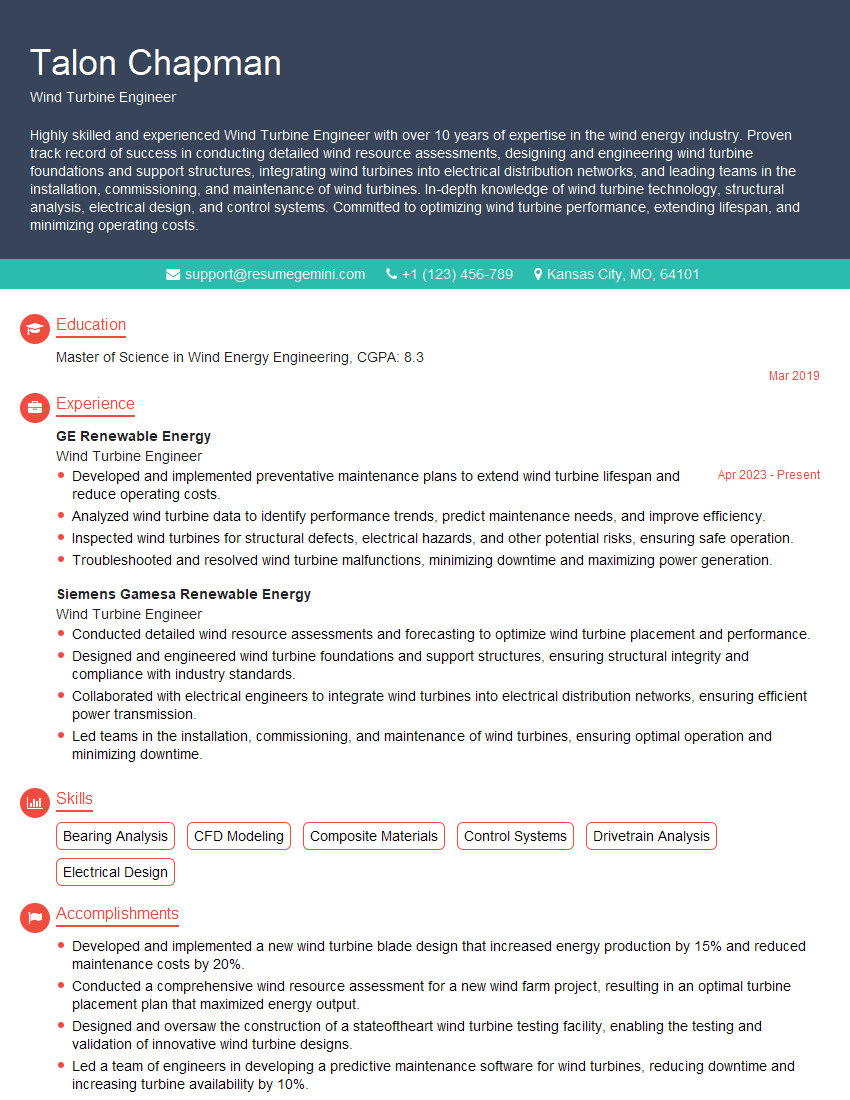
Mastering Wind and Structural Engineering opens doors to exciting and impactful careers, allowing you to contribute to the design and construction of resilient and sustainable infrastructure. To maximize your job prospects, create a compelling and ATS-friendly resume that effectively showcases your skills and experience. ResumeGemini is a trusted resource that can help you build a professional resume tailored to the Wind and Structural Engineering industry. Examples of resumes tailored to this field are available to help guide your process.


Explore more articles
Users Rating of Our Blogs
Share Your Experience
We value your feedback! Please rate our content and share your thoughts (optional).
What Readers Say About Our Blog
Really detailed insights and content, thank you for writing this detailed article.
IT gave me an insight and words to use and be able to think of examples