The right preparation can turn an interview into an opportunity to showcase your expertise. This guide to Liquid Transfer interview questions is your ultimate resource, providing key insights and tips to help you ace your responses and stand out as a top candidate.
Questions Asked in Liquid Transfer Interview
Q 1. Explain the different types of liquid transfer pumps and their applications.
Liquid transfer pumps are categorized based on their operating principles. Two main types are positive displacement pumps and dynamic pumps. Within these categories, there are many variations.
- Positive Displacement Pumps: These pumps move a fixed volume of liquid with each stroke or rotation. Examples include:
- Diaphragm pumps: Ideal for viscous liquids and slurries, often used in chemical processing.
- Gear pumps: Efficient for transferring medium-viscosity liquids, frequently seen in lubrication systems.
- Piston pumps: Offer high pressure capabilities and are used in applications requiring precise flow control, such as hydraulic systems.
- Peristaltic pumps: Gentle on fluids and suitable for sensitive materials; commonly used in the pharmaceutical and food industries.
- Dynamic Pumps: These pumps use kinetic energy to move liquids. They include:
- Centrifugal pumps: The most common type, relying on centrifugal force to increase fluid velocity. Used in various applications, from water supply to industrial processes.
- Axial flow pumps: Designed for high-flow, low-pressure applications, such as irrigation and drainage.
- Mixed flow pumps: Combine characteristics of centrifugal and axial flow pumps, offering a balance between flow rate and head pressure.
The choice of pump depends heavily on the specific characteristics of the liquid, the desired flow rate, the required pressure, and other factors. For instance, a viscous liquid would require a positive displacement pump like a gear pump or a diaphragm pump, while water transfer might utilize a centrifugal pump.
Q 2. Describe your experience with positive displacement pumps.
I have extensive experience with positive displacement pumps across diverse industrial sectors. In a previous role, I was responsible for the design and implementation of a peristaltic pump system for transferring highly sensitive biological samples in a pharmaceutical research lab. The criticality of maintaining sample integrity required meticulous selection and careful integration of the pump into a sterile environment. We used a programmable logic controller (PLC) to precisely manage flow rates and prevent any contamination. Another project involved troubleshooting a gear pump failure in a food processing plant. The pump was experiencing cavitation (formation of vapor bubbles) due to insufficient Net Positive Suction Head (NPSH). After analyzing the system parameters, we identified a suction line restriction and a faulty check valve, ultimately replacing them and resolving the issue. These experiences have provided me with a strong understanding of positive displacement pump operation, maintenance, and troubleshooting.
Q 3. How do you select the appropriate pump for a given liquid transfer application?
Selecting the right pump involves a systematic approach. First, we need to thoroughly characterize the liquid: viscosity, density, temperature, abrasiveness, corrosiveness, and the presence of solids. Next, we define the application parameters: flow rate (gallons per minute or liters per minute), pressure (PSI or bar), head (the vertical distance the liquid needs to be pumped), and the total length of the piping system. Finally, we evaluate operational requirements such as the duty cycle (continuous or intermittent operation) and the desired level of automation. Based on these factors, we can choose the most appropriate pump type. For example, a high-viscosity, abrasive slurry will require a robust pump such as a diaphragm pump, while a low-viscosity liquid with moderate flow and pressure needs could be effectively handled by a centrifugal pump.
Q 4. What are the key considerations for designing a safe and efficient liquid transfer system?
Designing a safe and efficient liquid transfer system involves several key considerations:
- Material Compatibility: The pump, piping, and valves must be compatible with the transferred liquid to prevent corrosion or chemical reactions.
- Leak Prevention: Proper sealing and regular inspection are crucial to minimize leaks and prevent environmental contamination or safety hazards.
- Pressure Management: The system should incorporate pressure relief valves and safety devices to prevent over-pressurization.
- Fluid Velocity: Excessive velocity can cause erosion or cavitation, so it’s important to maintain appropriate flow rates within the system’s design parameters.
- Proper grounding and bonding: To mitigate the risk of static electricity buildup, especially when transferring flammable liquids.
- Emergency Shutdown Systems: Fail-safe mechanisms should be implemented to quickly halt the transfer process in case of emergencies.
- Environmental considerations: Proper containment and handling procedures should be established to minimize environmental impact.
A well-designed system incorporates these safety measures, resulting in efficient, reliable, and safe operation.
Q 5. Explain the concept of Net Positive Suction Head (NPSH).
Net Positive Suction Head (NPSH) is the difference between the absolute pressure at the pump suction and the vapor pressure of the liquid being pumped. It represents the available energy to prevent cavitation – the formation of vapor bubbles in the liquid – within the pump. Cavitation can significantly reduce pump efficiency, cause damage to pump components, and even lead to system failure. Imagine trying to drink a milkshake through a straw: if there’s not enough pressure at the bottom of the straw, you can’t suck it up.
Q 6. How do you calculate NPSH and why is it important?
NPSH is calculated by subtracting the vapor pressure of the liquid from the absolute pressure at the pump suction, then accounting for losses due to friction and elevation:
NPSHa = Pabs - Pv - hf - hs
where:
NPSHais the available NPSHPabsis the absolute pressure at the pump suctionPvis the vapor pressure of the liquidhfis the head loss due to friction in the suction linehsis the suction lift (vertical distance between the liquid level and the pump suction).
The required NPSH (NPSHr) is specified by the pump manufacturer. It’s crucial to ensure that NPSHa is always greater than NPSHr to prevent cavitation. If NPSHa is less than NPSHr, the pump will likely cavitate, reducing its efficiency and potentially causing damage.
Q 7. Describe different types of valves used in liquid transfer systems.
Various valves are used in liquid transfer systems, each serving a specific function:
- Gate valves: Provide on/off control, mainly used for large pipes and seldom for throttling or fine control.
- Globe valves: Offer precise flow regulation, often used for throttling or controlling flow rate.
- Ball valves: Simple on/off control, suitable for rapid shut-off and easy operation.
- Butterfly valves: Compact and offer quick on/off control, often used in larger diameter pipelines.
- Check valves: Prevent backflow of liquids, ensuring unidirectional flow.
- Relief valves: Protect the system from over-pressurization by automatically releasing excess pressure.
The choice of valve depends on the application requirements. For example, a globe valve is suitable for precise flow control in a chemical process, whereas a ball valve might be preferred for quick isolation in a pipeline.
Q 8. Explain the importance of proper valve sizing and selection.
Proper valve sizing and selection is paramount in liquid transfer systems for ensuring efficient and safe operation. Undersized valves restrict flow, leading to increased pressure drops, energy waste, and potential system damage. Conversely, oversized valves can lead to uncontrolled flow, making it difficult to manage pressure and potentially causing hazardous spills or leaks.
The selection process considers several factors: the liquid’s properties (viscosity, density, corrosiveness), flow rate requirements, pressure limitations of the system, and the valve’s material compatibility. For instance, transferring highly viscous fluids requires valves with larger port diameters to minimize pressure drop. For corrosive liquids, we’d select valves constructed from corrosion-resistant materials like stainless steel or specialized alloys. We use industry-standard calculation methods and software to determine the appropriate valve size and type, always erring on the side of caution to ensure sufficient capacity and safe operation.
Imagine trying to fill a swimming pool with a garden hose – that’s undersizing. Now imagine a firehose with no control – that’s oversizing. Neither is ideal!
Q 9. What are the safety protocols you follow during liquid transfer operations?
Safety is my top priority. Our liquid transfer protocols begin with a thorough pre-transfer inspection of all equipment, including pipelines, valves, pumps, and safety devices. This includes checking for leaks, ensuring proper grounding to prevent static electricity build-up (crucial for flammable liquids), and verifying the integrity of pressure relief valves. Personal protective equipment (PPE), such as safety glasses, gloves, and sometimes respirators, is mandatory, and we always follow strict lockout/tagout procedures before undertaking any maintenance or repair work. All personnel involved are thoroughly trained in emergency procedures and hazard awareness specific to the transferred liquids. We maintain detailed records of each transfer, including material safety data sheets (MSDS), quantities transferred, and any incidents or near misses.
For example, when transferring highly volatile solvents, we utilize specialized equipment like vapor recovery systems to minimize emissions and potential fire hazards.
Q 10. How do you handle emergencies during liquid transfer?
Emergency response is dictated by the nature of the incident. A leak, for example, would involve immediately isolating the affected section of the pipeline by closing appropriate valves. Spills are addressed through containment and cleanup procedures, including the use of spill kits appropriate for the spilled liquid’s properties. We also have established emergency shutdown procedures, activating alarms and notifying emergency response teams as needed. The key is a rapid, controlled response to minimize further damage and protect personnel and the environment. Each scenario has a pre-defined response plan, regularly practiced through drills and simulations to ensure preparedness.
For instance, during a pump failure, our procedures dictate shutting off the power, isolating the pump, and investigating the cause before restarting. Clear communication and a well-defined hierarchy of authority are vital in emergency situations.
Q 11. Explain your understanding of piping and instrumentation diagrams (P&IDs).
Piping and Instrumentation Diagrams (P&IDs) are my bread and butter. They are schematic drawings providing a comprehensive overview of a process system, showing the piping layout, instrumentation, equipment, and their interconnections. They’re crucial for understanding the system’s functionality, troubleshooting problems, and making modifications. P&IDs use standardized symbols to represent various components, like valves, pumps, tanks, and instruments, enabling easy interpretation by engineers and technicians. I utilize P&IDs daily for planning, design, and maintenance of liquid transfer systems.
They’re essentially a roadmap of the liquid’s journey through the system, detailing flow directions, control strategies, safety devices, and instrument loops (e.g., pressure and temperature sensors).
Q 12. Describe your experience with different types of piping materials and their applications.
My experience spans various piping materials, each chosen based on the liquid’s properties and operational conditions. Carbon steel is cost-effective for many applications but is susceptible to corrosion. Stainless steel offers superior corrosion resistance, often used for handling acids or other reactive liquids. PVC and CPVC are employed where corrosion resistance and lighter weight are priorities, but they have limitations in terms of temperature and pressure. For high-temperature or high-pressure applications, we might use specialized alloys like Hastelloy or Inconel. The selection always involves a careful consideration of the material’s properties, cost, and compatibility with the transferred liquid.
For example, transferring a highly corrosive acid would necessitate stainless steel or a specialized alloy, while a non-reactive liquid like water might only need carbon steel piping, significantly reducing cost.
Q 13. How do you ensure the integrity of piping systems?
Piping system integrity is maintained through regular inspections, both visual and non-destructive testing (NDT) methods. Visual inspections identify obvious defects like corrosion, leaks, or damage. NDT methods such as ultrasonic testing, radiographic testing, or magnetic particle testing detect hidden flaws and material degradation. We also conduct pressure testing to ensure the system can withstand the designed operating pressures. Regular maintenance, including cleaning and flushing of lines, prevents build-up and ensures smooth operation. Proper documentation and record-keeping are crucial for tracking maintenance activities and identifying potential issues proactively.
Think of it like regular car maintenance – regular checks and servicing prevent major issues later on.
Q 14. What are the common causes of liquid transfer system failures?
Liquid transfer system failures can stem from various sources. Corrosion is a major culprit, particularly in systems handling corrosive liquids. Equipment failure, such as pump malfunctions or valve leaks, is another common cause. Improper maintenance or lack of regular inspections can lead to unnoticed defects escalating into failures. External factors like ground movement, extreme temperatures, or accidental damage can also compromise system integrity. Human error, such as incorrect operation or inadequate training, contributes to a significant number of incidents. Finally, design flaws or inadequate materials selection can result in premature failure.
Root cause analysis is critical after any failure to prevent recurrence, ensuring thorough investigation and corrective action.
Q 15. How do you troubleshoot problems in liquid transfer systems?
Troubleshooting liquid transfer systems requires a systematic approach. Think of it like diagnosing a car problem – you wouldn’t just start replacing parts randomly! Instead, you need to isolate the issue. My process typically involves these steps:
- Identify the symptom: Is the flow rate too low? Is there a leak? Is the liquid not transferring at all? Precisely documenting the problem is crucial.
- Check the obvious: Start with the simplest checks. Is the power on? Are valves open? Are there any visible blockages in pipes or filters? Often, the solution is surprisingly straightforward.
- Inspect sensors and instrumentation: Verify that flow meters, level sensors, and pressure gauges are functioning correctly and reading accurately. Calibrations and sensor drift are common culprits. I’d use a known good calibration standard to check.
- Examine the control system: Review the process control logic to ensure it’s functioning as intended. Look for alarm conditions, error messages, or unusual control signals. A simple logic error can cause significant issues.
- Analyze historical data: Review past trends and data from SCADA or other systems to see if the problem is new or a recurring one. This often helps pinpoint the root cause, especially if the issue is gradual.
- Systematic elimination: If the problem persists, work through the system component by component, isolating sections to identify the faulty part. For instance, you might isolate a pump section by bypassing it to see if the problem goes away.
For example, I once worked on a system where the flow rate was consistently low. After checking all the obvious factors, I discovered a partially clogged filter. A simple cleaning solved the problem, saving hours of more extensive troubleshooting.
Career Expert Tips:
- Ace those interviews! Prepare effectively by reviewing the Top 50 Most Common Interview Questions on ResumeGemini.
- Navigate your job search with confidence! Explore a wide range of Career Tips on ResumeGemini. Learn about common challenges and recommendations to overcome them.
- Craft the perfect resume! Master the Art of Resume Writing with ResumeGemini’s guide. Showcase your unique qualifications and achievements effectively.
- Don’t miss out on holiday savings! Build your dream resume with ResumeGemini’s ATS optimized templates.
Q 16. Explain your experience with process control systems in liquid transfer applications.
I have extensive experience with process control systems (PCS) in liquid transfer, primarily using Programmable Logic Controllers (PLCs) and Distributed Control Systems (DCS). I’ve worked with systems that manage everything from simple pump start/stop operations to complex multi-stage processes with precise flow and level control. This includes:
- PLC programming: I’m proficient in several PLC programming languages (e.g., ladder logic, structured text) to design and implement control algorithms for automated liquid transfer.
- PID control loops: I’ve implemented and tuned Proportional-Integral-Derivative (PID) control loops for precise control of flow rates, pressures, and liquid levels. PID control is crucial for maintaining the desired setpoints while minimizing oscillations and overshoots.
- Safety interlocks: I’m skilled in designing and implementing safety systems that prevent hazardous conditions, such as high-level alarms, low-level shutdowns, and emergency stops. Safety is paramount in liquid transfer operations.
- Data acquisition and logging: I’ve integrated PCS with data historians and SCADA systems to collect and analyze process data, which is essential for process optimization, troubleshooting, and regulatory compliance.
For instance, I recently implemented a PCS for a chemical mixing process. It involved sophisticated flow control using PID loops to ensure precise ingredient ratios, coupled with a safety system to prevent overflows or underflows.
Q 17. How do you ensure accurate measurement and control of liquid flow rates?
Accurate measurement and control of liquid flow rates are achieved through a combination of precise instrumentation and well-designed control systems. Key elements include:
- Flow meters: Various types are available, such as Coriolis, ultrasonic, magnetic, and turbine meters, each with its strengths and weaknesses depending on the fluid properties and application. The choice is crucial to get accurate readings.
- Control valves: These allow precise regulation of flow based on signals from the control system. They can be manually or automatically operated.
- Calibration and verification: Regular calibration of flow meters and control valves using traceable standards is critical to maintain accuracy.
- Process control strategies: Implementing advanced control algorithms like PID control enables accurate maintenance of the desired flow rate, even with changing process conditions.
- Data logging and analysis: Continuous monitoring and data logging allow for detection of any deviations from the target flow rate and help identify potential problems.
For example, in a pharmaceutical application, even slight variations in flow rate can significantly affect the product quality. Therefore, highly accurate flow meters with frequent calibrations and stringent control systems are essential.
Q 18. Describe your experience with SCADA systems.
My experience with Supervisory Control and Data Acquisition (SCADA) systems is extensive. I’ve worked with various SCADA platforms to monitor and control liquid transfer systems. SCADA provides a centralized overview of the entire process, including:
- Real-time monitoring: Visualization of critical parameters like flow rates, pressures, and liquid levels, providing immediate awareness of the process status.
- Alarm management: Automated alerts on abnormal conditions to enable timely intervention and prevent potential problems.
- Data logging and historical trending: Collection and storage of process data for analysis, troubleshooting, and reporting.
- Remote access and control: The ability to monitor and control the system remotely, facilitating proactive management and efficient troubleshooting.
- Report generation: Automated generation of reports on key process parameters and system performance.
In one project, we used SCADA to monitor a large network of liquid transfer pumps across a geographically dispersed facility. This provided a comprehensive view of the entire system’s performance and facilitated proactive maintenance scheduling.
Q 19. How do you maintain and calibrate instruments used in liquid transfer systems?
Maintaining and calibrating instruments in liquid transfer systems is crucial for accuracy and safety. My approach includes:
- Regular maintenance schedules: Establishing a preventive maintenance plan that includes routine inspections, cleaning, and lubrication of instruments.
- Calibration procedures: Using traceable standards and adhering to established calibration procedures to ensure accuracy. Calibration frequency depends on the instrument type and criticality.
- Documentation: Maintaining comprehensive records of maintenance and calibration activities, including dates, results, and any corrective actions.
- Troubleshooting and repair: Identifying and resolving instrument malfunctions promptly to minimize downtime and ensure process integrity.
- Proper storage: Storing instruments correctly when not in use to protect them from damage and ensure their longevity.
For example, flow meters require periodic calibration to maintain their accuracy. Failure to do so can lead to inaccurate measurements, potentially affecting product quality and process efficiency.
Q 20. What are the different types of liquid level sensors?
Numerous liquid level sensors exist, each with its advantages and disadvantages. The best choice depends on the application, liquid properties, and budget. Common types include:
- Float switches: Simple, inexpensive, but limited accuracy and suitability for only certain applications.
- Capacitance probes: Measure the capacitance change as the liquid level changes, offering good accuracy and suitability for various liquids.
- Ultrasonic sensors: Measure the time of flight of ultrasonic waves to determine the liquid level, providing non-contact measurement with good accuracy.
- Radar sensors: Similar to ultrasonic but use radio waves, suitable for high temperatures, pressures, and challenging environments.
- Pressure sensors: Measure the hydrostatic pressure at the bottom of the tank to determine the liquid level. Simple and reliable for many applications.
- Differential pressure sensors: Measure the pressure difference between two points in the tank to determine the liquid level.
Choosing the right sensor is critical. For example, a float switch may be sufficient for a simple application, but a radar sensor might be needed for a high-temperature, corrosive liquid.
Q 21. How do you ensure the proper grounding and bonding of equipment in liquid transfer systems?
Proper grounding and bonding are critical safety measures in liquid transfer systems, particularly when dealing with conductive liquids and potentially hazardous environments. The goal is to prevent static electricity build-up and ensure a safe path for fault currents, thereby minimizing the risk of sparks, explosions, or electrical shocks. This is achieved through:
- Equipment grounding: Connecting all metallic parts of the equipment to earth ground using appropriately sized conductors. This ensures that any stray electrical currents are safely diverted to the ground.
- System bonding: Connecting all metallic parts of the liquid transfer system together, including pipes, tanks, and pumps. This creates a continuous electrical path, preventing potential differences that could cause sparks.
- Grounding conductors: Using properly sized and installed grounding conductors with appropriate connections to minimize resistance and ensure effective grounding.
- Regular inspections: Regularly inspecting grounding and bonding connections to ensure their integrity and effectiveness. Corrosion or loose connections can compromise safety.
- Compliance with standards: Adhering to relevant safety standards and regulations regarding grounding and bonding practices.
Ignoring grounding and bonding can have severe consequences. A lack of proper grounding could lead to a static electricity discharge igniting flammable vapors, resulting in a fire or explosion. Regular inspection and maintenance are vital.
Q 22. Explain your understanding of hazardous materials handling during liquid transfer.
Hazardous materials handling during liquid transfer demands meticulous attention to detail and strict adherence to safety protocols. The key is understanding the specific hazards posed by each liquid – flammability, toxicity, corrosivity, reactivity – and implementing appropriate control measures. This includes proper personal protective equipment (PPE), such as respirators, gloves, and safety goggles, selected based on the material’s properties. Furthermore, the environment plays a crucial role; transfer operations should occur in well-ventilated areas to prevent the buildup of hazardous vapors. Emergency response plans, including spill containment and cleanup procedures, must be readily available and regularly practiced. For example, transferring highly flammable solvents requires a spark-free environment, grounding equipment to prevent static electricity buildup, and the use of explosion-proof equipment. A good understanding of the Safety Data Sheet (SDS) for each material is fundamental for safe handling.
Q 23. How do you comply with relevant safety regulations and standards in liquid transfer?
Compliance with safety regulations and standards is paramount in liquid transfer. This involves familiarity with and adherence to regulations like OSHA (Occupational Safety and Health Administration) in the US, or equivalent regulations in other countries. This includes maintaining accurate records of all transfer operations, conducting regular safety inspections of equipment and the work environment, and providing comprehensive safety training to all personnel involved. We ensure that all equipment used meets the appropriate safety standards and is regularly inspected and certified. For example, we’d verify that pumps and valves are designed for the specific liquid being transferred and are rated for the appropriate pressure and temperature. We also meticulously follow all permit-to-work systems, ensuring all steps are completed before commencing any operations. Regular audits help us maintain continuous compliance and proactively identify areas for improvement.
Q 24. Describe your experience with different types of liquid transfer tanks and their applications.
My experience encompasses a wide range of liquid transfer tanks, each chosen based on the specific application. I’ve worked extensively with stainless steel tanks for their corrosion resistance, making them ideal for transferring reactive or corrosive chemicals. For applications requiring high pressure and temperature, I’ve used specialized pressure vessels with robust construction and precise safety features. I’ve also utilized polyethylene tanks for their cost-effectiveness and suitability for non-corrosive liquids. The choice also depends on the liquid volume; smaller drums and totes are used for smaller batches, while large storage tanks are employed for bulk transfers. For instance, I’ve managed the transfer of highly corrosive sulfuric acid using specialized stainless steel tanks with internal lining, implementing strict safety protocols to prevent leakage and exposure. Conversely, I’ve transferred large quantities of non-hazardous water using polyethylene tanks.
Q 25. How do you ensure the proper ventilation of liquid transfer areas?
Proper ventilation is crucial to prevent the buildup of hazardous vapors in liquid transfer areas. This can be achieved through a combination of strategies. Natural ventilation, using strategically placed openings to allow airflow, is often sufficient for low-hazard applications. However, for operations involving volatile or toxic liquids, mechanical ventilation systems, such as exhaust fans or local exhaust hoods, are necessary. These systems need to be appropriately sized for the specific application and maintain adequate airflow to dilute and remove any hazardous vapors. The location of exhaust outlets must be carefully planned to ensure that they don’t create a hazard by re-circulating contaminants. For example, when transferring solvents, we employ a local exhaust ventilation system directly above the transfer point to capture the vapors before they can disperse into the work area. Regular monitoring of air quality using appropriate sensors is important to verify the effectiveness of the ventilation system.
Q 26. What are the common maintenance procedures for liquid transfer equipment?
Regular maintenance is essential for safe and efficient liquid transfer operations. This includes scheduled inspections of all equipment, looking for wear and tear, corrosion, or leaks. Pumps require regular lubrication and checks of seals and bearings. Valves need to be inspected for proper operation and tightness. Piping should be regularly inspected for signs of damage or corrosion. Cleaning and flushing of the system are essential after each use to prevent contamination. Detailed records must be kept of all maintenance activities. Ignoring routine maintenance can lead to costly repairs, downtime, and more significantly, pose a safety risk. For example, I regularly inspect and lubricate the pump seals to ensure a leak-free operation and replace them according to the manufacturer’s recommendations. We maintain a detailed log book of all maintenance actions, including dates, times, and the personnel involved.
Q 27. How do you manage and prevent leaks in liquid transfer systems?
Leak prevention and management are critical components of safe liquid transfer. This starts with regular inspections of all equipment and piping for leaks using methods such as pressure testing or dye penetrant testing. Properly designed and maintained seals and gaskets are vital. All connections must be properly tightened and checked regularly. In the event of a leak, having a well-defined emergency response plan is crucial. This includes procedures for containing the spill, protecting personnel, and properly disposing of the spilled liquid. Emergency shut-off valves are essential in case of large leaks. Proper containment areas are necessary to limit the extent of a spill. For example, we use double-walled piping and containment trays around critical areas to provide a secondary level of protection against leaks. We conduct regular leak detection tests using pressure sensors and regularly train personnel on emergency procedures.
Q 28. Describe your experience with process simulation software for liquid transfer systems.
I have extensive experience using process simulation software for liquid transfer systems. Software like Aspen Plus or COMSOL allows us to model the entire system, including pumps, valves, pipes, and tanks. This enables us to optimize the design for efficiency and safety before construction or implementation. For example, we can simulate different scenarios, such as changes in flow rate or pressure, to predict the system’s behavior and identify potential problems. This helps us select the appropriate equipment, sizing pipes and pumps accurately, and ensuring that the system operates safely and within the desired parameters. We can also use simulations to assess the impact of different control strategies and optimize the overall process for maximum efficiency and minimal environmental impact. The simulation results are invaluable in minimizing risk and avoiding costly mistakes during construction and operation.
Key Topics to Learn for Liquid Transfer Interview
- Fundamentals of Liquid Transfer: Understanding the core principles, types of liquid transfer systems (e.g., pumps, valves, pipes), and their applications across various industries.
- Fluid Mechanics Principles: Applying concepts like pressure, flow rate, viscosity, and Reynolds number to analyze and optimize liquid transfer processes. This includes understanding laminar and turbulent flow.
- Material Compatibility: Knowledge of selecting appropriate materials for pipes, valves, and pumps based on the properties of the liquid being transferred (e.g., corrosiveness, temperature sensitivity).
- Process Control and Instrumentation: Familiarity with sensors, actuators, and control systems used to monitor and regulate liquid transfer processes. Understanding PID control is beneficial.
- Safety and Regulations: Knowledge of safety protocols and industry regulations related to liquid handling, including handling hazardous materials and preventing spills.
- Troubleshooting and Maintenance: Practical experience or theoretical understanding of common problems in liquid transfer systems and their solutions, including preventative maintenance strategies.
- Design and Optimization: Understanding the principles of designing efficient and cost-effective liquid transfer systems, including considerations for energy efficiency and waste reduction.
- Specific Technologies: Depending on the role, you may need to focus on specific technologies like peristaltic pumps, centrifugal pumps, or positive displacement pumps.
Next Steps
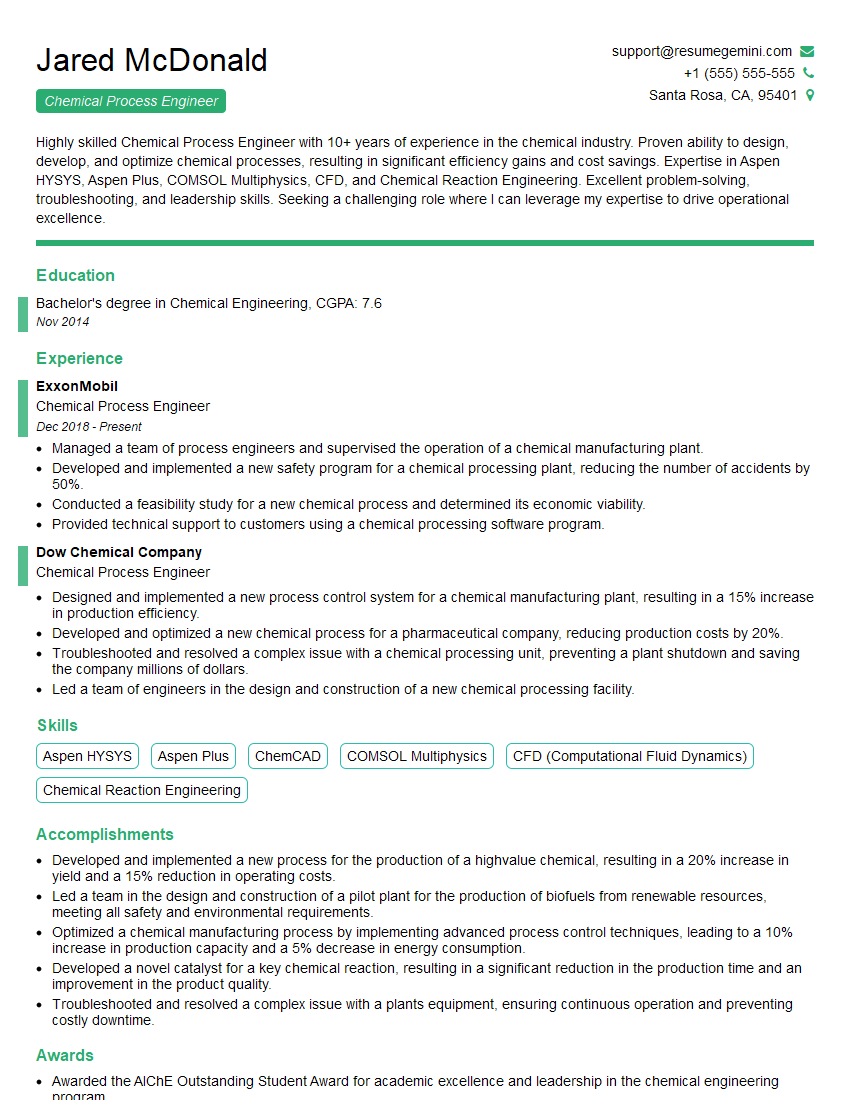
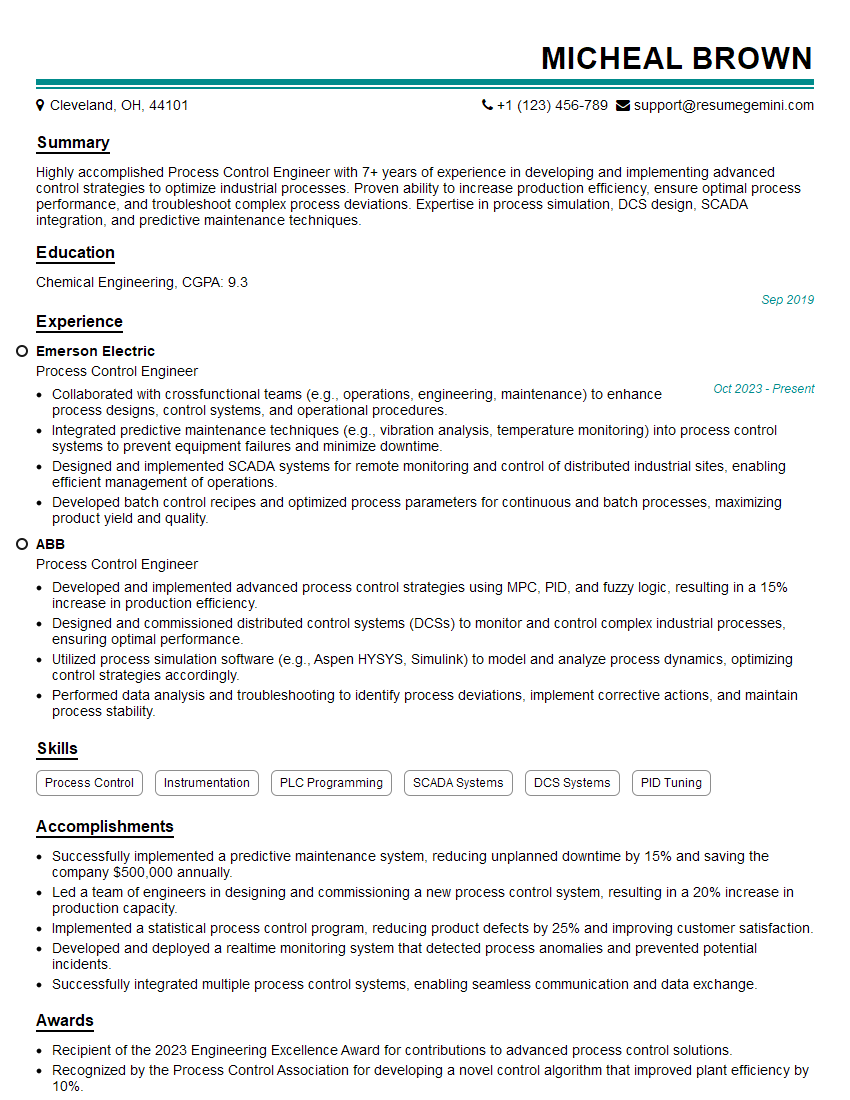
Mastering liquid transfer principles significantly enhances your career prospects in various engineering and manufacturing sectors, opening doors to exciting opportunities with growth potential. To maximize your chances of landing your dream job, it’s crucial to present yourself effectively. Creating an Applicant Tracking System (ATS)-friendly resume is key to getting noticed by recruiters. We recommend using ResumeGemini, a trusted resource, to build a professional and impactful resume that highlights your skills and experience in liquid transfer. Examples of resumes tailored to Liquid Transfer roles are available to help you get started.
Explore more articles
Users Rating of Our Blogs
Share Your Experience
We value your feedback! Please rate our content and share your thoughts (optional).
What Readers Say About Our Blog
Really detailed insights and content, thank you for writing this detailed article.
IT gave me an insight and words to use and be able to think of examples