Interviews are opportunities to demonstrate your expertise, and this guide is here to help you shine. Explore the essential Humour Illustration interview questions that employers frequently ask, paired with strategies for crafting responses that set you apart from the competition.
Questions Asked in Humour Illustration Interview
Q 1. Describe your preferred style of humorous illustration.
My preferred style of humorous illustration leans towards a clean, slightly quirky aesthetic. I avoid overly slapstick or crude humor, opting instead for wit and observational humor. Think witty wordplay visualized, or situations that are subtly absurd. I often incorporate a touch of vintage or retro influence in my color palettes and linework, which adds a unique charm and sometimes a touch of ironic contrast to the humor itself. For example, a sophisticatedly dressed character engaging in an utterly ridiculous activity would fall under this approach. The goal is to make the viewer chuckle knowingly, rather than guffaw wildly.
I find this style particularly versatile because it works well across various platforms and client needs, from children’s books to corporate marketing materials, though I’ll adjust the level of sophistication as needed.
Q 2. What software and tools are you proficient in for creating humour illustrations?
My digital illustration workflow primarily utilizes Adobe Photoshop and Illustrator. Photoshop is my go-to for painting and digital painting, leveraging its robust layer functionality and blending modes to create nuanced visuals. Illustrator is essential for creating clean vector art, especially for logos or illustrations that need to be scaled without loss of quality. I’m also proficient in Procreate for iPad illustration, offering a faster, more mobile workflow perfect for quick sketches and brainstorming. Beyond software, I rely on a Wacom Cintiq for precise control and a natural drawing experience. This combination of software and hardware allows me to seamlessly transition between different stylistic needs and project demands.
Q 3. Explain your process for developing a humorous concept into a finished illustration.
My process for developing a humorous concept into a finished illustration is iterative and involves several key stages. It begins with brainstorming, where I explore various ideas, jotting them down, sketching thumbnails, and experimenting with different visual approaches. Once a strong concept emerges, I develop a detailed sketch, paying close attention to character design, composition, and visual gags. This is then refined digitally, focusing on line art, color, and shading. Finally, I meticulously review the illustration, ensuring the humor is clear and the visual elements are well-executed. For instance, if I’m illustrating a joke about procrastination, I might show a character surrounded by piles of tasks, with a whimsical, yet relatable expression on their face. The entire process is about refining the initial idea into a polished and visually engaging end product.
Q 4. How do you balance humor with clarity and message in your work?
Balancing humor with clarity and message is crucial. A funny image that’s incomprehensible is a failure. I achieve this balance by ensuring the humorous element directly supports or enhances the central message. The joke shouldn’t overshadow the core idea; rather, it should be integral to it. For example, if I’m illustrating a piece about the importance of saving money, the humor might come from a relatable scenario of someone’s impulsive spending habits, vividly portraying the consequences in a funny, yet cautionary way. The humor underscores the message rather than distracting from it.
Q 5. How do you adapt your style to different clients and projects?
Adapting to different clients and projects requires versatility. I carefully study the client’s brand guidelines and target audience. A children’s book will require a much lighter, more playful style than an illustration for a tech company’s marketing materials, which might call for a more sophisticated and subtly witty approach. I might shift my color palette, line style, and even the type of humor employed to ensure consistency with the overall branding and tone. This involves thoughtful analysis and adaptation of my established style, not a complete stylistic overhaul for every project.
Q 6. Describe a time you had to revise a humorous illustration due to feedback.
Once, I created an illustration for a financial firm showcasing the benefits of investing. My initial concept featured a cartoon character riding a rocket made of money – a bit too literal and potentially risky. The client’s feedback was that it felt too aggressive and potentially misleading. So, I revised it. I retained the rocket theme but subtly changed the imagery, making the rocket more like a steadily rising graph, symbolizing growth and stability rather than a reckless, fast ascent. The humor shifted from a purely visual gag to a more subtle, clever pun in the accompanying text. The revised version better conveyed the intended message and was better aligned with the client’s brand image.
Q 7. How do you ensure your humor is appropriate for the target audience?
Ensuring humor’s appropriateness for the target audience is paramount. This involves careful consideration of cultural context, age group, and the platform where the illustration will appear. For children, the humor needs to be simple, relatable, and avoid anything potentially offensive or inappropriate. For adults, more nuanced and sophisticated humor is acceptable. For instance, a corporate setting requires a different level of humor than a social media post, which can be more relaxed. I always discuss the target audience with the client beforehand and tailor my style and comedic choices accordingly.
Q 8. How do you incorporate visual storytelling techniques into your humorous illustrations?
Visual storytelling in humorous illustration is all about using imagery to convey a joke or funny situation, often without relying heavily on text. It’s like crafting a silent movie, but funnier! I achieve this by meticulously planning the composition, character expressions, and visual details to guide the viewer’s eye through the narrative and build to the punchline. For example, I might show a character’s increasingly frustrated expression as they try to assemble flat-pack furniture, culminating in a final image of them collapsing in exasperation amidst a pile of parts. This uses a combination of character animation, environmental storytelling, and visual metaphors to tell a complete, humorous story.
I use techniques like exaggeration, symbolism, and juxtaposition to create humour. Exaggerating a character’s features or a situation’s absurdity can heighten the comedic effect. Symbolism can create layered meanings and add depth to the joke. For instance, a single wilted flower could symbolize a failed romantic gesture. Juxtaposition, or placing contrasting elements together, can create unexpected and funny results, such as placing a tiny chihuahua in a giant dog house.
Q 9. Explain your understanding of visual gags and comedic timing in illustration.
Visual gags are the visual equivalent of a joke – a single image or short sequence that elicits laughter through visual absurdity, irony, or surprise. Comedic timing in illustration relates to how the elements within the illustration are arranged to create a build-up of tension or anticipation before the punchline is revealed. It’s about carefully controlling the pace of the visual narrative. Think of it like a well-structured joke: a setup, a build-up, and a satisfying payoff.
For instance, a visual gag could be a character slipping on a banana peel. The comedic timing comes into play by showing the character confidently walking, then their surprised expression as they slip, and finally their comical landing. I carefully consider the order of panels in a comic strip or the arrangement of elements within a single illustration to achieve the perfect comedic rhythm. This is often an iterative process, experimenting with different arrangements until the timing feels just right.
Q 10. Describe your experience with different types of humour (slapstick, satire, irony etc.)
My experience spans various types of humour. Slapstick relies on physical comedy, like exaggerated falls or clumsy actions, easily translated visually. I’ve created illustrations of characters tumbling into piles of pies or tripping over their own feet. Satire uses humour to criticize societal issues. I’ve illustrated satirical cartoons depicting political figures in humorous, yet pointed, situations. Irony involves the contrast between expectation and reality. For example, I might depict a character eagerly opening a gift, only to reveal something completely underwhelming.
I also incorporate other forms like dark humour (exploring taboo subjects in a funny way), wordplay (visual puns), and observational humour (finding humour in everyday situations). Each type requires a different approach. Slapstick requires dynamic poses and exaggerated movements. Satire needs sharp visual metaphors and clear targets. Irony demands a clear setup to subvert expectations. The key is understanding the nuances of each humour type and adapting my style accordingly.
Q 11. How do you handle creative differences with clients regarding humorous concepts?
Creative differences are inevitable, but they’re also opportunities for growth and collaboration. My approach starts with clear communication. Before embarking on a project, I ensure I fully understand the client’s vision, their target audience, and their brand identity. I present multiple concepts, sketching different approaches to the humour, ensuring the client has a variety of options to choose from.
If a client suggests a change that doesn’t quite fit my artistic vision or comedic sensibilities, I engage in a constructive dialogue. I’ll explain the reasons behind my initial ideas and explore the client’s suggestions to find common ground. We might compromise, refining the original concept to incorporate their feedback. Sometimes, it means gently pushing back and suggesting alternatives that still adhere to the core message while retaining the comedic impact. The goal is always to deliver a result that both the client and I are proud of.
Q 12. How do you stay current with trends and styles in humour illustration?
Staying current is crucial in the ever-evolving world of humour illustration. I actively follow online platforms like Instagram, Behance, and Dribbble to see the latest trends and styles. I attend industry events, webinars, and workshops to learn from other illustrators and gain new perspectives. I also subscribe to relevant newsletters and magazines dedicated to illustration and design.
Furthermore, I regularly review successful campaigns and animations from major brands and publications to analyze their use of humour and visual storytelling. I experiment with different styles and techniques in my personal projects to keep my skills sharp and to discover fresh approaches to humour. This ensures I maintain a dynamic portfolio reflecting contemporary styles and techniques, making my work both relevant and engaging.
Q 13. Show me examples of your work that demonstrate different types of humor.
Unfortunately, I cannot directly *show* examples of my work within this text-based format. However, I can describe some hypothetical examples that showcase different types of humour:
- Slapstick: An illustration of a character, a cartoon chef, launching a pie directly into their own face while attempting to serve a customer. The character’s expression is one of wide-eyed surprise, and the pie is perfectly depicted as it explodes in a flurry of pastry and fruit filling.
- Satire: A cartoon depicting a politician delivering a speech while surrounded by overflowing money bags, all while simultaneously promising to cut government spending. The visual juxtaposition is intended to highlight the hypocrisy.
- Irony: An image of a character with a large ‘World’s Best Boss’ mug sitting at their desk surrounded by piles of unread emails and angry-looking employees. The irony lies in the contrast between the mug’s claim and the character’s apparent reality.
These examples would all incorporate detailed artwork and character design, reflecting different artistic approaches tailored to the type of humour used.
Q 14. What is your approach to incorporating text into your humorous illustrations?
My approach to incorporating text is thoughtful and strategic. I view text as a supplementary element, rather than the primary driver of humour. Text can enhance the joke, providing context or adding a witty caption. However, the core humour should be conveyed primarily through the visual elements. This ensures the illustration remains accessible even to those who might not read the accompanying text.
I use different fonts and sizes to create a visual hierarchy, guiding the reader’s eye. Font choice complements the style of the illustration. A playful script font might be appropriate for a whimsical piece, while a bolder sans-serif font would work well for a more satirical illustration. The placement of text is also crucial; it shouldn’t obscure essential visual details. I often experiment with different text positions and sizes until I find the optimal balance between visual clarity and comedic impact.
Q 15. How do you ensure your illustrations are culturally sensitive?
Cultural sensitivity in humour illustration is paramount. A joke that lands well in one culture might be deeply offensive in another. My approach is multifaceted. Firstly, I conduct thorough research before embarking on a project, particularly if it involves specific cultural contexts. This involves reading extensively, consulting with cultural advisors if needed, and actively seeking feedback from individuals within the target culture. Secondly, I strive to avoid stereotypes and generalizations. Instead of relying on tired tropes, I focus on creating humour that springs from universal human experiences – relatable situations, quirky characters, and witty observations – rather than relying on potentially offensive cultural depictions. For example, if I’m illustrating a joke about food, I’d rather focus on the humorous aspects of a messy eater than use stereotypes about specific ethnic cuisines. Finally, I always maintain open communication with clients and stakeholders to ensure the illustrations align with their cultural sensitivity goals and avoid unintended consequences.
Career Expert Tips:
- Ace those interviews! Prepare effectively by reviewing the Top 50 Most Common Interview Questions on ResumeGemini.
- Navigate your job search with confidence! Explore a wide range of Career Tips on ResumeGemini. Learn about common challenges and recommendations to overcome them.
- Craft the perfect resume! Master the Art of Resume Writing with ResumeGemini’s guide. Showcase your unique qualifications and achievements effectively.
- Don’t miss out on holiday savings! Build your dream resume with ResumeGemini’s ATS optimized templates.
Q 16. Describe your experience with collaborative projects in humour illustration.
Collaborative projects are a cornerstone of my work. I’ve been fortunate to work with writers, marketers, animators, and other illustrators on a variety of projects, from children’s books to advertising campaigns. My role often involves bringing a visual interpretation to a writer’s script or a marketing team’s concept. The key to successful collaboration is clear communication and mutual respect. We establish clear expectations early on regarding style, tone, deadlines, and feedback processes. I often participate in brainstorming sessions, contributing visual ideas and suggesting alternative approaches to enhance the humour. One particularly memorable project involved collaborating with a team of animators to create a series of animated shorts. The process involved regular feedback loops, where the animators would show me their progress, and I would offer suggestions to ensure the visuals perfectly matched the intended comedic timing and effect. Effective collaboration is less about individual brilliance and more about a shared understanding and commitment to a common goal.
Q 17. What is your process for managing deadlines and workloads effectively?
Managing deadlines and workloads effectively is crucial. My approach involves a combination of meticulous planning and flexible execution. I begin by breaking down large projects into smaller, manageable tasks. I use project management tools to track progress, set realistic deadlines for each task, and prioritize according to urgency and importance. I also build in buffer time to account for unforeseen delays or creative revisions. Furthermore, I’m a firm believer in the power of time blocking – allocating specific time slots in my day for focused work on particular tasks. This helps maintain momentum and minimizes distractions. If I encounter unexpected challenges or a heavy workload, I don’t hesitate to communicate with clients and negotiate adjusted deadlines if necessary. Transparency and proactive communication are key to managing expectations and preventing burnout. I prioritize good time management and organization to ensure I consistently meet deadlines without compromising quality.
Q 18. How do you handle constructive criticism and feedback on your humorous work?
Constructive criticism is invaluable for growth. I approach feedback as an opportunity to learn and improve. I actively listen to the feedback, asking clarifying questions to fully understand the points raised. I try to separate constructive criticism from personal opinions and focus on the objective aspects of the feedback. I then analyze the feedback against my initial intentions for the illustration. If the feedback aligns with my goals but I feel I haven’t executed them effectively, I revise accordingly. If the feedback challenges my artistic choices, I carefully consider the suggestions. Sometimes, I incorporate the feedback, other times, I explain my artistic rationale and perhaps offer alternative solutions. The key is to maintain a professional and respectful dialogue, focusing on mutual understanding and improvement. I view every criticism as an opportunity to refine my skills and broaden my perspective.
Q 19. How do you protect your intellectual property rights as a humour illustrator?
Protecting my intellectual property is a high priority. This involves several strategies. Firstly, I watermark all my digital artwork before sharing it publicly. Secondly, I register my copyrights with the appropriate authorities. This creates a formal record of my ownership and provides legal protection against unauthorized use. Thirdly, I include clear terms and conditions in all my contracts, specifying the scope of the license granted to clients and prohibiting unauthorized reproduction or distribution. I also maintain thorough records of my work, including dates of creation, project details, and client agreements. Finally, I regularly monitor online platforms for instances of infringement and take appropriate action when necessary, which could include contacting the infringer or seeking legal assistance if required. It’s a proactive approach to safeguarding my creative work and maintaining its value.
Q 20. What are some of your biggest influences in humour illustration?
My influences are diverse. From the whimsical characters of Edward Gorey to the sharp wit of Saul Steinberg, I’ve drawn inspiration from a wide range of artists and illustrators. I admire Gorey’s mastery of creating darkly comedic narratives through simple line drawings, and Steinberg’s ability to capture the absurdity of everyday life with a single, insightful image. I also find inspiration in classic cartoons, particularly those from the golden age of animation, and in contemporary webcomics that master the art of visual storytelling. Beyond specific artists, I draw inspiration from everyday observations, quirky news stories, and of course, the endless stream of humorous situations that life throws at us. The ability to find the humour in the ordinary is a constant source of creative fuel.
Q 21. How do you price your services as a humour illustrator?
Pricing my services involves a number of factors. I consider the project scope, complexity, turnaround time, and the client’s budget. For smaller projects, I might use an hourly rate. For larger projects or campaigns, I might offer a project-based fee. I also take into account my experience, reputation, and the level of expertise required for the project. It’s important to conduct market research to understand the prevailing rates within the industry and ensure my prices are both competitive and reflective of the value I provide. Sometimes, I will offer package deals for multiple illustrations or ongoing projects. Transparency and clear communication about my pricing structure are vital to establishing healthy and mutually beneficial professional relationships with my clients.
Q 22. How do you market your services as a humour illustrator?
Marketing my services as a humour illustrator involves a multi-pronged approach focusing on showcasing my unique style and target audience. I leverage a strong online presence, building a professional website with a portfolio highlighting my best work, categorized for easy browsing (e.g., editorial cartoons, children’s book illustrations, website graphics). I actively engage on platforms like Instagram and Behance, sharing work-in-progress, behind-the-scenes glimpses, and engaging with potential clients and fellow artists. Networking is crucial; I attend industry events and workshops, connecting with editors, art directors, and other creatives. Direct outreach to potential clients, tailored to their specific needs, is also effective. For example, I might create a personalized proposal showcasing how my style can enhance their brand identity. Finally, testimonials from satisfied clients and positive reviews build trust and credibility.
Essentially, it’s about being visible, showcasing my talent, and actively building relationships within the industry.
Q 23. What are your salary expectations for this role?
My salary expectations are commensurate with my experience and the specific demands of the role. Considering my expertise in humour illustration, encompassing various styles and media, and my proven ability to meet tight deadlines while maintaining a high level of creative output, I’m seeking a competitive salary in the range of [Insert Salary Range] annually. This figure takes into account the industry standard, my level of experience, and the project’s complexity and scope. I’m open to discussing specific compensation packages based on the details of the job offer.
Q 24. Describe a time you had to overcome a creative challenge in a humorous illustration project.
I once faced a challenge illustrating a children’s book about a grumpy badger who finds happiness unexpectedly. The challenge was balancing the badger’s grumpiness with the overall lighthearted tone of the story. Initially, my illustrations leaned too far into ‘grumpy’, making the character unrelatable to the target audience. To overcome this, I experimented with different visual cues. I softened the badger’s features slightly, used warmer colors in his surroundings, and incorporated subtle details showcasing moments of unexpected tenderness. I focused on visual irony—showing a grumpy face while the badger performs kind acts. This subtle approach allowed for the character’s grumpiness to be a source of humour, without making him unsympathetic or frightening to young readers. This process taught me the importance of iterative design and careful consideration of the target audience’s emotional response.
Q 25. What is your experience with different printing techniques for humour illustrations?
My experience with printing techniques encompasses various methods crucial for humour illustrations. I’m proficient in digital printing, offering flexibility and cost-effectiveness for smaller runs or online publications. I also have experience with offset printing, ideal for larger projects requiring high-quality, consistent results, particularly for books or posters. I understand the nuances of screen printing, a versatile technique useful for adding unique textures and effects, particularly for merchandise like t-shirts or tote bags. Furthermore, I’m familiar with the requirements for fine art printing, ensuring the preservation of detail and vibrancy for high-end artwork. My knowledge extends to selecting appropriate papers and inks to complement my illustrations, maximizing their visual impact regardless of the printing method.
Q 26. How familiar are you with copyright and usage rights related to humour illustration?
I possess a thorough understanding of copyright and usage rights related to humour illustration. I know the importance of obtaining proper permissions when using copyrighted material, including images, text, or characters. I’m familiar with Creative Commons licensing and the various levels of permission they provide. I’m adept at drafting contracts that clearly outline usage rights, including exclusivity, territories, and duration. I also understand the implications of fair use and avoid potential copyright infringement. If using stock imagery, I ensure proper licensing is obtained. My practice is built on ethical and legal considerations, safeguarding both my clients’ and my own interests.
Q 27. What are your strengths and weaknesses as a humour illustrator?
My strengths lie in my versatility in style, my ability to adapt my humour to different audiences, and my consistent ability to meet deadlines. I excel at translating complex concepts into visually engaging and humorous illustrations. I also possess strong communication skills, enabling me to collaborate effectively with clients and understand their needs. A weakness I am actively working on is delegating tasks on larger projects; I tend to be a perfectionist and want to maintain hands-on control of every detail. However, I recognize that effective delegation is essential for efficient project management and am actively developing these skills.
Q 28. Where do you see yourself in 5 years in the field of humour illustration?
In five years, I see myself as a highly sought-after and established humour illustrator, potentially having expanded into various media beyond illustration. I aim to have a broader client base, possibly including international projects and collaborations. I envision myself mentoring aspiring illustrators, sharing my experience and expertise. I aspire to possibly publish my own book of illustrations or create my own series of humorous webcomics, further developing my brand and personal style. I plan to continuously explore new digital tools and techniques to stay at the forefront of the field and remain a relevant and creative artist.
Key Topics to Learn for Humour Illustration Interview
- Understanding Humor: Explore different types of humor (e.g., observational, satirical, absurd) and their application in illustration. Consider the nuances of audience and context.
- Character Design & Expression: Mastering the art of creating memorable and expressive characters crucial for conveying humor visually. Practice exaggeration and caricature techniques.
- Visual Storytelling: Learn to craft narratives through illustrations, using visual cues and composition to enhance comedic impact. Practice creating punchlines visually.
- Style & Technique: Develop a distinct style that reflects your comedic voice. Experiment with various illustration techniques (digital, traditional) to find your best fit.
- Software Proficiency: Demonstrate expertise in relevant software (e.g., Adobe Photoshop, Illustrator, Procreate). Showcase your ability to use tools efficiently and creatively.
- Portfolio Presentation: Structure your portfolio to highlight your strongest work and clearly demonstrate your understanding of humor in illustration. Be prepared to discuss your creative process.
- Client Communication & Collaboration: Discuss your experience working with clients, understanding briefs, and incorporating feedback effectively.
- Market Trends & Influences: Show awareness of current trends and influential artists in the field of humour illustration. Demonstrate your passion for the field.
Next Steps
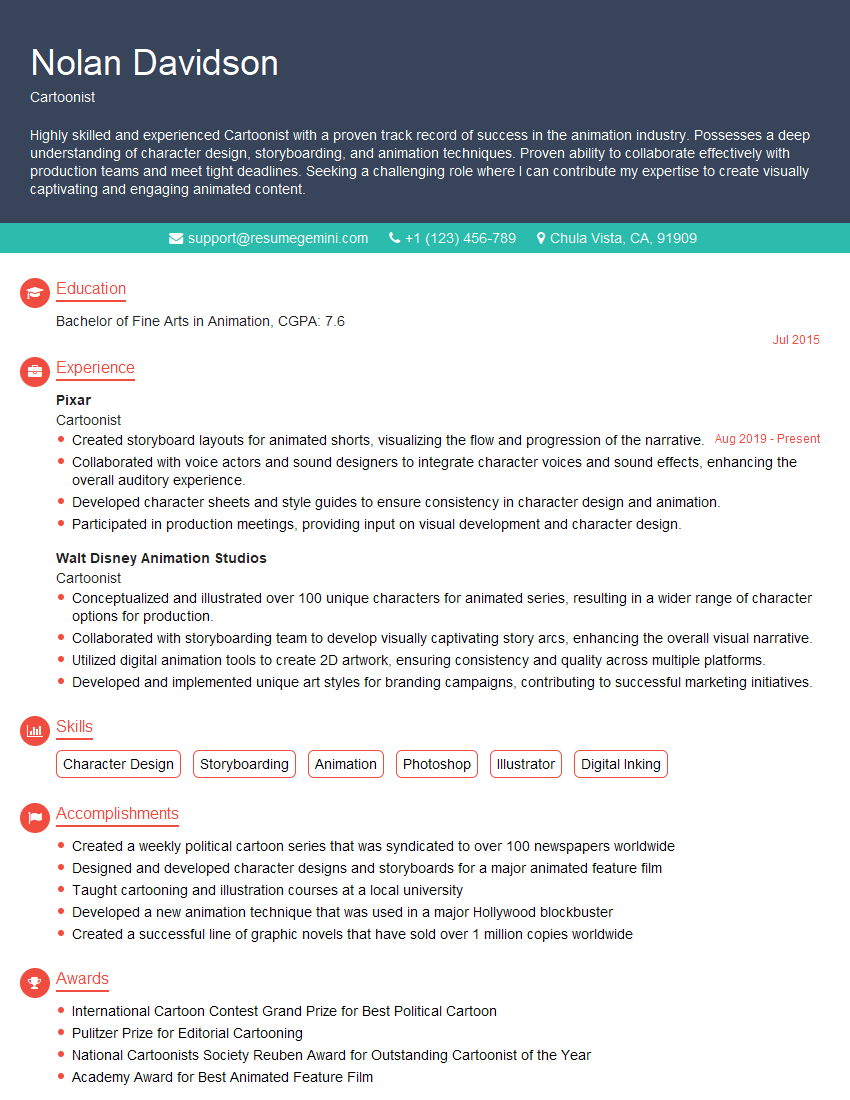
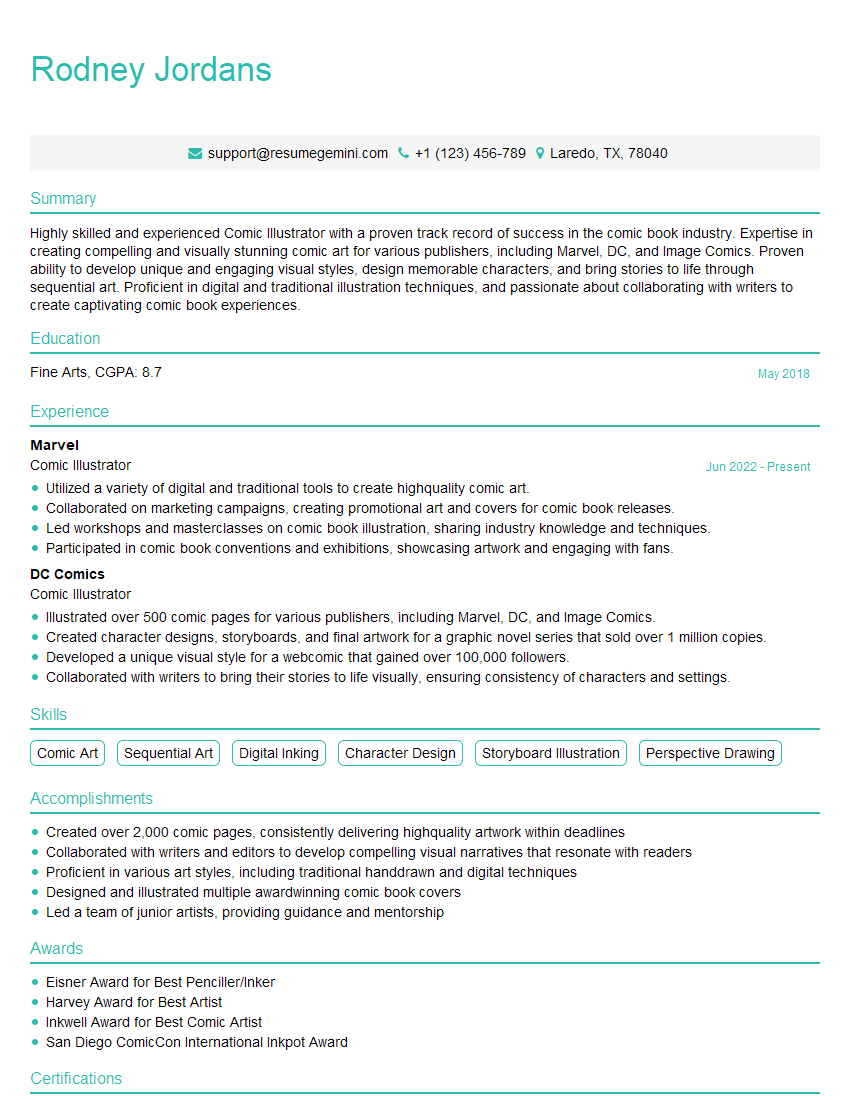
Mastering humour illustration opens doors to exciting careers in publishing, advertising, animation, and more! A strong portfolio is essential, but a compelling resume is your first impression. Creating an ATS-friendly resume significantly increases your chances of landing interviews. Use ResumeGemini, a trusted resource, to build a professional resume that showcases your skills and experience effectively. Examples of resumes tailored to Humour Illustration are available to help you get started.
Explore more articles
Users Rating of Our Blogs
Share Your Experience
We value your feedback! Please rate our content and share your thoughts (optional).
What Readers Say About Our Blog
Really detailed insights and content, thank you for writing this detailed article.
IT gave me an insight and words to use and be able to think of examples