Feeling uncertain about what to expect in your upcoming interview? We’ve got you covered! This blog highlights the most important Air Cargo interview questions and provides actionable advice to help you stand out as the ideal candidate. Let’s pave the way for your success.
Questions Asked in Air Cargo Interview
Q 1. Explain the difference between Air Freight and Sea Freight.
Air freight and sea freight are both modes of transporting goods internationally, but they differ significantly in speed, cost, and suitability for various cargo types. Think of it like choosing between a sports car and a cargo ship – one is fast but expensive, the other is slow but cost-effective.
- Air Freight: Faster, more expensive, suitable for time-sensitive goods, high-value items, and smaller volumes. Imagine shipping perishable goods like flowers or urgent medical supplies.
- Sea Freight: Slower, less expensive, ideal for large volumes, less time-sensitive goods, and heavy or bulky items. Consider transporting furniture, raw materials, or large machinery.
The choice depends on the specific needs of the shipment: urgency, value, volume, and fragility of the goods. A company shipping high-value electronics would prioritize speed and choose air freight, while a manufacturer exporting large quantities of textiles might opt for the cost savings of sea freight.
Q 2. Describe the Incoterms used in Air Cargo.
Incoterms (International Commercial Terms) are standardized trade terms published by the International Chamber of Commerce (ICC). They define responsibilities of buyers and sellers in international trade transactions, including who is responsible for costs and risks associated with transportation. Several Incoterms apply to air cargo, but some are more common than others:
- FCA (Free Carrier): The seller delivers the goods, cleared for export, to the carrier nominated by the buyer at the named place. Risk transfers to the buyer once the goods are handed over.
- CPT (Carriage Paid To): Similar to FCA, but the seller pays for carriage to the named place of destination. Risk still transfers to the buyer when goods are handed over to the carrier.
- CIP (Carriage and Insurance Paid To): Similar to CPT but the seller also procures insurance against loss or damage to the goods during carriage.
- DAP (Delivered at Place): Seller delivers the goods, uncleared, to the named place of destination. Buyer is responsible for import clearance and subsequent costs.
- DPU (Delivered at Place Unloaded): Similar to DAP, but the seller is responsible for unloading the goods from the arriving means of transport.
Choosing the right Incoterm is crucial as it significantly impacts the cost, risk, and responsibilities of both the buyer and seller. Misunderstanding Incoterms can lead to costly disputes.
Q 3. What are the key considerations for choosing an Air Freight Carrier?
Selecting an air freight carrier requires careful consideration of several factors. You wouldn’t choose a small, local airline to transport a large shipment across continents, just as you wouldn’t trust a luxury carrier with low-value bulk goods.
- Reliability and On-Time Performance: A carrier’s track record of delivering on time is paramount, especially for time-sensitive goods.
- Global Network and Coverage: A wider network ensures efficient transportation, even for complex routes.
- Capacity and Fleet Size: Ensure the carrier has the capacity to handle your shipment volume and specific requirements.
- Pricing and Service Fees: Compare pricing structures and assess any hidden or additional fees.
- Cargo Security and Insurance Options: Security measures and insurance coverage are crucial to mitigate risks associated with loss or damage.
- Customer Service and Communication: Prompt communication and effective customer service are vital for managing potential issues.
Thorough research and due diligence are critical before choosing a carrier. Obtaining references from other shippers can be invaluable in making an informed decision.
Q 4. How do you handle a delayed or damaged shipment?
Handling delays or damage requires a proactive and documented approach. It’s like a detective investigating a crime scene – every detail matters.
- Immediate Notification: Report the delay or damage to the carrier immediately, preferably in writing. Retain copies of all communications.
- Documentation: Gather evidence: photographs of the damage, delivery receipts, waybills, and any other relevant documents.
- Insurance Claim (if applicable): If the shipment is insured, file a claim promptly with your insurer, providing all necessary documentation.
- Investigation: Collaborate with the carrier to investigate the cause of the delay or damage. This might involve reviewing handling procedures or reviewing flight records.
- Negotiation and Resolution: Work with the carrier to negotiate a resolution, which might include compensation for the damage or delay.
- Legal Action (if necessary): If negotiations fail, you might need to pursue legal action to recover your losses.
Proactive documentation and clear communication are key to successfully resolving issues related to delayed or damaged shipments. Without sufficient evidence, you greatly reduce your chances of a successful resolution.
Q 5. Explain the process of customs clearance for air cargo.
Customs clearance is a critical step in international air cargo. It’s like going through immigration – you need the right paperwork to get through.
- Prepare necessary documentation: This includes the Air Waybill, commercial invoice, packing list, certificate of origin, and any other required documents specific to the goods being shipped.
- Electronic filing: Many countries now use electronic systems for customs declarations. This speeds up the process.
- Customs inspection (if required): Customs officials might inspect the shipment to verify the contents and ensure compliance with import regulations.
- Payment of duties and taxes: Import duties and taxes must be paid before the goods can be released.
- Release of cargo: Once all requirements are met, customs will release the cargo for delivery.
Accurate and complete documentation is essential to ensure smooth customs clearance. Incorrect or missing paperwork can result in delays and penalties.
Q 6. What are the different types of Air Waybills?
There are primarily three types of Air Waybills (AWBs):
- Master Air Waybill (MAWB): Issued by the shipper to the airline for consolidated shipments. Think of this as the ‘main’ ticket for the whole shipment.
- House Air Waybill (HAWB): Used for individual shipments within a consolidated shipment. This is like individual tickets within a group booking.
- Direct Air Waybill: Issued directly by the shipper to the airline for non-consolidated shipments. This represents direct transport, without any consolidation.
The type of AWB used depends on whether the shipment is consolidated (combined with other shipments) or sent directly.
Q 7. How do you manage capacity constraints in air cargo operations?
Managing capacity constraints in air cargo is a constant challenge, especially during peak seasons. It’s like managing seats on an airplane – you need to optimize space and resources.
- Demand Forecasting: Accurate forecasting of future demand is crucial for capacity planning.
- Network Optimization: Optimizing flight routes and schedules to efficiently utilize available aircraft capacity.
- Dynamic Pricing: Adjusting pricing strategies based on demand and capacity availability.
- Strategic Partnerships: Collaborating with other carriers to share capacity and resources.
- Improved Warehouse Management: Efficient warehouse operations to minimize storage times and improve turnaround times.
- Technology Adoption: Utilizing technology to improve visibility, optimize routes, and automate processes.
Effective capacity management requires a combination of proactive planning, data-driven decision-making, and efficient operational processes.
Q 8. What are the common risks and challenges in air cargo transportation?
Air cargo transportation, while efficient, faces numerous risks and challenges. These can be broadly categorized into operational, security, and regulatory issues.
- Operational Risks: These include flight delays or cancellations due to weather, mechanical issues, or air traffic congestion. Imagine a shipment of perishable goods – a delay could mean significant financial losses. Another operational risk is mishandling of cargo, leading to damage or loss. Proper packaging and handling procedures are crucial to mitigate this. Furthermore, logistical challenges like inefficient ground handling, customs delays, and inadequate infrastructure at airports can also cause significant disruptions.
- Security Risks: The security of air cargo is paramount. Threats like terrorism and theft pose significant risks. Stringent security measures, including screening and tracking systems, are vital to prevent unauthorized access and ensure the safety of goods and people. The introduction of advanced technologies such as AI-powered scanning systems are playing an increasingly important role in enhancing security.
- Regulatory Compliance: Air cargo is heavily regulated, with various international and national regulations governing aspects like dangerous goods handling, customs procedures, and documentation. Non-compliance can result in hefty fines, delays, or even seizure of cargo. Staying updated on these regulations is a continuous process.
Successfully navigating these challenges requires robust risk management strategies, proactive communication, and adherence to strict operational procedures. Utilizing technology to improve tracking and transparency can also greatly enhance efficiency and reduce risk.
Q 9. Describe your experience with Air Cargo tracking systems.
My experience with air cargo tracking systems spans over a decade, encompassing various technologies and platforms. I’ve worked extensively with systems ranging from simple tracking numbers and online portals to sophisticated, integrated logistics platforms that provide real-time visibility across the entire supply chain.
I’m proficient in utilizing these systems to monitor the location, status, and estimated time of arrival (ETA) of shipments. This includes interpreting data related to each stage of the journey, from the moment the goods are picked up to their final delivery. I can effectively use this data to identify potential delays, predict possible problems, and proactively implement solutions to prevent disruptions. For example, if a delay is anticipated due to inclement weather, I can notify relevant stakeholders and explore alternative routing options.
Moreover, I’ve been involved in the implementation and optimization of tracking systems, ensuring seamless integration with other operational systems. This often involves working with IT departments, logistics providers, and other stakeholders to refine processes, improve accuracy, and enhance overall efficiency. I find the ability to provide real-time updates to clients invaluable in building trust and transparency.
Q 10. How do you ensure compliance with IATA regulations?
Ensuring compliance with IATA (International Air Transport Association) regulations is fundamental to operating safely and legally in the air cargo industry. This involves a multi-faceted approach.
- Staying Updated: IATA regulations are constantly evolving, so continuous monitoring of updates and changes is essential. This includes regular review of circulars, directives, and any changes to the Dangerous Goods Regulations.
- Training and Education: All personnel involved in handling air cargo, from ground staff to management, must receive proper training on IATA regulations. This includes specific training on dangerous goods handling, security procedures, and documentation requirements.
- Documentation and Record Keeping: Meticulous documentation is crucial. All required paperwork, such as air waybills, shipping manifests, and certificates of origin, must be accurately completed and maintained. This helps in audits and demonstrating compliance.
- Audits and Inspections: Regular internal audits and preparedness for external audits by regulatory bodies are vital. This ensures that our processes are continuously aligned with the latest regulations and that any identified gaps are immediately addressed.
- Technology Integration: Utilizing technology to automate processes and track compliance can significantly reduce the risk of errors. This could include using digital air waybills or automated dangerous goods declaration systems.
Non-compliance can lead to serious consequences, including hefty fines, suspension of operations, and damage to reputation. Therefore, a proactive and rigorous approach to compliance is not just a regulatory requirement, but a business imperative.
Q 11. Explain the concept of dangerous goods handling in air cargo.
Dangerous goods handling in air cargo is a critical aspect of safety and security. These are materials or substances that pose a risk to health, safety, property, or the environment if not properly handled. They are classified according to their inherent hazards (explosives, flammables, corrosives, etc.), and each class has specific regulations for packaging, labeling, and transportation.
The process involves:
- Proper Identification and Classification: Accurate identification of the dangerous goods and their classification according to the IATA Dangerous Goods Regulations (DGR) is paramount.
- Packaging and Labeling: These goods must be packaged according to specific standards to prevent leakage, damage, and accidental activation. Correct labeling, including hazard symbols and UN numbers, is crucial for easy identification and handling.
- Documentation: Detailed documentation is necessary, including the Shipper’s Declaration for Dangerous Goods, which provides essential information about the nature, quantity, and handling requirements of the shipment.
- Segregation and Loading: Dangerous goods must be segregated from other cargo according to their compatibility to prevent dangerous reactions or incidents. Specific loading procedures are also crucial.
- Emergency Response Planning: Preparation for potential emergencies involving dangerous goods is essential. This includes having emergency response plans in place and training personnel on appropriate procedures.
Failure to comply with dangerous goods regulations can have catastrophic consequences, including fires, explosions, and serious injuries. Therefore, strict adherence to procedures and training is absolutely vital.
Q 12. What are the various methods for calculating air freight rates?
Air freight rates are complex and depend on various factors. Several methods are used for calculation.
- Weight-Based Pricing: This is the most common method, where the charge is based on either the gross weight (actual weight of the cargo plus packaging) or the volumetric weight (calculated from the dimensions of the shipment), whichever is higher. This is because a large, lightweight item might occupy more space than a small, heavy one.
- Dimensional Weight Calculation: Volumetric weight is typically calculated using a formula such as:
(Length x Width x Height) / 6000(in cubic centimeters). The result is then compared to the actual weight. For example, if a package measures 100cm x 50cm x 50cm, its volumetric weight would be 41.67kg. If the actual weight is only 20kg, the freight charge would be based on the volumetric weight. - Zone-Based Pricing: Air freight rates vary depending on the origin and destination of the shipment. Carriers divide their network into zones, and rates differ depending on the distance and associated costs.
- Fuel Surcharges: Fuel costs significantly impact air freight rates. Carriers often add fuel surcharges to reflect fluctuating fuel prices.
- Currency Fluctuations: Changes in exchange rates can also influence air freight costs, especially in international shipments.
- Additional Charges: Additional charges might apply for special handling, oversized or overweight cargo, customs clearance, insurance, and other services.
Understanding these various factors allows for accurate costing and negotiation with carriers to achieve favorable rates. The selection of appropriate method depends heavily on the characteristics of the shipment.
Q 13. How do you manage communication with various stakeholders in air cargo?
Effective communication is the cornerstone of successful air cargo operations. I manage communication with various stakeholders using a multi-pronged approach.
- Technology-Driven Communication: I rely on various technologies, such as dedicated communication platforms, email, and tracking systems, to share information efficiently and promptly. These platforms ensure real-time updates and seamless information flow.
- Regular Reporting: Regular reports, including shipment updates, performance metrics, and potential issues, are crucial for transparency. These reports are customized for each stakeholder (e.g., clients, carriers, customs brokers) and tailored to their information needs.
- Proactive Communication: Proactive communication is key in risk management. If I anticipate a delay or potential issue, I promptly inform all relevant parties. This helps in mitigating problems and preventing disruptions.
- Meeting and Collaboration: Regular meetings with key stakeholders (e.g., clients, carriers) facilitate open dialogue, problem-solving, and relationship building. These meetings ensure mutual understanding and alignment of expectations.
- Conflict Resolution: In case of disputes or delays, effective communication helps in resolving conflicts amicably. This involves active listening, empathy, and a commitment to finding mutually acceptable solutions.
A clear, concise, and professional communication style is essential in building trust and managing expectations across the complex network of stakeholders in air cargo operations.
Q 14. What is your experience with cargo insurance?
Cargo insurance is crucial in mitigating financial risks associated with air cargo transportation. My experience with cargo insurance involves understanding various types of coverage and their implications.
I’m familiar with:
- All-Risks Coverage: This provides comprehensive protection against a wide range of perils, including loss, damage, and theft during transit.
- Specific Perils Coverage: This covers only specified risks, such as fire, accident, or theft, offering more limited protection.
- Institute Cargo Clauses: These are standardized clauses used in marine and aviation insurance policies, specifying the extent of coverage.
I’ve been involved in selecting appropriate insurance coverage based on the value, nature, and risk profile of the cargo. This involves working with insurance brokers to secure competitive premiums while ensuring adequate protection. I also handle claims processing in case of loss or damage, working with insurers to expedite the process and ensure fair compensation for the client. My experience also includes negotiating insurance terms, managing insurance policies, and staying abreast of evolving insurance market trends to optimize coverage and minimize costs.
Q 15. How do you handle customer complaints regarding air cargo shipments?
Handling customer complaints in air cargo requires a systematic and empathetic approach. My process starts with active listening to fully understand the issue. This includes the nature of the complaint (e.g., delayed shipment, damage, loss), the affected party (shipper, consignee), and the specific details of the shipment. Next, I investigate the root cause by reviewing tracking data, documentation, and communicating with relevant personnel involved in the shipment’s journey – from origin to destination. This often involves checking with ground handlers, customs brokers, and airline representatives.
Depending on the nature of the complaint, I’ll work towards a resolution that prioritizes transparency and fairness. This may involve offering compensation (e.g., refund, replacement), expediting the delivery, or conducting a thorough investigation leading to preventive measures to avoid similar issues in the future. Maintaining clear and consistent communication with the customer throughout the process is vital, keeping them informed of the progress and anticipated resolution timeline. I always aim for a win-win situation, restoring customer confidence and improving our service reputation. For instance, I once resolved a complaint regarding damaged goods by facilitating a swift insurance claim process and securing a replacement shipment, significantly mitigating the customer’s losses and solidifying their trust in our services.
Career Expert Tips:
- Ace those interviews! Prepare effectively by reviewing the Top 50 Most Common Interview Questions on ResumeGemini.
- Navigate your job search with confidence! Explore a wide range of Career Tips on ResumeGemini. Learn about common challenges and recommendations to overcome them.
- Craft the perfect resume! Master the Art of Resume Writing with ResumeGemini’s guide. Showcase your unique qualifications and achievements effectively.
- Don’t miss out on holiday savings! Build your dream resume with ResumeGemini’s ATS optimized templates.
Q 16. Describe your experience with cargo warehousing and storage.
My experience with cargo warehousing and storage encompasses various aspects, from managing temperature-sensitive goods to handling oversized and heavy cargo. I understand the importance of proper inventory management, ensuring accurate tracking and efficient retrieval of shipments. This includes familiarity with warehouse management systems (WMS) that optimize storage space, automate processes, and enhance tracking visibility. I’ve worked in facilities adhering to strict regulatory standards, ensuring the safety and security of goods while complying with international regulations. For example, in one role, I oversaw the implementation of a new WMS system which resulted in a 15% reduction in storage costs and a 10% improvement in order fulfillment time. The key is ensuring optimal storage conditions based on the cargo type (temperature, humidity, security). Proper handling equipment, trained personnel, and robust security measures are also crucial to prevent damage or loss.
Q 17. Explain the process of import and export documentation in air cargo.
Import and export documentation in air cargo is crucial for smooth and legal movement of goods across borders. The process involves several key documents, each serving a specific purpose. For exports, this typically includes the Air Waybill (AWB), a crucial document acting as a contract of carriage between the shipper and the airline; commercial invoice providing details of the goods and their value; packing list detailing the contents of each package; certificate of origin verifying the origin of the goods; and potentially other specific documents depending on the commodity and destination country (e.g., import permits, health certificates). For imports, the importer receives the AWB and uses it along with other necessary documentation to clear customs. Customs clearance involves presenting all required documentation to the customs authorities for inspection and verification. Any discrepancies or missing documentation can lead to delays or penalties. Accurate and complete documentation is paramount in preventing complications and ensuring timely customs clearance. I have extensive experience preparing and reviewing all of these documents, ensuring compliance with international regulations, and troubleshooting any discrepancies that might arise.
Q 18. What is your experience with different types of cargo (e.g., perishables, oversized cargo)?
My experience encompasses handling a wide range of cargo types, each requiring specific handling procedures and considerations. Perishable goods, such as fruits, vegetables, and pharmaceuticals, demand careful temperature control throughout the transportation chain, utilizing specialized containers and refrigerated storage. Oversized cargo, like machinery or large vehicles, requires specialized handling equipment, securing methods, and often chartering of dedicated aircraft space. Dangerous goods (hazardous materials) necessitate strict adherence to IATA Dangerous Goods Regulations, including proper packaging, labeling, and documentation. I’ve personally overseen the transportation of delicate artwork requiring custom crating and special handling, as well as the shipment of live animals requiring specific environmental controls and veterinary certifications. Understanding the unique characteristics of different cargo types allows for appropriate handling, minimizing risks and ensuring the safe and timely delivery of goods.
Q 19. How familiar are you with different types of aircraft and their cargo capacity?
I’m familiar with various aircraft types and their cargo capacities, ranging from narrow-body aircraft like the Boeing 737 or Airbus A320 to wide-body aircraft like the Boeing 777 or Airbus A380, and specialized freighters such as the Boeing 747-400F or Antonov An-124. Each aircraft has specific dimensions and weight restrictions, influencing the size and type of cargo that can be carried. Understanding these parameters is essential for efficient cargo planning, optimizing space utilization, and selecting the most suitable aircraft for a given shipment. I’m proficient in using online resources and databases that provide detailed specifications for aircraft cargo capacities, enabling informed decisions regarding freight booking and routing. For example, I understand that while a Boeing 747-400F offers significantly larger payload capacity than a 737, its operational costs might make it less economical for smaller shipments.
Q 20. Describe your experience with air cargo scheduling and planning.
Air cargo scheduling and planning is a complex process involving multiple stakeholders, including airlines, ground handlers, customs brokers, and customers. My experience includes developing and implementing efficient schedules that consider various factors like flight availability, cargo volume, delivery deadlines, and cost optimization. I use various planning tools and techniques to manage resources effectively, minimizing delays and maximizing efficiency. This involves coordinating with different parties, tracking shipments in real-time, and adapting to unexpected events, such as flight cancellations or weather disruptions. For instance, I’ve developed contingency plans to reroute shipments in case of unforeseen circumstances, ensuring minimal impact on delivery timelines. Effective scheduling also considers factors such as weight and balance limitations on aircraft, ensuring safe and efficient operations.
Q 21. What software or systems are you proficient in for managing air cargo?
I am proficient in various software and systems used in air cargo management. My expertise includes using Cargo Management Systems (CMS) such as those offered by major airlines and freight forwarders, enabling me to track shipments, generate reports, and manage documentation. I also have experience with Warehouse Management Systems (WMS) for inventory control and order fulfillment. My skills extend to using various Transportation Management Systems (TMS) to optimize routes, manage carrier selection, and track shipments in transit. Furthermore, I am comfortable working with electronic data interchange (EDI) systems for seamless communication and data exchange with partners. I am also adept at utilizing specialized software for dangerous goods handling, ensuring compliance with all regulations. Proficiency in these systems enables efficient operations, accurate reporting, and improved decision-making.
Q 22. How do you optimize air cargo routes and networks?
Optimizing air cargo routes and networks is a complex process that involves balancing speed, cost, and reliability. It’s akin to designing a highly efficient highway system for airplanes. We utilize sophisticated software and data analytics to achieve this.
- Network Design: We analyze origin and destination points, cargo volumes, and flight frequencies to create an optimal network. This often involves strategic partnerships with other airlines or ground handlers to extend our reach and leverage existing infrastructure.
- Route Optimization: We use algorithms that consider factors such as fuel prices, air traffic congestion, weather patterns, and ground handling times to determine the most efficient flight paths. This might involve utilizing alternative airports or even adjusting flight schedules based on real-time data.
- Capacity Planning: Accurate forecasting of cargo demand is crucial. We use historical data, market trends, and seasonal variations to predict future needs and ensure we have sufficient aircraft capacity available. Overbooking is avoided, as it has a severe impact on operational efficiency and customer satisfaction.
- Dynamic Routing: Unexpected events such as weather disruptions or mechanical issues require dynamic route adjustments. Our systems allow for quick rerouting of shipments to minimize delays and maintain service quality. This involves close collaboration with ground handling agents and air traffic control.
For example, during peak seasons like Christmas, we might increase flight frequencies on popular routes or introduce new routes to handle the surge in demand. Conversely, during periods of low demand, we might consolidate shipments onto fewer flights to optimize resource utilization.
Q 23. Explain the concept of air cargo consolidation and deconsolidation.
Air cargo consolidation and deconsolidation are critical processes for efficient handling of multiple shipments. Think of it like packaging individual items into larger boxes for easier transportation and then unpacking them at the destination.
Consolidation: This involves grouping smaller shipments from multiple shippers into larger, unit-load devices (ULDs) such as pallets or containers. This reduces handling time, improves efficiency, and lowers overall transportation costs. We use specialized software to optimize the loading of ULDs to maximize space utilization and weight distribution.
Deconsolidation: This is the reverse process, where consolidated shipments are separated and individual consignments are identified and directed to their respective destinations. This process involves careful tracking and meticulous handling to prevent damage or loss of individual items.
For instance, a forwarder might consolidate hundreds of small packages from various e-commerce businesses into a single ULD for transport to a central hub, where they are deconsolidated and then sorted for final delivery.
Q 24. How do you deal with unexpected operational disruptions in air cargo?
Unexpected disruptions are inevitable in air cargo. Our response involves a multi-pronged approach, prioritizing safety and minimizing impact on our customers.
- Proactive Monitoring: We continuously monitor weather forecasts, geopolitical events, and airport operational updates. This allows us to anticipate potential problems and implement preventative measures.
- Contingency Planning: We have detailed contingency plans for various scenarios, such as flight cancellations, ground handling delays, and security incidents. These plans outline alternative routes, transportation modes, and communication protocols.
- Real-time Communication: Open communication with all stakeholders – shippers, customers, ground handlers, and regulatory bodies – is essential. We utilize various communication channels to provide timely updates and coordinate responses.
- Problem-solving and Adaptation: When disruptions occur, we activate our contingency plans and work collaboratively to find solutions. This might involve rerouting shipments, chartering alternative aircraft, or negotiating with handling agents to prioritize our cargo.
For example, during a sudden snowstorm, we might reroute a shipment destined for a snow-affected airport to a nearby alternative, keeping the client informed about the change.
Q 25. Describe your experience with various modes of transport within air cargo operations (e.g., trucking, rail).
Air cargo operations rarely involve only air transport. Effective delivery requires seamless integration with other modes.
- Trucking: Trucking is essential for the ‘first mile’ (picking up goods from the shipper) and ‘last mile’ (delivering goods to the consignee) connections. We work with reliable trucking companies to ensure timely pickup and delivery. Careful consideration is given to route optimization, driver safety and security, and adherence to regulatory requirements. We carefully monitor trucking providers’ performance to ensure on-time delivery and cargo safety.
- Rail: Rail transport is often utilized for longer distances, especially for high-volume shipments. Its cost-effectiveness makes it a preferred mode for certain routes. Intermodal transport – using a combination of rail and air – is increasingly common, especially for shipments over vast distances.
In practice, we might use trucking to transport a shipment from a manufacturer to an airport, then air freight to a regional hub, and finally trucking again to its final destination. Each stage is carefully coordinated to ensure smooth and efficient handling.
Q 26. What is your experience with air cargo security procedures and regulations?
Air cargo security is paramount. We adhere strictly to international regulations and best practices.
- Known Shipper Program (KSP): We are registered in various KSP programs, signifying a proven commitment to security standards. This allows for expedited screening and processing of our shipments.
- Cargo Screening: We collaborate with security agencies to ensure our cargo undergoes the necessary screening procedures, using both X-ray and other advanced technologies.
- Security Training: Our personnel receive regular security awareness training to understand and comply with all relevant regulations and procedures. This includes awareness of potential threats and protocols for reporting suspicious activity.
- Secure Handling Procedures: We implement strict handling procedures to ensure the integrity and security of cargo throughout its journey. This includes proper sealing, labeling, and documentation.
Compliance with regulations like the Transportation Security Administration (TSA) requirements in the US is non-negotiable and forms an integral part of our daily operations.
Q 27. Explain the concept of dimensional weight and its impact on air freight costs.
Dimensional weight, also known as volumetric weight, accounts for the space a shipment occupies in relation to its actual weight. It is calculated based on the package’s dimensions (length x width x height) and a specific density factor. This is important because larger, less dense packages take up more space on an aircraft, even if they’re not heavy.
The formula is typically: (Length x Width x Height in cm) / 6000 = Dimensional Weight in kg (the 6000 is a common factor, but may vary depending on the carrier).
The higher of the actual weight and dimensional weight determines the chargeable weight, and thus, the cost of air freight. For example, a large, lightweight package might have a higher dimensional weight than its actual weight, leading to a higher shipping cost.
This system ensures that shippers pay fairly for the space their cargo consumes on the aircraft, preventing those with large, low-density shipments from subsidizing the transportation of smaller, denser packages.
Q 28. How do you prioritize tasks and manage your workload in a fast-paced air cargo environment?
The air cargo industry demands efficiency and prioritization. I employ a structured approach to manage my workload.
- Prioritization Matrix: I use a matrix that categorizes tasks based on urgency and importance. This helps me focus on critical tasks first, preventing bottlenecks and ensuring timely completion of high-priority shipments.
- Time Management Techniques: I utilize time management techniques such as the Pomodoro Technique to maintain focus and productivity. This involves working in focused intervals with short breaks in between.
- Delegation: Where possible, I delegate tasks to capable team members to optimize resource utilization and streamline processes. Clear communication and responsibility allocation are key.
- Technology: I leverage technology such as project management software and communication tools to track progress, collaborate effectively, and ensure transparency.
By systematically prioritizing tasks and employing efficient time management strategies, I manage to stay on top of things in the fast-paced and often unpredictable environment of air cargo.
Key Topics to Learn for Your Air Cargo Interview
- Air Cargo Operations: Understand the entire process, from acceptance and handling to customs clearance and delivery. Consider the different types of cargo and their specific handling requirements.
- Air Cargo Regulations and Compliance: Familiarize yourself with international regulations (IATA, ICAO) and national laws governing air freight. Be prepared to discuss safety regulations and security protocols.
- Logistics and Supply Chain Management: Explore how air cargo fits into broader supply chains. Understand concepts like inventory management, warehousing, and transportation optimization within the air cargo context.
- Air Cargo Documentation: Master the essential documentation required for air freight, including Air Waybills (AWB), shipping manifests, and customs declarations. Understand the importance of accuracy and compliance.
- Technology in Air Cargo: Learn about the role of technology in tracking, managing, and optimizing air cargo operations. This includes Cargo Information Systems (CIS) and other relevant software applications.
- Problem-Solving in Air Cargo: Be ready to discuss scenarios involving delays, damaged goods, or other operational challenges. Highlight your ability to think critically and find effective solutions under pressure.
- Air Cargo Security: Understand the threats and vulnerabilities in air cargo and the measures taken to mitigate them. This includes security screening procedures and best practices.
- Cost Management and Pricing Strategies: Familiarize yourself with the different pricing models and cost considerations involved in air cargo transportation. This includes understanding fuel surcharges and other variables.
Next Steps
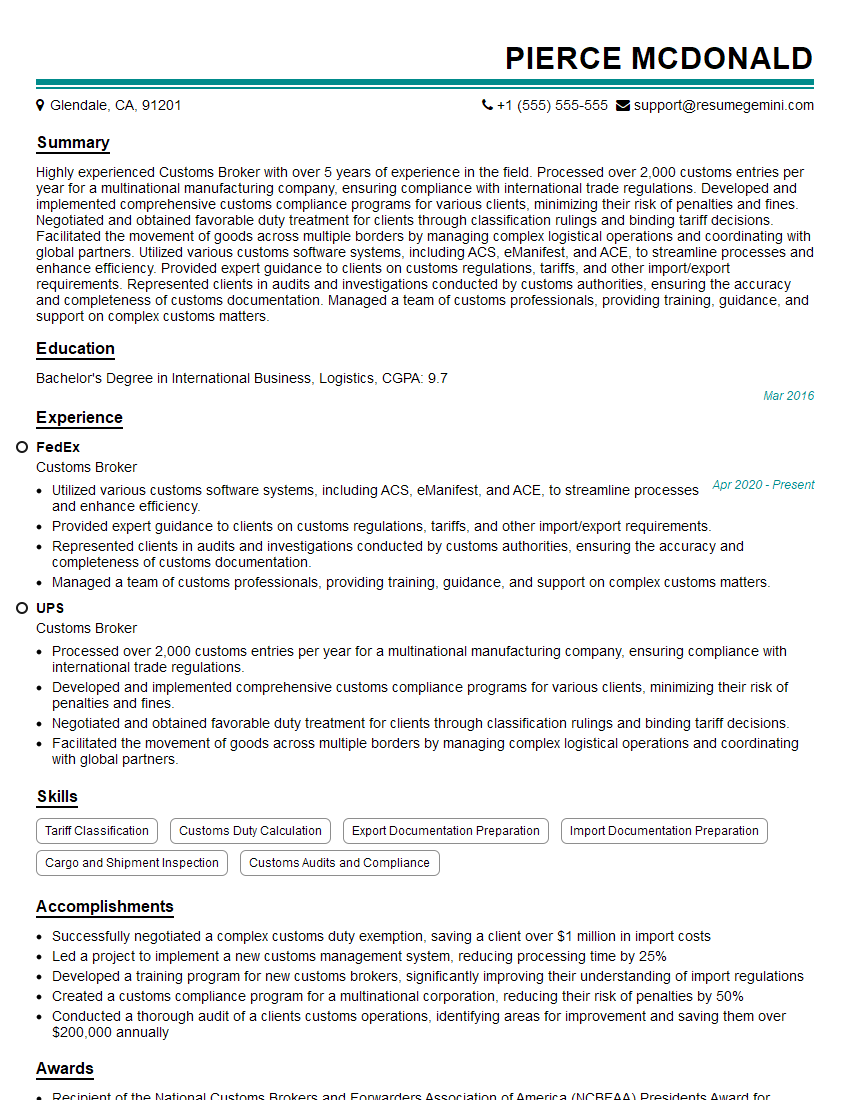
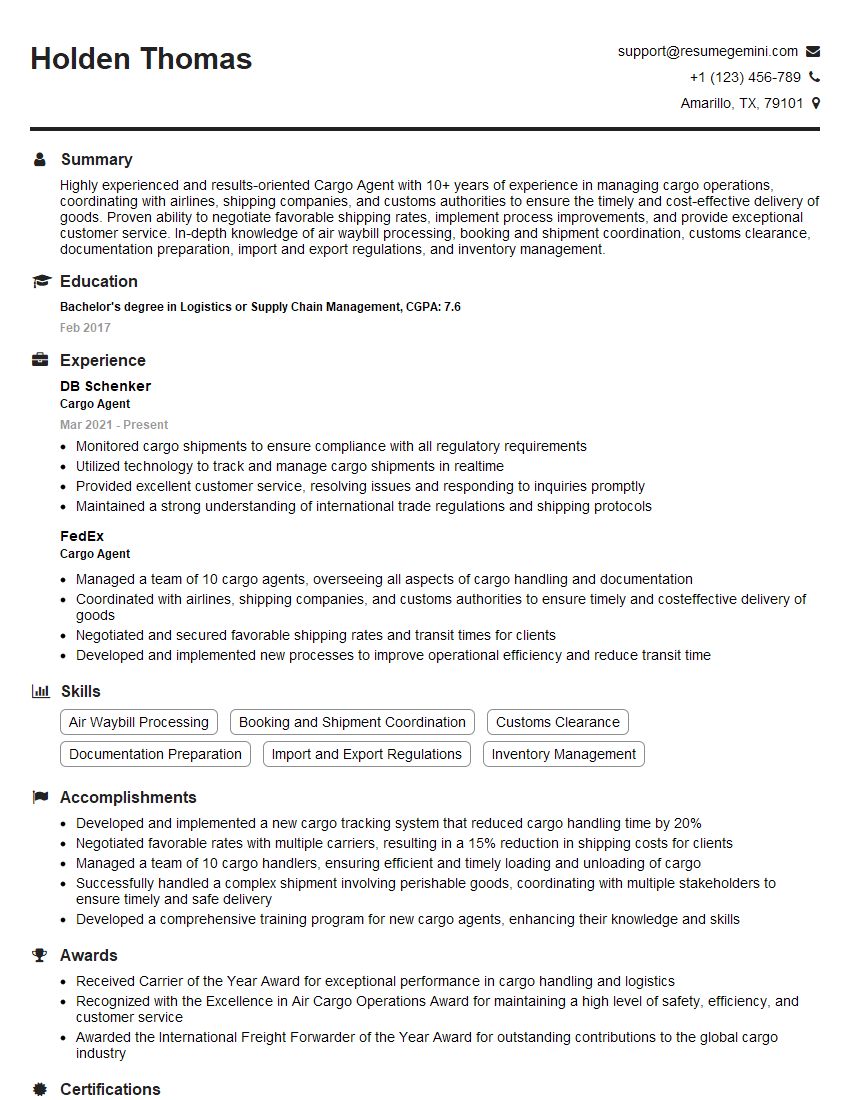
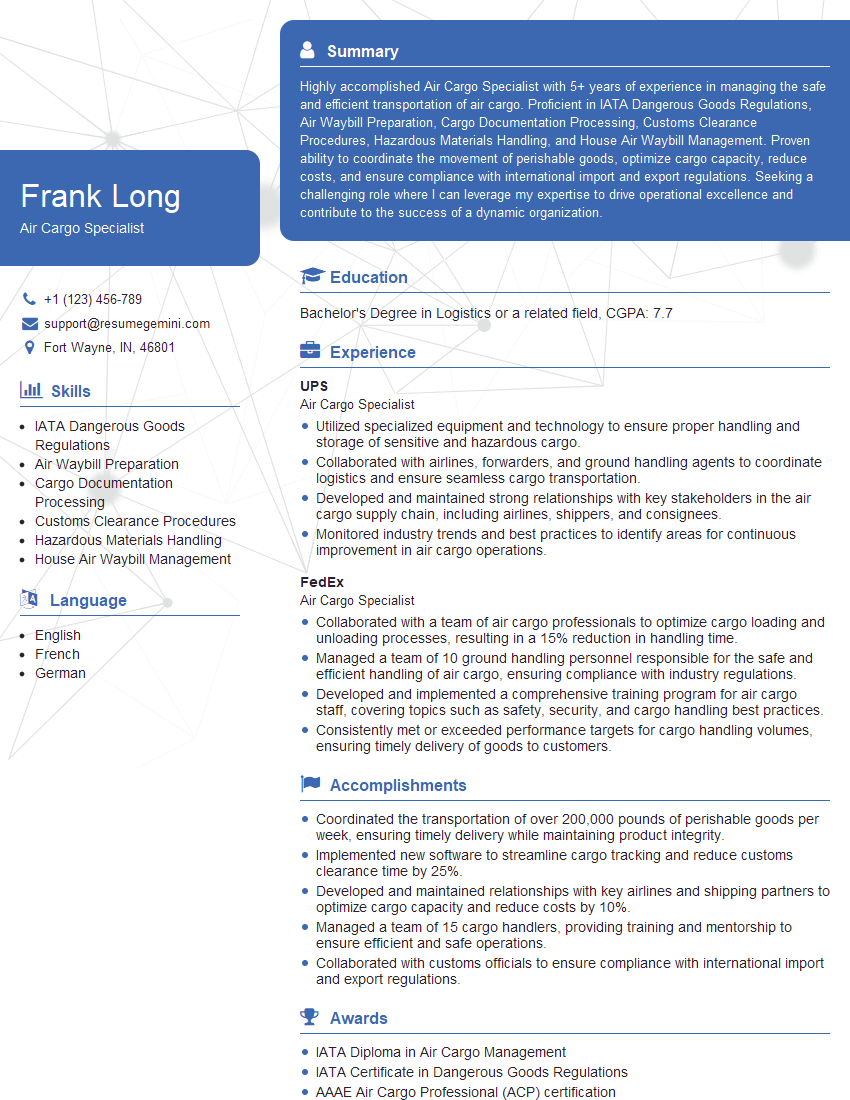
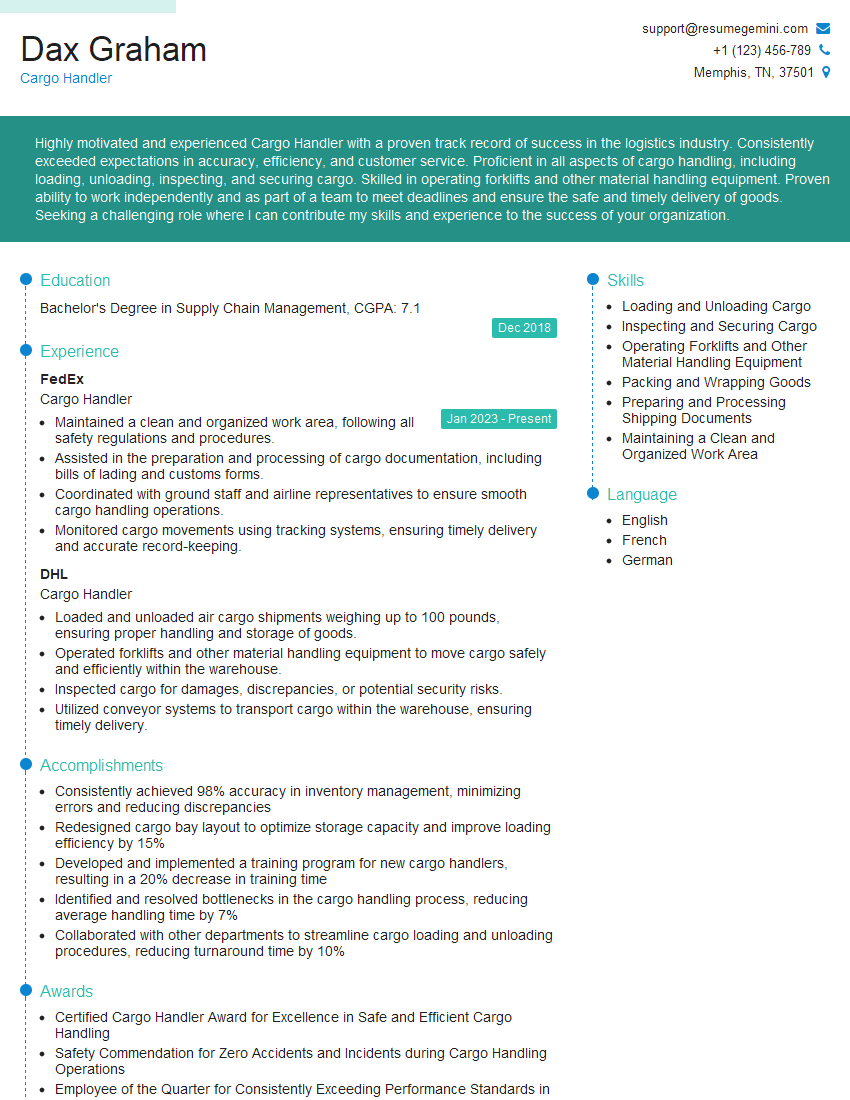
Mastering the intricacies of air cargo opens doors to exciting career opportunities with significant growth potential. To maximize your chances of securing your dream role, a strong, ATS-friendly resume is crucial. ResumeGemini is a trusted resource that can help you craft a compelling and effective resume tailored to the specific demands of the Air Cargo industry. We provide examples of resumes specifically designed for Air Cargo positions to guide you.
Explore more articles
Users Rating of Our Blogs
Share Your Experience
We value your feedback! Please rate our content and share your thoughts (optional).
What Readers Say About Our Blog
Really detailed insights and content, thank you for writing this detailed article.
IT gave me an insight and words to use and be able to think of examples