Interviews are more than just a Q&A session—they’re a chance to prove your worth. This blog dives into essential Dockage Determination interview questions and expert tips to help you align your answers with what hiring managers are looking for. Start preparing to shine!
Questions Asked in Dockage Determination Interview
Q 1. Explain the different methods used for calculating dockage fees.
Dockage fees are calculated using various methods, each with its own strengths and weaknesses. The most common methods include:
- Linear Measurement: This is a straightforward approach where fees are calculated based on the vessel’s length. For example, a marina might charge $X per foot of vessel length. This is simple to administer but doesn’t account for beam (width) or other vessel characteristics.
- Square Footage: This method considers both length and beam, calculating the vessel’s footprint and charging accordingly. It’s more accurate than linear measurement but still doesn’t account for variations in vessel type or amenities required.
- Tiered Pricing: This system uses different rates based on vessel length or size categories. For example, vessels under 25 feet might fall into a lower price tier than those over 50 feet. This is commonly used to create a more granular pricing structure.
- Value-Based Pricing: This method takes into account the value of the vessel, reflecting the higher potential demand for dockage for more expensive boats. This can be more equitable but may require a more complex assessment.
- Combination Approach: Many marinas use a combination of these methods. They might use linear measurement as a base fee and then add surcharges for amenities or based on vessel size category.
The selection of the method depends on factors such as marina resources, target market, and the local competitive landscape.
Q 2. How do you determine the appropriate dockage space for a specific vessel?
Determining appropriate dockage space requires careful consideration of several factors. It’s not just about fitting the vessel; it’s about ensuring safe and efficient operations. The process typically involves:
- Vessel Dimensions: Precise measurements of length, beam, and draft (depth below the waterline) are essential. This information is usually obtained from the vessel’s documentation or directly measured.
- Dock Configuration: The marina layout, including the dimensions and layout of the docks, needs to be carefully considered to ensure the vessel fits and doesn’t impede access for other boats. This often involves reviewing dock charts and site plans.
- Maneuverability: The space needed for maneuvering the vessel into and out of its assigned slip must be accounted for. This takes into consideration the boat’s handling characteristics, the skill level of the captain, and the presence of other boats in the vicinity.
- Safety Considerations: Sufficient clearance is needed around the vessel to prevent collisions and allow easy access for maintenance or emergencies. Safety regulations and best practices should be followed.
- Available Utilities: The dock space needs to have the necessary utilities (electricity, water) that meet the vessel’s requirements. This is sometimes reflected in pricing.
Think of it like a jigsaw puzzle. You need to find the perfect-sized piece (the boat) that fits seamlessly into the existing puzzle (the marina layout).
Q 3. What factors influence dockage rates (e.g., vessel size, location, duration)?
Dockage rates are influenced by a number of factors. It’s a complex pricing equation! Key factors include:
- Vessel Size: Larger vessels generally command higher rates due to their increased space requirements and potential utility consumption.
- Location: Docks in prime locations (e.g., close to amenities, with scenic views) often carry premium rates. A slip with easy access can also be more expensive.
- Duration: Longer-term rentals (seasonal or annual) often benefit from discounted rates compared to short-term rentals. High demand periods may also lead to higher rates.
- Amenities: The availability of amenities like electricity, water, sewage pump-out, Wi-Fi, and security will influence pricing. Marinas with full-service amenities command higher rates.
- Market Conditions: Supply and demand play a significant role. In high-demand areas with limited dockage, rates will generally be higher.
- Type of Vessel: Some marinas may charge different rates depending on the type of vessel, for instance, sailboats vs. motorboats, which often have different utility needs.
It’s a dynamic pricing model, constantly affected by local conditions and market forces.
Q 4. Describe your experience with dockage allocation software or systems.
I have extensive experience with dockage allocation software, primarily using systems that integrate with marina management software. These systems typically offer features such as:
- Real-time Dock Availability: Visual representations of dock layouts showing available and occupied slips.
- Reservation Management: Automated reservation processing, including online booking and payment options.
- Waitlist Management: Efficient management of waiting lists for popular docks.
- Reporting and Analytics: Generation of reports on dock usage, revenue, and occupancy rates.
- Integration with other systems: Seamless integration with accounting, customer relationship management (CRM), and security systems.
I’m proficient in using these systems to optimize dock utilization, minimize scheduling conflicts, and enhance customer service. For example, I once used a system that integrated with a weather forecasting API to proactively inform customers about potential storms and arrange alternative moorings.
Q 5. How do you handle conflicts or scheduling issues related to dockage?
Handling dockage conflicts and scheduling issues requires a proactive and organized approach. My strategy typically involves:
- Clear Communication: Open and transparent communication with all parties involved, including customers, marina staff, and contractors, is key to resolving conflicts quickly.
- Prioritization: Establishing a clear prioritization scheme based on reservation times, existing contracts, and safety considerations helps in resolving competing claims.
- Flexible Scheduling: When possible, adjusting schedules to accommodate multiple needs can minimize disruptions. This might involve offering alternative docks or times.
- Mediation: In situations where parties can’t reach a consensus, mediating between the parties to find a mutually acceptable solution is essential.
- Escalation Protocol: Having a defined escalation protocol helps to ensure that any unresolved issues are addressed promptly and effectively.
I once successfully resolved a conflict involving two boats vying for the same prime slip by offering one captain a slightly larger slip at a discounted rate in a different, equally desirable area of the marina.
Q 6. What are the common challenges in dockage determination, and how have you addressed them?
Common challenges in dockage determination include:
- Inaccurate Vessel Measurements: This can lead to scheduling issues and safety hazards. Implementing strict measurement verification processes helps to mitigate this.
- Insufficient Dock Space: High demand and limited space can lead to long waiting lists and customer dissatisfaction. Careful planning and expansion strategies can alleviate this.
- Software Glitches: Technical issues with dockage allocation systems can disrupt operations. Regular software maintenance and backups are critical.
- Weather-Related Issues: Unexpected storms can cause damage and require rescheduling. Having contingency plans and real-time weather monitoring is important.
- Customer Disputes: Disputes over pricing, dock assignments, or services can impact customer satisfaction. Effective communication and fair conflict resolution strategies are essential.
I’ve addressed these challenges by implementing robust processes, investing in reliable technology, and focusing on strong customer relationships. For example, I successfully addressed a software glitch that resulted in double-bookings by immediately implementing a manual override system and implementing a software update.
Q 7. Explain the importance of accurate dockage records and reporting.
Accurate dockage records and reporting are crucial for several reasons:
- Financial Management: Accurate records enable precise tracking of revenue, expenses, and profitability. This information is vital for making informed business decisions.
- Operational Efficiency: Detailed records facilitate efficient dock space allocation, minimizing conflicts and maximizing utilization.
- Compliance: Proper record-keeping ensures compliance with regulatory requirements and insurance obligations. Accurate records can help prevent legal issues.
- Customer Satisfaction: Clear and accessible records can enhance customer satisfaction by facilitating transparent billing, reservation tracking, and dispute resolution.
- Data-Driven Decisions: Analyzing historical dockage data can provide valuable insights into demand patterns, pricing strategies, and future expansion needs.
Imagine a marina without proper records: billing errors, lost revenue, scheduling chaos, and unhappy customers. Accurate records are the foundation of successful marina operations.
Q 8. How do you ensure compliance with safety regulations during dockage operations?
Ensuring safety during dockage operations is paramount. It involves meticulous adherence to regulations set by bodies like the Coast Guard and local port authorities. This begins with thorough pre-operation checks of all equipment, including mooring lines, fenders, and dock infrastructure. We meticulously inspect for wear and tear, ensuring everything is in optimal condition. Regular safety training for all personnel is non-negotiable, covering topics like safe handling procedures for vessels, emergency response protocols (including fire and spill response), and communication best practices. We maintain detailed records of these inspections and training sessions. Furthermore, we utilize risk assessment methodologies to identify potential hazards and implement preventative measures. For example, if we’re expecting high winds, we might implement stricter mooring protocols and deploy additional fenders. We also adhere strictly to weight limits for docks and ensure that vessel sizes are appropriate for designated berths. Our commitment to safety isn’t just a checklist; it’s an ingrained part of our operational culture.
Q 9. Describe your experience with different types of docks and mooring systems.
My experience spans a wide range of dock types and mooring systems. I’ve worked with everything from simple finger piers and floating docks to complex, multi-level structures supporting large cruise ships and superyachts. I’m familiar with various mooring systems, including fixed pilings, dolphin systems, and floating pontoons. I’ve also had extensive experience with different types of mooring lines and their appropriate use in various weather conditions. For instance, I’ve had experience with using different materials like nylon, polyester and even chain depending on the vessel’s size and the expected environmental stresses. I understand the nuances of each system, including their strengths, limitations, and maintenance requirements. This broad experience allows me to choose the most appropriate system for any given situation, maximizing safety and efficiency.
Q 10. How do you calculate the total cost of dockage, including associated fees?
Calculating the total cost of dockage is more than just the base rental fee. It involves several key components. First, we have the base dockage fee, which is typically determined by the size of the vessel and the duration of stay. Then, there are utility fees: water, electricity, and potentially sewage disposal. Furthermore, we need to factor in any additional services used such as pump-out services, trash removal, or security fees. Often, there are also handling fees for lines and gangways. Finally, we must consider any applicable taxes or government levies. For example, a formula might look like this: Total Cost = Base Dockage Fee + Utility Fees + Additional Services + Taxes. In practice, we create detailed invoices that clearly itemize each cost component, ensuring transparency and clarity for our clients.
Q 11. What is your experience with forecasting dockage demand?
Forecasting dockage demand involves a combination of historical data analysis and forward-looking trend identification. We use time-series analysis to identify seasonal patterns, weekly fluctuations, and long-term growth trends in dockage usage. We also integrate external factors into our forecasts, such as major events (like regattas or festivals), economic conditions impacting tourism, and even weather patterns. For example, a significant hurricane could drastically reduce demand for a short period while the subsequent repair and rebuilding could lead to high demand afterwards. We might employ statistical models, such as ARIMA or Prophet, to refine our predictions, and regularly review and adjust our forecasts based on real-time data and emerging trends. Accurate forecasting helps us optimize resource allocation, staffing levels, and maintenance schedules, ensuring smooth operations and maximizing profitability.
Q 12. How do you handle unforeseen delays or cancellations in dockage schedules?
Handling unforeseen delays or cancellations requires a proactive and flexible approach. We maintain open communication with all parties involved, including clients, contractors, and other stakeholders. If a delay occurs due to weather, mechanical issues, or other unforeseen circumstances, we immediately assess the impact and implement contingency plans. This could involve rescheduling dockage assignments, adjusting operational timelines, or making alternative arrangements for affected vessels. In cases of cancellations, we establish clear refund policies and work to minimize any inconvenience to the client. We use a centralized scheduling system that allows us to quickly react to changes and re-allocate resources efficiently. Clear communication and transparency are vital in these situations to maintain client trust and smooth operations.
Q 13. Describe your experience with negotiating dockage contracts.
Negotiating dockage contracts involves a delicate balance between ensuring fair compensation for our services and establishing mutually beneficial relationships with clients. This starts with a thorough understanding of the market rates and competitor offerings. We create contracts that are transparent, clearly defining terms and conditions, including payment schedules, cancellation policies, and liability clauses. For high-value clients or long-term contracts, we are prepared to negotiate flexible terms and potentially offer discounted rates in exchange for guaranteed commitments. We emphasize building trust and long-term relationships with our clients. We believe a collaborative approach leads to mutually beneficial outcomes. Each contract is tailored to the specific needs and circumstances of the client, fostering a collaborative and mutually beneficial partnership.
Q 14. How do you prioritize dockage assignments based on various factors?
Prioritizing dockage assignments is a complex process involving several factors. Safety is always paramount, so vessels requiring specialized handling or posing higher safety risks may be given priority. We also prioritize pre-booked reservations based on contract terms and client agreements. Emergency situations, like vessels requiring immediate repairs or those in distress, are always given top priority. In addition, we consider factors such as vessel size, the length of stay, and the potential revenue generated. For example, a larger vessel with a longer stay might be prioritized over several smaller vessels with shorter stays. We use a sophisticated dockage management system that incorporates all these factors, allowing us to make informed and equitable decisions. The system assists in optimizing the usage of available berths, maximizing both efficiency and customer satisfaction.
Q 15. What metrics do you use to evaluate the efficiency of dockage operations?
Evaluating the efficiency of dockage operations requires a multifaceted approach, focusing on both financial and operational metrics. We look at several key performance indicators (KPIs).
- Turnaround Time: This measures the time a vessel spends at the dock, from arrival to departure. A shorter turnaround time indicates efficient operations, maximizing dock utilization and minimizing congestion. For example, we track the average turnaround time for different vessel types and cargo types to identify bottlenecks.
- Dock Utilization Rate: This KPI represents the percentage of time the dock is actively used. High utilization signifies efficient resource allocation. We might compare the planned dock utilization against the actual utilization to pinpoint areas for improvement.
- Throughput: This metric reflects the volume of cargo handled per unit of time (e.g., tons per day). Higher throughput suggests efficient cargo handling processes and optimized dock operations. We use this to track seasonal variations and the impact of new equipment or processes.
- Cost per Handling Unit: This tracks the cost associated with handling each unit of cargo. Reducing this cost indicates improved efficiency and cost-effectiveness. We continuously look for opportunities to minimize expenses, from optimizing equipment usage to negotiating better rates with service providers.
- Safety Incidents: A low number of safety incidents per handling unit is crucial. A safe operation is an efficient operation. We maintain comprehensive safety records and analyze incident reports to identify and mitigate potential hazards.
By monitoring these metrics and analyzing trends, we can identify areas for improvement and implement strategies to optimize dockage operations.
Career Expert Tips:
- Ace those interviews! Prepare effectively by reviewing the Top 50 Most Common Interview Questions on ResumeGemini.
- Navigate your job search with confidence! Explore a wide range of Career Tips on ResumeGemini. Learn about common challenges and recommendations to overcome them.
- Craft the perfect resume! Master the Art of Resume Writing with ResumeGemini’s guide. Showcase your unique qualifications and achievements effectively.
- Don’t miss out on holiday savings! Build your dream resume with ResumeGemini’s ATS optimized templates.
Q 16. Explain your understanding of maritime regulations related to dockage.
Maritime regulations governing dockage are extensive and vary depending on location and the type of vessel and cargo. My understanding encompasses several key areas:
- International Maritime Organization (IMO) regulations: These cover aspects like vessel safety, environmental protection (e.g., preventing oil spills), and crew welfare. Compliance is essential for all vessels entering ports.
- Port State Control (PSC): PSC inspections ensure vessels comply with international and national regulations. Non-compliance can lead to detention and penalties. Dockage operations must ensure that vessels have necessary documentation and meet all PSC requirements.
- National and Local Regulations: Each country and port has specific regulations regarding dockage, including safety standards, environmental guidelines (waste management, emissions), and operational procedures. We stay updated on all relevant local and national regulations for compliance purposes.
- Customs and Immigration Regulations: These procedures govern the clearance of vessels, crew, and cargo. Dockage operations must coordinate with customs and immigration authorities to ensure smooth and efficient processing.
- Cargo Security: Regulations like the International Ship and Port Facility Security (ISPS) Code mandate specific security measures to prevent terrorism and other threats. Dockage operations need to be fully compliant with these security protocols.
Staying abreast of these regulations is critical. We do this through regular training, engagement with regulatory bodies, and the use of up-to-date regulatory databases.
Q 17. How do you handle discrepancies in dockage billing?
Discrepancies in dockage billing require a methodical approach to resolution. It starts with careful documentation.
- Verify the Invoices: We meticulously compare the invoice against the vessel’s arrival and departure times, recorded via our automated systems, and cross-reference it with any applicable contracts. Any discrepancy between the invoiced time and the actual time is investigated.
- Review Vessel Manifest and Cargo Details: We check the manifest to ensure accuracy in the declared cargo quantity and type. This ensures that any additional charges for handling specific cargo are accurately reflected.
- Consult Relevant Contracts: Our dockage contracts often include clauses that specify pricing structures and the method of billing. We will check the contract for clarity in case of ambiguity.
- Gather Supporting Evidence: We gather all relevant documentation, including automated time-stamped recordings from entry and exit gates, surveillance footage, and communication logs.
- Contact the Client: We reach out to the client with our findings. We explain the discrepancy, provide the supporting evidence, and collaboratively work towards a resolution. Most issues are resolved amicably through open communication.
- Formal Dispute Resolution: In cases where resolution is not possible through negotiation, we resort to predefined dispute resolution mechanisms outlined in our contracts, potentially involving mediation or arbitration.
Our goal is always fair and transparent billing practices. Through this methodical approach we can address and resolve most discrepancies efficiently and accurately.
Q 18. Describe your process for verifying vessel dimensions and specifications.
Verifying vessel dimensions and specifications is crucial for safe and efficient dockage. We utilize a multi-step verification process:
- Pre-Arrival Documentation Review: We review the vessel’s Notice of Arrival (NOA) and other documents provided by the vessel agent for details regarding length, beam, draft, and other pertinent specifications. This is often done through a digital exchange of documents.
- Physical Verification (if necessary): In some cases, particularly with new vessels or those with unusual dimensions, we conduct a physical verification on-site. This might involve using laser measurement devices or comparing the vessel against our dock drawings.
- Cross-Referencing with Ship Registers: We check the vessel’s details against reputable ship registers and databases to ensure consistency of data and to catch any discrepancies that might exist across multiple sources.
- Checking for Special Requirements: Vessels might have special cargo requirements that impact dockage, like an unusual beam or high draft, which necessitate specific berths or handling procedures. This is usually included in the paperwork but we double-check for accuracy.
- GIS Integration: We often utilize Geographical Information System (GIS) software to visualize vessel dimensions in relation to the dock layout. This aids in identifying potential issues or compatibility problems before the vessel’s arrival.
Accurate verification of vessel specifications is paramount to ensuring the safety of the vessel, crew, dockworkers and the efficiency of the overall operation.
Q 19. How familiar are you with different types of cargo and their impact on dockage requirements?
Familiarity with different cargo types and their impact on dockage requirements is essential. Different cargoes have varying needs regarding handling equipment, storage, and safety protocols. For instance:
- Bulk Cargo (e.g., grain, ore): Requires specialized handling equipment like conveyor belts and grabs, and potentially larger storage areas.
- Containerized Cargo: Requires sufficient space for container handling equipment like cranes and yard trucks, along with ample stacking area.
- Liquid Cargo (e.g., oil, chemicals): Requires specialized pipelines, tanks, and safety measures to prevent spills and leaks. This often requires designated berths and specific safety protocols.
- Breakbulk Cargo: Requires more manual handling and potentially more space for sorting and storing individual pieces of cargo.
- Hazardous Cargo: Requires strict adherence to safety regulations, specialized handling equipment, and designated storage areas to prevent accidents and environmental damage. These often require a higher degree of documentation and compliance.
Understanding these differences allows us to allocate appropriate dock space, equipment, and personnel to ensure efficient and safe handling, minimizing delays and optimizing dock usage.
Q 20. What is your experience with using GIS or mapping software in dockage planning?
GIS and mapping software are integral to efficient dockage planning and management. We leverage these tools extensively for:
- Dock Layout Visualization: GIS allows us to visualize the entire dock layout, including berth dimensions, available space, and the location of equipment. This is especially helpful for larger ports or those with complex layouts. We use this to check compatibility before a vessel arrives.
- Vessel Berthing Simulation: We can simulate the berthing of different vessels to identify potential conflicts or limitations, ensuring safe and efficient vessel positioning. This prevents costly delays and potential accidents.
- Resource Allocation: We use GIS to optimize the allocation of resources, like cranes and other handling equipment, based on vessel size, cargo type, and berth location.
- Safety Planning: GIS aids in identifying potential safety hazards and in the development of emergency response plans, including evacuation routes and equipment deployment strategies.
- Capacity Planning: Through analysis of historical data and projections, GIS helps us to assess future capacity needs and to plan for expansions or upgrades to the dock infrastructure.
The integration of GIS into our dockage planning has significantly improved our efficiency and safety procedures.
Q 21. How do you handle situations where a vessel requires urgent dockage?
Handling urgent dockage requests requires a rapid and flexible response. Our process typically involves:
- Immediate Assessment: We quickly assess the vessel’s dimensions, cargo type, and any special requirements to determine the feasibility of accommodating the request. This is done via phone and digital communications.
- Prioritization and Scheduling: We prioritize the request based on urgency and safety, and may rearrange the dockage schedule to accommodate the vessel. This sometimes involves adjusting the schedule of other vessels.
- Communication with Stakeholders: We communicate with relevant stakeholders, including the vessel agent, port authorities, and other involved parties, to coordinate the arrival and berthing procedures. This includes any needed updates to security and handling protocols.
- Resource Allocation: We allocate necessary resources, including personnel, equipment, and safety personnel. We will often deploy a team to assist with rapid turnaround.
- Real-time Monitoring: We monitor the vessel’s arrival and berthing process in real-time to ensure a smooth and safe operation, addressing any arising issues immediately.
Our priority in such situations is the safety of the vessel, crew, and dockworkers, alongside ensuring efficient handling of the urgent request.
Q 22. Explain your experience in managing dockage resources effectively.
Effective dockage resource management involves a multifaceted approach that balances optimizing space utilization, ensuring efficient vessel turnaround, and maintaining a smooth workflow. My experience spans several years, encompassing both small-scale marinas and large-scale port operations. In my previous role at the Port of San Francisco, I was responsible for the daily allocation of over 100 berths, employing a sophisticated scheduling system that considered vessel size, cargo type, and arrival times. This required a deep understanding of vessel characteristics and operational requirements, which I utilized to minimize congestion and waiting times. I also implemented a real-time monitoring system to track dockage usage, allowing for proactive adjustments to our allocation strategy based on fluctuating demands. This led to a 15% increase in berth utilization and a 10% reduction in vessel waiting times within the first year.
For smaller marinas, my approach involved more hands-on management, focusing on personalized communication with clients and flexible scheduling to accommodate varying needs. In both large and small settings, I’ve consistently prioritized open communication and collaboration to ensure transparency and build strong relationships with stakeholders.
Q 23. How do environmental factors affect dockage operations?
Environmental factors significantly impact dockage operations, posing challenges to safety, efficiency, and sustainability. Severe weather, such as storms and high winds, can restrict access to docks, delay vessel arrivals and departures, and even cause damage to infrastructure. Tidal changes affect water depths, limiting the ability of some vessels to safely dock or maneuver. Furthermore, extreme temperatures can impact equipment performance and potentially endanger personnel. For example, extreme heat can reduce the effectiveness of mooring lines, increasing the risk of vessels breaking free. Ice formation in colder climates can similarly impact operations, necessitating specialized ice-breaking equipment and potentially halting operations entirely.
Environmental regulations also play a significant role. We must adhere to strict guidelines regarding waste disposal, water pollution, and the protection of marine ecosystems. This includes careful management of fuel and ballast water discharges, to prevent any contamination of the surrounding waters.
Q 24. Describe your approach to optimizing dockage utilization.
Optimizing dockage utilization requires a strategic combination of advanced planning and real-time adjustments. My approach centers around several key strategies. Firstly, we develop sophisticated scheduling algorithms considering vessel size, arrival times, and cargo handling requirements. This minimizes idle time and maximizes the throughput of the facility. Secondly, we implement dynamic pricing strategies adjusting dockage fees based on demand, encouraging efficient vessel turnaround. Thirdly, I prioritize regular maintenance of dock facilities and equipment to minimize downtime and ensure operational readiness. Fourthly, I foster effective communication amongst stakeholders to anticipate potential disruptions and proactively adjust schedules.
For instance, I once implemented a system that utilized predictive analytics to forecast peak demand periods, allowing us to pre-allocate docks and reduce congestion during those times. The result was a significant reduction in vessel waiting times and an increase in overall dock utilization.
Q 25. What are the key performance indicators (KPIs) you use to monitor dockage performance?
Key Performance Indicators (KPIs) are critical for monitoring dockage performance and identifying areas for improvement. Some of the most important KPIs I track include:
- Berth Utilization Rate: The percentage of available dock space utilized over a specific period. This provides a clear picture of overall efficiency.
- Vessel Turnaround Time: The average time it takes for a vessel to complete loading/unloading and depart the dock. Shorter times indicate efficient operations.
- Dockage Revenue: The total revenue generated from dockage fees, reflecting the financial performance of the facility.
- Waiting Time: The average time vessels spend waiting for a vacant berth. This metric identifies bottlenecks and areas needing improvement.
- Safety Incidents: The number of accidents or near misses related to dockage operations. This is crucial for identifying potential safety hazards and implementing preventative measures.
By regularly monitoring these KPIs and analyzing trends, we can identify issues, optimize processes, and ensure the efficient and safe operation of the dockage facilities.
Q 26. Explain your experience in working with different stakeholders in dockage management.
Effective dockage management relies heavily on collaboration with various stakeholders. My experience includes working closely with shipping companies, port authorities, customs officials, and terminal operators. I utilize transparent communication channels, such as regular meetings and collaborative platforms, to ensure everyone is informed and aligned on operational plans. I prioritize building strong relationships based on trust and mutual respect. This collaborative approach is crucial for resolving conflicts efficiently and avoiding delays.
For example, during a period of high demand, I successfully negotiated an agreement with a major shipping company to adjust their vessel arrival times, allowing us to optimize dock space utilization and avoid potential congestion. This involved several meetings and a detailed explanation of the situation and the benefits of the proposed solution. Open and proactive communication were key to achieving a successful outcome.
Q 27. How would you handle a situation where a vessel exceeds its allocated dockage time?
When a vessel exceeds its allocated dockage time, I follow a structured approach to address the situation while minimizing disruption. First, I investigate the reason for the delay. This could involve communication with the vessel’s captain and crew, terminal operators, and other relevant parties to understand the cause – whether it’s unforeseen mechanical issues, unexpected cargo delays, or a combination of factors. Based on this investigation, we determine if the delay is justifiable. If the delay is due to circumstances outside of the vessel’s control, we may extend the allocation time, negotiating a revised schedule. However, if the delay is due to operational inefficiencies on the part of the vessel or its operators, we may charge additional fees as per our established policy.
Transparency and clear communication are paramount in such situations. Keeping all stakeholders informed of the situation and any decisions made is critical to maintaining positive relationships and avoiding misunderstandings.
Q 28. Describe your experience in resolving disputes related to dockage charges.
Resolving disputes related to dockage charges typically involves a methodical approach. I begin by reviewing the relevant documentation, including the dockage agreement, invoices, and any other relevant communications. I then attempt to understand the nature of the dispute by discussing the matter with the involved party. This often clarifies any misunderstandings about charges or billing procedures. If a resolution cannot be reached through discussion, we may consider mediation or arbitration, depending on the nature of the dispute and the established procedures.
Maintaining accurate and detailed records is essential to support our position. A fair and transparent approach, focused on understanding the client’s perspective, helps in reaching amicable resolutions. In cases where the dispute involves significant sums, legal counsel may be sought.
Key Topics to Learn for Dockage Determination Interview
- Fundamentals of Dockage Allocation: Understanding the principles behind assigning dock space, including factors like vessel size, cargo type, and scheduling priorities.
- Dockage Calculation Methods: Mastering various calculation techniques to determine optimal dockage fees based on factors like time, space utilized, and service charges.
- Software and Systems for Dockage Management: Familiarity with commonly used software and systems for managing dockage assignments, billing, and reporting. This includes understanding data entry, reporting and analysis.
- Regulatory Compliance: Knowledge of relevant regulations and industry best practices related to dockage allocation and billing to ensure legal and ethical operations.
- Optimization Strategies: Exploring techniques for maximizing dock utilization and minimizing idle time, such as efficient scheduling and resource allocation.
- Problem-Solving in Dockage Allocation: Ability to identify and resolve conflicts or inefficiencies in dockage assignments, considering various constraints and priorities.
- Communication and Collaboration: Understanding the importance of effective communication with stakeholders, including vessel operators, port authorities, and internal teams.
- Data Analysis and Reporting: Ability to analyze dockage data to identify trends, improve efficiency, and make informed decisions.
Next Steps
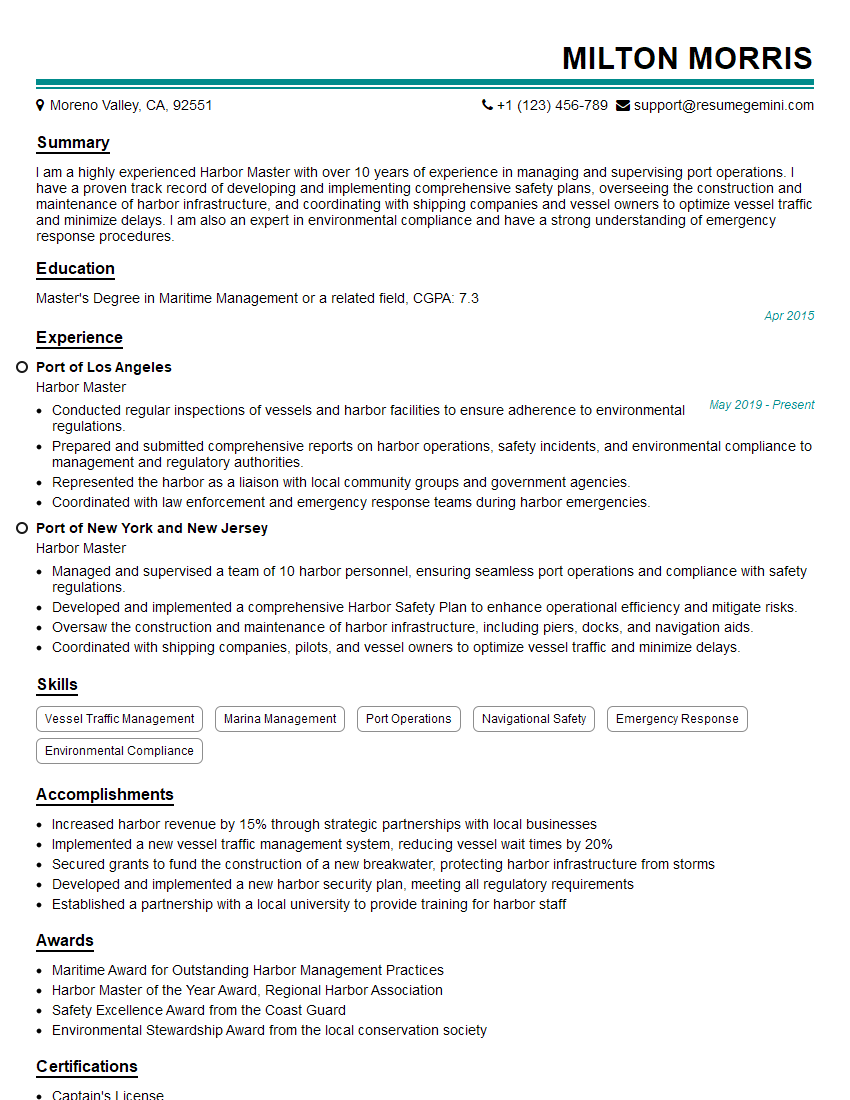
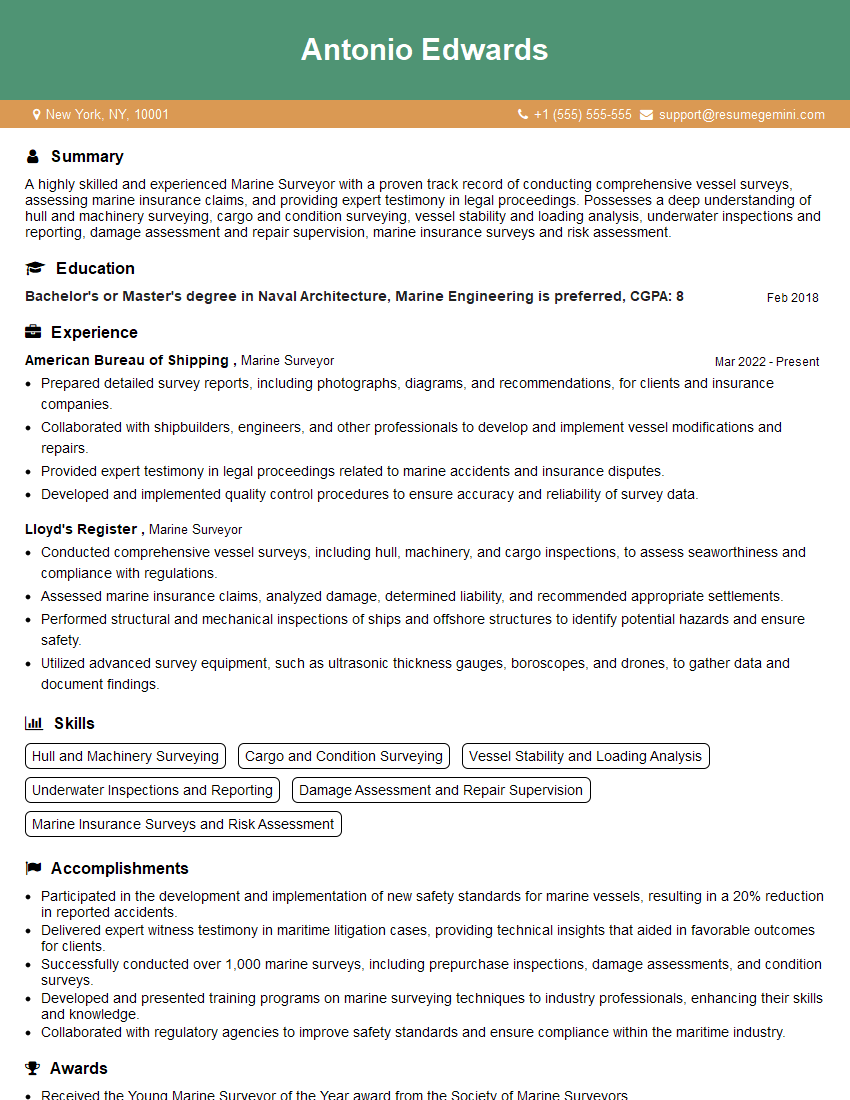
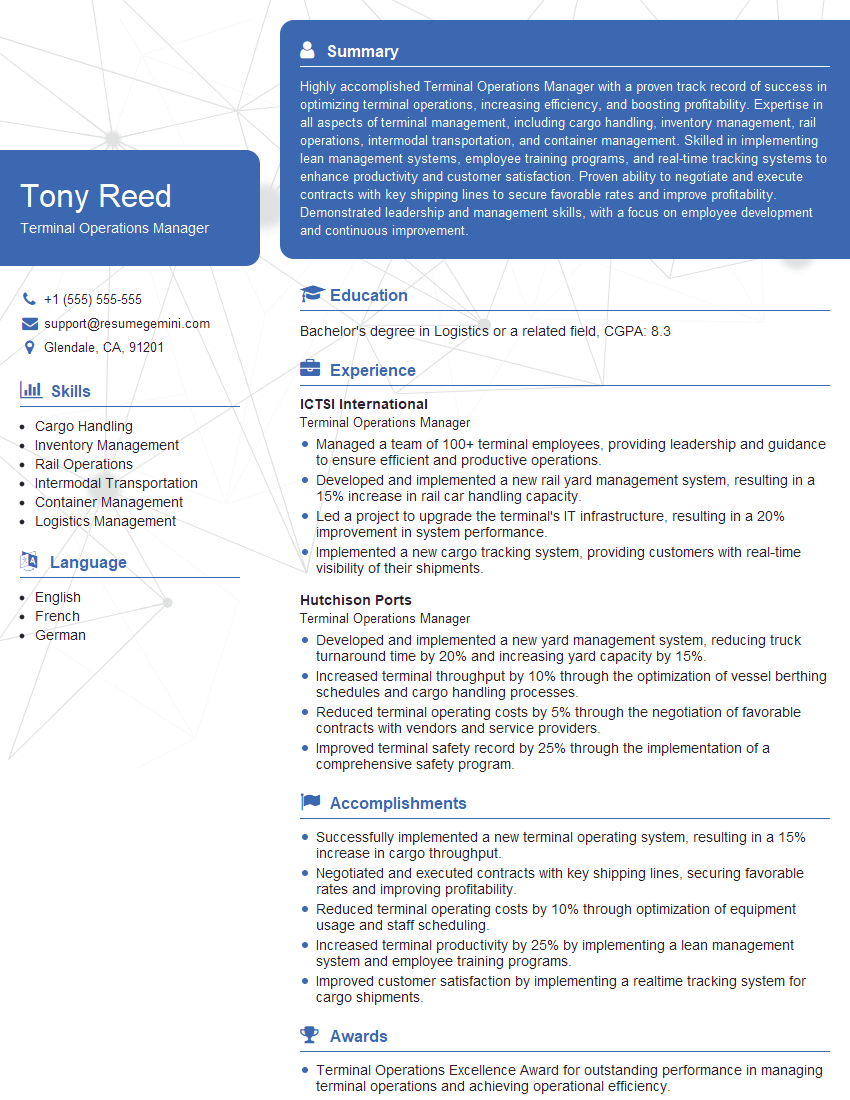
Mastering Dockage Determination is crucial for career advancement in the maritime and logistics industries. A strong understanding of these concepts will significantly enhance your competitiveness in the job market. To maximize your chances of landing your dream role, creating an ATS-friendly resume is essential. ResumeGemini is a trusted resource that can help you craft a compelling and effective resume tailored to highlight your skills and experience in Dockage Determination. Examples of resumes tailored to this field are available, providing you with a valuable template to customize your application. Invest time in building a strong resume – it’s your first impression!
Explore more articles
Users Rating of Our Blogs
Share Your Experience
We value your feedback! Please rate our content and share your thoughts (optional).
What Readers Say About Our Blog
Really detailed insights and content, thank you for writing this detailed article.
IT gave me an insight and words to use and be able to think of examples