Every successful interview starts with knowing what to expect. In this blog, we’ll take you through the top Underground Exploration and Drilling interview questions, breaking them down with expert tips to help you deliver impactful answers. Step into your next interview fully prepared and ready to succeed.
Questions Asked in Underground Exploration and Drilling Interview
Q 1. Explain the different types of underground drilling methods.
Underground drilling methods are chosen based on factors like target depth, ground conditions, and the type of information needed. Broadly, we categorize them into two main types: rotary drilling and percussion drilling.
- Rotary Drilling: This is the most common method, employing a rotating drill bit to cut through the rock. Subtypes include:
- Diamond Core Drilling: Uses a diamond-encrusted bit to extract a cylindrical core sample, providing detailed geological information. It’s ideal for precise geological mapping and mineral exploration.
- Reverse Circulation (RC) Drilling: Air or water is used to lift cuttings to the surface. It’s faster and more economical than core drilling but provides less detailed geological information. Excellent for large-scale exploration programs.
- Auger Drilling: Uses a helical auger to extract soil and soft rock samples. It’s suitable for shallow drilling applications.
- Percussion Drilling: This method uses a hammering action to break the rock. It’s often used in harder rock formations. Subtypes include:
- Down-the-Hole (DTH) Hammer Drilling: A compressed air-powered hammer strikes a bit at the bottom of the borehole, breaking the rock. It’s efficient in hard rock and large-diameter holes.
The choice of method depends heavily on the project’s goals and geological conditions. For instance, if we need detailed geological information, diamond core drilling is preferred; if speed and cost are critical, RC drilling might be a better option.
Q 2. Describe your experience with various drilling rigs and their applications.
My experience spans a wide range of drilling rigs, from small portable auger rigs for shallow investigations to large, powerful down-the-hole (DTH) rigs for deep exploration in challenging terrains. I’ve worked extensively with:
- Boyles Casing Rigs: These versatile rigs are capable of handling various drilling methods, from diamond core to RC drilling. I used one extensively in a project mapping fault zones in fractured granite.
- Top-head Drive Rigs: Ideal for smaller diameter core drilling operations, offering precise control and excellent core recovery in less challenging formations. I’ve successfully deployed these for detailed site investigations prior to tunnel construction.
- Hydraulic Rotary Rigs: These powerful rigs are essential for deep drilling and challenging formations. I employed one to drill deep exploration holes in a remote mining project, where its robust capabilities proved crucial in overcoming difficult ground conditions.
- DTH Rigs: Their high penetration rates are perfect for large-diameter holes in hard rock. One recent project involved using a DTH rig for blast hole drilling in a limestone quarry, significantly improving efficiency.
The application of each rig is determined by the specific project requirements, such as depth, ground conditions, hole diameter, and the level of geological detail required. Rig selection isn’t just about power; it’s also about operational efficiency and safety.
Q 3. How do you determine the optimal drilling parameters (e.g., drill bit type, rotation speed, feed rate)?
Determining optimal drilling parameters is crucial for efficiency, core recovery, and the prevention of equipment damage. It’s a multi-faceted process involving several factors.
- Geological Information: Existing geological data helps in selecting appropriate drill bits (e.g., diamond, tungsten carbide, roller bits) and estimating the optimal weight on bit (WOB) and rotary speed (RPM).
- Rock Strength: Harder rocks require slower rotation speeds and higher WOB, while softer rocks can tolerate higher speeds and lower WOB. Experience and on-site assessment are vital for making these decisions. We often rely on the drilling mud or air pressure to estimate hardness.
- Drill Bit Type: The correct bit choice is crucial. For example, diamond core bits are suited for hard and abrasive formations, whereas tri-cone bits are more suitable for softer formations.
- Feed Rate: This is adjusted based on the rate of penetration and the rock properties. Excessive feed rates can lead to bit damage or poor core recovery.
- Real-time Monitoring: Continuous monitoring of drilling parameters like torque, RPM, and penetration rate allows for real-time adjustments based on observed behavior. Any deviation from the anticipated values provides clues to adjust parameters to optimize the drilling process.
I use a combination of theoretical knowledge, experience, and real-time monitoring to optimize these parameters. For example, in a recent project drilling through a layer of heavily fractured basalt, I initially experienced significant bit wear. By reducing the WOB and increasing the RPM, while using a more aggressive diamond bit, I significantly improved bit life and penetration rate.
Q 4. What are the common challenges encountered during underground drilling, and how have you addressed them?
Underground drilling presents numerous challenges. Some common ones include:
- Ground Instability: Cave-ins, rock bursts, and water inflow can halt drilling operations and pose safety risks. We mitigate this using appropriate support systems (casing, grouting), careful site selection, and geological modeling to predict unstable zones.
- Unexpected Geological Conditions: Encountering unexpected formations (e.g., highly fractured zones, unexpected faults) requires quick adjustments in drilling parameters and methodology. We often use advanced geophysical techniques prior to drilling to better understand the subsurface.
- Equipment Malfunctions: Remote locations and challenging access can complicate repairs and maintenance. Regular maintenance, careful planning, and having spare parts on-hand are essential to minimizing downtime.
- Environmental Concerns: Minimizing environmental impact is crucial. Proper disposal of drilling fluids, noise control, and dust mitigation are essential aspects that we follow strictly.
I’ve addressed these challenges through careful pre-drilling planning, including detailed geological surveys and risk assessments. For instance, during a project involving unstable shale formations, we implemented a staged drilling and casing program to prevent cave-ins. Real-time monitoring and quick decision-making are also crucial. We always prioritize safety, using robust safety protocols and providing thorough training to our team members.
Q 5. Explain the importance of core logging and sample analysis in underground exploration.
Core logging and sample analysis are critical for understanding the subsurface geology. They provide the detailed information needed for resource estimation, geological modeling, and making informed decisions about further exploration or development.
- Core Logging: Involves systematically describing and recording the geological characteristics of the core samples (e.g., lithology, structure, alteration, mineralization). Detailed logs provide a visual record of the subsurface geology.
- Sample Analysis: Laboratory analysis of the core samples provides quantitative data on the rock’s composition, geochemistry, geophysics, and other relevant properties. This includes assaying for mineral content, geotechnical testing, and isotopic analysis.
The integration of core logging and sample analysis allows for a comprehensive understanding of the geological context and informs resource estimations and mine planning. For example, in a gold exploration project, core logging would identify gold-bearing veins, while assaying would quantify the gold grade, aiding in resource estimation and mine planning.
Q 6. How do you interpret geological data obtained from underground drilling?
Interpreting geological data from underground drilling involves integrating various data sources, including core logs, geophysical logs (e.g., gamma ray, resistivity), geochemical analyses, and any available geological maps or reports.
- Lithological Interpretation: Identifying rock types and their spatial relationships within the borehole based on core descriptions and geophysical logs.
- Structural Interpretation: Analyzing fractures, faults, folds, and other structural features to understand the geological history and the stress field within the subsurface. Orientation data of fractures from core logging are crucial.
- Geochemical Interpretation: Analyzing geochemical data to identify mineralized zones and assess their economic potential. The alteration patterns around mineralized zones are vital clues for understanding ore formation and extent.
- Geological Modeling: Integrating all data to create 3D geological models that visualize the subsurface geology and support resource estimation and mine planning.
I use various software packages and geological principles to interpret the data and build three-dimensional models. For instance, in a recent project, I combined core logging data with geophysical logs to identify a previously unrecognized fault zone, significantly impacting the resource estimation.
Q 7. Describe your experience with different types of geological formations and their drilling challenges.
My experience encompasses a wide range of geological formations, each presenting unique challenges during drilling.
- Hard Rock Formations (e.g., granite, basalt): These require specialized drill bits (diamond core bits, DTH hammers) and higher drilling pressures to achieve efficient penetration. We often face issues like bit wear and potential damage to the drilling equipment. The efficient selection and timely changing of drill bits and careful management of drilling parameters become even more crucial here.
- Soft Rock Formations (e.g., shale, clay): These can be challenging due to their tendency to collapse or cause borehole instability. Special drilling fluids and casing are essential to maintain borehole stability. Cavity formation in these strata causes unexpected borehole deviation which we mitigate by continuously monitoring the drilling progress and performing frequent adjustments of drilling parameters.
- Fractured Rock Formations: These often lead to core loss and difficulties in maintaining borehole stability. Careful drilling techniques, use of appropriate drilling fluids, and real-time monitoring are required to address these challenges. Careful casing design is also crucial to prevent unexpected influx of water.
- Groundwater-saturated Formations: These can lead to water inflow, complicating drilling operations. Appropriate drilling fluids and casing techniques are used to control water inflow and prevent equipment damage. Proper well-casing and sealing are needed to prevent groundwater contamination and loss.
Adaptability is key when dealing with diverse geological formations. We frequently use a combination of techniques, pre-drilling analysis and real-time adjustments to optimize drilling efficiency and ensure safety. It is vital to understand the interplay between geological parameters and the operational variables of the drilling process.
Q 8. How do you ensure the safety of personnel and equipment during underground drilling operations?
Ensuring safety in underground drilling is paramount. It’s a multi-layered approach encompassing stringent safety protocols, robust equipment, and rigorous training. Think of it like building a safety net with multiple layers – each catching potential problems before they escalate.
- Risk Assessment and Mitigation: Before any drilling commences, a thorough risk assessment is mandatory, identifying potential hazards like ground instability, gas leaks, equipment malfunctions, and human error. This informs the development of a detailed safety plan with specific control measures. For example, we might identify a high risk of rockfalls in a particular area and implement measures like rock bolting and meshing before drilling starts.
- Emergency Response Plan: A comprehensive emergency response plan, including evacuation procedures, communication systems, and first aid protocols, is crucial. Regular drills help ensure personnel are well-versed in emergency responses, making it second nature in a real-life scenario. Imagine a sudden gas leak – the plan dictates how to shut down the operation, evacuate the area, and contact emergency services swiftly.
- Equipment Maintenance and Inspection: Regular maintenance and thorough inspections of all drilling equipment are non-negotiable. This prevents equipment failure, which could lead to accidents. Think of it like servicing your car – regular checks prevent major breakdowns.
- Personnel Training and Competency: All personnel involved must receive comprehensive training on safety procedures, equipment operation, and emergency response. Regular refresher courses and competency assessments ensure skills remain sharp and up-to-date. This is like continuous professional development; constant learning keeps the team safe and proficient.
- Personal Protective Equipment (PPE): Providing and enforcing the use of appropriate PPE is paramount. Hard hats, safety glasses, respirators, and appropriate clothing are non-negotiable. We are talking about the baseline protection against common hazards.
Q 9. What are the environmental regulations and considerations related to underground drilling?
Environmental regulations governing underground drilling are stringent and vary by location, but common threads include minimizing water pollution, protecting air quality, and managing waste disposal. The ‘polluter pays’ principle is heavily emphasized.
- Water Management: Drilling fluids can contain chemicals, so managing their disposal is critical. We often employ methods like water recycling and treatment to minimize the impact on groundwater and surface water. For instance, we might use settling ponds to remove solids and then treat the remaining water before release.
- Air Quality: Dust suppression and proper ventilation are crucial to maintain acceptable air quality in both the underground environment and surrounding areas. Dust suppressants are used in the drilling process, while ventilation systems ensure adequate fresh air supply.
- Waste Management: Drill cuttings and other wastes must be properly managed and disposed of in accordance with regulations. This usually involves careful handling, segregation, and potentially on-site treatment or transportation to licensed disposal facilities.
- Environmental Impact Assessments: Before drilling commences, environmental impact assessments (EIAs) are often mandatory. These assessments help identify potential environmental risks and inform mitigation strategies. They are essentially a prediction of what could go wrong and a plan to prevent or minimize the impact.
- Compliance Monitoring: Regular monitoring of environmental parameters (water quality, air quality, noise levels) is essential to ensure compliance with regulations and identify potential issues early on.
Q 10. How do you manage drilling costs and optimize drilling efficiency?
Managing drilling costs and optimizing efficiency is a balancing act requiring meticulous planning, efficient operations, and advanced technology. Think of it as running a well-oiled machine – each component must function optimally for the best results.
- Pre-Drilling Planning: Detailed geological and engineering studies are crucial for accurate planning, reducing the risk of unexpected issues and costly rework. Good planning means fewer surprises during the drilling process.
- Optimized Drilling Parameters: Selecting appropriate drilling parameters (weight on bit, rotary speed, drilling fluid properties) is essential for maximizing drilling rate and minimizing equipment wear. This is where experience and expertise really make a difference.
- Advanced Drilling Technologies: Utilizing advanced drilling technologies, such as directional drilling and measurement-while-drilling (MWD), can significantly improve efficiency and reduce costs. MWD, for example, allows us to steer the drill bit precisely, making it possible to reach targets more accurately and efficiently.
- Efficient Logistics and Supply Chain: Streamlined logistics and a well-managed supply chain ensure timely delivery of materials and reduce downtime. This involves proper inventory management and efficient transportation.
- Data Analysis and Optimization: Regular data analysis and performance monitoring allow us to identify areas for improvement and optimize drilling operations. This data-driven approach helps us to continuously refine our processes and reduce costs.
Q 11. Explain your experience with different types of drilling fluids and their functions.
Drilling fluids, also known as muds, are crucial in underground drilling. They serve multiple functions, from lubricating the drill bit to stabilizing the borehole. The type of fluid used depends heavily on the geological conditions and drilling objectives.
- Water-Based Muds: These are the most common, cost-effective, and environmentally friendly option for many applications. They are easily prepared and disposed of, minimizing environmental impact.
- Oil-Based Muds: These provide better lubricity and hole stability in challenging geological formations, such as those with high pressure or temperature. However, they can present environmental challenges due to the oil content.
- Polymer-Based Muds: These are becoming increasingly popular as they offer good lubricity and hole stability while being less environmentally damaging than oil-based muds. They are particularly useful in sensitive environments.
- Air or Foam Drilling: Used in certain applications, like shallow drilling in stable formations. This method minimizes environmental impact, but its effectiveness is limited to specific geological conditions.
Choosing the right drilling fluid is crucial for success. A poorly chosen fluid can lead to borehole instability, stuck pipe, and even catastrophic failure.
Q 12. Describe your experience with downhole logging tools and their interpretation.
Downhole logging tools provide invaluable data about the subsurface formations. They are essentially sophisticated sensors lowered into the borehole to gather data. Interpreting this data requires a blend of technical expertise and geological understanding. Think of it as taking an x-ray of the Earth.
- Gamma Ray Logging: Measures the natural radioactivity of formations, helping identify lithology (rock type) and potentially locate radioactive minerals.
- Resistivity Logging: Measures the electrical conductivity of formations, assisting in identifying hydrocarbons and assessing porosity and permeability.
- Acoustic Logging: Measures the speed of sound through formations, providing data on porosity, lithology, and the presence of fractures.
- Density Logging: Measures the bulk density of formations, helping to determine porosity and lithology.
Interpreting log data is a complex process, often requiring specialized software and experience. I am proficient in using several interpretation techniques, including cross-plotting, log analysis software, and integration with other geophysical data to build an accurate geological model of the drilled area.
Q 13. How do you assess the risk of ground instability during underground drilling?
Assessing ground instability risk involves a multi-faceted approach combining geological understanding, geotechnical analysis, and in-situ monitoring. It’s crucial to anticipate and mitigate potential hazards to protect personnel and equipment.
- Geological Surveys: Detailed geological mapping and subsurface investigations, including core sampling and geophysical surveys, are crucial in understanding the rock mass characteristics and identifying potential weaknesses.
- Geotechnical Analysis: Laboratory testing of core samples provides data on rock strength, fracture density, and other relevant properties. This informs the design of support systems to prevent collapses.
- In-Situ Monitoring: During drilling, instrumentation like inclinometers and extensometers monitors ground movement and provides early warning signs of potential instability. These are like early warning systems that can indicate potential ground shifts.
- Support Systems: Based on the risk assessment, appropriate support systems, such as rock bolts, ground anchors, and shotcrete, are implemented to reinforce unstable ground.
- Numerical Modelling: Sophisticated numerical models can simulate the stress and strain conditions in the ground and help predict potential instabilities.
Ignoring ground instability risks can lead to severe accidents and project delays. A proactive, data-driven approach is crucial.
Q 14. Explain your experience with mine surveying techniques and their applications in drilling.
Mine surveying plays a vital role in underground drilling, ensuring accurate placement of boreholes and providing critical data for mine planning and development. Think of it as the GPS system for underground operations.
- Underground Control Surveys: These surveys establish a precise network of control points underground, providing a reference frame for all subsequent measurements. This is the foundation for all other underground measurements.
- Borehole Surveying: During drilling, borehole surveying tools measure the inclination and azimuth (direction) of the borehole. This information is essential for ensuring the borehole reaches the target location accurately.
- Volume Calculations: Survey data is used to calculate the volume of excavated material, aiding in mine planning and resource estimation. This is particularly important for managing ore extraction and waste disposal.
- As-Built Drawings: Mine surveys help create detailed as-built drawings, which are crucial for future mine development and maintenance. These drawings represent the reality of the underground workings.
- Integration with GIS: Survey data is integrated into Geographic Information Systems (GIS), providing a comprehensive digital representation of the mine and enabling better decision-making.
Accurate surveying is crucial for ensuring safe and efficient operations, avoiding costly errors, and minimizing environmental impacts.
Q 15. What are the key factors to consider when planning an underground exploration drilling program?
Planning an underground exploration drilling program requires meticulous consideration of several key factors. It’s like planning a complex expedition – you need a well-defined route and the right tools for the terrain. These factors can be broadly categorized into geological, logistical, and operational aspects.
Geological Factors: Understanding the subsurface geology is paramount. This involves reviewing existing geological data (maps, reports, geophysical surveys), defining the target zones, anticipating potential geological challenges (faults, highly fractured zones, unexpected lithologies), and selecting appropriate drilling techniques to overcome these challenges. For instance, if we expect to encounter highly fractured rock, we might opt for a larger diameter hole to improve stability.
Logistical Factors: Access to the drilling site, availability of infrastructure (power, water, roads), permitting requirements, environmental regulations, and the overall project budget are critical. A remote location with limited access would necessitate planning for specialized equipment transportation and potentially increased costs.
Operational Factors: This includes selecting the right drilling method (e.g., diamond core drilling, reverse circulation drilling), determining the drilling depth and inclination, specifying the drilling rig and equipment, defining safety protocols, and planning for sample handling and analysis. For instance, if high-precision core samples are needed for geotechnical analysis, we’d opt for diamond core drilling, which provides intact cylindrical rock samples.
Failure to address these factors thoroughly can lead to cost overruns, delays, and compromised data quality.
Career Expert Tips:
- Ace those interviews! Prepare effectively by reviewing the Top 50 Most Common Interview Questions on ResumeGemini.
- Navigate your job search with confidence! Explore a wide range of Career Tips on ResumeGemini. Learn about common challenges and recommendations to overcome them.
- Craft the perfect resume! Master the Art of Resume Writing with ResumeGemini’s guide. Showcase your unique qualifications and achievements effectively.
- Don’t miss out on holiday savings! Build your dream resume with ResumeGemini’s ATS optimized templates.
Q 16. How do you manage and interpret geological data using GIS software?
GIS (Geographic Information Systems) software is invaluable for managing and interpreting geological data during underground exploration. Think of it as a powerful map-making and data analysis tool specifically designed for spatial information. I utilize GIS to integrate diverse datasets, visualize spatial relationships, and perform analyses to guide drilling decisions.
Data Integration: I import geological maps, geophysical survey data (gravity, magnetic, seismic), drill hole logs, and geochemical assay results into a GIS environment. This allows for the overlaying of different datasets to identify potential target zones.
Spatial Visualization: GIS enables the creation of 3D geological models, visualizing the subsurface geology in a clear and intuitive way. This is crucial for planning optimal drill hole locations and orientations to intersect target zones effectively.
Spatial Analysis: GIS tools allow for the performance of various spatial analyses such as kriging (interpolation of data) to predict mineral grades between drill holes or proximity analysis to identify zones of high mineralization.
For example, by overlaying geochemical data on a geological map in GIS, I can identify areas with high concentrations of indicator minerals, thus prioritizing drilling in those areas.
Q 17. Describe your experience with different types of rock mass characterization techniques.
Rock mass characterization is essential for understanding the stability and behavior of the rock surrounding an underground excavation or drilling operation. My experience encompasses a range of techniques, each providing different levels of detail and information.
Geological Mapping and Logging: This involves detailed descriptions of the lithology, structural features (faults, fractures, joints), and weathering characteristics observed in drill cores or outcrops. This provides a fundamental understanding of the rock mass.
Point Load Testing: This is a simple, inexpensive test to determine the strength of intact rock specimens recovered from drilling. It involves applying a load to a rock sample until failure and calculating the strength index.
Schmidt Hammer Testing: This non-destructive test provides an indication of the rock’s surface hardness and strength, useful for assessing weathering effects.
Rock Mass Rating (RMR): This is a widely used geomechanical classification system based on several parameters, including rock strength, joint spacing, joint roughness, groundwater conditions, etc. RMR provides a quantitative assessment of the rock mass quality, guiding decisions on support requirements in underground excavations.
The selection of appropriate characterization techniques depends on the project’s specific goals and the available budget. For example, a large-scale mining project would require a more extensive characterization program compared to a small-scale exploration project.
Q 18. How do you ensure accurate data recording and reporting during drilling operations?
Accurate data recording and reporting are critical for the success of any drilling program. It’s the foundation upon which all geological interpretations and engineering decisions are made. Inaccurate data can lead to costly mistakes and project delays. We utilize a rigorous system incorporating both manual and digital methods.
Real-time Data Logging: Drilling parameters such as depth, rate of penetration, torque, and weight on bit are continuously monitored and recorded using digital data acquisition systems. This provides valuable information about the drilling process and potential challenges.
Detailed Core Logging: Each core sample is meticulously logged, describing lithology, structural features, mineralisation, and any other relevant observations. Detailed photos and videos are also taken.
Sample Chain of Custody: A strict chain of custody is maintained to track the movement of samples from the drill site to the laboratory, ensuring sample integrity and traceability.
Database Management: All data are entered into a well-structured database management system, allowing for efficient data retrieval, analysis, and reporting. This may involve bespoke databases or integration with project management software.
Regular audits and quality control measures are essential to ensure data accuracy and consistency throughout the drilling operation.
Q 19. How do you handle unexpected geological conditions encountered during drilling?
Encountering unexpected geological conditions during drilling is common and requires a flexible and adaptive approach. It’s like encountering a detour on a road trip – you need to find an alternative route.
Assessment: The first step is to thoroughly assess the situation. What unexpected geological feature has been encountered? What are the implications for safety and the drilling program?
Problem Solving: Based on the assessment, we decide on appropriate remedial actions. This might involve changing the drilling technique, adjusting the drilling parameters, modifying the drill hole trajectory, or even stopping the drilling operation temporarily to reassess the situation.
Risk Mitigation: Implementing appropriate safety measures to address any potential hazards associated with the unexpected geological condition, such as instability or the presence of unexpected fluids.
Documentation: Thoroughly documenting the unexpected geological conditions, the remedial actions taken, and any implications for the overall project.
For instance, encountering a major fault zone could lead to a change in drilling fluid type to stabilize the hole, or a switch to a smaller diameter drill bit to navigate a narrower fracture.
Q 20. What are the common causes of drilling equipment malfunctions, and how do you troubleshoot them?
Drilling equipment malfunctions are unfortunately a part of underground exploration. They can range from minor issues to major breakdowns, causing delays and increased costs. Proactive maintenance and a systematic troubleshooting approach are essential.
Common Causes: Malfunctions can arise from various causes, including wear and tear of components, inadequate lubrication, improper operation, environmental factors (extreme temperatures, dust), and poor maintenance practices. For example, worn-out drill bits can lead to reduced penetration rates and increased vibration.
Troubleshooting: My approach involves a systematic process: firstly, identifying the symptom (e.g., reduced drilling speed, unusual vibrations), then systematically checking potential causes (e.g., checking drill bit condition, checking the hydraulic system, inspecting the drilling rods).
Preventative Maintenance: Regular scheduled maintenance helps prevent equipment malfunctions and prolong equipment life. This includes lubrication, inspections, and replacement of worn-out parts.
Troubleshooting often involves a combination of experience, technical knowledge, and sometimes consulting with equipment manufacturers for support.
Q 21. Describe your experience with different types of drilling bit designs and their selection criteria.
The selection of the right drilling bit is crucial for efficient and effective drilling. It’s like choosing the right tool for a specific job – a screwdriver is not suitable for hammering.
Types of Drill Bits: Different bit designs are available for various rock types and drilling conditions. Common types include diamond core bits (for obtaining intact core samples), roller cone bits (for softer rocks), and PDC (polycrystalline diamond compact) bits (for hard and abrasive formations).
Selection Criteria: The selection criteria depend on several factors, including rock hardness, abrasiveness, drilling depth, desired core recovery, and cost considerations. For example, diamond core bits are ideal for recovering high-quality cores in hard rock formations, but they are more expensive than roller cone bits.
Experience: My experience allows me to make informed decisions based on past drilling experiences and geological knowledge. I consider factors such as the expected rate of penetration, potential for bit wear, and the overall cost-effectiveness of different bit types.
Optimal bit selection ensures efficient drilling, minimizes downtime, reduces costs, and improves data quality.
Q 22. How do you maintain drilling equipment and ensure its optimal performance?
Maintaining drilling equipment is crucial for safety and efficiency. It’s a multi-faceted process involving preventative maintenance, regular inspections, and prompt repairs. Think of it like maintaining a high-performance car – regular servicing prevents major breakdowns.
Preventative Maintenance: This includes scheduled lubrication of moving parts, checking and tightening bolts, inspecting hoses and lines for wear and tear, and changing fluids according to the manufacturer’s recommendations. We use detailed checklists to ensure nothing is missed.
Regular Inspections: Daily pre-shift inspections are mandatory. We check everything from the engine and hydraulic systems to the drill string and safety mechanisms. Any anomaly, no matter how small, is documented and addressed.
Prompt Repairs: A broken-down rig means lost time and money. We prioritize repairs, utilizing skilled technicians and readily available spare parts. We also implement a robust reporting system to track repairs and identify recurring issues for preventative action. For example, if a particular pump consistently fails, we investigate the root cause, perhaps a problem with the lubricant or operating pressure, and implement a solution.
Data-Driven Maintenance: We increasingly utilize data logging systems to monitor equipment performance in real-time. This allows for predictive maintenance, identifying potential failures before they occur. For instance, analyzing vibration data from the drill bit can alert us to impending wear and tear, allowing for proactive replacement.
Q 23. Explain your experience with different types of geotechnical testing methods.
My experience encompasses a wide range of geotechnical testing methods, each serving a unique purpose in characterizing subsurface conditions. These tests are essential for understanding the ground’s strength, stability, and potential hazards.
Standard Penetration Test (SPT): This is a classic in-situ test providing information on soil density and bearing capacity. We use it extensively in site investigations for building foundations.
Cone Penetration Test (CPT): The CPT provides continuous data on soil strength and stratigraphy. It’s particularly useful for identifying layers of soft clay or sand, crucial for assessing liquefaction potential in earthquake-prone areas.
Borehole Shear Strength Testing: This involves taking samples from boreholes and testing their strength in a laboratory setting. This is essential for understanding the shear strength of the soil, which is a key factor in slope stability analysis and design of retaining walls.
In-situ Permeability Testing: Methods like the falling head or constant head permeameter tests are crucial for determining the groundwater flow rate within a specific soil or rock layer. This data is essential for assessing groundwater contamination risks and designing drainage systems.
Laboratory Testing: We often complement in-situ tests with lab testing of collected soil and rock samples. This can include grain size analysis, Atterberg limits (plasticity), and consolidation tests, providing a comprehensive understanding of soil behavior.
Q 24. How do you assess the quality of core samples and identify potential contamination?
Assessing core sample quality and identifying potential contamination requires meticulous attention to detail and a systematic approach. It’s like being a detective, carefully examining every clue.
Visual Inspection: We begin by visually inspecting the core for fractures, discontinuities, and any signs of alteration. Color variations can indicate changes in lithology or the presence of contaminants. We document everything meticulously, including core recovery rate (percentage of core successfully retrieved).
RQD (Rock Quality Designation): This metric assesses the intactness of the rock core, providing valuable information on the rock mass quality. A high RQD indicates a strong and stable rock mass.
Geochemical Analysis: To detect contamination, we often send samples to a laboratory for geochemical analysis. This can reveal the presence of heavy metals, organic compounds, or other contaminants. This is crucial for environmental impact assessments.
Photography and Logging: Detailed photographic records and geological logs are crucial to maintaining a permanent record of the core samples and associated observations. This ensures that any findings can be revisited and analyzed.
Chain of Custody: Maintaining a rigorous chain of custody is essential to ensure sample integrity and prevent any potential misidentification or contamination during transport and analysis.
Q 25. How do you communicate technical information effectively to both technical and non-technical audiences?
Effective communication is paramount in our field. I tailor my communication style to the audience, ensuring clarity and understanding.
Technical Audiences: With technical colleagues, I use precise terminology and delve into the details of complex data. I utilize charts, graphs, and technical reports to convey findings efficiently. For example, when discussing drilling parameters, I’d refer to specific RPMs, torque values, and weight-on-bit.
Non-Technical Audiences: With non-technical audiences, I avoid jargon and use clear, concise language, employing analogies and visual aids to illustrate complex concepts. For example, to explain a geological fault, I might use a simple diagram showing a break in the earth’s layers and relate it to a crack in a ceramic plate.
Visual Aids: I find that using visual aids, such as maps, cross-sections, and 3D models, significantly enhances communication and facilitates understanding, regardless of the audience’s technical background.
Active Listening: Effective communication is a two-way street. I ensure I understand the audience’s needs and respond accordingly, making sure my message is received and understood.
Q 26. Describe a time you had to solve a challenging drilling problem.
During a deep drilling project in a highly fractured rock mass, we encountered significant deviation problems. The drill bit was veering off course, threatening the integrity of the borehole and potentially causing costly delays.
We initially attempted to correct the deviation using conventional steering techniques, but these proved ineffective. The problem was compounded by the unpredictable nature of the fractures. After analyzing the drilling data, we realized that the combination of high-pressure fluid and the irregular fracture network was causing the bit to deflect.
Our solution involved a multi-pronged approach:
Reduced drilling fluid pressure: This minimized the force acting on the bit, reducing its tendency to deflect.
Improved directional drilling techniques: We implemented more sophisticated directional drilling tools and methods to actively steer the bit back on course.
Real-time monitoring: We increased the frequency of our surveys to closely monitor the borehole trajectory and make necessary corrections promptly.
This combined strategy successfully rectified the deviation problem, allowing us to complete the drilling project on schedule and within budget. The key was identifying the root cause and then implementing a tailored solution.
Q 27. What are your career goals in the field of underground exploration and drilling?
My career goals center on contributing to advancements in underground exploration and drilling technologies. I aspire to lead innovative projects that push the boundaries of what’s possible, while prioritizing safety and environmental responsibility.
Technological Innovation: I want to contribute to the development and implementation of new technologies, such as AI-driven drilling optimization and advanced sensor systems, to improve efficiency, reduce costs, and enhance safety.
Mentorship and Leadership: I aim to mentor and guide younger professionals, fostering a culture of continuous learning and improvement within the field.
Sustainable Practices: I am committed to promoting sustainable and environmentally responsible drilling practices, minimizing the environmental impact of our operations.
Q 28. What software and technologies are you proficient in using for underground exploration and drilling?
I’m proficient in several software and technologies critical to underground exploration and drilling.
Drilling Software Packages: I have extensive experience with industry-standard drilling simulation and data analysis software, such as
MineSightandLeapfrog Geo.Geological Modeling Software: I use software like
SurpacandGeoModellerto create accurate 3D geological models for planning and analysis.Data Management Systems: I’m comfortable working with relational databases (e.g.,
SQL) and other data management systems to efficiently store and manage large datasets generated during exploration and drilling.GIS (Geographic Information Systems): My GIS skills using software like
ArcGISare invaluable for visualizing and analyzing spatial data.Remote Sensing and Drone Technology: I’m familiar with processing and interpreting data from remote sensing technologies and drones, which are increasingly being used for site surveys and exploration.
Key Topics to Learn for Underground Exploration and Drilling Interview
- Geological Surveying and Mapping: Understanding geological formations, structural interpretations, and the application of geophysical techniques like seismic surveys and electromagnetic surveys to identify potential ore bodies or subsurface features.
- Drilling Techniques and Equipment: Familiarity with various drilling methods (e.g., rotary, percussion, directional drilling), understanding the selection criteria for different drilling methods based on geological conditions and project requirements, and knowledge of common drilling equipment and their maintenance.
- Well Logging and Data Interpretation: Interpreting well logs (e.g., gamma ray, resistivity, density) to determine lithology, porosity, permeability, and fluid saturation. Analyzing data to build accurate geological models and assess resource potential.
- Safety Procedures and Regulations: Demonstrating a thorough understanding of relevant health and safety regulations in underground exploration and drilling, including risk assessment, hazard identification, and emergency procedures.
- Data Management and Analysis: Experience with geological data management software and techniques for data analysis, visualization, and reporting. This includes proficiency in interpreting and presenting complex datasets effectively.
- Project Management and Planning: Understanding project planning, budgeting, and execution within the context of underground exploration and drilling projects. This includes scheduling, resource allocation, and risk management.
- Environmental Considerations: Awareness of environmental regulations and best practices related to minimizing the environmental impact of exploration and drilling activities.
- Problem-solving and Decision-making: Ability to analyze complex geological and engineering challenges, propose effective solutions, and make sound decisions under pressure. Examples of overcoming technical challenges in previous projects will be highly valued.
Next Steps
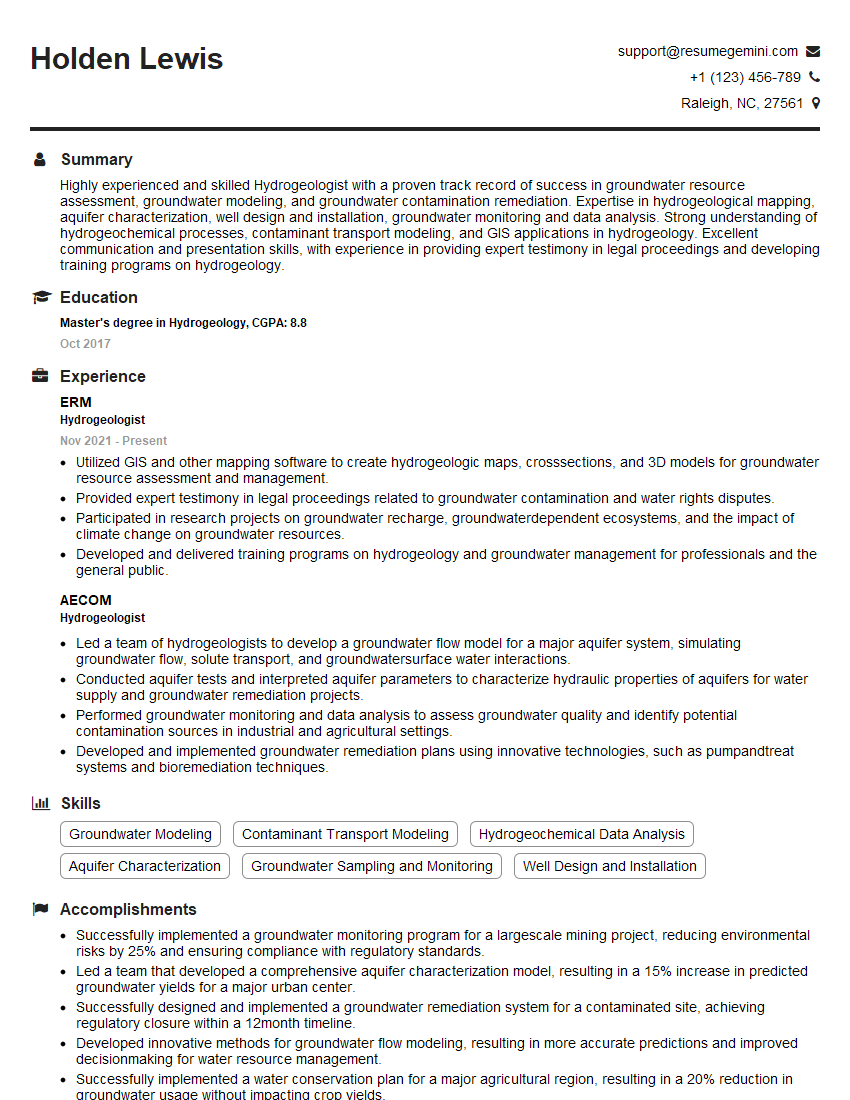
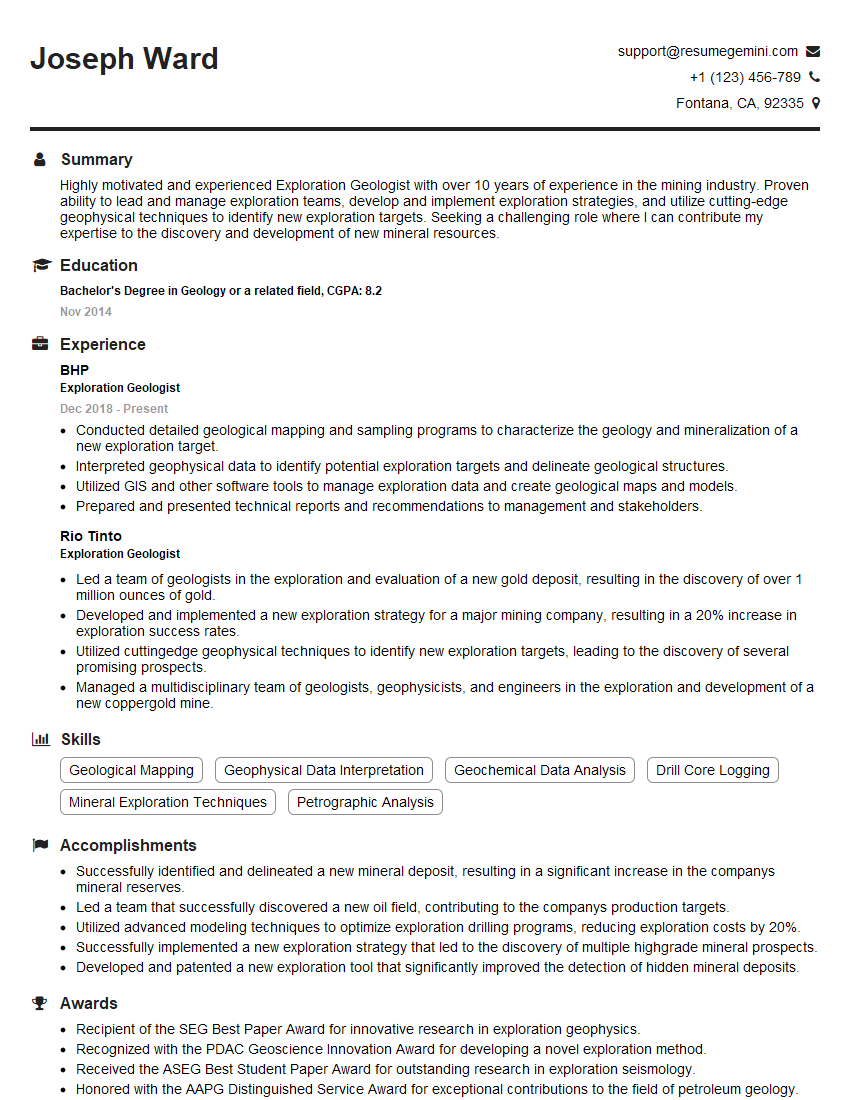
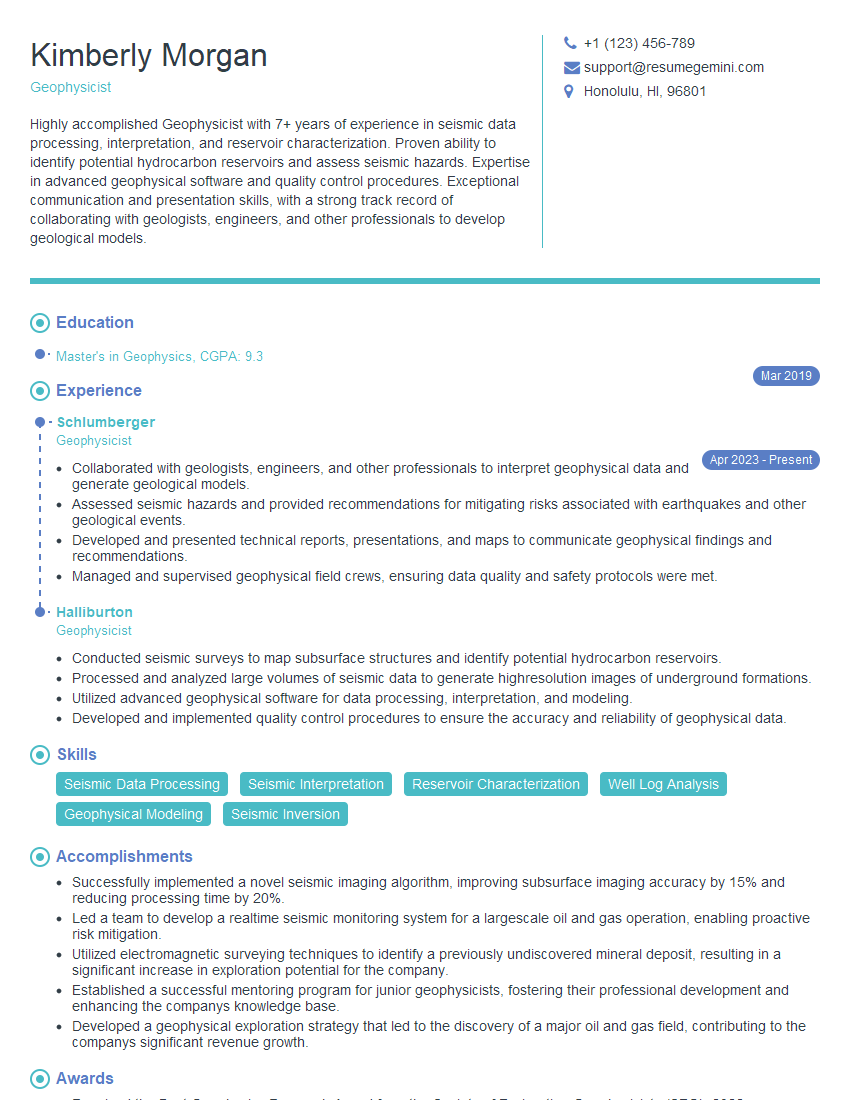
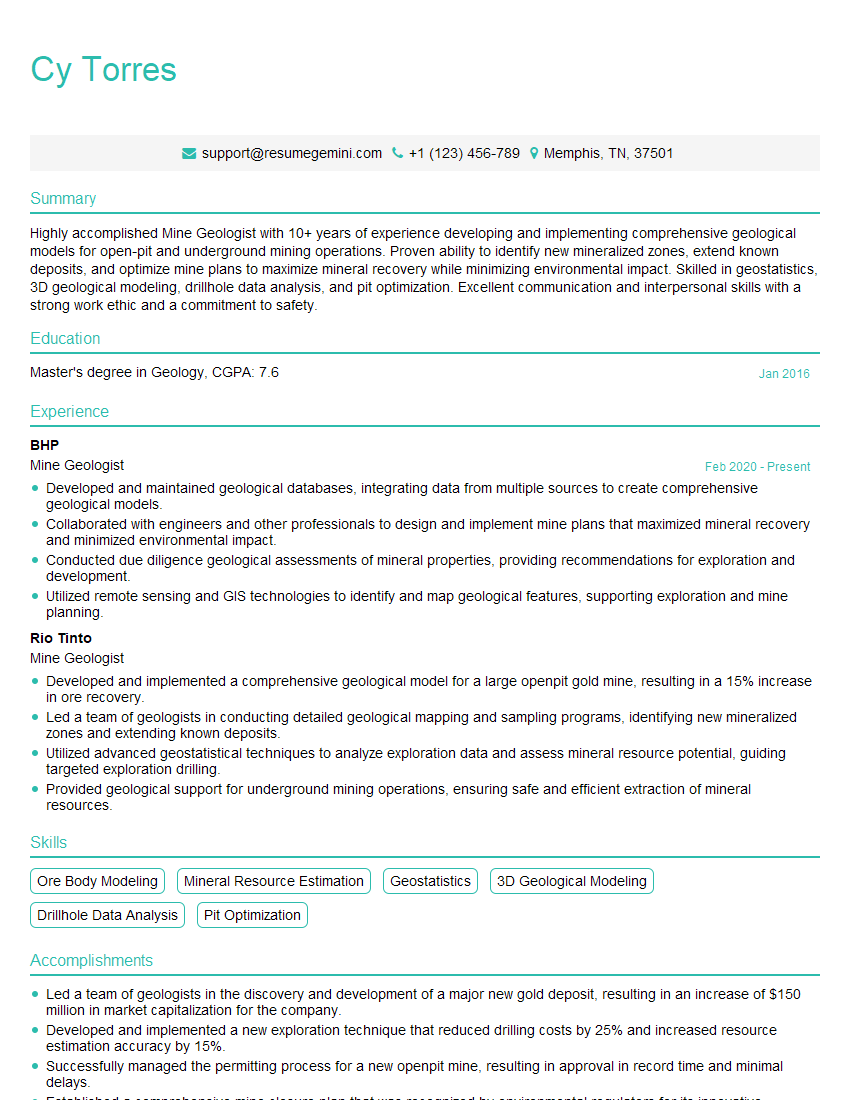
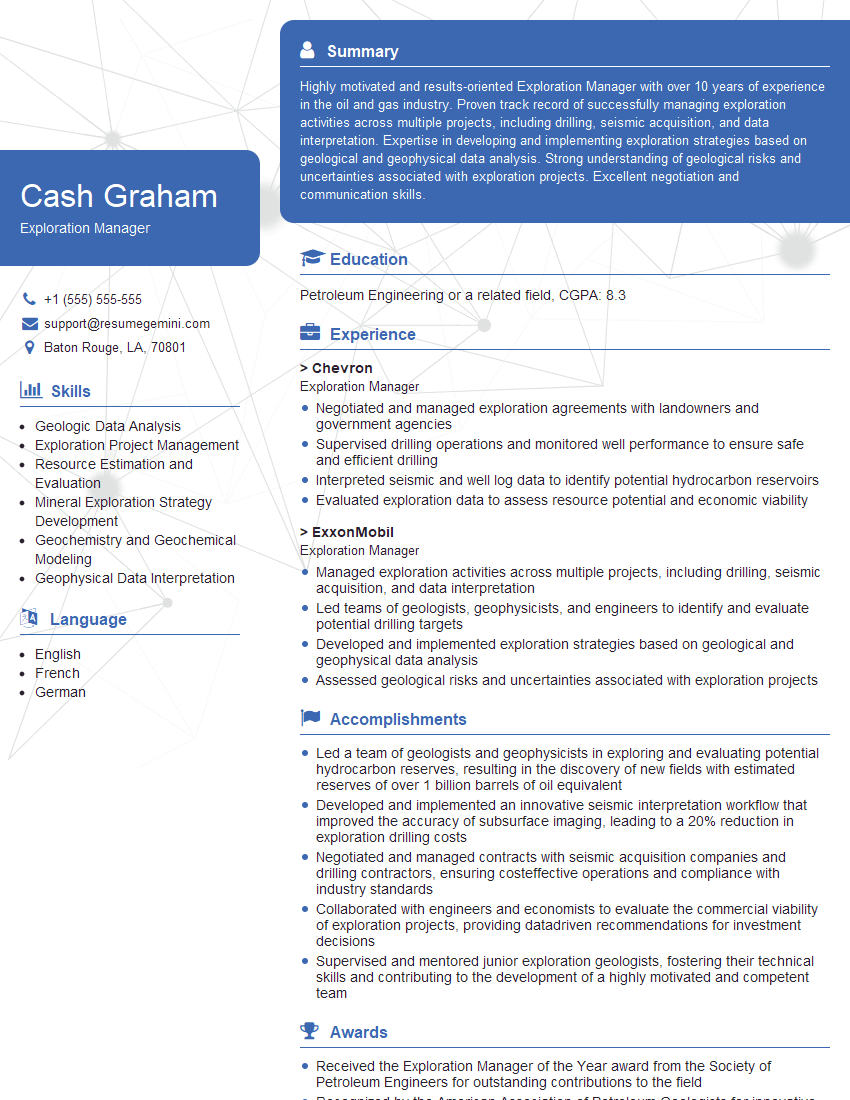
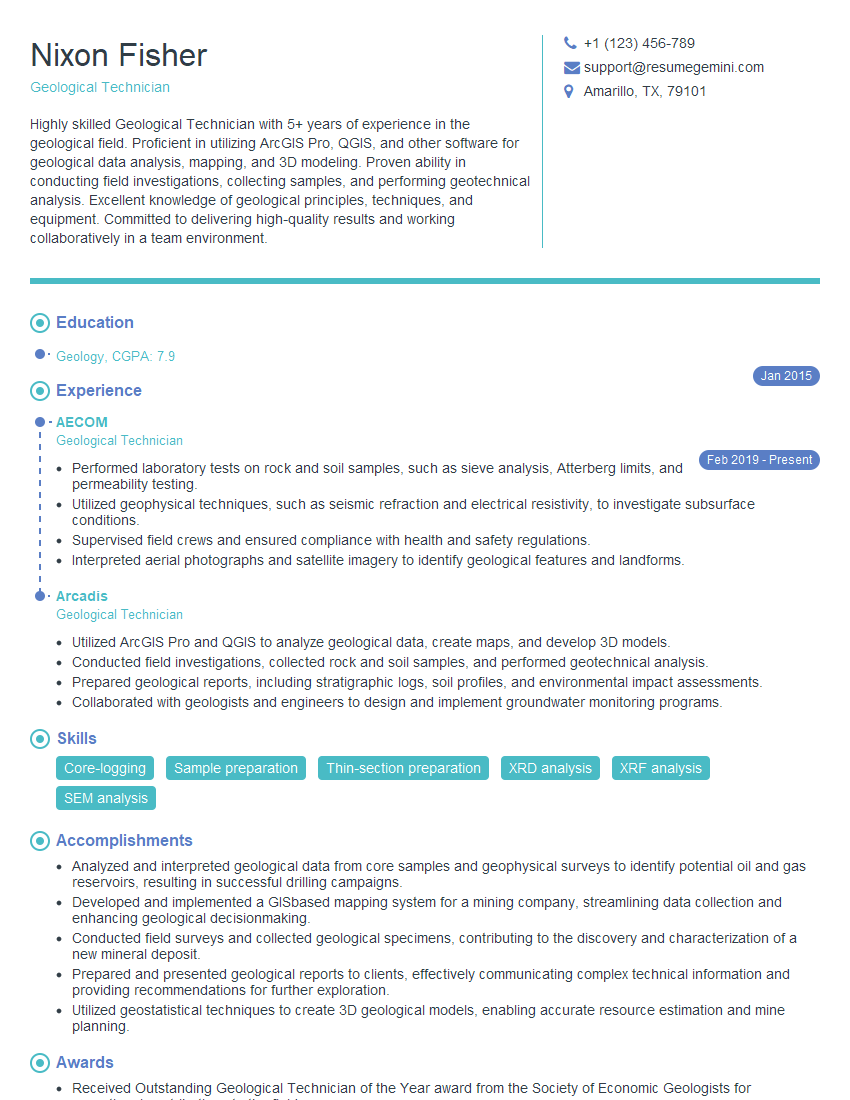
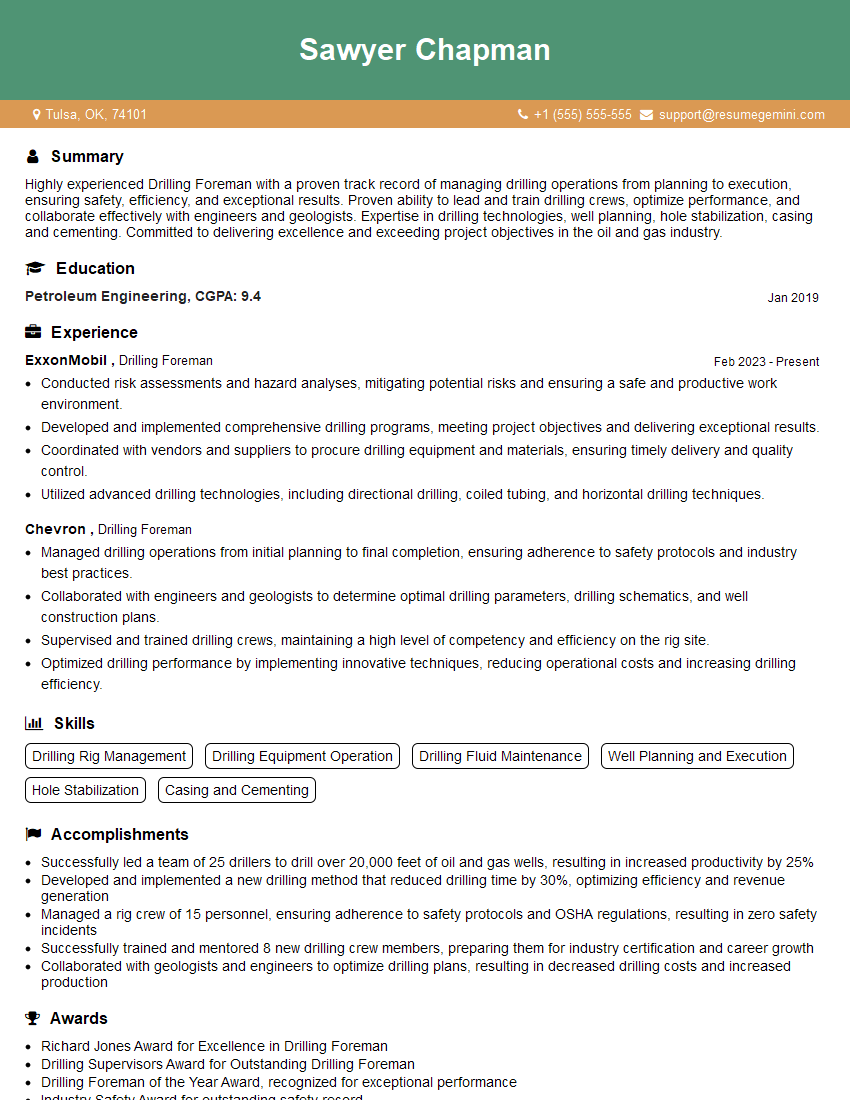
Mastering Underground Exploration and Drilling opens doors to a rewarding career with significant growth potential. This field demands highly skilled professionals capable of tackling complex challenges and contributing to critical resource development projects. To significantly increase your job prospects, it’s essential to present your skills and experience effectively through a well-crafted, ATS-friendly resume. ResumeGemini is a trusted resource that can help you build a professional resume tailored to the demands of this competitive industry. Examples of resumes specifically designed for Underground Exploration and Drilling professionals are available to help guide you. Invest time in crafting a compelling resume; it’s your first impression on potential employers.


Explore more articles
Users Rating of Our Blogs
Share Your Experience
We value your feedback! Please rate our content and share your thoughts (optional).
What Readers Say About Our Blog
Really detailed insights and content, thank you for writing this detailed article.
IT gave me an insight and words to use and be able to think of examples