Unlock your full potential by mastering the most common Proficient in using GPS/GNSS receivers for precise positioning interview questions. This blog offers a deep dive into the critical topics, ensuring you’re not only prepared to answer but to excel. With these insights, you’ll approach your interview with clarity and confidence.
Questions Asked in Proficient in using GPS/GNSS receivers for precise positioning Interview
Q 1. Explain the difference between GPS and GNSS.
GPS (Global Positioning System) is a satellite-based navigation system owned and operated by the United States government. GNSS (Global Navigation Satellite System) is a broader term encompassing all global and regional satellite-based navigation systems, including GPS, GLONASS (Russia), Galileo (European Union), BeiDou (China), and QZSS (Japan). Think of GPS as a specific brand of car, while GNSS is the category of all cars.
Essentially, GPS is a subset of GNSS. Using multiple GNSS constellations simultaneously, a process known as multi-constellation GNSS, improves positioning accuracy and reliability by increasing the number of available satellites and reducing reliance on any single system.
Q 2. Describe the various types of GNSS error sources and how they are mitigated.
GNSS error sources are numerous and can significantly impact positioning accuracy. These errors can be broadly categorized as:
- Atmospheric Errors: Ionospheric and tropospheric delays caused by the signals traveling through the Earth’s atmosphere. These are mitigated using atmospheric models and precise point positioning (PPP) techniques.
- Satellite Clock Errors: Inaccuracies in the atomic clocks onboard the satellites. These are corrected using precise ephemeris data and clock corrections broadcast by the satellites themselves.
- Satellite Orbital Errors: Imperfect knowledge of satellite positions. This is addressed through precise orbit determination (POD) using ground-based tracking stations.
- Multipath Errors: Signals reflecting off buildings, trees, or other surfaces before reaching the receiver, causing inaccurate position estimations. Mitigation strategies include antenna design, signal processing techniques, and careful site selection.
- Receiver Noise: Random errors introduced by the receiver’s electronics. Averaging multiple measurements and using high-quality receivers help reduce this.
- Selective Availability (SA): Intentional degradation of GPS signals (now deactivated). This is no longer a factor.
Sophisticated error mitigation techniques, such as using differential correction methods (DGPS, RTK), advanced signal processing algorithms, and precise atmospheric models, are crucial for achieving centimeter-level accuracy.
Q 3. What are the different types of GNSS receivers and their applications?
GNSS receivers vary widely in their capabilities and applications. Some common types include:
- Single-frequency receivers: These are cost-effective and suitable for less demanding applications like basic navigation. They utilize signals from only one frequency band.
- Dual-frequency receivers: Offer improved accuracy by utilizing signals from two frequency bands, allowing for better ionospheric delay correction. Often used in surveying and precision agriculture.
- Multi-frequency receivers: Utilize signals from multiple frequency bands and constellations (GPS, GLONASS, Galileo, BeiDou), providing further accuracy improvements and increased reliability. Commonly employed in high-precision applications such as deformation monitoring and autonomous driving.
- Handheld receivers: Portable and easy to use, ideal for fieldwork, hiking, and recreational activities.
- Geodetic receivers: High-precision receivers designed for surveying and geospatial applications, capable of centimeter-level accuracy.
- Integrated receivers: Embedded in smartphones, vehicles, or other devices for navigation and location-based services.
The choice of receiver depends entirely on the application’s accuracy requirements, budget, and environmental conditions.
Q 4. Explain the concept of Differential GPS (DGPS).
Differential GPS (DGPS) improves the accuracy of GPS positioning by using a reference station with a known precise location. This reference station receives the same GPS signals as the user’s receiver and calculates the difference (or correction) between its known position and the position determined by the GPS signals. These corrections are then transmitted to the user’s receiver, allowing it to correct its own position calculation.
Imagine two people trying to measure the height of a mountain. One person has a very accurate altimeter at the base of the mountain (reference station), while the other person is climbing the mountain with a less accurate altimeter (user receiver). The person at the base can compare the altimeter reading to the mountain’s known height, and then tell the climber how much to adjust their reading to get a more accurate height.
DGPS significantly reduces systematic errors but is limited by the distance between the reference station and the user receiver. Accuracy typically ranges from a few meters to sub-meter levels.
Q 5. Describe the process of Real-Time Kinematic (RTK) GPS positioning.
Real-Time Kinematic (RTK) GPS is a highly precise positioning technique that uses two GNSS receivers: a base station at a known location and a rover receiver at the location being surveyed. Both receivers track the same satellites simultaneously. The base station processes the data to calculate corrections for atmospheric and other errors, which are then transmitted to the rover in real time via radio link (usually UHF or cellular data). The rover uses these corrections to compute its position with centimeter-level accuracy.
The key to RTK’s accuracy lies in the real-time correction of errors that affect both receivers equally. Think of it like two synchronized watches – if both are slightly off, they’ll still show the same time difference. RTK leverages this principle for precise positioning.
RTK is widely used in surveying, construction, precision agriculture, and other applications where high-accuracy positioning is critical.
Q 6. What are the limitations of GPS/GNSS in challenging environments (e.g., urban canyons, dense forests)?
GPS/GNSS performance can be significantly degraded in challenging environments due to several factors:
- Urban canyons: Tall buildings block satellite signals, leading to signal blockage and multipath errors. This results in reduced accuracy and availability of satellites.
- Dense forests: Trees and foliage attenuate and reflect GPS signals, also leading to signal blockage and multipath errors.
- Tunnels and underground environments: Complete signal blockage prevents any GPS reception.
- Adverse weather conditions: Heavy rain, snow, or fog can attenuate GPS signals, affecting the receiver’s ability to acquire and track satellites.
Mitigation strategies include using multiple GNSS constellations, employing advanced antenna technologies, and integrating inertial measurement units (IMUs) for improved positioning in situations where GPS signals are weak or unavailable.
Q 7. How do you perform GPS data post-processing?
GPS data post-processing involves refining raw GPS data using precise ephemeris and clock information, atmospheric models, and other corrections to achieve higher accuracy than real-time processing. This is done after data collection using specialized software.
The process typically involves these steps:
- Data Collection: Collecting raw GPS data from the receiver(s).
- Data Pre-processing: Filtering and cleaning the raw data to remove outliers and noise.
- Precise Point Positioning (PPP): Processing the data using precise satellite orbits and clock corrections from globally distributed reference stations. This usually yields centimeter-level accuracy but requires longer processing times.
- Differential Post-processing: Similar to RTK, but the corrections are applied after data acquisition. It requires a base station with known coordinates.
- Quality Control: Assessing the quality and reliability of the processed data by analyzing the statistics and residual errors.
- Output: Generating precise coordinates, velocities, and other relevant information.
Software packages like Bernese GNSS Software, RTKLIB, and others are commonly used for GPS data post-processing. The choice of software depends on the complexity of the project, available resources, and desired accuracy level.
Q 8. What software packages are you familiar with for GPS data processing?
I’m proficient in several software packages for GPS data processing, each with its strengths. For instance, I frequently use RTKLIB, a powerful open-source software that’s highly versatile and allows for precise point positioning (PPP) and other advanced processing techniques. It’s excellent for research and development. For more streamlined processing of large datasets, I rely on commercial software like Teledyne’s CARIS, which offers robust quality control and automation features. Finally, Bernese GNSS Software is invaluable for very high-precision applications demanding extensive atmospheric modeling and precise orbit determination. My choice of software depends heavily on the project’s specific requirements, desired accuracy, and the size of the dataset.
For example, if I’m working on a project involving a large number of GPS data files from a surveying project, I might prefer the automation capabilities of CARIS. Conversely, for a research project investigating subtle effects on GPS measurements, the flexibility and customization options offered by RTKLIB might be more advantageous.
Q 9. Explain the concept of coordinate systems and datums used in GPS.
Coordinate systems and datums are fundamental to understanding GPS data. Think of the Earth as a giant, slightly irregular sphere. We need a system to define locations on its surface precisely. A datum is a reference model of the Earth, essentially a mathematical representation of its shape and size. Different datums exist, each slightly varying in its parameters. The most common are WGS84 (World Geodetic System 1984), used globally by GPS, and others like NAD83 (North American Datum 1983), specific to North America. These differences affect the coordinates you obtain.
A coordinate system, on the other hand, is a way of expressing location using numbers. Common systems include latitude and longitude (geographic coordinates) and UTM (Universal Transverse Mercator) coordinates, which use eastings and northings. The choice of coordinate system often depends on the application. Geographic coordinates are useful for global positioning, while UTM is convenient for mapping and surveying within smaller regions.
Imagine trying to meet someone at a park; you’d agree on a common point of reference (datum) and specify your location relative to that (coordinate system).
Q 10. What is the significance of precise point positioning (PPP)?
Precise Point Positioning (PPP) is a revolutionary technique in GNSS positioning that achieves centimeter-level accuracy without the need for differential correction from a base station. Traditionally, high-accuracy positioning required a fixed reference station nearby to account for atmospheric and other errors. PPP, however, uses precise satellite orbit and clock information from global networks and advanced atmospheric modeling to correct for these errors independently.
Its significance lies in its ability to provide high-accuracy positioning anywhere in the world, even in remote areas where a base station isn’t available. This is incredibly valuable for applications such as surveying, mapping, and precision agriculture. For example, PPP enables the precise measurement of land deformation in remote regions or precise location of assets in a remote oil field, both tasks that would be extremely challenging or impossible with traditional differential methods.
Q 11. How do you deal with multipath errors in GPS measurements?
Multipath errors occur when GPS signals reflect off buildings, terrain features, or other surfaces before reaching the receiver antenna. This causes the signal to arrive at the antenna slightly delayed and at different angles, resulting in inaccurate position measurements. Think of it like a distorted echo.
Dealing with multipath is crucial. My strategies involve several techniques: First, selecting an antenna with good multipath rejection capabilities is key. These antennas often incorporate choke rings or other designs to mitigate reflections. Secondly, careful site selection for the receiver is vital; placing the receiver in an open area minimizes reflections. Finally, sophisticated processing techniques using advanced algorithms in the chosen software (like RTKLIB’s ambiguity resolution functions) are employed to identify and remove the effects of multipath. These algorithms analyze the characteristics of the received signals to identify and eliminate signals that are suspect to multipath.
Q 12. Describe the different types of antennas used in GNSS positioning.
Various antenna types cater to different GNSS applications. Patch antennas are compact and inexpensive, suitable for handheld devices and simpler applications. Choke-ring antennas, however, are designed to reduce multipath errors and are preferred for high-accuracy applications. Geodetic antennas, often large and highly accurate, are used for precise surveying and geodetic measurements and provide a very stable signal even under harsh conditions. Additionally, there are specialized antennas for specific GNSS constellations, such as those optimized for GPS, Galileo, or BeiDou.
The choice depends on the application. For instance, a small, inexpensive patch antenna would be adequate for a personal navigation device, while a geodetic antenna would be necessary for a high-precision deformation monitoring project.
Q 13. What are the key performance indicators (KPIs) for a GNSS receiver?
Key Performance Indicators (KPIs) for a GNSS receiver include:
- Accuracy (positional): Expressed as the standard deviation or root mean square error (RMSE) of the positional measurements. Units are typically centimeters or meters.
- Precision (repeatability): How consistently the receiver measures the same point over time.
- Availability: Percentage of time the receiver successfully tracks signals from the required satellites.
- Integrity: Assurance that the receiver data is reliable and free from significant errors.
- Continuity: The receiver’s ability to maintain position measurements without interruption.
- Convergence Time: Time required to achieve a given level of accuracy during initialization.
Optimizing these KPIs is vital for achieving project-specific objectives. For example, rapid convergence time is important in applications needing quick initial position fixes, such as autonomous driving.
Q 14. How do you ensure the accuracy and reliability of GPS/GNSS data?
Ensuring the accuracy and reliability of GPS/GNSS data requires a multi-pronged approach. It starts with selecting appropriate hardware – a high-quality receiver and antenna – and proper site selection, minimizing multipath and obstructions. Rigorous quality control procedures during data collection are equally critical; this includes regularly checking receiver status, confirming signal strength, and noting any environmental factors that may affect accuracy. Precise post-processing using appropriate software (as discussed earlier) is indispensable, allowing for corrections of atmospheric and other errors.
Furthermore, regularly calibrating the receiver and comparing results against known control points helps verify its performance. And finally, understanding the limitations of the technology is essential; I always account for potential error sources and assess the suitability of GPS/GNSS for the specific task at hand. This holistic approach guarantees the highest degree of confidence in the data produced.
Q 15. Explain the concept of carrier phase ambiguity resolution.
Carrier phase ambiguity resolution is a crucial technique in high-precision GNSS positioning. It involves determining the integer number of carrier wavelengths between the satellite and the receiver. Unlike code-based positioning, which uses the signal’s pseudo-random noise code, carrier phase measurements are much more precise, leading to centimeter-level accuracy. However, these measurements are ambiguous because the receiver doesn’t know the initial integer number of cycles.
Imagine trying to measure the distance to a light source using only the light’s frequency. You know the wavelength, but you don’t know how many complete wavelengths are between you and the source. That unknown integer number is the ambiguity. Resolving this ambiguity involves using various techniques, like:
- Float solutions: These provide a precise initial estimate of the position, but with the ambiguity left as a floating-point number.
- Integer least-squares estimation (ILS): This powerful method searches for the optimal integer combination of ambiguities that best fits the observed data, leading to a fixed solution.
- Triple-differencing: By differencing carrier phase measurements across multiple satellites and epochs, common errors can be eliminated, simplifying the ambiguity resolution process.
Successfully resolving the ambiguities drastically improves accuracy. For instance, in surveying applications, this allows us to achieve centimeter-level accuracy, essential for precise land measurements. The process is computationally intensive, and various software packages employ sophisticated algorithms to efficiently solve this problem.
Career Expert Tips:
- Ace those interviews! Prepare effectively by reviewing the Top 50 Most Common Interview Questions on ResumeGemini.
- Navigate your job search with confidence! Explore a wide range of Career Tips on ResumeGemini. Learn about common challenges and recommendations to overcome them.
- Craft the perfect resume! Master the Art of Resume Writing with ResumeGemini’s guide. Showcase your unique qualifications and achievements effectively.
- Don’t miss out on holiday savings! Build your dream resume with ResumeGemini’s ATS optimized templates.
Q 16. Describe your experience with various types of GNSS constellations (GPS, GLONASS, Galileo, BeiDou).
I have extensive experience working with multiple GNSS constellations, including GPS, GLONASS, Galileo, and BeiDou. My experience spans various applications, from static surveying to kinematic positioning. Each constellation has its own characteristics:
- GPS (USA): The most mature and widely used constellation, providing excellent global coverage and data quality.
- GLONASS (Russia): Offers global coverage comparable to GPS, though its accuracy and signal strength can sometimes be less consistent.
- Galileo (EU): A relatively newer constellation, known for its advanced features like improved signal structure and accuracy, offering enhanced capabilities for civil applications.
- BeiDou (China): A rapidly expanding constellation, offering global coverage and becoming increasingly reliable. Its integration with other systems is also becoming prevalent.
In practice, using multiple constellations simultaneously (multi-GNSS) offers significant advantages. For example, combining data from GPS and Galileo can improve positioning accuracy and robustness, particularly in challenging environments with signal obstructions. My work often involves utilizing software capable of processing data from these diverse systems, providing a more reliable and precise positioning solution.
Q 17. What is your experience with different GNSS data formats (e.g., RINEX)?
RINEX (Receiver Independent Exchange Format) is the industry standard for exchanging GNSS data. My experience with RINEX is extensive. I am proficient in processing various RINEX versions (e.g., 2.11, 3.0x), both observation and navigation files. I use this format regularly for post-processing GNSS data from various receivers. This includes:
- Data Quality Control: Before processing, I carefully analyze the RINEX files to identify and remove potential outliers or errors. This often involves examining the signal strength and cycle-slip detection.
- Pre-processing: This involves tasks such as cycle-slip correction, outlier removal and atmospheric correction, preparing data for precise point positioning (PPP) or other advanced processing techniques.
- Post-processing Software: I’m experienced using several software packages, such as RTKLIB and Bernese GNSS Software, which process RINEX data to obtain high-precision coordinates.
A practical example involves processing RINEX data collected during a surveying project to generate precise coordinates for boundary markers. The ability to use and manipulate RINEX files is crucial for delivering accurate and reliable results.
Q 18. How do you handle signal blockage or loss in GPS/GNSS operations?
Signal blockage and loss are common challenges in GNSS operations. Strategies for handling them depend on the situation and the desired level of accuracy. Some approaches include:
- Multi-constellation and multi-frequency receivers: These are more robust against signal blockage. Even if one satellite signal is lost, others are likely to maintain a sufficiently strong signal.
- Antenna placement: Careful antenna placement minimizes obstructions. Clear lines of sight to the sky are essential.
- Real-time kinematic (RTK) techniques: RTK utilizes a base station with a known position to correct for errors in the rover receiver, making it more resilient to short-term signal loss.
- Post-processing techniques: When signal blockage is unavoidable, post-processing techniques like PPP can use additional information from various sources, including precise satellite ephemerides and atmospheric models, to improve the solution.
- Signal prediction and interpolation: Sophisticated algorithms can predict signal behavior during interruptions, improving the accuracy of positioning solutions.
For instance, in urban canyon environments, employing RTK with a carefully positioned base station is critical. If post-processing is necessary, a combination of precise ephemerides and atmospheric models is crucial for generating accurate results.
Q 19. Describe your experience with GPS/GNSS-based surveying techniques.
My experience in GPS/GNSS-based surveying is extensive. I’ve used these techniques for various projects including:
- Precise leveling: Using GNSS receivers to determine precise elevations, crucial in construction and engineering projects.
- Control network establishment: Establishing highly accurate control points for mapping and surveying applications using static or rapid static methods.
- Kinematic surveying: Performing real-time surveys using RTK techniques, allowing for rapid data acquisition, for tasks like boundary demarcation or as-built surveys.
- Machine guidance: Integrating GNSS into construction equipment to improve precision and efficiency, such as automated paving and earthmoving.
A recent project involved establishing a control network for a large-scale infrastructure development. Using high-precision GNSS equipment and rigorous processing techniques, we achieved centimeter-level accuracy, ensuring precise alignment of all project components.
Q 20. Explain the principles of satellite orbit determination.
Satellite orbit determination is a complex process involving sophisticated mathematical models and precise measurements. The goal is to determine the precise position and velocity of a satellite at any given time. This is crucial for accurate GNSS positioning. The process generally involves the following:
- Tracking satellite signals: Ground stations track the signals emitted by the satellites, accurately measuring the time of arrival.
- Modeling satellite dynamics: Precise models incorporate the forces acting on a satellite, including Earth’s gravitational field (which isn’t uniform), solar radiation pressure, atmospheric drag, and gravitational influences from other celestial bodies.
- Estimation techniques: Sophisticated estimation techniques, like Kalman filtering, are used to combine the tracking data with the dynamic models to estimate the satellite’s orbit parameters. This involves accounting for random errors and biases in the observations and models.
- Precise ephemerides generation: The results are then used to generate precise ephemerides—tables that show the satellite’s position and velocity as a function of time, which are crucial for accurate positioning calculations. These are regularly updated.
The accuracy of orbit determination directly impacts the precision of GNSS positioning. Inaccuracies in orbit determination translate directly to errors in positioning results.
Q 21. What is your experience working with GPS/GNSS in real-time applications?
I have significant experience with real-time GNSS applications, primarily focusing on:
- RTK (Real-Time Kinematic): This is a cornerstone technology for many real-time applications, allowing for centimeter-level accuracy in real-time. I’ve used it extensively in surveying, machine guidance, and precision agriculture.
- Precise Point Positioning (PPP) – RT: A more recent development allowing for high accuracy positioning without a base station, but often with latency. This is increasingly used in applications where a base station isn’t feasible.
- GNSS-based navigation systems: I have been involved in integrating GNSS into various navigation systems for autonomous vehicles and robotics, requiring precise and reliable positioning data.
A challenging project involved developing a real-time GNSS-based system for guiding an autonomous underwater vehicle (AUV). The environment presented unique challenges, including signal multipath and varying signal strength. The project required carefully designed error mitigation strategies, including precise clock synchronization and rigorous data filtering.
Q 22. How do you assess the quality of GPS/GNSS data?
Assessing GPS/GNSS data quality involves a multi-faceted approach, focusing on both the raw data and the processed results. We look for indicators of accuracy, precision, and reliability. Think of it like baking a cake – you need the right ingredients (data) and the correct recipe (processing) to get a delicious result (accurate position).
- Precision: This refers to the repeatability of measurements. A high-precision system will yield similar coordinates when measuring the same point multiple times. We examine the standard deviation of the position coordinates. Low standard deviation indicates high precision.
- Accuracy: This is how close the measured position is to the true position. Accuracy is often assessed by comparing our measurements to known control points with highly accurate coordinates. Larger discrepancies indicate lower accuracy.
- PDOP (Position Dilution of Precision): This value indicates the geometric strength of the satellite constellation. A lower PDOP (ideally below 4) suggests better accuracy as satellites are well-distributed in the sky. High PDOP values mean weaker geometry, making precise positioning more challenging. It’s like having multiple witnesses giving their accounts – the better their view, the more accurate the collective picture.
- Number of Satellites Used: More satellites generally contribute to better accuracy and reliability, reducing the impact of errors from individual satellites.
- Signal Strength: Weak signals can introduce errors, so we check the signal-to-noise ratio (SNR) of each satellite. A strong signal indicates better data quality.
- Cycle Slips: Sudden jumps in the phase measurements indicate a loss of lock to the satellite signal. These need to be carefully identified and corrected, as they introduce significant errors.
By carefully analyzing these parameters, I can confidently assess the quality of the GPS/GNSS data and determine its suitability for the specific application.
Q 23. Explain the difference between static and kinematic GPS surveying.
Static and kinematic GPS surveying are two primary methodologies used for precise positioning, differing mainly in how the receiver is used and the level of accuracy achieved.
- Static GPS Surveying: In this method, the receiver remains stationary at a point for an extended period (often several hours or even days). This allows the accumulation of numerous measurements, averaging out the noise and atmospheric effects, resulting in centimeter-level accuracy. Think of it like taking a long-exposure photograph – the longer the exposure, the clearer and more detailed the image. It’s best suited for establishing control points for larger projects.
- Kinematic GPS Surveying: This technique involves continuously moving the receiver while collecting data. It leverages the precise timing of satellite signals to determine the receiver’s position as it moves. Kinematic surveying is much faster than static, although the accuracy is generally slightly lower (decimeter to centimeter level, depending on the technique employed). This approach is ideal for tasks like mapping roads or pipelines.
The choice between static and kinematic surveying depends on the project’s requirements, the desired accuracy, and the time constraints. Real-world applications include using static for base station establishment in a large surveying project and kinematic for mapping a property boundary.
Q 24. How do you calibrate a GNSS receiver?
Calibrating a GNSS receiver involves ensuring its measurements are accurate and reliable. It’s crucial to follow the manufacturer’s instructions, but the general process includes:
- Antenna Phase Center Offset (PCO): This accounts for the fact that the signal’s apparent origin isn’t exactly at the physical center of the antenna. These offsets are manufacturer-specific and are usually applied during post-processing.
- Initial Baseline Measurement: A baseline is established to a known point with precise coordinates. This baseline observation is used to check for any instrumental biases. This often requires careful planning for optimal satellite geometry.
- Post-Processing Software: Dedicated software is used to analyze the raw GNSS data. The software is used for corrections (atmospheric, satellite clock error, etc.), and quality control checks. The software often has built-in calibration tools for specific receiver models.
- Regular Checks and Maintenance: Periodic checks of the receiver’s performance using known control points and comparison with other receivers is essential. This helps to identify and address any potential drift or degradation in performance.
For example, if you notice consistently larger errors than expected in your measurements, this might indicate the need for recalibration. The process ensures that your measurements are within acceptable tolerance levels.
Q 25. Describe your experience with using different types of surveying equipment.
My experience encompasses a wide range of surveying equipment, from basic hand-held GNSS receivers to high-precision robotic total stations. I’ve worked with various brands including Leica, Trimble, and Topcon, becoming proficient in their operation and data processing software.
- GNSS Receivers: I’m experienced with single-frequency and dual-frequency receivers, understanding the advantages and limitations of each. Dual frequency allows for better atmospheric correction. I’ve used both RTK (Real-Time Kinematic) and post-processed kinematic techniques for different applications.
- Total Stations: I’m skilled in using robotic total stations for accurate measurements of angles and distances, which are invaluable when working in challenging environments where GNSS signal reception is limited or obstructed by buildings or trees.
- Data Collectors and Software: I’m proficient in using various data collectors and post-processing software packages, allowing me to manage, process and analyze the collected data effectively. I’m well versed in both field data acquisition and office processing techniques.
My experience with this diverse equipment allows me to select the optimal tools for any given project, maximizing accuracy and efficiency.
Q 26. Explain your understanding of atmospheric effects on GNSS measurements.
Atmospheric effects significantly impact GNSS measurements. The ionosphere and troposphere, layers of the Earth’s atmosphere, introduce errors in the signals’ travel time, which leads to inaccuracies in position determination.
- Ionosphere: This layer contains charged particles that refract the GNSS signals, causing delays. The ionospheric delay is frequency-dependent, meaning that signals at different frequencies are affected differently. Dual-frequency receivers can use this difference to estimate and correct for the ionospheric delay.
- Troposphere: This layer contains water vapor and dry air, which refract GNSS signals. The tropospheric delay is less frequency-dependent than the ionospheric delay. Models and meteorological data are typically used to correct for tropospheric delays. Accurate meteorological data significantly improves the accuracy of tropospheric corrections.
These atmospheric errors can be significant, particularly under adverse weather conditions. Accurate atmospheric correction models and techniques are therefore essential for achieving high-precision GNSS positioning. Ignoring these effects can lead to positional errors of several centimeters or even meters.
Q 27. How do you maintain the accuracy and integrity of your GPS/GNSS equipment?
Maintaining the accuracy and integrity of GPS/GNSS equipment involves a combination of meticulous care and regular maintenance procedures. It’s akin to maintaining a high-precision instrument – regular checks and calibrations are critical.
- Regular Calibration: As mentioned before, regular calibration against known control points is essential to detect any drift or degradation in performance.
- Antenna Cleaning: Keeping the antenna clean and free from obstructions is vital for optimal signal reception. Accumulated dust or moisture can weaken signals and introduce errors.
- Firmware Updates: Staying up-to-date with the latest firmware versions ensures the receiver benefits from bug fixes, performance improvements, and new features. This keeps it in optimal working condition.
- Environmental Protection: Protecting the equipment from harsh environmental conditions, such as extreme temperatures and moisture, is crucial. Using protective cases and storing the equipment properly when not in use is recommended.
- Battery Management: Using and maintaining batteries according to manufacturer recommendations ensures optimal performance and longevity, avoiding sudden power failures in the field.
- Data Backup and Archiving: Regular backups of all collected data are vital, preventing data loss due to hardware failure or accidental deletion.
Following these practices ensures that the equipment consistently delivers accurate and reliable results.
Q 28. What are the ethical considerations related to using GPS/GNSS data?
Ethical considerations related to using GPS/GNSS data are paramount, especially considering its widespread applications. It’s crucial to use the data responsibly and within legal boundaries.
- Data Privacy: GNSS data can inadvertently reveal sensitive information about individuals’ movements. Using this data for tracking individuals without their knowledge or consent is unethical and potentially illegal.
- Data Accuracy and Integrity: Manipulating or misrepresenting GNSS data for personal gain or malicious purposes is unethical and can have significant legal implications. Accuracy is fundamental to many critical applications.
- Intellectual Property Rights: Respecting intellectual property rights associated with GNSS technology and data is crucial. This includes obtaining the necessary licenses and permissions for specific applications or datasets.
- Environmental Impact: The use of GNSS technology should consider its environmental impact, such as energy consumption and waste generation. Choosing energy-efficient equipment and properly disposing of old equipment is important.
- Transparency and Disclosure: When using GNSS data in research or commercial applications, it’s crucial to be transparent about the data sources, methods, and potential limitations. This promotes trust and accountability.
Adherence to ethical guidelines and legal frameworks ensures the responsible and beneficial use of this powerful technology.
Key Topics to Learn for Proficient in using GPS/GNSS receivers for precise positioning Interview
- GPS/GNSS Fundamentals: Understanding the different GNSS systems (GPS, GLONASS, Galileo, BeiDou), signal structures, and error sources.
- Receiver Technologies: Familiarization with various receiver types (single-frequency, dual-frequency, multi-constellation), their capabilities, and limitations.
- Precise Positioning Techniques: Knowledge of differential GPS (DGPS), Real Time Kinematic (RTK), and post-processed kinematic (PPK) techniques, including their accuracy and applications.
- Data Processing and Analysis: Experience with GNSS data processing software, understanding coordinate systems, and interpreting positional data.
- Error Mitigation Strategies: Strategies for addressing common errors like multipath, atmospheric delays, and cycle slips, and understanding their impact on accuracy.
- Applications in Various Fields: Understanding the practical applications of precise positioning in surveying, mapping, agriculture, autonomous vehicles, and other relevant industries.
- Troubleshooting and Maintenance: Ability to diagnose and troubleshoot common receiver issues, perform basic maintenance, and understand data quality control procedures.
- Antenna Selection and Placement: Knowledge of different antenna types and their suitability for various applications, as well as understanding the importance of proper antenna placement for optimal results.
Next Steps
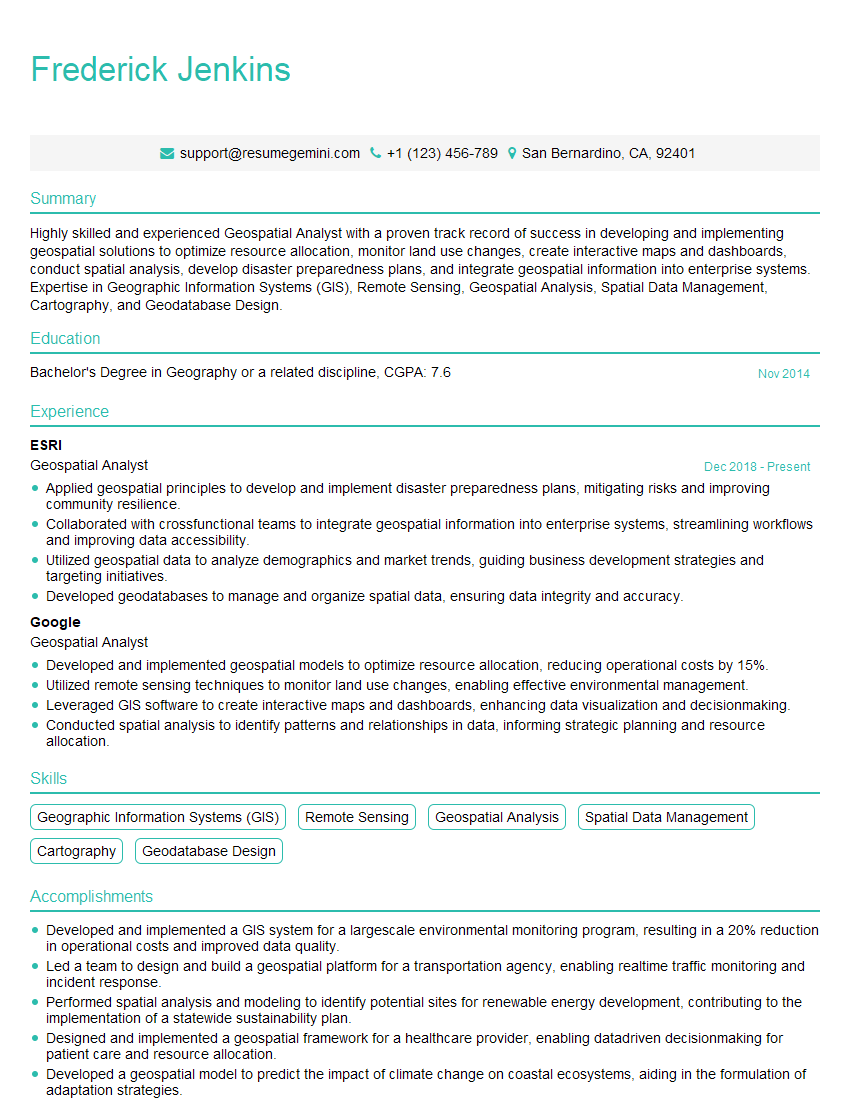
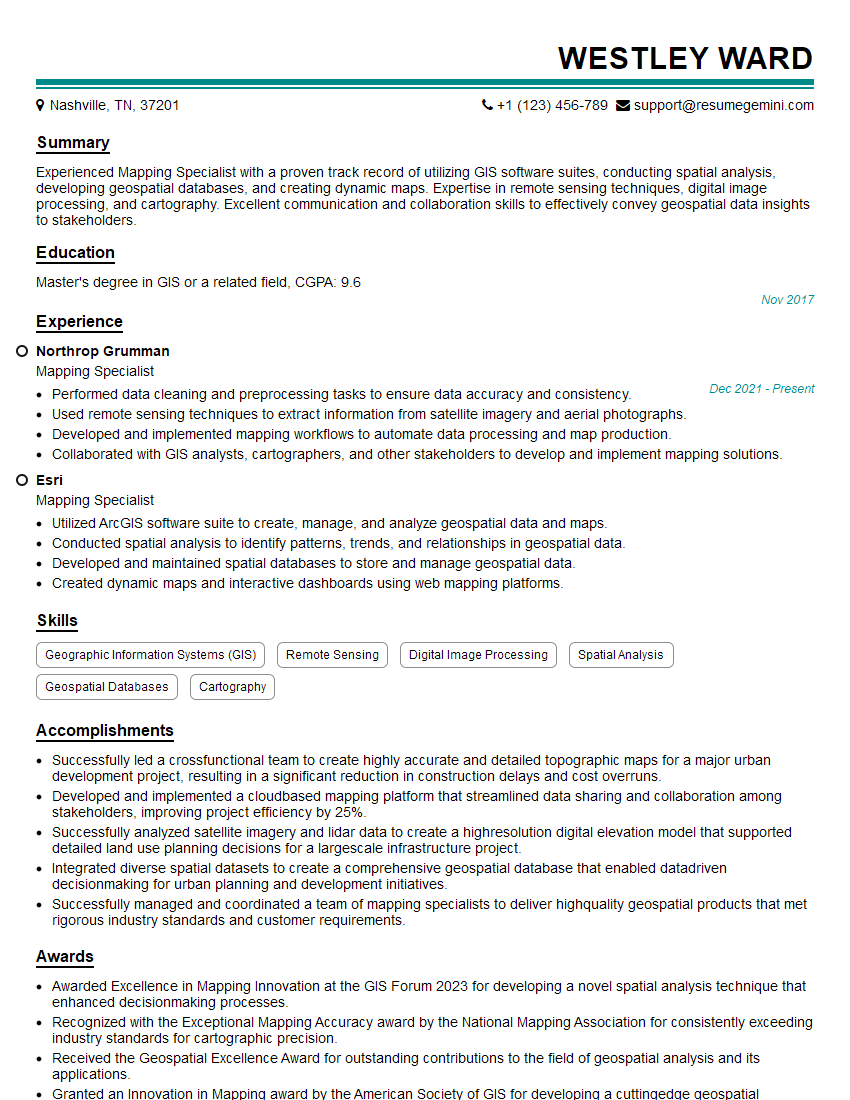
Mastering precise GPS/GNSS positioning techniques significantly enhances your career prospects in a rapidly evolving technological landscape. This expertise opens doors to exciting opportunities in high-growth sectors demanding accuracy and precision. To maximize your job search success, it’s crucial to present your skills effectively. Creating an ATS-friendly resume is paramount. ResumeGemini is a trusted resource that can help you build a professional resume that highlights your capabilities and catches the eye of recruiters. Examples of resumes tailored to showcase proficiency in using GPS/GNSS receivers for precise positioning are available to guide you.





Explore more articles
Users Rating of Our Blogs
Share Your Experience
We value your feedback! Please rate our content and share your thoughts (optional).
What Readers Say About Our Blog
Really detailed insights and content, thank you for writing this detailed article.
IT gave me an insight and words to use and be able to think of examples