Every successful interview starts with knowing what to expect. In this blog, we’ll take you through the top A/C Repair interview questions, breaking them down with expert tips to help you deliver impactful answers. Step into your next interview fully prepared and ready to succeed.
Questions Asked in A/C Repair Interview
Q 1. Explain the refrigeration cycle in detail.
The refrigeration cycle is the heart of any air conditioning system. It’s a continuous process that moves heat from a cool space to a warmer space, thereby cooling the cool space. Think of it like a sophisticated heat pump. It involves four key components working in harmony: the compressor, the condenser, the expansion valve, and the evaporator.
Compressor: This is the powerhouse, compressing the refrigerant gas, raising its temperature and pressure. Imagine a bicycle pump – you’re compressing air, increasing its pressure and temperature.
Condenser: This component releases the heat from the high-pressure, high-temperature refrigerant. It’s like a radiator in a car, dissipating heat to the outside air. The refrigerant changes from a hot gas to a liquid.
Expansion Valve: This valve reduces the pressure and temperature of the liquid refrigerant. Think of it as a tiny nozzle – as the refrigerant passes through, it expands and cools significantly.
Evaporator: This is where the magic happens. The low-pressure, low-temperature refrigerant absorbs heat from the air inside your home or building, cooling it down. The refrigerant absorbs this heat and changes from a liquid to a low-pressure gas, ready to be compressed again by the compressor, restarting the cycle.
The cycle repeats continuously as long as the system is running, maintaining the desired temperature.
Q 2. What are the common types of refrigerants and their properties?
Refrigerants are the working fluids in the refrigeration cycle. They are carefully chosen for their ability to absorb and release heat efficiently and safely. Common types include:
R-22 (HCFC-22): An older refrigerant, it’s being phased out due to its ozone-depleting potential. Its properties include good cooling capacity and relatively low cost, but its environmental impact led to its replacement.
R-410A (HFC): A widely used blend of refrigerants. It’s ozone-friendly but still a potent greenhouse gas. It offers high efficiency and good cooling capacity.
R-32 (HFC): A single-component refrigerant with lower global warming potential than R-410A, gaining popularity as a replacement. It offers good efficiency and is generally considered a better environmental choice.
R-134a (HFC): Another commonly used refrigerant, it replaced R-12 in many applications due to its lower ozone depletion potential. However, it still contributes to global warming.
The choice of refrigerant depends on various factors including system design, efficiency requirements, and environmental regulations. Each has a specific set of thermodynamic properties that dictate its performance in the refrigeration cycle.
Q 3. How do you diagnose a malfunctioning compressor?
Diagnosing a malfunctioning compressor involves a systematic approach. Listen carefully for unusual noises – a loud knocking or rattling sound could indicate internal damage. Feel the compressor’s casing; excessive heat could point to overheating or insufficient lubrication.
Use a clamp-on ammeter to measure the compressor’s current draw. A significantly higher or lower current than the manufacturer’s specifications suggests a problem. A multimeter can check the voltage at the compressor terminals. Low voltage can cause the compressor to struggle and overheat. A complete lack of voltage means no power reaches the compressor.
Furthermore, check the compressor’s start capacitor, which helps the motor start. A faulty capacitor will prevent the compressor from starting altogether or lead to erratic operation. Check the refrigerant pressure. Low pressure prevents the compressor from functioning efficiently; high pressure means there could be a blockage.
Remember, safety is paramount. Always disconnect the power before performing any checks.
Q 4. Describe the different types of condensers and their applications.
Condensers are responsible for rejecting heat from the refrigerant. Different types exist, each with its own advantages and applications:
Air-cooled condensers: These are the most common type in residential and small commercial applications. They use fans to blow air over the condenser coils, dissipating heat into the ambient air. They’re relatively simple and inexpensive but can be less efficient in hot climates.
Water-cooled condensers: These use water to cool the refrigerant. Water flows through tubes in contact with the condenser coils, absorbing heat and carrying it away. They’re more efficient than air-cooled condensers, especially in hot environments. However, they require a water source and a cooling tower, making them more complex and expensive.
Evaporative condensers: These combine air cooling and evaporative cooling, offering higher efficiency than air-cooled condensers while needing less water than water-cooled condensers. Water is sprayed over the condenser coils, increasing heat dissipation through evaporation.
The choice of condenser depends on factors such as ambient temperature, available resources, cost considerations, and desired efficiency.
Q 5. Explain the function of an evaporator coil.
The evaporator coil is where the refrigerant absorbs heat from the air being cooled. It’s a network of copper tubes with fins to maximize surface area. The low-pressure, low-temperature refrigerant inside the coil absorbs heat from the surrounding air, causing the refrigerant to change from liquid to a low-pressure gas. This cooled air is then circulated back into the room, providing the cooling effect.
Imagine a sponge soaking up water. The evaporator coil acts similarly, soaking up the heat from the room. The efficiency of the evaporator coil directly impacts the system’s cooling capacity.
Q 6. How do you troubleshoot a system with low refrigerant?
Low refrigerant is a serious issue that needs careful attention. First, determine the extent of the refrigerant loss by checking the pressure readings on the low and high-pressure sides using gauges. Low pressure is a clear indicator. A leak needs to be identified and repaired before refilling.
Use leak detection tools such as electronic leak detectors or dye tracing to pinpoint the leak’s location. Once located, repair the leak, whether it’s a punctured line, a loose connection, or a faulty component. Only after the leak is fully repaired can you proceed with refrigerant recharge. An improper recharge can damage the compressor.
Always follow the manufacturer’s instructions for the type and amount of refrigerant to add. Avoid overcharging, which can damage the system. After the recharge, observe the system’s performance and check for proper cooling. Regular maintenance inspections can help prevent future refrigerant loss.
Q 7. What are the common causes of frozen evaporator coils?
Frozen evaporator coils are a common problem. The most common cause is restricted airflow across the coil. This is caused by clogged air filters, restricted airflow from dirty coils, or obstructions within the ductwork, which reduces air circulation and lowers the air temperature across the evaporator coil, causing ice to form.
Another cause is a dirty air filter. A clogged filter restricts airflow, forcing the evaporator to work harder and become excessively cold, leading to frost buildup. Low refrigerant charge can also cause freezing. If there isn’t enough refrigerant, the evaporator coil becomes very cold, leading to ice formation. A malfunctioning expansion valve can allow too much liquid refrigerant to enter the evaporator, leading to freezing.
A faulty fan motor could also be responsible. If the fan doesn’t move enough air, the evaporator will get too cold. Diagnosing and addressing the root cause is key to preventing future freeze-ups.
Q 8. How do you test and replace a capacitor?
Testing and replacing a capacitor in an A/C unit is a crucial skill for any technician. Capacitors store electrical energy and are essential for starting and running the compressor and blower motor. A faulty capacitor can lead to the system not starting or operating inefficiently.
Testing: Before replacing, we need to test the capacitor’s capacitance and ESR (Equivalent Series Resistance) using a multimeter. First, always disconnect the power to the unit! Then, use the multimeter’s capacitance setting to measure the capacitor’s value. This should match the capacitor’s rated value (printed on the capacitor itself). A significantly lower or higher reading indicates a faulty capacitor. Next, switch the multimeter to the ESR setting. A high ESR reading also indicates a faulty capacitor. A good capacitor will have a low ESR value.
Replacement: Once a faulty capacitor is identified, replacing it is relatively straightforward but requires caution. Remember, capacitors can store a dangerous electrical charge even after disconnection. Discharge the capacitor by shorting its terminals with a screwdriver (insulated handle, of course!). Then, carefully unscrew the old capacitor and install the new one, ensuring the polarity (+ and -) is correctly aligned. Always use a capacitor with the same voltage and capacitance rating as the original.
Example: Recently, I had a customer whose A/C unit wouldn’t turn on. Using my multimeter, I found the start capacitor had a significantly higher ESR reading than it should. Replacing it immediately resolved the problem.
Q 9. Explain the function of a blower motor and its components.
The blower motor is the heart of your air conditioning system’s air circulation. It’s responsible for pulling air across the evaporator coil (cooling) and pushing that air into your living space. Its components work together to ensure efficient and consistent airflow.
- Motor: This is the electrical component that creates the rotational force. Different types exist, including PSC (Permanent Split Capacitor) and ECM (Electronically Commutated) motors, each with its own pros and cons regarding efficiency and noise.
- Capacitor (Start and Run): The capacitor(s) help the motor start and maintain consistent operation. A faulty capacitor can cause the motor to hum but not spin.
- Fan Blades: These are attached to the motor shaft, pushing the air through the ductwork.
- Housing/Blower Wheel Assembly: This protects the motor and blades while directing airflow.
- Wiring and Connections: These deliver the power to the motor and connect to the control board.
Troubleshooting: A malfunctioning blower motor might manifest as no airflow, weak airflow, or unusual noises. Diagnosing the issue often involves checking the capacitor, the motor itself (using a multimeter to test continuity), and the wiring for breaks or loose connections. Sometimes, the motor bearings might wear out, necessitating a replacement of the entire blower assembly.
Q 10. How do you diagnose and repair a faulty thermostat?
The thermostat acts as the brain of the A/C system. It senses the room’s temperature and controls the compressor and blower motor based on your set temperature. A faulty thermostat can cause the unit to run constantly or not at all.
Diagnosing: Start by visually inspecting the thermostat for any visible damage. Check the wiring connections for looseness or corrosion. If the display isn’t working, check the power supply. A multimeter can be used to check the continuity of the thermostat’s contacts. Often, a simple power cycle can resolve minor glitches. If the thermostat is reading an inaccurate temperature, calibration may be needed. Some newer thermostats can communicate with the system’s control board, allowing for advanced diagnostics via error codes that need to be decoded by experienced technicians.
Repair: Depending on the issue, repair might involve tightening loose wires, cleaning corroded connections, or replacing the thermostat entirely. Replacing the thermostat is usually relatively straightforward, with the new thermostat usually needing only the proper wiring connections according to the wiring diagram. Remember to always turn off the power before any work on the thermostat or A/C unit itself.
Q 11. Describe different types of air filters and their selection criteria.
Air filters are crucial for maintaining the efficiency and longevity of your A/C system. Different filter types offer varying levels of filtration and require different maintenance schedules.
- Fiberglass Filters: These are the most common and inexpensive but offer the least filtration, trapping only larger particles. They need frequent replacement (monthly).
- Pleated Filters: These offer better filtration than fiberglass filters and last longer (2-3 months). They are also more cost-effective in the long run compared to more frequent fiberglass filter replacements.
- HEPA (High-Efficiency Particulate Air) Filters: These capture a higher percentage of microscopic particles, including allergens and pollutants. However, they are more expensive and restrict airflow, potentially reducing the system’s efficiency.
- Electrostatic Filters: These use electrostatic charges to attract and trap particles. They often last longer than other types but may require cleaning or replacement.
Selection Criteria: The choice of filter depends on your needs and budget. Consider factors like the level of air quality desired, the frequency of replacement, and the potential impact on the A/C unit’s airflow. Always choose a filter with the correct dimensions for your system.
Q 12. What are the safety precautions when working with refrigerants?
Refrigerants are crucial for the cooling process but can be hazardous if mishandled. Proper safety precautions are paramount when working with them.
- Personal Protective Equipment (PPE): Always wear safety glasses, gloves, and appropriate clothing to prevent skin and eye contact.
- Ventilation: Work in a well-ventilated area to prevent the buildup of refrigerant vapors. Never work in an enclosed space without proper ventilation.
- Leak Detection: Use electronic leak detectors to identify and repair any refrigerant leaks immediately. Leaks can release harmful refrigerants into the environment.
- Recovery and Recycling: Use proper equipment to recover and recycle refrigerant from old or damaged units to prevent environmental harm and comply with EPA regulations.
- Proper Training and Certification: Obtain proper training and certification before handling refrigerants. This ensures you understand the risks and handling procedures.
- Emergency Procedures: Be aware of emergency procedures in case of exposure or accidental release of refrigerant.
Example: I always ensure I have a leak detector on hand when servicing a unit and always follow EPA guidelines when handling refrigerants. Neglecting these safety precautions can lead to serious health risks and environmental damage.
Q 13. How do you interpret a pressure-temperature chart?
A pressure-temperature chart is a vital tool for diagnosing refrigerant-related problems in A/C systems. It shows the relationship between the refrigerant’s pressure and temperature at different saturation points (liquid and vapor states).
Interpretation: By measuring the pressure and temperature at various points in the system (suction and discharge lines), and comparing those readings to the chart’s values for the specific refrigerant in use, we can determine if the refrigerant charge is correct, whether there’s a leak, or if other components are malfunctioning. For example, low pressure might indicate a refrigerant leak, while excessively high pressure could point towards a compressor problem.
Example: If the system’s pressure reading is significantly lower than what’s indicated on the chart for the measured temperature, it suggests the system is low on refrigerant, and a leak should be investigated. Conversely, an abnormally high pressure suggests a potential restriction in the system, potentially indicating a failing component.
The chart’s accuracy is reliant on the correct refrigerant being identified and the temperature being accurately measured. Inaccurate readings or a wrong refrigerant type will lead to misinterpretation. Therefore, always double-check readings and ensure accuracy.
Q 14. Explain the difference between a heat pump and a standard air conditioner.
Both heat pumps and standard air conditioners use refrigerants to move heat, but they do so in different directions. Think of it like a reversible pump.
- Standard Air Conditioner: An air conditioner extracts heat from inside your home and releases it outside, cooling the indoor space. It functions only in one direction: cooling.
- Heat Pump: A heat pump is more versatile. In cooling mode, it functions much like a standard air conditioner. However, it can also reverse the process in heating mode. It extracts heat from the outside air, even in cold temperatures, and transfers it inside to warm your home. This makes it a more energy-efficient option in climates with moderate winters.
Key Differences: The main difference lies in their ability to reverse the heat transfer process. Heat pumps are usually more energy-efficient for heating than electric resistance heating but might be less efficient in extreme cold.
Example: In a mild climate, a heat pump can both cool your house in summer and heat it efficiently in winter, requiring only one unit. However, a standard air conditioner only cools and would require a separate heating system.
Q 15. Describe different types of HVAC control systems.
HVAC control systems regulate the operation of your heating, ventilation, and air conditioning system. They range from simple thermostats to sophisticated, programmable systems with remote access. Let’s explore the main types:
- Basic Thermostats: These are the most common and simplest type. They have a simple dial or digital display to set the desired temperature, and the system turns on and off based on the difference between the setpoint and the room temperature. Think of them as the ‘on/off’ switch for your HVAC system.
- Programmable Thermostats: These offer more control, allowing you to schedule different temperatures for different times of the day or week. This is great for energy saving, as you can set lower temperatures when you’re away from home or asleep.
- Smart Thermostats: These are the most advanced, often connecting to your Wi-Fi and offering features like remote control via a smartphone app, geofencing (automatically adjusting temperature based on your location), and learning algorithms that adapt to your preferences over time. They often integrate with other smart home devices.
- Commercial HVAC Controls: In larger buildings or commercial settings, you’ll find more complex systems managing multiple zones, air handlers, and potentially different HVAC equipment types. These systems often utilize Building Management Systems (BMS) for centralized control and monitoring.
Choosing the right control system depends on factors such as budget, building size, and the level of control desired. For example, a simple home might only need a programmable thermostat, while a large office building will require a sophisticated BMS.
Career Expert Tips:
- Ace those interviews! Prepare effectively by reviewing the Top 50 Most Common Interview Questions on ResumeGemini.
- Navigate your job search with confidence! Explore a wide range of Career Tips on ResumeGemini. Learn about common challenges and recommendations to overcome them.
- Craft the perfect resume! Master the Art of Resume Writing with ResumeGemini’s guide. Showcase your unique qualifications and achievements effectively.
- Don’t miss out on holiday savings! Build your dream resume with ResumeGemini’s ATS optimized templates.
Q 16. How do you troubleshoot a system with poor airflow?
Poor airflow is a common HVAC problem. Troubleshooting involves a systematic approach to identify the root cause. Here’s a step-by-step process:
- Check the air filter: A clogged filter is the most frequent culprit. A dirty filter restricts airflow, reducing the system’s efficiency and potentially leading to icing on the evaporator coil. Replace or clean the filter as needed.
- Inspect the blower motor and belt (if applicable): A faulty blower motor might not be running at full speed, reducing airflow. Examine the belt for wear and tear if your system uses one. Replacement might be necessary.
- Examine the evaporator coil: Restricted airflow can lead to ice buildup on the evaporator coil, significantly reducing cooling capacity. This often requires defrosting the coil and potentially addressing underlying issues like a restricted airflow path.
- Check ductwork for restrictions or leaks: Leaks or blockages in the ductwork severely impact airflow. Thorough visual inspection and pressure testing of the ductwork are crucial steps in this process. You might need to repair or seal leaks and remove obstructions.
- Verify proper register and vent settings: Ensure that all registers and vents are fully open. Partially closed registers can significantly restrict airflow to certain areas.
- Assess the outdoor unit: Ensure the outdoor unit (condenser) is free from debris and obstructions, as this can restrict airflow to the condenser coil and reduce its efficiency.
Remember, safety is paramount. Always turn off the power to the HVAC system before performing any inspection or maintenance.
Q 17. What are the common causes of refrigerant leaks?
Refrigerant leaks are a serious issue in HVAC systems. Several factors can lead to them:
- Component Wear and Tear: Over time, seals and connections in the system can wear down, leading to leaks. This is particularly true in older systems or those subjected to extreme temperatures.
- Corrosion: Corrosion of metal components can create pinhole leaks, often difficult to detect. This is more common in areas with high humidity or exposure to corrosive substances.
- Accidental Damage: During installation, maintenance, or even accidental bumps, components can be damaged, resulting in leaks. This emphasizes the importance of careful handling during these processes.
- Manufacturing Defects: In rare cases, manufacturing defects can result in leaks from the factory. While uncommon, this is something to be aware of.
- Vibration: Constant vibration from the system’s operation can loosen connections over time, eventually leading to leaks. Proper installation and periodic checks are essential to avoid this.
Regular inspections and maintenance can help identify and prevent refrigerant leaks before they become major problems.
Q 18. How do you identify and repair refrigerant leaks?
Identifying and repairing refrigerant leaks requires specialized tools and knowledge. Here’s a typical approach:
- Leak Detection: Electronic leak detectors are used to pinpoint the location of leaks. These devices measure the concentration of refrigerant in the air, providing an audible or visual indication of a leak. Alternatively, soapy water can be applied to joints to check for bubbles indicating a leak.
- Repair: The method of repair depends on the location and severity of the leak. Minor leaks in accessible locations might be repaired by tightening connections or replacing worn seals. Major leaks might require replacing damaged components.
- Refrigerant Recharge: After repairing the leak, the system needs to be recharged with the correct type and amount of refrigerant. This process requires specialized equipment to ensure the system’s proper operation and prevent damage.
- System Vacuum: Before recharging, the system should be thoroughly evacuated to remove any air or moisture that might have entered during the repair process. This ensures the system’s efficient and safe operation.
It’s crucial to note that handling refrigerants requires proper training and certification due to their environmental impact and potential health hazards. Improper handling can result in serious consequences. Professional HVAC technicians are equipped and trained to perform these repairs safely and effectively.
Q 19. Explain the importance of proper ductwork design and installation.
Proper ductwork design and installation are critical for efficient and effective HVAC system performance. Poor ductwork can lead to significant energy waste, uneven temperatures, and reduced system lifespan. Key aspects of proper design and installation include:
- Proper Sizing: Ductwork should be appropriately sized to match the system’s capacity and the requirements of each zone. Undersized ducts restrict airflow, while oversized ducts can lead to uneven heating and cooling.
- Airtight Seals: Leaks in the ductwork result in energy loss and reduced efficiency. Proper sealing is crucial to maintain the system’s integrity and effectiveness. This is usually done with mastic sealant or metal tape.
- Insulation: Insulating the ductwork helps reduce energy loss, especially in attics, crawl spaces, and unconditioned spaces. This leads to better energy efficiency and cost savings.
- Strategic Routing: Ductwork should be strategically routed to minimize friction and ensure smooth airflow. Excessive bends and turns restrict airflow and increase energy consumption.
- Proper Connections: All connections should be secure and airtight to prevent leaks and ensure the system operates efficiently.
Think of ductwork as the circulatory system of your HVAC system – if it’s not properly designed and installed, the system can’t function at its peak.
Q 20. Describe the different types of ductwork materials.
Several materials are used for ductwork, each with its own advantages and disadvantages:
- Galvanized Steel: A common and durable choice, offering good strength and resistance to corrosion. It is ideal for areas requiring higher durability.
- Aluminum: Lightweight and flexible, aluminum ductwork is often used in residential applications. It is less resistant to corrosion than galvanized steel but is easier to install.
- Flexible Ductwork: This type of ductwork is made of flexible materials, often used for connecting components or in areas where rigid ductwork would be difficult to install. While convenient, it’s prone to leaks if not installed correctly and properly sealed.
- Fiberglass Duct Board: This type is often used in areas requiring insulation and better air sealing. It is rigid but requires skilled installation to create a fully sealed system.
The choice of material often depends on factors such as budget, application, and required durability.
Q 21. How do you perform a load calculation for an HVAC system?
A load calculation determines the heating and cooling capacity required for a building. It’s a critical step in designing and sizing an HVAC system. Several factors are considered:
- Climate Data: The local climate, including temperature extremes, humidity levels, and solar radiation, significantly impacts the load calculation.
- Building Envelope: This includes the walls, roof, windows, and insulation. Better insulation reduces the heating and cooling load, making the system smaller and more efficient.
- Internal Loads: These are heat gains from sources like people, lights, and appliances. Higher internal loads necessitate a larger cooling capacity.
- Building Size and Layout: The size, shape, and orientation of the building influence the heat gain and loss, affecting the sizing requirements.
- Ventilation Requirements: The required amount of fresh air intake affects the heating and cooling loads. More fresh air often means a larger system.
Load calculations are typically performed by qualified HVAC professionals using specialized software or manual calculation methods. It’s crucial to have an accurate load calculation to ensure the system is appropriately sized to meet the building’s needs while maximizing efficiency and minimizing energy waste.
Imagine trying to cool a large room with a tiny window air conditioner. A load calculation prevents this; it ensures the right-sized system is installed, avoiding inefficiency and overheating or over-cooling.
Q 22. What are the common causes of inefficient HVAC systems?
Inefficient HVAC systems are a common problem, often leading to higher energy bills and discomfort. Several factors contribute to this. Let’s break it down:
- Dirty Air Filters: A clogged air filter restricts airflow, forcing the system to work harder. Think of it like trying to breathe through a clogged nose – it’s difficult and inefficient. Regular filter changes (monthly, or as needed) are crucial.
- Refrigerant Leaks: Refrigerant is the substance that absorbs heat. Leaks reduce the system’s cooling capacity, leading to poor performance and potentially damaging the compressor.
- Duct Leaks: Leaking ductwork allows conditioned air to escape before it reaches its destination, wasting energy and reducing efficiency. A well-sealed duct system is essential.
- Improperly Sized System: An HVAC system that’s too small for the space will constantly run, failing to reach the desired temperature and using more energy. Conversely, an oversized system cycles on and off too quickly, preventing proper dehumidification and creating temperature swings.
- Lack of Maintenance: Regular maintenance, including cleaning coils, inspecting belts and motors, and lubricating moving parts, is crucial for optimal performance and longevity.
- Frozen Evaporator Coil: This indicates restricted airflow, often due to a dirty filter or frozen drain line, which compromises cooling efficiency.
Addressing these issues through regular maintenance and repairs significantly improves HVAC system efficiency and reduces energy consumption.
Q 23. Explain the principles of energy efficiency in HVAC.
Energy efficiency in HVAC focuses on maximizing cooling or heating output while minimizing energy input. This involves several key principles:
- Proper Sizing: A correctly sized system matches the heating and cooling load of the building, preventing overworking or underperforming. This is determined by professional calculations, considering factors like insulation, window efficiency, and climate.
- High SEER/HSPF Ratings: The Seasonal Energy Efficiency Ratio (SEER) for air conditioners and Heating Seasonal Performance Factor (HSPF) for heat pumps measure energy efficiency. Higher ratings indicate better performance and lower energy consumption.
- Zoned Systems: Instead of cooling or heating the entire house uniformly, zoned systems allow for individual room temperature control, saving energy by only conditioning occupied areas.
- Improved Insulation and Air Sealing: Reducing heat loss in winter and heat gain in summer through proper insulation and sealing minimizes the workload on the HVAC system. Think of it like wearing a coat in winter – it reduces the amount of heat your body has to generate.
- Variable-Speed Equipment: Variable-speed blowers and compressors adjust their output based on demand, providing more precise temperature control and improved efficiency compared to single-speed systems. Imagine a car with cruise control versus one without – you have much finer control over the speed.
- Regular Maintenance: Preventative maintenance ensures the system operates at peak efficiency, preventing minor issues from escalating into costly repairs and energy waste.
By implementing these principles, we can create HVAC systems that deliver comfort while conserving valuable energy resources.
Q 24. What are the common safety concerns when working with high voltage equipment?
Working with high-voltage equipment in HVAC systems poses significant safety risks. The most important precautions are:
- Lockout/Tagout Procedures: Before any work begins, power must be completely shut off and locked out to prevent accidental energization. This is absolutely non-negotiable. A tag clearly identifying the worker and the work being performed should be affixed.
- Personal Protective Equipment (PPE): This includes insulated gloves, safety glasses, and appropriate footwear. No exceptions. Never compromise on safety gear.
- Proper Training: Technicians must receive thorough training on safe handling procedures, including understanding electrical schematics and recognizing potential hazards.
- Awareness of Surroundings: The technician must be mindful of their surroundings to avoid contact with energized components or falling objects.
- Use of Insulated Tools: Use tools specifically designed for working with high voltage to prevent electrical shocks.
- Grounding: Ensure proper grounding to prevent electrical surges and static discharge.
Ignoring these safety protocols can lead to severe electric shock, burns, or even death. Safety should always be the top priority when working with high-voltage equipment.
Q 25. How do you properly handle and dispose of refrigerants?
Proper handling and disposal of refrigerants are crucial for environmental protection and technician safety. Refrigerants, especially older ones like R-22, are harmful to the ozone layer and contribute to global warming. The process involves:
- Recovery: Before servicing or discarding an HVAC system, the refrigerant must be carefully recovered using specialized equipment, such as a refrigerant recovery machine. This captures the refrigerant and prevents its release into the atmosphere.
- Recycling: Recovered refrigerant is then cleaned and processed for reuse, extending its lifespan and reducing the demand for newly manufactured refrigerant.
- Reclamation: If the refrigerant cannot be recycled, it undergoes reclamation to be purified to original specifications.
- Disposal: Only certified technicians can handle and dispose of refrigerants, adhering to EPA regulations. This often involves working with licensed disposal facilities.
Failing to properly handle and dispose of refrigerants is illegal and environmentally damaging. It is crucial to follow established procedures to minimize environmental impact and ensure technician safety.
Q 26. Describe your experience working with different HVAC equipment brands.
Throughout my career, I’ve gained extensive experience working with a variety of HVAC equipment brands, including Carrier, Trane, Lennox, Rheem, and Goodman. This experience encompasses various system types, from residential split systems to larger commercial chillers. I’m proficient in diagnosing issues, performing repairs, and maintaining equipment from these and other manufacturers. My expertise extends to understanding the unique characteristics and troubleshooting approaches for each brand, allowing me to efficiently address diverse system challenges. For example, I’ve tackled compressor failures in a Carrier Infinity system, replaced a faulty control board on a Trane XV90, and performed preventative maintenance on a large commercial Lennox rooftop unit. This broad experience allows me to provide effective and knowledgeable service regardless of the brand.
Q 27. Explain your experience with troubleshooting and repairing different types of HVAC systems.
My experience in troubleshooting and repairing HVAC systems spans a wide range of issues and system types. This includes:
- Diagnosing Refrigerant Leaks: Using specialized equipment to pinpoint leaks and performing repairs.
- Compressor Repairs and Replacements: Identifying compressor failures and handling the replacement process effectively.
- Electrical Troubleshooting: Diagnosing and resolving problems within the electrical system, including faulty wiring, control boards, and relays.
- Troubleshooting Thermostat Issues: Identifying and resolving malfunctions within various thermostat models.
- Airflow Problems: Diagnosing and fixing restricted airflow due to dirty coils, clogged filters, or duct leaks.
- Drain Line Clogs: Clearing obstructions in drain lines to prevent water damage and system malfunctions.
I use a systematic approach to troubleshooting, starting with a thorough inspection, followed by diagnostic testing and analysis to isolate the root cause before implementing effective repair strategies. A recent example involved a complex issue where a customer experienced intermittent cooling. Through systematic troubleshooting, I identified a failing capacitor that was causing the system to cycle on and off unpredictably, which I swiftly resolved.
Q 28. Describe your experience with preventative maintenance on HVAC systems.
Preventative maintenance is key to maximizing the lifespan and efficiency of HVAC systems. My preventative maintenance procedures typically include:
- Air Filter Replacement: Regularly replacing air filters to maintain proper airflow and prevent coil buildup.
- Coil Cleaning: Cleaning the evaporator and condenser coils to remove dirt and debris, improving heat transfer.
- Ductwork Inspection: Inspecting for leaks and ensuring proper airflow throughout the duct system. Sealing any leaks identified.
- Electrical Component Inspection: Checking electrical connections, wiring, and control components for wear and tear or damage.
- Refrigerant Charge Check: Checking the refrigerant level and identifying potential leaks.
- Motor Lubrication: Lubricating motor bearings and other moving parts to reduce friction and extend lifespan.
- Belt Inspection and Replacement (if needed): Inspecting and replacing worn-out belts.
I emphasize the importance of preventative maintenance to customers, explaining how it prevents costly repairs and ensures the system operates at peak efficiency. I usually recommend annual maintenance for optimal performance and longevity of the HVAC system, which helps ensure system efficiency and prolong its useful life.
Key Topics to Learn for A/C Repair Interview
- Refrigerant Handling and Safety: Understanding different refrigerants (R-22, R-410A, etc.), proper handling procedures, EPA certification, and safety regulations. Practical application: Explaining safe refrigerant recovery and disposal methods.
- Electrical Systems in A/C Units: Diagnosing electrical faults, working with wiring diagrams, understanding voltage, amperage, and safety precautions. Practical application: Troubleshooting a malfunctioning compressor due to electrical issues.
- Compressor Operation and Maintenance: Understanding compressor types (reciprocating, scroll, centrifugal), diagnosing compressor failures, and performing preventative maintenance. Practical application: Describing the process of replacing a faulty compressor.
- Troubleshooting Common A/C Issues: Identifying and resolving issues such as low refrigerant, clogged filters, frozen evaporator coils, and leaking ductwork. Practical application: Explaining your systematic approach to diagnosing a system with poor cooling performance.
- Airflow and Ductwork: Understanding the importance of proper airflow, diagnosing airflow restrictions, and repairing or replacing ductwork. Practical application: Explaining how to improve airflow in a system to enhance efficiency.
- Heat Transfer Principles: Understanding the principles of thermodynamics related to cooling and heating, including heat transfer mechanisms (conduction, convection, radiation). Practical application: Explaining how the components of an A/C system work together to achieve cooling.
- A/C System Components and Functions: In-depth knowledge of all major components (compressor, condenser, evaporator, expansion valve, etc.) and their functions within the system. Practical application: Clearly explaining the role of each component and how they interact.
- Maintenance and Preventative Measures: Understanding routine maintenance procedures, preventative measures to extend system life, and customer education on maintenance. Practical application: Describing a preventative maintenance schedule for a residential A/C unit.
Next Steps
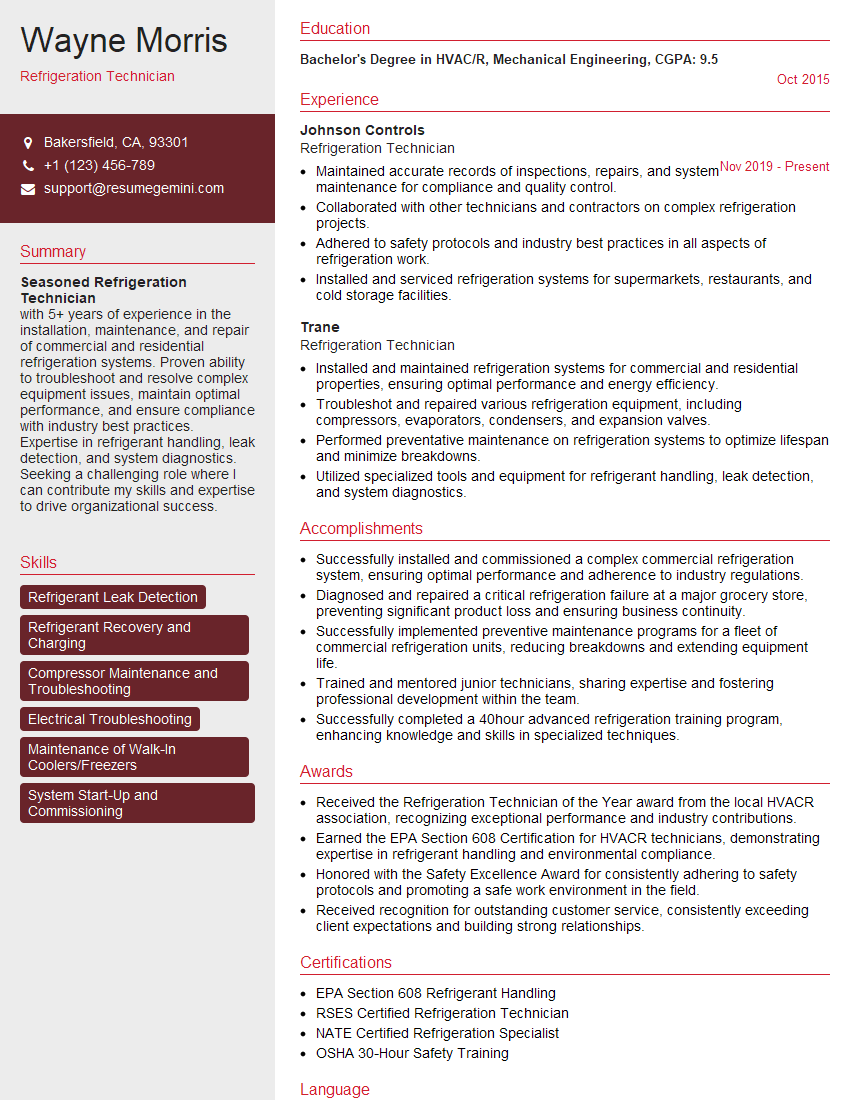
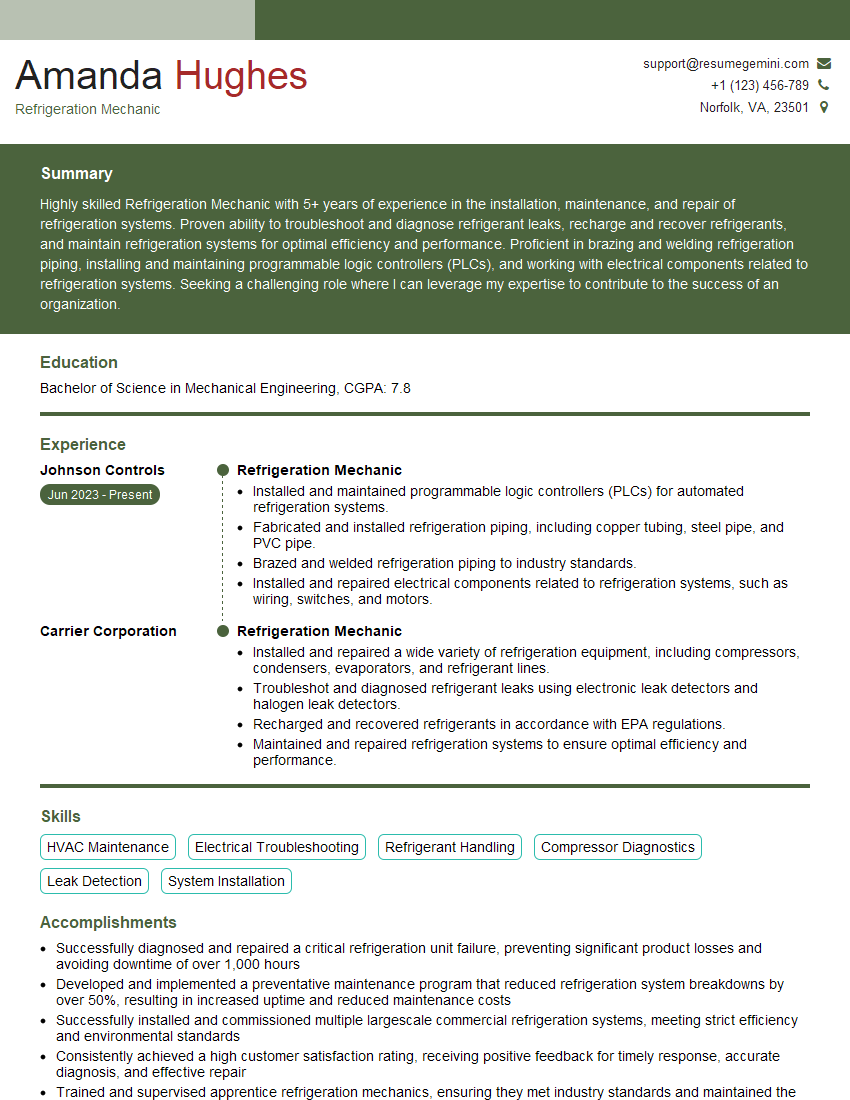
Mastering A/C repair opens doors to a rewarding career with excellent growth potential. Advancement opportunities include becoming a lead technician, supervisor, or even starting your own business. To maximize your job prospects, create a resume that Applicant Tracking Systems (ATS) can easily read. ResumeGemini is a trusted resource to help you build a professional, ATS-friendly resume that highlights your skills and experience effectively. Examples of resumes tailored specifically to A/C repair are available to guide you.

Explore more articles
Users Rating of Our Blogs
Share Your Experience
We value your feedback! Please rate our content and share your thoughts (optional).
What Readers Say About Our Blog
Really detailed insights and content, thank you for writing this detailed article.
IT gave me an insight and words to use and be able to think of examples